
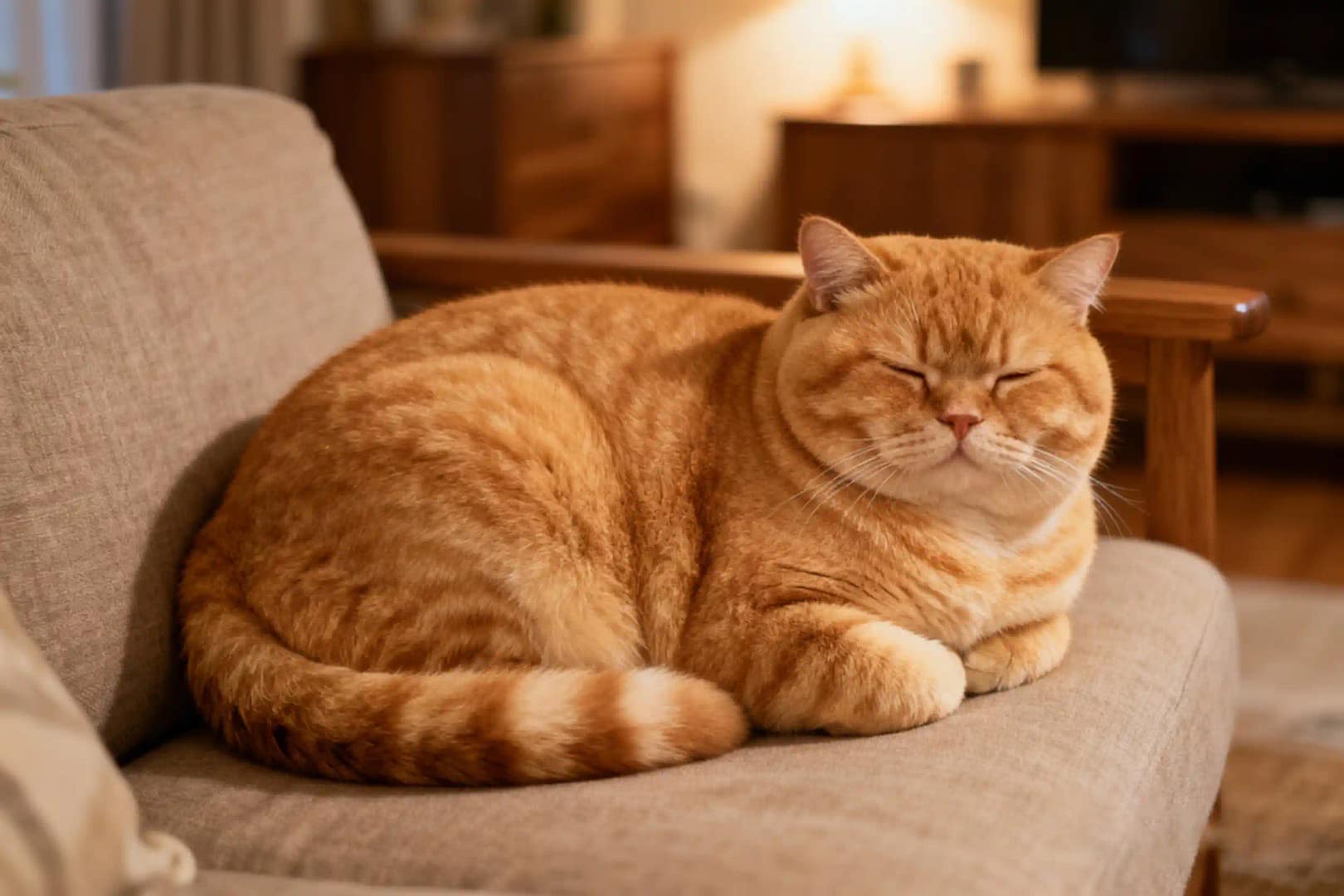
Cats loaf when they sit upright with their paws tucked under—like a little bread loaf. Most of the time, the cat loaf position means your cat feels safe, warm, and relaxed.
But if your cat looks hunched, tense, or keeps their head low (often called the “meatloaf” pose), it can be a warning sign of pain or illness—especially if you notice lethargy, appetite changes, or Verstecken.
In this guide, you’ll learn the most common reasons cats loafdie main loaf types (full loaf, sphinx, partial loaf), and a quick checklist for when to call your vet.
Inhaltsübersicht
Quick Answer: Why do cats loaf?
A Katzenbrot is when a cat sits upright with its paws (and often tail) tucked underneath. Cats loaf mainly because they feel safe, comfortable, and warm—it’s a restful position that still lets them stay alert.
But if the loaf looks hunched, tense, head down, or comes with lethargy, appetite changes, or hiding, it can be a sign of Schmerzen oder Krankheit.
Normal loaf vs “meatloaf” (when to worry)
| What you see | Usually means | Was ist zu tun? |
|---|---|---|
| Paws tucked, head up, body looks soft/loose, normal breathing, responds to you | Relaxed, comfortable, warming up | Enjoy it; offer cozy spots |
| Loaf looks hunched/tense, head down, eyes squinty or “out of it,” stays still a long time, reduced response | Possible discomfort/pain | Check for other symptoms; contact your vet if it persists or worsens |
| Loaf + open-mouth breathing, collapse, severe lethargy, repeated vomiting | Urgent warning sign | Seek urgent veterinary care |
Top reasons cats loaf (most common → less common)
- Comfort and relaxation
- Feeling safe / trusting their environment (or you)
- Keeping warm (conserving body heat)
- Resting while staying alert
- Protecting their belly / vital organs
- Recovering from stress or overstimulation
- Pain or illness (when posture and behavior look “off”)
Faustformel: If your cat loafs and still acts normal, it’s usually fine. If the loaf looks tense + behavior changes, treat it as a clue to investigate.
Wichtigste Erkenntnisse
- A Katzenbrot usually means your cat is comfortable, safe, and conserving warmth.
- Loafing is a “rest-but-ready” posture: relaxed, but able to move quickly.
- Normal loaf: head up, soft body, normal breathing, responds to you.
- Warning loaf (“meatloaf”): hunched/tense, head down, reduced response, or paired with appetite/energy/litter box changes.
- If loaf posture is new + persistent or comes with other symptoms, call your vet.
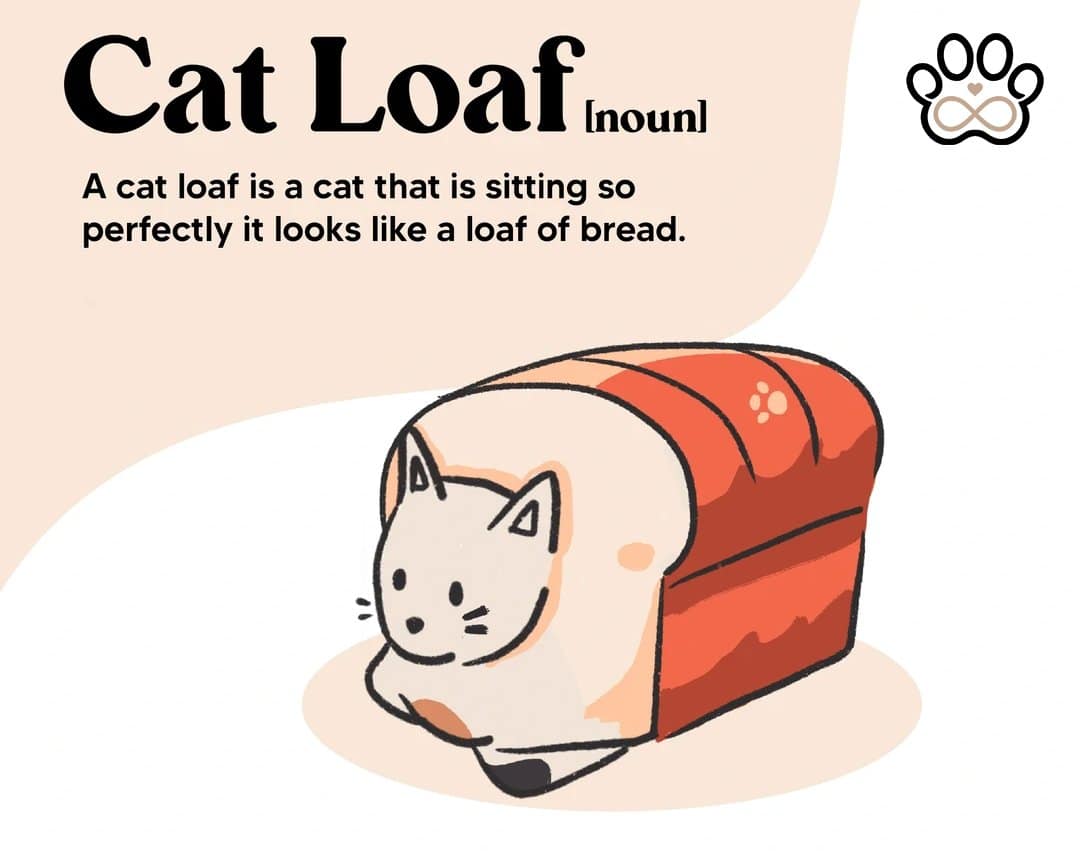
Was ist ein Katzenbrot?
A Katzenbrot is a sitting position where a cat tucks its paws (and often its tail) under its body, creating a compact “loaf-like” shape.
Cats use this posture to sich bequem ausruhen und dabei mäßig wachsam bleiben—it’s common in calm, safe spaces and often shows up on warm surfaces like beds, blankets, sunny floors, or your lap.
Types of Cat Loaf Positions (and what they usually mean)
Quick note: A loaf position usually reflects comfort, warmth, or alert rest—but context matters. Use the “watch for” cues to tell a normal loaf from a potential pain/illness posture.
| Loaf type | What it looks like | What it usually means |
|---|---|---|
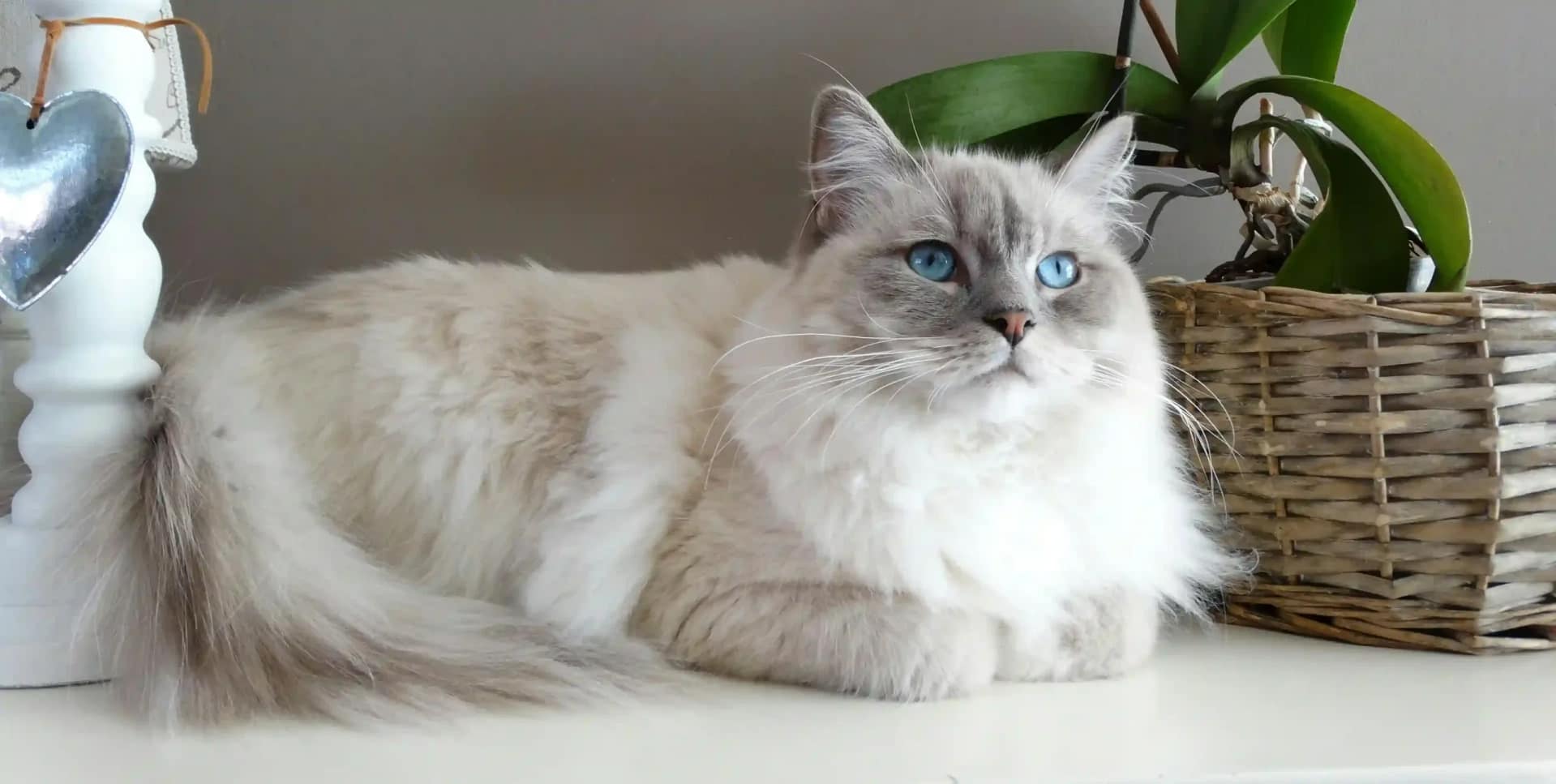
| Full loaf | All paws hidden, tail tucked, head up | Maximum comfort and security |
| Partial loaf | One or both paws slightly visible | Relaxed but more alert / ready to move |
| Sphinx loaf | Front paws stretched forward, chest up | Calm, watching the environment |
| Face loaf | Chin/face resting down while loafing | Very sleepy and comfortable (if otherwise normal) |
| Alert/defensive loaf | Tight loaf, wide eyes, ears swiveling | Unsure or monitoring something |
| “Meatloaf” warning pose | Hunched/tense, head down, reduced response | Possible pain/illness—look for other symptoms |
Der Katzenlaib ist nur einer von vielen skurrilen cat sleeping positions (Katzenschlafpositionen: 20 Bedeutungen der Schlafpositionen von Katzen), die zeigen kann, wie entspannt, verspielt oder verletzlich sich Ihre Katze in einem bestimmten Moment fühlt.
Volles Brot (Classic Cat Loaf)
What it looks like: All four paws tucked fully underneath, tail wrapped, head up—no limbs visible.
Usually means: Your cat feels safe, warm, and deeply relaxed.
Watch for: If the body is loose, eyes are soft/slow blinking, and your cat responds normally, it’s a great sign.
Best response: Enjoy the cuteness—this is “I’m comfy” body language.
Teilbrot
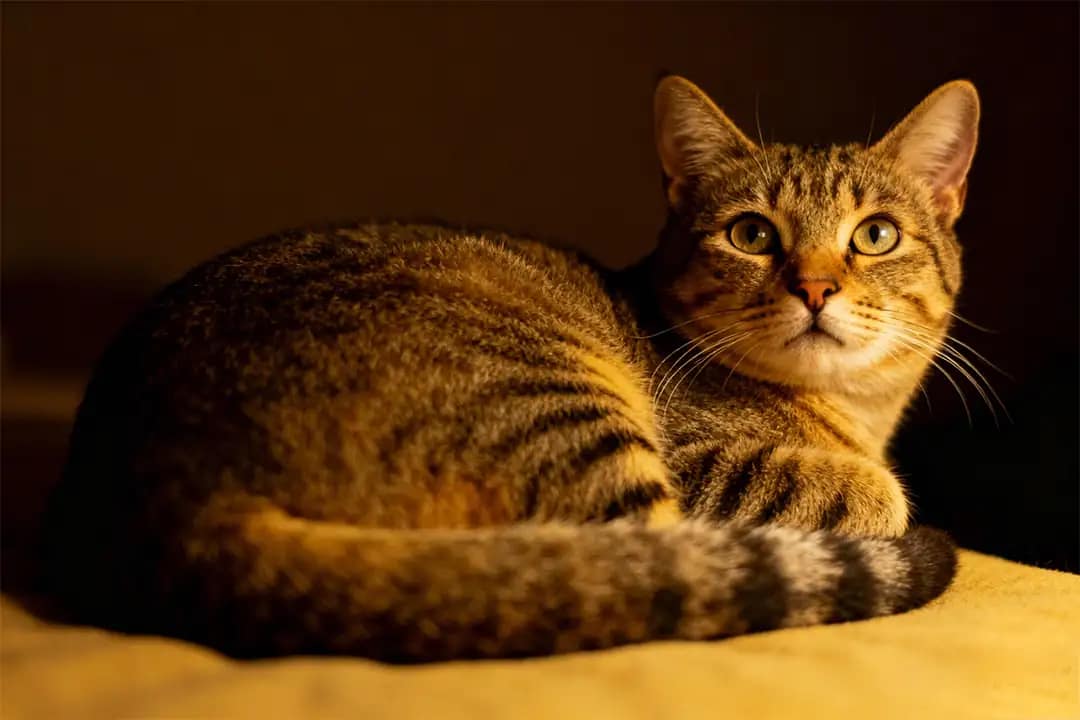
What it looks like: Hind legs tucked, but one or both front paws visible (toes/paws peeking out).
Usually means: Comfortable + mildly alert (resting but ready).
Watch for: A partial loaf is common in curious cats, in mildly busy rooms, or before naps.
Best response: Normal—especially if your cat still stretches, shifts position, and reacts to you.
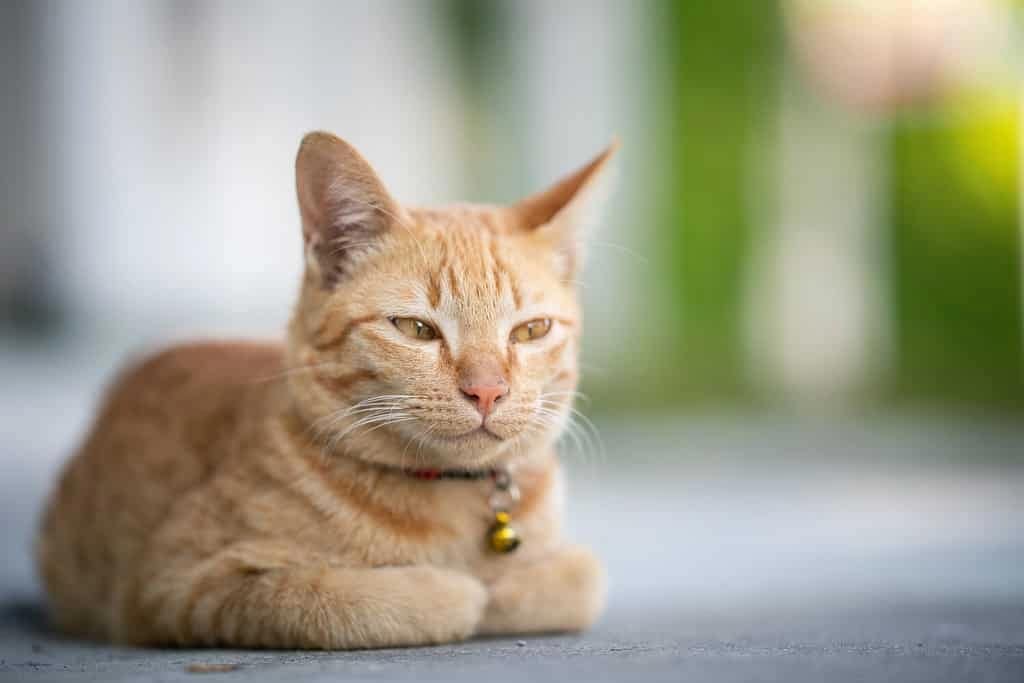
One Paw Out (Loaf Boat)
What it looks like: Like a partial loaf, but one front paw extends farther forward.
Usually means: Relaxed, but “half on standby”—your cat may be listening or thinking about moving.
Watch for: If paired with a stiff body, pinned ears, or a tense face, it may signal stress instead of comfort.
Best response: Normal in most cases; check the environment if your cat looks tense.
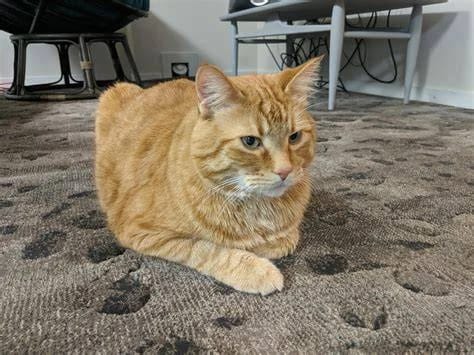
Sphinx Loaf (aka “Sphynx Loaf”)
What it looks like: Front legs stretched straight forward, chest up, body tucked behind—like the Great Sphinx.
Usually means: Calm but observant—relaxing while monitoring sounds/people/pets.
Watch for: If eyes are wide, ears are rotated back, or the tail tip is twitching, your cat may be unsure.
Best response: Normal; give space if your cat seems on edge.
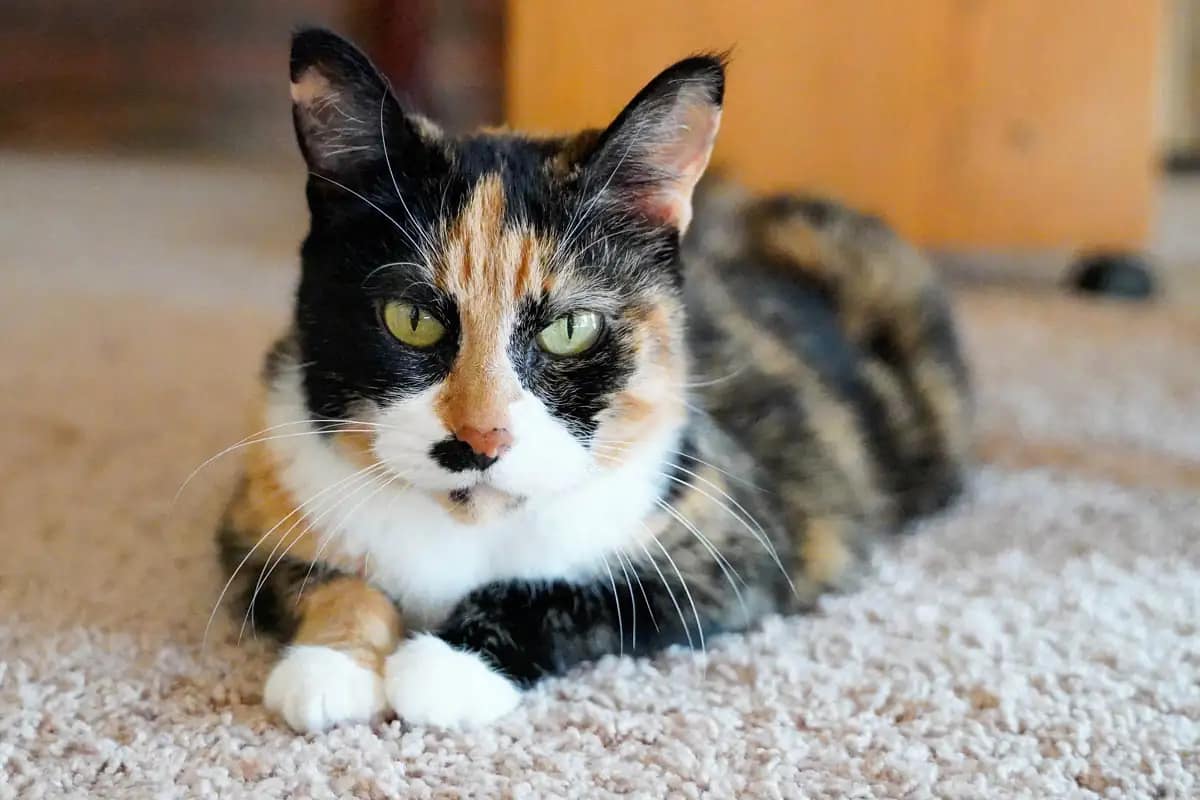
Gesichtsbrot (Tuckered Loaf)
What it looks like: Loafed body, but head/chin resting down on the floor or paws.
Usually means: Very sleepy and very comfortable (often happens when they’re drifting off).
Watch for: If the face is pressed down hard, breathing seems abnormal, or your cat is unusually unresponsive, treat it more like a warning sign.
Best response: Usually fine—just a drowsy cat recharging.
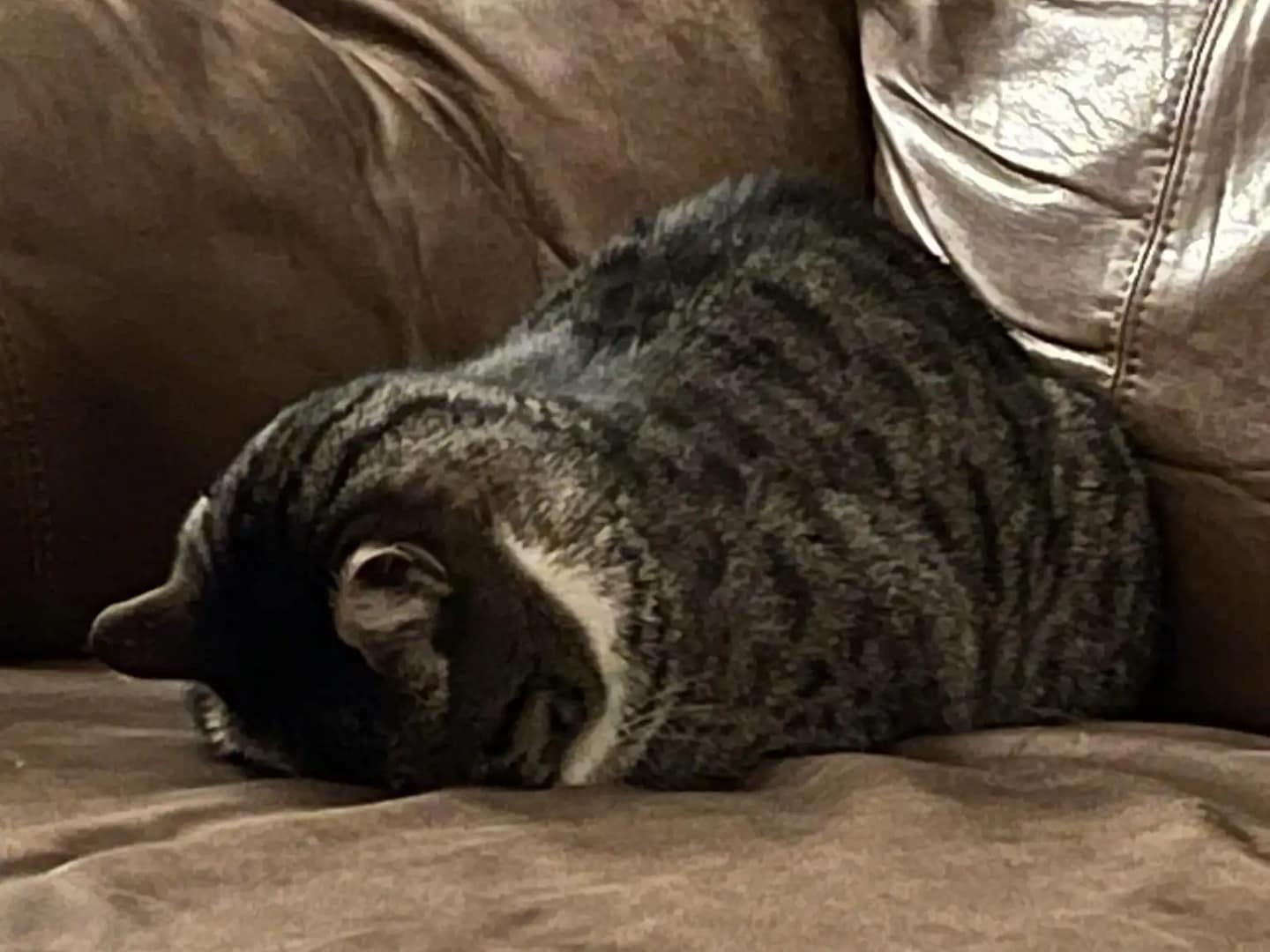
Meatloaf Position (Hunched Loaf: Possible Warning Sign)
What it looks like: A loaf-like sit, but back is hunched/rounded, body looks tense, head hangs low, “braced” posture.
Usually means: Diese kann be a sign of pain, nausea, or illness (cats often hide discomfort).
Watch for (red flags):
- Not eating or drinking normally
- Lethargy / hiding / “not themselves”
- Vomiting/diarrhea or litter box changes
- Rapid/strained breathing or open-mouth breathing
- Your cat won’t get up, won’t respond, or seems “glassy-eyed”
Best response: If you see meatloaf posture plus any red flags, contact your vet. (This isn’t a diagnosis—just a “pay attention” posture.)
Wenn Sie eine angespannte, gekrümmte “Hackbraten”-Haltung sowie Veränderungen im Appetit, im Toilettenverhalten oder im Energiehaushalt bemerken, ist es Zeit, mit Ihrem Tierarzt zu sprechen und unsere Leitfaden zur Gesundheit von Katzen für häufige Warnzeichen, die Sie niemals ignorieren sollten.
(Wir werden später besprechen, wie man einen Hackbraten von einem normalen Brot unterscheidet und auf welche Warnzeichen man achten muss.) Wenn Sie Ihre Katze häufig in einer gekrümmten, fleischklößchenartigen Haltung sehen und Wenn sie sich nicht wie sonst verhalten, achten Sie genau darauf – vielleicht ist es Zeit, den Tierarzt zu rufen.

Double Loaf (and Triple Loaf)
What it looks like: Two or more cats loafing near each other (sometimes mirroring).
Usually means: Trust + comfort in a shared space.
Watch for: If one cat is blocking access to food, litter, or favorite spots, it might be resource tension rather than bonding.
Best response: Positive sign—especially if they’re relaxed and not staring/guarding.
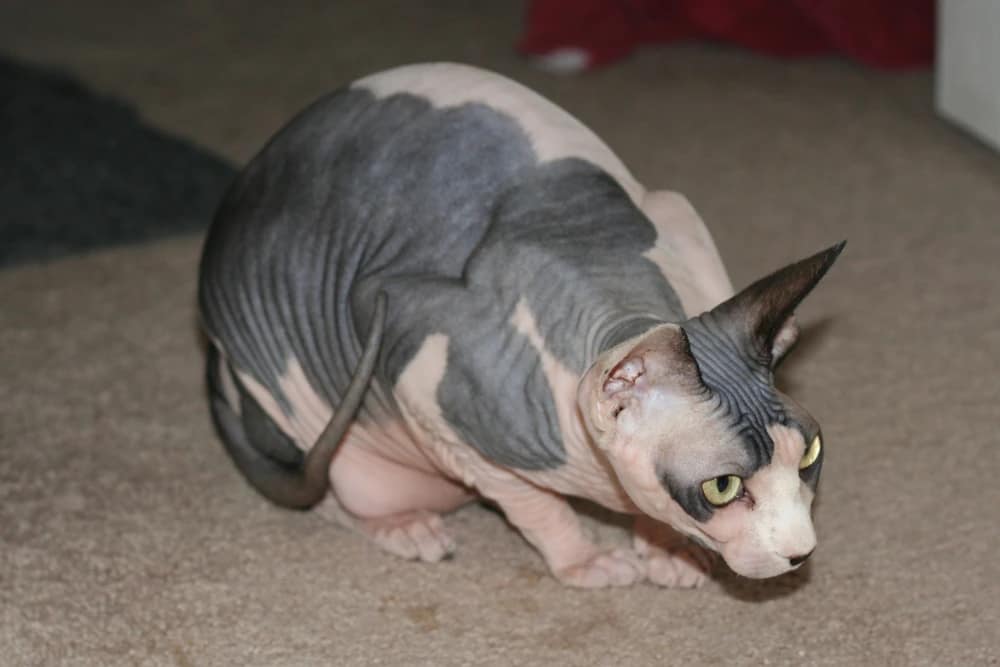
Wie Sie sehen können, Die Art und Weise, wie Ihre Katze faulenzt – und der Kontext – können Ihnen viel verraten.. Eine zufriedene Katze bevorzugt vielleicht die volle oder die Sphinx-Position auf Ihrem Sofa, während eine frierende Katze sich vielleicht zusammenrollt, um Wärme zu sparen, und eine kranke Katze vielleicht in einer Fleischklößchen-Position sitzt. Als Nächstes werden wir tiefer in das Thema eintauchen. Warum Katzen faulenzen zunächst einmal, was diese Gründe für die Gesundheit und das Wohlbefinden Ihrer Katze bedeuten.
Warum faulenzen Katzen?
Cats loaf for a mix of comfort, warmth, and instinct. The same pose can mean “I’m cozy” or “I don’t feel great,” so the key is to read posture + context + behavior together.
1. Sie sind bequem und entspannt.
Most loafing is a sign of comfort. Tucking paws underneath creates a stable, cozy posture that lets your cat rest without fully flopping into deep sleep.
Common signs (usually normal):
- Soft eyes / slow blinks
- Calm facial expression, loose body
- Normal breathing; responds when you talk
Most likely when:
- They’re in a favorite spot (bed, couch, cat tree)
- After eating, grooming, or a play session
When to worry: If comfort loafing turns into hours of stillness plus low appetite, hiding, or unusual behavior, scan for other symptoms and consider calling your vet.
Loafing ist wie ein leichter Ruhemodus zwischen voller Wachsamkeit und Tiefschlaf. Wenn Sie sich auch fragen Warum schlafen Katzen so viel?, Wenn Sie beobachten, wie oft Ihre Katze faulenzt und wie oft sie sich vollständig ausstreckt, können Sie viel über ihr allgemeines Energieniveau und ihr Wohlbefinden erfahren.
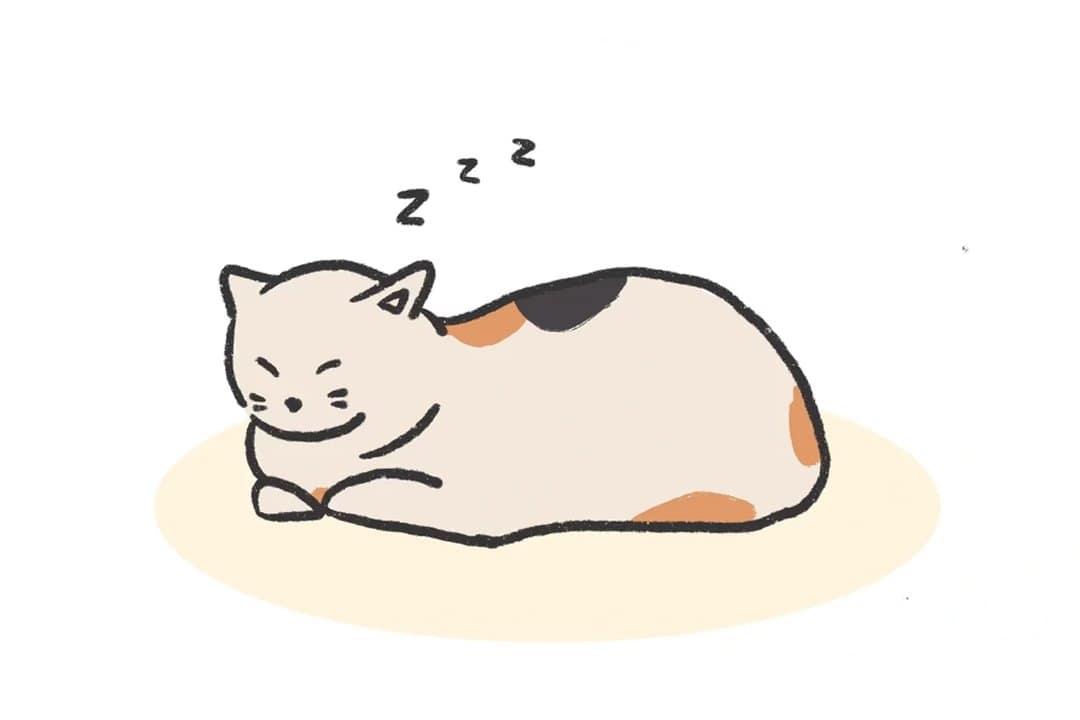
2. They feel safe (and often trust you)
Loafing can be a “safe mode” posture. Paws tucked in means your cat feels secure enough to rest, but still wants the option to get up quickly.
Common signs (usually normal):
- Loafing near you or on your belongings
- Neutral ears (not pinned), relaxed whiskers
- Calm watchfulness (they may stare, but not tense)
Most likely when:
- They choose spots that smell like you (laundry, pillow, laptop)
- In rooms where they spend the most time with you
Optional internal link placement: After this subsection, add a 1-line bridge like: “If your cat loafs with a twitchy tail or pinned ears, check their other body-language cues (tail/ears/eyes) to confirm whether they’re calm or uneasy.”
Wenn Ihre Katze auf Ihrem Kopfkissen oder sogar auf Ihrer Kleidung faulenzt, ist dies oft eine Erweiterung desselben Instinkts, der auch hinter Warum Ihre Katze so verschmust ist: Sie fühlen sich sicher, verbunden und durch Ihren Duft getröstet.
Kurz gesagt: Wenn Ihre Katze auf etwas herumlungert, das nach Ihnen riecht, oder direkt neben Ihnen, betrachten Sie das als Zeichen dafür, dass Vertrauen und Kameradschaft. Deine Katze sagt im Grunde genommen:, “Ich fühle mich wohl genug, um meine Pfoten einzukuscheln und mich hier zu entspannen, während du auf mich aufpasst.”
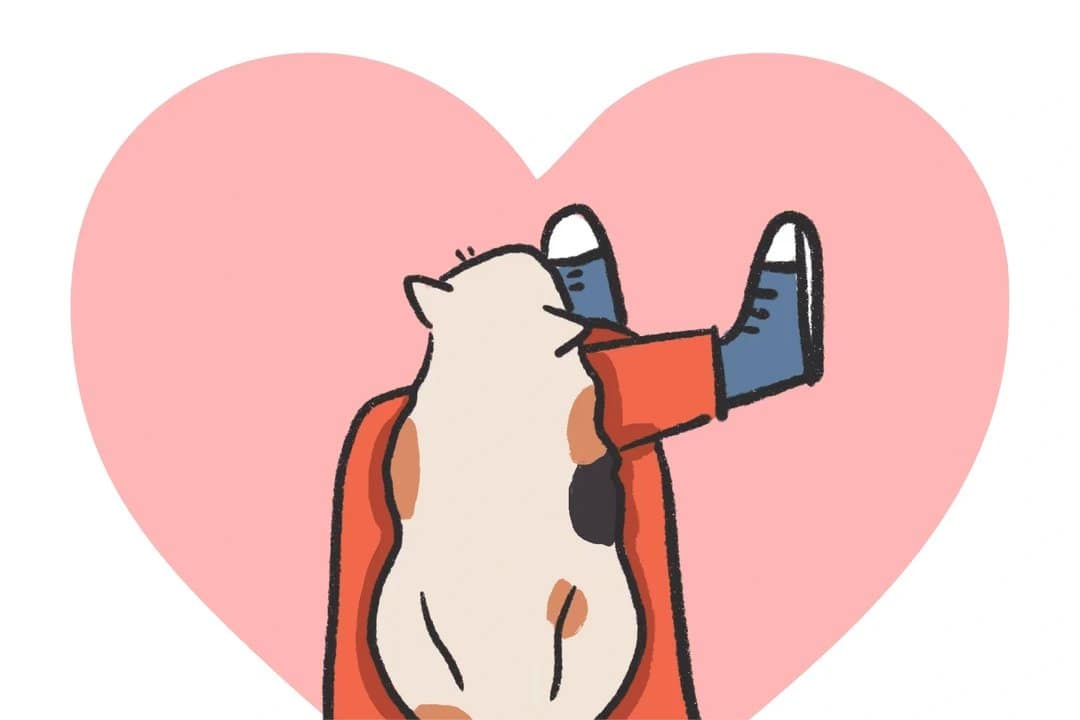
3. They’re staying warm (heat conservation)
Loafing helps cats conserve heat. By tucking paws and tail under the body, they reduce heat loss from extremities—like you putting hands in your pockets.
Common signs (usually normal):
- Tight, compact loaf (especially in cooler rooms)
- Choosing sunbeams or warm surfaces
- Paws and tail fully hidden more often
Most likely when:
- Your home is cool (AC, winter, cold floors)
- They’ve found a warm spot (sun, heater area, electronics)
Was Sie tun können:
- Add a warm bed/blanket in a quiet corner
- Offer a sunny window perch or cozy cave bed
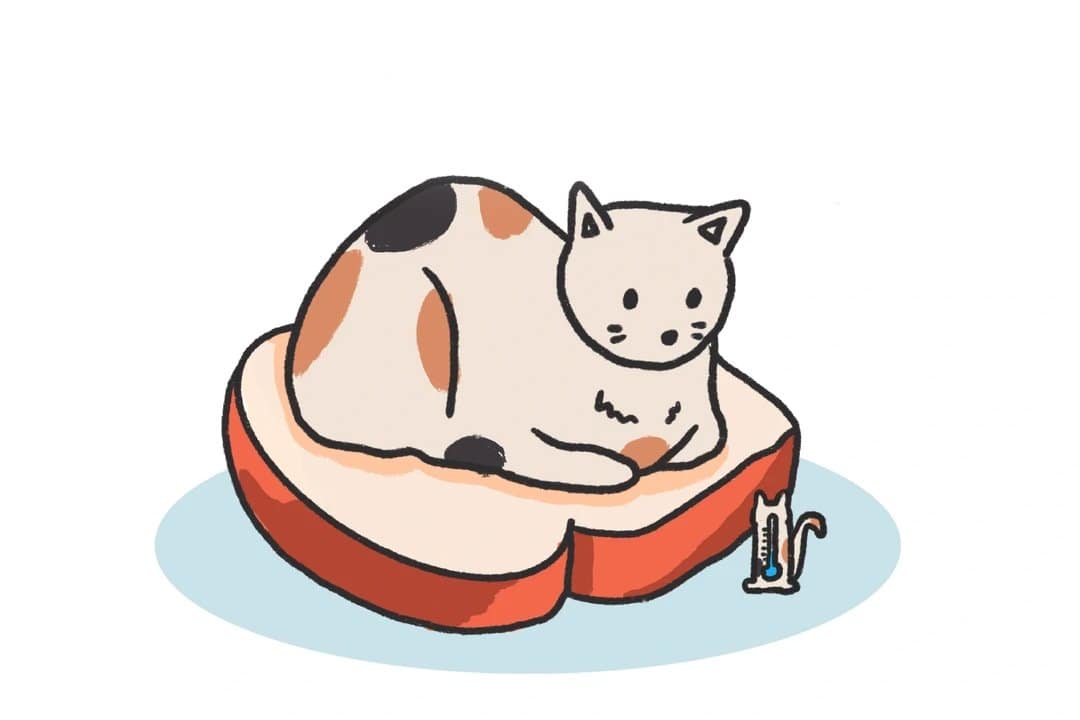
4. They’re resting but staying alert
A loaf is “relaxed, but ready.” Many cats loaf when they want to rest while keeping their head up and senses active.
Common signs (usually normal):
- Head up, eyes scanning, ears swiveling
- Front paws may be slightly forward (“partial loaf”)
- They get up easily if something interesting happens
Most likely when:
- They’re watching birds, people, or household activity
- They’re dozing lightly rather than fully sleeping
Tipp: This is a great spot to reference your “types of loaf” section (full/partial/sphinx) with a short cross-link:
“If your cat keeps one paw out or sits in a sphinx-style loaf, they may simply be on lookout while still comfortable.”
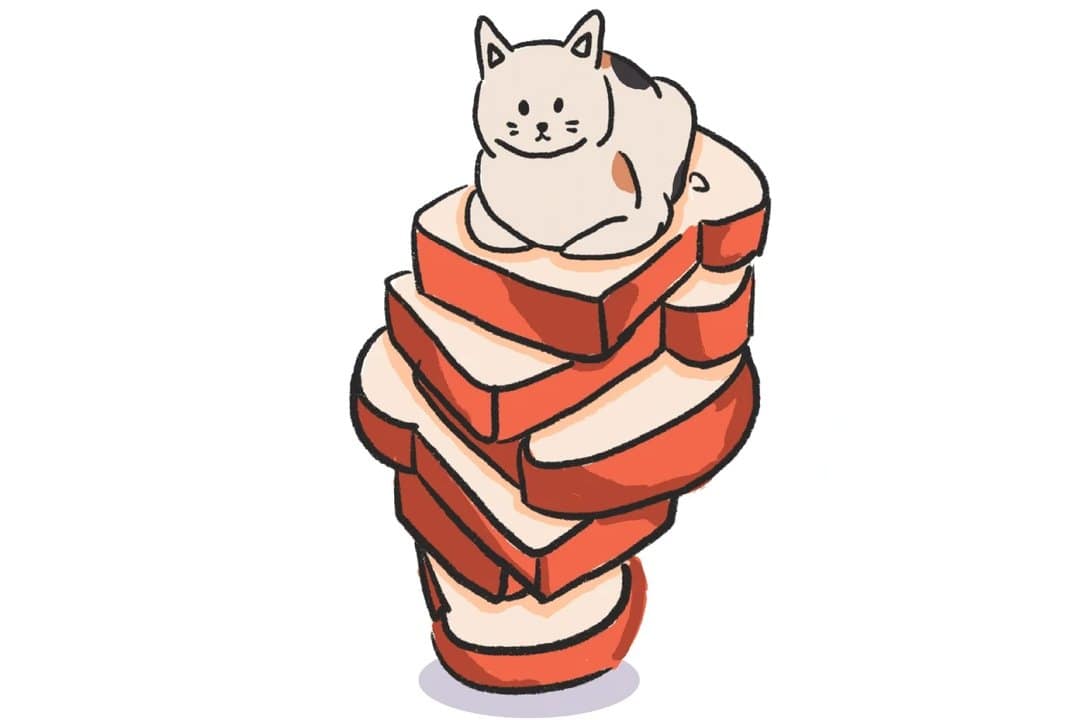
5. They’re protecting themselves (a cautious/defensive loaf)
Loafing can be protective in uncertain situations. Cats may tuck in to shield their belly and feel “smaller,” especially if they’re unsure about something nearby.
Common signs (could be mild stress):
- Body looks tighter, less “squishy”
- Ears more active or slightly back
- Tail wrapped tight, tip twitching
Most likely when:
- New visitors, loud noises, unfamiliar pets
- New environments (carrier, vet clinic, travel)
Was Sie tun können:
- Give space; reduce noise/traffic
- Offer a hideaway or higher perch
- Avoid forced handling until they relax
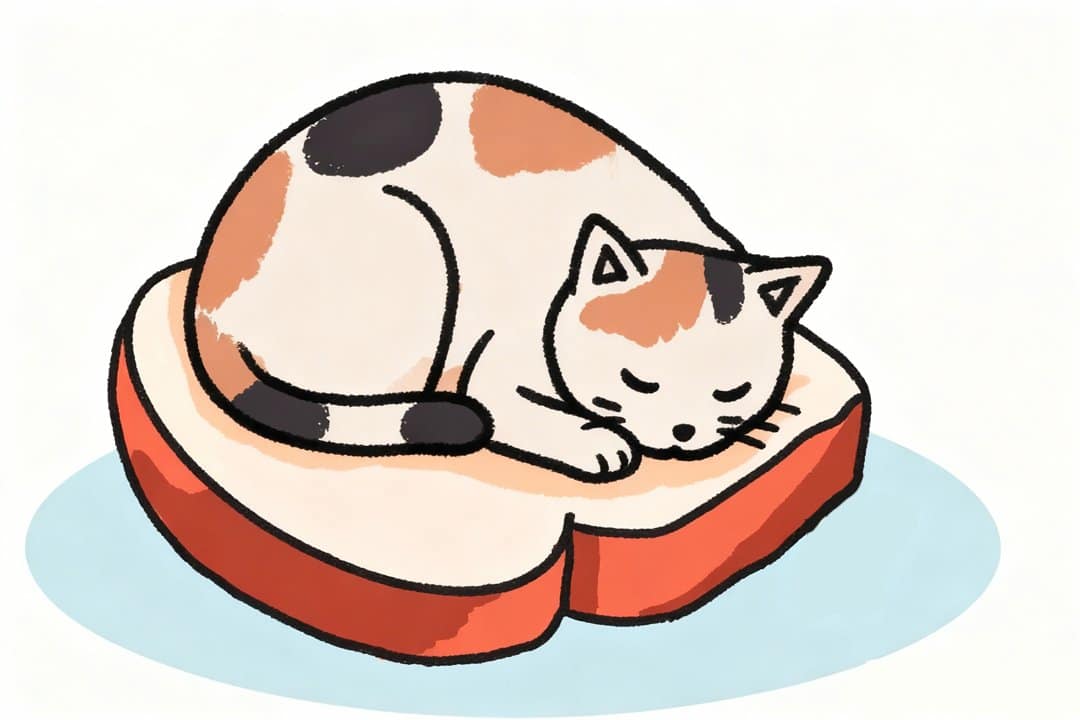
6. They’re overstimulated and taking a break
Sometimes loafing is a “pause button.” After intense play, petting, or a busy household moment, cats may loaf to reset—especially if they’re sensitive to stimulation.
Common signs (usually normal):
- Loafing shortly after play/petting
- Shorter loaf sessions, then normal behavior resumes
- They may prefer a quieter corner for a bit
Most likely when:
- Kids/guests are around
- A new schedule or noise disrupts their routine
Was Sie tun können:
- Provide predictable quiet zones
- Use short, regular play sessions instead of long intense bursts
7. They’re in pain or unwell (the “meatloaf” warning)
A hunched, tense loaf can be a pain/illness signal. Cats may loaf to cope with discomfort—especially if the posture looks strained or they act unlike themselves.
Common signs (red flags):
- Hunched back, tense body, head down
- Reduced response to you; unusually still
- Changes in appetite, litter box habits, or energy
Most likely when:
- There’s nausea, abdominal discomfort, fever, or injury
- A chronic issue flares up (pain, arthritis, etc.)
Was ist zu tun? If you see a “painful loaf” + behavior changes, contact your vet—especially if symptoms are sudden, worsening, or your cat seems distressed.
When to Worry About a Loafing Cat (Checklist)
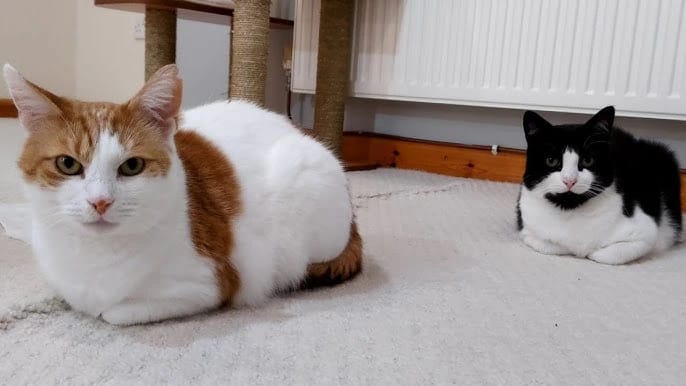
A normal loaf usually looks balanced and relaxed: paws tucked, head up, soft body, normal breathing, and your cat responds to you.
Loafing may be a concern if it’s new, persistent, or paired with behavior changes. Use this checklist:
1. Posture red flags
- Loaf looks hunched/tense (back rounded sharply, body rigid)
- Head down or face pressed toward the floor
- Weight shifted forward as if bracing
- Your cat keeps changing positions but can’t get comfortable
2. Responsiveness red flags
- Doesn’t respond normally to voice, touch, or treats
- Seems “distant,” unusually quiet, or hard to rouse
- Moves away or reacts sharply when you touch a specific area
3. Eating, drinking, and bathroom red flags
- Not eating or sudden appetite drop
- Vomiting/diarrhea, or repeated gagging/nausea signs
- Litter box changes: straining, frequent trips, accidents, or not peeing/pooping as usual
4. Breathing red flags (take seriously)
- Rapid breathing at rest, labored breathing, or persistent coughing
- Open-mouth breathing (especially at rest)
5. Mobility and comfort red flags
- Reluctance to jump, climb stairs, or walk normally
- Limping, trembling, hiding, or unusual aggression
- Pain signals: flinching, growling, guarding the belly, or unusually tight posture
What to do next
- Monitor zu Hause if your cat is otherwise acting normal (eating, drinking, using the litter box, responding to you) and the loaf looks relaxed.
- Rufen Sie Ihren Tierarzt an. if loafing looks painful und you notice appetite/litter box/energy changes, or if it persists beyond a day.
- Seek urgent care if you see open-mouth breathing, collapse, severe lethargy, repeated vomiting, or your cat cannot pee.
If you’re unsure, it’s always reasonable to call your vet and describe: posture + responsiveness + appetite + litter box + breathing.
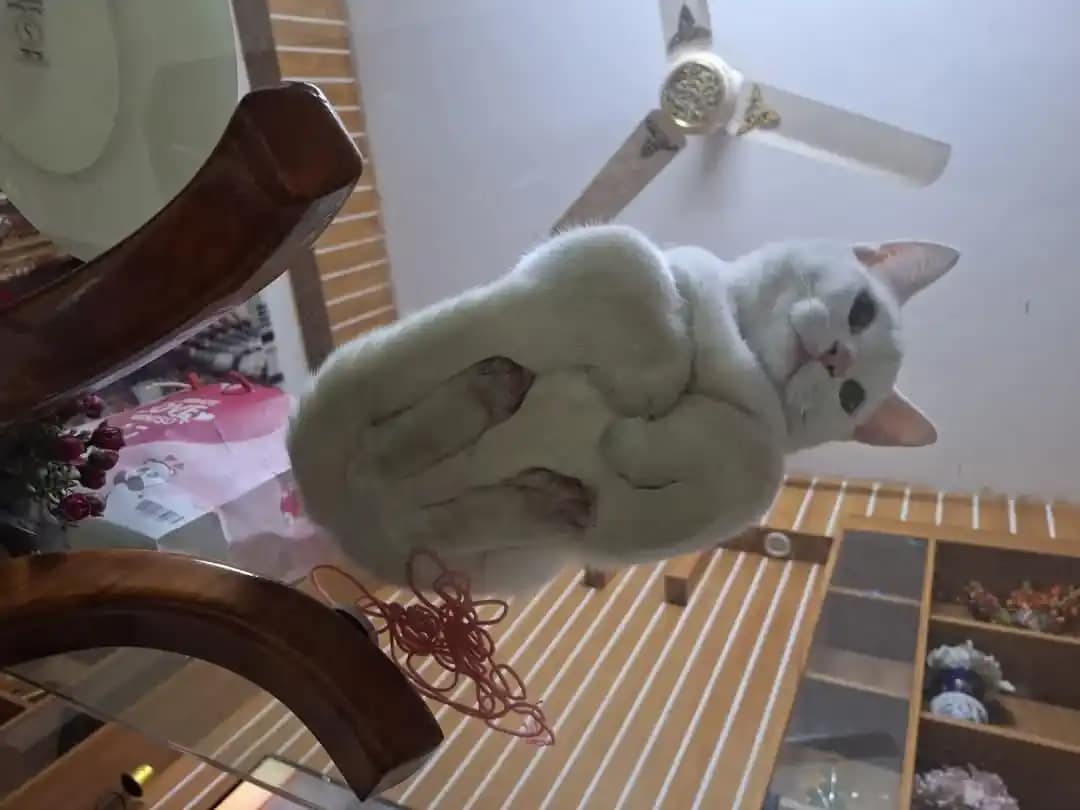
How to Help Your Cat Loaf Comfortably
Cats loaf most when they feel warm, safe, and unbothered. Try these simple upgrades:
- Add warmth: Put a soft bed/blanket in a favorite spot, a sunny windowsill perch, or a draft-free corner.
- Increase safety: Offer a quiet low-traffic zone (and ideally a higher perch) where your cat can rest without surprises.
- Improve comfort: Choose soft surfaces with gentle support (especially for older cats or cats with stiffness).
- Reduce stress: Keep feeding/play routines consistent; give your cat space when they choose to loaf.
- Support healthy movement: Daily gentle play helps prevent stiffness and keeps joints happy.
- Use the “normal check”: A healthy loaf looks loose and calm—your cat should respond normally when you talk to them.
If you suspect the loaf is pain-related
- Don’t force handling or movement.
- Look for appetite, litter box, breathing, or energy changes.
- If the posture is new/persistent or paired with symptoms, call your vet.
Why this works:
- Google can lift the bullet list cleanly
- Readers get an actionable checklist without scrolling through narrative text
Schlussfolgerung
Die Katzenbrot ist aus gutem Grund eines der beliebtesten Phänomene unter Katzenliebhabern – es ist niedlich, es ist skurril und es verrät uns viel über unsere Haustiere. Wenn Ihre Katze faulenzt, vermittelt sie oft Geborgenheit, Vertrauen oder genießt einfach einen Moment der Wärme..
Indem Sie auf die Nuancen ihres Schlafverhaltens achten (und die Warnzeichen der „Hackbraten-Position“ kennen), können Sie das Wohlbefinden Ihrer Katze genau einschätzen.
The cat loaf is adorable—and usually a great sign. Most of the time, loafing means your cat feels safe, relaxed, and comfortable. The key is noticing the difference between a soft, content loaf und eine tense, hunched loaf that comes with behavior changes. When you learn your cat’s normal “loaf style,” you’ll spot potential issues earlier and keep your kitty feeling their best.
Wenn Sie neugierig auf weitere skurrile Verhaltensweisen von Katzen sind, können Sie weiter stöbern:
– Unser Haupt Leitfaden zum Verhalten von Katzen – Kratzen, Schnurren, Verstecken und mehr erklärt.
- Katzenalter-Rechner – Rechnen Sie das Alter Ihrer Katze schnell in Menschenjahre um, um ihre Lebensphase besser zu verstehen.
- Kalorienrechner für Katzen – Schätzen Sie, wie viele Kalorien Ihre Katze täglich zu sich nehmen sollte, um ein gesundes Gewicht zu halten.
FAQ
Sind Katzen glücklich, wenn sie faulenzen?
Meistens, ja. Eine Katze in einer entspannten Loaf-Position fühlt sich in der Regel wohl, zufrieden und sicher. Solange der Körper Ihrer Katze locker ist, sie normal atmet und auf Sie reagiert, ist Loafing in der Regel ein Zeichen für eine glückliche Katze und kein Problem.
Warum sitzt meine Katze da und starrt mich an?
Wenn Ihre Katze brotet und starrt dich an, ist dies in der Regel ein Zeichen von Vertrauen und Zuneigung. Sie fühlen sich sicher genug, um ihre Pfoten zu verstecken, während sie Sie im Auge behalten, entweder um eine Bindung aufzubauen, um Aufmerksamkeit zu bitten oder um ruhig zu beobachten, was Sie tun.
Sind alle Katzen faul? Meine Katze ist es selten – sollte ich mir Sorgen machen?
Nicht alle Katzen faulenzen oft, und das ist normalerweise kein Grund zur Sorge. Das Faulenzen hängt von der Persönlichkeit, der Körperform und den Komfortvorlieben ab. Solange Ihre Katze normal frisst, spielt, sich putzt und die Katzentoilette benutzt, ist seltenes Faulenzen nur eine Frage des persönlichen Stils und kein Gesundheitsproblem.
Was ist der Unterschied zwischen einem normalen Laib und der “Hackbraten”-Position einer kranken Katze?
A normales Brot sieht weich und ausgeglichen aus: Pfoten angezogen, Rücken leicht gewölbt, Kopf erhoben, und die Katze reagiert auf Sie. A “Hackbraten”-Katze sieht gekrümmt und angespannt aus, oft mit gesenktem Kopf und wenig oder gar keiner Reaktion auf Berührungen. Wenn Sie dies zusätzlich zu Lethargie, Atemveränderungen oder Appetitlosigkeit beobachten, wenden Sie sich an Ihren Tierarzt.
Wie kann ich meine Katze dazu bringen, mehr zu faulenzen? Das ist so süß!
Man kann Faulenzen nicht erzwingen, aber man kann fördern Indem Sie Ihrer Katze ein Gefühl von Sicherheit und Geborgenheit vermitteln. Bieten Sie ihr warme, weiche Ruheplätze, ruhige Verstecke und positive Interaktionen. Eine entspannte, sichere Katze wird eher von selbst die Laib-Position einnehmen – und das in Ihrer Nähe.
Referenzen
Amerikanische Vereinigung der Katzenärzte (AAFP) & Internationale Gesellschaft für Katzenmedizin (ISFM). (2013). Richtlinien für die Umweltbedürfnisse von Katzen. Zeitschrift für Katzenmedizin und -chirurgie.
AAFP. (2024). Toolkit für chronische Schmerzen bei Katzen. Amerikanische Vereinigung der Katzenärzte.
Hofmeister, E. (2024). Beurteilung chronischer Schmerzen bei Katzen. Die heutige Tierarzthelferin, Herbst 2024.
Basepaws-Tierärzteteam. (2024). Körpersprache einer kranken Katze: Wie man die Anzeichen erkennt. Basepaws.
Institut für Umweltforschung und -bildung. (2025). Warum ziehen Katzen ihre Pfoten unter die Brust??









 EN
EN DE
DE ES
ES PT
PT