
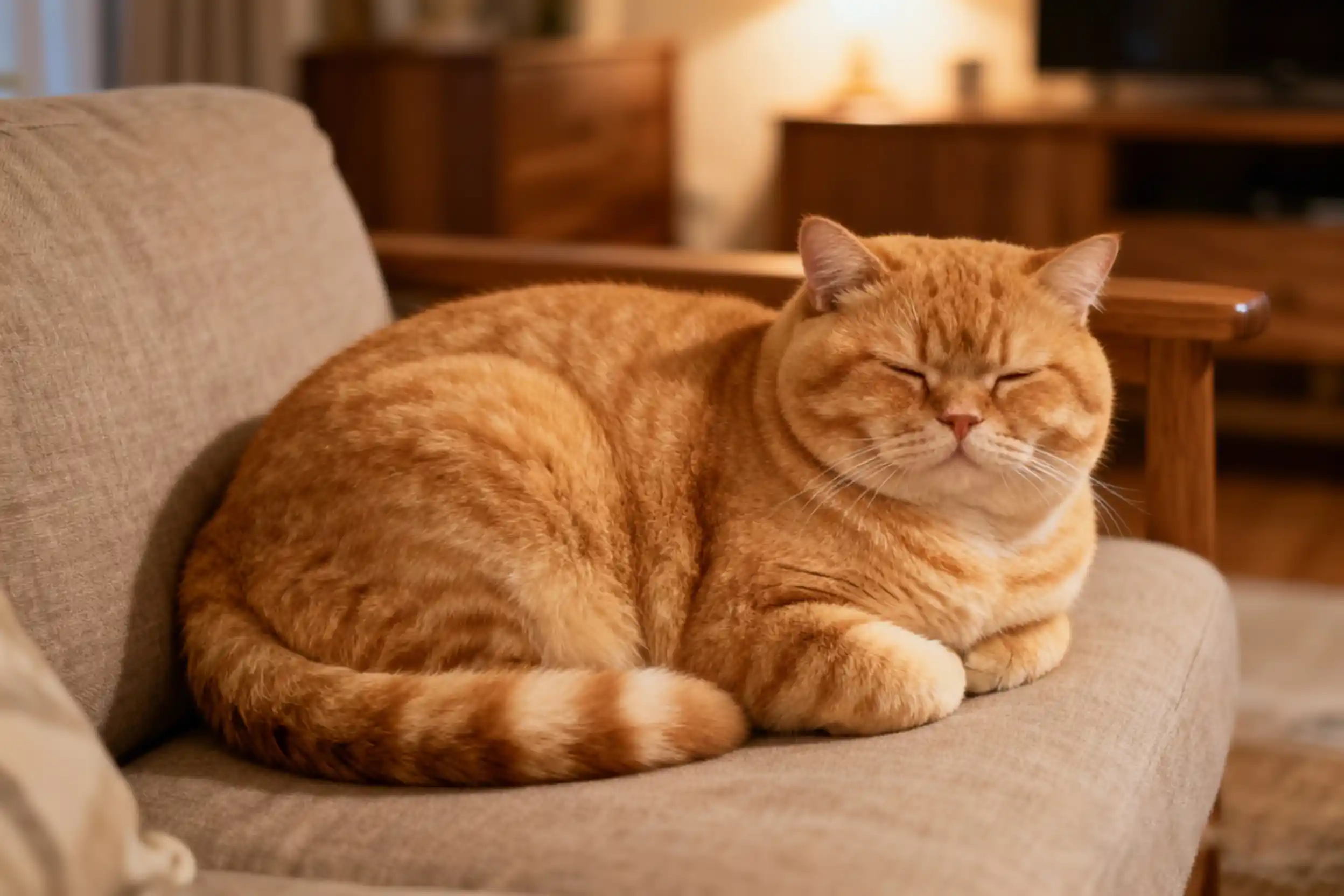
Os gatos ficam na posição de “pão” quando se sentam com as patas dobradas sob o corpo, criando uma forma compacta semelhante a um pão. Na maioria das vezes, essa postura significa que seu gato se sente seguro, aquecido e relaxado, mas ainda assim permanece alerta o suficiente para se mover rapidamente.
O segredo está no contexto. Um pão macio com orelhas neutras, respiração normal e um gato que reage bem costuma ser normal. Uma postura encurvada, tensa e com a cabeça baixa, combinada com escondido, falta de apetite, alterações no uso da caixa de areia ou uma quietude incomum podem ser sinais de que é hora de ligar para o veterinário.
Índice
- O que é um pão de gato?
- Por que os gatos ficam de bobeira?
- Como é um gato relaxado, deitado como um pãozinho?
- Quais são as diferentes posições do “pão de gato”?
- Quando devo me preocupar com um gato preguiçoso?
- “Loaf” é o mesmo que “agachamento de caça”?
- Como posso ajudar meu gato a descansar confortavelmente?
- Conclusão
- Perguntas frequentes
- Referências
O que é um pão de gato?
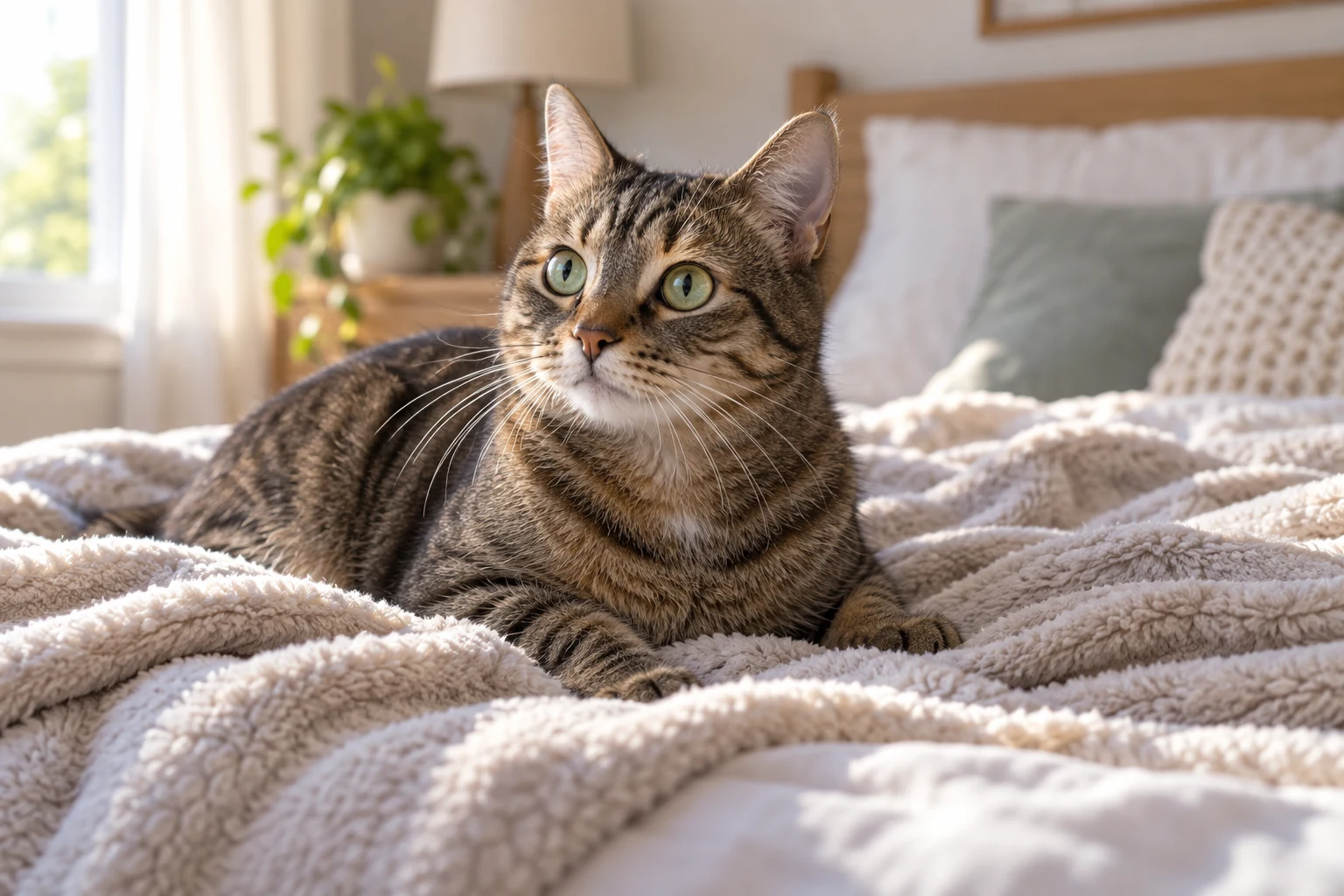
A posição de pãozinho é uma postura de descanso em que o gato recolhe as patas — e, muitas vezes, a cauda — sob o corpo. Visto de lado ou de frente, o gato parece compacto e arredondado, como um pequeno pãozinho.
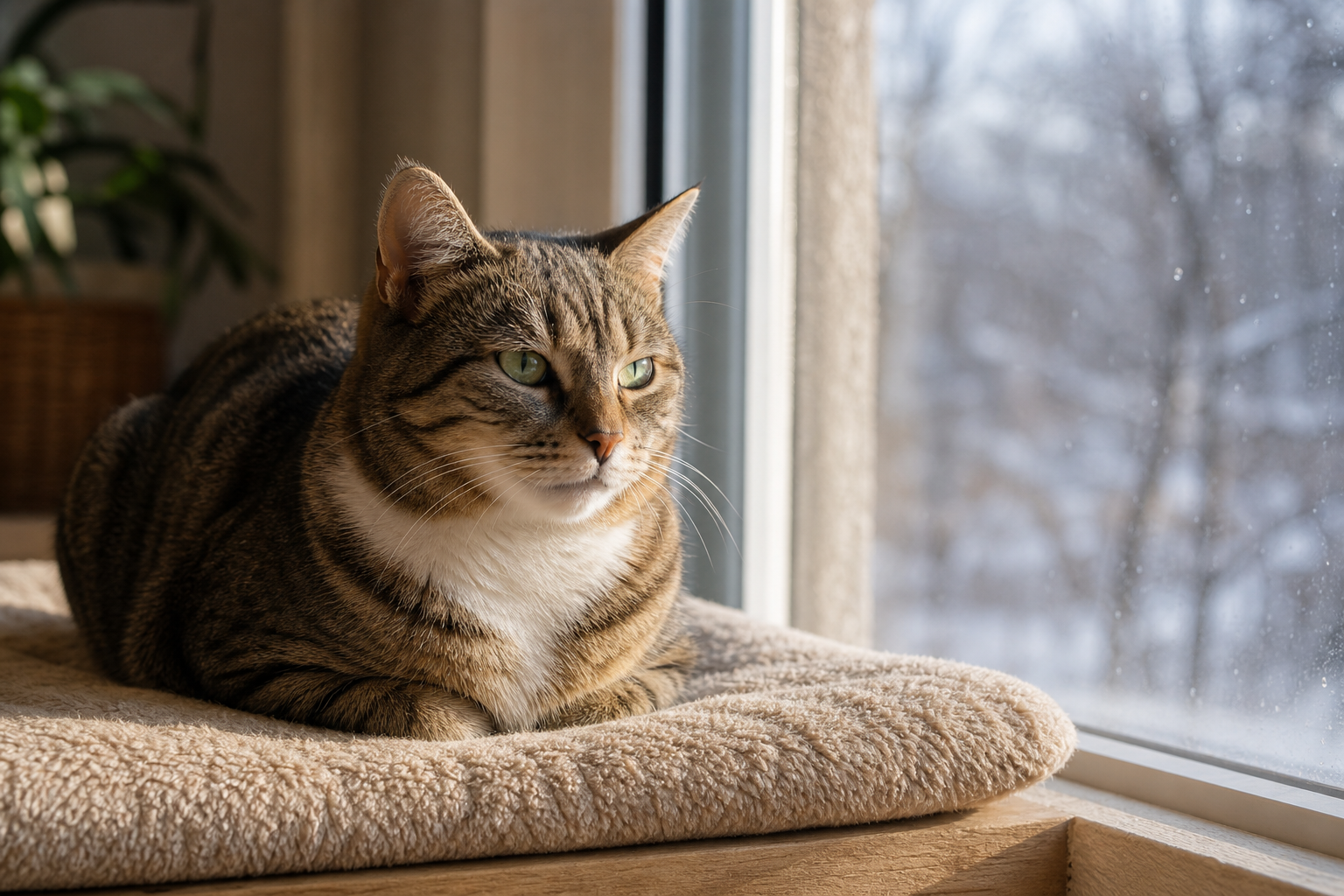
Essa posição é diferente de ficar totalmente deitado de lado ou enrolado em uma bolinha. É uma posição intermediária: relaxante, mas sem ficar completamente estendido. Seu gato pode cochilar, ficar de olho no ambiente, manter o calor e ainda assim levantar-se rapidamente se algo interessante acontecer.
Na maioria das vezes, ficar de bobeira é inofensivo. Isso ganha mais significado quando a postura parece tensa ou quando se acompanha de outras mudanças de comportamento.
Por que os gatos ficam de bobeira?
Os gatos deitam-se para sentir conforto, calor, segurança e para descansar em estado de alerta. A mesma postura pode significar “estou confortável” ou “estou de olho no que se passa”, por isso o resto da linguagem corporal do seu gato é importante.
Entre os motivos mais comuns estão:
| Motivo | Como costuma ser | O que isso significa |
|---|---|---|
| Conforto | Corpo relaxado, patas encolhidas, expressão serena | Seu gato está descansando tranquilamente. |
| Calor | Pão compacto em um local ensolarado, em um cobertor ou em um poleiro | Manus encolhidas podem ajudar a reduzir a perda de calor. |
| Segurança | O gato fica deitado perto de você ou no seu cômodo favorito | Seu gato se sente seguro o suficiente para se acomodar. |
| Alerta de descanso | Cabeça erguida, orelhas se movendo suavemente, olhos entreabertos | Seu gato está descansando, mas continua atento ao que acontece na sala. |
| Reiniciar após a estimulação | Descansando depois de brincar, receber visitas ou receber carinho | Seu gato pode estar se acalmando. |
Se o seu gato fica deitado antes ou depois das sonecas, isso pode fazer parte de uma rotina normal de descanso. Para saber mais sobre padrões normais de descanso, consulte o guia da SnuggleSouls sobre quanto tempo os gatos dormem.
Como é um gato relaxado, deitado como um pãozinho?
Um gato relaxado parece descontraído, equilibrado e à vontade. Ele pode ter as patas dobradas, a cabeça em posição natural, as orelhas em posição neutra, piscar lentamente e respirar normalmente.
Fique atento a estes sinais tranquilizadores:
- Patas bem encaixadas, sem se apoiarem com força no chão
- Com a cabeça erguida ou levemente inclinada, sem ficar pendurada de forma forçada
- Olhar suave ou piscadas lentas
- Orelhas neutras, nem achatadas nem muito inclinadas para os lados
- Respiração normal
- Reage à sua voz, a guloseimas, a brinquedos ou a movimentos suaves nas proximidades
- Come, bebe, se limpa e usa a caixa de areia normalmente
A RSPCA observa que a linguagem corporal dos gatos deve ser interpretada levando-se em conta todo o corpo, incluindo os olhos, a cauda, a boca, a postura e as orelhas 1. Essa é a regra aqui: não julgue o pão apenas pela posição das patas.
Se o seu gato fica deitado enquanto ronrona, isso pode ser sinal de satisfação, mas o ronronar não é a única pista. Este guia sobre por que os gatos ronronam explica por que o contexto ainda é importante.
Quais são as diferentes posições do “pão de gato”?
As posturas dos gatos variam. A maioria é normal quando o gato está agindo como de costume, mas algumas merecem uma atenção especial se o corpo parecer rígido ou se o gato parecer não estar bem.
| Tipo de pão | Como é a aparência | Normalmente significa | Fique atento a |
|---|---|---|---|
| Pão clássico | Todas as patas encolhidas, corpo compacto, cabeça erguida | Confortável e seguro | É normal se o corpo estiver macio e flexível |
| Pão parcial | Uma ou ambas as patas parcialmente visíveis | Descontraído, mas pronto para agir | Tensão, olhos arregalados, cauda tremendo |
| Pão Sphinx | Patas dianteiras para a frente, peito para fora | Calmo e observador | Orelhas para trás, olhar fixo, ombros tensos |
| Pão em forma de rosto | Queixo ou rosto apoiados | Com muito sono ou profundamente relaxado | Respiração anormal ou baixa capacidade de resposta |
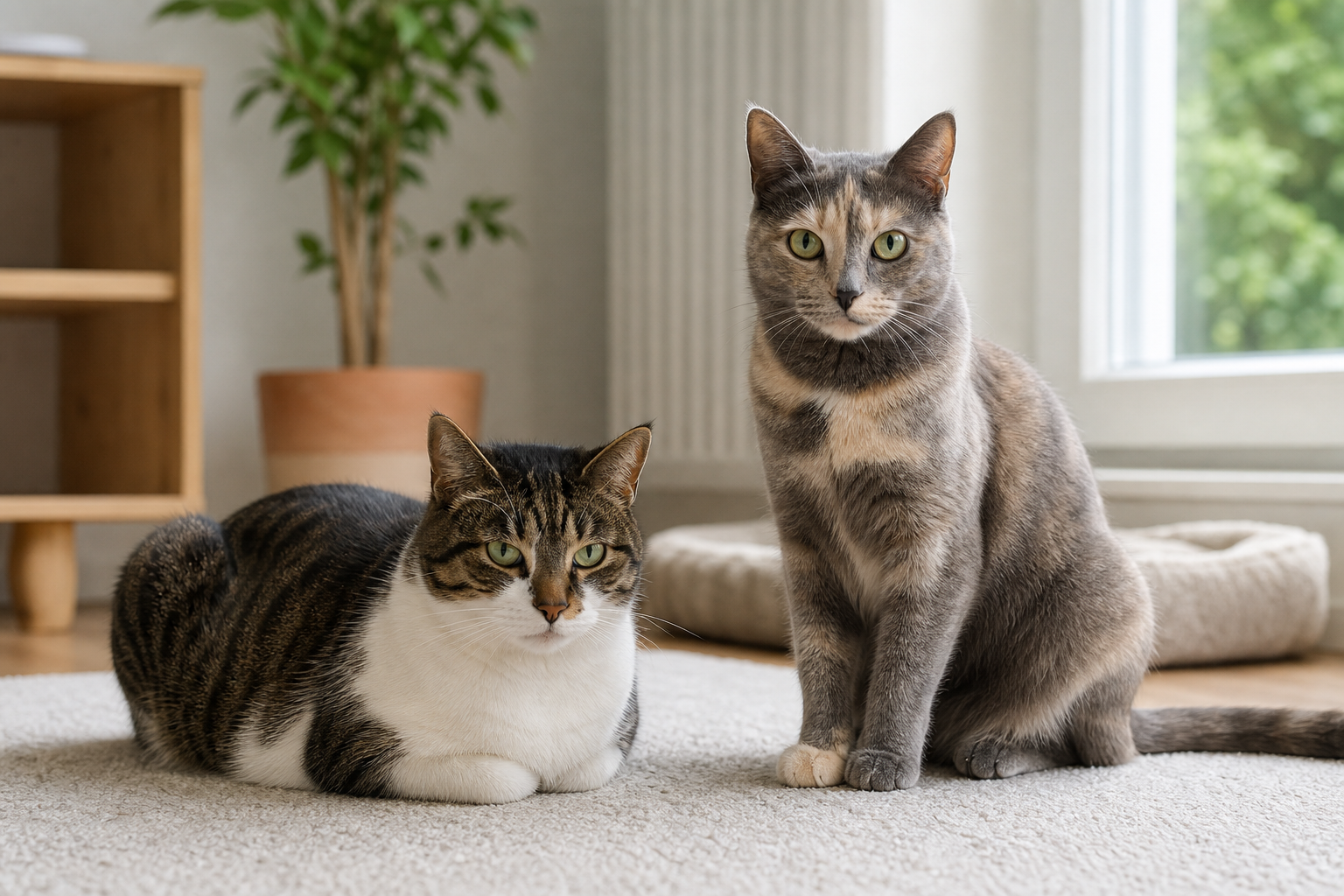
| Pão duplo | Dois gatos descansando um ao lado do outro | Conforto compartilhado ou tolerância social | Olhar fixo, bloqueio ou proteção de recursos |
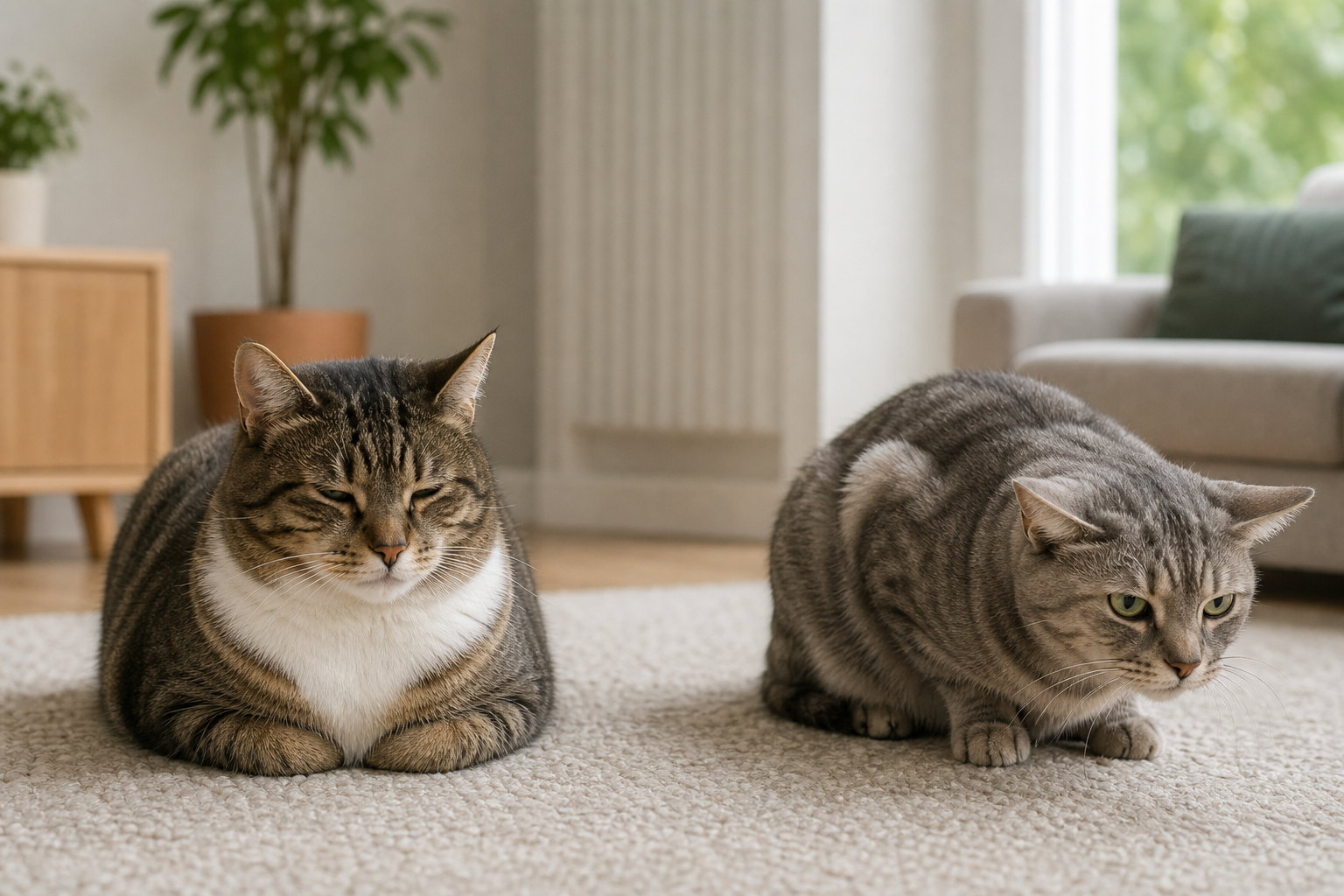
| Agachamento tenso | Corpo firme, cabeça baixa, patas firmes | Possível desconforto, estresse ou dor | Apetite, caixa de areia, respiração, tendência a se esconder, alterações na mobilidade |
A expressão “meatloaf” é usada às vezes na internet para descrever uma postura tensa e encurvada do gato. Eu não usaria isso como diagnóstico. É melhor perguntar: isso parece um bolo de carne relaxado, ou meu gato parece estar desconfortável?
Quando devo me preocupar com um gato preguiçoso?
Preocupe-se se o pão for recente, se for persistente ou se vier acompanhado de outras alterações. Um pão isoladamente costuma ser normal. Uma postura encurvada, aliada a alterações no apetite, tendência a se esconder, dificuldade para respirar, vômitos, diarreia, problemas com a caixa de areia ou fraqueza, já é um caso diferente.
Use esta tabela de triagem rápida:
| O que você vê | Normalmente significa | O que fazer |
|---|---|---|
| Fezes moles, apetite normal, uso normal da caixa de areia | Repouso normal | Aproveite e ofereça cantinhos aconchegantes. |
| Um sujeito de corpo compacto, cabeça baixa e olhos semicerrados | Possível desconforto ou estresse | Fique atento e verifique se há outros sintomas. |
| Ficar deitado, além de se esconder, perda de apetite ou falta de higiene | Possível doença ou dor | Ligue para o seu veterinário. |
| Fezes em forma de pão, acompanhadas de vômitos, diarreia ou alterações na caixa de areia | Possível problema de saúde | Ligue imediatamente para o seu veterinário. |
| Pânico, respiração com a boca aberta, colapso, incapacidade de urinar ou letargia grave | Sinal de emergência | Procure atendimento veterinário de urgência. |
A VCA observa que os gatos costumam esconder os sinais de doença e que mudanças como perda de apetite, tendência a se esconder, falta de higiene, alterações no uso da caixa de areia e dificuldades respiratórias merecem atenção 2. Um folheto informativo sobre dor em gatos, elaborado pelas Academias Nacionais, também menciona a postura anormal ou encurvada entre os possíveis sinais relacionados à dor 4.
Se o seu gato estiver mais preguiçoso e se escondendo do que o normal, compare esse comportamento com o guia da SnuggleSouls sobre por que os gatos se escondem. Se o seu gato reagir de forma agressiva ao toque, consulte o guia sobre sensibilidade repentina a mordidas ou carícias.
“Loaf” é o mesmo que “agachamento de caça”?
Não. A posição de repouso é geralmente uma postura de descanso, enquanto a posição agachada de caça é mais ativa, concentrada e pronta para saltar. A diferença está na energia.
Um cão relaxado geralmente mantém as patas encolhidas, o corpo imóvel, o olhar suave e não demonstra um foco intenso. Uma postura de caça pode incluir o corpo abaixado, o olhar concentrado, a atenção voltada para a frente, a cauda tremendo e, possivelmente, mexer antes de atacar.
Use esta comparação:
| Postura | Sinais corporais | Contexto provável |
|---|---|---|
| Pão de fermentação lenta | Patas encolhidas, corpo macio, cabeça em posição natural | Descansando, aquecendo, observando com calma |
| Pão de alerta | Patas encolhidas, cabeça erguida, orelhas atentas | Em repouso, mas com monitoramento da atividade |
| Posição agachada de caça | Corpo abaixado, olhar fixo, músculos em tensão | Perseguir brinquedos, pés ou outro alvo |
| Agachamento tenso | Corpo rígido, cabeça baixa, resposta reduzida | É possível que haja estresse, dor ou desconforto |
Se o seu gato se agacha, fica olhando fixamente e se contorce antes de correr atrás de um brinquedo, isso tem mais a ver com brincadeira e comportamento predatório. O SnuggleSouls explica esse padrão no guia sobre por que os gatos se contorcem antes de atacar.
Como posso ajudar meu gato a descansar confortavelmente?
Ajude seu gato a relaxar confortavelmente, oferecendo-lhe locais seguros, aconchegantes e tranquilos para descansar. A maioria dos gatos gosta de ficar onde se sente segura e sem ser incomodada.
Experimente:
- Uma cama macia ou um cobertor dobrado em uma área pouco movimentada
- Um poleiro ensolarado junto à janela
- Um local aconchegante e sem correntes de ar para descansar
- Prateleiras elevadas ou árvores para gatos que gostam de observar
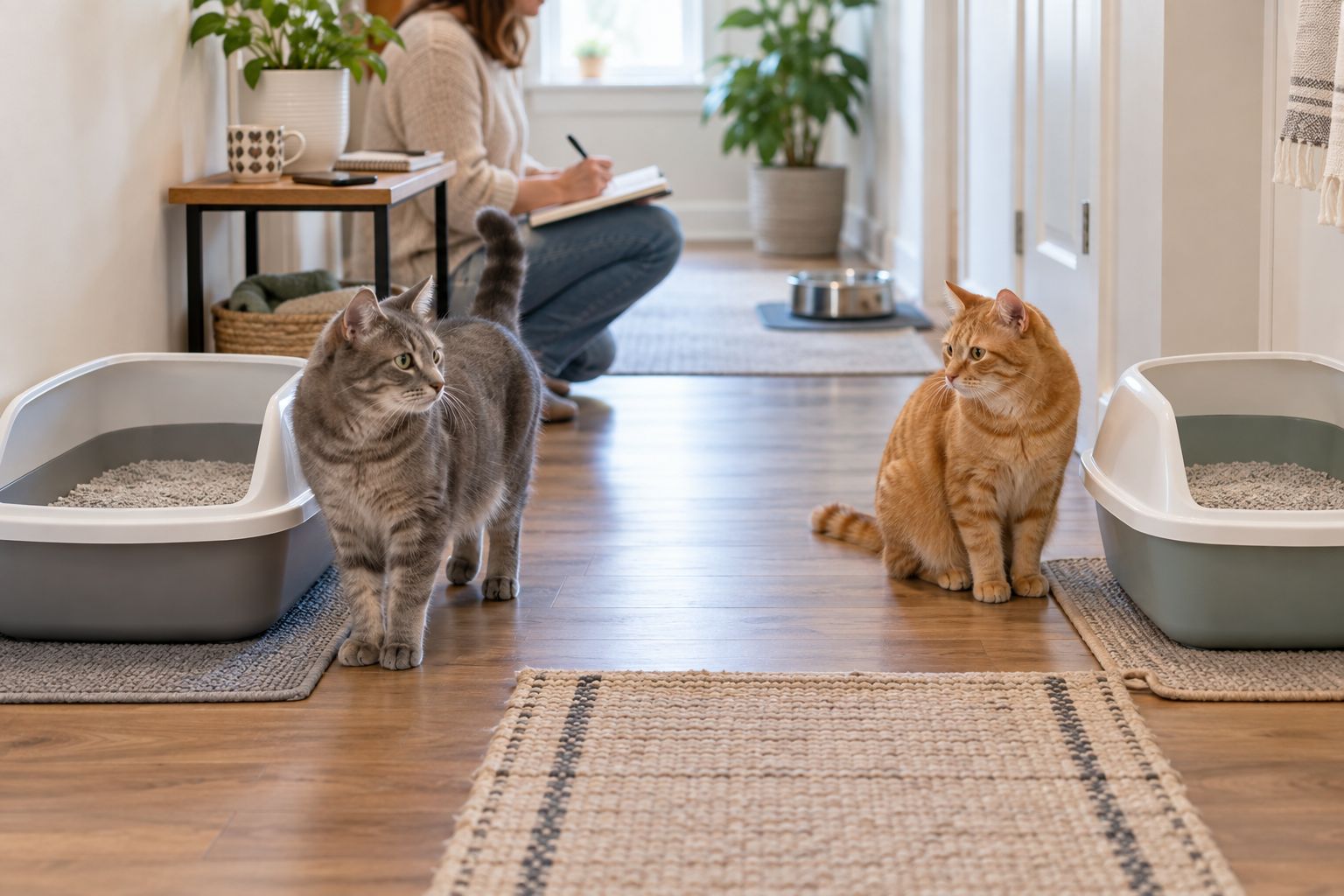
- Vários locais de descanso em lares com vários gatos
- Brincadeiras tranquilas antes dos períodos de descanso
- Dê um tempo quando seu gato parecer tenso ou sobreestimulado
Para uma interpretação da linguagem corporal que vai além da simples observação, o guia SnuggleSouls para linguagem da cauda do gato pode ajudar você a comparar a cauda, as orelhas, os olhos e a postura ao mesmo tempo.
Se o seu gato for mais velho, tiver rigidez nas articulações ou relutar em pular, coloque camas baixas, rampas ou degraus. Essas medidas de conforto são úteis, mas não devem substituir uma consulta ao veterinário caso o seu gato pareça sentir dor ou mude repentinamente de comportamento.
Conclusão
Os gatos costumam ficar deitados porque se sentem confortáveis, aquecidos, seguros e discretamente atentos. Uma postura normal de repouso é suave, equilibrada e ágil, e é acompanhada de hábitos normais de alimentação, higiene, movimento e uso da caixa de areia.
A postura torna-se mais preocupante quando parece tensa ou se apresenta acompanhada de outras alterações. Se o seu gato parecer encurvado, com a cabeça baixa, rígido, invulgarmente imóvel, ou se isso for acompanhado de comportamento de se esconder, alteração no apetite, vômito, diarreia, dificuldade para respirar ou problemas com a caixa de areia, entre em contato com o veterinário.
Perguntas frequentes
Por que os gatos colocam as patas debaixo do corpo?
Os gatos costumam encolher as patas para descansar confortavelmente, conservar o calor e manter o corpo compacto, sem deixar de ficarem alertas. Geralmente, é normal quando seu gato parece relaxado e se comporta como de costume.
O fato de meu gato ficar deitado significa que ele confia em mim?
É possível. Um gato que fica por perto, em cima das suas coisas ou em um cômodo compartilhado pode se sentir seguro nesse espaço. É mais provável que haja confiança quando o corpo está relaxado, as orelhas estão em posição neutra e o gato opta por ficar por perto.
Um pão de gato é sempre confortável?
Não. Na maioria das vezes, ficar deitado é uma posição confortável, mas uma postura encurvada ou tensa pode, às vezes, indicar desconforto, dor, estresse ou doença. Observe o corpo todo e preste atenção a quaisquer mudanças no apetite, na energia, na respiração ou nos hábitos de uso da bandeja sanitária.
O que é a “posição do bolo de carne” nos gatos?
As pessoas costumam usar a expressão “meatloaf” para descrever um gato tenso, encurvado, com a cabeça baixa e o corpo rígido. Não se trata de um diagnóstico. Considere isso como uma pista para verificar se o seu gato parece estar com dor, com náuseas, fraco ou agindo de forma diferente do normal.
Devo ligar para o veterinário se meu gato ficar deitado o dia todo?
Ligue para o veterinário se o gato passar o dia inteiro deitado, se estiver menos reativo ou se você notar mudanças no apetite, se ele ficar se escondendo, vomitar, tiver diarreia, apresentar alterações no uso da caixa de areia, tiver dificuldade para respirar ou mostrar sinais de fraqueza. Se, fora isso, o gato estiver normal, pode ser apenas uma postura de descanso preferida dele.
Por que meu gato fica deitado nas minhas roupas?
Suas roupas têm o seu cheiro e podem ser quentinhas ou macias. Ficar deitado ali pode ser um comportamento de conforto, especialmente se o seu gato parecer relaxado e escolher aquele lugar por vontade própria.
Referências
[1] RSPCA. Entendendo a linguagem corporal dos gatos. https://education.rspca.org.uk/web/rspca/adviceandwelfare/pets/cats/behaviour/understanding
[2] Clínicas Veterinárias VCA. Como reconhecer os sinais de doença em gatos. https://vcahospitals.com/know-your-pet/recognizing-signs-of-illness-in-cats
[3] Iniciativa para Animais de Estimação que Vivem dentro de Casa da Universidade Estadual de Ohio. Como interpretar a linguagem corporal do seu gato. https://indoorpet.osu.edu/sites/default/files/assets/documents/hospital/indoorcat/Reading%20Cat%20Body%20Language.pdf
[4] Academias Nacionais. Como reconhecer quando seu gato está com dor. https://nap.nationalacademies.org/resource/12526/cat_factsheet_final.pdf
 EN
EN DE
DE ES
ES PT
PT