
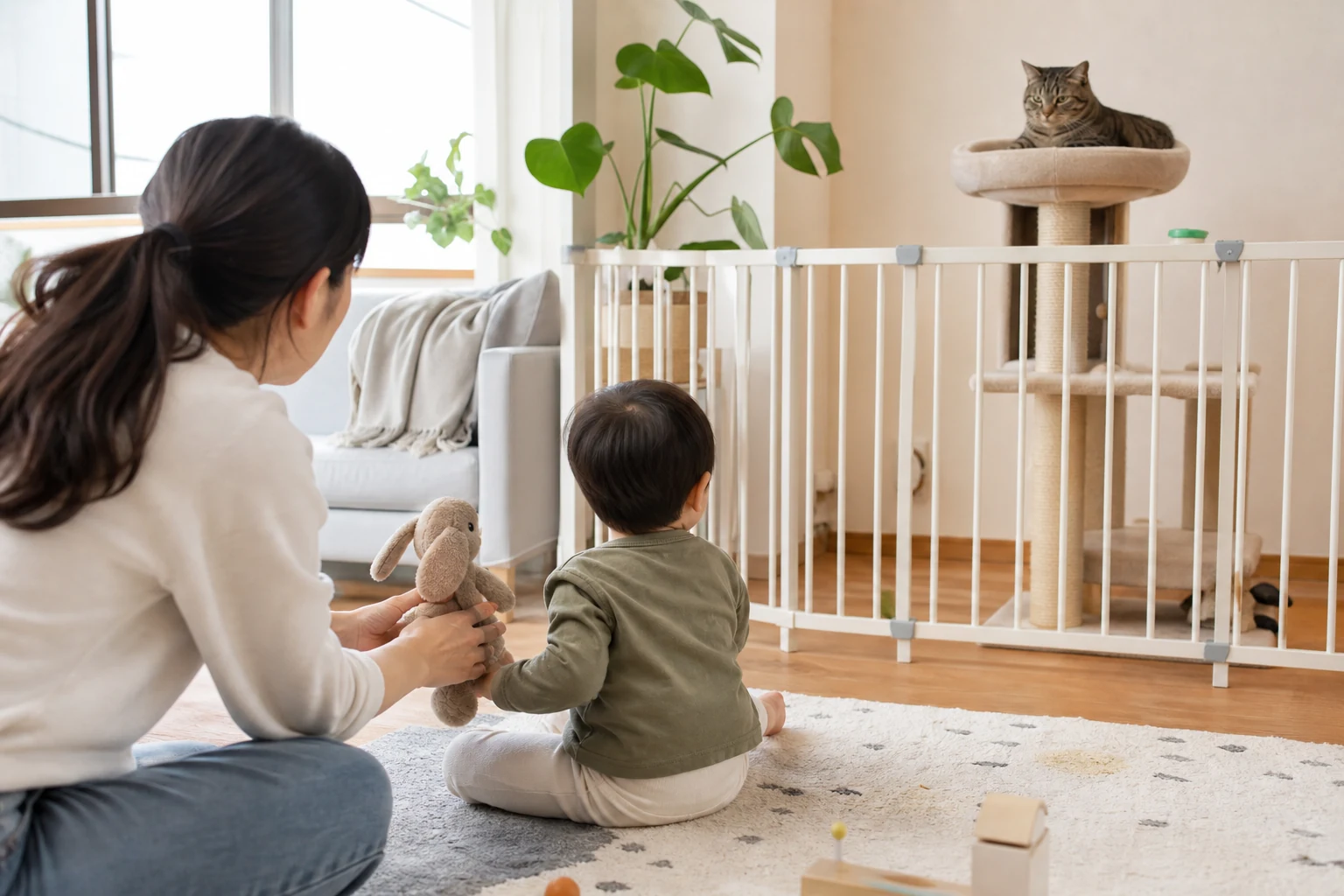
If your toddler keeps chasing the cat, separate first, then teach slow feet, gentle hands, and a safer game.
A toddler chasing a cat is stressful because it can turn into a loop. The cat runs, the toddler laughs or follows, the cat hides or swats, and everyone learns the wrong lesson. Your toddler is not being malicious; toddlers are still learning impulse control, speed, empathy, and body boundaries. Your cat, however, experiences the chase as pressure.
The goal is not to make your cat tolerate being pursued. It is to stop the chase from being possible, then teach your toddler what to do with their body when the cat appears. HSE guidance for children around cats is direct: children should be supervised, should not run after or grab cats, and should leave cats alone when they are eating, sleeping, using the litter box, or showing stress signals 2.
Inhaltsübersicht
- What is the safest first rule?
- What setup stops chasing before it starts?
- How do you redirect a toddler in the moment?
- What should you teach your toddler to do instead?
- What safe games can replace chasing?
- What cat body language means you should separate them?
- What daily routine helps the cat feel safer?
- What if the chasing keeps happening?
- Conclusion: Build a home where the cat does not have to run
- Häufig gestellte Fragen
- Referenzen
What is the safest first rule?
The first rule is simple: toddler and reachable cat only share space when an adult is close enough to stop a grab before it happens. If you cannot physically interrupt the chase immediately, use a gate, play yard, closed door, or elevated cat route first.
This is especially important when your child has recently moved from crawling into walking or running. A cat who managed the crawling stage may react differently when a toddler can suddenly close distance, squeal, corner them behind furniture, or grab a tail for balance. If you are still working through the earlier mobility stage, review how to introduce a cat to a crawling baby and build from there.
Make the rule predictable for everyone:
- If the cat walks away, the toddler stops.
- If the toddler runs toward the cat, an adult blocks and redirects.
- If the cat is eating, sleeping, toileting, hiding, or on a bed, the toddler does not touch.
- If the adult is busy, the cat and toddler are separated.
The rule works best when it is physical, not verbal only. A two-year-old may understand "gentle" for five seconds and forget it when the cat darts across the room. The environment has to carry some of the safety work.
What setup stops chasing before it starts?
The best setup gives your cat a place to go where the toddler cannot follow. Cats Protection recommends child-free space for young children who do not yet understand a cat's need to rest, including using a baby gate to prevent children from wandering in 1.
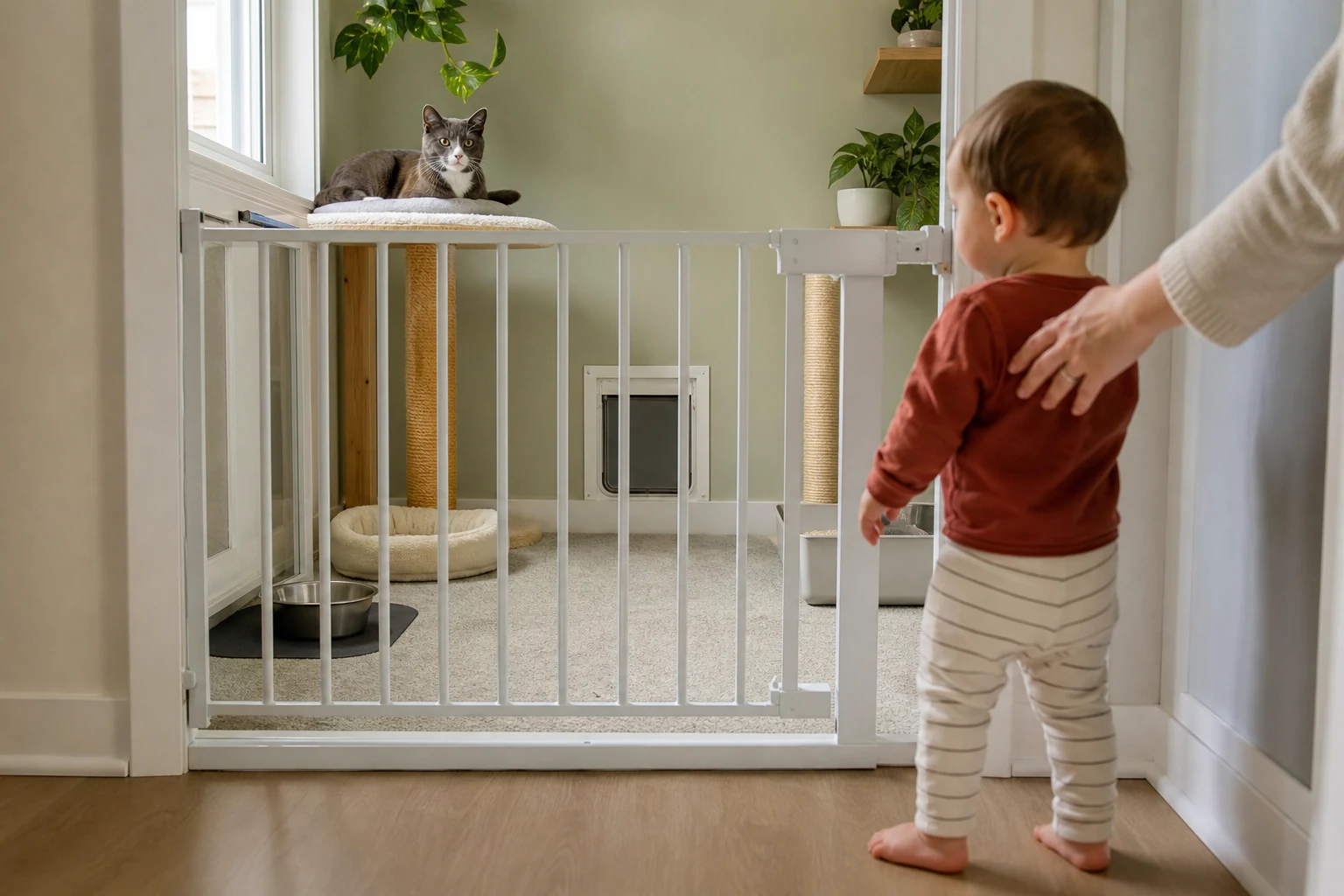
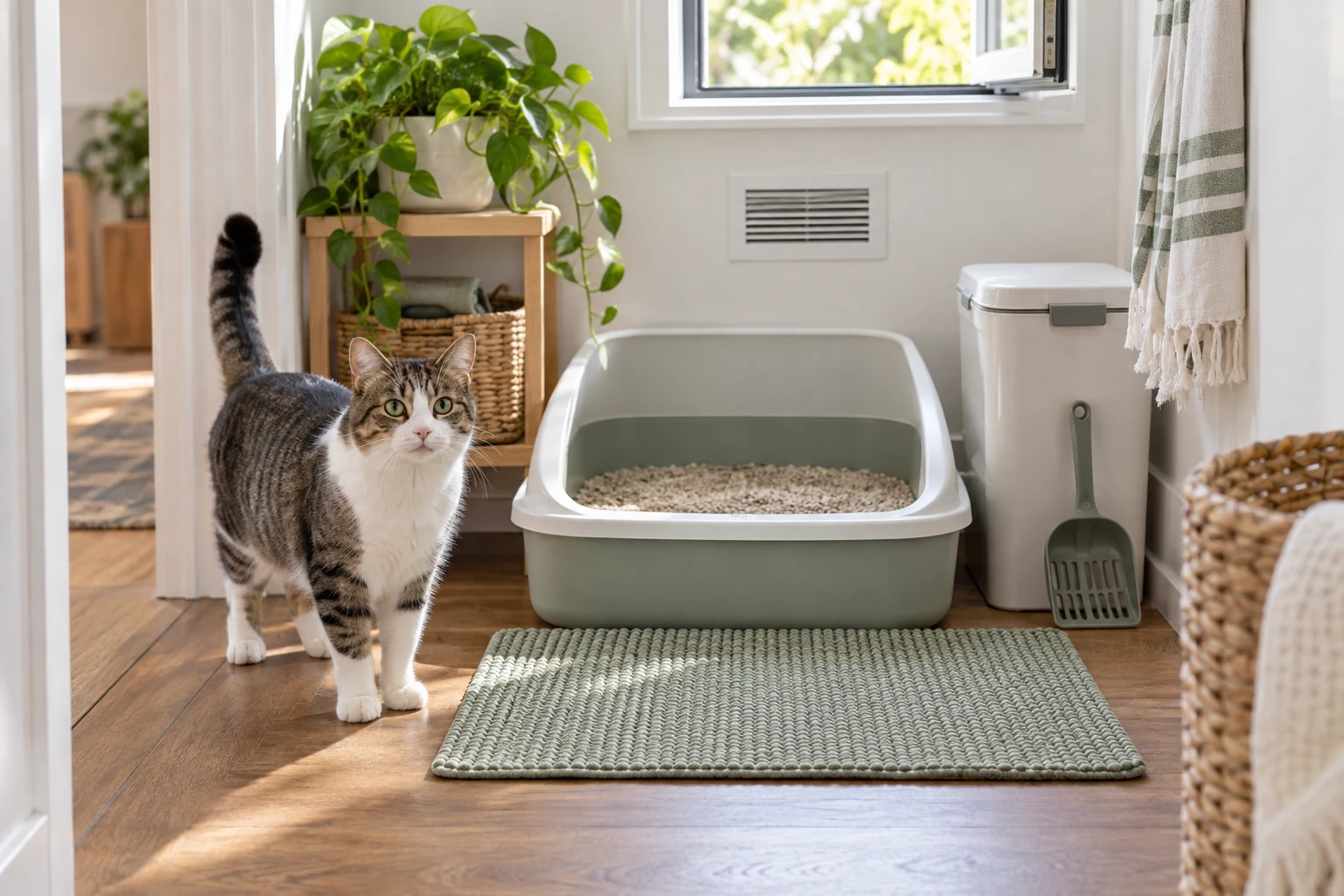
A cat-safe zone should protect rest, food, water, litter access, scratching, and a route away from toddler traffic.
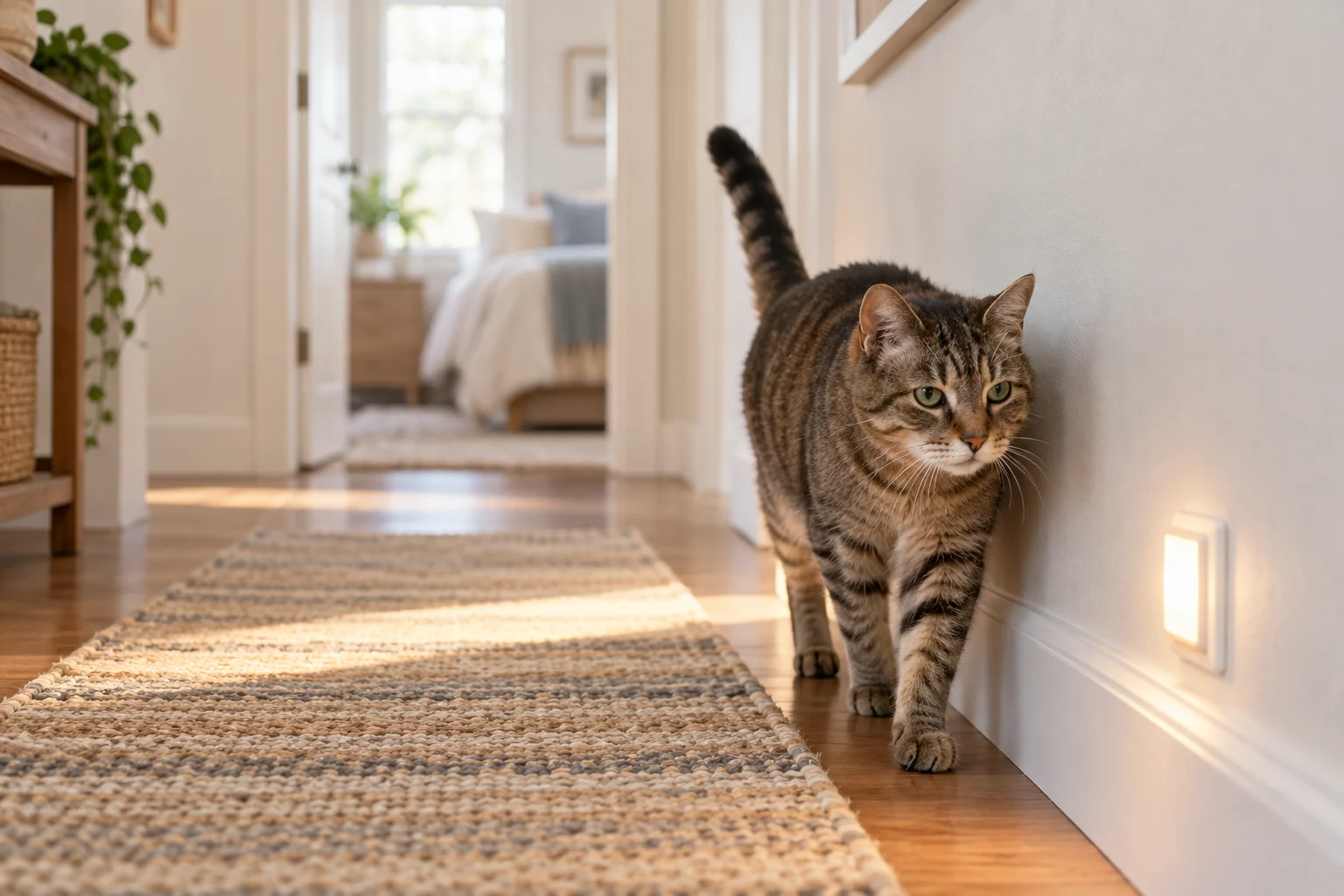
Start with one cat-only zone. A bedroom, office, hallway corner, laundry room, or gated section of the living room can work if your cat has food or water access, a resting spot, a scratcher, and a route to the litter box. If you made nursery and scent changes before birth, keep those habits from preparing your cat before the baby arrives and add stronger toddler-proof boundaries now.
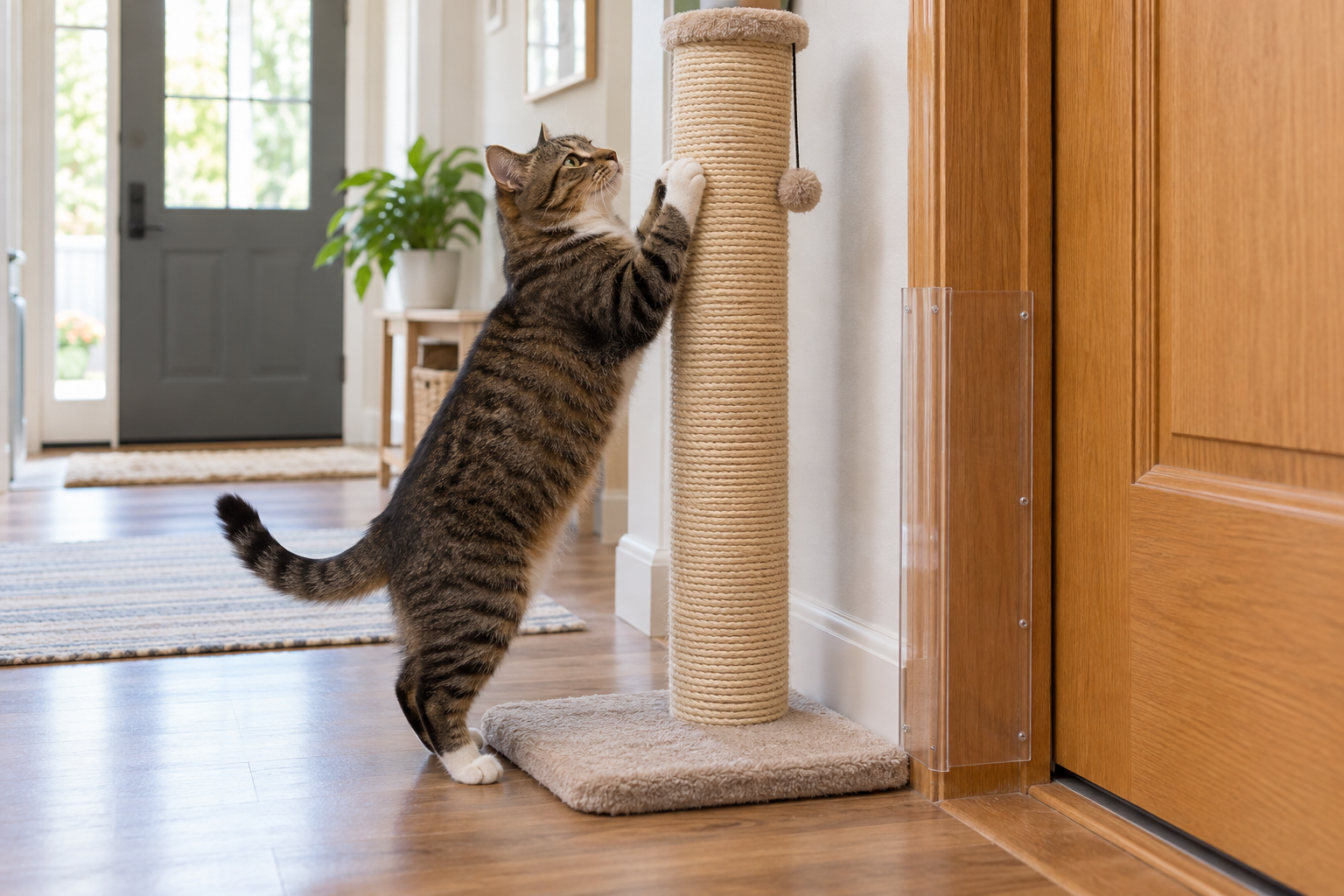
Then add vertical routes. A cat tree, wall shelf, sofa-back path, window perch, or tall cabinet walkway lets your cat stay near family life without being reachable. Cats benefit from choice and control during interactions; AAFP/ISFM guidelines emphasize responding to a cat's emotional state and giving the cat a sense of control rather than forcing handling 4.
Verwenden Sie eine Katzensicherheit für Ihr Zuhause mindset for toddler-cat safety:
| Setup choice | Warum das hilft | What to check |
|---|---|---|
| Baby gate with cat access | Stops toddler pursuit while allowing cat movement | Cat can jump over, pass through a pet door, or use a raised route |
| High perch in family room | Lets cat observe without contact | Toddler cannot climb or shake it |
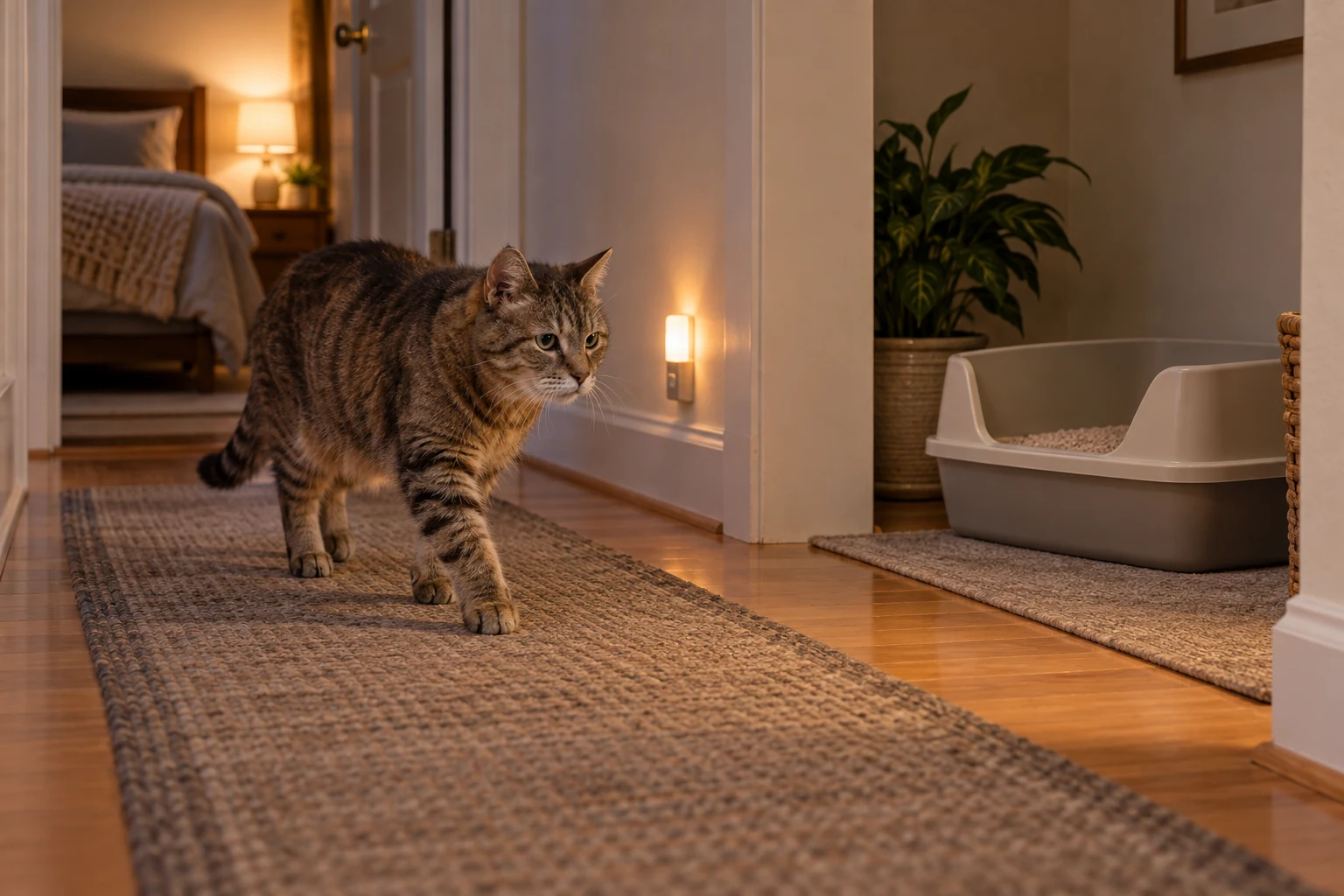
| Geschützte Streu-Route | Prevents litter access and toileting stress | Cat is never trapped away from the box |
| Child-free rest area | Gives the cat a predictable decompression space | Toddler toys do not migrate into it |
| Clear furniture paths | Prevents cornering under tables or behind sofas | Cat has two exits whenever possible |
If your cat is already hiding, being chased by another pet, or guarding routes, borrow ideas from building safe zones for a stressed cat. The principle is the same: more exits, protected resources, and less forced contact.
How do you redirect a toddler in the moment?
Redirect before the chase starts if you can. The moment your toddler notices the cat and begins to lean, point, squeal, or speed up, step between them and give a replacement action.
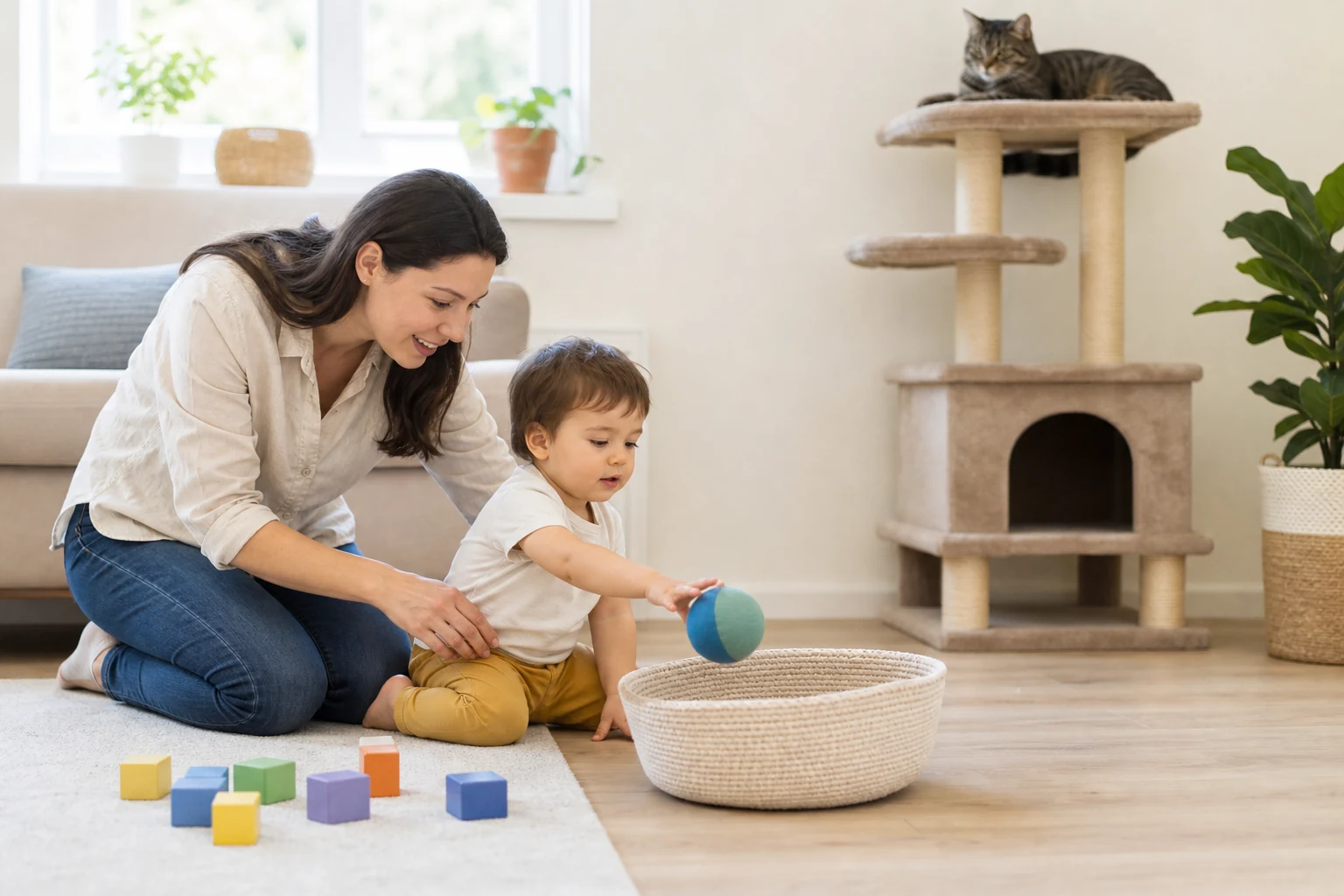
Toddlers need a replacement action, not a lecture. Redirect toward a simple game before the chase begins.
Use short words and immediate movement:
- "Stop. Cat walks away."
- "Feet stay slow."
- "Hands on the ball."
- "Roll to the basket."
- "Wave bye-bye to the cat."
Then move your toddler's attention into something concrete. Roll a soft ball, carry blocks to a bin, push a toy car away from the cat, or walk with you to another room. Long explanations usually land too late; a toddler who is already running needs a body-level interruption.
Do not turn the cat into the prize for calming down. If the toddler stops chasing, the reward should not be touching the cat. The reward is a new game, praise for stopping, or your attention. The cat gets distance.
If your toddler makes the cat run and then laughs, avoid big emotional reactions. Calmly block, separate, and reset. Big reactions can accidentally make the chase more exciting.
What should you teach your toddler to do instead?
Teach a replacement script that is easy enough to repeat every day. "Look, wave, walk away" is often more realistic than expecting a toddler to pet gently for a long time.
Probier mal diese Abfolge aus:
- Look at the cat from a distance.
- Wave or say hello.
- Keep feet still or slow.
- Put hands on your own body, a toy, or the adult's hand.
- Let the cat choose whether to stay or leave.
HSE recommends teaching children to approach slowly under supervision, stay calm and quiet, avoid rough play, and respect the cat's space 2. For toddlers, those lessons need to be rehearsed in tiny pieces. Practice with stuffed animals first: soft hands, one stroke on the back, hands away, and no tail pulling.
International Cat Care's handling advice is useful here because it centers the cat's choice: cats should be handled gently and respectfully and be able to move away when they want to 3. That is the phrase to build your household rule around: the cat can always move away.
Do not ask a toddler to pick up the cat, carry the cat, hug the cat, kiss the cat, lie on the cat, or put their face near the cat's face. Those behaviors are too risky even when the cat is usually patient.
What safe games can replace chasing?
Safe replacement games should satisfy your toddler's urge to move, copy, sort, throw softly, or follow a simple routine without involving the cat's body. Choose games that move away from the cat or keep the toddler grounded in one spot.
Good options include:
- Rolling a soft ball into a basket.
- Carrying toy animals to a pretend bed.
- Marching slowly with an adult while the cat is on a perch.
- Playing "freeze feet" when the cat walks by.
- Waving hello and goodbye from behind a gate.
- Feeding a plush cat pretend food instead of touching the real cat.
- Helping toss a cat toy away from the toddler only if the cat is relaxed and the adult controls the toy.
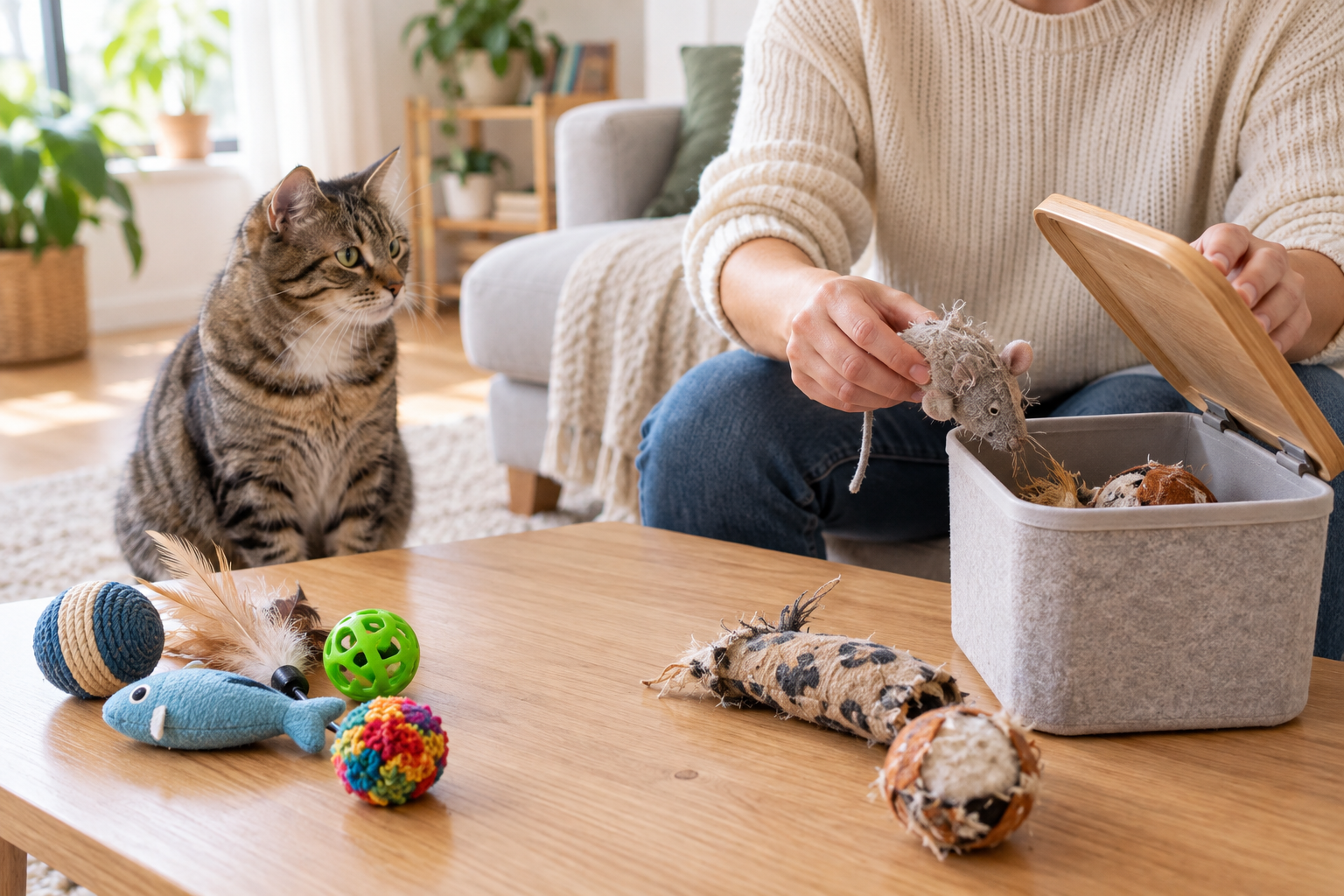
If your cat needs more appropriate play outlets, build a separate tägliche interaktive Spielroutine when your toddler is asleep, in a high chair, or with another adult. Wand play, chase games, and pouncing toys are for the cat, not for toddler-cat contact.
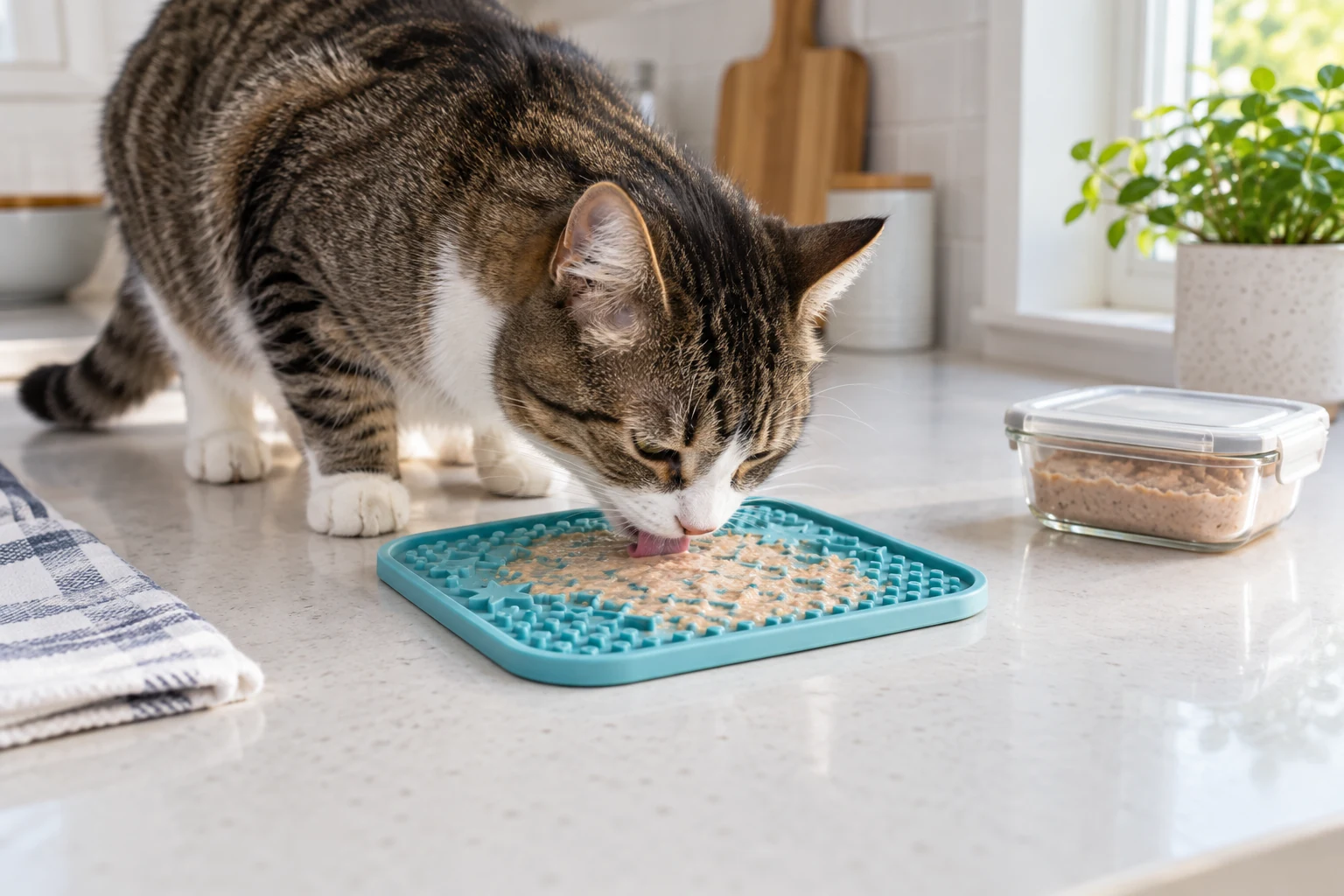
For indoor enrichment, interactive cat toys for indoor cats can help your cat burn energy away from your toddler. Use them in the cat zone or during adult-led cat play, not as objects your toddler waves near the cat's face.
What cat body language means you should separate them?
Separate at the first stress signals, not after a swat. Cats often warn before they scratch or bite, but the signs can be quick and subtle.
Achten Sie auf:
- Tail flicking, thumping, or tight wrapping.
- Die Ohren drehen sich zur Seite oder legen sich flach an.
- Crouching, freezing, or shrinking low.
- Dilated pupils or hard staring.
- Skin rippling along the back.
- Head turning sharply toward the child's hand.
- Hissing, growling, yowling, or a quick paw lift.
- Trying to hide, climb away, or squeeze behind furniture.
HSE specifically names hissing, yowling, arched back, bared teeth, and flattened ears as body language that means a child should leave the cat alone 2. If you are seeing biting, nipping, or fast escalation, read more about Warum Katzen beißen and tighten the setup immediately.
| Katzenzeichen | Was das bedeuten kann | Adult response |
|---|---|---|
| Cat walks away | The cat is ending contact | Block toddler from following |
| Tail starts flicking | Arousal or irritation is rising | End the interaction early |
| Cat freezes | Die Katze könnte sich in die Enge getrieben fühlen | Open an exit and move toddler back |
| Ears flatten | Fear, stress, or defensive emotion | Separate calmly |
| Hiss or swat | Clear warning | Stop contact, check for injury, revise setup |
Never punish a hiss. A hiss is useful information. It tells you the cat needs more distance before the next interaction.
What daily routine helps the cat feel safer?
A predictable routine tells your cat that the toddler has not taken over every safe place and every good moment. Keep meals, litter cleaning, play, and quiet attention as consistent as you can.
Aim for two kinds of daily time. First, give your cat toddler-free care: meals, litter access, water, rest, and a short play or affection window. Second, give your toddler supervised practice seeing the cat without chasing. Those are different sessions.
A workable rhythm may look like this:
- Morning: cat eats behind a gate before toddler play starts.
- Midday: toddler practices "look, wave, walk away" when the cat is on a perch.
- Afternoon: cat gets wand play in a closed room or gated area.
- Evening: toddler helps place a plush toy in a basket while the cat rests nearby but out of reach.
- Bedtime: cat gets quiet attention after the toddler is asleep.
ASPCA guidance on cats and babies emphasizes planning ahead and creating conditions that safeguard both the child and the cat 5. With a toddler, planning ahead means you decide where the cat can go before your toddler starts running.
What if the chasing keeps happening?
If the chasing keeps happening, assume the current setup is asking too much of your toddler. Add more physical separation and reduce chances to rehearse the behavior.
Start with a stricter rule for one to two weeks: no direct touching unless an adult invites it and the cat chooses to stay. Use gates or closed doors during high-energy toddler times, such as before meals, before naps, after daycare, or when visitors arrive.
Look for patterns:
- Does chasing happen when your toddler is tired or overstimulated?
- Does it happen in a hallway where the cat has no second exit?
- Does the cat run across the toddler's play zone to reach food or litter?
- Does the toddler get a big reaction from adults?
- Does the cat lack vertical space in the busiest room?
Change the pattern rather than repeating the same warning all day. Move bowls, add a perch, block a hallway, give the toddler a job, or separate during predictable chaos.
Call your veterinarian if your cat suddenly becomes reactive, hides most of the day, stops eating, avoids the litter box, growls at normal family movement, or seems painful when touched. Stress can cause behavior changes, but pain and illness can lower a cat's tolerance too. If a scratch or bite breaks skin, clean it promptly and contact your child's pediatrician for individualized medical advice.
Conclusion: Build a home where the cat does not have to run
Stopping a toddler from chasing the cat is not about expecting perfect impulse control from a small child or endless patience from a cat. It is about building a home where the cat has exits, the toddler has replacement actions, and adults interrupt early.
Use gates, perches, child-free rooms, and simple repeated scripts. Redirect toward safe games before the chase begins. Let your cat leave every time. Over weeks, your toddler can learn that cats are watched gently, not pursued, and your cat can learn that family spaces are still predictable and safe.
Häufig gestellte Fragen
Is it normal for toddlers to chase cats?
It is common because toddlers are curious, fast, and still learning impulse control. It still needs to be stopped every time because chasing can frighten the cat and increase the risk of scratches or bites.
Should I let my toddler pet the cat after they calm down?
Not as a reward for stopping a chase. If the cat later approaches calmly and an adult can guide one or two gentle strokes, that can be okay, but the cat should always be free to leave.
What should I do if my cat scratches my toddler?
Separate them calmly, wash the scratch with soap and water, and contact your child's pediatrician if the skin is broken, redness spreads, swelling appears, or you are unsure. Then revise the setup so the cat is not cornered or chased again.
Are baby gates enough to keep a cat and toddler safe?
Gates help, but they work best with vertical cat space, protected food and litter access, adult supervision, and a toddler redirection plan. Some cats need a gate with a pet door or a nearby perch so they can move freely.
Will my cat and toddler eventually become friends?
They can develop a calm relationship, but friendship should grow from safe distance and choice. Do not force cuddling, carrying, or petting; repeated peaceful moments are a better foundation.
Referenzen
[1] Cats Protection. (2026). Cats and Children. Katzenschutz
[2] Health Service Executive. (2022). Katzen – Ihrem Kind beibringen, wie es sich sicher verhält. HSE
[3] International Cat Care. (2025). Handling and interactions. Internationale Katzenpflege
[4] AAFP and ISFM. (2022). 2022 AAFP/ISFM Cat Friendly Veterinary Interaction Guidelines: Approach and Handling Techniques. Zeitschrift für Katzenmedizin und -chirurgie
[5] ASPCA. (2026). Cats and Babies. ASPCA
 EN
EN DE
DE ES
ES PT
PT