
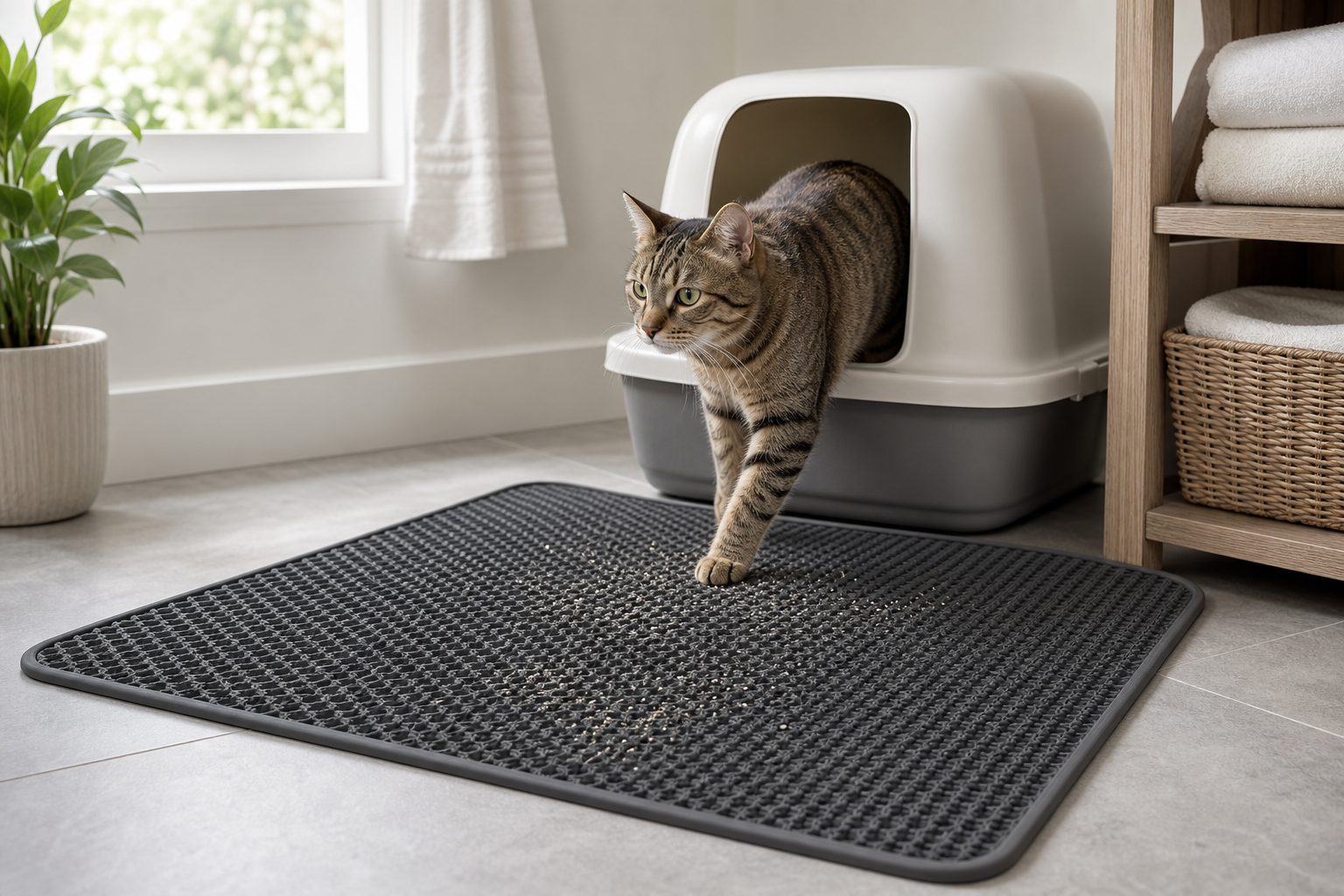
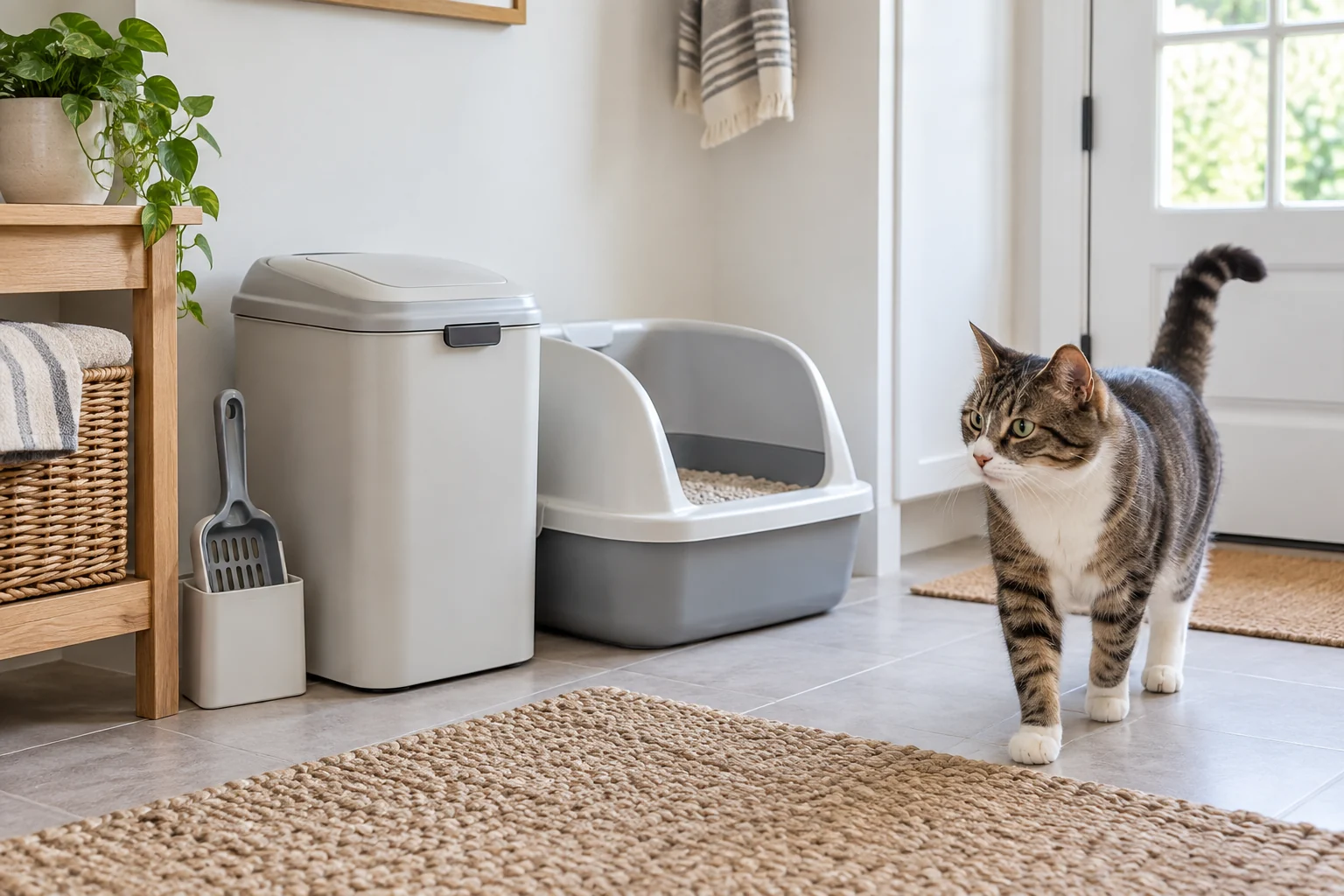
Eine Katzentoilettenmatte sollte groß genug sein, um den üblichen Weg Ihrer Katze zur Katzentoilette abzudecken, weich genug, damit Ihre Katze bereitwillig darüber läuft, und so pflegeleicht, dass sie nicht zum stinkendsten Teil des Katzentoilettenbereichs wird.
Die richtige Matte allein reicht nicht aus, um eine schlecht eingerichtete Katzentoilette zu verbessern. Katzen können den Toilettenbereich aufgrund der Katzentoilette, der Streu, des Standorts, von Stress, Schmerzen oder Konflikten im Haushalt meiden. Daher sollte eine Matte dazu beitragen, dass sich Ihre Katze wohlfühlt, anstatt den Bereich beengend oder fremd wirken zu lassen. 1. Nutzen Sie es als Teil einer aufgeräumten, katzenfreundlichen Badezimmereinrichtung.
Inhaltsübersicht
- Welche Größe sollte die Katzentoilettenunterlage haben?
- Welche Beschaffenheit eignet sich am besten für eine Katzentoilettenmatte?
- Wo sollte man eine Katzentoilettenmatte auslegen?
- Wie sollte die Matte zu Ihrer Katzentoiletten-Einrichtung passen?
- Bei welchen Katzen muss man bei der Auswahl der Matten besonders sorgfältig vorgehen?
- Wie hält man eine Katzentoilettenmatte sauber?
- Was, wenn sich der Müll immer noch überall ausbreitet?
- Schlussfolgerung
- Häufig gestellte Fragen
- Referenzen
Welche Größe sollte die Katzentoilettenunterlage haben?
Wählen Sie eine Matte, die mindestens eine volle Körperlänge Ihrer Katze vom Hauptausgang der Katzentoilette entfernt reicht und zusätzlich etwas breiter ist, falls Ihre Katze seitlich herausspringt. In vielen Haushalten bedeutet das eine Matte mit den Maßen etwa 24 mal 36 Zoll oder größer, doch am besten richten Sie sich nach der tatsächlichen Größe Ihrer Katzentoilette und den Ausstiegsgewohnheiten Ihrer Katze.
Eine winzige Matte vor einem großen Katzenklo fängt oft nur den ersten Schritt ab. Eine nervöse oder sportliche Katze springt möglicherweise komplett darüber hinweg. Eine ältere oder große Katze benötigt möglicherweise eine größere Bodenfläche, da sie sich langsam dreht, vorsichtig geht oder nach der Benutzung eines größeren Katzenklos Streu zwischen den Zehen mit sich trägt.
Falls Sie Ihre große Katzentoilette, wählen Sie die Matte erst danach aus. Die Matte sollte breiter als die Türöffnung oder die offene Seite des Kartons sein und so lang, dass Ihre Katze mehrere natürliche Schritte darauf machen kann, bevor sie den Boden erreicht.
| Die Situation mit der Katzentoilette | Bessere Mattengröße | Warum das hilft |
|---|---|---|
| Überdachte Box mit Zugang von vorne | Lange, rechteckige Matte vor der Öffnung | Fängt den Müll auf, während die Katze geradeaus hinausgeht |
| Offene Box mit mehreren Ausgängen | Eine breitere Matte oder zwei Matten an gemeinsamen Ausgängen | Deckt die tatsächliche Wanderroute ab, statt nur eine Seite davon |
| Große Katzendecke oder Kiste mit hohen Seitenwänden | Überdimensionale, flache Matte | Schafft mehr Platz zum Landen und verringert die Streuung |
| Kleines Badezimmer oder Flur | Dünne Matte, die passt, ohne die Türen zu versperren | Sorgt dafür, dass der Bereich nutzbar bleibt und weniger Stress verursacht |
Welche Beschaffenheit eignet sich am besten für eine Katzentoilettenmatte?
Die beste Beschaffenheit ist die, auf die Ihre Katze tatsächlich tritt. Suchen Sie nach einer Oberfläche, die das Streugranulat gut auffängt und gleichzeitig sanft zu empfindlichen Pfoten ist, denn Katzen können Vorlieben oder Abneigungen gegenüber bestimmten Toilettenoberflächen und -standorten entwickeln. 1.
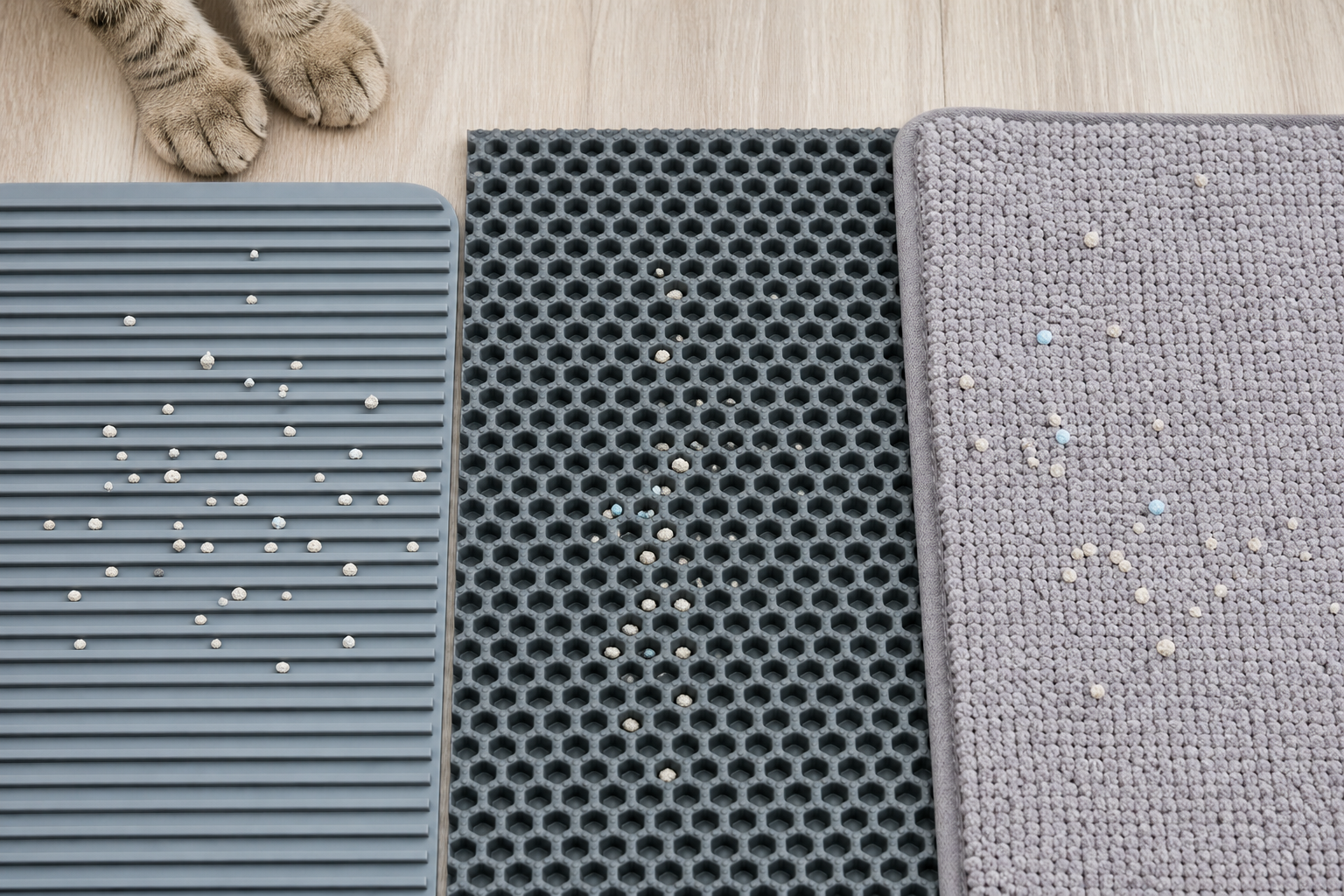
Auf die Beschaffenheit kommt es an: Die beste Matte fängt Haare auf, ohne sich unter den Pfoten Ihrer Katze rau, klebrig oder instabil anzufühlen.
Zu den gängigen Mattenoberflächen gehören:
- Weiches, geripptes Silikon oder Gummi: leicht auszuspülen und in der Regel angenehm zu tragen, allerdings können sich in den flachen Rillen weniger Abfälle festsetzen.
- Wabenmatten oder zweilagige Matten: Eignen sich gut zum Auffangen von Streu, doch manche Katzen mögen das hohle Gefühl oder die größeren Löcher nicht.
- Waschbarer Stoff mit niedrigem Flor: fühlt sich unter den Pfoten weich an und ist ideal für empfindliche Katzen, kann jedoch Feuchtigkeit und Gerüche zurückhalten, wenn er nicht regelmäßig gewaschen wird.
- Grobe Maschen oder kratziges Netz: Fängt Streu zwar gut auf, ist aber ein Risiko für Katzen, die rauen Kontakt an den Pfoten nicht mögen.
Passen Sie die Matte an die Streu an. Große Körner erfordern möglicherweise eine andere Oberfläche als feiner Ton. Wenn Ihr Hauptproblem darin besteht, dass Streu im ganzen Haus verstreut wird, kombinieren Sie die Matte mit einer Katzenstreu, die kaum Spuren hinterlässt das deine Katze noch akzeptiert.
Wo sollte man eine Katzentoilettenmatte auslegen?
Stellen Sie die Matte dort auf, wo Ihre Katze normalerweise das Katzenklo verlässt, und nicht dort, wo es Ihnen am ordentlichsten erscheint. Katzen brauchen ruhige, gut zugängliche Toilettenbereiche und können durch laute Geräte, Luftbewegungen oder unerwartet näherkommende Menschen und Haustiere erschreckt werden. 4.
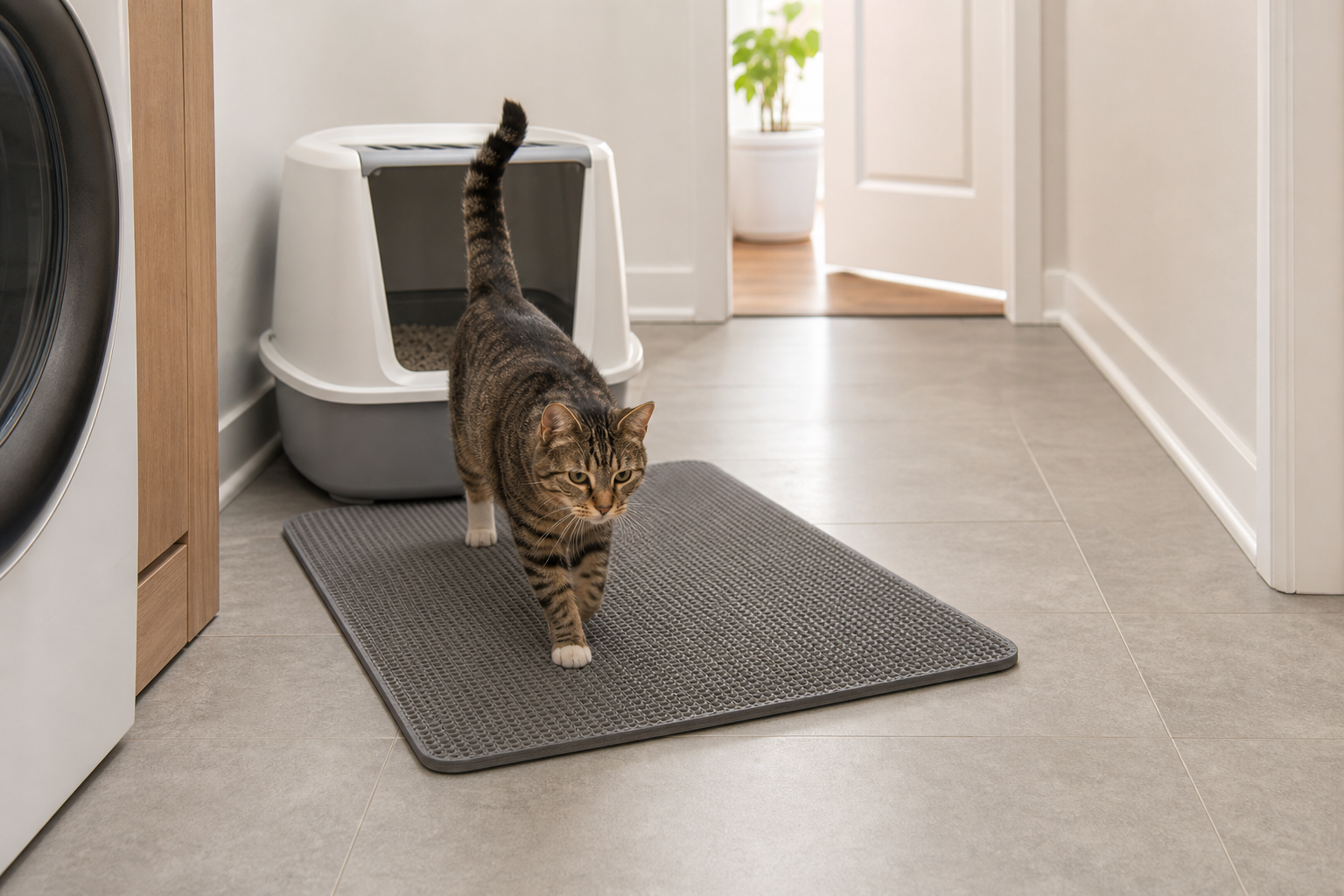
Legen Sie die Matte dort aus, wo Ihre Katze normalerweise hinausgeht, aber halten Sie den Weg frei, damit sich der Katzenklo-Bereich weiterhin sicher und gut erreichbar anfühlt.
Eine Matte sollte Ihre Katze nicht zwischen der Katzentoilette und einer Wand einklemmen, eine rutschige Landefläche bilden oder sie zu einer engen Kurve zwingen. In Haushalten mit mehreren Katzen kann ein blockierter Zugang zu Ressourcen zu Stress führen, insbesondere wenn eine Katze einen schmalen Durchgang kontrollieren kann. 2. Halten Sie den Bereich um die Katzentoilette so offen, dass eine Katze ihn ohne Probleme betreten und verlassen kann.
Eine gute Platzierung bedeutet in der Regel:
- Die Matte schließt bündig mit dem Hauptausgang ab.
- Die Kante rollt sich nicht nach oben.
- Der Türfreiraum bleibt erhalten.
- Futter und Wasser werden nicht direkt neben dem Toilettenbereich aufgestellt.
- Die Katze hat einen einfachen Weg aus dem Zimmer.
Wie sollte die Matte zu Ihrer Katzentoiletten-Einrichtung passen?
Eine Katzentoilettenmatte entfaltet ihre Wirkung am besten, wenn die Katzentoilette an sich bereits katzenfreundlich eingerichtet ist. Ist die Katzentoilette zu klein, zu verdeckt, zu schmutzig oder zu schwer zugänglich, kann die Matte ein weiterer Grund dafür sein, dass Ihre Katze diesen Bereich meidet.
Beginnen Sie mit den Grundlagen aus einem Die beste Einrichtung für ein Katzenklo: eine Transportbox, in der sich Ihre Katze umdrehen kann, ein ruhiger Ort, genügend Transportboxen für den gesamten Haushalt und eine Reinigungsroutine, auf die sich Ihre Katze verlassen kann. Wenn Sie eine Transportbox mit Haube verwenden, prüfen Sie, ob geschlossene vs. offene Katzentoiletten auf das Wohlbefinden Ihrer Katze abgestimmt.
Legen Sie dann die Matte als Auflagefläche aus. Sie sollte verstreutes Material auffangen, ohne den Eingang zu verengen, die Schwelle zu erhöhen oder den Ausgang instabil wirken zu lassen. Vermeiden Sie es, eine dicke Matte unter die Vorderkante einer leichten Box zu legen, wenn diese dadurch ins Wanken gerät.
Bei welchen Katzen muss man bei der Auswahl der Matten besonders sorgfältig vorgehen?
Kätzchen, ältere Katzen, Katzen ohne Krallen, Katzen mit Arthritis und Katzen, die sich von einer Verletzung erholen, benötigen möglicherweise eine weichere Matte mit geringerem Profil. Katzen mit eingeschränkter Mobilität benötigen möglicherweise außerdem einen einfachen Zugang zu Kartons und anderen Gegenständen, die in erreichbarer Höhe platziert sind. 2.
Wählen Sie eine Matte, die folgende Eigenschaften aufweist:
- So dünn, dass die Katze nicht darüber stolpert.
- Weich genug für zarte Pfoten.
- Steht stabil auf dem Boden, ohne zu rutschen.
- Mit langsamen, kurzen Schritten leicht zu überqueren.
- Waschbar, falls mal ein Malheur passiert.
Bei älteren Katzen ist der Zugang zum Katzenklo genauso wichtig wie die Matte. A Katzentoilette mit niedrigem Einstieg für ältere Katzen kann möglicherweise mehr zum Komfort beitragen als eine strapazierfähige Gleitmatte.
Rufen Sie Ihren Tierarzt an, wenn Ihre Katze plötzlich das Katzenklo meidet, sich beim Urinieren anstrengt, miaut, sehr häufig uriniert, nur wenig Urin absetzt, Blut im Urin oder Stuhl hat oder Schmerzen zu haben scheint. Veränderungen im Verhalten beim Katzenklo können verhaltensbedingt sein, doch Harn- und Verdauungsprobleme erfordern ärztliche Hilfe, und eine Harnverhaltung ist ein Notfall. 3.
Wie hält man eine Katzentoilettenmatte sauber?
Reinigen Sie die Matte, bevor sie zu riechen beginnt. Eine Matte, auf der feuchtes Streu, Urintropfen oder Staub zurückbleiben, kann den gesamten Streubereich unattraktiv machen.
Schütteln Sie die Einstreu täglich aus oder saugen Sie sie trocken, wenn viel Schmutz hereingetragen wird. Waschen Sie Matten aus Gummi, Silikon und Kunststoff gemäß den Produktanweisungen und lassen Sie sie anschließend vollständig trocknen, bevor Sie sie wieder auslegen. Waschen Sie Stoffmatten so oft, dass sie keine Gerüche annehmen.
Die Reinigung der Katzentoilette selbst ist immer noch wichtiger als die Unterlage. Wenn Sie entscheiden, wie oft Sie die Katzentoilette auskratzen, reinigen oder die Streu austauschen möchten, sollten Sie sich an praktischen Überlegungen orientieren Wie oft sollte man ein Katzenklo reinigen? Passen Sie den Zeitplan an die Anzahl der Katzen in Ihrem Haushalt an.
Vermeiden Sie stark parfümierte Reinigungsmittel in der Nähe des Katzenklos. Starke Gerüche können Katzen stören, und manche Katzen meiden Katzenklos oder Orte, die sie mit unangenehmen Erfahrungen verbinden. 1.
Was, wenn sich der Müll immer noch überall ausbreitet?
Sollte die Streu immer noch über die Matte hinausgelangen, sollten Sie das gesamte System unter die Lupe nehmen, bevor Sie einem einzelnen Produkt die Schuld geben. Das Verschleppen von Streu kann durch die Beschaffenheit der Streu, die Streutiefe, die Höhe der Katzentoilette, die Auslaufrichtung, das Fell an den Pfoten und die Kraft, mit der Ihre Katze scharrt, verursacht werden.
Probieren Sie diese Anpassungen nacheinander aus:
- Drehen Sie die Matte so, dass sie mit dem Ausgangsweg übereinstimmt.
- Legen Sie eine zweite Matte an der Seite aus, die Ihre Katze benutzt.
- Wechseln Sie zu einer Streu mit geringerer Staubbildung, die Ihre Katze akzeptiert.
- Prüfen Sie, ob die Schachtel zu klein oder zu flach ist.
- Schneiden Sie die langen Pfotenbüschel nur dann, wenn Ihre Katze die Fellpflege ruhig über sich erlässt.
- Überprüfen Sie Ihre Streutiefe Es gibt also genug zu graben, aber nicht so viel, dass bei jedem Schritt Granulat hochspritzt.
Bestrafen Sie eine Katze nicht dafür, dass sie Streu mitbringt oder außerhalb des Katzenklos ihr Geschäft verrichtet. Bestrafung kann Angst und Stress verstärken, während Sie durch die Anpassung der Umgebung bessere Chancen haben, die eigentliche Ursache zu finden. 5.
Schlussfolgerung:
Eine gute Katzentoilettenmatte ist praktisch, kein Wundermittel. Kaufen Sie eine, die groß genug für den tatsächlichen Weg Ihrer Katze zur Toilette ist, sich angenehm unter den Pfoten anfühlt, stabil auf dem Boden liegt und leicht zu reinigen ist.
Entscheidend ist vor allem, dass Sie sich vom Verhalten Ihrer Katze leiten lassen. Wenn die Matte die Nutzung des Katzenklos erleichtert und die Reinigung vereinfacht, erfüllt sie ihren Zweck. Wenn Ihre Katze es vermeidet, darauf zu treten, darüber springt oder das Katzenklo nicht mehr regelmäßig benutzt, wählen Sie eine weichere, flachere oder anders platzierte Variante und prüfen Sie, ob gesundheitliche Probleme oder Stressfaktoren vorliegen.
Häufig gestellte Fragen
Lohnen sich Katzenstreu-Matten?
Ja, eine Streumatte ist einen Versuch wert, wenn sich saubere Streu aus der Katzentoilette im Zimmer verteilt. Sie funktioniert am besten, wenn sie mit der richtigen Größe der Katzentoilette, der richtigen Streusorte, dem richtigen Aufstellungsort und der richtigen Reinigungsroutine kombiniert wird.
Welche Größe sollte eine Katzentoilettenmatte am besten haben?
Wählen Sie eine Matte, die sich über mehrere Stufen hinaus über den Hauptweg Ihrer Katze hinaus erstreckt. In vielen Haushalten eignet sich eine übergroße rechteckige Matte besser als eine kleine Fußmatte im klassischen Stil.
Bevorzugen Katzen weiche oder strukturierte Streumatten?
Viele Katzen bevorzugen eine weichere Beschaffenheit, insbesondere ältere Katzen, Kätzchen und Katzen mit empfindlichen Pfoten. Die ideale Matte fängt Streu auf, fühlt sich aber weder scharf an, noch ist sie klebrig, instabil oder geräuschvoll.
Kann eine Katzentoilettenmatte dazu führen, dass eine Katze die Katzentoilette meidet?
Ja, wenn die Matte unbequem, rutschig oder stark parfümiert ist oder den Fluchtweg versperrt. Sollte Ihre Katze nach einem Mattenwechsel das Katzenklo meiden, entfernen Sie die Matte und führen Sie nach und nach eine sanftere Alternative ein.
Soll die Streumatte unter das Katzenklo gelegt werden?
In der Regel sollte der größte Teil der Matte außerhalb des Auslaufwegs liegen und nicht vollständig unter der Box. Eine kleine Überlappung kann hilfreich sein, aber die Box sollte waagerecht und stabil bleiben.
Referenzen
[1] Cornell Feline Health Center. (2024). Verhaltensprobleme bei Katzen: Hausbeschmutzung. Cornell University Hochschule für Veterinärmedizin
[2] Ellis, S. L. H. et al. (2013). AAFP- und ISFM-Leitlinien für die Umweltbedürfnisse von Katzen. Nationalbibliothek für Medizin
[3] ASPCA. (2024). Probleme mit der Katzentoilette. ASPCA
[4] Die „Indoor Pet Initiative“ der Ohio State University. (2024). Katzenklos. Die Ohio State University
[5] AAFP und ISFM. (2014). Leitfaden zur Diagnose und Behebung von Unsauberkeitsproblemen bei Katzen. catvets.com
 EN
EN DE
DE ES
ES PT
PT