
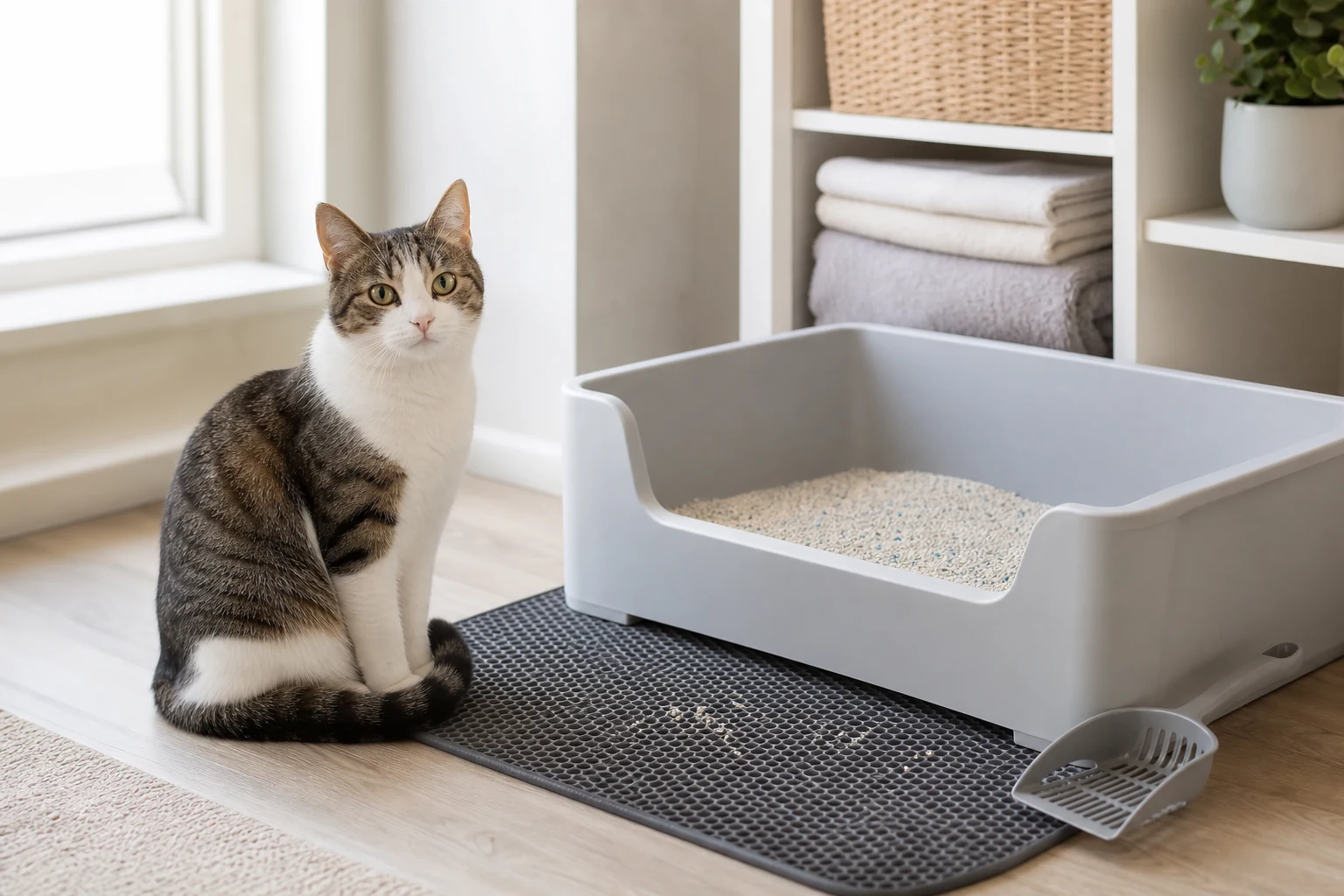
The best low-tracking cat litter is the one that leaves fewer granules outside the box without making the box uncomfortable for your cat. Start with an unscented, low-dust litter that has a paw-friendly texture, pair it with a roomy box and a washable litter mat, and switch slowly so your cat does not lose trust in the tray.
Low tracking is a house-cleaning goal, but your cat's comfort has to come first. If the litter feels sharp, unstable, heavily scented, or too different from what your cat already accepts, your floor may look cleaner while your cat starts hesitating at the box. A good choice reduces scatter while still letting your cat dig, turn, squat, and cover normally.
Inhaltsübersicht
- What makes a cat litter low-tracking?
- Which litter texture is most comfortable for cats?
- How can you reduce litter dust at home?
- How much low-tracking litter should you use?
- Do mats and box style matter as much as litter?
- How should you switch litter without upsetting your cat?
- When is tracking or dust a health warning?
- Schlussfolgerung
- Häufig gestellte Fragen
- Referenzen
What makes a cat litter low-tracking?
Low-tracking litter is less likely to cling to paws, fur, and the spaces between toes after a cat leaves the box. Larger or heavier particles often scatter less than very fine granules, but particle size is only one part of the decision.
Tracking usually comes from four things working together:
- Lightweight particles that stick to damp paws.
- Very fine pieces that collect in toe fur or long coats.
- A box entrance that lets cats leap out and kick litter forward.
- Not enough mat surface for granules to drop before the cat reaches the room.
That means the best answer is rarely "buy the heaviest litter and stop there." A low-tracking setup also depends on your Die beste Einrichtung für ein Katzenklo, the box entrance, the litter depth, and how often you remove broken-down particles.
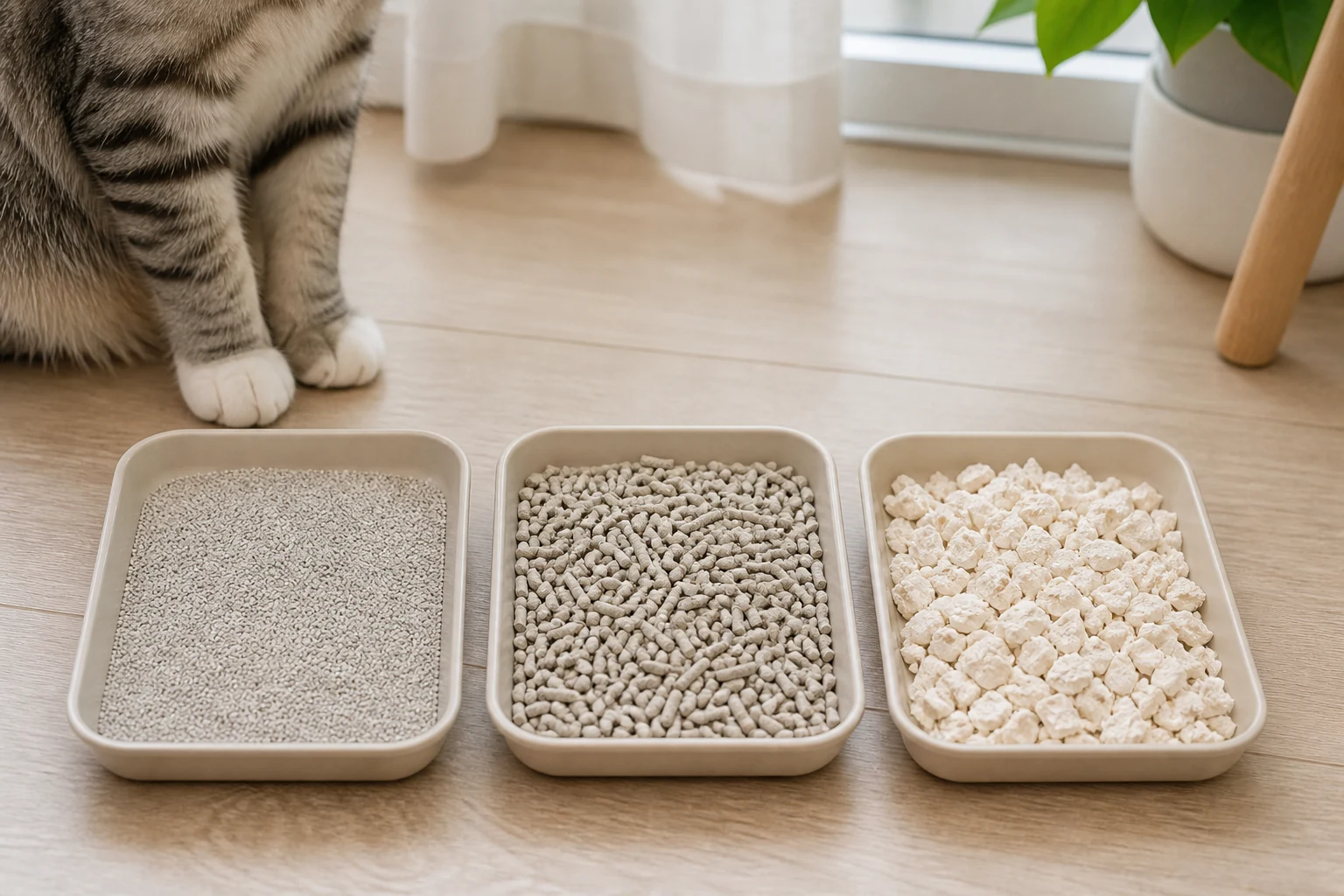
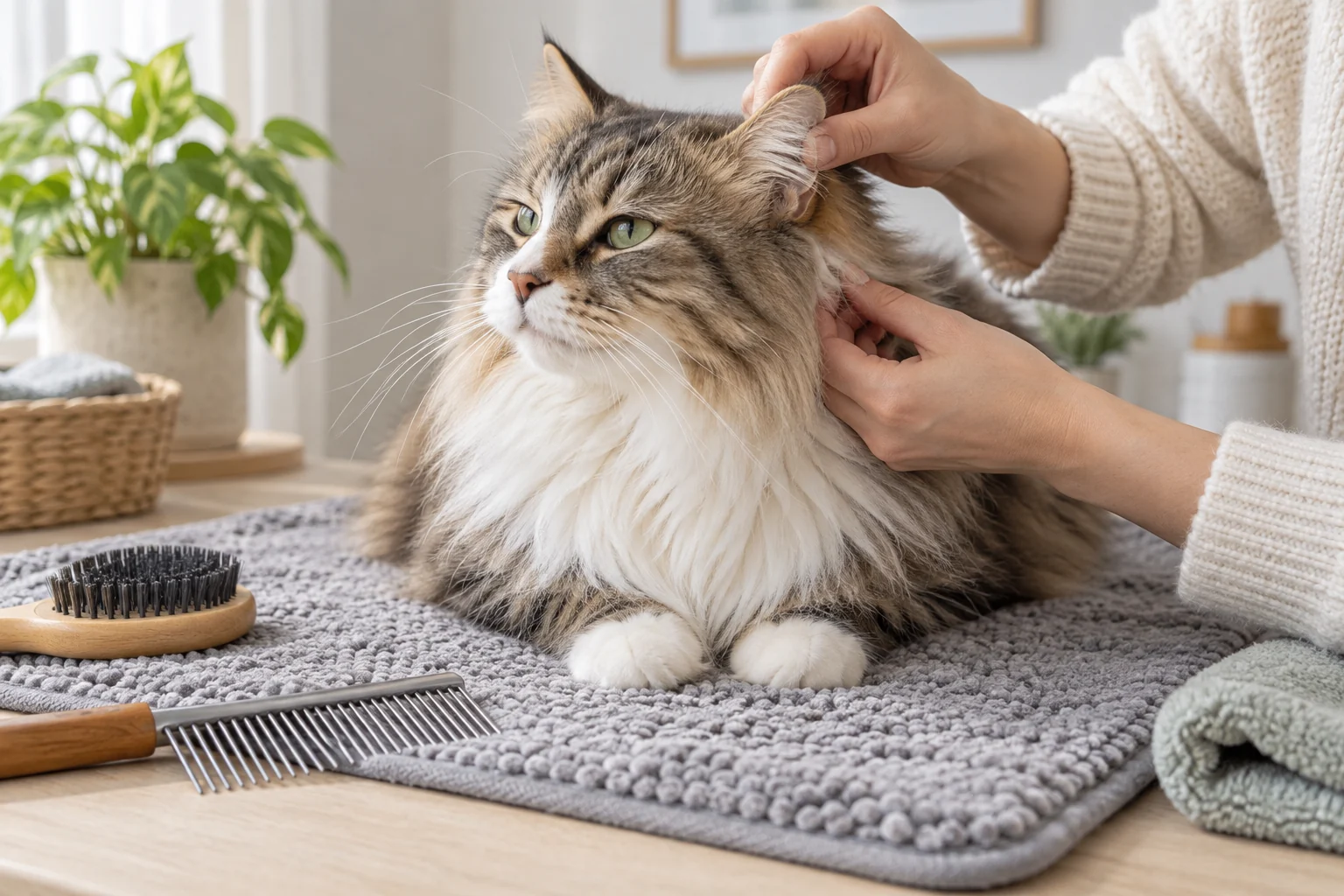
Texture matters: a low-tracking litter still needs to feel comfortable enough for your cat to dig, stand, and cover.
Which litter texture is most comfortable for cats?
Many cats prefer unscented, fine-textured litter, but individual preference matters. Cornell notes that most cats prefer simple boxes without hoods and unscented, fine-textured litter, while AAHA/AAFP guidance recommends offering choices in separate boxes because litter preferences can differ from cat to cat 2 4.
For low tracking, compare the tradeoffs before changing the whole box:
| Litter texture | Tracking tendency | Cat comfort notes | Best use case |
|---|---|---|---|
| Fine clumping granules | Can track more, especially on paws | Often paw-friendly and easy to dig | Cats with strong texture preferences or prior litter avoidance |
| Heavier clumping granules | Often tracks less than lightweight formulas | Usually familiar, but some formulas feel rougher | Homes wanting less scatter without a dramatic change |
| Paper-style litter | Often lower dust, variable tracking | Softer for some paws, but texture is very different | Sensitive paws, post-procedure vet-directed use, or gradual trials |
| Wood or larger pellets | Often lower tracking | Some cats dislike the hard, rolling feel | Cats already comfortable with pellet textures |
Avoid choosing only by marketing terms. "Low tracking," "low dust," and "natural" are not guarantees that your cat will like the feel. The ASPCA explains that cats can react to litter smell and feel because of their sensitive senses, and a cat that dislikes a new litter may avoid the box 3.
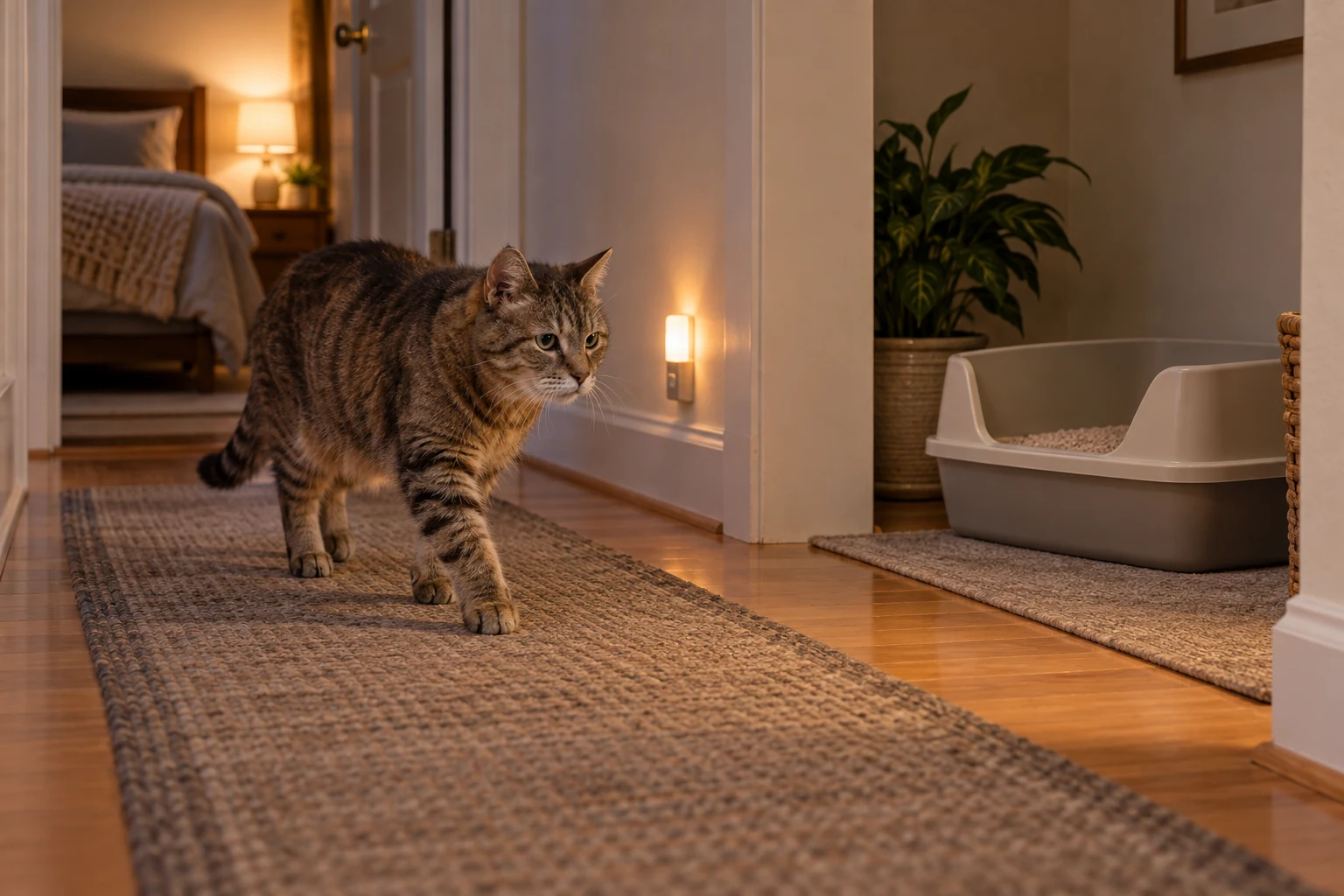
If your cat is longhaired, senior, declawed, arthritic, recovering from a procedure, or already picky about the box, prioritize a soft landing over maximum scatter control. A litter that saves sweeping time is not worth it if your cat starts toileting elsewhere.
How can you reduce litter dust at home?
Choose an unscented low-dust formula, pour it slowly, keep the box ventilated, and remove crumbled litter before it builds up. Dust is not only a floor issue; it can make the box smell stronger, coat nearby surfaces, and bother cats or people who are sensitive to airborne particles.
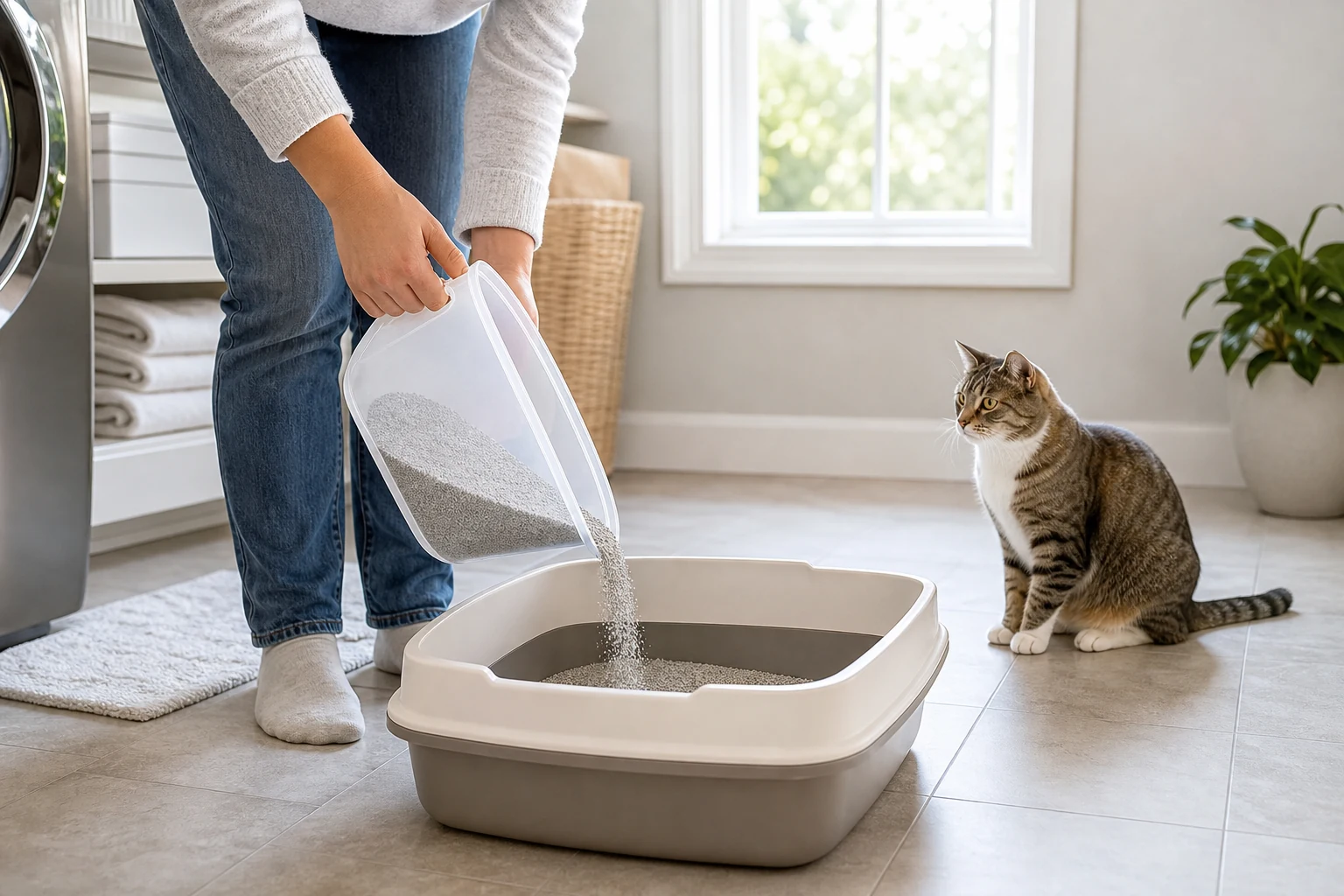
Pouring litter slowly and close to the box can reduce airborne dust before your cat ever steps into the tray.
Use this practical dust check:
- Pour a small amount into a clean box from low height, not shoulder height.
- Watch whether a visible cloud forms around the tray.
- Run your hand over nearby surfaces after a day of normal use.
- Notice whether your cat squints, sneezes, leaves quickly, or paws at the air after digging.
- Scoop daily so broken clumps and crushed particles do not keep recirculating.
A steady Reinigungsplan für die Katzentoilette matters because even a lower-dust litter can become dusty as it breaks down. AAHA/AAFP guidance also emphasizes regular scooping and avoiding strong cleaning chemicals around the box 2.
Do not use fragrance to cover litter dust or odor. Strong scent can make the box less acceptable to some cats, and odor usually means the box needs better scooping, a full change, more boxes, or a different location.
How much low-tracking litter should you use?
Use enough litter for normal digging and covering, but do not overfill the box in the hope that more litter will trap more mess. Many cats do better with a moderate, consistent layer than with a deep, shifting bed.
ASPCA guidance says cats usually prefer one to two inches of litter, while some households find that about two to three inches works better for clumping and digging depending on box size, litter type, and the cat's habits 3. The practical test is simple: your cat should not hit bare plastic every time they dig, and the surface should not feel so deep that paws sink or slide.
If you are adjusting depth at the same time as changing litter, move one variable at a time. First keep the old depth and test the new texture in a second box. Then, if your cat accepts it, fine-tune depth using the method in how much cat litter to use.
Do mats and box style matter as much as litter?
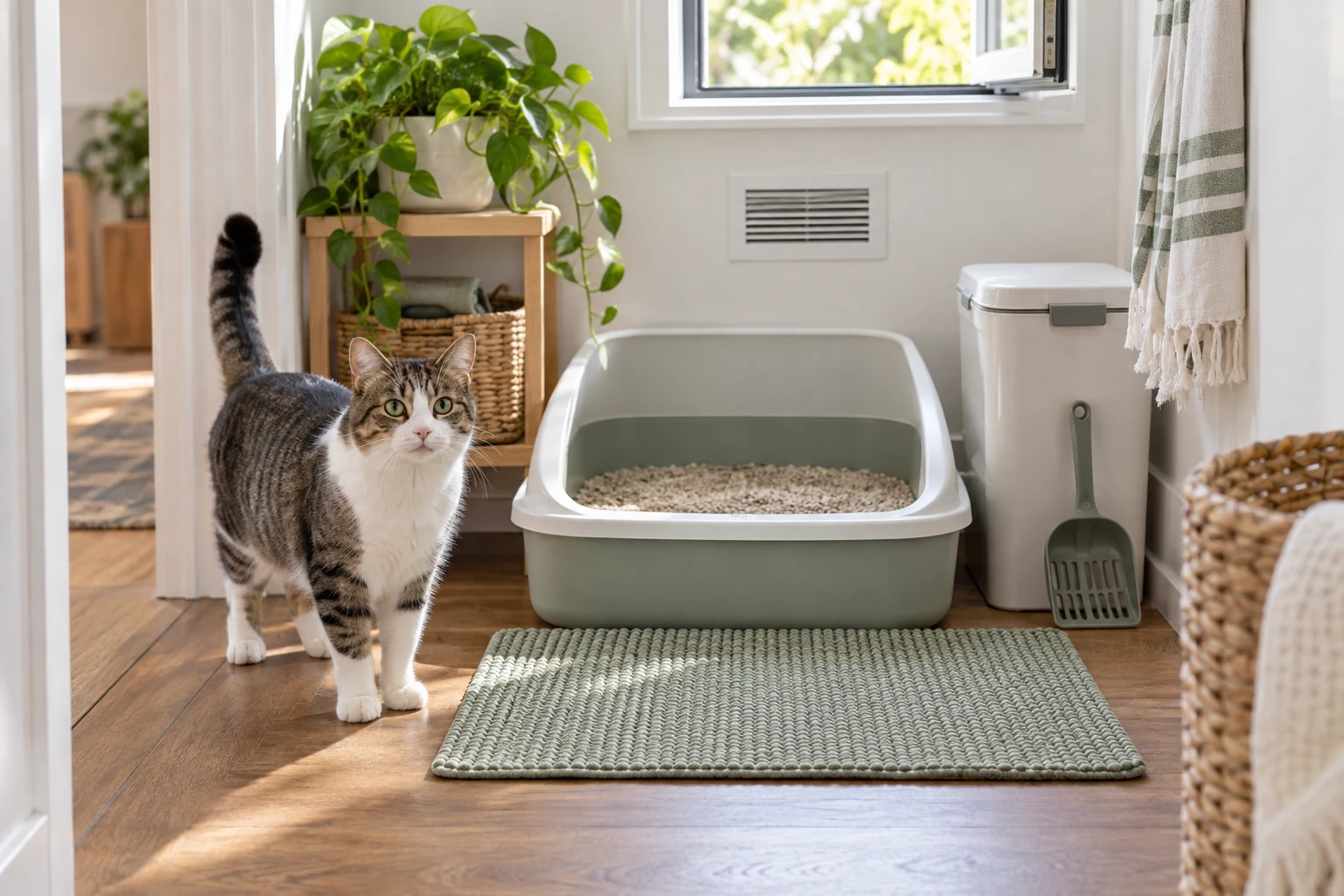
Yes. A litter mat, roomy box, and easy exit can reduce tracking without forcing your cat onto an uncomfortable substrate. A good mat catches granules after the cat steps out; it should not feel like a trap or a rough obstacle.
Look for a mat that is:
- Large enough for at least two or three steps after the box exit.
- Soft enough that your cat will actually walk across it.
- Easy to lift, shake, vacuum, or wash.
- Placed so the cat does not have to leap over it.
- Not so deeply textured that claws snag.
Box design matters too. High sides can reduce scatter, but they can also make entry harder for kittens, senior cats, and cats with limited mobility. Covered boxes may contain more litter inside, but some cats dislike the enclosed feel, trapped odor, or limited exits. If you are comparing enclosure choices, use the same litter while you review geschlossene vs. offene Katzentoiletten.
For bigger cats, scatter often gets worse when the tray is too small because the cat cannot turn and dig naturally. A larger box may reduce kicked-out litter more effectively than changing to a harder litter. See große Katzentoilette if your cat hangs over the edge or steps out while still covering.
How should you switch litter without upsetting your cat?
Switch litter slowly and give your cat a choice. The safest approach is to keep the familiar box exactly as it is, then add a second box with the new low-tracking litter nearby. If your cat uses the new box willingly for several days, you can gradually shift more of the household setup.
Use this step-by-step plan:
- Keep one box with the current accepted litter.
- Add a second clean box with the new low-tracking litter.
- Avoid changing box location, depth, mat, and litter all on the same day.
- Watch which box your cat chooses for urine and stool.
- If your cat avoids the new litter, try a softer or more familiar texture instead of forcing the change.
This choice-based method fits the AAFP/ISFM emphasis on optimizing the litter box and meeting feline environmental needs rather than treating house-soiling as misbehavior 1. It also helps prevent Vermeidung der Katzentoilette in cats that are sensitive to sudden changes.
Never block access to the old litter before you know the new one works. A clean floor is not the goal if the cat decides the bed, rug, laundry basket, or bathtub feels safer.
When is tracking or dust a health warning?
Tracking itself is usually a housekeeping issue, but sudden changes around the litter box can be health clues. Call your veterinarian if your cat suddenly avoids the box, strains, cries, urinates tiny amounts, urinates outside the box, has blood in urine, stops producing urine, or seems painful.
The ASPCA notes that painful elimination can create a negative litter-box association, and AAHA/AAFP guidance encourages prompt veterinary help for house-soiling because medical and behavioral causes can overlap 2 3. Male cats and cats with urinary blockage signs need urgent care, especially if they strain and produce little or no urine. Use this as a medical warning, not a litter preference problem.
Dust sensitivity can also look like sneezing, coughing, watery eyes, or leaving the box quickly after digging. Those signs do not prove the litter is the cause, but they are a good reason to change to a lower-dust option and ask your vet if symptoms persist, worsen, or come with appetite, breathing, or energy changes. For urinary-specific warning signs, review Symptome einer Harnwegsinfektion bei Katzen and contact your vet for individual advice.
Schlussfolgerung:
Choose low-tracking cat litter by balancing your floor with your cat's paws. A heavier or larger-particle litter may scatter less, but comfort, scent, dust, box size, mat placement, and cleaning routine decide whether your cat will keep using the tray confidently.
Start with an unscented low-dust option, test it beside the current litter, and make one change at a time. If your cat uses it happily and your floor is easier to clean, you have found the right compromise. If your cat hesitates, tracks less but avoids the box, or shows urinary or breathing signs, step back and protect your cat's comfort first.
Häufig gestellte Fragen
What cat litter tracks the least?
Heavier granules, some paper-style litters, and larger pellets often track less than lightweight fine litter. The best choice is the lowest-tracking option your cat still finds comfortable enough to dig in and use consistently.
Is pellet litter better for tracking?
Pellet litter can reduce tracking because the pieces are larger and less likely to cling between toes. Some cats dislike the hard or rolling texture, so offer it in a separate box before replacing a litter your cat already accepts.
Is low-dust litter always better for cats?
Low-dust litter is usually a sensible goal, especially for sensitive cats and households that notice dust clouds. It still needs to be unscented, comfortable, absorbent, and acceptable to your cat.
Can a litter mat stop tracking completely?
A litter mat can reduce tracking, but it will not stop every granule. Use a soft washable mat large enough for several steps, and combine it with a roomy box, moderate litter depth, and daily scooping.
Should I use scented litter to control dust or odor?
No. Scented litter may make the box less appealing for some cats. Odor is usually better solved by scooping, full litter changes, enough boxes, ventilation, and choosing an unscented litter your cat likes.
Why did my cat stop using the box after I changed litter?
The new litter may feel, smell, or behave differently under your cat's paws. Restore the old accepted litter in one box, offer the new litter only as a choice, and call your vet if avoidance comes with straining, pain, blood, frequent trips, or other illness signs.
Referenzen
[1] Feline Veterinary Medical Association and International Society of Feline Medicine. (2014). AAFP/ISFM-Leitlinien von 2014 zur Diagnose und Behandlung von Unsauberkeitsverhalten bei Katzen. Quell-URL
[2] American Animal Hospital Association and American Association of Feline Practitioners. (2021). Allgemeine Überlegungen zur Katzentoilette. Quell-URL
[3] Amerikanische Gesellschaft zur Verhütung von Tierquälerei. (2026). Probleme mit der Katzentoilette. Quell-URL
[4] Cornell Feline Health Center. (2026). Die Auswahl und Pflege Ihrer neuen Katze. Quell-URL
 EN
EN DE
DE ES
ES PT
PT