
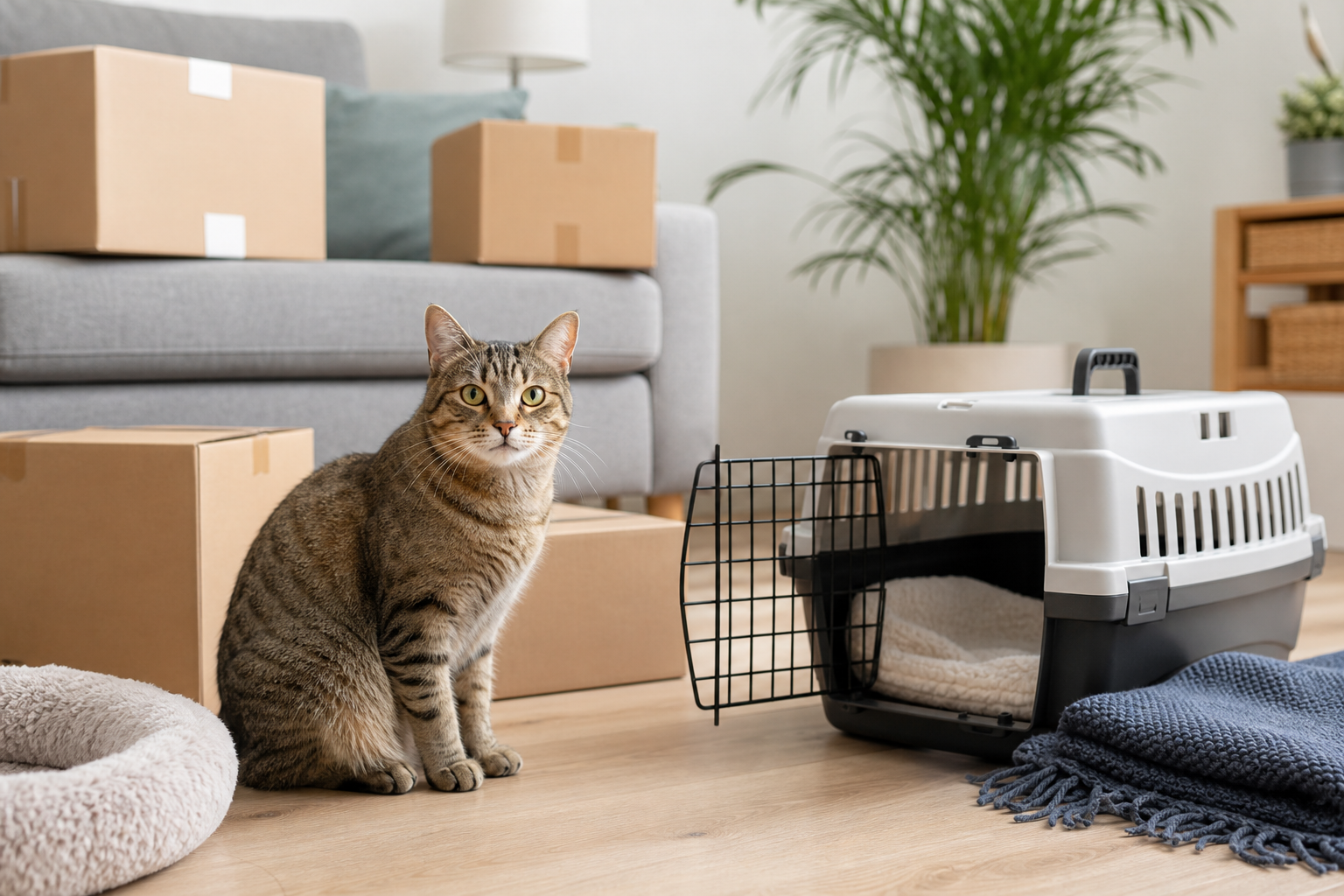
Moving with a cat is safest when you treat the move as three separate jobs: protect routine before packing gets chaotic, transport your cat in a secure carrier, and introduce the new home one small space at a time. Most cats do not need a dramatic plan, but they do need predictability, familiar scent, hiding options, and a slow reintroduction to territory.
A move changes almost everything your cat uses to feel safe: smell, sound, layout, sleeping places, litter box location, and the people walking through the home. That does not mean your cat will be permanently stressed. It means the best moving plan is less about forcing bravery and more about giving your cat control in a carefully managed environment.
This guide walks through what to do before moving day, during travel, and in the first days after arrival. It also explains what behavior is normal, when to slow down, and when a veterinarian should be involved.
Inhaltsübersicht
- What should you prepare before moving day?
- How do you help your cat handle the carrier and car ride?
- What should you do in the new home first?
- How should you set up the safe room?
- When can your cat explore the rest of the home?
- What behavior is normal after a move?
- What should you do for multi-cat households?
- Schlussfolgerung
- Häufig gestellte Fragen
- Referenzen
What should you prepare before moving day?
Start preparing your cat before the house looks completely different. Cats rely heavily on familiar scent and predictable resources, so sudden packing, missing furniture, new people, and open doors can all raise stress.
Keep your cat's main routine as steady as you can until the actual move. Feed meals at the usual times, keep the litter box in its normal place as long as possible, and leave favorite beds, blankets, scratchers, and toys unpacked until late in the process. International Cat Care recommends planning ahead so moving day feels less abrupt and your cat has familiar items available throughout the transition 1.
Use this pre-move checklist:
| Timeline | Was ist zu tun? | Warum das hilft |
|---|---|---|
| 2-4 weeks before | Leave the carrier open in a normal living area | The carrier becomes familiar instead of appearing only for stressful events |
| 1-2 weeks before | Choose a quiet room for moving day confinement | It prevents escape while doors are open and people are carrying boxes |
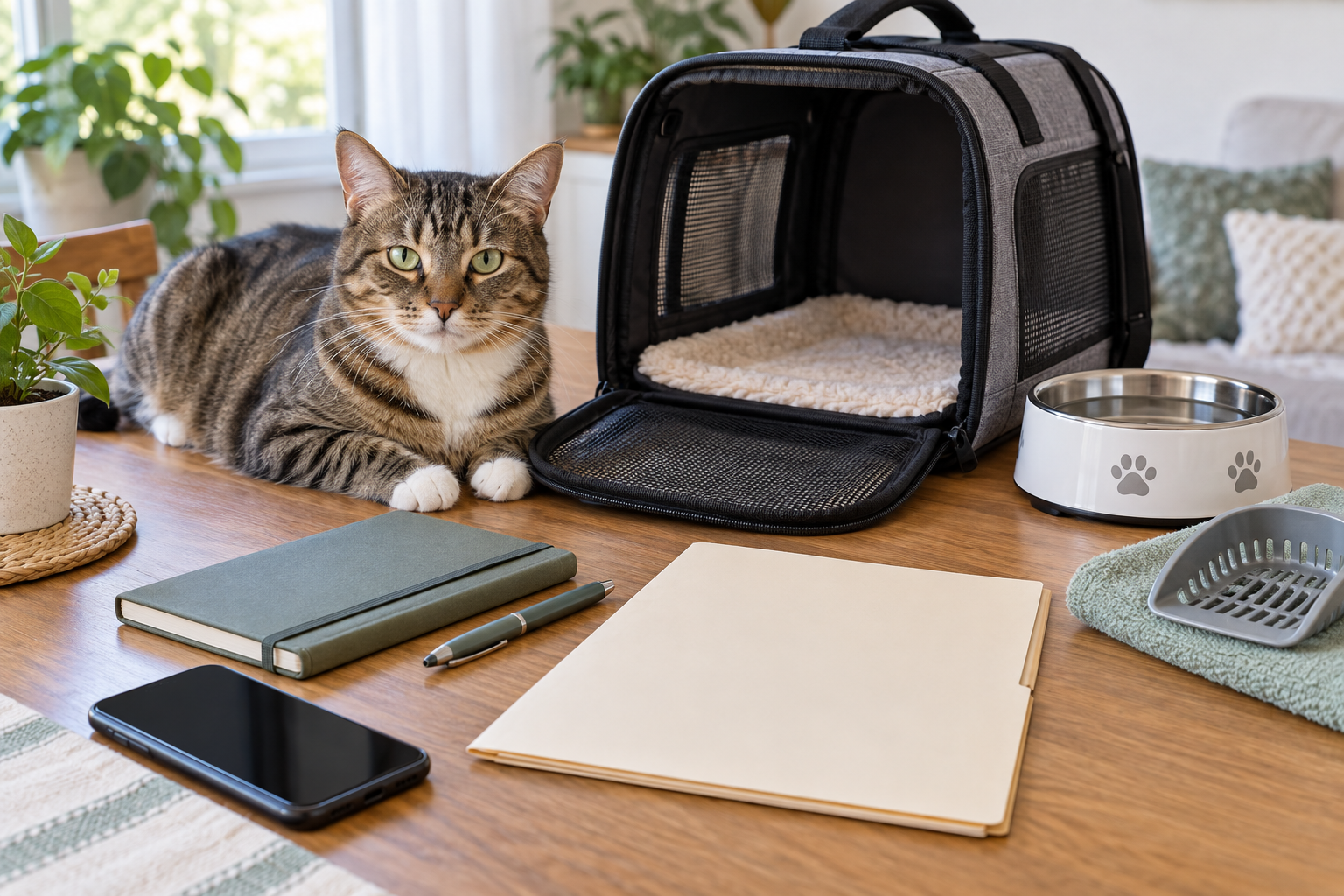
| A few days before | Pack a cat-only bag with food, medication, litter, scoop, bowls, bedding, and vet records | You will not be searching through boxes when your cat needs basics |
| Moving morning | Put your cat in the quiet room before movers arrive | The room becomes a controlled space while the rest of the home is disrupted |
If your cat is easily frightened, has a history of stress-related illness, or becomes aggressive when confined, call your veterinarian before the move rather than improvising on moving day. Ask about individualized anxiety support, especially for long drives or cats with health conditions.
How do you help your cat handle the carrier and car ride?
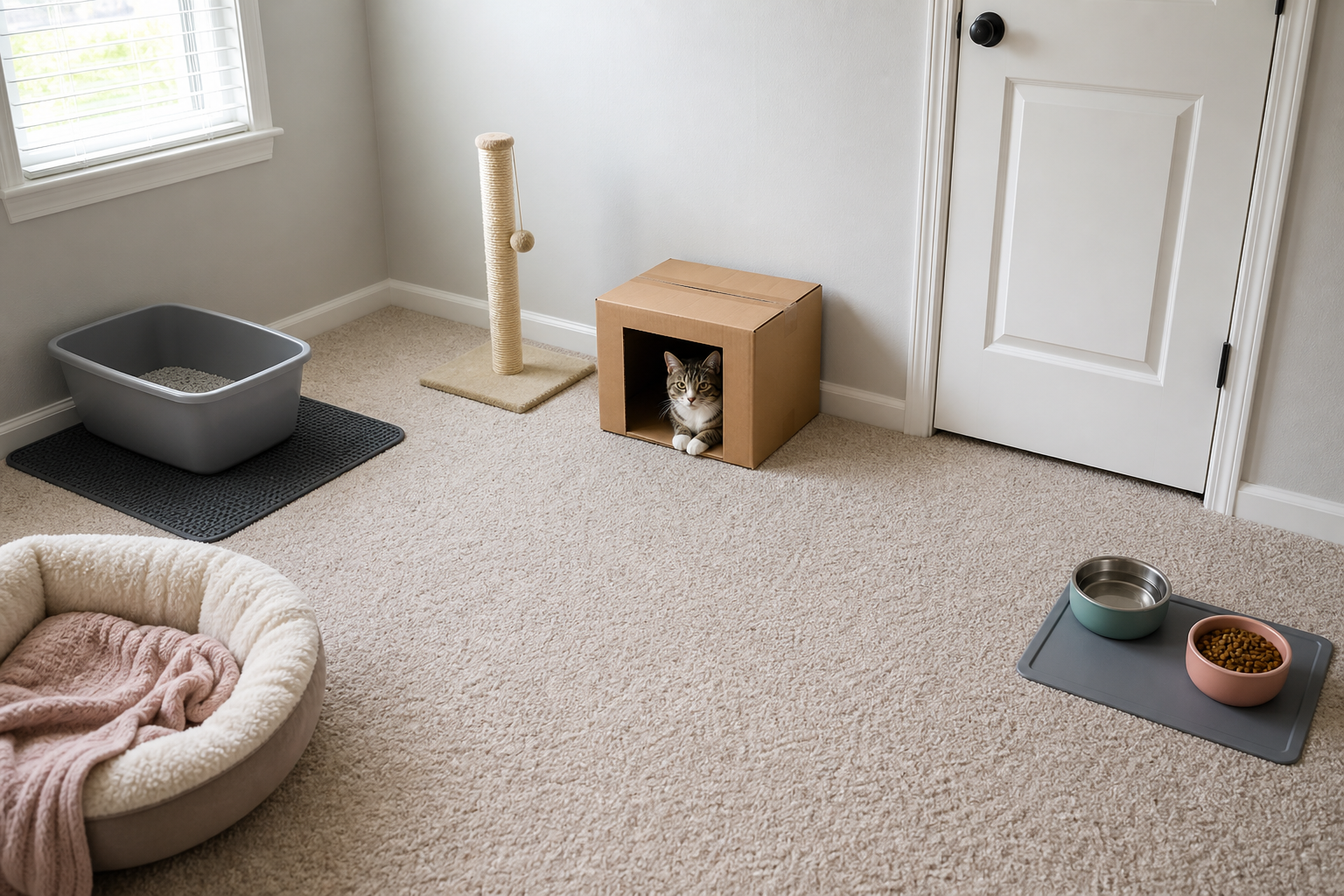
The carrier should feel like a familiar resting place before it becomes a travel tool. Put a soft towel or blanket inside, add occasional treats near the entrance, and let your cat go in and out without being shut in at first.
Once your cat is comfortable approaching the carrier, practice short positive steps: close the door for a few seconds, reward calmly, then open it. Build toward carrying the carrier around the room, then taking short practice drives only if your cat is stable enough for that. For a fuller packing and travel list, use the SnuggleSouls traveling with a cat checklist alongside this moving plan.
On moving day, your cat should ride inside a secure carrier, not loose in the car. A loose cat can hide under seats, interfere with driving, bolt when a door opens, or be injured in a sudden stop. If your cat pants, drools heavily, vomits repeatedly, collapses, or seems unable to recover after travel, contact a veterinarian promptly.
What should you do in the new home first?
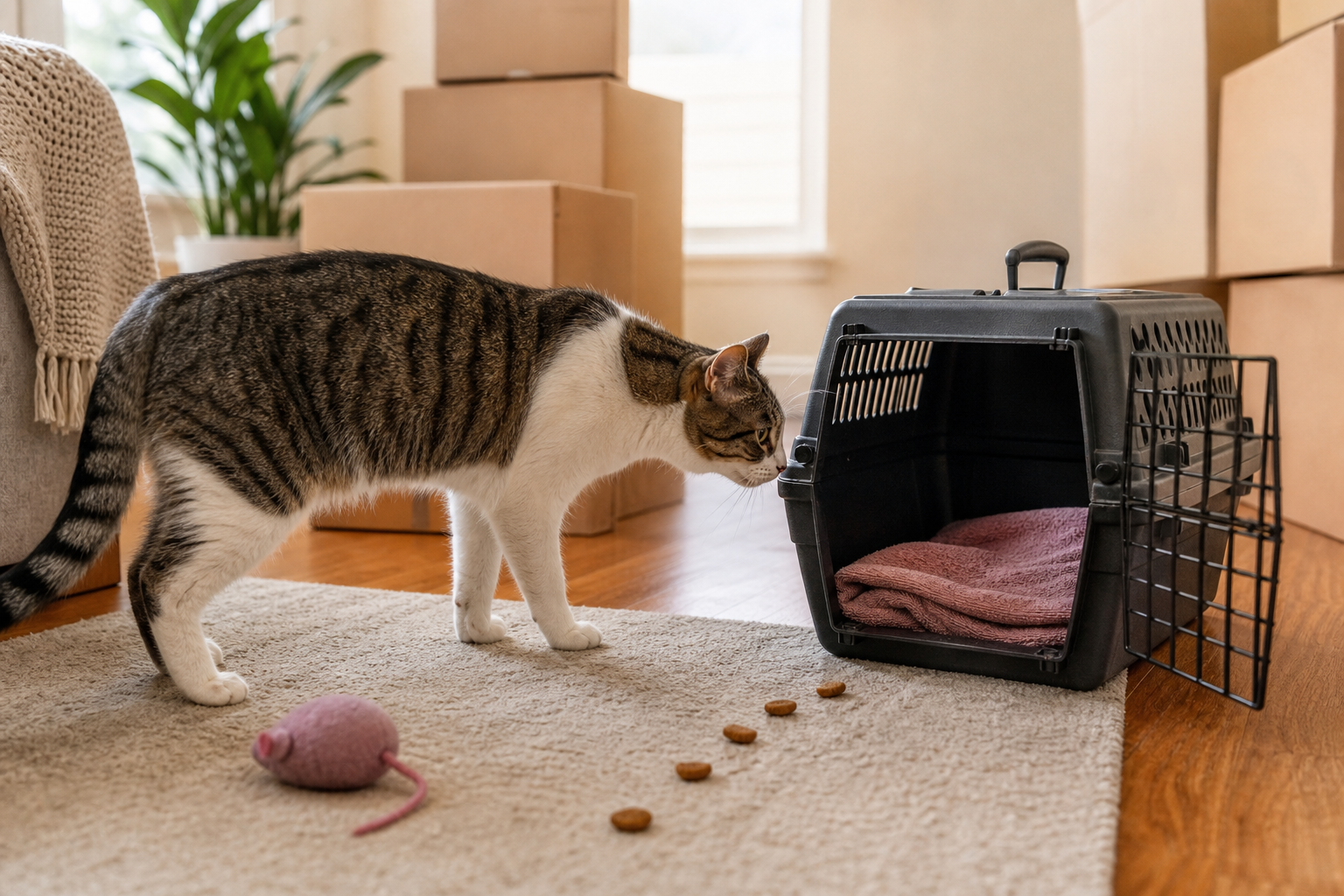
Set up your cat's room before you unload your cat from the car. The ASPCA recommends letting pets adjust to one room as a home base before gradually introducing more of the home 2. For cats, that first room should be quiet, secure, and already stocked with familiar resources.
Before opening the carrier, check the room for hazards. Close windows, block crawl spaces, remove loose strings or packing materials, and make sure no one will open the door by accident. If you have not already done a room-by-room safety pass, review SnuggleSouls' guide to Katzensicherheit für Ihr Zuhause before expanding access.
Put the carrier down, open the door, and let your cat decide when to come out. Do not tip the carrier, pull your cat out, or invite a crowd into the room. Sit nearby, speak softly if that helps your cat, and let exploration happen at your cat's pace.
How should you set up the safe room?
A good safe room contains everything your cat needs without forcing important resources too close together. AAFP/ISFM environmental guidance emphasizes safe places and separated key resources such as feeding, drinking, toileting, scratching, play, and resting areas 3.
Include these basics:
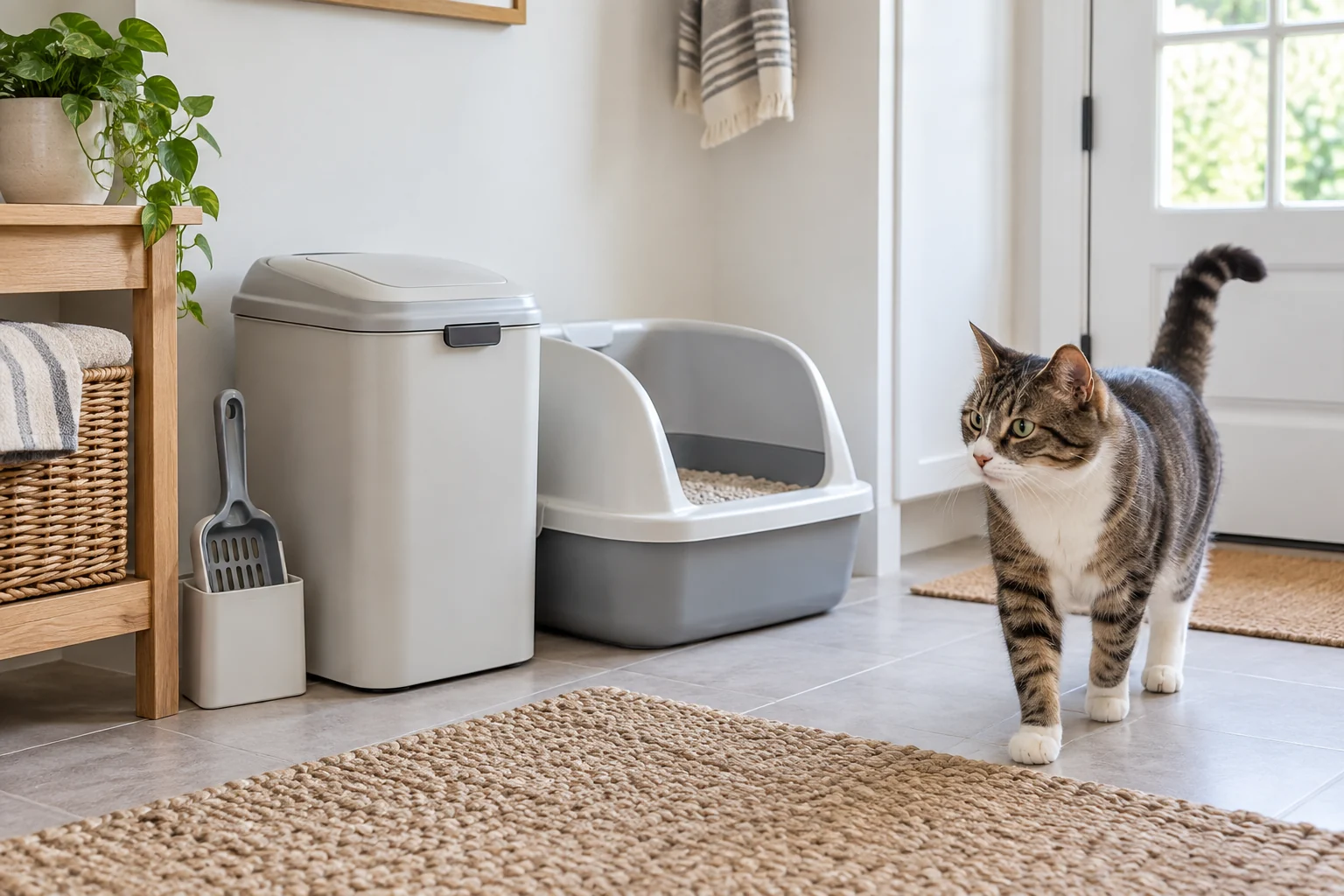
- A clean litter box in a low-traffic corner
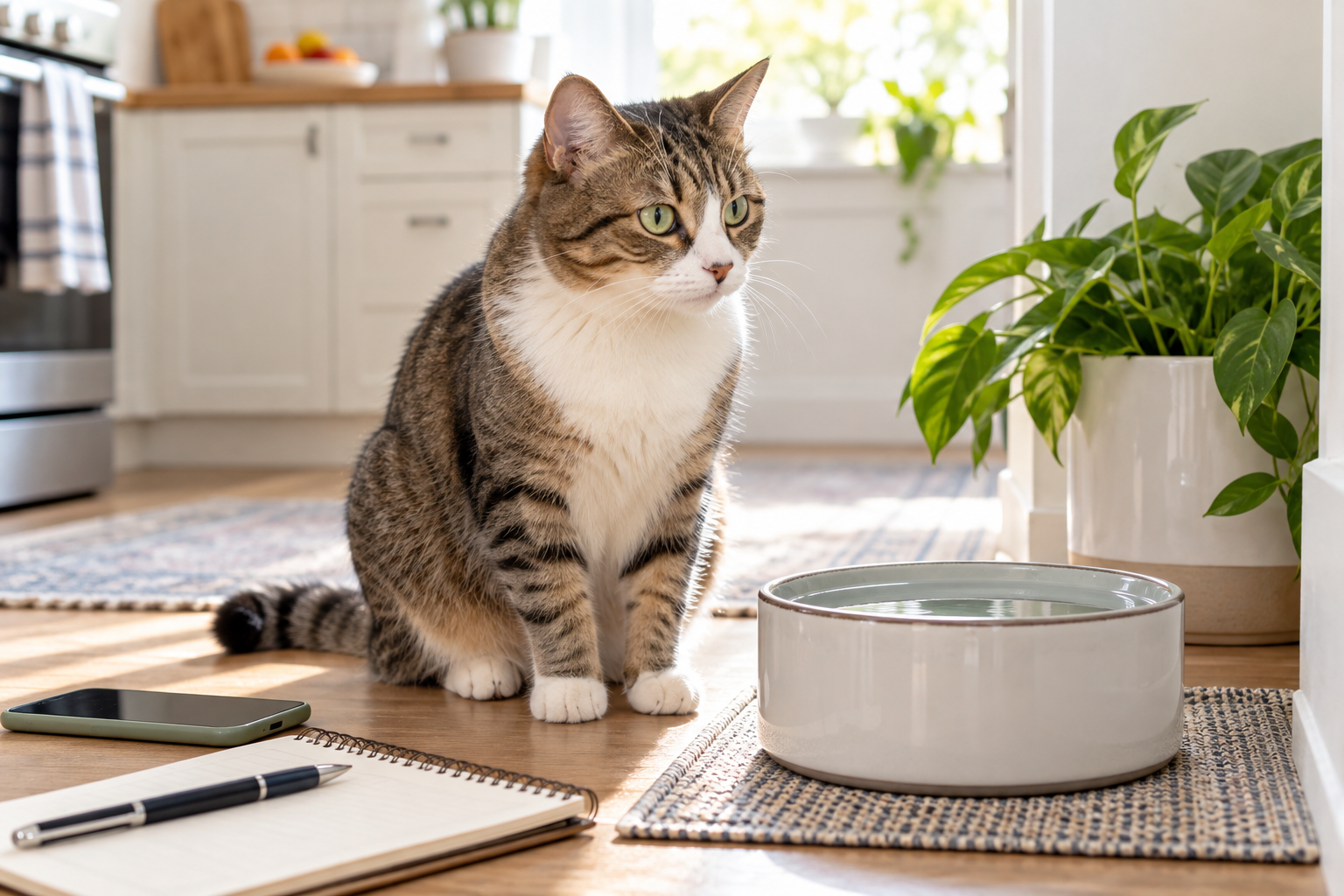
- Food and water away from the litter box
- A bed, blanket, or towel that smells like the old home
- At least one hiding place, such as a cardboard box on its side
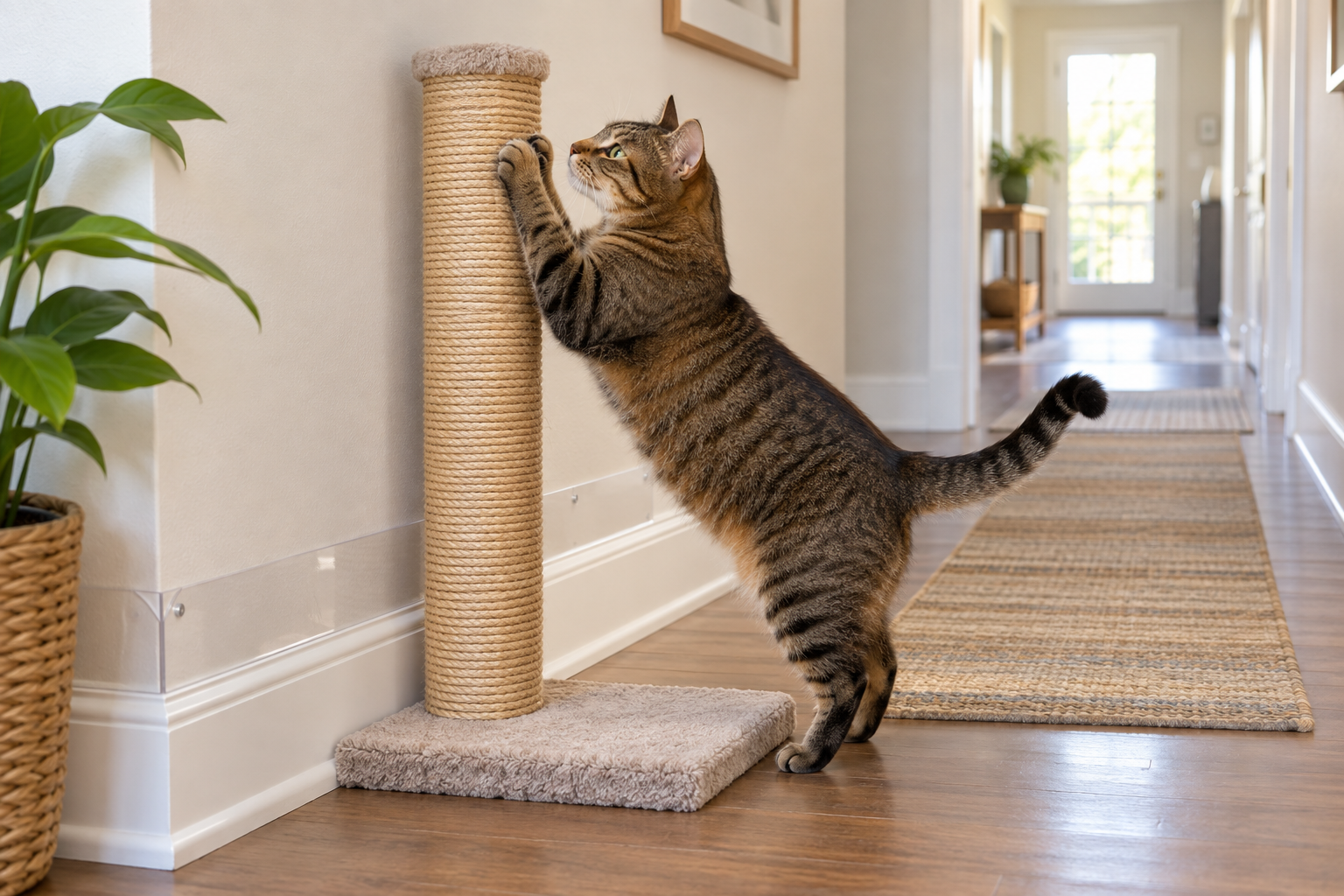
- A scratcher or scratching post
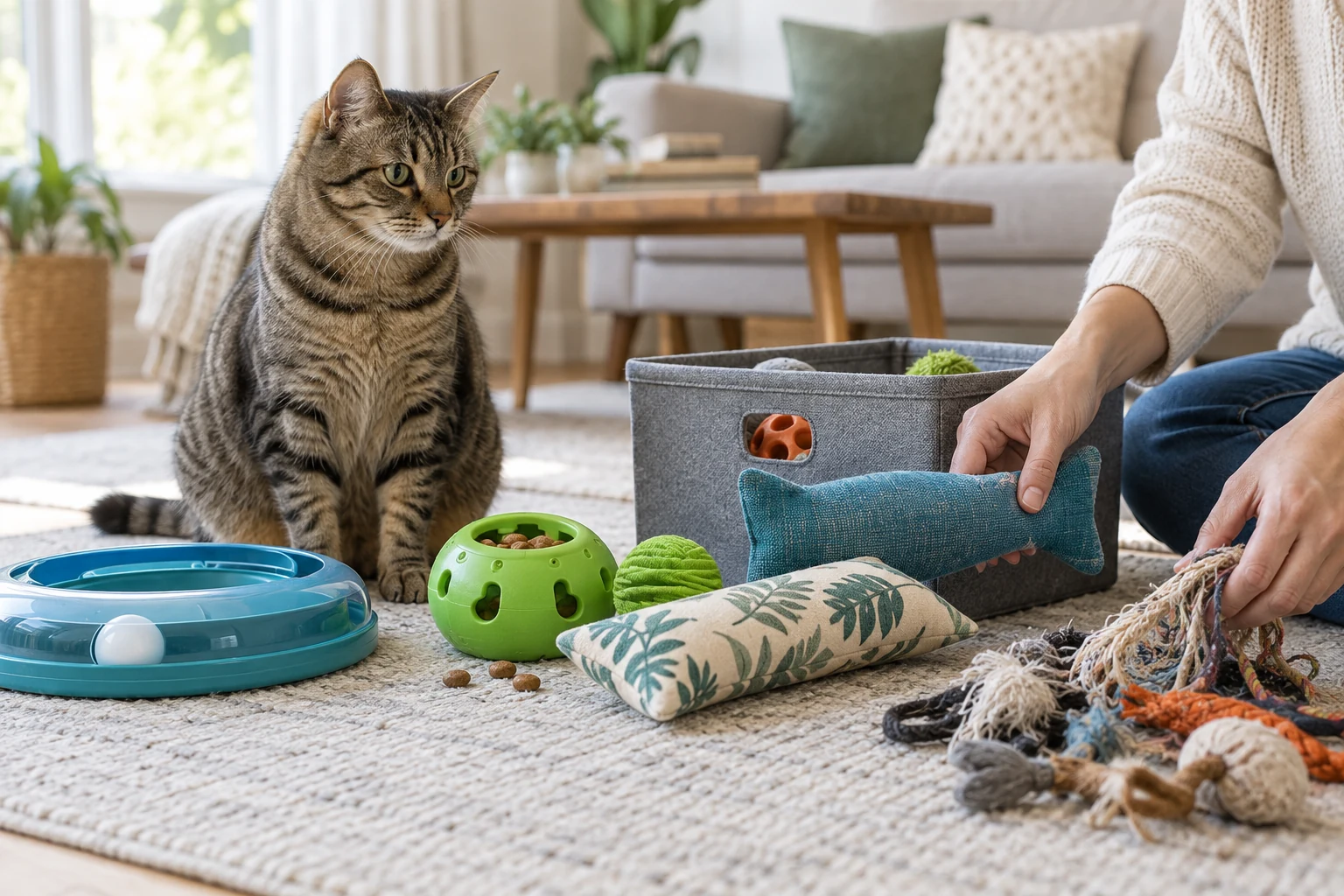
- A few familiar toys
- Medication, special food, or comfort items your cat already uses
If litter box problems are a concern, set up the box first and keep it very easy to find. The Die beste Einrichtung für ein Katzenklo can help you choose a practical location, and a steady litter box cleaning routine can prevent avoidable stress while your cat is adjusting.
Some cats settle within a day. Others need several days in the safe room before they are ready to explore. Progress is not measured by bravery; it is measured by normal eating, drinking, litter box use, resting, grooming, and curiosity.
When can your cat explore the rest of the home?
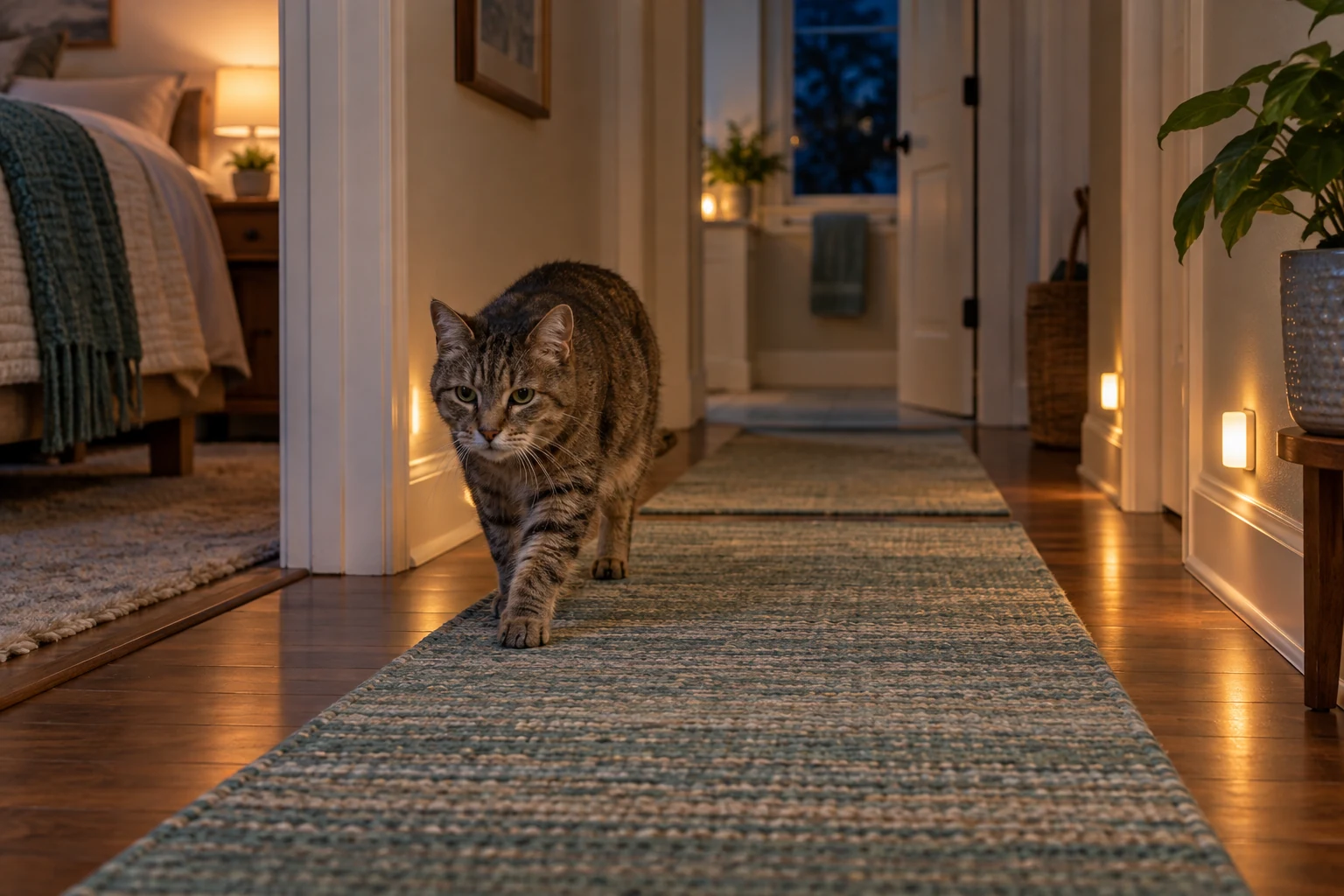
Let your cat explore when the safe room has become predictable. A cat who is eating, using the litter box, resting in the open at least sometimes, and approaching you normally is usually more ready than a cat who is still hiding continuously.
Start with one extra room or hallway, not the whole house. Keep doors to risky spaces closed, and let your cat retreat to the safe room whenever they want. AAHA and AAFP note that cats need distributed resources and appealing resting and hiding places throughout the home, not just one corner 4.
Use this simple pace:
| Cat's response | Was das bedeutet | Nächster Schritt |
|---|---|---|
| Sniffs, explores, returns to safe room | Normal cautious confidence | Offer short daily exploration windows |
| Hides but eats and uses the litter box overnight | Mild adjustment stress | Keep the safe room longer and reduce noise |
| Refuses food, urine, or stool for a concerning period | Possible health or stress issue | Contact your veterinarian for guidance |
| Bolts, panics, or vocalizes intensely | The space is too much too soon | Return to one-room access and slow the plan |
For cats who previously had outdoor access, do not allow immediate outdoor exploration. The new home is not yet familiar territory, and escape risk is high. Ask your veterinarian or local rescue organization for safe timing based on your cat's history and local risks.
What behavior is normal after a move?
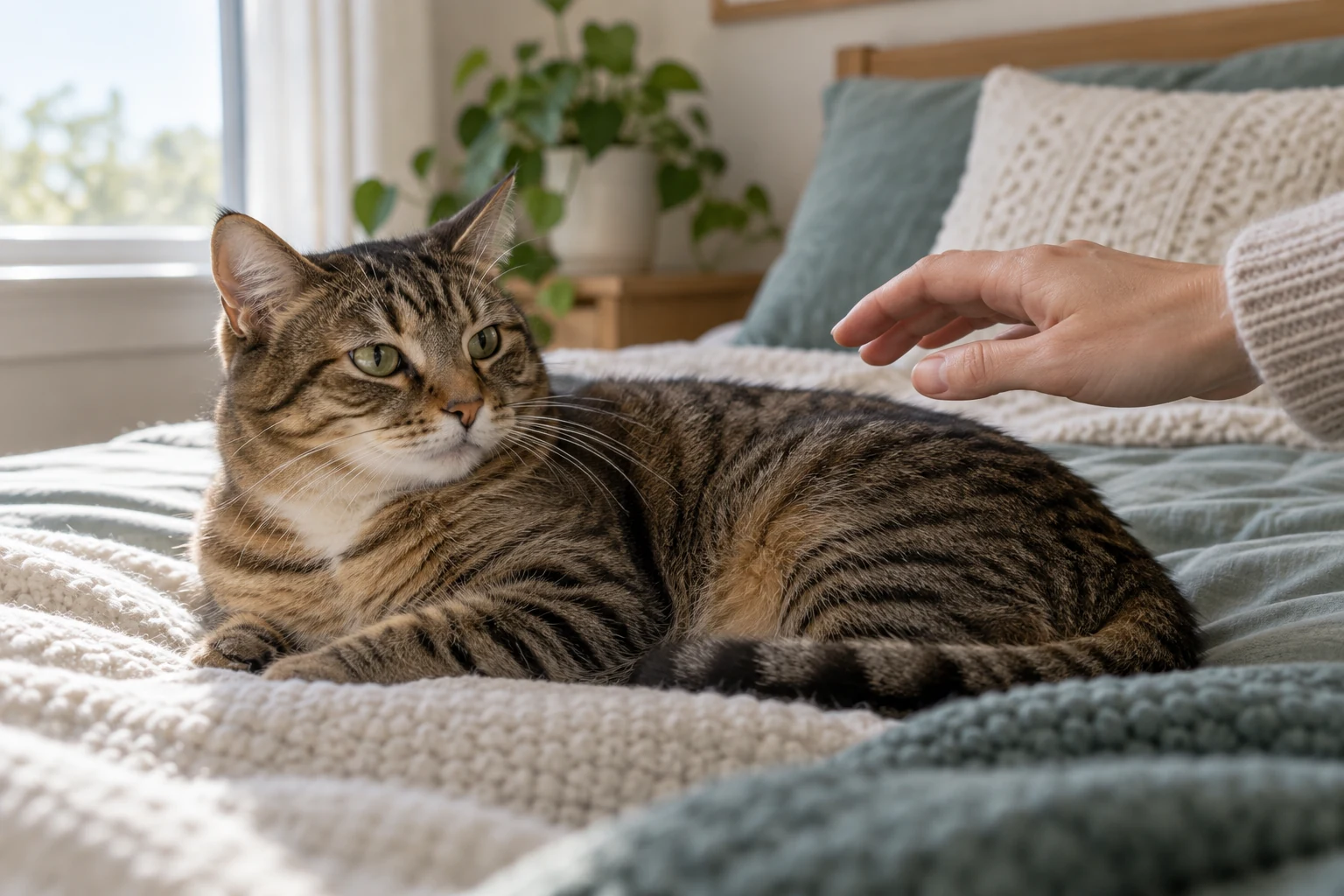
Hiding, cautious sniffing, clinginess, reduced play, and sleeping in unusual spots can be normal after a move. Cats often cope with stress by avoiding interaction or seeking a hiding place, and that behavior should be respected as long as your cat is still eating, drinking, eliminating, and gradually improving 3.
The goal is not to stop all hiding. The goal is to make hiding safe and temporary. If you are unsure whether your cat's behavior is normal, SnuggleSouls' guide to warum Katzen sich verstecken can help you separate ordinary adjustment from warning signs.
Watch litter box behavior closely. Stress can contribute to inappropriate urination in some cats, but pain, urinary disease, and other medical issues can look similar. If your cat is straining, crying in the box, producing little or no urine, or repeatedly visiting the box, treat that as urgent. For non-urgent anxiety patterns, see the guide to stressbedingtes Wasserlassen and involve your veterinarian if the pattern continues.
What should you do for multi-cat households?
Move multi-cat households with extra patience. Even cats who normally get along can smell different after travel, react differently to the new territory, or compete over limited resources.
If your cats are closely bonded and travel calmly, they may share the same safe room if there is enough space and no tension. If they have a history of conflict, feed separately, provide multiple litter boxes, and consider separate safe rooms at first. AAFP/ISFM guidance supports providing multiple and separated key resources, especially where competition or stress may occur 3.
Do not force group exploration. Let each cat move at their own speed, and watch for blocking, staring, chasing, guarding food, guarding doorways, or one cat preventing another from reaching the litter box. Add more resources before conflict becomes a habit.
Schlussfolgerung:
Moving with a cat works best when you reduce surprises. Keep familiar scent and routine before the move, use a secure carrier for transport, set up a safe room before arrival, and expand territory slowly.
Your cat does not need to love the moving process. They need a plan that protects safety, gives them hiding options, and lets confidence return in stages. If your cat stops eating, cannot urinate, seems physically unwell, or remains intensely distressed, call your veterinarian rather than waiting it out.
Häufig gestellte Fragen
How long should I keep my cat in one room after moving?
Many cats need a few days in one safe room, while some need longer. Wait until your cat is eating, using the litter box, resting, and showing curiosity before offering more space.
Should I board my cat on moving day?
Boarding can help some cats avoid open doors, movers, and noise, but it can also add another unfamiliar environment. For a healthy cat who tolerates confinement, a quiet room in the old home and then a prepared safe room in the new home is often simpler. For highly anxious cats, ask your veterinarian which option is safer.
Should I wash my cat's bedding before the move?
No, not unless it is dirty or unsafe. Familiar scent can help the new room feel less foreign, so keep a few blankets, beds, or towels smelling like the old home.
What if my cat hides under the bed after moving?
Hiding can be normal if your cat still eats, drinks, uses the litter box, and improves over time. Provide a safer hiding option such as a covered bed or cardboard box, keep the room quiet, and avoid dragging your cat out.
Can I use pheromone sprays or diffusers when moving with a cat?
Some cat welfare groups suggest pheromone products as part of a moving plan, especially around carriers and the safe room 5. They are not a substitute for slow introduction, secure transport, or veterinary care, and results can vary by cat.
Referenzen
[1] International Cat Care. (2025). Moving house with your cat. URL
[2] ASPCA. (2026). Moving With Your Pet. URL
[3] AAFP and ISFM. (2013). Leitlinien zu den Umweltbedürfnissen von Katzen. URL
[4] AAHA and AAFP. (2021). Behavior and Environmental Needs. URL
[5] Cats Protection. (2026). Advice for moving house with your cat. URL
 EN
EN DE
DE ES
ES PT
PT