
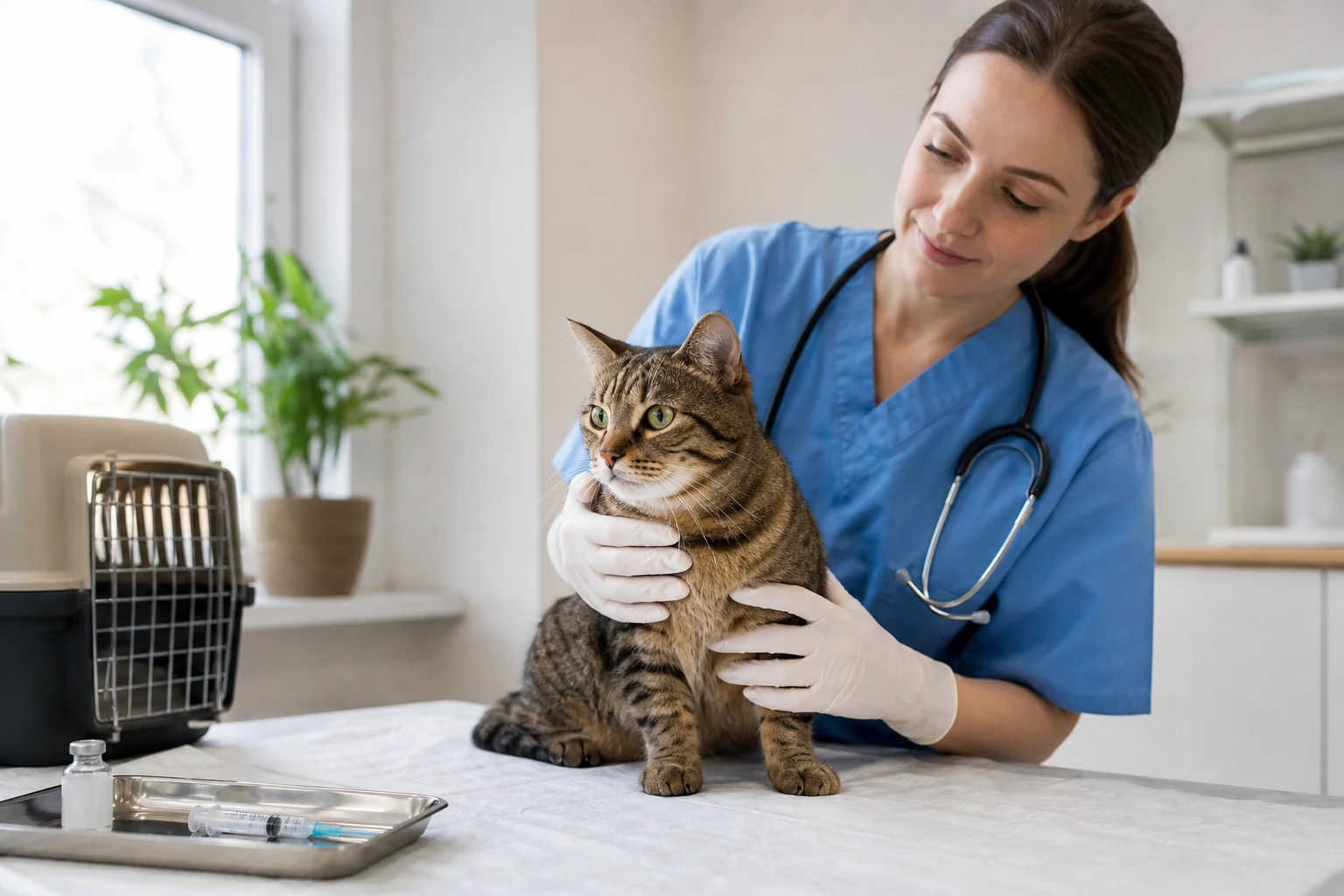
Cat vaccines protect against serious infectious diseases, but the right plan is not a one-size-fits-all calendar. Your cat's age, vaccine history, indoor or outdoor life, local rabies rules, and health status all matter, so use this guide as a plain-English conversation starter for your veterinarian.
For most cat parents, the key question is simple: which vaccines are essential, which are risk-based, and how often does a cat really need boosters? The safest answer is to build a personalized plan with your veterinary team, especially if your cat is a kitten, newly adopted, overdue, pregnant, immunocompromised, or has had a previous vaccine reaction.
This SnuggleSouls saúde do gato guide explains core shots, non-core vaccines, indoor cat questions, booster timing, and what to ask before the appointment.
Índice
- What cat vaccines are considered core?
- What is the usual kitten vaccine series?
- How do adult cat boosters work?
- Do indoor cats still need vaccines?
- Which cat vaccines are non-core or risk-based?
- What should you ask your vet before vaccines?
- When should vaccination be delayed or handled carefully?
- Conclusion: The safest vaccine plan is personal
- Perguntas frequentes
- Referências
What cat vaccines are considered core?
Core vaccines are the vaccines recommended for cats because the diseases are widespread, serious, or legally important. Current feline guidelines commonly place feline panleukopenia virus, feline herpesvirus-1, feline calicivirus, rabies, and FeLV for kittens under 1 year in the core discussion for pet cats 1 2.
You may hear FVRCP used as shorthand for the combination vaccine that covers feline viral rhinotracheitis from herpesvirus-1, calicivirus, and panleukopenia. Panleukopenia can be especially severe, while herpesvirus and calicivirus are major causes of feline upper respiratory disease.
Rabies is different because it is both a fatal public-health disease and a legal issue. Rules vary by location, product label, and local authority, so your veterinarian is the right person to confirm the requirement where you live.

| Vaccine group | Why vets discuss it | Typical decision point |
|---|---|---|
| FVRCP | Helps protect against panleukopenia, herpesvirus-1, and calicivirus | Usually part of kitten and adult core planning |
| Rabies | Fatal zoonotic disease; often legally regulated | Local law, product label, and veterinary guidance decide timing |
| FeLV | Important for kittens and cats with exposure risk | Often core for kittens, then risk-based for many adults |
If you are adopting your first cat, compare life-stage needs with the kitten versus adult cat guide before your first wellness visit.
What is the usual kitten vaccine series?
Kittens usually need a series because maternal antibodies can interfere with early vaccine protection, and immunity develops over time. Guidelines commonly start core kitten vaccination around 6 to 8 weeks of age, repeat doses every few weeks, and continue until the veterinarian is confident the kitten is protected; exact timing depends on the product, risk, and local protocol 1 3.
That is why a kitten appointment often feels repetitive. The goal is not to "overdo" vaccines; it is to close the window when a kitten may be old enough to explore but not yet fully protected.
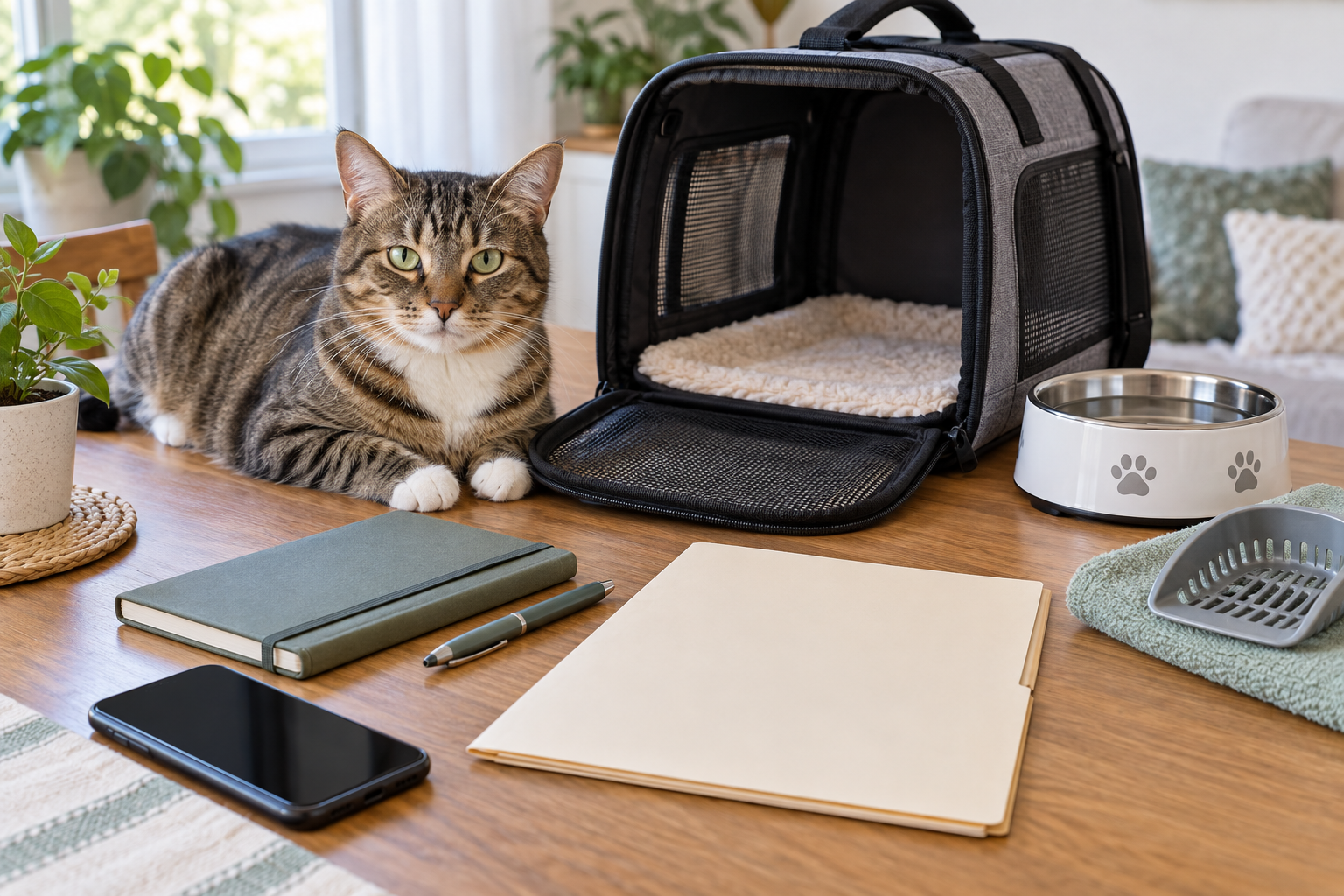
For a typical kitten visit, bring:
- Adoption, breeder, rescue, or shelter vaccine records
- Any deworming, FeLV/FIV testing, or illness history
- Your kitten's indoor/outdoor plans
- Other pets in the home
- Travel, boarding, grooming, or future daycare plans
Do not guess if records are incomplete. Your vet may recommend restarting, spacing, testing, or choosing a protocol based on what is known and what is safest for that kitten.
How do adult cat boosters work?
Adult boosters depend on vaccine type, previous series, age, health, lifestyle, and law. Many low-risk adult cats do not need every vaccine every year, and major guidelines emphasize individualized risk assessment rather than automatic annual shots for everything 1 3.
Your veterinarian may ask whether your cat goes outdoors, lives with cats that go outdoors, boards, attends grooming or shows, visits shared housing, or has contact with foster cats. A quiet indoor-only senior with complete records may have a different plan from a young escape artist in a multi-cat household.
If you are not sure how old your cat is, use the SnuggleSouls calculadora de idade do gato as a rough life-stage reference, then let your vet translate that into medical timing. For older adopted cats, the guide to adotar um gato idoso can also help you prepare records and wellness questions.
The most useful booster habit is simple: keep the vaccine certificate and product dates. If you move, change clinics, travel, board your cat, or face a bite/exposure question, clear records prevent confusion.
Do indoor cats still need vaccines?
Indoor cats often still need at least some vaccines because "indoor" does not mean "zero exposure." Cats escape, wildlife can enter homes, other pets may bring exposure risk, and veterinary clinics, boarding, grooming, moves, emergencies, and local rabies rules can all matter.
The CDC notes that cats entering the United States are not federally required to show rabies vaccination proof, but it still recommends rabies vaccination and warns that destinations may have additional requirements 5. Local rules inside the United States can be stricter than federal import rules.
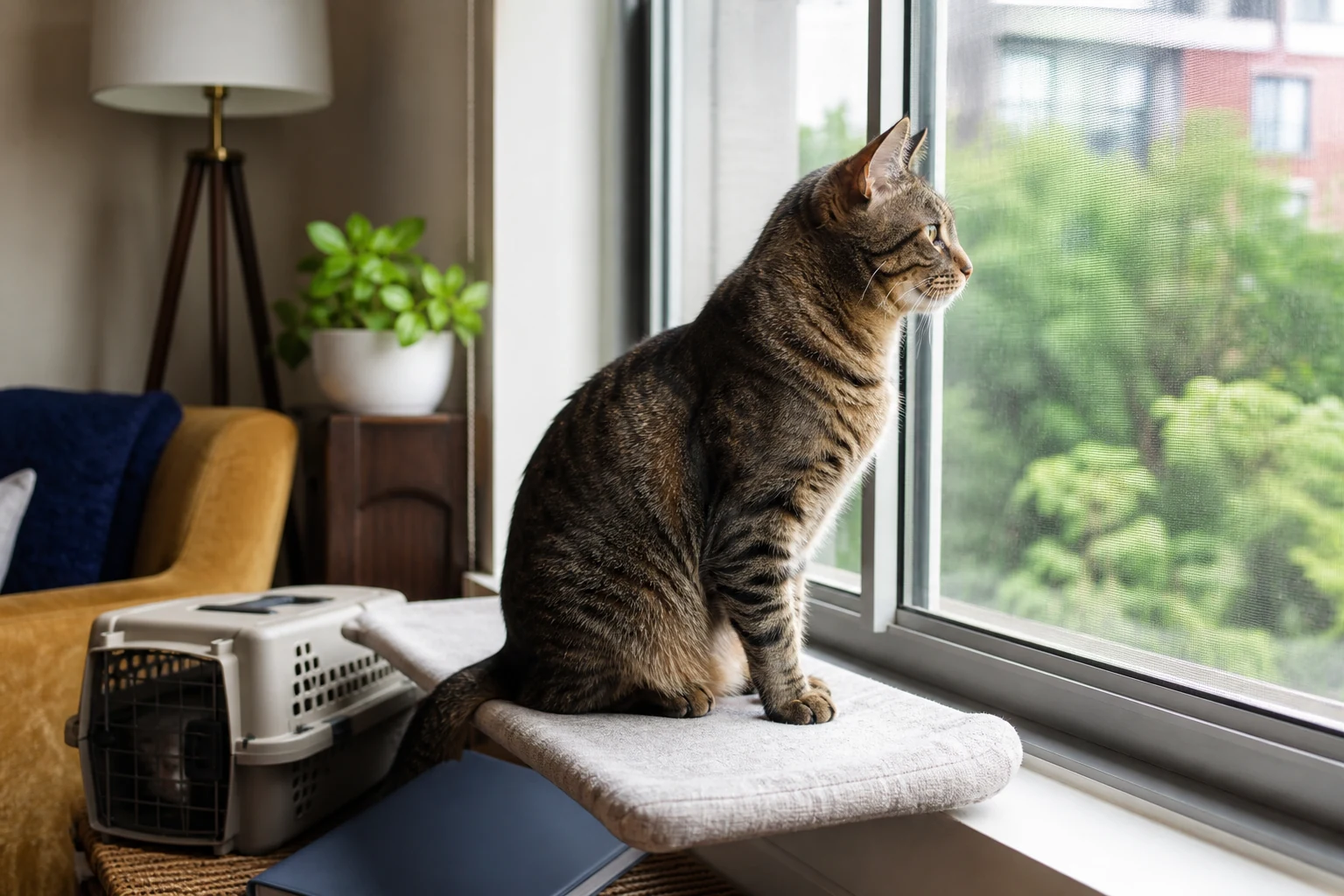
Indoor-cat vaccine decisions usually come down to realistic exposure:
- Has your cat ever slipped outside?
- Do you have screens, balconies, patios, or open doors?
- Do you foster cats or bring in new cats?
- Does your cat board, travel, visit groomers, or attend shows?
- Are there bats, raccoons, skunks, or other wildlife near the home?
- Does local law require rabies vaccination for cats?
For FeLV, many guidelines treat kittens differently from low-risk adult indoor cats. Kittens are more vulnerable and their future lifestyle may not be fully known; adult FeLV boosters are often based on exposure risk and testing history 2 3.
Which cat vaccines are non-core or risk-based?
Non-core vaccines are not "bad" or "optional in a casual sense." They are vaccines used when a cat's individual risk makes the benefit worthwhile. The AAHA/AAFP guidelines describe non-core vaccine decisions as individualized risk-benefit choices based on life stage, lifestyle, environment, and local disease factors 3.
Common risk-based conversations include FeLV for adult cats, Chlamydia felis in certain multi-cat or outbreak settings, and Bordetella bronchiseptica in specific high-risk environments. Some vaccines are not recommended for typical pet cats in major guidelines, so ask your vet why any suggested vaccine fits your cat's situation 1.
This is where honest lifestyle details matter. Saying "indoor only" when your cat slips into the yard weekly, lives with a foster kitten, or boards twice a year may lead to a less useful plan. Your vet is not judging the household; they are estimating exposure.
What should you ask your vet before vaccines?
The best vaccine visit is a short risk assessment, not just a shot appointment. Bring records and ask your vet to explain what is core, what is risk-based, what is legally required, and when the next dose is actually due.
Useful questions include:
- Which vaccines are core for my cat today?
- Is rabies required where I live, and is this a 1-year or 3-year labeled product?
- Does my cat need FeLV vaccination as an adult?
- Should my cat be tested for FeLV or FIV before certain decisions?
- What side effects should I watch for after the visit?
- Where should vaccines be recorded, and can I get a certificate copy?
- What changes would make us update the plan sooner?
It also helps to do a healthy baseline check before the appointment. Appetite, energy, breathing, litter box habits, weight changes, and current medications can all affect how your vet times preventive care.
When should vaccination be delayed or handled carefully?
Call your veterinarian before the appointment if your cat is currently sick, rapidly declining, not eating, breathing abnormally, repeatedly vomiting, having severe diarrhea, recovering from surgery, pregnant, immunocompromised, or had a previous vaccine reaction. Vaccines are preventive tools, and timing them around illness or special medical situations takes veterinary judgment.
Mild sleepiness or soreness can happen after vaccines, but urgent signs need prompt help. Contact a veterinarian right away if your cat has facial swelling, hives, repeated vomiting, collapse, severe weakness, breathing trouble, pale gums, seizures, or any rapid decline after a vaccine.
If respiratory signs are already present, such as frequent cat coughing, wheezing, labored breathing, or open-mouth breathing, do not wait for a routine vaccine visit to ask for advice. Breathing trouble is urgent.
Cornell's Feline Health Center explains that vaccines train the immune system to recognize infectious agents, while also noting that benefits and risks should be weighed with a veterinarian 4. That balance is exactly why individualized plans are better than copying a schedule from another cat.
Conclusion: The safest vaccine plan is personal
Cat vaccines are not just a checklist; they are a preventive-care plan built around your cat's real life. FVRCP, rabies, and kitten FeLV questions are common starting points, while adult boosters and non-core vaccines should be tailored to exposure risk, records, health, and local law.
Keep records, be honest about lifestyle, ask what is due versus optional, and call your vet quickly if your cat is sick or reacts poorly after vaccination. The goal is not maximum shots; it is the right protection at the right time.
Perguntas frequentes
Do indoor cats need rabies vaccines?
Many indoor cats still need rabies vaccination because rabies is fatal, exposure can happen unexpectedly, and local laws may require it. Ask your veterinarian what your city, county, state, and vaccine product label require.
What is the FVRCP vaccine for cats?
FVRCP is a combination vaccine that helps protect against feline viral rhinotracheitis caused by herpesvirus-1, feline calicivirus, and feline panleukopenia. It is a major part of core feline vaccine planning.
Is FeLV vaccine core for every cat?
FeLV is commonly treated as core for kittens and risk-based for many adult cats. Adult decisions depend on testing status, outdoor access, household cats, new cat introductions, and other exposure risks.
How often do cats need booster shots?
There is no single booster schedule for every cat. Your veterinarian should base timing on vaccine history, age, vaccine label, lifestyle risk, local rabies law, and current guidelines.
Can a cat get sick from vaccines?
Some cats have mild temporary soreness, tiredness, or a low appetite after vaccination, but serious reactions are uncommon and need urgent care. Call your vet immediately for swelling, repeated vomiting, collapse, breathing trouble, or severe weakness.
Should I vaccinate a sick cat?
Do not make that decision at home. If your cat is ill, declining, not eating, or having breathing, vomiting, diarrhea, or neurologic signs, call your veterinarian before vaccination so they can decide whether to examine, delay, or adjust the plan.
Referências
[1] WSAVA. (2024). Diretrizes de 2024 para a vacinação de cães e gatos. URL
[2] AAHA/AAFP. (2020). Core Vaccines for Pet Cats. URL
[3] AAHA/AAFP. (2020). 2020 AAHA/AAFP Feline Vaccination Guidelines. URL
[4] Cornell Feline Health Center. (2024). Feline Vaccines: Benefits and Risks. URL
[5] CDC. (2025). Bringing an Animal into the United States. URL
 EN
EN DE
DE ES
ES PT
PT