
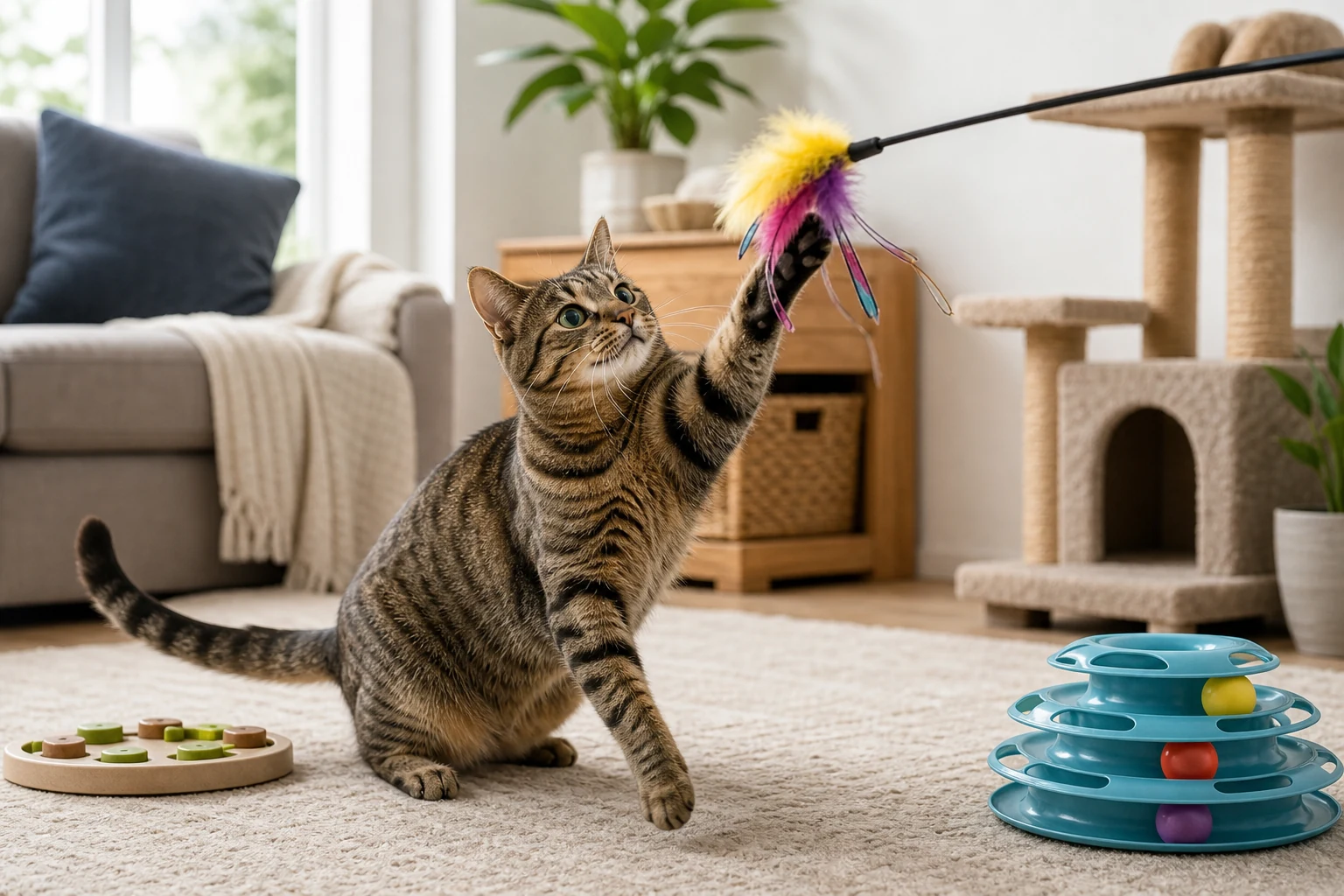
Die besten interaktiven Katzenspielzeuge sind solche, mit denen Ihre Wohnungskatze sicher pirschen, jagen, anspringen, fangen und kleine Aufgaben lösen kann. Für die meisten Katzen bedeutet das eine Mischung aus beaufsichtigtem Spiel mit dem Stab, robustem Spielzeug zum Jagen und Tragen sowie Futterpuzzles – und nicht nur ein einziges teures elektronisches Spielzeug.
Ein Spielzeug “funktioniert” nur, wenn Ihre Katze selbst damit spielen möchte. Bewegung, Beschaffenheit, Größe, Geräusche und der Aufstellungsort sind wichtiger als Marketingversprechen. Am sinnvollsten ist es daher, verschiedene Spielzeugarten auszuprobieren, den bevorzugten Jagdstil Ihrer Katze kennenzulernen und eine kleine Auswahl abwechselnd anzubieten.
Inhaltsübersicht
- Was macht ein interaktives Katzenspielzeug so effektiv?
- Welches interaktive Katzenspielzeug eignet sich am besten?
- Wie kannst du Spielzeug an den Spielstil deiner Katze anpassen?
- Wie sollte man mit seiner Katze spielen?
- Sind Puzzle-Futterautomaten gutes interaktives Spielzeug?
- Wie sorgt man dafür, dass Katzenspielzeug interessant bleibt?
- Welches Katzenspielzeug ist unsicher?
- Was tun, wenn Ihre Katze nicht spielen will?
- Fazit: Bauen Sie ein kleines Spielzeugsystem, das funktioniert
- Häufig gestellte Fragen
- Referenzen
Was macht ein interaktives Katzenspielzeug so effektiv?
Ein geeignetes Spielzeug bietet einer Katze ein angemessenes Ventil für ihr natürliches Jagdverhalten. Die Richtlinien für die artgerechte Haltung von Katzen empfehlen Spielmöglichkeiten, Interaktion mit dem Besitzer sowie Fütterungsaktivitäten, bei denen die Katze sich ihr Futter aktiv beschaffen muss.1
Das Spielverhalten von Katzen folgt in der Regel Teilen einer Jagdsequenz: Beobachten, Anschleichen, Jagen, Anschlagen, Greifen und Beißen.5 Deshalb ruft ein Zauberstab, der unvorhersehbar über den Boden huscht, oft eine stärkere Reaktion hervor als ein Spielzeug, das man der Katze direkt vor die Nase hält. Die Bewegung schafft ein glaubwürdiges Ziel und gibt der Katze Raum, ihre Annäherung zu planen.
Achten Sie auf fünf Eigenschaften:
- Bewegung wie bei „Prey“: Das Spielzeug hält inne, versteckt sich, schießt los oder ändert die Richtung.
- Eine mögliche Aufnahme: Ihre Katze kann es regelmäßig mit den Pfoten fangen oder packen.
- Der richtige Maßstab: Es ist interessant, aber zu groß und zu schwer, um es zu verschlucken.
- Eine passende Textur: Manche Katzen mögen Federn, andere pelzartigen Stoff, glatte Bälle, Pappe oder raschelndes Material.
- Sichere Verwendung: Das Spielzeug eignet sich sowohl für das Spielen unter Aufsicht als auch für das unbeaufsichtigte Spielen allein, aber das weißt du ja.
Das Hocken und das Wackeln mit dem Hinterteil Ihrer Katze vor einem Sprung sind Teil der Vorbereitung auf die Aktion; das Lernen Warum wackeln Katzen mit dem Schwanz, bevor sie sich auf ihre Beute stürzen? kann Ihnen helfen zu erkennen, wann ein Spiel ihre Aufmerksamkeit wirklich gefesselt hat.
Welches interaktive Katzenspielzeug eignet sich am besten?
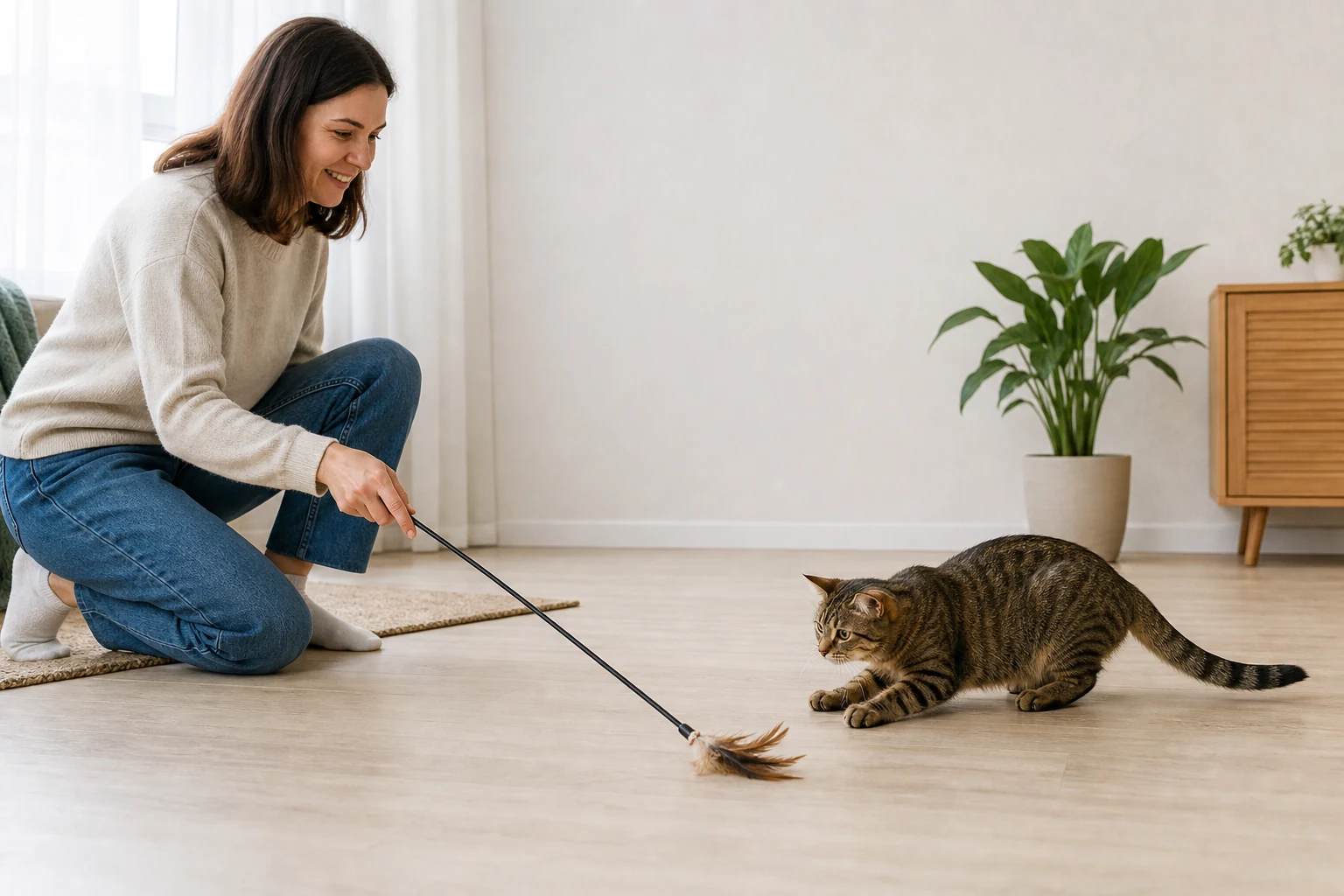
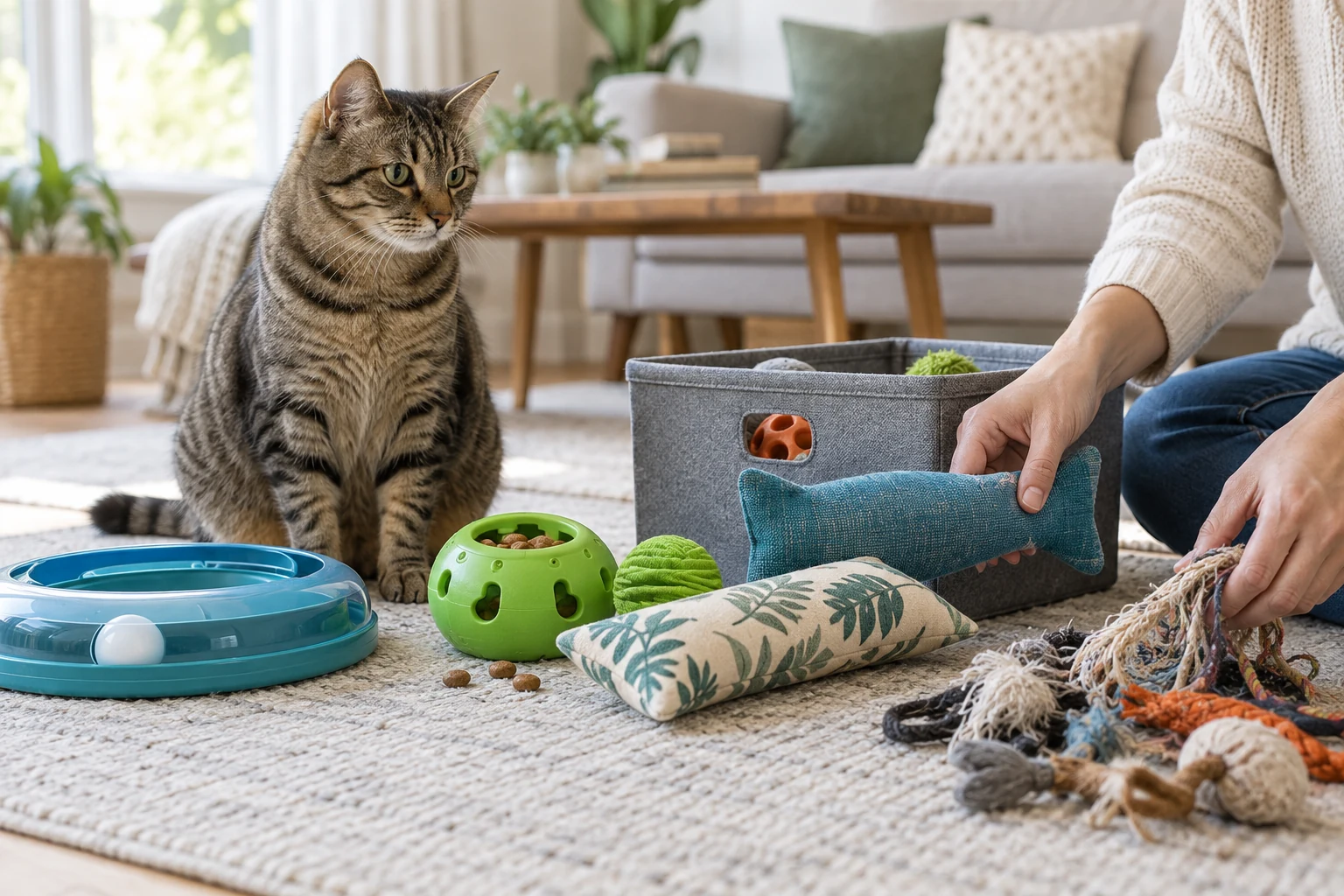
Die sinnvollste Spielzeugsammlung umfasst verschiedene Spielarten, anstatt mehrere Varianten desselben Spielzeugs zu kaufen. Beginnen Sie mit einem Zauberstab, der unter Aufsicht verwendet wird, ein oder zwei sicheren Verfolgungsspielzeugen, einem Kicker und einem Puzzle-Futterautomaten für Anfänger.
| Spielzeugart | Am besten geeignet für | Anleitung | Betreuung |
|---|---|---|---|
| Zauberstab oder Angelrute als Spielzeug | Hinterherlaufen, jagen, springen, gemeinsames Spielen | Nimm es von der Katze weg, versteck es, mach eine Pause und lass sie es fangen | Immer; nach dem Spielen weglegen |
| Spielzeug mit Kugel oder Kugelbahn | Schlagen, Jagen, selbstständiges Spielen | Rollen Sie es über einen freien Boden oder stellen Sie eine stabile, geschlossene Bahn bereit | Schau dir die Spiele erst einmal an; viele eignen sich für das Spiel allein |
| Plüschmaus oder Kicker | Tragen, Greifen, Beißen, mit den Hinterbeinen treten | Wirf es vorsichtig oder lass die Katze damit spielen | Entfernen, wenn sich die Nähte öffnen oder die Füllung sichtbar wird |
| Puzzle-Futterautomat | Futtersuche und Problemlösung | Fangen Sie ganz einfach mit einer Portion einer ausgewogenen Mahlzeit an | Zuerst beobachten und die Kalorien der Mahlzeiten zählen |
| Karton oder Papierverpackung | Sich verstecken, aus dem Hinterhalt angreifen, nachforschen | Schneiden Sie sichere Öffnungen aus und legen Sie ein Spielzeug daneben | Entfernen Sie Heftklammern, Klebeband, Griffe und abgerissene Teile |
| Bewegungsspielzeug | Eine neue Bewegungsart für manche Katzen | Probieren Sie es kurz aus und schauen Sie sich die ersten Sitzungen an | Bewegliche Teile überwachen und überprüfen |
Einfaches Spielzeug kann sehr gut funktionieren. Die „Ohio State Indoor Pet Initiative“ empfiehlt Abwechslung und einen Wechsel der Spielzeuge, darunter solche, die Katzen rollen, anspringen, fangen, tragen und jagen können.2 Bevor du weitere Artikel kaufst, schau dir diese einmal an Ideen für fast kostenloses Katzenspielzeug und prüfen Sie alle selbstgemachten Gegenstände auf Teile, die verschluckt werden oder in denen man sich verfangen kann.
Wie kannst du Spielzeug an den Spielstil deiner Katze anpassen?
Testen Sie, ob Ihre Katze Bewegungen bevorzugt, die an “Vögel”, “Mäuse” oder “Käfer” erinnern. Die Ohio State University empfiehlt, Spielzeuge zu vergleichen, die sich in der Luft, am Boden oder mit kleinen, schnellen Bewegungen fortbewegen, um die Beutepräferenz einer Katze zu ermitteln.3
Machen Sie diesen kurzen Präferenztest an verschiedenen Tagen:
- Führe einen Zauberstab durch die Luft, lass ihn dann sinken und halte inne.
- Zieh ein Plüschtier tief am Boden entlang und hinter Möbeln her.
- Rolle oder schnippe einen festen Ball mit schnellen, kleinen Bewegungen.
- Notieren Sie, bei welchem Spiel es zum Beobachten, Verfolgen, Jagen oder Anschleichen kommt.
Geh nicht davon aus, dass eine ruhige Katze kein Interesse hat. Manche Katzen beobachten lange, bevor sie angreifen, während andere das Interesse verlieren, wenn sich das Spielzeug zu schnell bewegt. Kätzchen mögen oft lebhafte Spiele; ältere Katzen bevorzugen vielleicht langsamere Bewegungen am Boden, einfachere Rätselaufgaben und das Spielen aus einer bequemen Ruheposition heraus.
Verwenden Sie eine breitere Ratgeber zum Verhalten von Katzen die Ohren, den Schwanz, die Körperhaltung und die Anzeichen dafür zu deuten, dass Ihre Katze eine Pause braucht.
Wie sollte man mit seiner Katze spielen?
Das Spielzeug sollte sich wie Beute verhalten, nicht wie ein Trainingsgerät. Die Trainingseinheiten sollten vorhersehbar genug sein, um zur Routine zu werden, aber abwechslungsreich genug, um interessant zu bleiben.
Eine nützliche Abfolge beim Stabspiel ist:
- Beginnen Sie mit kleinen Bewegungen aus einiger Entfernung.
- Lass das Spielzeug hinter einer Kiste oder einem Stuhl verschwinden.
- Mach eine Pause, damit deine Katze auf Beute lauern kann.
- Füge eine kurze Verfolgungsjagd oder eine Gelegenheit zum Sprung hinzu.
- Lassen Sie Ihre Katze das Spielzeug fangen und festhalten.
- Wiederhole dies kurz und schließe dann mit einer abschließenden Aufnahme ab.
Mehrere kurze Spielrunden sind für die Aufmerksamkeit einer Katze meist besser geeignet als ein einziger anstrengender Marathon. Hören Sie auf, solange Ihre Katze noch Erfolg hat, vor allem, wenn das Spiel hektisch oder frustrierend wird.
Ermutigen Sie niemals Angriffe auf Hände, Füße oder Knöchel. Der Einsatz eines Spielzeugs schafft Distanz und bringt der Katze bei, was sie greifen darf. Wenn das Spiel oft damit endet, dass die Katze Menschen beißt, lernen Sie, verstehen, warum Katzen beißen und das Spiel anzupassen, bevor die Frustration zunimmt.
Sind Puzzle-Futterautomaten gutes interaktives Spielzeug?
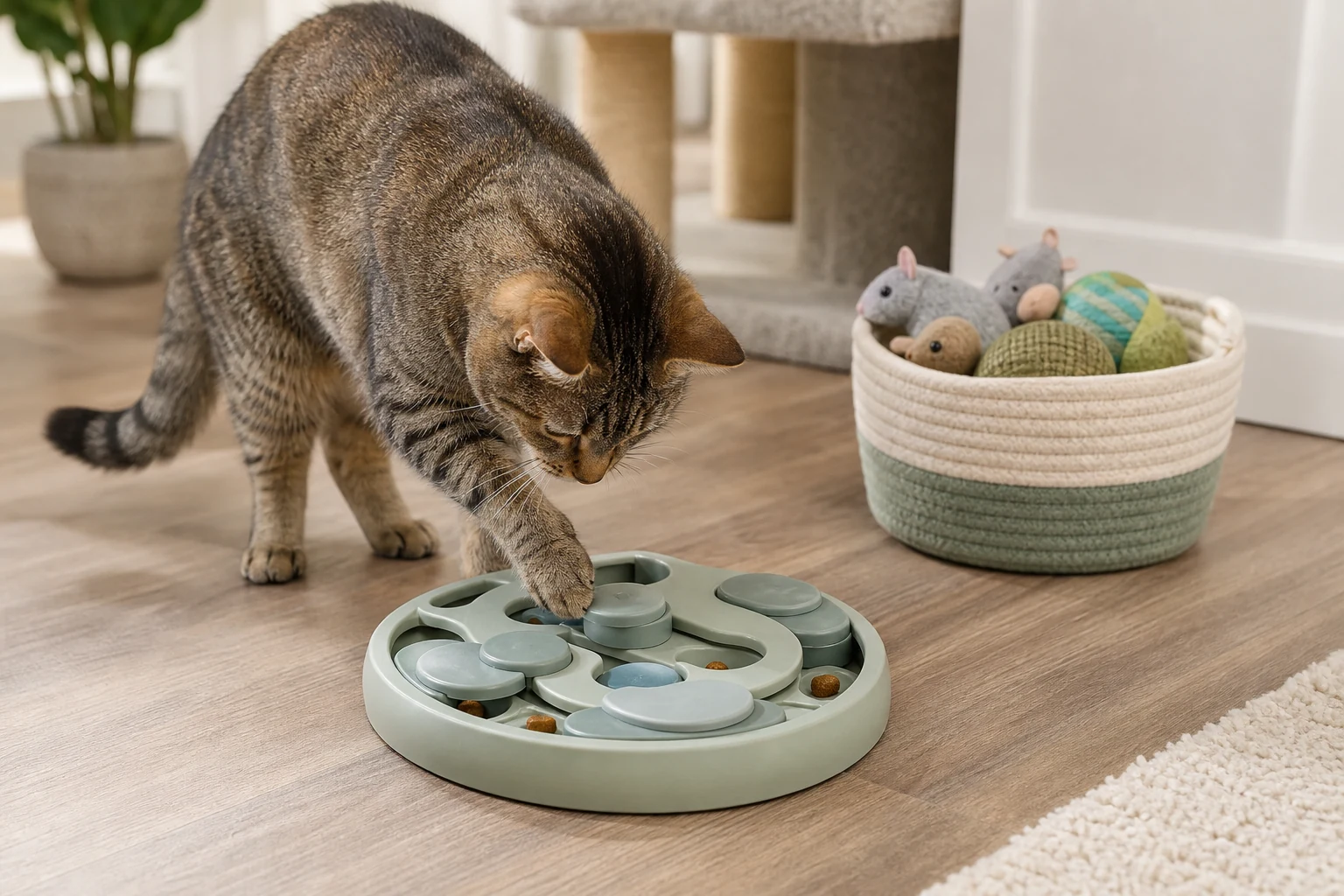
Ja. Ein Futterpuzzle verwandelt einen Teil der Mahlzeit in eine Futtersuche und kann besonders für futtermotivierte Wohnungskatzen nützlich sein. Es soll das Fressen interessant machen, nicht das Futter unzugänglich.
Fang mit einem einfachen Rätsel an:
- Verwenden Sie ein vertrautes Trockenfutter oder Leckerlis, die sicher in das Gerät passen.
- Lassen Sie Ihre Katze das Futter sehen und riechen.
- Halten Sie einige davon griffbereit.
- Erhöhen Sie den Schwierigkeitsgrad erst, wenn Ihre Katze die Aufgabe gemeistert hat.
- Reinigen Sie den Futterautomaten entsprechend den verwendeten Materialien und der Art des Futters.
Lebensmittel, die in Rätseln verwendet werden, zählen weiterhin zur täglichen Nahrungsaufnahme. Verwende die Katzenkalorienrechner als Planungshilfe und fragen Sie Ihren Tierarzt nach den Futterrationen, wenn Ihre Katze übergewichtig, untergewichtig, im Wachstum oder auf einer medizinischen Diät ist.
Verwenden Sie einen Futterpuzzle nicht als einzige Möglichkeit für eine ängstliche, verletzte oder unerfahrene Katze, an Futter zu gelangen. Wenn Ihre Katze aufgibt, vereinfachen Sie das Puzzle und geben Sie ihr die normale Mahlzeit.
Wie sorgt man dafür, dass Katzenspielzeug interessant bleibt?
Halten Sie eine kleine Auswahl bereit und wechseln Sie den Rest ab. Spielzeug gewinnt oft wieder an Attraktivität, wenn es eine Weile aus dem Blickfeld verschwunden ist, und durch den Wechsel können Sie es regelmäßig überprüfen.2
Ein praktisches Wochensystem:
- Stellen Sie zwei oder drei robuste Spielzeuge für das Spielen allein bereit.
- Bewahren Sie Zauberstäbe, Schnüre und leicht zerbrechliches Spielzeug sicher auf.
- Tausche alle paar Tage ein paar Spielsachen aus.
- Ändere den Spielort oder füge eine Kiste als Hinterhaltpunkt hinzu.
- Waschen oder wischen Sie das Spielzeug je nach Bedarf ab.
- Entfernen Sie alle beschädigten, losen, scharfen oder verschluckbaren Teile.
Neuartigkeit kann auch dadurch entstehen, wie man ein bekanntes Spielzeug bewegt. Ein Zauberstab, der immer nur Kreise in der Luft beschreibt, kann langweilig werden, während derselbe Zauberstab, der unter Papier verschwindet und wie eine versteckte Beute stillsteht, sofort wieder interessant wird.
Welches Katzenspielzeug ist unsicher?
Unsicheres Spielzeug kann verschluckt werden, sich um den Körper wickeln, in scharfe Teile zerbrechen oder Batterien und mechanische Teile freilegen. Die Oregon Humane Society rät dazu, Bänder, Federn, Schnüre, Augen und andere Kleinteile zu entfernen, die abgekaut und verschluckt werden könnten.4
Bewahren Sie diese nach dem Spielen außerhalb der Reichweite auf:
- Zauberstäbe, Schnüre, Garn, Bänder, Fäden, Lametta und Zahnseide.
- Haargummis, Gummibänder, Verschlussbänder und kleine Plastikringe.
- Spielzeug mit losen Glöckchen, aufgeklebten Augen, abgelösten Federn oder freiliegender Füllung.
- Beschädigtes elektronisches Spielzeug, lose Batterien oder frei zugängliche Motoren.
- Taschen mit Henkeln und Karton mit Heftklammern oder Klebeband.
Überprüfen Sie Spielzeug regelmäßig. Ziehen Sie vorsichtig an den Anbauteilen, kontrollieren Sie die Nähte und stellen Sie sicher, dass die Kugeln nicht vollständig in das Maul Ihrer Katze passen. Beaufsichtigen Sie den ersten Gebrauch jedes Spielzeugs, da manche Katzen ein Plüschtier vorsichtig tragen, während andere es zerreißen.
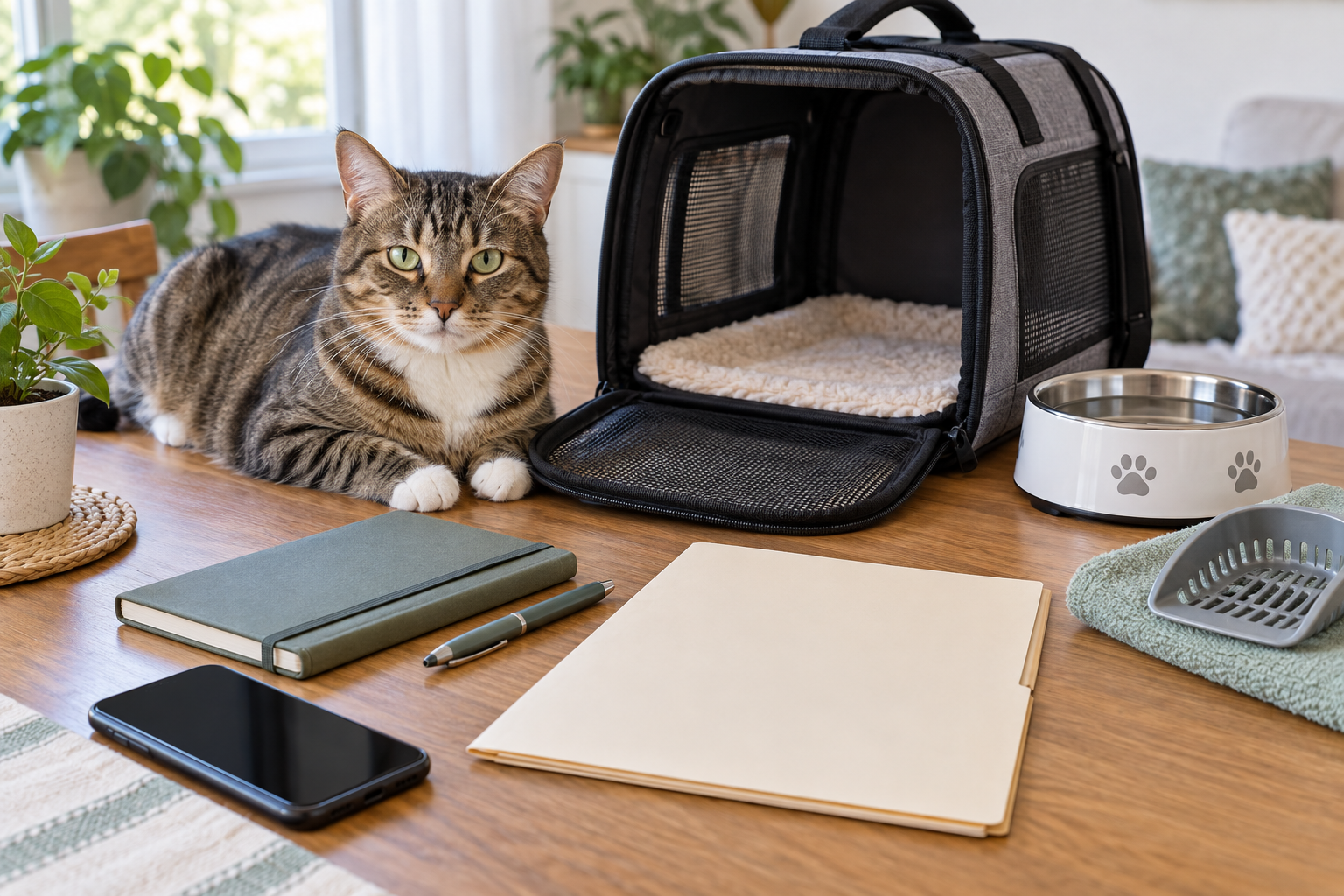
Wenn Sie einen Faden aus dem Maul oder dem After Ihrer Katze hängen sehen, ziehen Sie nicht daran. Wenden Sie sich umgehend an einen Tierarzt. Suchen Sie dringend tierärztliche Hilfe auf, wenn Sie vermuten, dass Ihre Katze etwas verschluckt hat, wenn sie wiederholt erbricht, Bauchschmerzen hat, Atembeschwerden zeigt, stark lethargisch ist, die Nahrungsaufnahme verweigert oder sich ihr Zustand rapide verschlechtert.
Beziehe die Aufbewahrung von Spielzeug in deine Planung mit ein Machen Sie Ihr Zuhause katzenfest, nicht nur beim Spielen.
Was tun, wenn Ihre Katze nicht spielen will?
Ändere zunächst die Art der Bewegung, den Zeitpunkt und den Ort, an dem du das Spielzeug einsetzt. Probiere es mit langsamerem Spiel, Bewegungen in Bodennähe, einem ruhigen Raum oder einer Spielrunde vor dem Fressen. Gib einer zurückhaltenden Katze Zeit zum Beobachten, ohne ihr das Spielzeug direkt vor die Nase zu halten.
Ein plötzlicher Verlust des Spielinteresses kann auch auf Schmerzen oder eine Erkrankung hindeuten, insbesondere wenn er mit Verstecken, vermindertem Appetit, Hinken, weniger Springen, Veränderungen im Fellpflegeverhalten oder ungewöhnlicher Reizbarkeit einhergeht. Wenden Sie sich an Ihren Tierarzt, wenn diese Veränderung neu auftritt, anhält oder von anderen Symptomen begleitet wird.
Für ältere Katzen oder Katzen mit eingeschränkter Beweglichkeit sollten Sie das Spiel in bequeme Reichweite bringen. Sanfte Pfotenstöße, langsames Verfolgen und ein einfaches Futterpuzzle bieten dennoch Abwechslung und Beschäftigung, ohne dass hohe Sprünge erforderlich sind.
Fazit: Bauen Sie ein kleines Spielzeugsystem, das funktioniert
Die besten interaktiven Katzenspielzeuge sind nicht unbedingt die neuesten oder teuersten. Sie entsprechen dem bevorzugten Jagdverhalten Ihrer Katze, bieten ihr sichere Möglichkeiten zum Anschleichen und Fangen und fügen sich in einen Tagesablauf ein, der zwischen Spielzeug unter Aufsicht und sicheren Optionen für das Spielen allein unterscheidet.
Beginnen Sie mit einem Spielstab, ein paar robusten Spielzeugen zum Jagen und Herumtragen sowie einem einfachen Futterpuzzle. Wechseln Sie diese ab, probieren Sie sie aus und lassen Sie Ihre Katze zeigen, was ihr gefällt. Dieses einfache System kann zu einem Ihrer wertvollsten Tägliche Katzenpflege.
Häufig gestellte Fragen
Wie viel Spielzeug sollte eine Wohnungskatze haben?
Es gibt keine festgelegte Anzahl. Eine kleine, abwechslungsreiche Sammlung ist nützlicher als ein großer Stapel ähnlicher Spielsachen. Halten Sie ein paar sichere Optionen bereit und wechseln Sie die anderen ab, damit die Spielsachen interessant bleiben.
Sind Laserpointer gutes interaktives Katzenspielzeug?
Manche Katzen jagen gerne einem Laserpunkt hinterher, doch dabei können sie ihn nicht wirklich fangen. Richten Sie den Laser niemals auf die Augen der Katze und wechseln Sie am Ende zu einem Spielzeug oder Leckerli, das die Katze tatsächlich fangen kann.
Können Katzen alleine mit Stabspielzeugen spielen?
Nein. Spielzeug mit Stäben sowie alle Gegenstände mit Schnüren oder Bändern sollten nur unter strenger Aufsicht verwendet und anschließend sicher aufbewahrt werden.
Lohnt es sich, elektronisches Katzenspielzeug zu kaufen?
Sie können Katzen ansprechen, die Spaß an mechanischen Bewegungen haben, sind aber nicht automatisch besser als einfaches Spielzeug. Beaufsichtigen Sie die Kinder bei der ersten Benutzung, überprüfen Sie bewegliche Teile und Batteriefächer und verwenden Sie beschädigte Geräte nicht mehr.
Wie lange sollte ich mit meiner Wohnungskatze spielen?
Halten Sie die Trainingseinheiten kurz und regelmäßig und passen Sie sie dem Alter, dem Gesundheitszustand und den Interessen Ihrer Katze an. Beenden Sie das Training, bevor die Katze erschöpft oder frustriert ist, und lassen Sie ihr während des Spiels auch mal einen Erfolg zu.
Warum interessiert sich meine Katze nicht für neues Spielzeug?
Die Bewegung, die Beschaffenheit, das Geräusch oder die Größe entsprechen möglicherweise nicht den Beutevorlieben Ihrer Katze. Versuchen Sie, es anders zu bewegen, es an einem ruhigeren Ort anzubieten oder es wegzuräumen und später erneut anzubieten.
Referenzen
[1] AAFP und ISFM. (2013). Leitlinien zu den Umweltbedürfnissen von Katzen. Lesen Sie die Richtlinien auf PubMed Central
[2] Die „Indoor Pet Initiative“ der Ohio State University. (2026). Spielzeug. Lesen Sie die Anleitung für Spielzeug für Wohnungskatzen
[3] Die „Indoor Pet Initiative“ der Ohio State University. (2026). Ermittlung der Beutepräferenz. Lesen Sie den Leitfaden zu Fressgewohnheiten
[4] Oregon Humane Society. (2017). Sicheres und unterhaltsames Katzenspielzeug. Lies das PDF zur Sicherheit von Katzenspielzeug
[5] Ellis et al. (2014). Umweltanreicherung für Wohnungskatzen. Lesen Sie die Rezension auf PubMed Central
 EN
EN DE
DE ES
ES PT
PT