
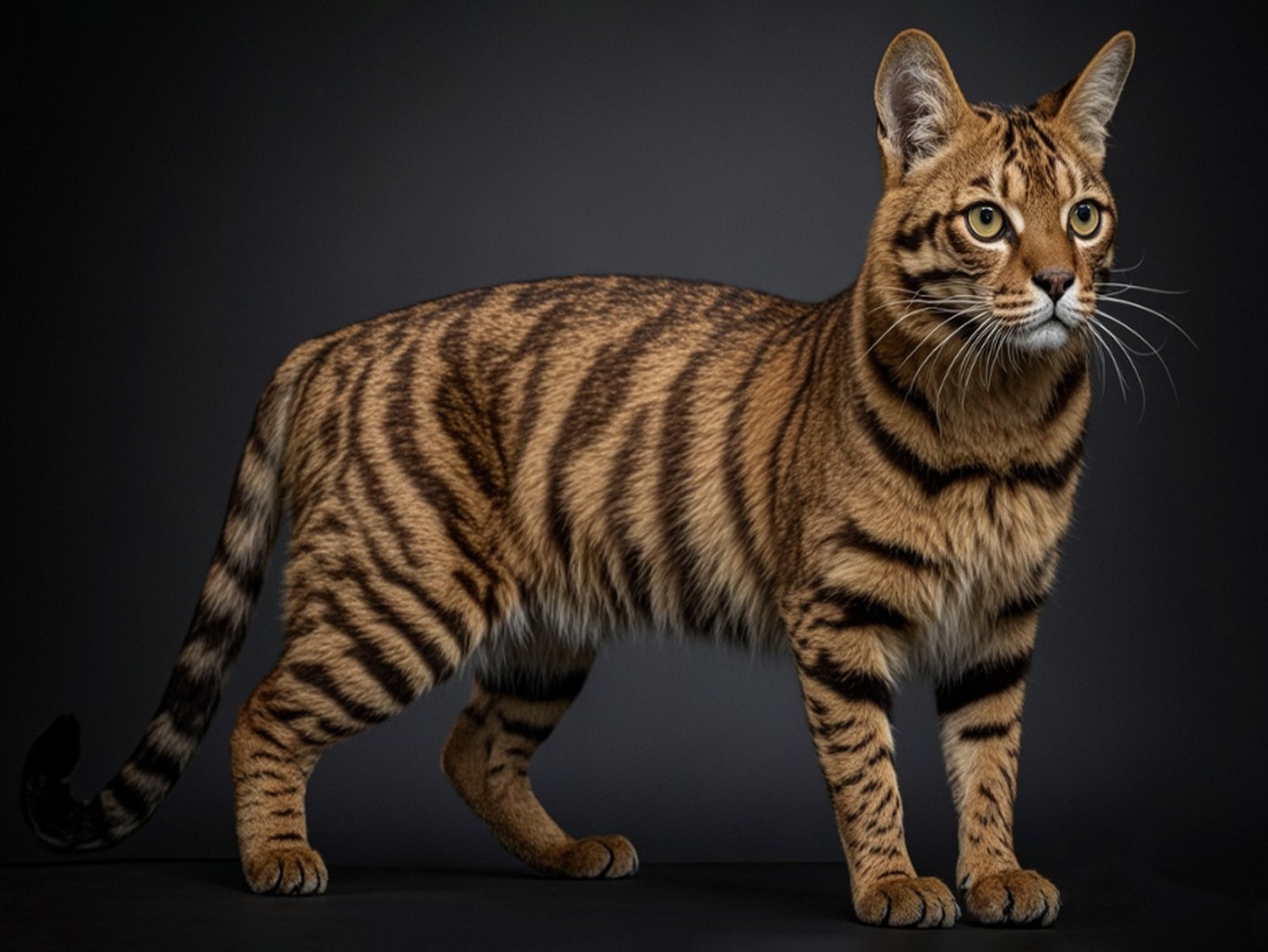
Quick definition: The Toyger is a modern domestic cat breed developed to resemble a “toy tiger” in coat pattern and body style while keeping a friendly, companion temperament.
Inhaltsübersicht
Rasse-Übersicht
| Charakteristisch | Beschreibung |
| Persönlichkeit | Unkompliziert, angenehmes Temperament, entspannt, intelligent, trainierbar, sucht die Aufmerksamkeit des Menschen, spielt gerne, ist stimmgewaltig, gut mit Kindern und anderen Haustieren |
| Gehäuse Typ | Mittelgroß, schlank und langgestreckt, muskulös, kräftige Vorderhand, niedriger Gang, seilartiger Schwanz, breiter Kopf, kleine abgerundete Ohren, kleine bis mittelgroße Kapuzenaugen |
| Gewicht | Männchen: 10-15 lbs (4,5-6,8 kg); Weibchen: 7-10 lbs (3,2-4,5 kg). Gesamtbereich: 3,2-6,8 kg (7-15 lbs) |
| Herkunft Region | Vereinigte Staaten (Kalifornien) |
| Lebenserwartung | 10-15 Jahre (einige Quellen nennen auch 9-13 oder 13+ Jahre) |
| Mantel Typ | Kurz, dick, luxuriös, ungewöhnlich weich, plüschig, elastisch, mit wünschenswertem Glitzer. Die Markierungen können etwas länger sein, um einen plastischen Effekt zu erzielen |
| Fellfarben | Brown (black) mackerel tabby; Blue/Any Other Color (AOC) eyed snow mackerel tabby. Features bold, vertical, branching stripes on an orange/gold or ivory/cream background |
| Shedding Level | ⭐⭐⭐☆☆ (mäßig) |
| Zuneigung zu den Menschen | ⭐⭐⭐⭐⭐ (Sehr hoch) |
| Pflege-Schwierigkeit | ⭐⭐⭐⭐☆ (mäßig bis hoch) |
Einführung
Die Toyger cat is a purpose-bred domestic shorthair developed in the 1980s to capture the look of a miniature tiger—most notably through bold, vertical tabby striping and a confident, athletic silhouette—while keeping the temperament of a companion pet.
Despite the “toy tiger” nickname, Toygers are fully domestic cats. Breed organizations note that the Toyger’s development focuses on tiger-like patterning without using new wild-cat outcrosses, and mainstream veterinary/pet references emphasize that Toygers don’t share bloodlines with wild tigers and are not inherently dangerous.
What makes the Toyger especially appealing is this contrast: wild aesthetics, household manners. They’re commonly described as sweet, calm, and easygoing, often fitting well into family life when given regular play, attention, and enrichment.
In this guide, you’ll find a practical, source-backed overview of Toyger traits, personality, care needs, and key health-screening questions—so you can make a confident, welfare-first decision.
Geschichte der Rasse
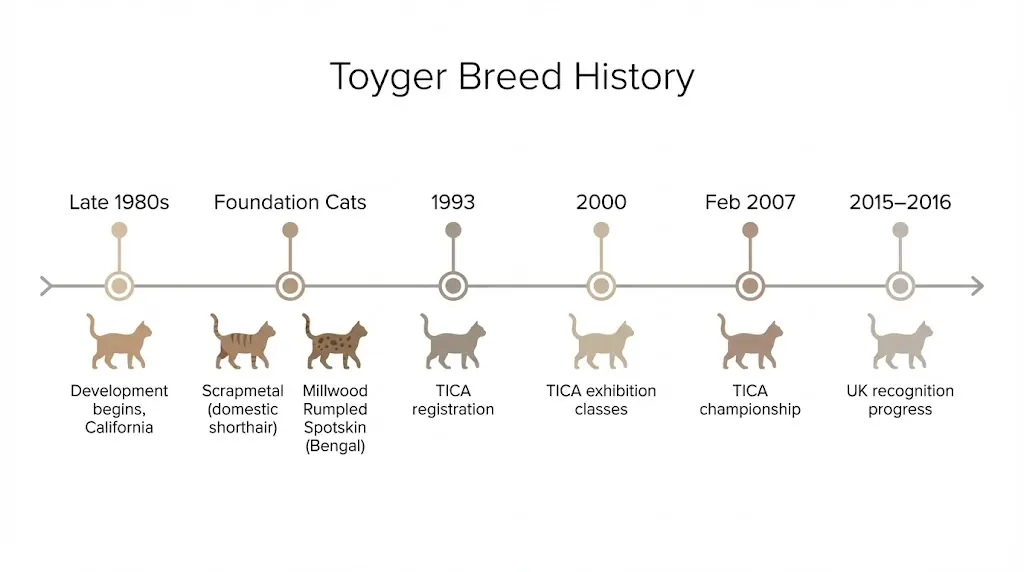
Die Toyger Katze Rasse wurde in der late 1980s in the United States by breeder Judy Sugden. The goal was clear: create a fully domestic companion cat that visually resembles a tiger—especially through bold, branching stripes and circular head markings—while keeping a calm, people-friendly temperament.
Judy Sugden’s work built on lines that included Bengals and domestic shorthairs; the GCCF notes she is the daughter of Jean S. Mill, founder of the Bengal breed. Early progress came from noticing unusual temple markings on a cat named Millwood Sharp Shooter, which helped guide selection for more “tiger-like” facial patterning.
Cornerstone cats in the foundation program
Two cats repeatedly cited as key early cornerstones were:
- Scrapmetal (striped domestic shorthair)
- Millwood Rumpled Spotskin (Bengal)
Unter 1993, Sugden also imported Jammu Blu, a street cat from Kashmir, India, selected for distinctive markings between the ears that better supported the desired head pattern.
Recognition milestones (registries)
- 1993: TICA accepted the Toyger for Registration
- 2000: Advanced to new breed exhibition classes in TICA
- February 2007: Granted Championship status in TICA
- UK (GCCF): Recognized in October 2015; progressed to Preliminary Status (June 2016)
As of the CFA’s own “recognized breeds” list, Toyger is not included among CFA-recognized breeds (so CFA recognition may not be available depending on their current breed roster).
Practical note for readers
Because Toygers were developed through selective breeding (including Bengal ancestry in early lines), reputable breeders commonly emphasize documented health screening and transparent pedigrees; TICA also notes that heart murmurs (possibly linked to hypertrophic cardiomyopathy) have occurred in the breed.
Physical Characteristics (Toyger)
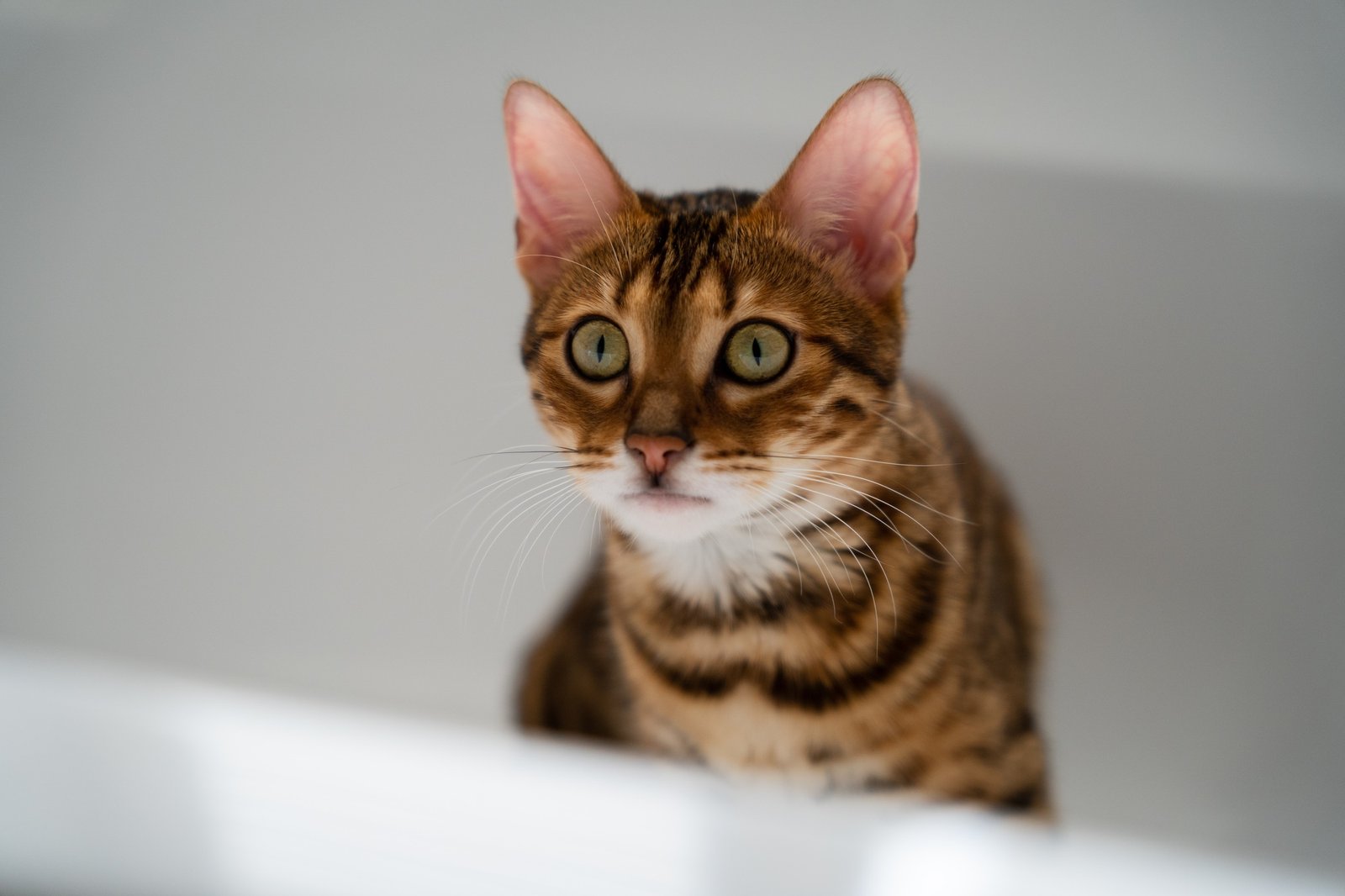
Summary: The Toyger is a medium-sized, muscular, long-bodied domestic shorthair bred to resemble a “mini tiger,” including a low-slung, athletic look, a long thick tailund eine plush, glittered coat.
Size & build (most-cited facts)
- Adult weight (typical): männlich 10–15 lb (4.5–6.8 kg); females 7–10 lb (3.2–4.5 kg).
- Gesamtaufbau: sleek, long-bodied, large-boned, and very muscular; often described as “foreign type” with an athletic outline.
- Movement: Toygers are selected for stately/rolling movement that reinforces the “big cat” impression.
Note for trust/accuracy: Pet Toygers can vary (sex, Alter, lines, fitness). Breed standards describe the ideal, not a guarantee for every individual.
Head, muzzle, ears, and eyes
- Face shape: a long “inverted heart” look from forehead to rounded whisker pads is a recurring breed-standard description.
- Muzzle: medium-to-long, broad, deepund rounded/muscular in contour.
- Ohren: gerundet, mit small preferred; thickly furred temples/ears are desirable; lynx tipping is undesirable in standards.
- Die Augen: medium/circular with gentle hooding, set to support the “big cat” expression (exact eye color varies by coat variety).
Body details: legs, feet, and tail
- Legs & feet: mittlere Länge, mit lange Zehen und well-knuckled feet noted in standards.
- Schwanz: long, thick, muscularoft beschrieben als rope-like, and typically carried low to match the low-slung look.
Coat texture and the “glitter” hallmark
- Coat feel: short-to-medium length, plush/resilient with a dense, luxurious feel frequently emphasized in breed descriptions.
- Glitter: a distinctive shimmer (“glitter”) is treated as a signature/required feature in some Toyger standards, with “more is better” language appearing in official documents.

Behavior and Personality (Toyger Cat Temperament)
Zusammenfassung
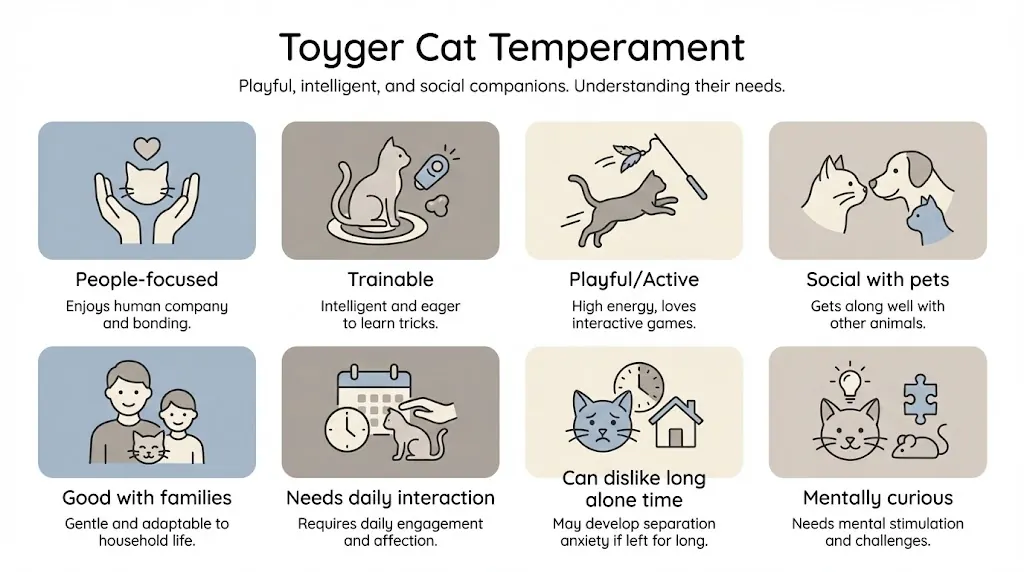
- People-focused and companionable: Toyger are described by major cat organizations as friendly, outgoing, and happiest when they’re with people.
- Smart and highly interactive: They’re commonly described as hochintelligent und easy to train, including skills like abrufen. und Spaziergänge an der Leine.
- Active but generally easy to live with: Breed sources describe them as aktiv und laid-back/household-friendly when their social and play needs are met.
- Often good with families and other pets: They’re widely described as getting along with children, other cats (especially if introduced young), and cat-friendly dogs with proper introductions.
- Not a “loner” breed: Some breed sources explicitly warn they may struggle if left alone for long periods and can show Trennungsangst.
What Toyger personality is known for
Toyger are intentionally bred to look “wild” while keeping the temperament of a domestic companion cat—and modern breed profiles describe them as friendly, outgoing, and people-oriented. They tend to do best in homes where they can be included in daily life, rather than treated as a hands-off pet.
Sociability with children and other pets
In well-managed households, Toyger are commonly described as companionable and able to live successfully with Kinder, andere Katzen und katzenfreundliche Hunde, especially when socialized early and introduced thoughtfully. (As with any breed, individual temperament varies—calm introductions and supervision matter.)
Activity level and enrichment needs
Toygers are frequently described as aktiv und spielerisch—the kind of cat that benefits from daily interactive play, climbing space, and puzzle-style enrichment. Without enough engagement, any social breed can become attention-seeking or bored, so it helps to plan for structured play and routine.
Intelligenz und Trainierbarkeit
Multiple breed references highlight Toyger as hochintelligent und interaktiv, often responding well to positive reinforcement training. It’s common for Toyger to learn games and behaviors like abrufen. und walking on a harness/leash—a standout trait you can mention clearly in SERP-friendly language.
Alone-time tolerance (important “fit” factor)
Toygers are often described as not ideal for long, empty days—one major cat-fancy source notes they may be unhappy if left alone for extended periods and can develop separation anxiety. If your household is frequently away, consider whether a second compatible pet or a more independent breed would be a better match.
Vokalisierung
Breed sources focus more on sociability and intelligence than on “talkativeness,” so a safe, trustworthy way to phrase this is: some individuals may vocalize to seek attentionund sudden or extreme changes in vocal behavior warrant a veterinary check (since excessive meowing can also be linked to stress or health issues).
Editorial note for trust: Breed descriptions reflect typical tendencies, not guarantees. A Toyger’s behavior is strongly influenced by early socialization, household routine, enrichment, and individual personality.
Pflegeanleitung
Quick Takeaways
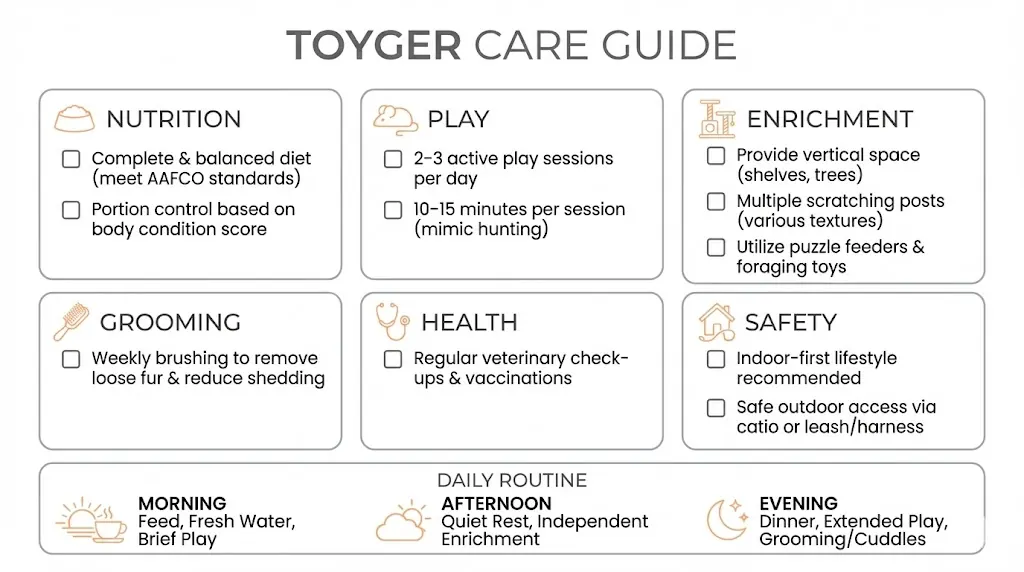
- Lebensmittel: Pick a diet labeled "vollständig und ausgewogen" for your cat’s Lebensphase, then portion to maintain a lean body condition.
- Play: Most cats do best with 2–3 short play sessions (10–15 min) daily, adjusted to age/energy.
- Enrichment: Indoor cats need structured enrichment (vertical space, scratching, predictable resources) to reduce stress and behavior problems.
- Toyger-specific: Toygers are commonly described as intelligent, playful, affectionate, and responsive to interaction and training—plan daily engagement.
- Ohren: Most cats don’t need routine ear cleaning—clean only if you notice odor/discharge and follow vet guidance.
Diet (what “good nutrition” means in practice)
Toygers are active, muscular cats, so focus on nutritional quality and consistency, not hype.
What to feed
- Choose a commercial food with a Erklärung zur Angemessenheit der Nährstoffzufuhr (often called the “AAFCO statement”) showing it is vollständig und ausgewogen for your cat’s Lebensphase.
- Cats generally require diets rich in protein and fat and essential nutrients (like Taurin)—don’t feed dog food or unbalanced homemade diets.
How much to feed (weight control)
- Ask your veterinarian for a healthy target weight and monitor body condition over time—obesity is a common nutrition-related issue in cats.
- Treats should stay occasional und typischerweise ≤10–15% of daily calories.
Safety notes
- Vermeiden Sie das Füttern rohes Fleisch as a treat or diet unless a veterinarian directs you—raw foods can carry infectious risks.
- Wet food can help water intake because canned diets are typically high moisture, but the “best” format (wet/dry/mix) depends on your cat and your vet’s advice.
Exercise (daily activity that actually works)
Toygers are described by breed organizations as athletic, people-oriented, and highly trainable, so structured play is usually a good fit.
A simple routine
- Start with 2–3 play sessions per day (10–15 minutes), then scale up/down based on age and energy.
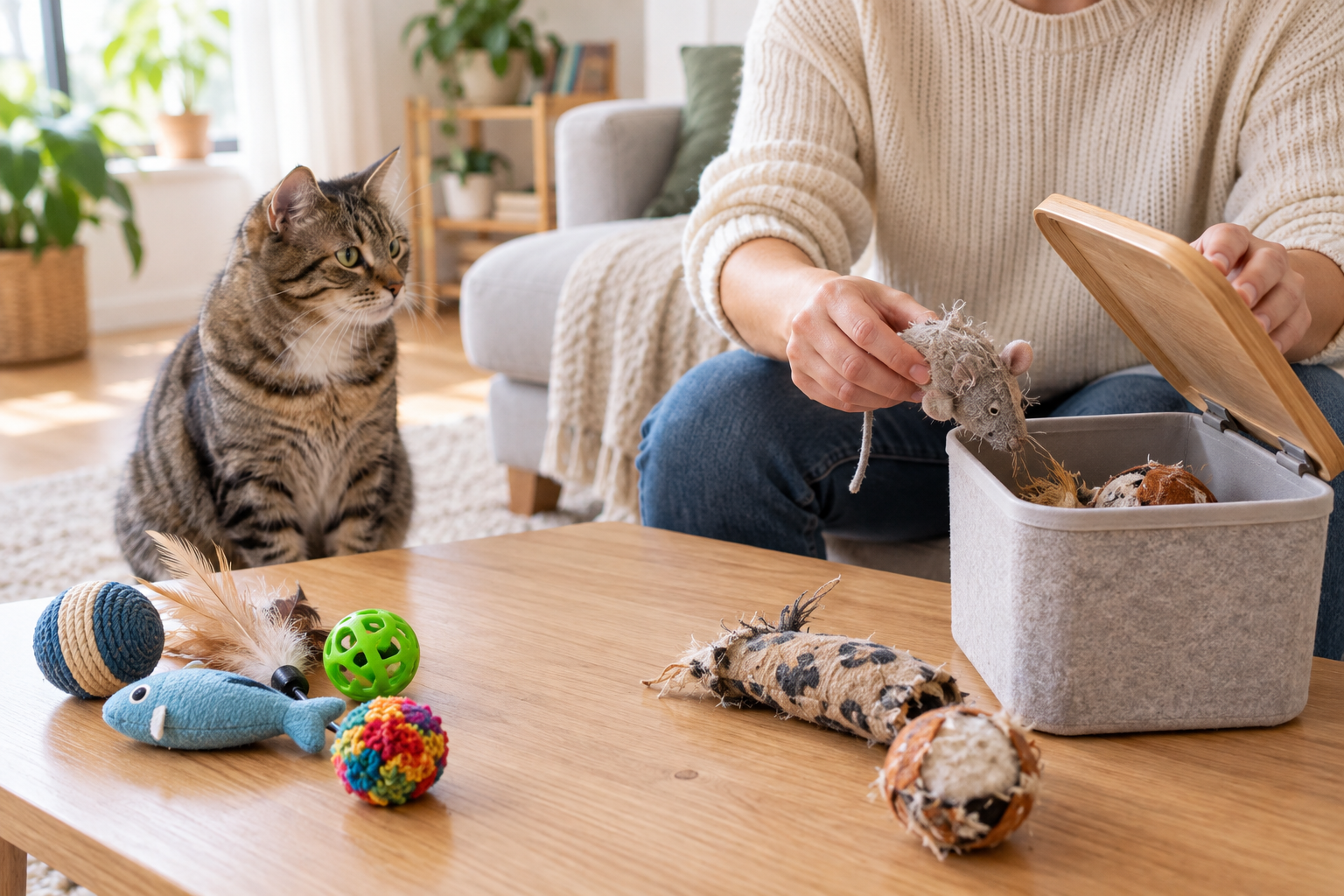
- Use toys that mimic the hunt (stalk → chase → abspringen), and end with a small “catch” moment or treat to reduce frustration.
High-value options for smart, active cats
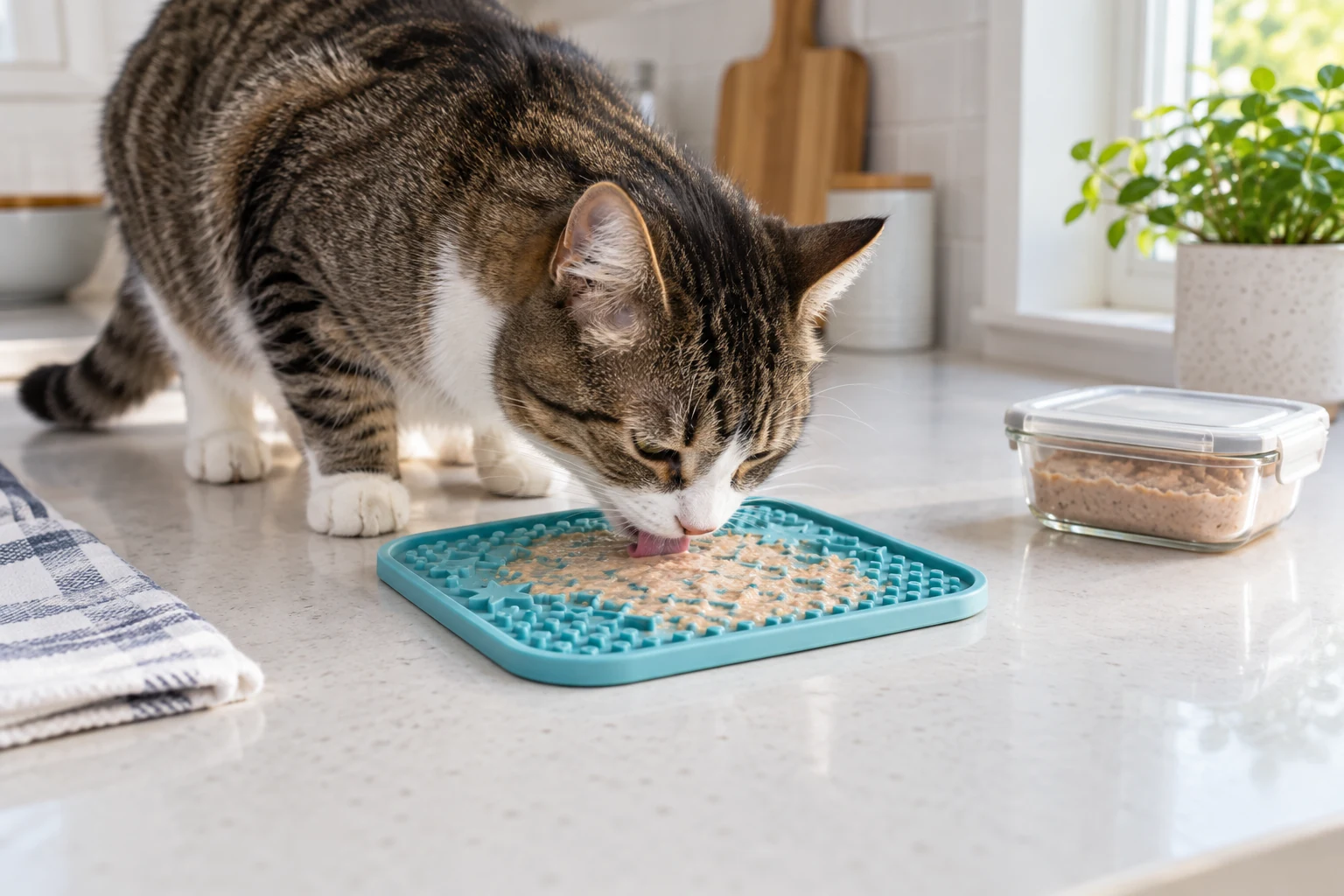
- Futterpuzzle / Futterpuzzle can add both movement and mental work to meals and are widely recommended for feline wellbeing.
- Many Toygers can learn leash walking, fetch, or even agility-style games when introduced gradually with positive reinforcement.
Environment & Enrichment (stress prevention for indoor life)
Indoor cats do best when their environment supports natural feline needs (the AAFP/ISFM “pillars” approach).
Core setup (minimum effective enrichment)
- Vertical territory: cat tree, shelves, window perch.
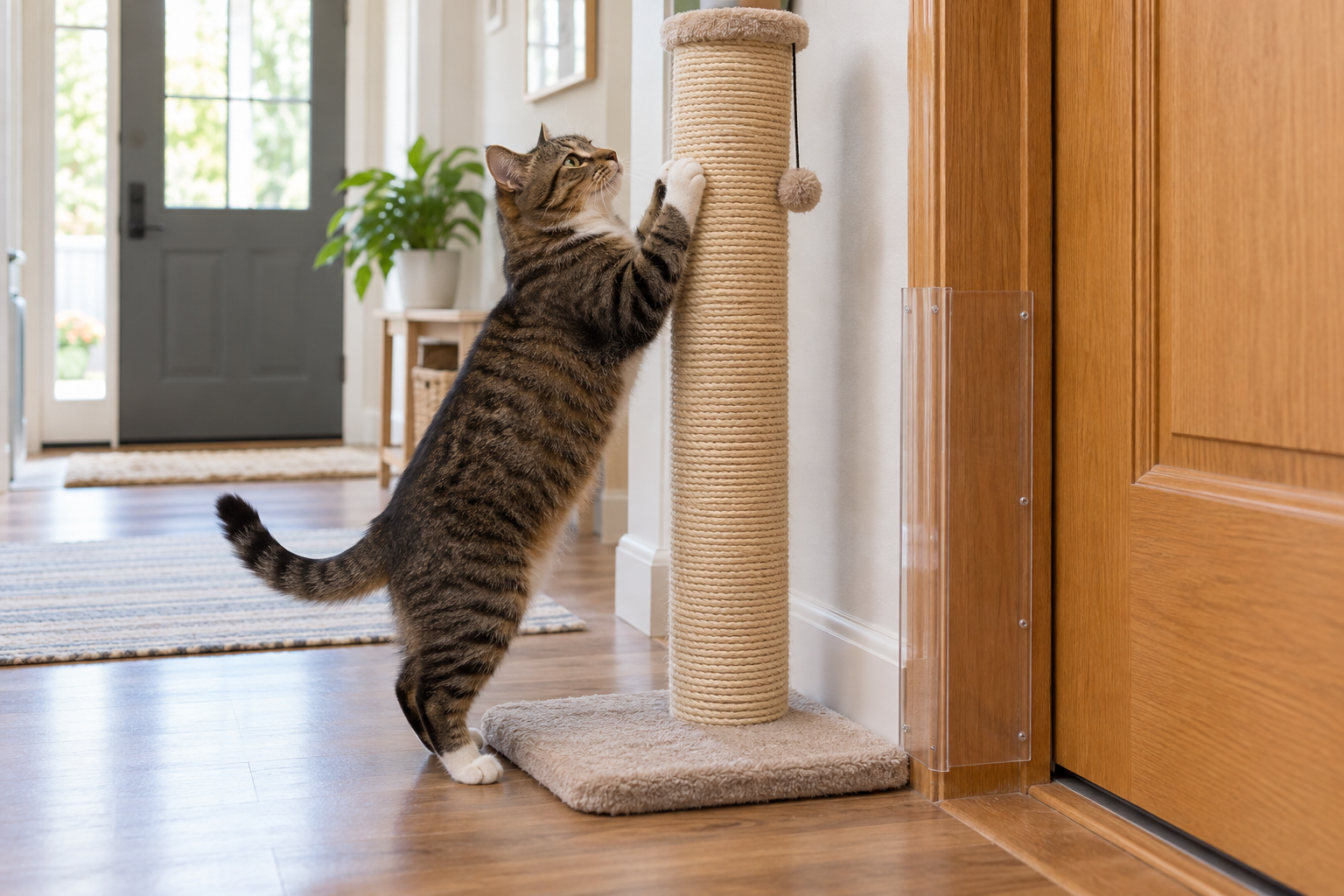
- Optionen zum Kratzen: at least one tall vertical scratcher + one horizontal scratcher.
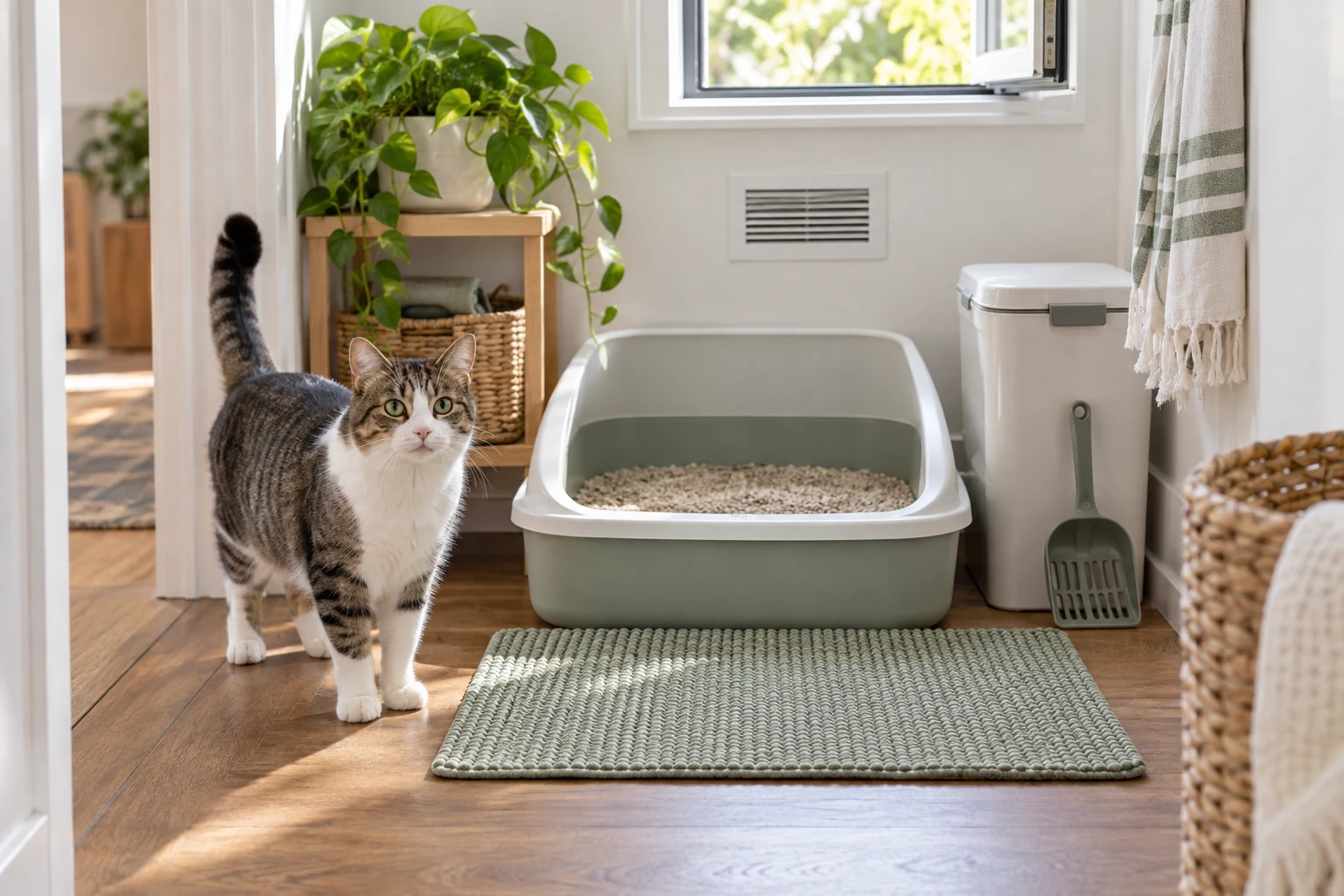
- Predictable resources: quiet feeding area, clean litter setup, and safe resting/hiding places.
- Rotation: rotate toys weekly to keep novelty without clutter.
Companionship & routine
Toygers are often described as affectionate and people-focused; daily interaction matters.
If you’re away long hours, prioritize:
- timed feeders/puzzle feeders
- windows/perches + climbing zones
- structured play before/after work
- and, if appropriate, a compatible companion pet (after careful introduction).
Indoor vs outdoor
Outdoor time can be enriching, but veterinary groups emphasize risk reduction über kontrollierter Zugang (catio/enclosure or harness + leash), rather than free roaming.
Grooming (low effort, high payoff)
Toygers have short coats, so grooming is usually straightforward.
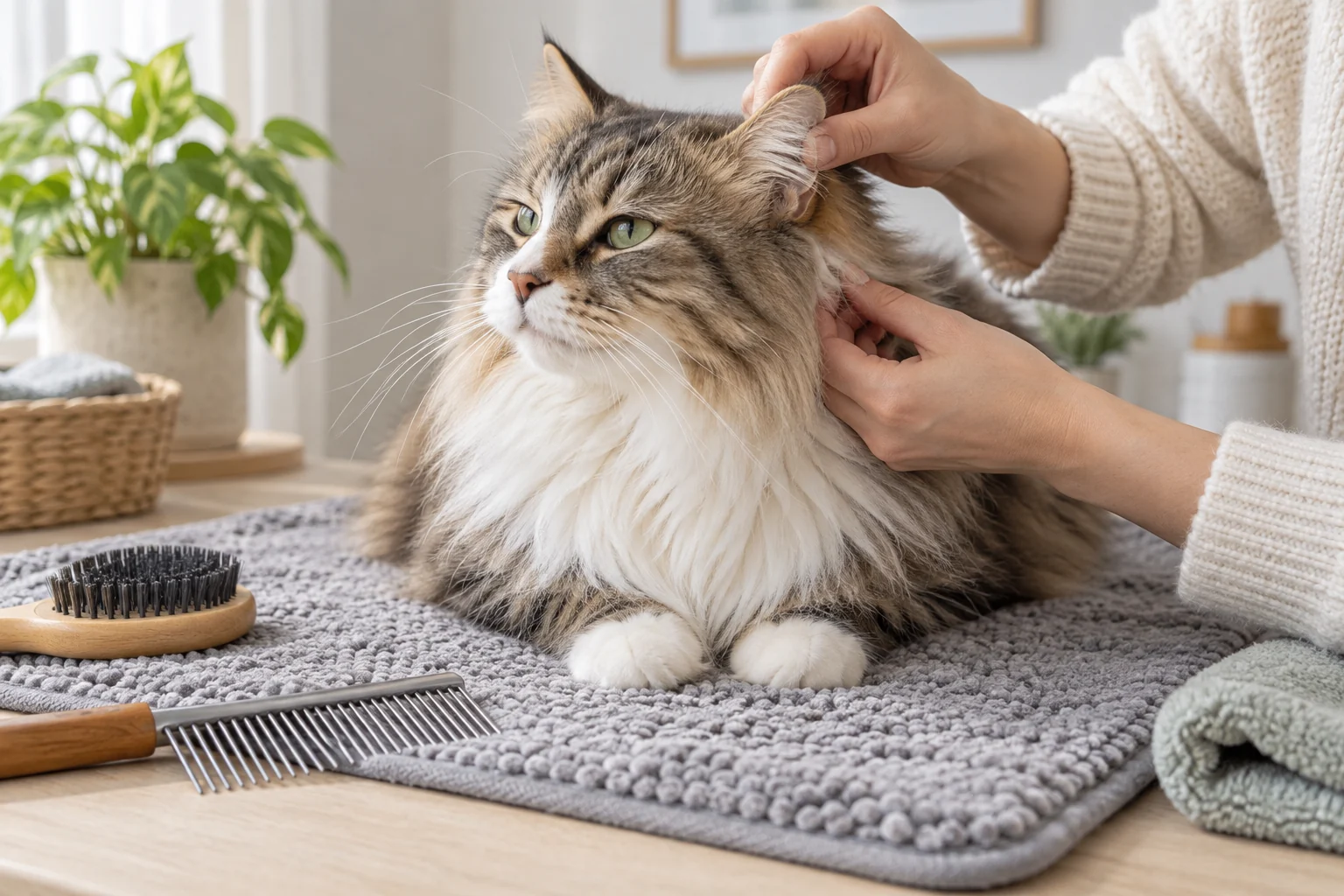
Brushing
- Short-haired cats generally need less frequent brushing, but regular brushing helps remove loose hair and reduce hairballs and dander.
- Use grooming time to check for skin irritation, parasites, or new lumps—early detection matters.
Bathing
- Most cats rarely need baths unless dirty or medically advised. If you bathe, use a cat-safe shampoo and keep sessions gentle.
Ohren
- Most cats have healthy ears and never need cleaning. Clean only if you notice odor or discharge, and avoid cotton swabs (they can push debris deeper or injure the ear).
- If ears look red, painful, or inflamed, see a veterinarian before cleaning.
Mental Stimulation (how to prevent boredom behaviors)
Because Toygers are frequently described as intelligent and engaged, mental work is not optional—it’s part of care.
Best tools
- Puzzle-Futterautomaten for part of meals (start easy, increase difficulty gradually).
- Trick training with treats (sit, touch, target, leash manners) in 2–5 minute sessions.
- Hide-and-seek food “hunts” around the home to encourage natural foraging.
When to reassess
If you see persistent nocturnal zoomies, vocal demand, destructiveness, or litter box changes, first rule out medical issues and then increase enrichment and structured play.
Gesundheitliche Belange
| Zustand | Beschreibung und Symptome | Management und Prävention |
|---|---|---|
| Progressive Netzhautatrophie (PRA) | Erbliche Erkrankung, die zu einem allmählichen Sehverlust und schließlich zur Erblindung führt. Zu den ersten Anzeichen gehören Nachtblindheit und das Anstoßen an Gegenstände. | Keine Heilung. Früherkennung ist der Schlüssel. Wenden Sie sich an einen Tierarzt, wenn Sehveränderungen auftreten. Züchter sollten auf PRA untersuchen. |
| Hypertrophe Kardiomyopathie (HCM) | Verdickung des Herzmuskels, kann zu Herzversagen führen. Symptome: Lethargie, Appetitlosigkeit oder Atemnot. | Züchter sollten die Elterntiere testen; regelmäßige tierärztliche Untersuchungen helfen bei der Früherkennung und laufenden Überwachung. |
| Pyruvat-Kinase-Mangel (PKD) | Genetische Störung, die zu einem vorzeitigen Abbau der roten Blutkörperchen und damit zu Anämie führt (z. B. blasses Zahnfleisch, Lethargie). | Katzen sollten vor der Zucht getestet werden; im Falle einer Diagnose wird eine tierärztliche Überwachung empfohlen. |
| Nierenkrankheit | Allgemeiner Begriff für eine eingeschränkte Nierenfunktion. Die Symptome sind nicht detailliert, können aber Appetitverlust oder erhöhten Durst beinhalten. | Eine ausgewogene Ernährung und regelmäßige tierärztliche Untersuchungen sind für die Vorbeugung und frühzeitige Behandlung unerlässlich. |
| Patellaluxation | Luxation der Kniescheibe. Die Symptome sind nicht spezifiziert, können aber Hinken oder Mobilitätsprobleme umfassen. | Regelmäßige tierärztliche Untersuchungen; in schweren Fällen kann eine Operation erforderlich sein. |
| Feline infektiöse Peritonitis (FIP) | Viruserkrankung, verursacht durch das Feline Coronavirus. Symptome nicht näher beschrieben. | Es gibt keine garantierte Vorbeugung; regelmäßige Vorsorgeuntersuchungen helfen bei der Früherkennung und der unterstützenden Behandlung. |
| Agalactia | Failure or lack of Milch production in lactating queens. | Ethische Zuchtpraktiken und tierärztliche Unterstützung während der Schwangerschaft und nach der Geburt. |
| Herzgeräusche | Abnormes Herzgeräusch, das häufig bei Routineuntersuchungen festgestellt wird. Kann ein Zeichen für eine Herzerkrankung wie HCM sein. | Regelmäßige tierärztliche Untersuchungen sind entscheidend für die Erkennung und Behandlung von Herzerkrankungen. |
Ist diese Rasse das Richtige für Sie?
Quick fit summary: Toygers are widely described by major cat-fancy organizations as affectionate, intelligent, and people-oriented companion cats. That usually means they thrive with consistent interaction, enrichment, and a predictable home rhythm—and they may struggle in homes that can’t offer those basics.
Am besten geeignet, wenn Sie...
- Want a social, engaged companion (playful, interactive, and typically friendly in family settings).
- Can provide a stable routine (cats can become stressed when their environment feels unpredictable or uncontrollable).
- Spend meaningful time at home (or can provide reliable companionship + enrichment when you’re away).
- Prefer safe outdoor options like a catio or leash walks rather than unsupervised roaming.
- Will buy responsibly: choose breeders who can show documented health testing and veterinary oversight for inherited risks (more below).
Nicht ideal, wenn Sie...
- Want a low-interaction, “hands-off” cat. Toygers are typically bred and described as companionable and people-focused.
- Have a frequently chaotic home (repeated disruption can contribute to chronic stress-related behavior in some cats).
- Plan to allow unsupervised outdoor roaming. Veterinary guidance notes free-roaming cats face increased risks (vehicles, other animals, cruelty, poisons, weather) and also impact wildlife; confinement/catios/leash time can minimize risks.
- Keep birds or small prey pets without strict separation. Domestic cats are a predatory species and hunting behavior is normal—even when well-fed.
If you’re buying a Toyger: a health-screening checklist (trust signal)
Ask a breeder for written proof von:
- Heart screening (HCM): HCM is the most common heart disease in cats; ongoing veterinary monitoring and appropriate cardiac screening matter.
- Eye screening (PRA): PRA is inherited and progressive; affected cats (and close relatives) should not be bred.
- Genetic testing where relevant (PK deficiency): DNA testing helps identify carriers/affected cats and supports responsible breeding decisions.
(This is educational content, not veterinary advice—use it to guide questions for your veterinarian and breeder.)
FAQ
Vertragen sich Toyger Katzen mit Kindern und anderen Haustieren?
Often, yes—when introductions are done properly. Toygers are described by major cat registries as amiable, easygoing, and generally social, which tends to translate well to family homes, including households with respectful children and other pets.
Sind Toyger-Katzen schwer zu pflegen?
Grooming is usually low-effort, but enrichment needs are higher. Registries describe Toygers as a “designer” domestic shorthair with a calm/sweet temperament, and breed standards commonly characterize them as active—so most do best with daily interaction, play, and companionship.
Wie stark haaren Toyger Katzen?
Usually a “moderate” amount—manageable with weekly brushing. A short coat typically means shedding is less noticeable than in long-haired breeds, and routine grooming can reduce loose hair in the home.
Können Toyger-Katzen an die Leine genommen werden?rtet?
Many can—if you go slowly and use positive reinforcement. Leash walking isn’t “automatic” for cats, but gradual harness conditioning and reward-based training are widely recommended by veterinary and welfare resources.
Bonus Fakten
Affinity for water (individual variation)
Some Toygers may show curiosity around fließendes Wasser (taps/fountains). This behavior is not universal and is best treated as an individual preference rather than a guaranteed breed trait. If your cat likes running water, a fountain and multiple clean water stations can help support hydration—especially for cats prone to urinary or kidney issues.
A “designer” breed (registry terminology)
The Toyger is explicitly described by TICA as a “designer cat”—a deliberately developed domestic shorthair intended to resemble a miniature tiger in pattern and presence.
A purpose beyond looks (reported intent)
Some secondary references report that Toyger founder Judy Sugden framed the breed as a way to encourage concern for wild tiger conservation. Practices vary by breeder, so treat this as context—not a promise tied to every cattery.
Ongoing refinement (newer breed)
Toygers are still a relatively new breed in many registries, and official breed descriptions note that development has been ongoing (including recent recognition milestones in some organizations).
Referenzen
BBC. "'Toyger Cats' in Birmingham". www.bbc.co.uk. Abgerufen am 21. Januar 2019.
"Toyger". TICA.org. Die Internationale Katzenvereinigung. Abgerufen am 30. September 2024.
"Treffen Sie den Toyger". Toyger Cat Society. Archiviert vom Original am 14. Juli 2024. Abgerufen am 30. September 2024.
"Alle Angebote". Toyger Cat Society. Archiviert vom Original am 14. Juli 2024. Abgerufen am 30. September 2024.
"Einführung in die Toyger-Rasse". TICA.org. Die Internationale Katzenvereinigung. 2014. Archiviert vom Original am 31. März 2015. Abgerufen am 17. August 2014.
"Nicht genug Platz für einen Tiger in Ihrem Haus? Ein Toyger kann die Antwort sein". VOA. Abgerufen am 2020-04-22.
Barrington, Kate (14 January 2016). “A Detailed History Of The Bengal Cat Breed”. Bengalkatzen. Bengal Cats. Retrieved 8 March 2019.
"Tica Show Paris, Gagny 2007". users.skynet.be/toygerpaws/. 30. Dezember 2009.
"Toyger & Tica". 13. August 2018.
"Toyger Club". Toyger Frankreich (auf Französisch). Archiviert vom Original am 2022-03-16. Abgerufen am 28.06.2020.
"Toyger Rassestandard" (PDF). TICA.org. Die Internationale Katzenvereinigung. 18. Juni 2008. Vom Original (PDF) archiviert am 4. Mai 2018. Abgerufen am 12. Juli 2018.
 EN
EN DE
DE ES
ES PT
PT