
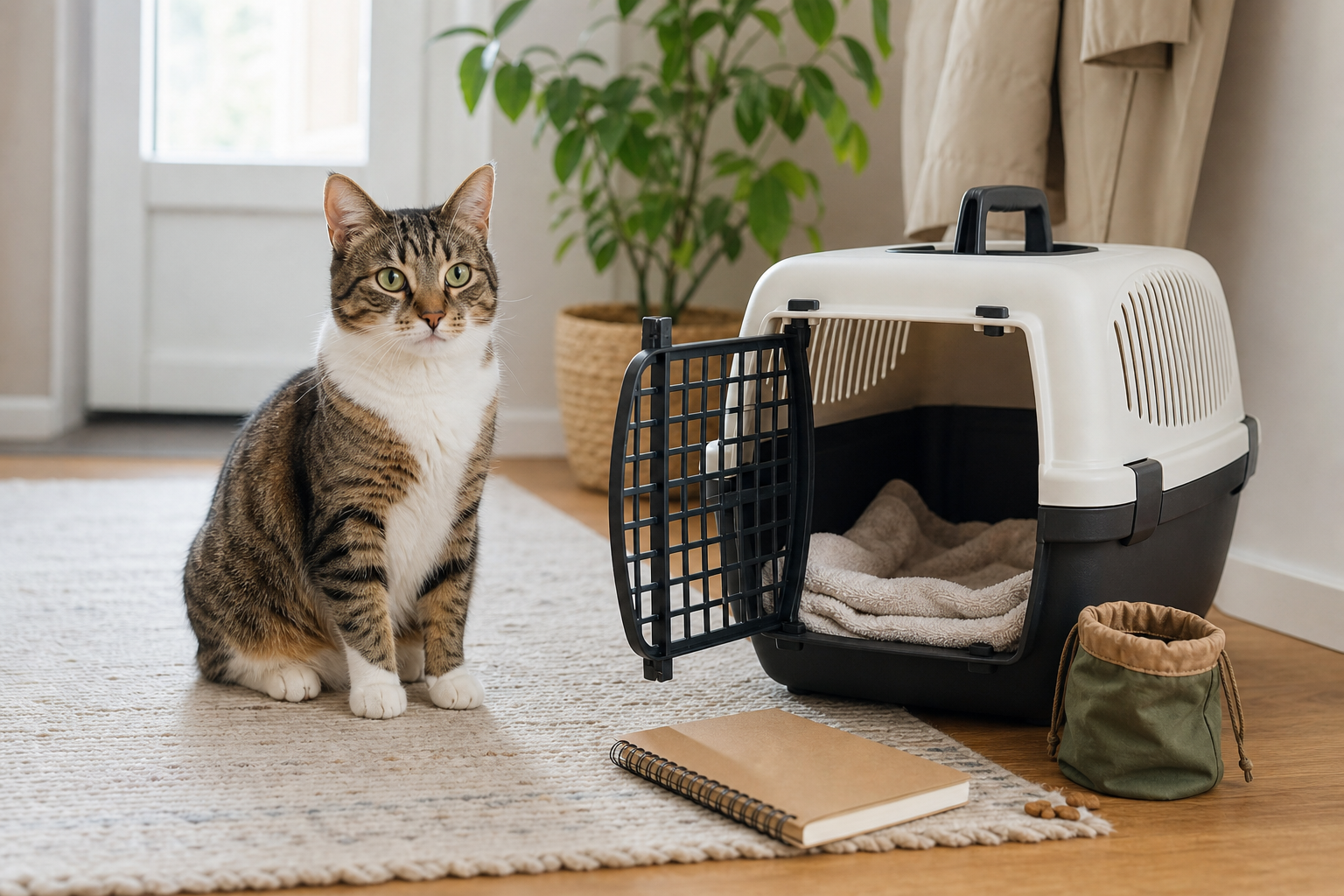
Prepare a cat for vaccines by making the carrier familiar, writing down health changes, confirming which vaccines are due, and planning a quiet 24- to 48-hour recovery window. The goal is not to force a perfect visit; it is to reduce stress, help your veterinarian make safer decisions, and know what to watch for once your cat is home.
Vaccine visits are routine, but they are still medical appointments. Cats may be anxious in the carrier, quiet in the clinic, or sleepy afterward, and those details can make it hard to tell what is normal. A little preparation gives you a calmer route through the visit.
This guide covers carrier practice, what to pack, what to tell your vet, how to monitor after vaccines, and which warning signs should prompt a call. For vaccine timing, core shots, boosters, and indoor-cat questions, start with our Leitfaden zum Impfplan für Katzen.
Inhaltsübersicht
- Why does vaccine preparation matter for cats?
- What should you do before a cat vaccine appointment?
- What health notes should you bring to the appointment?
- How can you make the carrier and car ride calmer?
- What should happen at the clinic before vaccines are given?
- What aftercare does a cat need after vaccines?
- Wann sollten Sie nach der Impfung Ihrer Katze den Tierarzt anrufen?
- Conclusion: A calm plan makes vaccine day easier
- Häufig gestellte Fragen
- Referenzen
Why does vaccine preparation matter for cats?
Preparation matters because vaccines should fit the individual cat, and the visit itself can be stressful. AAHA/AAFP feline vaccination guidance emphasizes risk assessment rather than a one-size-fits-all approach, including age, lifestyle, exposure risk, health status, and vaccine history 1. That means your observations at home are part of the appointment.
WSAVA also frames vaccination as a medical decision that should be documented, individualized, and paired with adverse-event reporting when problems occur 2. In plain English: your veterinarian needs to know what your cat has received before, what reactions have happened, and what changed since the last visit.
Preparation also protects the human side of the visit. If the carrier only appears five minutes before leaving, many cats panic, hide, or resist. If you prepare the carrier and notes early, you can leave with less chasing, fewer missed details, and a better chance of discussing your cat's real needs instead of feeling rushed.
What should you do before a cat vaccine appointment?
Start one to two weeks ahead if you can, but even one day of preparation is better than no plan. Your priorities are simple: make the carrier less surprising, gather records, write health notes, and keep the appointment day predictable.
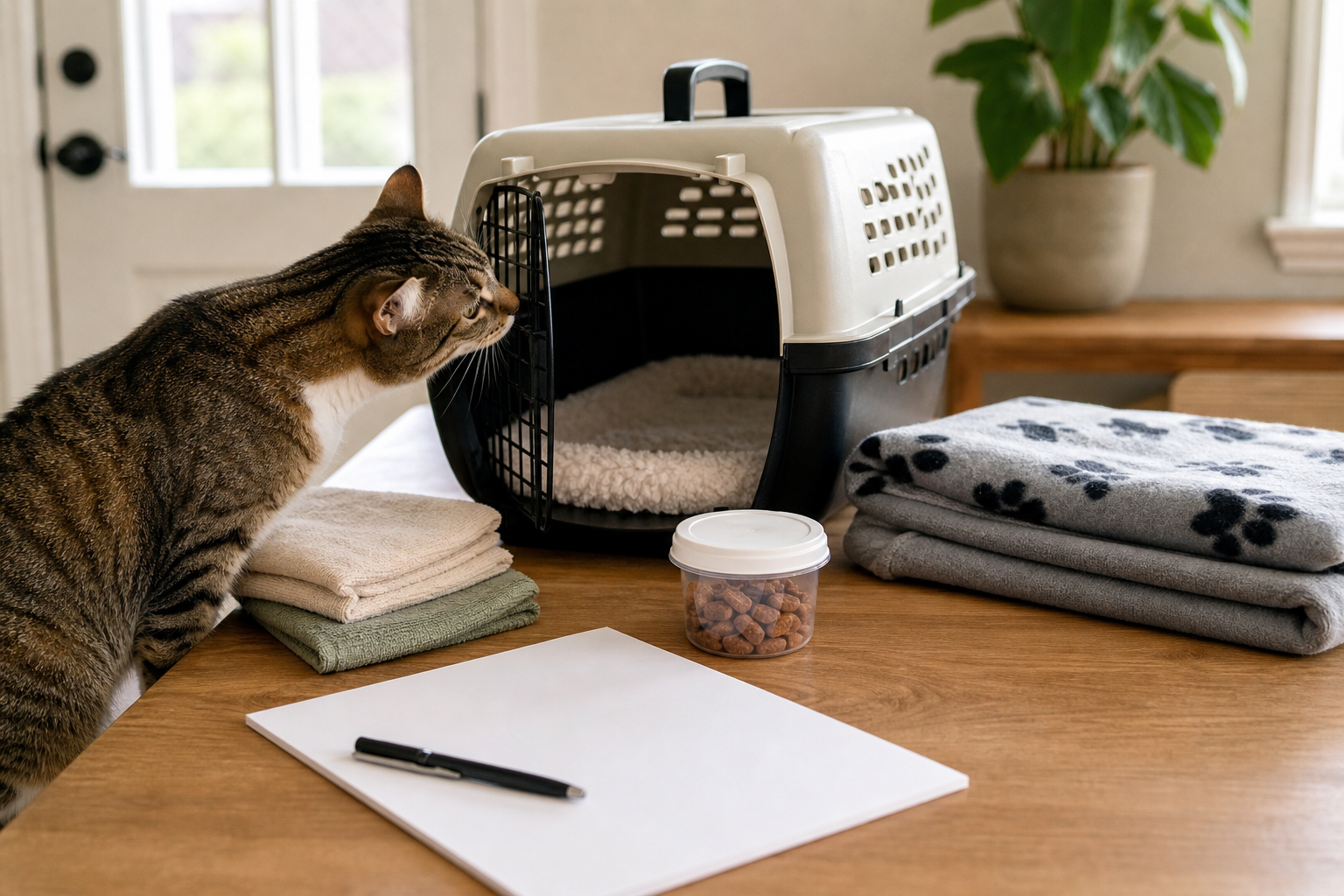
Verwenden Sie diese Checkliste:
| Before the visit | Warum das hilft | Practical step |
|---|---|---|
| Leave the carrier out | Makes the carrier part of the room instead of a warning sign | Keep the door open with a soft towel inside |
| Check vaccine records | Prevents missed or duplicated information | Bring records from shelters, rescues, breeders, or previous clinics |
| Note recent symptoms | Helps your vet decide whether vaccination should proceed today | Write appetite, vomiting, diarrhea, coughing, energy, litter box, and behavior changes |
| Confirm appointment timing | Reduces waiting and lobby stress | Ask whether there is a quieter arrival option for nervous cats |
| Plan a quiet evening | Gives you time to observe after vaccines | Avoid visitors, grooming, travel, or intense play right after the visit |
Do not give over-the-counter medications, supplements, sedatives, or pain relievers before the appointment unless your veterinarian specifically prescribed them for your cat. Some human pain relievers are dangerous for cats, and sedation decisions need an individual medical plan.
If your cat has had a prior vaccine reaction, tell the clinic when booking, not only at check-in. Your vet may adjust timing, vaccine selection, observation, or follow-up instructions.
What health notes should you bring to the appointment?
Bring notes that help your veterinarian separate a healthy vaccine visit from a visit that needs a different plan. Cornell explains that vaccines help protect cats from important infectious diseases, but vaccine decisions still involve benefit and risk 3. Your cat's current health is part of that risk discussion.
Notieren Sie sich:
- Your cat's age, weight if known, and whether they are kitten, adult, or senior.
- Indoor-only, outdoor access, boarding, grooming, travel, foster, shelter, or multi-cat exposure.
- Appetite and water intake over the last few days.
- Vomiting, diarrhea, coughing, sneezing, eye discharge, limping, hiding, or unusual tiredness.
- Current medications, supplements, preventives, and recent procedures.
- Previous vaccine names, dates, and any reaction after them.
- Any upcoming boarding, travel, adoption, or household changes.
If you use home notes to track symptoms, keep them short. A clear timeline is more helpful than a long paragraph: "Monday: vomited once after breakfast. Tuesday: normal appetite. Wednesday: hiding more than usual." For broader symptom context, our Ratgeber zur Gesundheit von Katzen can help you organize what you are seeing before you call or visit.
Ask your veterinarian which vaccines are core for your cat and which are based on exposure risk. AAHA/AAFP guidelines classify feline vaccines by risk and lifestyle, including core and non-core considerations 1. Your vet is the person who can apply that framework to your cat's health history and local disease risks.
How can you make the carrier and car ride calmer?
Make the carrier familiar before vaccine day and handle loading calmly. Cat Friendly Homes recommends avoiding chasing, using treats or toys to encourage entry, and moving slowly when getting a cat into the carrier 4. The calmer the loading process, the less stress your cat brings into the clinic.
A good carrier plan looks like this:
| Schritt | Was ist zu tun? | Was man vermeiden sollte |
|---|---|---|
| Carrier setup | Use a sturdy carrier with a washable towel or familiar bedding | A carrier that is too flimsy, broken, or hard to close |
| Practice | Leave treats or meals near the carrier, then just inside it | Forcing repeated practice when your cat is already scared |
| Loading | Close doors to hiding places, move slowly, and use a top opening if available | Chasing your cat through the house |
| Car ride | Keep the carrier stable, level, and closed | Letting your cat loose in the car |
| Arrival | Keep the carrier covered lightly if your cat is calmer with less visual input | Placing the carrier near unfamiliar dogs or loud foot traffic |
If your cat becomes frantic during car rides, discuss this with your veterinarian before the visit. The answer may be a different carrier, training plan, appointment timing, or prescription anxiety support for future trips. Do not borrow another pet's medication or guess at calming products.
For more travel setup details, see our guide to traveling with a cat. If your cat's vaccine visit is part of a bigger relocation, our guide on how to move with a cat can help you separate travel stress from health changes.
What should happen at the clinic before vaccines are given?
Your cat should have a health check and a vaccine-risk discussion before shots are given. The exact clinic flow varies, but the decision should account for your cat's age, lifestyle, medical history, prior reactions, and whether your cat seems well enough for vaccination that day.
Helpful questions to ask include:
- Which vaccines are due today, and which are optional based on lifestyle?
- Is my cat healthy enough for vaccines today?
- Should any vaccine be delayed because of recent symptoms?
- Where will each injectable vaccine be given and recorded?
- What mild reactions are expected, and how long should they last?
- What specific signs mean I should call today or seek emergency care?
- If my cat had a prior reaction, what is the plan this time?
WSAVA guidance encourages recording adverse events and vaccine details in a way that informs future visits 2. That record matters because a reaction after one visit may change how your vet plans the next one.
If your cat is extremely fearful, say so early. Cat-friendly handling can include letting the cat remain partly in the carrier, using towels strategically, reducing noise, or pausing when safe. The goal is not to make the visit slow; it is to avoid unnecessary escalation.
What aftercare does a cat need after vaccines?
Most cats need a quiet room, normal food and water, gentle observation, and a little patience after vaccines. Mild sleepiness, reduced appetite, low fever, or local soreness can happen because the immune system is responding, while serious allergic reactions are rare but important 5.
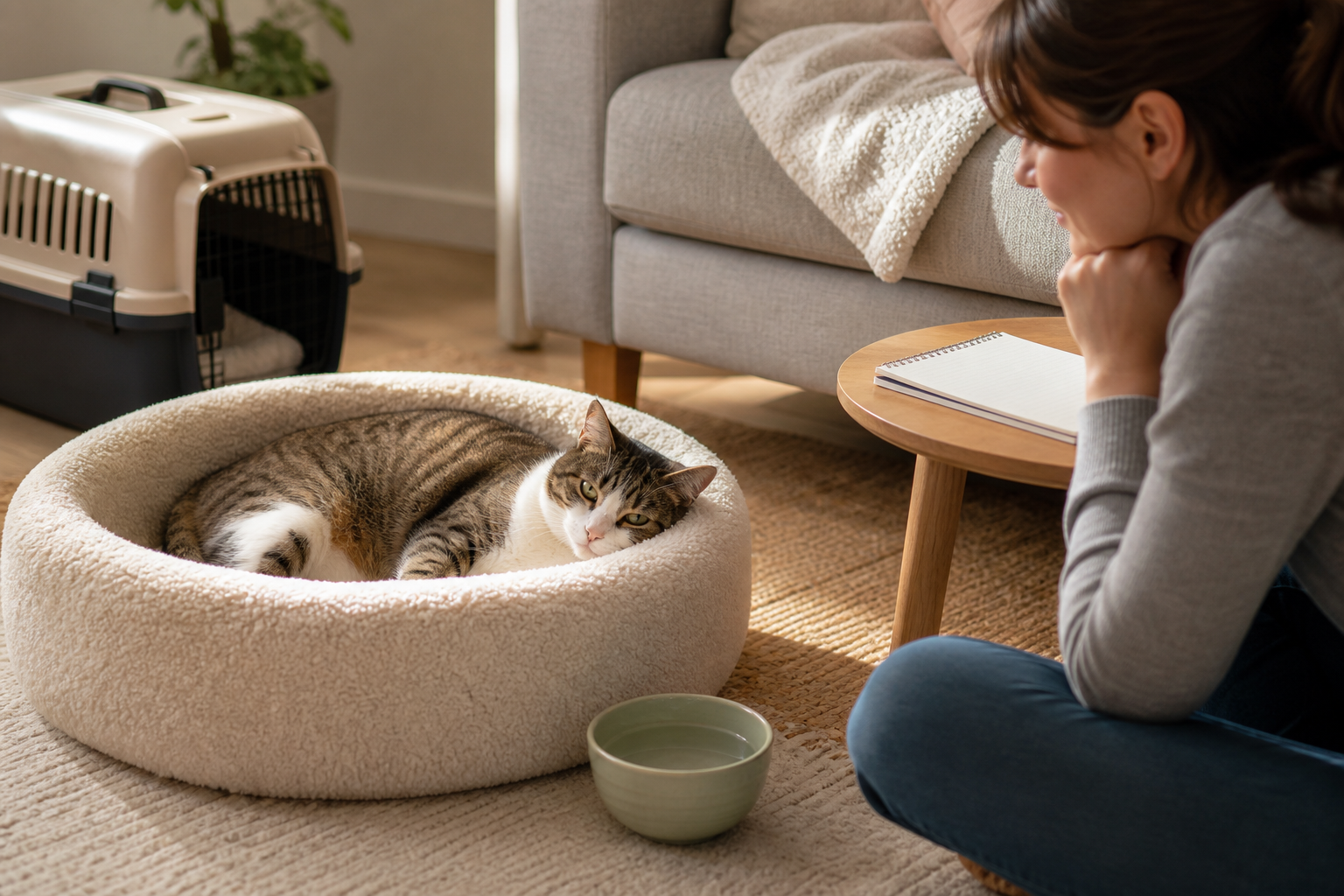
At home, set up a calm recovery window:
- Offer normal food and fresh water.
- Let your cat choose a quiet resting spot.
- Avoid bathing, nail trims, guests, or rough play the same day.
- Check appetite, energy, breathing, litter box use, and comfort.
- Look at the vaccine site if your cat allows it, but do not repeatedly press or massage it.
- Keep the clinic's phone number and emergency clinic information accessible.
Some cats act normal within hours. Others are a little subdued into the next day. The trend matters: stable or improving is reassuring; worsening, dramatic, or unusual for your cat deserves a call.
For a focused guide to what is normal versus concerning, read our article on cat vaccine side effects.
Wann sollten Sie nach der Impfung Ihrer Katze den Tierarzt anrufen?
Call your veterinarian promptly if your cat's reaction is intense, worsening, or includes signs of allergy, breathing trouble, repeated vomiting, severe weakness, collapse, or significant pain. The AVMA notes that serious side effects are rare, but allergic reactions can involve part or all of the body and may happen soon after vaccination 5.
Use this table as a decision aid, not a diagnosis:
| Was dir auffällt | Was das bedeuten kann | Was ist als nächstes zu tun? |
|---|---|---|
| Mild sleepiness for the rest of the day | Common temporary response | Monitor in a quiet room |
| Mild soreness at the vaccine site | Local inflammation or tenderness | Avoid pressing it; watch the trend |
| Appetite lower for one meal | Mild short-term response | Offer normal food and monitor |
| Facial swelling, hives, sudden itchiness | Mögliche allergische Reaktion | Call your vet or emergency clinic now |
| Atembeschwerden, Kollaps, blasses Zahnfleisch | Emergency warning sign | Seek emergency veterinary care immediately |
| Wiederholtes Erbrechen oder Durchfall | Possible significant reaction or another illness | Call promptly for guidance |
| Severe pain, crying, or unwillingness to move | More than routine soreness | Call the clinic the same day |
| Lump that grows, hurts, or does not shrink | Needs veterinary measurement and records | Schedule a veterinary check |
Cats may hide pain or illness, so look for posture and behavior changes too: hunched sitting, squinted eyes, tense face, hiding without coming out, growling when touched, or refusing normal movement. Our guide to Unauffällige Anzeichen für Schmerzen bei Katzen can help you describe what you are seeing, but it cannot replace a veterinarian's exam.
If you are unsure, call. A quick conversation with your clinic is safer than waiting through a reaction that is escalating.
Conclusion: A calm plan makes vaccine day easier
The best way to prepare a cat for vaccines is to reduce avoidable stress and bring useful health information. Make the carrier familiar, gather records, write down recent symptoms, ask which vaccines are due and why, then keep the rest of the day quiet for observation.
Most cats do well after vaccination, and mild tiredness or soreness is often short-lived. Still, vaccines are medical care, so take allergic signs, breathing changes, collapse, repeated vomiting, severe pain, or worsening symptoms seriously. Your veterinarian should always be the final guide for your cat's vaccine plan and aftercare.
Häufig gestellte Fragen
Should I feed my cat before a vaccine appointment?
In many routine cases, cats can eat normally before a vaccine appointment, but follow your clinic's instructions if your cat is having other procedures, blood work, sedation, or nausea concerns. A small normal meal may also make treats more useful for calm carrier loading.
Can I bathe or groom my cat after vaccines?
It is usually better to keep the day quiet unless your veterinarian says otherwise. Bathing, intense grooming, nail trims, or stressful handling can make soreness and stress harder to interpret after vaccines.
What if my cat hides after vaccines?
A short quiet rest can be normal, especially after a stressful car ride. Call your vet if hiding is paired with refusing food, weakness, breathing changes, repeated vomiting or diarrhea, severe pain, collapse, or behavior that is clearly worsening.
Should indoor cats still prepare for vaccine visits?
Yes. Indoor cats still need individualized vaccine planning, and the carrier, records, and aftercare steps are useful no matter how much outdoor exposure your cat has. Your veterinarian can explain which vaccines are core and which depend on lifestyle.
Can I skip vaccines because my cat hates the carrier?
Do not skip preventive care without talking to your veterinarian. Instead, ask about carrier training, quieter appointment times, cat-friendly handling, and whether your cat needs a customized travel plan before the next visit.
Referenzen
[1] AAHA/AAFP. (2020). 2020 AAHA/AAFP Feline Vaccination Guidelines. URL
[2] WSAVA. (2024). Leitlinien für die Impfung von Hunden und Katzen 2024. URL
[3] Cornell Feline Health Center. (2026). Feline Vaccines: Benefits and Risks. URL
[4] Cat Friendly Homes. (2025). Getting Your Cat to the Veterinarian. URL
[5] AVMA. (2026). Vaccinating Your Pet. URL
 EN
EN DE
DE ES
ES PT
PT