
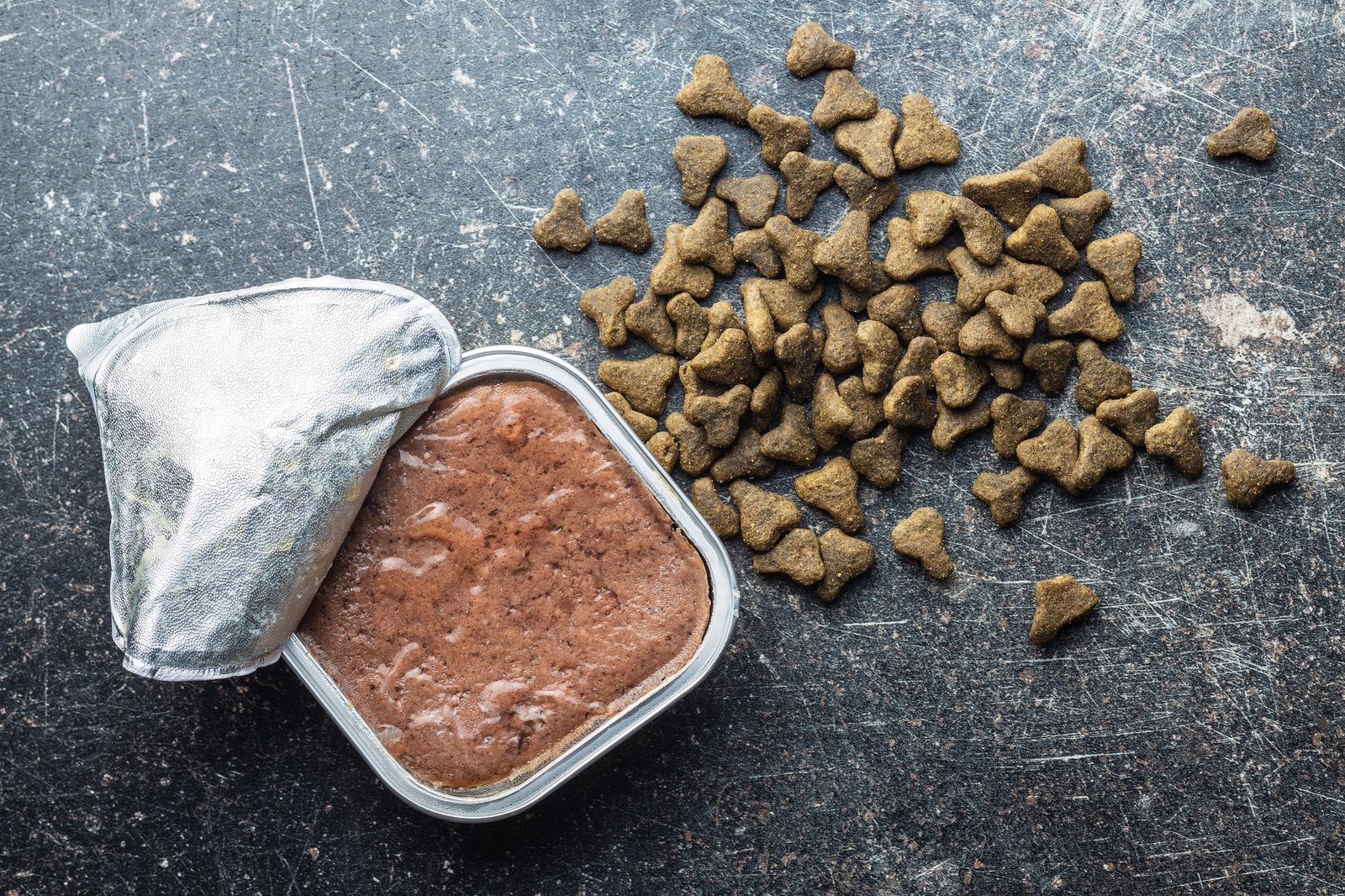
Wet food can benefit cats by adding moisture, making meals easier to measure, offering a soft texture, and tempting some picky eaters. It is not automatically better for every cat, though. The best choice is a complete-and-balanced food that fits your cat’s life stage, calories, body condition, health history, and daily routine.
This guide is educational. Ask your veterinarian before changing food for kittens, pregnant or nursing cats, seniors with weight loss, cats with vomiting or diarrhea, urinary signs, kidney disease, diabetes, allergies, dental pain, or any therapeutic diet plan.
Índice
- What are the main benefits of wet food for cats?
- Does wet food help cats get more moisture?
- Can wet food support urinary health?
- Is wet food easier for portion control and weight management?
- Can wet food help picky eaters, seniors, or cats with dental sensitivity?
- Is wet food better than dry food?
- How do I choose and serve wet cat food safely?
- When should I ask a veterinarian before switching?
- Conclusión
- Preguntas frecuentes
- Referencias
What are the main benefits of wet food for cats?
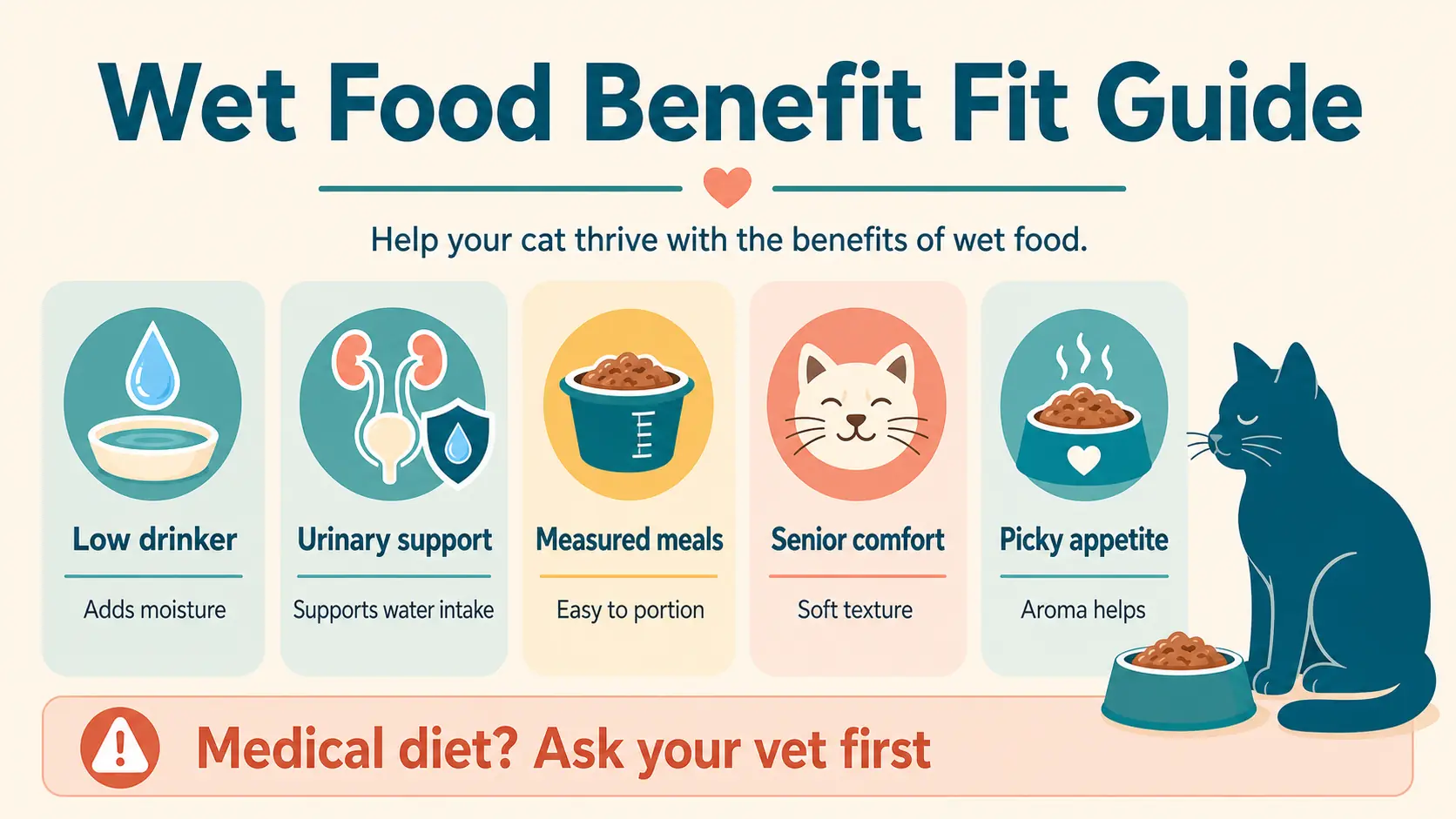
The biggest benefits of wet food are practical: it adds dietary moisture, can be portioned precisely, has a strong aroma, and has a soft texture. Those features can be helpful for cats that drink little, need measured meals, or prefer softer food.
| Wet-food feature | Why it may help | Important caveat |
|---|---|---|
| Higher moisture | Adds water with each meal | Still provide fresh water daily |
| Soft texture | Easier for some seniors or cats with mouth sensitivity | Dental pain needs a veterinary exam |
| Strong smell and flavor | May tempt some picky eaters | Sudden appetite loss is not normal pickiness |
| Measurable containers | Helps track calories by can, pouch, or tray | Calories still vary by product |
| Meal-based feeding | Encourages routine and monitoring | Free access to extra dry food can erase the calorías plan |
| Complete-and-balanced formulas | Can meet daily nutrition when used as the main diet | Check the life-stage statement on the label |
Cornell Feline Health Center notes that cats need diets matched to life stage, health, and body condition, not a one-size-fits-all feeding rule.1 That is why wet food should be treated as a useful format, not a universal cure.
Does wet food help cats get more moisture?
Wet food can help cats consume more water because moisture is built into the meal. That can be useful for cats that do not visit the water bowl often or households trying to encourage more total water intake.
Wet food does not replace fresh water. Your cat should still have clean water available in multiple comfortable locations. Some cats drink more from wide bowls, fountains, or water stations placed away from litter boxes and noisy appliances.
Moisture is only one part of nutrition. A wet food should also match your cat’s life stage and be nutritionally complete if it is the main diet. Use the SnuggleSouls guide to choosing the right wet food for your cat when comparing labels, texture, calories, and ingredients.
Can wet food support urinary health?
Wet food may support urinary comfort by increasing total water intake, which can help dilute urine for some cats. But urinary signs are medical, and diet changes should not be used to delay care.
Call a veterinarian promptly if your cat strains in the litter box, cries while urinating, urinates outside the box suddenly, has blood in the urine, visits the box repeatedly, or produces little or no urine. A male cat that cannot urinate normally needs urgent veterinary care.
| Situación | Wet food may help by | What to do first |
|---|---|---|
| Healthy cat that drinks little | Adding routine meal moisture | Keep water available and monitor litter habits |
| Cat with past urinary issues | Supporting water intake as part of the plan | Follow the veterinarian’s diet instructions |
| Cat on a prescription urinary diet | Do not swap foods casually | Ask the prescribing veterinarian |
| New straining, blood, crying, or frequent box trips | Do not treat as a food-format issue | Contact a veterinarian now |
This is where the page needs a careful line: wet food can be part of a urinary-support routine, but it is not a treatment for urinary blockage, crystals, infection, pain, or inflammation.
Is wet food easier for portion control and weight management?
Wet food can make portion control easier because each can, pouch, or tray lists calories, and meals are naturally measured. It may also feel more satisfying for some cats because of its moisture and volume.
Weight management still depends on the total daily calorie budget. Adding wet food on top of a full dry-food ration can increase calories rather than reduce them. FDA explains that pet-food labels include feeding directions and calorie-related information that owners can use as starting points, but the label is not a personalized plan.2
Use this decision table before changing the bowl:
| Goal | Helpful wet-food move | Avoid this mistake |
|---|---|---|
| Maintain healthy weight | Choose a complete-and-balanced food and measure each meal | Guessing by can size instead of calories |
| Reduce extra calories | Replace part of the dry ration with measured wet food | Adding wet food without reducing other calories |
| Track appetite | Serve meals at predictable times | Leaving multiple unmeasured foods available |
| Monitor body condition | Weigh portions and check body shape over time | Reacting to one hungry day with major changes |
For the math, use the SnuggleSouls calculadora de calorías para gatos and the guide on ¿Qué cantidad de comida húmeda hay que darle a un gato?. For body-shape checks, pair scale weight with the cat BMI and weight calculator or the broader BCS and muscle condition guide.
Can wet food help picky eaters, seniors, or cats with dental sensitivity?
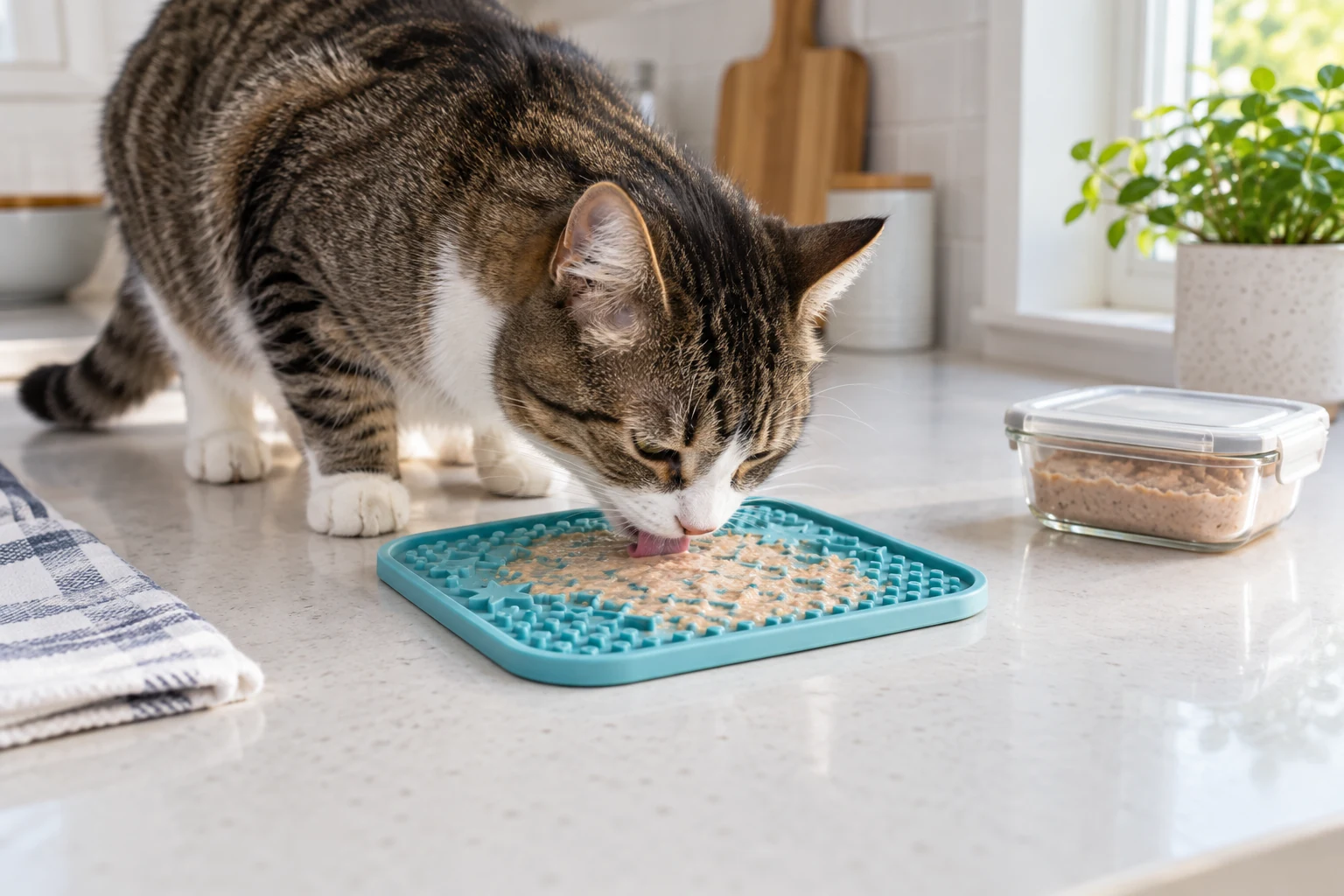
Wet food can help some cats because aroma, texture, and temperature make meals more appealing. Many cats respond to the smell of warmed wet food, and softer textures can be easier for cats that struggle with hard kibble.
Do not assume a cat is simply picky if appetite changes suddenly. Appetite loss, chewing on one side, dropping food, pawing at the mouth, bad breath, drooling, vomiting, diarrhea, weight loss, or ocultar can point to pain or illness.
Try these low-risk steps for a healthy cat with normal appetite variation:
- Offer a small amount of the new wet food beside the usual food.
- Keep texture consistent at first, such as pate, minced, shreds, or stew.
- Warm the food slightly to release aroma, but do not serve it hot.
- Pick up uneaten wet food instead of leaving it out for long periods.
- Track what your cat eats for a week before judging the change.
If your cat is older, losing weight, eating less, or acting uncomfortable, schedule a veterinary exam before relying on texture changes.
Is wet food better than dry food?
Wet food is not automatically better than dry food. Both formats can work when the food is complete and balanced for the right life stage, calories are measured, and the cat tolerates it well.
AAFCO explains that a complete-and-balanced nutritional adequacy statement identifies the species and life stage the food is intended for.3 That statement matters more than whether the food is wet, dry, or mixed.
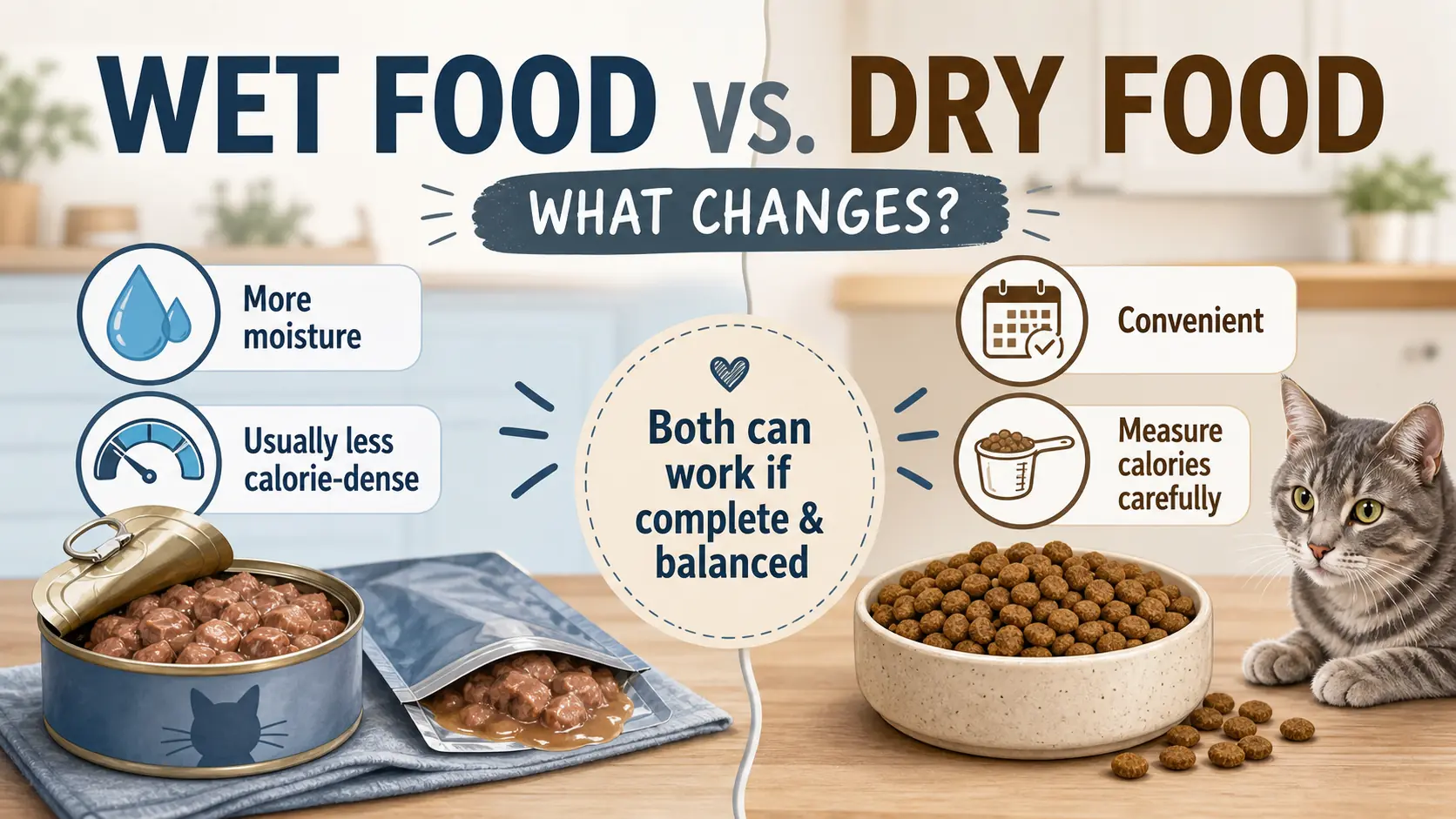
Here is a practical comparison:
| Feeding format | Strengths | Vigilantes |
|---|---|---|
| Wet food only | Moisture-rich, soft, meal-based, easy to observe intake | Needs safe storage; can be costlier; portions still need calorie math |
| Dry food only | Convenient, easy to use in feeders or puzzles | Easy to overpour; lower moisture; calories can be dense |
| Mixed feeding | Combines moisture with convenience | Requires one combined calorie budget |
If you use both, decide how many calories will come from wet food, subtract that from the daily target, then measure the remaining dry food. The SnuggleSouls cat feeding guide y how often to feed cat wet food can help you build a schedule.
How do I choose and serve wet cat food safely?
Choose wet food by checking the nutritional adequacy statement, life stage, calories per can or pouch, texture, storage directions, and your cat’s health needs. Then serve it in measured meals and store leftovers safely.
Use this checklist:
- Look for a complete-and-balanced statement for cats and the correct life stage.
- Check calories per can, tray, pouch, or kilogram.
- Match texture to your cat’s chewing comfort and preferences.
- Transition gradually unless your veterinarian gives different instructions.
- Use clean bowls and discard food that has been left out too long.
- Refrigerate opened leftovers in a covered container according to package directions.
- Count treats and dry food in the same daily calorie budget.
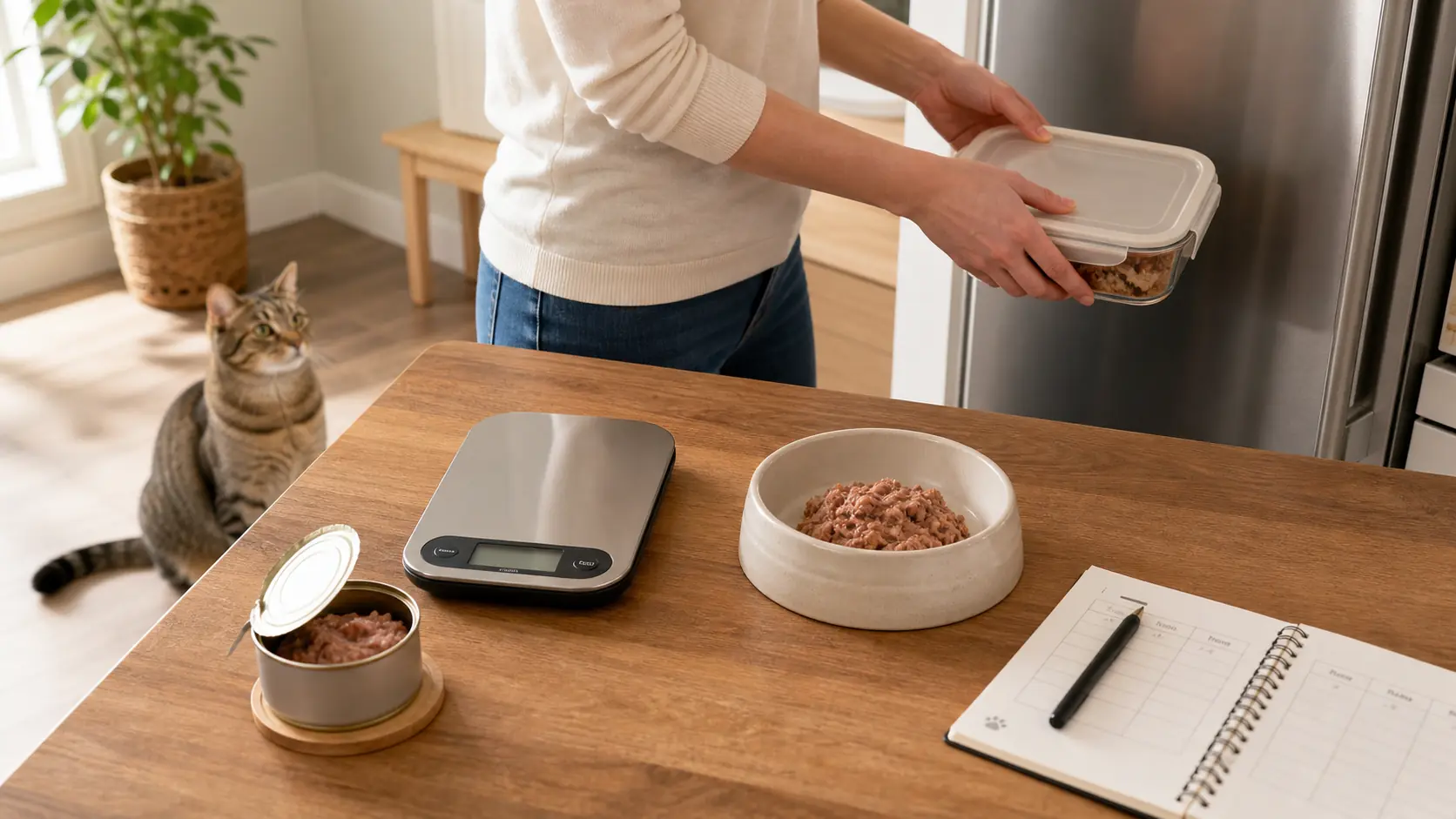
For storage details, use the SnuggleSouls wet cat food storage guide. If you are comparing commercial food with homemade diets, read is homemade cat food better? before making a major change; homemade diets can create nutrient gaps without veterinary nutrition guidance.
When should I ask a veterinarian before switching?
Ask your veterinarian before switching to wet food if your cat has a medical condition, follows a therapeutic diet, or has sudden appetite, weight, urinary, digestive, or behavior changes. Food format should not override a medical plan.
Get veterinary guidance before changing food for cats that are:
- kittens, pregnant, nursing, or underweight
- seniors losing weight or muscle
- overweight cats starting a weight-loss plan
- cats with kidney disease, urinary disease, diabetes, pancreatitis, allergies, dental disease, heart disease, or digestive problems
- cats that vomit, have diarrhea, strain to urinate, or stop eating normally
- cats prescribed a therapeutic or prescription diet
WSAVA nutrition guidance emphasizes nutritional assessment as part of routine care, including body condition, muscle condition, diet history, and health factors.4 That is especially important when a cat is not simply a healthy adult choosing between formats.
Conclusión
Wet food’s real value is not that it wins every feeding debate. Its value is that moisture, soft texture, aroma, and measured meals can solve specific problems for specific cats.
For many households, the best answer is a complete-and-balanced wet food or mixed-feeding plan that fits one daily calorie budget. Start with the label, your cat’s life stage, body condition, and health history. Then measure, monitor, and adjust with veterinary guidance when appetite, weight, urinary signs, or illness make the decision more than a routine food preference.
Preguntas frecuentes
Is wet food good for cats every day?
Yes, wet food can be fed every day if it is complete and balanced for your cat’s life stage and the daily calories are appropriate. Cats with medical conditions may need a specific veterinary diet instead.
Does wet food hydrate cats better than dry food?
Wet food adds more moisture with each meal, so it can help increase water intake. Cats should still have fresh water available every day.
Is wet food better for cat urinary health?
Wet food may support water intake, which can be useful for some urinary-health plans. It does not treat urinary blockage, pain, blood in urine, straining, or frequent litter-box trips, so those signs need veterinary attention.
Can wet food help my cat lose weight?
Wet food can be part of a weight plan because it is easy to portion and often moisture-rich, but weight loss depends on total calories. Do not sharply restrict food or start a weight-loss plan without veterinary guidance.
Should kittens eat wet food?
Kittens can come wet food if it is complete and balanced for growth or all life stages. They need enough calories and nutrients for growth, so ask your veterinarian if you are unsure about amount or schedule.
Can I mix wet and dry cat food?
Yes. Use one daily calorie budget, subtract wet-food calories first, then measure the remaining dry food. Mixed feeding becomes a problem when wet food is added on top of an already full dry-food ration.
How long can wet cat food sit out?
Follow the package instructions and use common food-safety judgment. In general, wet food should not be left out for long periods, and opened leftovers should be covered and refrigerated.
Referencias
[1] Centro de Salud Felina de Cornell. Cómo alimentar a tu gato.
[2] U.S. Food and Drug Administration. Pet Food Labels – General.
[3] Association of American Feed Control Officials. Understanding Pet Food.
[4] World Small Animal Veterinary Association. Directrices mundiales sobre nutrición.

 EN
EN DE
DE ES
ES PT
PT