
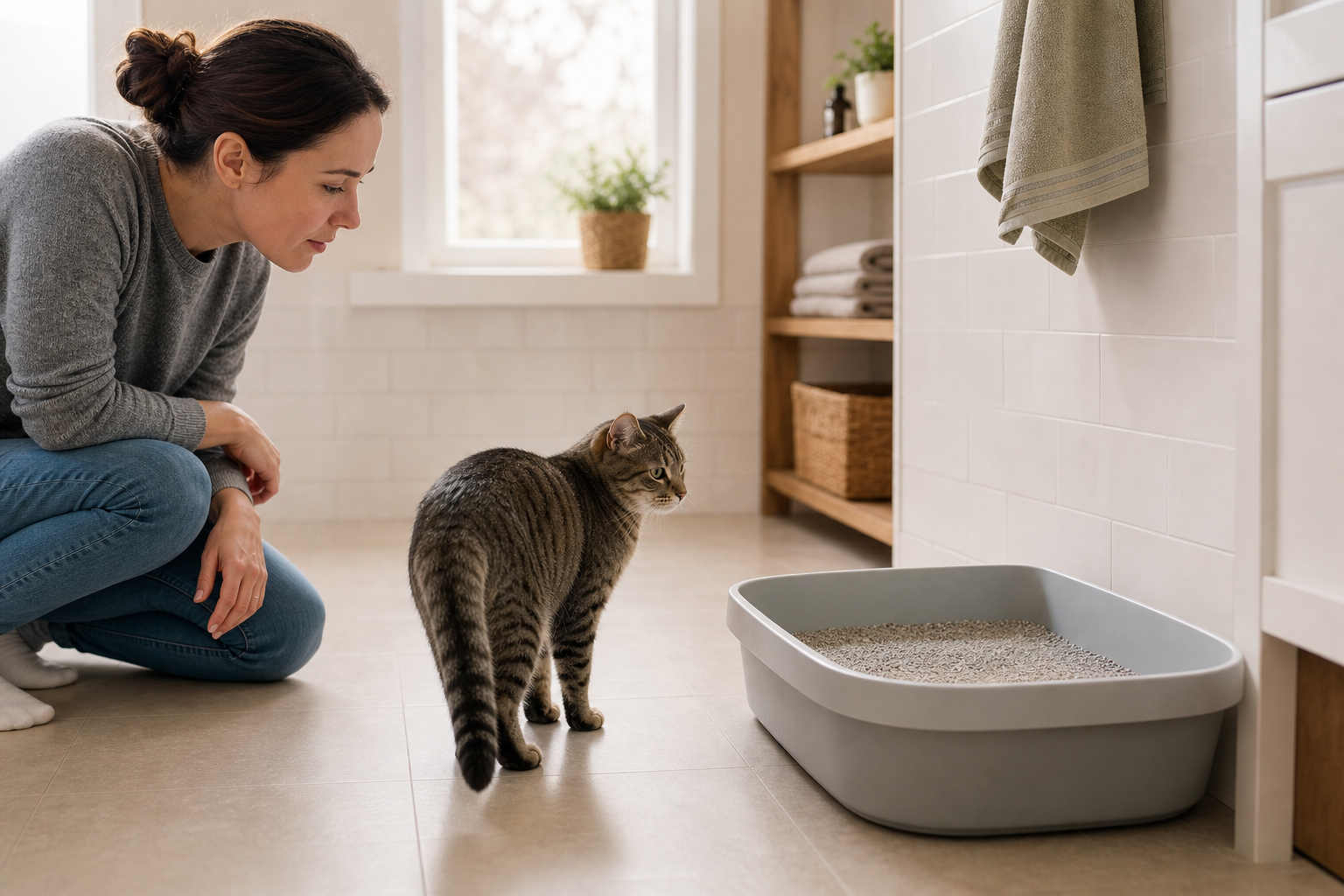
Cat UTI symptoms can include frequent litter-box trips, straining, crying while urinating, blood in the urine, licking the genital area, and peeing outside the box. However, these signs do not prove a bacterial urinary tract infection: bladder inflammation, stones, urethral plugs, and a life-threatening urinary blockage can look similar.
If your cat is repeatedly straining but producing little or no urine, go to an emergency veterinarian immediately. Do not wait to see whether the problem improves, especially if your cat is male.
Índice
- What are the most common cat UTI symptoms?
- When are urinary symptoms an emergency?
- Does peeing outside the litter box mean a UTI?
- Why do urinary problems look so similar?
- How will a veterinarian identify the cause?
- What should you track before the veterinary visit?
- What can you safely do while arranging veterinary care?
- Conclusion: Treat urinary changes as a medical clue
- Preguntas frecuentes
- Referencias
What are the most common cat UTI symptoms?
The most common warning signs are changes in where, how often, and how comfortably your cat urinates. Cornell groups these signs under feline lower urinary tract disease, or FLUTD, because several different disorders can affect the bladder and urethra in similar ways 1.
A tener en cuenta:
- Repeated trips to the litter box.
- Squatting or straining for longer than usual.
- Passing only small drops of urine.
- Crying, restlessness, or appearing painful while urinating.
- Blood-tinged, pink, or red urine.
- Urinating on beds, rugs, tubs, sinks, or other unusual places.
- Licking the genital area more often.
- A sudden change in urine-clump size or number.
- Hiding, reduced appetite, vomiting, or low energy.
Urinary signs deserve prompt veterinary advice even when your cat still seems bright. Cats often hide pain, and the visible symptom does not reveal whether the cause is infection, inflammation, stones, or obstruction.
| Lo que se nota | Qué puede significar | Safest next step |
|---|---|---|
| Frequent trips with normal urine output | Irritation, inflammation, infection, or another urinary problem | Call your veterinarian promptly |
| Straining with only drops or no urine | Possible urethral obstruction | Emergency veterinarian now |
| Peeing outside the box | Pain, urgency, box aversion, stress, or another medical issue | Arrange a veterinary exam before treating it as behavior |
| Blood in urine | Urinary-tract inflammation, stones, infection, or other disease | Contact a veterinarian the same day |
| Vomiting, weakness, or collapse with urinary signs | Possible advanced obstruction or serious illness | Emergency veterinarian now |
When are urinary symptoms an emergency?
Repeated straining with little or no urine is an emergency because a blocked urethra prevents the bladder from emptying. A complete blockage can rapidly cause severe pain, dangerous electrolyte changes, kidney injury, bladder damage, and death without treatment 2.
Go to an emergency veterinarian immediately if your cat:
- Repeatedly squats or strains but produces no normal urine clump.
- Produces only drops despite frequent attempts.
- Cries, pants, becomes agitated, or cannot settle.
- Has a painful or firm abdomen.
- Vomits, refuses food, becomes weak, hides, or collapses.
- Shows urinary signs and is rapidly getting worse.
Male cats are at greater risk of obstruction because their urethra is longer and narrower, but any cat with little or no urine output needs urgent care. Constipation can also cause straining, and it can be difficult to tell the difference at home. When you are unsure, treat repeated unproductive straining as a urinary emergency.
Do not press on your cat's abdomen, try to express the bladder, or wait overnight. Broader Guías sobre la salud de los gatos can help you learn, but they must not delay emergency treatment.
Does peeing outside the litter box mean a UTI?
Peeing outside the litter box can happen with a UTI, but it can also reflect bladder pain, urinary urgency, stones, stress, mobility problems, or litter-box aversion. A cat may associate the box with pain and choose a soft or cool surface instead.
This is why punishment is unsafe and ineffective. Scolding adds stress without addressing pain or urgency. Start with a veterinary exam and review the medical causes of inappropriate urination before assuming your cat is misbehaving.
Location can offer context but not a diagnosis. Our guide to ¿Por qué los gatos orinan en las camas? explains practical cleanup and behavior considerations, but a sudden change still needs medical evaluation.
Why do urinary problems look so similar?
The bladder and urethra can respond to different problems with the same limited set of signs: pain, urgency, frequent attempts, blood, and inappropriate urination. Merck notes that FLUTD is a group of disorders rather than one diagnosis 3.
Possible causes include:
- Feline idiopathic cystitis, meaning bladder inflammation without an identified infection or stone.
- Urethral obstruction from inflammatory material, crystals, stones, or a plug.
- Bladder or urethral stones.
- Bacterial urinary tract infection.
- Less common structural, neurologic, or cancer-related disease.
Bacterial UTIs are not the cause of every urinary episode. VCA notes that infections are more common in older cats and cats with conditions that affect normal urinary defenses, such as diabetes or kidney disease 4. Symptoms alone cannot confirm infection, so antibiotics should only be used when prescribed after veterinary assessment.
How will a veterinarian identify the cause?
A veterinarian will begin with your cat's history and a physical examination, including assessing hydration, pain, and whether the bladder is dangerously enlarged. Testing may include urinalysis, urine culture, bloodwork, X-rays, or ultrasound depending on the signs and suspected cause.
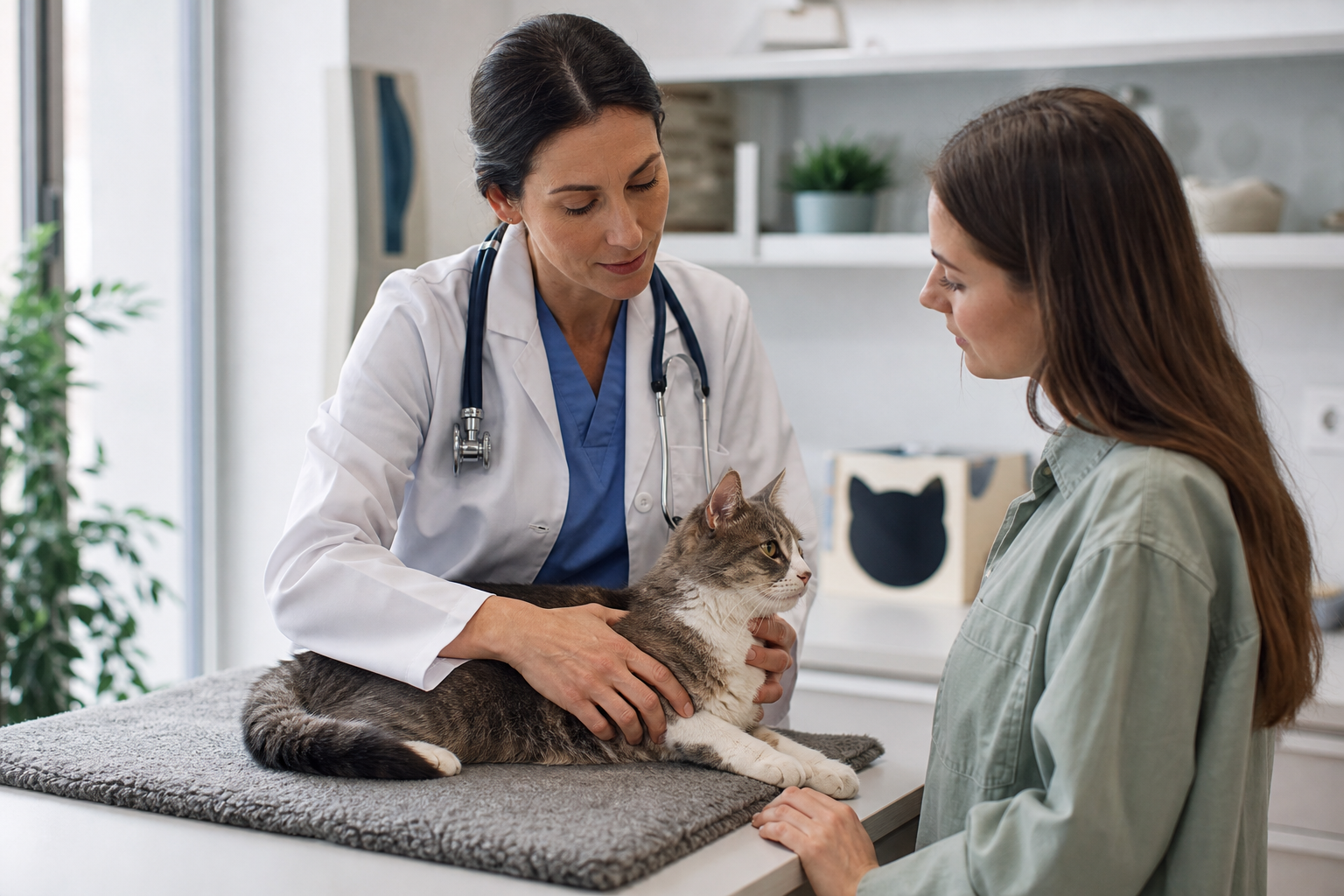
Urinalysis can help assess urine concentration, blood, inflammation, crystals, and other clues. A urine culture may be needed to confirm whether bacteria are present and which medication is appropriate. Imaging can help find stones or other structural problems.
If the urethra is blocked, emergency stabilization and relief of the obstruction take priority. This is not a condition that can be diagnosed or treated safely at home.
What should you track before the veterinary visit?
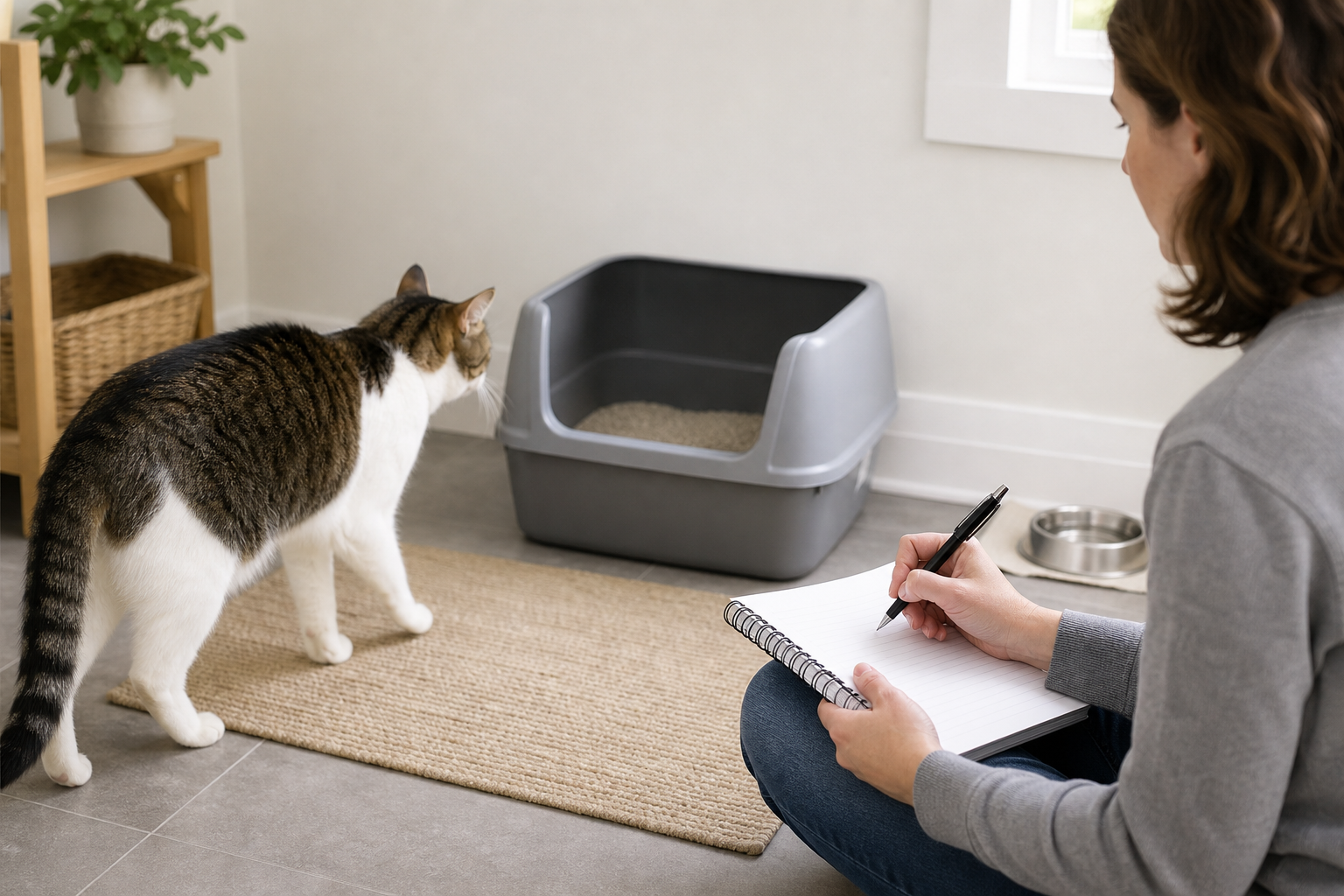
Record a few precise observations if doing so does not delay urgent care. A short symptom log can help your veterinarian understand the pattern and decide which tests are appropriate.
Nota:
- When the change started and whether it is worsening.
- Number of litter-box visits and whether urine is actually produced.
- Approximate size and number of urine clumps.
- Any blood, crying, licking, vomiting, hiding, or appetite change.
- Water intake and recent diet changes.
- Previous urinary episodes, medications, and known conditions.
- Changes in the home, routine, litter, box location, or other pets.
In a multi-cat home, temporarily observing the symptomatic cat in a calm room with water and a clean box may help identify urine output. Do this only if the cat is stable and you can contact a veterinarian promptly. Never isolate and monitor a cat that is repeatedly straining without urine instead of seeking emergency care.
What can you safely do while arranging veterinary care?
The useful home steps are supportive and observational, not treatments. Provide fresh water, keep the environment calm, make clean litter boxes easy to reach, and follow your veterinarian's instructions.
You can:
- Offer multiple fresh-water stations and your cat's normal food unless a veterinarian advises otherwise.
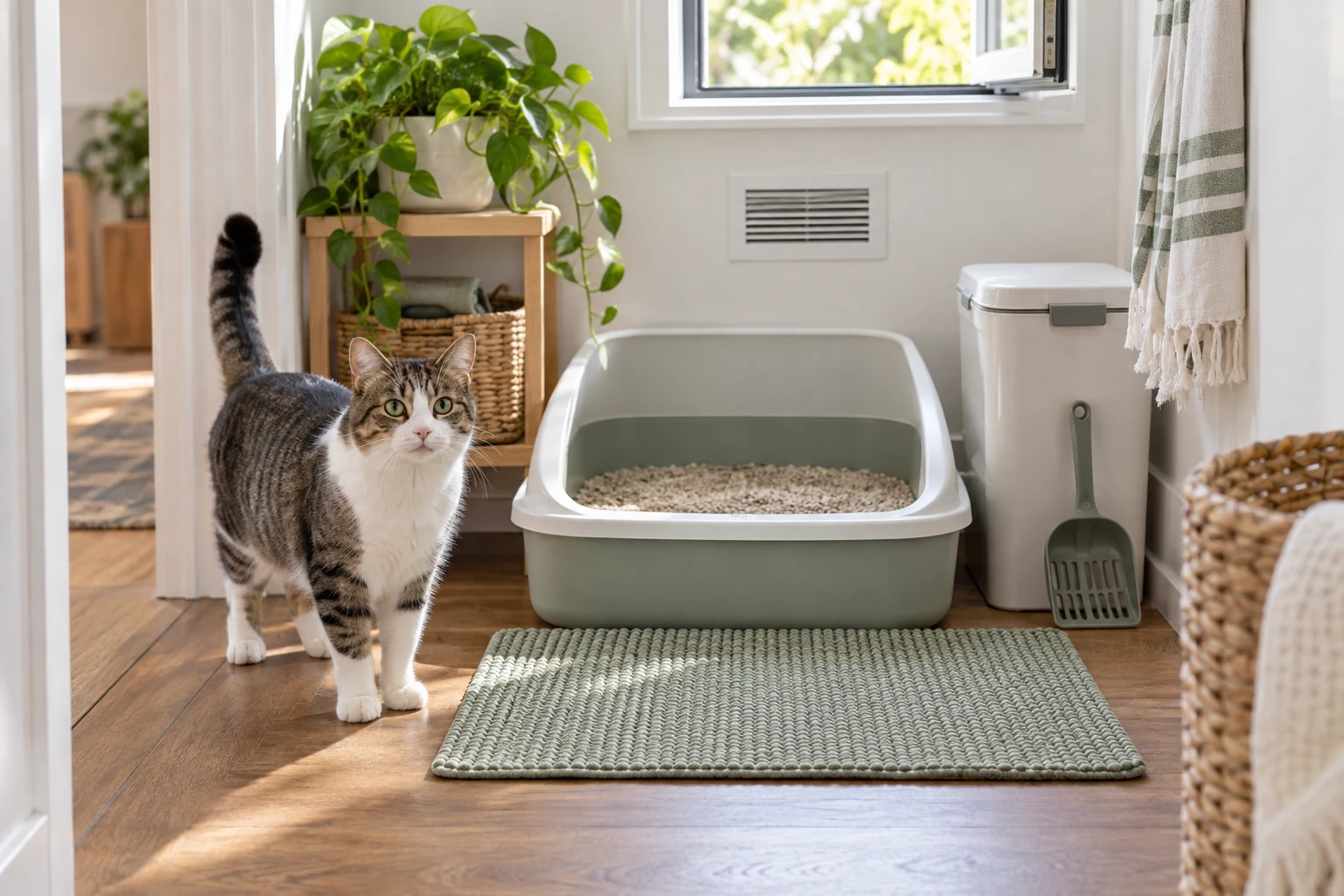
- Keep the litter box clean so urine output is easier to observe.
- Provide a quiet, warm, low-stress resting area.
- Bring photos, videos, and your symptom log to the appointment.
- Use a carrier and leave promptly when emergency signs appear.
A suitable La mejor configuración para la bandeja sanitaria del gato y un simple litter-box cleaning schedule support daily comfort, but changing the box does not treat urinary disease.
Do not give leftover antibiotics, human pain medicine, supplements, urinary acidifiers, or other remedies without veterinary direction. Do not force water by mouth or attempt to squeeze the bladder. These actions can delay correct treatment or seriously harm your cat.
Conclusion: Treat urinary changes as a medical clue
Frequent litter-box trips, straining, blood in urine, genital licking, and peeing outside the box can all be cat UTI symptoms, but they can also signal other lower urinary tract disorders. Only a veterinary assessment can identify the cause and guide appropriate care.
The most important action is recognizing a possible blockage: repeated straining with little or no urine requires emergency veterinary care now. For all other sudden urinary changes, call your veterinarian promptly and avoid treating the problem as bad behavior.
Preguntas frecuentes
How can I tell if my cat is blocked or constipated?
Both can cause repeated straining, and the difference may be hard to identify at home. If your cat repeatedly strains without producing a normal urine clump, especially with pain, vomiting, weakness, or worsening behavior, treat it as a possible urinary blockage and seek emergency care immediately.
Can a cat UTI go away on its own?
Do not wait for urinary signs to resolve on their own. The symptoms may be caused by infection, inflammation, stones, or obstruction, and these conditions require different care. Contact a veterinarian promptly.
Why is my cat peeing small amounts frequently?
Frequent small amounts can indicate bladder or urethral irritation, pain, infection, stones, or partial obstruction. If your cat is producing only drops or no urine while straining, go to an emergency veterinarian now.
Can stress cause urinary symptoms in cats?
Stress can contribute to feline idiopathic cystitis in some cats, but urinary symptoms still require veterinary assessment because infection, stones, and obstruction can look similar. Do not assume stress is the cause before dangerous problems are excluded.
Should I give my cat leftover antibiotics for a suspected UTI?
No. Urinary symptoms do not prove a bacterial infection, and the wrong antibiotic can delay diagnosis and contribute to antimicrobial resistance. A veterinarian may recommend urinalysis and culture before selecting treatment.
Referencias
[1] Centro de Salud Felina de Cornell. (2026). Feline Lower Urinary Tract Disease. Read Cornell's FLUTD overview
[2] American College of Veterinary Surgeons. (2026). Urinary Obstruction in Male Cats. Read the ACVS urinary obstruction guide
[3] Manual Veterinario de Merck. (2025). Feline Lower Urinary Tract Disease. Read the Merck Veterinary Manual overview
[4] VCA Animal Hospitals. (2026). Urinary Tract Infections in Cats. Read the VCA UTI guide
 EN
EN DE
DE ES
ES PT
PT