
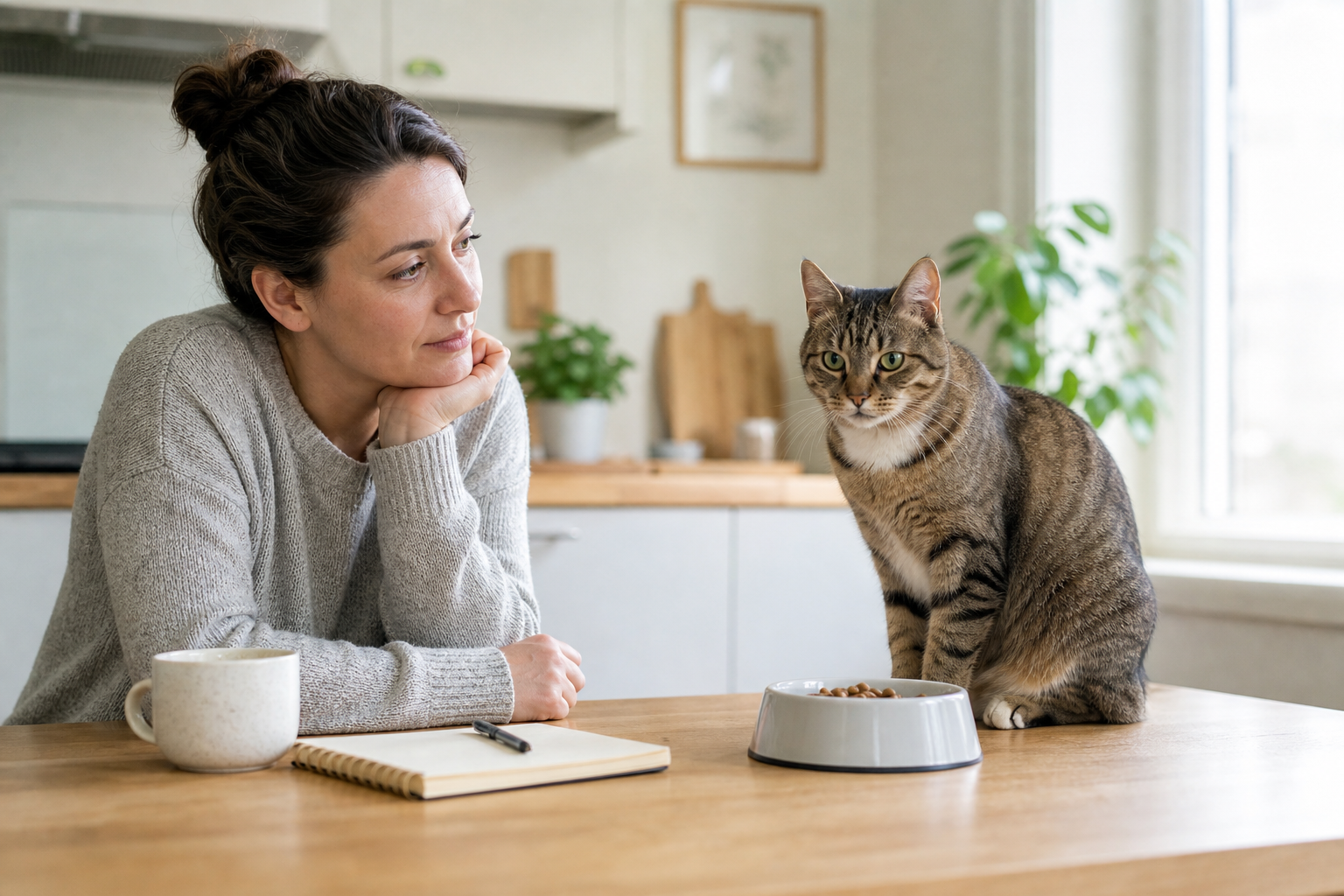
An isolated episode of cat vomiting—whether clear liquid on an empty stomach, a hairball, or undigested food after eating too fast—can happen occasionally, but repeated throwing up is not normal [1]. Track frequency and appetite, and seek urgent veterinary care if vomiting repeats or your cat cannot keep water down.
Educational note: This guide helps you distinguish vomiting from regurgitation or coughing and prepare notes for your vet; never induce vomiting or give human drugs at home.
Table of Contents
- Is your cat vomiting, regurgitating, or coughing?
- What commonly causes a cat to vomit (clear liquid, food, or dark specks)?
- Are hairballs a normal reason for vomiting?
- Could food be making your cat vomit (and when to ask about a bland diet)?
- What symptoms make vomiting more concerning?
- When is cat vomiting an emergency?
- What should you track after your cat vomits?
- What should you avoid doing at home?
- Conclusion: Know when vomiting needs veterinary care
- Frequently Asked Questions
- References
Is your cat vomiting, regurgitating, or coughing?
Vomiting involves active nausea, drooling, and abdominal heaving, whereas regurgitation brings up undigested food passively soon after eating, and coughing produces neck-extended hacking without food [1].
| What you notice | Vomiting | Regurgitation | Coughing |
|---|---|---|---|
| Effort | Abdominal heaving and retching | Passive, sudden expulsion | Chest or throat hacking |
| Material | Food, clear liquid, foam, bile, or hair | Undigested tubular food or water | No food; occasionally frothy saliva |
| Timing | Any time (including empty stomach) | Usually minutes after eating or drinking | After activity or in coughing spells |
| Best next step | Track episodes and appetite | Record meal speed and portion size | Record video and call a vet if repeated |
Compare side-by-side clues in our cat regurgitation vs. vomiting guide and cat coughing guide.
What commonly causes a cat to vomit (clear liquid, food, or dark specks)?
Cornell notes that feline vomiting can stem from eating too fast, hairballs, dietary intolerance, parasites, swallowed foreign objects, toxins, or systemic kidney, liver, thyroid, and pancreatic disease [1]. Appearance and meal timing offer useful clues to share with your vet, though appearance alone never confirms a diagnosis:
| What you see in the vomit | Common patterns to note | Next step |
|---|---|---|
| Clear liquid or water | Empty-stomach secretions, hairball irritation, drinking water too fast, or acute nausea | Monitor if isolated and bright; call a vet if repeated or if your cat cannot keep water down |
| Undigested food after eating | Eating dry or wet food too fast (“scarf and barf”), abrupt food switch, or food sensitivity | Slow meal pace and consult a vet if vomiting recurs after meals |
| Yellow or green liquid | Bile on an empty stomach or grass irritation (see cat vomiting yellow liquid) | Call your veterinarian if repeated or paired with appetite loss |
| Black specks, coffee-ground look, or fecal odor | Digested stomach blood or severe intestinal obstruction | Seek emergency veterinary care immediately [3] |
Are hairballs a normal reason for vomiting?
An occasional hairball can occur from normal grooming, but frequent hairballs or repeated unproductive retching should not be dismissed—Cornell advises veterinary evaluation when hairballs happen frequently or accompany lethargy, reduced appetite, constipation, or diarrhea [4].
Could food be making your cat vomit (and when to ask about a bland diet)?
Fast eating, sudden brand switches, spoiled wet food, or ingredient sensitivities can trigger vomiting after meals—review meal pacing in cat vomiting after eating too fast, food choices in choosing healthy cat food, and freshness limits in storing wet cat food safely.
- Safe guidance on a bland diet for vomiting cats: Do not withhold food for prolonged periods (fasting puts overweight cats at risk of hepatic lipidosis) and do not feed unseasoned homemade meat/rice mixes long-term without veterinary approval. If your cat had one mild episode and is bright, ask your veterinarian whether small, frequent meals of its regular food or a prescription easily digestible gastrointestinal diet are appropriate [3].
What symptoms make vomiting more concerning?
Cornell recommends prompt evaluation when vomiting occurs more than once a week, while Merck advises an exam for vomiting more than once or twice daily or any vomiting paired with lethargy, appetite loss, diarrhea, weight loss, or increased thirst [1] [2] [5]. Check stool changes with our cat poop color chart and chronic diarrhea guide.
When is cat vomiting an emergency?
Go to an emergency veterinary clinic immediately if your cat is repeatedly vomiting, cannot keep water down, has blood or dark coffee-ground material in vomit, has a painful/swollen belly, struggles to breathe, or may have swallowed string, ribbon, lilies, or medications [3].
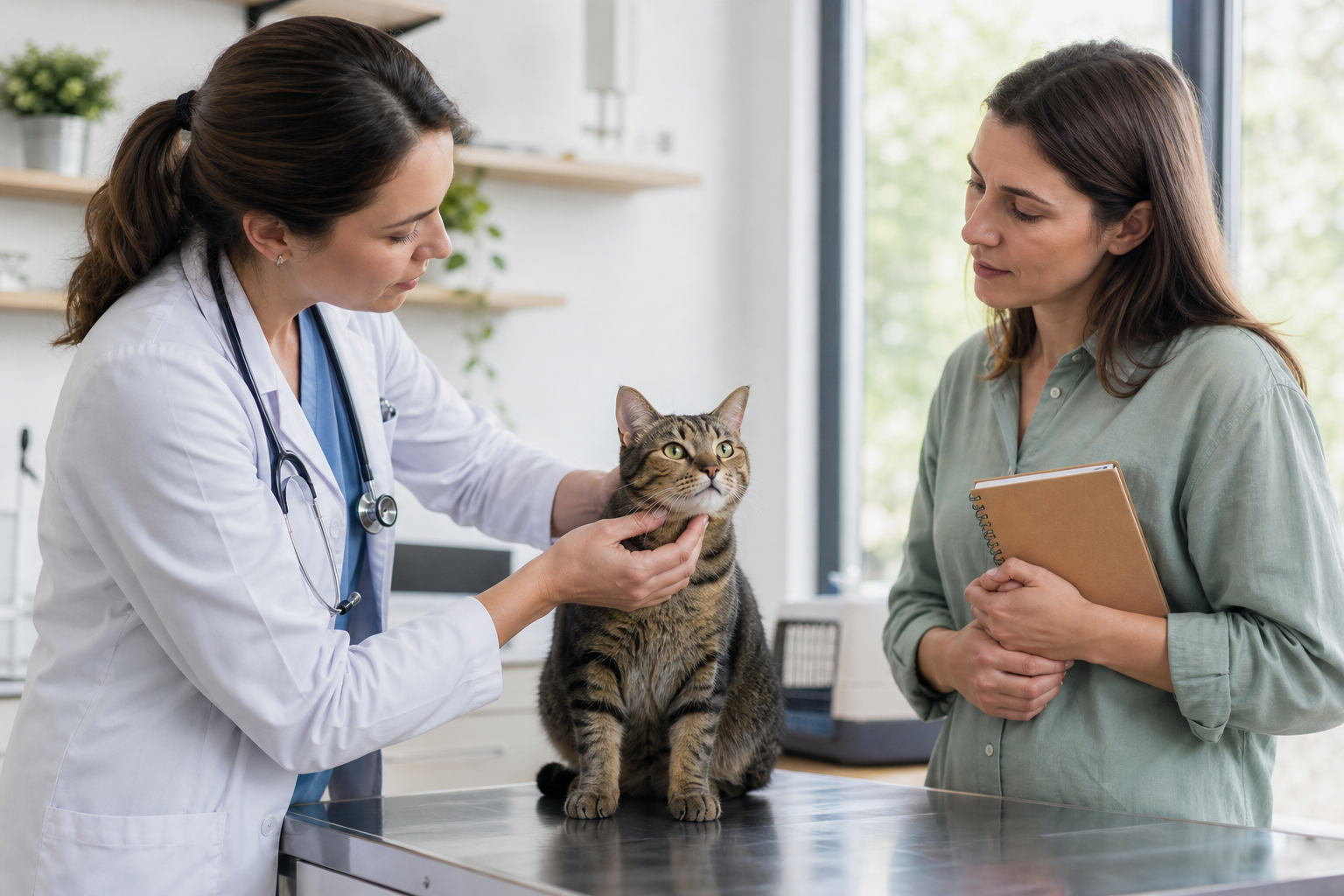
If your cat also refuses water, read our cat vomiting and not drinking water guide while contacting your clinic—and never pull string hanging from the mouth or anus.
What should you track after your cat vomits?
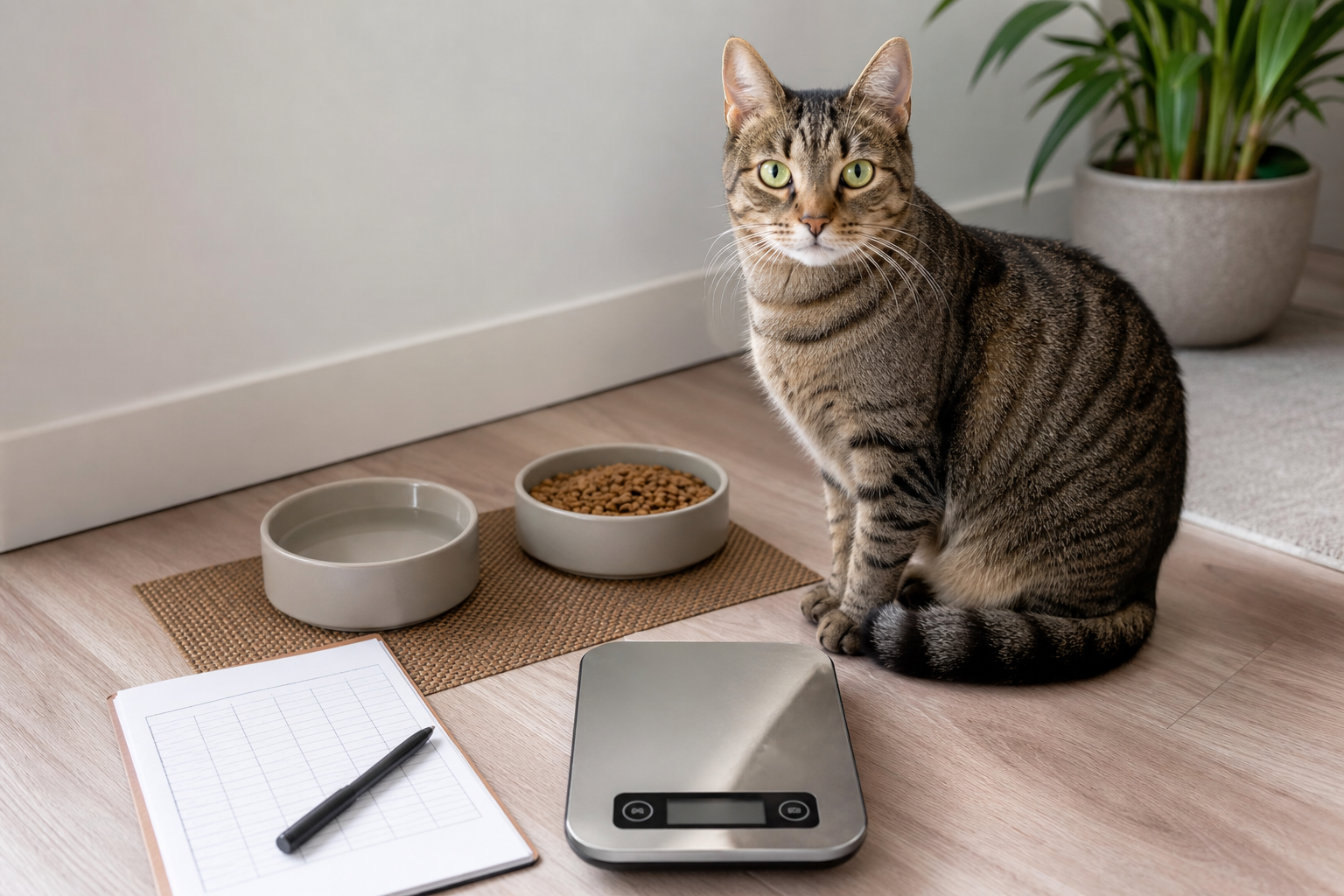
Log the time, number of episodes, relation to meals or water, appearance (clear liquid, foam, undigested food, hair, blood), and appetite or litter-box changes, and capture a short video if safe.
A carrier if your cat needs an exam
A secure carrier can help with transport if vomiting needs veterinary assessment. It does not treat vomiting; repeated episodes, blood, marked lethargy, pain, or inability to keep water down need prompt veterinary advice.
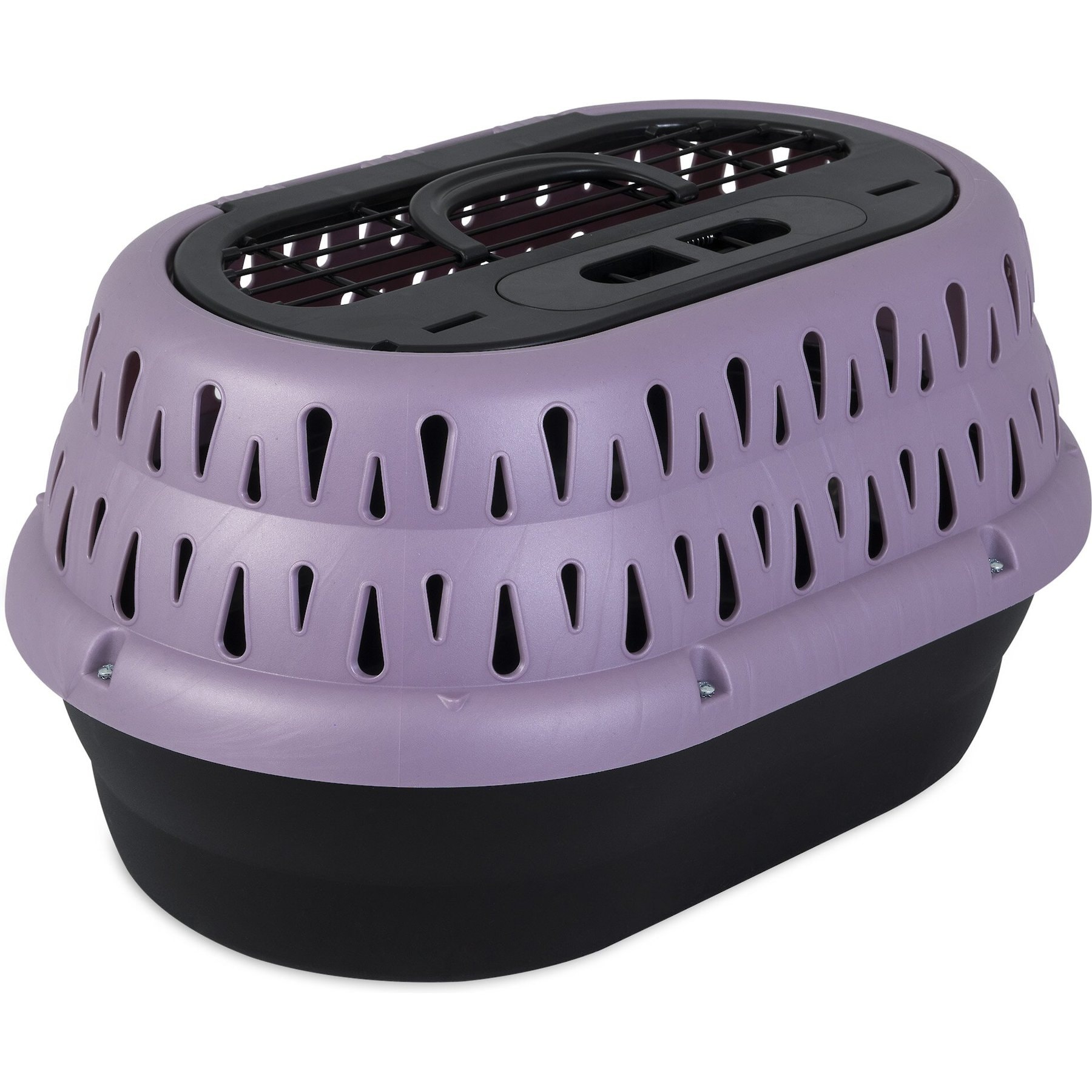
Petmate
Petmate Top Load Cat Kennel, Pearl Bubble Grape/Black
The Petmate Top Load Cat Kennel is designed for cat companions who weigh up to 10 pounds. Purr-fect for travel or house-training, this kennel…
$44.99
Shop ChewyWe may earn a commission if you buy through this Chewy link, at no extra cost to you. Product details and prices can change.
What should you avoid doing at home?
Never give hydrogen peroxide to induce vomiting, never give human anti-nausea or pain medications, never pull visible string, and never force food or water into a nauseated cat [3].
Conclusion: Know when vomiting needs veterinary care
One isolated vomiting episode in a bright, alert cat may pass, but repeated throwing up—whether clear liquid, undigested food, or bile—or any vomiting with lethargy, appetite loss, or toxin/string access requires veterinary care. Log the timing and appearance, ask your vet before trying a bland diet, and seek emergency help immediately if your cat cannot keep water down or shows red-flag signs [1] [3].
Frequently Asked Questions
Why is my cat vomiting clear liquid or water?
Vomiting clear liquid or water commonly occurs when a cat’s stomach is empty (bringing up saliva and gastric fluid), after drinking water too quickly, or from early nausea or hairball irritation [1]. Call your veterinarian promptly if clear-liquid vomiting repeats, your cat cannot keep water down, or appetite drops.
Why does my cat throw up undigested food right after eating?
Bringing up undigested food soon after a meal often happens when a cat eats dry or wet food too fast or experiences passive regurgitation [1]. If vomiting after meals happens repeatedly or your cat cannot keep food down, schedule a veterinary exam to rule out food intolerance, gastritis, or obstruction.
Should I feed a bland diet to a vomiting cat?
Do not start a prolonged fast or improvise a homemade diet without veterinary guidance. Contact your veterinarian first—they can advise whether small, frequent portions of your cat’s regular food or a short-term veterinary gastrointestinal diet is safe for your cat’s health history [3].
How often is too often for a cat to vomit?
Veterinary guidelines advise an exam if vomiting happens more than once or twice in a day, recurs more than once a week, or pairs with lethargy, weight loss, or diarrhea [1] [5].
Can I give my cat hydrogen peroxide to make them vomit?
No—hydrogen peroxide causes severe stomach ulcers and bleeding in cats and is never a safe home emetic. Call your veterinarian or animal poison control immediately if your cat swallowed something toxic.
References
[1] Cornell Feline Health Center. Vomiting in Cats.
[2] Merck Veterinary Manual. Vomiting in Small Animals.
[3] VCA Animal Hospitals. Vomiting in Cats.
[4] Cornell Feline Health Center. The Danger of Hairballs.
[5] Merck Veterinary Manual. Vomiting in Cats (Cat Owners).