
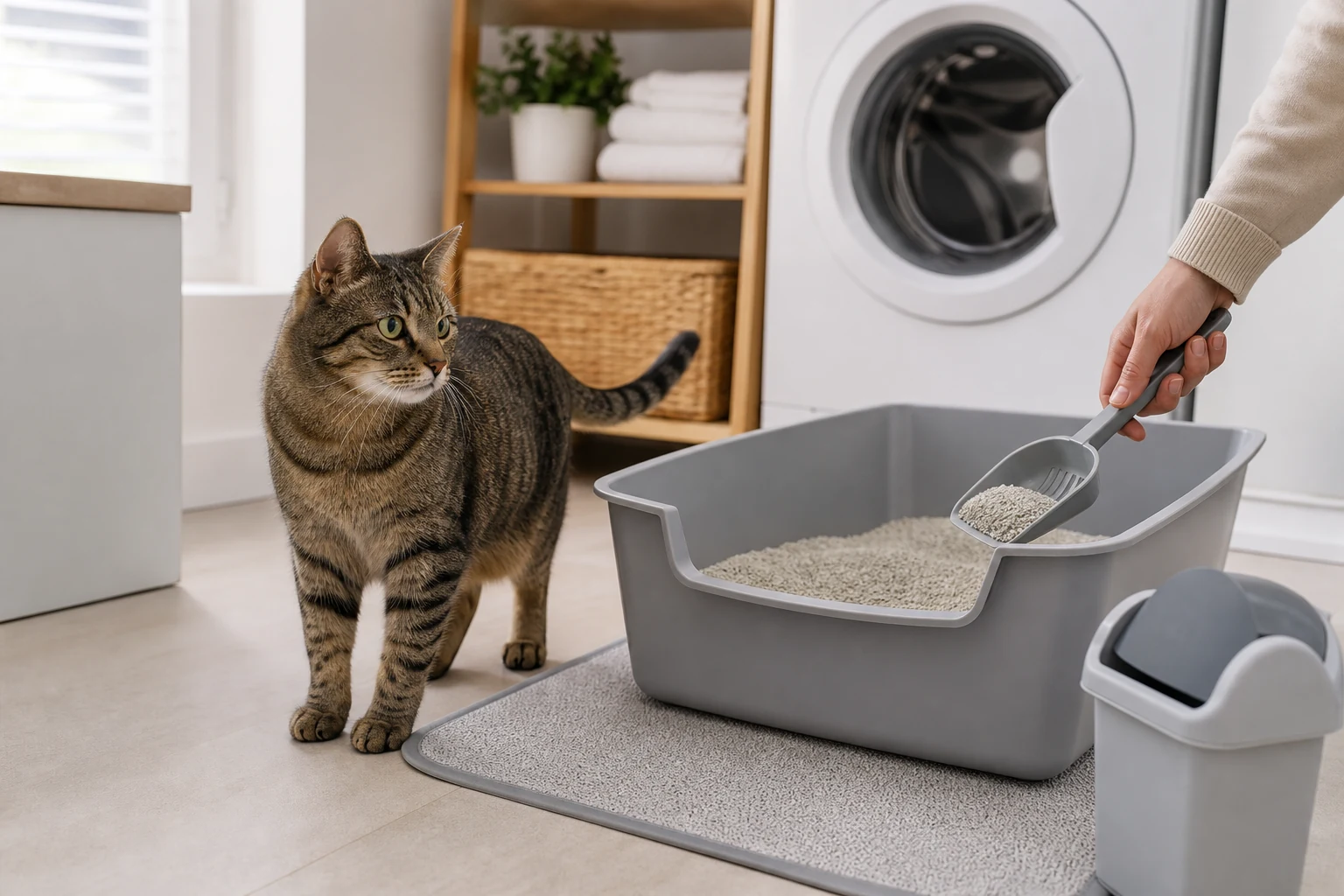
Scoop every litter box at least once daily (ideally morning and evening), and wash the cat litter box completely with hot water and unscented mild soap every 1 to 4 weeks [1] [2]. Check box dimensions in our Cat Litter Box Size Calculator and skip scented DIY fresheners or essential oils.
If you want a separate container for daily waste, see our guide on how to choose a sealed cat litter waste bin.
Table of Contents
- How often should you clean a cat’s litter box?
- What should you do every day?
- How often should you completely change the litter?
- How do you wash and deep-clean a cat litter box safely?
- Should you clean more often in a multi-cat home?
- Can a dirty litter box make a cat avoid it?
- When is a litter-box change a vet warning sign?
- How can you make the schedule easier?
- Conclusion: Build a routine your cat can trust
- Frequently Asked Questions
- References
How often should you clean a cat’s litter box?
Scoop urine clumps and feces at least once a day (twice daily is recommended by International Cat Care), and empty, wash, dry, and refill the tray every 1 to 4 weeks depending on litter type and household size [1] [2]:
| Task | Practical starting schedule | Do it sooner when |
|---|---|---|
| Scoop urine clumps and feces | At least daily; ideally morning and evening | Multiple cats share the area, odor appears, or a cat is ill |
| Top up litter | After scooping, as needed | The layer becomes too shallow for normal digging |
| Wipe obvious mess from box edges or mat | As soon as noticed | A cat has diarrhea, urine reaches the side, or litter tracks heavily |
| Empty, wash, dry, and refill | Commonly every 1–4 weeks, following litter directions | Odor, dampness, residue, or avoidance appears |
| Replace the physical box | When damaged or difficult to clean | Deep scratches, cracks, lingering odor, or unsafe edges develop |
Pair a clean tray with proper box count and placement from our best cat litter box setup guide.
What should you do every day?
Every morning and evening, scoop all clumps and solids into a sealed waste bag, top up unscented litter to 2–3 inches, and sweep tracked granules around the mat [2]:
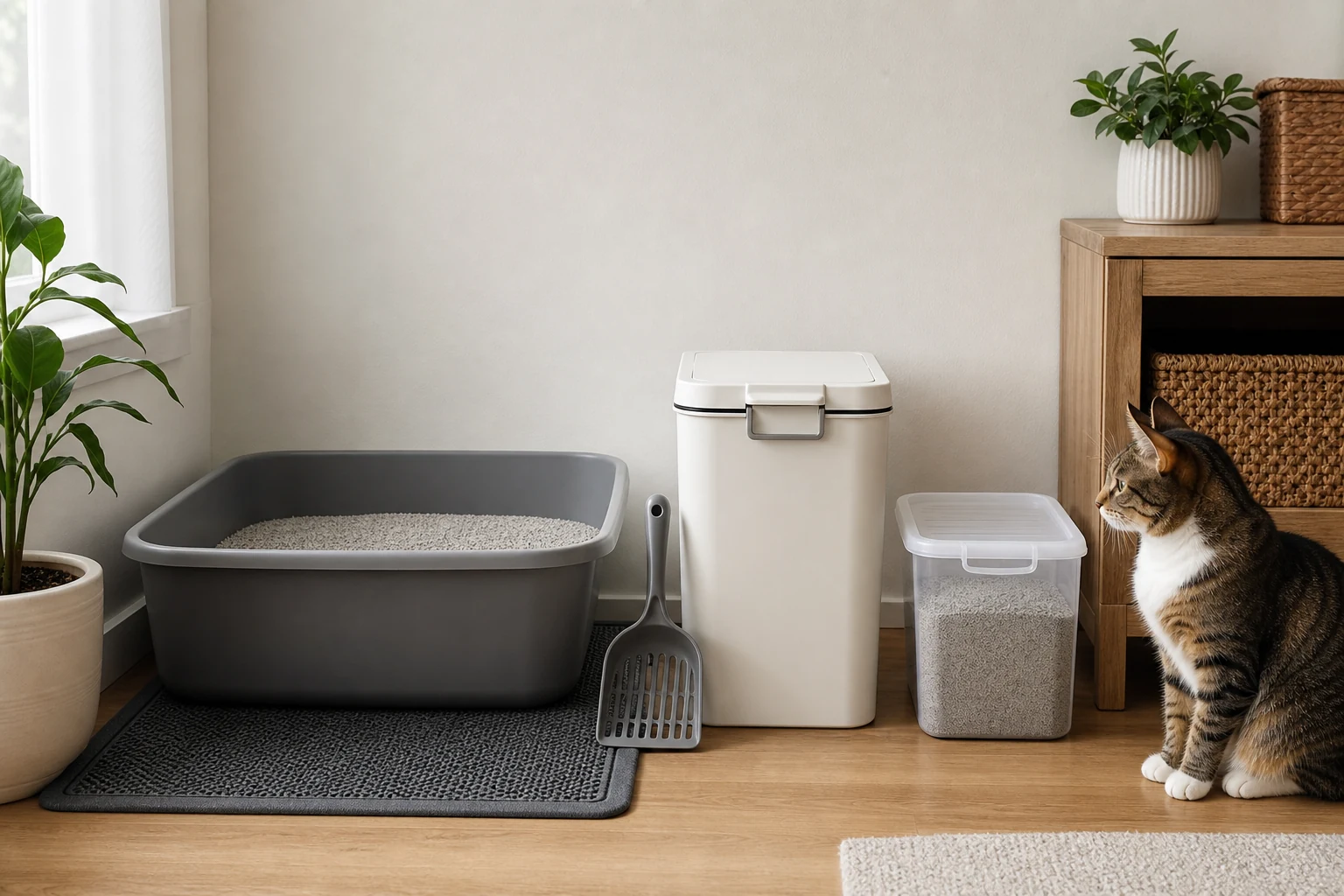
Daily scooping also acts as an early health check—note sudden changes in urine-clump size, straining, blood, or diarrhea, and explore repeatable habits in our daily cat-care routines guide.
How often should you completely change the litter?
Replace all litter completely every 2 to 4 weeks for clumping litter (or weekly for non-clumping clay litter), and never pour fresh litter on top of damp, smelly residue [3] [4].
How do you wash and deep-clean a cat litter box safely?
To wash a cat litter box safely without leaving odors that repel your cat, dump all litter, scrub the empty tray with hot or warm water and a drop of unscented mild dish soap, rinse completely, and air-dry before refilling [1]:
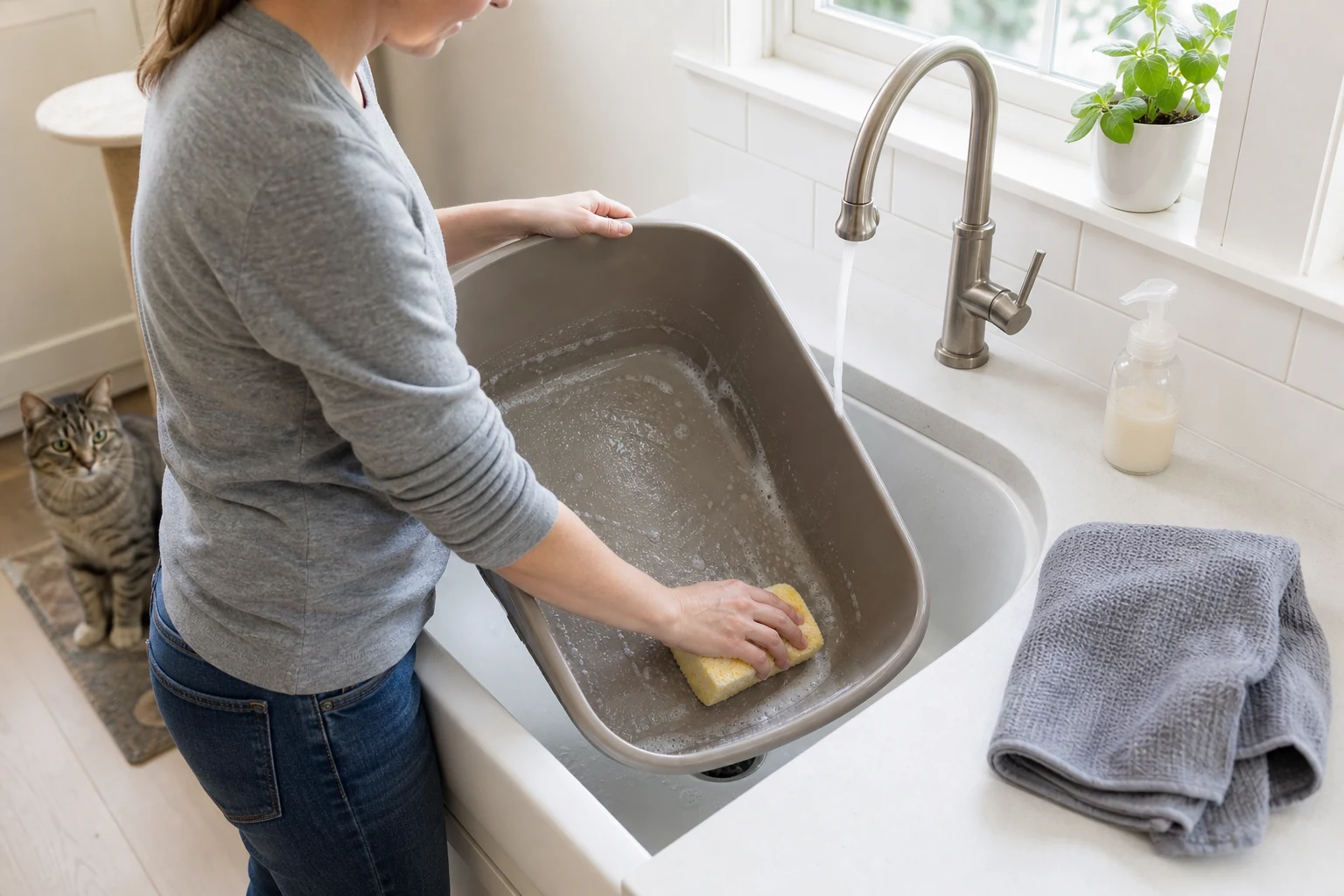
- Move your cat away and offer a backup box: Ensure another clean tray is accessible while washing.
- Empty used litter into a sturdy trash bag: Never dump litter outdoors or flush non-flushable litter.
- Wash with hot water and unscented mild soap: AAHA/AAFP guidelines emphasize hot water and avoiding harsh chemical cleaners whenever possible [1].
- Rinse thoroughly and dry 100%: Any remaining moisture turns fresh litter into sticky cement on the tray floor.
- Refill with unscented litter: Avoid ammonia, bleach, citrus/pine cleaners, essential oils, and heavily perfumed sprays.
Safe note on homemade cat litter freshener & baking soda: If mild odor lingers between washes, a thin sprinkle of plain, unscented baking soda on the dry tray bottom before adding litter can help absorb moisture—skip DIY fresheners made with essential oils, dryer sheets, potpourri, or scented carpet powders, which can irritate feline airways or cause litter-box avoidance. If odor returns quickly, scoop twice daily, wash the tray, or replace scratched plastic boxes that trap urine bacteria.
Should you clean more often in a multi-cat home?
Yes—scoop at least twice daily across N + 1 litter boxes (one box per cat plus one extra) placed in separate quiet locations so no cat is forced to use a soiled tray [1].
Can a dirty litter box make a cat avoid it?
Yes—cats frequently avoid trays that smell of waste or perfumed cleaners, so scoop immediately, clean accidents with an enzymatic cleaner, and never punish your cat [3]. Compare triggers in our guides to litter box problems, stress-related peeing, and cat behavior.
When is a litter-box change a vet warning sign?
Contact a veterinarian immediately if your cat strains to urinate, cries in the box, makes frequent trips producing little or no urine (a life-threatening emergency in male cats), or passes blood—see medical causes of peeing outside the box.
How can you make the schedule easier?
Attach scooping to morning coffee and bedtime routines, keep supplies right beside each station, and use a sealed disposal pail between trash runs:
A sealed pail beside the box for daily scooping
Contains scooped waste between trips to the trash; keep the daily scoop and periodic full clean on schedule.
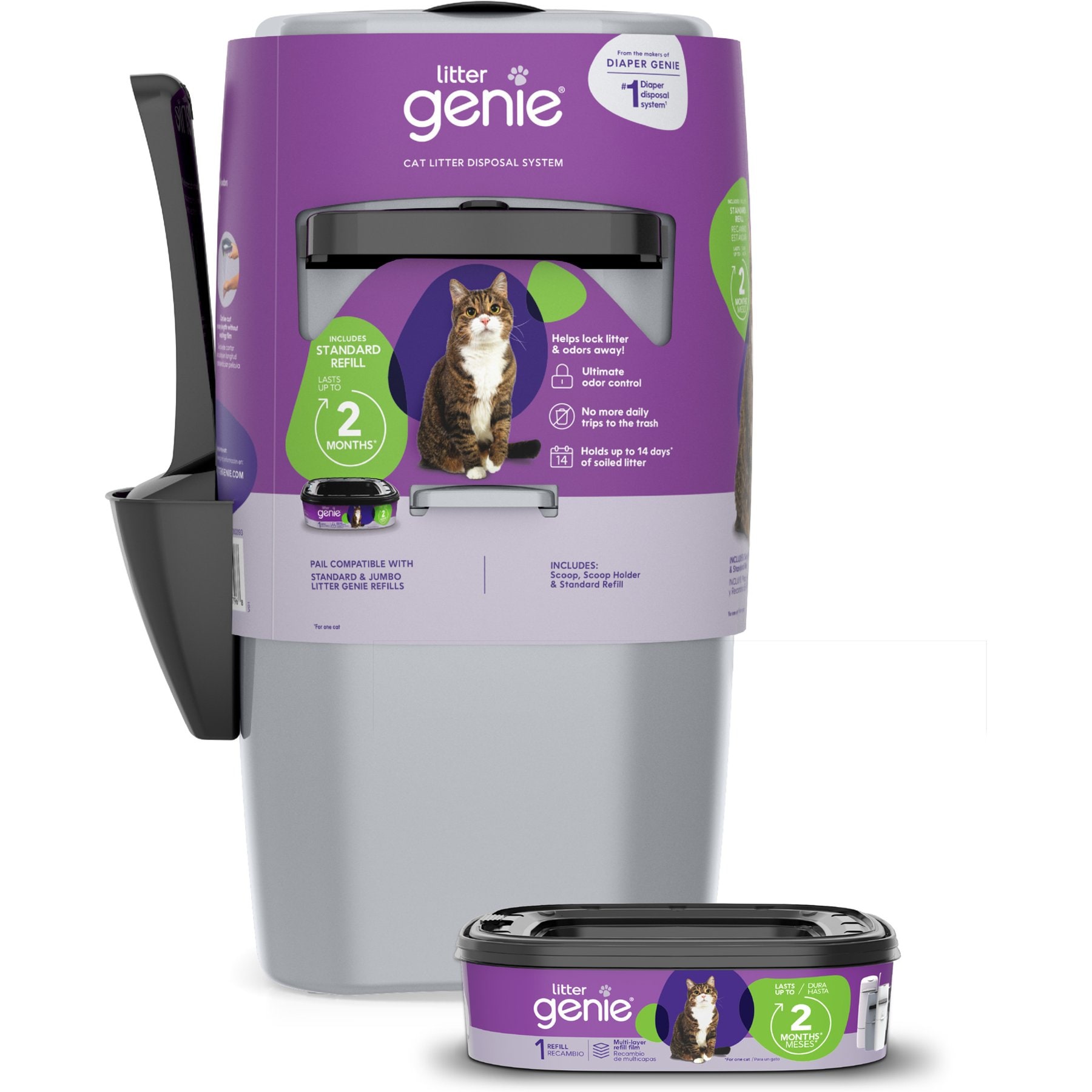
Litter Genie
Litter Genie Litter Genie Standard Pail Cat Litter Disposal System
Designed to simplify litter box maintenance, the Litter Genie Litter Genie Standard Pail Cat Litter Disposal System keeps your home fresh by locking away…
$15.19
Check price and availabilityWe may earn a commission if you buy through this Chewy link, at no extra cost to you. Product details and prices can change.
Conclusion: Build a routine your cat can trust
Consistent litter-box hygiene protects both your home’s freshness and your cat’s willingness to use the tray reliably [1] [3]. Scoop waste 1–2 times every day, wash the empty tray with hot water and unscented mild soap every 1–4 weeks, skip scented DIY fresheners or essential oils, and call a veterinarian immediately if straining or blood appears.
Frequently Asked Questions
How often should you clean a cat’s litter box?
Scoop urine clumps and feces at least once daily—and ideally twice daily (morning and evening)—while completely emptying, washing, and refilling the box every 1 to 4 weeks depending on litter type and number of cats [1] [2].
How do you wash a cat litter box properly?
Dump all used litter into a sturdy trash bag, scrub the empty tray with hot or warm water and a small amount of unscented mild dish soap, rinse away every trace of soap, and dry the tray completely before refilling with fresh unscented litter [1].
Is baking soda or a homemade cat litter freshener safe?
A light sprinkle of plain, unscented baking soda on the bottom of a dry litter box is generally safe for odor absorption, but avoid homemade fresheners containing essential oils, scented powders, or perfumes, which can irritate a cat’s sensitive nose and trigger box avoidance.
Can I use bleach or ammonia to wash a litter box?
No—strong chemical disinfectants like bleach and ammonia leave harsh fumes and residues (and mixing them creates toxic gas); hot water with unscented mild soap is safer for routine washing [1].
Why does the litter box still smell right after I scoop it?
Lingering odor usually means damp litter residue is stuck to the bottom or trapped inside deep plastic scratches—empty and wash the tray, or replace the box if scratches hold odor after washing.
References
[1] American Animal Hospital Association (AAHA) & AAFP. General Litter Box Considerations. 2021.
[2] International Cat Care. Choosing a Litter Tray for Your Cat. 2025.
[3] American Society for the Prevention of Cruelty to Animals (ASPCA). Litter Box Problems. 2026.
[4] Texas A&M School of Veterinary Medicine. A Guide to Litter Box Etiquette. 2023.