
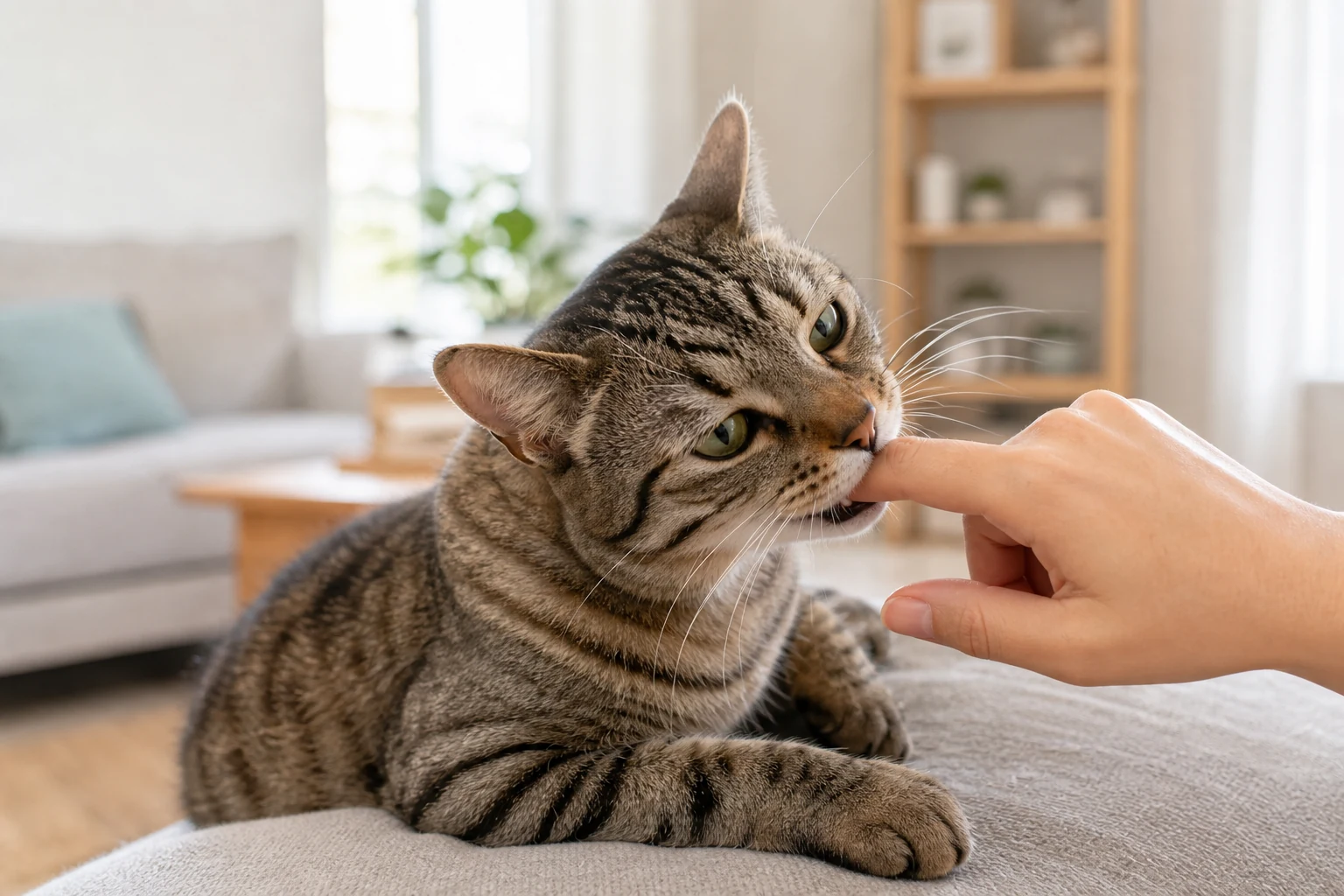
If your cat nibbles your fingers, the meaning depends on pressure, body language, and what happened right before it. A soft, brief mouth on your finger can be exploration, grooming-like contact, or play, while a tense bite that hurts is a signal to stop and look for stress, fear, pain, or overarousal.
Finger nibbling feels personal because it happens during close contact. The useful goal is not to label every nibble as affection or aggression. It is to learn whether your cat is using a controlled mouth, asking for play, or warning that the interaction has gone past their comfort zone.
This guide explains the difference between gentle mouthing and a bite, what body cues to watch, how to respond without scaring your cat, and when a veterinarian or qualified behavior professional should be involved.
Índice
- Why does my cat nibble my fingers?
- How can I tell gentle mouthing from a warning bite?
- What body language should I watch before a nibble?
- How do I stop my cat from nibbling my fingers?
- When should finger nibbling worry me?
- Conclusão
- Perguntas frequentes
- Referências
Why does my cat nibble my fingers?
Cats may nibble fingers because hands are interesting, warm, moving objects that show up during petting, play, feeding, grooming, and greeting. A nibble may be a light exploratory mouth, a grooming-like social behavior, a request to stop touching, or play that has drifted toward your skin.
The context matters. A kitten who chases wiggling fingers is usually practicing play. An adult cat who licks your hand and then nibbles may be moving from social contact into overstimulation. If that lick-and-nibble pattern is familiar, our guide to why cats lick then bite explains that sequence in more detail.
Behavior references describe cat aggression as context-dependent, with common categories that include play, petting-related sensitivity, fear, redirected frustration, and pain-related responses 1. Finger nibbling can sit on the mild end of those patterns, but it can also be the first sign that your cat needs a change.
Use this comparison as a starting point:
| What your cat does | O que isso pode significar | Better response |
|---|---|---|
| Soft mouth, no pressure, loose body, easy release | Gentle exploration or social contact | Pause and let your cat choose whether to continue |
| Repeated nips at moving fingers | Play has targeted hands | Freeze briefly, then redirect to a toy |
| Licking, then a stronger nibble after repeated petting | Rising stimulation or "enough" contact | Stop petting earlier next time |
| Hard bite, tense body, growl, hiss, or skin break | Fear, pain, stress, or defensive behavior | End contact and seek appropriate help |
Do not assume every soft nibble is a "love bite." That phrase can be harmless shorthand, but it can also make people ignore the cat's limits. The safer interpretation is: your cat is communicating with their mouth, so read the rest of the body before deciding what to do next.
How can I tell gentle mouthing from a warning bite?
Gentle mouthing is controlled, brief, and easy for the cat to stop. A warning bite is usually harder, faster, more tense, or paired with body language that says the cat wants distance.
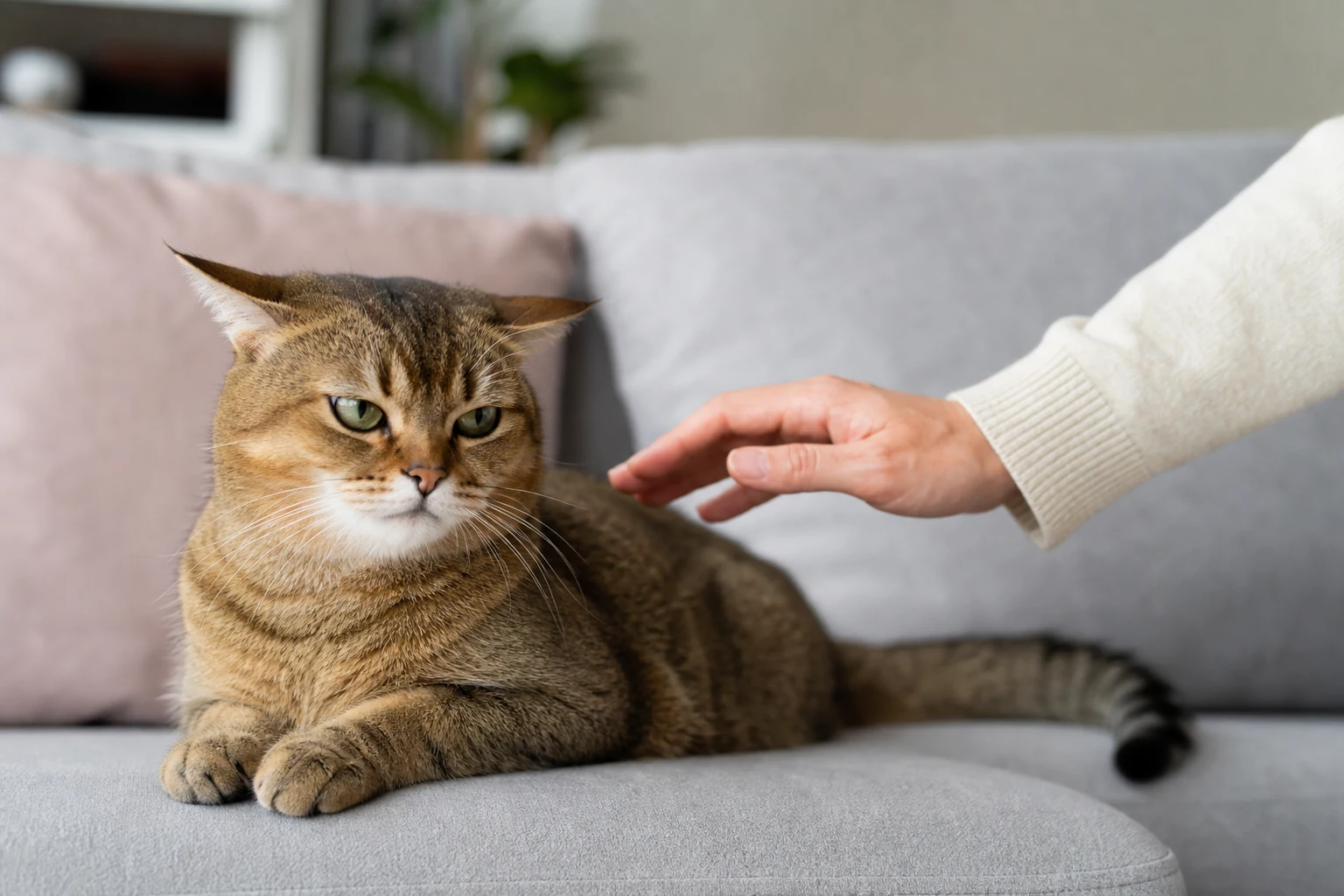
VCA advises watching for subtle discomfort during petting, such as ears moving back, body tension, freezing, or tail flicking, and stopping the interaction when those signs appear 3. ASPCA also describes petting-induced aggression as a pattern where some cats become irritated by petting and may nip or bite 4.
Compare the whole moment, not only the teeth:
- A gentle mouth usually comes with a loose body, normal pupils, soft ears, no growling, and quick release.
- A warning bite may come after a tail flick, skin twitch, head turn toward your hand, sideways ears, or your cat trying to leave.
- A play bite often includes stalking, pouncing, grabbing, bunny kicking, or targeting fingers when they move.
- A pain-related bite may happen when you touch a specific area, pick your cat up, brush a mat, or handle a sore joint.
If your cat's bites are frequent, hard, or unpredictable, read our broader guide on por que os gatos mordem and start tracking when the behavior happens. Patterns are more useful than one isolated incident.
What body language should I watch before a nibble?
Watch the tail, ears, eyes, posture, skin, and your cat's choice to stay or leave. Most cats give at least small warning signs before teeth appear, but those signs can be easy to miss when you are focused on petting.
Common early cues include:
- Tail tip twitching, thumping, or lashing.
- Ears rotating sideways or backward.
- Skin rippling along the back.
- Sudden stillness, tense shoulders, or a low crouch.
- A quick head turn toward your hand.
- Wide pupils, a fixed stare, or whiskers pushed forward during intense play.
- Moving away, then watching you instead of leaning back into touch.
Tail signals are especially easy to misread. A relaxed tail and a fast, tense tail flick do not mean the same thing, so compare the tail with the ears, eyes, and body. Our linguagem da cauda do gato guide can help you separate curiosity from irritation or arousal.
When you see a warning cue, stop touching before the nibble. Let your hand become still, give your cat room to leave, and wait. If your cat leans back in with a soft body, you can offer one or two gentle strokes and pause again. If your cat turns away, respect that answer.
How do I stop my cat from nibbling my fingers?
Stop finger nibbling by making hands boring and toys more rewarding. The plan is simple: do not punish the nibble, do not turn fingers into prey, and give your cat a better outlet for biting and grabbing.
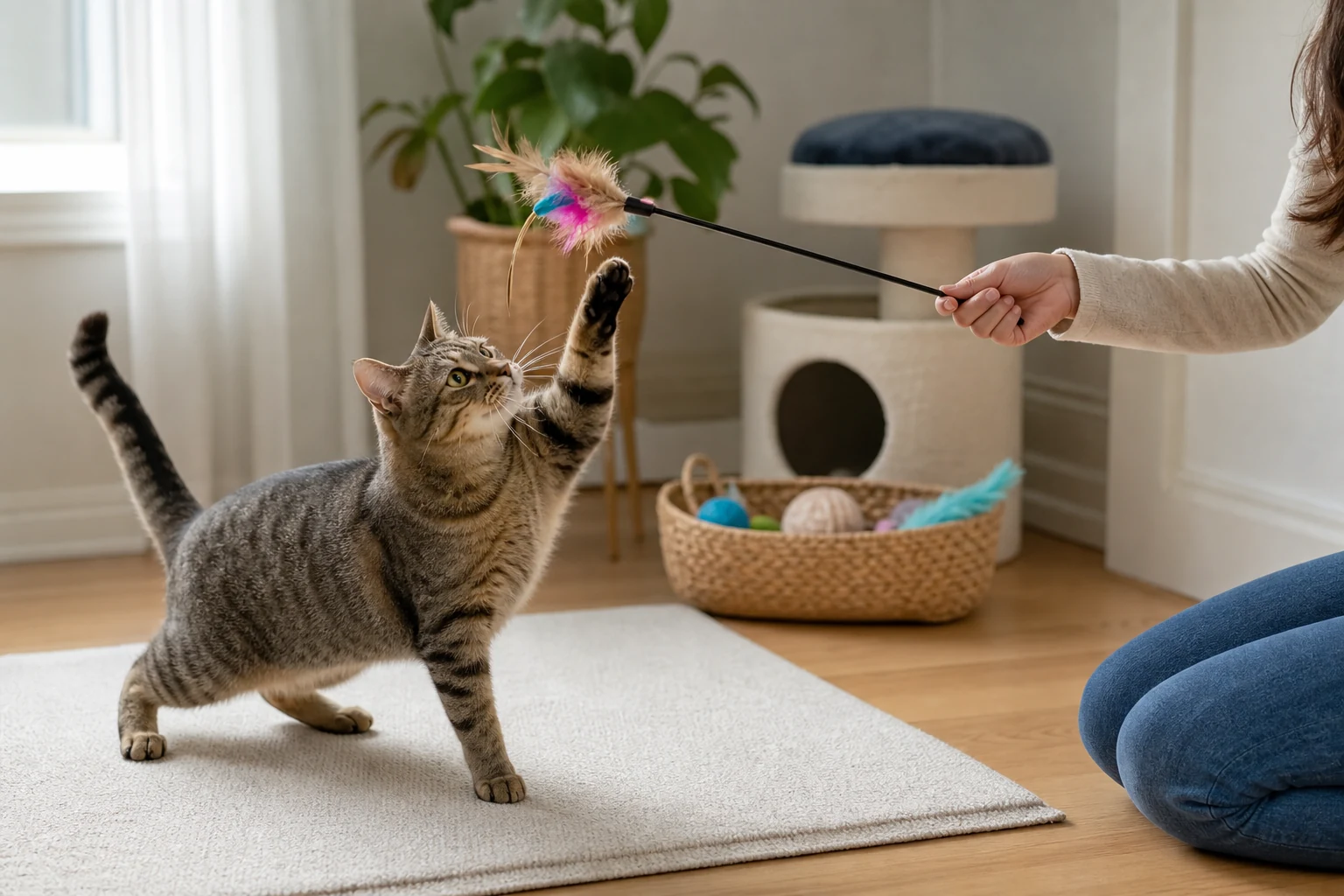
International Cat Care advises not using hands or feet to play with kittens because it can create serious problems later 2. The AAFP/ISFM environmental guidelines also emphasize that cats need appropriate play and predatory behavior opportunities as part of a healthy environment 5.
Try this reset plan for one to two weeks:
- Keep fingers still around your cat's mouth. Wiggling fingers can look like prey.
- When teeth touch skin, calmly freeze for a second, then remove attention without yelling.
- Offer a wand, kicker, toss toy, or food puzzle after a short pause.
- Keep petting sessions short. Stop while your cat is still relaxed, not after a nibble.
- Pet preferred areas first, usually cheeks, chin, or the base of the ears, and avoid the belly, paws, and tail unless your cat clearly enjoys that contact.
- Schedule daily play before the times your cat usually gets mouthy.
- Reward calm contact with a tiny treat, praise, or simply giving your cat the choice to stay close.
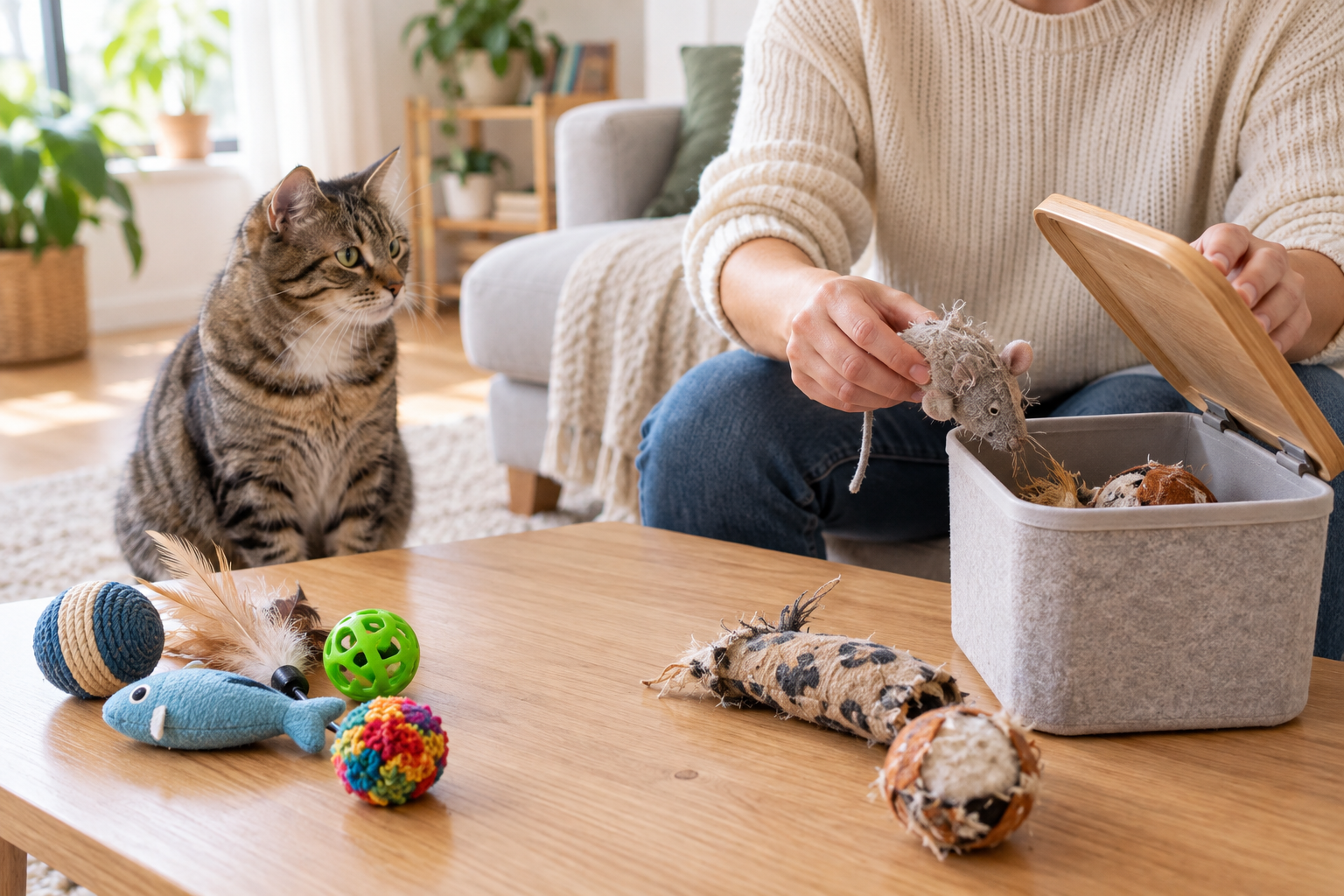
For a fuller routine, use our guide on how to play with your cat, then choose interactive cat toys that keep your hands away from teeth and claws.
Avoid tapping your cat's nose, scruffing, spraying water, yelling, or forcing your hand into the cat's mouth. Those reactions can make hands feel threatening or exciting. A calm pause teaches more than a dramatic correction.
When should finger nibbling worry me?
Finger nibbling deserves closer attention when it is new, painful, increasing, paired with fear signals, or connected to touching one specific body area. A cat who suddenly starts biting may be reacting to pain, illness, stress, or a change in the home.
Cornell notes that cats in pain may act aggressively to avoid touch or movement that worsens discomfort 1. This is especially important for senior cats, cats with arthritis, dental pain, skin irritation, ear problems, or cats who recently fell, fought, or had a stressful event.
Call your veterinarian if nibbling or biting appears with:
- Hiding, withdrawal, or hiding or avoiding contact.
- Flinching, growling, or biting when one area is touched.
- Limping, stiffness, trouble jumping, or sensitivity around the hips, mouth, paws, belly, or tail.
- Appetite change, weight loss, vomiting, diarrhea, drooling, or litter-box changes.
- Sudden hard bites from a cat who was usually gentle.
- Any bite that breaks human skin.
Seek urgent veterinary care for severe signs such as trouble breathing, collapse, seizures, suspected poisoning, trauma, sudden paralysis, inability to urinate, repeated vomiting, severe diarrhea, not eating for 24 to 48 hours, or rapid decline.
If medical causes are ruled out and the behavior continues, ask your veterinarian for a referral to a qualified feline behavior professional. The best behavior plan is built around your cat's triggers, household routine, play outlets, and handling tolerance.
Conclusion: What your cat's finger nibbling is telling you
A cat who nibbles your fingers is usually communicating arousal, curiosity, play, or a boundary, not trying to be confusing. The difference between a soft mouth and a bite comes down to pressure, body language, context, and whether your cat can easily stop.
Keep hands still, end contact before your cat has to use teeth, and redirect mouthy play to toys. If the nibbling is new, hard, painful, or paired with other behavior or health changes, involve your veterinarian rather than treating it as a cute habit.
Perguntas frequentes
Is it okay to let my cat nibble my fingers?
It is safer not to encourage finger nibbling, even when it is gentle. Letting a cat practice mouthing skin can blur the line between social contact and play biting. Pause calmly and redirect to a toy before pressure increases.
Why does my kitten nibble my fingers all the time?
Kittens explore and play with their mouths, and moving fingers are tempting targets. Teach the habit you want early by keeping hands out of wrestling games and offering wand toys, kicker toys, and short play sessions instead.
Why does my cat nibble my fingers while purring?
Purring and nibbling can happen together because a cat may be comfortable at first, then overstimulated or playful a moment later. Look at the tail, ears, posture, and bite pressure instead of assuming the purr means your cat wants more petting.
Should I punish my cat for nibbling me?
No. Punishment can increase fear, excitement, or defensive biting. Stay calm, stop moving your hand, end the interaction briefly, and change the setup so your cat has toys and shorter petting sessions.
When is a cat finger bite a medical concern?
Call your veterinarian if the biting is sudden, hard, increasing, linked to touching one body part, or paired with hiding, appetite change, limping, litter-box changes, drooling, or other illness signs. Seek medical advice for any cat bite that breaks human skin.
Referências
[1] Centro de Saúde Felina da Cornell. (2026). Problemas de comportamento felino: agressividade. Problemas de comportamento felino: agressividade
[2] International Cat Care. (2024). Playing with your cat. Playing with your cat
[3] VCA Animal Hospitals. (2022). Problemas de comportamento em gatos: agressividade ao receber carinho. Problemas de comportamento em gatos: agressividade ao receber carinho
[4] ASPCA. Aggression in Cats. Aggression in Cats
[5] AAFP and ISFM. (2013). Diretrizes sobre as necessidades ambientais dos felinos. Diretrizes sobre as necessidades ambientais dos felinos





 EN
EN DE
DE ES
ES PT
PT