
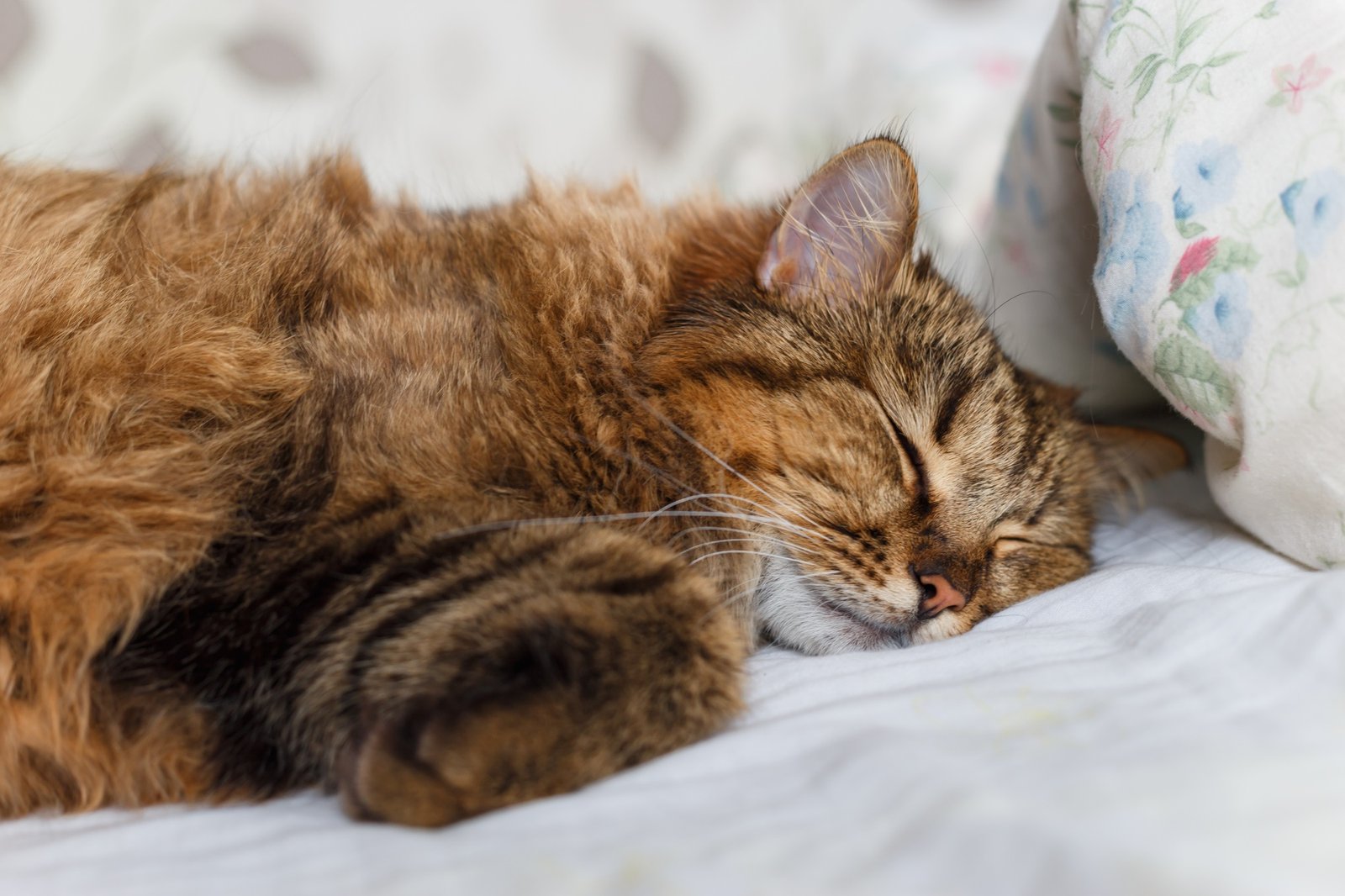
A maioria dos gatos adultos saudáveis dorme cerca de 12 a 16 horas por dia, enquanto gatinhos e gatos idosos costumam dormir mais. O número importa menos do que o padrão: um gato que acorda animado, come, se limpa, brinca e usa a caixa de areia normalmente está, em geral, descansando. Um gato que é difícil de acordar, que está fraco, escondido, não comer ou, de repente, dormir muito mais pode ser um sinal de letargia e deve ser avaliado por um veterinário.
Os gatos são feitos para tirar muitos cochilos curtos, e não para um único período prolongado de sono, como o dos humanos. Este guia ajuda você a comparar o sono normal por idade, entender por que os gatos tiram tantos cochilos e decidir quando o sono a mais é apenas descanso ou um possível sinal de alerta para a saúde.
Índice
- Quantas horas os gatos dormem, de acordo com a idade?
- Por que os gatos dormem tanto?
- O que se considera um sono normal para um gato?
- Quando é que um gato dorme demais?
- Por que meu gato fica acordado à noite?
- Que alterações devo observar antes de ligar para um veterinário?
- Como posso ajudar meu gato a ter um sono mais saudável?
- Conclusão
- Perguntas frequentes
- Referências
Quantas horas os gatos dormem, de acordo com a idade?
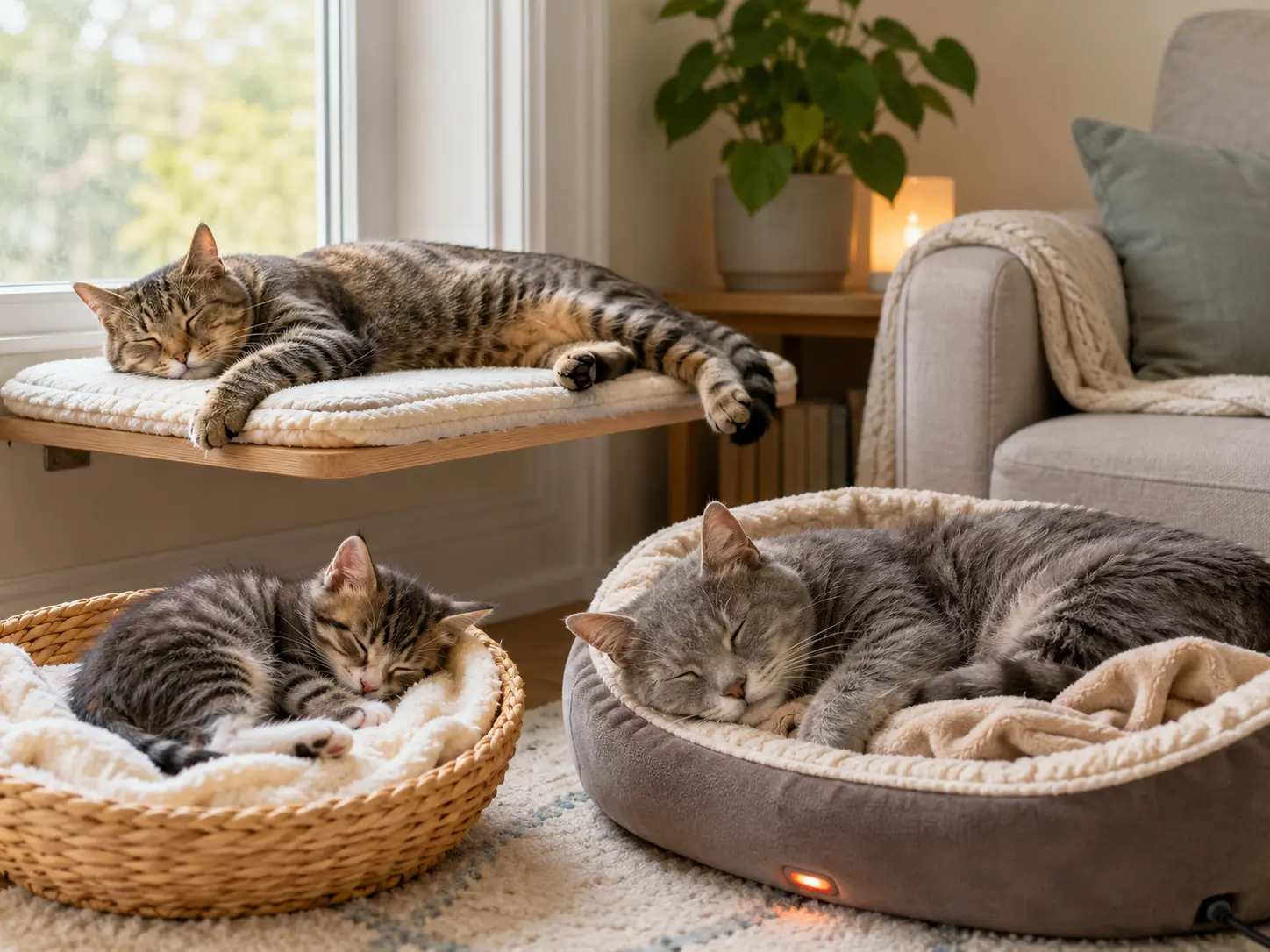
A maioria dos gatos dorme entre 12 e 16 horas por dia, mas a idade altera esse intervalo. Os gatinhos costumam dormir mais, pois estão em fase de crescimento; os adultos geralmente tiram cochilos em várias sessões mais curtas; e os gatos idosos podem descansar por mais tempo, à medida que suas necessidades de atividade, massa muscular e saúde mudam.
Use isso como uma referência prática, não como um diagnóstico:
| Fase da vida do gato | Intervalo comum de sono | Geralmente é normal quando | O que é mais preocupante é quando |
|---|---|---|---|
| Gatinho | 18 a 22 horas | Acorda para mamar ou comer, ganhos peso, toca em rajadas | Fraco, com frio, não está mamando, chora sem parar, tem diarreia |
| Gatinho mais velho | 16 a 20 horas | Tem momentos de brincadeiras cheias de energia e apetite constante | De repente, ficou quieto, não está comendo, está se escondendo, está vomitando |
| Gato adulto | 12 a 16 horas | Alerta quando está acordado; hábitos normais de higiene e uso da caixa de areia | Dificuldade para acordar, comportamento retraído, alterações no apetite ou na mobilidade |
| Gato idoso | 16 a 20 horas | Aumento gradual, ainda no âmbito social e alimentar | Aumento repentino, confusão, dor, perda de peso, falta de higiene pessoal |
Se você não tiver certeza de qual fase da vida se aplica ao seu gato, use o SnuggleSouls calculadora de idade do gato Só para contextualizar rapidamente. A idade não explica tudo, mas oferece um ponto de partida melhor do que comparar todos os gatos com o mesmo número.
Por que os gatos dormem tanto?
Os gatos dormem tanto porque são, por natureza, economizadores de energia. Seus corpos estão adaptados para curtos períodos de atividade do tipo caça, seguidos de descanso, higiene, observação e mais descanso.
Muitas sonecas dos gatos são de sono leve. Seu gato pode parecer estar dormindo profundamente, mas ainda assim pode mexer uma orelha, reagir a um som ou acordar rapidamente quando algo interessante acontece. Os gatos também têm períodos de sono mais profundo, incluindo o sono REM, quando você pode notar espasmos nas patas, movimentos dos bigodes ou pequenos movimentos faciais.
É por isso que um gato pode parecer estar “dormindo o dia inteiro”, mesmo tendo um padrão normal de sono. A pergunta mais pertinente não é apenas “quantas horas?”, mas sim “o que meu gato faz quando está acordado?”.”
Um descanso saudável geralmente vem acompanhado de:
- Apetite e ingestão de líquidos normais
- Hábitos normais de uso da caixa de areia
- Cuidados habituais
- Interesse por brincadeiras, comida, janelas, pessoas ou rotinas
- Movimentos e saltos com facilidade
- Um padrão de sono relativamente estável ao longo do tempo
A Iniciativa para Animais de Estimação que Vivem em Ambientes Internos da Universidade Estadual de Ohio descreve os locais para dormir e descansar como parte normal das necessidades dos gatos que vivem dentro de casa, incluindo a importância de espaços seguros e confortáveis 1.
O que se considera um sono normal para um gato?
O sono normal do gato é previsível para o seu bichinho. Alguns gatos ficam tranquilos durante toda a tarde e ficam animados ao anoitecer. Outros dormem profundamente pela manhã, patrulham a casa à noite e se enrolam novamente durante a madrugada.
Um gato com sono normal deve continuar reativo quando acordado. Ele pode se espreguiçar, se limpar, comer, usar a caixa de areia, buscar atenção, observar pássaros, brincar por um breve momento ou ir para um cantinho ensolarado favorito.
Aqui está a distinção importante:
| Padrão | Normalmente, sono normal | Possível letargia ou doença |
|---|---|---|
| Despertar | Acorda e reage normalmente | Difícil de acordar ou parece apático |
| Apetite | Come normalmente | Come menos, recusa a comida ou bebe muito mais |
| Movimento | Caminha, pula e se alonga como de costume | Mancar, rigidez, esconder-se ou relutância em pular |
| Limpeza | O casaco parece comum | Pelo oleoso, emaranhados ou falta de cuidados com a pelagem |
| Humor | Padrão social habitual | Introvertido, irritável, confuso ou excessivamente carente |
| Caixa de areia | Urina e fezes normais | Acidentes, esforço excessivo, diarreia, prisão de ventre |
Se o seu gato dorme muito, mas acorda revigorado e se comporta normalmente, o sono em si pode não ser um problema. Se o sono vier acompanhado de uma mudança comportamental mais ampla, considere isso como uma informação.
Quando é que um gato dorme demais?
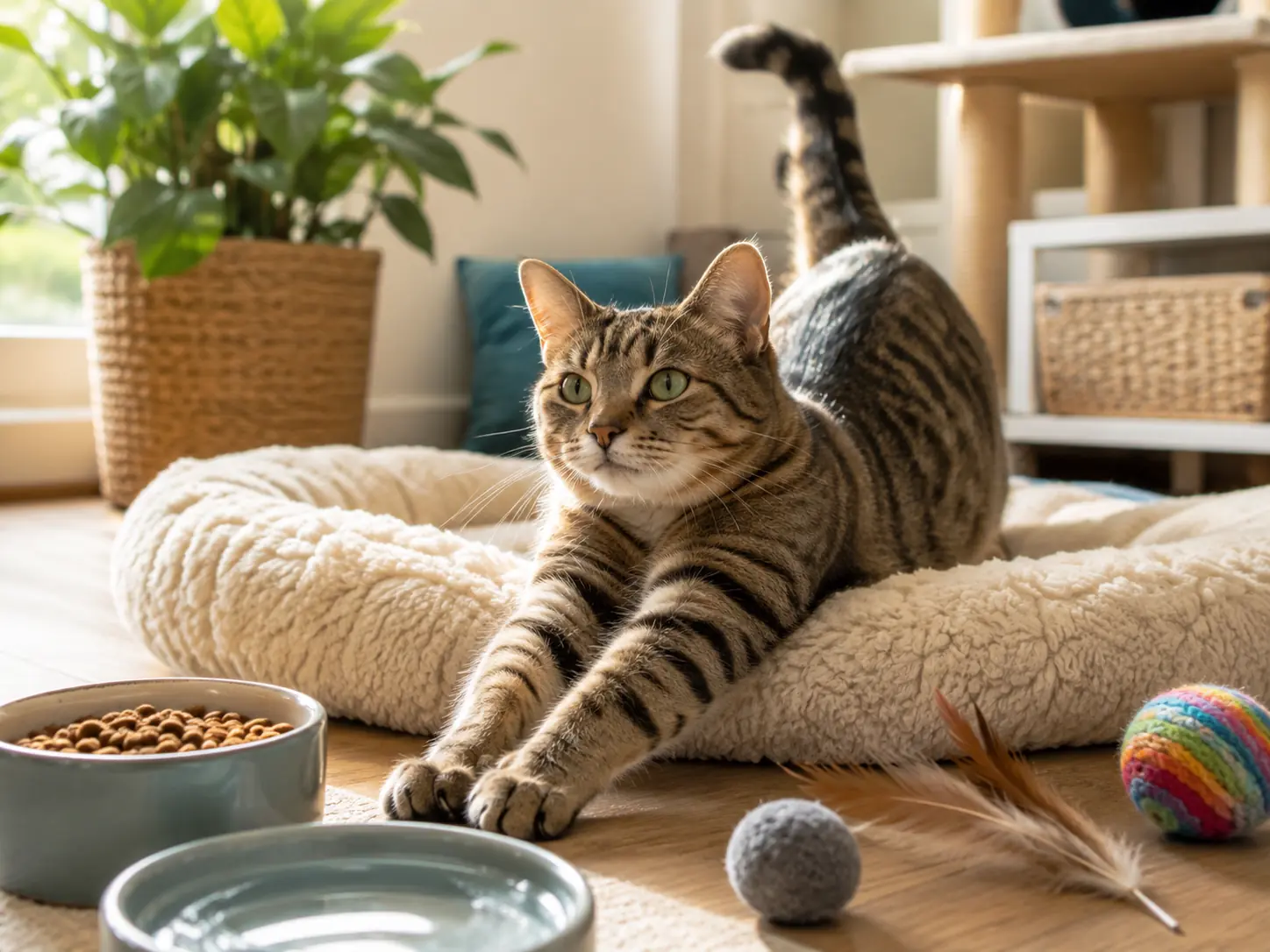
O sono do gato é mais preocupante quando a mudança é repentina, extrema ou acompanhada de outros sinais. Dormir mais, aliado a fraqueza, tendência a se esconder, alteração no apetite, falta de higiene, vômitos, diarreia, dificuldade para respirar ou mudanças no uso da caixa de areia, não é apenas “preguiça”.”
A VCA observa que os gatos costumam esconder sinais de doença, e mudanças sutis, como dormir mais, brincar menos ou apresentar inquietação, podem ser indícios precoces 2. A Merck também cita doenças como uma possível causa de sinais comportamentais, tais como letargia, apatia, isolamento, diminuição dos cuidados com a higiene e alterações no apetite 3.
Entre em contato com o veterinário imediatamente se o seu gato estiver dormindo mais e também apresentar:
- Ausência de apetite ou alteração significativa no apetite
- Perda de peso ou ganho repentino de peso
- Escondendo-se mais do que o normal
- Vômito, diarreia, prisão de ventre ou esforço ao evacuar
- Beber ou urinar mais do que o habitual
- Mancar, rigidez ou dificuldade para pular
- Cuidados inadequados ou uma pelagem que ficou desarrumada de repente
- Dificuldade para respirar, desmaio, convulsões ou fraqueza extrema
- Sinais de dor, agressividade ao ser tocado ou vocalizações incomuns
Se o seu gato estiver dormindo mais e se escondendo, compare esse comportamento com o guia da SnuggleSouls sobre por que os gatos se escondem. Se a mudança incluir miados, uivos ou vocalizações agitadas, o guia sobre mudanças repentinas na voz pode ajudar você a organizar as informações antes de ligar para o veterinário.
Lembre-se também de que ronronar não é sinal de que está tudo bem. Alguns gatos ronronam quando estão estressados ou se sentem desconfortáveis; por isso, este guia sobre o motivo pelo qual Ronronar nem sempre significa que o gato está se sentindo bem pode ajudar você a ter uma visão geral da situação.
Por que meu gato fica acordado à noite?
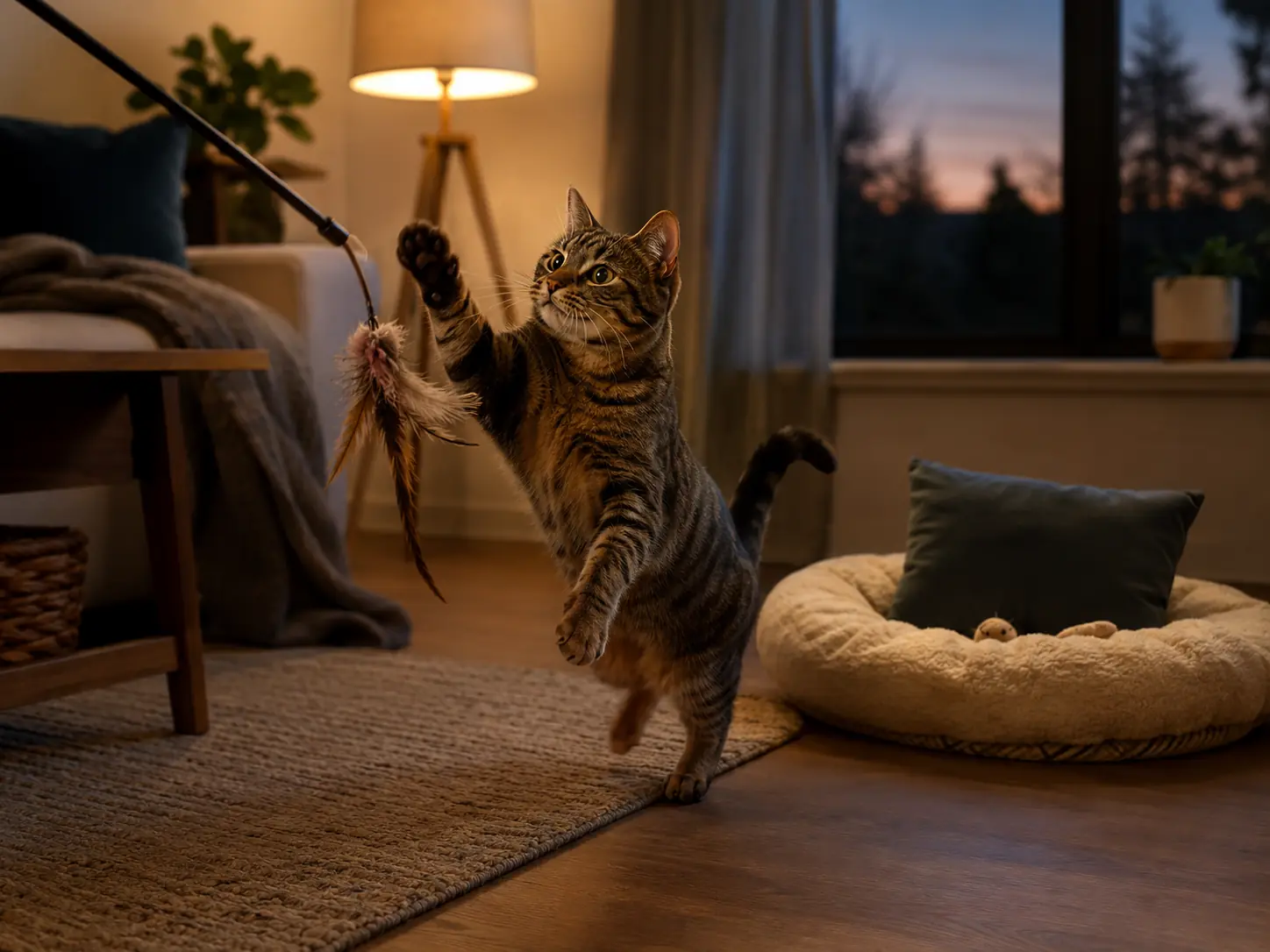
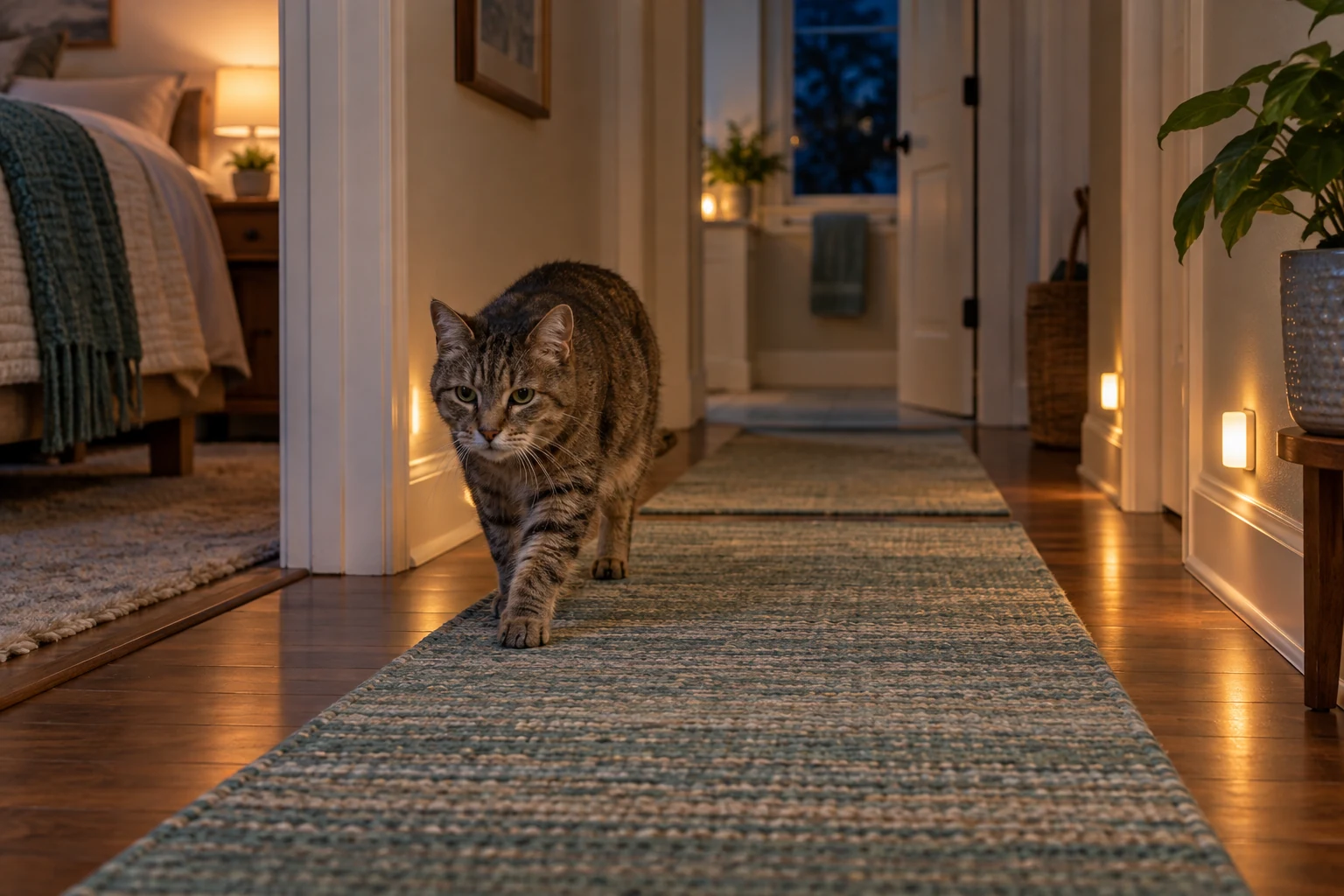
Os gatos costumam ser mais ativos ao amanhecer e ao anoitecer, por isso é comum que tenham energia à noite e se movimentem de manhã cedo. Um gato que acorda você às 3 da manhã não é necessariamente um caso anormal, mas esse padrão pode se intensificar se o tédio durante o dia, refeições tardias ou recompensas em forma de atenção ensinarem ao gato que a atividade noturna dá resultado.
A Merck observa que comportamentos normais dos gatos podem se tornar problemas domésticos quando são excessivos, perturbadores ou difíceis de controlar pelo dono 4. A atividade noturna costuma melhorar quando o gato tem formas previsíveis de se divertir antes de dormir.
Experimente seguir este ritmo noturno:
| Etapa | O que fazer | Por que isso ajuda |
|---|---|---|
| Jogar | Use um brinquedo tipo varinha, faça uma brincadeira de perseguição ou use um quebra-cabeça de comida antes de dormir. | Oferece uma forma segura de canalizar a energia da caça. |
| Alimentação | Ofereça a última refeição ou lanche medido após a brincadeira. | Segue o padrão “caçar-comer-descansar”. |
| Resolver | Mantenha o ambiente de dormir confortável e previsível. | Incentiva o descanso em vez de buscar atenção. |
| Evite recompensas | Não dê comida nem brinque com ele toda vez que seu gato te acordar. | Impede que se crie o hábito de treinar às 3 da manhã. |
Se o comportamento noturno do seu gato incluir andar de um lado para o outro freneticamente, confusão, angústia, dor ou mudanças repentinas na voz, trate a situação de maneira diferente. Isso não é apenas uma questão de horário de sono.
Para mais dicas sobre linguagem corporal durante as brincadeiras, consulte o guia da SnuggleSouls sobre por que os gatos se contorcem antes de atacar pode ajudar você a distinguir a energia lúdica da tensão.
Que alterações devo observar antes de ligar para um veterinário?
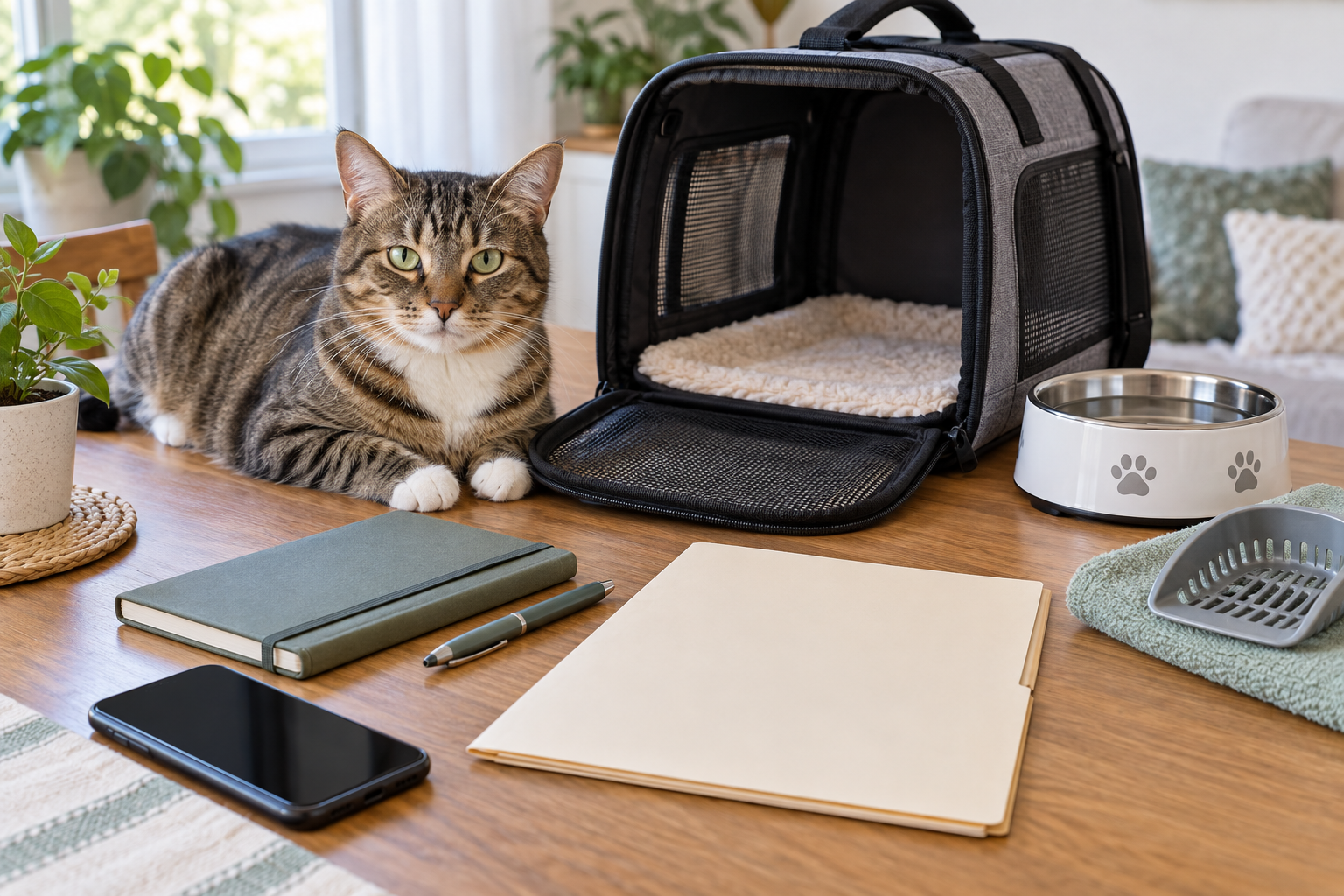
Observe o padrão, não apenas o número de horas. Um veterinário poderá ajudar mais rapidamente se você puder descrever o que mudou, quando isso começou e o que mais está diferente.
Anote:
- Número aproximado de horas de sono antes e depois da mudança
- Se a mudança foi repentina ou gradual
- Alterações no apetite, na sede e no uso da caixa de areia
- Esconder-se, vocalizar, agressividade ou dependência excessiva
- Mudanças na higiene pessoal
- Alterações no peso ou na forma corporal
- Mobilidade: saltos, escadas, rigidez, mancar
- Qualquer novo fator de estresse: mudança, novo animal de estimação, nova comida, clima, visitas
Se o peso ou a condição física forem motivo de preocupação, use o produto da SnuggleSouls’ Guia sobre a condição física e a condição muscular para descrever o que você vê com mais clareza. Se a mudança incluir a posição da cauda, espasmos ou tensão corporal, o linguagem da cauda do gato Este guia pode ajudá-lo a descrever comportamentos sem precisar adivinhar.
As diretrizes de 2021 da AAHA/AAFP sobre as fases da vida dos felinos enfatizam que os cuidados devem ser adaptados à fase da vida, ao ambiente, ao comportamento e aos riscos à saúde do gato 5. É por isso que um gatinho sonolento, um gato adulto e um gato idoso não devem ser avaliados da mesma forma.
Como posso ajudar meu gato a ter um sono mais saudável?
Promova um sono saudável, proporcionando ao seu gato locais seguros para descansar, rotinas previsíveis e atividade física suficiente quando estiver acordado. Você não precisa forçar um gato a dormir menos; o importante é garantir que o descanso esteja equilibrado com a alimentação normal, a higiene, o movimento e atividades estimulantes.
Entre os hábitos úteis estão:
- Ofereça vários locais tranquilos para dormir, incluindo opções aconchegantes e em locais elevados.
- Mantenha os locais de alimentação, água, areia, arranhadores e descanso em locais fixos.
- Faça sessões curtas de brincadeiras, principalmente pela manhã e à noite.
- Quando o peso for uma preocupação, ofereça refeições em porções controladas, em vez de permitir que o animal paste sem controle e de forma monótona.
- Ofereça aos gatos mais velhos camas baixas, rampas ou degraus, caso tenham mais dificuldade para pular.
- Mantenha as consultas de rotina com o veterinário em dia, especialmente para gatos idosos.
- Fique atento a mudanças repentinas, em vez de ficar obcecado com um único número diário.
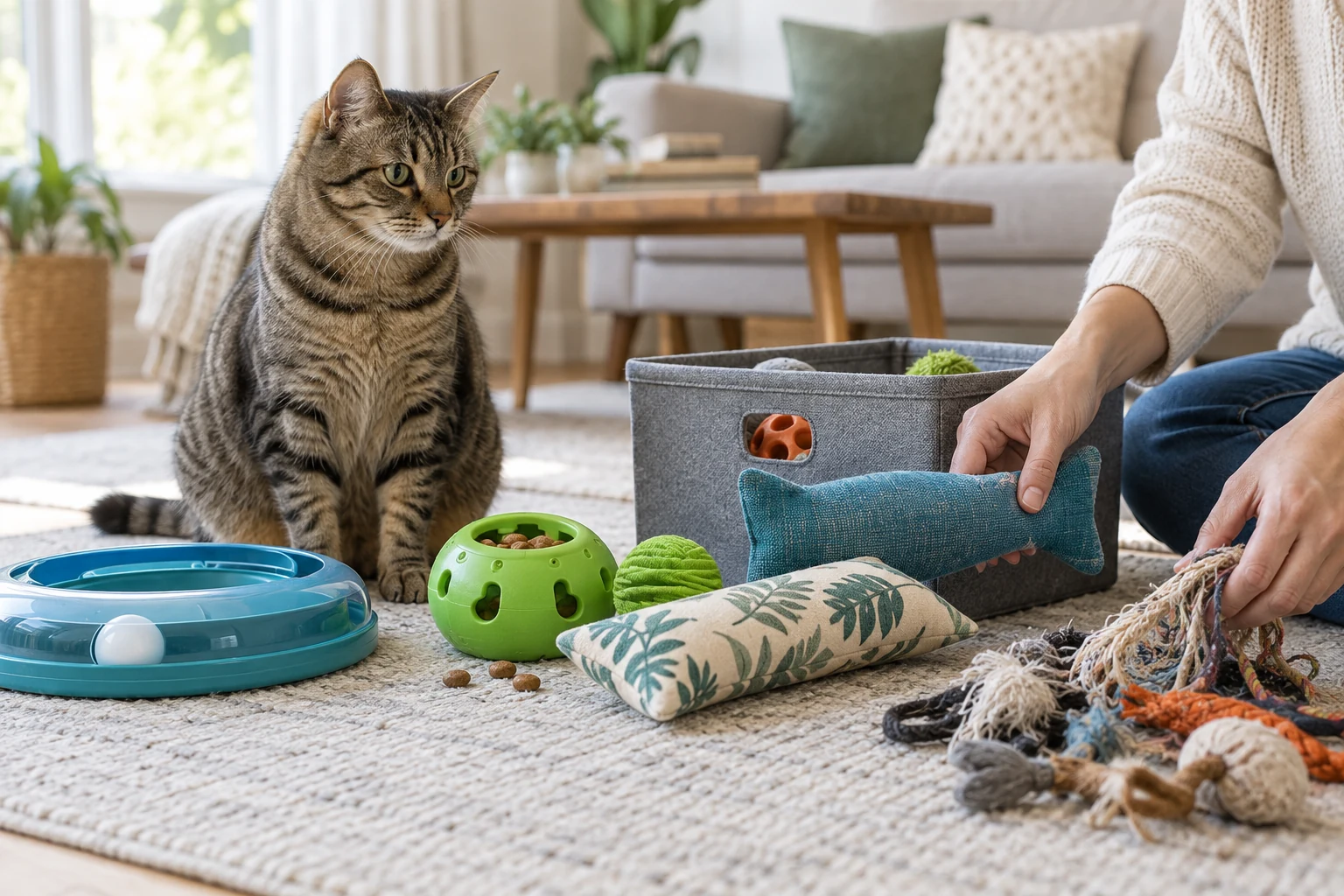
Se o seu gato dorme mais porque a vida está monótona, atividades de enriquecimento podem ajudar. Se o seu gato dorme mais porque sente dor ao se movimentar, porque o apetite mudou ou porque está desenvolvendo uma doença, o enriquecimento não é suficiente. Essa é a linha que deve ser respeitada.
Conclusão
Os gatos dormem muito, e na maioria das vezes isso é normal. Gatinhos e gatos idosos podem dormir cerca de 20 horas, enquanto muitos gatos adultos saudáveis dormem entre 12 e 16 horas, em cochilos curtos ao longo do dia.
O verdadeiro sinal de alerta não é um gato sonolento. É um gato que está diferente. Se o sono do seu gato aumentar repentinamente ou for acompanhado de tendência a se esconder, falta de apetite, alteração de peso, vômito, diarreia, falta de higiene, dor, fraqueza ou mudanças no uso da caixa de areia, entre em contato com o seu veterinário.
Perguntas frequentes
Quantas horas por dia os gatos dormem?
Muitos gatos adultos saudáveis dormem cerca de 12 a 16 horas por dia. Gatinhos e gatos idosos costumam dormir mais tempo. O intervalo normal depende da idade, da saúde, da atividade física e da rotina.
É normal que os gatos durmam 20 horas por dia?
Isso pode ser normal para gatinhos jovens, alguns gatos idosos ou um gato que está se recuperando de um dia agitado. Para um gato adulto saudável, 20 horas já é um tempo um pouco longo. Se for algo novo ou se estiver acompanhado de outras mudanças, entre em contato com seu veterinário.
Por que meu gato, de repente, está dormindo mais do que o normal?
Um aumento repentino nas horas de sono pode ser causado por estresse, tédio, dor, febre, problemas digestivos ou muitos outros problemas de saúde. Fique atento ao apetite, aos hábitos de uso da caixa de areia, à higiene, aos movimentos e ao comportamento de se esconder. Entre em contato com o veterinário se a mudança persistir ou for acompanhada de sintomas.
Os gatos dormem mais à medida que envelhecem?
Muitos gatos idosos descansam mais, mas um aumento repentino não deve ser atribuído apenas à idade. Gatos mais velhos também podem apresentar dores, artrite, doença renal, distúrbios da tireoide, problemas dentários ou outras condições que alteram seus níveis de atividade e sono.
Os gatos são noturnos?
Os gatos não são estritamente noturnos. Muitos são crepusculares, o que significa que são naturalmente mais ativos ao amanhecer e ao anoitecer. A atividade noturna também pode se tornar uma rotina adquirida se o gato receber comida, brincadeiras ou atenção toda vez que acordar os moradores da casa.
Devo acordar meu gato se ele dormir o dia todo?
Normalmente não, a menos que você precise verificar se ele está consciente ou esteja preocupado com alguma doença. Um gato saudável que está dormindo deve acordar normalmente e se comportar como de costume. Um gato que tenha dificuldade para acordar, esteja fraco ou não esteja se alimentando precisa de orientação veterinária.
Referências
[1] Iniciativa para Animais de Estimação que Vivem dentro de Casa da Universidade Estadual de Ohio. Hábitos de sono. https://indoorpet.osu.edu/cats/basicneeds/sleeping
[2] Clínicas Veterinárias VCA. Como reconhecer os sinais de doença em gatos. https://vcahospitals.com/know-your-pet/recognizing-signs-of-illness-in-cats
[3] Manual Veterinário da Merck. Causas médicas dos sinais comportamentais. https://www.merckvetmanual.com/multimedia/table/medical-causes-of-behavioral-signs
[4] Manual Veterinário da Merck. Problemas comportamentais em gatos. https://www.merckvetmanual.com/behavior/behavior-of-cats/behavior-problems-of-cats
[5] AAHA e AAFP. 2021 Diretrizes de estágio de vida dos felinos da AAHA/AAFP. https://www.aaha.org/resources/2021-aaha-aafp-feline-life-stage-guidelines/
 EN
EN DE
DE ES
ES PT
PT