
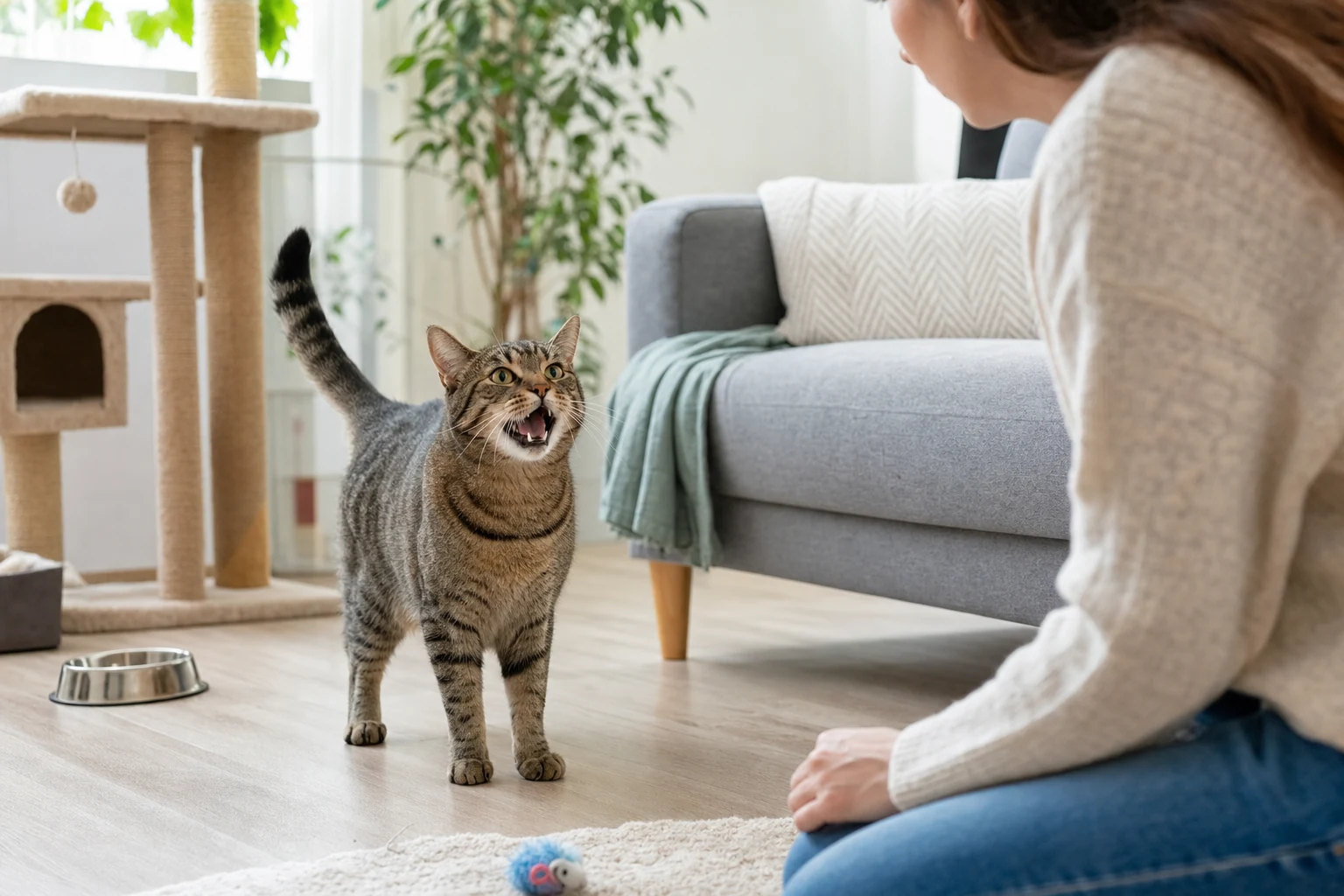
Se o seu gato estiver miando muito mais do que o normal, comece perguntando o que mudou: horário, local, apetite, sede, hábitos em relação à caixa de areia, idade, e a linguagem corporal. O miado é uma forma normal de comunicação entre gatos e humanos, mas um aumento repentino, miados noturnos ou miados acompanhados de sinais de doença merecem uma atenção especial e, às vezes, um exame veterinário.
Nem todos os gatos têm o mesmo "normal". Alguns são muito falantes e gostam de cumprimentar as pessoas, outros miam para brincar e outros ainda ficam quietos até perceberem que algo está errado. O objetivo não é fazer seu gato calar a boca. É descobrir se o miado significa “olá”, “me dê comida”, “brinque comigo”, “abra a porta”, “estou estressado” ou “não estou me sentindo bem”.
Este guia explica as 10 razões mais comuns pelas quais os gatos miam tanto, como interpretar o contexto e quando é hora de parar de tentar resolver o problema em casa e ligar para o veterinário.
Índice
- O que geralmente significa quando o gato mia mais do que o normal?
- Quais são os motivos mais comuns pelos quais os gatos miam tanto?
- Quando o miado é um sinal de que é preciso chamar o veterinário?
- Como posso saber se meu gato está miando por comida?
- Por que os gatos mais velhos começam a miar mais à noite?
- Como posso fazer com que meu gato mi menos sem ignorar suas necessidades reais?
- Conclusão
- Perguntas frequentes
- Referências
O que geralmente significa quando o gato mia mais do que o normal?
Miauar mais do que o normal geralmente significa que seu gato aprendeu que vocalizar gera uma resposta, ou que ele está tentando comunicar uma necessidade que você ainda não identificou. A ASPCA observa que os gatos miam por diversos motivos, incluindo cumprimentar as pessoas, pedir alimentos, pedindo atenção, querendo passar por uma porta, procurando um parceiro ou reagindo à confusão ou a uma doença relacionada à idade 1.
Comece observando o padrão. Um gato que mia na cozinha às 6 da manhã está transmitindo uma mensagem diferente daquela de um gato que uiva no corredor às 2 da manhã, chora na caixa de areia ou mia enquanto perde peso. Se o comportamento for novo, mais intenso, mais urgente ou acompanhado de alterações físicas, encare-o como uma informação, e não como um incômodo.
Para entender melhor o contexto desse comportamento, o SnuggleSouls Guias sobre o comportamento dos gatos pode ajudar você a comparar os miados com escondido, postura da cauda, sinais de estresse e mudanças na rotina diária.
Quais são os motivos mais comuns pelos quais os gatos miam tanto?
Os 10 motivos mais comuns são: saudação, busca por atenção, comida, tédio, acesso à porta, estresse, comportamento de acasalamento, dor ou doença, confusão relacionada à idade e hábito adquirido. A maioria dos gatos tem mais de um fator desencadeante; portanto, use a tabela como ponto de partida, e não como diagnóstico definitivo.
| Motivo | Como isso pode ficar | O que fazer em seguida |
|---|---|---|
| Saudações | Miau curto quando você chega, acorda ou entra em um cômodo | Responda com calma e, em seguida, continue com a rotina |
| Atenção | O miado para quando você faz carinho, fala ou olha para o seu gato | Reserve um tempo para brincar e dar carinho antes que comecem os miados insistentes |
| Pedido de alimentação | Miar perto da cozinha, da tigela de comida ou do comedouro | Verifique o tamanho das refeições, a condição corporal e se os horários das refeições são previsíveis |
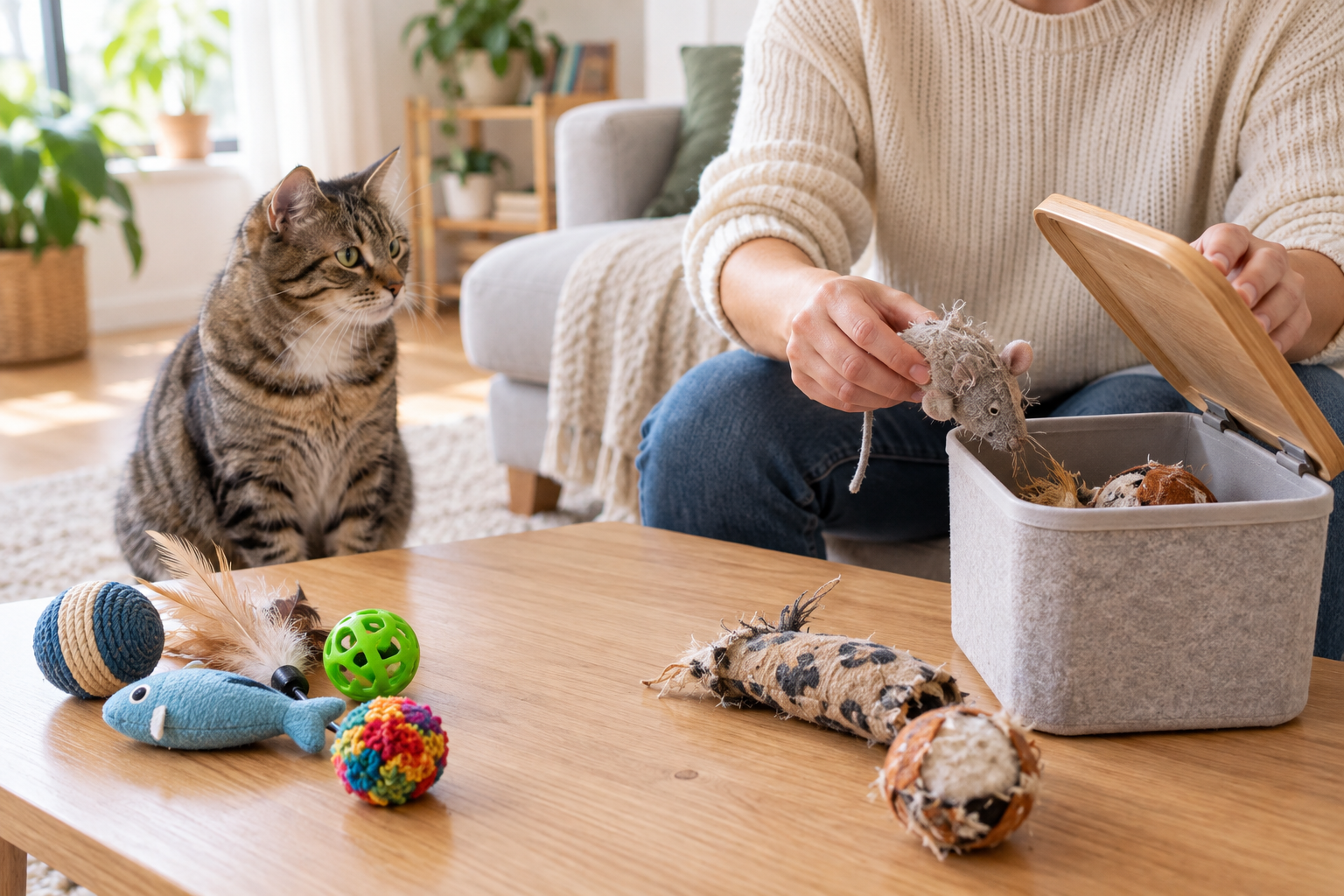
| Tédio | Andar de um lado para o outro sem parar, desconsideração pelos brinquedos, barulho à noite | Inclua sessões curtas de brincadeiras no estilo “caça” e alimentação com quebra-cabeças |
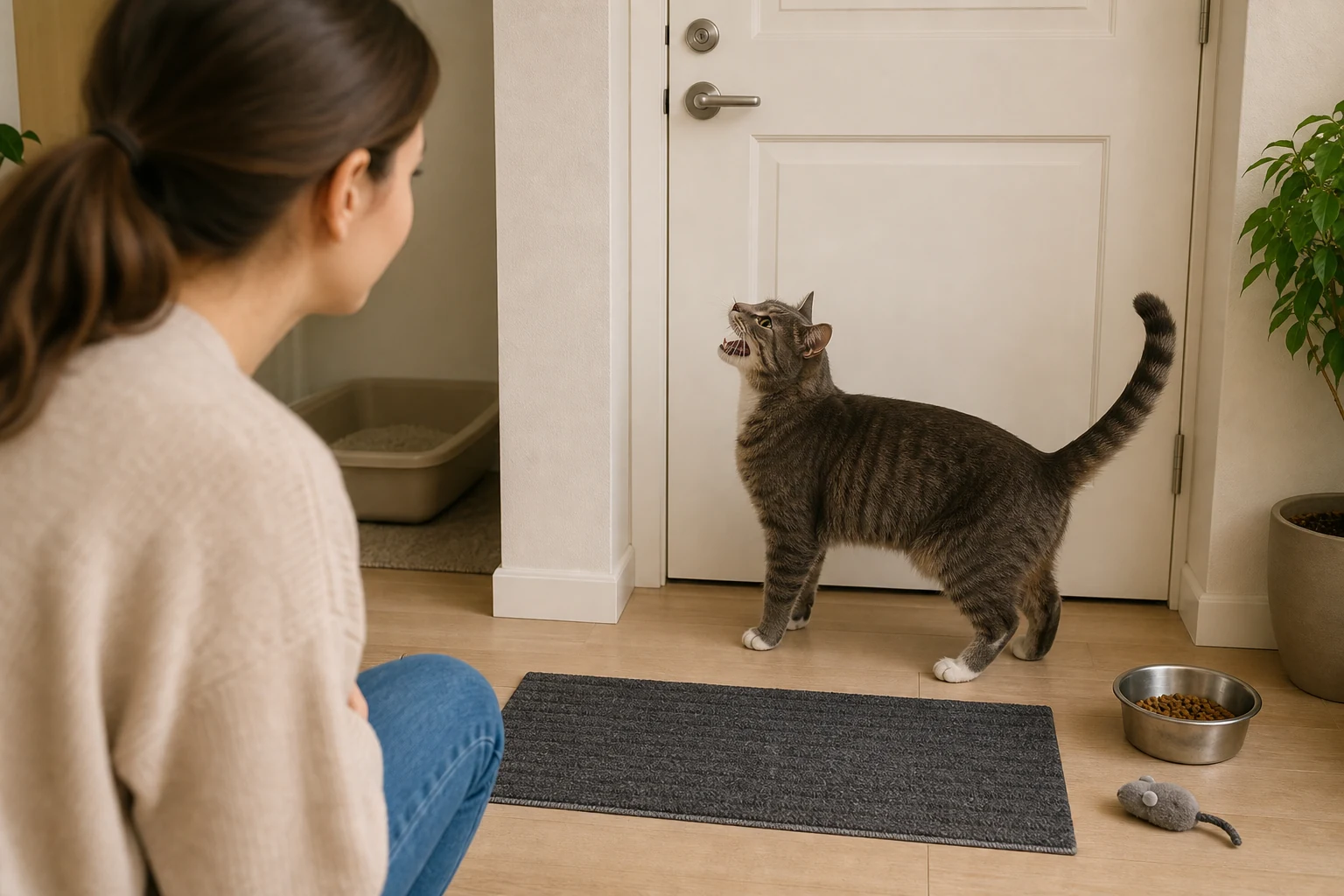
| Acesso pela porta | Miar perto de portas, janelas, armários ou quartos | Decida qual será a regra da casa e, em seguida, mantenha-a consistente |
| Estresse | Miar ao se esconder, em estado de alerta, ao marcar território ou em situações de conflito | Reduza os fatores desencadeantes e fique atento a outros sinais de estresse |
| Comportamento de acasalamento | Miauados altos, inquietação e tentativas de fuga em gatos não castrados | Converse com seu veterinário sobre castração e saúde reprodutiva |
| Dor ou doença | Novos sons relacionados à fome, sede, peso, caixa de areia ou mudanças na mobilidade | Marque uma consulta veterinária o mais rápido possível |
| Confusão entre idosos | Uivos noturnos, desorientação, alteração do ritmo sono-vigília | Converse com seu veterinário sobre exames para animais idosos e alterações cognitivas |
| Hábito adquirido | O miado funciona porque as pessoas sempre reagem a ele | Valorize os momentos de tranquilidade e atenda às necessidades de forma proativa |
O estresse pode se manifestar de forma discreta em um gato e de forma mais evidente em outro. Se o miado for acompanhado de comportamentos como se esconder, adotar uma postura encolhida ou evitar locais habituais, compare-o com este guia sobre por que os gatos se escondem antes de presumir que seu gato está simplesmente sendo exigente.
As necessidades ambientais também são importantes. As diretrizes da AAFP/ISFM enfatizam que os gatos precisam de áreas de descanso seguras, recursos distribuídos pela casa, brincadeiras que imitem a caça, interação positiva com os humanos e um ambiente previsível 3. Uma gata que não tenha essas formas de desabafo pode pedir ajuda com a voz.
Quando o miado é um sinal de que é preciso chamar o veterinário?
Entre em contato com seu veterinário quando o miado for repentino, intenso, parecer doloroso ou estiver acompanhado de alterações no apetite, na sede, na micção, na defecação, na respiração, nos movimentos, no peso ou no comportamento. A ASPCA recomenda especificamente um exame veterinário completo para gatos que miam muito, pois condições médicas podem deixar os gatos inquietos, com fome, com sede, irritados ou angustiados 1.
Não espere se o seu gato estiver chorando na caixa de areia, fazendo força para urinar, vomitando repetidamente, com dificuldade para respirar, desmaiando, se escondendo e recusando comida, mancando, miando quando é tocado ou apresentando um rápido agravamento do quadro. Esses sinais não são problemas de adestramento.
Algumas possibilidades médicas comuns incluem:
- Hipertireoidismo, especialmente em gatos de meia-idade e idosos. A Cornell cita perda de peso, aumento do apetite, aumento da sede e aumento da micção entre os sinais mais comuns 2.
- Doença renal, diabetes, dor de dente, artrite, constipação, problemas no trato urinário ou desconforto gastrointestinal.
- Dor após uma lesão, briga com outro animal de estimação ou uma queda que você não presenciou.
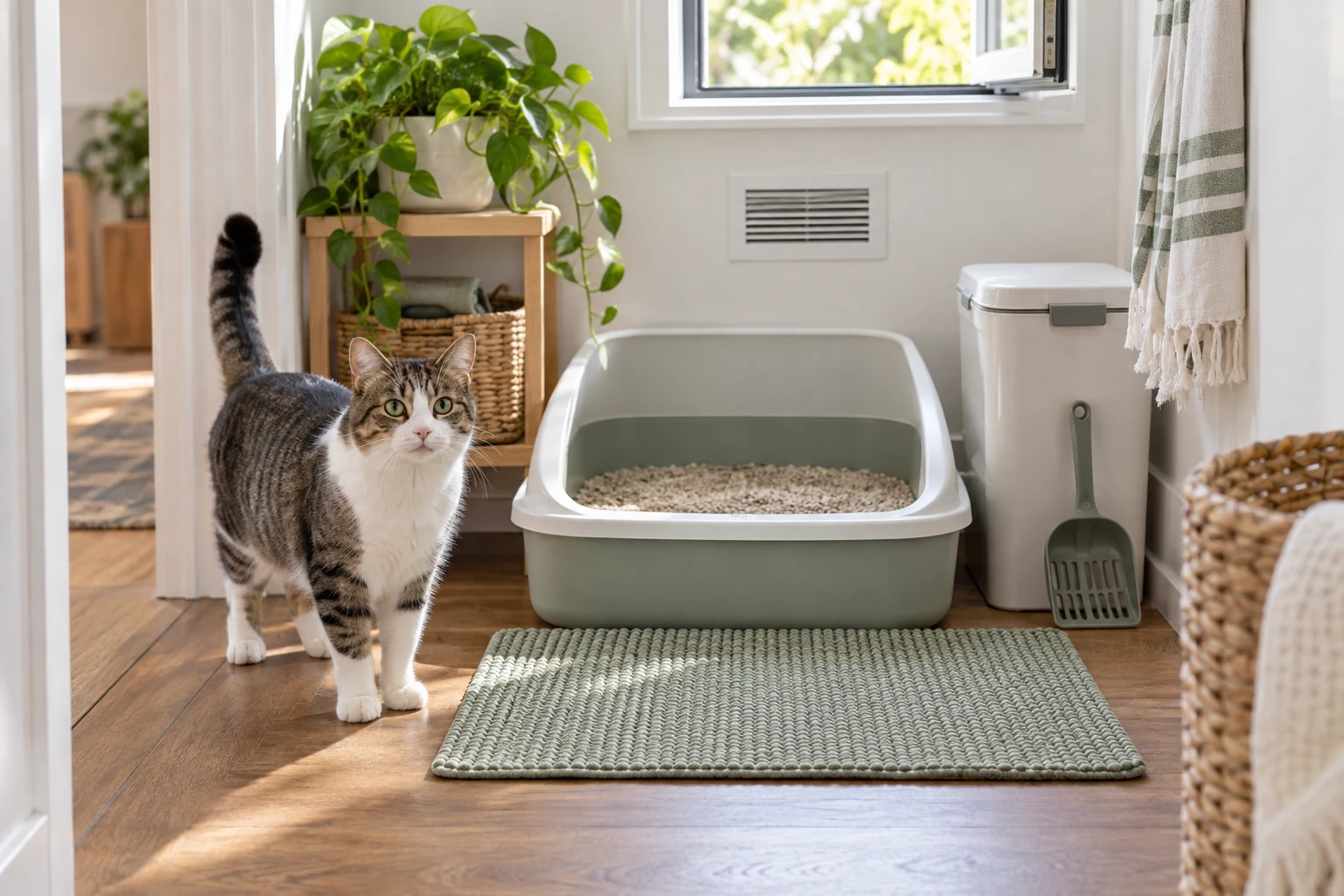
- Comportamento urinário relacionado ao estresse. Se o miado vier acompanhado de urinar fora da caixa de areia, reavalie a situação mudanças na caixa de areia relacionadas ao estresse e problemas com a caixa de areia, e consulte seu veterinário se esse padrão for novo ou persistente.
Sua função em casa é identificar o padrão e proteger seu gato de qualquer atraso. A função do seu veterinário é descartar causas médicas antes de considerar o miado como um problema comportamental.
Como posso saber se meu gato está miando por comida?
Um miado relacionado à comida geralmente surge em resposta a estímulos previsíveis: você acorda, vai até a cozinha, abre um armário, toca na tigela ou se senta com comida de gente. A situação se torna mais preocupante quando o miado é acompanhado de perda de peso, apetite voraz, vômito, diarreia, sede excessiva ou uma mudança repentina na forma do corpo.
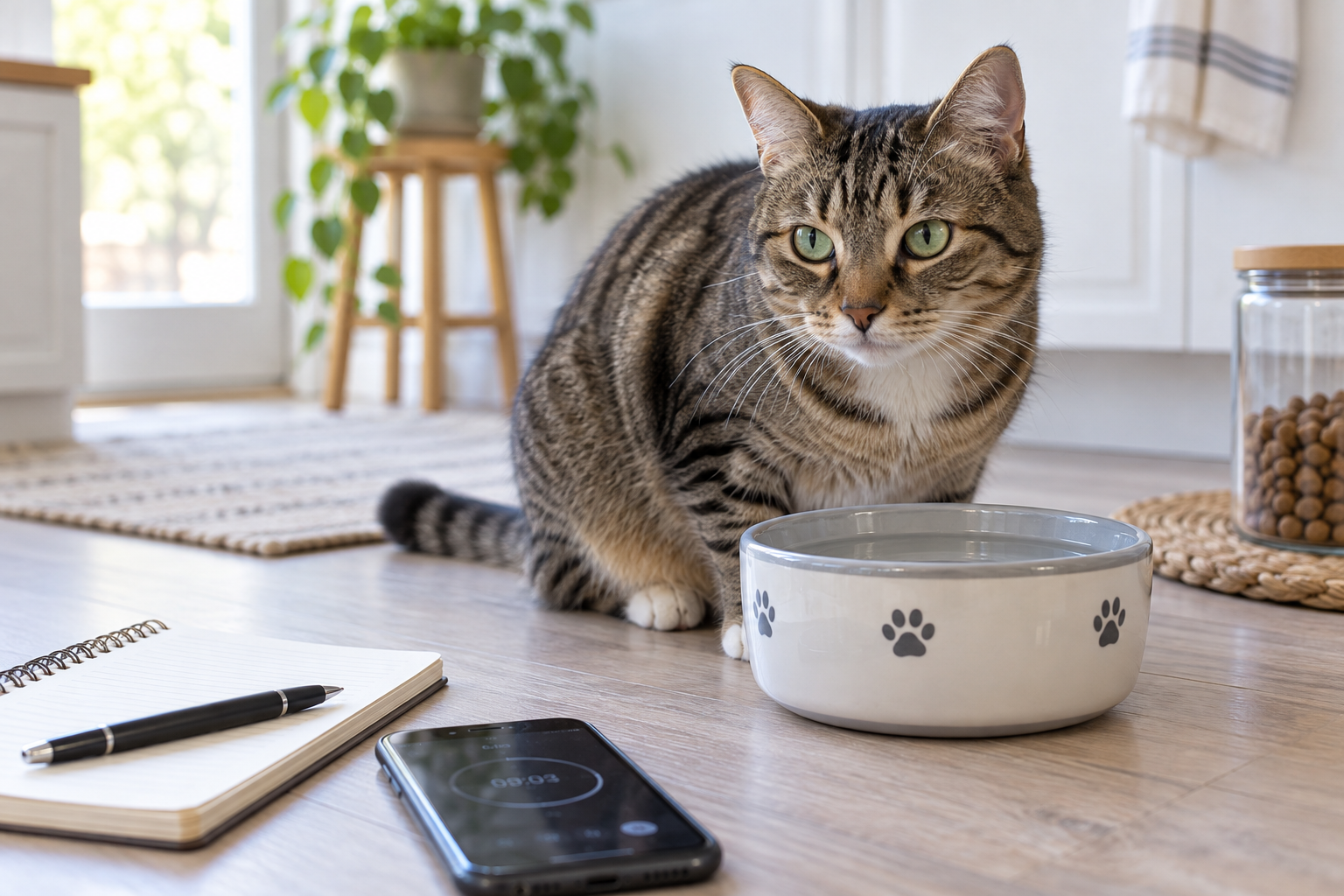
Faça uma verificação simples da alimentação:
- Seu gato está comendo uma quantidade medida ou as porções são estimadas?
- O miado ocorre antes das refeições, depois das refeições ou durante todo o dia?
- Seu gato está ganhando, perdendo ou mantendo o peso?
- Houve alguma mudança na sede ou na frequência urinária?
- Será que outro animal de estimação está roubando comida?
Se as porções não estiverem claras, calcule as necessidades diárias com o Calculadora de calorias para gatos e compare isso com o rótulo da ração atual do seu gato. Em seguida, use um guia de condição física para verificar se seu gato está abaixo do peso, no peso ideal ou acima do peso.
Para gatos que estão clinicamente saudáveis, mas são insistentes na hora das refeições, uma rotina previsível de alimentação ajuda. Experimente refeições medidas, comedouros-quebra-cabeças e uma pequena refeição noturna após a brincadeira. Evite dar comida quando o miado estiver mais alto, pois isso reforça exatamente o comportamento que você deseja reduzir.
Por que os gatos mais velhos começam a miar mais à noite?
Gatos mais velhos podem miar mais à noite devido a alterações sensoriais, dor, desorientação, ansiedade, alterações nos ciclos de sono ou doenças. As orientações da ASPCA sobre o comportamento de gatos idosos recomendam que se procure primeiro uma avaliação veterinária, pois as mudanças comportamentais em gatos mais velhos podem estar relacionadas a problemas médicos 4.
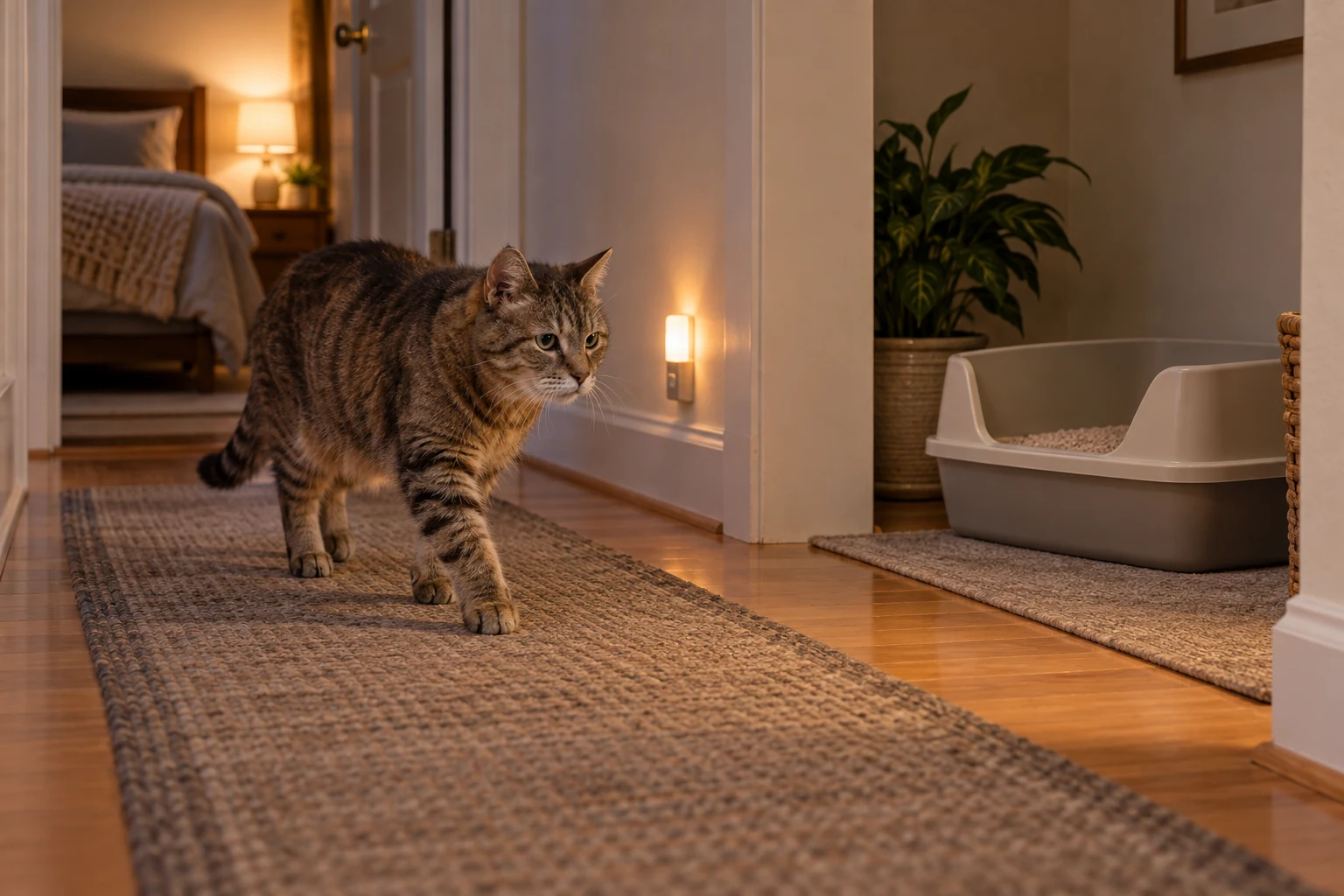
Os miados noturnos são especialmente comuns quando um gato idoso acorda e fica sem saber onde estão os outros. Iluminação suave, locais de descanso familiares, fácil acesso à água e uma rotina previsível na hora de dormir podem ajudar, mas não devem substituir um exame de bem-estar para idosos.
A idade também influencia a forma como você interpreta os sintomas. Um gato de 14 anos que, de repente, começa a miar à noite e a beber mais água precisa de uma abordagem diferente daquela necessária para um gato de 2 anos que dá um pio quando você chega em casa. Se você não tiver certeza de como a idade do seu gato se relaciona com a fase da vida em que ele se encontra, o calculadora de idade do gato pode ajudá-lo a orientar a conversa com seu veterinário.
Como posso fazer com que meu gato mi menos sem ignorar suas necessidades reais?
Ajude seu gato a miar menos atendendo às necessidades previsíveis antes que ele comece a miar insistentemente, recompensando os momentos de silêncio e mantendo uma resposta consistente. Faça isso somente depois de verificar se não há problemas de saúde, fome, caixa de areia ou estresse.
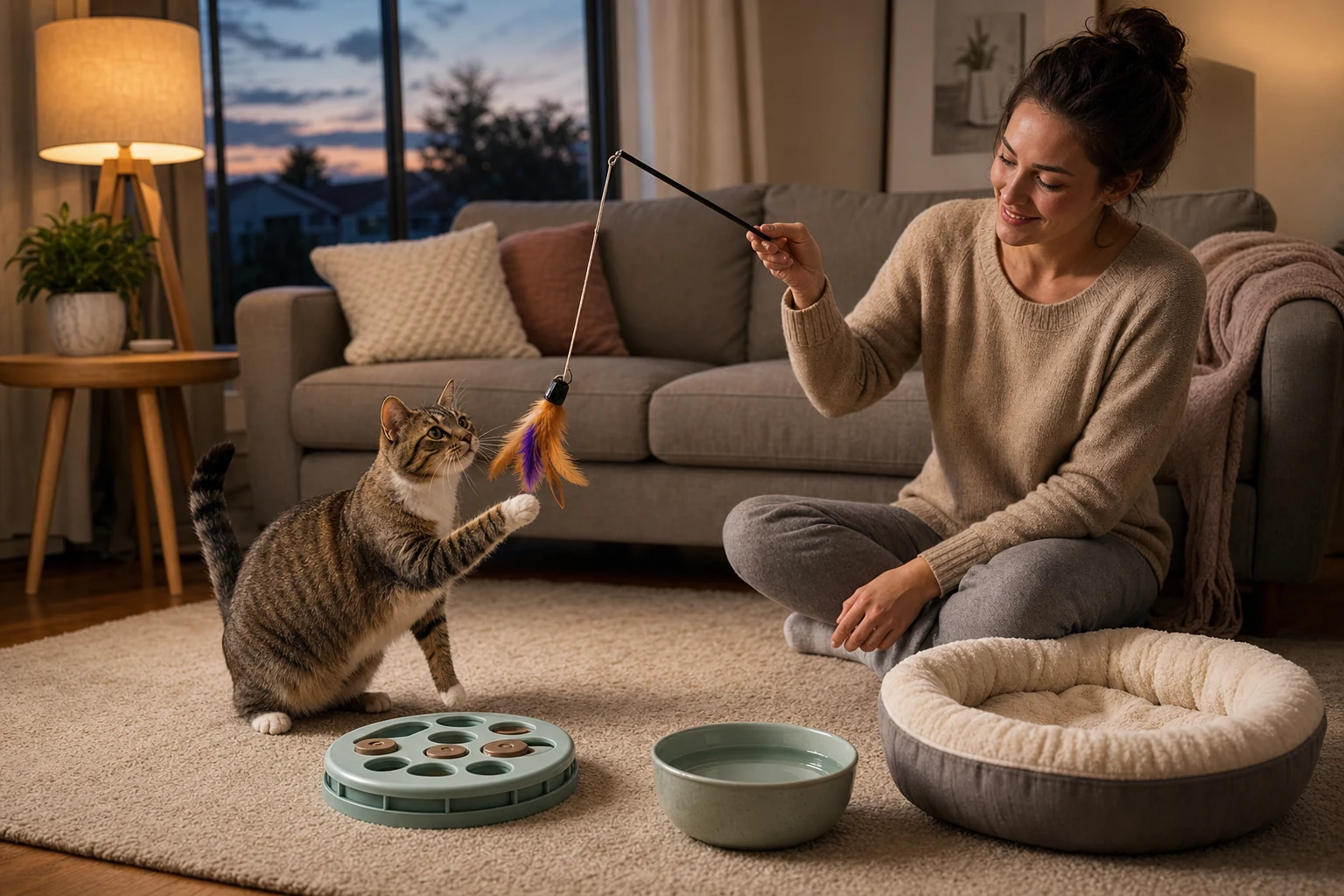
Experimente seguir este plano por 10 a 14 dias:
- Mantenha um diário dos miados. Anote a hora, o local, o som, a linguagem corporal, o que aconteceu antes e o que fez com que parasse.
- Adicione duas sessões curtas de brincadeira. Use brinquedos tipo varinha que permitam ao seu gato espreitar, perseguir, capturar e relaxar.
- Alimente-o em horários regulares. Se o problema for o miado de manhã cedo, considere usar um comedouro programável para parte do café da manhã.
- Recompense os comportamentos tranquilos. Dê atenção, brinque com ele ou ofereça comida quando seu gato estiver calmo, e não no auge dos miados altos.
- Não grite. Para muitos gatos, a atenção dada com raiva ainda é atenção.
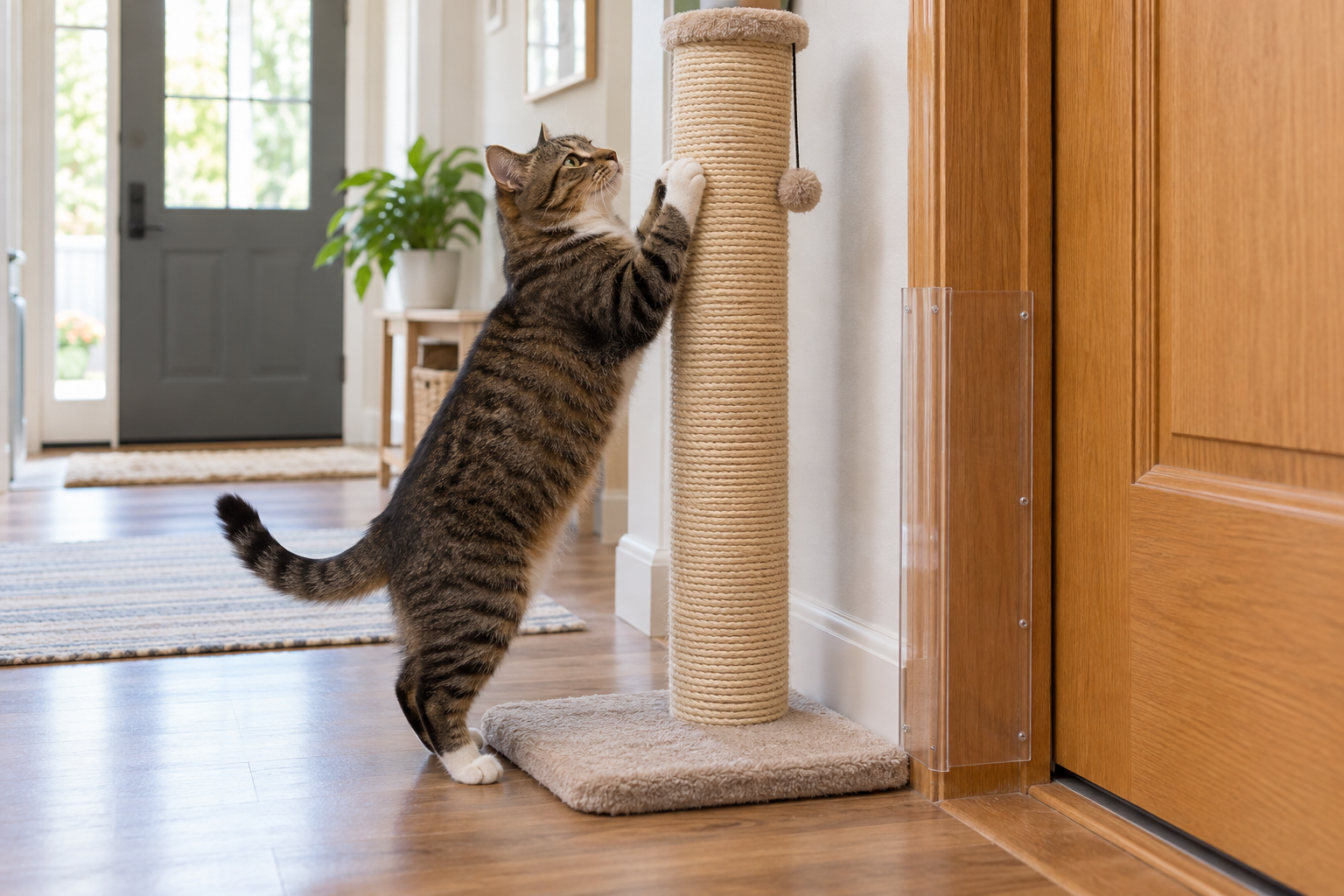
- Facilite o acesso aos recursos. Verifique se há água, caixas de areia, postes para arranhar, locais de descanso e espaço vertical.
- Mantenha as regras relativas à porta consistentes. Se o quarto ficar fechado à noite, não o abra às vezes depois de 20 minutos de miados.
Se o seu gato mia para chamar atenção, a solução não é negar carinho o dia inteiro. É dar carinho de uma forma que não exija que o gato intensifique o comportamento primeiro. Visitas discretas, brincadeiras rotineiras e saídas tranquilas podem tornar o ambiente doméstico mais previsível.
Conclusão: O que fazer quando seu gato mia mais do que o normal
Um gato que mia muito geralmente está se comunicando, e não se comportando mal. A pergunta que vale a pena fazer não é "Como faço para que isso pare?", mas "O que meu gato está tentando me dizer, e há algum risco?"
Procure primeiro identificar padrões: horário, local, alimentação, caixa de areia, estresse, idade e linguagem corporal. Se o miado for repentino, intenso, parecer doloroso ou estiver relacionado a alterações físicas, entre em contato com o veterinário. Se seu gato estiver saudável e o miado for uma forma aprendida de chamar atenção, uma rotina previsível e recompensas em momentos de tranquilidade podem tornar o dia a dia mais calmo para vocês dois.
Perguntas frequentes
É normal que os gatos miem muito?
Isso pode ser normal para alguns gatos, especialmente se eles sempre foram barulhentos e o som está associado a saudações, refeições ou brincadeiras. É menos normal quando o miado aumenta repentinamente, ocorre em horários incomuns, soa angustiado ou vem acompanhado de alterações no apetite, na sede, no peso, no uso da caixa de areia ou na mobilidade.
Por que meu gato fica andando por aí miando?
Seu gato pode estar procurando por você, pedindo comida, querendo brincar, reagindo a uma porta fechada, se sentindo estressado ou não se sentindo bem. Observe por onde seu gato anda, a que horas isso acontece e se a linguagem corporal dele parece relaxada ou tensa.
Por que meu gato mia à noite?
O miado noturno pode ser causado por tédio, comportamento aprendido para chamar atenção, fome, uma rotina alterada, imagens e sons do exterior, desorientação em gatos idosos, dor ou doença. Se for algo novo ou se o seu gato for idoso, comece por levá-lo ao veterinário antes de presumir que se trata apenas de um hábito.
Devo ignorar minha gata quando ela mia?
Ignore apenas os miados insistentes depois de ter certeza de que sua gata está saudável e que suas necessidades estão atendidas. Não ignore choros na caixa de areia, miados repentinos, vocalizações de dor ou miados acompanhados de perda de peso, sede, vômitos, dificuldade para respirar ou outros sinais de doença.
Os gatos miam quando estão com dor?
Alguns gatos emitem sons quando estão com dor, mas outros ficam quietos, se escondem ou evitam o contato físico. Se o seu gato miar quando for pegado no colo, pular menos, mancar, proteger uma parte do corpo ou agir de maneira diferente do habitual, entre em contato com o veterinário.
Posso treinar meu gato para que ele pare de miar pedindo comida?
Você pode reduzir os miados de fome medindo as porções das refeições, alimentando-o em horários previsíveis, usando um comedouro com temporizador ou um comedouro tipo quebra-cabeça e evitando recompensas com comida durante os miados mais altos. Se o seu gato estiver constantemente com fome, apesar de comer, ou estiver perdendo peso, peça ao seu veterinário para verificar se há causas médicas.
Referências
[1] ASPCA. (2026). Miau e uivo. URL
[2] Centro de Saúde Felina da Cornell. (2026). Hipertireoidismo em gatos. URL
[3] Ellis, S. L. H., Rodan, I., Carney, H. C., Heath, S., Rochlitz, I., Shearburn, L. D., Sundahl, E., & Westropp, J. L. (2013). Diretrizes de necessidades ambientais felinas da AAFP e da ISFM. URL
[4] ASPCA. (2026). Gatos mais velhos com problemas comportamentais. URL
 EN
EN DE
DE ES
ES PT
PT