
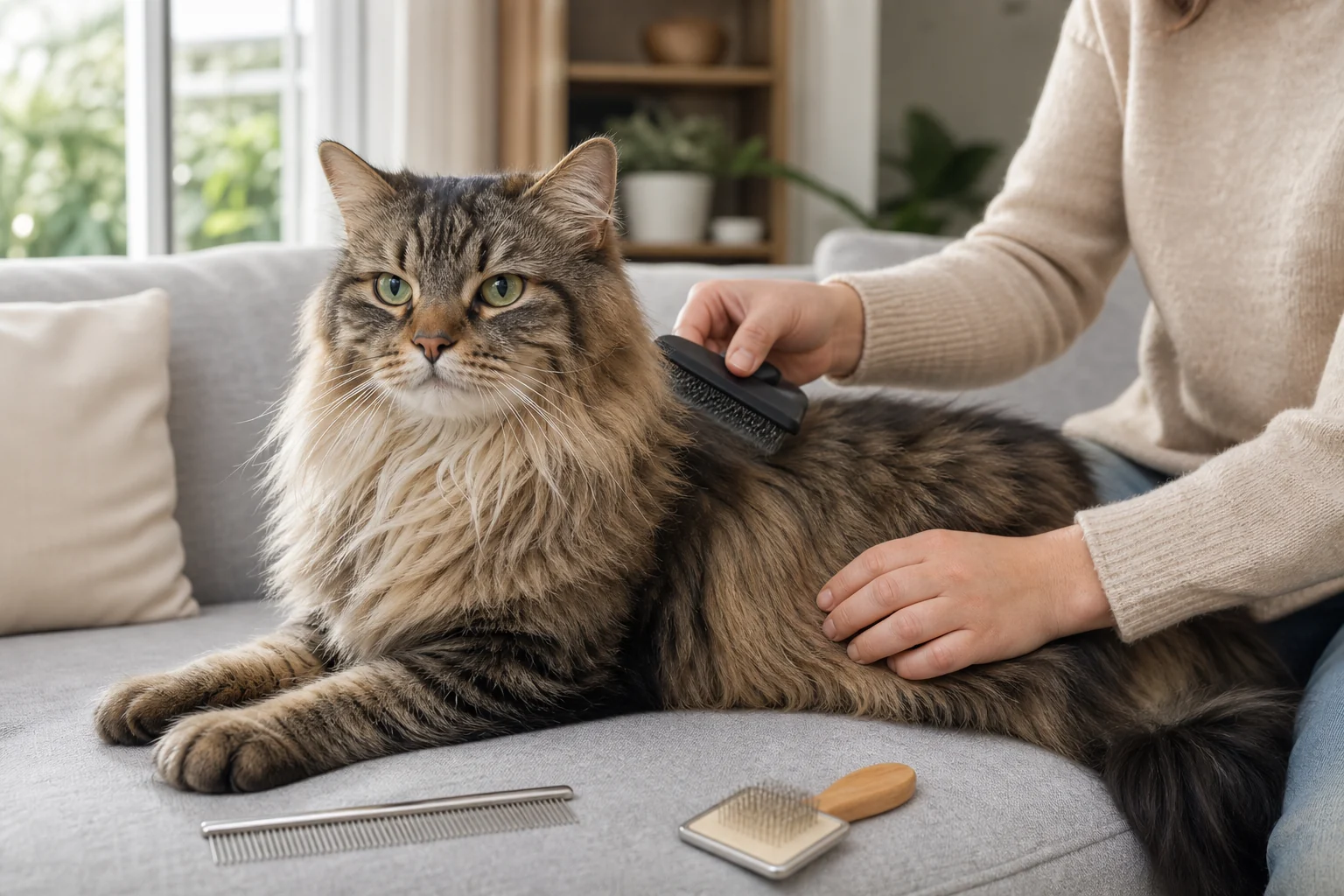
Para evitar emaranhados em um gato de pêlo comprido, escove-o antes que os emaranhados fiquem muito apertados, verifique semanalmente as áreas de maior atrito e interrompa a escovação assim que o gato demonstrar dor, medo ou irritação na pele. Gatos de pêlo comprido podem se manter confortáveis com sessões curtas e regulares, mas emaranhados muito apertados devem ser tratados por um veterinário ou por um profissional qualificado em tosa de gatos, em vez de serem cortados em casa.
Os emaranhados não são apenas uma questão estética. O pelo emaranhado pode puxar a pele, ocultar irritações, reter resíduos e tornar os movimentos normais desconfortáveis. A boa notícia é que a maioria dos emaranhados em gatos de pêlo comprido começa pequena. Se você souber onde procurar e mantiver uma rotina leve, muitas vezes poderá identificá-los enquanto ainda estão soltos o suficiente para serem desembaraçados com cuidado.
Este guia enfoca a prevenção: pontos críticos, verificações semanais, ferramentas e manuseio tranquilo. Para conhecer um método passo a passo de escovação, consulte também o guia da SnuggleSouls sobre Como escovar um gato de pêlo comprido.
Índice
- Qual é a maneira mais simples de evitar que o cabelo fique embaraçado?
- Em que parte do corpo geralmente começam os emaranhados nos gatos de pêlo comprido?
- Que rotina semanal de prevenção de manchas funciona para famílias com vida agitada?
- Quais ferramentas ajudam a evitar que o cabelo fique emaranhado sem precisar puxá-lo?
- Quais gatos precisam de verificações mais frequentes do pelo emaranhado?
- O que você deve fazer se já tiver encontrado um tapete?
- Quando você deve pedir ajuda a um profissional de cuidados com animais ou a um veterinário?
- Conclusão: mantenha o pelo confortável antes que os nós se apertem
- Perguntas frequentes
- Referências
Qual é a maneira mais simples de evitar que o cabelo fique embaraçado?
A maneira mais simples de evitar que o pelo forme emaranhados é remover o subpelo solto antes que ele se enrosque nos fios mais longos de proteção. O Cornell Feline Health Center observa que escovar ou pentear regularmente ajuda a manter a pelagem limpa e permite que você examine a pele em busca de parasitas ou sinais de doença 1.
Para muitos gatos de pêlo comprido, a prevenção funciona melhor em sessões curtas do que em uma única sessão longa de tosa. Uma verificação de cinco minutos atrás das orelhas, sob as patas dianteiras, ao longo do peito e ao redor das patas traseiras costuma ser mais útil do que esperar até que todo o pêlo fique emaranhado.
Experimente este padrão:
- Escove seu gato quando ele estiver com sono ou já estiver relaxado.
- Comece por uma área mais fácil, como os ombros ou o lado do corpo.
- Recompense com guloseimas, elogios ou um tapete para lamber comida.
- Pare antes que seu gato fique irritado.
- Adicione apenas uma área problemática quando a escovação suave estiver ocorrendo sem dificuldades.
A VCA afirma que gatos com pelagem longa, sedosa ou encaracolada geralmente precisam ser escovados diariamente para evitar emaranhados ou nós, especialmente ao redor das orelhas, axilas e patas traseiras 2. Se não for viável escovar diariamente, faça verificações rápidas todos os dias e reserve um tempo para pentear o cabelo mais cuidadosamente duas ou três vezes por semana.
Em que parte do corpo geralmente começam os emaranhados nos gatos de pêlo comprido?
As bolas de pelo geralmente começam a se formar nos locais onde o pelo se esfrega, se dobra ou acumula umidade e subpelo solto. Em gatos de pêlo comprido, as zonas de maior risco são atrás das orelhas, sob as patas dianteiras, ao longo do peito, na barriga, ao longo da parte posterior das coxas, sob a cauda e perto da base da cauda.
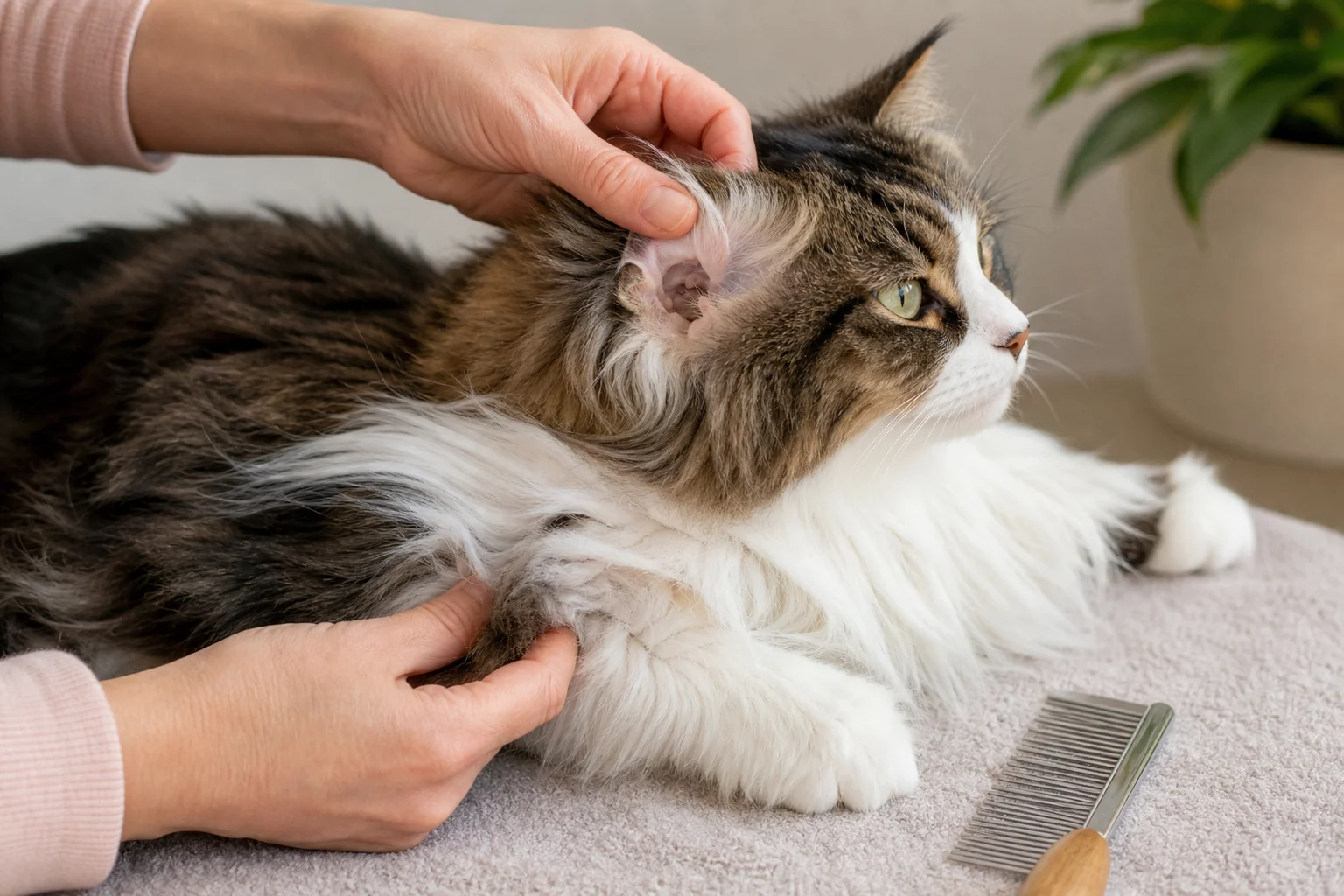
As orelhas, as axilas, o peito, a barriga, as patas traseiras e a base da cauda merecem atenção especial.
Comece usando os dedos. Afaste suavemente o pelo e procure por nós do tamanho de ervilhas, áreas achatadas e feltradas ou pontos onde o pente fica preso. Os emaranhados iniciais podem parecer uma pequena torção no pelo. Os emaranhados mais avançados podem parecer densos, quentes ou próximos à pele.
| Ponto crítico | Por que se formam camadas ali? | Verificação semanal |
|---|---|---|
| Atrás das orelhas | Pêlo fino, coceira, atrito da coleira | Levante a orelha com cuidado e apalpe o pelo na base |
| Axilas | Atrito ao caminhar e pele flexível | Deslize os dedos por baixo da perna da frente, sem puxar |
| Peito e gola | Alimento, água, saliva e pelagem densa | Penteie para fora em pequenas mechas |
| Barriga | Pêlo macio e relutância em se escovar | Marque essa opção apenas se o seu gato aceitar que você toque em sua barriga |
| Pernas traseiras | Atrito estático e subcamada mais espessa | Penteie começando pela borda externa |
| Base da cauda | Oleo, queda de pelos e densidade da pelagem | Afaste os pelos e verifique bem próximo à pele |
Se o seu gato não gostar de uma determinada área, não o force a ficar ali na mesma sessão. As orientações sobre como lidar com gatos de maneira adequada enfatizam a redução do medo e a criação de uma sensação de controle para os gatos, sempre que possível 4. Na prática, em casa, isso significa fazer uma pausa, mudar de posição ou encerrar a rotina do dia, em vez de transformar a higiene pessoal em uma luta.
Que rotina semanal de prevenção de manchas funciona para famílias com vida agitada?
Uma rotina semanal prática consiste em examinar o gato inteiro em pequenas áreas e, em seguida, dedicar mais tempo aos locais onde realmente se formam emaranhados. Isso deve parecer uma parte natural da sua rotinas de cuidados diários, e não um projeto estressante que você teme.
Use este cronograma como ponto de partida:
| Dia | Objetivo | Hora |
|---|---|---|
| Segunda-feira | Verificação rápida das orelhas e da crista | 2 minutos |
| Terça-feira | Penteado nos ombros, nas laterais e nas costas | 5 minutos |
| Quarta-feira | Dia de descanso ou treino de manejo apenas com recompensas | 1 minuto |
| Quinta-feira | Exame das axilas e do tórax | 3 minutos |
| Sexta-feira | Verificação das patas traseiras e da base da cauda | 3 minutos |
| Fim de semana | Escove por mais tempo se o seu gato estiver relaxado | 5 a 10 minutos |
Para gatos que toleram bem a escovação, você pode combinar essas etapas em uma única sessão mais longa. Para gatos sensíveis, dividir o pelo em pequenas áreas costuma ser mais suave e mais eficaz.
Anote se houver emaranhados repetidos no mesmo local. Emaranhados recorrentes sob as patas dianteiras podem indicar que o pelo precisa ser penteado com mais frequência nessa região. Emaranhados recorrentes na região dos quadris ou das patas traseiras podem indicar que seu gato não consegue alcançar bem essa área, especialmente se ele for mais velho, estiver acima do peso ou tiver rigidez nas articulações.
Quais ferramentas ajudam a evitar que o cabelo fique emaranhado sem precisar puxá-lo?
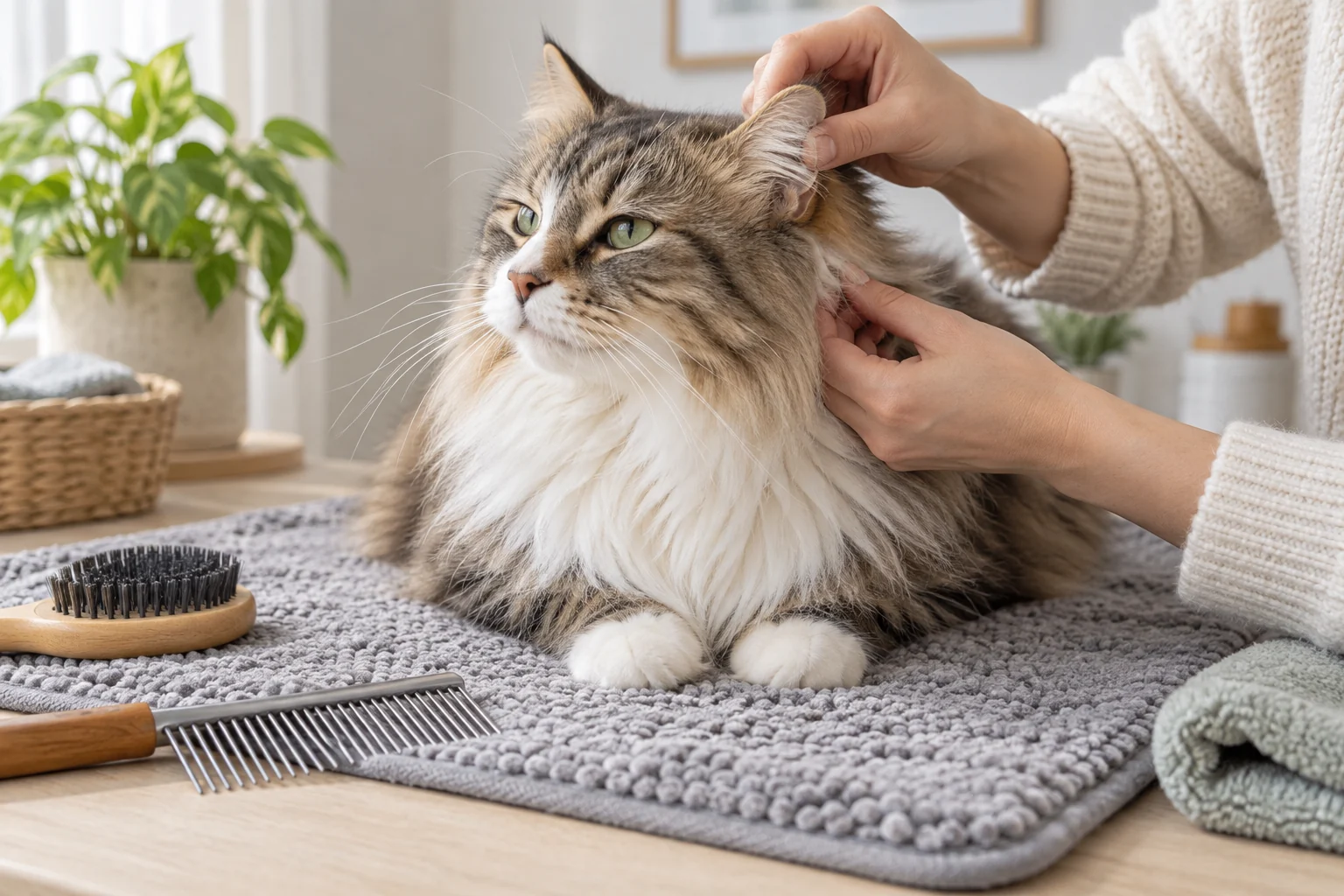
As melhores ferramentas são aquelas que seu gato aceita e que você pode usar com delicadeza: um pente de dentes largos para desfiar o pelo, um pente de metal de dentes finos para verificar pequenos emaranhados, uma escova slicker usada com leveza, petiscos e uma toalha para ajudar a segurar o animal.
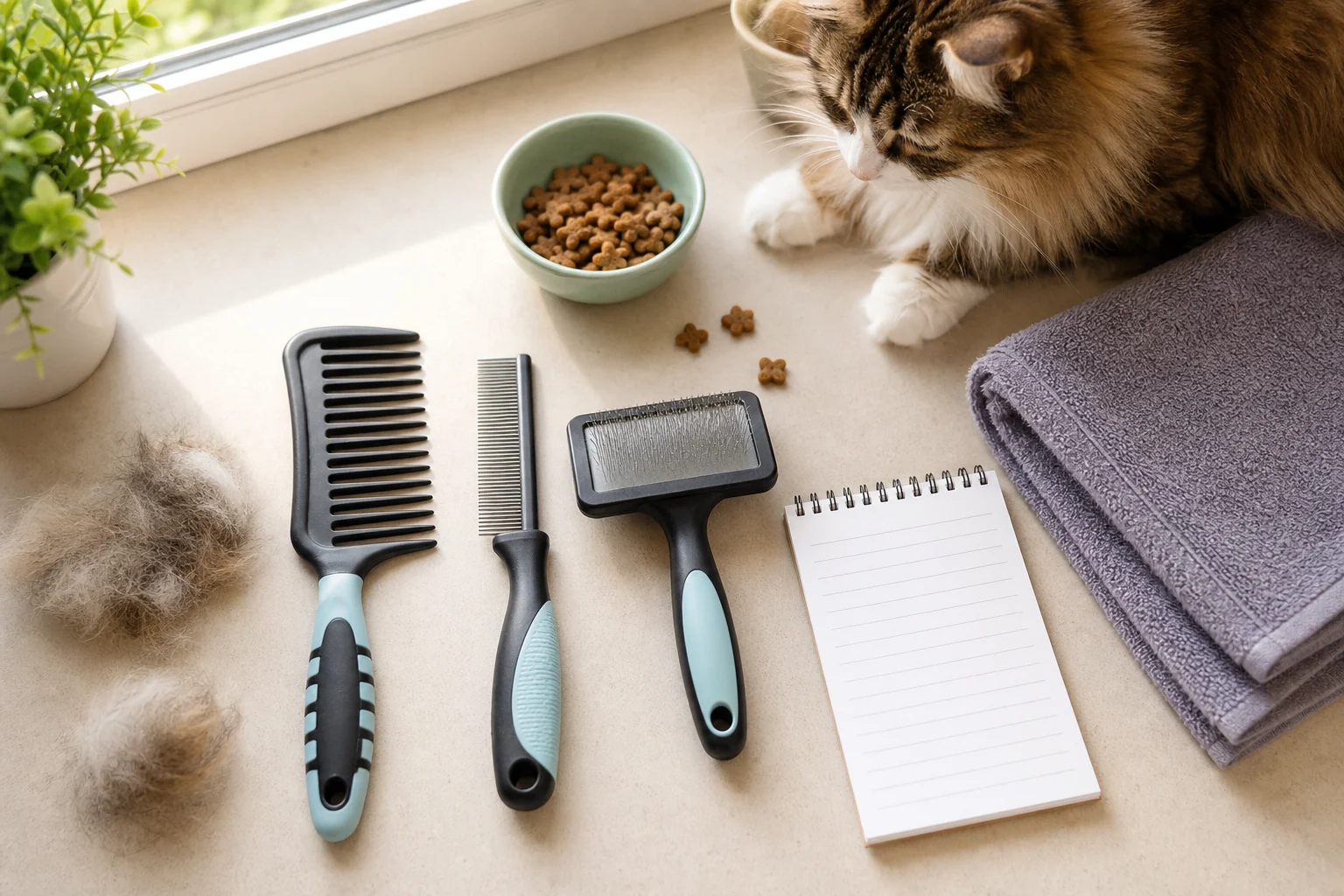
Uma estação de higiene simples faz com que as verificações semanais rápidas sejam tranquilas, previsíveis e mais fáceis de repetir.
Use as ferramentas nesta ordem:
- Comece usando os dedos para localizar os emaranhados.
- Use um pente de dentes largos na pelagem externa.
- Use um pente fino somente depois que o pelo estiver solto e fácil de pentear.
- Use uma escova de pelos finos com delicadeza para remover os pelos soltos da subpelagem, sem puxar com força para não desfiar os nós.
- Termine com uma parte mais fácil para que a sessão termine bem.
Evite cortar os nós com tesoura. A pele do gato é fina, flexível e fácil de cortar, especialmente quando um nó puxa a pele para cima. Se um nó não se soltar com os dedos e um penteado suave, considere isso um sinal de parada.
As orientações de cuidados com o pelo da ASPCA recomendam escovar o animal antes do banho para remover pelos soltos e emaranhados 3. Para gatos de pêlo comprido, isso é importante porque a água pode apertar os emaranhados já existentes e tornar mais difícil separá-los posteriormente.
Quais gatos precisam de verificações mais frequentes do pelo emaranhado?
Gatos de pêlo comprido precisam de verificações mais frequentes quanto à presença de nós quando estão em período de troca intensa de pêlo, têm subpêlo muito denso, não gostam de ser escovados, são mais velhos, têm limitações de mobilidade, estão acima do peso ou passaram por uma doença recentemente. Um gato que não consiga girar, curvar-se ou alcançar a parte traseira do corpo com conforto pode deixar pêlos soltos para trás, mesmo que ainda cuide do rosto e das patas dianteiras.
Preste mais atenção se perceber que:
- Novos tufos de pelos ao redor dos quadris, na base da cauda ou nas patas traseiras.
- Menos pulos, rigidez ou hesitação ao subir escadas.
- Pelo oleoso ou com grumos.
- Resistência repentina ao contato físico.
- Caspa, odor, vermelhidão ou crostas sob a pelagem.
- Mais bolas de pelo, além de uma higiene menos eficaz.
Se o excesso de peso estiver dificultando os cuidados pessoais, você pode verifique a condição física do seu gato e converse com seu veterinário sobre um plano seguro. Se rigidez ou dor fizerem parte dos sintomas, analise os sintomas comuns sinais de artrite em gatos idosos e marque uma consulta com o veterinário, em vez de achar que seu gato está apenas fazendo birra.
Mudanças nos hábitos de higiene também podem estar relacionadas ao excesso ou à falta de higiene, ao estresse, à dor, a parasitas ou a doenças de pele. O guia da SnuggleSouls sobre mudanças nos hábitos de higiene podem indicar desconforto pode ajudar você a decidir o que mais prestar atenção.
O que você deve fazer se já tiver encontrado um tapete?
Se você encontrar um pequeno nó solto, pare e avalie a situação antes de usar qualquer ferramenta. Segure o pelo pela raiz para não puxar a pele e, em seguida, tente soltar a borda externa com os dedos. Se o nó começar a se soltar facilmente e seu gato permanecer relaxado, você pode continuar com um pente de dentes largos, fazendo movimentos bem suaves.
Pare imediatamente se:
- O tapete fica bem justo ao corpo.
- Seu gato se assusta, rosna, sibila, dá patadas ou tenta fugir.
- Você observa vermelhidão, feridas, inchaço, umidade ou odor.
- O tapete cobre uma área ampla.
- A lesão está localizada na barriga, na axila, nos órgãos genitais ou perto de um mamilo.
- Você fica com vontade de cortá-lo com uma tesoura.
Nunca castigue um gato por resistir à remoção de nós. Um gato que reaja com veemência pode estar sentindo dor ou com medo. Insistir nessa ação pode dificultar os cuidados futuros e aumentar o risco de lesões.
No caso de emaranhados moderados ou graves, um profissional de cuidados com animais ou um veterinário pode remover o emaranhado com equipamentos mais seguros e melhores opções de imobilização. Alguns gatos, especialmente os mais velhos ou aqueles que sentem dor, podem precisar de ajuda veterinária para que o processo seja realizado de forma humanitária.
Quando você deve pedir ajuda a um profissional de cuidados com animais ou a um veterinário?
Peça ajuda quando os nós estiverem muito apertados, espalhados, dolorosos, próximos a áreas delicadas da pele ou se continuarem reaparecendo, mesmo com a escovação regular. Você também deve entrar em contato com seu veterinário se a pele sob a pelagem parecer inflamada, infectada, oleosa, descamada ou sensível ao toque.
Escolha a ajuda adequada de acordo com a situação:
| Situação | O melhor próximo passo |
|---|---|
| Um emaranhado solto, gato relaxado | Separação suave com os dedos e penteado leve |
| Vários tapetes pequenos, adequados para gatos | Profissional de cuidados com gatos com experiência |
| Tapete justo, bem colado à pele | Profissional especializado em cuidados com animais ou veterinário; não corte em casa |
| Vermelhidão na pele, feridas, odor, parasitas ou dor | Veterinário |
| Gato mais velho está ficando com o pelo emaranhado na região dos quadris, de repente | O veterinário avaliará a dor, a mobilidade e o estado de saúde |
| O gato entra em pânico durante a escovação | Pare e peça apoio para um manuseio com o mínimo de estresse |
O objetivo não é deixar o pelo perfeito de uma só vez. O objetivo é que o gato se sinta à vontade e confie de que a tosa não vai doer. É essa confiança que torna possível a prevenção na próxima semana.
Conclusão: mantenha o pelo confortável antes que os nós se apertem
A prevenção de nós em gatos de pêlo comprido resume-se a pequenas verificações repetidas. Concentre-se nas zonas de atrito, use os dedos em vez de ferramentas, mantenha as sessões curtas e pare antes que seu gato se sinta preso ou sinta dor.
Se você perceber que o pelo está emaranhado, não tente cortá-lo em casa. Peça ajuda a um profissional de tosa com experiência em gatos ou a um veterinário e, assim que o pelo estiver confortável novamente, retome a prevenção com sessões mais curtas.
Perguntas frequentes
Com que frequência devo escovar um gato de pêlo comprido para evitar que o pêlo fique emaranhado?
Muitos gatos de pêlo comprido se beneficiam mais com uma escovação leve diária ou com uma verificação manual, além de uma penteada mais completa várias vezes por semana. Se o seu gato forma nós com facilidade, solta muito pêlo ou tem uma subpelagem densa, a prevenção diária é mais segura do que esperar que os nós se formem.
Posso usar uma tesoura para cortar os emaranhados do pelo do meu gato?
Não. A tesoura pode cortar facilmente a pele do gato, pois os emaranhados puxam a pele para cima e dificultam a visualização do ponto onde ela começa. Se um emaranhado estiver muito apertado ou não soltar facilmente, peça ajuda a um veterinário ou a um profissional de tosa com experiência em gatos.
Por que meu gato de pêlo comprido fica com emaranhados, mesmo se limpando sozinho?
A higiene autônoma pode não remover todo o subpêlo solto, especialmente em pelagens densas. Gatos mais velhos, com excesso de peso, que sentem dor e aqueles com alterações na pele ou na pelagem também podem ter dificuldade para alcançar certas áreas; por isso, podem se formar emaranhados mesmo quando o gato parece estar se limpando normalmente.
Os tapetes causam dor aos gatos?
Isso pode acontecer. Os emaranhados apertados puxam a pele, restringem os movimentos normais, retêm resíduos e podem ocultar irritações ou infecções. Um gato que, de repente, passe a não gostar de ser tocado em uma área com emaranhados deve ser manuseado com cuidado e examinado por um profissional.
Devo dar banho no meu gato para soltar os emaranhados?
Normalmente, não. A água pode apertar os emaranhados existentes e tornar os nós mais difíceis de remover. Escove e verifique a pelagem primeiro e consulte um profissional antes de dar banho em um gato com muitos nós.
Referências
[1] Centro de Saúde Felina da Cornell. (2026). Como escolher e cuidar do seu novo gato. Centro de Saúde Felina da Cornell
[2] Hospitais Veterinários VCA. (2026). Higiene e cuidados com a pelagem do seu gato. Hospitais de animais VCA
[3] ASPCA. (2026). Dicas para cuidar do pelo do gato. ASPCA
[4] AAFP e ISFM. (2022). Diretrizes de 2022 da AAFP/ISFM para Interações Veterinárias Amigas dos Gatos. CatVets
 EN
EN DE
DE ES
ES PT
PT