
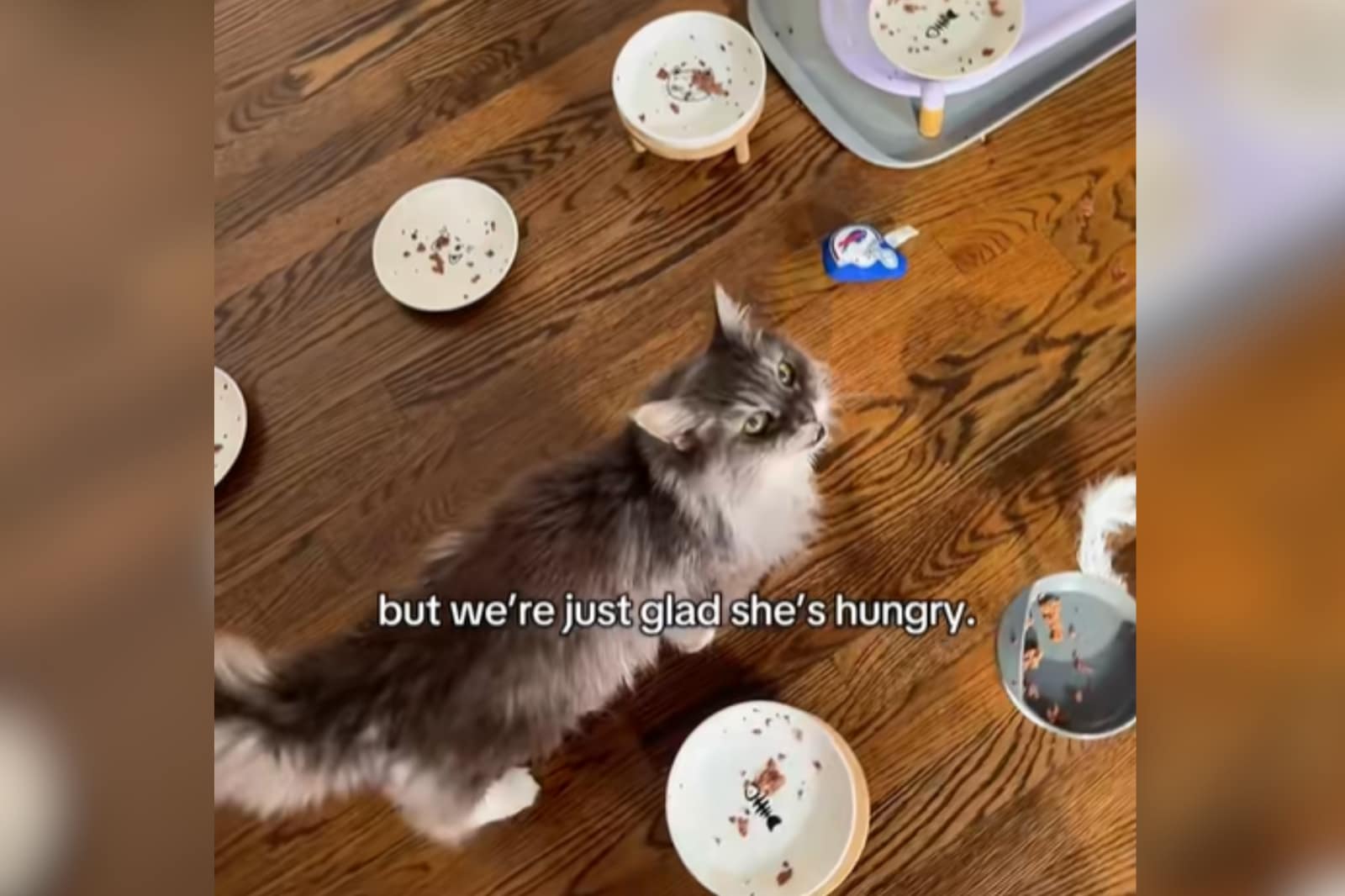
As pet parents, we cherish every moment with our furry companions, especially as they age. When a viral TikTok video showcased the nighttime routine of an 18-year-old cat named Luna, who battles dementia, it struck a chord with pet lovers worldwide. This heartwarming story of love, patience, and devotion is a reminder of the unbreakable bond we share with our pets.
A Senior Cat’s Nighttime Ritual
Julie Nashawaty, known as Auntie Julie — The Pet Sitter on TikTok (@julienashawaty), shared a touching video of her Maine Coon mix, Luna, from Boston, Massachusetts. The clip captures Luna’s nightly habit of following Julie around, meowing for food because her dementia causes her to forget she’s already eaten. “No, we haven’t slept in over a year,” Julie wrote in the video’s overlay, adding, “But we’re just glad she’s hungry.”
Luna’s routine begins at 12:15 a.m., despite being fed at 10:30 p.m. before bed. She refuses to eat from a dirty plate or food left out for more than five minutes, but eagerly devours every fresh serving. The video, which has garnered over 1 million views and 66,500 likes, shows Luna persistently asking for food while her bowls from earlier meals remain untouched.
@julienashawaty Luna is our 18 year old senior cat with dementia and she spends all night eating then asking for food then eating then asking for food then eating… you get it. My husband and I take turns all night and haven’t had a good night sleep since August of 2024, but we wouldn’t trade it for anything. I say it’s bonus time with Luna 🥹 #cats #catdementia #delinedementia #seniorcats #love
♬ ゆったりおしゃべりティータイム – 菊谷 知樹
Luna’s Journey: From Hardship to Love
Luna’s story is one of resilience. Rescued from a hoarding situation where she spent 12 years confined in a rabbit cage, Luna was adopted by Julie six years ago. “She was so close to not making it, but she fought her way back,” Julie told Snugglesouls. Now, Luna is a loving feline who has captured her family’s heart.
Alongside Luna is her 16-year-old orange tabby brother, Ollie, who was abandoned by his previous owners. Adopted at age 9, Ollie has become the family’s protector, keeping a watchful eye over Luna. “He’s the sweetest soul and always watching over us,” Julie shared.
About a year ago, Luna’s dementia symptoms became noticeable. She began waking Julie and her husband hourly at night, demanding food. Despite trying medications, automatic feeders, and different foods, nothing stopped Luna’s nighttime requests. Regular blood panels confirm her symptoms aren’t thyroid-related, a common cause of increased appetite in senior cats. Instead, Julie and her husband embrace this “bonus time” with Luna, taking turns to serve her fresh plates of food.
Understanding Feline Dementia
Feline cognitive dysfunction (FCD), often called dementia, is common in aging cats. Studies show that over 25% of cats aged 11–14 exhibit at least one sign of FCD, with the prevalence rising to 50% in cats over 15. Symptoms include:
- Disorientation: Appearing confused or getting lost in familiar spaces.
- Vocalizing: Excessive meowing, especially at night.
- Memory Issues: Forgetting meals or litter box habits.
- Behavioral Changes: Becoming clingy, withdrawn, or reactive.
- Sleep Disruption: Being active at night or sleeping more during the day.
Luna’s nighttime vocalizing and repeated requests for food align with these symptoms, making her story relatable for many pet parents caring for senior cats.
Why Luna’s Story Resonates
The viral video struck a chord because it captures the bittersweet reality of caring for an aging pet. Comments flooded in, with one user, Soph, joking, “Plot twist … There’s no dementia, she’s just mastered the art of getting food constantly.” Another user, Taradacktl, shared, “Been there, done that. It’s rough, but when they’re gone, you’d rather be up all night just to have them back again.”
Julie’s dedication to Luna and Ollie reflects the lengths we go to for our pets. “These two are the absolute loves of our lives,” she said. “We feel so lucky to be the ones they trust.”
Takeaway for Pet Parents
Luna’s story is a beautiful reminder to cherish every moment with our pets, especially in their golden years. If your senior cat shows signs of dementia, consult your veterinarian to rule out medical causes and explore management options. Patience, love, and a little extra care—like fresh plates for Luna—can make all the difference. As pet parents, we know the sleepless nights are worth it for the joy our furry friends bring.
FAQ
What are the signs of dementia in cats?
Signs include disorientation, excessive vocalizing (especially at night), forgetting meals or litter box habits, changes in sleep patterns, and altered behavior around people or pets.
How can I help my cat with dementia?
Consult a veterinarian to rule out other health issues. Provide a consistent routine, easy access to food and water, and a calm environment. Enrichment, like interactive toys, may also help.
Is feline dementia common in older cats?
Yes, over 25% of cats aged 11–14 and 50% of cats over 15 show signs of cognitive dysfunction, making it a common condition in senior felines.








 EN
EN DE
DE ES
ES PT
PT