Symptom Checker
Quickly identify potential causes for vomiting, hair loss, lethargy, and other common distress signals.
- Vomiting & digestive issues
- Skin & coat health
- Energy level changes



A sudden change in a cat’s grooming can signal itch, pain, illness, or limited mobility. Learn what to note, when to see a vet, and safe coat-care steps.

Learn what feline hyperesthesia syndrome can look like, what else can mimic it, when to call a vet, and how to keep your cat safe during an episode.

How long are cats pregnant? Most carry kittens for about 63–65 days. See the nine-week timeline, vet confirmation, and signs that need urgent care.
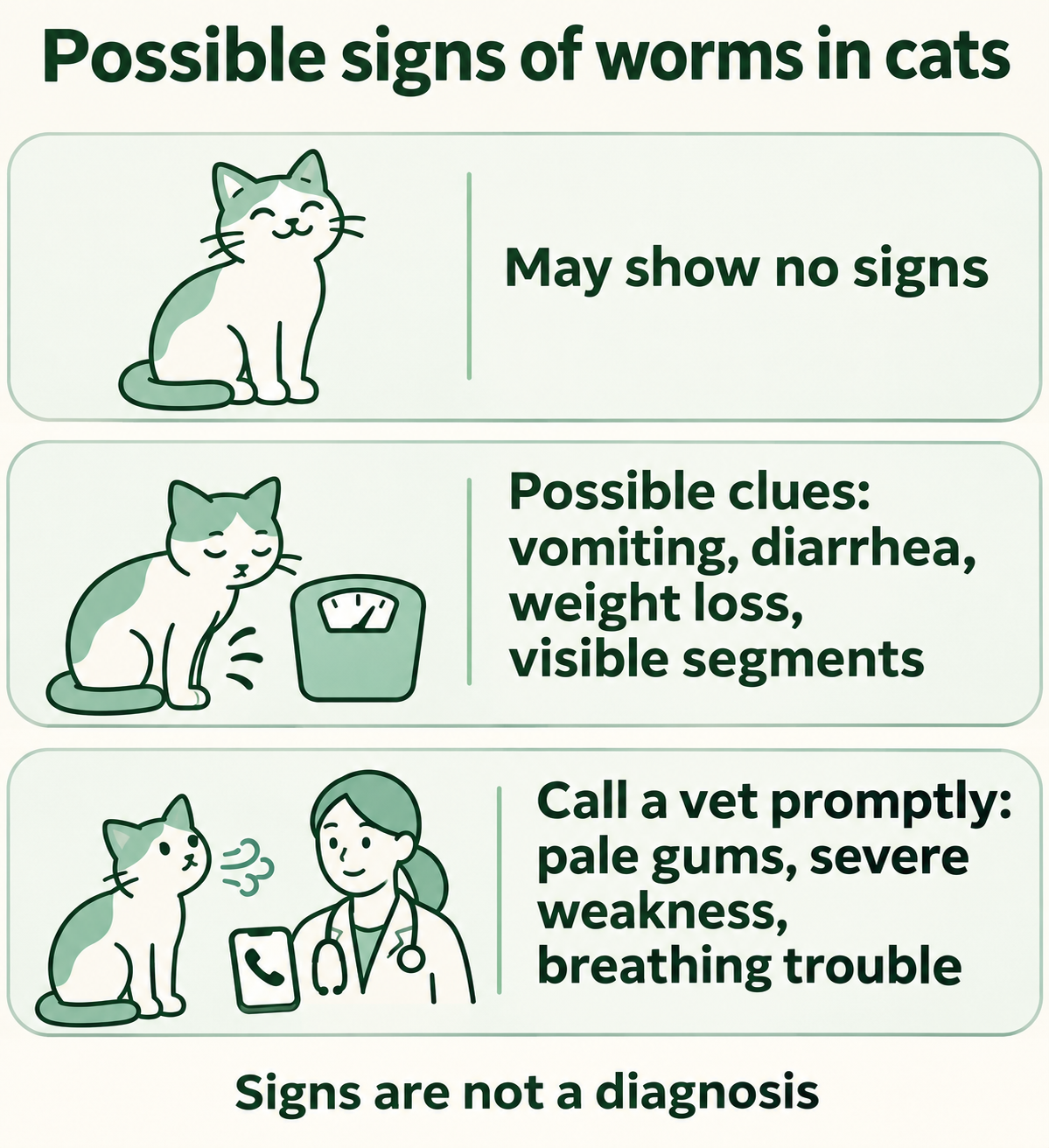
Cats with intestinal worms may show no signs or develop nonspecific changes. Learn what to watch for, when to call a vet, and how parasites are checked.

Learn how cat deworming and fecal-testing schedules differ, what CAPC guidance says for kittens and adults, and which details to discuss with your veterinarian.
Most cat worms spread through specific routes: swallowing infective eggs or larvae, eating infected prey or fleas, or nursing from an infected mother. Indoor cats can still be exposed.

Cats see better in dim light, but not in complete darkness. Learn how their eyes work, when a night-light may help, and which vision changes need a vet.

Ear mites in cats can cause scratching and dark debris. See how vets confirm them, when symptoms need prompt care, and what to do for other pets.