Free calculators and plain-English guides, grouped by the decision in front of you — with the reasoning, the sources and the next step attached to every result.
Every result is a starting point for a conversation, not a diagnosis.
9 free toolsCalculators and planners that run in the browser.
340+ guidesWritten to answer one question at a time.
No account neededNothing gated, nothing emailed, everything printable.
The shape of a useful answer
From something you noticed to something you can act on.
Most cat care questions start with a small observation and end with a decision. The tools are arranged along that line, so you are never asked to fill in a form before you know why.
01
Notice
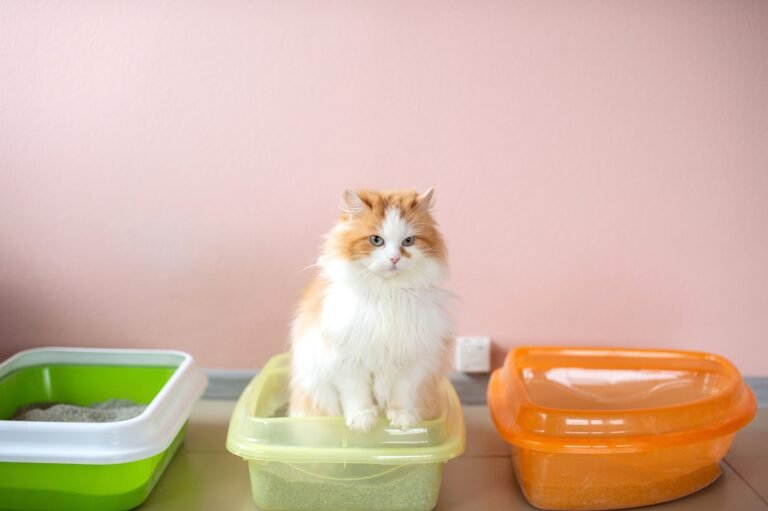
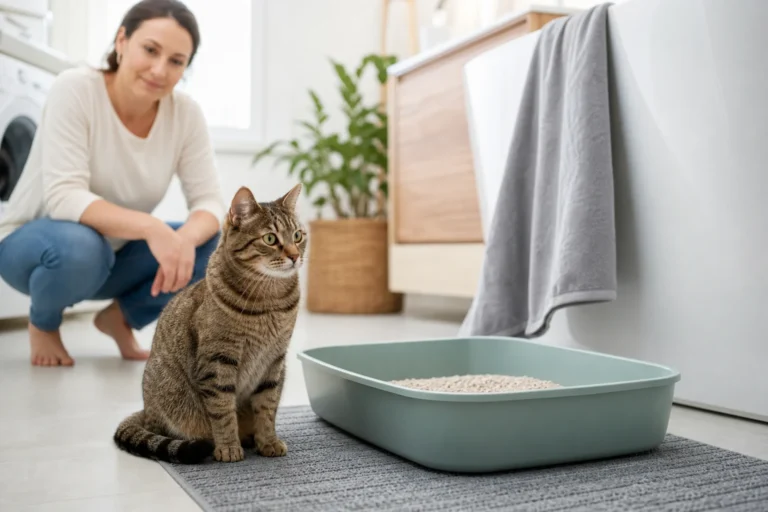
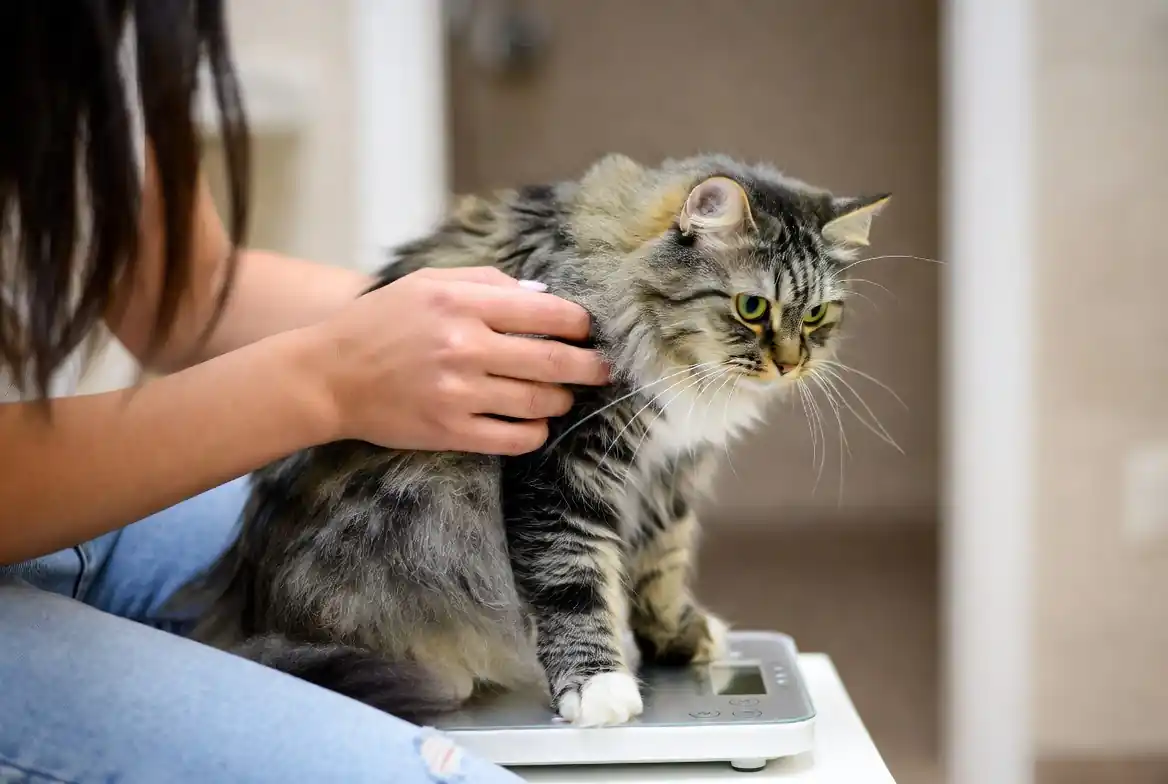
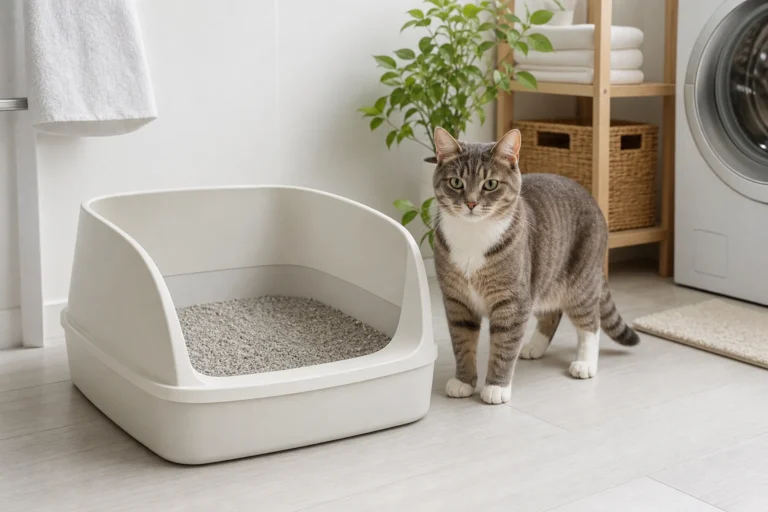
Something changed: the bowl, the scale, the litter tray, the routine.
02
Prepare
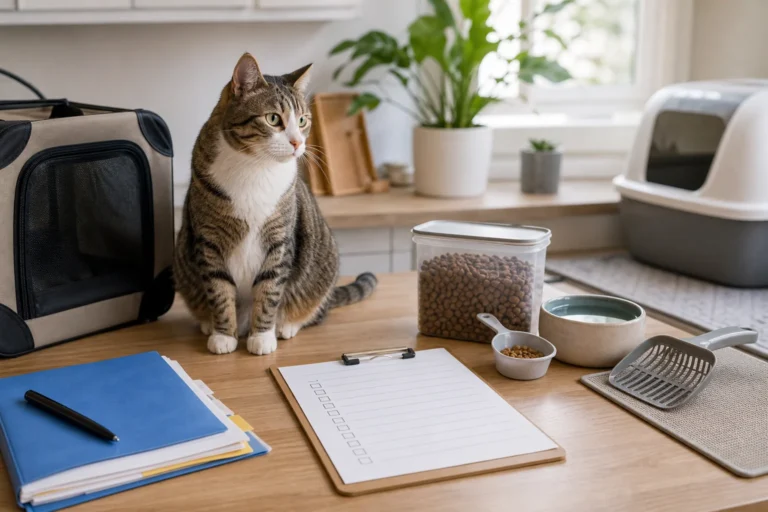
The two or three facts a vet would ask for first.
03
Estimate
A number with its assumptions shown, not a black box.
04
Record
A dated record you can compare against next week.
05
Next step
What to do today, and what would make it urgent.
Start with the question you have
Every tool, grouped by the question it answers.
Each one says what you need to bring and what you leave with, so a single sentence tells you whether it fits. Pick the nearest match; nothing here needs an account.
The feeding plan that ends in someone else’s hands.
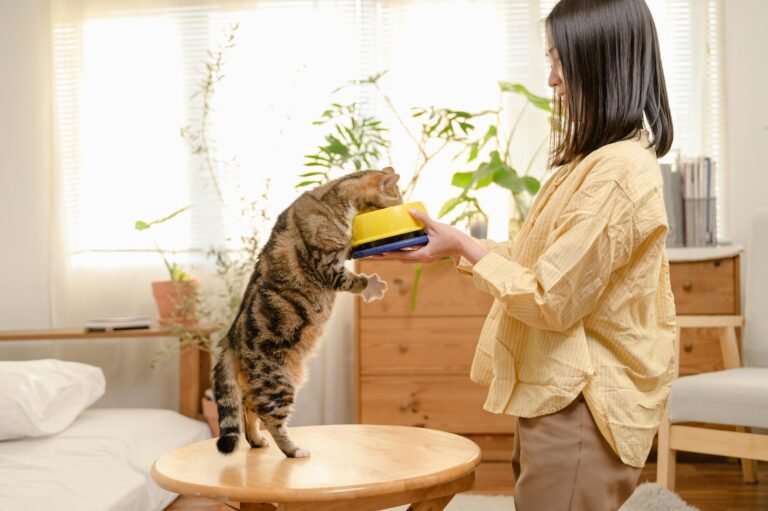
“How much should I feed my cat?” is rarely one question. It becomes a target, then portions, then a record, then instructions for whoever feeds her while you are away. Each step hands its result to the next — which is why the tools are built to be used in that order.
STEP 01
Set the target
Weight and profile give a daily estimate, with the assumptions shown next to it.
STEP 02
Turn it into meals
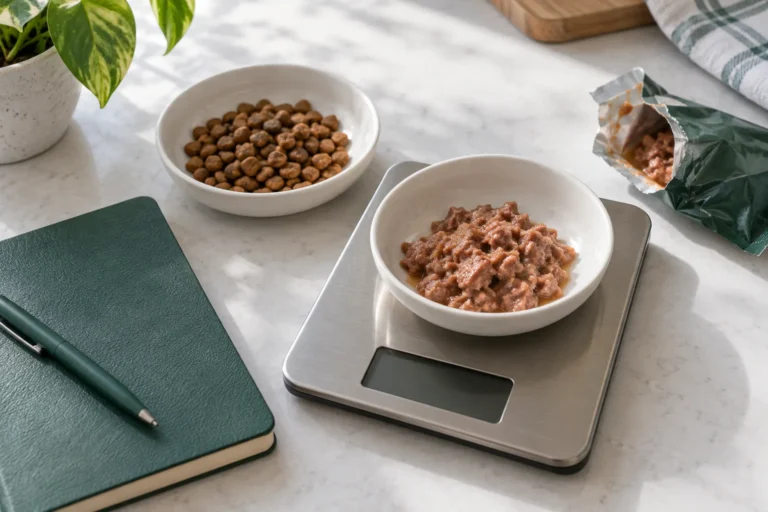
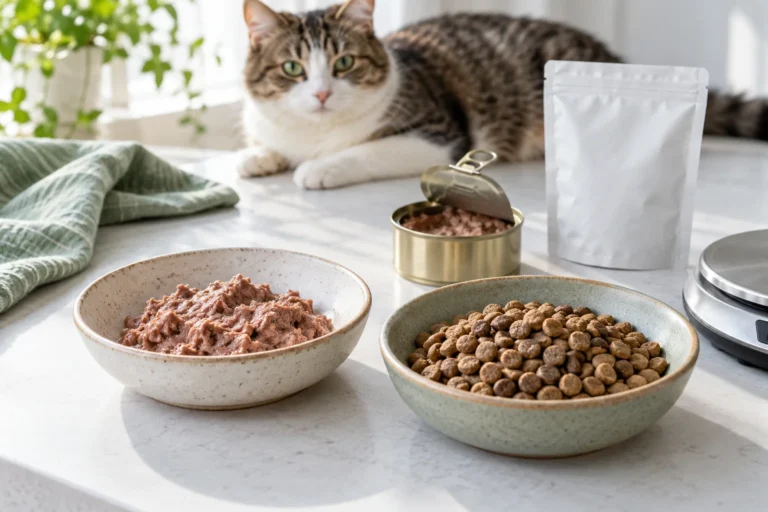
The same target as grams of wet and dry food, plus what it costs per day.
STEP 03
Keep the record
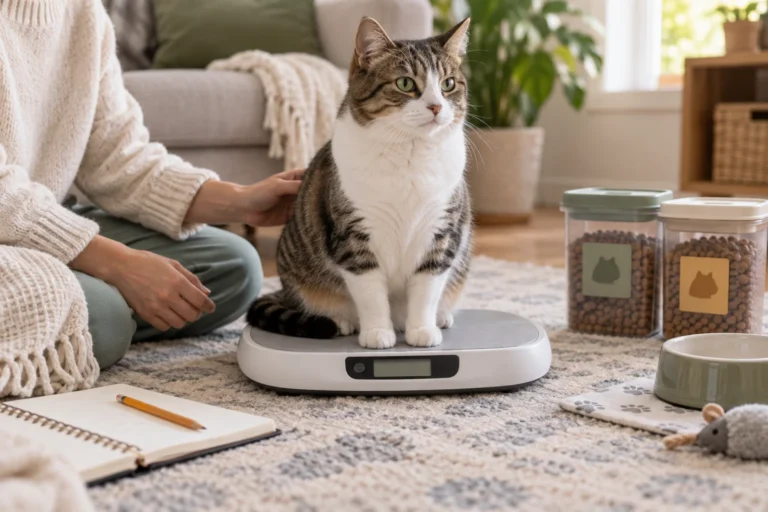
Log the weight you actually see over the following weeks, not the one you hoped for.
STEP 04
Hand it over
The plan becomes a single sheet that a sitter, a partner or a vet can follow.
Sources are named. Every tool and guide lists the references behind its numbers, and links to them.
Limits are stated. An estimate is not a diagnosis. Where a topic needs a vet, the page says so before you act.
Nothing is gated. No account, no email, no paywall. Results print on one page.
Are the calculators free?
Yes. Every tool runs in your browser, needs no account, and can be printed or saved as a PDF.
Can a calculator tell me whether my cat is ill?
No. The tools organise what you already observe — weight, portions, litter, stool — into something easier to act on and easier to describe to a vet. They do not diagnose.
Where do the numbers come from?
Each tool and guide names its sources, including Cornell Feline Health Center, the Merck Veterinary Manual, VCA Hospitals, iCatCare, the RSPCA and Battersea. The reference list sits on the page itself.
Can I take the results to a vet visit?
That is what they are for. The weight log and the sitter sheet both print on a single page, and every result shows which inputs produced it.
Not sure which tool fits?
Open the directory and pick by the question you have, not by the name of the calculator.








 EN
 DE
 ES
 PT