
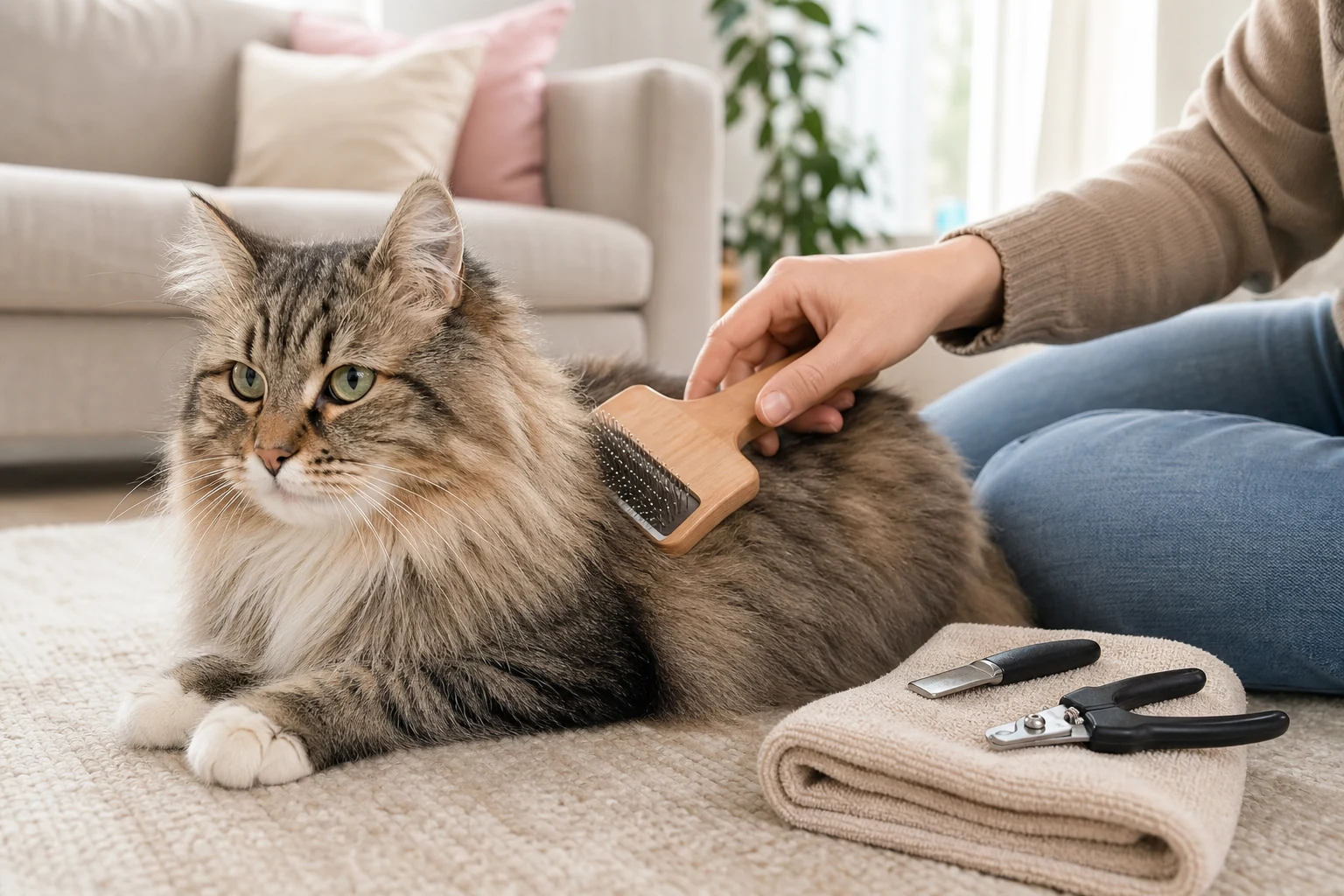
Zu einer guten Fellpflege bei Katzen gehören vor allem sanftes Bürsten, regelmäßige Kontrollen von Haut, Ohren und Krallen sowie schnelles Handeln, wenn etwas schmerzhaft oder ungewöhnlich aussieht. Die meisten gesunden Katzen müssen nur selten gebadet werden, und jede Pflegemaßnahme sollte abgebrochen werden, bevor sie zu einem Kampf wird.
Bei der Fellpflege geht es nicht darum, eine Katze gepflegt aussehen zu lassen. Sie hilft, schmerzhafte Verfilzungen zu vermeiden, Veränderungen frühzeitig zu erkennen und bietet Ihnen eine zuverlässige Möglichkeit, Ihre Katze von der Nase bis zum Schwanz zu untersuchen. Die beste Routine richtet sich nach Fellbeschaffenheit, Alter, Gesundheitszustand und Toleranz der jeweiligen Katze.
Inhaltsübersicht
- Was gehört zu einer umfassenden Katzenpflege dazu?
- Wie oft sollte man seine Katze pflegen?
- Wie børstet man eine Katze sicher?
- Was kann man gegen Verfilzungen und Knoten tun?
- Wann muss eine Katze gebadet werden?
- Wie sollte man die Ohren einer Katze überprüfen und reinigen?
- Wie sollte man die Krallen einer Katze pflegen?
- Wie kann man die Fellpflege stressfreier gestalten?
- Wann ist eine Veränderung im Fellpflegebedürfnis ein Warnzeichen, das einen Tierarztbesuch erforderlich macht?
- Fazit: Schaffen Sie eine Routine, bei der es um Wohlbefinden geht
- Häufig gestellte Fragen
- Referenzen
Was gehört zu einer umfassenden Katzenpflege dazu?
Zu einer umfassenden Pflege gehören das Bürsten oder Kämmen, die Überprüfung von Haut und Fell, die Untersuchung der sichtbaren Außenohren, die Kontrolle jeder einzelnen Kralle sowie das Baden nur bei eindeutigem Bedarf. Außerdem sollten Sie darauf achten, ob sich Ihre Katze deutlich mehr oder weniger als gewöhnlich putzt.
Nutzen Sie die Zeit beim Pflegen, um auf Folgendes zu achten:
- Neue Knoten, Krusten, Rötungen, kahle Stellen, Schuppen oder Parasiten.
- Verfilzungen oder Knoten, insbesondere hinter den Ohren, unter den Vorderbeinen und um die Hinterbeine herum.
- Fettiges, verschmutztes, mit Urin oder Kot verschmutztes Fell.
- Rötungen im Ohr, Geruch, dunkler Schmutz, Schwellungen, Ausfluss oder Empfindlichkeit.
- Gespaltene, verwachsene, eingewachsene oder schmerzende Krallen.
- Eine plötzliche Veränderung in der Art und Weise, wie Ihre Katze auf Berührungen reagiert.
Regelmäßiges Bürsten entfernt loses Fell und hilft Ihnen dabei, die Haut auf Parasiten oder Erkrankungen zu untersuchen.1 2 Fügen Sie diese Prüfungen zu Ihren anderen hinzu Tägliche Katzenpflege anstatt auf eine gründliche Fellpflege zu warten.
| Pflegeaufgabe | Praktischer Ausgangspunkt | Holen Sie sich Hilfe, wenn |
|---|---|---|
| Bürste oder Kamm | Kurzhaarkatzen einmal pro Woche; Langhaarkatzen oft täglich | Die Matten sitzen zu fest, sind schmerzhaft oder liegen direkt auf der Haut auf |
| Haut- und Felluntersuchung | Bei jedem Zähneputzen | Sie stellen Wunden, kahle Stellen, Parasiten oder schmerzende Haut fest |
| Ohrenuntersuchung | Kurz gesagt, alle ein bis zwei Wochen | Es treten Geruch, Ausfluss, Rötung, Schmerzen oder Kopfschütteln auf |
| Klauenprüfung | Alle ein bis zwei Wochen | Eine Kralle sitzt fest, ist eingerissen, geschwollen oder schmerzt |
| Bath | Nur bei Bedarf | Ihre Katze ist infiziert, gesundheitlich angeschlagen oder kann nicht sicher gebadet werden |
Wie oft sollte man seine Katze pflegen?
Pflegen Sie Ihr Tier regelmäßig genug, um Verfilzungen zu vermeiden und Veränderungen zu erkennen, aber halten Sie die Pflegeeinheiten kurz und angenehm. Langes, seidiges oder lockiges Fell erfordert möglicherweise tägliche Pflege, während viele kurzhaarige Katzen seltener gebürstet werden müssen.1
Ihre Katze benötigt möglicherweise zusätzliche Hilfe, wenn sie:
- Langhaarig, mit dichtem Fell oder starker Haarausfall.
- Ein Kätzchen, das noch lernen muss, sich anfassen zu lassen.
- Älter, übergewichtig, an Arthritis leidend oder weniger beweglich.
- Erholung nach einer Krankheit oder das Tragen eines Halskragens.
- Einen Teil des Körpers kann man nicht bequem erreichen.
Die Häufigkeit ist nicht das einzige Kriterium für eine gute Routine. Fünf ruhige Minuten mehrmals pro Woche sind in der Regel sinnvoller als eine lange Einheit, die in Angst oder Anstrengung endet.
Wie børstet man eine Katze sicher?
Bürsten Sie in Wuchsrichtung des Fells mit einem für das Fell geeigneten Bürstenwerkzeug, mit leichtem Druck und in kurzen Strichen. Beginnen Sie an einer Stelle, an der Ihre Katze es bereits genießt, gestreichelt zu werden, und überprüfen Sie dabei die Haut.
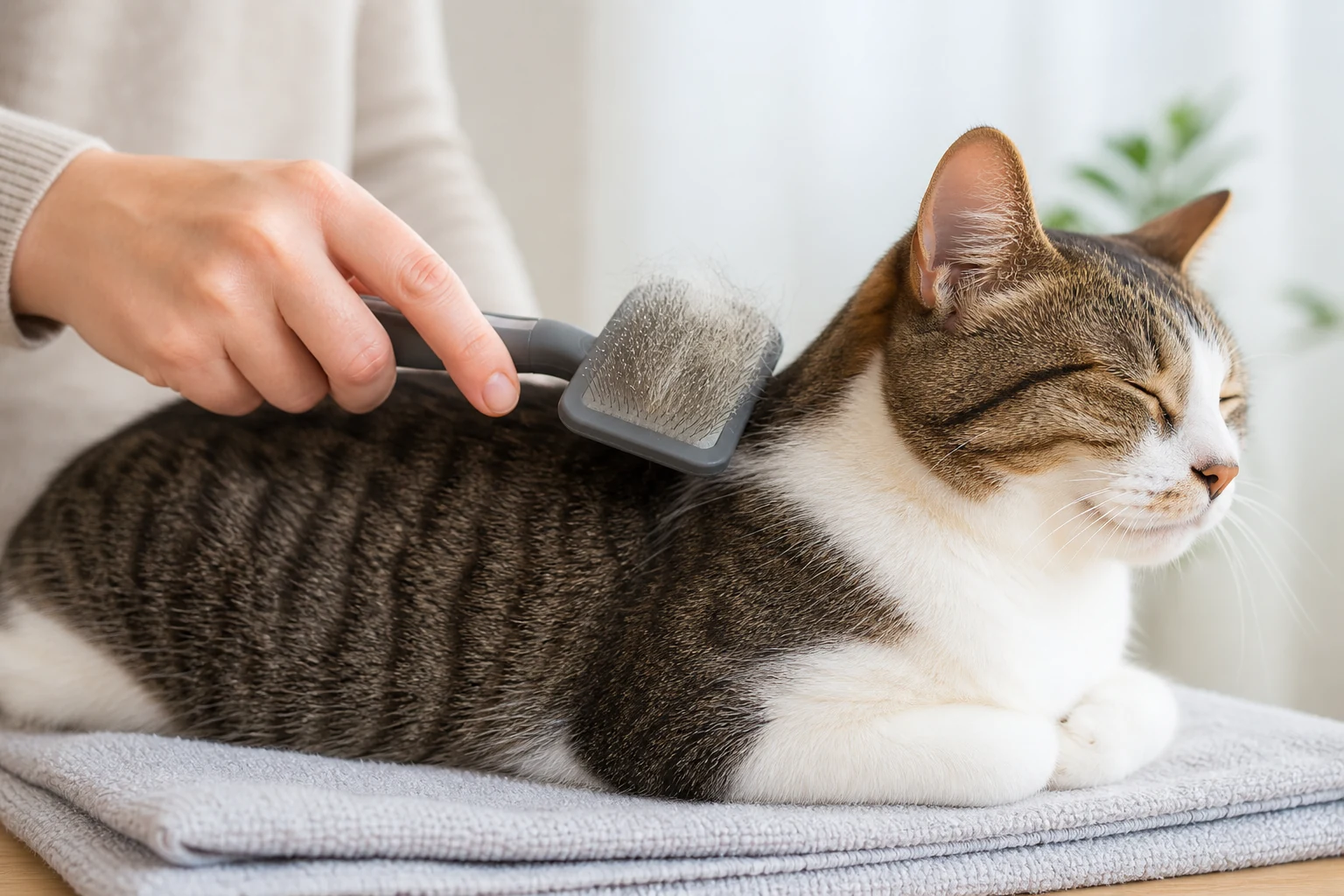
Probier mal diese Abfolge aus:
- Lassen Sie Ihre Katze die Bürste erkunden und belohnen Sie sie, wenn sie ruhiges Interesse zeigt.
- Führen Sie ein oder zwei sanfte Striche über die Schultern oder den Rücken aus.
- Halten Sie kurz inne und beobachten Sie die Körpersprache Ihrer Katze.
- Machen Sie zunächst mit den einfacheren Bereichen weiter, bevor Sie sich an den Bauch, die Beine oder den Schwanz wagen.
- Beenden Sie die Fütterung, bevor Ihre Katze unruhig wird.
Für kurzes Fell eignet sich eine Bürste mit weichen Borsten oder ein Pflegewerkzeug aus Gummi gut. Bei längerem Fell helfen ein breitzinkiger Kamm und eine für das Fell geeignete Bürste. VCA weist darauf hin, dass regelmäßiges Bürsten lose Haare, abgestorbene Haut, Schmutz und Ablagerungen entfernt und gleichzeitig die natürlichen Hautfette verteilt.1
Kratzen Sie die Haut nicht mit Metallzinken ab und ziehen Sie nicht wiederholt an einer Verfilzung. Überprüfen Sie das Gerät nach einigen Zügen; das Entfernen einer moderaten Menge losen Fells kann normal sein, Hautirritationen oder plötzlicher fleckiger Haarausfall hingegen nicht.
Was kann man gegen Verfilzungen und Knoten tun?
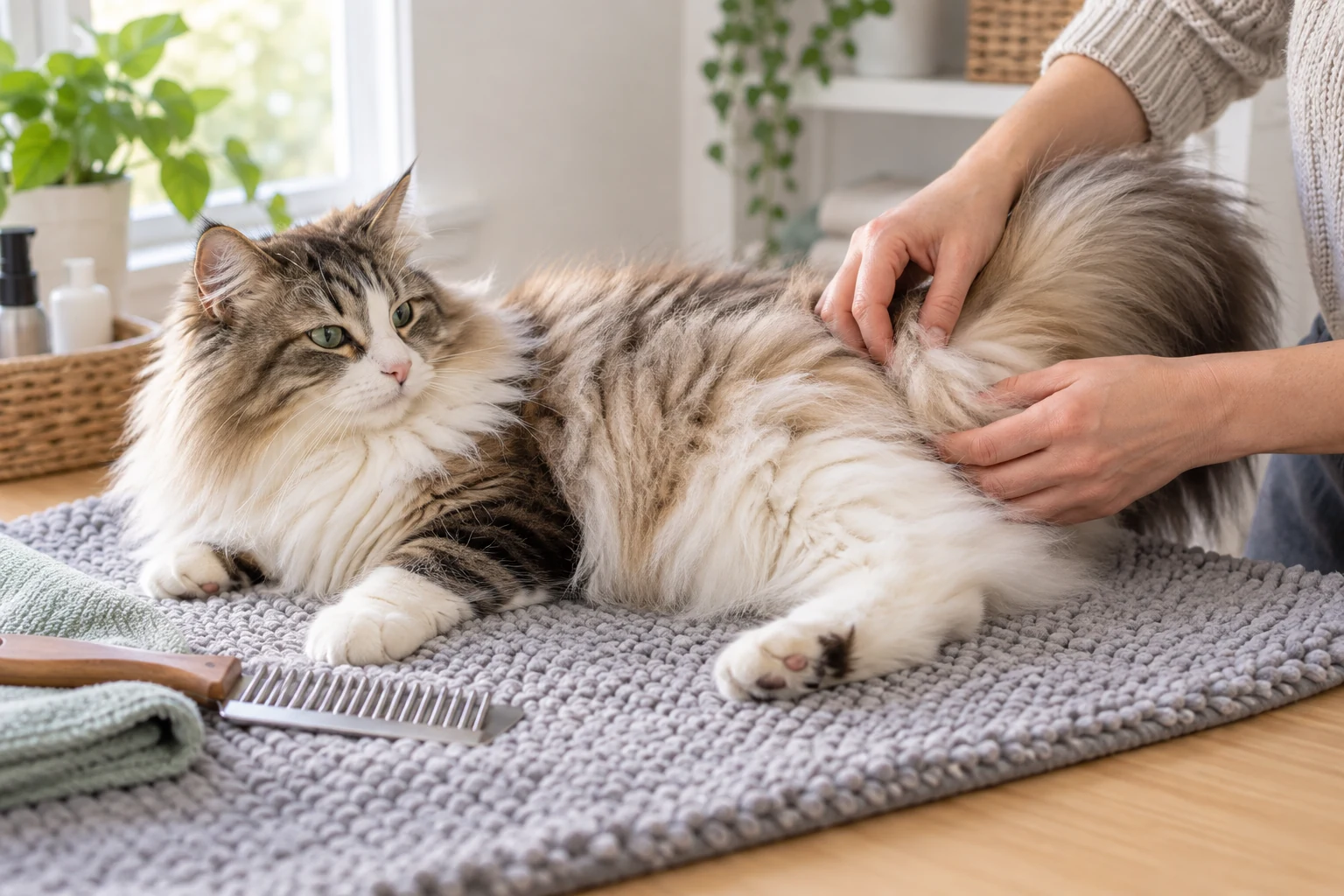
Kleine, lockere Verfilzungen lassen sich vorsichtig mit den Fingern und einem breitzinkigen Kamm entwirren, doch bei festen Verfilzungen ist professionelle Hilfe erforderlich. Schneiden Sie eine Verfilzung niemals mit einer Schere auf, da die Haut von Katzen dünn und beweglich ist und leicht in die Verfilzung hineingezogen werden kann.
So beugen Sie Verfilzungen vor:
- Kämmen Sie Bereiche mit hoher Reibung regelmäßig durch.
- Achten Sie darauf, dass die Fellpflege während des saisonalen Haarwechsels regelmäßig erfolgt.
- Beseitigen Sie kleine Verfilzungen, bevor sie sich verfestigen.
- Halten Sie langes Fell sauber und trocken.
- Fragen Sie einen Tierarzt, wenn Sie plötzliche Veränderungen im Fell oder eine verminderte Fellpflege bemerken.
Ein fest sitzender Verfilz kann schmerzhaft an der Haut ziehen und Reizungen, Wunden oder Parasiten verdecken. Wenn der Verfilz direkt an der Haut anliegt, großflächig ist, feucht ist, übel riecht oder Schmerzen verursacht, wenden Sie sich an einen Tierarzt oder einen erfahrenen Katzenfriseur, anstatt zu versuchen, ihn zu Hause zu entfernen.
Wann muss eine Katze gebadet werden?
Die meisten gesunden Katzen benötigen keine regelmäßigen Bäder, da sie sich selbst effektiv pflegen. Ein Bad kann sinnvoll sein, wenn das Fell fettig, stark verschmutzt, klebrig oder verunreinigt ist oder wenn ein Tierarzt einen Badeplan verordnet.1
Vergewissern Sie sich vor dem Baden, dass sich die Substanz auf dem Fell gefahrlos abwaschen lässt. Wenn Ihre Katze mit einer Chemikalie, einem ätherischen Öl, einem Medikament, Farbe, Kraftstoff oder einer unbekannten Substanz in Kontakt gekommen ist, verhindern Sie, dass sie sich leckt, und rufen Sie sofort einen Tierarzt oder einen Giftnotdienst für Haustiere an. Versuchen Sie nicht, die Reinigungsmethode selbst zu bestimmen.
Für ein normales Bad:
- Entfernen Sie zunächst loses Fell mit der Bürste, ziehen Sie jedoch nicht an schmerzhaften Verfilzungen.
- Verwenden Sie eine rutschfeste Unterlage und lauwarmes Wasser.
- Verwenden Sie ausschließlich Shampoo, das für Katzen gekennzeichnet ist oder von Ihrem Tierarzt empfohlen wurde.
- Achten Sie darauf, dass kein Wasser und kein Shampoo in die Augen, die Nase und die Ohren gelangt.
- Gründlich ausspülen und in einem warmen Raum mit einem Handtuch trocknen.
- Hören Sie auf, wenn Ihre Katze in Panik gerät oder sich nicht sicher handhaben lässt.
Shampoo für Menschen, einschließlich Baby-Shampoo, kann für die Haut von Katzen zu aggressiv sein; VCA empfiehlt für das regelmäßige Baden ein speziell für Katzen entwickeltes Produkt.1 Verwenden Sie niemals ein Flohshampoo für Hunde oder andere Produkte, deren Inhaltsstoffe nicht ausdrücklich als für Katzen unbedenklich bestätigt sind.
Wie sollte man die Ohren einer Katze überprüfen und reinigen?
Zur routinemäßigen Pflege heben Sie die Ohrmuschel an und betrachten Sie die sichtbare Haut und die Öffnung, ohne etwas in den Gehörgang einzuführen. Gesunde Ohren sind in der Regel sauber, fühlen sich angenehm an und weisen weder einen starken Geruch noch starken Ausfluss auf.
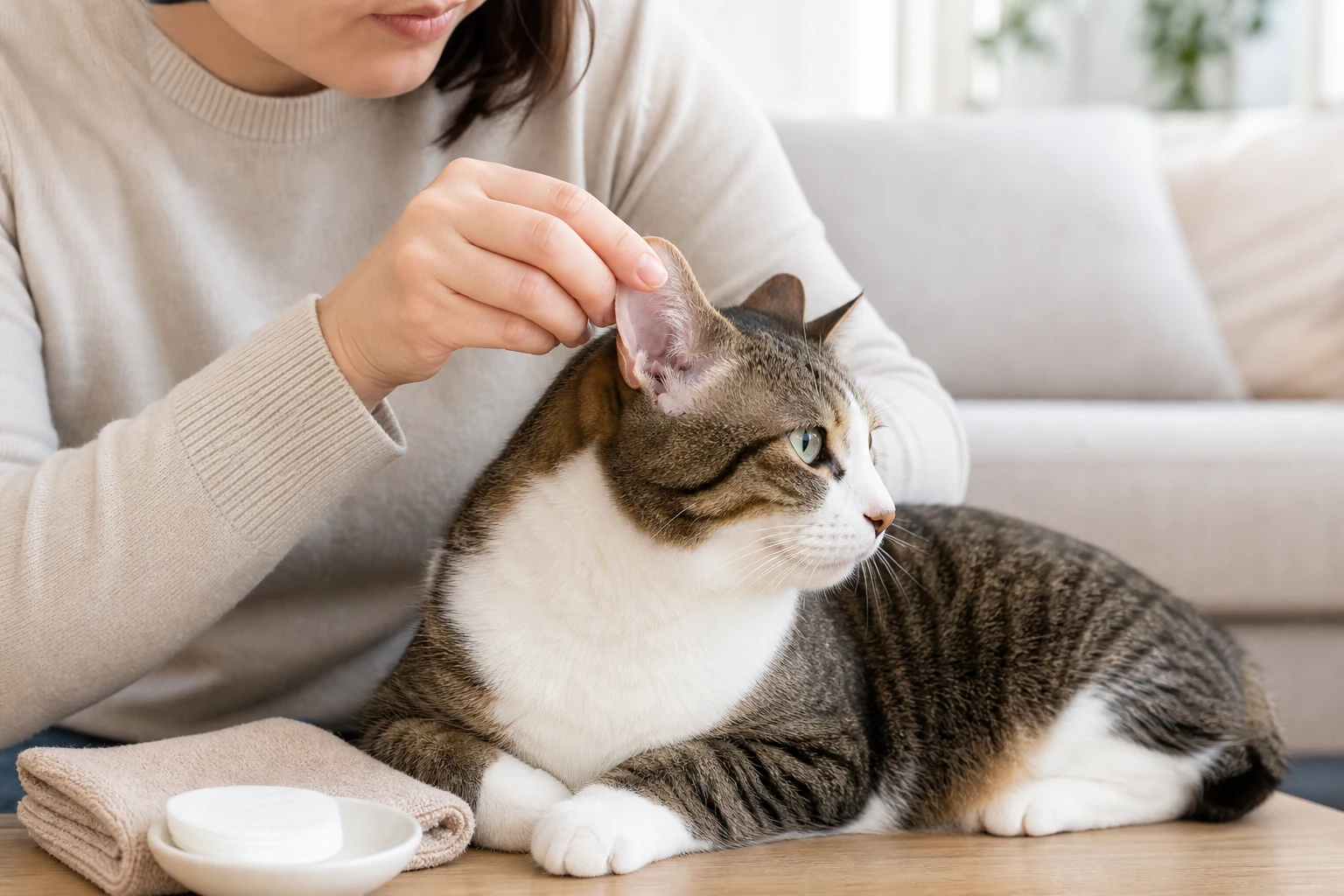
Verwenden Sie keine Wattestäbchen im Gehörgang. Geben Sie kein Reinigungsmittel in ein Ohr, das gerötet, schmerzhaft, geschwollen oder übelriechend ist oder Ausfluss aufweist, es sei denn, Ihr Tierarzt hat das Ohr untersucht und Ihnen mitgeteilt, welches Mittel Sie verwenden sollen. Diese Anzeichen können verschiedene Ursachen haben, darunter Infektionen und Parasiten; lesen Sie dazu die Anzeichen für Ohrmilben bei Katzen Versuchen Sie jedoch nicht, die Ursache zu Hause selbst zu diagnostizieren.
Wenn Ihr Tierarzt eine Ohrenreinigung empfiehlt, verwenden Sie das von ihm empfohlene Produkt und wenden Sie die von ihm gezeigte Technik an. In der Anleitung von VCA zur Ohrenreinigung bei Katzen werden Wattebällchen oder Mull verwendet, um nach dem Auftragen eines geeigneten Reinigungsmittels gelöste Rückstände von der sichtbaren Innenohrmuschel und dem oberen Gehörgang abzuwischen.3
Wie sollte man die Krallen einer Katze pflegen?
Überprüfen Sie regelmäßig alle Krallen, einschließlich der oberen vorderen Afterkrallen und etwaiger zusätzlicher Krallen bei einer polydaktylen Katze. Schneiden Sie nur die scharfe, durchscheinende Spitze ab und lassen Sie vor der rosafarbenen Blutbahn reichlich Platz.
In unserem umfassenden Leitfaden erfahren Sie, wie Sie Katzenkrallen zu Hause sicher schneiden. Die wichtigsten Regeln lauten: Verwenden Sie eine scharfe Katzenschere, schneiden Sie nur ganz wenig ab, belohnen Sie die Katze häufig und hören Sie auf, bevor sie sich wehrt.
Wenden Sie sich an einen Tierarzt, wenn eine Kralle:
- wölbt sich in das Fußballen hinein oder berührt es.
- ist eingerissen, blutet, ist aufgerissen, geschwollen oder weist einen Ausfluss auf.
- Sieht ungewöhnlich dick, spröde oder verformt aus.
- Führt zu Hinken, Lecken oder Schmerzen.
Regelmäßiges Kürzen kann das Risiko verringern, dass eine zu lange Kralle bis zum Fußballen reicht; abnormale und schmerzhafte Krallen sollten jedoch untersucht werden, anstatt sie routinemäßig zu kürzen.2 4
Wie kann man die Fellpflege stressfreier gestalten?
Gestalten Sie die Fellpflege vorhersehbar, kurz und lohnend. Führen Sie jeweils nur ein Hilfsmittel und einen Körperbereich ein, und lassen Sie Ihre Katze sich entfernen, anstatt sie bei zunehmendem Stress festzuhalten.
Achten Sie auf frühe Beschwerden:
- Mit dem Schwanz wedeln oder damit auf den Boden klopfen.
- Zuckungen der Haut.
- Die Ohren drehen sich zur Seite oder legen sich flach an.
- Wiederholt auf das Werkzeug oder die eigene Hand schauen.
- Sich zurückziehen, sich ducken, knurren, nach etwas schlagen oder sich umdrehen, um zuzubeißen.
In Anerkennung der Warnzeichen, bevor eine Katze zubeißt schützt euch beide. Nutzt die umfassenderen Funktionen von SnuggleSouls Ratgeber zum Verhalten von Katzen um zu erfahren, wie sich Körperhaltung, Ohren, Schwanz und Bewegung darauf auswirken, ob sich Ihre Katze wohlfühlt.
Belohnen Sie auch kleine Erfolge: einen Pinselstrich, eine angehobene Ohrenklappe oder eine gestreichegte Pfote. Bestrafen Sie Widerstand niemals. Wenn eine Aufgabe wiederholt den Einsatz von Gewalt erfordert, fragen Sie einen katzenfreundlichen Tierarzt oder Tierpfleger nach einer sichereren Vorgehensweise.
Wann ist eine Veränderung im Fellpflegebedürfnis ein Warnzeichen, das einen Tierarztbesuch erforderlich macht?
Wenden Sie sich an einen Tierarzt, wenn Ihre Katze plötzlich aufhört, sich zu putzen, eine bestimmte Stelle übermäßig putzt, schmerzhafte Verfilzungen entwickelt oder Anomalien an Haut, Ohren oder Krallen aufweist. Eine Veränderung im Putzverhalten kann ein frühes Anzeichen für Schmerzen, Zahnerkrankungen, Arthritis, Parasitenbefall, Allergien, Hauterkrankungen, Stress, Übergewicht oder ein anderes Gesundheitsproblem sein.
Zu den Warnzeichen gehören:
- Sich rasch ausbreitender Haarausfall, offene Wunden, Blutungen oder starker Juckreiz.
- Starker Geruch aus dem Ohr, Ausfluss, Schwellung, Kopfneigung, Gleichgewichtsstörungen oder Schmerzen.
- Eine chemische oder potenziell giftige Substanz auf dem Fell.
- Eine Katze, die aufgrund von Schmerzen oder eingeschränkter Beweglichkeit ihr Fell nicht erreichen kann.
- Plötzliche Aggression oder Unbehagen, wenn eine zuvor tolerierte Körperstelle berührt wird.
- Appetitlosigkeit, ausgeprägte Lethargie, Schwäche, Atembeschwerden oder rascher Gesundheitsverfall.
Gehen Sie nicht davon aus, dass eine Katze faul oder schwierig ist. Vergleichen Sie das Verhaltensmuster mit häufigen Ursachen für Überpflege und Unterpflege und einen Tierarzttermin vereinbaren, wenn die Veränderung neu auftritt, anhält, schmerzhaft ist oder mit anderen Symptomen einhergeht.
Fazit: Schaffen Sie eine Routine, bei der es um Wohlbefinden geht
Die beste Pflege für Katzen ist regelmäßig genug, um Problemen vorzubeugen, und sanft genug, um das Vertrauen zu bewahren. Bürsten Sie das Fell entsprechend den Bedürfnissen, untersuchen Sie Ohren und Krallen, ohne zu tief hineinzufassen oder Gewalt anzuwenden, baden Sie die Katze nur bei Bedarf und suchen Sie Hilfe bei schmerzhaften Verfilzungen oder auffälligen Befunden.
Fangen Sie klein an. Eine ruhige, zweiminütige Untersuchung heute kann die zukünftige Pflege erleichtern und Ihnen helfen, gesundheitliche Veränderungen zu erkennen, bevor sie schwieriger zu bewältigen sind.
Häufig gestellte Fragen
Müssen Hauskatzen gepflegt werden?
Ja. Auch Hauskatzen haaren, bekommen Verfilzungen, ihre Krallen wachsen zu lang und es können sich Veränderungen an Haut oder Fell zeigen. Regelmäßiges Bürsten und kurze Kontrollen sind sinnvoll, auch wenn eine Katze ihr Fell selbst sauber hält.
Wie oft sollte ich eine kurzhaarige Katze bürsten?
Das wöchentliche Bürsten ist für viele Kurzhaarkatzen ein praktischer Ausgangspunkt, wobei während des starken Haarwechsels häufiger gebürstet werden sollte. Passen Sie den Zeitplan an das jeweilige Fell und die Toleranz Ihrer Katze an.
Wie oft sollte ich eine langhaarige Katze bürsten?
Viele langhaarige Katzen müssen täglich gekämmt oder gebürstet werden, um Verfilzungen und Knoten zu vermeiden. Achten Sie besonders auf die Bereiche hinter den Ohren, unter den Vorderbeinen und um die Hinterbeine herum.
Kann ich eine verfilzte Katze zu Hause rasieren?
Verwenden Sie keine Schere bei Verfilzungen und versuchen Sie nicht, das Fell ohne entsprechende Schulung kurz zu scheren. Katzenhaut kann leicht in Verfilzungen hineingezogen und dabei verletzt werden; daher sollten dichte oder ausgedehnte Verfilzungen besser von einem Tierarzt oder einem erfahrenen Katzenfriseur behandelt werden.
Sollte ich die Ohren meiner Katze jede Woche reinigen?
Nicht unbedingt. Untersuchen Sie sie regelmäßig, reinigen Sie sie jedoch nur bei Bedarf und mit einem vom Tierarzt empfohlenen Produkt und einer von ihm empfohlenen Methode. Bei Schmerzen, Rötungen, Geruch, Schwellungen oder Ausfluss sollten Sie vor einer Reinigung zu Hause einen Tierarzt aufsuchen.
Kann ich mein Katzen-Shampoo für Menschen verwenden?
Nein. Verwenden Sie ausschließlich Produkte, die für Katzen zugelassen sind oder von Ihrem Tierarzt empfohlen werden. Shampoo für Menschen kann die Haut von Katzen reizen, und manche Produkte, die für andere Tierarten hergestellt wurden, können gefährlich sein, wenn Katzen ihr Fell ablecken.
Referenzen
[1] VCA Animal Hospitals. (2026). Pflege und Fellpflege für Ihre Katze. Lesen Sie den VCA-Leitfaden zur Katzenpflege
[2] Cornell Feline Health Center. (2026). Die Auswahl und Pflege Ihrer neuen Katze. Lesen Sie die Ratgeber zur Katzenpflege von Cornell
[3] VCA Animal Hospitals. (2026). Anleitung zur Ohrenreinigung bei Katzen. Lesen Sie den VCA-Leitfaden zur Ohrreinigung bei Katzen
[4] VCA Animal Hospitals. (2026). Krallenpflege und Krallenschnitt bei Katzen. Lesen Sie den VCA-Leitfaden zur Nagelpflege






 EN
EN DE
DE ES
ES PT
PT