

Inhaltsübersicht
In nur 2 Minuten erfahren Sie, ob eine Ragdoll zu Ihnen passt – und wie Sie sie richtig pflegen.
Kurze Antwort
Ragdolls sind große, sanftmütige und menschenbezogene Katzen Sie werden oft als “welpenhaft” beschrieben, da sie den Familienmitgliedern überallhin folgen und die Aufmerksamkeit genießen. Viele finden in deinen Armen Ruhe, was den Namen der Rasse inspirierte.
Die meisten Besitzer schätzen sie besonders wegen:
- Sehr anhänglich, ruhiges Wesen (ideal für Familien, die sich ein kuschelig Katze)
- Große Größe + langsame Reifung (Viele erreichen ihre volle Reife erst nach etwa 3–4 Jahren.)
- Mäßiger Pflegeaufwand (seidiges, halblanges Fell; wird in der Regel 1–2 Mal pro Woche gebürstet)
- Es wird dringend empfohlen, sich ausschließlich in Innenräumen aufzuhalten. (Ihre vertrauensvolle Art kann dazu führen, dass sie im Freien nur schlecht überleben können)
- Gesundheitsplanung ist wichtig: Fragen Sie die Züchter nach Herzuntersuchungen / Gentests für HCM in Ragdoll-Linien
Am besten geeignet für: Haushalte, die sich einen sanftmütigen Begleiter wünschen und ihm täglich Aufmerksamkeit schenken können.
Nicht ideal für: Menschen, die sich eine unabhängige Katze oder eine Katze wünschen, die sich sicher im Freien aufhalten kann.
Ragdoll auf einen Blick
| Charakteristisch | Beschreibung |
| Persönlichkeit | Entspannt, glücklich, liebevoll, ruhig, entspannt, intelligent, tolerant gegenüber Kindern und anderen Haustieren, hundeähnliche Eigenschaften. |
| Gehäuse Typ | Groß; Männchen sind oft schwerer als Weibchen (siehe Gewicht Bereich (siehe unten) |
| Gewicht | Männlich: 15–20 lb (6,5–9 kg) • Weiblich: 10–15 lb (4,5–6,5 kg) (das ist von Person zu Person unterschiedlich) |
| Herkunft Region | Riverside, Kalifornien, USA |
| Lebenserwartung | Allgemein 12–17 Jahre bei guter Innenpflege (manche leben länger) |
| Mantel Typ | Mittellanges, seidiges Fell; neigt weniger zum Verfilzen als Rassen mit dichter Unterwolle, muss aber dennoch regelmäßig gebürstet werden |
| Fellfarben | Seal, Blue, Chocolate, Lilac, Red, Cream, Cinnamon, Fawn (auch Tortoiseshell und Lynx Varianten). |
| Shedding Level | ⭐⭐⭐☆☆ (Mäßig) möglicherweise stärkerer saisonaler Haarausfall |
| Zuneigung zu den Menschen | ⭐⭐⭐⭐⭐ (Sehr hoch) |
| Pflege-Schwierigkeit | ⭐⭐⭐☆☆ (mäßig) |
Tipp des Besitzers: Da Ragdolls so gelassen sein können, “beschweren” sie sich möglicherweise nicht lautstark, wenn sie sich unwohl fühlen. Achten Sie auf subtile Veränderungen (Appetit, Verstecken, Verhalten beim Toilettengang) und wenden Sie sich an Ihren Tierarzt, wenn Ihnen etwas ungewöhnlich erscheint.
Einführung
Die Ragdoll-Katze ist bekannt für seine große Statur, auffällige blaue Augen und ein ausgesprochen liebevolles Wesen. Viele Ragdolls lassen sich gerne auf den Arm nehmen und entspannen sich in Ihren Armen – ein Grund, warum man sie oft als “schlaff” oder “ragdollartig” beschreibt.”
Sie werden oft mit Hunden verglichen, weil sie treu, gesellig und verspielt: Ihnen von Zimmer zu Zimmer folgen, Sie an der Tür begrüßen und interaktive Spiele spielen.
Wenn Sie sich einen ruhigen Begleiter wünschen, der die Nähe zu Menschen genießt, kann eine Ragdoll genau das Richtige für Sie sein – besonders in Familienhaushalten, in denen die Katze ausschließlich im Haus lebt.

Geschichte der Rasse
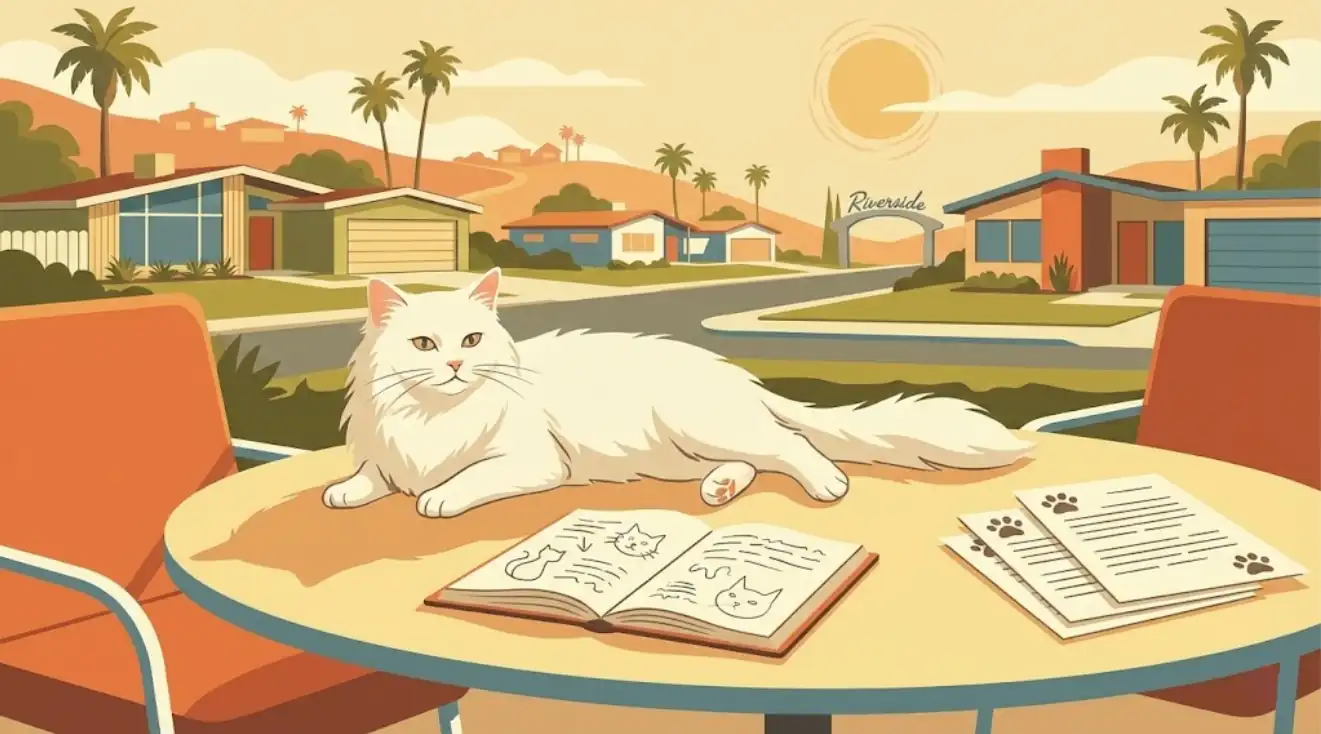
Die Rasse der Ragdoll-Katze wurde in der 1960er Jahre in Riverside, Kalifornien, vom Züchter Ann Baker.
Die meisten Rassegeschichten führen die Entstehung der Ragdoll auf eine weiße Hauskatze mit langem Fell ohne Stammbaum namens Josephine. In der Darstellung der CFA wird Josephine als Stammkatze und Trägerin des Colorpoint-Gen, was mit dem heute bei Ragdolls zu beobachtenden „Spitzenmuster“ übereinstimmt.
In frühen Zuchtunterlagen wird häufig eine kleine Gruppe von Katzen hervorgehoben, die zum Kern der Rasse wurden – insbesondere Daddy Warbucks, Fugianna und Buckwheat—von denen die heutigen Ragdolls nach allgemeiner Auffassung abstammen.
Ein häufig genannter Meilenstein aus der Anfangszeit ist der Am 30. Dezember 1966 wurden die ersten Ragdolls bei der National Cat Fanciers’ Association (NCFA) registriert.einschließlich Daddy Warbucks und Fugianna zu den ersten registrierten Katzen.
Als die Rasse zunehmend Beachtung fand, wählte Baker Hauskatzen mit langem Fell aus und kreuzte sie, um das von ihr gewünschte Temperament und Aussehen zu erzielen, und formte so nach und nach die moderne Ragdoll. Die CFA merkt an, dass Baker den Rassennamen auch mit Berichten in Verbindung brachte, wonach Josephine so sanftmütig war, dass sie “schlaff wurde”, wenn man sie hochhob – ein Detail zur Herkunft, das nach wie vor Teil der Ragdoll-Überlieferung ist, auch wenn es bei heutigen Katzen nicht mehr allgemein zutrifft.
Als das Interesse an der Rasse zunahm, gründete Baker den International Ragdoll Cat Association (IRCA) in 1971, mit dem Ziel, die Zucht und die Registrierung streng zu kontrollieren. Im Laufe der Zeit entschieden sich einige der ersten Züchter dafür, über traditionellere Katzenverbände und unabhängige Vereine eine breitere Anerkennung anzustreben.
In historischen Berichten wird zudem erwähnt, dass Denny und Laura Dayton kaufte frühe Zuchtkatzen von Baker (oft datiert auf 1969) und spielte später eine Schlüsselrolle bei der Gründung von Zuchtvereinen und der Herausgabe von Publikationen, die dazu beitrugen, den Ragdoll-Standard zu festigen und die Rasse einem breiteren Publikum bekannt zu machen.
In Bezug auf wichtige Meilensteine in der Anerkennung durch die Katzenzüchterverbände berichtet die CFA, dass Ragdolls 1993 zur Eintragung zugelassen und rückte vor bis Meisterschaftsstatus im Jahr 2000.
Körperliche Merkmale (Größe, Statur, Fell, Farbe)
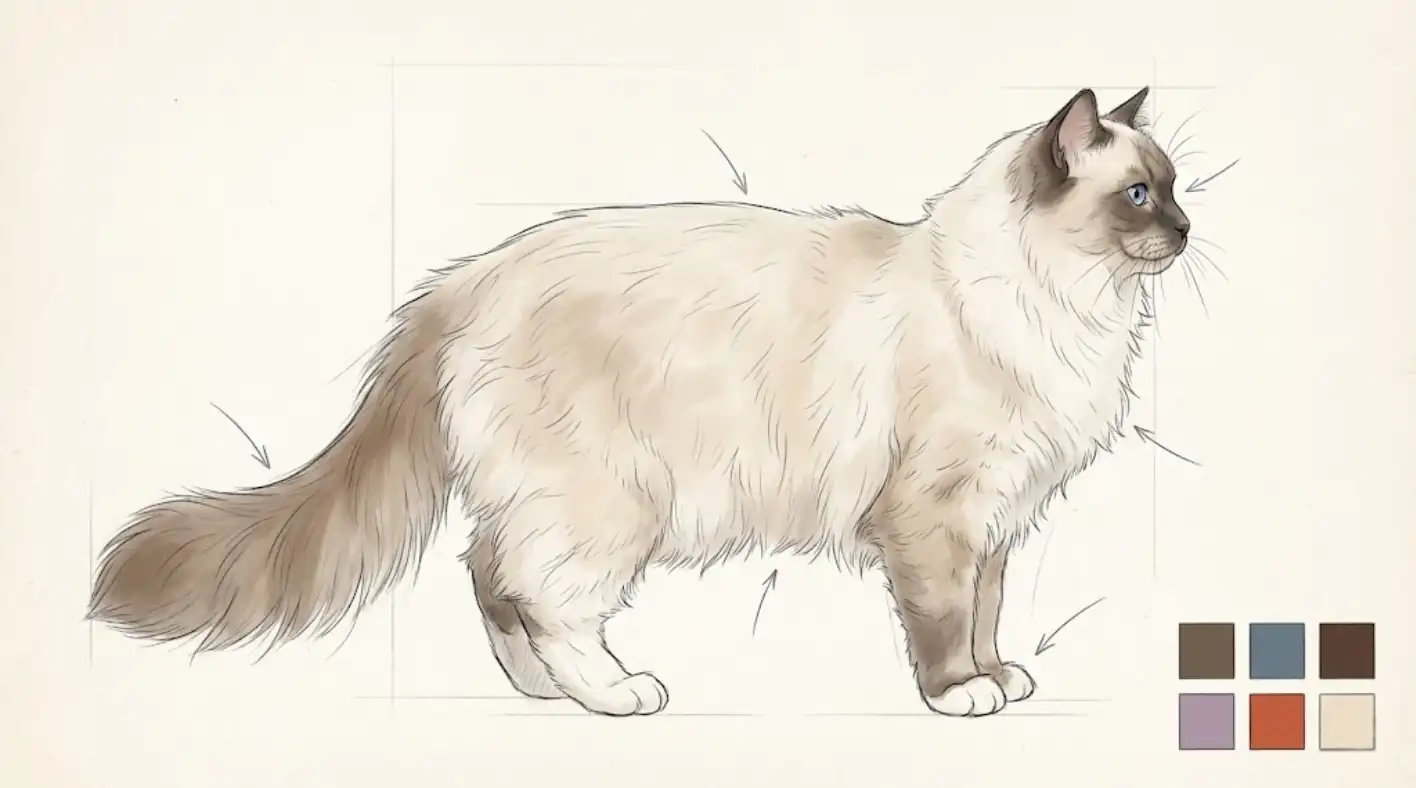
Die Ragdoll-Katze ist eine große, kräftig gebaute Rasse mit einem langen, muskulösen Körperbau und einem insgesamt eher “zurückhaltend kraftvollen” Erscheinungsbild statt eines extremen, übertriebenen Typs.
Größe und Gewicht (Erwachsener):
- Männlich: allgemein 15–20 lb (6,5–9 kg), und es ist nicht ungewöhnlich, dass manche ausgewachsenen Männchen über 20 Pfund.
- Weiblich: typischerweise 10–15 lb (4,5–6,5 kg) und sind deutlich kleiner als die Männchen.
Langsame Reifung (ein charakteristisches Merkmal der Rasse):
Ragdoll ist langsam reifend und erreichen möglicherweise erst dann ihre volle Größe und ihr volles Gewicht, wenn etwa 4 Jahre. Ihr Fell und ihre Fellfarbe können sich noch über Jahre hinweg weiterentwickeln – in einigen Quellen wird die “vollständige Fellfarbe” auf etwa 2 Jahre, wobei in den Rassestandards zudem darauf hingewiesen wird, dass die Farbe möglicherweise erst dann vollständig ausgereift ist, wenn etwa 3 Jahre.
Körper, Kopf und Augen (so sieht der “Reinrassetyp” aus):
- Haupttext: mittel-langer bis langer Oberkörper, breite Brust, kräftiger Knochenbau und ein Mittelstarkes Bauchpolster für den Unterbauch wird als akzeptabel angesehen.
- Die Augen: große, ovale, blaue Augen sind ein charakteristisches Merkmal; die Rassestandards ahnden bzw. schließen eine andere Augenfarbe als Blau bei dieser Rasse aus.
- Schwanz: lang und voll beflügelt.
Fellstruktur (warum es sich “seidig” anfühlt):
Der Mantel ist halblang und beschrieben als seidenweich, mit minimale/unbedeutende Unterwolle (mehr Deckhaare als dichte Wolle). Dies wirkt sich auf den Griff und den Sitz des Fells am Körper aus.
Farbe, Muster und warum Kätzchen zunächst weiß sind:
Ragdoll ist ein Colorpoint-Rasse: Der Körper ist leichter, während der Ohren, Gesicht (Maske), Beine/Füße und Schwanz sind dunkler (“Punkte”).
Dies hängt zusammen mit Varianten des TYR-Gens (Tyrosinase) die die Pigmentbildung temperaturabhängig beeinflussen (ein wesentlicher Grund dafür, dass sich “Flecken” an kühleren Körperstellen stärker ausbilden).
Farbentwicklung bei Kätzchen (was Besitzer erwarten sollten):
- Ragdoll-Kätzchen werden häufig als von Geburt an weiß, wobei Farben und Muster danach allmählich erscheinen – oft werden sie bereits innerhalb der ersten 1-2 Wochen.
- Die endgültige Farbtiefe kann Jahre, daher stimmen die Fellzeichnungen eines jungen Kätzchens möglicherweise nicht mit seinem späteren Aussehen als erwachsenes Tier überein.
Allgemein anerkannte Punktfarben und Varianten:
Zu den häufig zitierten Punktfarben gehören Seal, Blau, Schokoladenbraun, Flieder, Rot und Creme, mit Varianten wie Luchs (tabby Punkte) und Tortie/Parti-Color abhängig von der Genetik und den Standards der Register.
Das Wesen der Ragdoll auf einen Blick
Ragdolls werden allgemein als ruhig, liebevoll und menschenbezogen—sie sind oft am glücklichsten, wenn sie in der Nähe ihrer Lieblingsmenschen bleiben können.
Sie sind berühmt für das “Ragdoll-Flop” (viele entspannen sich und werden schlaff, wenn man sie kuschelt oder im Arm hält), was ein häufig beschriebenes Rassemerkmal ist und dazu beigetragen hat, dass die Rasse ihren Namen erhielt.
Zuneigungsgrad: “Schattenkatze”-Energie
Viele Ragdolls werden Sie an der Tür begrüßen, sich neben dich setzen und dir von Zimmer zu Zimmer folgen.
Dieses anhängliche, liebevolle Verhalten ist nicht nur bei Ragdolls zu beobachten – Forschungsergebnisse deuten darauf hin, dass Katzen Bindungen im Rahmen einer sicheren Bindung mit ihren Bezugspersonen (ähnliche Kategorien wie bei Hunden/Kindern), was erklärt, warum manche Katzen es vorziehen, in der Nähe “ihres Menschen” zu bleiben.”
Was dies für die Eigentümer bedeutet: Wenn Sie sich einen verschmusten Begleiter wünschen, ist eine Ragdoll oft die richtige Wahl; wenn Sie hingegen eine sehr eigenständige “Mitbewohnerkatze” suchen, sollten Sie vielleicht ein anderes Temperament in Betracht ziehen.
Versteht sich gut mit Kindern, Gästen und anderen Haustieren (unter Einhaltung der üblichen Sicherheitsregeln)
Zuchtverbände beschreiben Ragdolls üblicherweise als sanft und umgänglich, und viele Haushalte stellen fest, dass sie sich problemlos in den Alltag mit rücksichtsvollen Kindern und anderen Haustieren einfügen.
Dennoch bedeutet “tolerant” nicht “unbesiegbar”: Bringt den Kindern bei, beidhändige Stütze (Brust + Hinterhand), vermeiden Sie es, die Katze einzuklemmen, und lassen Sie sie gehen, wann immer sie möchte.
Trainierbarkeit und Spielstil
Ragdolls neigen dazu, verspielt, aber nicht überdreht, und viele werden beschrieben als trainierbar—manche lernen, auf Zuruf zu kommen und sogar Stöckchen zu holen.
Sie haben in der Regel Spaß an interaktiven Spielen (Stabspielzeug, sanfte Fangspiele, Futterpuzzles) und kommen am besten zurecht, wenn das Spielen kurz, regelmäßig und in Gesellschaft stattfindet.
Lautäußerungen: meist leise, manchmal gesprächig
In vielen Quellen werden Ragdolls als relativ ruhig, aber jede Katze ist anders – manche “reden” mehr, vor allem vor den Mahlzeiten oder wenn sie Aufmerksamkeit wollen.
Zeit für sich allein und Stress durch “Trennung”
Da Ragdolls oft sehr menschenbezogen sind, kommen manche möglicherweise nicht gut zurecht mit lange Phasen der Isolation und können Stresssymptome zeigen (verstärkte Lautäußerungen, übermäßige Fellpflege, Appetitveränderungen, Probleme mit dem Katzenklo). Wenn sich das Verhalten plötzlich ändert, sollten Sie zunächst bei einem Tierarzt medizinische Ursachen ausschließen.
Drinnen vs. draußen: Warum ein beaufsichtigter Zugang sicherer ist
Das Leben im Freien bzw. in freier Wildbahn birgt echte Risiken (Verkehrsunfälle, Konflikte, Ansteckungsgefahr), und Tierschutzorganisationen weisen auf weiterreichende Bedenken hinsichtlich der öffentlichen Gesundheit und der Ökologie im Zusammenhang mit freilaufenden Katzen hin.
Angesichts des Rufs der Ragdoll, sanft und nicht aggressiv, entscheiden sich viele Besitzer für Leben in den eigenen vier Wänden sowie eine sichere Anreicherung und – falls gewünscht –Beaufsichtigte Zeit im Freien in einem Catio oder einem Geschirr.
Wichtiger Hinweis für Besitzer: Katzen können Schmerzen verbergen (achten Sie auf subtile Veränderungen)
Katzen zeigen Schmerzen oft in subtil auf verschiedene Weise, und Schmerzen können leicht übersehen werden – verlassen Sie sich daher nicht ausschließlich auf lautes Weinen als einziges Anzeichen.
Rufen Sie Ihren Tierarzt an, wenn Sie neue oder anhaltende Veränderungen bemerken, wie zum Beispiel:
- geringere Aktivität / Zurückhaltung beim Springen
- Appetitveränderungen
- sich verstecken, Reizbarkeit oder “sich nicht wie sonst verhalten”
- veränderte Körperhaltung oder Gangart

Pflegeanleitung
Ernährung (Futterauswahl + Fütterungsweise)
Das Ziel: Halten Sie Ihre Ragdoll-Katze bei einer gesunder Körper Zustand zu erhalten und einem “schleichenden Gewichtsanstieg” vorzubeugen, der bei Wohnungskatzen häufig auftritt.
Wählen Sie eine “vollwertige und ausgewogene” Lebensmittel für die jeweilige Lebensphase. Suchen Sie nach einem AAFCO-Erklärung zur Angemessenheit des Nährwerts (US) oder vergleichbare Standards in Ihrer Region; dies ist aussagekräftiger als Marketingversprechen oder Modewörter in Bezug auf Inhaltsstoffe.
Portionierung, die wirklich funktioniert (und leicht nachzuschlagen ist):
- Mahlzeiten abmessen (Tassen/Gramm) statt freihändig einzuschenken.
- Lassen Sie sich von Ihrem Tierarzt einen Termin vereinbaren Idealgewicht + Körperkonditionswert (BCS) Ziel, dann passen Sie die Kalorienzufuhr schrittweise an.
- Halten Sie “Extras” klein: ≥901 TP3T der täglichen Kalorien aus vollwertigen und ausgewogenen Lebensmitteln; ≤10% aus Leckerlis/Toppings/Menschennahrung.
Nass vs. trocken (praktisch, undogmatisch): Beides kann funktionieren, solange die Ernährung vollständig und ausgewogen ist – entscheidend sind vor allem die Gesamtkalorienmenge und die Aufrechterhaltung einer gesunden Körperkondition. Fragen Sie Ihren Tierarzt nach einem Ernährungsplan, der auf die Bedürfnisse Ihrer Katze zugeschnitten ist. Alter, körperliche Aktivität und Krankengeschichte.
Sport (einfach und nachhaltig)
Ragdolls brauchen nach wie vor täglich Spielzeit, auch wenn sie von Natur aus ruhig sind. Regelmäßiges Spielen fördert ein gesundes Gewicht und beugt Langeweile-Verhalten vor.
Ein realistischer Ausgangswert, den die meisten Katzen akzeptieren werden: Angestrebt werden 2–3 Spielrunden pro Tag, jeweils ca. 10–15 Minuten, wobei Sie das Alter und das Energieniveau Ihrer Katze berücksichtigen sollten. Kurze, häufige Trainingseinheiten sind in der Regel effektiver als eine einzige lange Einheit.
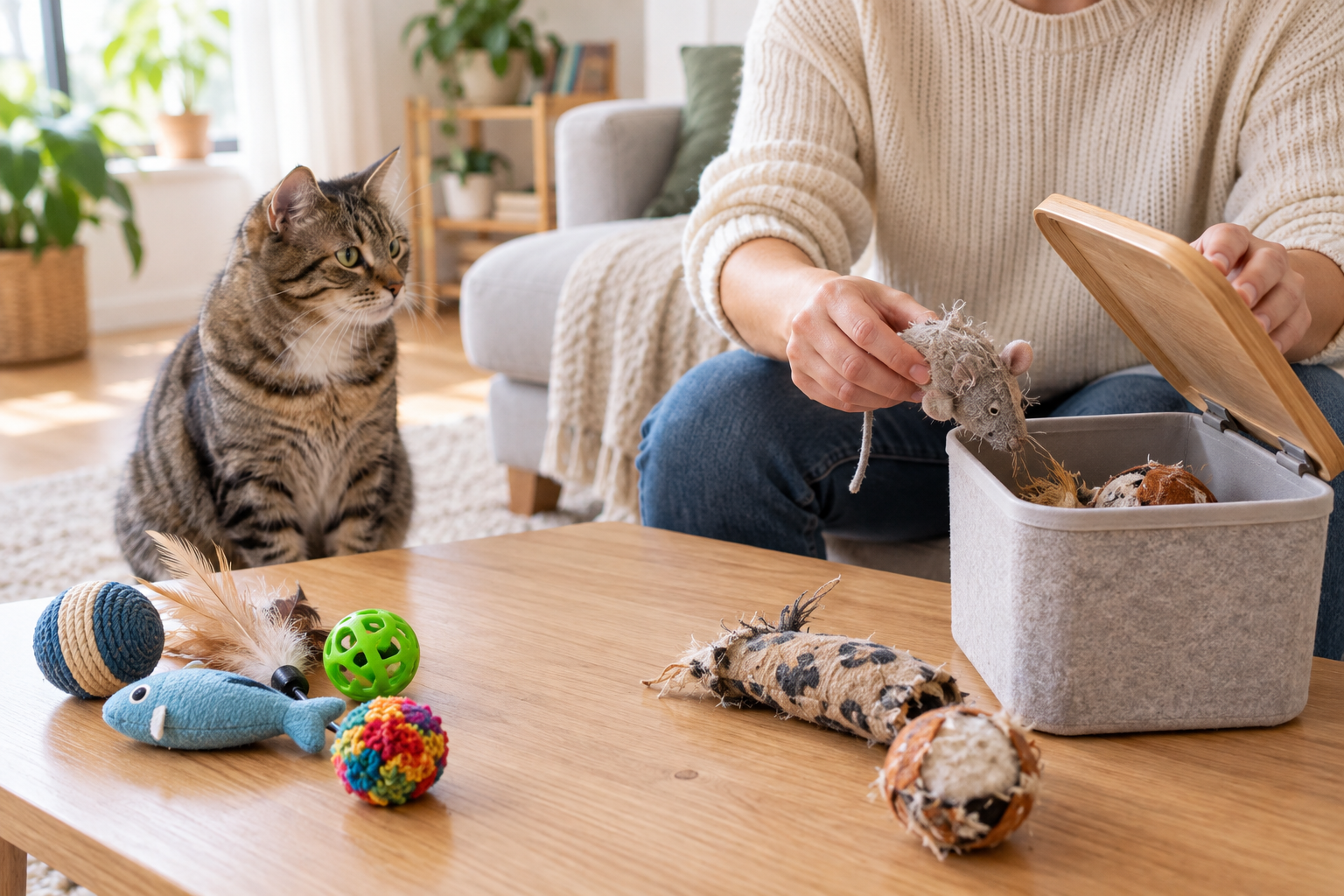
Das beste Spielzeug (für das “natürliche Jagdspiel”):
- Stab-/Feder-Spielzeug, weiches Kick-Spielzeug, kleine Bälle, Knister-Spielzeug
- Wechseln Sie die Spielzeuge wöchentlich aus, um die Faszination aufrechtzuerhalten
Laserpointer (optional, bitte mit Vorsicht verwenden): Es gibt Hinweise darauf, dass häufiges Spielen mit dem Laserpointer mit von den Besitzern berichteten abnormalen, sich wiederholenden Verhaltensweisen bei Katzen in Verbindung steht. Verwenden Sie ihn daher nur gelegentlich – und nicht als Hauptspielzeug. Wenn Sie ihn einsetzen, sollten Sie die Spielrunden kurz halten und mit einem “Haken” enden” (ein Spielzeug zuwerfen oder ein kleines Leckerli geben), um Frustration zu vermeiden.
Umgebung und Bereicherung (Einrichtung im Innenbereich, die Stress vorbeugt)
Hauskatzen gedeihen am besten, wenn ihr Zuhause ihre grundlegenden Bedürfnisse erfüllt – das ist kein “Extra”, sondern eine grundlegende Voraussetzung für ihr Wohlbefinden.
Nutzen Sie das Konzept der “fünf Säulen” der AAFP/ISFM als Vorlage:
- Sichere Ruhe- und Versteckplätze (überdachte Schlafplätze, Kisten, ruhige Räume)
- Mehrere wichtige Ressourcen (Futter/Wasser/Streu/Kratzbäume, wenn möglich an mehreren Stellen)
- Möglichkeiten zum Spielen/Jagen (tägliches interaktives Spielen + Spielzeug zum alleinigen Spielen)
- Positive, vorhersehbare zwischenmenschliche Interaktion (schonende Behandlung, Auswahl, Routine)
- Ein einheitliches Umfeld (Vermeiden Sie plötzliche Veränderungen; führen Sie neue Dinge schrittweise ein.)
Maßnahmen mit großer Wirkung (geringer Aufwand):
- Vertikaler Raum: Kratzbäume/Sitzstangen/Regale zum Klettern und Beobachten
- Fensteranpassung: ein Sitzplatz + ein sicherer Aussichtspunkt
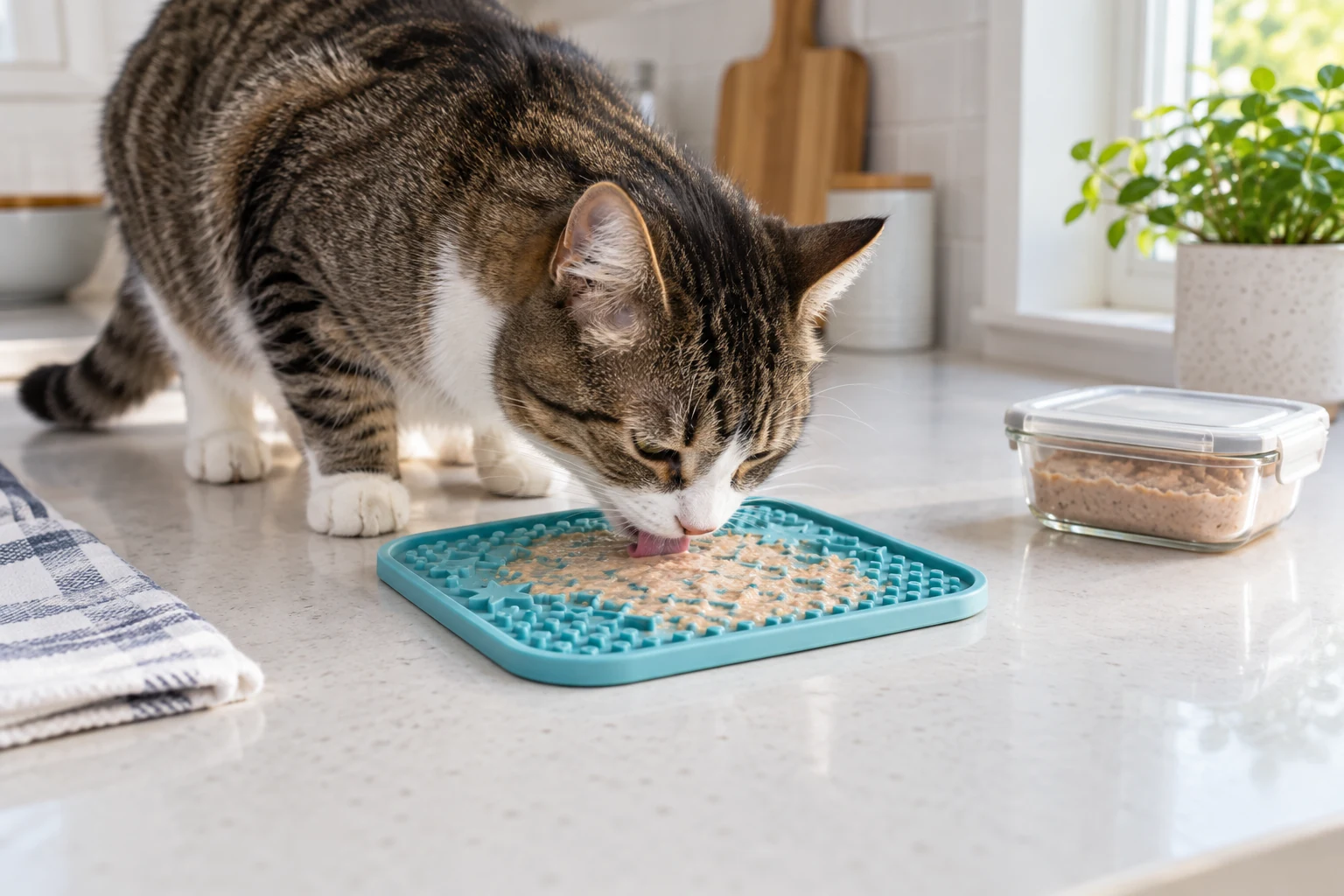
- Futtersuche: Geben Sie einige Mahlzeiten über Puzzle-Futterautomaten, um das Essen zu verlangsamen und geistige sowie körperliche Aktivität zu fördern.
Sichere Beschäftigung im Freien (ohne freien Auslauf): Wenn Ihre Ragdoll “Zeit im Freien” möchte, wählen Sie kontrollierte Möglichkeiten wie beispielsweise einen Katzenauslauf/Gehege oder betreute Seilzeit.
Pflege (minimaler Zeitaufwand, feste Routine)
Viele Ragdolls benötigen keine aufwendige Fellpflege, aber Regelmäßiges Kämmen beugt Verfilzungen vor und reduziert Haarausfall, insbesondere während des saisonalen Fellwechsels.
Praktischer Ablauf:
- Nutzen Sie die Zeit beim Fellpflege als kurzen “Wellness-Check” (Haut, Knoten, Schmerzen) und wenden Sie sich an Ihren Tierarzt, wenn Sie Veränderungen bemerken.
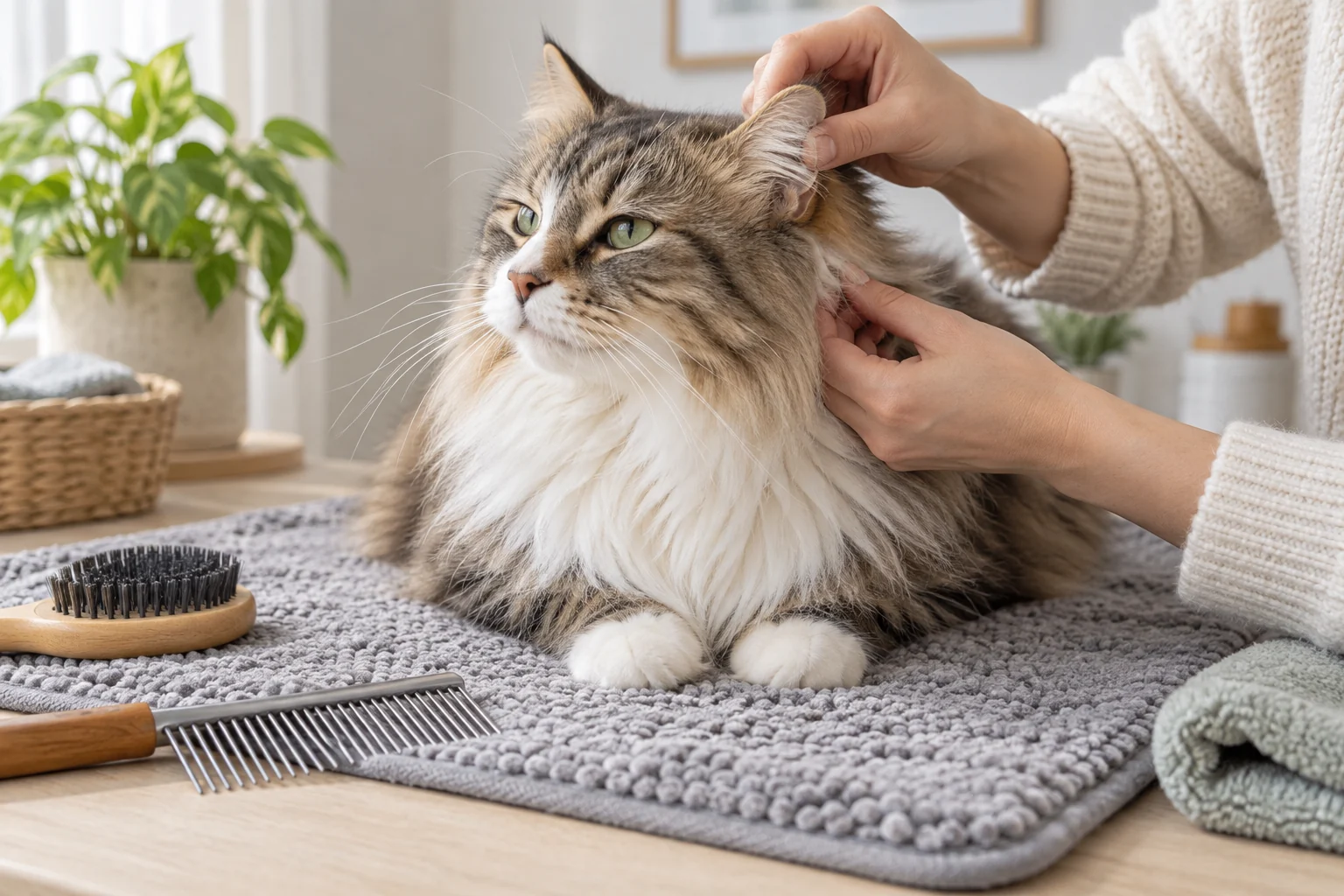
- 1–2 Mal pro Woche kämmen mit einer Stahlkamm (oder ähnliches) und die Häufigkeit bei starkem Haarausfall erhöhen.
- Schwerpunkt auf Reibungszonen: hinter den Ohren, unter den “Achseln”, am Bauch und an den Hinterbeinen (wo die Matten zuerst beginnen).
Geistige Anregung (Gewohnheiten entwickeln, die Langeweile verhindern)
Geistige Anregung ist ein wichtiger Bestandteil der Gesundheitsvorsorge für Wohnungskatzen – insbesondere für intelligente, menschenbezogene Rassen wie die Ragdoll.
Einfacher Wochenplan (eigentümerfreundlich und zitierfähig):
- Täglich: Interaktives Spiel (2–3 kurze Einheiten)
- An den meisten Tagen: Futterpuzzle / “Futtersuche” für mindestens eine Mahlzeit
- Wöchentlich: Spielzeug abwechseln + eine neue “kleine Bereicherung” einführen (Kistenburg, Papiertüte, neuer Sitzplatz)
Wenn Sie Tricks trainieren möchten (Sitz, High-Five, Gewöhnung an die Leine), sollten Sie dabei positiv vorgehen und die Trainingseinheiten kurz halten; viele Katzen lernen am besten mit kleinen Futterbelohnungen.

Gesundheitliche Bedenken (was bekannt ist + was Halter tun können)
| Zustand | Was es ist | Warum das wichtig ist | Was ist zu tun? |
|---|---|---|---|
| Hypertrophe Kardiomyopathie (HCM) | Verdickung des Herzmuskels; kann im Frühstadium symptomfrei verlaufen | Ragdolls gehören zu den Rassen, bei denen HCM auftritt; zu den Komplikationen können Blutgerinnsel gehören, die die Hinterbeine beeinträchtigen. | Fragen Sie die Züchter nach HCM-Screening/DNA-Test; Tierärzte stellen die Diagnose mittels Echokardiographie |
| Nierenerkrankungen und PKD (polyzystische Nierenerkrankung) | Bei der PKD können Zysten auftreten; eine chronische Nierenerkrankung hat vielfältige Ursachen | Eine Studie zur Ragdoll-Selektion berichtete geringe PKD-Prävalenz (<3%) in dieser Bevölkerungsgruppe; Routineuntersuchungen sollten evidenzbasiert sein | Diskutieren Ultraschall und/oder besprechen Sie die Frage der Gentests mit Ihrem Tierarzt bzw. Züchter; gehen Sie nicht ohne Beweise von einem hohen Rassenrisiko aus |
| FLUTD (Erkrankung der unteren Harnwege) | Gruppe von Harnwegsproblemen (Schmerzen beim Wasserlassen, Blut im Urin, häufiger Harndrang) | Cornell weist darauf hin, dass LUTD ein sehr häufiger Grund für Tierarztbesuche bei Katzen ist; ein Harnverhalt stellt einen Notfall dar. | Achten Sie auf die Warnzeichen (Pressen, wenig/kein Urin) → tierärztliche Notfallversorgung; Schwerpunkt auf Flüssigkeitszufuhr und Stressabbau |
| Fettleibigkeit und Gelenkbelastung | Übergewicht erhöht das Krankheitsrisiko | Cornell beschreibt Adipositas als eine häufige Ernährungsstörung und weist darauf hin, dass sie Erkrankungen wie Arthrose und Diabetes verschlimmern kann. | Portionskontrolle + strukturiertes Spielen; Die Gewichtsabnahme sollte unter tierärztlicher Aufsicht erfolgen (keine Crash-Diäten) |
| FIP (infektiöse Peritonitis bei Katzen) | Schwerer Krankheitsverlauf aufgrund einer Mutation des Katzen-Coronavirus | Es heißt nicht mehr “keine endgültige Heilung” so, wie es in älteren Artikeln dargestellt wurde | Cornell meldet kumulierte GS-441524 ist in den USA erhältlich. auf tierärztliche Verschreibung; wenden Sie sich an Ihren Tierarzt |
Ist eine Ragdoll-Katze das Richtige für Sie?
Ragdoll-Katzen sind vor allem dafür bekannt, dass sie liebevoll, ruhig und menschenbezogen, und viele “lassen sich fallen” oder entspannen sich tief, wenn man sie im Arm hält. In vielen Haushalten kommen sie gut zurecht – aber sie passen nicht zu jedem Lebensstil.
Die beste Wahl, wenn Sie … möchten
| Ideal für… | Warum eine Ragdoll gut passt |
|---|---|
| Ein kuscheliger, sanfter und gelassener Begleiter | Ragdolls werden häufig als entspannt, liebevoll und ruhig, wobei viele es genießen, auf den Arm genommen und geknuddelt zu werden. |
| Familien mit Kindern oder anderen Haustieren | In den Rassenprofilen der wichtigsten Zuchtverbände wird darauf hingewiesen, dass Ragdolls typischerweise tolerant und kontaktfreudig, kommen oft gut mit Kindern und anderen Tieren zurecht (bei richtiger Heranführung). |
| Eine Katze, die Spiele oder Abläufe lernen kann | Viele Besitzer finden Ragdolls trainierbar (Manche lernen, etwas zu holen oder auf Zuruf zu kommen). |
| Wohnen in einer Wohnung oder auf kleinerem Raum | Ragdolls werden oft als anpassungsfähig und kein großes Haus zu brauchen, solange sie täglich Kontakt und Spielmöglichkeiten haben. |
| Ein Langhaar-Look, der sich leicht pflegen lässt | Sie haaren zwar immer noch, aber in den Richtlinien des Registers heißt es wöchentliches Kämmen als praktische Richtlinie, wobei während der saisonalen Haarwechselphase besondere Aufmerksamkeit geboten ist. |
Überleg es dir zweimal, wenn du…
| Nicht ideal für… | Warum es möglicherweise nicht funktioniert |
|---|---|
| Ich möchte eine sehr eigenständige Katze, die wenig Kontakt sucht | Ragdolls werden häufig als menschenbezogen beschrieben und halten sich oft in der Nähe ihrer Menschen auf. Untersuchungen zeigen zudem, dass Katzen starke Bindungen eingehen können und möglicherweise Trennungsbezogene Verhaltensweisen, daher können Erwartungen an “Einzelgänger-Katzen” nach hinten losgehen. |
| Planen Sie, Ihre Katze unbeaufsichtigt im Freien herumstreunen zu lassen | Unkontrollierter Zugang ins Freie erhöht das Risiko (Verkehr, Krankheiten/Parasiten, Giftstoffe, Verirren). In den Leitlinien der AVMA wird darauf hingewiesen, dass die Haltung von Hauskatzen im Haus (Bereicherung im Haus, „Catio“ oder an die Leine gewöhnte Spaziergänge) dazu beiträgt, diese Risiken zu verringern. |
| Ich leide unter starken Katzenallergien und brauche eine “hypoallergene” Katze | Symptome einer Katzenallergie werden meist ausgelöst durch Fel d 1 (das wichtigste Katzenallergen). Ragdolls sind nicht hypoallergen. |
| Ich möchte mich nicht um mein Gewicht und mein regelmäßiges Training kümmern | Ragdolls lieben Futter und haben ohne regelmäßiges Spielen und eine bewusste Portionskontrolle ein erhöhtes Risiko, an Gewicht zuzunehmen. |
| Ich möchte Diskussionen über rassenspezifische Gesundheitsuntersuchungen lieber vermeiden | Ragdolls sind dafür bekannt, dass sie rassenbedingtes genetisches Risiko für HCM, und seriöse Züchter führen üblicherweise entsprechende Tests durch. |
Schnelle Selbstüberprüfung (schnelle Entscheidung)
Sie passen wahrscheinlich gut zu einer Ragdoll-Katze wenn Sie die meisten dieser Punkte mit “Ja” beantworten können:
- Ich möchte eine freundliche, liebevolle Katze das Gesellschaft schätzt.
- Ich kann meine Katze behalten drinnen (oder verwende ein Catio / Ausflüge mit Leine, um sich daran zu gewöhnen).
- Das kann ich wöchentliches Kämmen sowie grundlegende Fellpflege.
- Ich bin bereit, ein gesundes Gewicht zu fördern, indem ich Tägliche Bewegung + Portionskontrolle.
- Ich habe kein Problem damit, Züchter nach folgenden Dingen zu fragen: HCM-Untersuchung (und die Zusammenarbeit mit einem Tierarzt im Bereich der Vorsorge).
Unterm Strich: Wenn Sie sich eine ruhige, liebevolle und familienfreundliche Katze wünschen und mit einem Leben ausschließlich im Haus zufrieden sind, ist die Ragdoll oft die perfekte Wahl.

FAQ
Wie viel kostet eine Ragdoll-Katze?
Die Preise der Züchter variieren stark je nach Region, Abstammung und danach, ob es sich um ein Kätzchen in Haustierqualität oder in Ausstellungs-/Zuchtqualität handelt. Anstatt sich auf eine einzige Zahl zu verlassen, sollten Sie Folgendes verlangen: Nachweise über Gesundheitsuntersuchungen, einen schriftlichen Vertrag und Angaben dazu, welche tierärztliche Grundversorgung im Preis inbegriffen ist. (Dies ist vertrauenswürdiger als eine starre Preisangabe.)
Wie groß werden Ragdoll-Katzen?
Ragdolls sind eine große Rasse. Die Männchen können 15-20 Pfund (6,5-9 kg) und die Weibchen 10-15 Pfund (4,5-6,5 kg) wiegen. Sie sind in der Regel 9-11 Zoll groß und können 17-21 Zoll lang werden.
Wie lange leben Ragdoll-Katzen?
Bei richtiger Pflege und einer artgerechten Haltung haben Ragdolls in der Regel eine überdurchschnittliche Lebenserwartung und werden in der Regel 12 bis 17 Jahre alt. Einige Tiere können sogar bis zu 20 Jahre alt werden.
Bekommen Ragdoll-Katzen Fell?
Ja, Ragdolls haaren, aber im Allgemeinen weniger als viele andere langhaarige Rassen, da sie keine dichte Unterwolle haben. Während der Jahreszeiten, vor allem im Frühjahr und Herbst, haart sie stärker. Regelmäßiges Bürsten hilft, lose Haare zu entfernen.
Sind Ragdolls hypoallergen?
Nein, Ragdolls gelten nicht als hypoallergen. Ihr schuppenarmes Fell kann zwar die Menge an Hautschuppen in der Umgebung reduzieren, aber Katzenallergien werden in erster Linie durch Proteine in Katzenspeichel, Urin und Hautschuppen verursacht, die Ragdolls wie jede andere Katze auch produzieren.
Bonus Fakten
Alle Vollblüter haben blaue Augen
Ein charakteristisches Merkmal der Rasse sind ihre bezaubernden blauen Augen. Jede Ragdoll mit grünen oder gelben Augen ist wahrscheinlich ein Mix.
Geboren in reinem Weiß
Ragdoll-Kätzchen werden ganz weiß geboren. Ihre ausgeprägten Farben und Muster beginnen sich im Alter von ein bis zwei Wochen zu entwickeln und füllen sich mit zunehmender Reife weiter aus, bis sie im Alter von 1,5 bis 2 Jahren ihre volle Färbung erreicht haben.
Langsam reifend
Ragdolls gelten als "Spätzünder" und brauchen länger als die meisten anderen Rassen, um ihre volle Größe und Reife zu erreichen, oft erst im Alter von vier Jahren.
"Ragdogs"
Sie werden häufig mit Hunden verglichen, weil sie anhänglich, loyal und gesellig sind. Sie folgen ihren Besitzern, grüßen sie an der Tür und können sogar apportieren.
Stille Natur (und versteckter Schmerz)
Obwohl sie im Allgemeinen ruhig und nicht übermäßig laut sind, bedeutet diese Eigenschaft, dass sie nicht ohne Weiteres Anzeichen von Not oder Schmerzen zeigen, was eine aufmerksame Beobachtung durch den Besitzer erfordert, um subtile Verhaltenssignale zu erkennen.
Sie fühlen Schmerz
Trotz eines Mythos, der aufgrund ihres ruhigen Verhaltens etwas anderes suggeriert, empfinden Ragdolls durchaus Schmerz. Ihre Fähigkeit, Unwohlsein zu verbergen, bedeutet, dass ihre Besitzer besonders aufmerksam auf ihr Wohlbefinden achten müssen.
Nicht taub
Der Zusammenhang zwischen blauen Augen und Taubheit ist bei Ragdolls ein Mythos. Während Taubheit bei rein weißen Katzen mit blauen Augen aufgrund einer bestimmten genetischen Mutation häufiger vorkommt, gibt es Ragdolls in verschiedenen Farben, die diese spezielle Mutation nicht aufweisen.
Fasziniert von Wasser
Im Gegensatz zu vielen anderen Katzenrassen sind Ragdolls oft vom Wasser fasziniert und folgen ihren Besitzern sogar unter die Dusche oder setzen sich auf den Badewannenrand.
Referenzen
Becker, Marty; Spadafori, Gina (16. September 2006). Warum landen Katzen immer auf ihren Füßen?: 101 der verwirrendsten Fragen ... - Marty Becker, Gina Spadafori - Google Books. Health Communications, Incorporated. ISBN 9780757305733. Abgerufen am 15. August 2014.
Benjamin L. Hart; Lynette A. Hart (2013). Ihre ideale Katze: Einblicke in Rassen- und Geschlechtsunterschiede im Verhalten von Katzen. Purdue University Press. S. 99-101. ISBN 9781557536488.
"Ragdoll". Petplan. Abgerufen am 14. Mai 2021.
"Ragdoll - Verein der Katzenliebhaber, Inc". cfa.org. Abgerufen am 20. November 2020.
"Geschichte der Ragdoll-Katzenrasse". 19. Februar 2023.
Helgren, J. Anne (2006). "Ragdoll". Iams. Telemark Productions. Vom Original archiviert am 13. November 2014.
"Ragdoll-Geschichte - Die Anfänge". Ragdoll Historical Society. Archiviert vom Original am 9. April 2025. Abgerufen am 16. Juni 2025.
Mattern, Joanne (2001). Die Ragdoll-Katze. Mankato, Minnesota: Capstone. S. 5-16. ISBN 0736808973.
Robbins, Nancy (14. Februar 2012). Hauskatzen: Ihre Geschichte, Rassen und andere Fakten. CreateSpace. S. 220. ISBN 9781470075385.
"Raistrick Ragdolls". Raistrickragdfolls.co.uk. Archiviert vom Original am 29. November 2014. Abgerufen am 15. November 2014.
"Ragdoll". EZB-Rat der Cat Fancy. Archiviert vom Original am 30. März 2025. Abgerufen am 16. Juni 2025.
Das Verhalten von Katzen verstehen: Der komplette Problemlöser für Katzen Roger Tabor (2003). P 33.
Landen Katzen immer auf ihren Füßen? Gina Spadafori, Marty Becker
"Warum werden Ragdoll-Katzen schlaff?". 17. Januar 2021. Abgerufen am 17. September 2021.
Die Katze: Verhalten, Ernährung und Gesundheit Linda P. Case, Kerry Helms, Bruce Macallister (2003). P 31.
Dina (2. Februar 2019). "Sind Ragdoll-Katzen verspielt?". purrcraze.com. Abgerufen am 24. Juni 2021.
Braaksma, Hilary; Guthrie, Claudia. "Ragdoll". Tägliche Pfoten. Abgerufen am 1. Dezember 2021.
"Pflegetipps für eine Ragdoll-Katze". Petango. 28. März 2012. Abgerufen am 31. Mai 2022.
"Ragdoll-Katzenrasse Informationen". www.purina.co.uk. Abgerufen am 24. Juni 2021.
"Ragdoll-Katzen - Ein vollständiger Leitfaden für die Ragdoll-Katzenrasse". Die Website der glücklichen Katze. 14. Mai 2019. Abgerufen am 24. Juni 2021.
Braaksma, Hilary; Guthrie, Claudia (1. Dezember 2021). "Ragdoll". Tägliche Pfoten. Abgerufen am 1. Dezember 2021.
"Ragdoll-Einführung". Tica.org. Abgerufen am 15. Dezember 2017.
Mattern, Joanne. Die Ragdoll-Katze. capstone press. p. 19.
"Birmchen gegen Ragdoll". Der kleine Fleischfresser. Abgerufen am 24. Januar 2022.
"Ragdoll International Muster und Farben". Ragdollinternational.org. Abgerufen am 11. Juni 2012.
Teng, Kendy Tzu-yun; Brodbelt, Dave C; Church, David B; O'Neill, Dan G (2024). "Lebenserwartungstabellen für die jährliche Lebenserwartung und Risikofaktoren für die Sterblichkeit bei Katzen im Vereinigten Königreich".. Zeitschrift für Katzenmedizin und -chirurgie. 26 (5): 1098612X241234556. doi:10.1177/1098612X241234556. ISSN 1098-612X. PMC 11156239. PMID 38714312.
Egenvall, A.; Nødtvedt, A.; Häggström, J.; Ström Holst, B.; Möller, L.; Bonnett, B. N. (2009). "Sterblichkeit von lebensversicherten schwedischen Katzen im Zeitraum 1999-2006: Alter, Rasse, Geschlecht und Diagnose". Zeitschrift für Innere Veterinärmedizin. 23 (6): 1175-1183. doi:10.1111/j.1939-1676.2009.0396.x. PMC 7167180. PMID 19780926.
O'Neill, Dan G; Church, David B; McGreevy, Paul D; Thomson, Peter C; Brodbelt, David C (2014-06-12). "Langlebigkeit und Sterblichkeit von Katzen, die eine Tierarztpraxis der Grundversorgung in England aufsuchen".. Zeitschrift für Katzenmedizin und -chirurgie. 17 (2). SAGE Publications: 125–133. doi:10.1177/1098612×14536176. ISSN 1098-612X. PMC 10816413. PMID 24925771.
Albasan, H.; Osborne, C. A.; Lulich, J. P.; Lekcharoensuk, C. (2012). "Risikofaktoren für Urat-Urolithen bei Katzen". Zeitschrift der Amerikanischen Veterinärmedizinischen Gesellschaft. 240 (7): 842-847. doi:10.2460/javma.240.7.842. PMID 22443437.
O'Neill, D.G.; Gostelow, R.; Orme, C.; Church, D.B.; Niessen, S.J.M.; Verheyen, K.; Brodbelt, D.C. (2016-06-29). "Epidemiologie des Diabetes mellitus bei 193.435 Katzen, die eine tierärztliche Praxis der Primärversorgung in England aufsuchten". Zeitschrift für Innere Veterinärmedizin. 30 (4). Wiley: 964-972. doi:10.1111/jvim.14365. ISSN 0891-6640. PMC 5094533. PMID 27353396.
Oliver, James A.C.; Mellersh, Cathryn S. (2020). "Genetics". In Cooper, Barbara; Mullineaux, Elizabeth; Turner, Lynn (eds.). BSAVA Lehrbuch der Tierkrankenpflege (Sechste Auflage). British Small Animal Veterinary Association. S. 131. ISBN 978-1-910-44339-2.
"Myosin-bindendes Protein C DNA-Varianten bei Hauskatzen (A31P, A74T, R820W) und ihr Zusammenhang mit hypertropher Kardiomyopathie". (PDF). Vetogene.it. Vom Original (PDF) archiviert am 11. Februar 2015. Abgerufen am 15. Dezember 2017.
"Hypertrophe Kardiomyopathie (HCM) bei Katzen". Fabcats.org. Abgerufen am 15. Dezember 2017.
 EN
EN DE
DE ES
ES PT
PT