
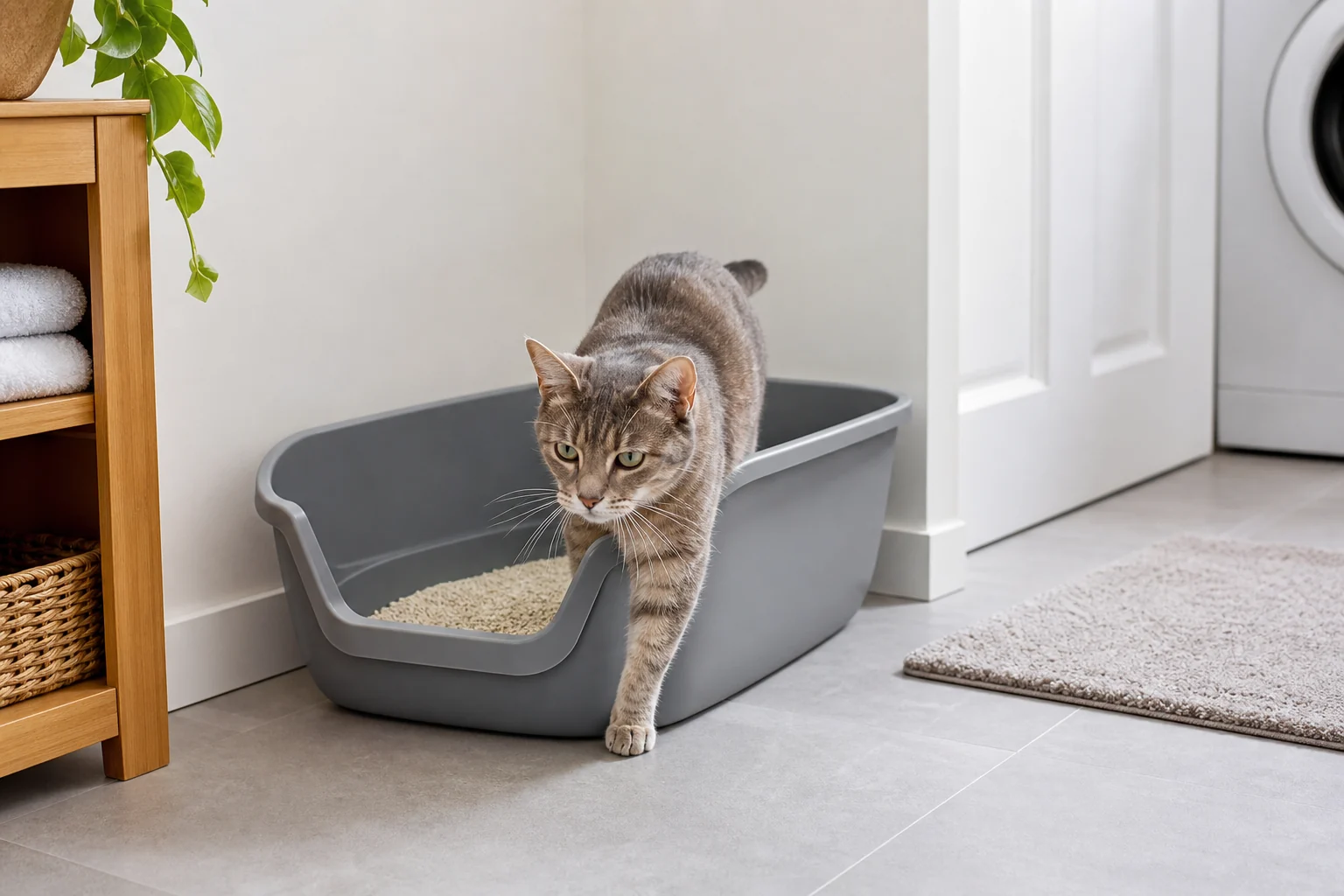
A low-entry litter box for a senior cat should be wide, open, stable, easy to step into, and placed where your cat does not have to climb stairs, jump, squeeze through clutter, or cross a stressful route. The goal is not only a shorter front wall; it is a whole bathroom setup your older cat can use without pain or hesitation.
Senior cats can look "fine" while quietly avoiding movements that hurt. A cat who used to leap into any box may start perching on the edge, leaving urine near the box, choosing a rug, or taking longer to settle into a squat. Cornell notes that arthritis can make climbing into a litter box painful for older cats, especially when stairs are involved 1.
This guide explains how to choose the box shape, side height, ramp, mat, litter, and location so your senior cat has a clear, dignified path to the toilet every day.
Índice
- Why do senior cats need easier litter box access?
- What entry height and side design work best?
- What size should a senior cat litter box be?
- Should the box be open or covered?
- Should you add a ramp?
- Where should you put a senior cat's low-entry box?
- What litter and mat choices protect senior paws?
- How do you introduce the new box without causing avoidance?
- When should litter box changes trigger a vet call?
- Conclusion: make the box easier before accidents become a habit
- Preguntas frecuentes
- Referencias
Why do senior cats need easier litter box access?
Senior cats need easier litter box access because aging can reduce strength, balance, vision, flexibility, and confidence. A box that was acceptable at age four may become too tall, too cramped, too far away, or too slippery at age fourteen.
Arthritis is a common reason. The FDA explains that cats with osteoarthritis may show subtle signs such as lower activity, less grooming, changes in attitude, missing the litter pan, or difficulty jumping, and limping may not be obvious 5. If you are unsure whether stiffness is part of the picture, compare your cat's daily movement with this guide to signs an older cat has arthritis.
Litter box avoidance can also happen for non-arthritis reasons: constipation, urinary disease, diabetes, kidney disease, stress, cognitive changes, or vision decline. That is why the best setup does two jobs. It removes unnecessary barriers while making it easier for you to notice when accidents continue despite a more accessible box.
What entry height and side design work best?
The best senior-cat design has a low front entry, higher back and side walls if your cat needs scatter control, and a smooth step-in area that does not force a high knee lift. The front entry should be low enough that your cat can walk in instead of climbing in.
International Cat Care recommends lower-sided trays for cats with arthritis or reduced mobility, and its senior-cat guidance also favors a lower-sided litter tray that is easier to enter and leave 2, 3. In practice, look for these features:
- A clearly lowered front opening rather than a uniformly high wall.
- A wide entry that does not pinch your cat's shoulders.
- Rounded or smooth edges where the chest, belly, or legs might brush the box.
- Higher back walls if your cat sprays or kicks litter backward.
- A sturdy base that does not rock when your cat steps on the front lip.
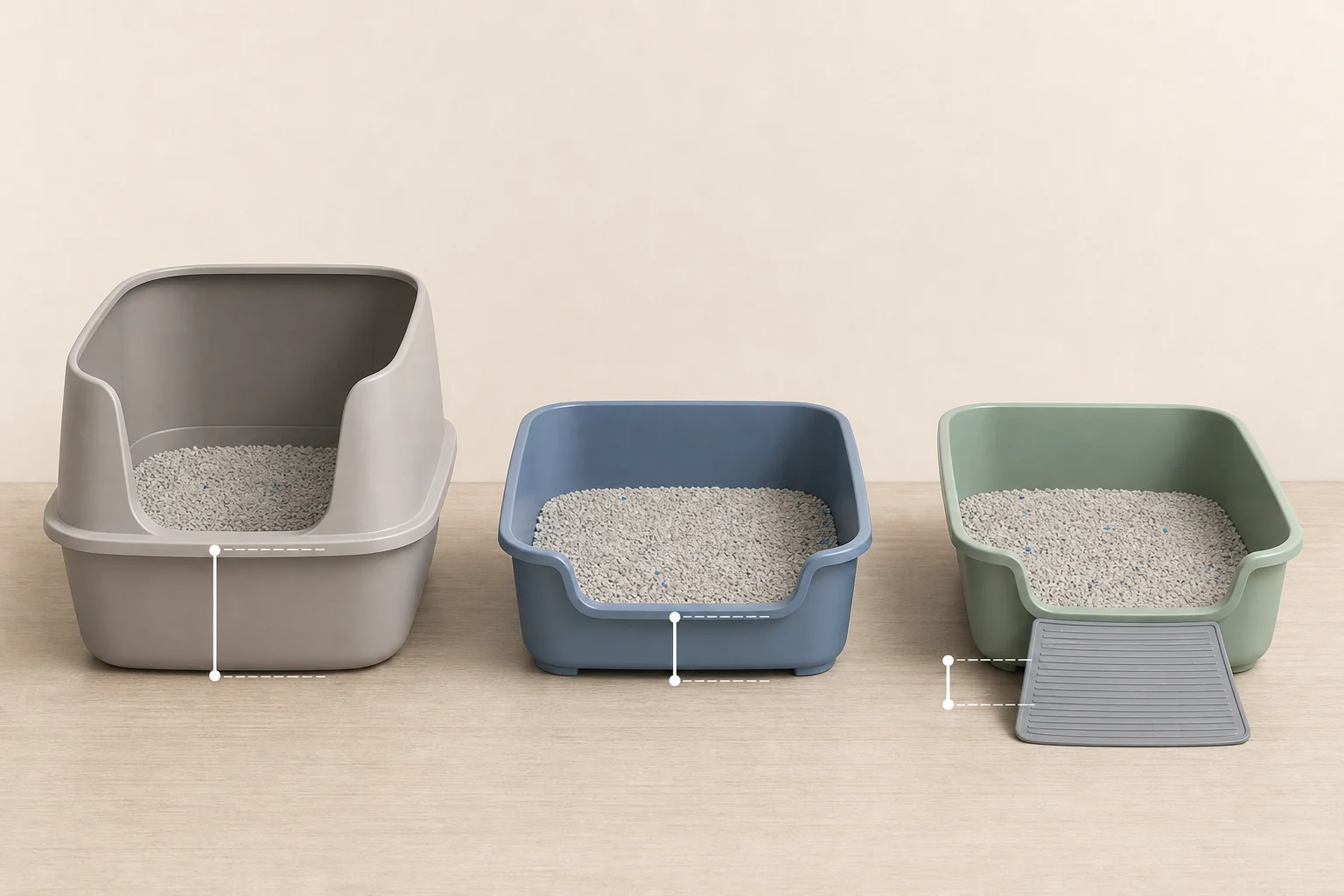
If your cat backs up to pee over the low opening, choose a box with a low entry only on one side and taller walls elsewhere. If your cat enters but does not turn fully around, the issue may be size rather than entry height.
What size should a senior cat litter box be?
A senior cat's litter box should be large enough for the cat to enter, turn, dig, squat, and step out without bracing against the walls. Many older cats need more room, not less, because stiff hips and backs make tight turning uncomfortable.
If your cat is long, overweight, tall, or broad, use the same space logic you would use when choosing a litter box for a large cat: the usable floor area matters more than the product label. A box marketed for "senior cats" can still be too small if the interior is narrow.
Use this quick fit check:
| Fit clue | Qué puede significar | Better choice |
|---|---|---|
| Cat perches with front paws outside | Entry is easy, but interior space or litter feel may be wrong | Wider open box with soft litter |
| Cat turns in several stiff steps | Box may be too short or narrow | Longer rectangular box |
| Cat urinates over the front opening | Entry helps, but wall layout may not fit posture | Low-front box with taller back and sides |
| Cat avoids the box after a slip | Base or surrounding floor may feel unstable | Heavier box plus non-slip mat |
Do not solve every problem by making the box deeper. Deep litter and tall sides can add the very climbing challenge you are trying to remove.
Should the box be open or covered?
Most senior cats do better with an open low-entry box because it offers easier entry, better visibility, more headroom, and more escape options. A covered box can still work for an individual cat who strongly prefers privacy, but it often adds barriers older cats do not need.
The AAHA/AAFP senior-cat guidance notes that litter box changes may reflect medical issues or reduced strength, impaired balance, or pain 4. A cover can make those problems harder by asking the cat to duck, turn tightly, step through a doorway, and tolerate trapped odor.
If you are deciding between a hooded and open design, review the pros and tradeoffs in covered vs uncovered litter boxes. For many seniors, the safest starting point is:
- Open top.
- Low front entry.
- Tall enough back wall for litter control.
- No swinging door.
- No narrow tunnel-style entry.
If your cat already loves a covered box, keep it available while you test the low-entry open option nearby. Choice lowers stress and gives you better information.
Should you add a ramp?
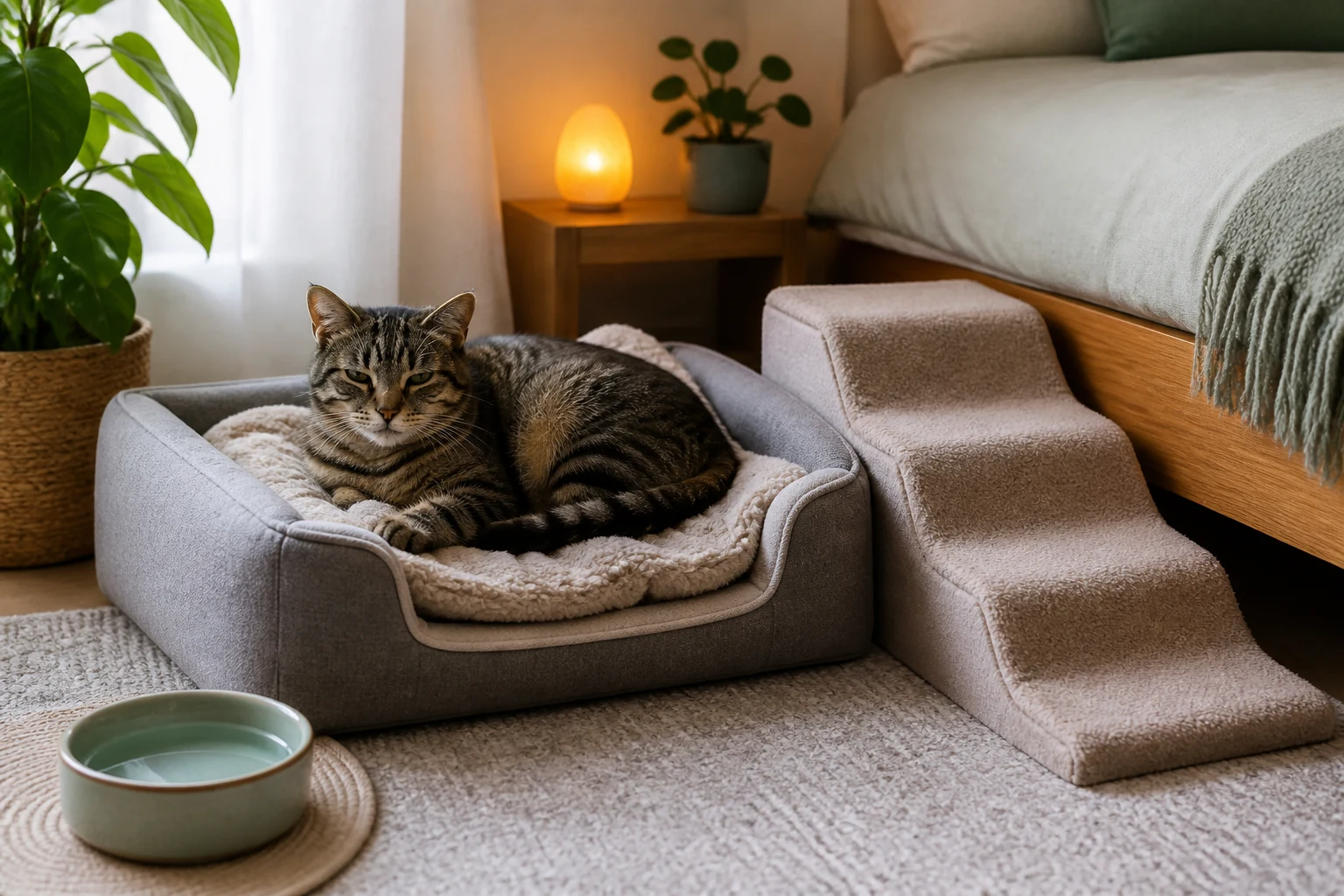
A ramp can help when even a low front entry still makes your cat hesitate, but only if the ramp is shallow, stable, wide, and non-slip. A wobbly ramp can make the box feel more dangerous than a plain low opening.
Ramps are most useful for cats with known arthritis, weakness, missing limbs, neurologic issues, or a repeated pattern of catching toes on the entry lip. They may also help after your veterinarian recommends home changes. For a broader comfort plan, see how to help an arthritic cat at home.
Good ramp details:
- Low slope, not a steep bridge.
- Grippy surface that will not snag claws.
- Enough width for both front paws without balancing.
- No raised side rail that blocks stepping off.
- Easy cleaning, because urine or litter dust can make surfaces slippery.
Avoid ramps that slide on tile, collapse under weight, or create a toe-catching gap between ramp and box.
Where should you put a senior cat's low-entry box?
Put the box on the same level where your senior cat spends most of the day, along a calm route with good footing and no need to pass a guarding pet. Location can matter as much as the box itself.
En La mejor configuración para la bandeja sanitaria del gato is easy to reach, clean, and use without feeling trapped. For senior cats, add a mobility lens:
- Avoid stairs when possible.
- Keep at least one box near the cat's main sleeping area.
- Leave a wide approach path with no laundry baskets, cords, or storage bins.
- Use a small night light if vision or nighttime orientation seems weaker.
- Avoid loud appliances that turn on suddenly.
- Place boxes where other cats, dogs, or toddlers cannot ambush the route.
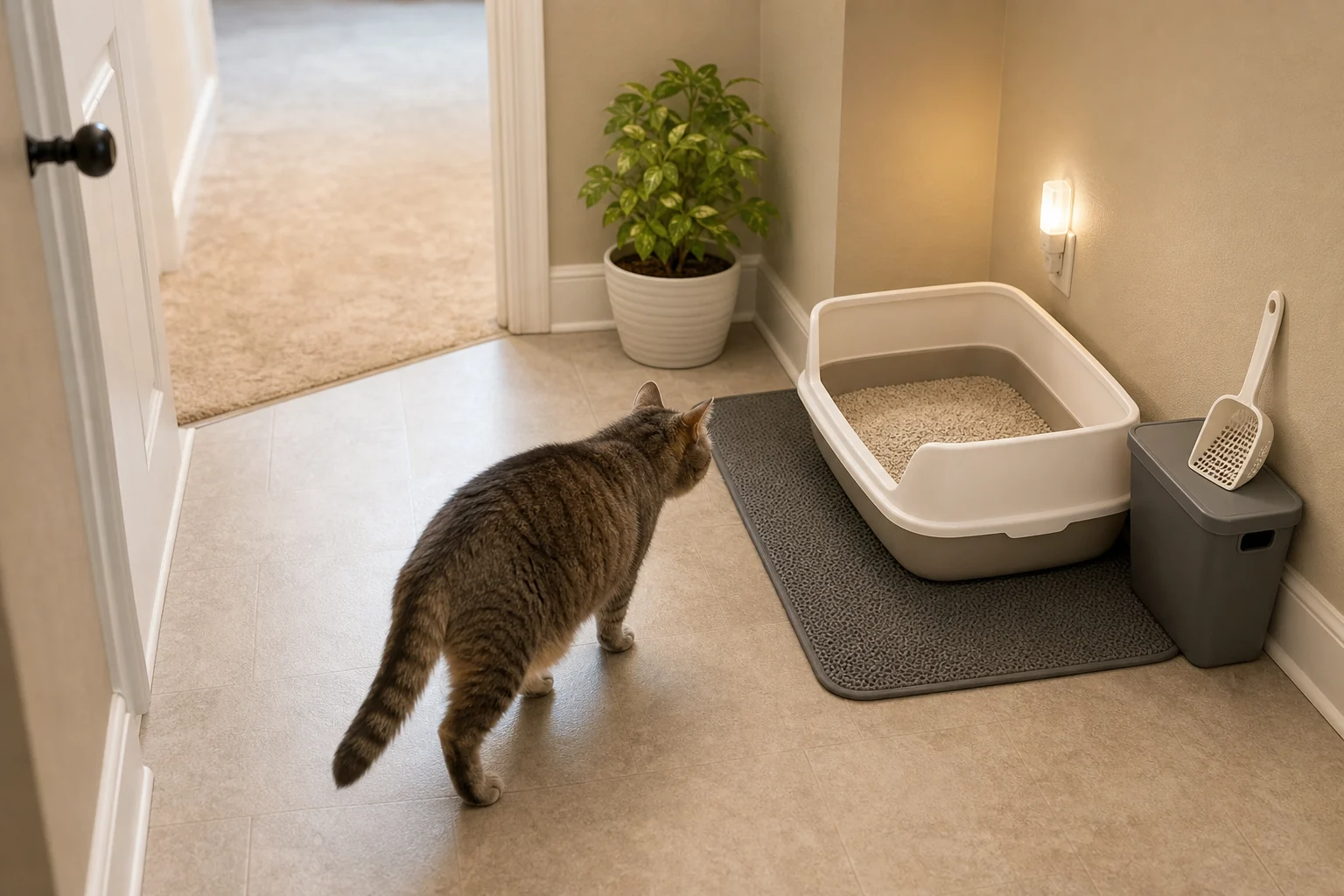
If your home has multiple floors, keep at least one accessible box on each floor your cat uses. A cat with sore joints should not have to choose between holding urine and climbing a staircase.
What litter and mat choices protect senior paws?
Choose a litter your senior cat can stand on comfortably and a mat that improves traction without becoming a second obstacle. Paw comfort matters because older cats may spend longer positioning themselves before they eliminate.
Soft, unscented, low-dust litter is often easier for sensitive paws than harsh pellets or sharp granules. If your current litter is working, avoid changing box and litter on the same day. If you need tracking control, choose a gentle option and compare texture carefully with this low-tracking cat litter guide.
For mats, look for:
- A flat, non-slip underside.
- A low edge your cat does not have to step over.
- A surface that does not trap toes or nails.
- Easy washing.
- Enough size to provide traction at the entry, not only decoration beside the box.
Skip stiff honeycomb mats if your cat avoids stepping on them. The best mat is the one your cat will cross without pausing.
How do you introduce the new box without causing avoidance?
Introduce the new low-entry box beside the old box first, using the same litter and keeping both boxes clean. Senior cats often cope better with choice than with a sudden replacement.
For the first one to two weeks, make the new option easy but do not force it:
- Put the low-entry box near the current box or in a more accessible nearby location.
- Add the same litter depth and type your cat already uses.
- Leave the old box in place unless it is unsafe.
- Scoop both boxes daily and track which one your cat chooses.
- Move the old box only after the new box is used reliably.
If odor, crowding, or dirty litter is part of the problem, fix the cleaning routine at the same time. This simple guide on how often to clean a litter box can help you separate access problems from sanitation problems.
Never punish accidents. Clean them with an enzymatic cleaner and treat them as information: the route, box, litter, health status, or social environment still needs attention.
When should litter box changes trigger a vet call?
Call your veterinarian if a senior cat suddenly misses the box, strains, cries, visits repeatedly, produces little urine, has blood in urine or stool, seems constipated, stops eating, vomits repeatedly, hides, collapses, or declines quickly. A better box can reduce access barriers, but it cannot diagnose or treat pain, urinary disease, constipation, kidney disease, diabetes, or other medical problems.
Seek urgent care now if your cat is trying to urinate but little or nothing comes out, especially in a male cat. Also treat repeated vomiting, severe weakness, breathing trouble, trauma, poisoning exposure, or not eating for 24-48 hours as urgent warning signs.
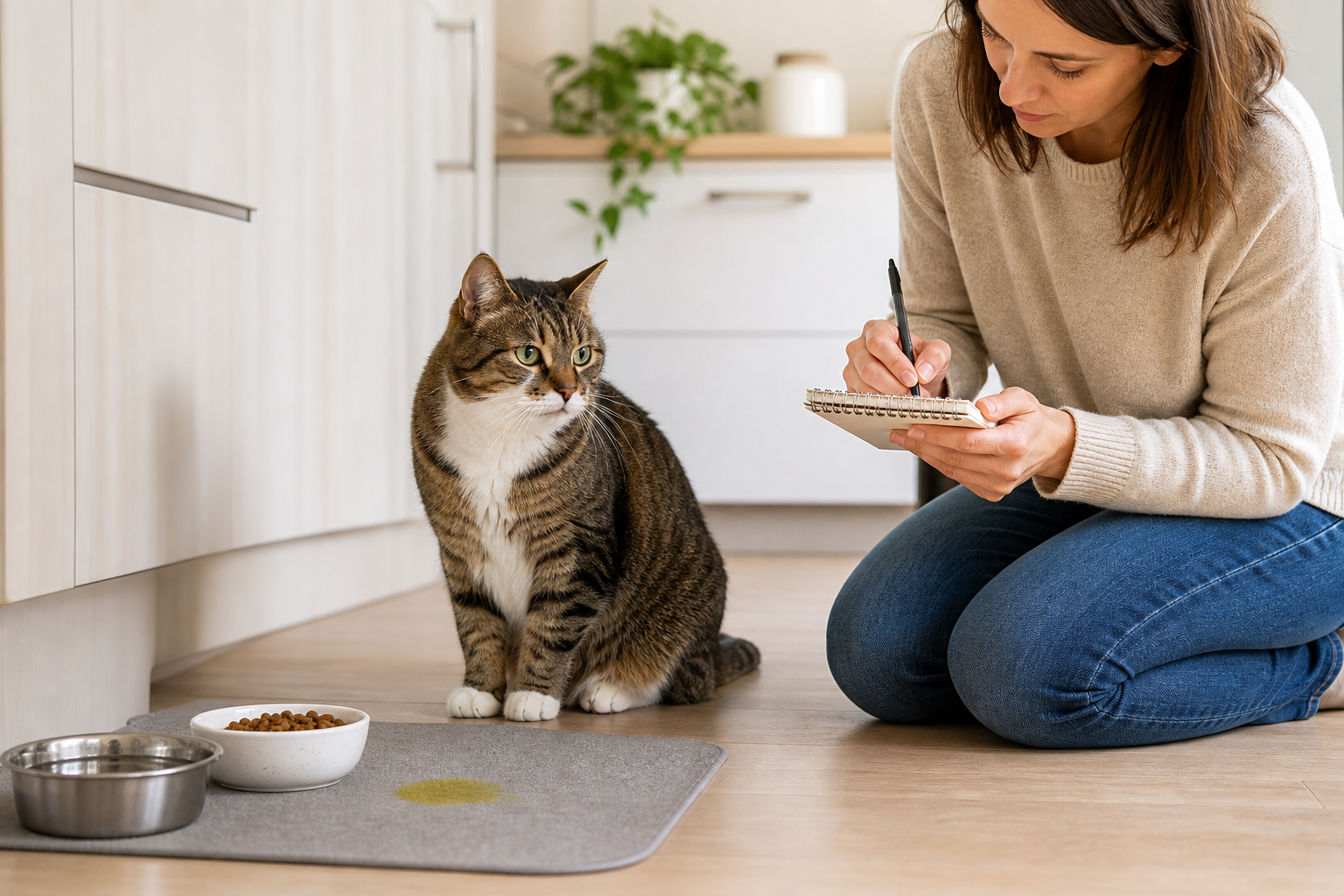
For slower changes, bring notes:
- When accidents started.
- Whether urine or stool is involved.
- Where accidents happen.
- Whether your cat can jump, climb stairs, groom, and squat normally.
- Which box designs and locations your cat avoids or prefers.
Those details help your veterinarian decide whether the issue is pain, mobility, elimination behavior, urinary disease, constipation, stress, or a mix of factors.
Conclusion: make the box easier before accidents become a habit
The best low-entry litter box for a senior cat is not just short in front. It is wide enough to turn in, stable underfoot, open enough to feel safe, paired with comfortable litter, and placed on a route your cat can reach without climbing or conflict.
Start with one accessible box on your senior cat's main living level, keep the old option during the transition, and watch what your cat chooses. For more practical senior-friendly home routines, keep exploring the SnuggleSouls Guías de cuidados diarios.
Preguntas frecuentes
How low should a senior cat litter box entry be?
It should be low enough that your cat can step in without jumping, scraping the belly, or lifting the legs high. There is no single perfect height for every cat, so judge by your cat's movement, arthritis status, and whether they enter smoothly without hesitation.
Is a storage bin okay as a senior cat litter box?
Yes, a modified storage bin can work if it is large, stable, easy to clean, and has a safely cut low entry with smooth edges. Do not leave sharp plastic, a flexing base, or an entry that creates a tripping lip.
Are automatic litter boxes good for senior cats?
Some senior cats tolerate them, but many automatic boxes have smaller interiors, raised entries, moving parts, noise, or enclosed spaces. If your cat has arthritis, balance issues, or anxiety, test any automatic box slowly while keeping a simple low-entry box available.
Why is my senior cat pooping next to the litter box?
Pooping next to the box can happen when the box is painful to enter, too small to turn in, dirty, socially blocked, or associated with constipation or other illness. If this is new, repeated, or paired with straining, appetite changes, vomiting, weight loss, or pain signs, call your veterinarian.
Should I use less litter in a low-entry box?
Use enough litter for normal digging and absorption, but do not make the litter so deep that your senior cat sinks, slips, or struggles to balance. If your cat stands carefully or avoids stepping in, test a slightly shallower depth before changing the litter type.
Referencias
[1] Cornell Feline Health Center. (n.d.). The Special Needs of the Senior Cat. Cornell Feline Health Center
[2] International Cat Care. (2024). Special Considerations for Senior Cats. Cuidado internacional de los gatos
[3] International Cat Care. (2025). Cómo elegir una bandeja sanitaria para tu gato. Cuidado internacional de los gatos
[4] AAHA and AAFP. (2021). Behavior and Environmental Needs: Senior Cats. AAHA
[5] U.S. Food and Drug Administration. (2025). La artrosis en los gatos: más frecuente de lo que crees. FDA

 EN
EN DE
DE ES
ES PT
PT