
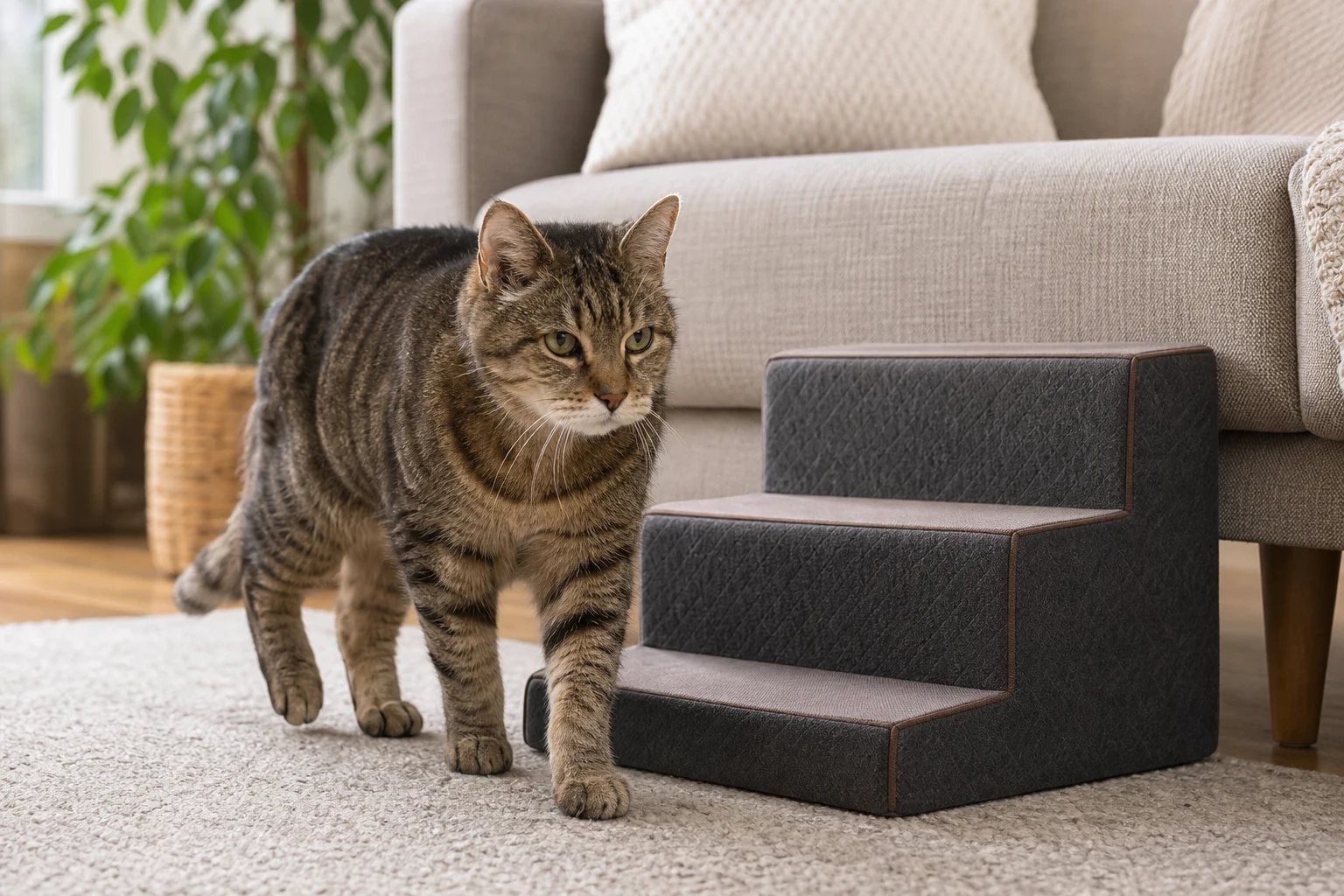
An older cat with arthritis may not limp. The first clues are often quieter: hesitating before a jump, sleeping in lower spots, grooming less, missing the litter box edge, or seeming irritable when touched.
Cats are skilled at hiding pain, so the goal is not to diagnose arthritis at home. Your job is to notice changes, compare your cat's senior life stage with our Cat Age Calculator, make daily life easier, and bring clear observations to a veterinarian who can examine your cat and discuss safe options.
How can you tell stiffness from normal aging?
Stiffness is not just "getting old" if it changes how your cat moves, rests, uses the litter box, grooms, plays, or interacts. Arthritis, also called osteoarthritis or degenerative joint disease, is a joint condition that veterinarians now actively look for in older cats because subtle signs are easy to miss 1.
Aging can make a cat calmer, but it should not make daily movement look difficult. If your cat used to hop onto a sofa in one smooth motion and now pauses, claws up the side, or chooses the floor, that change matters. If your cat has a scruffy back because twisting to groom hurts, that also matters.
Pain signs can be physical and emotional. Our guide to cat grimace scale pain signs can help you understand why ear position, eye tension, posture, and facial expression may add context, but chronic joint pain often shows up most clearly in routine changes.
What are the earliest home clues of arthritis in an older cat?
The earliest clues usually involve jumping, climbing, landing, and getting up after rest. VCA notes that cats with degenerative joint disease may show reluctance or inability to jump, stiffness, reduced grooming, and difficulty getting into or out of the litter box 2.
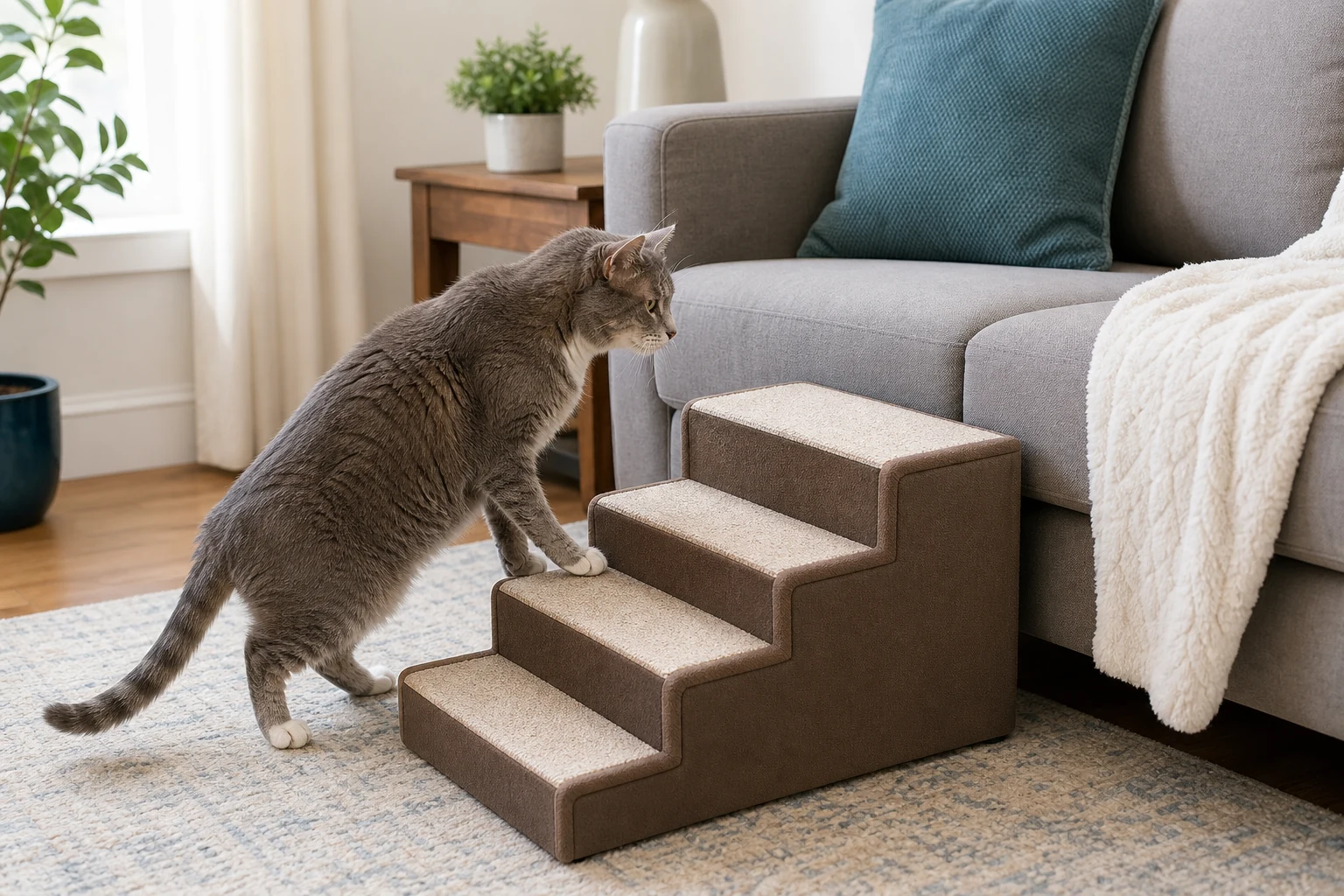
Watch for these home clues:
| Home clue | What it may look like | Why it matters |
|---|---|---|
| Jumping changes | Pauses, failed jumps, climbing with front claws, avoiding counters or beds | Hips, elbows, shoulders, spine, or knees may be uncomfortable |
| Landing changes | Lands heavily, takes a longer route down, avoids high perches | Jumping down can be harder than jumping up |
| Stiff starts | Moves slowly after naps, then loosens slightly | Chronic joint discomfort can be worse after rest |
| Litter box difficulty | Misses the box, stands awkwardly, avoids high-sided boxes | Squatting and stepping over high sides can hurt |
| Grooming changes | Greasy coat, mats near the back, dandruff, overlicked joint areas | Bending and twisting may be painful |
| Personality changes | Irritable when petted, hides more, avoids play | Pain often changes behavior before it causes obvious limping |
One clue alone does not prove arthritis. A pattern of changes, especially in a senior cat, is worth a veterinary conversation.
What behavior changes can point to joint pain?
Joint pain can look like a behavior problem. A cat who stops sleeping on the bed may not be rejecting you; the jump may feel too hard. A cat who swats when touched near the hips may be protecting a sore area. A cat who stops using a tall scratching post may be avoiding a stretch that hurts.
Reduced grooming is especially easy to misread. If your cat has mats, dandruff, or an oily coat near the lower back, do not assume laziness. Pain, obesity, dental disease, skin problems, and other illnesses can all affect grooming. Our guide to cat grooming problems can help you separate common grooming patterns, but a new grooming change in an older cat deserves a health check.
You may also notice:
- Sleeping more in one easy-to-reach place.
- Playing less or stopping mid-play.
- Avoiding stairs, windowsills, cat trees, or favorite perches.
- Resisting nail trims or brushing.
- Acting tense around other pets because quick escapes are harder.
- Urinating or defecating outside the box after box access becomes difficult.
These signs can overlap with kidney disease, thyroid disease, dental pain, neurologic problems, injury, or stress. That overlap is why a veterinarian should evaluate the whole cat instead of assuming arthritis from home clues alone.
What should you track before the vet visit?
Track movement changes in plain language. A short, well-lit video can show how your cat walks, uses stairs, enters the litter box, or moves around a favorite perch—behaviors a cat may not show during a clinic visit. Film the whole action from a safe distance, and do not coax your cat into a jump that appears painful. AAHA recognizes owner observations and home videos as useful parts of feline pain assessment, not as a diagnosis by themselves 4.
Bring notes on:
- Which jumps your cat avoids now.
- Whether stiffness is worse after sleep, play, or cold weather.
- Litter box entry, posture, accidents, and box height.
- Grooming changes, mats, overlicking, or sensitive spots.
- Appetite, thirst, weight, stool, urination, and energy.
- Any falls, injuries, medication changes, or new supplements.
- What makes movement easier or harder.
To compare changes over time, choose a few familiar actions—such as jumping up, jumping down, using stairs, or chasing a toy—and note whether each looks unchanged, hesitant or adapted, or avoided. Add the date and a brief description; this simple log is not a diagnostic score. AAHA guidance describes owner behavior checklists and videos as useful ways to capture chronic pain-related changes 4.
Can an X-ray rule arthritis in or out?
No single X-ray result can measure how much pain a cat feels. The FDA notes that some cats with osteoarthritis have no visible X-ray changes, and AAHA guidance says imaging should not replace the physical exam; when evaluating pain, the cat’s behavior should take priority over radiographic findings 1 4. A normal-looking image does not automatically explain away repeated changes at home, while an X-ray abnormality alone does not show how uncomfortable your cat is. Ask your veterinarian how your observations, the exam, and any imaging fit together.
Body shape matters because extra weight can add stress to joints, while muscle loss can make jumping and climbing harder. Use our body condition and muscle condition guide to describe changes clearly, then ask your veterinarian what a safe weight or muscle-support plan should look like for your cat.
Between appointments, record the score and the weight on the same day in the body condition and weight tracker, so a change is visible before the next exam.
When should you call a veterinarian?
Call your veterinarian when you see repeated stiffness, reduced jumping, litter box difficulty, grooming changes, limping, hiding, irritability, or any new mobility change in an older cat. International Cat Care advises contacting a veterinary team if a cat shows signs of arthritis or if you are concerned about health or behavior changes 5.
Seek urgent veterinary care if your cat has:
- Sudden inability to walk, stand, jump, or use one or more legs.
- Severe pain, crying, collapse, or rapid decline.
- Trauma, a fall, a bite wound, or possible fracture.
- Trouble breathing, seizures, pale gums, or extreme weakness.
- Not eating for 24 hours, repeated vomiting, or signs of dehydration.
- Blocked urination signs, such as straining with little or no urine.
- A swollen, hot, or very painful joint.
The non-urgent version is still important: a cat who gradually stops moving comfortably is not "just slowing down." Chronic pain affects quality of life, and AAHA pain-management guidance emphasizes recognizing pain and assessing chronic pain with owner observations as part of veterinary care 4. For broader symptom education, you can also browse our cat health guides.
How can you make your home easier for a stiff senior cat?
Make the environment easier while you arrange veterinary guidance. Home changes do not treat arthritis itself, but they can reduce daily strain and help your cat keep normal routines.
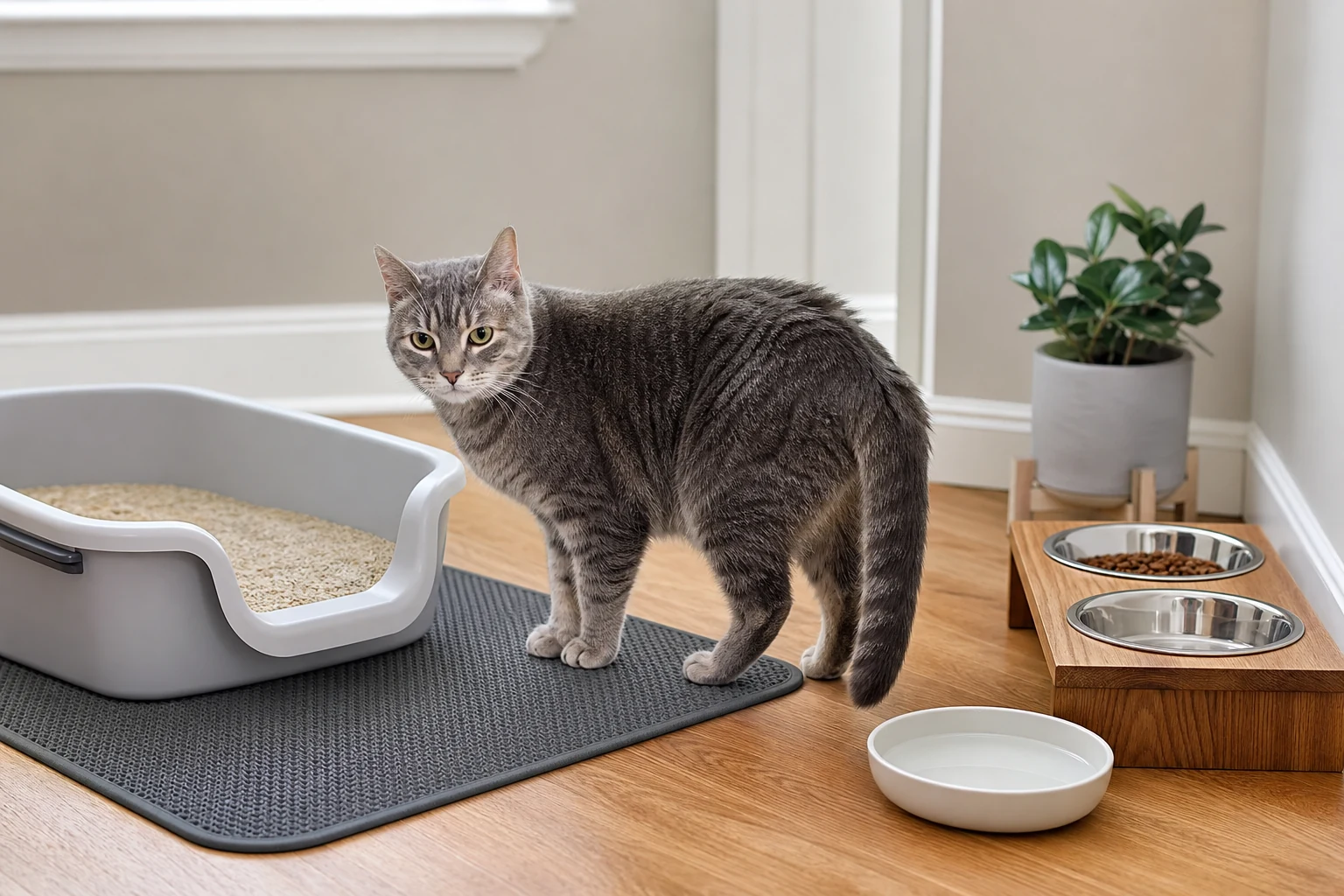
Useful changes include:
- Add pet steps or a stable ramp to the sofa, bed, or favorite window spot.
- Put non-slip rugs or mats on slick floors and landing zones.
- Choose a low-entry litter box, or cut a safe low doorway into a suitable box.
- Keep litter boxes on each level of the home if stairs are hard.
- Place food, water, beds, and litter within easy walking distance.
- Offer warm, soft resting spots that do not require a high jump.
- Keep nails trimmed so your cat can grip comfortably.
- Use gentle brushing to prevent mats if grooming has become difficult.
For litter-box layout, our best cat litter box setup guide can help you think through box size, location, and access. Choose stability over novelty: a wobbly ramp, slippery step, or cramped box can make a cautious cat avoid the setup entirely.
Steps for easier access to favorite resting spots
Stable pet steps may reduce the jump to a sofa or bed when your cat is comfortable using them. Place them securely and keep a non-slip route; they do not replace a veterinary arthritis plan.

KittyGoHere
KittyGoHere Senior Cat Litter Box, Green, Large
KittyGoHere Senior Cat Litter Box, Green, Large; Give your furry friend easy access to her bathroom with the KittyGoHere Senior Cat Litter Box. Ideal…
$49.95
Shop ChewyWe may earn a commission if you buy through this Chewy link, at no extra cost to you. Product details and prices can change.
What should you avoid doing at home?
Do not give human pain medicine to a cat unless your veterinarian specifically prescribes it. Many common human pain relievers can be dangerous or fatal for cats, and even veterinary medications need the right exam, dose, monitoring, and follow-up.
Avoid these mistakes:
- Do not force exercise to "loosen up" a painful cat.
- Do not stretch, massage, or manipulate a sore joint without veterinary instruction.
- Do not start supplements as a substitute for diagnosis.
- Do not assume litter box accidents are spite or stubbornness.
- Do not punish a cat who avoids handling, grooming, stairs, or the box.
- Do not delay care because your cat is still eating.
If you want to try a ramp, steps, or a low-entry box, introduce it gently. Let your cat discover it with treats, calm praise, and normal access to old routes until the new route feels safe.
How can you support quality of life over time?
Arthritis support is usually a long-term plan between you and your veterinarian. VCA describes arthritis treatment as individualized rather than a single magic solution, and veterinary plans may include weight management, environmental changes, pain control, monitoring, and follow-up exams depending on the cat 3.
At home, quality of life means protecting the routines your cat cares about:
- Can your cat reach favorite people and resting spots?
- Can your cat eat, drink, groom, scratch, and use the litter box comfortably?
- Can your cat still enjoy gentle play or watching the world from a safe perch?
- Is your cat hiding less, interacting normally, and sleeping in varied places?
- Are bad days becoming more frequent?
Senior cats can still have rich, comfortable lives when their needs are noticed early. If you are caring for or adopting a senior cat, build the home around easy access, predictable routines, soft handling, and regular veterinary checkups.
Conclusion: Notice the quiet clues early
Older-cat arthritis is often quiet. Look for changes in jumping, landing, grooming, litter box access, stiffness after rest, and sensitivity to touch rather than waiting for an obvious limp.
Home changes can make daily life easier, but they are not a diagnosis or a treatment plan. If your senior cat is moving differently, document the pattern, make access safer, and call your veterinarian. The earlier you describe the clues clearly, the sooner your cat can get an appropriate comfort plan.
Frequently Asked Questions
Do cats with arthritis always limp?
No. Many cats with arthritis show subtle behavior and mobility changes instead of a clear limp. Hesitating before jumps, sleeping in lower places, reduced grooming, and litter box difficulty may be easier to spot.
Is stiffness normal in an old cat?
Mild slowing can happen with age, but stiffness that changes your cat's routine is not something to dismiss. If your cat avoids jumps, struggles after resting, or seems painful when touched, schedule a veterinary check.
Can I give my cat human arthritis medicine?
No. Do not give human pain relievers, anti-inflammatories, or supplements unless your veterinarian specifically tells you to. Cats process many drugs differently from people, and the wrong medication can be dangerous.
What is the best litter box for a cat with arthritis?
Many stiff cats do better with a large, stable, low-entry box that is easy to step into and turn around in. Place it on a non-slip surface in a quiet, reachable location, and ask your vet if accidents start suddenly.
Should I stop my arthritic cat from jumping?
You do not need to remove every favorite spot, but you should make access easier and safer. Pet steps, ramps, lower resting places, and non-slip landing zones can reduce strain while your veterinarian helps you plan care.
References
[1] U.S. Food and Drug Administration. (n.d.). Osteoarthritis in Cats: More Common Than You Think. Read the FDA overview
[2] VCA Animal Hospitals. (2026). Degenerative Joint Disease in Cats. Read the VCA DJD guide
[3] VCA Animal Hospitals. (2026). Arthritis in Cats. Read the VCA arthritis guide
[4] American Animal Hospital Association. (2022). 2022 AAHA Pain Management Guidelines for Dogs and Cats. Read the AAHA guidelines (PDF)
[5] International Cat Care. (n.d.). Arthritis in Cats. Read International Cat Care's article