
Cat excessive licking—such as chewing off fur on the belly, tail, or feet—or suddenly stopping self-cleaning signals a meaningful change from your cat’s normal grooming baseline [1]. Because skin itch, parasites, allergies, joint pain, and stress look alike on the coat, schedule a veterinary exam before assuming stress.
Health note: This guide helps you observe coat and grooming changes; it cannot diagnose their cause or replace veterinary care.
Table of Contents
- How to tell when grooming has changed
- Signs of cat excessive licking and overgrooming (belly, tail, feet)
- Signs that a cat stopped cleaning itself (undergrooming)
- Why grooming changes need a medical check first
- When to contact a veterinarian
- Safe coat support while you arrange care
- Conclusion
- Frequently Asked Questions
- References
How to tell when grooming has changed
A change in your cat’s coat or skin is a far more reliable clue than counting grooming minutes, because healthy cats normally spend 30% to 50% of their waking hours cleaning themselves. Look for broken stubble, bald patches, irritated skin, or sudden coat matting—and compare with our guide to why cats groom themselves.
| Pattern | What you may notice | What it can tell you |
|---|---|---|
| Overgrooming (excessive licking) | Repeated licking or chewing in one area; broken, shortened, or thinning hair; bald patches; red or scabbed skin | Points to itch, parasites, allergy, localized pain, or stress-linked behavior [1] |
| Undergrooming (stopped cleaning) | Sudden greasy or unkempt coat, new mats, litter or food stuck in fur, or stopping mid-groom | Joint pain, arthritis, obesity, dental discomfort, or systemic illness may make grooming painful [2] |
| Normal variation | Frequent licking without hair loss, skin redness, coat deterioration, or behavior changes | Grooming frequency alone does not indicate a disorder |
Signs of cat excessive licking and overgrooming (belly, tail, feet)
Repeated licking, nibbling, or chewing off fur breaks hair shafts into short stubble and leaves symmetric thinning or bald skin—and the body region your cat targets gives your veterinarian helpful diagnostic clues [1] [3]:
- Cat overgrooming belly and inner thighs: Often linked to flea allergy dermatitis, food or environmental allergies, or lower urinary tract/bladder discomfort (a cat with cystitis or urinary pain frequently licks the lower abdomen).
- Cat licking tail or tail base: Commonly triggered by flea bites at the rump, tapeworm segments, impacted anal glands, or lower-spine/tail-base arthritis pain.
- Cat chewing feet and toes: May point to environmental contact allergies, dusty/scented litter irritation, yeast or bacterial pododermatitis, splinters, or overgrown nails pressing into paw pads.
- Note on excessive lip licking: Unlike coat grooming, repeated lip licking or swallowing motions usually signals nausea, dental pain, or oral irritation and warrants a prompt vet check.
Cornell Feline Health Center notes that some cats groom excessively in private, making a sudden bald stripe, broken hair stubble, or increased hairball vomiting the first visible sign [1].
Signs that a cat stopped cleaning itself (undergrooming)
When a normally tidy cat stops cleaning itself, the coat quickly turns greasy, flaky, or matted—especially along the lower back, hindquarters, and behind the ears—because twisting to groom has become painful or exhausting [2].
Common physical barriers include arthritis stiffness in senior cats, dental or mouth pain that makes tongue movement hurt, excess body weight preventing reach to the hindquarters, or systemic illness causing lethargy. Never dismiss a sudden messy coat as “just getting old”—review mobility clues in our arthritis signs in older cats guide and schedule a veterinary checkup [2].
Why grooming changes need a medical check first
Stress or boredom can contribute to compulsive licking (psychogenic alopecia), but Cornell advises ruling out parasites, allergies, skin infections, and internal pain before treating excessive licking as purely behavioral [1] [3]. Even when an episode begins with flea bites or bladder pain, repetitive licking can persist as a self-soothing habit unless the medical trigger is treated.
When to contact a veterinarian
Book a veterinary visit whenever excessive licking, fur chewing, or poor coat hygiene lasts more than a few days or leaves thinning hair. Seek prompt care if skin is red, bleeding, swollen, oozing, or paired with reduced appetite, hiding, limping, or litter-box straining [3].
Before your appointment, take clear photos of the skin, note when licking started, record your cat’s flea-prevention and diet history, and bring a short video if possible.
Safe coat support while you arrange care
Support your cat gently while awaiting veterinary advice without punishing licking or using unapproved products:

- Never cut tight mats with scissors: Cat skin is thin and easily pulled into scissor blades; ask a veterinarian or feline groomer to clip severe mats safely.
- Do not apply human creams, essential oils, or dog flea products: Many human ointments and permethrin-based dog treatments are toxic to cats.
- Offer gentle brushing and predictable enrichment: Use short, positive brushing sessions (see our cat grooming guide and guide to brushing a longhaired cat), maintain year-round vet-approved flea control, and add daily wand play and puzzle feeders to ease boredom.
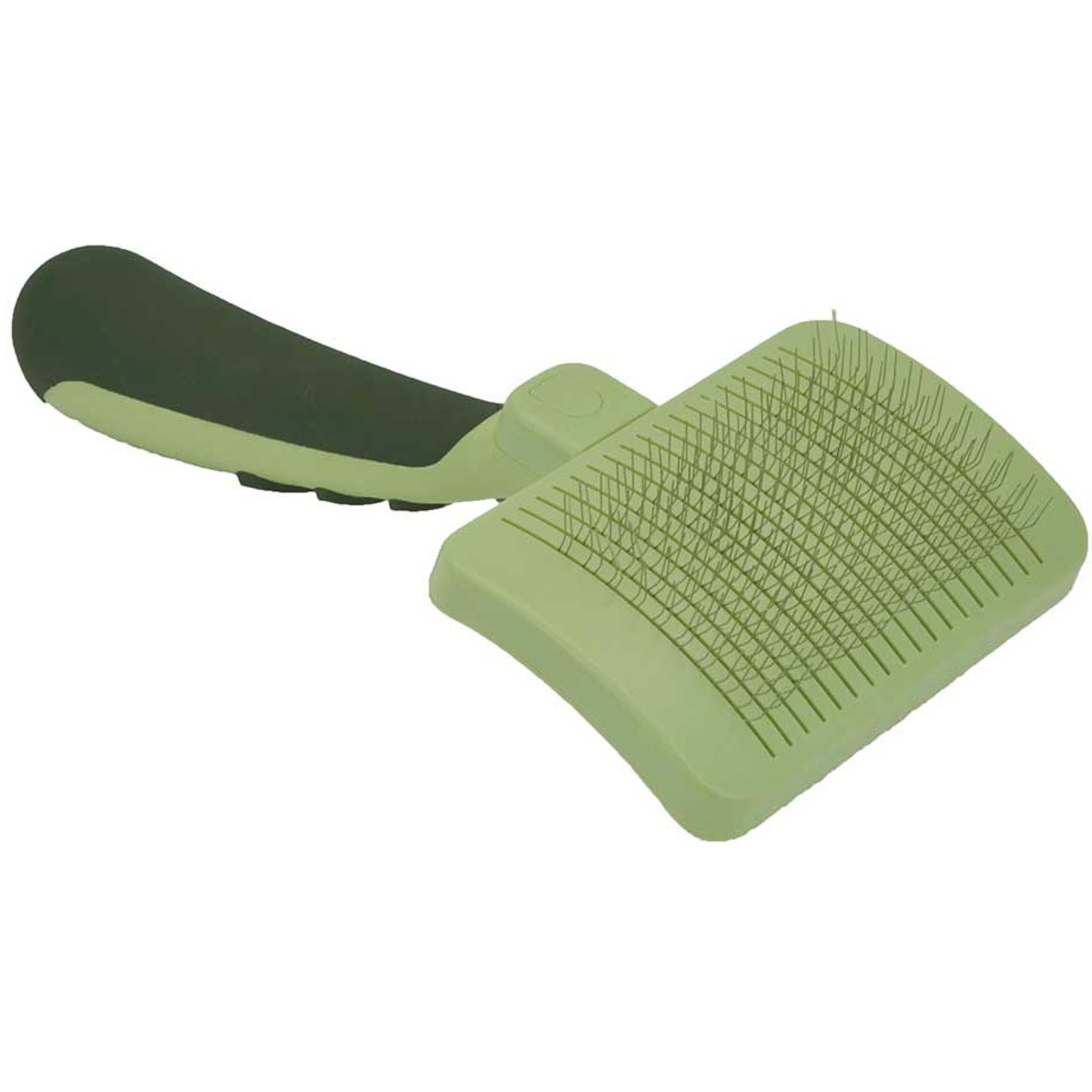
A brush for comfortable routine grooming
A brush can help remove loose coat only if your cat enjoys brushing; it will not treat pain, skin disease, or overgrooming. Stop if your cat resists or the skin looks sore, and ask a veterinarian about sudden grooming changes.
Safari
Safari Self-Cleaning Slicker Brush for Cats
Safari Self-Cleaning Slicker Brush for Cats; With the Safari Cat Self-Cleaning Slicker Brush, cleanup is as simple as pushing a button! This slicker brush…
$18.99
Shop ChewyWe may earn a commission if you buy through this Chewy link, at no extra cost to you. Product details and prices can change.
Conclusion
Whether your cat is excessively licking and chewing off fur on its belly, feet, or tail or has suddenly stopped cleaning itself, a visible coat change is an early health signal worth investigating. Photograph the affected area, avoid human skin products or scissors on mats, and schedule a veterinary exam to rule out parasites, allergies, and pain before addressing stress [1] [3].
Frequently Asked Questions
How much grooming is too much for a cat?
Healthy cats spend roughly 30% to 50% of their awake time grooming, so there is no exact minute cutoff [1]. Grooming is excessive when it breaks or thins fur, irritates skin, fixates on one body spot, or interrupts eating, sleeping, and play.
Why is my cat chewing its feet, belly, or tail—or chewing off fur?
Chewing or mowing fur off the belly, feet, or tail base is most often driven by intense itch or discomfort from fleas, food or environmental allergies, skin infections, or underlying pain such as arthritis or bladder inflammation [1] [3]. Have a veterinarian examine the skin and check parasite control first.
How can I help my cat stop excessive licking safely?
Start with a veterinary exam to treat any itch, parasite, or pain trigger, maintain strict year-round flea prevention, and redirect nervous energy with twice-daily wand play, puzzle feeders, and calm hiding spots [1]. Never yell at, spray, or punish a cat for licking, as stress worsens compulsive grooming.
Why has my older cat stopped cleaning itself?
When a senior cat stops grooming, arthritis pain, reduced spinal flexibility, dental discomfort, or systemic illness is usually making self-care painful [2]. Schedule a veterinary checkup and help maintain comfort with gentle daily brushing and warm damp-cloth wipes.
Can I shave or cut a matted cat at home?
Never cut tight mats with scissors, as fragile feline skin tents up into the mat and is easily injured. Ask your veterinary clinic or an experienced cat groomer to remove tight mats safely.
References
[1] Cornell Feline Health Center. Cats That Lick Too Much.
[2] Cornell Feline Health Center. Special Needs of the Senior Cat.
[3] Merck Veterinary Manual. Itching (Pruritus) in Cats.