
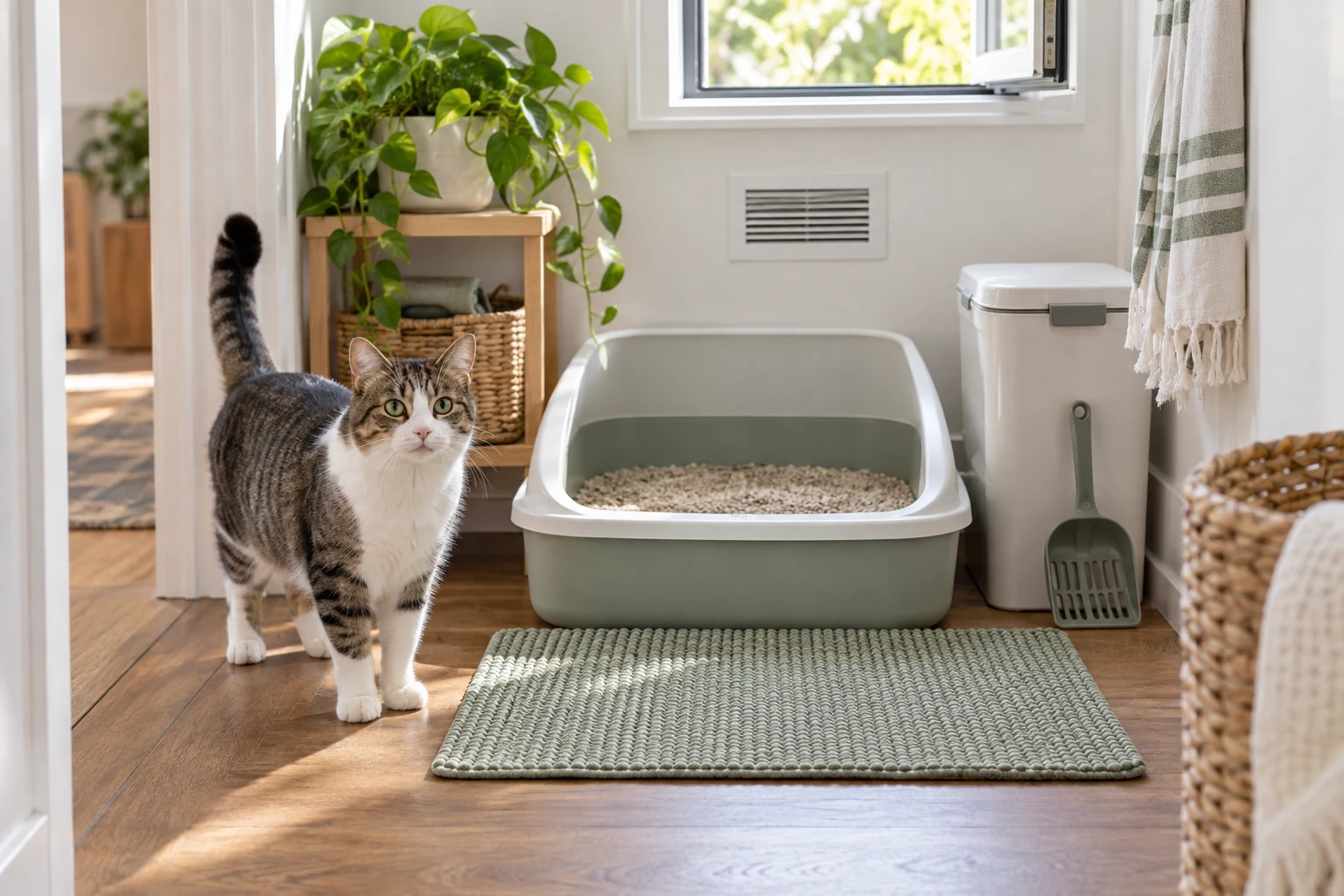
Keep a cat litter area smelling fresh by scooping daily, sealing waste, cleaning residue, using unscented litter, and adding gentle airflow.
Perfume can make a room smell better to people for a short time, but it does not fix the source of litter-area odor. Cats also have sensitive noses and may avoid a box that smells strongly of fragrance, cleaner, or stale waste. The better goal is a neutral, low-odor station that feels clean and predictable every time your cat steps into it.
Índice
- How do you keep a cat litter area from smelling without scented products?
- What actually causes litter-area smell?
- What daily routine keeps odor low?
- Which unscented products and tools help most?
- How do you deep-clean the litter area safely?
- How can ventilation help without making the box stressful?
- When does litter-box odor mean a vet visit is needed?
- What should you avoid if your cat dislikes the litter area?
- Conclusion: Keep odor low without making the box smell strange
- Preguntas frecuentes
- Referencias
How do you keep a cat litter area from smelling without scented products?
Keep the area fresh by removing urine and stool quickly, using an appropriately sized box, choosing an unscented litter your cat accepts, washing residue before it soaks into scratched plastic or mats, and improving airflow without moving the box to a stressful place. Merck Veterinary Manual notes that litter boxes should be kept clean, scooped every day, fully cleaned at least weekly, and that unscented litter is often recommended because cats can be sensitive to smells 1.
Think of odor control in layers:
- Remove waste from the box.
- Contain waste after scooping.
- Prevent damp litter dust and urine residue from collecting around the box.
- Wash the tray, mat, scoop, floor, and nearby wall when needed.
- Keep the setup comfortable enough that your cat still wants to use it.
This is different from simply hiding odor. If a litter area only smells fresh because of scented litter, sprays, plug-ins, candles, or deodorizing beads, the box may still be dirty underneath. Worse, the new scent can become one more reason a cat hesitates, rushes, or finds another spot.
What actually causes litter-area smell?
Litter-area smell usually comes from missed waste fragments, urine that reached the box walls or mat, damp litter dust, a waste pail that is not sealed, or old plastic that holds odor even after washing. A dirty mat or surrounding floor can also make the whole station smell stale even when the litter looks clean.
The most common odor sources are:
| Odor source | Cómo se ve | Best unscented fix |
|---|---|---|
| Missed urine clumps | Small pieces break apart during scooping | Scoop more slowly, use a finer scoop, and top up litter depth |
| Damp plastic | Box bottom feels tacky after scooping | Empty, rinse, dry fully, and replace deeply scratched boxes |
| Dirty mat | Dust film, urine splash, or trapped granules | Follow a regular routine for how to clean a cat litter mat |
| Open waste | Scooped waste sits in an open trash can | Use a lidded pail and empty it before odor builds |
| Poor airflow | Odor lingers in a closet or tiny room | Improve ventilation while keeping the box quiet and accessible |
| Health change | Urine or stool smells suddenly sharper than usual | Track the change and call your veterinarian if other signs appear |
ASPCA lists box cleanliness, litter preference, box size, access, and litter depth among management issues that can contribute to elimination problems 3. That matters for odor because the same fixes that keep the area pleasant for people often make the box more acceptable to cats.
What daily routine keeps odor low?
A simple daily routine works best: scoop all boxes at least once a day, check again in the evening when possible, wipe fresh splash or dust before it dries, and seal scooped waste right away. For many homes, odor improves more from twice-daily five-minute checks than from a stronger cleaner used once a week.
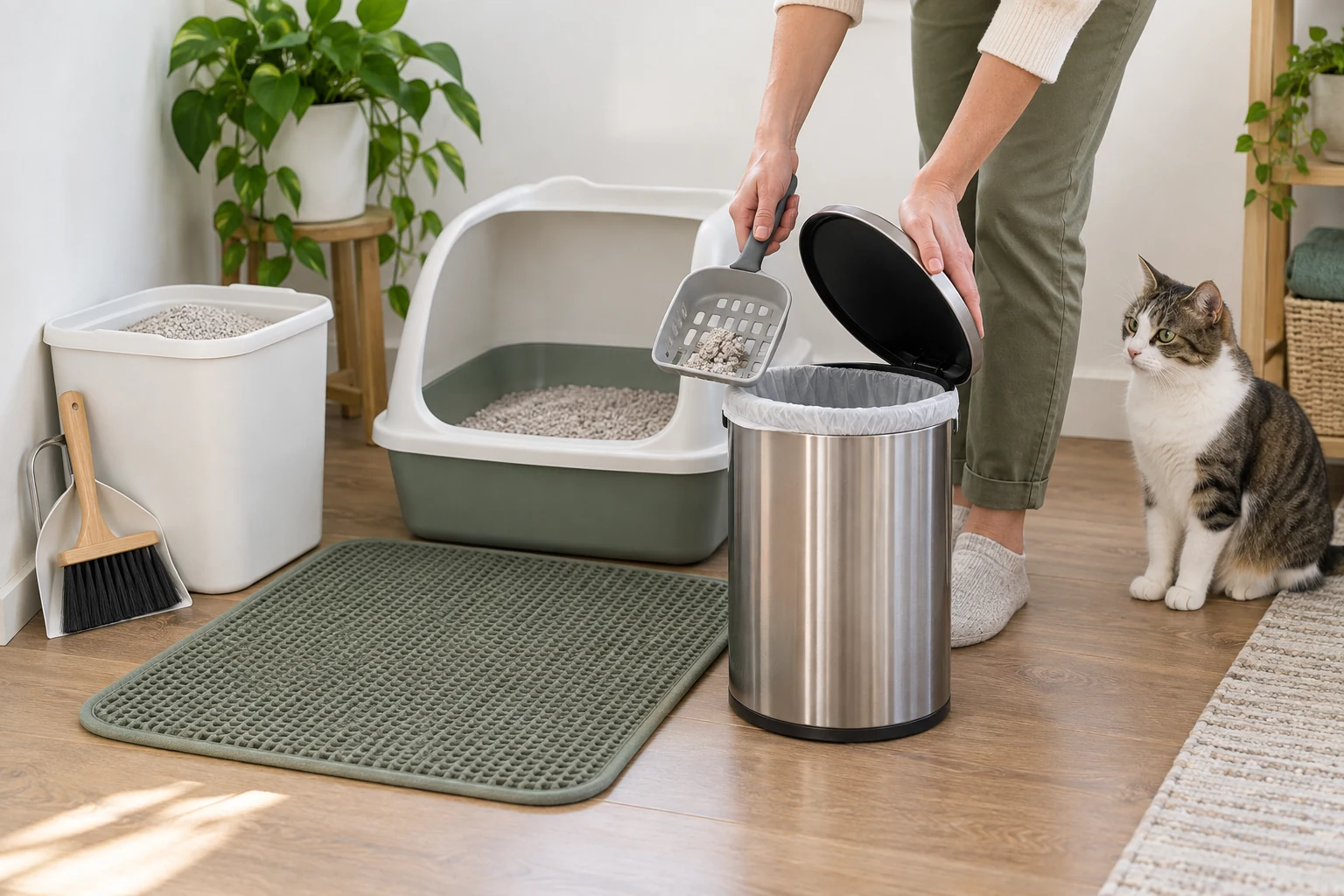
A sealed waste pail, easy-to-reach scoop, and washable mat help remove odor sources before they spread through the room.
Use this rhythm as a starting point:
- Scoop urine clumps and stool every morning.
- Check again in the evening, especially in multi-cat homes.
- Sweep or vacuum tracked litter after scooping.
- Wipe fresh splash from the box edge, wall, or mat with a damp cloth.
- Tie off or empty waste before the pail smells.
- Top up litter so your cat can dig and cover normally.
- Watch for changes in urine clump size, stool texture, frequency, or straining.
If you want a full schedule for the box itself, use the SnuggleSouls guide on how often to clean a litter box. This article builds on that routine by focusing on the whole odor zone: box, mat, scoop, pail, floor, wall, and airflow.
Which unscented products and tools help most?
The most useful odor-control tools are boring in the best way: a large open box, unscented litter, a sturdy scoop, a washable mat, a sealed waste pail, mild unscented soap, and an enzymatic cleaner for accidents outside the box. AAHA/AAFP guidance says boxes should be scooped daily, cleaned regularly, and that soap or strong chemicals should be avoided, with hot water preferred 2.
Start with the La mejor configuración para la bandeja sanitaria del gato before buying odor products. A cramped, covered, hard-to-reach, or poorly placed box can trap odor and make your cat less comfortable.
Useful choices include:
- Unscented clumping litter: Merck and ASPCA both note that many cats prefer unscented litter 1 3.
- A scoop that matches the litter: Narrower slots can catch tiny clump fragments that otherwise stay behind.
- A sealed waste pail: The lid matters more than fragrance. Empty it often.
- A washable mat: Choose a texture your cat willingly crosses and clean it before dust turns into odor.
- Plain cleaning supplies: Use warm water, hot water when appropriate, and mild unscented soap when water alone is not enough.
- An enzymatic cleaner for accidents: Use it on household accident spots outside the box, following the label, so odor does not invite repeat soiling.
If litter tracking spreads odor through the house, compare low-tracking cat litter and review how much cat litter to use. Too little litter can let urine reach the tray bottom quickly. Too much can spill, scatter, and collect outside the box.
How do you deep-clean the litter area safely?
Deep-clean by emptying the box, rinsing away loose residue, washing only as much as needed with mild unscented soap or hot water, rinsing thoroughly, drying completely, and returning the same familiar box, litter, and location when possible. The point is to remove residue, not to leave a cleaner smell behind.
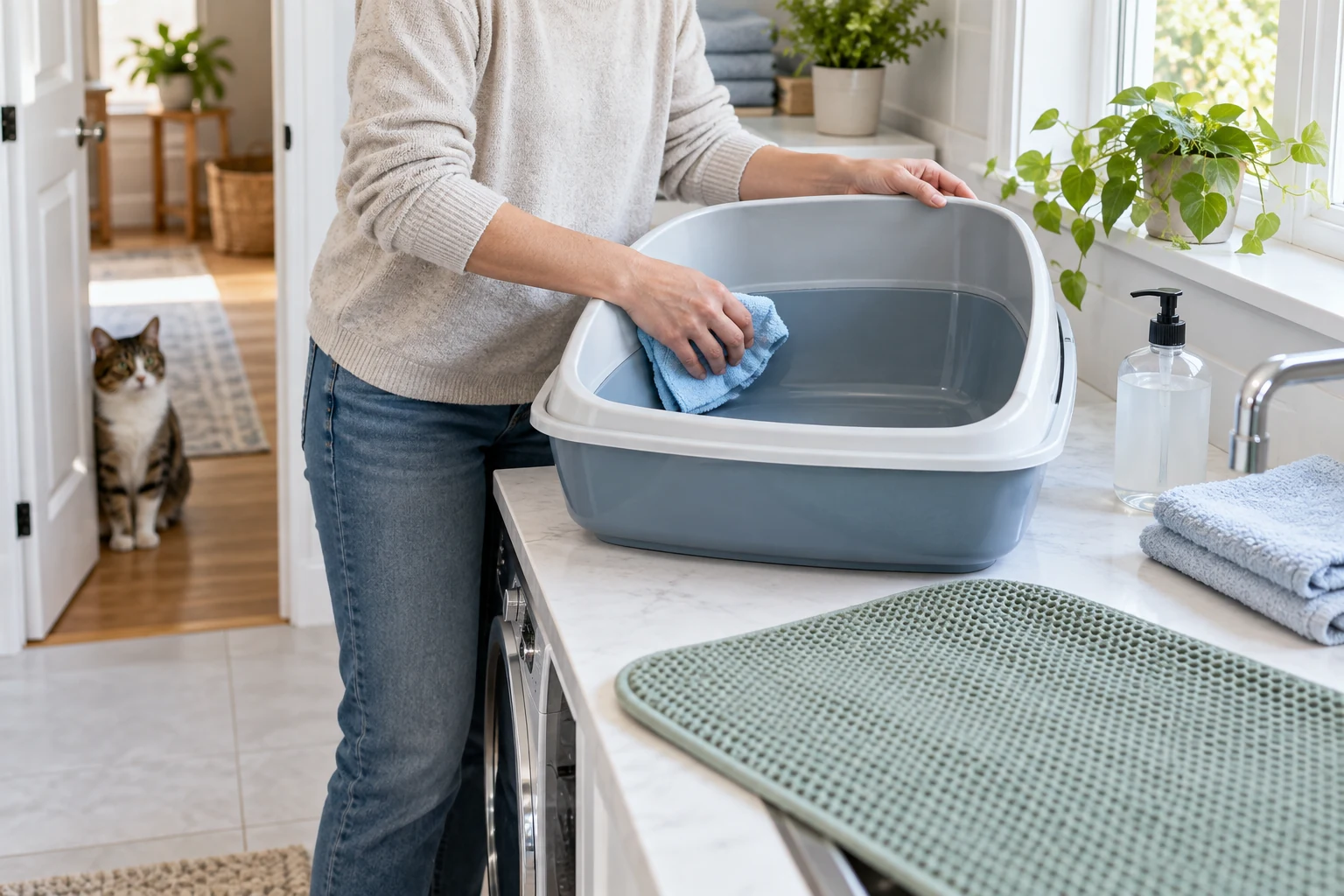
Deep cleaning works best when the box is emptied, rinsed well, dried fully, and returned without strong fragrance or cleaner residue.
Follow this order:
- Give your cat access to another usable box before you start.
- Empty the litter into household waste according to local rules.
- Rinse the box with warm or hot water.
- Use a small amount of mild unscented soap only if residue remains.
- Rinse until no slick feel or soap smell remains.
- Dry the box fully before adding fresh litter.
- Shake, wash, and dry the mat according to its material.
- Wipe nearby floor and wall areas where dust or splash collects.
- Wash the scoop and let it dry before returning it to the station.
ASPCA advises weekly cleaning with warm water and unscented soap, baking soda, or no soap, and warns that scented cleaners can create scent aversion 3. Avoid ammonia-like cleaners, heavy fragrance, essential oils, and strong disinfectant smells around the box. If a product is needed for a specific contamination issue, follow the label exactly, rinse or dry the item before your cat returns, and ask your veterinarian if you are unsure.
ASPCA Animal Poison Control notes that many cleaning products can be used safely when labels are followed, but pets should be kept away while products dry, and concentrated or misused products can cause harm 5. If your cat walks through cleaner, licks residue, drools, vomits, coughs, paws at the mouth, or seems unwell after exposure, call your veterinarian or poison control promptly.
How can ventilation help without making the box stressful?
Ventilation helps by moving stale air away from the litter station, but the box still needs to be quiet, accessible, and comfortable. Do not solve odor by hiding the box in a cold garage, loud laundry corner, trapped closet, or cramped spot where your cat feels cornered.
Better airflow options include:
- Opening a nearby window for short supervised periods when weather allows.
- Using a bathroom or laundry fan after scooping, if the noise does not scare your cat.
- Keeping the box away from sealed closets and tight corners.
- Leaving enough open space above and around the box.
- Using an open box if your cat dislikes covered boxes or if odor is trapped inside.
- Cleaning the waste pail and mat instead of trying to ventilate around dirty items.
Merck notes that location matters and that cats may avoid boxes near noisy appliances, cold floors, food, or water 1. AAHA also recommends quiet locations and warns against placing boxes next to loud appliances, food and water dishes, busy spots, or cramped corners 4. Fresh air helps, but it cannot replace a cat-friendly location.
When does litter-box odor mean a vet visit is needed?
Call your veterinarian if litter-area odor changes suddenly with other clues such as frequent trips, straining, crying, blood, diarrhea, constipation, vomiting, hiding, reduced appetite, lethargy, weight loss, increased thirst, or much larger or smaller urine clumps. A male cat repeatedly trying to urinate but producing little or no urine needs emergency veterinary care.
Odor alone does not diagnose a problem. It can come from cleaning schedule, litter choice, humidity, box damage, or waste pail habits. But a sharp new urine smell, unusually strong stool odor, accidents outside the box, or repeated unproductive visits should not be dismissed as a housekeeping issue.
ASPCA explains that urinary tract infections, feline interstitial cystitis, stones, and blockages can be associated with litter-box changes, and Merck warns that straining can be a life-threatening emergency, especially in male cats 1 3. AAHA also says a veterinary exam is the first step when house soiling may have a medical cause 4.
Use the SnuggleSouls guide to problemas con la bandeja sanitaria to organize the behavior side, and review Causas médicas de orinar fuera de la caja if the smell is paired with accidents, pain signs, or urine changes.
What should you avoid if your cat dislikes the litter area?
Avoid adding stronger scents, switching several things at once, blocking escape routes, punishing accidents, or forcing your cat into the box. A cat who dislikes the litter area needs the setup to become cleaner, calmer, and more predictable, not more perfumed.
Skip or use extreme caution with:
- Scented litter if your cat is not already comfortable with it.
- Litter deodorizing crystals, beads, or powders with fragrance.
- Essential oils, incense, scented candles, and plug-in air fresheners near the box.
- Strong-smelling disinfectants as routine box cleaners.
- Covered boxes used only to trap odor for people.
- Moving the box suddenly to a hidden or noisy location.
- Punishing, scolding, or carrying your cat to the box after an accident.
AAHA/AAFP guidance specifically says cats should never be reprimanded for toileting in undesired locations or taken to a litter box punitively 2. If your cat starts avoiding the area, remove the most recent change first. Offer a clean box with familiar unscented litter in a quiet, accessible location, then adjust one variable at a time.
Conclusion: Keep odor low without making the box smell strange
A fresh litter area should smell neutral, not perfumed. Scoop daily, seal waste quickly, clean the mat and nearby surfaces before residue builds, deep-clean the box with unscented methods, and improve airflow without making the location stressful.
Your cat's reaction is part of the quality check. If the area smells pleasant to you but your cat hesitates, rushes, avoids the box, or starts toileting elsewhere, the setup needs another look. The best odor-control routine protects both your home and your cat's trust in the litter box.
Preguntas frecuentes
Is scented cat litter bad for odor control?
Scented litter may hide odor for people, but many cats prefer unscented litter, and some dislike strong smells. If your cat has any hesitation, accidents, or recent litter-box stress, choose an unscented litter and focus on waste removal and cleaning instead.
Can I sprinkle baking soda in the litter box?
Some cleaning guidance mentions baking soda for washing or rinsing litter boxes, but sprinkling powders into the box can change scent, dust, and texture. If your cat is sensitive, skip additives and improve scooping, litter depth, mat cleaning, and waste containment first.
Why does my litter area smell even after I scoop?
Odor may be coming from broken clump pieces, urine on the tray bottom, a dirty mat, a waste pail, scratched plastic, nearby floor residue, or poor airflow. Empty and inspect the whole station rather than adding fragrance to the litter.
How often should I replace a litter box that holds odor?
Replace the box when scratches, cracks, or worn plastic hold odor even after washing and drying. Old boxes can keep smell in the surface, and AAHA recommends replacing old boxes when potent odors turn cats away.
Are air fresheners safe near a cat litter box?
Avoid routine air fresheners near the litter box. Strong scents can make the area less appealing to cats, and some products can irritate or expose pets if misused. Remove odor sources first, ventilate gently, and ask your veterinarian about any product you are unsure about.
Referencias
[1] Merck Veterinary Manual. (2025). Providing a Litter Box for a Cat. URL
[2] American Animal Hospital Association. (2021). Consideraciones generales sobre la bandeja sanitaria. URL
[3] ASPCA. (n.d.). Problemas con la bandeja sanitaria. URL
[4] American Animal Hospital Association. (2026). Why Won't My Cat Use the Litter Box?. URL
[5] ASPCA Animal Poison Control. (n.d.). Poisonous Household Products. URL
 EN
EN DE
DE ES
ES PT
PT