Índice
Quick Answer: Can Cats Eat Tuna?
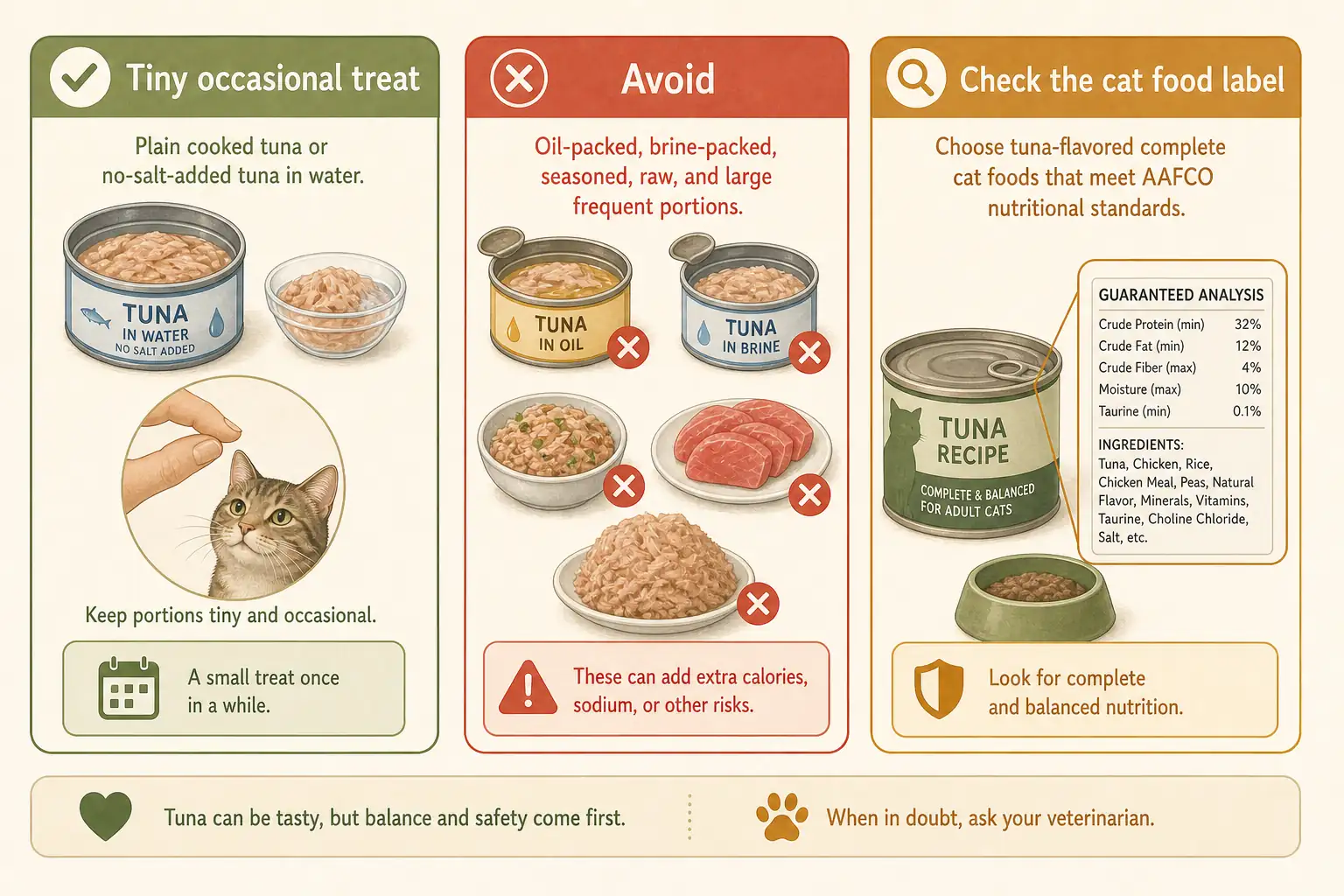
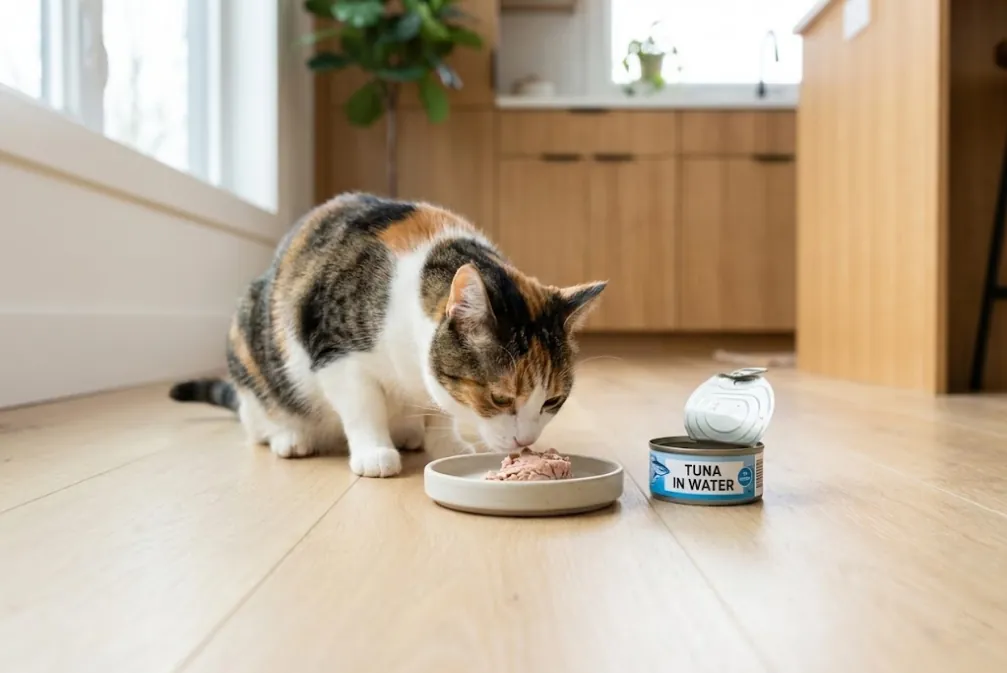
Yes—cats can comer tuna, but only as an occasional treat. The safest option is plain, cooked tuna ou water-packed canned “light” tuna (no salt added), served in tiny portions. Avoid daily tuna, raw tunae oil/brine/seasoned tuna due to nutrition imbalance and other risks.
Em um relance
Safest tuna: Water-packed light tuna (drained; rinse if salty) or fresh tuna cooked plain
Evitar: Raw tuna, tuna in oil/brine, flavored/seasoned tuna (especially onion/garlic)
How much: Keep tuna under 10% of daily calories (for many cats, roughly 1–2 teaspoons per serving)
How often: Occasionally (think “sometimes,” not “daily”)
Kittens: Best to avoid until 1 ano de idade (they need complete kitten nutrition)
In this guide, we’ll cover tuna’s benefits in small doses, the biggest risks (especially mercury + nutrient imbalance), the safest types to buy, and a simple serving chart by weight—plus special cautions for kittens.
Nota rápida: If your cat shows wobbliness, tremors, vomiting, or suddenly refuses normal food after tuna, stop tuna and contact a vet.
Benefícios nutricionais do atum (em pequenas quantidades)
Quick takeaway: Tuna can be a useful occasional treat because it’s protein-rich, naturally very low in carbohydrates, contains some omega-3s (EPA/DHA), and is highly palatable to many cats. But these benefits only apply to small, infrequent servings.
High-Quality Protein (Fits a Cat’s Carnivore Biology)
Os gatos são carnívoros obrigatórios, evolved to eat prey that’s rico em proteínas, moderate in fate very low in carbohydrates—so a small bite of plain tuna can “fit” that natural pattern as a tratar.
Canned light tuna in water is also very high in protein on a per-calorie basis, which is one reason it feels like such a satisfying snack.
Omega-3 Fatty Acids (EPA/DHA) for Skin & Inflammation Support
Tuna contains omega-3 fatty acids—especially DHA and EPA—which are involved in inflammatory pathways and are commonly used in veterinary nutrition to support skin/coat and certain inflammatory conditions (as part of an overall plan).
Important nuance: tuna isn’t a “fish oil supplement,” and the omega-3 amount varies by type and serving—so think of this as a bônus, not a therapeutic dose.
Low in Carbohydrates (Helpful for a Treat)
Plain tuna is essentially carb-free, which aligns with how cats are adapted to eat (their natural diet tends to be minimal in carbs).
That doesn’t automatically make it “better” than cat treats—but it does mean a tiny portion is unlikely to add unnecessary carbs to the day.
Enticing Aroma & Flavor (Can Boost Appetite in Finicky Cats)
Many cats find tuna irresistible, and there’s research suggesting tuna’s unique mix of taste compounds can create a strong umami effect for cats—one reason it can be handy for tempting picky eaters or masking medication.
If your cat isn’t eating normally for more than a day (or is acting ill), use tuna as a short-term lure and contact your vet, because appetite loss can signal medical issues.
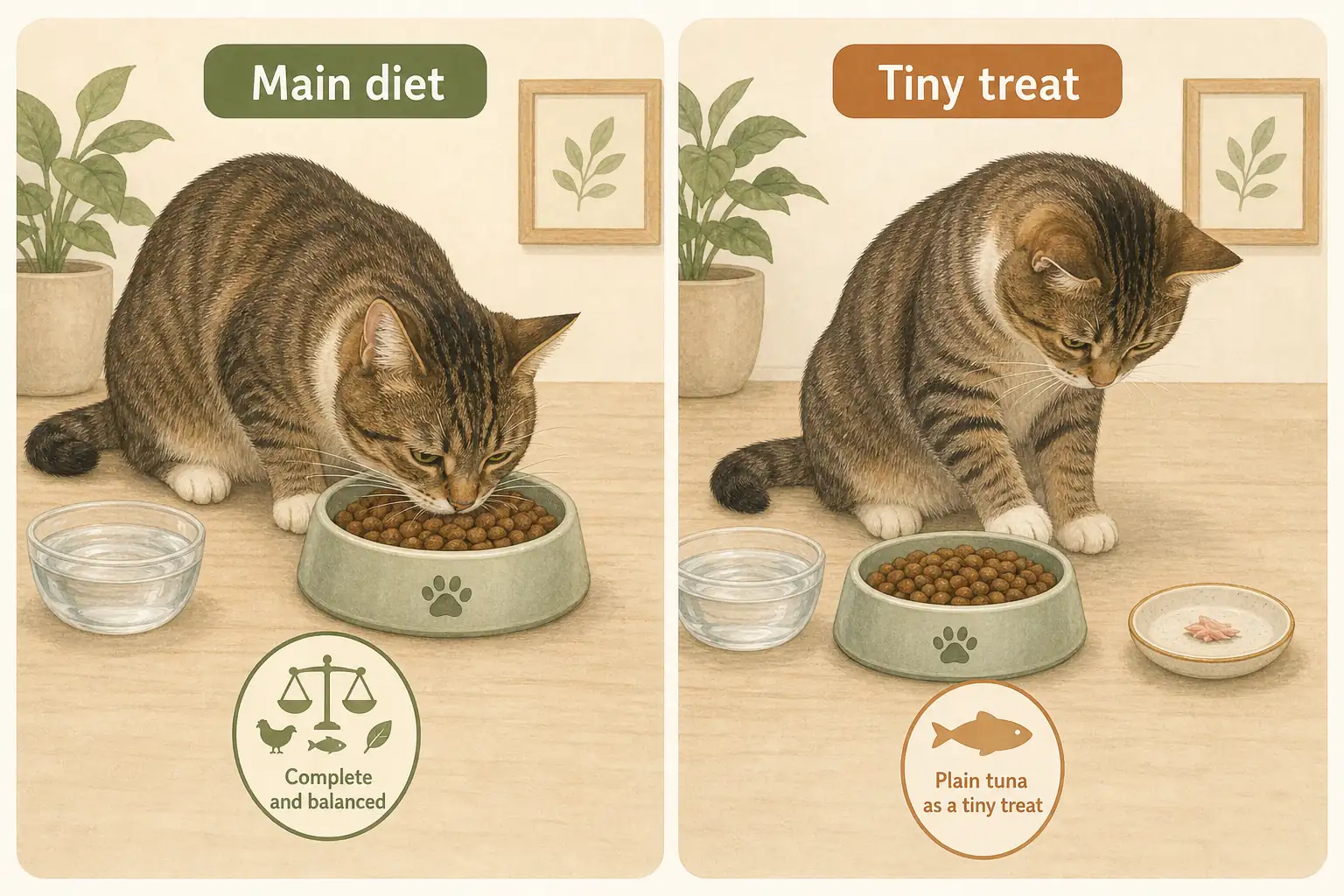
Conclusão: These upsides are real—but only when tuna is treated as an occasional treat. It’s not “complete and balanced,” so your cat’s main diet should still be a nutritionally complete cat food.
![]()
Risks of Feeding Tuna to Cats (Why “Occasional Treat” Matters)
Tuna smells irresistible to cats—but the risks climb quickly when it’s fed too often, in large portionsou raw. The biggest concerns are mercury exposure, diet imbalance (especially vitamin E issues), picky eating/food refusale ganho de peso.
Mercury Toxicity (Mercury Poisoning Risk)
Tuna is a larger, longer-lived fish, which means it can accumulate methylmercury over time. Veterinary toxicology references note that mercury exposure can cause neurologic signs e kidney damage, and the damage may be irreversible in serious cases.
This is especially relevant for cats because they’re small—so “a little for us” can become “a lot for them” if tuna becomes a frequent habit. PetMD specifically warns that tuna (especially albacore/“white” tuna) can be high enough in mercury that cats fed lots of tuna can develop mercury toxicity.
Conclusões práticas: Prefer canned light tuna over albacore when you do offer tuna, and keep it occasional. In human food guidance, FDA/EPA also notes que albacore has more mercury than canned light tuna, which aligns with the “choose light tuna” advice often given for pets.
Possible warning signs (call your vet): wobbliness/ataxia, tremors, unusual weakness, or behavior changes—especially if tuna has been frequent.
Nutritional Imbalances (Tuna Isn’t “Complete and Balanced”)
Even though tuna contains protein and omega-3s, plain tuna is not a complete and balanced diet for cats. “Complete and balanced” pet foods must meet nutrient profiles or feeding trials that ensure cats get all required nutrients at the right levels—something a single human food (like tuna) can’t reliably provide on its own.
A key example: human-grade tuna is deficient in vitamin E, and PetMD notes that too much tuna can cause serious problems when it unbalances the diet.
If tuna crowds out balanced cat food, cats can also develop fat inflammation conditions associated with inadequate antioxidant protection (vitamin E), especially with high-fish feeding patterns.
Conclusões práticas: Tuna should be a tratar, not a meal replacement. If you want a “fishy” daily option, choose cat foods/treats formulated for cats (they’re designed to be nutritionally adequate).
“Tuna Addiction” and Food Refusal (Picky Eating Pattern)
Many owners notice that once cats learn tuna exists, regular food suddenly seems less exciting. This isn’t magic—it’s palatability and learned preference. PetMD explicitly cautions that cats will overeat tuna if allowed and emphasizes strict limits to prevent health problems.
Por que é importante: if your cat starts refusing their normal “complete and balanced” food, they can end up eating an unbalanced diet or simply not eating enough overall (which is risky in cats).
Conclusões práticas: Keep tuna a surpresa, not a routine. Use tiny portions and avoid “tuna every time they beg.”
Overfeeding & Obesity (Calories Add Up Fast)
Tuna feels light, but it still contains meaningful calories. For example, nutrition databases based on USDA data show canned light tuna in water has substantial calories depending on serving size.
And cats don’t have a big daily caloria budget to begin with. One major veterinary hospital notes that a 10-lb cat may only need about ~200 calories/day, so frequent “extras” can push them into weight gain surprisingly fast.
Conclusões práticas: If you’re giving tuna, count it as part of the day’s treats. A widely used veterinary guideline is that treats should be ≤10% of daily calories.
Bacterial Risk + Thiaminase (If Raw or Undercooked)
Feeding raw tuna/raw fish is not recommended. Raw animal foods can carry pathogens that affect pets and peopleincluindo Salmonela e Listeria, and veterinary organizations discourage feeding raw animal-source proteins that haven’t been processed to eliminate pathogens.
There’s also a specific nutrition problem: raw fish diets can contribute to thiamine (vitamin B1) deficiency because raw fish may contain tiaminase, an enzyme that degrades thiamine. Thiamine deficiency in cats can cause serious neurologic issues. Cooking helps because thiaminase is heat-labile.
Conclusões práticas: If you offer tuna at all, make it fully cooked and plain (or canned in water), never raw.
Quick “when to call the vet”
Se você notar vomiting/diarrhea, refusal to eat regular foodou neurologic signs (wobbly walking, tremors, weakness), stop tuna and contact your veterinarian.

Quais tipos de atum são mais seguros para os gatos?
Not all tuna is equal for cats.
Safest “people tuna” choice: plain, cooked tuna ou canned light tuna (skipjack) in water, no salt added
Evitar: raw tuna/sushi, tuna in oil ou brine, and heavily seasoned tuna
Choose lower-mercury tuna types when possible (more below)
Fresh Tuna: Safe apenas when cooked and plain
If you have fresh tuna steak (even “sashimi-grade”), don’t serve it raw. Raw fish diets are a known risk factor for thiamine (vitamin B1) deficiency in cats because raw fish can contain tiaminase (an enzyme that breaks down thiamine). Cooking deactivates thiaminase and reduces bacterial/parasite risk.
How to serve fresh tuna safely
Cook thoroughly (bake/boil/pan-cook) with no oil
Serve simples—no salt, marinades, sauces, or spice blends
Cool it, then offer a small bite as an occasional treat (not a meal)
Veterinary guidance commonly emphasizes: cooked, totally plain, small amounts—no oils or seasonings.
Safety note: Avoid seasonings like onion/garlic—they can damage red blood cells and cause anemia in cats.
Canned Tuna: Choose water-packed + low-sodium (and keep it simple)
Canned tuna is convenient, but the label matters.
Best canned tuna for cats
“In water” / water-packed
“No salt added” (or lowest sodium available)
Unflavored (skip flavored pouches, spicy/sweet, lemon-pepper, etc.)
What to avoid
Oil-packed tuna (extra fat can upset digestion)
Brine/saltwater tuna (unnecessary sodium)
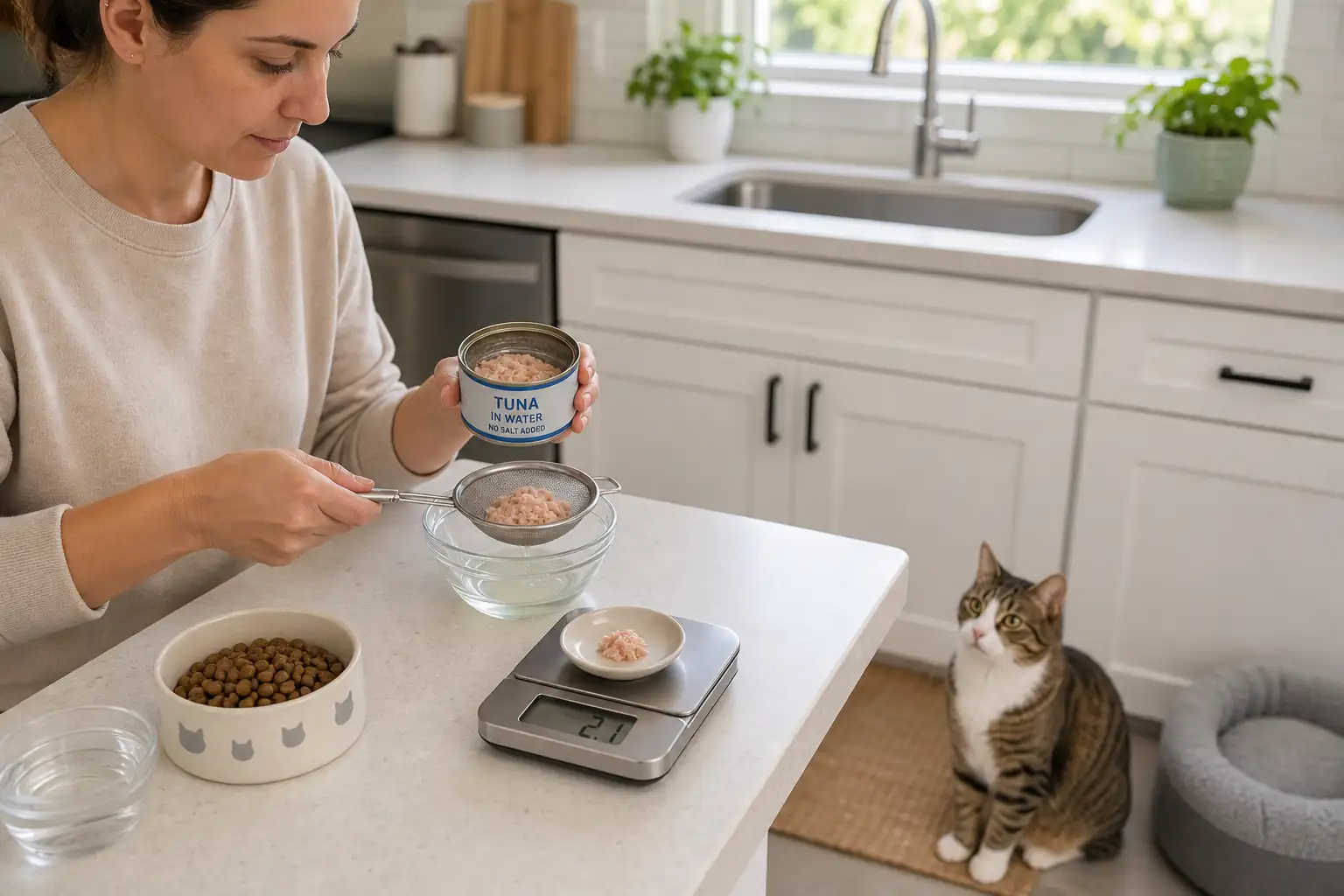
If you only have regular water-packed tuna, you can drain and briefly rinse it to lower surface sodium before serving.
“Light” vs. “White” Tuna: choose lower-mercury types more often
Mercury levels vary by tuna species. U.S. FDA/EPA consumer guidance puts canned light tuna in a lower-mercury category than albacore (“white”) tuna, and notes that larger/longer-living tuna species tend to carry more mercury.
Practical takeaway for cat owners
Best default: Canned light tuna (often skipjack) → typically lower mercury
Limit more: Albacore (“white”) tuna, tuna steaks, and larger species more generally
Avoid routinely: species known for higher mercury (FDA/EPA explicitly flags bigeye as one to avoid for mercury-conscious choices)
(This doesn’t mean tuna is “toxic” in tiny portions—it means: if you’re choosing which tuna to offer, pick the lower-mercury option.)
Tuna-based cat foods and treats: often the safest “tuna habit” option
If your cat loves tuna, a smarter long-term strategy is to use tuna-flavored cat food or cat treats designed for feline nutrition.
What to look for
A product labeled “completo e equilibrado” (or with an AAFCO nutritional adequacy statement for cats)
This matters because plain tuna isn’t a complete diet; “complete and balanced” foods must meet established nutrient standards or pass feeding trials.
These products can satisfy the tuna craving while reducing the risk of nutrient gaps that can happen when cats get “people tuna” too often.

Tuna for Cats: Quick Yes/No Scenarios (Common Search Questions)
Os gatos podem comer atum enlatado?
Yes, occasionally. Choose water-packed tuna with no salt added, drain it, and serve a tiny portion as a treat—not a meal replacement.
Can cats eat tuna in oil?
No (avoid it). Oil-packed tuna adds unnecessary fat and can trigger stomach upset or diarrhea.
Can cats eat tuna in brine (salt water)?
No. Brine is too salty for cats and increases the risk of dehydration or sodium overload—choose water-packed instead.
Can cats drink tuna water / tuna juice?
Sometimes—but only if it’s from water-packed, low-sodium tuna. Avoid brine and flavored packets; offer only a small splash as an appetite helper, not a daily habit.
Can cats eat raw tuna or sushi (sashimi)?
No. Raw fish can carry bacteria/parasites and contains tiaminase, which can contribute to vitamin B1 (thiamine) deficiency.
Can cats eat tuna every day?
No. Daily tuna increases the risk of nutritional imbalance, picky eating (“tuna addiction”), and mercury exposure.
Is “chunk light” tuna safer than albacore (“white” tuna)?
Usually, yes. Chunk light (often skipjack) tends to be lower in mercury than albacore, so it’s the better option for an occasional treat.
Can cats eat tuna steak?
Yes, if fully cooked and plain. Cook it thoroughly (no oil, salt, garlic, onion, or seasoning), cool it, and serve a small bite.
Can kittens eat tuna?
Best avoided. Kittens have higher nutrient needs and smaller body size, so tuna can create imbalances and raises more concern with mercury exposure.
Can cats eat tuna salad (with mayo, onion, spices)?
No. Tuna salad often contains onion/garlic (toxic to cats), salt, and mayonnaise—don’t share human tuna dishes.

Com que frequência os gatos podem comer atum (frequência de alimentação e tamanho seguro da porção)
Com atum, frequência e tamanho da porção são tudo. A regra de ouro que seguimos é: atum como um petisco ocasional, não como uma refeição regular. Tanto os veterinários quanto os especialistas em nutrição concordam que o atum deve ser, no máximo, um pequena porcentagem da dieta de um gato.
Uma diretriz é a "regra dos 10%" - as guloseimas (incluindo o atum) não devem representar mais do que 10% das calorias totais do seu gato. O restante deve vir de um alimento completo e balanceado para gatos.
So what does 10% look like in practical terms? WSAVA guidance recommends keeping treats to no more than ~10% of a cat’s daily calories. The chart below converts that treat-calorie limit into approximate tuna amounts. (Individual needs vary by idade, body condition, and health—ask your vet if your cat has medical conditions.)
Safe Tuna Treat Guidelines (Approx. 10% of Daily Calories)
Use this chart as an upper limit if tuna is the only treat your cat gets. In real life, most cats only need 1–2 teaspoons per serving, offered occasionally (not daily).
| Cat’s weight | Estimated daily calories* | Max tuna per day (≈10% of calories) |
|---|---|---|
| 5 lb (2.3 kg) | ~157 kcal/dia | ~0.4 oz (≈11 g) |
| 7.5 lb (3.4 kg) | ~210 kcal/dia | ~0.6 oz (≈17 g) |
| 10 lb (4.5 kg) | ~260 kcal/dia | ~0.7 oz (≈20 g) |
| 12.5 lb (5.7 kg) | ~298 kcal/dia | ~0.8 oz (≈23 g) |
| 15 lb (6.8 kg) | ~354 kcal/dia | ~1.0 oz (≈28 g) |
| 17.5 lb (7.9 kg) | ~396 kcal/dia | ~1.1 oz (≈31 g) |
| 20 lb (9.1 kg) | ~440 kcal/dia | ~1.2 oz (≈34 g) |
*Note: Daily calorie needs vary by age, activity level, neuter status, and body condition. If your cat is overweight, on a vet diet, or has kidney/thyroid disease, ask your vet before adding tuna treats.
Finalmente, sempre monitore seu gato depois de dar atum. Observe se há algum distúrbio estomacal (vômito ou diarreia) que possa indicar que o atum não agradou a ele. Observe também o apetite do animal na próxima refeição. Se ele começar a ficar com vontade de comer atum e desprezar a ração, reduza a quantidade de atum.
A consistência é fundamental: seu gato deve ver o atum como um bônus raro, não como uma parte esperada do jantar.

Can Kittens Eat Tuna? (Under 1 Year Old)
Short answer: it’s best to avoid plain tuna for kittens. Most vets recommend waiting until your cat is at least 12 months old before offering “human tuna” as a treat, because kittens are more sensitive to diet changes and potential toxins.
That said, tuna as an ingredient in a “complete and balanced” kitten food is different—those diets are formulated to meet growth needs and are appropriate when labeled for kittens.
Why tuna isn’t a good treat for kittens
1. Kittens need “growth” nutrition, not extras
Kittens have a different nutrient requirement profile than adult cats (they’re building bones, organs, and muscle). Pet food labeled “complete and balanced” for growth is designed to meet these needs, typically by meeting an AAFCO growth profile or passing feeding trials. Plain tuna isn’t formulated to do that.
Conclusões práticas: For kittens, prioritize a kitten diet labeled complete and balanced for growth; treats should be minimal.
2. Higher risk from imbalances and deficiencies
Because kittens are rapidly developing, “unbalanced add-ons” can crowd out nutrition they actually need. Also, raw fish diets are specifically associated with thiamine (vitamin B1) deficiency due to thiaminase, which is one reason raw tuna/sushi is a hard no for kittens.
3. Greater sensitivity to contaminants like mercury
Tuna can contain methylmercury, and smaller, growing bodies are generally more vulnerable to toxin exposure. PetMD notes kittens can be more affected by toxins like mercury and recommends waiting until about 1 year before offering tuna treats.
In one classic experimental study, kittens fed a long-term diet including mercury-contaminated tuna developed neurological signs (e.g., incoordination/weakness) over months—an illustration of why chronic exposure matters.
If you still want a “tuna” option for your kitten
Escolha um kitten food or kitten treat that’s labeled complete and balanced (or clearly intended for kittens), including tuna-flavored formulas. These are designed around life-stage requirements rather than being a single-ingredient add-on.
Conclusão: For kittens (<12 months), skip plain tuna and stick to complete-and-balanced kitten nutrition. If you want the fishy appeal, use a kitten-appropriate formulated product instead.

Summary: Tuna Treat Do’s and Don’ts for Cat Owners (Quick Checklist)
If you remember only three rules, make them these:
Treats stay under 10% of daily calories. (That includes tuna.)
Choose lower-mercury tuna when you can: canned “light” tuna (often skipjack) is generally lower in mercury than albacore (“white”) tuna.
Tuna is a treat—not a “complete and balanced” diet. Make sure your cat’s main food is labeled nutritionally complete for their life stage.
Fazer
Offer tuna as an occasional treat (not a meal replacement). Cats do best when most calories come from a nutritionally complete diet, with treats kept small and infrequent.
Use plain, cooked tuna with no seasoning. If using canned tuna, pick water-packed e low-sodium/no-salt-added; drain (and optionally rinse) before serving.
Keep portions tiny. For many cats, 1–2 teaspoons is plenty per serving; stay within the “<10% calories from treats” rule.
Watch how your cat responds. Stop tuna and contact your vet if you see vomiting/diarrhea, itchiness, or your cat starts refusing regular food. (Nutrition advice should be individualized when health issues are present.)
Use tuna-flavored cat treats/wet foods as a safer “tuna fix.” These are typically formulated to better support overall feline nutrition than plain human tuna.
Don’t
Don’t feed tuna daily or in large quantities. Frequent tuna can crowd out balanced nutrition, encourage picky eating, and increases concern about mercury exposure over time.
Don’t give raw tuna, sushi, or raw fish. Raw fish diets are a known risk factor for thiamine (vitamin B1) deficiency because raw fish can contain tiaminase.
Don’t serve tuna in oil, brine, or flavored packets. Oil can upset digestion, and salty brine adds unnecessary sodium—stick to plain water-packed tuna.
Don’t share tuna salad or seasoned tuna. Ingredients like onion/garlic (Allium) can be toxic to cats.
Don’t rely on tuna if you run out of cat food. A “tuna-only” stretch can create nutritional gaps; prioritize a complete diet as soon as possible.
Don’t make tuna a routine treat for kittens. Kittens should be focused on a complete crescimento diet; other foods should be occasional at most. (If you choose to offer fish, keep it tiny, plain, and infrequent.)
Resposta rápida: Cats can eat plain, cooked, water-packed light tuna as an occasional treat, but keep treats <10% of daily calories e evitar raw fish, oil/brine, and seasoned tuna.
Conclusão
Sim-cats can eat tuna, but only as an occasional treat with a few important rules. Think of tuna as a “special bonus,” not a diet staple: most of your cat’s nutrition should come from a complete and balanced cat food (foods labeled “complete and balanced” meet established nutrition standards or feeding-trial requirements).
A tiny bite of plain tuna can be a fun, high-protein treat, but too much or the wrong kind can cause problems over time—especially picky eating, nutrient imbalance (including vitamin E concerns), and higher exposure to contaminants like mercury.
The safest way to offer tuna (quick recap)
Keep treats under ~10% of daily calories (tuna included).
Choose plain, cooked tuna ou water-packed, low-sodium “chunk light” tuna (drained/rinsed).
Avoid raw tuna/sushi (raw fish diets can contribute to thiamine (B1) deficiency due to thiaminase).
Se o seu gato é um gatinho, has chronic illness (like kidney disease), or shows vomiting/diarrhea or wobbliness after tuna, skip it and ask your vet.
Your cat’s health and happiness are worth the small restraint—served the right way, tuna stays a safe, occasional treat instead of a risky habit.
Deseja saber mais sobre a dieta de seu gato?
→ O que os gatos podem comer? Alimentos humanos seguros e não seguros para gatos
PERGUNTAS FREQUENTES
Os gatos podem comer atum enlatado?
Yes—occasionally. Choose plain tuna packed in water (ideally no-salt-added), drain it (a quick rinse can further reduce sodium), and serve a small bite as a treat. Evitar tuna in oil, brine/salt water, or any flavored/seasoned tuna (human-ready packets often include additives).
O atum é seguro para filhotes de gato?
Best avoided. Kittens have very high energy and nutrient needs for growth and do best on a complete-and-balanced kitten diet; “treat foods” like tuna can crowd out essential nutrition. If you offer any tuna-style treat, many vet resources recommend waiting until your cat is around 1 ano de idade and keeping portions tiny.
Qual é a quantidade de atum que posso dar ao meu gato?
Use o Regra 10%: tuna (and all treats) should be ≤10% de calorias diárias, with the rest from a complete-and-balanced cat food. For many cats, that works out to about 1–2 teaspoons on treat days, not every day—use your serving chart above to tailor by weight.
Quais são os sinais de envenenamento por mercúrio em gatos?
Mercury toxicity can show up mainly as neurologic signscomo, por exemplo wobbliness/incoordination (ataxia), tremors, hind-leg rigidity, abnormal behavior, and seizures/convulsions—and it may appear weeks after exposure. If you suspect this, contact a veterinarian urgently.
Can cats become “addicted” to tuna?
They can become overly fixated on it. Tuna is famously highly palatable to cats (strong “umami” signals), so frequent tuna treats can train some cats to refuse balanced food or beg constantly. Keep tuna as a rare surprise, and don’t mix it into meals routinely.
O atum cru é bom para gatos?
No. Raw fish diets are a known risk for thiamine (vitamin B1) deficiency because raw fish can contain tiaminase, and major feline guidelines also discourage raw animal-origin foods/treats due to safety concerns. Feed tuna cooked and plain only.
Quais são as alternativas mais seguras ao atum simples?
Choose cat-specific tuna-flavored treats or wet foods labeled “completo e equilibrado” for your cat’s life stage (look for the AAFCO nutritional adequacy statement). These products are designed to include essential nutrients that plain tuna lacks.
Referências
World Small Animal Veterinary Association (WSAVA). (2025, Nov 7). WSAVA Guide to Treats: Cats (PDF).
World Small Animal Veterinary Association (WSAVA). (2024, Jun). Feeding treats to your cat (v2) (PDF).
World Small Animal Veterinary Association (WSAVA) Global Nutrition Committee. (2021, Apr). Raw Meat-Based Diets for Pets – WSAVA Global Nutrition Toolkit (PDF).
U.S. Food and Drug Administration (FDA) & U.S. Environmental Protection Agency (EPA). (2019, Jul 2). FDA/EPA 2004 Advice on What You Need to Know About Mercury in Fish and Shellfish.
Manual Veterinário Merck. (n.d.). Mercury Poisoning.
Harari, J. (Merck Veterinary Manual). (2020; modified 2024). Yellow Fat Disease in Cats and Other Animals (Nutritional steatitis / panniculitis).
Manual Veterinário Merck. (n.d.). Nutritional Disorders of the Spinal Column and Cord in Animals (includes thiamine deficiency discussions).
Centers for Disease Control and Prevention (CDC). (2025, Jan 30). About Pet Food Safety.
U.S. Food and Drug Administration (FDA). (2020, Feb 28). “Complete and Balanced” Pet Food.
U.S. Food and Drug Administration (FDA). (2018, Feb 22). Get the Facts! Raw Pet Food Diets can be Dangerous to You and Your Pet.
Association of American Feed Control Officials (AAFCO). (2014). AAFCO Dog and Cat Food Nutrient Profiles (Appendix A) (PDF).
Association of American Feed Control Officials (AAFCO). (n.d.). Reading Pet Food Labels.
European Pet Food Industry Federation (FEDIAF). (n.d.). Nutritional Guidelines (current).
European Pet Food Industry Federation (FEDIAF). (2025, Jul). Healthy weight: Cat (Factsheet) (PDF).
ASPCA Animal Poison Control. (n.d.). Alimentos que as pessoas devem evitar dar a seus animais de estimação.
MSD Veterinary Manual. (n.d.). Garlic and Onion (Allium spp) Toxicosis in Animals.
PetMD. (2024, Apr 1). Os gatos podem comer atum?