
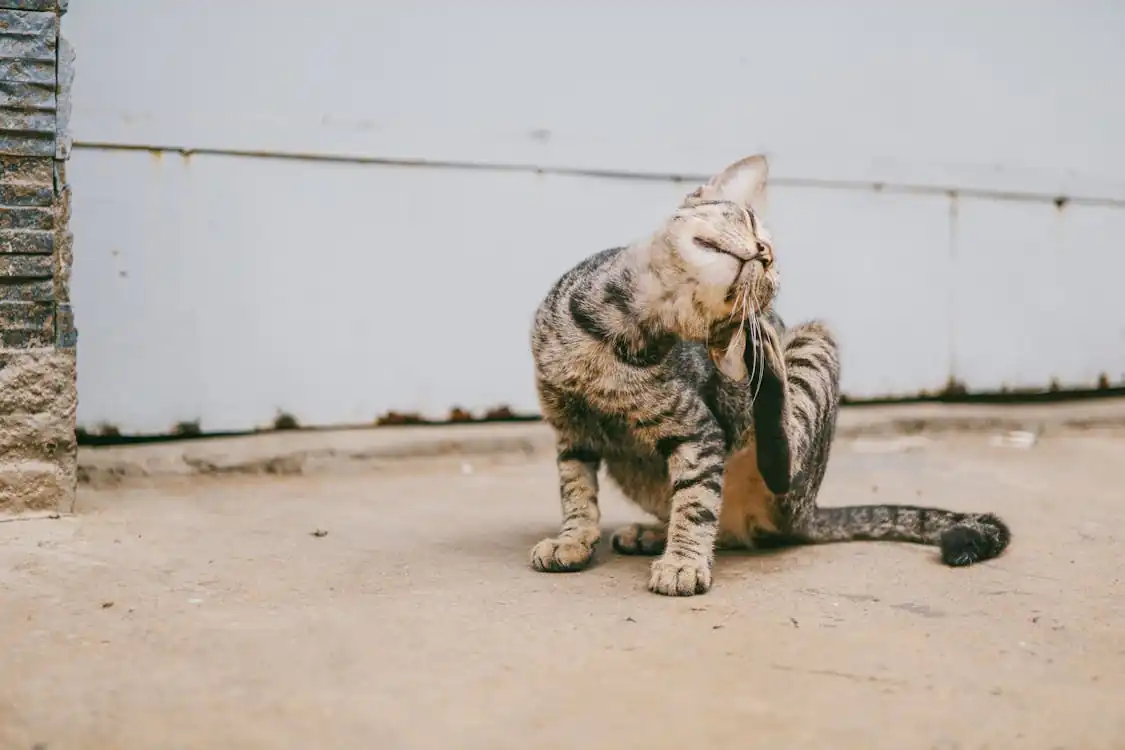
Ringworm in cats is a contagious fungal infection of the skin and hair, not a worm. It may cause patchy hair loss, scaling, crusting, redness, or broken hairs, but appearance alone cannot confirm it. Call your veterinarian about a suspicious skin patch, limit close contact until you have guidance, and do not start antifungal products on your own.
This educational guide explains the safest next steps for a suspected or confirmed case. A veterinarian must diagnose the cause and create a treatment and household-control plan for your cat.
Índice
- What does ringworm look like in cats?
- Quando devo ligar para um veterinário?
- Is ringworm contagious to people and other pets?
- How do veterinarians diagnose ringworm in cats?
- How is ringworm in cats treated?
- How should I clean my home during treatment?
- How do I manage ringworm in a multi-pet home?
- How will I know when my cat is clear of ringworm?
- O que devo registrar para o veterinário?
- Conclusão
- Perguntas frequentes
- Referências
What does ringworm look like in cats?
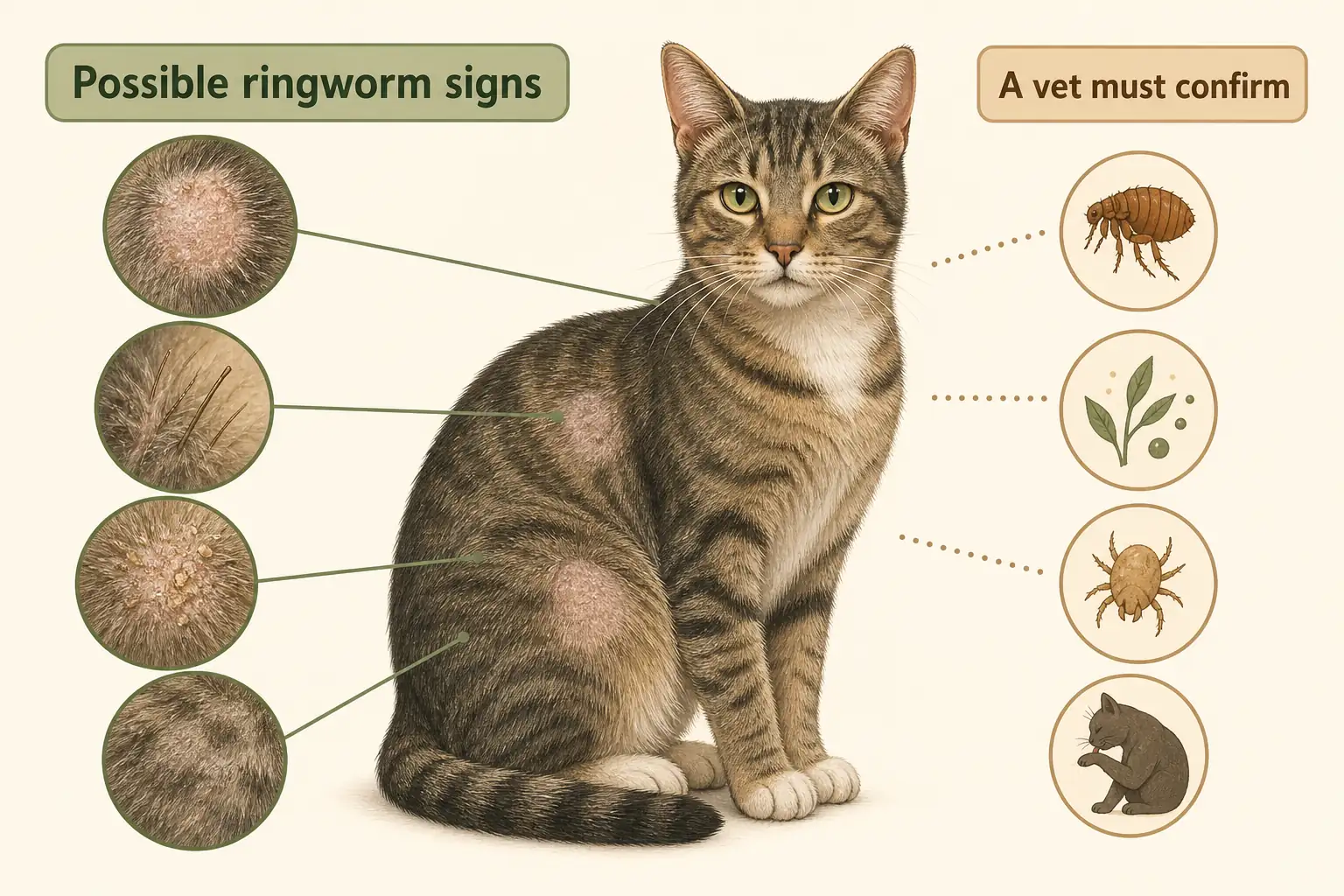
Ringworm can cause hair loss, scaling, crusting, redness, small bumps, broken hairs, or variable itching. The changes may be circular, but they do not always form a neat ring.
| O que você percebe | Could fit ringworm? | Safest next step |
|---|---|---|
| New patch of hair loss with scaling or crusting | Yes, but several other skin problems can look similar | Photograph it and arrange a veterinary exam |
| Broken hairs or a rough, patchy coat | Possibly | Check the whole coat and ask your vet |
| Redness, bumps, or mild itching | Possibly | Prevent scratching damage and seek diagnosis |
| Crust or irritation around a claw | Possible but less common | Tell your veterinarian |
| Hair loss with severe itching, open skin, swelling, or discharge | Not specific to ringworm and may indicate another problem | Ligue imediatamente para o veterinário |
| No visible lesions after exposure | Infection or surface contamination may still be possible | Ask your vet whether exposed pets need examination or testing |
Merck Veterinary Manual notes that dermatophytosis can produce combinations of hair loss, scaling, crusting, redness, bumps, darkened skin, and variable itching.1 None of these signs proves ringworm. Fleas, mites, allergies, bacterial infection, overgrooming, and other skin conditions can overlap.
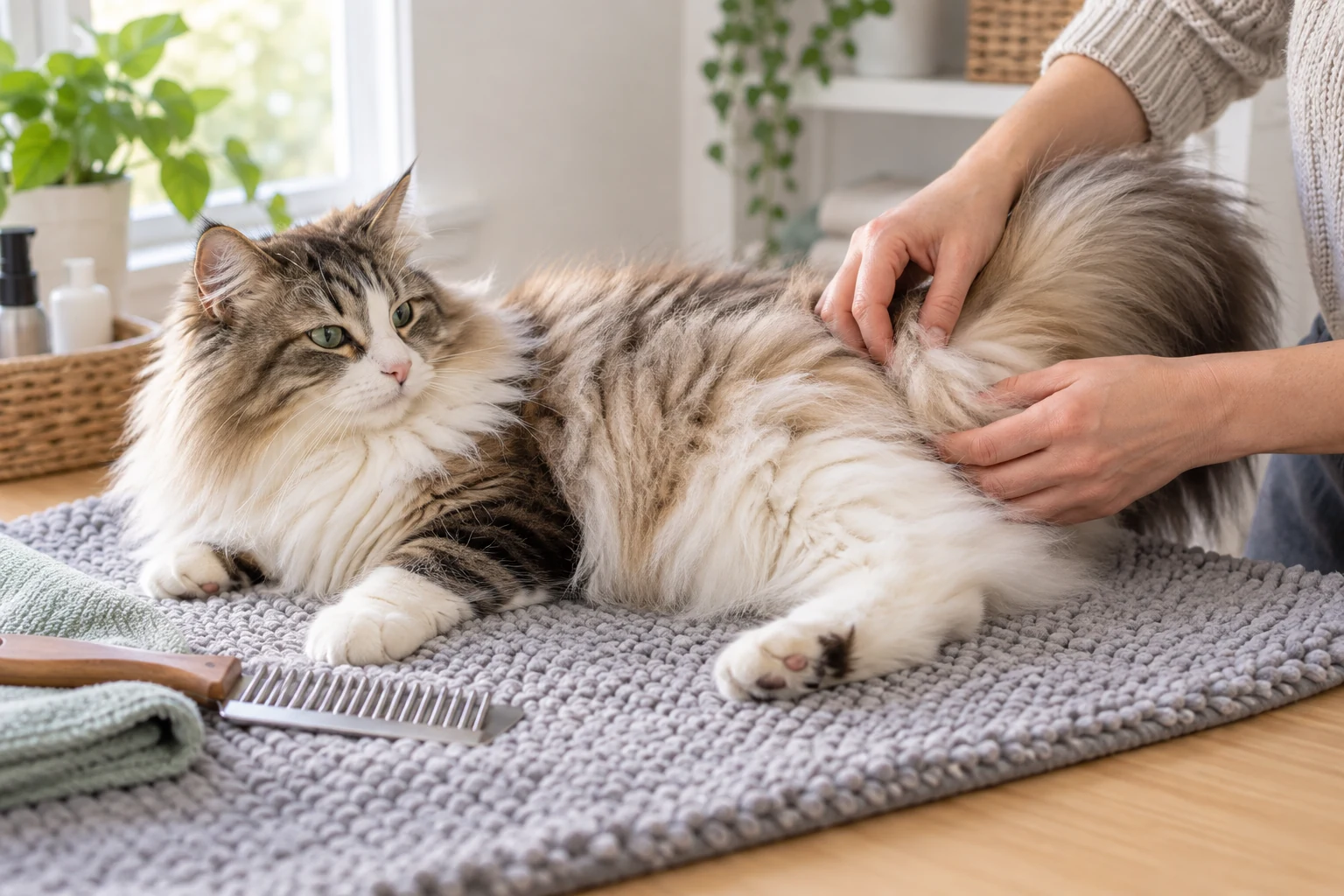
The SnuggleSouls guide to cat grooming problems can help you describe coat changes, but it cannot identify the cause.
Quando devo ligar para um veterinário?
Call your veterinarian when your cat develops a new bald, scaly, crusty, or spreading skin patch, especially after contact with a shelter animal, foster pet, or known ringworm case. Prompt diagnosis helps avoid treating the wrong condition and reduces household spread.
| Situação | Resposta recomendada |
|---|---|
| One small suspicious patch and cat otherwise well | Arrange a veterinary appointment and limit sharing of brushes, bedding, and close contact |
| Lesions are multiplying or spreading | Ligue imediatamente para o veterinário |
| Open skin, swelling, discharge, marked pain, or intense itching | Call promptly because another or secondary problem may be present |
| Cat is not eating, is lethargic, or seems generally unwell | Seek prompt veterinary advice |
| Kitten, senior, medically fragile cat, or cat under significant stress | Use um limite mais baixo para a ativação |
| Child, older adult, immunocompromised person, or person with a new rash in the home | Contact the person’s healthcare professional and tell the veterinarian |
Do not label every bald patch as ringworm or wait for a perfect ring to appear. Also avoid using human antifungal cream, essential oils, bleach, or household disinfectants on your cat.
Is ringworm contagious to people and other pets?
Yes. Ringworm is zoonotic, meaning it can spread between animals and people. Transmission can occur through direct contact with an infected animal or contaminated hairs and items, although exposure does not always lead to infection.1
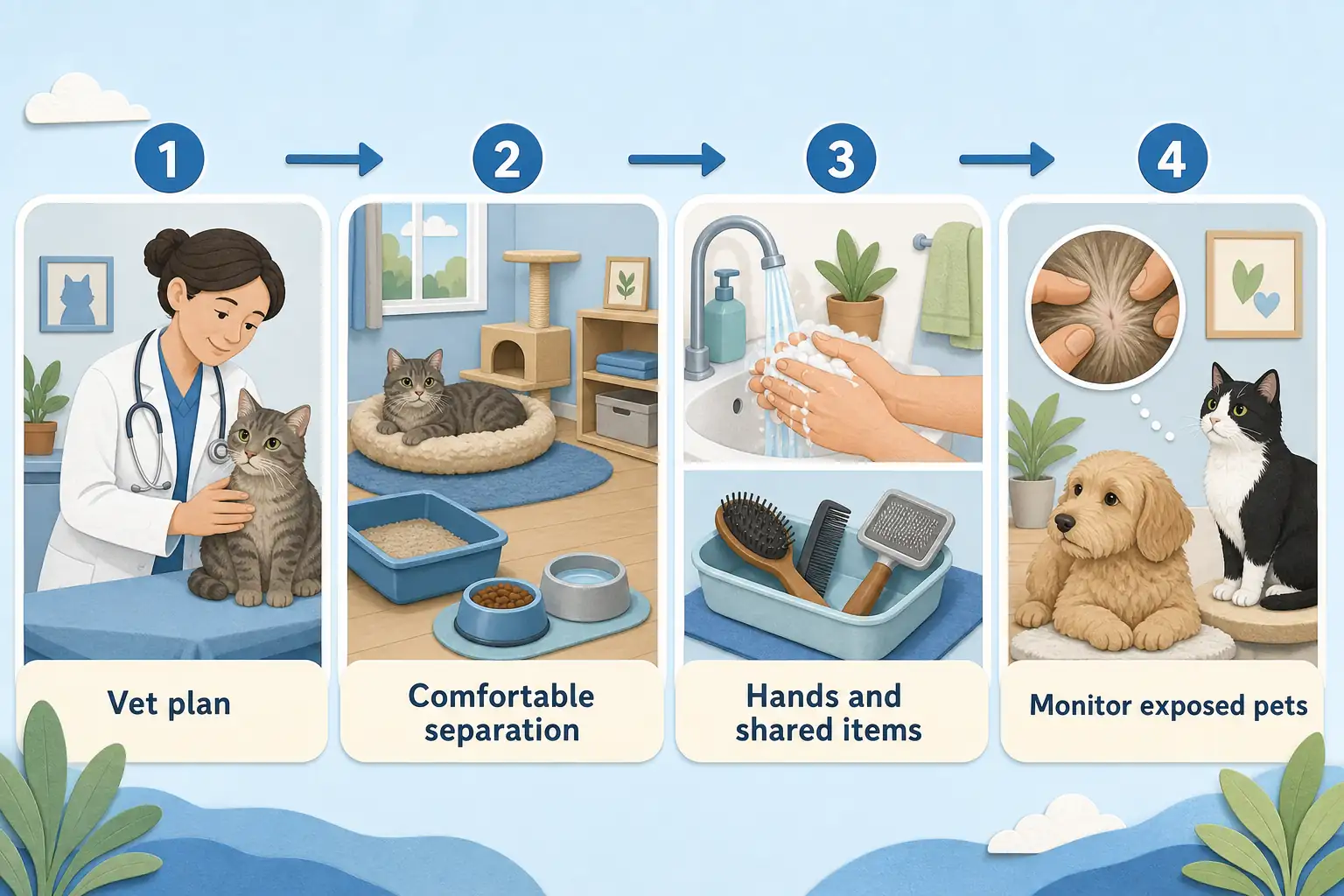
Until your veterinarian gives household-specific advice:
- wash hands after handling the cat or cleaning its area
- avoid sharing grooming tools, bedding, carriers, and soft items between pets
- keep the cat off beds and furniture used by higher-risk household members
- limit handling by children and people with weakened immune systems
- watch other pets for coat or skin changes
- ask a healthcare professional about any new human rash
The CDC advises people to wash their hands after contact with pets and to take extra precautions when someone has a weakened immune system.2 Your veterinarian should decide whether exposed pets need examination, testing, monitoring, or treatment; exposure alone does not mean every pet has active infection.
How do veterinarians diagnose ringworm in cats?
Veterinarians usually combine the cat’s history, coat and skin examination, and one or more tests. No single test is considered a universal gold standard, and ringworm should not be diagnosed from a photo alone.1
| Diagnostic step | What it can contribute |
|---|---|
| Skin and coat examination | Identifies suspicious lesions and alternative causes |
| Wood’s lamp examination | Helps locate some infected hairs; a negative result does not rule out infection |
| Direct microscopic examination | May reveal fungal spores on abnormal hairs or scales |
| Fungal culture | Detects viable fungal material and can support follow-up decisions |
| PCR testing | Detects fungal DNA but may not distinguish viable from nonviable material |
| Additional skin testing | Helps investigate mites, bacteria, allergy, or unusual lesions |
Tell the clinic before arrival that you suspect ringworm. It may adjust check-in or cleaning procedures to reduce exposure to other patients.
How is ringworm in cats treated?
Treatment is individualized and often addresses both active infection in the hair follicles and infective material on the coat. Your veterinarian may prescribe systemic medication, topical treatment, or both, while also recommending environmental cleaning and follow-up testing.1
Follow these treatment principles:
- Give only the product, amount, and schedule prescribed for your cat.
- Follow topical-treatment instructions carefully and protect the cat from chilling or licking products when directed.
- Report vomiting, poor appetite, lethargy, skin irritation, or trouble giving treatment.
- Do not stop because the coat looks better unless the veterinarian confirms that it is appropriate.
- Keep follow-up appointments and complete requested testing.
Do not use another pet’s prescription, a human skin product, an essential oil, or a household cleaner on your cat. Antifungal drugs and topical products differ in effectiveness and safety, and the right choice depends on the cat and diagnosis.
Resolution often takes weeks rather than days. Merck describes a typical resolution period of approximately 6 to 12 weeks, although the timeline varies with the cat, severity, treatment plan, and follow-up findings.1
How should I clean my home during treatment?
Effective cleaning starts with removing contaminated hair and debris, then cleaning surfaces and using an appropriate disinfectant where needed. More chemical is not necessarily better.
Use this practical sequence:
| Etapa | O que fazer |
|---|---|
| Contain | Keep the affected cat in a comfortable, easy-to-clean area if your veterinarian recommends it |
| Remove hair and debris | Vacuum, use disposable wipes, and remove shed hair from surfaces |
| Lavar | Clean hard surfaces with detergent until visibly clean |
| Disinfect | Use a product labeled as effective against Trichophyton and suitable for that surface; follow label dilution, ventilation, and contact-time directions |
| Launder | Machine-wash bedding, towels, and washable fabrics thoroughly |
| Repeat | Follow the cleaning frequency and endpoint recommended by your veterinarian |
Merck emphasizes that mechanical removal of hair and organic material is the most important first step. Disinfectant alone does not remove environmental contamination, and ordinary thorough washing can disinfect many soft items.1
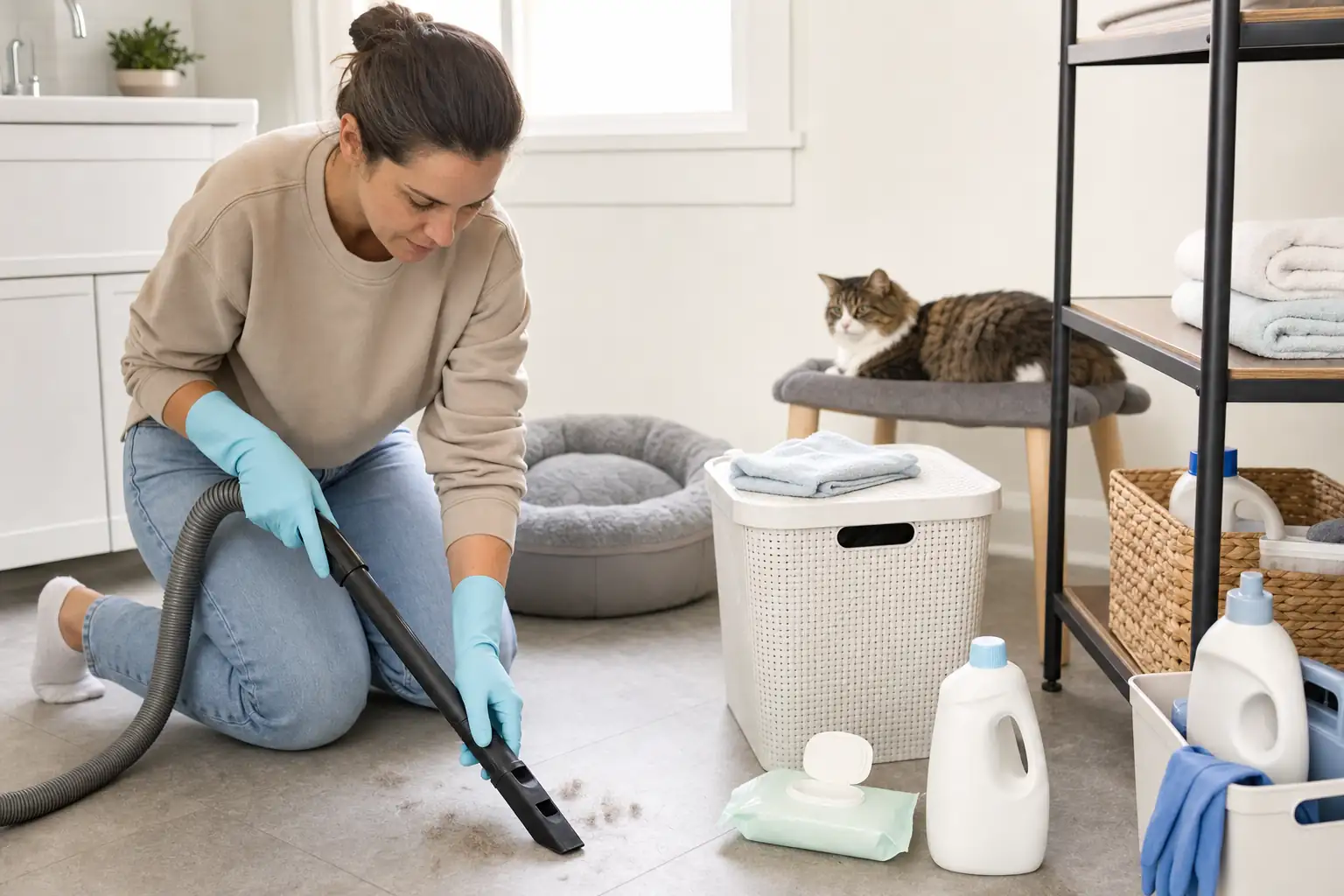
Never mix cleaning chemicals. Keep cats away from wet products and fumes, rinse surfaces when the label requires it, and store all products securely. Ask your veterinarian for a realistic cleaning plan if the home includes carpet, upholstery, many pets, or someone at higher risk.
How do I manage ringworm in a multi-pet home?
Do not automatically medicate every pet or assume that every animal with fungal material on its coat has active disease. Ask your veterinarian to create a plan based on clinical signs, exposure, test results, and household risk.
Useful steps may include:
- separating the affected cat when practical and recommended
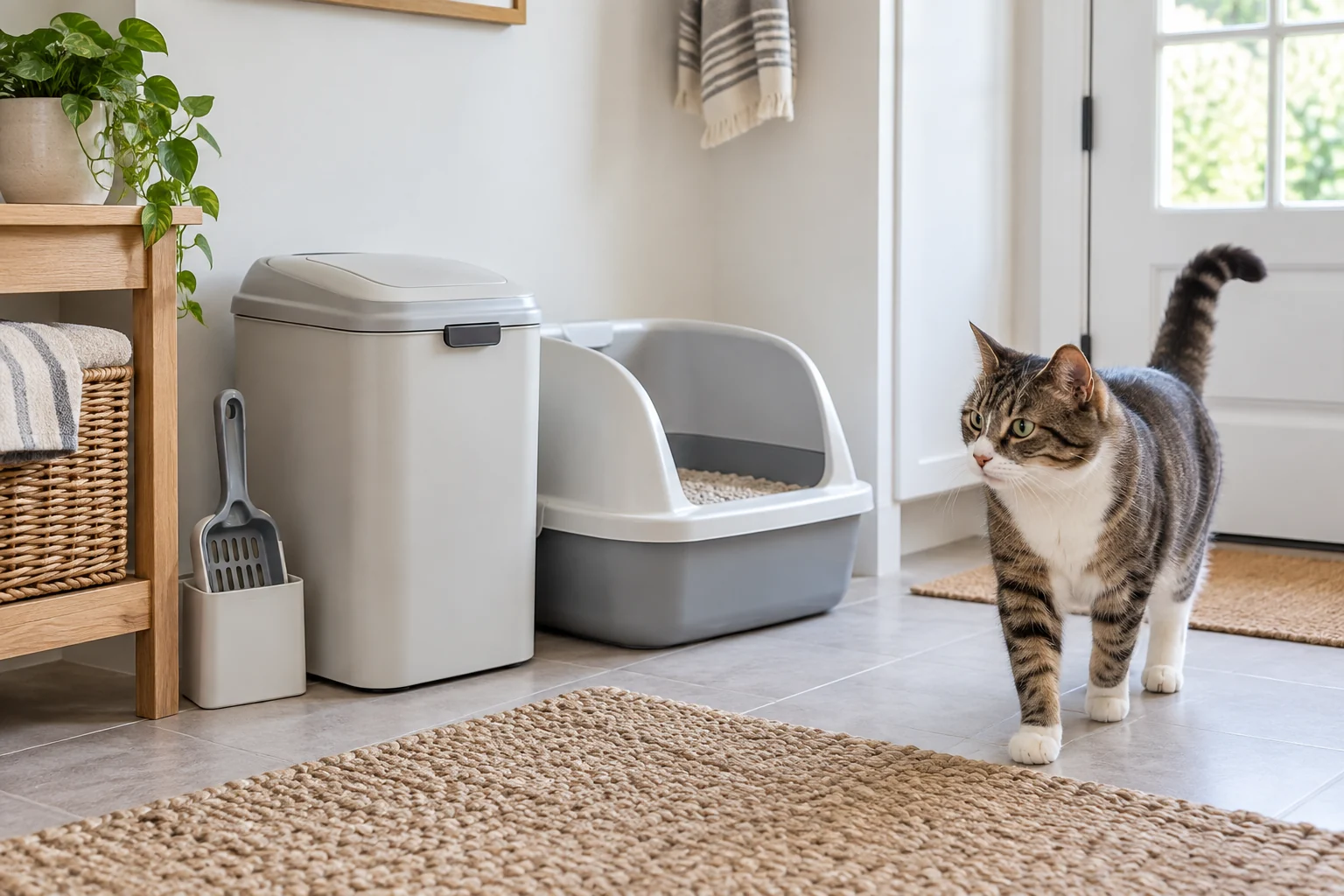
- using dedicated bowls, bedding, litter supplies, and grooming tools
- caring for unaffected pets before entering the affected cat’s area
- changing or washing protective clothing after cleaning and treatment tasks
- checking every pet regularly for skin and coat changes
- recording which animals were examined, tested, or treated
- preventing long isolation that harms a kitten’s social development

A multi-pet plan should combine veterinary guidance, humane separation when recommended, hand and equipment hygiene, and monitoring rather than automatically medicating every exposed pet.
If a recently adopted cat develops a suspicious lesion, contact both your veterinarian and the shelter or rescue. The SnuggleSouls Guia para adoção de gatos provides broader preparation advice for bringing a new cat home.
How will I know when my cat is clear of ringworm?
Improved appearance is encouraging, but it may not prove that infection and contagion have ended. Veterinarians consider both clinical cure, meaning lesions have resolved and no new ones appear, and evidence that active fungal infection has cleared.1
Your veterinarian may use a repeat examination, Wood’s lamp findings, fungal culture, PCR, or a combination to decide when treatment and cleaning can stop. Do not choose an endpoint based only on hair regrowth or a fixed number of weeks.
Contact the clinic if:
- new lesions appear during treatment
- another pet or person develops suspicious skin changes
- medication causes side effects
- topical treatment is too stressful or difficult
- you cannot maintain the recommended isolation or cleaning plan
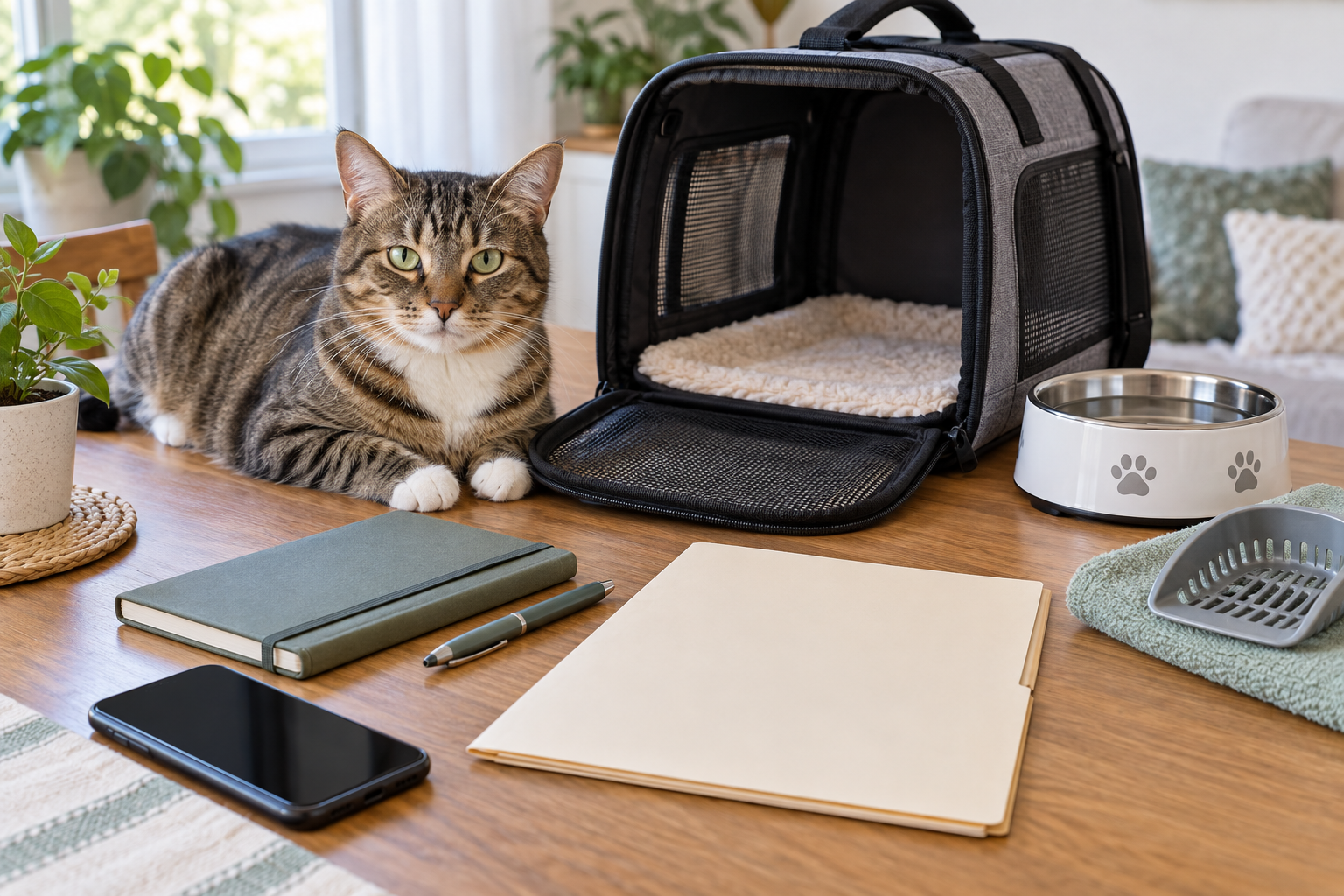
O que devo registrar para o veterinário?
A short, factual record helps the veterinarian assess spread, response, and possible treatment problems.
Faixa:
- date and location of each new lesion
- weekly photos taken in similar lighting
- itching, grooming, pain, appetite, energy, and behavior changes
- every prescribed dose or topical treatment
- any side effects or missed treatments
- cleaning tasks and products used
- skin changes in other pets or people
- contact with new animals, shelters, grooming facilities, or shared equipment
If your cat reacts strongly to touch or grooming, the Guia sobre hiperestesia felina explains why sensitivity can have several possible causes and deserves veterinary assessment.
Conclusão
Ringworm in cats is treatable, but a suspicious bald or scaly patch is not enough to diagnose it at home. The most useful next steps are to call your veterinarian, reduce avoidable contact and shared items, and follow a confirmed treatment and cleaning plan.
Focus cleaning on removing shed hair and debris before disinfecting, and let follow-up findings determine when the infection is clear. Call sooner when lesions spread, the skin becomes painful or open, the cat seems unwell, or a higher-risk person may have been exposed.
Perguntas frequentes
Can an indoor cat get ringworm?
Yes. An indoor cat can be exposed through another animal or contaminated hairs and objects. Exposure does not always cause active infection, so a veterinarian should evaluate suspicious skin changes.
Is every circular bald patch ringworm?
No. Ringworm can cause patchy hair loss and scaling, but fleas, mites, allergies, infection, overgrooming, and other conditions may look similar. Testing may be needed.
Can I treat cat ringworm at home without a vet?
Do not diagnose or choose antifungal treatment on your own. Veterinary confirmation matters because other skin diseases can mimic ringworm and some products are ineffective or unsafe for cats.
How long does ringworm treatment take in cats?
Treatment often lasts several weeks. Merck notes that resolution commonly takes about 6 to 12 weeks, but your veterinarian should determine the endpoint using the cat’s response and follow-up findings.1
Do I need to bleach my whole house?
No. Start by removing hair and debris, washing surfaces, laundering washable items, and using a suitable disinfectant according to its label and your veterinarian’s advice. Never mix chemicals or use disinfectant on the cat.
Can I catch ringworm from my cat?
Yes. Ringworm can spread between animals and people. Wash hands after contact, limit exposure for higher-risk household members, and contact a healthcare professional about a suspicious rash.
Should all my pets be treated if one cat has ringworm?
Not automatically. Ask your veterinarian whether each exposed pet should be examined, tested, monitored, or treated based on its signs and the household situation.
Referências
[1] Manual Veterinário da Merck. Dermatophytosis in Dogs and Cats.
[2] Centers for Disease Control and Prevention. Ringworm and Pets.


 EN
EN DE
DE ES
ES PT
PT