
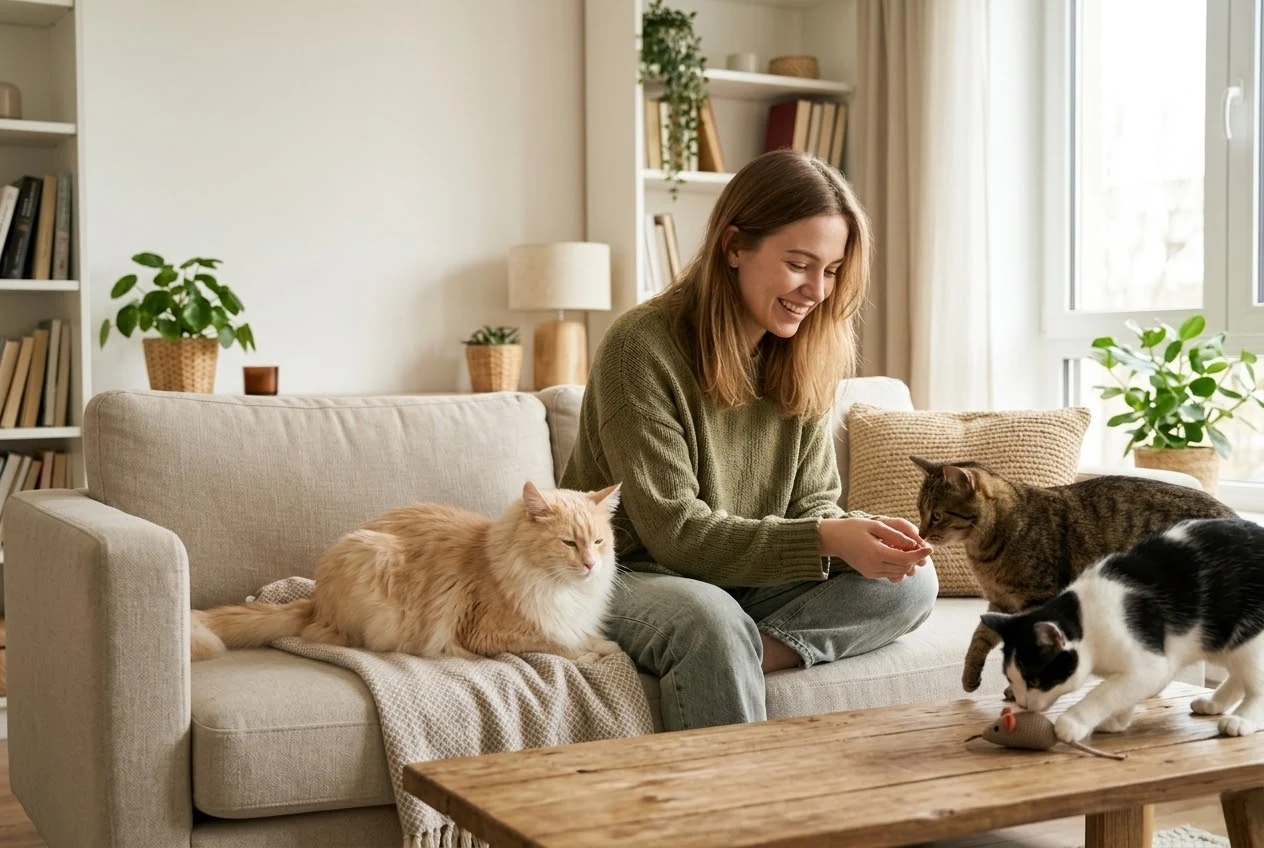
Discover the 5 cat personality types and learn how to find a cat that truly fits your lifestyle. Expert-backed guide for first-time adopters — with shelter assessment tips.
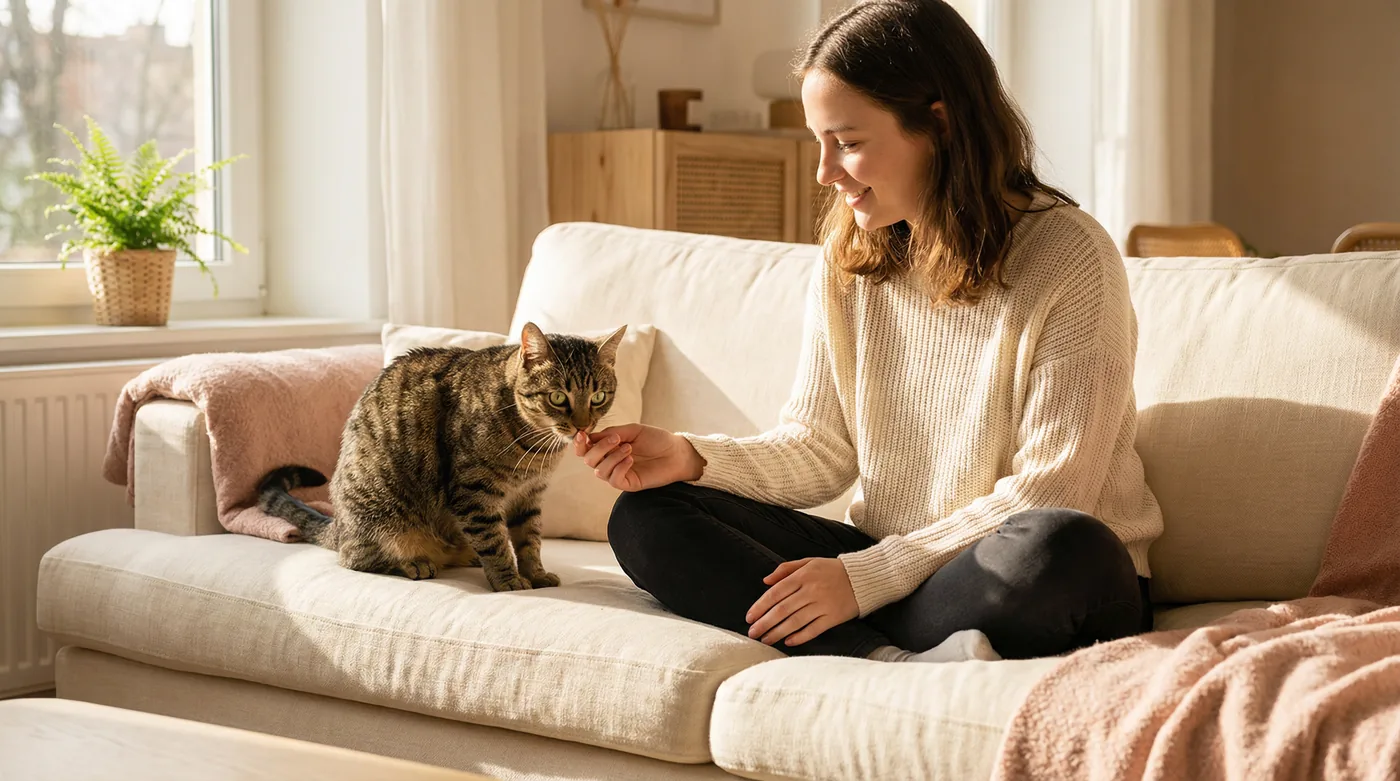
You walk into a shelter. There are a dozen cats looking back at you — some curious, some sleeping, one pressing its nose against the kennel door. You feel drawn to a particular face. But here's the question no one tells you to ask: Is this the right personality for your life?
Understanding cat personality types before you adopt is one of the most important — and most overlooked — steps in the adoption process. Research by Dr. Lauren Finka at the University of Lincoln identified five distinct feline personality types, each shaped by genetics and early socialization. Matching your lifestyle to the right type dramatically improves the long-term success of the relationship — for both of you.
This guide breaks down the five cat personalities, helps you identify which type fits your home, and gives you practical tools for assessing a cat's temperament at the shelter. Whether you're a first-time adopter or adding to an existing cat family, this is where a great match begins. You can also explore our complete cat adoption guide for the full picture.
What You'll Find in This Guide
Why Cat Personality Matters More Than You Think
It's easy to choose a cat based on appearance — a striking coat, unusual eyes, or simply the one who happens to reach toward you first. But looks tell you very little about what daily life with that cat will actually be like. Personality compatibility is the foundation of a lasting bond.
There's an important complication: shelter stress can mask a cat's true personality. According to the ASPCA's Behavioral Sciences Team, cats who appear shy, withdrawn, or even aggressive in a kennel environment may be confident, playful, and affectionate once they feel safe at home. The reverse is also true — a cat who seems bold in a shelter may become more reserved in a new environment. This is why understanding personality frameworks — and knowing how to read beyond the shelter moment — matters so much.
A cat's personality is shaped by two forces: genetics (including the Oxytocin Receptor Gene, which influences sociability) and socialização precoce — particularly the critical window between weeks 2 and 7 of life. Kittens who experience positive, varied interactions with humans during this period tend to be more comfortable with people throughout their lives. Those with limited exposure may remain more cautious or independent — not unfriendly, just wired differently. Understanding this helps you approach a shy shelter cat with patience rather than disappointment. For more on how personality evolves over time, see our guide to kitten vs. adult cat adoption.
"We encourage you to base your decision on the individual cat's personality and behavior rather than a specific breed or look." — Marny Nofi, Director of Feline Behavior, ASPCA Behavioral Sciences Team
The 5 Cat Personality Types (Dr. Finka's Framework)
In 2014, Dr. Lauren Finka of the University of Lincoln published research based on surveys of over 200 cat owners, identifying five core feline personality types. These types are not rigid boxes — most cats show elements of more than one — but they provide a useful framework for understanding what a cat needs and how they prefer to relate to the world.
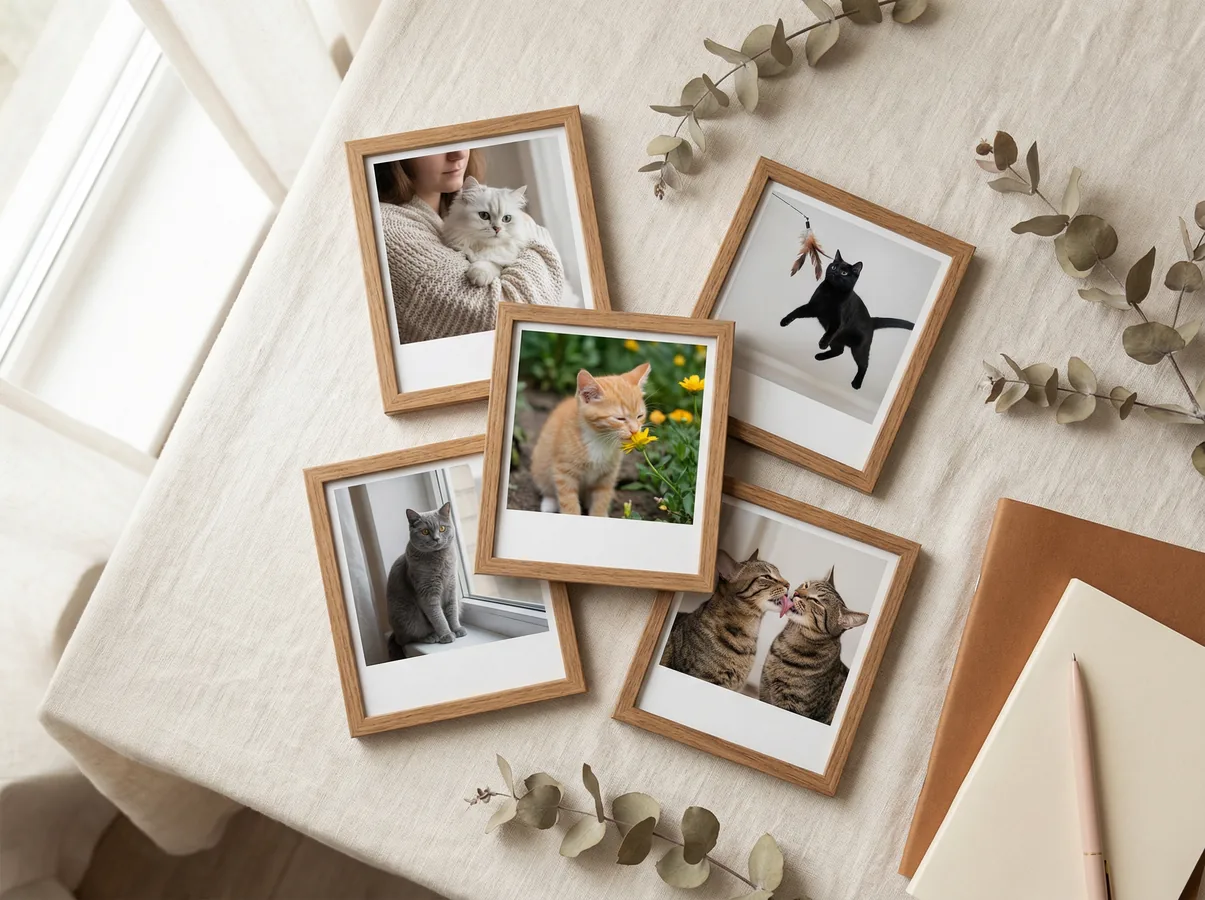
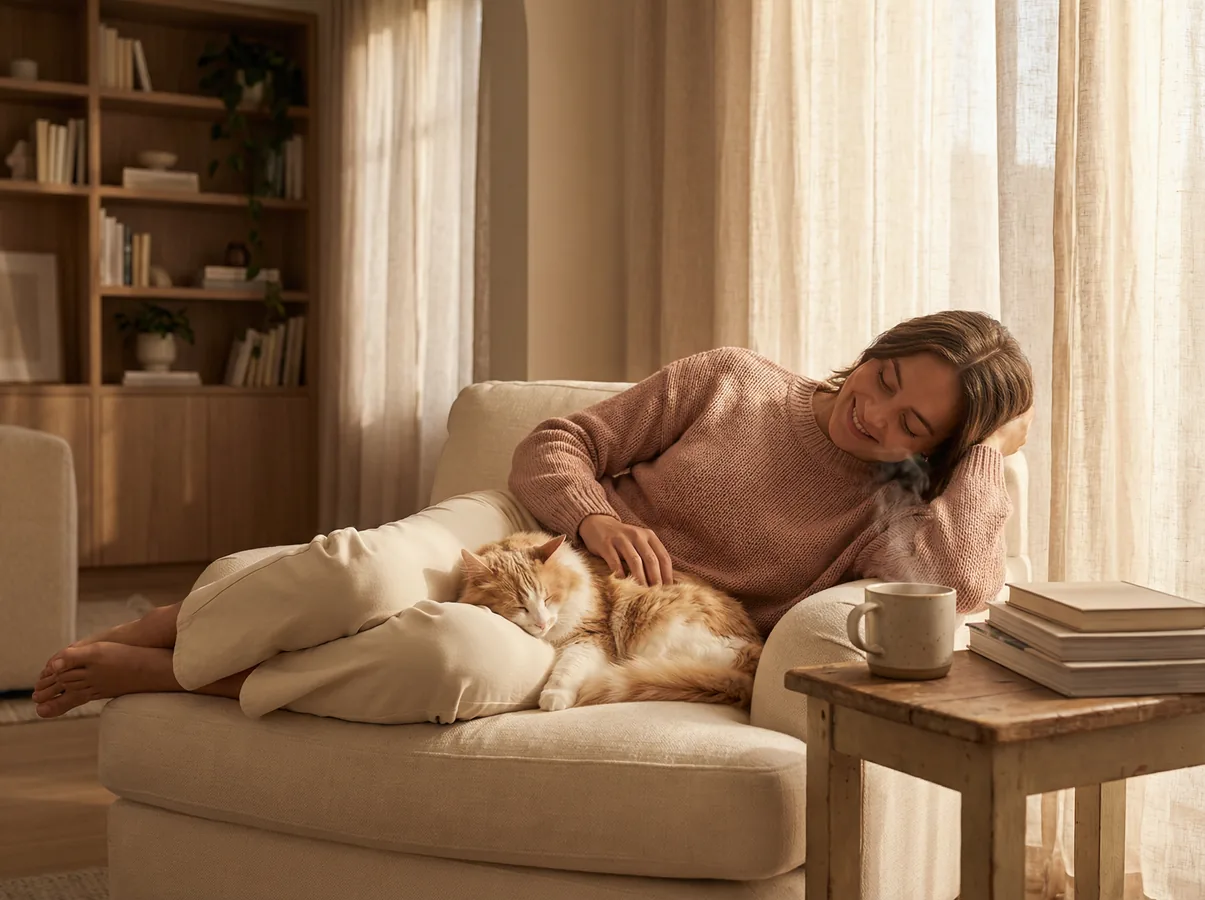
The Human Cat is deeply people-oriented. They love sharing your space, following you from room to room, amassar on your lap, and sleeping in your bed. Calm, responsive, and genuinely friendly — this cat lives for connection.
Ideal for: People who work from home, retirees, anyone who wants a deeply bonded companion. Also excellent for first-time owners.
Fique atento a: Can develop separation anxiety if left alone for long periods. Needs daily social interaction to thrive.
Eager to investigate every new scent, sound, and visitor. The Inquisitive Cat thrives on novelty and mental stimulation. They'll explore every corner of your home and greet guests with confidence.
Ideal for: Active households, families with children, people who enjoy enrichment and interactive play.
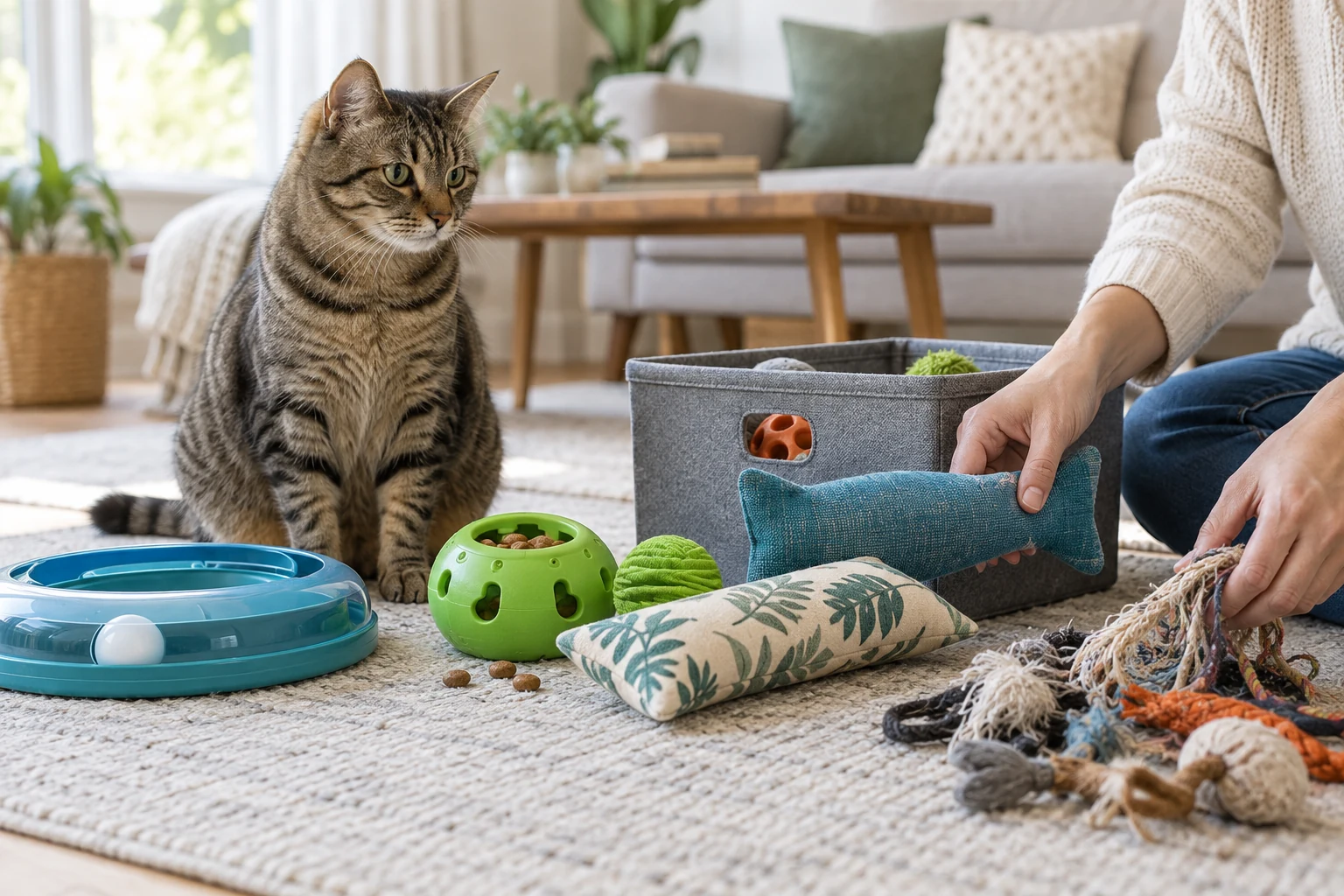
Fique atento a: Can become bored and destructive without sufficient mental stimulation. Needs puzzle feeders, foraging boxes, and regular new toys.
Strong predatory instincts define the Hunter Cat. They stalk, atacar, and may present you with their latest toy "kill" as a gift. Highly focused during play, with bursts of intense energy followed by deep rest.
Ideal for: Experienced cat owners, active households without small pets (birds, hamsters, rabbits).
Fique atento a: May be too intense for very young children or nervous adults. Needs wand toys, feather teasers, and ideally outdoor access via a catio.
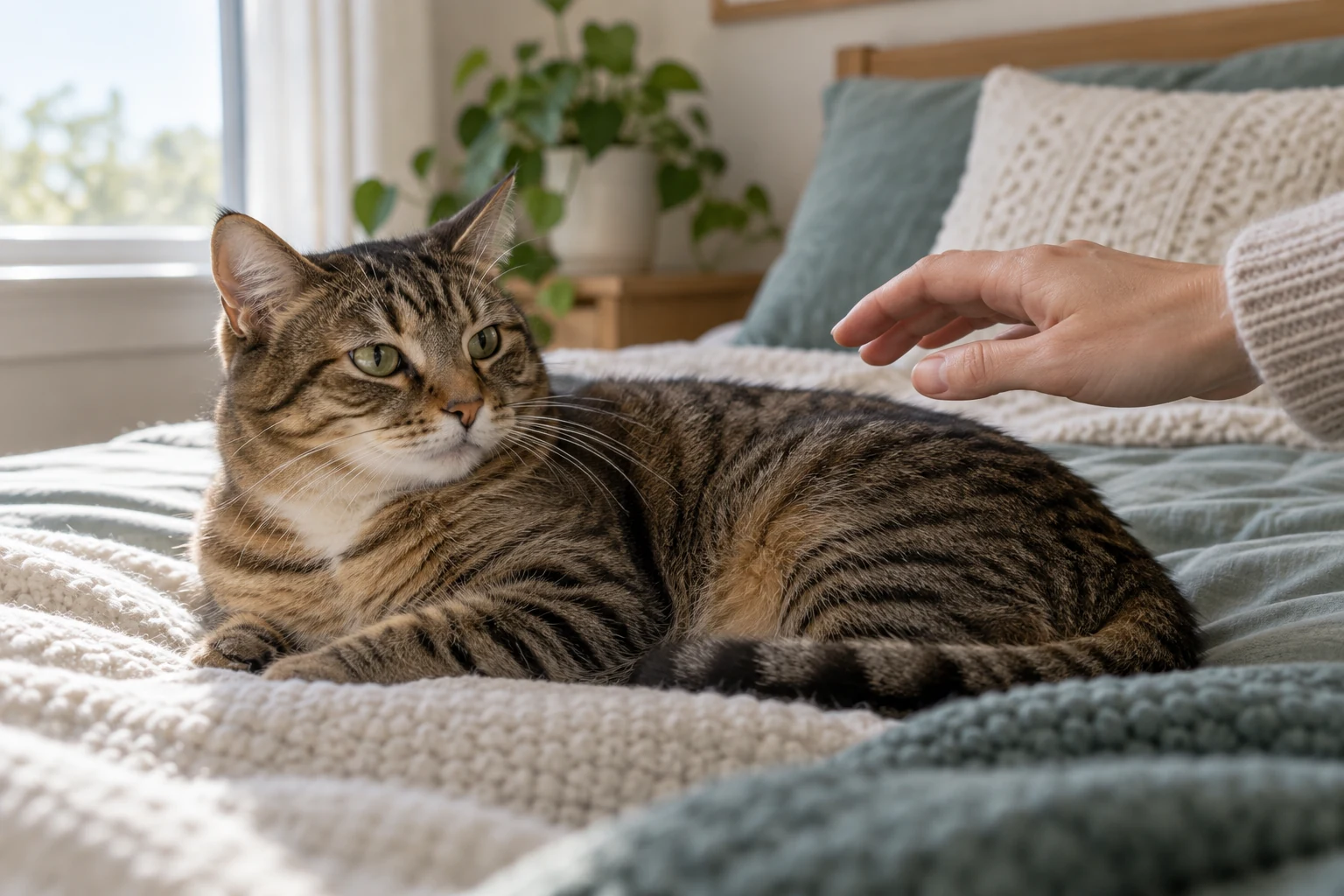
Not unfriendly — just boundaried. The Cantankerous Cat prefers interaction on their own terms. They dislike being picked up unexpectedly, are easily overstimulated by petting, and value a predictable, calm routine.
Ideal for: Quiet households, single adults, people who respect feline independence and understand body language cues.
Fique atento a: Often misread as "unfriendly" by people expecting constant affection. They may love being near you — just not on your lap.
Despite cats being generally solitary animals, the Cat's Cat genuinely thrives with feline companionship. They play, groom, and sleep with other cats — and are often found in bonded pairs at shelters. They may be less intensely focused on their human than other types, but they're deeply content in multi-cat households.
Ideal for: Multi-cat households, people who are frequently away from home, anyone considering adopting two cats at once.
Fique atento a: May not bond as intensely with humans as other types. Not ideal as a single cat in a busy household where they'll be alone for long stretches. Ask the shelter: "Is this cat bonded with any other cat here?"
Match Your Lifestyle to the Right Personality
Knowing the five types is only useful if you apply them to your actual life. The table below maps common lifestyle situations to the most compatible personality types — and flags combinations that may create friction. For breed-specific personality tendencies, also see our guides to raças de gatos mais carinhosas, friendliest cat breedse lazy cat breeds.
| Your Lifestyle | Best Personality Match | Use Caution With |
|---|---|---|
| Work from home / lots of time at home | Human Cat | Hunter Cat (needs more active stimulation) |
| Busy professional, often away | Cat's Cat (bonded pair) | Human Cat (separation anxiety risk) |
| Family with young children | Inquisitive Cat | Cantankerous Cat (easily overstimulated) |
| Quiet single adult | Cantankerous Cat, Human Cat | Hunter Cat (high stimulation needs) |
| First-time cat owner | Human Cat, Inquisitive Cat | Hunter Cat (higher management needs) |
| Small apartment | Cantankerous Cat, Human Cat | Hunter Cat (needs space to roam) |
| Casa com vários gatos | Cat's Cat, Inquisitive Cat | Cantankerous Cat (may not adapt easily) |
| Experienced cat owner | Any type | - |
To make this even more concrete, here are four common adoption scenarios and what to look for at the shelter:
Look for: a cat who approaches you first, purrs easily, relaxes when held, and makes eye contact with slow blinks.
Look for: alert, bright eyes; responds enthusiastically to a wand toy; active in the kennel; investigates new objects quickly.
Look for: calm, self-contained behavior; doesn't demand attention; comfortable in their own space; not distressed by your presence but not seeking it either.
Ask shelter staff: "Is this cat bonded with any other cat here?" A bonded pair will be noticeably calmer and more settled together than apart.
How to Assess a Cat's Personality at the Shelter
The shelter environment is stressful for most cats. Unfamiliar smells, sounds, and confinement can suppress a cat's true personality — making a confident cat seem timid, or a friendly cat seem aloof. Your job is to look past the stress and glimpse the cat underneath. Here's how.
- Observe from a distance first
Before approaching, watch the cat for 60 seconds. Is it watching you with curiosity, or escondido at the back? Alert, forward-facing ears and bright eyes signal confidence. Hiding doesn't mean unfriendly — it often means the cat needs more time and a quieter environment.
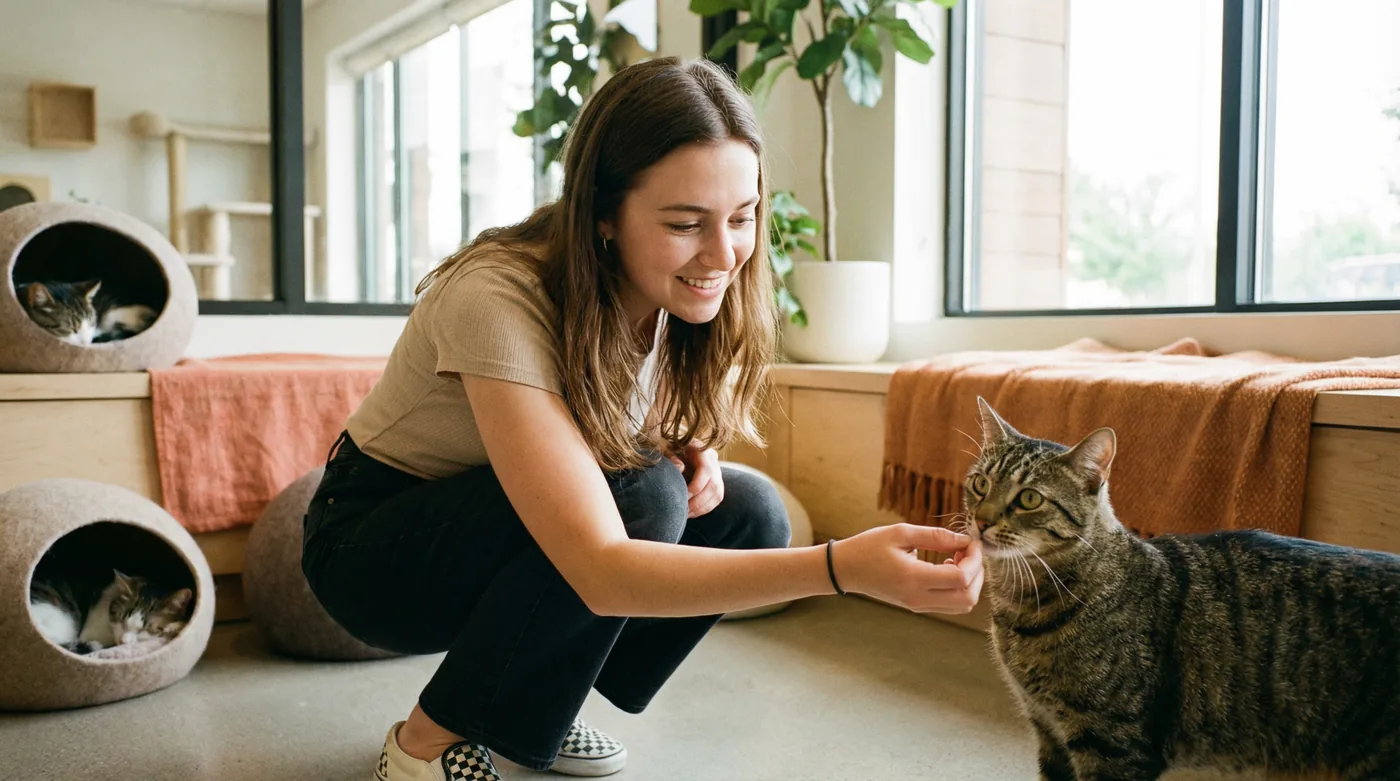
- Crouch down to their level
Never loom over a cat. Get low — crouch or sit on the floor. This removes the threat of your height and signals non-aggression. Many cats who seemed disinterested will become curious when you stop towering over them.
- Extend one finger slowly
Hold out one finger at nose height, about 6 inches from the kennel. Let the cat come to you. A cat who sniffs and then rubs their cheek against your finger is showing social interest and scent-marking you as safe. A cat who sniffs and walks away isn't rejecting you — they're just gathering information.
- Ask for a meet-and-greet room
Most shelters offer a quiet room where you can spend 10–15 minutes with a cat away from the kennel. This single step reveals more about a cat's personality than any amount of kennel observation. A cat who was hiding in their kennel may become playful and affectionate in a calm, private space.
- Watch for body language signals
Slow blinks = trust and comfort. Tail held upright = confidence and friendliness. Tail tucked low = fear or stress. Flattened ears = defensive or overstimulated. Exposed belly = relaxed (but not necessarily an invitation to touch — many cats dislike belly rubs). Dilated pupils in a bright room = stress or high arousal.
- Ask the shelter staff the right questions
Staff and volunteers spend far more time with these cats than you can in a single visit. Their observations are invaluable.
Questions to Ask Shelter Staff
- "What is this cat like when they're relaxed and comfortable with you?"
- "How do they respond to being picked up or held?"
- "Do they have any known history with children or other pets?"
- "How long have they been here, and how has their behavior changed over time?"
- "Is there another cat here that this cat is bonded with?"
- "What are their favorite toys or activities?"
"Past behavior tends to be a good indicator of future behavior. Find out as much as possible about the cat's behavior and experiences to help you get a sense of what the cat will be like in your home." — Marny Nofi, Director of Feline Behavior, ASPCA Behavioral Sciences Team
If a cat's personality doesn't fully emerge during your shelter visit, that's normal. Our guide to the first 30 days with your new cat explains how personality typically unfolds over the first weeks and months at home.
Personality Across Life Stages
A cat's personality is not fixed at nascimento — it develops and settles over time. Understanding how personality changes across life stages helps you set realistic expectations and choose the right idade of cat for your situation.
| Life Stage | Idade | Personality Predictability | Nível de energia | Melhor para |
|---|---|---|---|---|
| Gatinho | 0–1 year | Low — still forming | Muito alto | Experienced owners with time to invest |
| Adulto | 1–7 years | High — well established | Moderado | First-time owners, families, most lifestyles |
| Senior | 7+ years | Very high — deeply set | Baixo-moderado | Quiet households, retirees, experienced owners |
Kittens are irresistible — but their personalities aren't fully formed until around 1–2 years of age. The playful, bold kitten you meet at 8 weeks may become a Cantankerous Cat by age 2. Adult cats offer a more reliable preview of what life together will look like. Senior cats have deeply established personalities and often make wonderfully calm, grateful companions. Learn more in our dedicated guides: Kitten vs. Adult Cat: Which Is Right for You? e The Heart of Gold: A Guide to Adopting a Senior Cat.
A Note on Breed and Personality
Breed can be a useful starting point — certain breeds have well-documented personality tendencies. But individual variation within breeds is enormous, and mixed-breed cats are just as capable of being extraordinary companions. The table below maps common breeds to their typical Finka personality type, but treat these as tendencies, not guarantees.
| Raça | Typical Personality Tendency | Finka Type |
|---|---|---|
| Ragdoll | Docile, gentle, loves being held | Human Cat |
| Siamês | Vocal, social, opinionated | Inquisitive Cat |
| Maine Coon | Gentle, playful, dog-like loyalty | Inquisitive / Hunter Cat |
| Persa | Calm, quiet, low-energy | Cantankerous Cat |
| Bengala | High-energy, athletic, wild instincts | Hunter Cat |
| Pelo curto britânico | Independent, calm, affectionate on own terms | Cantankerous Cat |
| Birmanês | People-oriented, social, follows you everywhere | Human Cat |
| Domestic Shorthair (mixed) | Varies widely — ask the shelter | Any type |
If you're drawn to a specific breed, our breed guides can help: explore raças de gatos mais carinhosas for Human Cat tendencies, friendliest cat breeds for Inquisitive types, or lazy cat breeds for Cantankerous-leaning companions. And if you're concerned about costs — some high-energy breeds require more enrichment investment — see our full cost breakdown.
Ready to Find Your Perfect Match?
Use what you've learned to start your adoption journey — or compare your options before you visit a shelter.
Perguntas frequentes
Your Perfect Cat Is Waiting
Every cat has a story, a personality, and a home they're meant to find. Yours might be waiting at a shelter right now — and now you know exactly what to look for.
References & Further Reading
The following sources were used in the preparation of this article and are provided to support further reading and verify factual claims.
- 1Finka, L.R., Ward, J., Farnworth, M.J., & Mills, D.S. (2019). Owner personality and the wellbeing of their cats share parallels with the parent-child relationship. PLOS ONE. https://journals.plos.org/plosone/article?id=10.1371/journal.pone.0211862Academic
- 2Nofi, M. (2023). Meeting a Shelter Cat: Behavior FAQs. ASPCA Pet Health Insurance. https://www.aspcapetinsurance.com/resources/shelter-cat-behavior/Authority
- 3Grin, M. (2025). The 5 Cat Personality Types: Which Is Your Cat? Cats.com. https://cats.com/cat-personalitiesExpert
- 4Robinson, L. & Segal, J. (2026). Choosing the Right Cat: Find Your Perfect Feline Friend. HelpGuide. https://www.helpguide.org/wellness/pets/choosing-the-right-catAuthority
- 5Litchfield, C.A., Quinton, G., Tindle, H., et al. (2017). The 'Feline Five': An Exploration of Personality in Pet Cats. PLOS ONE, 12(8). https://journals.plos.org/plosone/article?id=10.1371/journal.pone.0183455Academic
- 6Bradshaw, J.W.S. (2013). Cat Sense: How the New Feline Science Can Make You a Better Friend to Your Pet. Basic Books. Print BookAcademic
- 7San Francisco SPCA. (2024). Selecting a Cat for Adoption. https://www.sfspca.org/resource/selecting-a-cat-for-adoption/Authority
- 8Vitale, K.R. (2022). The Social Lives of Cats. Current Biology, 32(6). https://www.cell.com/current-biology/fulltext/S0960-9822(22)00076-3Academic
 EN
EN DE
DE ES
ES PT
PT