

Índice
Em 2 minutos, você vai saber se um Ragdoll é ideal para a sua casa — e exatamente como cuidar dele.
Resposta rápida
Os Ragdolls são gatos grandes, dóceis e que adoram a companhia das pessoas frequentemente descritos como “parecidos com filhotes de cachorro”, pois seguem os membros da família por toda parte e gostam de receber atenção. Muitos se acalmam em seus braços, o que inspirou o nome da raça.
A maioria dos donos os adora por:
- Muito carinhoso, de temperamento calmo (ótimo para famílias que querem um fofinho (gato)
- Tamanho grande + maturação lenta (muitos só atingem a maturidade total por volta dos 3 a 4 anos)
- Cuidados moderados (pelo semilongo e sedoso; o habitual é escová-lo de 1 a 2 vezes por semana)
- Recomenda-se enfaticamente que a atividade seja realizada apenas em ambientes fechados (uma personalidade confiante pode torná-los menos aptos à sobrevivência ao ar livre)
- O planejamento na área da saúde é importante: pergunte aos criadores sobre exames cardíacos / testes genéticos para HCM nas linhagens Ragdoll
Melhor para: famílias que desejam um companheiro dócil e possam oferecer atenção diária.
Não é ideal para: pessoas que querem um gato independente ou um gato que possa passear com segurança ao ar livre.
Visão geral da Ragdoll
| Característica | Descrição |
| Personalidade | Relaxado, feliz, amoroso, tranquilo, descontraído, inteligente, tolerante com crianças e outros animais de estimação, traços semelhantes aos do cão. |
| Tipo de carroceria | Grande; os machos costumam ser mais pesados que as fêmeas (ver peso (faixa abaixo) |
| Peso | Homens: 15–20 lb (6,5–9 kg) • Mulheres: 10–15 lb (4,5–6,5 kg) (isso varia de pessoa para pessoa) |
| Região de origem | Riverside, Califórnia, EUA |
| Tempo de vida | Comumente 12 a 17 anos com bons cuidados internos (alguns vivem mais tempo) |
| Tipo de casaco | Pelo semilongo e sedoso; tende a embaraçar menos do que as raças com subpelo denso, mas ainda assim precisa de escovação regular |
| Cores da pelagem | Seal, Blue, Chocolate, Lilac, Red, Cream, Cinnamon, Fawn (também variações Tortoiseshell e Lynx). |
| Nível de derramamento | ⭐⭐⭐☆☆ (Moderada) Possibilidade de queda sazonal mais intensa |
| Afeto para com os seres humanos | ⭐⭐⭐⭐⭐ (Muito alto) |
| Dificuldade de atendimento | ⭐⭐⭐☆☆ (Moderado) |
Dica do proprietário: Como os Ragdolls podem ser tão tranquilos, eles podem não “reclamar abertamente” quando se sentem desconfortáveis. Fique atento a mudanças sutis (apetite, escondido, hábitos relacionados à caixa de areia) e entre em contato com seu veterinário se perceber que algo não está certo.
Introdução
O Gato Ragdoll é conhecida por seu tamanho grande, olhos azuis marcantes e temperamento notavelmente afetuoso. Muitos Ragdolls gostam de ser pegos no colo e podem relaxar em seus braços — essa é uma das razões pelas quais as pessoas os descrevem como “moles” ou “parecidos com bonecos de pano”.”
Costumam ser comparados a cães porque podem ser leal, sociável e brincalhão: acompanhando você de cômodo em cômodo, recebendo você na porta e participando de jogos interativos.
Se você procura um companheiro tranquilo que adora estar perto das pessoas, um Ragdoll pode ser uma excelente escolha — especialmente em lares familiares onde o gato vive dentro de casa.

História da raça
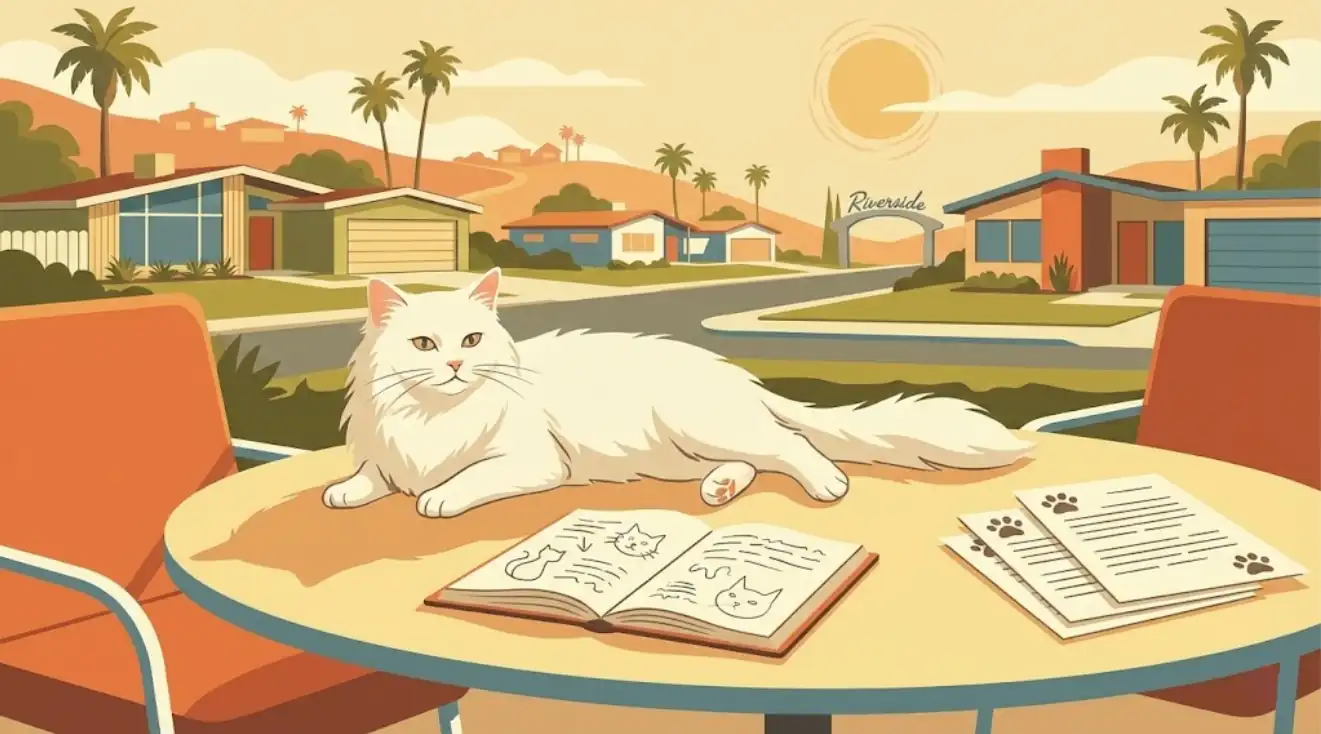
O Raça de gatos Ragdoll foi desenvolvido no Década de 1960 em Riverside, Califórnia, pelo criador Ann Baker.
A maioria das histórias sobre a raça atribui a origem do Ragdoll a um gata doméstica de pêlo comprido branca, sem pedigree, chamada Josephine. Segundo a CFA, Josephine é descrita como a gata fundadora e portadora do gene colorpoint, o que se alinha ao padrão de pelagem pontilhada observado nos Ragdolls atualmente.
Os primeiros registros de criação costumam destacar um pequeno grupo de gatos que se tornou a base da raça — especialmente Papai Warbucks, Fugianna e Buckwheat—da qual, segundo relatos generalizados, descendem os Ragdolls modernos.
Um marco inicial frequentemente citado é o os primeiros gatos da raça Ragdoll foram registrados na National Cat Fanciers’ Association (NCFA) em 30 de dezembro de 1966incluindo Papai Warbucks e Fugianna entre os primeiros gatos registrados.
À medida que a raça ganhava destaque, Baker selecionou e cruzou gatos domésticos de pêlo comprido para obter o temperamento e a aparência que desejava, moldando gradualmente o que se tornou o Ragdoll moderno. A CFA observa que Baker também associou o nome da raça a relatos de que Josephine era tão tranquila que “ficava mole” quando era segurada — um detalhe sobre a origem que continua fazendo parte da tradição do Ragdoll, mesmo que não seja uma característica comum nos gatos atuais.
Quando o interesse pela raça cresceu, Baker criou o Associação Internacional de Gatos Ragdoll (IRCA) em 1971, com o objetivo de manter um controle rigoroso sobre a criação e o registro. Com o passar do tempo, alguns dos primeiros criadores optaram por buscar um reconhecimento mais amplo por meio de associações felinas mais tradicionais e clubes independentes.
Relatos históricos também mencionam que Denny e Laura Dayton adquiriu os primeiros gatos reprodutores de Baker (data frequentemente atribuída a 1969) e, posteriormente, desempenhou um papel fundamental na organização de clubes da raça e de publicações que ajudaram a padronizar e a promover os Ragdolls de forma mais ampla.
Entre os principais marcos de reconhecimento no mundo dos gatos, a CFA informa que os Ragdolls foram aceito para registro em 1993 e avançou para situação no campeonato em 2000.
Características físicas (tamanho, constituição física, pelagem, cor)
O Gato Ragdoll é um raça de grande porte e ossatura robusta com um corpo longo e musculoso e uma aparência geral que transmite “força contida”, em vez de um tipo extremo e exagerado.
Tamanho e peso (adulto):
- Homens: geralmente 15–20 lb (6,5–9 kg), e não é incomum que alguns machos adultos atinjam Mais de 20 lb.
- Mulheres: normalmente 10–15 lb (4,5–6,5 kg) e são visivelmente menores do que os machos.
Maturação lenta (uma característica marcante da raça):
Ragdoll é de maturação lenta e pode não atingir o tamanho e o peso máximos até cerca de 4 anos. A pelagem e a cor deles podem continuar se desenvolvendo por anos — algumas fontes estimam que a “cor definitiva da pelagem” seja alcançada por volta de 2 anos, embora os padrões da raça também indiquem que a cor pode não atingir a maturidade total até cerca de 3 anos.
Corpo, cabeça e olhos (como é o “tipo de raça pura”):
- Corpo: torso de médio-longo a longo, peito largo, estrutura óssea robusta e um cinta abdominal moderada para a região inferior do abdômen é considerado aceitável.
- Olhos: olhos azuis grandes e ovais são uma característica distintiva; os padrões penalizam ou excluem cores de olhos que não sejam azuis para a raça.
- Final: longo e com a plumagem completa.
Textura do pelo (por que eles parecem “sedosos”):
O casaco é semilongo e descrito como macio como seda, com subpelo mínimo/insignificante (mais pelos de cobertura do que lã densa). Isso afeta a sensação ao toque e a forma como a pelagem se ajusta ao corpo.
Cor, padrões e por que os gatinhos nascem brancos:
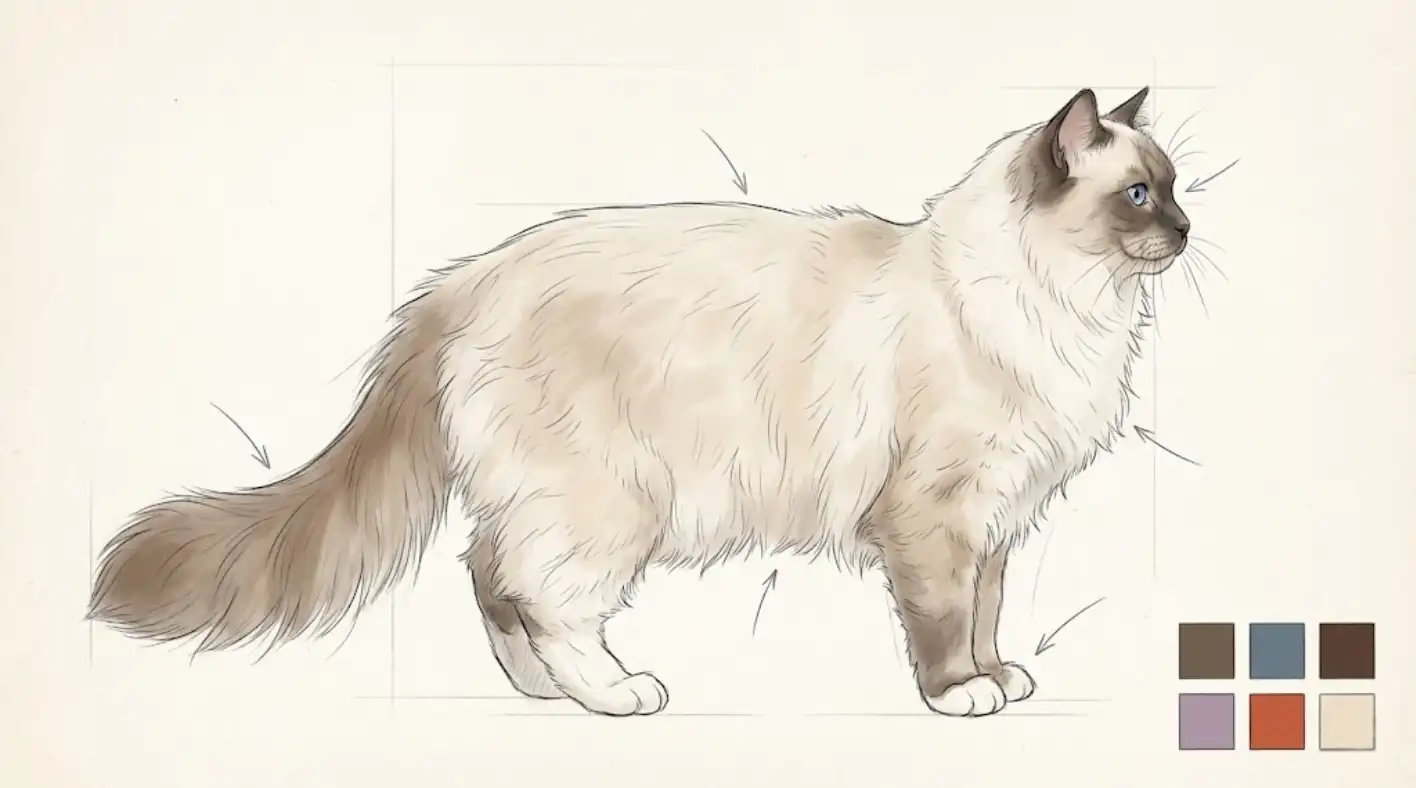
Ragdoll é um raça colorpoint: o corpo é mais leve, enquanto o orelhas, rosto (máscara), pernas/pés e cauda são mais escuros (“pontos”).
Isso está relacionado a Variantes do gene TYR (tirosinase) que influenciam a produção de pigmentos de maneira sensível à temperatura (uma das principais razões pelas quais os “pontos” se desenvolvem com mais intensidade nas áreas mais frias do corpo).
Desenvolvimento da cor dos gatinhos (o que os donos devem esperar):
- Os gatinhos da raça Ragdoll costumam ser descritos como nascido branco, com cores/padrões surgindo gradualmente em seguida — muitas vezes tornando-se visíveis logo nos primeiros 1 a 2 semanas.
- A intensidade final da cor pode levar anos, portanto, as marcas de um gatinho podem não corresponder à sua aparência definitiva quando adulto.
Cores e variações de pontos comumente reconhecidas:
Um conjunto de cores de pontos amplamente citado inclui foca, azul, chocolate, lilás, vermelho e creme, com variações como lince (felpudo pontos) e tortie/parti-color dependendo da genética e dos padrões do registro.
O temperamento da raça Ragdoll em resumo
Os Ragdolls são amplamente descritos como calmo, carinhoso e voltado para as pessoas—geralmente ficam mais felizes quando podem ficar perto de seus humanos favoritos.
Eles são famosos pelo “queda tipo boneco de pano” (muitos relaxam e ficam flácidos quando são acariciados ou pegos no colo), o que é uma característica frequentemente relatada da raça e parte da origem do nome da raça.
Nível de afeto: energia de “gato-sombra”
Muitos gatos da raça Ragdoll vão recebê-lo na porta, ficar ao seu lado e acompanhá-lo de cômodo em cômodo.
Esse comportamento carinhoso e pegajoso não é exclusivo dos Ragdolls — pesquisas sugerem que os gatos podem formar laços de apego seguro com os cuidadores (categorias semelhantes às dos cães/crianças), o que ajuda a explicar por que alguns gatos preferem ficar perto de “sua pessoa”.”
O que isso significa para os proprietários: Se você quer um companheiro que goste de ficar no colo, um Ragdoll costuma ser uma ótima opção; se você prefere um “gato de convivência” bastante independente, talvez seja melhor escolher um com um temperamento diferente.
Se dá bem com crianças, visitantes e outros animais de estimação (desde que sejam respeitadas as regras normais de segurança)
As entidades de raça costumam descrever os Ragdolls como gentil e sociável, e muitas famílias percebem que eles se adaptam facilmente à presença de crianças educadas e de outros animais de estimação.
Mesmo assim, “tolerante” não significa “invencível”: ensinem isso às crianças apoio com as duas mãos (peito + quartos traseiros), evite apertar e deixe o gato sair quando quiser.
Capacidade de treinamento e estilo de jogo
Os gatos da raça Ragdoll costumam ser brincalhão, mas não hiperativo, e muitos são descritos como treinável—alguns aprendem a vir quando chamados e até a brincar de buscar.
Eles geralmente gostam de brincadeiras interativas (brinquedos com varinha, brincadeiras de perseguição suave, comedouros-quebra-cabeças) e se dão melhor quando as brincadeiras são curtas, regulares e sociais.
Vocalização: geralmente silenciosa, às vezes falante
Muitas fontes descrevem os Ragdolls como relativamente tranquilo, mas cada gato é diferente — alguns “falam” mais, especialmente na hora das refeições ou quando querem atenção.
Tempo a sós e estresse “relacionado à separação”
Como os Ragdolls costumam ser muito apegados às pessoas, alguns podem não se adaptar bem a longos períodos de isolamento e podem apresentar comportamentos relacionados ao estresse (maior vocalização, higiene excessiva, alterações no apetite, problemas com a caixa de areia). Se houver mudanças repentinas de comportamento, descarte primeiro as causas médicas consultando um veterinário.
Ambiente interno x ambiente externo: por que o acesso supervisionado é mais seguro
A vida ao ar livre/em liberdade acarreta riscos reais (acidentes de trânsito, conflitos, exposição a doenças), e grupos veterinários destacam preocupações mais amplas relacionadas à saúde pública e à ecologia em torno dos gatos que vivem em liberdade.
Dada a reputação do Ragdoll de ser gentil e não agressivo, muitos proprietários optam por vida em casa além de um enriquecimento seguro e — se desejado —tempo supervisionado ao ar livre em um catio ou com um arnês.
Observação importante para os donos: os gatos podem esconder a dor (fique atento a mudanças sutis)
Os gatos costumam demonstrar dor em sutil de várias maneiras, e a dor pode passar despercebida — portanto, não confie apenas no choro alto como único sinal.
Entre em contato com o veterinário se notar alterações novas ou persistentes, como:
- menor atividade / relutância em pular
- alterações no apetite
- isolamento, irritabilidade ou “não se comportarem como de costume”
- alteração na postura ou na marcha

Guia de cuidados
Alimentação (o que dar de comer + como escolher)
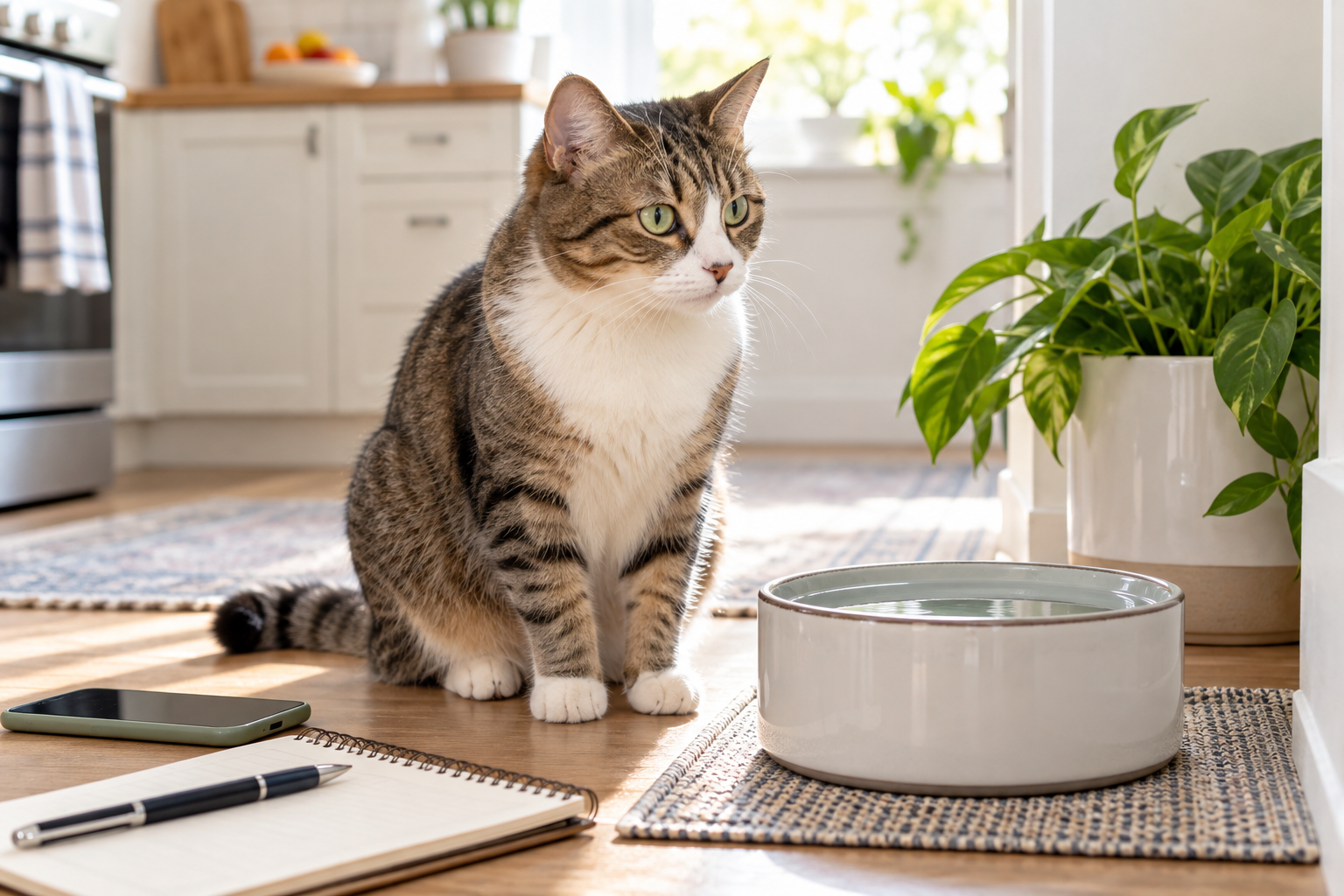
Objetivo: mantenha seu gato Ragdoll em uma corpo saudável manter a boa forma e evitar o “aumento silencioso de peso”, que é comum em gatos que vivem dentro de casa.
Escolha uma dieta “completa e equilibrada” alimentos para a fase certa da vida. Procure um Declaração de adequação nutricional da AAFCO (EUA) ou normas equivalentes em sua região; isso é mais significativo do que alegações de marketing ou palavras-chave relacionadas aos ingredientes.
Divisão em porções que realmente funciona (e é fácil de consultar):
- Meça as porções das refeições (xícaras/gramas) em vez de servir a olho.
- Consulte seu veterinário para marcar uma peso ideal + Índice de Condição Corporal (ICC) meta e, em seguida, ajuste as calorias gradualmente.
- Mantenha os “extras” em quantidade reduzida: ≥90% de calorias diárias provenientes de alimentos completos e equilibrados; ≤10% proveniente de guloseimas/acompanhamentos/alimentos para humanos.
Molhado x seco (prático, não dogmático): Ambas as opções podem funcionar, desde que sejam completas e balanceadas — o mais importante é o total de calorias e a manutenção de uma condição corporal saudável. Peça ao seu veterinário um plano adequado para o seu gato idade, atividade física e histórico médico.
Exercício físico (opte por algo simples e sustentável)
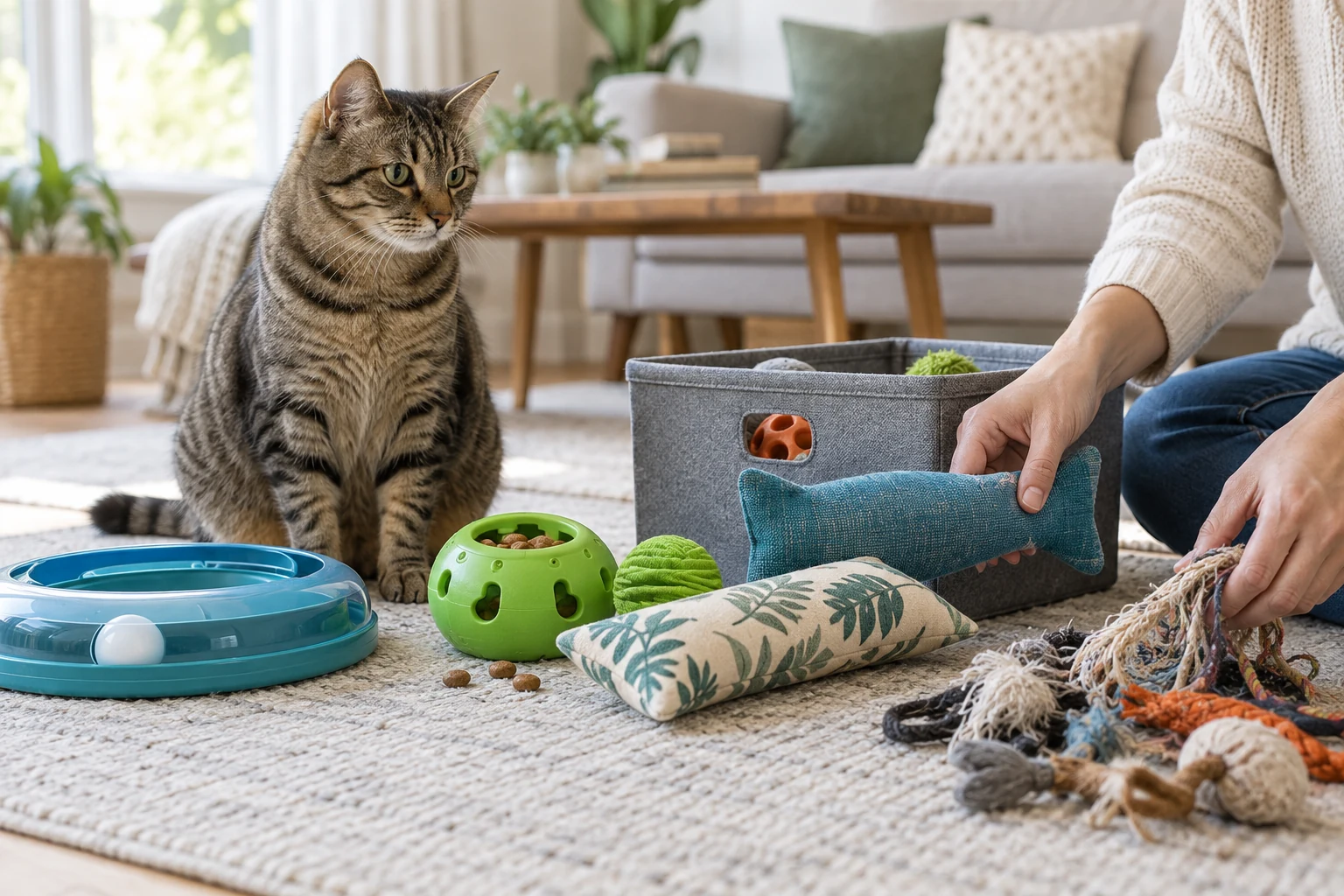
Os gatos da raça Ragdoll ainda precisam brincar diariamente, mesmo que sejam naturalmente calmos. Brincar regularmente ajuda a manter um peso saudável e reduz comportamentos decorrentes do tédio.
Uma dose inicial realista que a maioria dos gatos tolerará: Procure 2 a 3 sessões de brincadeiras por dia, com duração de aproximadamente 10 a 15 minutos cada, levando em conta a idade e o nível de energia do seu gato. Sessões curtas e frequentes costumam funcionar melhor do que uma única sessão longa.
Os melhores brinquedos (para brincadeiras de “caça natural”):
- Brinquedos tipo varinha/pena, brinquedos macios para chutar, bolinhas, brinquedos que fazem barulho ao serem amassados
- Troque os brinquedos semanalmente para manter o interesse das crianças
Ponteiros a laser (opcionais, use com cuidado): Algumas evidências associam o uso frequente do apontador laser a comportamentos repetitivos anormais em gatos, relatados pelos donos; portanto, trate-o como uma ferramenta ocasional — e não como a brincadeira principal. Se você for usá-lo, mantenha as sessões curtas e terminar com um “gancho” (jogue um brinquedo ou dê um petisco) para evitar a frustração.
Ambiente e Estimulação (configuração interna que evita o estresse)
Gatos que vivem dentro de casa se desenvolvem bem quando o ambiente em que vivem atende às necessidades básicas dos felinos — isso não é um “luxo”, mas sim um aspecto fundamental do bem-estar deles.
Use o conceito dos “cinco pilares” da AAFP/ISFM como seu plano de ação:
- Locais seguros para descanso/esconderijo (camas com cobertores, caixas, quartos silenciosos)
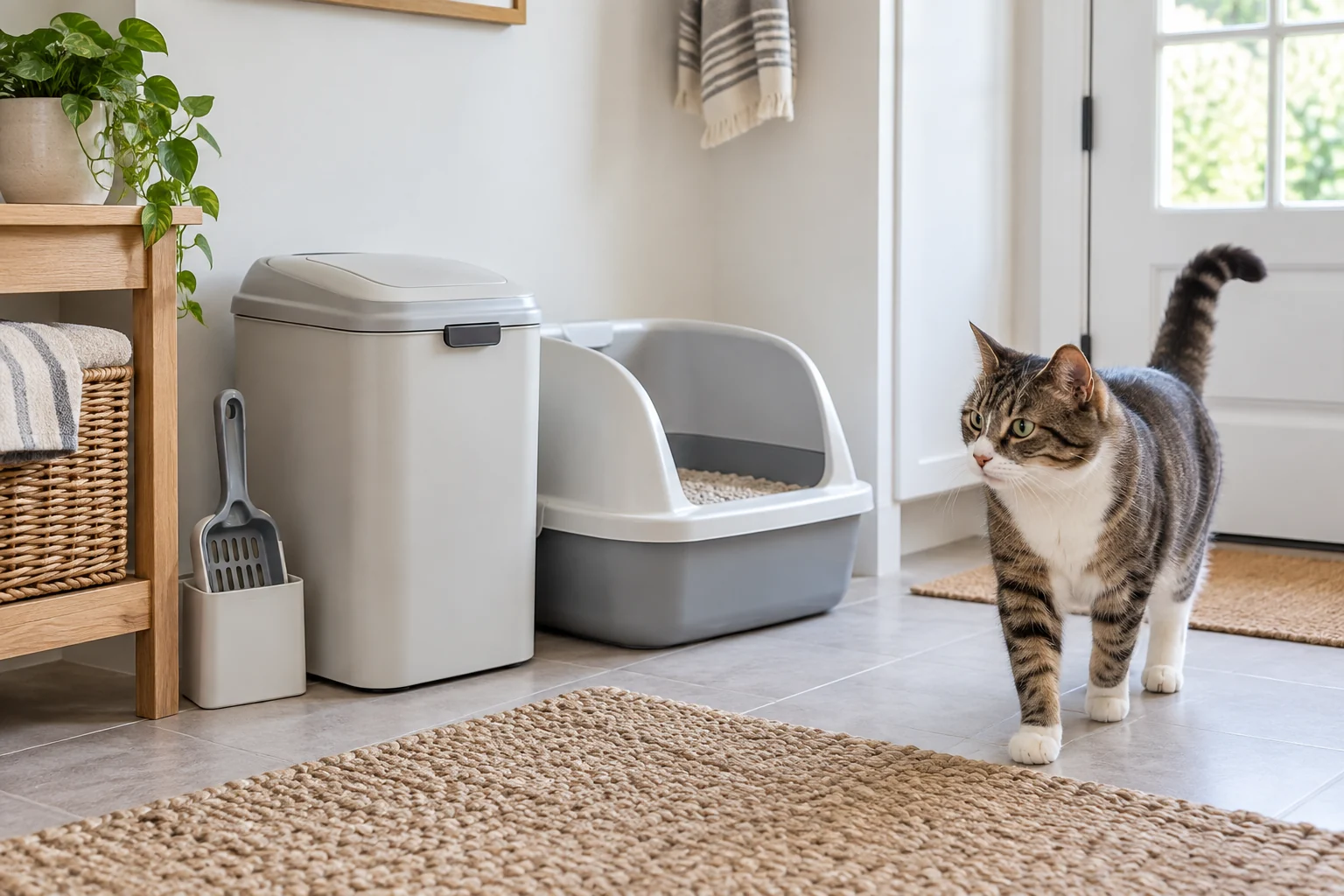
- Vários recursos importantes (comida/água/areia para gatos/arranhadores em mais de um local, se possível)
- Oportunidades para brincar/caçar (brincadeiras interativas diárias + brinquedos individuais)
- Interação humana positiva e previsível (manuseio cuidadoso, escolha, rotina)
- Um ambiente consistente (evite mudanças bruscas; introduza novos itens aos poucos)
Melhorias de alto impacto (baixo esforço):
- Espaço vertical: árvores para gatos/poleiros/prateleiras para escalada e observação
- Enriquecimento de janelas: um poleiro + um local seguro para observar
- Busca por alimento: Ofereça algumas refeições usando comedouros-quebra-cabeças para retardar a ingestão dos alimentos e proporcionar estímulo físico e mental
Enriquecimento seguro ao ar livre (sem liberdade de movimento): Se o seu Ragdoll quiser “passar um tempo ao ar livre”, opte por alternativas controladas, como um catio/recinto ou tempo de uso do arnês sob supervisão.
Cuidados pessoais (tempo mínimo, rotina constante)
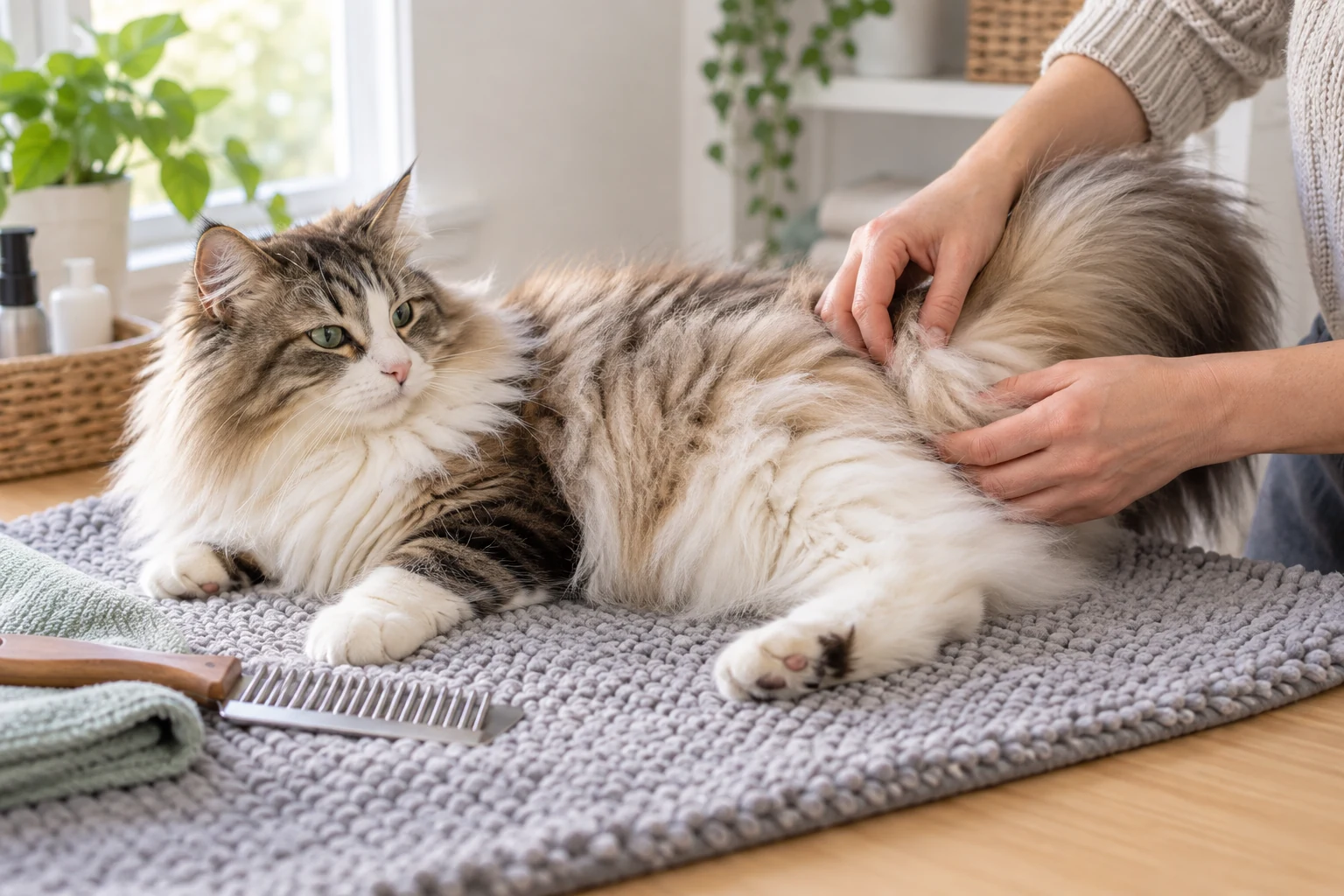
Muitos gatos da raça Ragdoll não precisam de cuidados intensos com a pelagem, mas Pentear regularmente evita que o cabelo fique embaraçado e reduz a queda de cabelo, especialmente durante a troca sazonal de pelos.
Rotina prática:
- Aproveite o momento da higiene para fazer uma rápida “avaliação de bem-estar” (pele, nódulos, dor) e entre em contato com o veterinário caso note alguma alteração.
- Penteie 1 a 2 vezes por semana com um pente de aço (ou algo semelhante) e aumentar a frequência durante os períodos de muda intensa.
- Concentre-se nas zonas de atrito: atrás das orelhas, nas “axilas”, na barriga e nas patas traseiras (onde os tapetes começam).
Estimulação mental (criar hábitos que evitem o tédio)
O enriquecimento mental é um cuidado com a saúde para gatos que vivem dentro de casa — especialmente para raças inteligentes e que gostam de companhia humana, como o Ragdoll.
Plano semanal simples (fácil de entender para o proprietário e que pode ser citado):
- Diariamente: atividades interativas (2 a 3 sessões curtas)
- Na maioria dos dias: comedouro tipo quebra-cabeça / “caça” à comida em pelo menos uma refeição
- Semanal: alternar os brinquedos + introduzir um novo “micro-enriquecimento” (forte de caixas, saco de papel, novo local para pousar)
Se você quiser ensinar truques (sentar, dar um high-five, acostumar-se à coleira), mantenha o treinamento positivo e breve; muitos gatos aprendem melhor com pequenas recompensas em forma de comida.

Questões relacionadas à saúde (o que se sabe + o que os donos podem fazer)
| Condição | O que é isso | Por que isso é importante | O que fazer |
|---|---|---|---|
| Cardiomiopatia hipertrófica (CMH) | Espessamento do músculo cardíaco; pode ser assintomático nos estágios iniciais | Os Ragdolls estão entre as raças nas quais se observa a cardiomiopatia hipertrófica (HCM); as complicações podem incluir coágulos sanguíneos que afetam os membros posteriores | Pergunte aos criadores sobre Triagem de HCM/exames de DNA; os veterinários fazem o diagnóstico por meio de ecocardiografia |
| Doença renal e PKD (doença renal policística) | Na PKD, podem ocorrer cistos; a doença renal crônica tem múltiplas causas | Um estudo de triagem da raça Ragdoll relatou que baixa prevalência de PKD (<3%) nessa população; o rastreamento de rotina deve ser baseado em evidências | Discutir ultrassom e/ou o contexto dos testes genéticos com seu veterinário/criador; não presuma que a raça apresente alto risco sem evidências |
| FLUTD (doença do trato urinário inferior) | Conjunto de problemas urinários (dor ao urinar, sangue na urina, vontade frequente de urinar) | A Cornell destaca que a LUTD é um motivo muito comum para os gatos procurarem o veterinário; a obstrução é uma emergência | Conheça os sinais de alerta (esforço ao urinar, pouca ou nenhuma urina) → atendimento veterinário de urgência; foco na hidratação e na redução do estresse |
| Obesidade e sobrecarga nas articulações | O excesso de peso aumenta o risco de doenças | Cornell descreve a obesidade como um distúrbio nutricional comum e observa que ela pode agravar doenças como a osteoartrite e o diabetes | Controle das porções + brincadeiras estruturadas; a perda de peso deve ser orientada por um veterinário (evite dietas radicais) |
| FIP (peritonite infecciosa felina) | Doença grave causada por uma mutação do coronavírus felino | Isso já não significa mais “não há cura definitiva” da maneira como os artigos mais antigos apresentavam a questão | Relatórios da Cornell acumulados O GS-441524 passou a estar disponível nos EUA. no contexto de prescrição veterinária; consulte seu veterinário |
O gato Ragdoll é a escolha certa para você?
Os gatos Ragdoll são mais conhecidos por serem carinhoso, calmo e que gosta de estar com as pessoas, e muitos ficam “descontraídos” ou relaxam profundamente quando são segurados. Eles costumam se adaptar bem a muitos lares — mas não são a melhor opção para todos os estilos de vida.
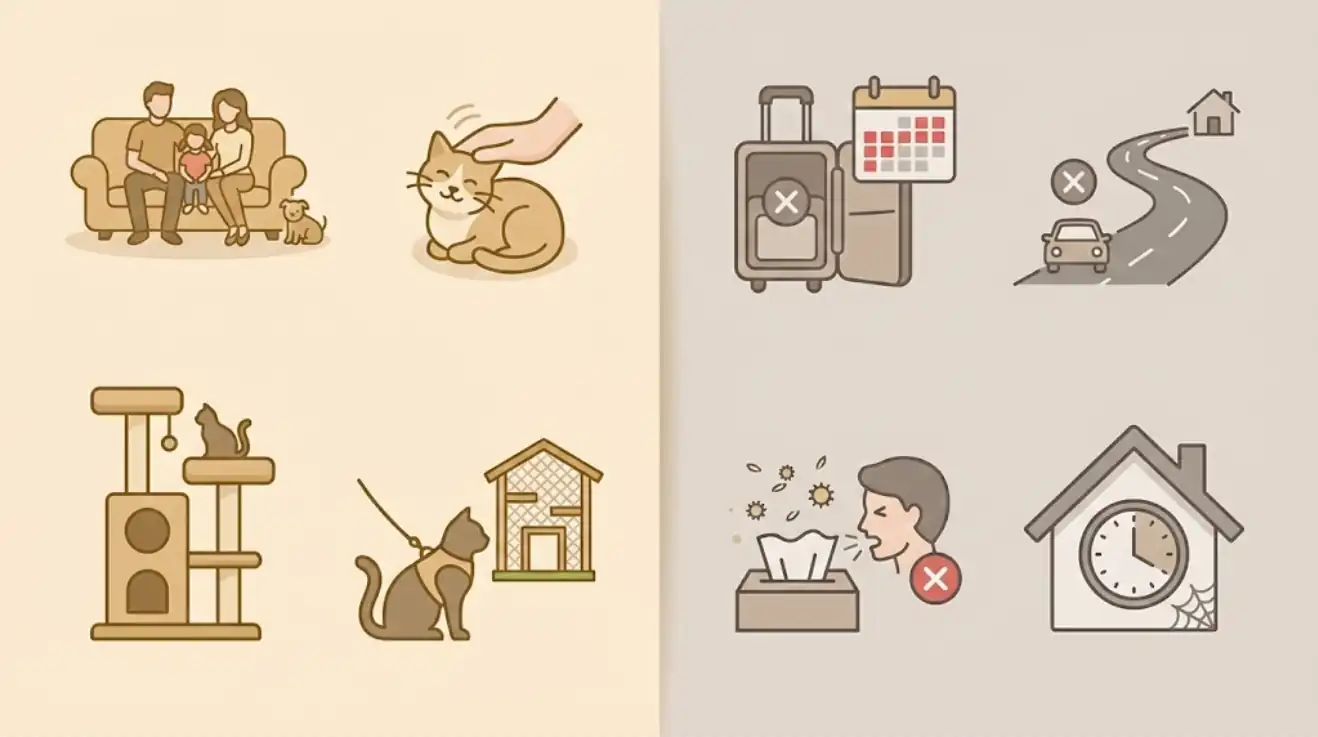
A melhor opção se você quiser…
| Ótima opção para… | Por que um Ragdoll é uma boa escolha |
|---|---|
| Um companheiro carinhoso, gentil e tranquilo | Os Ragdolls são comumente descritos como descontraído, carinhoso e tranquilo, e muitos gostam de ser pegos no colo e acariciados. |
| Famílias com crianças ou outros animais de estimação | Os perfis da raça fornecidos pelos principais registros indicam que os Ragdolls são tipicamente tolerante e sociável, costumando se dar bem com crianças e outros animais (desde que haja apresentações adequadas). |
| Um gato capaz de aprender jogos ou rotinas | Muitos donos acham que os Ragdolls treinável (alguns aprendem a buscar objetos ou a vir quando chamados). |
| Vida em apartamento ou espaços menores | Os gatos da raça Ragdoll costumam ser descritos como adaptáveis e não precisar de uma casa grande, desde que tenham interação e brincadeiras diárias. |
| Um visual de cabelos longos que é fácil de cuidar | Eles ainda perdem pelos, mas as orientações do registro descrevem penteado semanal como referência prática, com atenção redobrada durante o período de muda sazonal. |
Pense duas vezes se você…
| Não é ideal para… | Por que isso pode não funcionar |
|---|---|
| Quer um gato bem independente e que não exija muito contato? | Os gatos da raça Ragdoll são comumente descritos como gatos que se dedicam às pessoas e costumam ficar perto de seus donos. Pesquisas também mostram que os gatos podem formar laços afetivos fortes e podem demonstrar comportamentos relacionados à separação, de modo que as expectativas em relação a um “gato solitário” podem sair pela culatra. |
| Planeje deixar seu gato sair para passear ao ar livre sem supervisão | O acesso não controlado ao ar livre aumenta os riscos (trânsito, doenças/parasitas, toxinas, perda). As orientações da AVMA indicam que confinar gatos domésticos (atividades de enriquecimento dentro de casa, catio ou passeios com coleira, após aclimatação) ajuda a reduzir esses riscos. |
| Tenho alergia grave a gatos e preciso de um gato “hipoalergênico” | Os sintomas da alergia a gatos são, na maioria das vezes, causados por Fel d 1 (o principal alérgeno felino). Os Ragdolls são não hipoalergênico. |
| Não quero me preocupar com o peso e com a rotina de exercícios | Os gatos da raça Ragdoll adoram comida e podem correr um risco maior de ganhar peso se não brincarem regularmente e se não houver cuidado com as porções. |
| Prefiro evitar discussões sobre exames de saúde relacionados à raça | Os gatos da raça Ragdoll são conhecidos por risco genético associado à raça para a CMH, e criadores de renome costumam realizar exames para detectar essa condição. |
Autoavaliação rápida (decisão rápida)
Provavelmente, você é um bom candidato para um Gato Ragdoll se você puder responder “sim” à maioria destas perguntas:
- Eu quero um gato amigável e carinhoso que gosta de companhia.
- Posso ficar com meu gato em ambientes fechados (ou use um passeios no catio / passeios com a coleira).
- Eu consigo fazer penteado semanal e cuidados básicos com o pelo.
- Estou disposto a ajudar a manter um peso saudável com atividade física diária + controle das porções.
- Não tenho problema em perguntar aos criadores sobre Testes de HCM (e consultar um veterinário para cuidados preventivos).
Conclusão: Se você procura um gato calmo, carinhoso e ideal para a família, e se sente bem com um estilo de vida dentro de casa, o Ragdoll costuma ser uma excelente opção.
PERGUNTAS FREQUENTES
Quanto custa um gato Ragdoll?
Os preços praticados pelos criadores variam bastante de acordo com a região, a linhagem e se o gatinho é de qualidade para animal de estimação ou de qualidade para exposições/reprodução. Em vez de se basear em um único valor, peça: comprovante de exames de saúde, um contrato por escrito e informações sobre quais cuidados veterinários iniciais estão incluídos. (Isso é mais confiável do que uma afirmação rígida sobre o preço.)
Qual é o tamanho dos gatos Ragdoll?
Os Ragdolls são uma raça grande. Os machos podem pesar de 6,5 a 9 kg (15 a 20 libras) e as fêmeas de 4,5 a 6,5 kg (10 a 15 libras). Normalmente, eles têm de 9 a 11 polegadas de altura e podem ter de 17 a 21 polegadas de comprimento.
Quanto tempo vivem os gatos Ragdoll?
Com os devidos cuidados e um estilo de vida dentro de casa, os Ragdolls geralmente têm uma vida útil acima da média, vivendo de 12 a 17 anos. Alguns indivíduos chegam a viver até 20 anos.
Os gatos Ragdoll se desprendem?
Sim, os Ragdolls trocam de pele, mas geralmente menos do que muitas outras raças de pelo longo devido à falta de um subpelo denso. Eles apresentam uma queda mais significativa durante as mudanças sazonais, principalmente na primavera e no outono. A escovação regular ajuda a controlar os pelos soltos.
Os Ragdolls são hipoalergênicos?
Não, os Ragdolls não são considerados hipoalergênicos. Embora sua pelagem de baixa penugem possa reduzir a quantidade de pelos no ambiente, as alergias a gatos são causadas principalmente por proteínas encontradas na saliva, na urina e nos flocos de pele dos gatos, que os Ragdolls produzem como qualquer outro gato.
Fatos bônus
Todos os cães de raça pura têm olhos azuis
Uma característica marcante da raça são seus cativantes olhos azuis. Qualquer Ragdoll com olhos verdes ou amarelos é provavelmente uma mistura.
Born Pure White
Os filhotes de Ragdoll nascem totalmente brancos. Suas cores e padrões distintos começam a se desenvolver entre uma e duas semanas de idade e continuam a ser preenchidos à medida que amadurecem, atingindo a coloração completa por volta de 1,5 a 2 anos de idade.
Amadurecimento lento
Os Ragdolls são considerados "tardios", levando mais tempo do que a maioria das raças para atingir seu tamanho e maturidade completos, geralmente não antes dos quatro anos de idade.
"Ragdogs"
Eles são frequentemente comparados a cães devido à sua natureza afetuosa, leal e sociável. Eles seguem os donos, cumprimentam-nos na porta e podem até brincar de buscar.
Natureza tranquila (e dor oculta)
Embora geralmente sejam silenciosos e não excessivamente vocais, essa característica significa que eles podem não mostrar prontamente sinais de angústia ou dor, exigindo uma observação vigilante dos proprietários para detectar sinais comportamentais sutis.
Eles sentem dor
Apesar de um mito sugerir o contrário devido ao seu comportamento calmo, os Ragdolls sentem dor. Sua capacidade de esconder o desconforto significa que os donos devem estar muito atentos ao seu bem-estar.
Não surdo
A associação entre olhos azuis e surdez é um mito para os Ragdolls. Embora a surdez seja mais comum em gatos brancos puros com olhos azuis devido a uma mutação genética específica, os Ragdolls são de várias cores e não compartilham essa mutação específica.
Intrigado com a água
Ao contrário de muitas raças de gatos, os Ragdolls geralmente são fascinados por água e podem até seguir seus donos até o chuveiro ou sentar-se na borda da banheira.
Referências
Becker, Marty; Spadafori, Gina (16 de setembro de 2006). Por que os gatos sempre caem de pé: 101 das perguntas mais desconcertantes ... - Marty Becker, Gina Spadafori - Google Books. Health Communications, Incorporated. ISBN 9780757305733. Recuperado em 15 de agosto de 2014.
Benjamin L. Hart; Lynette A. Hart (2013). Your Ideal Cat: Insights Into Breed and Gender Differences in Cat Behavior (Seu Gato Ideal: Insights sobre as Diferenças de Raça e Gênero no Comportamento dos Gatos). Purdue University Press. pp. 99-101. ISBN 9781557536488.
"Ragdoll". Petplan. Recuperado em 14 de maio de 2021.
"Ragdoll - A Associação de Criadores de Gatos, Inc.". cfa.org. Recuperado em 20 de novembro de 2020.
"História da raça de gato Ragdoll". 19 de fevereiro de 2023.
Helgren, J. Anne (2006). "Ragdoll". Iams. Telemark Productions. Arquivado do original em 13 de novembro de 2014.
"História do Ragdoll - O início". Sociedade Histórica Ragdoll. Arquivado do original em 9 de abril de 2025. Recuperado em 16 de junho de 2025.
Mattern, Joanne (2001). O gato Ragdoll. Mankato, Minnesota: Capstone. pp. 5-16. ISBN 0736808973.
Robbins, Nancy (14 de fevereiro de 2012). Gatos domésticos: Sua história, raças e outros fatos. CreateSpace. p. 220. ISBN 9781470075385.
"Raistrick Ragdolls". Raistrickragdfolls.co.uk. Arquivado do original em 29 de novembro de 2014. Recuperado em 15 de novembro de 2014.
"Ragdoll". Conselho de Administração da Cat Fancy. Arquivado do original em 30 de março de 2025. Recuperado em 16 de junho de 2025.
Understanding Cat Behavior (Entendendo o comportamento do gato): The Complete Feline Problem Solver (O Solucionador Completo de Problemas Felinos) Roger Tabor (2003). P 33.
Os gatos sempre caem de pé? Gina Spadafori, Marty Becker
"Por que os gatos Ragdoll ficam moles?". 17 de janeiro de 2021. Recuperado em 17 de setembro de 2021.
O gato: seu comportamento, nutrição e saúde Linda P. Case, Kerry Helms, Bruce Macallister (2003). P 31.
Dina (2 de fevereiro de 2019). "Os gatos Ragdoll são brincalhões?". purrcraze.com. Recuperado em 24 de junho de 2021.
Braaksma, Hilary; Guthrie, Claudia. "Ragdoll". Patas diárias. Recuperado em 1 de dezembro de 2021.
"Dicas de cuidados com a pele para um gato Ragdoll. Petango. 28 de março de 2012. Recuperado em 31 de maio de 2022.
"Informações sobre a raça de gato Ragdoll". www.purina.co.uk. Recuperado em 24 de junho de 2021.
"Gatos Ragdoll - Guia completo da raça Ragdoll". O site do gato feliz. 14 de maio de 2019. Recuperado em 24 de junho de 2021.
Braaksma, Hilary; Guthrie, Claudia (1º de dezembro de 2021). "Ragdoll". Patas diárias. Recuperado em 1 de dezembro de 2021.
"Introdução ao Ragdoll". Tica.org. Recuperado em 15 de dezembro de 2017.
Mattern, Joanne. O gato Ragdoll. capstone press. p. 19.
"Birmanês vs Ragdoll". O pequeno carnívoro. Recuperado em 24 de janeiro de 2022.
"Padrões e cores internacionais de Ragdoll". Ragdollinternational.org. Recuperado em 11 de junho de 2012.
Teng, Kendy Tzu-yun; Brodbelt, Dave C; Church, David B; O'Neill, Dan G (2024). "Tabelas de expectativa de vida anual e fatores de risco para mortalidade em gatos no Reino Unido". Journal of Feline Medicine and Surgery (Jornal de Medicina e Cirurgia Felina). 26 (5): 1098612X241234556. doi:10.1177/1098612X241234556. ISSN 1098-612X. PMC 11156239. PMID 38714312.
Egenvall, A.; Nødtvedt, A.; Häggström, J.; Ström Holst, B.; Möller, L.; Bonnett, B. N. (2009). "Mortalidade de gatos suecos com seguro de vida durante 1999-2006: Age, Breed, Sex, and Diagnosis" (Idade, raça, sexo e diagnóstico). Jornal de Medicina Interna Veterinária. 23 (6): 1175-1183. doi:10.1111/j.1939-1676.2009.0396.x. PMC 7167180. PMID 19780926.
O'Neill, Dan G; Church, David B; McGreevy, Paul D; Thomson, Peter C; Brodbelt, David C (2014-06-12). "Longevidade e mortalidade de gatos atendidos em clínicas veterinárias de cuidados primários na Inglaterra". Journal of Feline Medicine and Surgery (Jornal de Medicina e Cirurgia Felina). 17 (2). SAGE Publications: 125–133. doi:10.1177/1098612×14536176. ISSN 1098-612X. PMC 10816413. PMID 24925771.
Albasan, H.; Osborne, C. A.; Lulich, J. P.; Lekcharoensuk, C. (2012). "Fatores de risco para urólitos de urato em gatos". Journal of the American Veterinary Medical Association (Jornal da Associação Médica Veterinária Americana). 240 (7): 842-847. doi:10.2460/javma.240.7.842. PMID 22443437.
O'Neill, D.G.; Gostelow, R.; Orme, C.; Church, D.B.; Niessen, S.J.M.; Verheyen, K.; Brodbelt, D.C. (2016-06-29). "Epidemiologia do diabetes mellitus entre 193.435 gatos atendidos em clínicas veterinárias de cuidados primários na Inglaterra". Jornal de Medicina Interna Veterinária. 30 (4). Wiley: 964-972. doi:10.1111/jvim.14365. ISSN 0891-6640. PMC 5094533. PMID 27353396.
Oliver, James A.C.; Mellersh, Cathryn S. (2020). "Genetics" [Genética]. Em Cooper, Barbara; Mullineaux, Elizabeth; Turner, Lynn (eds.). Livro-texto de enfermagem veterinária da BSAVA (Sexta ed.). Associação Britânica de Veterinários de Pequenos Animais. p. 131. ISBN 978-1-910-44339-2.
"Variantes de DNA da proteína C de ligação à miosina em gatos domésticos (A31P, A74T, R820W) e sua associação com a cardiomiopatia hipertrófica" (PDF). Vetogene.it. Arquivado do original (PDF) em 11 de fevereiro de 2015. Recuperado em 15 de dezembro de 2017.
"Cardiomiopatia hipertrófica (CMH) em gatos". Fabcats.org. Recuperado em 15 de dezembro de 2017.
 EN
EN DE
DE ES
ES PT
PT