
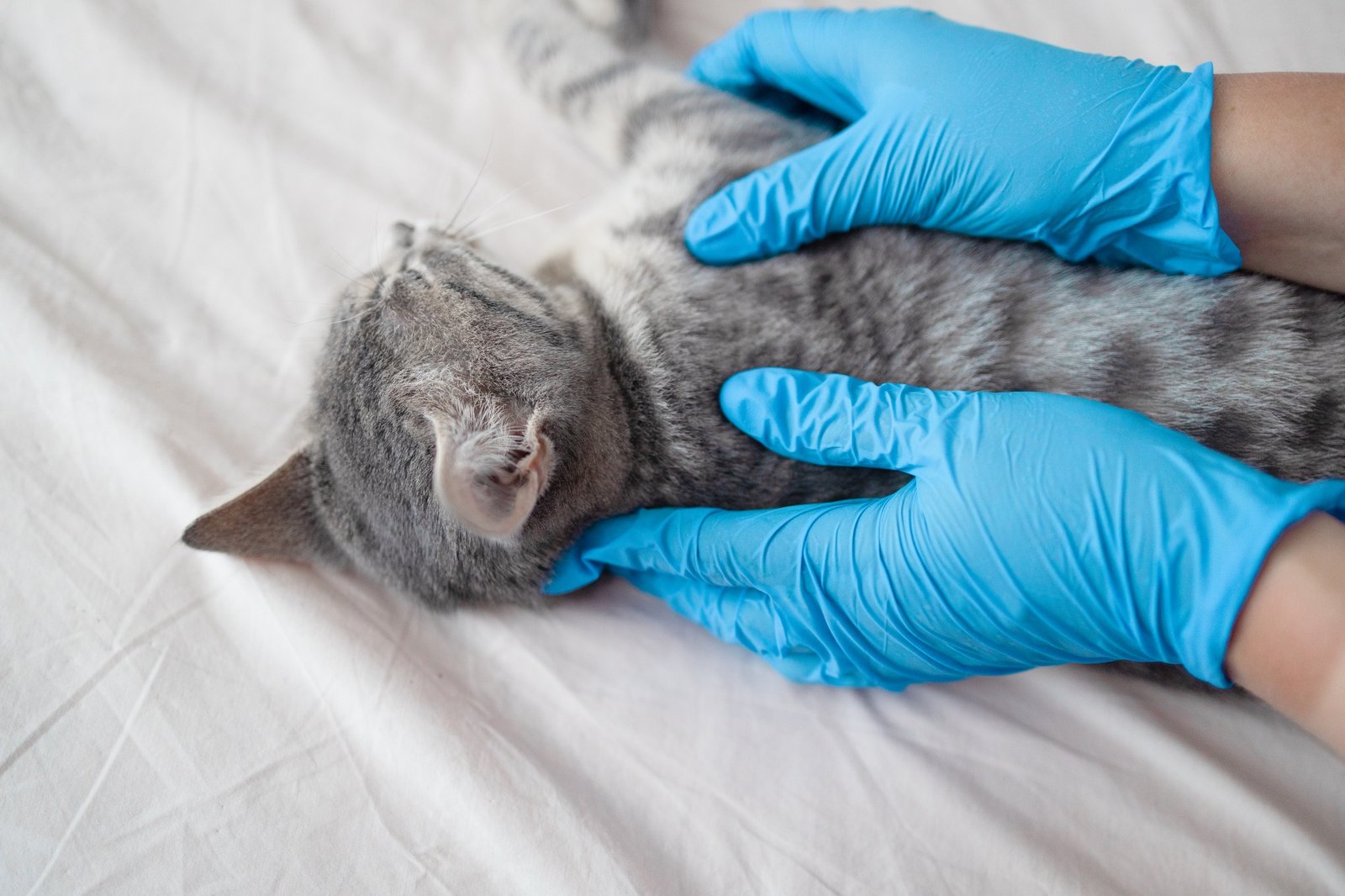
Se sua gata estiver dando à luz neste momento, mantenha o ambiente silencioso, comece a registrar o andamento do parto e fique atento a sinais claros de emergência. A maioria das gatas dá à luz sem precisar de muita ajuda, mas você deve ligar para um veterinário com urgência se ela fizer força sem que nenhum filhote saia, se um filhote parecer preso, se ela apresentar sangramento intenso ou se parecer fraca, angustiada ou com muita dor.
Este guia tem como objetivo ajudar na tomada de decisões rápidas e práticas durante o parto. Trata-se de um material informativo, não de um diagnóstico nem de um substituto para os cuidados veterinários. Se você não tiver certeza se sua gata está com algum problema, ligue para o seu veterinário ou para uma clínica de emergência e descreva exatamente o que está observando.
Índice
- O que devo fazer primeiro se minha gata estiver dando à luz?
- Quando devo ligar para um veterinário durante o parto de uma gata?
- O que é considerado normal durante o parto de uma gata?
- Qual é o intervalo normal entre o nascimento de um filhote e o outro?
- Os gatos podem interromper o parto entre um filhote e outro?
- Quais são os sinais de que minha gata pode dar à luz em breve?
- Como devo preparar o quarto antes da chegada dos gatinhos?
- O que devo observar nas primeiras 24 horas após o parto?
- Conclusão
- Perguntas frequentes
- Referências
O que devo fazer primeiro se minha gata estiver dando à luz?
Primeiro, crie um ambiente tranquilo, aconchegante e sem estresse. Depois, observe em vez de interferir. Sua função mais importante é controlar o tempo, ficar atento ao bem-estar do seu gato e saber quais sinais indicam que é preciso “chamar um veterinário imediatamente”.”
Use esta lista de verificação de cinco minutos:
| Etapa | O que fazer | Por que isso é importante |
|---|---|---|
| Mantenha o ambiente tranquilo | Mantenha crianças, visitantes e outros animais de estimação afastados. | O estresse pode deixar uma rainha mais inquieta ou na defensiva. |
| Deixe que ela escolha o ninho | Não fique mexendo nela depois que ela se acalmar. | Muitos gatos precisam de privacidade para que o parto transcorra tranquilamente. |
| Comece um diário do trabalho de parto | Anote quando começarem as contrações fortes, quando cada gatinho nascer e se você avistar a placenta. | A hora em que você ligar ajuda o veterinário a avaliar a urgência do caso. |
| Prepare toalhas limpas | Mantenha-os por perto, mas não os use, a menos que um gatinho precise ser secado com cuidado. | A maioria dos gatinhos é limpa pela mãe. |
| Salve os números de emergência | Salve o número do seu veterinário e da clínica de emergência no seu celular. | Você não vai querer ficar procurando durante uma crise. |
| Não puxe com força | Se um gatinho parecer estar preso, ligue para um veterinário. | Puxar pode machucar o gatinho ou a mãe. |
Se sua gata quiser que você fique por perto, sente-se ao lado dela e fique em silêncio. Se ela parecer mais à vontade sem você, dê-lhe um pouco de privacidade e observe-a de uma curta distância a cada 10 a 15 minutos.
Quando devo ligar para um veterinário durante o parto de uma gata?
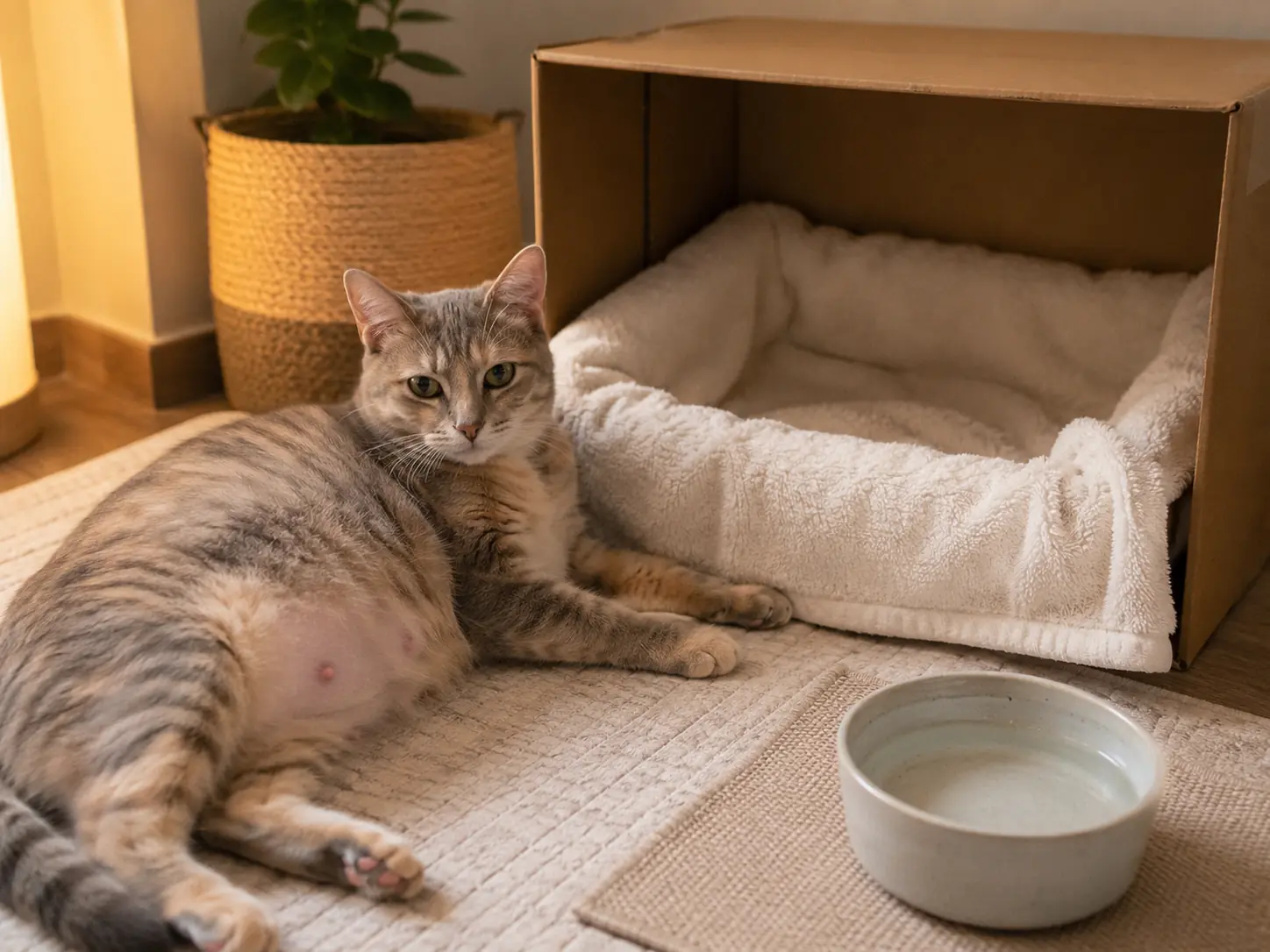
Ligue para um veterinário ou para uma clínica de emergência quando o parto parecer doloroso, estiver travado, demorar mais do que o normal ou representar risco para a mãe ou para os gatinhos. A regra mais segura é simples: se o progresso parar e sua gata estiver fazendo força, em sofrimento, sangrando muito, fraca ou desmaiando, não espere.
Utilize esta tabela de triagem:
| O que você vê | O que isso pode significar | O que fazer em seguida |
|---|---|---|
| Esforço intenso por 20 a 30 minutos, sem que o gatinho nasça | Possível distocia ou um gatinho preso | Ligue para um veterinário com urgência. |
| Um gatinho visível na vulva, mas que não nasceu após cerca de 10 minutos de fortes contrações | Possível obstrução | Ligue para um veterinário com urgência. Não puxe com força. |
| Sangramento recente que ultrapasse algumas gotas ou que persista | Possível hemorragia ou lesão | Ligue agora mesmo para uma clínica de emergência. |
| Corrimento verde ou escuro antes do nascimento de qualquer gatinho | Possível descolamento da placenta ou sofrimento fetal | Ligue para um veterinário com urgência. |
| A mãe está fraca, desmaiou, está com muita dor ou com dificuldade para respirar | Doença súbita ou exaustão | Procure atendimento de emergência imediatamente. |
| Nenhum gatinho nasce após um longo período de repouso e a mãe parece não estar bem | Possível interrupção do trabalho de parto devido a um problema | Ligue para um veterinário. |
| Secreção malcheirosa, comportamento febril, letargia grave ou recusa dos filhotes após o nascimento | Possível infecção ou complicação pós-parto | Ligue para um veterinário imediatamente. |
O Manual Veterinário da Merck lista sinais de distocia, como contrações intensas sem parto, um período de repouso prolongado, dor ou doença evidentes, ou corrimento vulvar anormal 2. A VCA também recomenda entrar em contato com um veterinário caso haja sinais como esforço prolongado, a presença de um gatinho visível que não consegue evacuar ou sangramento recente 3.
Se você ligar, forneça detalhes específicos: quando o trabalho de parto começou, quando começaram as contrações fortes, quantos gatinhos já nasceram, se as placentas foram expelidas, como está o aspecto do corrimento e se sua gata está comendo, amamentando ou parecendo angustiada.
O que é considerado normal durante o parto de uma gata?
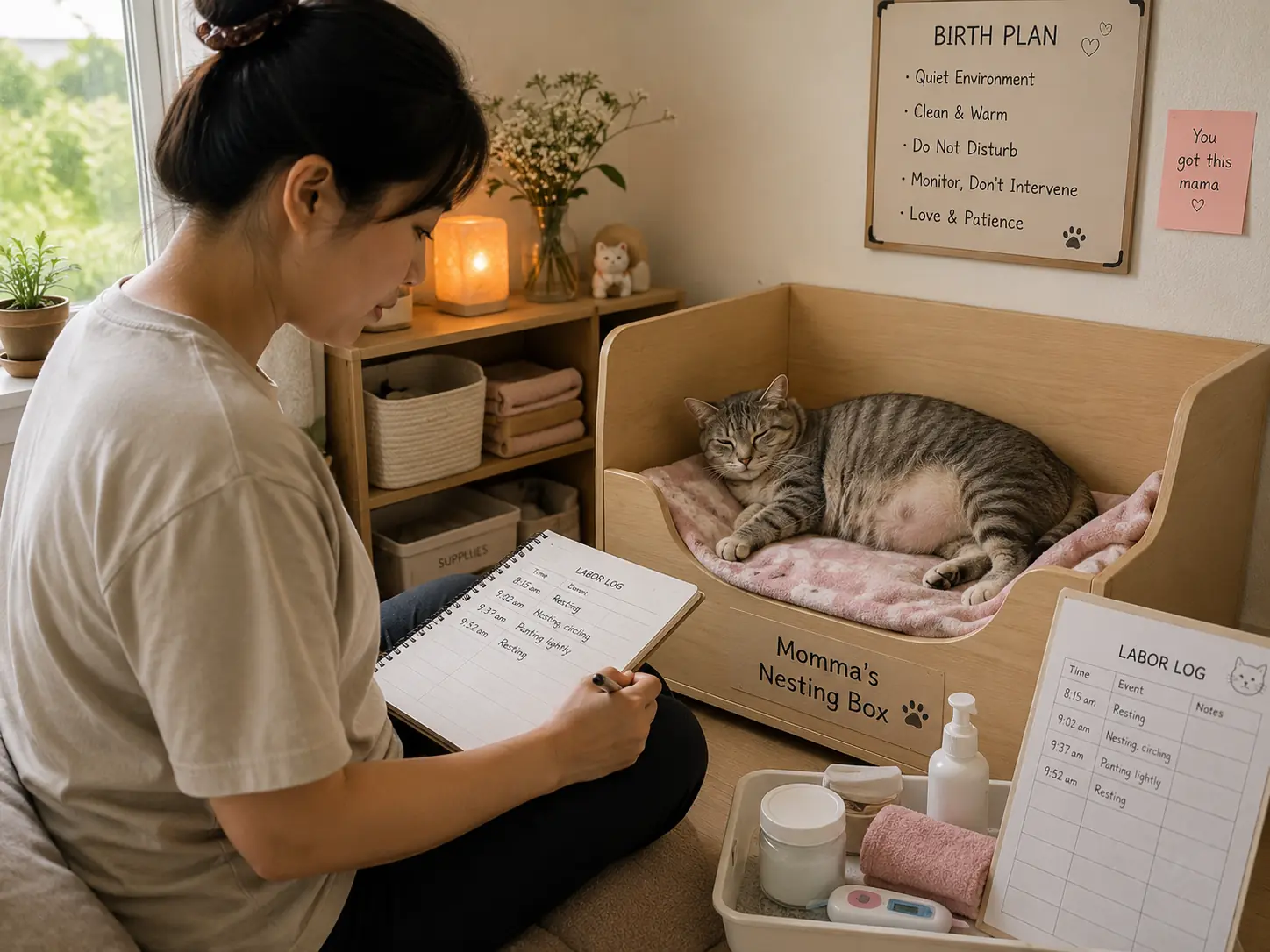
O parto normal em gatas geralmente inclui a preparação do ninho, inquietação, higiene, ofegante leve, contrações e o nascimento dos gatinhos, um por um. Muitas gatas conseguem dar à luz praticamente sozinhas, mas mesmo em casos normais é preciso ficar de olho, pois podem surgir problemas urgentes.
O parto em gatas é geralmente descrito em três fases 1:
| Estágio | O que acontece | O que você pode notar |
|---|---|---|
| Fase 1: início do trabalho de parto | O colo do útero relaxa e as contrações começam. | Inquietação, instinto de preparar o ninho, escondido, higiene pessoal, perda de apetite, ofegante leve. |
| Etapa 2: entrega dos gatinhos | Os gatinhos passam pelo canal de parto e nascem. | Contrações mais fortes, esforço visível, nascimento do gatinho. |
| Etapa 3: placentas | As placentas são expelidas depois dos gatinhos. | A mãe pode limpar os gatinhos, mastigar fios e comer placentas. |
A mãe geralmente rompe as membranas, limpa o rosto do filhote, morde o cordão umbilical e começa a cuidar dele. É comum que ela coma as placentas. Tente contar as placentas, se possível, mas não a perturbe caso a contagem possa causar estresse.
É normal haver um pouco de líquido, um leve sangramento e a cama suja. Sangramento intenso, odor desagradável, dor forte, desmaio ou um gatinho preso no canal de parto não são sinais normais.
Qual é o intervalo normal entre o nascimento de um filhote e o outro?
Os gatinhos costumam nascer com intervalos que variam de alguns minutos a uma hora, mas pode haver intervalos mais longos se a mãe estiver calma e os gatinhos já nascidos estiverem mamando. O tempo é importante, mas o conforto e o progresso da sua gata são igualmente importantes.
Uma pequena abertura pode ser normal quando sua gata está relaxada, limpando os filhotes, amamentando e sem fazer muita força. A abertura se torna mais preocupante quando ela está fazendo muita força, exausta, com dor, sangrando ou apresentando secreção anormal.
Acompanhe estes detalhes:
| Item a ser registrado | Exemplo |
|---|---|
| Começaram as fortes contrações | 20h10. |
| Nasceu o gatinho 1 | 20h28. |
| Placenta visível | Sim, depois do gatinho 1 |
| Nasceu o gatinho 2 | 21h05. |
| O comportamento da mãe | Calma, higiene pessoal, amamentação |
| Preocupação | Não houve esforço intenso desde as 21h05. |
O registro evita que você fique na dúvida. Se você ligar para um veterinário, esses horários vão ajudá-lo a decidir se isso parece um progresso normal, um trabalho de parto interrompido ou uma possível emergência.
Os gatos podem interromper o parto entre um filhote e outro?
Sim, algumas gatas podem fazer uma pausa entre o nascimento de um filhote e outro, especialmente se estiverem calmas, cuidando dos filhotes recém-nascidos e não estiverem fazendo força ativamente. Essa pausa é mais tranquilizadora quando a mãe parece confortável e os filhotes estão aquecidos e mamando.
É mais provável que uma pausa mais longa seja aceitável quando todas as seguintes condições forem verdadeiras:
- A mãe está calma, alerta e não parece sentir dor.
- Ela não está se esforçando muito.
- Ela está cuidando ou amamentando os gatinhos que já nasceram.
- Não há sangramento intenso nem corrimento com odor desagradável.
- A respiração dela parece tranquila.
- Ela não está fraca, desmaiada nem em grande sofrimento.
Ligue para um veterinário com urgência se alguma dessas situações ocorrer durante uma pausa:
- As contrações fortes voltam, mas nenhum gatinho nasce.
- Ela parece exausta, com dor ou em pânico.
- Um gatinho parece estar preso.
- Você observa sangramento intenso ou corrimento que lhe causa preocupação.
- Os gatinhos recém-nascidos estão com frio, fracos ou não estão mamando.
- Você simplesmente sente que algo está errado.
A Cats Protection destaca que o parto passa por etapas repetidas para cada gatinho, e que é importante acompanhar o processo durante o parto 4. Quando o padrão deixa de parecer calmo e progressivo, é mais seguro ligar.
Quais são os sinais de que minha gata pode dar à luz em breve?
Os sinais de que o parto pode estar próximo incluem a preparação do ninho, inquietação, maior higiene na região da vulva, diminuição do apetite, leite produção, busca por privacidade ou o fato de se tornarem excepcionalmente grudentos ou retraídos. Esses sinais são pistas úteis, mas não indicam a hora exata em que os gatinhos nascerão.
Os sinais comuns entre 0 e 48 horas incluem:
| Assinar | O que isso pode significar | O que fazer |
|---|---|---|
| Aninhar-se ou esconder-se | Ela está procurando um local seguro para o parto. | Ofereça uma caixa silenciosa e reduza o incômodo. |
| Lamber ao redor da vulva | Pode estar se iniciando o trabalho de parto ou pode já haver corrimento. | Fique atento à cor e ao odor da secreção. |
| Diminuição do apetite | É comum em algumas gatas na fase pré-parto. | Mantenha água por perto e fique atento ao consumo de energia. |
| Inquietação ou andar de um lado para o outro | Parto prematuro ou desconforto. | Fique em silêncio e comece a observar. |
| Mais vocalização | Estresse, desconforto ou pedir apoio. | Observe o padrão completo. Mudanças repentinas na voz também podem indicar angústia. |
Se você não tiver certeza se esse comportamento é sinal de trabalho de parto ou de estresse, compare-o com os guias da SnuggleSouls sobre por que os gatos se escondem e mudanças repentinas na voz.
Para saber como calcular o momento da gravidez antes do parto, leia o guia da SnuggleSouls sobre quanto tempo dura a gestação das gatas.
Como devo preparar o quarto antes da chegada dos gatinhos?
Prepare um espaço tranquilo, aconchegante e fácil de limpar antes do início do trabalho de parto. O objetivo não é criar um quarto de bebê perfeito, mas sim fazer com que sua gata se sinta segura e facilitar a observação em caso de emergência.
Configuração:
- Uma caixa-ninho com laterais baixas, toalhas limpas e espaço suficiente para a mãe se virar.
- Um cômodo aconchegante, sem correntes de ar e afastado de outros animais de estimação.
- Água doce nas proximidades.
- Uma caixa de areia ao alcance, mas não dentro do ninho.
- Toalhas limpas para emergências.
- Uma balança de cozinha, caso você pretenda monitorar o peso do gatinho peso após o parto.
- O número do seu veterinário e da clínica de emergência.
Não lotem o espaço com materiais ou pessoas. Muitos gatos preferem privacidade durante o parto. Se ainda houver tempo antes do trabalho de parto, o guia da SnuggleSouls sobre Como cuidar de uma gata grávida pode ajudá-lo a se preparar para a alimentação, a construção do ninho e o acompanhamento diário.
Evite dar medicamentos, suplementos, cálcio ou produtos para induzir o parto, a menos que seu veterinário lhe indique especificamente. Essas decisões são de natureza médica.
O que devo observar nas primeiras 24 horas após o parto?
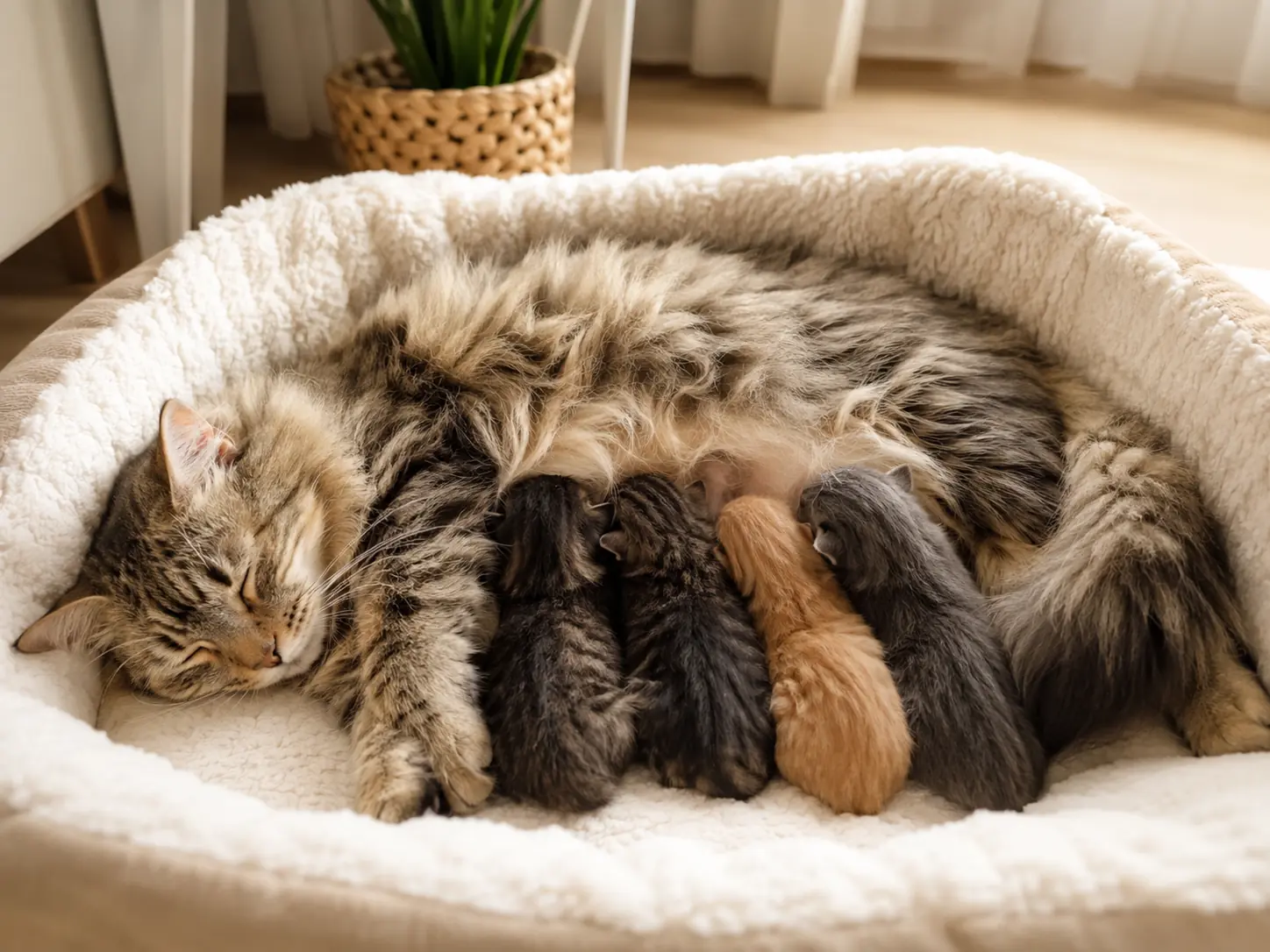
Após o parto, concentre-se em três coisas: que a mãe esteja confortável, que os filhotes estejam aquecidos e que estejam mamando. O primeiro dia não é o momento para muitos manuseios, visitas ou mudanças no ninho, a menos que haja algum problema.
Use esta lista de verificação para o primeiro dia:
| Primeira verificação após 24 horas | Sinal tranquilizador | Ligue para um veterinário se |
|---|---|---|
| Enfermagem | Os gatinhos mamam regularmente. | Os gatinhos não conseguem mamar, choram sem parar ou parecem fracos. |
| Calor | Os gatinhos se aquecem e ficam pertinho da mamãe. | Os gatinhos parecem estar com frio, sem forças ou separados. |
| O comportamento da mãe | Ela descansa, cuida do filhote e permite que ele mame. | Ela rejeita os gatinhos, parece estar com muita dor ou os abandona repetidamente. |
| Descarga | Pode ocorrer um corrimento leve após o parto. | O corrimento tem odor desagradável, é espesso, de cor vermelho vivo ou está associado a algum mal-estar. |
| Apetite e energia | Ela vai se acalmando aos poucos e bebe. | Ela está exausta, muito fraca, com febre ou se recusa a comer qualquer coisa. |
| Caixa de areia | Com o tempo, ela urina e defeca normalmente. | Ela faz força, não consegue urinar ou apresenta diarreia intensa. |
É normal haver algum corrimento pós-parto, mas odores desagradáveis, letargia grave, comportamento febril, sangramento intenso ou dor evidente exigem atendimento veterinário. A PDSA recomenda entrar em contato com um veterinário caso você fique preocupado em qualquer momento durante o trabalho de parto ou o nascimento do gatinho 5.
Se os gatinhos apresentarem diarreia, dificuldade para mamar ou fraqueza, use o produto da SnuggleSouls’ Guia sobre diarreia em gatinhos apenas como medida provisória enquanto você liga para um veterinário. Gatinhos recém-nascidos podem piorar rapidamente. No caso de alterações nas fezes da gata, o tabela de cores das fezes de gato pode ajudar você a descrever o que vê, mas não deve atrasar o atendimento médico.
Conclusão
Quando sua gata estiver dando à luz, o melhor que você pode fazer é observar com calma, sem intervir constantemente. Mantenha o ambiente silencioso, anote os horários, observe atentamente a mãe e os filhotes e ligue para um veterinário caso o processo pare ou surjam sinais de perigo.
Os sinais de alerta mais importantes são de natureza prática: esforço intenso sem que o filhote saia, um filhote visível que não consegue nascer, sangramento intenso, corrimento anormal, colapso, dor intensa ou filhotes fracos que não estão mamando. Se você estiver em dúvida, ligue. Durante o parto, uma ligação rápida é mais segura do que esperar que o problema se torne evidente.
Perguntas frequentes
Como posso saber se minha gata entrará em trabalho de parto em breve?
Sua gata pode começar a preparar um ninho, se esconder, se limpar com mais frequência, comer menos, ficar inquieta ou tornar-se excepcionalmente carente ou reservada. Esses sinais podem indicar que o parto está próximo, mas não permitem prever o momento exato. Comece a observar e prepare o local do parto.
Quanto tempo dura o trabalho de parto de uma gata?
O trabalho de parto varia. Algumas gatas dão à luz todos os filhotes em poucas horas, enquanto outras fazem pausas entre um filhote e outro. Concentre-se no andamento do parto, no conforto da gata e nos sinais de emergência, em vez de ficar olhando apenas para o relógio.
Quanto tempo uma gata pode ficar sem ter filhotes?
Intervalos curtos são comuns, e algumas gatas fazem pausas mais longas se estiverem calmas e amamentando filhotes já nascidos. Entre em contato com um veterinário se ela estiver fazendo força intensamente sem expelir nenhum filhote, parecer angustiada, apresentar corrimento anormal ou se você estiver preocupado.
O que devo fazer se um gatinho ficar preso?
Ligue imediatamente para um veterinário ou para uma clínica de emergência. Não puxe o gatinho com força. Um gatinho preso pode se tornar perigoso tanto para ele quanto para a mãe.
É normal que um gato coma a placenta?
Sim, muitos gatos comem a placenta após o nascimento dos filhotes. Isso faz parte do comportamento normal durante o parto. Tente contar as placentas apenas se puder fazer isso sem causar estresse à mãe.
Devo ajudar minha gata durante o parto?
Normalmente, o melhor a se fazer é proporcionar um ambiente tranquilo, observar a parturiente e manter um registro do trabalho de parto. Intervenha apenas em caso de problemas evidentes e ligue para um veterinário se não tiver certeza do que fazer.
Como posso saber se minha gata já terminou o parto?
Ela pode parar de ter contrações, acomodar-se com os gatinhos, amamentá-los e parecer mais calma. Se ela ainda parecer angustiada, continuar fazendo força intensamente, apresentar secreção preocupante ou se você suspeitar que ainda haja mais gatinhos, ligue para o veterinário.
Referências
[1] Manual Veterinário da Merck. Parto, parto e cuidados pós-parto em cadelas e gatas. https://www.merckvetmanual.com/management-and-nutrition/management-of-reproduction-dogs-and-cats/labor-and-delivery-in-dogs-and-cats
[2] Manual Veterinário da Merck. Distúrbios reprodutivos de gatos fêmeas. https://www.merckvetmanual.com/cat-owners/reproductive-disorders-of-cats/reproductive-disorders-of-female-cats
[3] Clínicas Veterinárias VCA. Gravidez e parto em gatas. https://vcahospitals.com/know-your-pet/pregnancy-and-parturition-in-cats
[4] Cats Protection. Parto e nascimento dos filhotes. https://www.cats.org.uk/help-and-advice/pregnancy-and-kitten-care/birth-and-kittening
[5] PDSA. Parto felino – Um guia para o parto da sua gata. https://www.pdsa.org.uk/taking-care-of-your-pet/pet-health-hub/other-veterinary-advice/cat-labour-a-guide-to-your-cat-giving-birth
 EN
EN DE
DE ES
ES PT
PT