Quanto tempo dura o cio das gatas? 3-14 dias (geralmente 5-7) e o que fazer

how long are cats in heat

Índice

Resposta rápida: Most female cats stay in heat (cio) about 5–7 days, but it can last as short as 3 days or as long as 14 days.

  • If she doesn’t mate, heat can return every 2–3 weeks during breeding season.
  • If you’re not breeding your cat, esterilização is the only reliable way to stop heat cycles long-term.
  • If you’re wondering how long cat heat lasts, you’re probably dealing with the yowling, pacing, and nonstop affection right now.

This guide gives you the exact timeline (including how long each stage lasts), the 8 clearest signse what actually helps at home—plus when spaying is the best option.

Cat Heat Cycle Timeline (Stages + How Long Each Lasts)

O ciclo estral felino consiste em quatro fases principais (proestro, estro, interestro/diestro e anestro). O proestro e o estro juntos constituem o período de "cio", quando sua gata é fértil, enquanto o interestro (ou diestro) e o anestro são fases com pouca ou nenhuma atividade de acasalamento. 

O ciclo reprodutivo de uma gata é chamado de ciclo estralO ciclo de cio é o mais comum, comumente conhecido como ciclo de cio. Os gatos são poliestros sazonaisIsso significa que elas podem entrar no cio várias vezes durante sua estação de reprodução ativa.

No Hemisfério Norte, isso geralmente significa andar de bicicleta de janeiro até o final do outono e fazer uma pausa no inverno. (Se você vive em um clima tropical ou mantém seu gato principalmente dentro de casa sob luz constante, ele pode ciclo durante todo o ano sem férias de inverno).

Então, quanto tempo dura cada aquecimento e como é o cronograma? Aqui está um detalhamento das fases típicas do ciclo que seu gato experimentará:

StageTypical lengthO que você notará
Proestrus1–2 daysmild affection/restlessness; not receptive
Estrus (heat)3–14 days (usually 5–7)yowling, rolling, rubbing, lordosis, escape attempts
Interestrus (no mating)1–3 weekscalm “break,” then heat repeats
Diestrus (mated/ovulated, not pregnant)30-40 diasno heat behaviors; “pseudo-pregnancy” hormone phase
Anestrus (seasonal break)~2–3 monthsoff-season in many cats (varies by light/indoors)

Principais conclusões: Your cat is “in heat” only during cio, which usually lasts about a week, but can stretch up to two weeks. If she doesn’t mate, it often repeats every 2–3 weeks in breeding season.

Not sure which stage you’re seeing at home? Compare these common behaviors with our signs checklist.

Cat Heat Cycle

Proestrus (about 1–2 days)

  • Length: ~1–2 days

  • What’s happening: Estrogen starts rising and your cat’s body is gearing up for estrus.

  • O que você notará: Mild changes—slightly more affectionate, restless, or “off,” but many cats show very subtle signs.

  • Owner tip: Male cats may show interest, but she usually isn’t receptive yet—don’t assume the loud yowling stage has started.

Estrus (heat) (about 3–14 days)

  • Length: 3–14 days (most commonly 5–7 days)

  • What’s happening: This is the true “heat” phase when she’s fertile and actively seeking a mate.

  • O que você notará: Loud yowling (often day and night), intense rubbing/rolling, restlessness, escape attempts, and the mating stance (hindquarters raised, tail to the side).

  • Owner tip: She’s usually not in pain—it’s hormonal drive. Keep her strictly indoors; mating can happen very fast.

Why it varies: duration depends on the individual cat, season/light exposure, and whether she mates/ovulates.

Entre os aquecimentos - Interestrus vs. Diestrus

If she does não mate: Interestrus (about 1–3 weeks)

  • Length: ~1–3 weeks

  • What’s happening: Heat behaviors stop temporarily, but the cycle resets and can start again soon.

  • O que você notará: She acts mostly normal again—quieter, calmer, less restless.

  • Owner tip: This “break” can be short. Many cats return to heat again within a couple of weeks during breeding season.

If she mates and ovulates (but isn’t pregnant): Diestrus (about 30–40 days)

  • Length: ~30–40 days

  • What’s happening: After ovulation, hormones shift into a “pseudo-pregnancy” phase even if she doesn’t conceive.

  • O que você notará: Heat behaviors usually disappear during this time.

  • Owner tip: No heat signs doesn’t automatically mean she isn’t pregnant—if mating happened, consider a vet check.

Anestrus (seasonal “off” period) (about 2–3 months)

  • Length: ~2–3 months (varies a lot)

  • What’s happening: Many cats pause cycling during shorter-daylight months; reproductive activity drops.

  • O que você notará: No heat behaviors—no yowling, no mating stance, no roaming urgency.

  • Owner tip: Indoor cats under constant lighting may have no clear off-season and can cycle year-round.

Key takeaway

  • Your cat is “in heat” only during cio, which usually lasts ~5–7 days (range 3–14).

  • If she doesn’t mate, heat often returns every 2–3 weeks in breeding season.

  • The cycle repeats until she becomes pregnant—or you stop it through esterilização.

Infographic showing the cat estrous cycle stages and how long each phase lasts

What Affects How Long a Cat Stays in Heat?

Cats don’t all follow the same schedule. Two cats can be in heat for very different lengths of time—even if both are healthy. Here are the biggest factors that influence how long heat lasts e how often it returns.

1. Age and “First Heat” Irregularity

  • First heat cycles (especially in younger cats) can be a bit unpredictable.

  • Some cats show milder signs at first, while others seem “in heat forever” because the behaviors blur together across early cycles.

Content note (SEO-friendly): This helps you rank for “how long is a cat in heat the first time?” and “why is my kitten in heat so long?”

2. Season and Daylight (Breeding Season vs Off-Season)

  • Cats are strongly influenced by day length. Longer days generally trigger more cycling.

  • During peak season, heat cycles can feel relentless because the “break” between heats may be short.

Add a 1-line clarifier:

If it’s spring/summer and your cat is unspayed, frequent heats are often normal.

3. Indoor Lighting (Year-Round Heats)

  • Indoor cats exposed to consistent artificial light may cycle more often and may not have a clear off-season.

  • That can make heat appear to last longer, when it’s actually short cycles repeating with short breaks.

Optional mini-tip (keep it mild):

Some owners find a darker, calmer room reduces stimulation, but it won’t stop the cycle entirely.

4. Whether Mating/Ovulation Occurs

  • Os gatos são induced ovulators, meaning ovulation typically happens after mating.

  • If your cat doesn’t ovulate, she may return to heat sooner.

  • If she does ovulate (even without pregnancy), she may enter a longer “quiet phase.”

Por que isso é importante: This explains “why did she stop… then start again?” patterns.

5. Stress, Environment, and Household Triggers

Heat behaviors often look “worse” (and feel longer) when your cat is:

  • Hearing/smelling outdoor cats nearby

  • Living with an intact male (even separated)

  • Under stress (new home, new pets, routine disruptions)

Important framing:

These factors usually don’t change the biology of heat, but they can make the behaviors more intense or continuous.

6. Health Reasons That Can Mimic “Endless Heat” (When to Call a Vet)

Most prolonged heat is just variation—but it’s smart to watch for red flags.

Contact a vet if:

  • Heat-like behavior continues beyond ~14 days

  • You see sangue, corrimento com odor desagradável ou corrimento semelhante a pus

  • Your cat is lethargic, vomiting, escondido, or refusing food for more than a day

  • The abdomen looks swollen, or she seems painful

Regra geral: Loud, needy behavior is common in heat. Signs of illness are not.

If the behaviors are intense right now, use this safe, tonight-ready plan to reduce stress while you wait it out.

Quick summary

Heat length varies most because of idade, season/daylight, indoor lightinge whether ovulation occurs. If heat behavior seems to last longer than two weeks, or your cat seems unwell, it’s time to check in with a vet.

Icons illustrating factors that influence how long a cat is in heat

Com que frequência os gatos entram no cio?

Most unspayed female cats (queens) cycle frequently during breeding season—typically about every ~3 weeks (often described as every 2–3 weeks) if they don’t get pregnant.

In practice, that can mean one heat ends and another starts again after a relatively short “break,” so it may feel like your cat is “always in heat.”

Typical pattern (what most owners notice)

  • Heat (estrus) duration: usually several days; average ~7 days (range can be wide).

  • Time “out of heat” if not bred: often about ~1 week (but can range from a couple days to a few weeks).

  • Overall cycle length: can range ~1–6 weeks, with an average around ~3 weeks.

Another way to say it: if she doesn’t mate/ovulate, the cycle commonly repeats again about ~2 weeks later (you’ll see this described in breeding guidance as well).

Breeding season and geography (why the timing changes)

Os gatos são poliestros sazonais (multiple heats during a season), and daylight is a major driver—so the breeding season varies by location and light exposure. In the Northern Hemisphere, many cats cycle from about January through late fall, while cats in tropical regions ou mostly indoors may cycle durante todo o ano.

During winter (short days): “anestrus” can happen—but not always

Many cats have a winter pause (anestrus) with no cycling under short-day conditions.
No entanto, indoor lighting (or controlled light schedules) can reduce or eliminate that seasonal “break,” meaning some cats keep cycling even in winter.

Breed and individual variation (yes, it can be muito different cat to cat)

Variation is huge, and breed can play a role. In theriogenology (reproduction) references, long-haired purebreds are often described as having shorter/less frequent estrus phases than short-haired cats, with examples noting short-haired breeds such as Siamese/Abyssinian as tending toward more frequent cycling.

What this means over a year

If your cat cycles about every ~3 weeks through most of the year, that can easily add up to a dozen+ heat cycles annually, especially if she doesn’t take a winter break. (That’s simply the math of a ~3-week cycle across many months.)

Em uma olhada rápida: Espere repeat heats about every 2–3 weeks during breeding season, with some indoor cats cycling durante todo o ano due to extended light exposure.

Calendar diagram showing repeat cat heat cycles every 2 to 3 weeks

Recognizing the Signs: How to Tell If Your Cat Is in Heat (Estrus)

Se, de repente, você estiver ouvindo o seu gato gritar de forma estranha ou se esfregar em tudo o que vê, talvez esteja se perguntando: Ela está apenas sendo estranha ou está no cio?

When an unspayed female cat (a “queen”) enters estrus (heat), the biggest clues are usually comportamental, and they can look dramatic.

Quick checklist: “Is my cat in heat?”

Many cats in heat will show several of the signs below at the same time (not always all of them):

  • Loud, intense yowling/meowing

  • Sudden extra affection (rubbing, rolling, demanding attention)

  • Mating posture (rear end up, tail to the side, “treading” back feet)

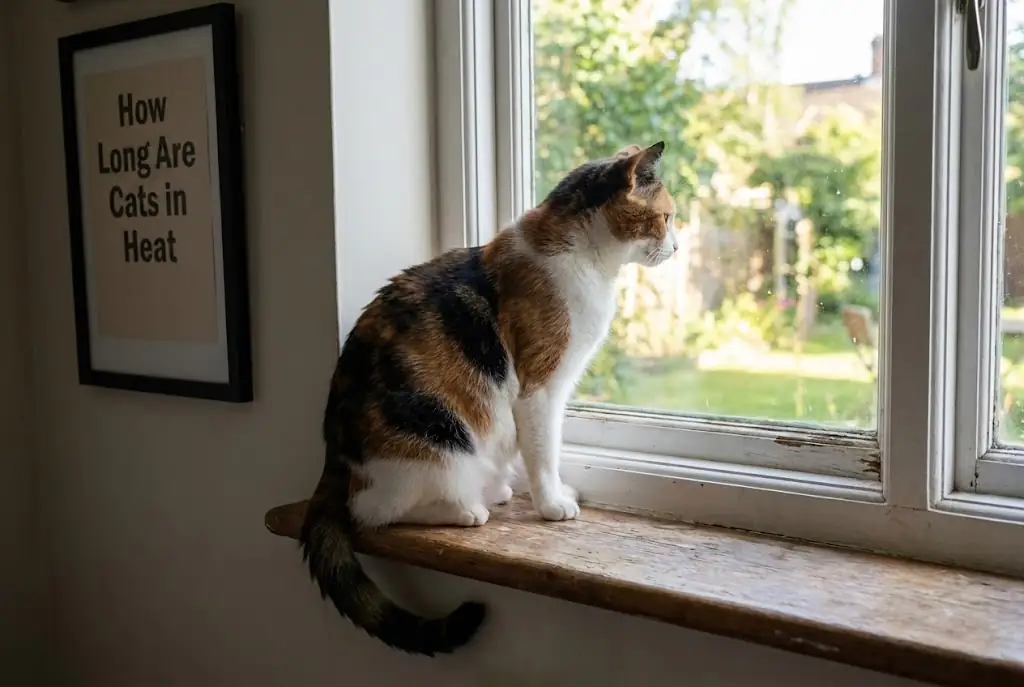
  • Restlessness and “roaming” behavior (pacing, window-watching)

  • Tentativas de fuga

  • Urine marking (spraying) or more frequent urination

  • More licking around the genital area

Common signs of a cat in heat (what they look like and why they happen)

1) Nonstop vocalizing (especially at night)

One of the loudest giveaways is persistent yowling/howling—often more intense than her normal “talking.” This is a mating call and is considered a classic estrus behavior.

2) Clingy and affectionate—sometimes to the extreme

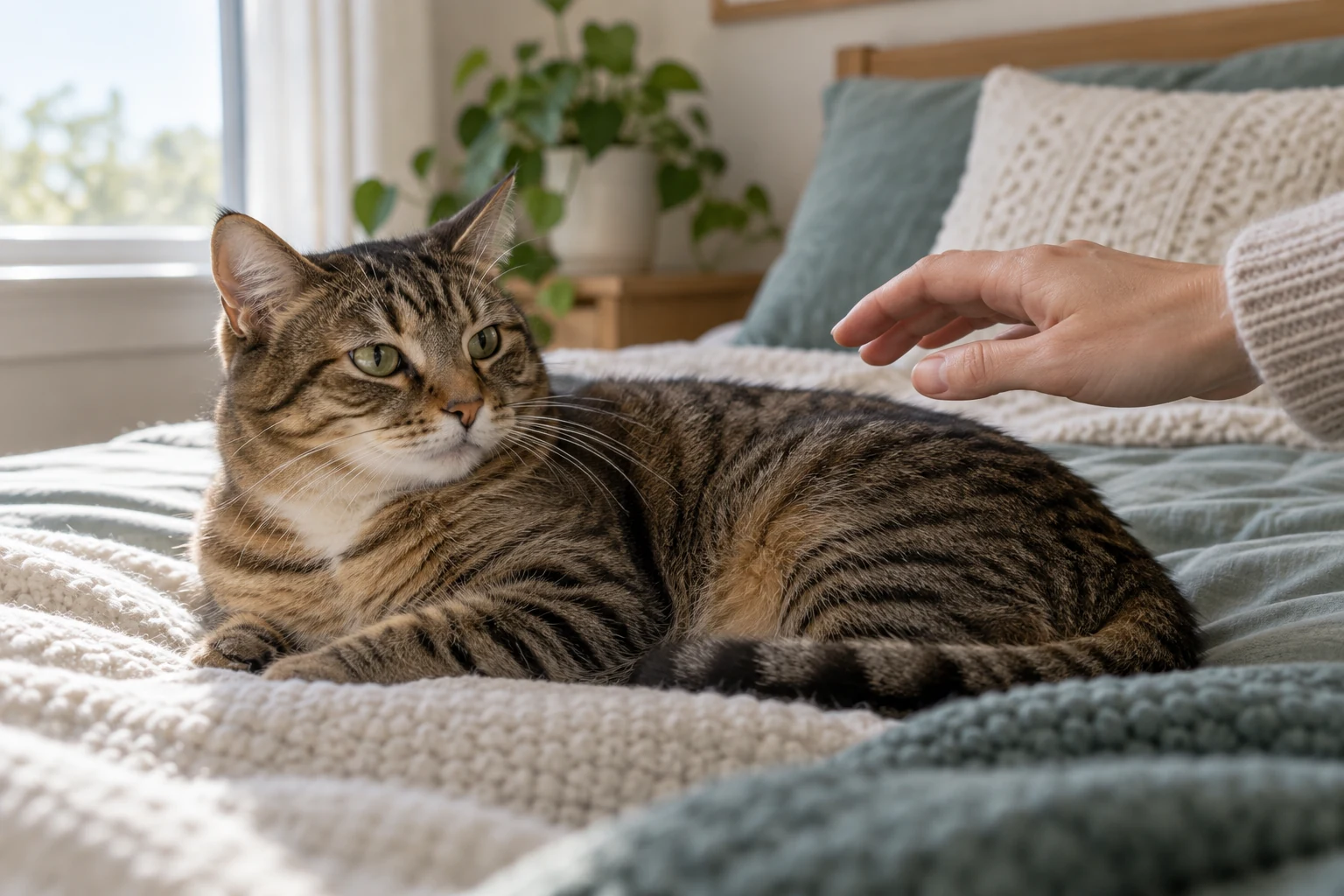
A normally independent cat may suddenly become very affectionate or demanding, rubbing on you and objects, rolling on the floor, and constantly seeking attention.

3) The mating stance (lordosis)

When stroked along her back, many cats in heat will:

  • raise their hindquarters

  • shift their tail to one side

  • “tread” with the back legs
    This posture signals receptiveness to mating.

4) Restlessness and roaming behavior

Pacing, peering out windows, circling doors, and seeming “on a mission” are common—she’s hormonally driven to seek a mate. (Heat behavior can also be seasonally influenced by daylight length and can vary based on where you live and whether your cat is indoors.)

5) Escape attempts (seriously—double-check doors and windows)

Cats in heat can become surprisingly determined escape artists. This is one reason accidental pregnancies happen so easily.

6) Appetite changes

Some cats comer less during estrus. A short, mild dip can be normal if she’s otherwise bright and active.

7) Spraying or urine marking

Some female cats urinate more frequently or spray vertical surfaces during heat. This is communication: urine can contain pheromones and hormones that advertise fertility and may attract intact males nearby.

8) Increased grooming of the genital area (and what’s “normal” vs. not)

Extra licking can happen. Any strong odor, pus-like discharge, or obvious illness is not normal—and visible blood should be treated as a red flag to call your vet (see “When to call the vet” below).

When to call the vet (heat can look like illness)

Heat is usually “annoying but not dangerous.” However, contact a veterinarian promptly if you notice:

  • Vaginal discharge with pus or blood, especially with lethargy, vomiting, increased thirst/urination, or a painful belly (possible uterine infection such as piometra, which can become life-threatening).

  • Straining to urinate, crying while urinating, frequent tiny pees, or blood in urine (possible urinary issue; not something to wait on).

  • Marked lethargy, fever, refusal to eat for more than a day, or any behavior that seems like pain rather than restlessness.

If these signs match, here’s o que fazer tonight (safe + practical).

If you see bleeding or illness signs, check the bandeiras vermelhas aqui.

Visual checklist of the most common signs of a female cat in heat

O que fazer quando sua gata está no cio (dicas de cuidados que realmente ajudam)

If your cat is in heat right now, treat the first hour like “damage control.” Your main goal is simple: prevent escape and calm the environment. Once that’s handled, you can focus on comfort for the next several days.

If your cat is in heat tonight: do these 3 things first

  • Lock down exits (escape-proof your home).
    Close all doors and windows, check screens, and put a reminder note by entryways. Queens in heat can bolt fast—one slip-up can mean pregnancy.

  • Separate her from intact males (if any are nearby).
    If you live with an unneutered male cat—or if neighborhood toms hang around—move her to a room with a solid door. Even cats that normally get along will follow instincts.

  • Set up a calm “basecamp” room.
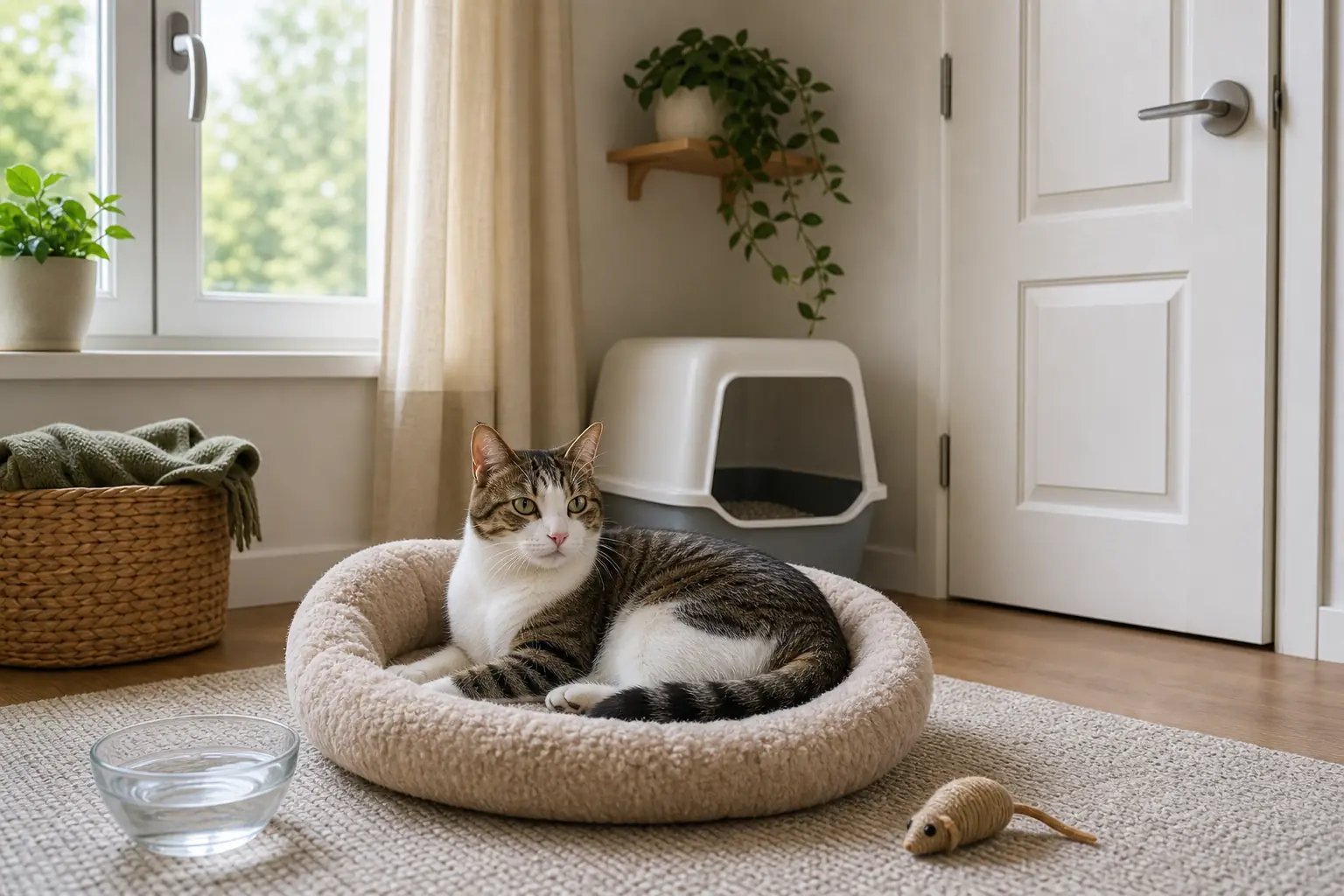
    Give her a quiet space with: fresh water, food, a clean litter box, soft bedding, and a hiding spot. Keep lights low and noise minimal—your goal is “safe + boring.”

Once you’ve done those three steps, use the tips below to make the rest of her heat cycle more manageable for both of you.

When Your Cat Is in Heat Care Tips

8 vet-backed ways to calm a cat in heat (and keep her safely indoors)

Key takeaways (for quick answers / featured snippets):

  • Heat (estrus) is hormonally intense, temporary, and often repeats about every ~3 weeks during breeding season—so relief strategies help, but they don’t “end” heat long-term.

  • Mantenha-a estritamente em ambientes fechados and be extra careful at doors/windows—intact tomcats may try to get inside, and an escaping queen can become pregnant quickly.

  • For most families not planning to breed, spaying is the kindest long-term fix (stops heat cycles and reduces major health risks).

1) Keep the “lockdown” consistent (especially at doors)

You’ve already secured exits—now make it routine. Do a quick door-and-window check before anyone leaves/enters, and ask family members to pause before opening doors. This matters because heat behaviors can include restlessness and attempts to escape, and intact males may even try to enter the home when they detect a queen in heat.

Extra safety note: If tomcats are outside, don’t rely on loose/weak screens—close windows fully.

2) Make her basecamp extra comforting

Set up a calm “safe zone” in a low-traffic room: warm blanket/towel, dim lighting, and a covered bed or box. A predictable environment reduces stress-driven behaviors (and makes it easier for her to settle).

3) Use short play bursts to burn off restless energy

Try 5–10 minutes with a wand toy or feather toy, then let her rest. Structured indoor enrichment helps lower stress and can reduce unwanted behaviors that flare when cats are under-stimulated or keyed up.

4) Offer affection—but let her control the dose

Many cats get unusually clingy in heat, then suddenly become sensitive. If she asks for contact, offer gentle petting or brushing. If she walks away, let her. Giving cats control over social interaction is a core stress-reduction principle in feline-friendly handling and home management.

5) Try calming aids (low-risk first)

  • Pheromone diffusers/sprays (Feliway-style): Evidence is mixed, but studies and clinical reviews suggest some cats show reduced stress signals in certain situations, and major veterinary behavior resources commonly include them as a low-risk option.

  • Supplements: If you try any, use cat-specific products and follow label directions; check with your vet if she’s on other meds or has medical issues.

Avoid essential oils. Concentrated oils can be toxic to pets (including cats), especially with direct contact, ingestion (often via grooming), or heavy diffuser exposure.

6) Keep the litter box spotless (and add a second box if needed)

Cats in heat may urinate more frequently or spray/mark. Keeping boxes very clean lowers the odds of avoidance or accidents, and adding a second box can help if she’s confined to one room. Veterinary guidance for multi-cat homes commonly recommends one box per cat, plus one extra (and placed in multiple locations when possible).

7) Clean marking fast—use an enzyme cleaner, avoid ammonia

If she sprays, clean it ASAP to reduce “re-marking” of that location. Use an enzymatic odor/stain remover and avoid ammonia-based cleaners, which can smell urine-like to cats and keep the cycle going.

8) Protect your sleep and your bond (no punishment)

If nighttime vocalizing is brutal, try moving her basecamp farther from bedrooms and using white noise. Most importantly: don’t scold or punish heat behavior—it can worsen fear/stress and damage trust, and punishment is specifically discouraged in veterinary behavior guidance for elimination/marking problems.

Why the cycle keeps coming back (and what actually stops it)

Cats are seasonally polyestrous and can cycle repeatedly; an average cycle length is often around ~3 weeks, though timing varies.
These tips can reduce intensity, but they won’t stop future heats.

If you’re not planning to breed, spaying is usually the kindest long-term solution: it ends heat cycles and is associated with prevention/reduction of serious health risks (including uterine infection/pyometra and greatly reduced mammary cancer risk when done early). (And yes—cats pode be spayed while in heat, but timing and risks should be discussed with your veterinarian.)

Safety and comfort steps for caring for a cat in heat at home

Conclusão

Living with a cat in heat (estrus) can feel nonstop—yowling, pacing, rubbing, and that “please pay attention to me” intensity. But these are normal, hormone-driven behaviors, not spite or “bad behavior.” Common estrus signs are primarily behavioral (loud vocalizing, rolling, increased affection/demandingness, and the classic rear-elevated posture when stroked).

Quick reality check (so you know what’s normal)

  • Heat can repeat frequently during breeding season: many females cycle every few weeks if they don’t mate/ovulate, and individual timing varies.

  • A typical estrus window is about a week, though it can be shorter or longer depending on the cat and circumstances.

  • Escape attempts are common—an in-heat cat is strongly motivated to find a mate, so secure doors/windows and avoid accidental dashes outside.

What helps most right now

If you’re in the middle of a heat episode, focus on safety + comfort: keep her fully indoors, reduce triggers (open windows/screens), and use calm routines (play, enrichment, quiet spaces). Knowing what’s happening—and that it will pass—makes the whole experience easier to manage.

The most effective long-term solution (if you’re not breeding)

If you’re not planning to breed, spaying is the most reliable way to stop heat cycles and prevent unintended litters. It also helps protect long-term health: major animal-welfare and veterinary resources note reduced risk of reproductive infections and a meaningful reduction in mammary tumor risk—especially when done before the first heat.

Em SnuggleSouls, we focus on practical, real-life pet parenting support that strengthens the bond you share. If today feels like a lot, take a breath—you’re not alone. With the right steps (and a vet conversation about spaying when appropriate), you and your cat can get back to calmer days and quieter nights.

FAQ About How Long Are Cats In Heat

Quanto tempo dura um cio típico de gato?

Most heats last several days, com um average of ~7 days and a reported range of 1-21 dias. If she mates and ovulates, she may go out of heat within a day or two.

Com que frequência as gatas entram no cio?

If she isn’t spayed and isn’t pregnant, the full estrous cycle averages about 3 weeks (so many cats come back into heat roughly every 2–3 weeks during cycling periods).

Season matters: cats are “long-day breeders,” so cycling increases as days get longer.

What months are cats typically in heat?

It depends on latitude, temperature, and daylight. No Northern Hemisphere, many cats cycle from January into late fall, while cats in tropical areas—or cats kept mostly indoors—may cycle durante todo o ano.
(Owner-facing sources often summarize this as roughly February–October, especially for daylight-driven seasonal cycling.)

As gatas sangram quando estão no cio?

Normalmente, não. Cats don’t typically bleed during heat the way humans do.

Any visible blood (especially with lethargy, straining to urinate, or not eating) should be treated as abnormal and checked by a veterinarian.

Posso esterilizar minha gata enquanto ela estiver no cio?

Yes—spaying a cat in heat is possible, but many veterinarians prefer not to because reproductive tissues can be more blood-filled and fragile, which can make surgery more complex and increase risk (and sometimes cost).

Best move: ask your clinic whether they recommend scheduling during heat or waiting for the next quiet window.

Com que idade devo esterilizar meu gato?

Objetivo: before the first heat, because cats can become pregnant on their first cycle.

  • Many major veterinary organizations support spay/neuter by ~5 months of age.

  • Some general-practice guidance still references cerca de 6 meses because first heat timing can vary.

Practical takeaway for most pet cats: plan spay at 5–6 months, earlier/later only if your vet advises based on health, growth, or scheduling realities.

Por que meu gato macho fica selvagem quando a fêmea está no cio?

Male cats don’t have heat cycles, but they’re strongly attracted to a queen’s pheromones/hormones. Common reactions include roaming, spraying/marking, and mating-driven behaviors—especially in intact males.

Meu gato sente dor durante o cio?

Heat is primarily a hormone-driven state, so cats may look distressed (vocalizing, restless, extra affectionate), but it’s not typically a “pain” condition.
If your cat shows signs that look like true pain (hiding, grimacing/squinting, sudden aggression when touched, persistent lethargy), treat it as a medical concern and call your vet.

As gatas que vivem dentro de casa ainda podem entrar no cio?

Yes. Heat cycles are influenced by hormones and daylight exposure, not by going outdoors. Cats kept mainly indoors (especially with long artificial light exposure) may cycle durante todo o ano unless spayed.

Referências

VCA Animal Hospitals. Ciclos estrais em gatas.

VCA Animal Hospitals. Planning for spay (kitten): timing, benefits, heat frequency, mammary cancer/pyometra risk.

PetMD. Cats in Heat: How Long It Lasts and What To Do (includes stages, bleeding guidance, spay during heat).

Society for Theriogenology / therio.org. The Endocrine System and the Estrous Cycle in the Queen.

Manual Veterinário Merck. Features of the reproductive cycle.

Manual Veterinário Merck. Distúrbios reprodutivos de gatos fêmeas.

Manual Veterinário Merck. Toxicoses From Essential Oils in Animals.

Cornell Feline Health Center. Problemas de comportamento felino: Sujeira na casa.

Cornell Feline Health Center. Mammary Tumors.

Manual Veterinário Merck. Mammary Tumors in Cats.

Griffin, B., et al. Evaluation of a synthetic feline facial pheromone at a no-kill shelter. JAVMA

Apoiado pela ciência · Revisado por veterinários · Independente

Quem está por trás deste guia

Todos os artigos da SnuggleSouls são criados por verdadeiros tutores de gatos e revisados por especialistas qualificados, para que você tenha a certeza de receber conselhos confiáveis e compassivos.

Autor

Chris

Amante de gatos e pesquisador independente

Chris passou muitos anos convivendo, observando e cuidando de gatos, e agora se concentra em transformar pesquisas científicas em guias claros e práticos para os tutores de gatos.
Ele ajuda você a entender o “porquê” por trás dos cuidados adequados com gatos, para que você possa se comunicar melhor com seu veterinário e tomar decisões mais informadas para o seu gato.

Revisão editorial

Equipe SnuggleSouls

Padrões do site SnuggleSouls e controle de qualidade

Este conteúdo passou por um rigoroso processo de verificação de fatos e precisão pela equipe editorial da SnuggleSouls.
Garantimos que todas as recomendações se baseiam em diretrizes disponíveis publicamente e em fontes confiáveis, com interpretações aprofundadas de organizações autorizadas, como a AVMA.

A SnuggleSouls é uma plataforma independente e não comercial dedicada à educação sobre cuidados com gatos. Nosso conteúdo tem fins educacionais e não substitui o diagnóstico ou tratamento veterinário pessoal. Se o seu gato parecer doente, entre em contato com o seu veterinário local imediatamente.

Dicas recentes sobre plantas

Participe de nossa comunidade e compartilhe seus animais de estimação

Todo amigo peludo tem uma linda história. Gostaríamos muito de ouvir a sua!

Entre em contato conosco