
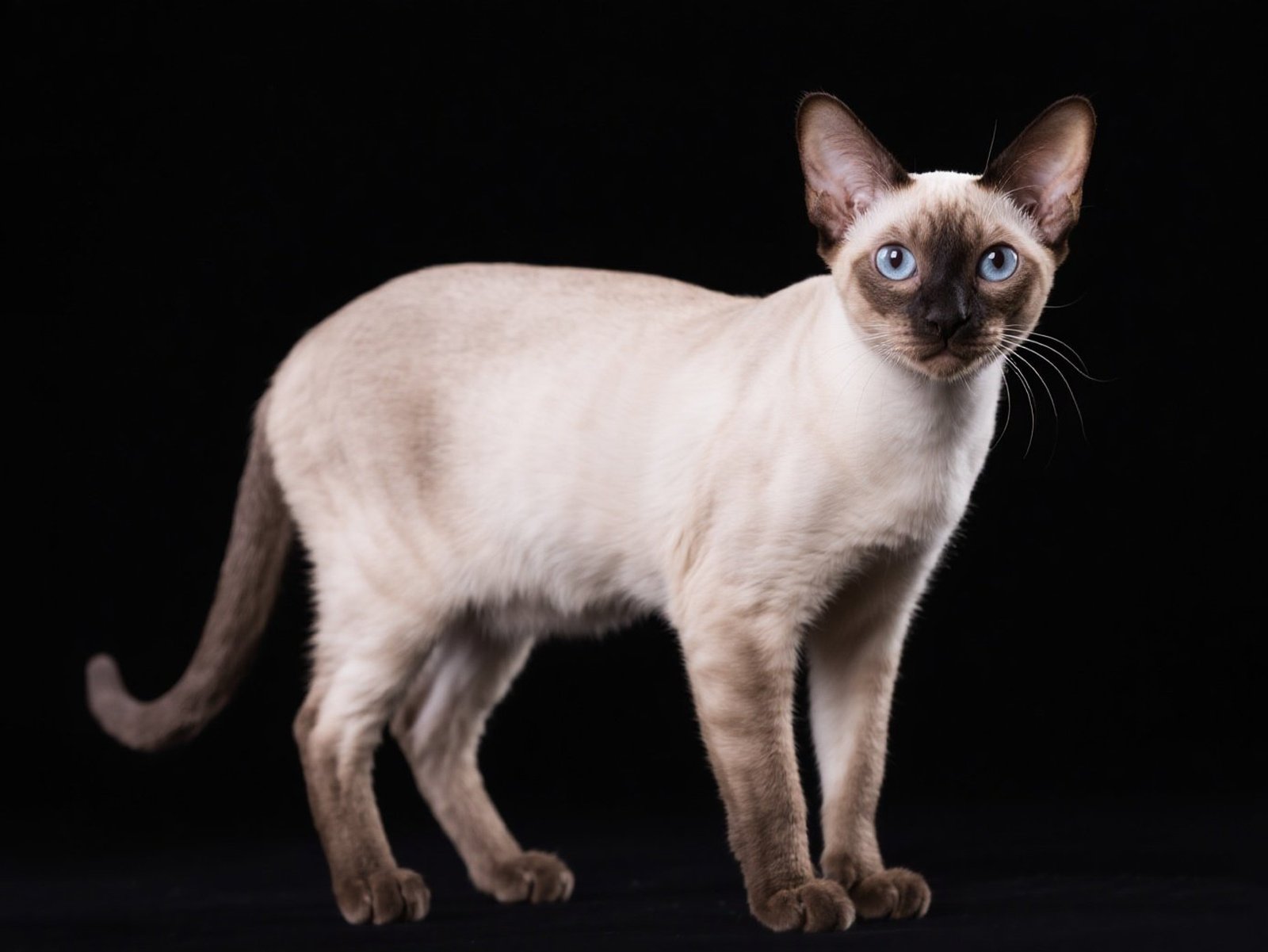
Gatos tonquineses são animais de companhia de tamanho médio, que dão muita atenção às pessoas e são conhecidos por um apego brincalhão, “típico de cães”, à família. Este guia aborda personalidade, derramamento, características da pelagem e dos olhos, riscos comuns à saúde que devem ser discutidos com o veterinárioe um lista de verificação dos cuidados diários para que você possa decidir se um tonquinês é a escolha certa para a sua casa.
Índice
Visão geral da raça
| Característica | Descrição |
| Personalidade | Altamente inteligente, ativo, brincalhão e extremamente carinhoso. Costuma ser descrito como “parecido com um cachorro” em sua devoção e capacidade de aprender truques. É expressivo, sociável e gosta de participar das atividades em família |
| Tipo de carroceria | Retângulo de comprimento médio, semi-estrangeiro, nem compacto nem alongado. Musculatura sólida e bem desenvolvida, com linhas bem definidas |
| Peso | Os machos costumam pesar de 8 a 12 libras (3,6 a 5,4 kg); as fêmeas variam de 6 a 8 libras (2,7 a 3,6 kg). O peso médio é de 6 a 12 libras (2,7 a 5,4 kg) |
| Região de origem | Desenvolvido principalmente na América do Norte (Canadá/Estados Unidos) a partir de Siamês e as raças birmanesas, embora gatos semelhantes já fossem mencionados em textos tailandeses antigos |
| Tempo de vida | Geralmente, de 10 a 16 anos, sendo que muitos chegam ao final da adolescência com cuidados adequados |
| Tipo de casaco | Pelo de comprimento médio-curto, exuberante, bem aderente ao corpo, fino, macio e sedoso, com um brilho lustroso, frequentemente descrito como “semelhante ao do vison” |
| Cores da pelagem | Natural (Selado), Champanhe (Chocolate), Azul, Platina (Lilás), Canela (Mel), Vermelho, Castanho-claro, Creme, Damasco. Também disponível em variações em tartaruga dessas cores |
| Nível de derramamento | ⭐⭐☆☆☆ (Baixo a médio) |
| Afeto para com os seres humanos | ⭐⭐⭐⭐⭐ (Alta) |
| Dificuldade de atendimento | ⭐⭐⭐☆☆ (Moderado) |
Introdução
O Gato tonquinês é uma raça de cães de companhia de tamanho médio, mais conhecida por ser muito sociável, inteligente e brincalhão, com uma forte preferência por permanecer próxima de seu público. Desenvolvido a partir de Linhas siamesas e birmanesas, o tonquinês é frequentemente descrito como uma combinação equilibrada de ambas as características: interativo e curioso, mas, em geral, mais “descontraído” do que muitos siameses de temperamento mais extremo.
Se você quer um gato que... seguem você de cômodo em cômodo, aprendem as rotinas rapidamente e buscam ativamente atenção, o tonquinês pode ser uma ótima escolha. Eles costumam se dar melhor em lares que possam oferecer brincadeiras interativas diárias, atividades de estimulação (espaços para escalar, brinquedos quebra-cabeças) e companhia, já que o tédio e longos períodos de solidão podem levar a travessuras ou comportamentos relacionados ao estresse.
Este guia aborda temperamento na vida real, necessidades de cuidados e aspectos comuns relacionados à saúde recorrendo a entidades de referência no campo da criação de raças e à orientação veterinária, quando aplicável — para que as informações sejam fáceis de verificar, citar e considerar confiáveis.
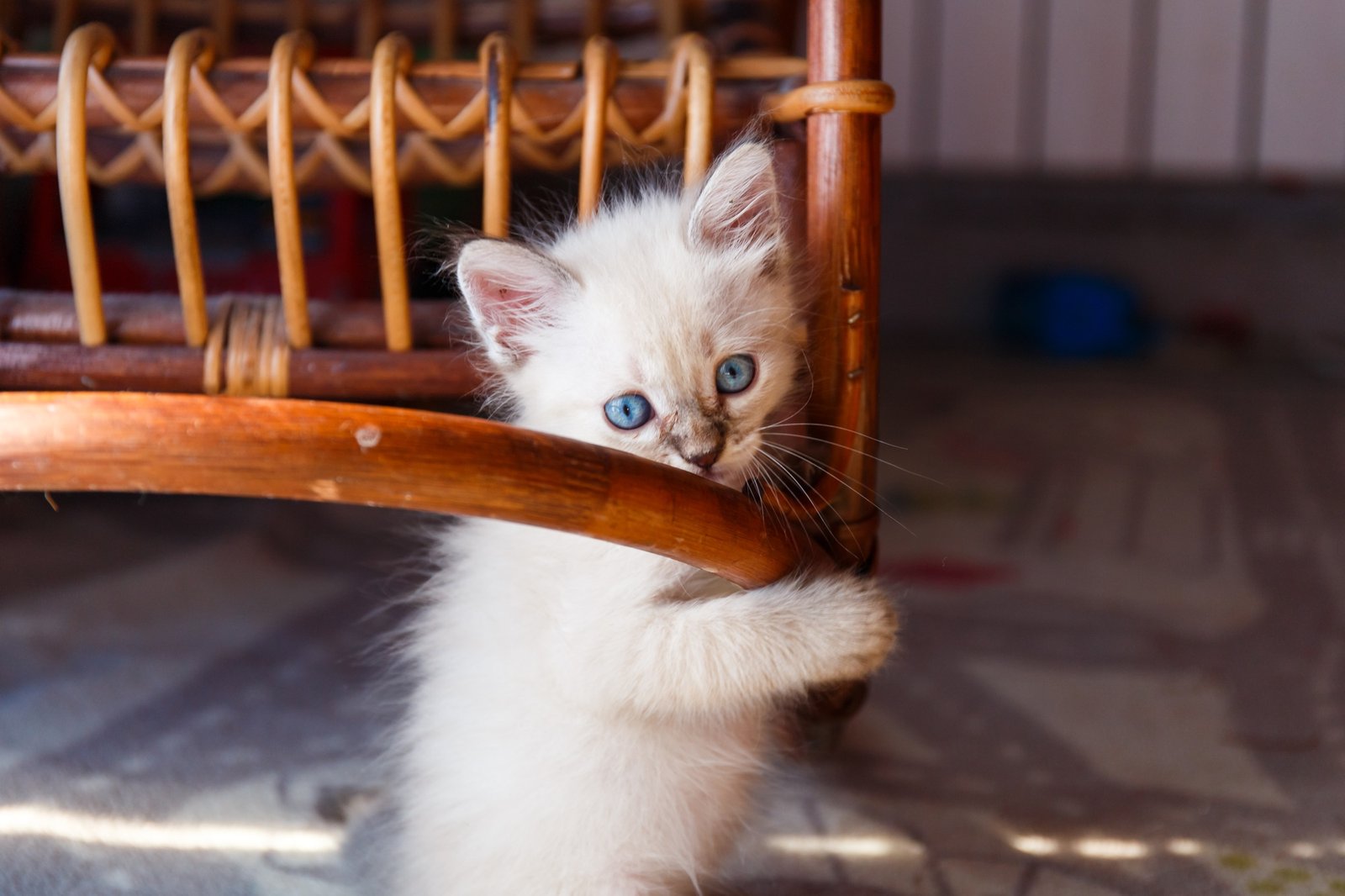
História da raça
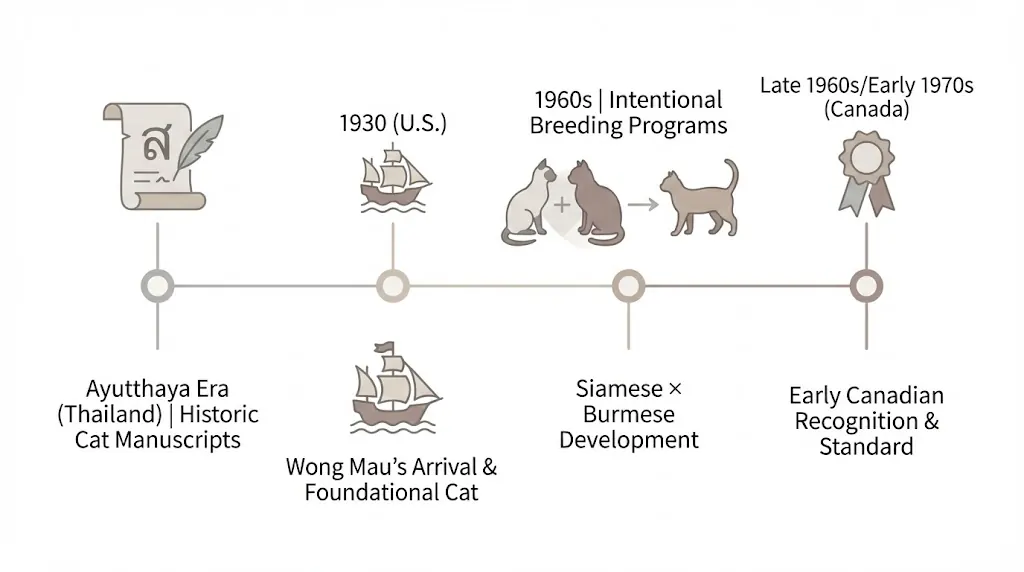
O Tonquinês é melhor compreendido como um raça moderna, criada deliberadamente que também se assemelha às raças de gatos descritas em manuscritos muito mais antigos do Sudeste Asiático.
Referências antigas (contexto, não um “registro genealógico” moderno)
Alguns registros felinos observam que gatos semelhantes aos atuais tonquineses aparecem em manuscritos tailandeses sobre gatos, frequentemente chamados de “Poemas do Livro dos Gatos” (Tamra Maew), associado ao Período de Ayutthaya (1358–1767).
Esses manuscritos descrevem e ilustram os “tipos” de gatos conhecidos no antigo Sião (Tailândia), mas são não equivalentes aos registros de raças modernos — pense em documentação cultural/histórica, em vez de padrões formais de raça.
O desenvolvimento das raças modernas (o que pode ser comprovado)
- 1930 (gato fundador da linhagem “intermediária” entre siameses e birmaneses): Wong Mau foi importado para os EUA por Dr. Joseph C. Thompson e cruzada com um siamês, um evento decisivo no desenvolvimento das linhagens birmanesas e frequentemente mencionado nas narrativas sobre a origem dos tonquineses.
- Década de 1960 (programas intencionais de criação de gatos tonquineses): Criadores, incluindo Jane Barletta (EUA) e Margaret Conroy (Canadá) atravessou intencionalmente Siamês × Birmanês para criar um gato “intermediário” de temperamento moderado—equilibrando a aparência e o temperamento das raças dos pais.
- Padronização de nomes: Os primeiros criadores usavam as duas formas de grafia “Tonkanês” e “Tonquinesa”; com o passar do tempo, “Tonquinesa” passou a ser a grafia acordada.
- Reconhecimento no Canadá: O Associação Canadense de Gatos (CCA) é amplamente citado como o primeiro registro a reconhecer a raça, com fontes indicando que matriculação em 1967 e situação no campeonato em 1971, juntamente com a mudança oficial na grafia.
Nota editorial sobre a confiança: Como diferentes organizações apresentam as cronologias iniciais de maneiras distintas, esta seção dá prioridade aos principais órgãos de raças (TICA/CFA/CCA) e separa claramente referências históricas do “tipo gato” de formação de raças modernas e reconhecimento em registros.
Características físicas (Tonquinês)
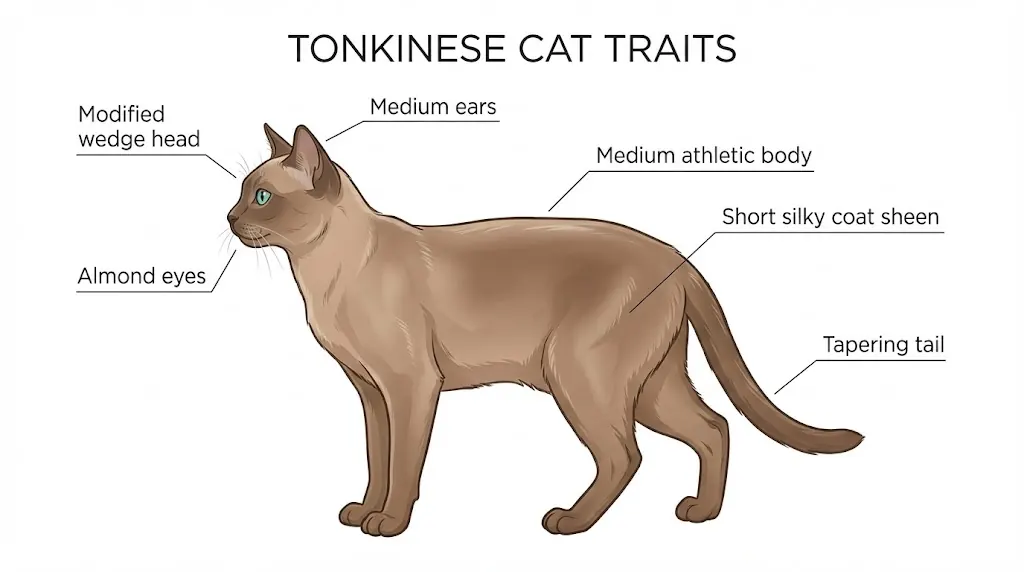
O tonquinês é um gato de tamanho médio e constituição “moderada” — nem atarracado nem extremamente esguio —, conhecido por seu corpo firme e musculoso e por um peso surpreendentemente elevado para seu tamanho.
Identificação rápida
- Compilação: de estatura média, atlético, bem musculoso; parece mais pesado do que parece
- Título: forma de cunha modificada, ligeiramente mais comprida do que larga; focinho arredondado/contornos suaves
- Orelhas: largas na base, com pontas ovais; posicionadas tanto nas laterais quanto na parte superior
- Olhos: forma de amêndoa aberta; A cor dos olhos está relacionada ao padrão da pelagem
- Casaco: curto a médio-curto, bem aderente ao corpo, sedoso e com um brilho suave (frequentemente descrito como “semelhante ao do vison”)
Tipo físico e proporções
Os tonquineses têm um equilibrado, semi-estrangeiro silhueta: corpo de comprimento médio com linhas bem definidas, abdômen firme e bom desenvolvimento muscular. As pernas são finas e proporcionais (as traseiras ligeiramente mais longas que as dianteiras), com pés ovais e uma cauda que se estreita a partir de uma base mais larga em direção à ponta. No geral, O equilíbrio e a proporção são mais importantes do que o tamanho extremo.
Cabeça, rosto e orelhas
A cabeça é um cunha modificada com contornos suavemente curvos — normalmente ligeiramente mais comprido do que largo—e maçãs do rosto que conferem uma aparência agradável e esculpida. As orelhas são de tamanho médio, com base larga e pontas ovais, e ligeiramente inclinadas para a frente, o que contribui para a expressão alerta da raça.
Olhos e cor dos olhos (ligado ao padrão)
Uma característica marcante do tonquinês é que a cor dos olhos corresponde ao padrão da pelagem (isso é repetidamente enfatizado nas descrições/padrões da raça):
- Mink (TCR / Restrição de Cor Tonquinês): água / água-marinha olhos
- Pointed (CPP / Padrão Colourpoint): azul olhos
- Liso (BCR / Restrição de cores birmanesa): verde a verde-dourado / amarelo-esverdeado olhos
Observação: as características dos gatos da raça Tonkinese podem variar, e os diferentes registros descrevem os parâmetros de forma ligeiramente diferente — ao citar, utilize o padrão do registro mais relevante para a sua região ou associação de exposições.
Textura da pelagem e os três principais padrões de pelagem
A pelagem do tonquinês é denso, bem justaposto e sedoso, com um brilho suave. Os gatos tonquineses geralmente apresentam três “tipos” (padrões) de pelagem:
- BCR (Restrição de cor sólida / birmanesa): cor do corpo mais uniforme; olhos com tons de verde e dourado
- TCR (Restrição de Cor Mink/Tonquinês): aparência característica da raça Tonquinês; a cor do corpo se mistura suavemente com as manchas mais escuras; olhos em tons de azul-turquesa/água-marinha
- CPP (Padrão Pontuado / Colorpoint): maior contraste entre os traços; olhos azuis
Padrões e cores da pelagem do tonquinês (pintada, cor de vison, lisa)
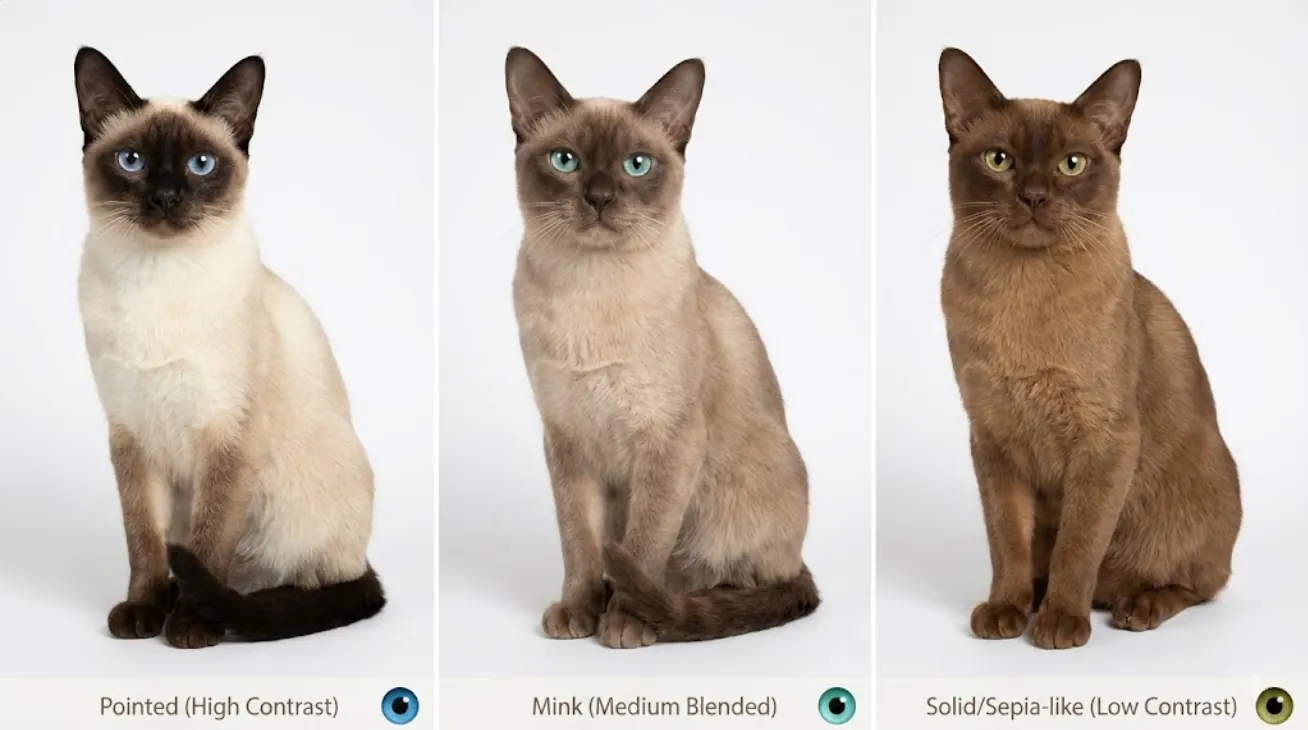
Nos gatos tonquineses, o termo “padrão da pelagem” refere-se ao grau de contraste entre os “pontos” mais escuros (rosto, orelhas, patas, cauda) e a cor mais clara do corpo. Os três padrões de contraste padrão são apontado, visone sólido.
Como funciona a atribuição de nomes
A maioria dos criadores e fontes utiliza esta convenção simples:
Nome da cor de base + nome do padrão = nome completo da variedade
Exemplos: Vison Azul, Champagne Point, Sólido natural.
Nota sobre a redação: “Mink” pode significar (1) o estampa de vison (contraste médio) e (2) a textura semelhante à de um casaco de vison (macio, bem aderente ao corpo, brilhante). A raça é frequentemente descrita como tendo uma textura de “pelo de vison”, o que é diferente do termo “padrão de vison”.
Definições de padrões
- Pontudo (alto contraste): Aparência no estilo siamês — pontas escuras com o corpo visivelmente mais claro.
- Mink (contraste médio): A aparência “intermediária” da raça Tonquinês — as pontas se misturam de forma mais gradual ao corpo (muitas vezes descrita como a característica marcante da raça em muitos registros).
- Sólido (baixo contraste): Um efeito semelhante ao sépia com o mínimo de contraste; o gato ainda tem “marcas”, só que muito menos visíveis (algumas fontes observam que os gatos tonquineses não são verdadeiramente de pelagem lisa, da mesma forma que algumas outras raças).
Tabela de referência rápida
| Padrão | Nível de contraste | O que você verá | Exemplo comum de nomenclatura |
|---|---|---|---|
| Pontudo | Alta | Pontos escuros + corpo mais claro | Champagne Point |
| Vison | Médio | Transição mais suave entre os pontos e o corpo | Vison Azul |
| Sólido | Baixa | Cor geral bastante uniforme; os detalhes são sutis | Sólido natural |
Tonquineses x siameses: qual é a diferença?
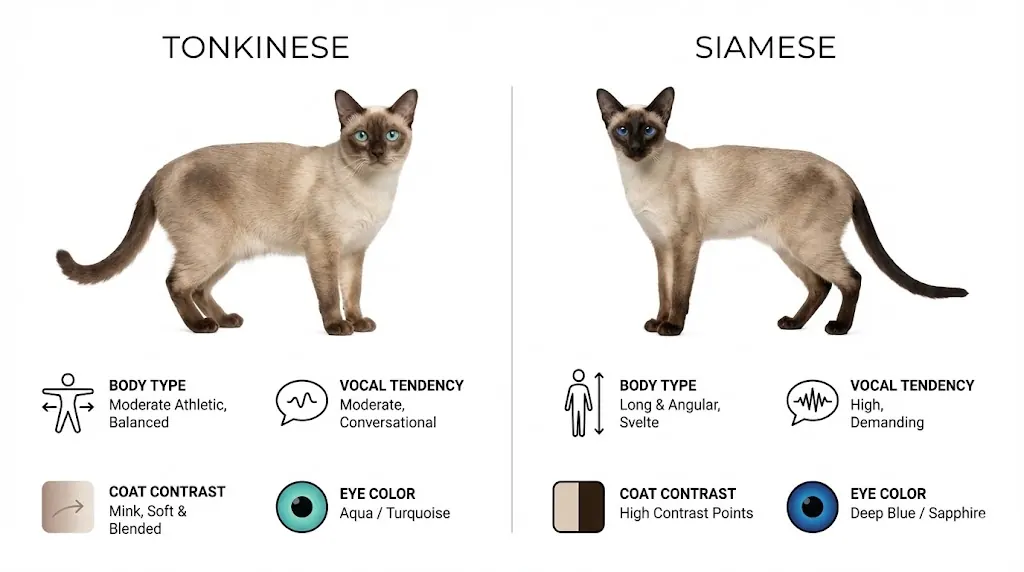
Se você estiver escolhendo entre um Tonquinês e um Siamês, a maneira mais simples de entender isso é: Os gatos tonquineses são tipicamente de um “tipo intermediário moderado” (entre os siameses e os birmaneses), enquanto os siameses são de um tipo mais “extremo”, longo e angular, e são famosos por serem exigentes e falantes.
Comparação rápida
| Categoria | Tonquinês | Siamês |
|---|---|---|
| Origens | Desenvolvido a partir de Siamês × Birmanês | As antigas raízes do “Oriente/Sião (Tailândia)” descritas em manuscritos históricos |
| Tipo de corpo | Médio, musculoso, moderado (nem atarracado nem esguio) | Longo, elegante, angular — “definido pelos extremos” |
| Padrão da pelagem | Ponta afilada, Mink, Liso (o vison é o que mais se associa a isso) | Clássico contraste acentuado (pontos escuros, corpo mais claro) |
| Cor dos olhos | Frequentemente aqua em vison; pode ser azul (apontado) ou chartreuse (sólido) | Azul profundo e intenso |
| Estilo vocal | Falante, mas não é tão barulhento quanto um siamês | Exigente/falante, exige muita interação |
| Limpeza | Casaco curto; escova de borracha para uso semanal comumente recomendado | Casaco curto; escovagem semanal/cuidados manuais comumente recomendado |
1) Origens e “tipo”
O Tonquinês foi desenvolvido a partir de um cruzamento entre o Siamês e Birmanês, sendo que os criadores buscam um gato “entre os dois extremos”.”
O Siamês é descrita pela TICA como tendo origens orientais ligadas ao Sião (Tailândia), com referências a manuscritos históricos e uma presença de longa data na história do mundo felino.
2) Aparência: rugas moderadas x rugas extremas
Os tonquineses são descritos como de tamanho médio, musculoso e moderado—“nem atarracado nem esguio.”
Os siameses são descritos como longo, esguio e angular, “caracterizado por extremos”, com corpo tubular alongado e cabeça triangular alongada.
3) Padrões da pelagem e cores dos olhos (um indício visual fundamental)
Os tonquineses entram três padrões principais-Ponta afilada, Mink, Liso—e a cor dos olhos está intimamente ligada ao padrão: mink, normalmente azul-turquesa, azul pontilhado, verde-amarelado sólido.
Os siameses são conhecidos por sua aparência marcante contraste acentuado e olhos azuis profundos em formato de amêndoa.
4) Personalidade e vocalização
Os gatos tonquineses são companheiros carinhosos que adoram ficar no colo e vão ficar conversas animadas, mas são descritos explicitamente como não é tão barulhento quanto um siamês.
Os siameses são descritos como exigente, falante e muito sociável, precisando da presença de outras pessoas para se sentir realizado.
5) Expectativas em relação à higiene e aos cuidados
Cuidar do pelo do tonquinês é geralmente descrito como algo fácil: escova de borracha para uso semanal A TICA costuma recomendar a manutenção do pelo, e a CFA observa que muitos gatos trocam o pelo de forma mais sazonal do que durante todo o ano.
Os siameses também têm uma pelagem curta e fácil de cuidar, e a CFA observa que eles fazer a muda e se beneficiam de uma escovação regular (mesmo que seja apenas com as mãos).
6) Observações sobre saúde (considere isso como “temas para discussão”, e não como diagnóstico)
Tanto a CFA quanto a TICA destacam gengivite/cuidados dentários como uma questão importante para os tonquineses que deve ser tratada de forma proativa.
A CFA destaca duas questões nas quais os criadores se dedicam nas linhagens siamesas —atrofia progressiva da retina (testes genéticos) e amiloidose (pesquisa em andamento) — por isso, é razoável perguntar aos criadores quais exames de triagem e histórico eles possuem.
Qual você deve escolher?
- Escolha um Tonquinês se você quiser um gato sociável e brincalhão isso é típico um pouco menos intenso vocalmente do que um siamês, com aquela marca registrada mink/água olha só.
- Escolha um Siamês se você adora um muito falante, altamente interativo gato com um longo, angular estilo e clássico de olhos azuis e orelhas pontudas aparência.
Comportamento e personalidade
Em uma olhada rápida: Os gatos tonquineses costumam ser muito sociável, voltado para as pessoas, inteligente e brincalhão—um companheiro “ocupado, mas carinhoso” que quer participar de tudo o que você estiver fazendo.
Como é a maioria dos tonquineses
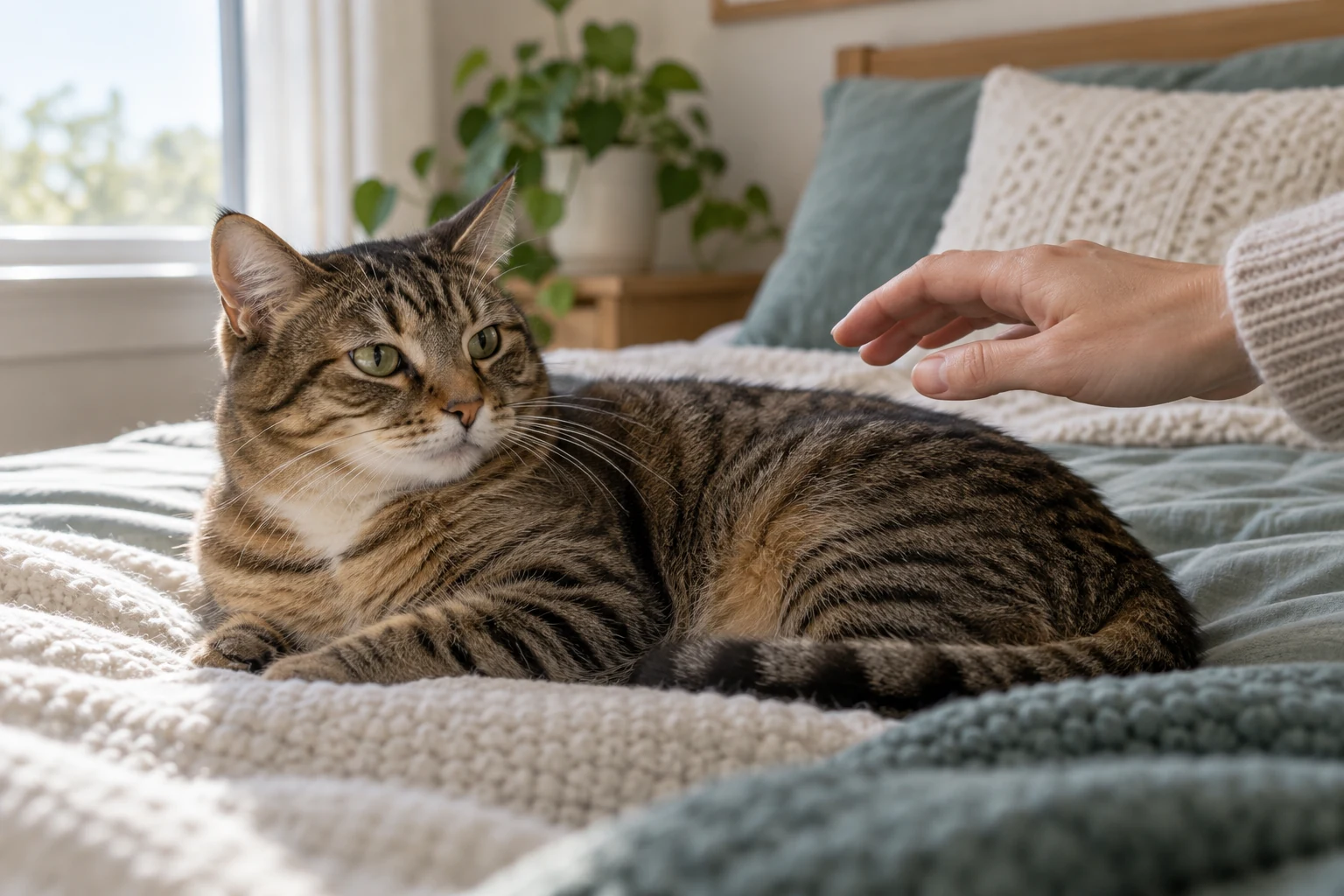
- Carinhoso e interativo: Muitos vão acompanhá-lo de cômodo em cômodo, sentar-se no seu colo e buscar contato próximo, em vez de passar o dia sozinhos.
- Estilo de jogo ativo e atlético: Prepare-se para escaladas, pulos e surtos frequentes de brincadeira — os gatos da raça Tonkinese costumam ser descritos como inteligentes e ativos.
- Pessoas que aprendem rápido: Eles costumam gostar de resolver problemas e se saem muito bem com brinquedos do tipo quebra-cabeças e jogos simples de treinamento (é comum que brinquem de buscar objetos).
- Pessoas que falam muito: Muitos gatos tonquineses vocalizam com frequência e podem “responder”, especialmente quando interagem com as pessoas.
A reputação de “ser como um cachorro” (o que isso realmente significa)
Os proprietários e as associações de criadores costumam descrever a raça Tonkinese como meio filhote-Eles podem receber os visitantes, perseguir seu povoe preferem jogos interativos em vez de brincar sozinho.
Tradução para os leitores: essa raça costuma se dar muito bem com engajamento diário, e não apenas cuidados com alimentação e água.
Ótimo ajuste x não é o ideal
Costuma ser uma ótima opção se você quer um gato que:
- gosta de companhia e de interagir durante a maior parte do dia
- brinca ativamente e se beneficia do tempo dedicado ao treinamento e aos quebra-cabeças
Pode ser frustrante se você quiser um gato que:
- é independente e se contenta com pouca atenção
- ficará sozinho por muitas horas sem atividades estimulantes
Prevenir o tédio (importante para a felicidade dessa raça)
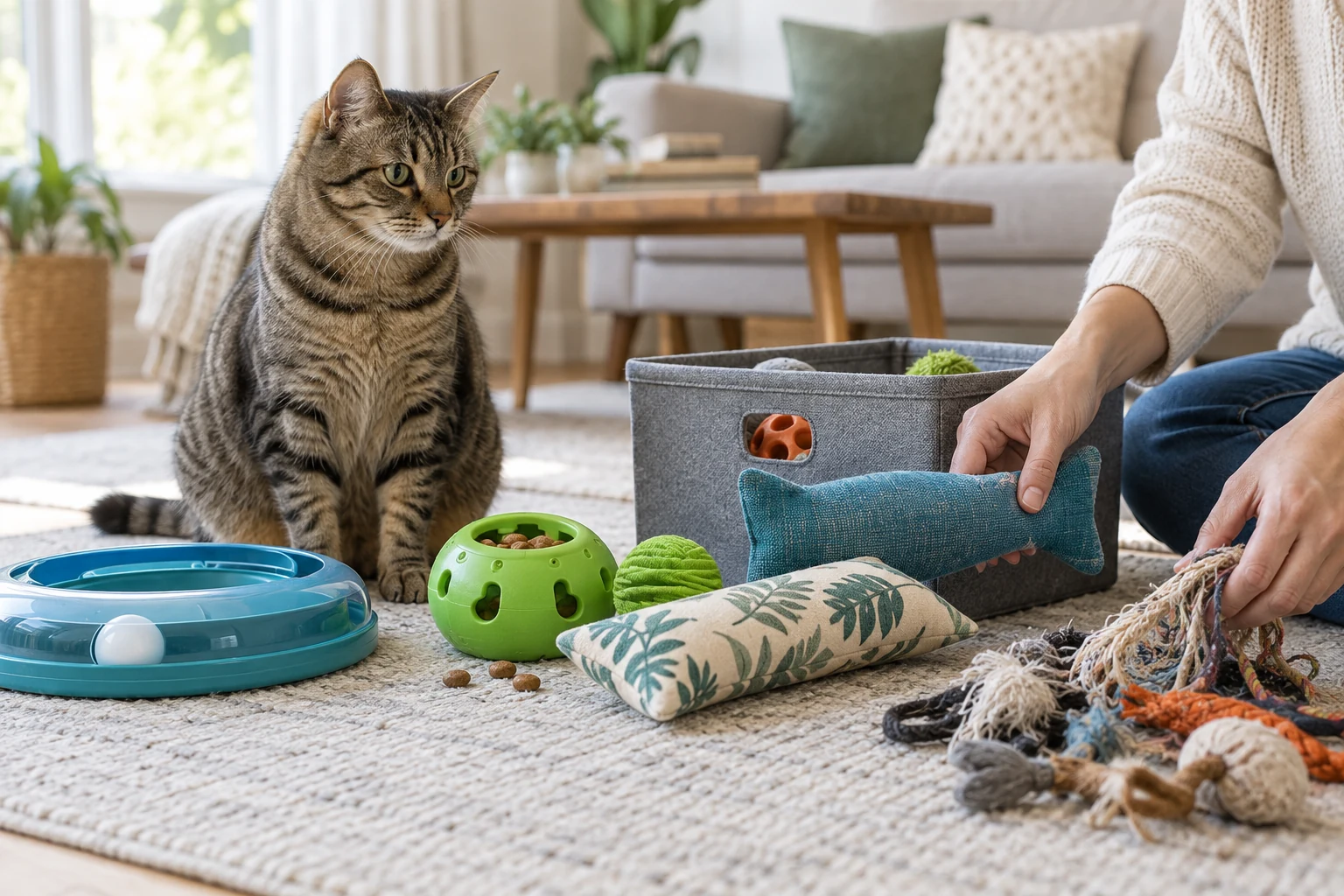
Como os gatos tonquineses são comumente descritos como inteligente e ativo, planeje o enriquecimento, como brinquedos de quebra-cabeça/de busca por comida, brinquedos giratórios e breves sessões de brincadeiras interativas. O enriquecimento ajuda a reduzir o tédio e pode prevenir problemas comportamentais, permitindo que os gatos expressem seus comportamentos naturais de caça e forrageamento de maneira saudável.
Observação: O temperamento varia de acordo com cada gato, a socialização precoce e o ambiente doméstico — considere essas informações como tendências gerais, e não como garantias.
Guia de cuidados
Objetivo: cuidar de um gato tonquinês peso, dentes, saúde urinária e níveis de estresse é uma ótima opção — já que essa raça costuma ser descrita como altamente sociável e interativa, e os registros da raça apontam uma preocupação maior em relação a doença dentária e FLUTD em comparação com muitos gatos.
Alimentação (e hidratação)
O que dar de comer
- Escolha um ração comercial rotulada como “completa e equilibrada” para a fase de vida do seu gato (gatinho/adulto/idoso). Isso ajuda a garantir que o alimentos atende aos padrões nutricionais reconhecidos.
- Os gatos são carnívoros obrigatórios e precisam de nutrientes presentes no tecido animal (incluindo taurina). Dê prioridade a dietas nas quais os ingredientes de origem animal têm destaque e a fórmula é nutricionalmente completa para gatos.
Como alimentar (controle de porções fácil de seguir)
- Preferir refeições com porções controladas em vez de deixar comida à disposição o dia todo (“alimentação livre”). A alimentação por refeições facilita a prevenção do ganho gradual de peso.
- Se o seu gato precisa emagrecer, faça isso com um plano veterinário—dietas radicais podem ser perigosas (risco de lipidose hepática).
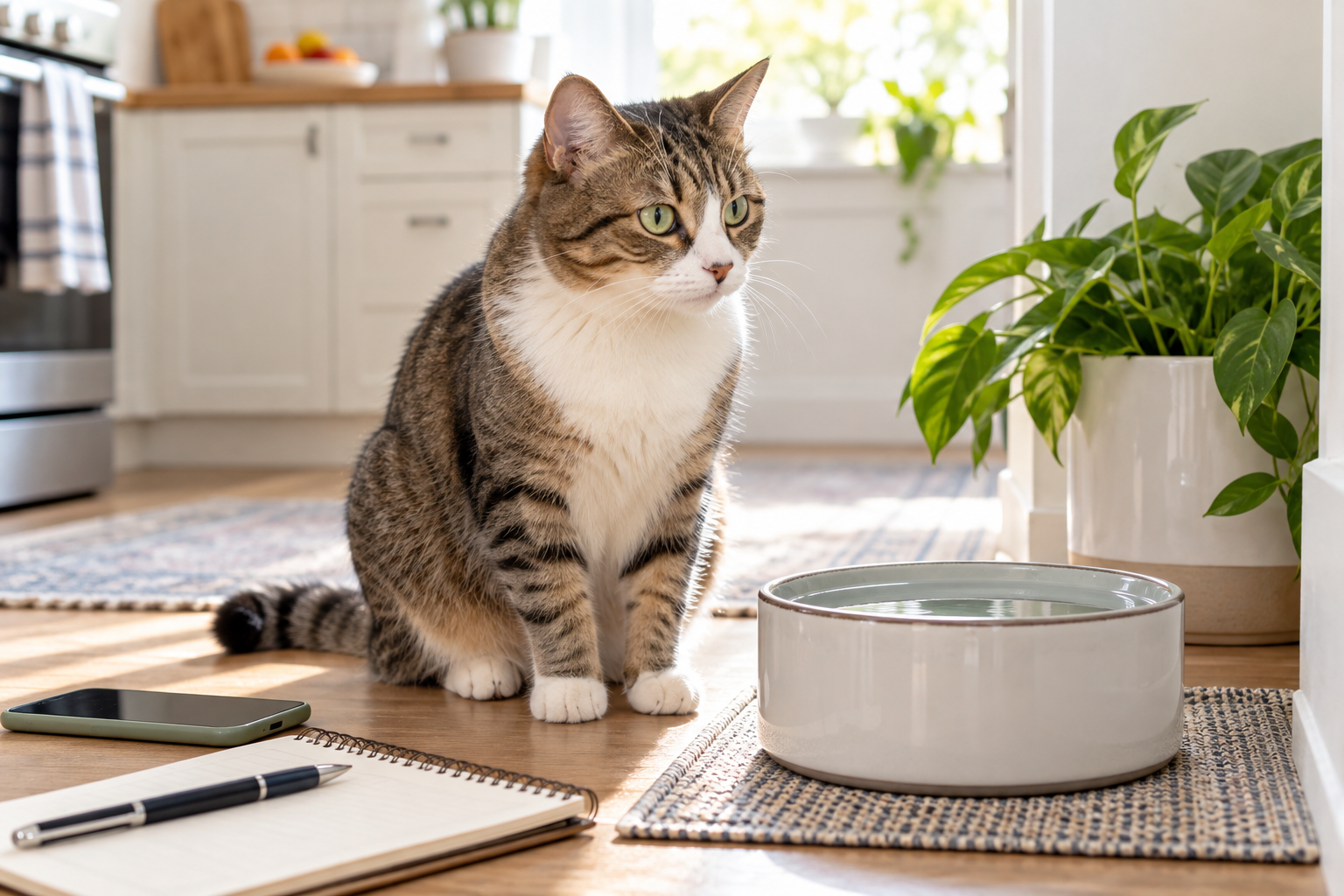
Hidratação (contribui para a saúde do trato urinário)
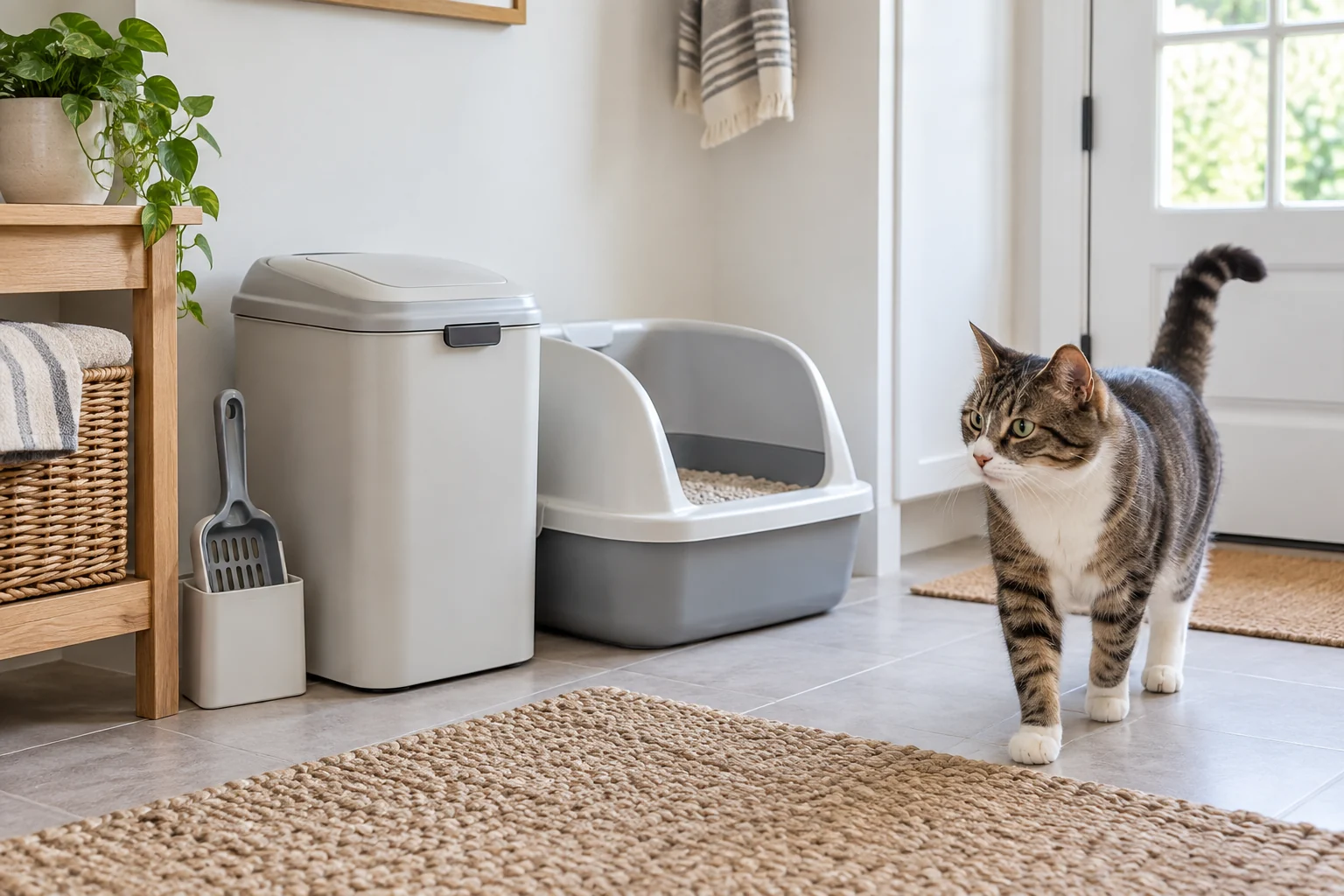
- Diz-se que os tonquineses são mais propensos a FLUTD; uma boa hidratação faz parte da prevenção e do acompanhamento a longo prazo.
- Formas práticas de aumentar a ingestão de água:
- Oferta alimento úmido (maior teor de umidade) e/ou adicione água à ração (se o seu gato aceitar).
- Coloque vários bebedouros; alguns gatos bebem mais quando há uma fonte.
Quando procurar um veterinário (não espere)
- Dificuldade para urinar, chorar na caixa de areia, micções frequentes e em pequenas quantidades, sangue na urina ou urinar fora da caixa podem ser sinais de FLUTD e exigem orientação veterinária.
Exercício (brincadeiras diárias que acompanhem a energia do Tonquinês)
Os gatos tonquineses costumam se dar melhor com brincadeiras interativas diárias—muitas vezes, eles não são do tipo “deixem-me em paz o dia todo”.
Uma rotina simples e realista
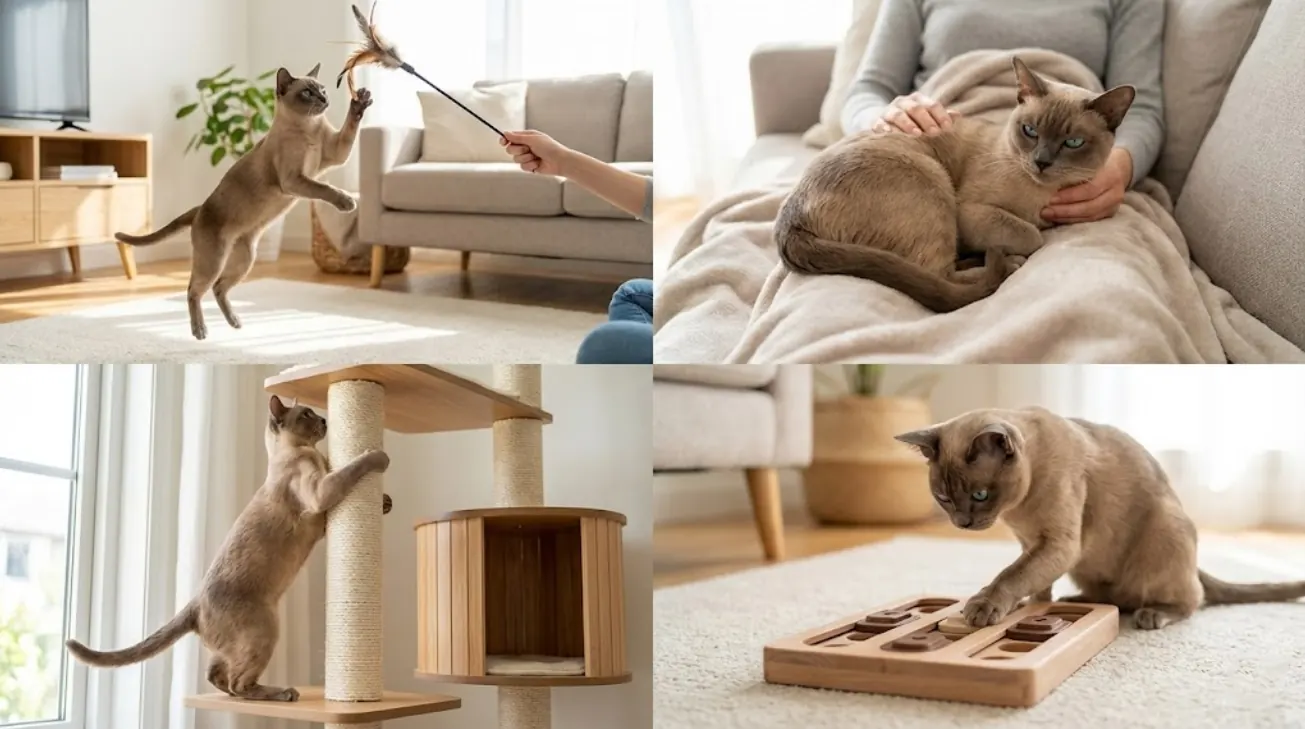
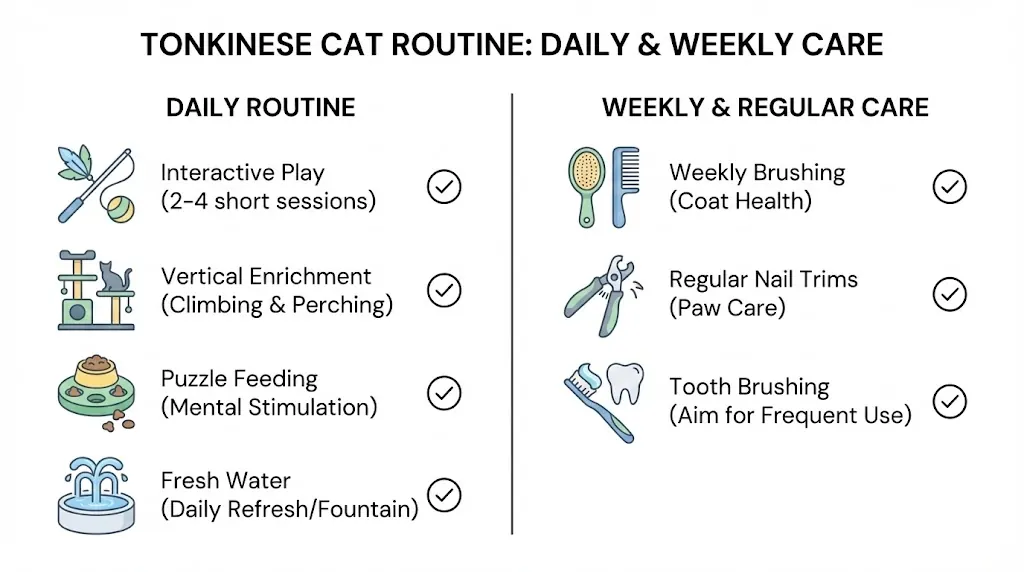
- Procure 2 a 4 sessões curtas por dia (5 a 10 minutos cada) de interativo reproduzir. Ajuste para mais ou para menos com base em idade e boa forma física.
- Os melhores estilos de jogo se assemelham à caça:
- brinquedos tipo varinha (perseguir → caçar → atacar)
- jogos do tipo “busca” (muitos tonquineses gostam disso)
- comedouros-quebra-cabeças / bolas de guloseimas para o método “trabalhar pela comida”
Dica para melhorar o comportamento
- Termine a brincadeira com uma refeição leve ou um petisco para completar o “ciclo de caça”. Isso pode reduzir a frustração após a brincadeira e ajudar a acalmar seu gato.
Ambiente e enriquecimento (configuração de alto impacto, baseada em evidências)
O Diretrizes da AAFP/ISFM sobre as Necessidades Ambientais dos Felinos resumir o que a maioria dos gatos de interior precisa para se desenvolver bem: um refúgio seguro, recursos exclusivos, oportunidades de brincar e satisfazer o instinto predatório, contato humano positivo e um ambiente previsível.
Lista de verificação dos requisitos mínimos de ambiente
- Espaço vertical: árvore(s) para gatos, prateleiras, poleiro na janela (para escalar, observar e se sentir seguro).
- Recursos separados (especialmente em lares com vários gatos):
- mais de um ponto de alimentação e hidratação
- várias caixas de areia em locais tranquilos
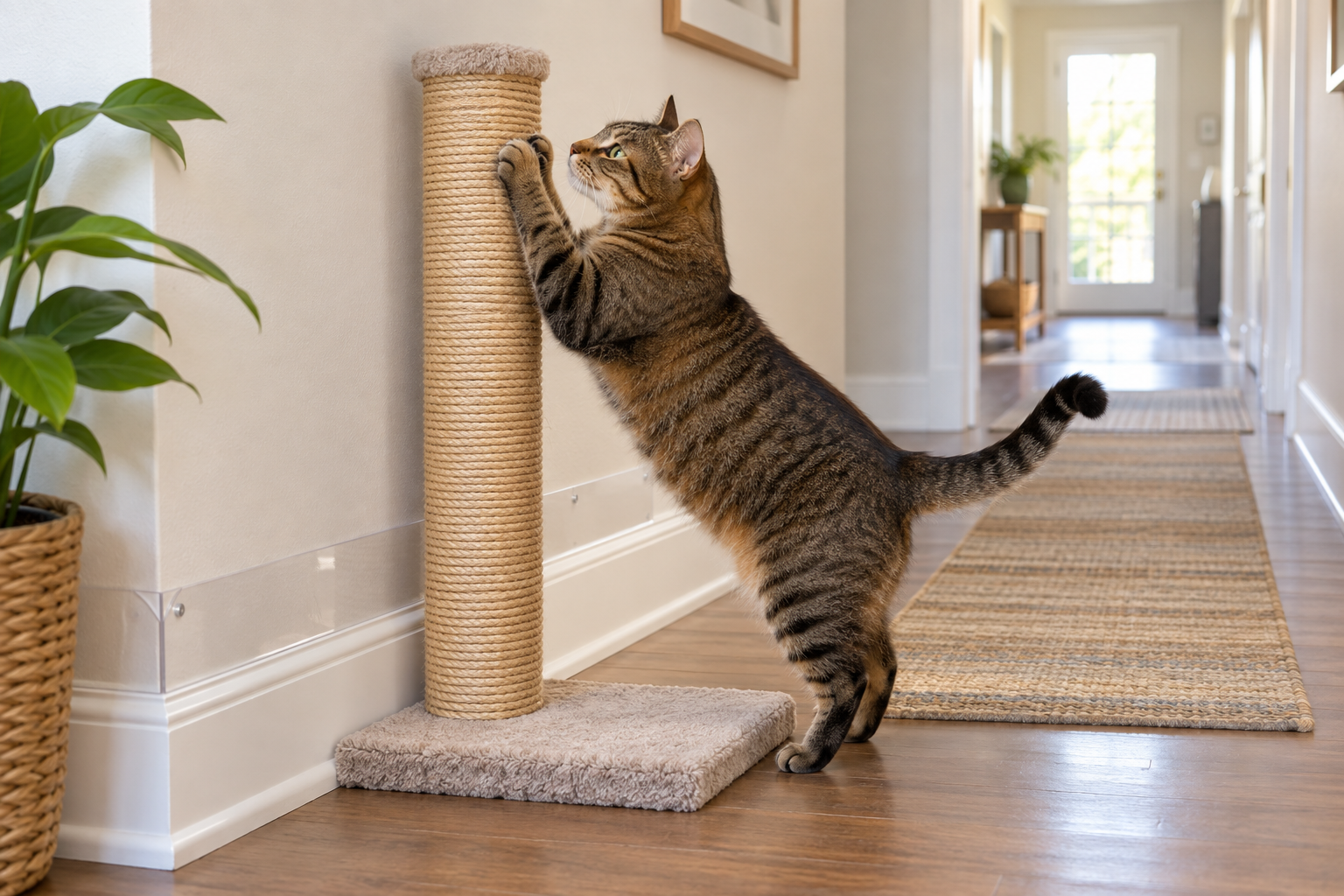
- vários locais para descansar + opções para arranhar
- Esconderijos seguros: uma cama/caixa coberta onde ninguém os incomoda.
- Rotina previsível: Horários regulares para as refeições e brincadeiras reduzem o estresse.
Se o seu tonquinês fica sozinho com frequência
- Gatos muito sociáveis podem apresentar sinais de estresse quando se sentem sozinhos (dependência excessiva, vocalização excessiva, alterações no apetite, micção inadequada). Aumente primeiro os estímulos ambientais (brincadeiras, brinquedos de busca por comida, poleiros, “espaço seguro”).
- Um segundo animal de estimação pode ajuda — mas somente se o seu gato, em geral, gostar de outros animais e você puder fazer uma apresentação gradual e bem planejada.
Cuidados com a pelagem (pelagem + unhas + o “grande desafio” do tonquinês: os dentes)
Casaco
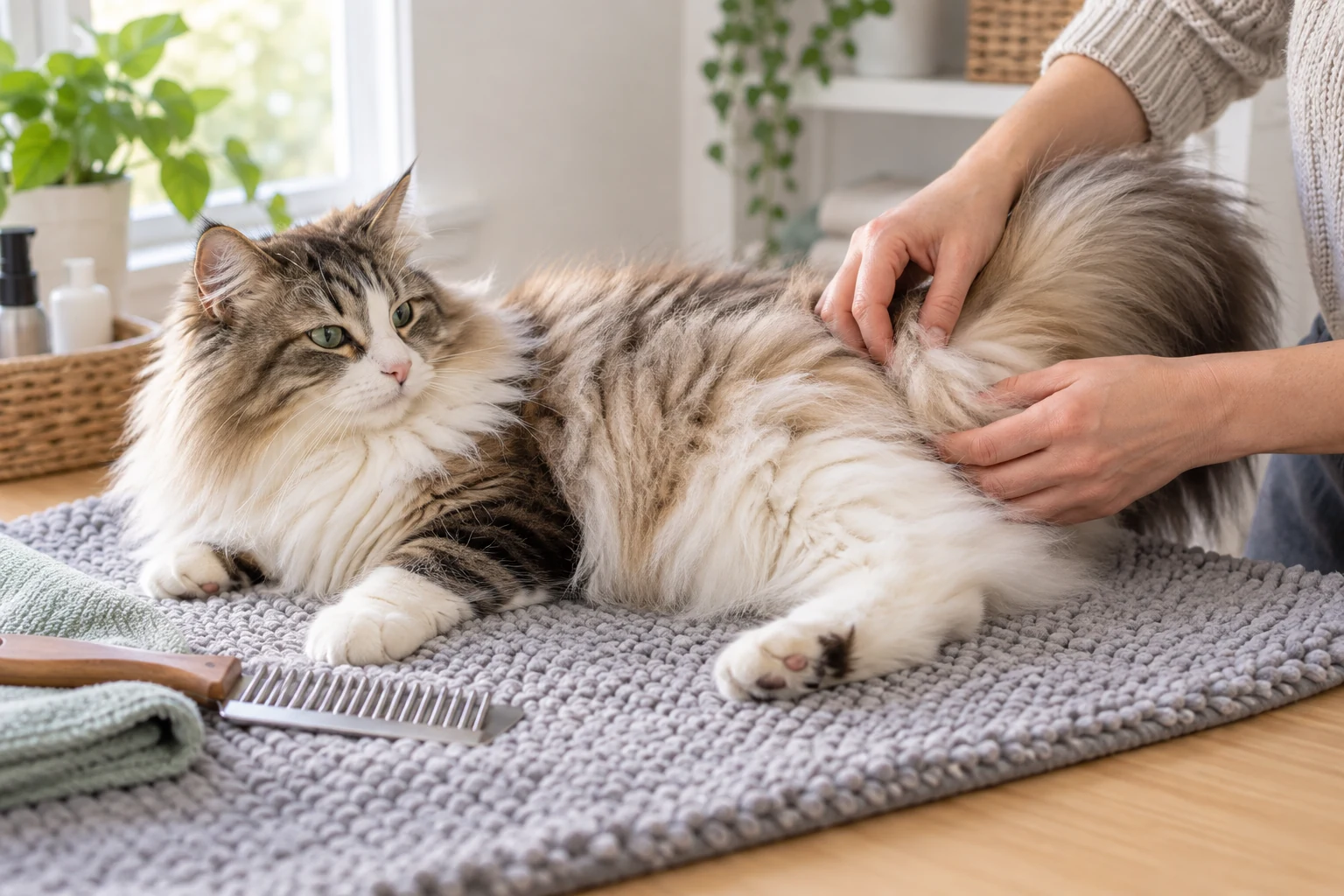
- A pelagem dos gatos tonquineses é normalmente curta e relativamente fácil de cuidar; um escova semanal geralmente é o suficiente para reduzir a queda de pelos e manter a pelagem brilhante.
Cuidados odontológicos (prioridade)
- Os registros de raças indicam especificamente gengivite/doença dentária como uma das principais preocupações na língua tonquinesa — por isso, crie uma rotina de higiene bucal desde cedo.
- Melhores práticas:
- A escovação diária é o ideal, mas 3 vezes por semana é o mínimo prático isso ainda ajuda a reduzir o acúmulo de placa bacteriana.
- Use pasta de dente própria para gatos + uma escova de dedo ou uma escova de dentes macia para animais de estimação.
- Fique atento a: mau hálito, gengivas vermelhas, salivação excessiva, coçar a boca com as patas, mastigar apenas de um lado ou deixar cair ração — esses sintomas indicam a necessidade de uma consulta veterinária ou odontológica.
Estimulação mental (evita travessuras causadas pelo tédio)
Os gatos tonquineses costumam ser inteligentes e gostam de interagir, então trabalho mental é tão importante quanto o exercício físico.
Ideias de enriquecimento com alto retorno sobre o investimento (ROI)
- Alterne os brinquedos semanalmente (a novidade mantém o interesse deles).
- Comedouros tipo quebra-cabeça (transformam as refeições em uma “tarefa” de 5 a 15 minutos).
- Treinamento com clicker (sentar, dar um high-five, noções básicas sobre a coleira) usando petiscos bem pequenos.
- “Bird TV”: poleiro na janela com vista para atividades seguras ao ar livre.
Sinal de comportamento
- Se um tonquinês começar a se tornar destrutivo, a latir demais ou a ser insistente, encare isso como um sinal de que é preciso verificar se ele tem alguma necessidade: mais brincadeiras + rotina mais previsível + melhor enriquecimento por meio da busca por alimento (e descartar problemas médicos, caso seja repentino).
Saúde do gato tonquinês: o que observar
| Condição | Descrição e sintomas | Gerenciamento e prevenção |
|---|---|---|
| Doenças dentárias (Gengivite, Periodontal) | Inflamação das gengivas, acúmulo de tártaro, mau hálito, dor, dificuldade para se alimentar; podem causar perda dentária e problemas sistêmicos. | Escovar os dentes 3 vezes por semana, fazer limpezas dentárias regulares e seguir uma alimentação adequada para a saúde bucal. |
| Doença do trato urinário inferior dos felinos (FLUTD) | Dificuldade para urinar, micção frequente ou inadequada, sangue na urina. | Garanta uma ingestão adequada de água (por exemplo, bebedouros), redução do estresse e dieta favorável à saúde urinária. |
| Doença Inflamatória Intestinal (DII) | Vômitos crônicos, diarreia, perda de apetite e perda de peso. | Dietas prescritas (por exemplo, com proteínas novas/hidrolisadas), medicamentos anti-inflamatórios. |
| Amiloidose | Depósitos anormais de proteínas nos órgãos (fígado/rins); podem causar insuficiência orgânica. | Triagem genética, quando aplicável; detecção precoce e cuidados de apoio. |
| Asma felina (bronquite alérgica) | Tosse, chiado no peito e dificuldade para respirar devido à inflamação das vias aéreas provocada por alérgenos. | Evite fatores desencadeantes (poeira, fumaça); controle os sintomas com broncodilatadores ou corticosteroides. |
| Hipertireoidismo | Perda de peso, apesar do aumento do apetite, hiperatividade, vômitos e diarreia — comum em gatos mais velhos. | Medicação, iodo radioativo, cirurgia ou dietas especiais; exames de rastreamento regulares. |
| Miopatia hipocalêmica | Fraqueza muscular, inclinação do pescoço (postura com o queixo encostado no peito); pode ser intermitente. | Testes genéticos para criadores; suplementos de potássio para controlar os sintomas. |
| Cardiomiopatia hipertrófica (CMH) | Espessamento do músculo cardíaco; pode causar insuficiência cardíaca ou morte súbita. | Exames cardíacos regulares (por exemplo, ecocardiograma); medicação para controlar a função cardíaca. |
| Olhos cruzados (estrabismo) | Olhos desalinhados, principalmente por motivos estéticos. | Normalmente, não é necessário tratamento; não é possível prevenir. |
| Doença renal policística (DRP) | O crescimento de cistos nos rins leva à insuficiência renal precoce. | Testes genéticos para criadores; cuidados renais de suporte e monitoramento. |
Essa raça é ideal para você?
Melhor resumo em uma linha: Um gato tonquinês é tipicamente sociável, ativo e voltado para as pessoas, e costuma se dar melhor em lares que possam oferecer interação e brincadeiras diárias.
Autoavaliação rápida (fácil de avaliar)
Um tonquinês é uma ótima escolha se você puder responder “sim” à maioria destas perguntas:
- Companhia diária: Há sempre alguém em casa, ou o gato não fica sozinho por longos períodos.
- Brincadeiras e atividades de enriquecimento diárias: Você pode optar por brincadeiras interativas, áreas para escalada e atividades de estimulação do tipo quebra-cabeças.
- Família de assistência social: Você se sente à vontade com um gato que interage com as pessoas e que pode ficar te seguindo por toda parte.
- Rotina básica de higiene: Você pode fazer uma manutenção leve do revestimento (geralmente, recomenda-se uma rápida escovação com escova de borracha uma vez por semana).
- Rotina odontológica: É recomendável criar o hábito de escovar os dentes desde cedo, já que os gatos da raça Tonkinese são conhecidos por serem propensos à gengivite.
Adequado para / Não adequado para
É ideal para você se…
- Você quer um companheiro interativo e carinhoso que prefere se dedicar às tarefas domésticas.
- Você fica em casa com frequência ou que possa dedicar atenção diária constante (ou um animal de estimação compatível como companhia).
- Você gosta de treinamento e atividades de enriquecimento (brinquedos de quebra-cabeça, brincadeiras estruturadas, escalada/espaço vertical).
- Você tem filhos/outros animais de estimação (quando apresentados da maneira correta): Os gatos tonquineses são comumente descritos como uma boa opção para famílias com crianças e cães ou gatos que se dão bem com gatos.
- Você quer uma manutenção fácil do casaco: Os registros descrevem a pelagem como de fácil manutenção, recomendando frequentemente uma escovação com escova de borracha semanalmente (ou algumas vezes por mês, dependendo da queda de pelos).
Não é adequado para você se…
- Você fica fora a maior parte do dia, na maioria dos dias, e o gato costumava ficar sozinho por longas horas (raças sociáveis podem ter dificuldades se não tiverem interação suficiente).
- Você prefere um gato muito independente e que não exija muita atenção que não precise de brincadeiras diárias e de estímulo mental.
- Não é possível oferecer espaço vertical / oportunidades de brincadeiras ativas (árvores para gatos, prateleiras, escalada, brinquedos interativos).
- Você não está disposto a fazer os cuidados odontológicos de rotina (Os gatos da raça Tonkinês são conhecidos por serem propensos à gengivite; as doenças dentárias também são comuns em gatos adultos em geral).
- Na sua casa, há um tratamento brusco ou uma dinâmica estressante entre os animais de estimação isso sobrecarregaria um gato muito sociável (escolha um perfil de temperamento mais calmo e independente).

PERGUNTAS FREQUENTES
Os gatos tonquineses são carinhosos?
Sim — os gatos tonquineses são amplamente descritos como animais que gostam de companhia e são carinhosos, frequentemente buscando um colo, um passeio no ombro e “supervisionando” tudo o que você estiver fazendo. Eles tendem a criar laços fortes e preferem participar das rotinas diárias em vez de permanecerem independentes.
Os gatos tonquineses são barulhentos?
Eles podem ser bastante falantes. Muitas descrições mencionam que eles “conversam” com você, esperam uma resposta e emitem uma variedade de sons que vai além dos simples miados — embora sejam frequentemente descritos como menos intensos do que algumas linhagens siamesas.
Os gatos tonquineses podem ficar sozinhos o dia inteiro?
Normalmente, eles não gostam muito disso. As informações sobre a raça costumam destacar que os tonquineses preferem companhia e podem se dar melhor com um segundo gato ou em um lar que possa proporcionar interação e brincadeiras regulares.
Os gatos tonquineses se dão bem com crianças, cães e outros animais de estimação?
Em muitas descrições, sim — os gatos tonquineses são comumente caracterizados como sociáveis e que se adaptam bem a lares ativos, incluindo aqueles com crianças respeitosas e cães que se dão bem com gatos. Assim como em qualquer raça, a socialização precoce e as apresentações graduais são importantes.
Os gatos tonquineses soltam muito pelo?
Costumam ser descritos como mais sazonal animais que soltam pelos esporadicamente, em vez daqueles que soltam pelos constantemente e em grande quantidade. Uma escovação leve e regular costuma ser suficiente para manter os pelos soltos sob controle na maioria das casas.
Com que frequência se deve escovar um tonquinês?
A maioria das orientações se refere a uma “pelagem de baixa manutenção”: uma escovada rápida de vez em quando (geralmente sugere-se semanalmente) ajuda a remover os pelos soltos e a manter a pelagem lisa. Os banhos geralmente não são frequentes, a menos que sejam necessários para exposições ou em casos de sujeira específica.
Quais são os padrões de pelagem e as cores dos olhos dos gatos tonquineses?
A língua tonquinês é comumente descrita em três padrões contrastivos —com padrão pontilhado, em pele de vison e liso—com a intensidade do padrão situando-se entre os extremos dos siameses e dos birmaneses. A cor dos olhos costuma estar relacionada ao padrão (por exemplo, gatos com padrão mink costumam se destacar pelos olhos azul-turquesa).
Quanto tempo vivem os gatos tonquineses?
Um intervalo frequentemente citado é cerca de 15 a 20 anos, desde que haja bons cuidados preventivos e acompanhamento veterinário adequado. A expectativa de vida de cada animal varia de acordo com a genética, o ambiente e o histórico de saúde.
Quais são os problemas de saúde mais comuns associados à raça Tonquinês?
Algumas fontes sobre a raça afirmam que os tonquineses são, em geral, saudáveis, mas destacam áreas que requerem maior atenção — especialmente doença dentária, e alguns também mencionam FLUTD, DII e amiloidose como condições a serem observadas. A maneira mais útil de apresentar isso é: “estas são riscos possíveis; pergunte ao seu veterinário e ao criador quais exames de triagem são adequados.”
Como posso reduzir o risco de doenças dentárias em um gato tonquinês?
Comece cedo a cuidar dos dentes do animal e procure manter uma rotina consistente de cuidados em casa. As orientações veterinárias costumam recomendar escovar os dentes diariamente, sempre que possível, com 3 vezes por semana como medida mínima prática para o controle da placa bacteriana, além de consultas odontológicas regulares com seu veterinário.
Quais são os sinais de alerta da FLUTD — e quando se trata de uma emergência?
Os sinais de alerta mais comuns incluem dor ou dificuldade ao urinar, tentativas frequentes, chorar durante a micção, sangue na urina, urinar fora da caixa de areia ou lamber excessivamente as partes genitais. Se um gato estiver urinando pouca ou nenhuma urina e parece cada vez mais angustiado, o que pode indicar obstrução uretral, que é um emergência imediata—procure atendimento veterinário de urgência imediatamente.
Os gatos tonquineses são hipoalergênicos?
Nenhuma raça de gato é verdadeiramente hipoalergênica. As entidades especializadas em alergias observam que Todos os gatos produzem alérgenos, e os estudos não demonstraram que os gatos possam ser “hipoalergênicos” no sentido de não causarem alergia — algumas pessoas podem ainda assim tolerar melhor certos gatos, mas isso não é garantido.
Tonquines vs. siameses vs. birmaneses: qual é a diferença?
A raça tonquinês foi desenvolvida a partir de linhagens siamesas e birmanesas com o objetivo de ser um “meio-termo” em termos de aparência e temperamento — frequentemente descrita como de constituição moderada e uma mistura de características de ambas as raças. Se seus leitores estiverem comparando opções, a melhor forma de apresentar a raça é: Tonquinesa = o ponto médio intencional entre as raças siamesa e birmanesa.
É possível treinar gatos tonquineses?
Muitas vezes, sim — várias descrições destacam a inteligência, a habilidade com brinquedos que exigem raciocínio e a disposição para aprender truques e jogos interativos (como buscar objetos). Mantenha as sessões curtas, baseadas em recompensas e consistentes, para se adequar à capacidade de atenção deles e às suas elevadas necessidades de envolvimento.
Fatos bônus
Um gato tonquinês chamado Shun Gon aparece no clássico filme da Disney “Os Aristogatos”.
Apesar do nome, o gato tonquinês não tem nenhuma ligação geográfica direta com a Baía de Tonkin, no Vietnã. A raça foi originalmente batizada de “Tonkanese”, inspirada em uma ilha do musical “South Pacific”, onde os “mestiços” eram acolhidos e aceitos.
Conhecidos por sua inteligência, os gatos tonquineses podem ser bastante astutos. É sabido que eles descobrem como abrir portas ou armários em busca de novas aventuras ou de petiscos deliciosos.
A bela pelagem do gato tonquinês, semelhante à do vison, passa por uma transformação fascinante. Pode levar até dois anos para que a cor do corpo se desenvolva por completo, e a pelagem continuará a escurecer à medida que o animal envelhece.
Referências
“Tonquinesa”. Conselho de Administração da Cat Fancy. Recuperado em 31 de janeiro de 2024.
“Associação dos Amantes de Gatos: Perfil da Raça: Tonquinês”. Acessado em 5 de novembro de 2024.
Houle, Tori (15 de dezembro de 2014). “O tonquinês”. Rede de Saúde Animal. Acessado em 1º de janeiro de 2020.
“Padrão Tonquines” (PDF). Conselho de Administração da Cat Fancy. Recuperado em 31 de janeiro de 2024.
"WCF - Federação Mundial de Gatos". wcf.info. Acessado em 23 de julho de 2023.
Associação Internacional de Gatos (1º de maio de 2004). “TICA: Padrão da Raça Tonquinês” (PDF). www.tica.org. Acessado em 5 de novembro de 2024.
Helgren, J. Anne (1997). “6: As raças reconhecidas”. Enciclopédia de raças de gatos. Barron’s Educational Series, Inc., p. 220. ISBN 0-7641-5067-7.
Albasan, H.; Osborne, C. A.; Lulich, J. P.; Lekcharoensuk, C. (2012). "Fatores de risco para urólitos de urato em gatos". Journal of the American Veterinary Medical Association (Jornal da Associação Médica Veterinária Americana). 240 (7): 842-847. doi:10.2460/javma.240.7.842. PMID 22443437.
“Genética da raça Tonquinês: cor, padrão da pelagem, cor dos olhos”. www.tonkinesebreedassociation.org. Acessado em 2 de janeiro de 2020.
 EN
EN DE
DE ES
ES PT
PT