
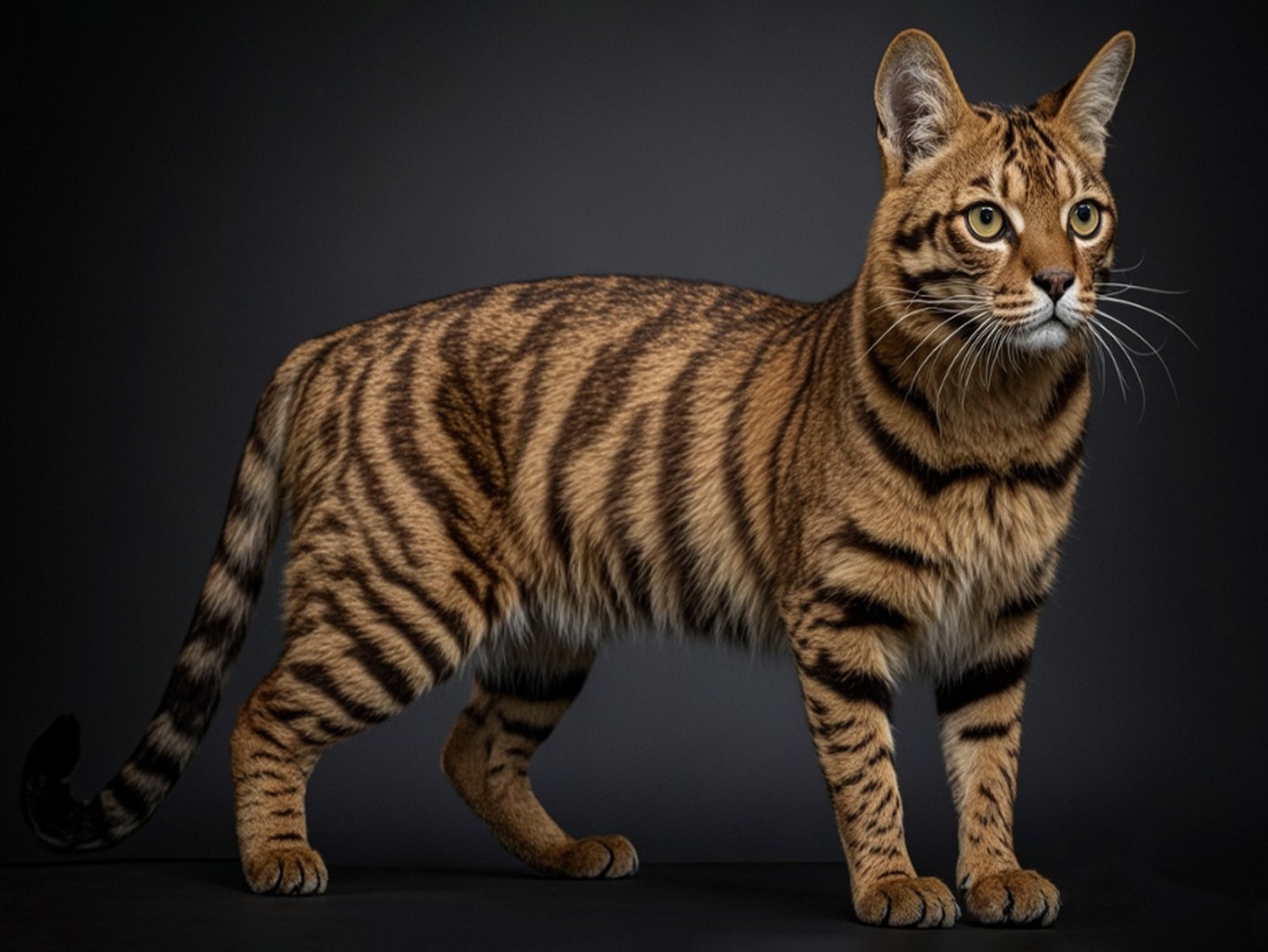
Definição rápida: O Toyger é uma raça moderna de gato doméstico criada para se assemelhar a um “tigre de brinquedo” no padrão da pelagem e no formato do corpo, mantendo, ao mesmo tempo, um temperamento amigável e companheiro.
Índice
Visão geral da raça
| Característica | Descrição |
| Personalidade | Tranquilo, temperamento agradável, relaxado, inteligente, treinável, busca atenção humana, gosta de brincar, vocal, bom com crianças e outros animais de estimação |
| Tipo de carroceria | Tamanho médio, magro e de corpo comprido, musculoso, membros dianteiros fortes, porte baixo, cauda em forma de corda, cabeça larga, orelhas pequenas e arredondadas, olhos pequenos a médios com capuz |
| Peso | Machos: 4,5 a 6,8 kg (10 a 15 lb); fêmeas: 3,2 a 4,5 kg (7 a 10 lb). Faixa geral: 3,2-6,8 kg (7-15 lbs) |
| Região de origem | Estados Unidos (Califórnia) |
| Tempo de vida | 10-15 anos (algumas fontes também mencionam 9-13 ou 13+ anos) |
| Tipo de casaco | Curto, grosso, luxuoso, excepcionalmente macio, felpudo, resistente, com brilho desejável. As marcas podem ser um pouco mais longas para um efeito esculpido |
| Cores da pelagem | Cavala marrom (preta) felpudo; Gato malhado tipo “snow mackerel” com olhos azuis ou de qualquer outra cor (AOC). Apresenta listras verticais marcantes e ramificadas sobre um fundo laranja/dourado ou marfim/creme |
| Nível de derramamento | ⭐⭐⭐☆☆ (Moderado) |
| Afeto para com os seres humanos | ⭐⭐⭐⭐⭐ (Muito alto) |
| Dificuldade de atendimento | ⭐⭐⭐⭐☆ (Moderado a alto) |
Introdução
O Gato Toyger é uma raça criada especificamente para esse fim gato doméstico de pêlo curto desenvolvido no 1980s para reproduzir a aparência de um tigre em miniatura — principalmente por meio de listras verticais marcantes no padrão tabby e uma silhueta confiante e atlética — sem deixar de lado o temperamento de um animal de estimação.
Apesar do apelido de “tigre de brinquedo”, os Toygers são gatos totalmente domésticos. As entidades responsáveis pela raça observam que o desenvolvimento do Toyger se concentra em padrão semelhante ao de um tigre sem recorrer a novos cruzamentos com espécies selvagens, e as principais fontes de referência na área veterinária e de animais de estimação enfatizam que os Toygers não têm laços genéticos com os tigres selvagens e não são inerentemente perigosos.
O que torna o Toyger especialmente atraente é esse contraste: estética ousada, costumes domésticos. São comumente descritos como meigo, calmo e tranquilo, costumam se adaptar bem à vida familiar quando recebem brincadeiras regulares, atenção e atividades estimulantes.
Neste guia, você encontrará uma visão geral prática e fundamentada em fontes confiáveis sobre as características, a personalidade, as necessidades de cuidados e as principais questões relacionadas à avaliação de saúde do Toyger — para que possa tomar uma decisão com confiança, priorizando o bem-estar do animal.
História da raça
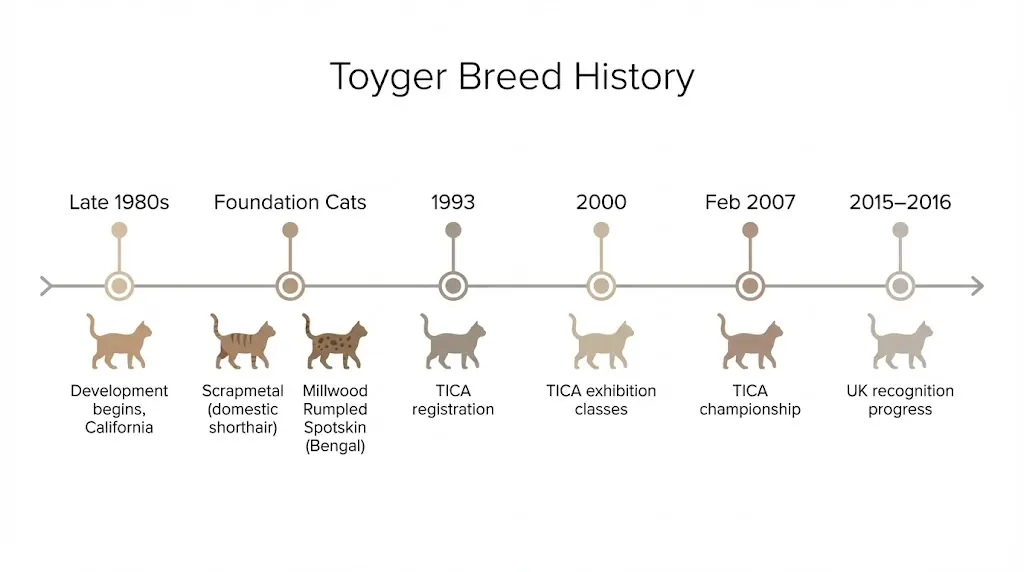
O Raça de gato Toyger foi desenvolvido no final da década de 1980 nos Estados Unidos por criador Judy Sugden. O objetivo era claro: criar um totalmente nacional gato de estimação que se assemelha visualmente a um tigre — especialmente por meio de listras marcantes e ramificadas e manchas circulares na cabeça —, mantendo, ao mesmo tempo, um temperamento calmo e amigável com as pessoas.
O trabalho de Judy Sugden baseava-se em linhas que incluíam Bengals e gatos domésticos de pêlo curto; a GCCF observa que ela é filha de Jean S. Mill, fundador da raça Bengala. Os primeiros avanços ocorreram ao perceber-se marcas incomuns nas têmporas de um gato chamado Millwood, o Atirador certeiro, o que ajudou a orientar a seleção em direção a padrões faciais mais “semelhantes aos do tigre”.
Gatos fundamentais no programa de formação
Dois gatos frequentemente citados como pilares fundamentais iniciais foram:
- Sucata (gato doméstico de pêlo curto listrado)
- Millwood Spotskin Amassado (Bengala)
Em 1993, Sugden também importou Jammu Blu, um gato de rua de Caxemira, Índia, selecionados por apresentarem marcas distintas entre as orelhas que se adequavam melhor ao padrão desejado para a cabeça.
Marcos de reconhecimento (registros)
- 1993: A TICA reconheceu a raça Toyger como Inscrição
- 2000: Avançou para Exposição “New Breed” categorias da TICA
- Fevereiro de 2007: Concedido Campeonato status na TICA
- Reino Unido (GCCF): Reconhecido em Outubro de 2015; evoluiu para Situação preliminar (junho de 2016)
De acordo com a lista de “raças reconhecidas” da própria CFA, A raça Toyger não está incluída entre as raças reconhecidas pela CFA (portanto, o reconhecimento pela CFA pode não estar disponível, dependendo da lista atual de raças da entidade).
Nota prática para os leitores
Como os Toygers foram desenvolvidos por meio de cruzamentos seletivos (incluindo ascendência Bengala nas primeiras gerações), criadores de renome costumam enfatizar exames de saúde documentados e pedigrees transparentes; A TICA também observa que já foram registrados sopros cardíacos (possivelmente associados à cardiomiopatia hipertrófica) nessa raça.
Características físicas (Toyger)
Resumo: O Toyger é um gato doméstico de pêlo curto, de tamanho médio, musculoso e corpo alongado criado para se parecer com um “mini-tigre”, incluindo um aparência desportiva e com linha baixa, a cauda longa e grossae um casaco felpudo e brilhante.
Altura e constituição física (dados mais citados)
- Peso na idade adulta (normal): homens 10–15 lb (4,5–6,8 kg); mulheres 7–10 lb (3,2–4,5 kg).
- Construção geral: esbelto, de corpo alongado, de ossatura robusta e muito musculoso; frequentemente descrito como “tipo estrangeiro”, com um perfil atlético.
- Movimento: Os Toygers são selecionados para movimento majestoso/ondulante isso reforça a impressão de que se trata de um “grande felino”.
Nota sobre confiabilidade/precisão: Os Toygers de estimação podem variar (sexo, idade, linhagens, aptidão física). Os padrões da raça descrevem o ideal, não é uma garantia para todas as pessoas.
Cabeça, focinho, orelhas e olhos
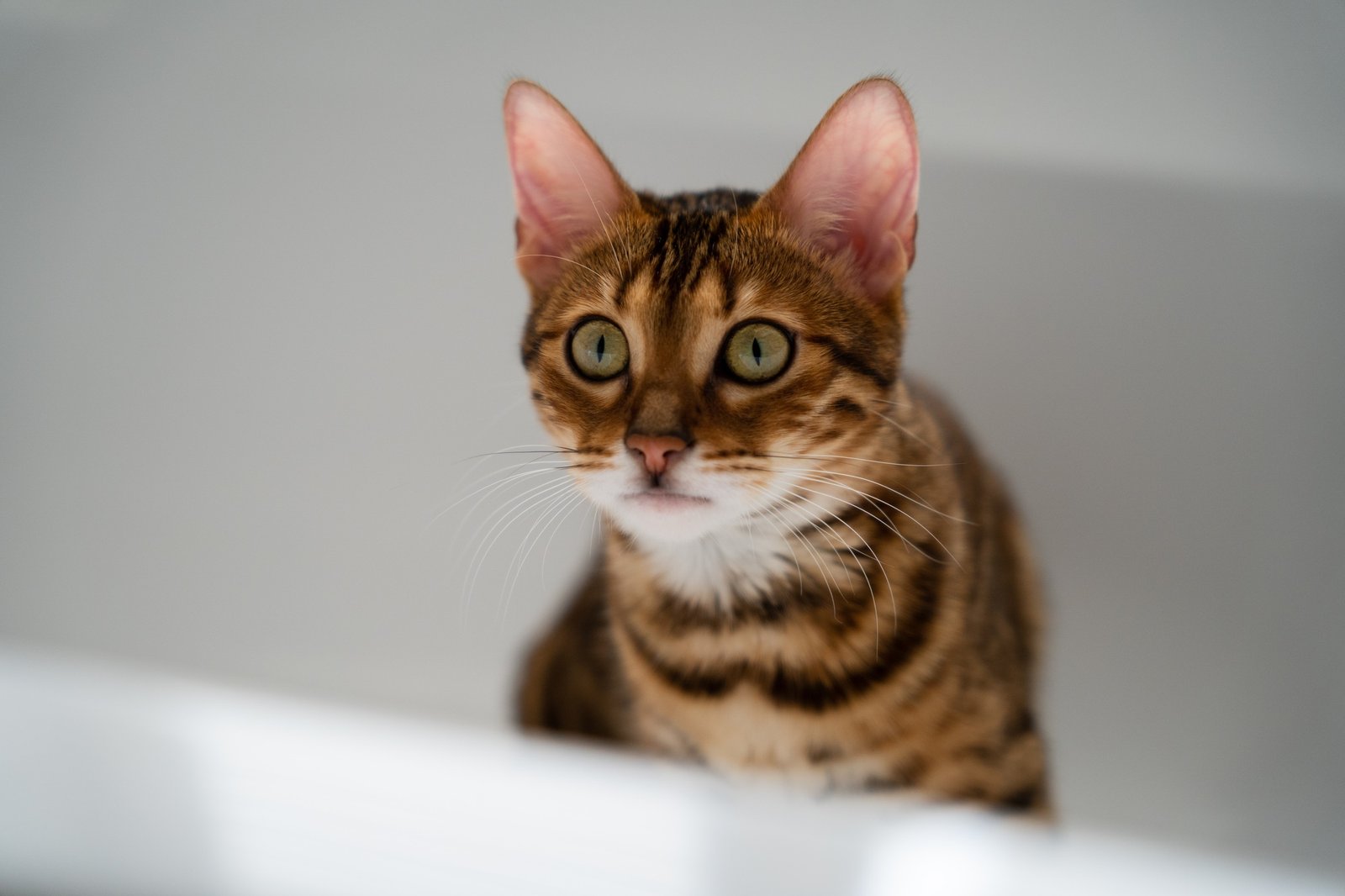
- Formato do rosto: a estilo “coração invertido” alongado “Da testa até as bochechas arredondadas” é uma descrição recorrente no padrão da raça.
- Canho: médio a longo, largo, profundoe arredondado/musculoso em contorno.
- Orelhas: arredondado, com pequeno (preferencial); têm as têmporas e as orelhas cobertas por uma espessa camada de pelos são desejáveis; A inclinação do lince é indesejável em normas.
- Olhos: médio/circular com leve aba, configurado para suportar a expressão “gato de grande porte” (a cor exata dos olhos varia de acordo com a variedade da pelagem).
Detalhes do corpo: pernas, pés e cauda
- Pernas e pés: comprimento médio, com dedos longos e pés com dedos bem definidos conforme indicado nas normas.
- Final: longo, grosso, musculoso, geralmente descrito como semelhante a uma corda, e geralmente são usados na altura da cintura para combinar com o visual despojado.
A textura da pelagem e a característica marcante do “brilho”
- Sensação ao toque do casaco: comprimento curto a médio, macio e elástico com um toque denso e luxuoso, frequentemente destacado nas descrições da raça.
- Glitter: um brilho característico (“glitter”) é considerado como um assinatura/obrigatório essa característica aparece em alguns padrões da raça Toyger, com expressões do tipo “quanto mais, melhor” figurando em documentos oficiais.

Comportamento e personalidade (temperamento do gato Toyger)
Resumo
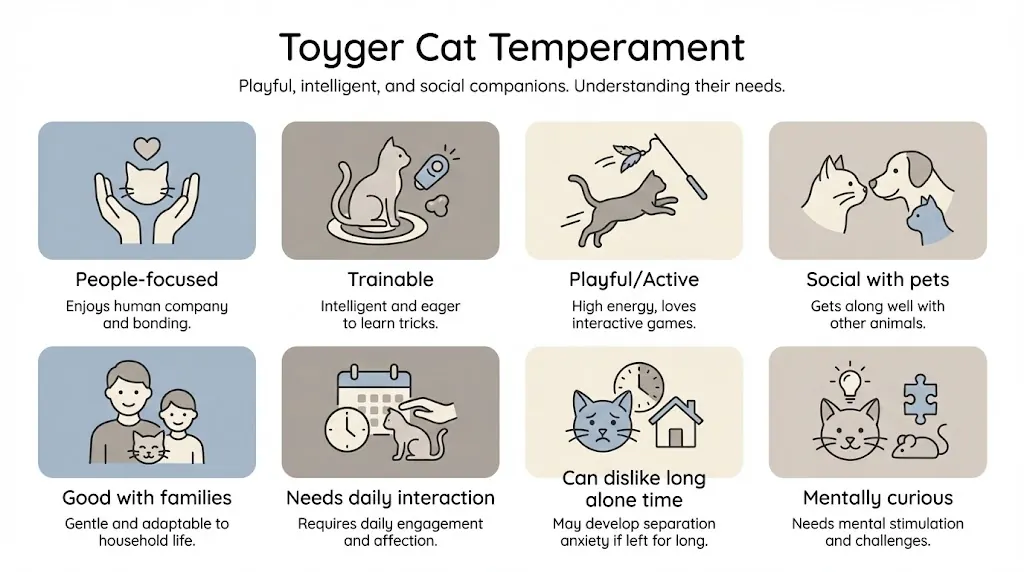
- Orientado para as pessoas e sociável: Os Toygers são descritos pelas principais organizações felinas como simpáticos, extrovertidos e mais felizes quando estão com outras pessoas.
- Inteligente e altamente interativo: São comumente descritos como altamente inteligente e fácil de treinar, incluindo habilidades como buscar e passeios na coleira.
- Ativo, mas, em geral, fácil de conviver: Fontes especializadas na raça os descrevem como ativo e descontraído/ideal para famílias quando suas necessidades sociais e lúdicas são atendidas.
- Costuma se dar bem com famílias e outros animais de estimação: Costuma-se dizer que eles se dão bem com crianças, outros gatos (especialmente se forem apresentados ainda filhotes) e cães que se dão bem com gatos com as devidas apresentações.
- Não é uma raça “solitária”: Algumas fontes especializadas em raças alertam explicitamente que esses cães podem ter dificuldades se ficarem sozinhos por longos períodos e podem apresentar ansiedade de separação.
Por que a personalidade do Toyger é conhecida
Os Toygers são criados propositalmente para terem uma aparência “selvagem”, mantendo, ao mesmo tempo, o temperamento de um gato de estimação doméstico—e os perfis das raças modernas os descrevem como simpático, extrovertido e voltado para as pessoas. Eles costumam se dar melhor em lares onde podem fazer parte do dia a dia, em vez de serem tratados como um animal de estimação com o qual não se interage.
Sociabilidade com crianças e outros animais de estimação
Em lares bem administrados, os Toygers são comumente descritos como sociável e capaz de conviver bem com crianças, outros gatos e cães que se dão bem com gatos, especialmente quando socializados desde cedo e apresentados de forma cuidadosa. (Como em qualquer raça, o temperamento varia de cão para cão — é importante que as apresentações sejam feitas com calma e sob supervisão.)
Nível de atividade e necessidades de enriquecimento
Os Toygers são frequentemente descritos como ativo e lúdico—o tipo de gato que se beneficia de brincadeiras interativas diárias, espaço para escalar e atividades de enriquecimento do tipo quebra-cabeça. Sem estímulo suficiente, qualquer raça sociável pode passar a buscar atenção ou ficar entediada; por isso, é importante planejar brincadeiras estruturadas e uma rotina.
Inteligência e capacidade de treinamento
Várias referências sobre raças destacam o Toyger como altamente inteligente e interativo, respondendo frequentemente bem ao treinamento com reforço positivo. É comum que o Toyger aprenda brincadeiras e comportamentos como buscar e caminhar com coleira—uma característica marcante que você pode destacar claramente usando uma linguagem adequada para as SERPs.
Tolerância ao tempo sozinho (fator importante de “adequação”)
Os Toygers costumam ser descritos como não é o ideal para dias longos e vazios—uma importante fonte especializada em gatos observa que eles podem ficar infelizes se forem deixados sozinhos por longos períodos e podem desenvolver ansiedade de separação. Se os membros da sua família costumam se ausentar com frequência, considere se um segundo animal de estimação compatível ou uma raça mais independente seria uma opção mais adequada.
Vocalização
As fontes especializadas em raças dão mais ênfase à sociabilidade e à inteligência do que à “loquacidade”; portanto, uma maneira segura e confiável de expressar isso é: algumas pessoas podem emitir sons para chamar atençãoe mudanças repentinas ou extremas no comportamento vocal justificam uma consulta veterinária (já que miar excessivamente também pode estar relacionado a estresse ou problemas de saúde).
Nota editorial sobre a confiança: As descrições das raças refletem tendências típicas, não garantias. O comportamento de um Toyger é fortemente influenciado pela socialização precoce, pela rotina doméstica, por atividades de enriquecimento e pela personalidade individual do animal.
Guia de cuidados
Pontos principais
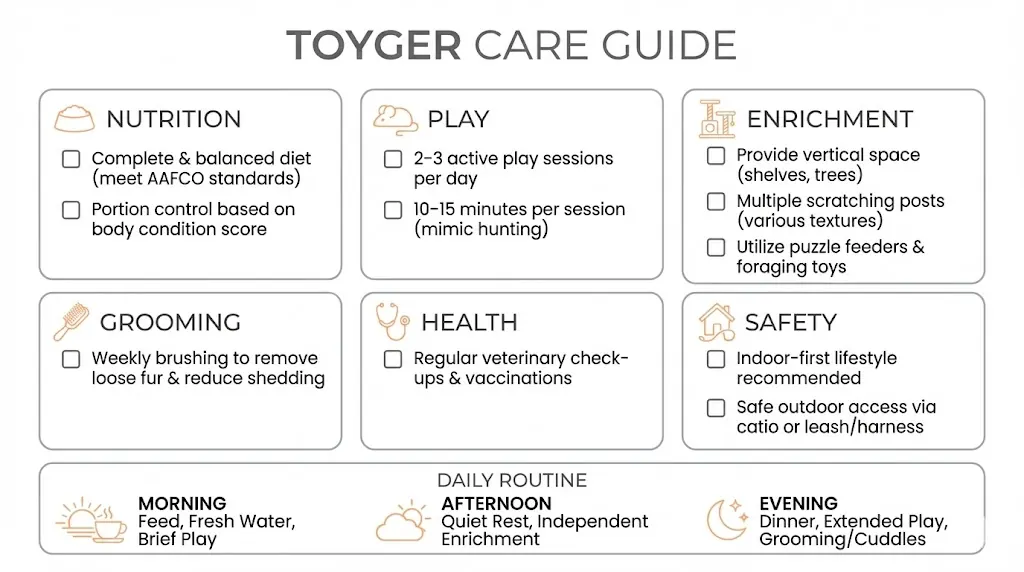
- Alimentos: Escolha uma dieta que tenha o selo “completo e equilibrado” para seu gato estágio de vida, e depois divida em porções para manter uma condição corporal magra.
- Reproduzir: A maioria dos gatos se dá melhor com 2 a 3 sessões curtas de brincadeiras (10 a 15 min) diariamente, de acordo com a idade e o gasto energético.
- Enriquecimento: Gatos que vivem dentro de casa precisam de atividades de enriquecimento estruturadas (espaço vertical, locais para arranhar, recursos previsíveis) para reduzir o estresse e os problemas comportamentais.
- Específico para a raça Toyger: Os Toygers são comumente descritos como inteligente, brincalhão, carinhoso, e que responda bem à interação e ao treinamento — planeje atividades diárias de engajamento.
- Orelhas: A maioria dos gatos não precisa de limpeza de orelhas de rotina—limpe apenas se perceber odor ou secreção e siga as orientações do veterinário.
Alimentação (o que significa “boa nutrição” na prática)
Os Toygers são gatos ativos e musculosos, por isso concentre-se em qualidade nutricional e consistência, e não exagero.
O que dar de comer
- Escolha um alimento industrializado com um declaração de adequação nutricional (frequentemente chamada de “declaração da AAFCO”) que comprove que é completo e equilibrado para seu gato estágio de vida.
- Os gatos geralmente precisam de uma alimentação rica em proteínas e gorduras e nutrientes essenciais (como taurina)—não dê ração para cães nem dietas caseiras desequilibradas.
Qual a quantidade de ração a ser fornecida (controle de peso)
- Peça ao seu veterinário para indicar um peso-alvo saudável e acompanhe a condição corporal ao longo do tempo—A obesidade é um problema comum relacionado à alimentação em gatos.
- As guloseimas devem permanecer ocasional e, normalmente ≤10–151 TP3T de calorias diárias.
Notas de segurança
- Evite alimentar carne crua como petisco ou parte da dieta, a menos que um veterinário recomende — alimentos crus podem apresentar riscos de infecção.
- A ração úmida pode ajudar na ingestão de água, pois as rações enlatadas costumam ter alto teor de umidade, mas o “melhor” formato (úmida/seca/mistura) depende do seu gato e da orientação do seu veterinário.
Exercício (atividade diária que realmente faz diferença)
Os Toygers são descritos pelas organizações de raça como atlético, voltado para as pessoas e com grande capacidade de aprendizagem, por isso, brincadeiras estruturadas costumam ser uma boa opção.
Uma rotina simples
- Comece com 2 a 3 sessões de brincadeiras por dia (10 a 15 minutos), e depois ajustar para mais ou para menos de acordo com a idade e o nível de energia.
- Use brinquedos que imitem a caçada (aproximar-se furtivamente → perseguir → atacar), e termine com um pequeno momento de “surpresa” ou uma recompensa para diminuir a frustração.
Opções de alto valor para gatos inteligentes e ativos
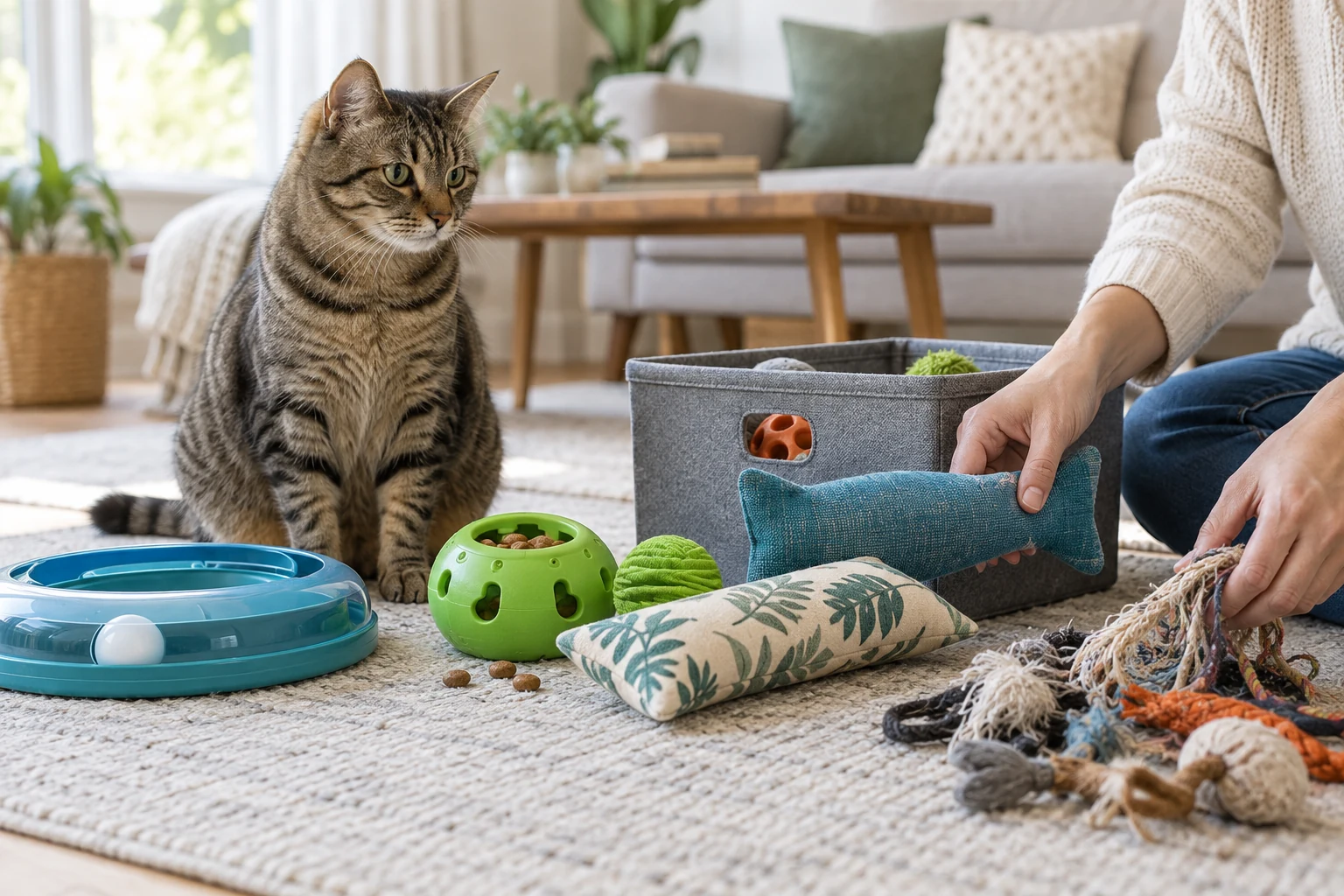
- Comedouros-quebra-cabeças / quebra-cabeças alimentares podem proporcionar tanto atividade física quanto estímulo mental durante as refeições e são amplamente recomendadas para o bem-estar dos gatos.
- Muitos Toygers podem aprender passeios com coleira, brincadeiras de buscar ou até mesmo jogos do tipo agilidade quando introduzido gradualmente com reforço positivo.
Ambiente e Estimulação (prevenção do estresse na vida em ambiente fechado)
Gatos que vivem dentro de casa se dão melhor quando seu ambiente atende às necessidades naturais dos felinos (a abordagem dos “pilares” da AAFP/ISFM).
Configuração básica (enriquecimento mínimo efetivo)
- Território vertical: árvore para gatos, prateleiras, poleiro na janela.
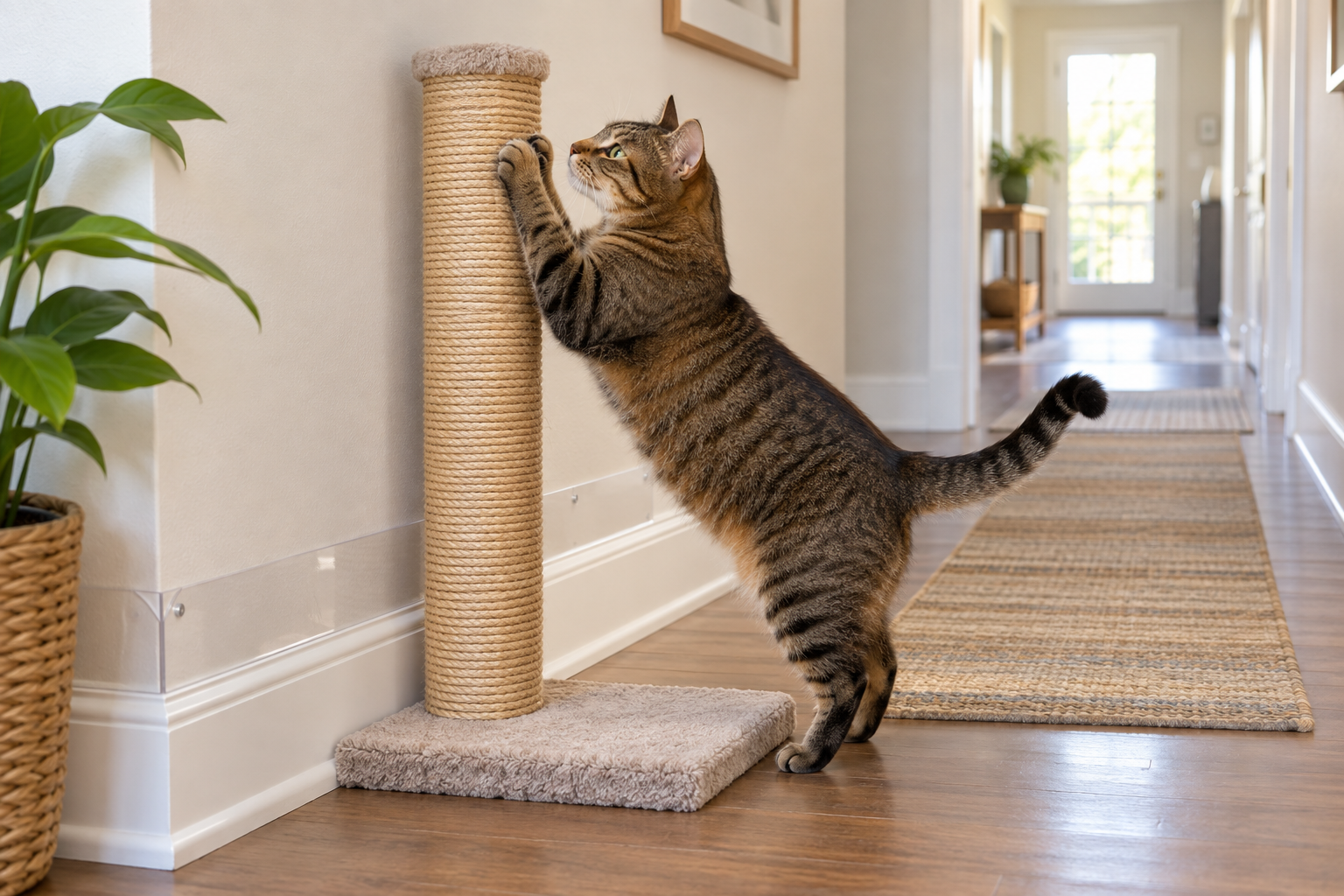
- Opções de raspagem: pelo menos um arranhador vertical alto + um arranhador horizontal.
- Recursos previsíveis: área tranquila para alimentação, cama limpa e locais seguros para descanso e esconderijo.
- Rotação: Troque os brinquedos semanalmente para manter a novidade sem criar desordem.
Companhia e rotina
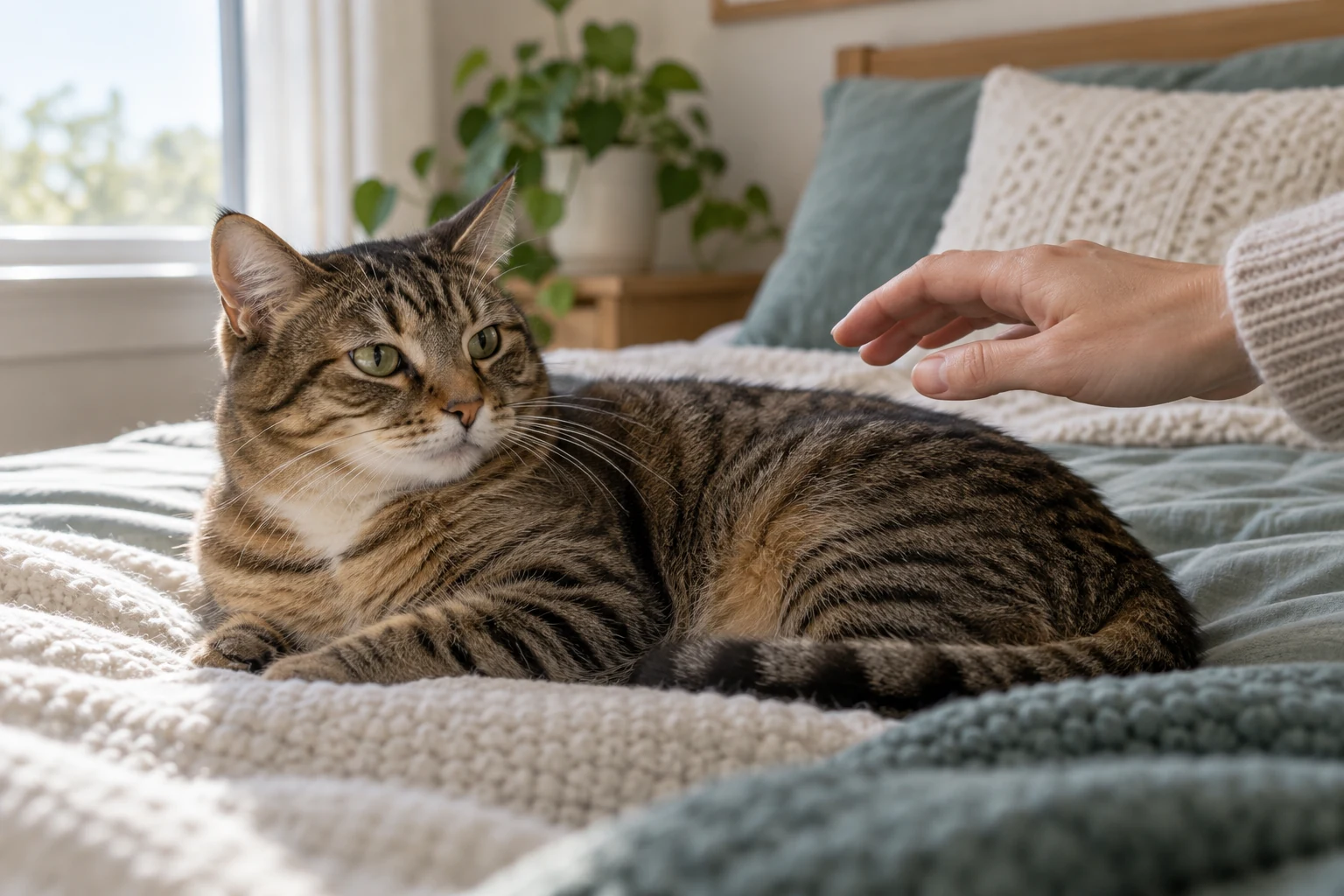
Os Toygers costumam ser descritos como carinhoso e voltado para as pessoas; a interação diária é importante.
Se você ficar fora por muitas horas, estabeleça prioridades:
- comedouros com temporizador/comedouros-quebra-cabeças
- janelas/poleiros + áreas para escalada
- atividades organizadas antes e depois do trabalho
- e, se for o caso, um animal de estimação compatível (após uma apresentação cuidadosa).
Em ambiente interno x ao ar livre
Passar tempo ao ar livre pode ser enriquecedor, mas os grupos veterinários enfatizam que redução de riscos através de acesso controlado (catio/recinto ou arnês + coleira), em vez de deixá-los circular livremente.
Cuidados pessoais (pouco esforço, grande recompensa)
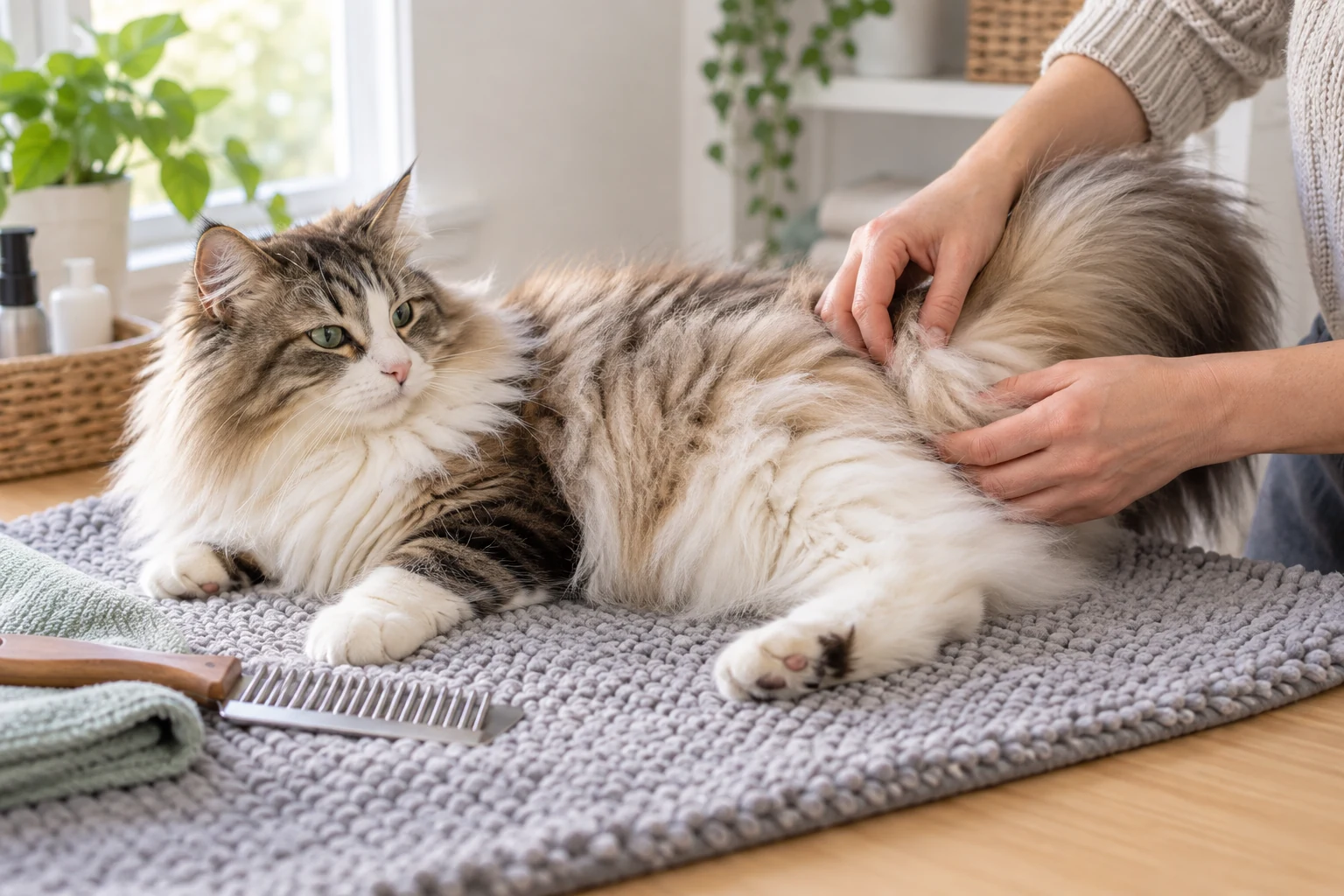
Os Toygers têm pelagem curta, por isso os cuidados com a pelagem costumam ser simples.
Escovagem
- Gatos de pêlo curto geralmente precisam de escovagem menos frequente, mas a escovação regular ajuda a remover os pelos soltos e a reduzir as bolas de pelo e os pêlos mortos.
- Aproveite o momento da higiene para verificar se há irritações na pele, parasitas ou novos nódulos — a detecção precoce é fundamental.
Banho
- A maioria dos gatos raramente precisa tomar banho, a menos que esteja suja ou haja indicação médica. Se for dar banho, use um xampu adequado para gatos e faça isso com delicadeza.
Orelhas
- A maioria dos gatos tem orelhas saudáveis e nunca precisa ser limpo. Limpe apenas se perceber odor ou corrimento, e evite o uso de cotonetes (eles podem empurrar os resíduos para mais fundo ou causar lesões no ouvido).
- Se as orelhas estiverem vermelhas, doloridas ou inflamadas, consulte um veterinário antes de limpar.
Estimulação mental (como evitar comportamentos decorrentes do tédio)
Como os Toygers são frequentemente descritos como inteligente e engajado, o trabalho mental não é opcional — faz parte do cuidado.
As melhores ferramentas
- Alimentadores de quebra-cabeça para parte das refeições (comece devagar e aumente a dificuldade aos poucos).
- Treinamento de comandos com guloseimas (senta, toca, alvo, boas maneiras com a coleira) em sessões de 2 a 5 minutos.
- “Caçadas” de comida no estilo “esconde-esconde” pela casa para estimular a busca natural por alimento.
Quando reavaliar
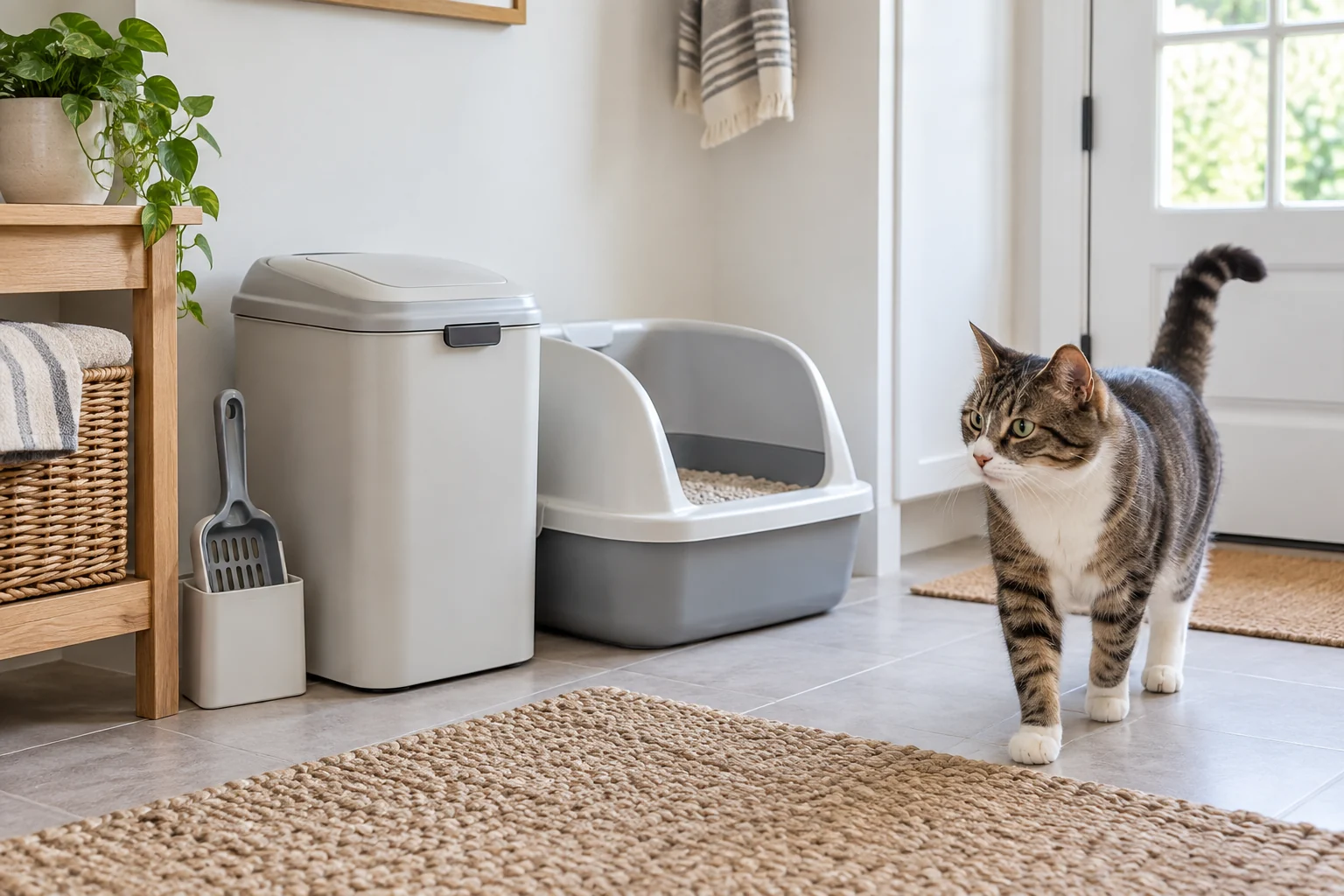
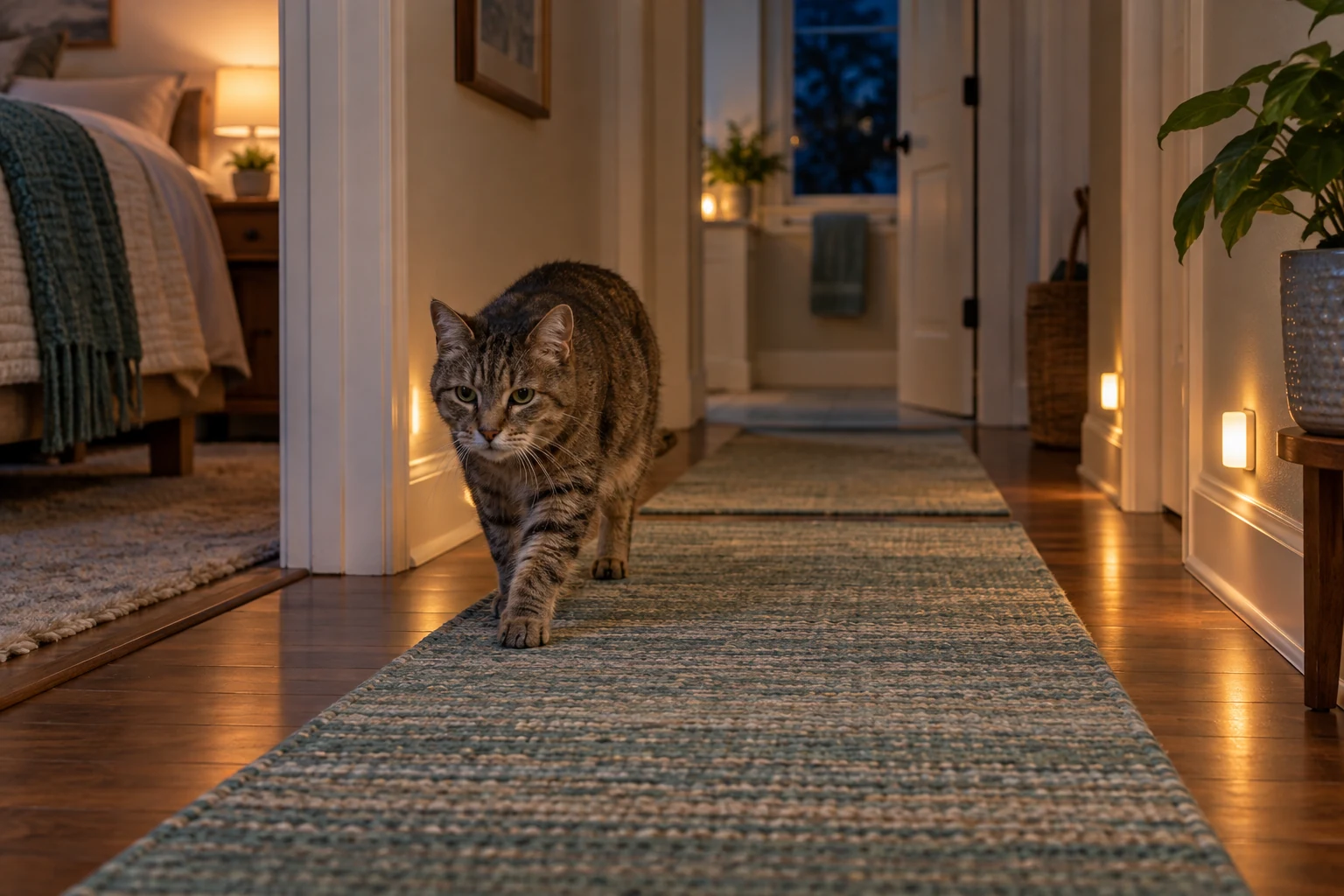
Se você notar episódios persistentes de agitação noturna, exigências verbais, comportamento destrutivo ou mudanças no uso da caixa de areia, primeiro descarte possíveis problemas médicos e, em seguida, aumente as atividades de enriquecimento e as brincadeiras estruturadas.
Preocupações com a saúde
| Condição | Descrição e sintomas | Gerenciamento e prevenção |
|---|---|---|
| Atrofia progressiva da retina (PRA) | Condição hereditária que causa perda gradual da visão e, eventualmente, cegueira. Os primeiros sinais incluem cegueira noturna e esbarrar em objetos. | Não há cura. A detecção precoce é fundamental. Consulte um veterinário se ocorrerem alterações na visão. Os criadores devem fazer o exame de PRA. |
| Cardiomiopatia hipertrófica (CMH) | Espessamento do músculo cardíaco, podendo levar à insuficiência cardíaca. Sintomas: letargia, perda de apetite ou dificuldade para respirar. | Os criadores devem testar os pais; exames veterinários regulares ajudam na detecção precoce e no monitoramento contínuo. |
| Deficiência de piruvato quinase (PKD) | Distúrbio genético que causa a quebra prematura dos glóbulos vermelhos, levando à anemia (por exemplo, gengivas pálidas, letargia). | Os gatos devem ser testados antes da reprodução; se diagnosticado, recomenda-se o acompanhamento veterinário. |
| Doença renal | Termo geral para função renal prejudicada. Os sintomas não são detalhados, mas podem incluir perda de apetite ou aumento da sede. | Uma dieta balanceada e check-ups veterinários regulares são essenciais para a prevenção e o tratamento precoce. |
| Luxação patelar | Deslocamento da rótula. Os sintomas não são especificados, mas podem incluir claudicação ou problemas de mobilidade. | Monitore-o por meio de exames veterinários regulares; pode ser necessária cirurgia em casos graves. |
| Peritonite infecciosa felina (PIF) | Doença viral causada pelo coronavírus felino. Sintomas não detalhados. | Não há prevenção garantida; os check-ups regulares ajudam no reconhecimento precoce e nos cuidados de suporte. |
| Agalactia | Falha ou falta de leite produção em gatas lactantes. | Práticas éticas de criação e suporte veterinário durante a gravidez e o pós-parto. |
| Murmúrios cardíacos | Som cardíaco anormal, geralmente detectado durante exames de rotina. Pode ser um sinal de doença cardíaca, como a CMH. | Os check-ups veterinários regulares são essenciais para a detecção e o tratamento de problemas cardíacos subjacentes. |
Essa raça é ideal para você?
Resumo rápido do ajuste: Os Toygers são amplamente descritos pelas principais organizações de fãs de gatos como gatos de companhia carinhosos, inteligentes e que gostam de estar com as pessoas. Isso geralmente significa que eles se dão muito bem com interação constante, estímulos e um ritmo doméstico previsível—e podem enfrentar dificuldades em lares que não conseguem oferecer esses itens básicos.
Ideal para você se…
- Quer um companheiro sociável e envolvido? (brincalhões, interativos e, geralmente, amigáveis em ambientes familiares).
- Pode proporcionar uma rotina estável (os gatos podem ficar estressados quando percebem que o ambiente ao seu redor é imprevisível ou incontrolável).
- Aproveite bem o tempo em casa (ou pode oferecer companhia confiável e atividades estimulantes quando você estiver fora).
- Opte por atividades ao ar livre seguras como um “catio” ou passeios com coleira, em vez de passeios sem supervisão.
- Vou comprar de forma responsável: escolha criadores que possam apresentar resultados de exames de saúde documentados e acompanhamento veterinário para riscos hereditários (mais detalhes a seguir).
Não é a melhor opção se você…
- Quer um gato que exija pouca interação, do tipo “sem precisar cuidar muito”. Os Toygers são geralmente criados e descritos como sociáveis e voltados para as pessoas.
- Ter uma casa que costuma ficar uma bagunça (perturbações repetidas podem contribuir para comportamentos relacionados ao estresse crônico em alguns gatos).
- Plano que permite a circulação ao ar livre sem supervisão. As orientações veterinárias indicam que gatos que circulam livremente correm riscos maiores (veículos, outros animais, maus-tratos, venenos, condições climáticas) e também afetam a vida selvagem; o confinamento, os “catios” e o tempo com coleira podem minimizar esses riscos.
- Ter pássaros ou pequenos animais de estimação que servem de presa sem uma separação rígida. Os gatos domésticos são uma espécie predadora e o comportamento de caça é normal — mesmo quando estão bem alimentados.
Se você estiver pensando em comprar um Toyger: uma lista de verificação para avaliação de saúde (sinal de confiança)
Peça a um criador que prova por escrito de:
- Exame cardíaco (MHC): A HCM é a doença cardíaca mais comum em gatos; o acompanhamento veterinário contínuo e exames cardíacos adequados são fundamentais.
- Exame oftalmológico (PRA): A PRA é uma doença hereditária e progressiva; gatos afetados (e seus parentes próximos) não devem ser utilizados para reprodução.
- Exames genéticos, quando for o caso (deficiência de PK): Os testes de DNA ajudam a identificar gatos portadores ou afetados e contribuem para decisões responsáveis em relação à reprodução.
(Este é um conteúdo educativo, não um conselho veterinário — use-o para orientar as perguntas que você fará ao seu veterinário e ao criador.)
PERGUNTAS FREQUENTES
Os gatos Toyger se dão bem com crianças e outros animais de estimação?
Muitas vezes, sim — quando as apresentações são feitas da maneira correta. Os Toygers são descritos pelos principais registros felinos como simpático, descontraído e, em geral, sociável, o que costuma se adaptar bem a residências familiares, incluindo famílias com crianças educadas e outros animais de estimação.
É difícil cuidar dos gatos Toyger?
Os cuidados com a pelagem geralmente exigem pouco esforço, mas as necessidades de enriquecimento são maiores. Os registros descrevem os Toygers como uma raça doméstica de pêlo curto “criada artificialmente”, com temperamento calmo e dócil, e os padrões da raça geralmente os caracterizam como ativos — portanto, a maioria se adapta melhor a interação diária, brincadeiras e companhia.
Quanto os gatos Toyger perdem?
Normalmente, uma quantidade “moderada” — que pode ser controlada com a escovação semanal. Um pelo curto geralmente significa que a queda de pelos é menos perceptível do que em raças de pelo comprido, e a escovação regular pode reduzir a quantidade de pelos soltos em casa.
Os gatos Toyger podem ser presos com coleira?rained?
Muitos conseguem — se você for devagar e usar reforço positivo. Andar com coleira não é algo “automático” para os gatos, mas o condicionamento gradual ao uso do arnês e o treinamento baseado em recompensas são amplamente recomendados por fontes veterinárias e de bem-estar animal.
Fatos bônus
Afinidade pela água (variação individual)
Alguns Toygers podem demonstrar curiosidade em relação a água corrente (torneiras/fontes). Esse comportamento não é universal e deve ser considerado mais como uma preferência individual do que como uma característica garantida da raça. Se o seu gato gosta de água corrente, uma fonte e vários pontos de água limpa podem ajudar a manter a hidratação — especialmente para gatos propensos a problemas urinários ou renais.
Uma raça “designer” (terminologia do registro)
O Toyger é descrito explicitamente pela TICA como um “gato de grife”—uma raça de gato doméstico de pêlo curto desenvolvida propositalmente para se assemelhar a um tigre em miniatura, tanto no padrão de pelagem quanto na aparência.
Um propósito que vai além da aparência (intenção declarada)
Algumas fontes secundárias relatam que o fundador da Toyger Judy Sugden apresentou a raça como uma forma de incentivar a preocupação com conservação do tigre selvagem. As práticas variam de acordo com o criador; portanto, considere isso apenas como um contexto — e não como uma promessa válida para todos os criadouros.
Aperfeiçoamento contínuo (raça mais recente)
Os Toygers ainda são uma raça relativamente nova em muitos registros, e as descrições oficiais da raça indicam que seu desenvolvimento ainda está em andamento (incluindo marcos recentes de reconhecimento em algumas organizações).
Referências
BBC. "'Toyger Cats' em Birmingham". www.bbc.co.uk. Recuperado em 21 de janeiro de 2019.
"Toyger". TICA.org. Associação Internacional de Gatos. Recuperado em 30 de setembro de 2024.
"Conheça o Toyger". Sociedade do Gato Toyger. Arquivado do original em 14 de julho de 2024. Recuperado em 30 de setembro de 2024.
"Todas as listagens". Sociedade do Gato Toyger. Arquivado do original em 14 de julho de 2024. Recuperado em 30 de setembro de 2024.
"Banco de dados de patas de Toyger".
"Introdução à raça Toyger". TICA.org. Associação Internacional de Gatos. 2014. Arquivado do original em 31 de março de 2015. Recuperado em 17 de agosto de 2014.
"Não há espaço suficiente para um tigre em sua casa? Um Toyger pode ser a resposta". VOA. Recuperado em 2020-04-22.
Barrington, Kate (14 de janeiro de 2016). “Uma história detalhada da raça do gato de Bengala”. Gatos de Bengala. Gatos Bengala. Acessado em 8 de março de 2019.
"Tica Show Paris, Gagny 2007". users.skynet.be/toygerpaws/. 30 de dezembro de 2009.
"Toyger & Tica". 13 de agosto de 2018.
"Clube Toyger". Toyger França (em francês). Arquivado do original em 2022-03-16. Recuperado em 2020-06-28.
"Padrão da raça Toyger" (PDF). TICA.org. Associação Internacional de Gatos. 18 de junho de 2008. Arquivado do original (PDF) em 4 de maio de 2018. Recuperado em 12 de julho de 2018.
 EN
EN DE
DE ES
ES PT
PT