
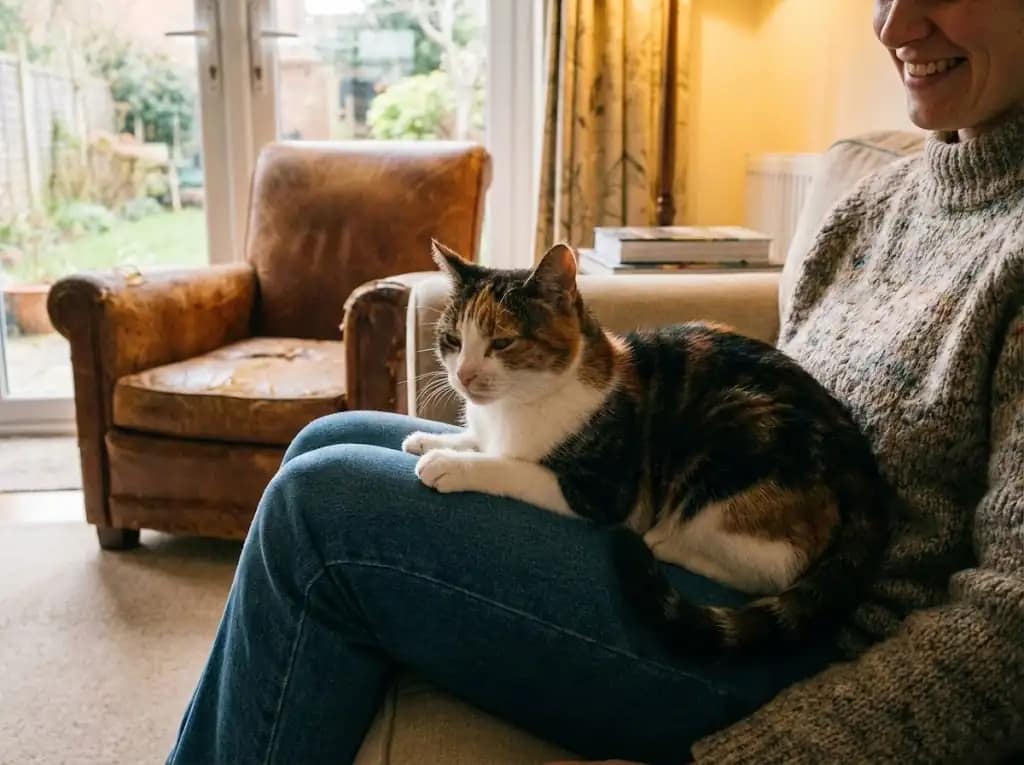
Cat kneading—often called “making biscuits”—is the rhythmic motion where cats press their front paws into a soft surface (like a blanket, bed, or your lap). In most cases, it’s totally normal and often means your cat feels safe and relaxed.
Quick answer: Cats knead because it’s a comforting kittenhood instinct, and adult cats also knead to get cozy before sleep, stretch their muscles, and leave their scent behind.
In this guide, you’ll learn 7 heartwarming reasons cats knead, what it means when they knead blankets or you, and how to enjoy the moment without the claw “ouch.”
If kneading suddenly becomes intense or your cat seems sore/limps, check with your vet.
Table of Contents
Quick answers
- Why do cats knead blankets? → comfort, nesting, scent
- Why does my cat knead me (and it hurts)? → affection + habit (fixes below)
- Why does my cat knead and purr? → relaxed + bonding
- Why does my cat drool while kneading? → often relaxed; sometimes dental discomfort if new
- Why does my cat knead and bite/suckle blankets? → self-soothing pattern
- Why is my cat kneading so much all of a sudden? → stress or discomfort (what to check)
(Don’t worry—we’ll cover the cozy reasons and the “ouch” solutions.)
Why Do Cats Knead? 7 Heartwarming Reasons (Making Biscuits Explained)
Kneading isn’t “one thing.” It’s a bundle of instincts and emotions that often show up together—comfort, habit, territory, affection, and sometimes stress relief. Here are the 7 most common reasons your cat makes biscuits (and what each one tends to look like in real life).
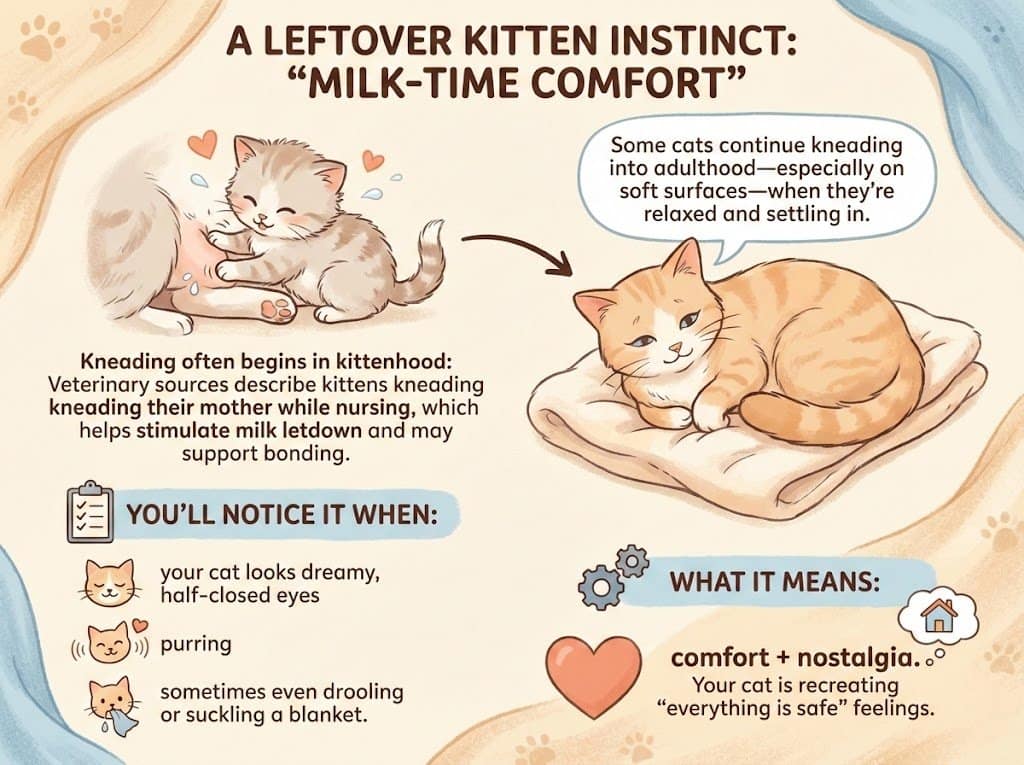
1. A leftover kitten instinct: “milk-time comfort”
Kneading often begins in kittenhood: Kneading often starts in kittenhood. Veterinary sources describe kittens kneading their mother while nursing, which helps stimulate milk letdown and may support bonding. Some cats continue kneading into adulthood—especially on soft surfaces—when they’re relaxed and settling in.
You’ll notice it when: your cat looks dreamy, half-closed eyes, purring, sometimes even drooling or suckling a blanket.
What it means: comfort + nostalgia. Your cat is recreating “everything is safe” feelings.
2. They’re making the bed: “this spot needs fluffing”
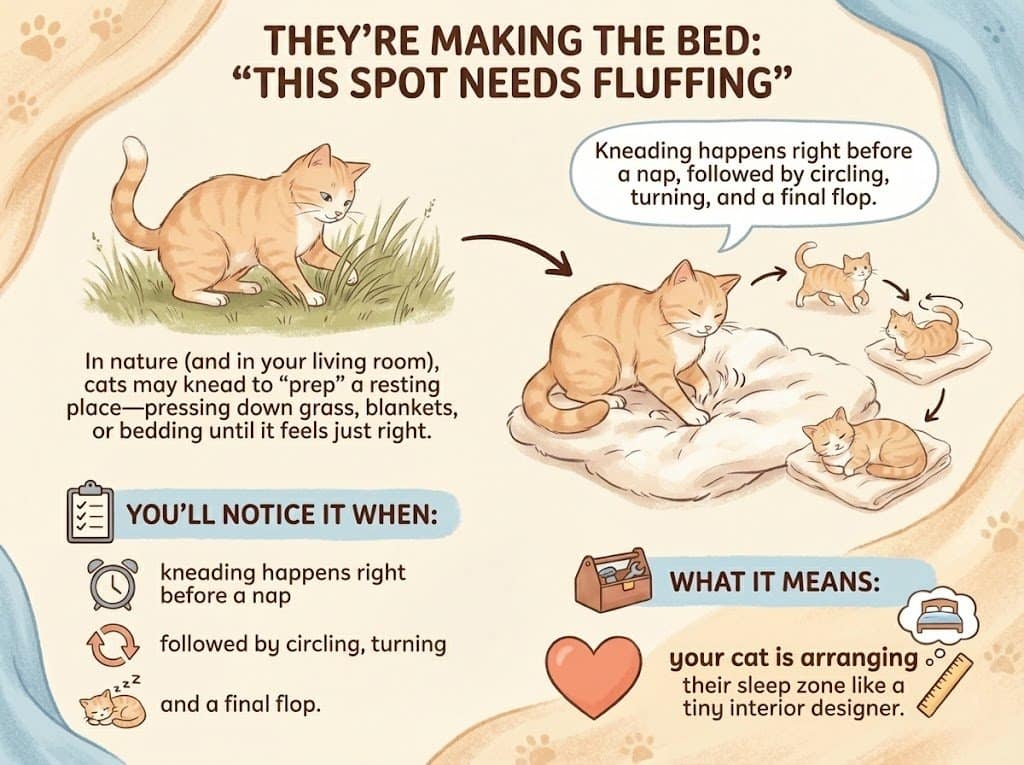
In nature (and in your living room), cats may knead to “prep” a resting place—pressing down grass, blankets, or bedding until it feels just right.
You’ll notice it when: kneading happens right before a nap, followed by circling, turning, and a final flop.
What it means: your cat is arranging their sleep zone like a tiny interior designer.
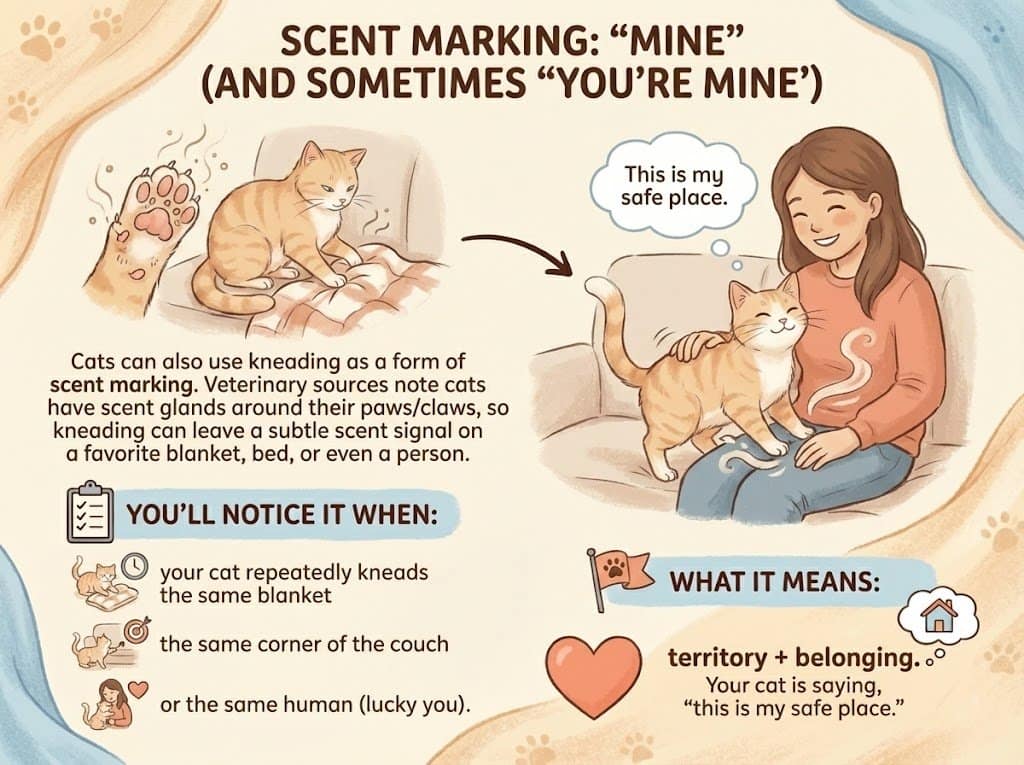
3. Scent marking: “mine” (and sometimes “you’re mine”)
Cats can also use kneading as a form of scent marking. Veterinary sources note cats have scent glands around their paws/claws, so kneading can leave a subtle scent signal on a favorite blanket, bed, or even a person.
You’ll notice it when: your cat repeatedly kneads the same blanket, the same corner of the couch, or the same human (lucky you).
What it means: territory + belonging. Your cat is saying, “this is my safe place.”
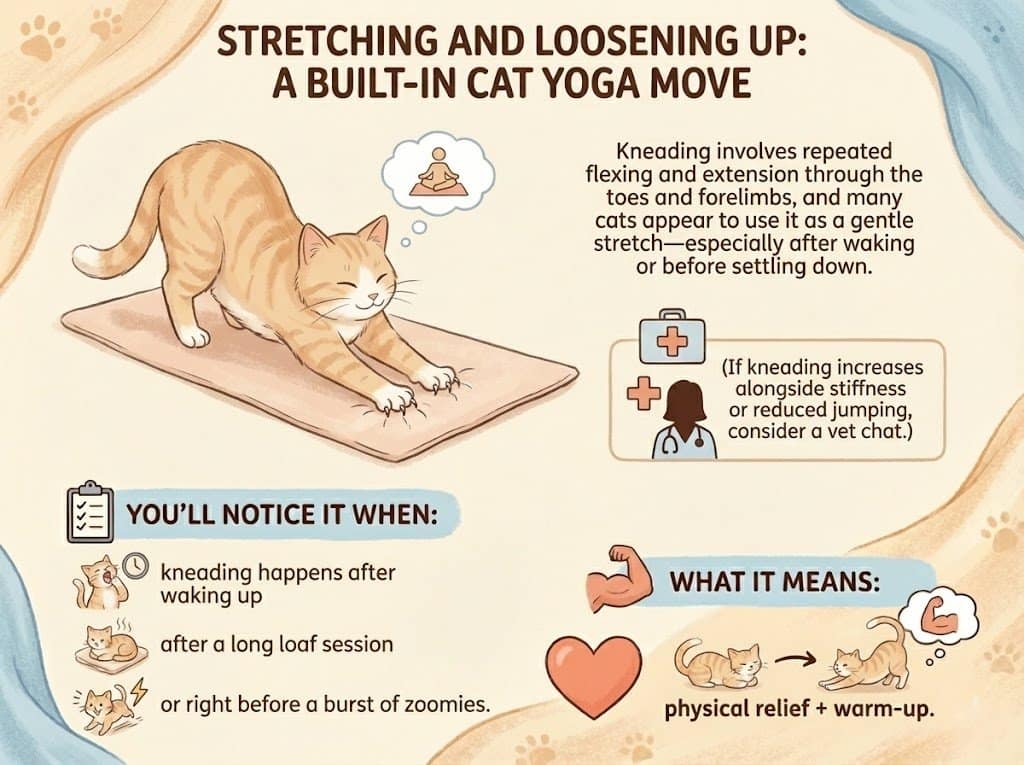
4. Stretching and loosening up: a built-in cat yoga move
Kneading involves repeated flexing and extension through the toes and forelimbs, and many cats appear to use it as a gentle stretch—especially after waking or before settling down. (If kneading increases alongside stiffness or reduced jumping, consider a vet chat.)
You’ll notice it when: kneading happens after waking up, after a long loaf session, or right before a burst of zoomies.
What it means: physical relief + warm-up.
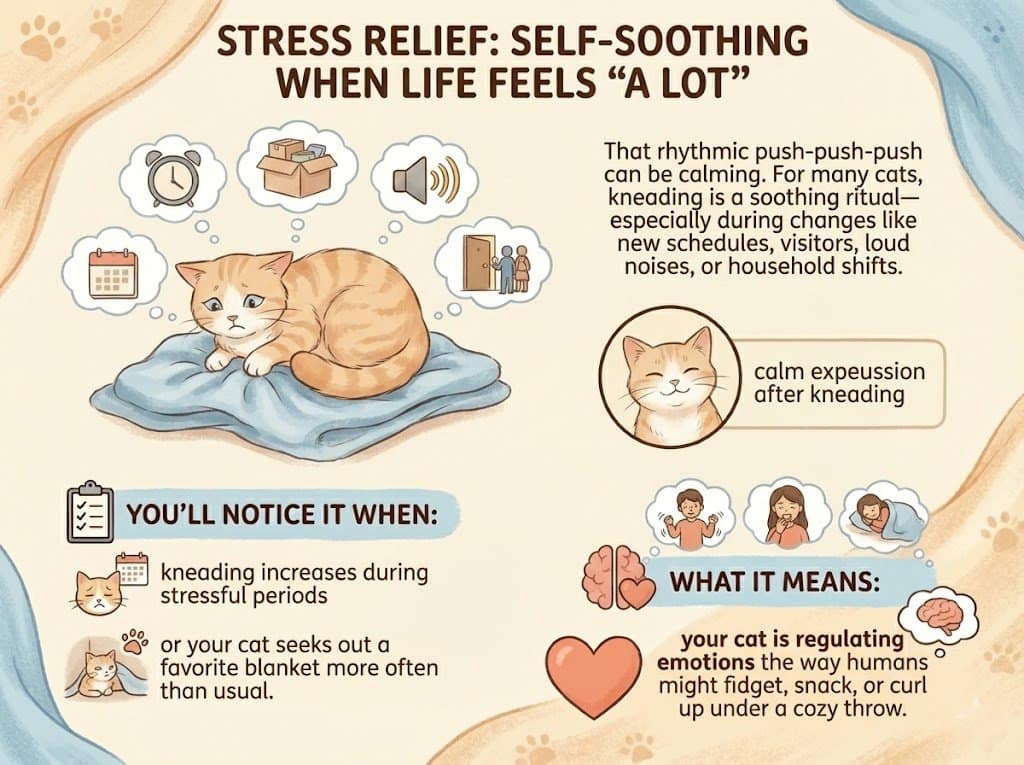
5. Stress relief: self-soothing when life feels “a lot”
That rhythmic push-push-push can be calming. For many cats, kneading is a soothing ritual—especially during changes like new schedules, visitors, loud noises, or household shifts.
You’ll notice it when: kneading increases during stressful periods, or your cat seeks out a favorite blanket more often than usual.
What it means: your cat is regulating emotions the way humans might fidget, snack, or curl up under a cozy throw.
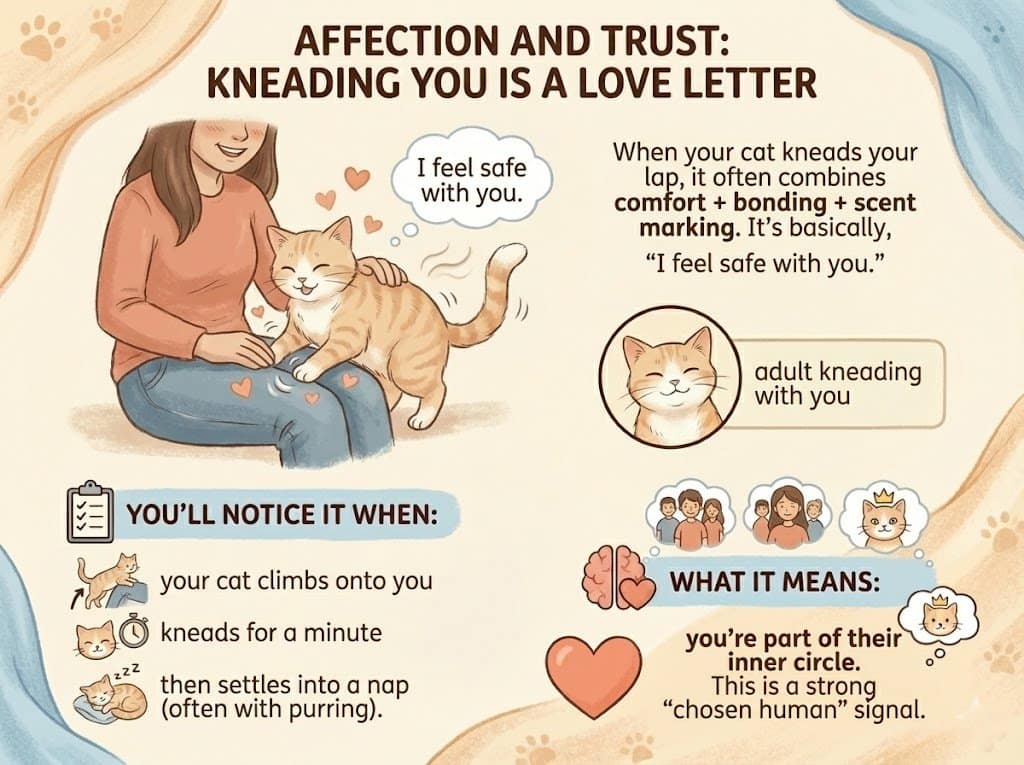
6. Affection and trust: kneading you is a love letter
When your cat kneads your lap, it often combines comfort + bonding + scent marking. It’s basically, “I feel safe with you.”
You’ll notice it when: your cat climbs onto you, kneads for a minute, then settles into a nap (often with purring).
What it means: you’re part of their inner circle. This is a strong “chosen human” signal.
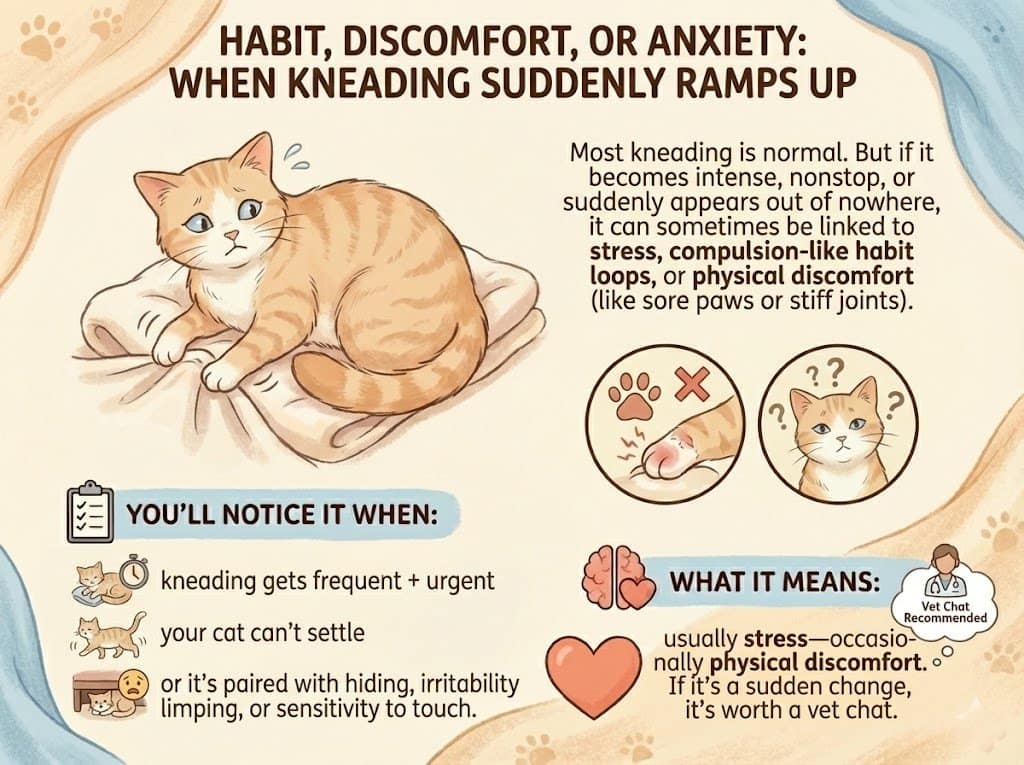
7. Habit, discomfort, or anxiety: when kneading suddenly ramps up
Most kneading is normal. But if it becomes intense, nonstop, or suddenly appears out of nowhere, it can sometimes be linked to stress, compulsion-like habit loops, or physical discomfort (like sore paws or stiff joints).
You’ll notice it when: kneading gets frequent + urgent, your cat can’t settle, or it’s paired with hiding, irritability, limping, or sensitivity to touch.
What it means: usually stress—occasionally physical discomfort. If it’s a sudden change, it’s worth a vet chat.
Quick decoding: why blankets and laps are the top knead targets
- Blankets = the perfect soft “give” + easy scent-marking + nap-prep texture.
- You = warmth + safety + bonding (and yes, scent-marking you as “family”).
Situation guide: what your cat’s kneading means (and what to do)
Why do cats knead blankets?
Direct answer: Cats knead blankets because the soft “give” feels comforting, it helps them settle a sleep spot, and it can leave a familiar paw-scent on a favorite area.
Common patterns:
- Kneads happen before naps or during wind-down time
- Your cat returns to the same blanket/spot repeatedly
- Often paired with purring, slow blinking, or circling
What to do:
Give a dedicated “knead blanket” (washable fleece), place it where kneading already happens, and trim nails to reduce snagging.
Why does my cat knead me (and it hurts)?
Direct answer: Kneading you usually means “I feel safe with you,” but claws hurt because kneading is a toe-flexing motion and many cats don’t fully retract during the rhythm.
Why you get picked:
- warmth + softness (prime knead real estate)
- bonding routine (couch/bedtime association)
What to do (no drama, no scolding):
- put a folded blanket on your lap before your cat settles
- keep nails trimmed (short + blunt tips)
- reward calm settling (so your cat learns the “safe lap setup”)
Why does my cat knead and purr at the same time?
Direct answer: Kneading + purring is a classic “I’m content and secure” combo, especially when your cat is winding down or bonding.
If it’s normal: your cat is relaxed, eating normally, and kneading is occasional.
If it’s a change: increased kneading plus hiding, irritability, appetite change, or sensitivity to touch → treat it as a behavior change worth noting.
Why does my cat drool while kneading?
Direct answer: Some cats drool when they’re deeply relaxed during kneading/cuddling. If drooling is new, frequent, or paired with mouth discomfort, dental issues become a reasonable “rule out.”
Green flags: only happens during kneading; cat otherwise normal.
Yellow flags: new onset, bad breath, pawing at mouth, reduced appetite.
What to do: If yellow flags show up, schedule a dental/oral check.
Why does my cat knead and bite/suckle blankets?
Direct answer: Kneading + biting/suckling is often a self-soothing comfort habit and can show up more in anxious cats or cats with strong “kitten comfort” associations.
What to do:
Offer one dedicated “suckle blanket,” keep routines predictable, increase play (soothing through enrichment), and redirect away from skin.
Why is my cat kneading so much all of a sudden?
Direct answer: A sudden spike in kneading is most often stress-driven self-soothing—sometimes discomfort.
Fast checklist (takes 30 seconds):
- Any changes in the home this week? (schedule, visitors, noise, new pet)
- Any movement changes? (hesitates to jump, stiffness, limping)
- Any mood changes? (hiding, irritability, less appetite)
What to do: reduce stressors + add predictability; if movement/mood changes appear, check with a vet.
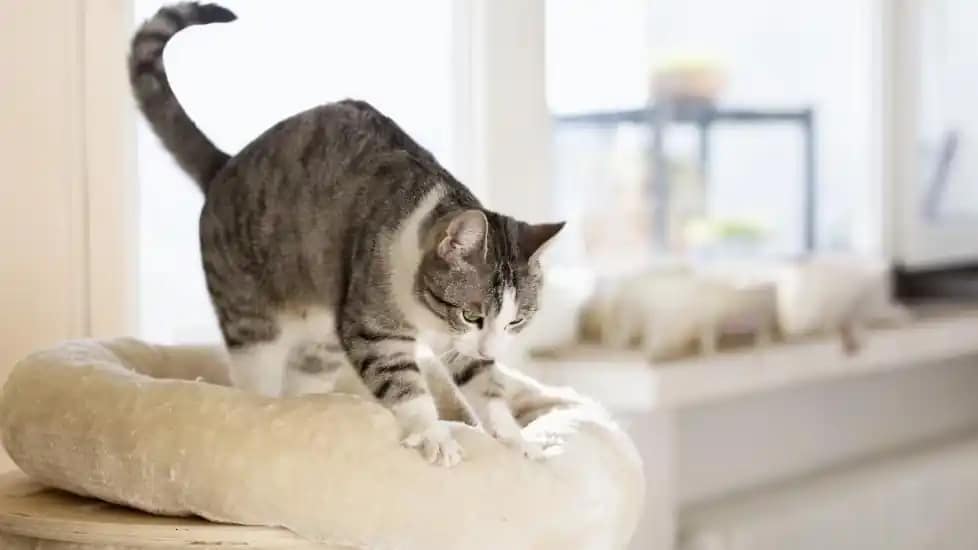
Is Excessive Kneading a Red Flag? When to Tune In
Why is my cat kneading so much all of a sudden?
Direct answer: A sudden increase in kneading is often a self-soothing response to stress—or sometimes a sign your cat is trying to relieve discomfort.
Common triggers:
- changes in routine (travel, new work hours, visitors)
- new pets or household tension
- moving furniture / new smells
- pain signals (stiffness, sensitivity, avoiding jumps)
What to do first:
- do a quick “life change” scan (anything new this week?)
- increase predictability (playtime, feeding schedule, quiet rest spot)
- if you see limping, hiding, appetite changes, or obvious discomfort: vet check
Kneading is widely considered a self-soothing behavior: it’s rhythmic, familiar, and often shows up when cats are settling down, relaxing, or bonding. If your cat’s kneading suddenly becomes more frequent, more intense, or starts happening in unusual places, treat it as a behavior change—stress and physical discomfort are two common contributors. VCA notes that changes like kneading “a lot more than normal” (especially alongside other changes like hiding or appetite shifts) are a good reason to check in with your veterinarian.
- Anxiety Alerts: More kneads might mean she’s self-soothing through stress, like changes in routine or new household vibes.
- Physical Pings: Arthritis twinges or sore paws could prompt extra stretches via kneading.
- Habit loop (rare): In a small number of cats, repetitive kneading can look “stuck on repeat,” especially during stress. Rather than labeling it as a disorder, focus on function: if kneading interferes with normal sleep, play, eating, or seems impossible to interrupt, it’s a good reason to ask a vet (or a qualified behavior professional) for a plan.
Don’t panic—most kneading is pure joy. But if it’s non-stop or paired with hiding/lethargy, chat with your vet. Early tweaks, like environmental enrichments or gentle exams, can nip issues in the bud. Remember, you’re her advocate; tuning into these cues strengthens your partnership.
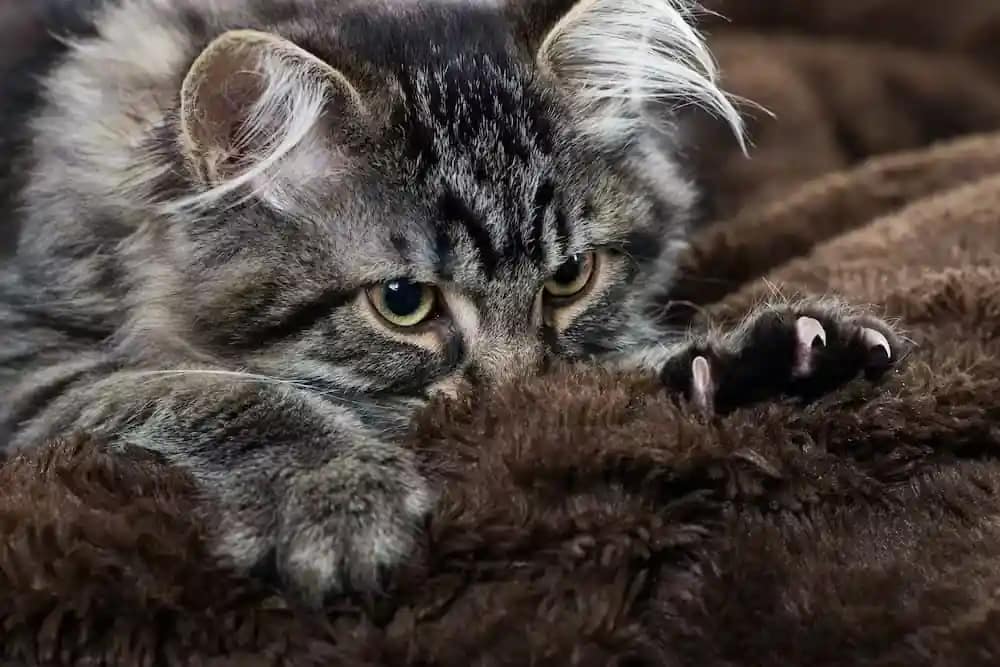
Gentle Ways to Guide (Not Stop) the Biscuit-Making
Kneading is as natural as purring—your cat deserves to express it. The goal? Redirect with kindness, keeping claws in check without dimming her spark. Here’s a pet-parent playbook:
Do’s for Harmony
- Vet Check-In First: Rule out health hiccups. For anxiety-driven kneads, explore calming aids like pheromone diffusers (think gentle scent therapy) or vet-recommended supplements—always under pro guidance.
- Designate & Reward: Set up cozy knead stations (blankets, cat beds) and shower praise (or treats) when she uses them. Positive vibes encourage the right spots.
- Claw Care Routine: Regular trims blunt those hooks, safeguarding your skin and sofa. Pair with scratching posts for full-body bliss.
Don’ts to Dodge
Skip the Scolds: Yelling or sprays? They amp up fear, not fixes—your cat might just hide her habit from you.
Never Declaw: It’s an outdated, painful myth-buster. Don’t declaw to solve kneading or scratching. The American Animal Hospital Association (AAHA) describes declawing as amputation of the third bone in each toe, and notes it carries surgical risks and pain.
AAHA also cites retrospective studies finding declawed cats were 3–7 times more likely than non-declawed cats to show issues such as chronic back pain and certain problem behaviors (e.g., biting, inappropriate urination, overgrooming). Focus on alternatives like nail trims, scratching posts, positive reinforcement, and (if needed) nail caps.
With these tweaks, you honor her instincts while cozying up your shared space. It’s all about that win-win purr-fect life.
In wrapping up this whisker-twitching tale, kneading reveals your cat’s deepest comforts—from kitten roots to adult affections. It’s a window into her world, reminding us why we fell for these enigmatic companions. Takeaway for fellow cat parents: Embrace the biscuits with boundaries. Provide soft outlets, trim those talons, and consult pros if patterns shift.
Your attuned care turns everyday quirks into cherished rituals, fostering a home brimming with trust and tail-tucked naps. What’s your cat’s go-to knead spot? Share in the comments—we’re all in this fluffy fray together.
FAQ
Why do cats knead blankets specifically?
Blankets offer that ideal soft, yielding texture reminiscent of mom during nursing, helping cats unwind and mark territory with paw scents. It’s a multi-tasking comfort ritual!
Is it normal for adult cats to knead like kittens?
Absolutely—many carry this soothing habit lifelong for relaxation and security. If it’s gentle and occasional, it’s a sign of contentment, not concern.
How can I stop my cat from kneading me with claws?
Redirect to a dedicated blanket or toy, trim nails regularly, and use a protective layer on your lap. Reward her for using approved spots to reinforce good habits.
Does excessive kneading mean my cat is in pain?
It could signal stress, anxiety, or joint issues like arthritis. Monitor for other signs (e.g., limping) and consult your vet for a tailored check-up.
Can kneading be a sign of affection from my cat?
Yes! It’s often her way of saying “I trust and love you,” echoing those early bonding kneads with mom. Cherish it as a heartfelt feline hug.
References
Hart, H., DVM. (2023, December 1). Why do cats knead?
Brister, J. M. (2018, November). Body language of cats.
Yeowell, G., Burns, D., Fatoye, F., Gebrye, T., Wright, A., Mwacalimba, K., & Odeyemi, I. (2021, November 18). Indicators of health-related quality of life in cats with degenerative joint disease: Systematic review and proposal of a conceptual framework.
American Association of Feline Practitioners. (2024, August 26). Find a veterinary professional.
American Animal Hospital Association. (n.d.). AAHA-accredited hospital locator.
Governor of California. (2025, October 9). Governor Newsom takes action to end the puppy mill pipeline, protect cats. CA.gov.
Assemblymember Alex Lee (AD-24). (2025, October 10). California bans cat declawing.
Brister, JM. “Body Language of Cats,” Veterinary Partner. November 2018.









 EN
EN DE
DE ES
ES PT
PT