
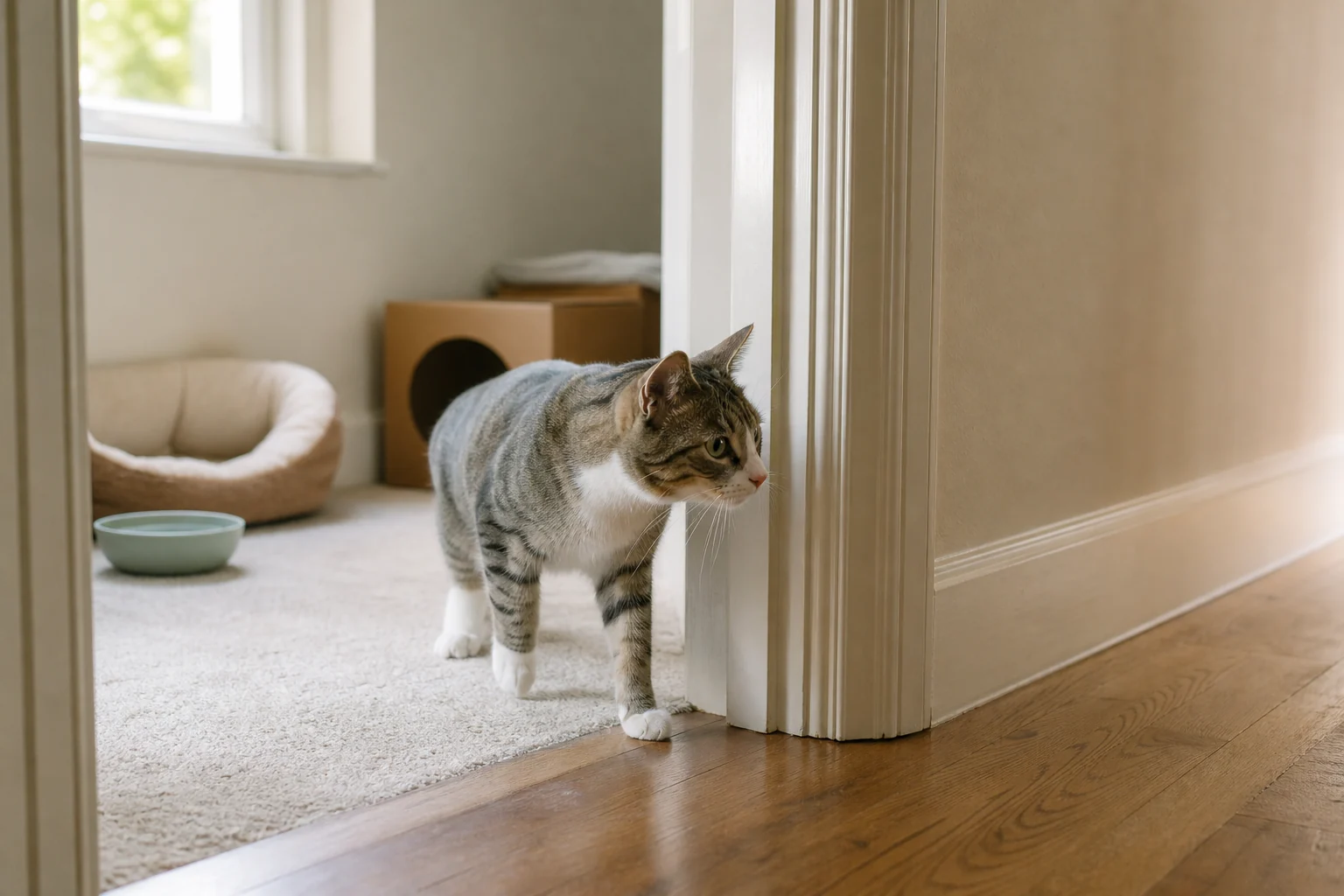
Let a new cat explore the house room by room only after the starter room is working: your cat is eating, drinking, using the litter box, resting, and showing curiosity at the door. Open one small area at a time, keep the route back clear, and treat retreating as useful information, not failure.
This guide picks up after the first safe-room period. If your cat is still on day one, start with SnuggleSouls' guide to how to settle a cat into a new home first, then come back when your cat is ready for the next space.
Room-by-room exploration works because it gives your cat control. A new home is a new territory full of unfamiliar scent, sound, doorways, floor surfaces, hiding spots, and possible escape routes. Cats often cope with stress by hiding or retreating, and gradual access lets them map the home without feeling trapped.1
Índice
- What should be true before you open the starter-room door?
- What should you check before each new room?
- What confidence cues mean your cat is ready?
- How should you open the first new room?
- How fast should room-by-room exploration happen?
- How do doors, gates, and routes change the plan?
- When should you pause exploration or call your veterinarian?
- Conclusion: Open new rooms at your cat's pace
- Preguntas frecuentes
- Referencias
What should be true before you open the starter-room door?
Before you open the door, your cat should be using the starter room reliably. That does not mean your cat must be cuddly or fearless. It means the basics are steady enough that more space is unlikely to interrupt eating, litter use, sleep, or safety.
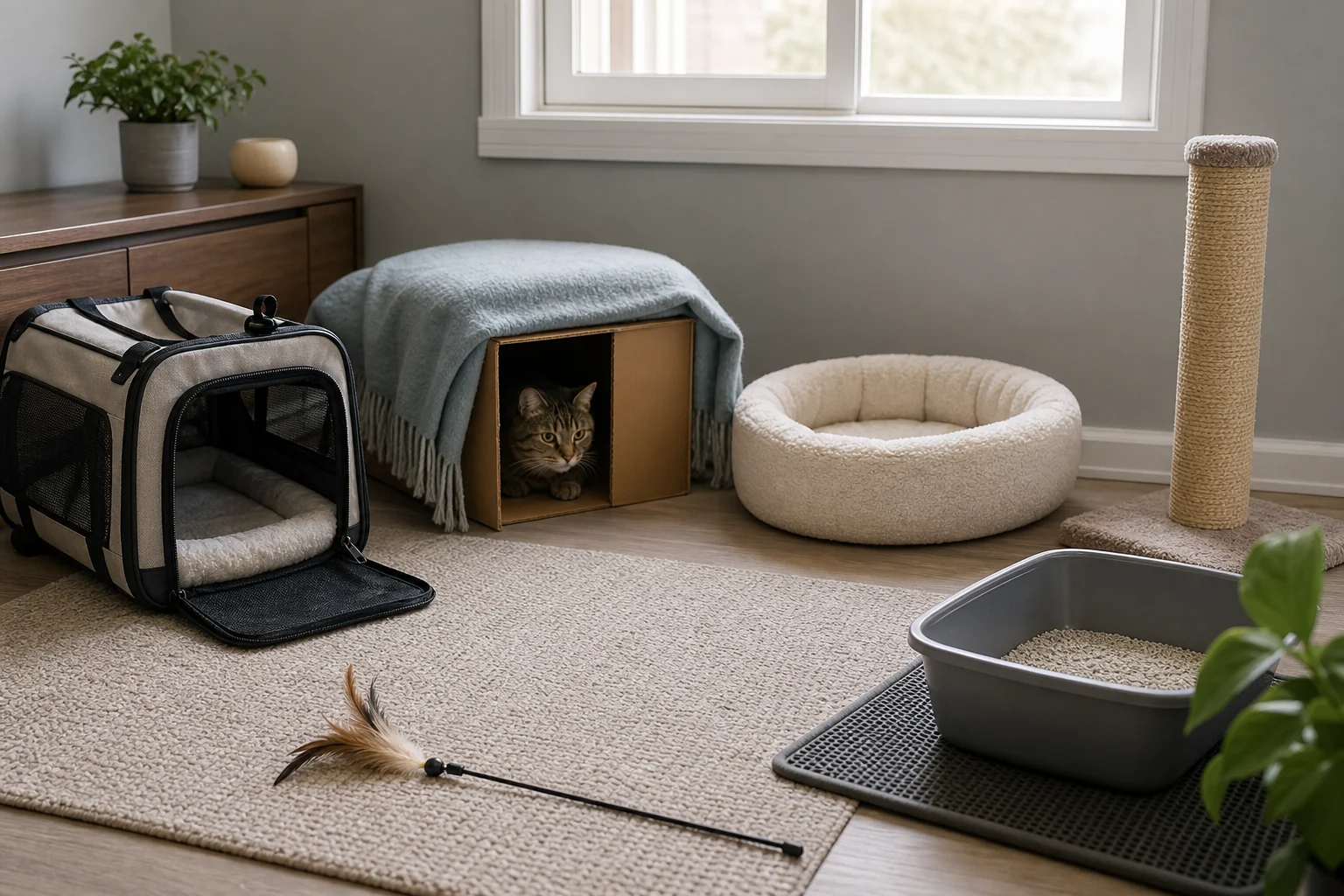
Look for these starter-room signs:
| Readiness check | Ready enough to try | Slow down if you see this |
|---|---|---|
| Eating | Eats at least some normal meals | Refuses food or only nibbles for a full day |
| Drinking | Water level changes or wet food intake is steady | No clear fluid intake |
| Caja de arena | Urine and stool appear normal for this cat | Straining, accidents, diarrhea, or no urine seen |
| Resting | Sleeps in a chosen hide, bed, carrier, or open spot | Cannot settle, freezes, or panics at ordinary sounds |
| Door interest | Sniffs, listens, paws gently, or watches the gap | Bolts, hides harder, or growls at the door |
| Human response | Accepts quiet visits or ignores you calmly | Flattens, swats, or trembles when approached |
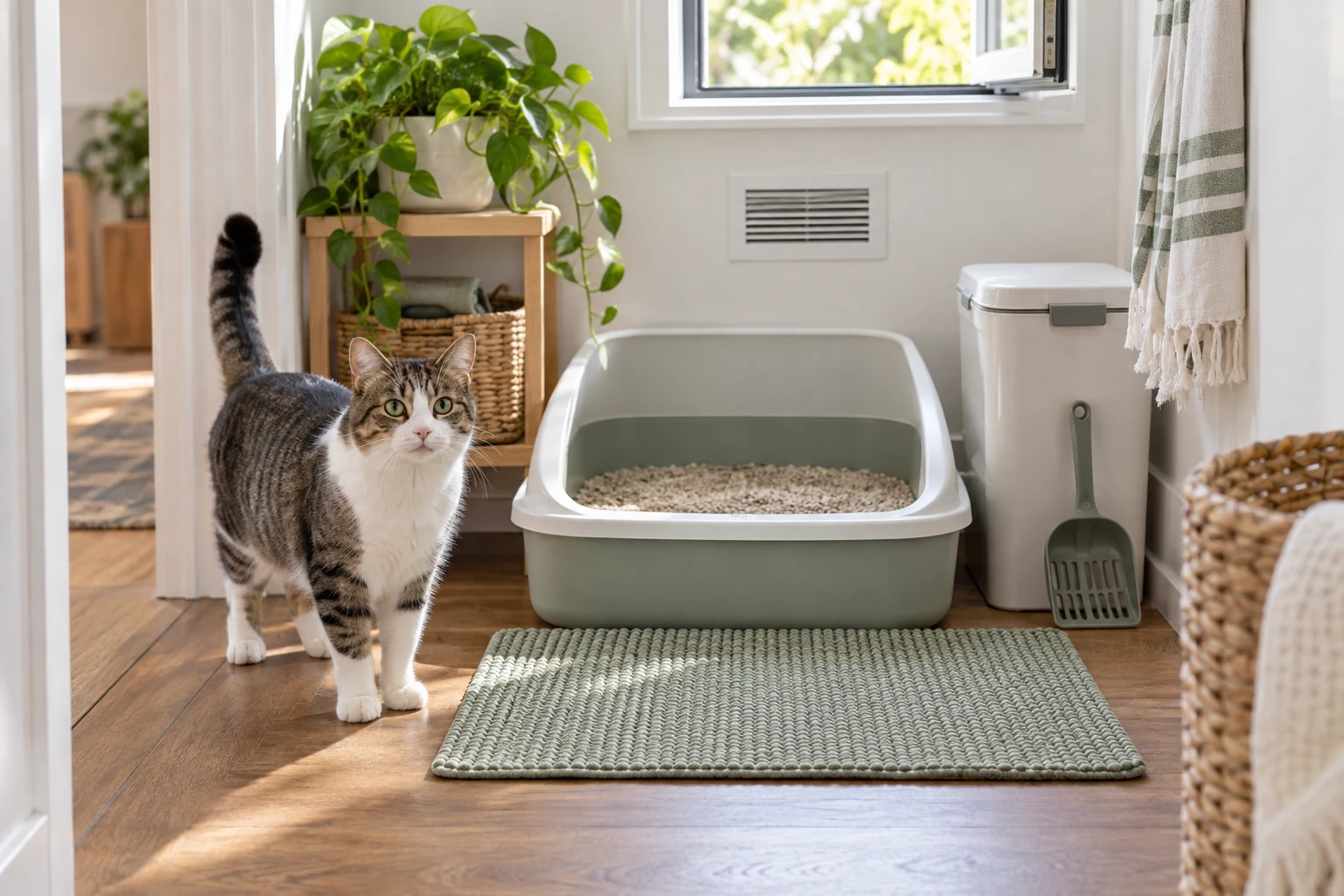
The starter room should stay stocked after exploration begins. Do not move the litter box to another part of the house the same day you open the door. Keep the carrier, hiding box, water, bed, and scratcher available so your cat has a familiar base.
SF SPCA recommends an initial small room with food, water, litter, toys, scratching, and a bed, then letting the cat decide when to leave the carrier and later explore at their own pace.1 That "own pace" principle remains important after the first room.
What should you check before each new room?
Check each room like a cat might use it: low, high, behind, under, and through. A space that looks ordinary to a person may have a loose window screen, a reclining chair gap, a washer-dryer opening, a toxic plant, a string hazard, or a hole under cabinets.
Before your cat enters a new room, do a quick pass:
- Close exterior doors and secure windows.
- Block gaps behind appliances, under cabinets, and inside unfinished areas.
- Remove string, ribbon, thread, rubber bands, dental floss, and small swallowable items.
- Put cleaning products, medications, essential oils, and toxic plants out of reach.
- Check recliners, sofa beds, fireplaces, balconies, and laundry machines.
- Make sure there is at least one clear path back to the starter room.
- Add a safe hide, perch, or covered bed if the room is open or echoey.
- Keep dogs, toddlers, and visitors out of the exploration zone.
Use SnuggleSouls' guide to una casa a prueba de gatos if you need a deeper room-by-room hazard check before opening more doors.
AAFP and ISFM environmental guidelines frame a healthy feline environment around safe places, separated key resources, opportunities for play and predatory behavior, positive human interaction, and respect for scent communication.2 For a new cat, that means a room should offer more than empty floor space. It should offer somewhere to hide, observe, turn around, and leave.
What confidence cues mean your cat is ready?
Your cat is ready for more space when curiosity starts to outweigh worry. Confidence often appears in small, practical cues before a cat looks fully relaxed.
Useful cues include:
- approaching the door without crouching flat
- sniffing the threshold and then walking away calmly
- eating treats near the door
- playing briefly near the doorway
- resting in the open after household sounds
- rubbing cheeks on furniture or door frames
- walking back to the starter room instead of sprinting
- returning to normal food and litter habits after a short exploration
Do not rely on one cue alone. A cat who rushes at the door may be curious, but may also be overaroused or frustrated. A better sign is flexible behavior: your cat can look, sniff, pause, retreat, and recover.
Cats often hide when anxious or threatened, and safe hiding areas help them feel protected from noise, people, and other animals.5 If your cat hides after peeking out but later eats and uses the litter box normally, that may simply mean the session was enough for the day. SnuggleSouls' guide to por qué se esconden los gatos can help you read the pattern in context.
How should you open the first new room?
Open the first new room during a quiet part of the day, not during dinner chaos, cleaning, guests, deliveries, or dog play. Choose a nearby low-traffic space such as a hallway, office, or bedroom. Avoid opening the whole house at once.
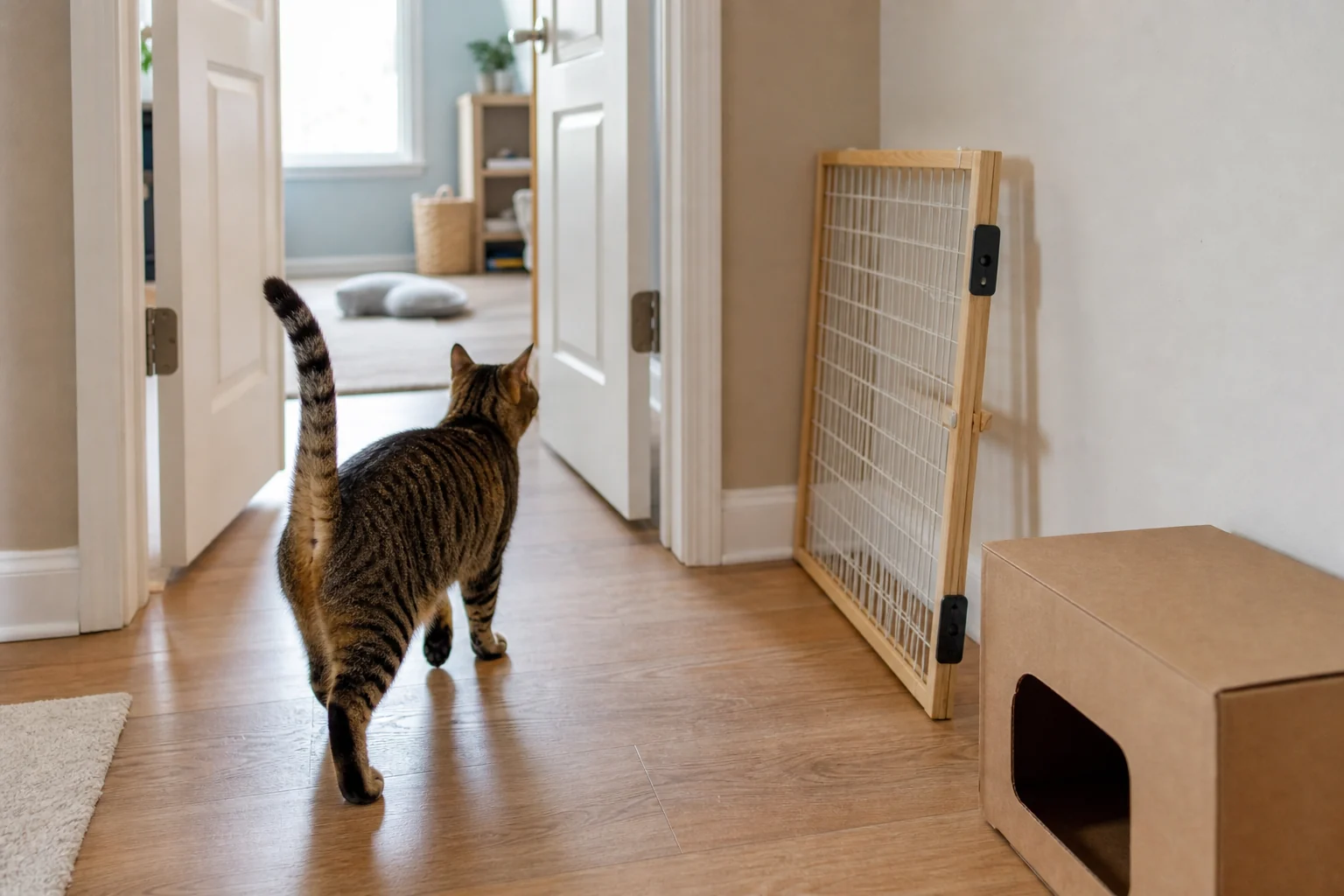
Try this first session:
- Put other pets and children behind a closed door.
- Open only the starter-room door and one nearby area.
- Sit sideways or stand back from the route.
- Let your cat decide whether to cross the threshold.
- Keep the starter-room door open the entire time.
- Offer calm praise or a treat if your cat is already comfortable with treats.
- End after a few minutes or when your cat returns to the starter room.
- Close the door gently and let your cat decompress.
Do not carry the cat into the new room to "show them around." Do not block the return path for a photo, a cuddle, or a family introduction. The value of the session is that your cat learns exploration is reversible.
SF SPCA notes that many cats make short investigations and quick retreats to their safe haven when exploring new territory.1 That pattern is normal. A retreat does not mean the plan failed; it means the safe room is doing its job.
How fast should room-by-room exploration happen?
Most cats do best when you add space in small increments across days, not minutes. A confident cat may explore two rooms quickly and nap afterward. A cautious cat may need several days of doorway sniffing before entering the hall.
Use your cat's recovery after each session as the pacing guide:
| After exploration, your cat… | What it means | Siguiente paso |
|---|---|---|
| Eats, rests, and uses the litter box normally | Session was probably manageable | Repeat or add one similar space next time |
| Hides briefly, then recovers | Mild stress but tolerable | Keep the next session shorter |
| Refuses food, avoids the box, or hides hard all day | Too much too soon or possible illness | Return to starter-room routine |
| Bolts, yowls, pants, or crashes into objects | Overwhelmed or unsafe setup | Stop and reassess the environment |
| Becomes aggressive when handled or blocked | Fear, pain, or overstimulation may be present | Give space and avoid forced contact |
Cats Protection says a change of environment can be stressful and may take a few weeks before cat and caregiver feel relaxed.3 That timeline is not a deadline. The better measure is whether your cat is gaining normal behaviors: eating well, grooming, playing, scent marking, exploring, and seeking attention when ready.3
For a broader adoption timeline, use SnuggleSouls' Los primeros 30 días con tu nuevo gato as the larger routine, and treat room access as one part of that adjustment.
How do doors, gates, and routes change the plan?
Doors and gates are not just barriers. They shape whether a new cat feels in control. The best setup gives the cat clear choices: enter, observe, retreat, hide, perch, or pause.
Use doors this way:
- Keep the starter-room door open during supervised exploration.
- Close doors to unsafe or unprepared rooms.
- Avoid a maze of half-open doors that can trap the cat in a closet, laundry room, or basement.
- Close the session by waiting until your cat is back in the starter room when possible.
Use gates carefully:
- A gate can block a dog or toddler, but many cats can jump or climb it.
- Never assume a gate is enough separation from a dog with chase drive.
- Keep visual access low-pressure; staring through a gate can be stressful.
- Give the cat a route to a high or hidden place if a gate creates exposure.
Use routes this way:
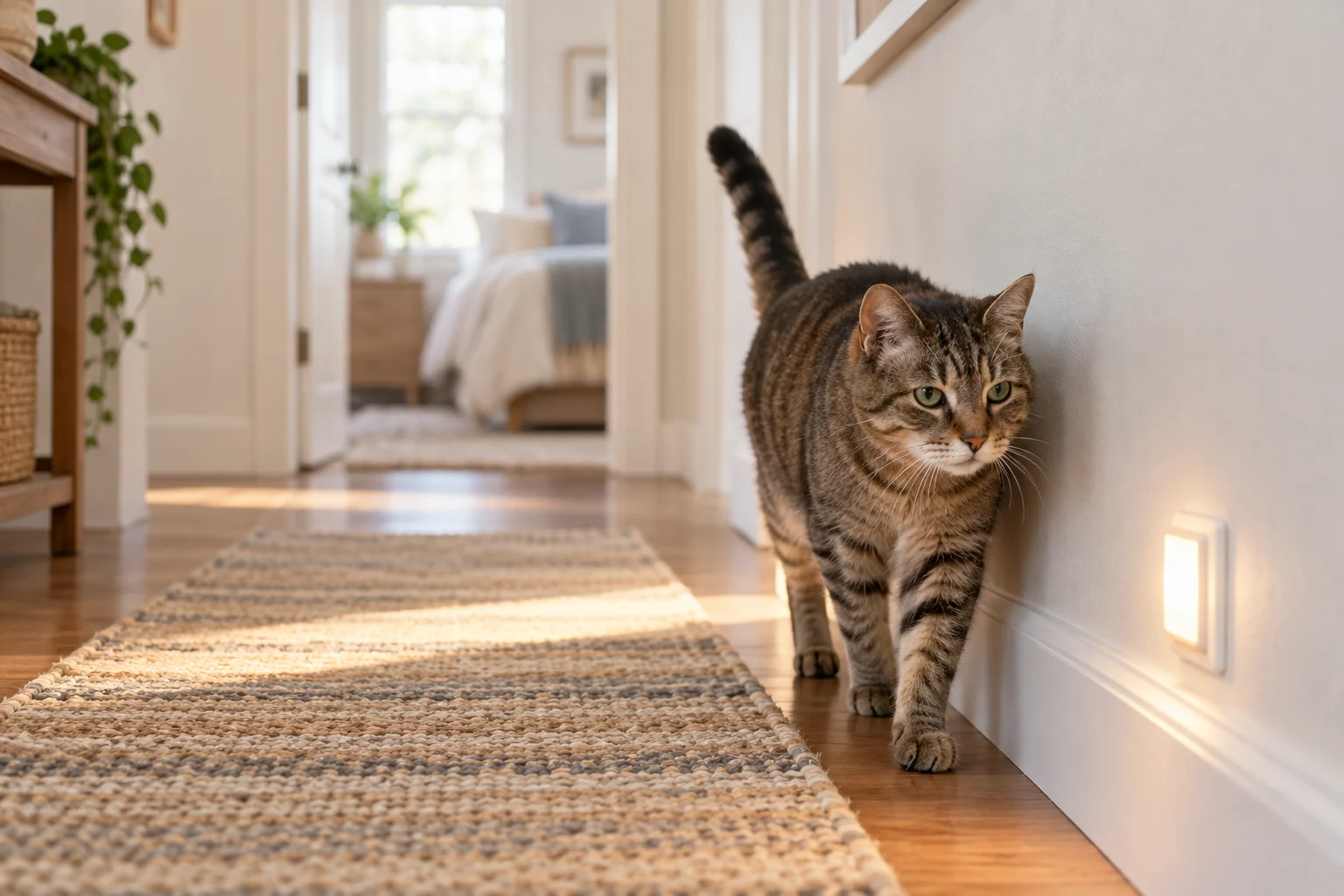
- Keep hallways quiet and uncluttered.
- Avoid blocking the cat's path with your body.
- Put a temporary cardboard hide near a threshold if the space is open.
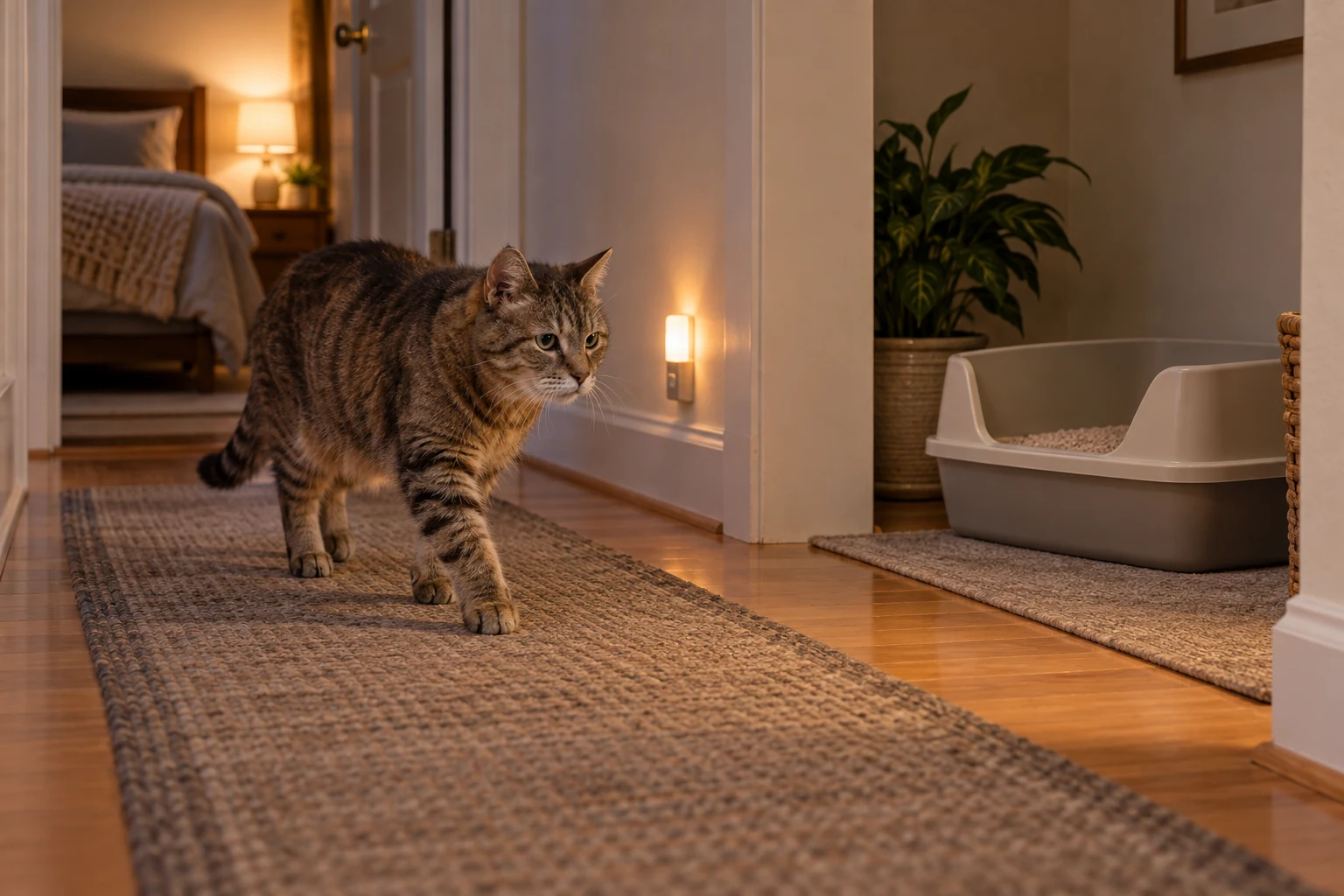
- Add non-slip rugs if slick floors make your cat hesitant.
- Make sure the litter box remains reachable without crossing busy traffic.
Ohio State's Indoor Pet Initiative lists indoor needs such as litter boxes, scratching, resting areas, perches, toys, refuge, and gradual changes as part of a cat-friendly home.4 When you open a room, think in those terms. A room with a perch, a hide, and a return route is easier to understand than a wide open room with nowhere to pause.
When should you pause exploration or call your veterinarian?
Pause exploration if your cat seems less stable after more space. Go back to the starter room, reduce household traffic, and repeat the last successful step before opening anything new.
Pause and reassess if you see:
- hiding that becomes more intense after each session
- appetite dropping after exploration
- litter box avoidance or accidents
- growling, swatting, or panic at doorways
- repeated attempts to escape outdoors
- resident pets chasing, staring, or blocking routes
- children following, grabbing, or cornering the cat
Call your veterinarian promptly if your cat has not eaten for 24 hours, is not drinking, vomits repeatedly, has severe diarrhea, breathes with effort, collapses, seems painful, or declines quickly. Seek urgent care if your cat repeatedly enters the litter box but produces little or no urine, cries while trying to urinate, or seems distressed around urination.
New-home stress can change behavior, but it should not be used to explain away possible illness. If you recently adopted your cat, schedule the new cat's first vet visit and bring notes about appetite, water intake, urine, stool, hiding, and exploration sessions.
Conclusion: Open new rooms at your cat's pace
The safest way to let a new cat explore the house is to keep the starter room useful, open one prepared area at a time, and let your cat control the threshold. Your job is not to make exploration happen faster. It is to make every route clear, every retreat allowed, and every new room predictable enough that curiosity can grow.
If your cat explores for a few minutes and returns to the safe room, that is progress. If your cat eats, uses the litter box, rests, and tries again later, the room-by-room plan is working. For more next-step reading, SnuggleSouls' Guías sobre el comportamiento de los gatos can help you connect hiding, stress signals, play, and home routines.
Preguntas frecuentes
Should I let my new cat explore the whole house right away?
Usually no. Most new cats do better with one starter room first, then gradual access to nearby rooms once they are eating, drinking, using the litter box, and showing curiosity.
How many rooms should I open at once?
Open one new area at a time at first. If your cat recovers easily, you can expand gradually, but the starter room should remain open as the reliable retreat.
What if my new cat runs back to the safe room?
Let them. Running back means the cat knows where safety is. End the session calmly, keep the route familiar, and try a shorter or quieter session later.
Should I close the starter-room door after my cat leaves?
No during early exploration. Keep the door open so your cat can return. Closing the route can make exploration feel like a trap and may increase panic.
Can I use treats to lure my cat into a new room?
You can place treats near a threshold if your cat is already comfortable, but do not lure so far that the cat feels tricked or exposed. Let the cat choose the distance.
How do I introduce room-by-room exploration with another cat at home?
Keep the new cat separate at first. Use scent swapping and controlled visual introductions before shared space. Do not let a resident cat block the doorway or chase the newcomer.
What if my cat only explores at night?
Night exploration can be normal because the house is quieter. Keep hazards controlled overnight, watch food and litter use, and offer daytime doorway sessions without pressure.
When is hiding after exploration a problem?
Hiding is more concerning when it worsens, lasts without improvement, or comes with not eating, litter box changes, vomiting, diarrhea, breathing trouble, pain, weakness, or rapid decline.
Referencias
[1] San Francisco SPCA. (n.d.). Bringing Your New Cat Home. https://www.sfspca.org/resource/bringing-your-new-cat-home/
[2] Asociación Americana de Veterinarios Especializados en Felinos y Sociedad Internacional de Medicina Felina. (2013). Directrices sobre las necesidades ambientales de los gatos. https://catvets.com/resource/aafp-isfm-environmental-needs-guidelines/
[3] Cats Protection. (n.d.). Bringing a Cat Home. https://www.cats.org.uk/help-and-advice/home-and-environment/bringing-a-cat-home
[4] The Ohio State University Indoor Pet Initiative. (n.d.). Basic Indoor Cat Needs. https://indoorpet.osu.edu/cats/basic-indoor-cat-needs
[5] The Ohio State University Indoor Pet Initiative. (n.d.). Hiding Instinct. https://indoorpet.osu.edu/cats/understanding-cats/hiding-instinct
 EN
EN DE
DE ES
ES PT
PT