
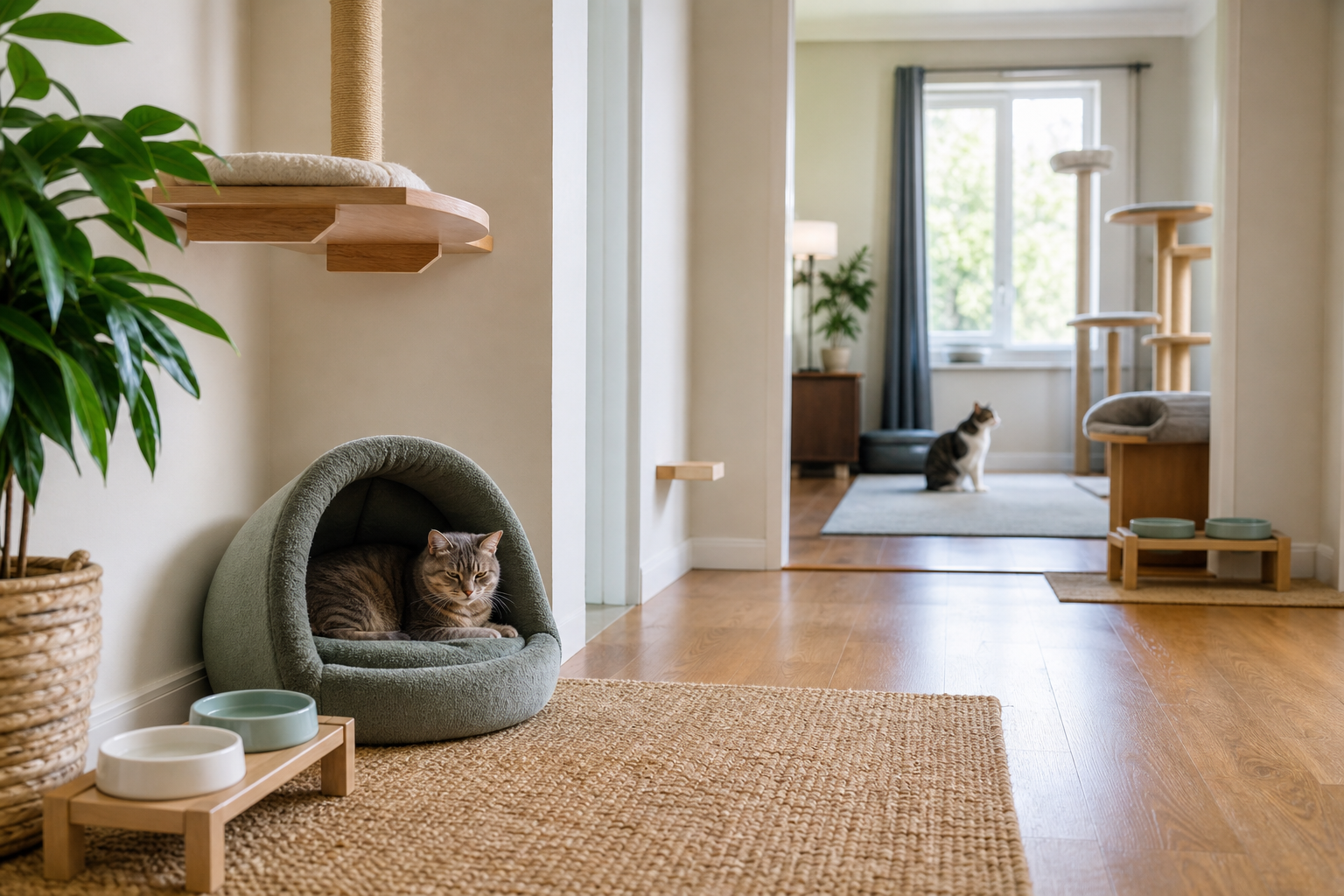
To create safe zones for a bullied cat, give the target cat places where they can rest, eat, drink, use the litter box, and move through the home without being blocked by the other cat. A safe zone is not a punishment room; it is a protected recovery setup that restores choice, distance, and predictability.
This matters because tension between cats is often quiet. One cat may stare, sit in a hallway, guard a doorway, hover near a litter box, or rush the target cat only when people are not watching. The bullied cat may look "shy" or "lazy" when the real problem is that the home layout makes every important resource feel risky.
Índice
- When should you separate the cats first?
- What does a safe zone for a bullied cat need?
- How should you place food, water, litter, and beds?
- How can you create safer routes through the home?
- How do you know the bullied cat feels safer?
- How do you rebuild confidence after the safe zone is working?
- When should you call a vet or behavior professional?
- Conclusion: restore choice and distance
- Preguntas frecuentes
- Referencias
When should you separate the cats first?
Separate the cats right away if one cat is being chased, cornered, attacked, kept from food or litter, or hiding most of the day. The bullied cat needs an immediate pressure-free area before you try to rebuild the relationship.
Set up a starter room with a door that closes. Put the target cat's essentials inside: food, water, litter, bed, scratcher, hiding place, perch if possible, and familiar scent items. This is temporary protection, not a permanent verdict that the cats can never share space again.
If the cats have been fighting, do not let them "work it out." The ASPCA warns that cat fights usually become worse when allowed to continue, and it recommends separating cats and reintroducing them gradually when aggression occurs 4. SnuggleSouls' guide on how to evitar que un gato se meta con otro covers the immediate interruption step; this article focuses on the target cat's recovery space after that first safety step.
Use this quick decision table:
| Lo que ves | Qué puede significar | Un siguiente paso más seguro |
|---|---|---|
| One cat blocks a doorway, stairs, or hall | Resource or route control | Add another route or keep doors separated for now |
| The target cat runs, crouches, freezes, or hides when the other cat appears | Fear or avoidance | Give the target cat a closed safe room and predictable routine |
| One cat guards food, water, beds, people, or litter | Resource pressure | Duplicate and separate resources in different areas |
| Fighting includes bites, repeated swats, fur flying, or injuries | Unsafe conflict | Separate, check for injuries, and call a vet or behavior professional |
| The target cat stops eating, eliminates outside the box, or changes suddenly | Stress, pain, or illness may be involved | Arrange veterinary care and keep the cats apart |
What does a safe zone for a bullied cat need?
A safe zone needs three things: privacy, resources, and exits. The cat should be able to hide, rest, eat, drink, scratch, use the litter box, and leave the area without being trapped by another cat.
The 2013 AAFP/ISFM environmental needs guidelines describe safe places as a core part of feline welfare, especially because cats often cope with stress by hiding or avoiding pressure 2. In a multi-cat home, that safe place should not be a dead-end where one cat can stand at the entrance and block access.
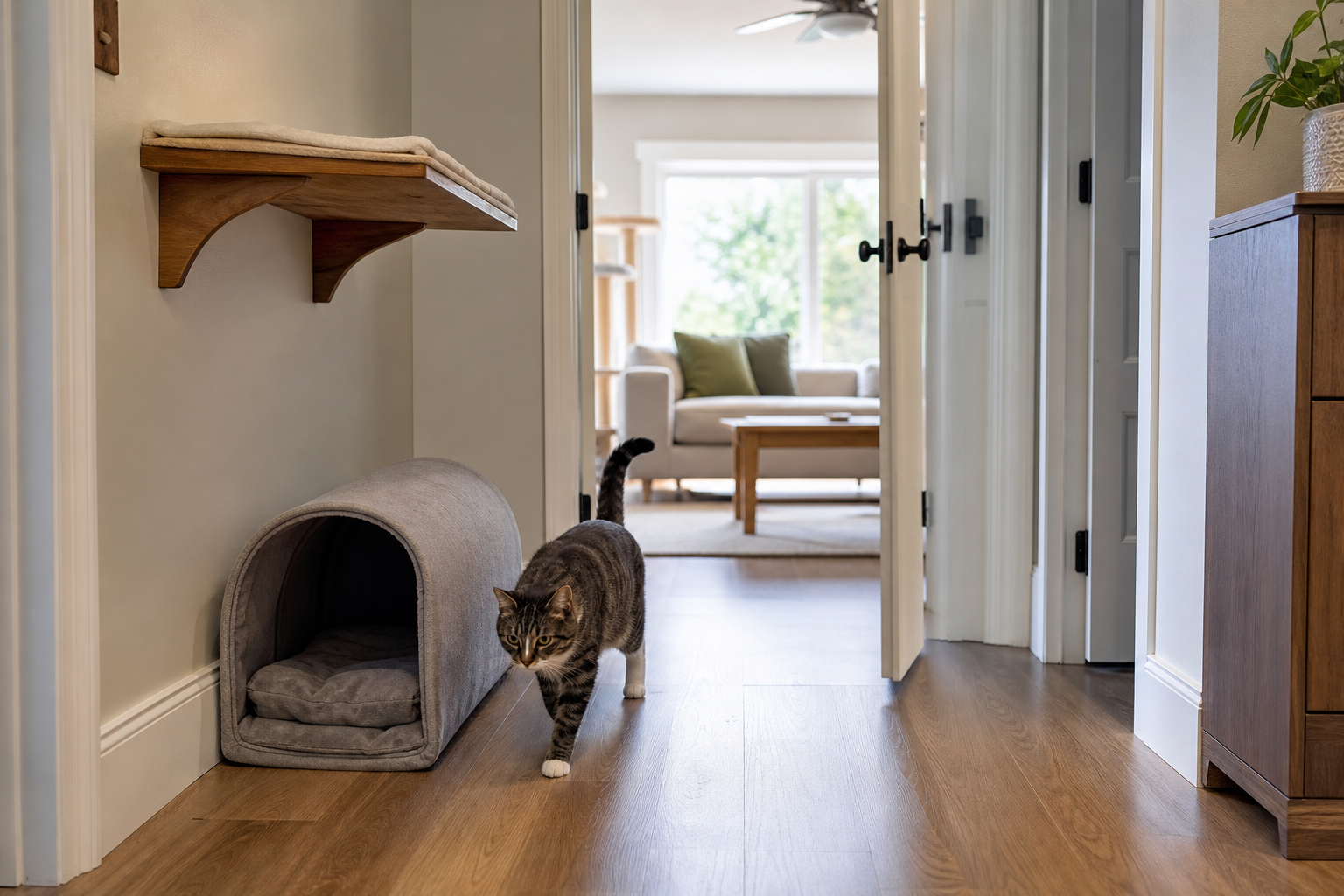
Build the safe zone with:
- A covered bed, box, carrier, or soft-sided hideaway.
- At least one elevated option, such as a sturdy shelf, cat tree, or window perch.
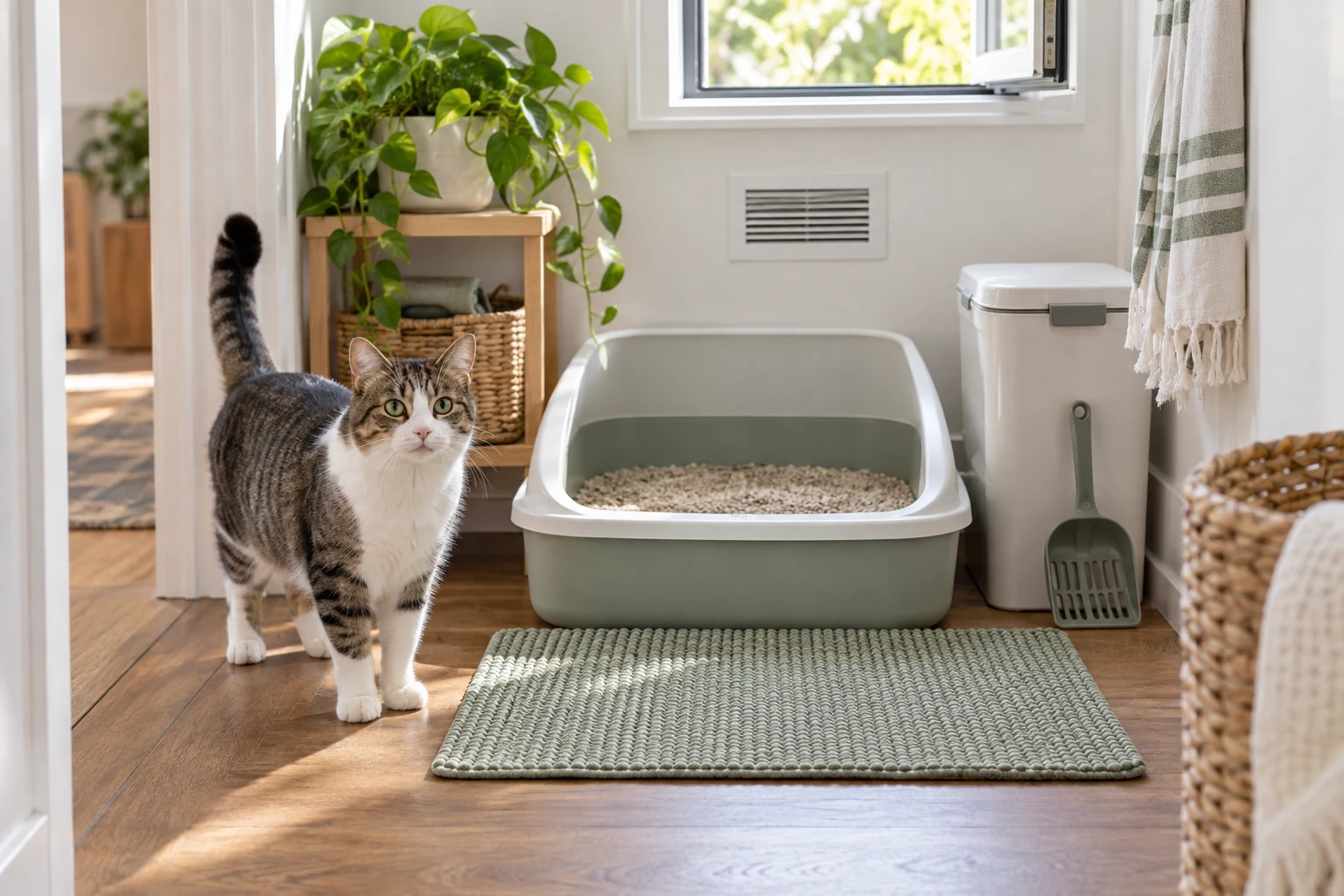
- A litter box that is easy to reach and not boxed into a tight corner.
- Food and water placed away from the litter box.
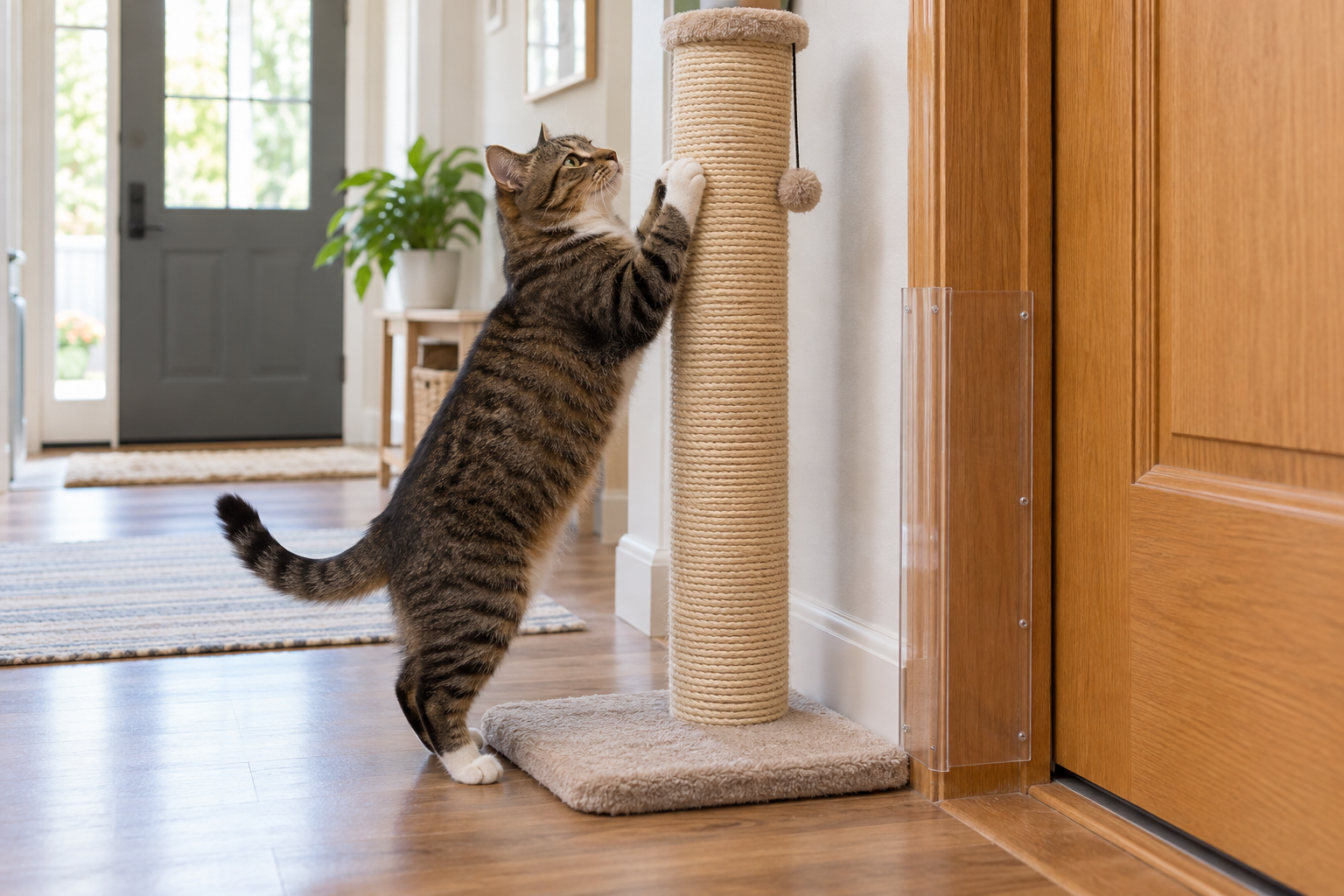
- A scratcher near a resting or doorway area.
- Soft bedding that already smells familiar.
- A door, gate, or controlled barrier when the bullied cat needs full separation.
For older cats, kittens, or cats with mobility limits, do not make the safe place only high up. Use low-entry beds, stable ramps, and easy floor-level hiding options so the cat does not have to jump while stressed.
How should you place food, water, litter, and beds?
Place resources far enough apart that one cat cannot guard everything from a single hallway, doorway, or central perch. In a tense multi-cat household, "two bowls beside each other" is still one resource station from the cats' point of view.
International Cat Care recommends multiple resources in multi-cat homes, including food, water, litter trays, beds, and high resting places 3. The AAFP intercat tension guidelines also frame multi-cat management around separated resources, social mapping, and preventing one cat from controlling access 1.
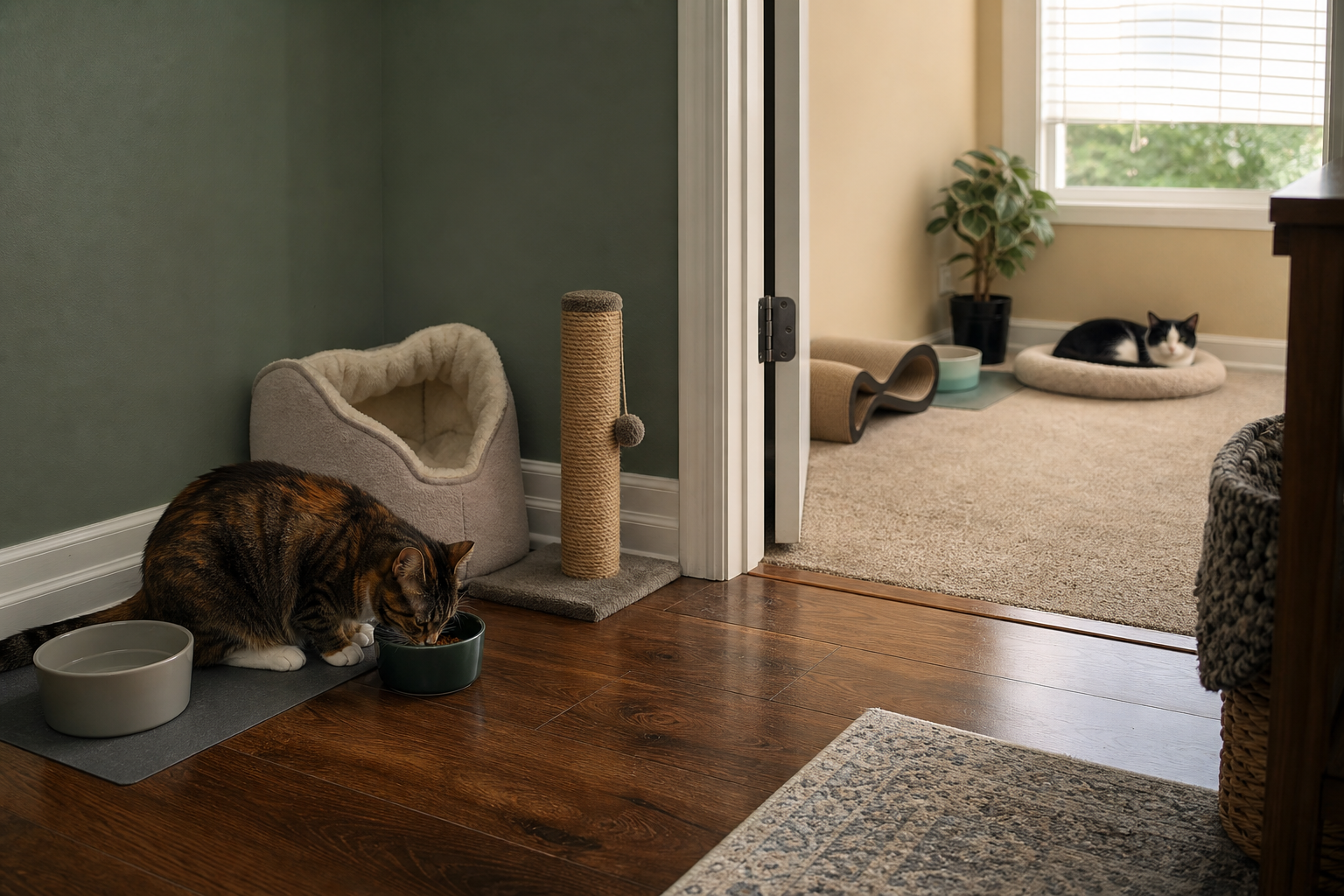
Use this placement checklist:
- Put food stations in separate rooms or around visual barriers.
- Place water in more than one quiet spot, not only beside the food.
- Use litter boxes in separate areas, with the path to each box kept open.
- Give each cat more than one resting option.
- Put scratchers near important routes and resting places.
- Keep the target cat's favorite human access available when possible.
For litter boxes, the route matters as much as the box. If the only box is behind a couch, near the confident cat's favorite lookout, or down a narrow hallway, the bullied cat may avoid it even if the litter is clean. SnuggleSouls' La mejor configuración para la bandeja sanitaria del gato guide can help you rethink size, location, and escape space.
How can you create safer routes through the home?
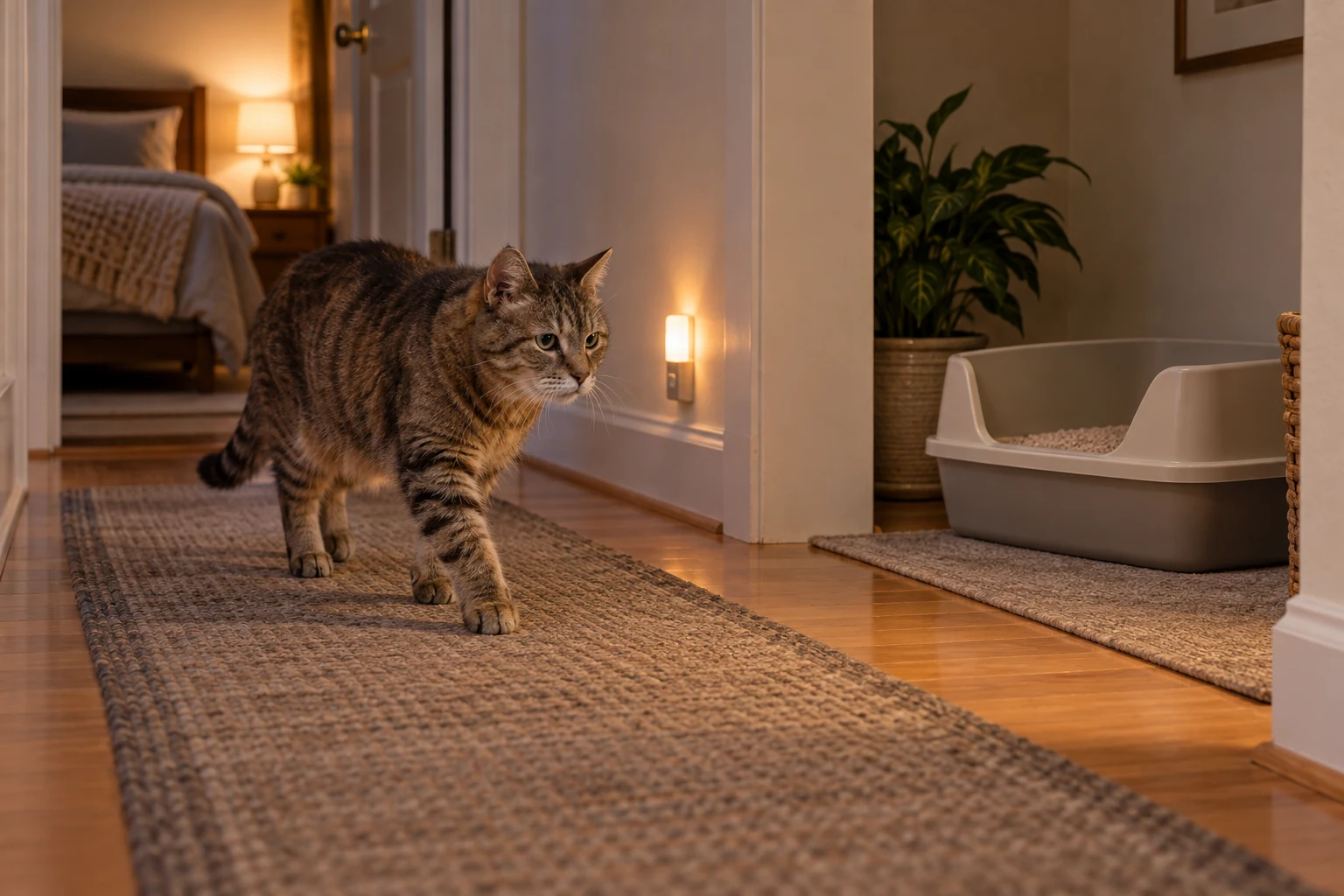
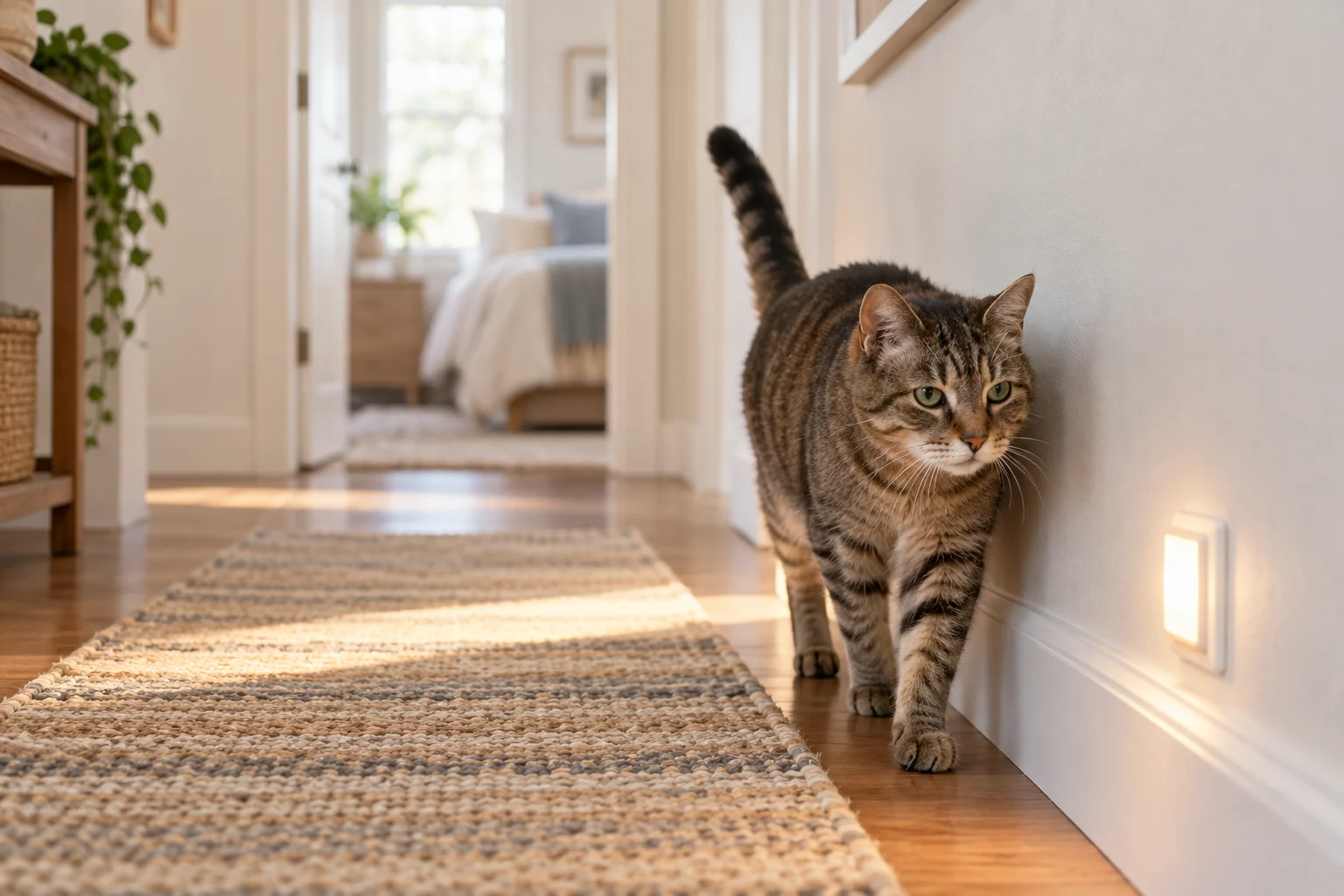
Create safer routes by removing bottlenecks and adding choices: open doors, alternate paths, vertical steps, and visual breaks. The bullied cat should not have to pass within inches of the other cat to reach food, water, litter, sleep, or people.
Start by drawing a simple map of your home. Mark the places where the bullied cat eats, drinks, sleeps, hides, uses the litter box, and gets attention. Then mark where the other cat usually waits, stares, blocks, or chases. This makes invisible pressure easier to see.
Common route fixes include:
- Move a bowl out of a hallway and into a quieter room.
- Add a second water bowl past the blocked zone.
- Pull furniture away from walls so the cat can pass behind or around it.
- Add a baby gate with a small cat-sized pass-through only if it helps the target cat and does not trap them.
- Put a perch near a doorway so the cat can pause above floor traffic.
- Keep the safe room door open only during supervised low-pressure periods.
- Add a second litter box on the target cat's side of the home.
Avoid creating a hiding place with only one exit if the other cat can sit in front of it. Covered beds, tunnels, cardboard boxes, and carriers are useful, but they are safer when the cat can leave without pushing past a blocker.
How do you know the bullied cat feels safer?
The bullied cat is safer when they move more freely, rest in open-but-protected spots, eat normally, use the litter box consistently, and recover faster after seeing the other cat. You are looking for relaxed choice, not instant friendship.
Track small signs for two weeks:
- The cat comes out sooner after household noise.
- Meals are finished without looking over the shoulder.
- Litter box use is predictable.
- Resting places become more varied.
- The cat walks rather than dashes through rooms.
- Tail, ears, and body posture look looser.
- The cat accepts play or gentle attention again.
If hiding is still the main sign, compare the pattern with SnuggleSouls' guide to Por qué se esconde tu gato. Some hiding is normal decompression; hiding that replaces eating, toileting, grooming, play, or social contact can mean the cat still does not feel safe.
Use the broader Guías sobre el comportamiento de los gatos to read related signals, but keep the standard practical: can this cat access everything they need without being watched, chased, blocked, or rushed?
How do you rebuild confidence after the safe zone is working?
Rebuild confidence slowly, with short predictable sessions where the bullied cat can choose distance. Do not remove the safe zone as soon as the cats have one calm moment together.
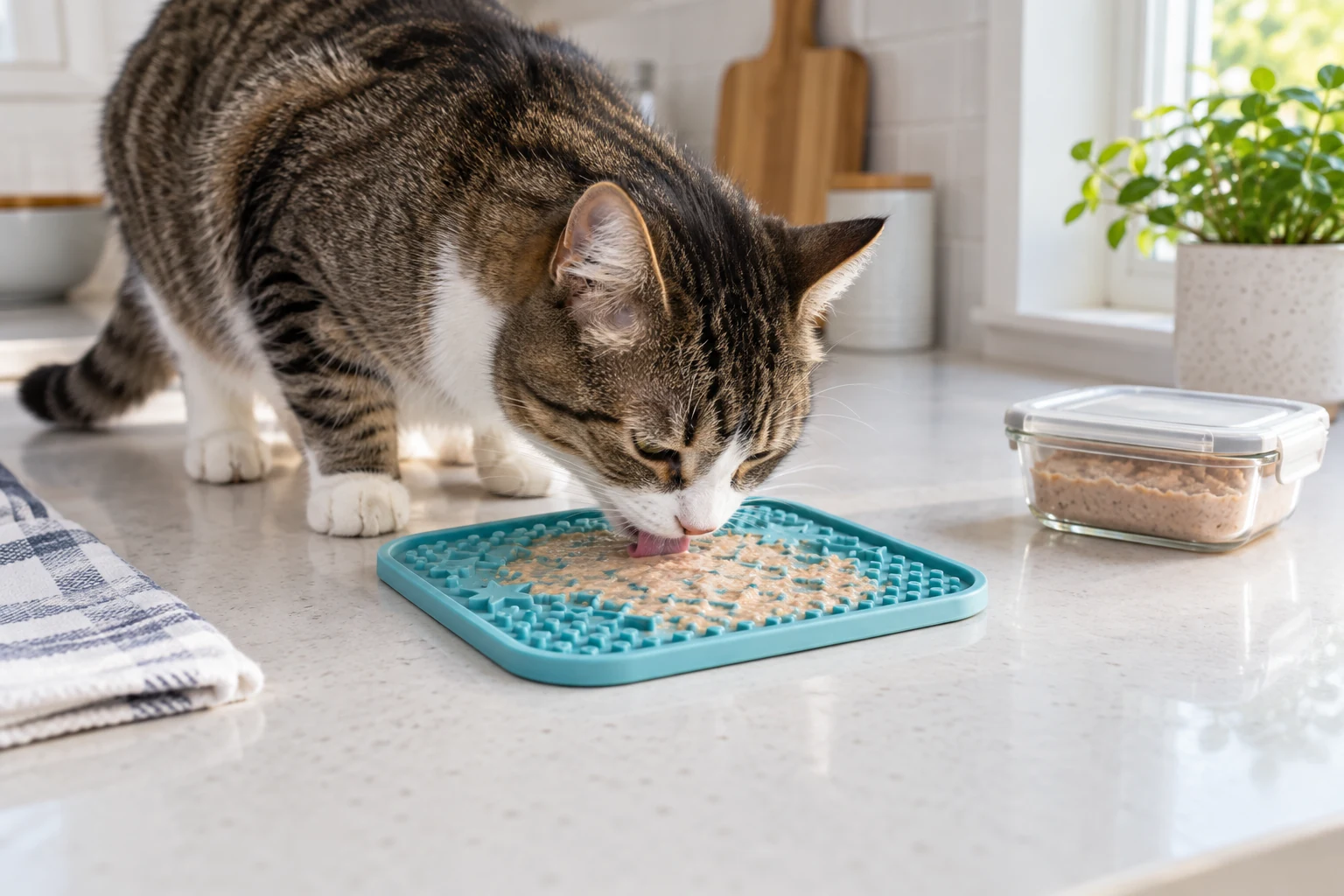
Start with scent and sound before face-to-face contact. Let the cats swap bedding, eat on opposite sides of a closed door, or spend time in each other's spaces while the other cat is elsewhere. If both cats stay relaxed, use a barrier, wide distance, food puzzles, or brief play to create calm associations.
Move forward only when both cats are loose, eating, playing, or disengaging easily. Move backward if you see staring, stalking, tail lashing, blocking, growling, swatting, freezing, hiding, or dashing away. A slower plan is usually faster than repeated failures.
If the conflict began with a rushed introduction, use SnuggleSouls' guide to Cómo presentar a dos gatos para que no se peleen as a reintroduction framework. Even cats who have lived together for years may need a reset after a fight, vet visit, move, or illness.
Do not measure success by whether the cats cuddle. Many cats live well by sharing a home politely at a distance. The healthier goal is peaceful access, predictable routines, and no cat controlling the other's resources.
When should you call a vet or behavior professional?
Call a veterinarian if the bullied cat has injuries, sudden hiding, appetite changes, weight loss, vomiting, diarrhea, painful movement, litter box changes, blood in urine or stool, repeated trips to the litter box, or any rapid decline. Pain and illness can change behavior, and stress can also worsen health problems.
Behavior help is also appropriate if the cats repeatedly fight, one cat cannot access resources safely, the target cat remains isolated, or you feel you are managing doors all day without progress. A qualified veterinary behaviorist or certified behavior professional can help you make a plan for your specific home.
Pay special attention to urine problems. Stress can be part of the picture, but straining, crying, blood, repeated attempts, or inability to urinate are urgent. SnuggleSouls' cat stress peeing guide can help you organize observations, but it should not delay veterinary care.
Conclusion: restore choice and distance
A safe zone gives a bullied cat back the things tension takes away: control, distance, rest, and predictable access to essentials. Start with a protected room if the cat is being chased or blocked, then improve the whole home with duplicate resources, open routes, hiding places, perches, and visual separation.
Recovery often happens quietly. The win is a cat who eats without fear, walks instead of bolts, rests without being guarded, and chooses where to spend time. Keep the safe zone available while you rebuild calm contact at the cats' pace.
Preguntas frecuentes
Should I keep a bullied cat in one room?
Use one room as a temporary safe base if the cat is being chased, cornered, or blocked from essentials. The room should include food, water, litter, resting places, scratching, hiding, and attention; the long-term goal is safer access to the wider home, not isolation.
How many safe zones do I need for multiple cats?
Aim for more than one safe resting option per cat, spread across different areas. If every preferred bed, perch, and food station sits in one room, a confident cat can still control the whole setup.
Are baby gates useful for bullied cats?
Baby gates can help when they create controlled distance and do not trap the target cat. They work best as part of gradual reintroduction, supervised meals, or room rotation, not as the only solution.
What if the bullied cat will not leave the safe room?
Do not force the cat out. Improve comfort inside the room, keep routines predictable, and open access only when the surrounding area is quiet and the other cat is managed. If the cat also eats less, loses weight, seems painful, or stops using the litter box normally, call a veterinarian.
Can two cats recover after bullying?
Many cats can improve when pressure is reduced, resources are separated, and reintroduction happens gradually. Some cats may never become close companions, but they can still live more peacefully if each cat has secure access to space and essentials.
Referencias
[1] Asociación Americana de Veterinarios Especializados en Felinos. (2024). Directrices de la AAFP de 2024 sobre la tensión intercat: reconocimiento, prevención y tratamiento. URL
[2] Asociación Americana de Veterinarios Especializados en Felinos y Sociedad Internacional de Medicina Felina. (2013). Directrices de la AAFP y la ISFM sobre las necesidades ambientales de los gatos. URL
[3] International Cat Care. (2025). Hogares con varios gatos. URL
[4] ASPCA. (n.d.). Aggression Between Cats in Your Household. URL
[5] The Ohio State University Indoor Pet Initiative. (n.d.). For Cat Owners. URL

 EN
EN DE
DE ES
ES PT
PT