
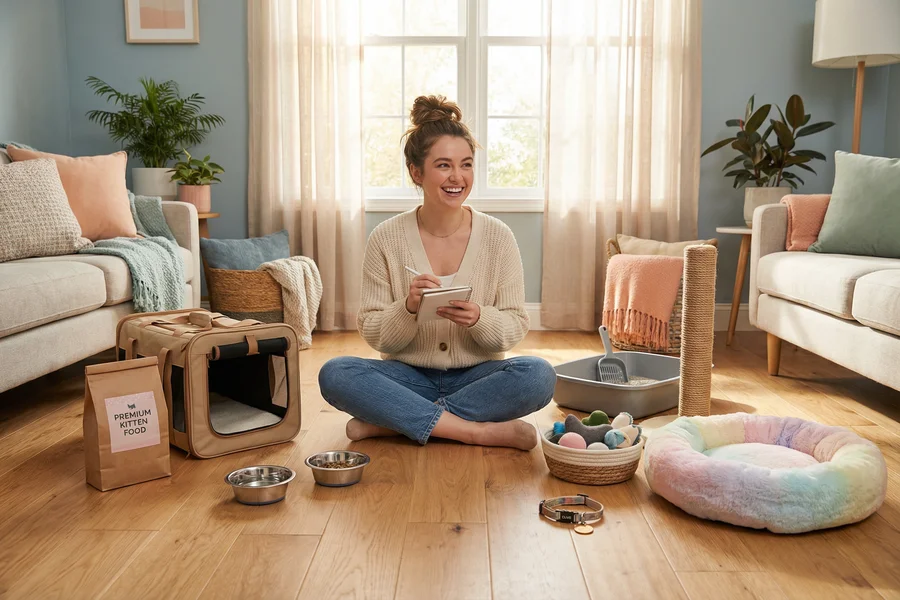
Bringing a new cat home is one of the most exciting experiences you can have. But amid the joy of choosing a name and imagining all the cuddles, it is incredibly easy to overlook the practical details. The last thing you want is to bring your new feline friend home, only to realize at 9:00 PM that you forgot to buy a litter scoop or the right kind of food bowl.
Having a complete new cat supplies checklist is the secret to a stress-free transition. By preparing everything in advance, you can focus entirely on helping your cat feel safe and loved during those crucial first few days. This comprehensive guide will walk you through exactly what to buy before bringing your cat home, separating the absolute day-one essentials from the nice-to-have upgrades.
Índice
Before You Shop: The “Safe Room” Mindset
Before you start adding items to your shopping cart, it is important to understand how your cat will experience their new environment. Cats are highly territorial creatures, and moving to a new home is deeply overwhelming for them.
Veterinarians and animal behaviorists strongly recommend setting up a “safe room” for your new cat’s first few days. This should be a quiet, enclosed space—like a spare bedroom or a large bathroom—where your cat can decompress without being overwhelmed by the sights, sounds, and smells of the entire house. When you are buying supplies from your first-time cat owner checklist, you are essentially shopping to furnish this safe room first.
Vet’s Note: “A common mistake new owners make is giving a cat free rein of the house on day one. A smaller, secure territory (the safe room) dramatically reduces anxiety and prevents the cat from escondido in inaccessible places like under the sofa or behind the refrigerator.” — Dr. Sarah Mitchell, DVM
If you are unsure how to prepare your home, our First-Time Owner’s Guide to Cat-Proofing Your Home is an excellent resource to read before your cat arrives. It covers everything from securing loose electrical cords to removing toxic houseplants.
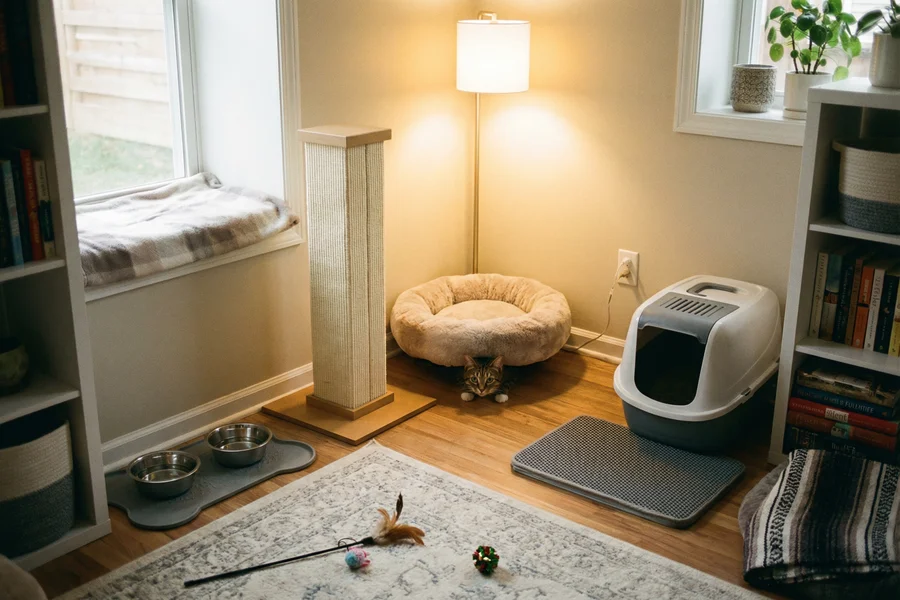
Kitten vs. Adult Cat: Do the Supplies Differ?
If you are wondering “what do I need for a new cat,” the answer changes slightly depending on their idade. Kittens are not just small adult cats; they have distinct developmental and safety needs. Before diving into the main checklist, here is a quick comparison of how your shopping list should adapt based on your new pet’s life stage.
| Supply Category | For an Adult Cat | For a Kitten (Under 6 Months) |
|---|---|---|
| Cat Food | Adult maintenance formula (wet and dry). | High-calorie kitten formula (essential for growth). |
| Litter Type | Clumping clay or natural litter. | Non-clumping litter only. Kittens may comer litter; clumping types can cause fatal intestinal blockages. |
| Litter Box | Large, high-sided box (1.5x cat length). | Shallow pan with low entry sides for tiny legs. |
| Feeding Frequency | 2 meals per day. | 3 to 4 small meals per day (smaller stomachs). |
| Special Extras | Scratching post, standard toys. | Pet-safe heating pad, baby gates to block stairs, kitten formula (if very young). |
The Non-Negotiables: Must-Have Supplies Before Day One
When it comes to cat essentials for new owners, these are the items you absolutely must have set up and ready to go before your cat’s paws touch your floor.
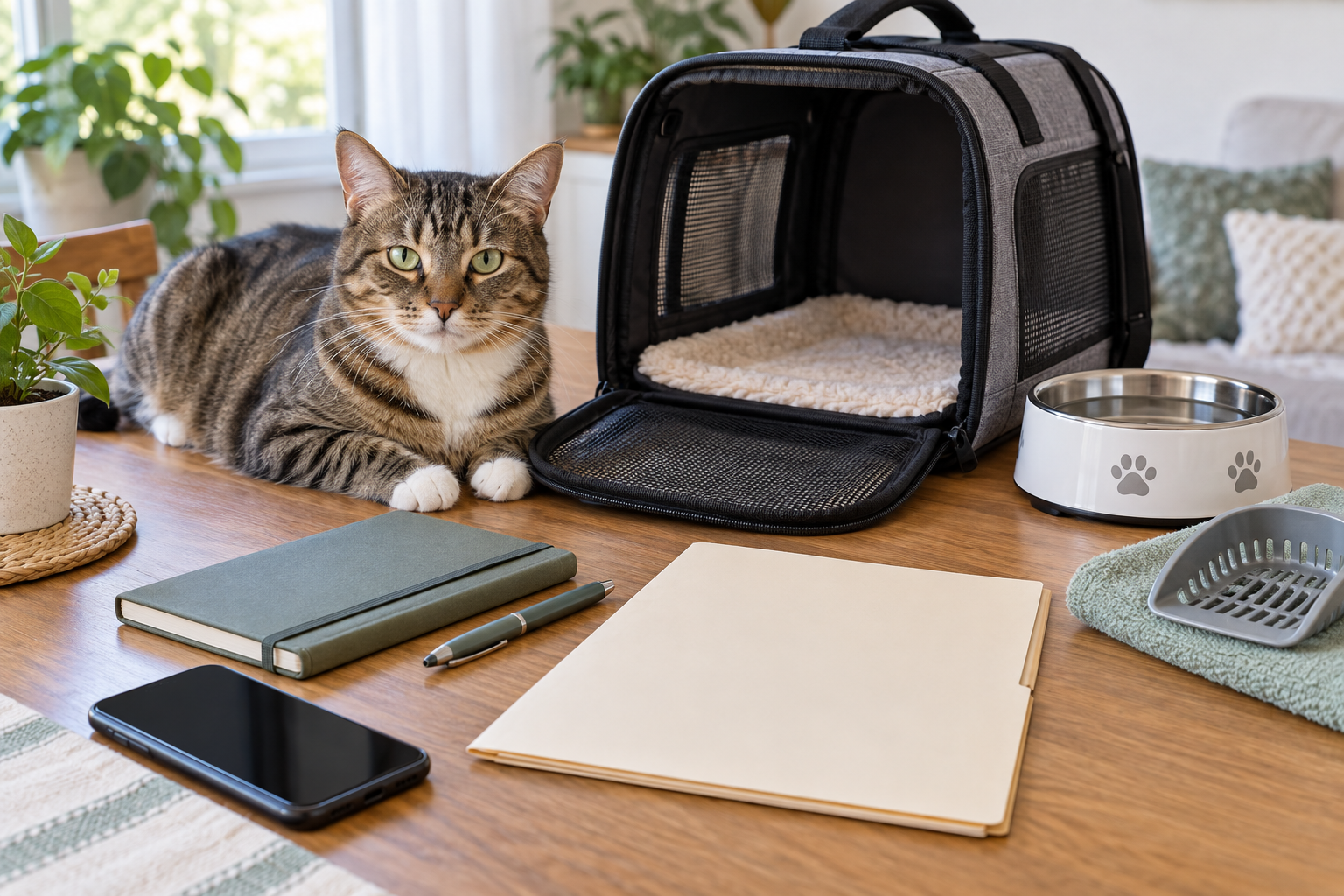
1. A Sturdy Cat Carrier
You cannot safely bring a cat home without a carrier. While cardboard carriers are sometimes provided by shelters, a sturdy, hard-sided plastic carrier or a well-ventilated soft-sided carrier is a much better investment. It provides a secure environment for the car ride home and will be necessary for all future veterinary visits.
2. The Right Cat Food
Sudden dietary changes can cause severe gastrointestinal upset in cats, leading to diarrhea and stress. The most important rule of feeding a new cat is to ask the shelter, rescue, or breeder exactly what brand and flavor of food the cat is currently eating. You should buy that exact food for their first few weeks at home. If you wish to transition them to a higher-quality diet later, you must do so gradually over 7 to 10 days. For more detailed guidance, consult our Cat Feeding Guide.
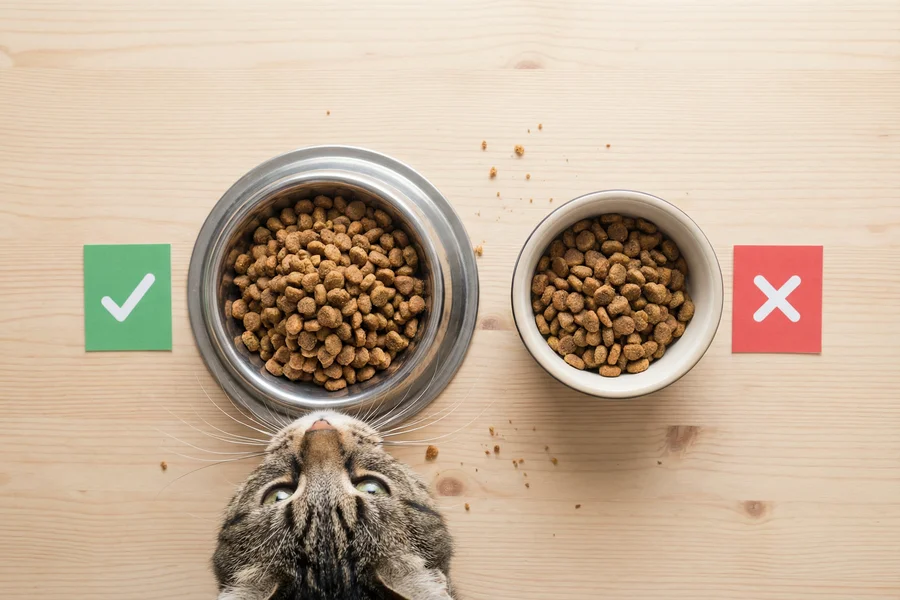
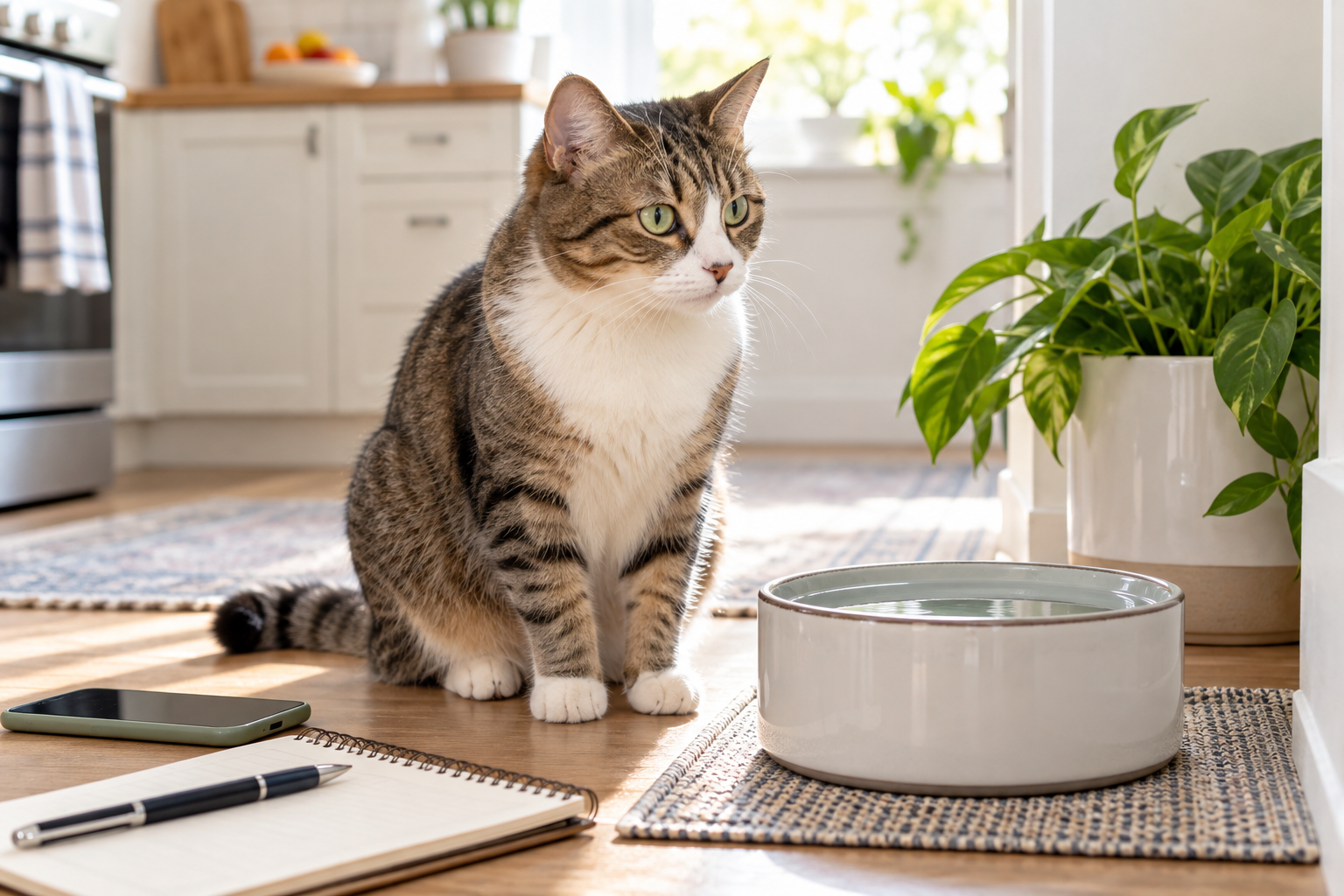
3. Food and Water Bowls (Mind the Whiskers!)
Not all pet bowls are created equal. The material and shape of the bowl matter immensely for your cat’s health and comfort.
| Bowl Material | Hygiene & Safety | Durability | Whisker Fatigue Risk | Recommended? |
|---|---|---|---|---|
| Stainless Steel | Excellent. Non-porous, resists bacteria. | Very high. Unbreakable. | Low (if wide/shallow). | Sim (Best overall) |
| Ceramic | Good. Must be lead-free and unchipped. | Medium. Can chip or break. | Low (if wide/shallow). | Sim |
| Plastic | Poor. Scratches easily, harbors acne-causing bacteria. | High. Unbreakable. | High (often deep). | Não |
Cats have highly sensitive whiskers that are packed with nerve endings. When they eat from deep, narrow bowls, their whiskers constantly brush against the sides, causing a stressful condition known as “whisker fatigue”. Always choose wide, shallow bowls or flat plates for feeding.
4. Litter Box and Unscented Clumping Litter
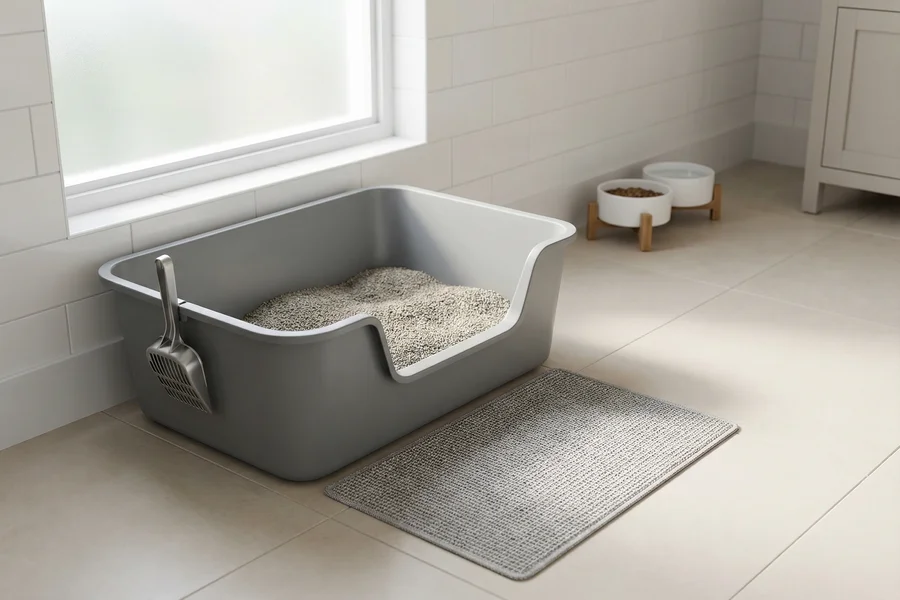
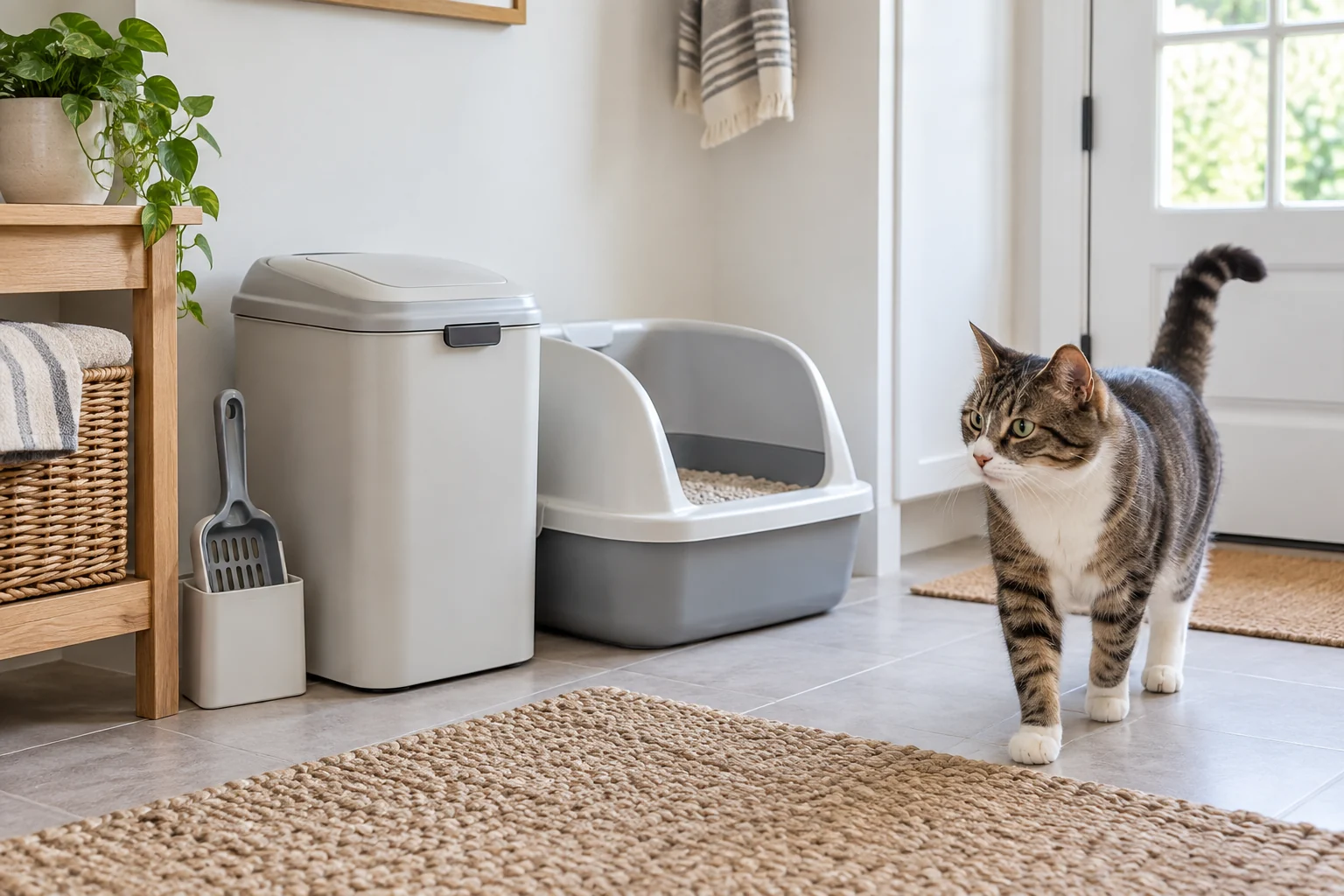
A proper litter box setup is crucial for preventing bathroom accidents. The golden rule for litter box sizing is that the box should be at least 1.5 times the length of your cat, from their nose to the base of their tail. This gives them enough room to turn around and dig comfortably.
Start with an unscented, low-dust clumping clay litter (for adult cats), as this is what most cats prefer and are used to.
| Litter Type | Melhor para | Prós | Contras | Kitten-Safe? |
|---|---|---|---|---|
| Clumping Clay | Adult cats, easy scooping. | Excellent odor control, easy to clean. | Dusty, heavy, not eco-friendly. | Não (Blockage risk) |
| Non-Clumping Clay | Kittens, budget shoppers. | Very cheap, safe if ingested. | Harder to clean, requires frequent full changes. | Sim |
| Silica Gel (Crystals) | Low maintenance, dust allergies. | Incredible absorption, very low dust. | Expensive, some cats dislike the texture. | Sim |
| Biodegradable (Pine/Paper) | Eco-conscious owners. | Flushable (sometimes), sustainable. | Poorer clumping, distinct natural odor. | Sim |
Do not forget to purchase a sturdy metal litter scoop and a litter mat to place outside the box to catch tracked granules.
5. A Tall, Sturdy Scratching Post
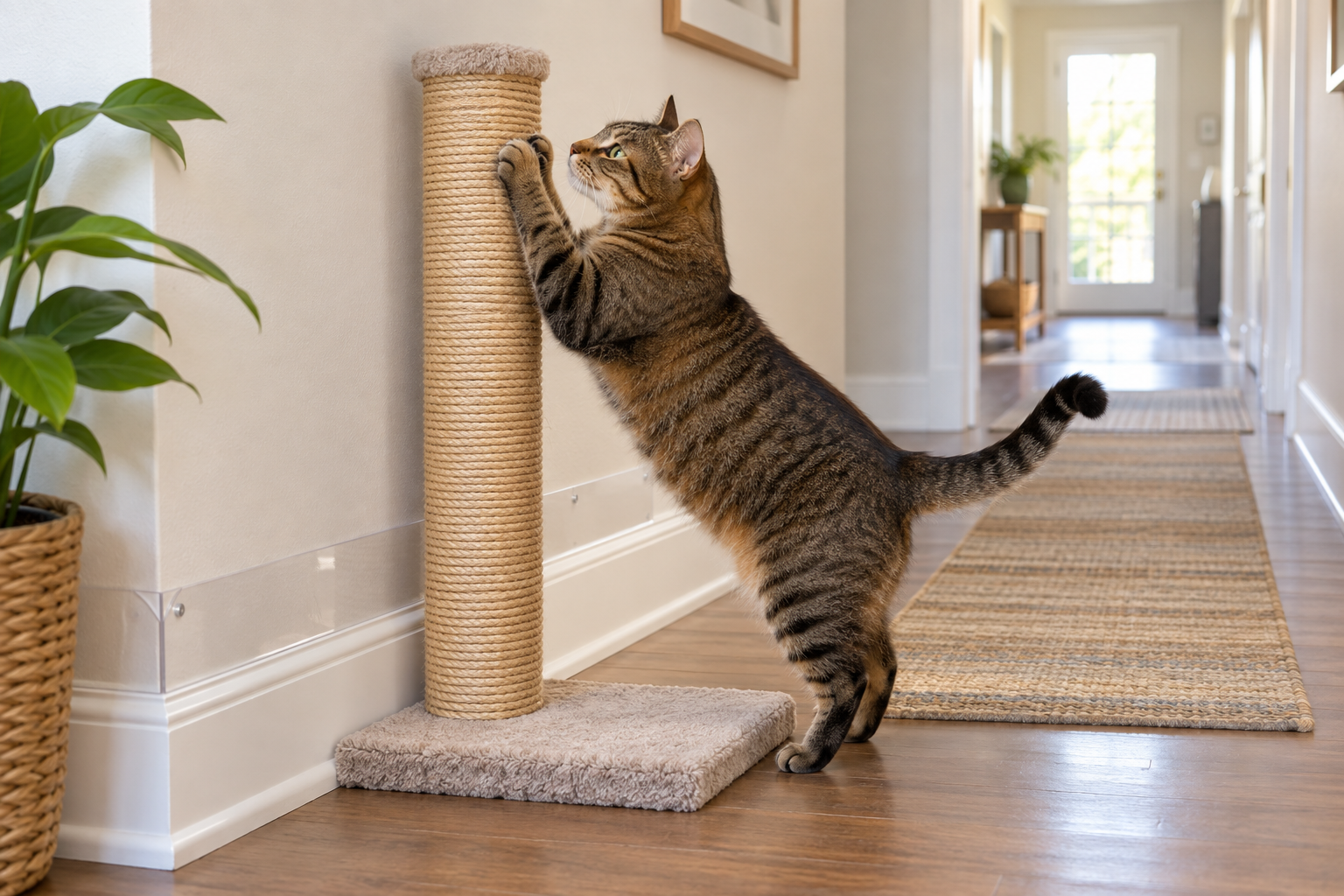
Scratching is a natural, necessary behavior for cats. It helps them shed the dead outer layers of their claws, stretch their muscles, and mark their territory. If you do not provide an appropriate place to scratch, your sofa will become the default option. Look for a scratching post wrapped in sisal fabric or rope. It must be tall enough for your cat to fully stretch out vertically and have a heavy, stable base so it does not wobble or fall over when used.
6. A Cozy Cat Bed or Hiding Spot
Your new cat will need a safe place to retreat and sleep. While many cats end up sleeping on your bed or the couch, providing a dedicated cat bed in their safe room is essential. Cave-style beds or covered igloos are particularly comforting for anxious new cats because they provide a sense of security and concealment.
7. Breakaway Collar and ID Tag
Even if you plan for your cat to be strictly indoors, accidents happen, and doors can be left open. A collar with a clear ID tag bearing your phone number is a critical safety measure. You must ensure you buy a “breakaway” or “quick-release” collar. These are designed to snap open if the collar gets caught on a branch or piece of furniture, preventing the cat from choking.
8. Grooming and Cleaning Essentials
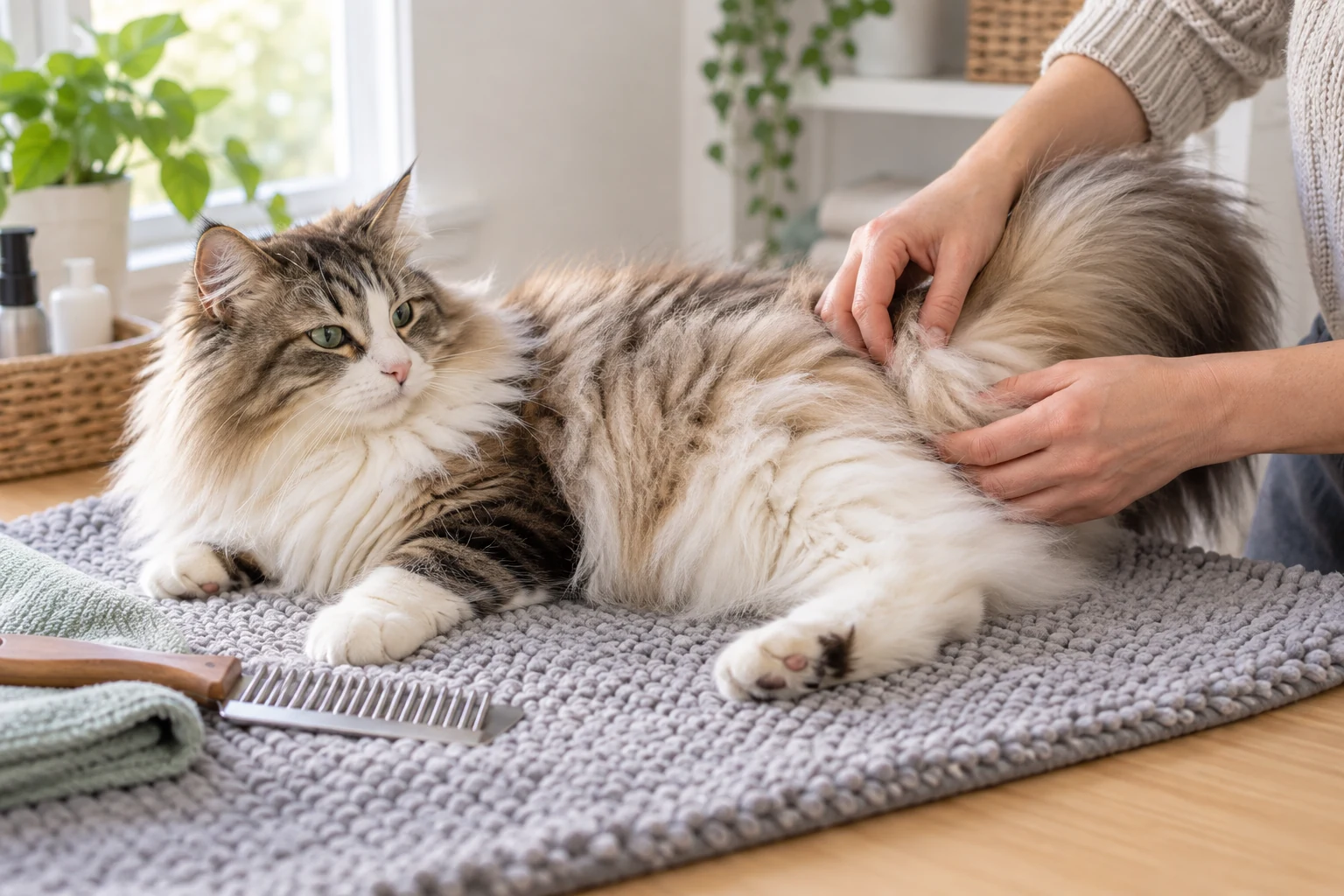
Accidents happen, especially during the stressful first few days. You must have an enzymatic cleaner on hand. Regular household cleaners will not break down the uric acid in cat urine; only enzyme cleaners permanently eliminate the odor so the cat does not return to the same spot. Additionally, purchase a basic grooming brush (a slicker brush for short-haired cats, or a wide-tooth comb for long-haired breeds) and a pair of feline nail clippers.
What NOT to Buy (Common New Owner Mistakes)
When building your new cat supplies checklist, it is just as important to know what to leave on the store shelf. Avoid these common pitfalls:
| Item to Avoid | Why It Is a Mistake | What to Buy Instead |
|---|---|---|
| Scented Cat Litter | Cats have sensitive noses; floral perfumes can drive them away from the box. | Unscented clumping clay or natural litter. |
| Covered/Hooded Litter Boxes | Traps odors inside (like a port-a-potty) and makes cats feel ambushed. | Large, open-top litter boxes. |
| Plastic Food Bowls | Scratches easily, harbors bacteria, and causes feline acne. | Shallow stainless steel or ceramic bowls. |
| Laser Pointers (as the only toy) | Causes frustration because the cat can never “catch” the prey. | Wand toys with feathers or physical kicker toys. |
| Flea Collars | Often ineffective and can contain harsh chemicals that irritate the skin. | Vet-prescribed topical or oral flea preventatives. |
Nice-to-Have Upgrades (For Later)
Once your cat has settled in and you understand their personality and preferences better, you can start investing in these fantastic upgrades. They are not strictly necessary for Day 1, but they greatly enhance your cat’s quality of life.
| Upgrade Item | Why It Is Worth It Later |
|---|---|
| Pet Water Fountain | Cats have a naturally low thirst drive. Flowing water encourages them to drink, preventing urinary tract issues. |
| Tall Cat Tree | Cats feel safest when they are up high. A multi-level tree near a window provides excellent environmental enrichment. |
| Automatic Feeder | Ensures meals are dispensed exactly on schedule, reducing anxiety and early-morning begging behaviors. |
| Self-Cleaning Litter Box | Drastically reduces the daily chore of scooping and ensures the litter bed is always perfectly clean. |
| Seguro para animais de estimação | Signing up during the first week can save you thousands in unexpected veterinary bills over your cat’s lifetime. |
How Much Will This Cost?
Budgeting is a critical part of preparing for a new pet. While costs vary wildly depending on whether you buy budget brands or luxury items, here is a realistic estimate of what your initial new cat supplies will cost.
| Supply Item | Estimated Cost Range (USD) |
|---|---|
| Cat Carrier | $30 – $60 |
| Litter Box, Scoop & Mat | $25 – $50 |
| Clumping Cat Litter (1st month) | $15 – $25 |
| Food & Water Bowls | $15 – $30 |
| Cat Food (1st month) | $30 – $60 |
| Scratching Post | $25 – $50 |
| Cat Bed | $20 – $40 |
| Basic Toys, Brush & Nail Clippers | $20 – $35 |
| Breakaway Collar, ID Tag & Enzyme Cleaner | $25 – $40 |
| Total Estimated Initial Cost | $205 – $390 |
For a more comprehensive look at the financial commitment of cat ownership, including veterinary care and adoption fees, read our full breakdown on How Much Does It Cost to Adopt a Cat?.
Perguntas frequentes
Do indoor cats really need a collar and ID tag?
Yes. Even the most careful owners can accidentally leave a door or window open, or a cat may slip out during an emergency like a fire. The ASPCA and Humane Society strongly recommend that all indoor cats wear a breakaway collar with an ID tag and be microchipped.
How many litter boxes do I need for one cat?
The veterinary standard is the “n+1 rule”—meaning you should have one litter box per cat, plus one extra. For a single cat, you should ideally have two litter boxes placed in different quiet locations around your home.
Should I buy wet food or dry food?
Ideally, you should feed a combination of both, or primarily wet food. Wet food provides critical hydration that cats often lack. You can learn more about portioning in our guide on How Often to Feed Cat Wet Food.
What is the most important thing to buy first?
Aside from the absolute basics of food and a litter box, a sturdy cat carrier and a high-quality, tall scratching post are the two items you cannot delay purchasing.
Considerações finais
Preparing your home for a new cat does not have to be stressful. By following this new cat supplies checklist, you will have everything you need to create a welcoming, safe environment from the moment they arrive.
Remember, the most important “supplies” you can offer your new cat are patience and love. They will likely be scared and hide for the first few days, and that is completely normal. Give them time to adjust at their own pace. For a detailed look at what to expect next, be sure to read our guide on The First 30 Days With Your New Cat.
Referências
American Association of Feline Practitioners. “Bringing a New Cat Home.”
PetMD Editorial. “New Kitten Checklist: Supplies, Home Prep, and Vet Visits.”
ASPCA. “Cat Litter Tips.”
Best Friends Animal Society. “New Cat Checklist: Welcome Your New Feline Friend Home.”
Cornell Feline Health Center. “Feline Acne.”
Boston Veterinary Clinic. “Whisker Fatigue in Cats.”
The Humane Society of the United States. “Cats: Destructive Scratching.”
American Humane. “Does My Indoor Cat Need an ID Tag?“
Litter-Robot. “New Cat Owner Checklist – Cat Essentials & New Kitten Checklist.”
Atlanta Humane Society. “Essential Supplies for New Cat Owners.”
 EN
EN DE
DE ES
ES PT
PT