
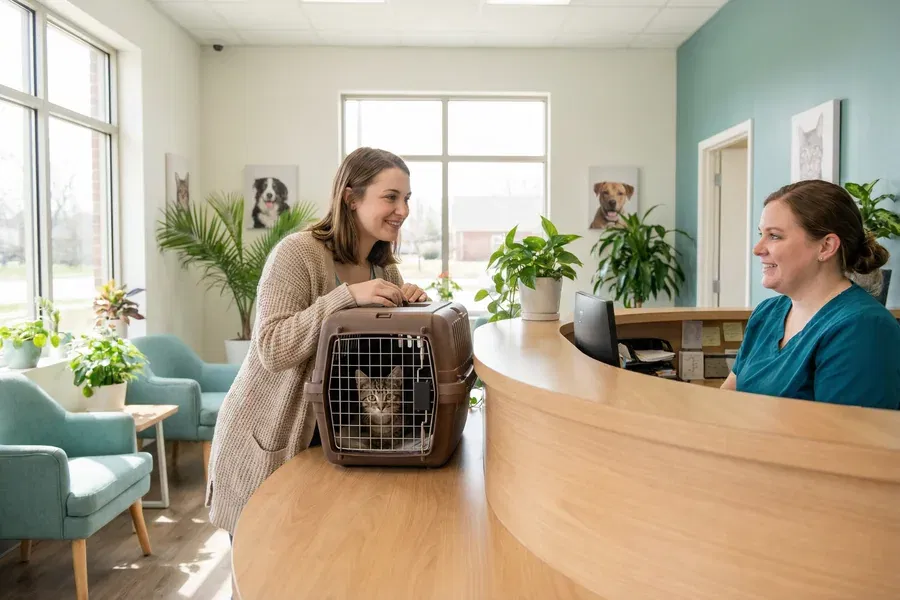
Bringing a new cat home is a joyful experience, but ensuring they are healthy from day one is your most important responsibility. Whether you just adopted a rescue or purchased a kitten from a breeder, scheduling your new cat first vet visit is a critical milestone that sets the foundation for a long, healthy life together.
This first appointment is more than just a quick checkup. It is when you will establish a baseline health record, discuss a kitten vaccination schedule, screen for hidden parasites, and build a relationship with the veterinarian who will care for your feline friend for years to come. This comprehensive guide will walk you through exactly what to bring, what questions to ask, and what to expect so you can walk into the clinic feeling completely prepared.
Índice
When Should You Schedule the First Vet Appointment?
The timing of your first vet visit depends entirely on where your cat came from. As a general rule, you should not wait more than a week to have your new pet examined.
| Where Did You Get the Cat? | When to Schedule the Vet Visit | Por que é importante |
|---|---|---|
| Animal Shelter / Rescue | Within 5 to 7 days of adoption. | Most shelters provide basic vaccines and deworming, but a private vet needs to establish a baseline, check for shelter-acquired upper respiratory infections, and plan future boosters. |
| Breeder / Pet Store | Within 3 days (72 hours) of purchase. | Many states have “lemon laws” for pets. If a vet discovers a congenital defect (like a heart murmur) within this window, you have legal recourse. Waiting too long voids this protection. |
| Stray / Found Outdoors | Immediately (within 24 hours). | Strays often carry fleas, ticks, and intestinal parasites. They must be scanned for a microchip and tested for contagious diseases like FeLV/FIV before interacting with other pets. |
If you are bringing a new cat into a home that already has pets, the new cat must be quarantined in a separate “safe room” until they have been cleared by a veterinarian. You can read more about setting up this space in our guide to The First 30 Days With Your New Cat.
What to Bring to Your Cat’s First Vet Visit
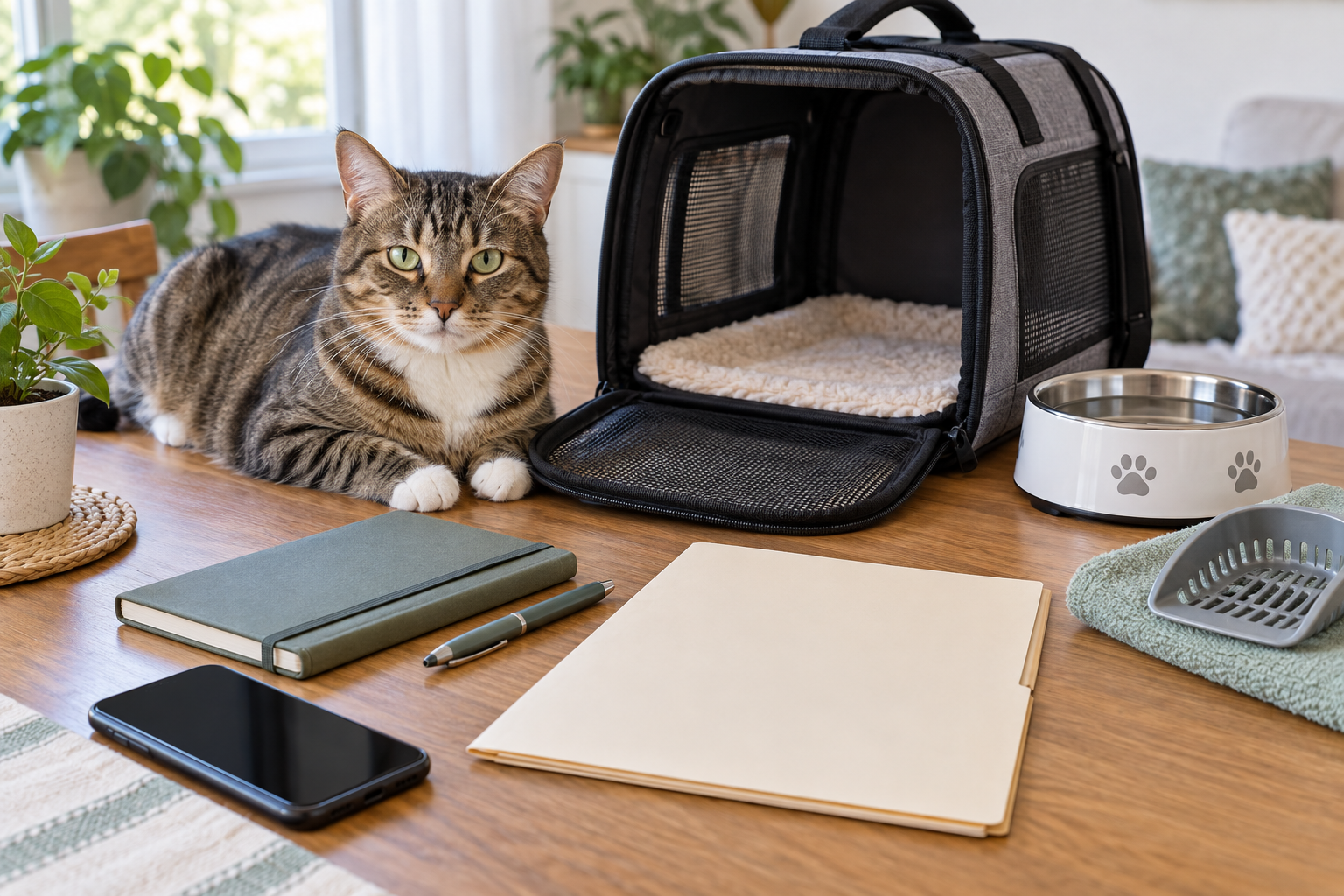
Walking into the clinic empty-handed is a common mistake. To get the most out of your appointment, you need to provide the veterinary team with as much information as possible. Here is your essential checklist of what to bring:
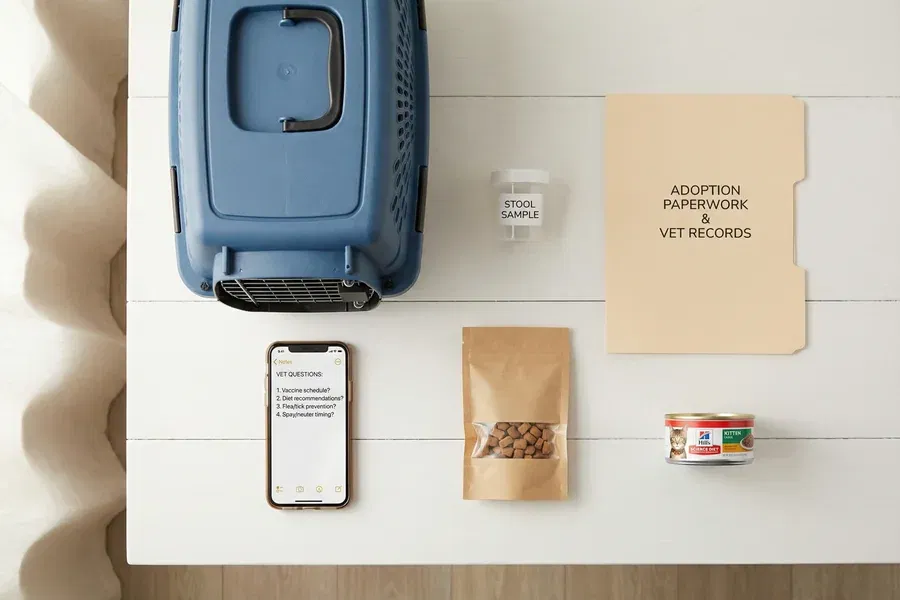
| Item to Bring | Why You Need It | Pro Tip |
|---|---|---|
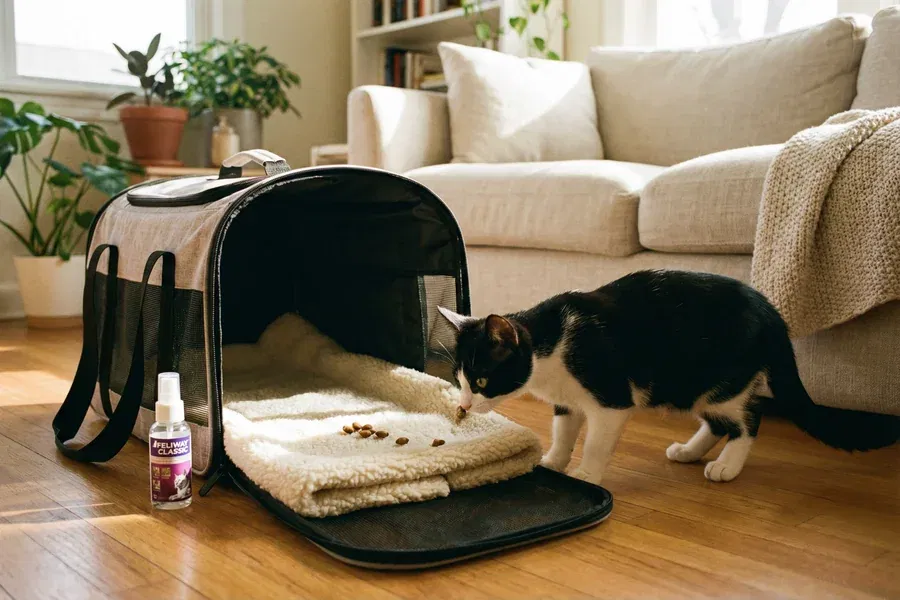
| A Sturdy Cat Carrier | Safety in the waiting room and car. Carrying a cat in your arms is dangerous and often prohibited by clinics. | Leave the carrier open in your living room for a few days prior, placing treats inside so the cat builds a positive association. |
| All Adoption/Breeder Paperwork | The vet needs to know exactly what vaccines, dewormers, or surgeries (spay/neuter) have already been performed. | Do not assume the clinic will call the shelter for you. Bring physical or digital copies of everything you received. |
| A Fresh Stool Sample | To test for intestinal parasites (roundworms, hookworms, Giardia), which are extremely common in kittens and shelter cats. | Collect a sample that is less than 24 hours old. Place it in a clean Ziploc bag or plastic container and keep it refrigerated until the appointment. |
| Photos of Current Cat Food | The vet will evaluate your cat’s peso and nutrition. They need to know exactly what they are eating. | Snap a photo of the front of the bag/can and the ingredient label. Read our Cat Feeding Guide to understand feline nutrition basics. |
| List of Questions | It is easy to forget what you wanted to ask once you are in the exam room holding a squirming cat. | Write them down on your phone. See our suggested list of 20 questions below! |
Vet’s Note: “The most helpful thing a new owner can bring—besides the cat—is a fresh stool sample. Even indoor-only cats can harbor parasites from their mother or the shelter environment. Identifying and treating these early prevents gastrointestinal distress and ensures your kitten absorbs the nutrients they need to grow.” — Dr. Priya Nair, DVM
What Happens During the First Vet Exam?
A first vet visit typically takes between 45 to 90 minutes. The veterinary technician will usually begin by weighing your cat, taking their temperature (often rectally), and asking about their diet and behavior.
Then, the veterinarian will perform a comprehensive “nose-to-tail” physical assessment. Here is exactly what they are looking for:
- Eyes and Ears: Checking for discharge, ácaros da orelha, or signs of infection.
- Mouth and Teeth: Looking for early signs of dental disease (which affects 80% of cats by idade 3), cleft palates in kittens, or retained baby teeth.
- Heart and Lungs: Listening with a stethoscope for heart murmurs or abnormal lung sounds.
- Abdomen: Palpating (gently pressing) the stomach to check for organ enlargement, pain, or masses.
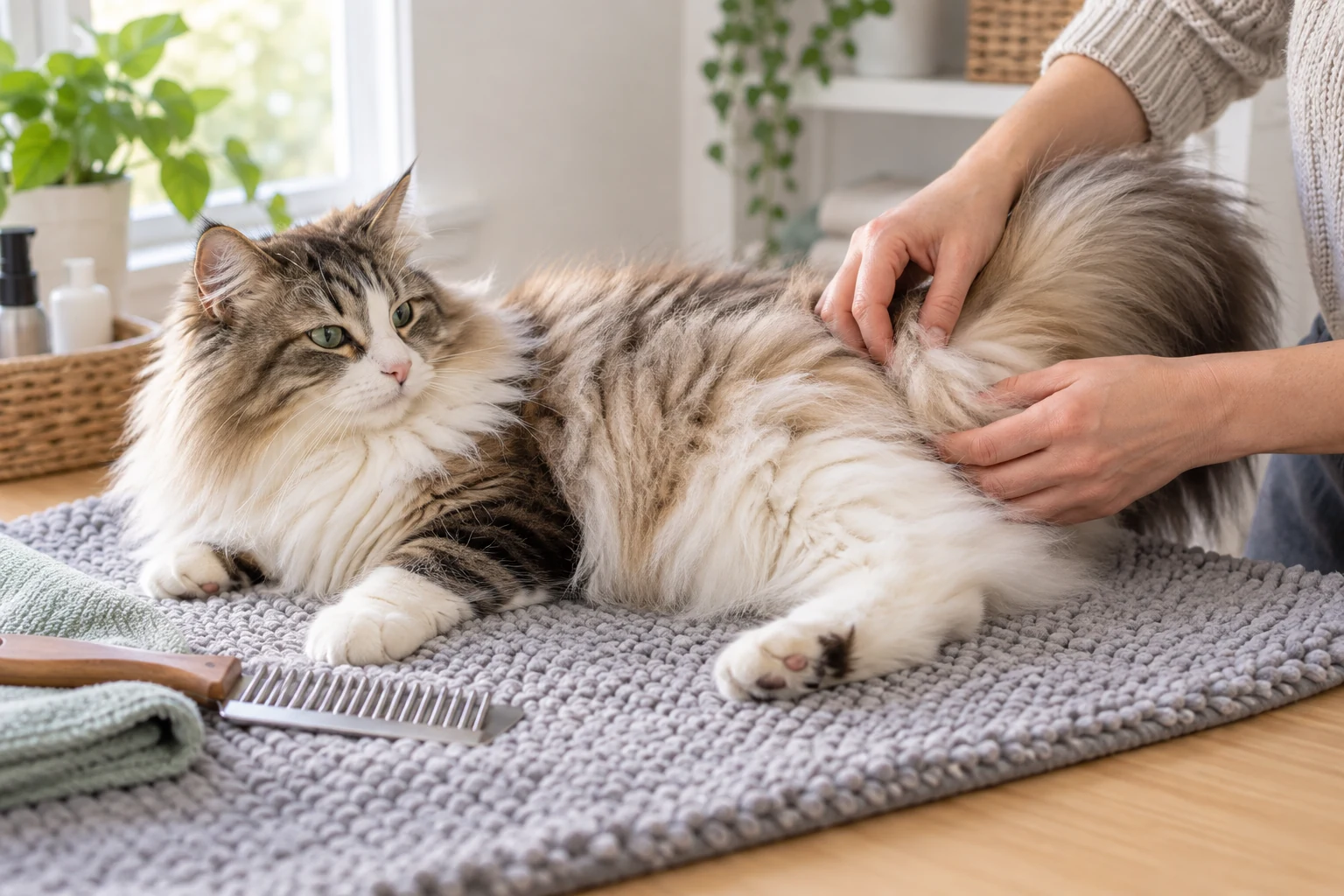
- Skin and Coat: Searching for fleas, ticks, micose, or signs of poor nutrition.
- Musculoskeletal System: Evaluating joints, reflexes, and overall mobility.
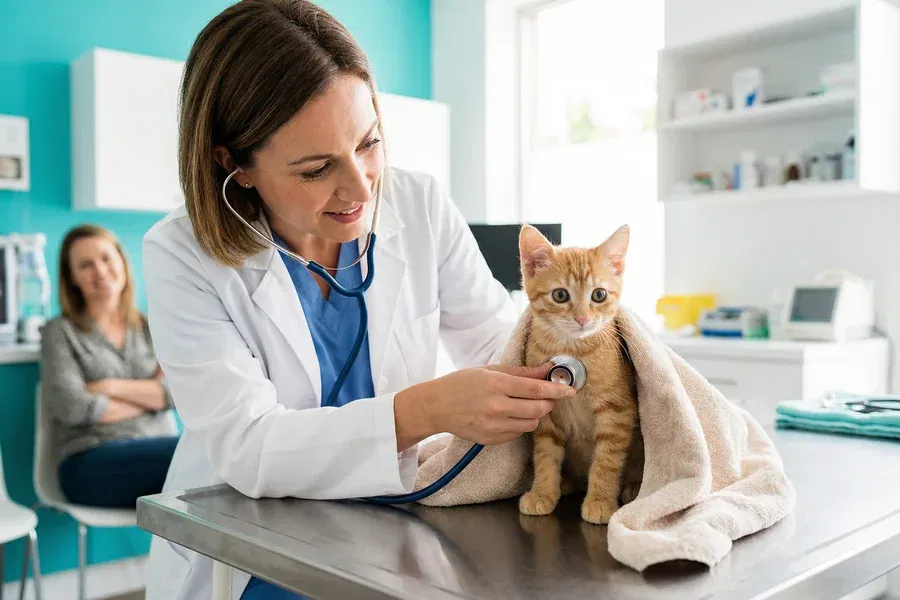
If you adopted a male kitten, the vet will also discuss the signs of urinary blockages. Male cats have narrow urethras, and a blockage is a life-threatening emergency that requires immediate intervention.
The Kitten Vaccination Schedule: A Visual Timeline
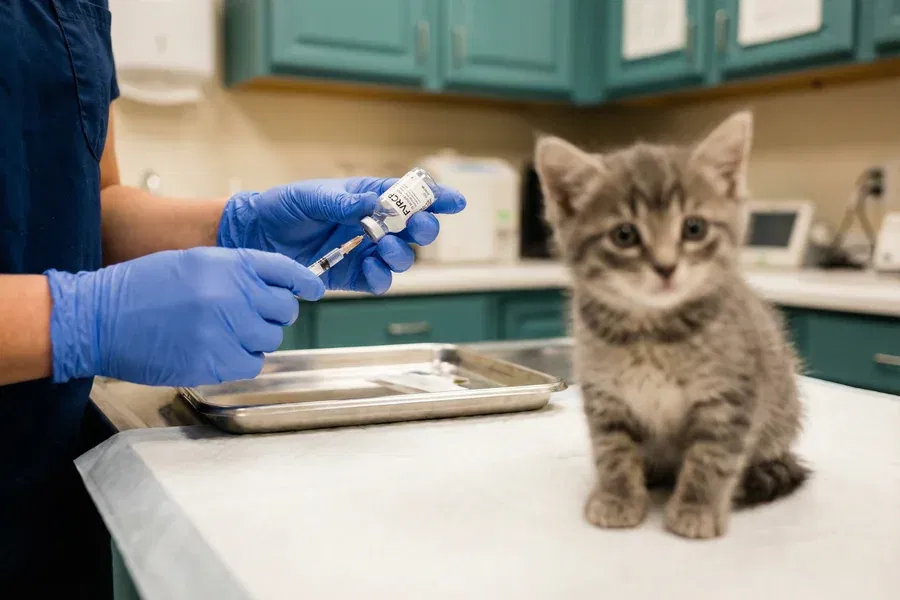
If you have a kitten, vaccines are a critical part of the first year. Kittens receive antibodies from their mother’s leite, but as this natural immunity fades, vaccines must be administered in a specific sequence to protect them from fatal diseases.
Here is the standard kitten vaccination schedule recommended by the American Animal Hospital Association (AAHA) and most veterinarians:
| Age of Kitten | Vaccine Administered | Core vs. Non-Core | What It Protects Against |
|---|---|---|---|
| 6–8 Weeks | FVRCP (1st dose) | Core (Required) | Feline Viral Rhinotracheitis, Calicivirus, and Panleukopenia (feline distemper). |
| FeLV (1st dose) | Non-Core (Recommended) | Feline Leukemia Virus. Highly recommended for kittens who may go outdoors or live with other cats. | |
| 10–12 Weeks | FVRCP (2nd dose) | Core (Required) | Boosts immunity against upper respiratory infections and panleukopenia. |
| FeLV (2nd dose) | Non-Core (Recommended) | Completes the initial FeLV series. | |
| 14–16 Weeks | FVRCP (3rd dose) | Core (Required) | Final booster of the kitten series. |
| Rabies (1st dose) | Core (Required by Law) | Fatal neurological disease. Required by law in almost all states. | |
| 1 Year Old | FVRCP & Rabies Boosters | Core (Required) | First annual boosters to maintain adult immunity. |
Note: Adult cats with unknown vaccination histories will typically receive a modified, condensed version of this schedule.
20 Questions to Ask at Your Cat’s First Vet Visit
Do not be afraid to ask questions. Your vet expects you to be curious, especially if you are a first-time owner. Use this checklist to guide your conversation:
Diet and Nutrition
- Is my cat currently at a healthy weight?
- Based on their age and weight, how many calories should they comer per day? (You can also use our Calculadora de calorias para gatos)
- Should I be feeding wet food, dry food, or a combination? (Read more: How Often to Feed Cat Wet Food)
- When should I transition my kitten to adult cat food?
Health and Prevention
- What flea, tick, and heartworm prevention do you recommend for an indoor cat?
- Does my cat need the Feline Leukemia (FeLV) vaccine based on our lifestyle?
- Did the fecal test show any signs of intestinal parasites?
- When should I schedule my cat’s spay or neuter surgery?
- Is my cat already microchipped? If not, can we do it today?
Behavior and Care
- How can I safely trim my cat’s nails at home?
- What is the best way to brush my cat’s teeth, and what toothpaste is safe?
- Are there any specific grooming tools you recommend for my cat’s coat type?
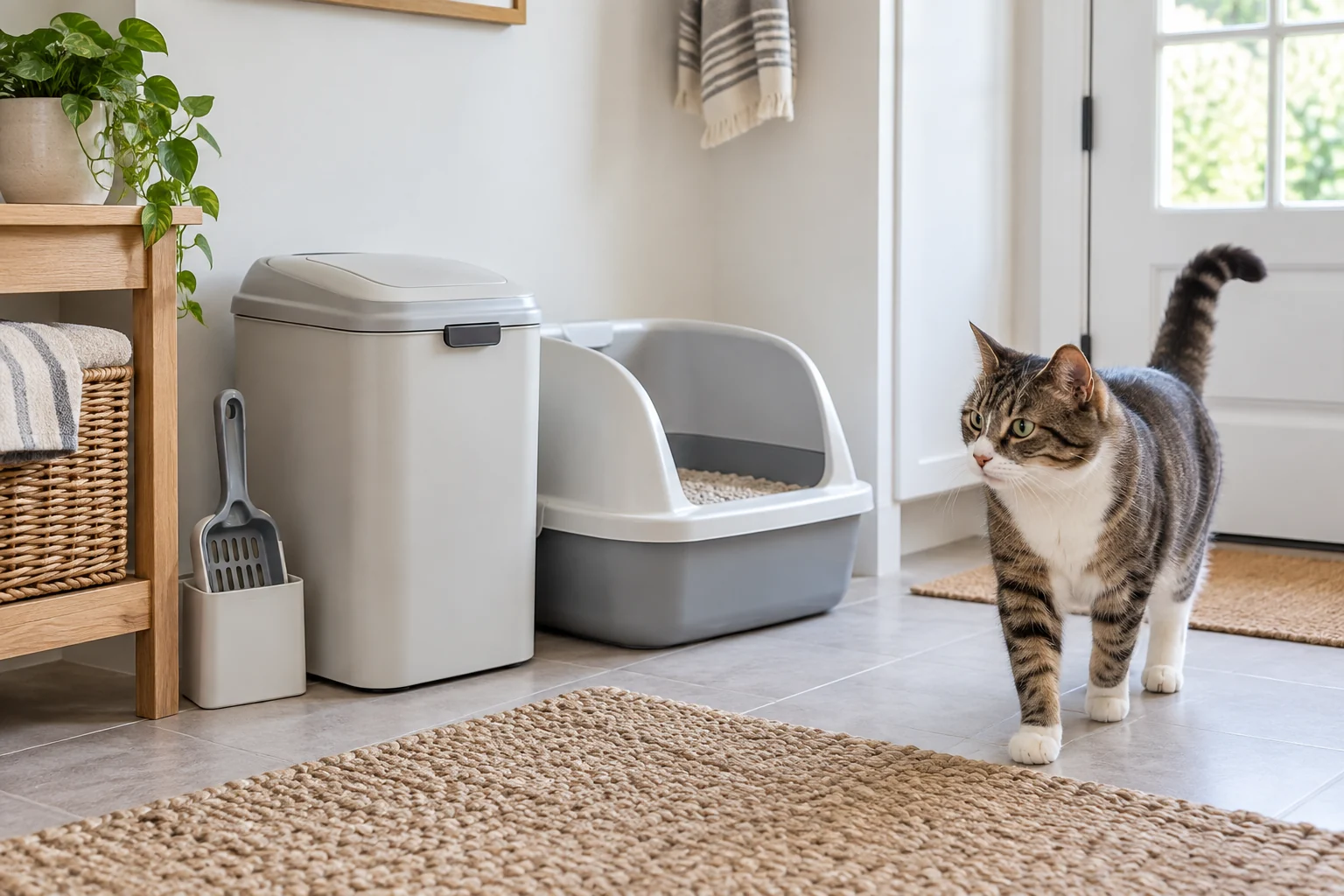
- How many litter boxes should I have, and what type of litter is safest?
- How can I stop my kitten from biting or scratching my hands during play?
Emergencies and Logistics
- What are the signs of a medical emergency that require an immediate visit?
- Do you offer after-hours emergency care, or is there a 24-hour clinic you recommend?
- What pet insurance companies do you work with most frequently?
- How often should I bring my adult cat in for a routine wellness exam?
- Can I get a copy of today’s medical records emailed to me?
- When do we need to come back for the next round of booster shots?
Common Mistakes to Avoid at Your Cat’s First Vet Visit
Veterinarians see the same mistakes repeatedly. Avoid these pitfalls to ensure a smooth, stress-free appointment:
| The Mistake | Why It Is Harmful | The Better Alternative |
|---|---|---|
| Feeding a large meal right before the visit. | Car rides cause motion sickness. A full stomach often leads to vomiting in the carrier. | Feed a very small meal several hours before, or withhold food if the vet requested fasting for bloodwork. |
| Bringing a loose cat or using a cardboard box. | Cats panic in waiting rooms filled with barking dogs. They can easily escape a flimsy box. | Always use a secure, hard-sided plastic carrier or a reinforced soft-sided bag. |
| Forgetting previous medical records. | The vet may accidentally double-vaccinate your cat or miss a crucial booster window. | Bring all adoption paperwork and breeder contracts in a physical folder. |
| Pulling the cat out of the carrier in the waiting room. | Exposes the cat to immense stress and potential airborne pathogens from sick animals. | Keep the carrier zipped. Drape a towel over the carrier to block visual stressors. |
How Much Does the First Vet Visit Cost?
Budgeting for veterinary care is a crucial part of cat ownership. The cost of your first visit will vary wildly depending on your location, the clinic type, and whether your cat needs a full round of vaccines or just a basic wellness exam.
Here is a realistic breakdown of what you might expect to pay during a new cat first vet visit:
| Service / Item | Estimated Cost Range (USD) | Notas |
|---|---|---|
| Comprehensive Physical Exam | $50 – $100 | The base fee for the veterinarian’s time and assessment. |
| Fecal Exam (Stool Test) | $35 – $60 | Crucial for detecting intestinal parasites. |
| Core Vaccines (FVRCP, Rabies) | $25 – $60 per shot | Kittens will need multiple rounds over several months. |
| FeLV / FIV Blood Test | $45 – $80 | Highly recommended for strays or cats with unknown histories. |
| Flea/Tick/Heartworm Prevention | $20 – $40 (1-month supply) | Usually sold as a topical liquid or chewable tablet. |
| Microchipping | $45 – $75 | A one-time fee for permanent identification. |
| Total Estimated First Visit Cost | $100 – $250+ | Costs will be lower if the shelter already provided vaccines and microchipping. |
For a complete look at the financial commitment of the first year, read our guide: How Much Does It Cost to Adopt a Cat?.
After the Visit: Your Post-Appointment Checklist
The appointment does not end when you leave the clinic. Once you get home, there are a few final steps to ensure your cat’s continued health:
- Monitor for Vaccine Reactions: Mild lethargy or a slight decrease in appetite is normal for 24 hours after vaccines. However, if you notice facial swelling, vomiting, hives, or difficulty breathing, this is a severe allergic reaction (anaphylaxis) and requires immediate emergency care.
- Set Up Your Safe Room: If you have not already, ensure your home is fully prepared. Review our New Cat Supplies Checklist to make sure you have the right litter boxes, bowls, and scratching posts.
- Register the Microchip: If your cat was microchipped today, go online immediately and register your contact information with the microchip database. A microchip is useless if it is not linked to your current phone number and address.
- Sign Up for Pet Insurance: The best time to buy pet insurance is immediately after a clean bill of health from the first vet visit, before any “pre-existing conditions” are documented in their medical record.
- Schedule the Next Appointment: If your kitten needs booster shots in 3 to 4 weeks, book that appointment before you even leave the clinic lobby.
Essential FAQ: Navigating Your New Cat’s First Vet Visit
Why is my resident cat acting aggressive toward the new cat after they return from the vet?
This is a common but rarely discussed phenomenon known as Non-recognition Aggression. When a cat visits a clinic, they return home smelling like antiseptic, chemicals, and “stress pheromones.” To your resident cat, the new pet no longer smells like a family member, but like a stranger or a threat.
What if my cat is too aggressive or terrified to be examined during the first visit?
Standard advice tells you to “use a carrier,” but it doesn’t always address extreme fear. If your cat is “fractious” (aggressive due to fear), the vet may be unable to perform a thorough exam.
The Proactive Step: Ask your vet about Pre-Visit Pharmaceuticals (PVP), such as Gabapentin. This is a safe, mild sedative given at home 2-3 hours before the appointment to reduce “vet-visit anxiety” and allow for a more compassionate, thorough physical assessment.
Should I ask for a “Fear Free” or “Cat-Friendly” certified professional?
Yes. While most vets treat cats, Fear Free Certified professionals are specifically trained to handle feline stress.
If I found a stray, what happens if they test positive for FeLV or FIV?
Many owners panic if the initial blood test is positive. However, it is important to know that False Positives are common in kittens and stressed strays.
The Expert Advice: If a kitten tests positive for FeLV/FIV during the first visit, do not make any permanent decisions immediately. Ask the vet for a confirmatory PCR test or a re-test in 60 days. Many kittens “clear” the virus or carry maternal antibodies that trigger a false positive on the initial SNAP test.
Beyond the “Lemon Law,” what genetic questions should I ask for pedigree kittens?
If you purchased a specific breed (like a Maine Coon, Ragdoll, or Persian), a standard physical exam isn’t enough. Ask the vet to specifically check for breed-specific predispositions, such as hypertrophic cardiomyopathy (HCM) in Maine Coons or polycystic kidney disease (PKD) in Persians. Ask if your cat’s specific lineage requires early screening via ultrasound or genetic testing that the breeder may have missed.
What do I do if I cannot afford all the recommended tests at once?
Vet bills can be overwhelming. If you are on a budget, ask the vet to triage the procedures.
Priority 1: Physical exam and core vaccines (Rabies/FVRCP).
Priority 2: Fecal test (parasites can infect humans).
Priority 3: FeLV/FIV testing (essential if you have other cats).
Priority 4: Microchipping and dental hygiene kits.
How do I prevent “Carrier Aversion” after the first round of shots?
Most cats only see the carrier when something “bad” (needles) happens. After the visit, do not put the carrier in the garage. Leave it in the living room as a “bed.” For the next week, esconder high-value treats inside it daily. This breaks the mental link between the carrier and the vet’s office.
Considerações finais
Seu new cat first vet visit is the first step in a lifelong partnership between you, your cat, and your veterinarian. By arriving prepared with the right paperwork, a fresh stool sample, and a list of questions, you are advocating for your pet’s health from day one.
Remember, it is completely normal for your cat to be stressed after returning home from the vet. Give them space, keep their environment quiet, and offer plenty of love (and a few treats) as they decompress. With their health verified and their vaccines on schedule, you can finally relax and enjoy the wonderful journey of cat ownership!
Referências
Chewy Editorial. “Kitten’s First Vet Visit: Checklist, What To Expect, and Cost.”
PetMD Editorial. “Kitten Vaccination Schedule and Costs.”
Brighton Vets. “First Vet Visit Checklist for Puppies & Kittens.”
American Animal Hospital Association. “New Kitten Checklist.”
Spot Pet Insurance. “Kitten Vet Costs 2025: First Visit, Vaccines & Emergency.” Spot Pet,
Pawlicy Advisor. “How Much Does a Vet Visit Cost? (2026 Price List).”
Cornell Feline Health Center. “Vaccinations for Your Cat.”
ASPCA. “Cat Care: Veterinary Care.”
 EN
EN DE
DE ES
ES PT
PT