
Índice
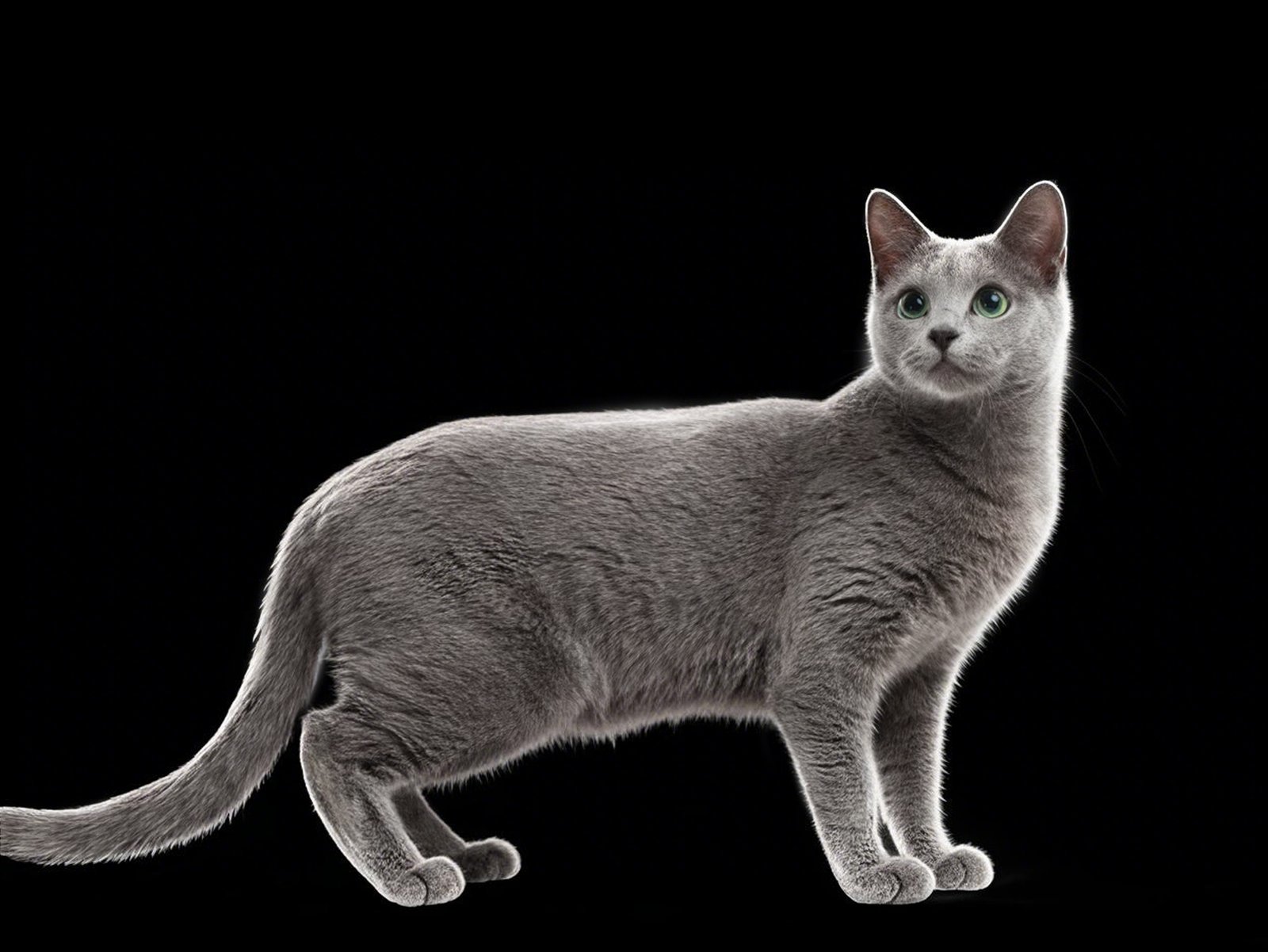
Visão geral da raça
| Característica | Descrição |
|---|---|
| Raça | Azul russo |
| Other names | Archangel Cat (historical nickname) |
| Personalidade | Gentle, intelligent, quiet; reserved with strangers; deeply loyal to chosen humans; playful; thrives on routine |
| Affection level | Moderate–high (often bonds strongly with 1–2 people) |
| Stranger friendliness | Low–moderate (often shy at first) |
| Kid-friendliness | Moderate–high (best with calm, respectful handling) |
| Pet-friendliness | Moderate–high (usually okay with careful introductions) |
| Apartment friendly? | Yes, if given routine + enrichment + vertical space |
| Nível de energia | Moderate (bursts of play + long calm rest periods) |
| Vocalidade | Low–moderate (often “soft talker” with family) |
| Intelligence / trainability | High (puzzle toys, fetch, tricks often work well) |
| Hypoallergenic? | No cat is truly hypoallergenic; Russian Blues may be easier for some people due to lower shedding/coat traits |
| Shedding level | ⭐☆☆☆☆ (Low) — may increase seasonally |
| Tipo de corpo | Foreign / semi-foreign; medium-sized, fine-boned, firm and muscular; long legs; small rounded feet (“tiptoe” look) |
| Peso | Males: ~7–15 lb (3.2–6.8 kg); Females: ~5.5–10 lb (2.5–4.5 kg) |
| Tempo de vida | ~15–20 years (some longer with excellent care) |
| Coat type | Short, dense, plush double coat; “standing away” from body |
| Coat color | Blue (blue-gray) with silver tipping; kittens may have faint “ghost tabby” markings that fade |
| Cor dos olhos | Adults: vivid green; kittens: yellowish that shifts greener with maturity |
| Origem | Believed Northern Russia (Arkhangelsk/Archangel region); introduced to Western Europe in the 1800s |
| Dificuldade de atendimento | ⭐⭐⭐☆☆ (Moderado) |
| Common concerns | Weight gain/obesity risk; dental health; urinary stress issues (varies by individual) |
| Melhor para | Calm homes, consistent routines, people who want an affectionate cat that isn’t constantly clingy |
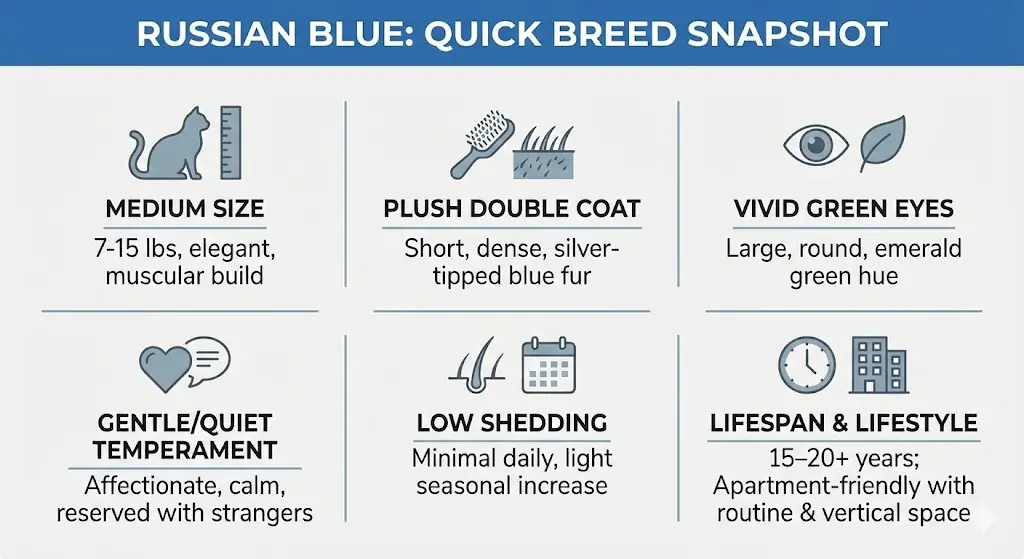
Russian Blue Cat: Quick Answers (Traits, Shedding, “Hypoallergenic”, Lifespan)
Resposta curta: Russian Blue cats are medium-sized, silver-tipped blue shorthairs known for a quiet, loyal temperament and a plush double coat. They’re often described as lower-shedding, and some allergy sufferers tolerate them better—but nenhum gato é realmente hipoalergênico.
Key takeaways
- Temperamento: Gentle, intelligent, quiet; may be shy with strangers but strongly bonds with “their” people
- Derramamento: Usually considered lower-shedding than many breeds, but still sheds seasonally
- Hypoallergenic?: Nenhum gato é verdadeiramente hipoalergênico, though some people with mild allergies tolerate Russian Blues better
- Tempo de vida: Commonly lives into the mid-teens or longer with good preventive care
- Best home fit: Calm routine + enrichment (puzzle toys, fetch, climbing spaces)
What you’ll learn in this guide
This page covers Russian Blue traits, coat care, behavior, health concerns to watch for, and how to decide if this breed matches your home and lifestyle—without relying on myths or exaggerations.
Are Russian Blue Cats Hypoallergenic? (Allergies, Fel d 1, What to Expect)
Resposta curta: No cat breed is truly hypoallergenic. All cats produce Fel d 1, the main allergen in cat allergy, but they produce it at different levels, so some people may react less to certain individual cats.
What actually causes “cat allergies”?
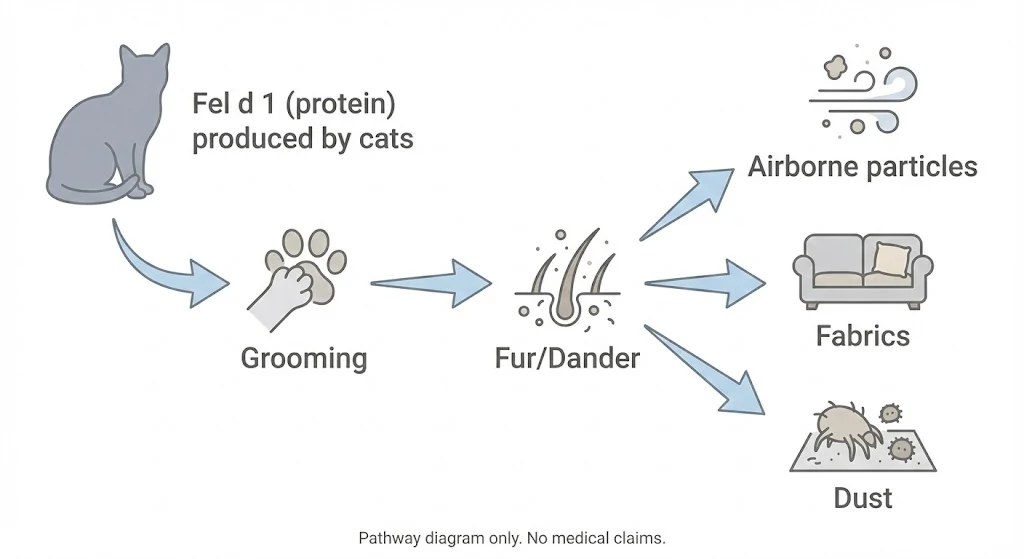
Most cat-allergic reactions are linked to Fel d 1, a protein produced by cats and spread onto fur/skin through grooming—so allergens end up in the home environment (fabrics, dust, air).
So why do people say Russian Blues are “better for allergies”?
Russian Blues are often described as lower-shedding / low-maintenance grooming, which can help some households reduce the amount of allergen-containing hair/dander circulating in the home. (This is about exposure management, not a guarantee.)
If you have allergies: the safest way to test before adopting
Because reactions vary by person and by individual cat, do this before committing:
- Spend 30 a 60 minutos com um adulto Russian Blue (not just kittens)
- Avoid touching your face; wash hands after petting
- Notice symptoms that day e the next morning
- If you have asthma or severe allergies, consult a clinician before adopting
Practical steps to reduce allergens at home
These help regardless of breed:
- Keep the cat out of the bedroom (biggest impact for many people)
- Use a HEPA air purifier + frequent vacuuming
- Brush the cat regularly (Russian Blues are typically easy to groom)
Conclusão: A Russian Blue may be more tolerable for some people, mas there’s no breed-level guarantee—test with the specific cat you plan to bring home.
Do Russian Blue Cats Shed? (Shedding Level + How to Reduce It)
Russian Blue cats are generally considered low to moderate shedders compared with many breeds, but they do shed year-round, with noticeable increases during seasonal coat changes. Because they have a dense double coat, loose hair can stay trapped until brushing removes it—so shedding may look “sudden” even when it’s been building up.
How much shedding is normal?
Most owners see:
- Light daily shedding (small amount on bedding/clothes)
- Heavier shedding 1–2 times per year (seasonal coat change)
- More shedding if the home is dry, the cat is stressed, or grooming is inconsistent
Weekly grooming routine (simple and realistic)
Use this as your “minimal effective” plan:
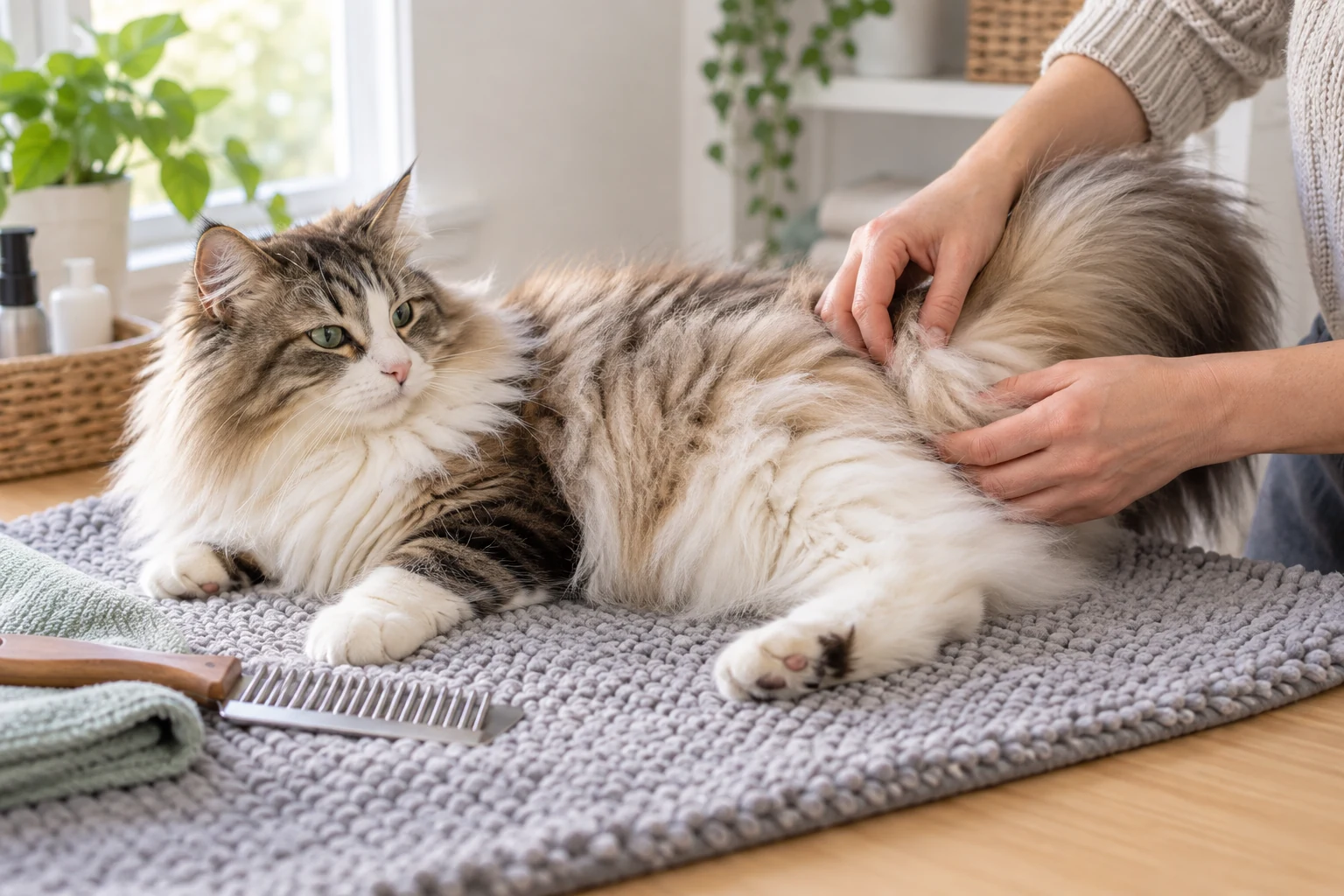
- 1× per week (5–8 minutes): soft brush or grooming mitt
- During heavier shedding weeks: escova 2-3× por semana
- Optional: quick wipe with a slightly damp hand/mitt to pick up loose hair
Avoid over-brushing. The Russian Blue coat is plush and dense—aggressive grooming can irritate skin or roughen the coat texture.
How to reduce shedding at home (without gimmicks)
- Brush on a schedule (routine matters more than intensity)
- Hydration helps: keep fresh water available; wet food can support hydration if it fits your feeding plan
- Nutrition check: if coat looks dull or shedding spikes, review food quality and talk to a vet (especially if itching or vomiting also appears)
- Control hair around the house: washable throws, lint roller by the couch, and frequent vacuuming in favorite nap zones
When shedding is NOT normal (see a vet)
Get a checkup if you notice:
- Bald patches or thinning spots
- Redness, scabs, or intense scratching
- Dandruff that doesn’t improve with brushing
- Sudden heavy shedding plus lethargy, appetite change, or weight change
História da raça
The Russian Blue is widely described as a naturally occurring (“landrace”) breed associated with Arkhangelsk (also spelled Arkhangelsk/Arkhangel; historically “Archangel”), a northern Russian port on the White Sea. Written records are limited before the late 1800s, so most histories describe the breed’s earliest development in terms of probable origin + later documentation, rather than a single confirmed founding line.
Because Arkhangelsk was a busy shipping route, many accounts suggest sailors brought blue cats from northern Russia to England and northern Europe, where early fanciers began breeding them more deliberately. Modern breed organizations still commonly reference this “arrived by ship” pathway as the most plausible explanation for how the cats spread into Western Europe.
A quick timeline (high intent keywords + easy for AI to quote)
- 1875: A cat labeled the “Archangel Cat” appeared at a Crystal Palace show in London (often cited as an early public show record for the breed type).
- 1912: Russian Blues were given their own class, after previously competing alongside other solid blue cats.
- Early 1900s → WWII: Criadores escandinavos played a major role in developing and stabilizing the breed’s look and temperament.
- Post–World War II: With numbers reduced, breeders used cruzamento cuidadoso—commonly noted with blue-point Siamês e Pelo curto britânico (and other similar blue cats in some lines)—to rebuild healthy populations while aiming to preserve Russian Blue type.
- Later (especially in the U.S.): Breeders increasingly combined English and Scandinavian lines, contributing to the modern Russian Blue seen in many registries today.
Folklore
Alongside the documented record, Russian Blues also have a rich layer of folklore—often described as symbols of good luck, protection, and “healing”, and sometimes linked (without firm historical proof) to Russian royalty and English monarchs. These stories are best enjoyed as cultural tradition rather than verified history.
Características físicas
O Azul russo é um medium-size, fine-boned but athletic cat with a distinctly elegant outline. Most adults weigh about 7–12 lb (3.2–5.4 kg), com males typically larger than females.
Quick physical snapshot
- Compilação: A “foreign” (sleek, long) body type—lithe and muscular, solid-feeling without looking bulky.
- Pernas e pés: Long, fine-boned legs e pés pequenos e arredondados create the classic “tiptoe” stance and walk.
- Casaco: A hallmark short, dense, plush double coat that stands off the body slightly. When you run your hand through it, it can leave little “footprints” in the fur.
- Color: In major show standards, Russian Blues are blue only (a blue-gray tone), with silver-tipped guard hairs that produce the breed’s signature shimmering sheen.
- Genetics note (plain English): this “blue” color is the dilution of black pigment (commonly described as the dilute gene).
- Head & expression: A modified wedge-shaped head com maçãs do rosto altas and a subtly upturned mouth often described as a gentle, “smiling” expression.
- Olhos: Adults are prized for olhos verdes vívidos. Kittens typically change from yellow toward greene um green ring may appear by ~4 months.
Kitten “ghost markings” (keep it accurate)
Some Russian Blue kittens may show faint ghost felpudo markings; breed standards note these can be acceptable in kittens but are not desired in adults.
Sources used (good for your References section): CFA breed profile; TICA Russian Blue breed standard; CFA Russian Blue standard presentation; PetMD breed overview; veterinary genetics references on coat dilution.

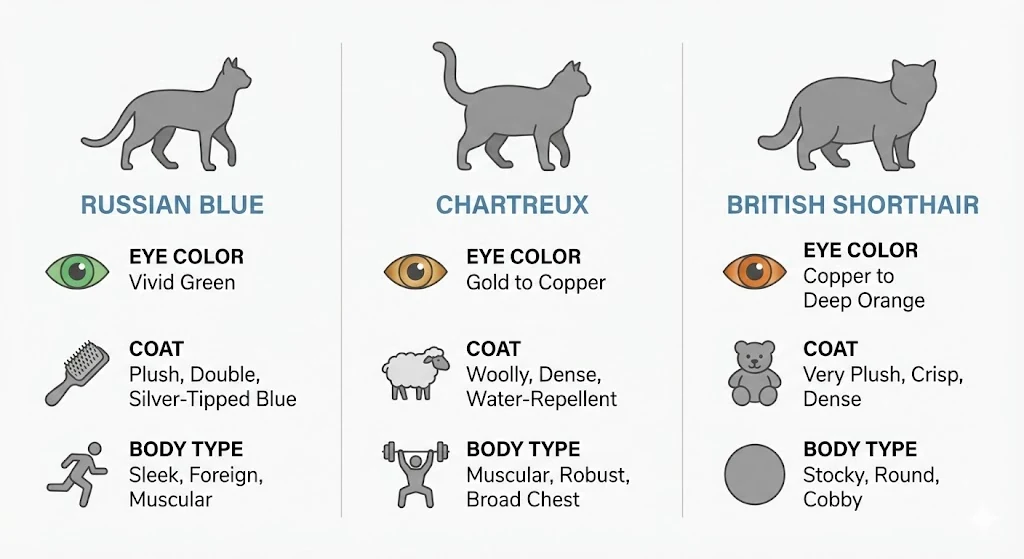
Russian Blue vs Chartreux vs British Shorthair (British Blue): How to Tell Them
People often confuse these “blue” cats because coat color overlaps. Here’s a practical field guide—Mas observe: looks alone can’t prove a purebred; only pedigree/verified lineage can.
Quick cheat sheet (fastest tells)
- Olhos
- Russian Blue: normalmente emerald green in breed profiles/standards.
- Chartreux: eyes commonly gold to copper.
- British Shorthair (British Blue): eye color commonly copper/orange/deep gold in breed standards (varies by color/pattern).
- Coat feel
- Russian Blue: dense plush double coat with distinct silver tipping (shimmery look).
- Chartreux: dense, woolly coat with insulating undercoat (often described as somewhat water-resistant).
- British Shorthair: extremely dense “plush” coat and a rounder overall silhouette.
- Body shape
- Russian Blue: mais elegant/lean profile (fine-boned, long-legged look in standards).
- Chartreux: muscular, powerful build.
- British Shorthair: stocky, broad-chested, rounded head olha só.
At-a-glance comparison table
| Recurso | Azul russo | Chartreux | British Shorthair (British Blue) |
|---|---|---|---|
| Typical eye color | Emerald green | Gold–copper | Copper/orange/deep gold (varies by color) |
| Casaco | Plush double coat; silver-tipped guard hairs | Dense, woolly casaco duplo | Very dense plush coat; rounded “teddy bear” look |
| Tipo de corpo | Leaner, long-legged, fine-boned (standard language) | Muscular/powerful; slow to mature | Stocky, broad chest, strong legs, rounded head |
| “Smile” expression | Often described as subtle “smiling” look | Sweet “smiling” expression noted in breed descriptions | Rounded face with prominent whisker pads, “smile” look |
Russian Blue vs Chartreux (common confusion)
If you’re deciding between them:
- Choose Azul russo if you prefer a sleek look + green-eyed hallmark + silver-tipped shimmer.
- Choose Chartreux if you prefer a more robust, muscular build and the classic gold/copper eyes + woolly coat.
Russian Blue vs British Shorthair (British Blue)
- British Shorthairs are generally described with a rounder head and stockier body in breed profiles.
- Russian Blues are typically described with silver tipping e olhos verdes as key identifiers.
Important note if you’re trying to “identify” a cat
Many shelter cats are mixes. A solid blue coat alone doesn’t confirm breed—use this section as a visual guide, not proof. If you need certainty (e.g., for showing/breeding), you’ll need pedigree documentation.
Russian Blue Temperament (With Kids, Dogs, Other Cats, and Strangers)
Quick temperament summary: Russian Blue cats are typically gentle, intelligent, and quietly affectionate with their family. They’re often reserved with strangers, prefer calm routines, and tend to bond deeply with one or a few people. They’re playful and can be surprisingly chatty at home, but usually not “in-your-face” clingy.
With strangers: shy at first, loyal once comfortable
Russian Blues commonly take time to warm up to new people. In many homes, they’ll observar à distância or retreat to a safe spot when visitors arrive—this is usually caution, not aggression.
O que ajuda: give them a quiet room, don’t force interactions, let the cat approach on their own terms, and use treats/toys to build positive associations.
With kids: best with calm, respectful handling
Russian Blues often do well with crianças mais velhas who understand gentle touch and boundaries. With toddlers or loud, unpredictable play, they may hide or become stressed.
Kid-friendly tips:
- Teach “one-hand petting” (no grabbing), and no chasing
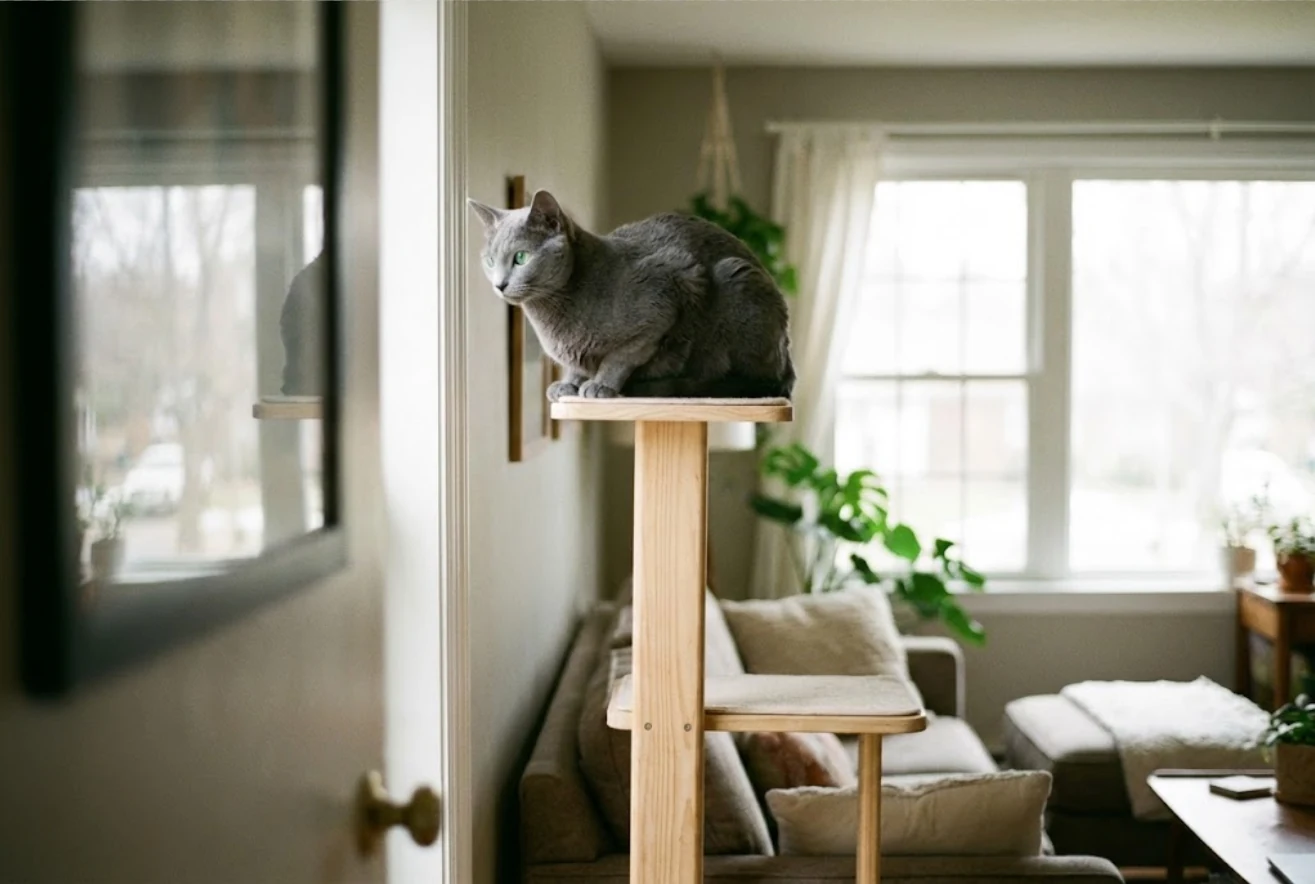
- Fornecer um cat-only retreat (cat tree / quiet room)
- Use wand toys for interactive play instead of hands
With dogs: possible—if the dog is calm and introductions are slow
Russian Blues can live with dogs, especially if the dog is cat-savvy and not overly rambunctious. The biggest risk is stress from chasing or constant attention.
Dog intro checklist:
- Comece com separation + scent swapping (blankets, bedding)
- Short, controlled sessions with the dog leashed
- Reward calm behavior on both sides
- Always ensure the cat has vertical escape routes (shelves, tall trees)
With other cats: often fine, but they like a peaceful home
Many Russian Blues coexist well with other cats if introductions are gradual and the home isn’t chaotic. Because they value routine and quiet, they may struggle with highly dominant or very energetic cats.
Success factors:
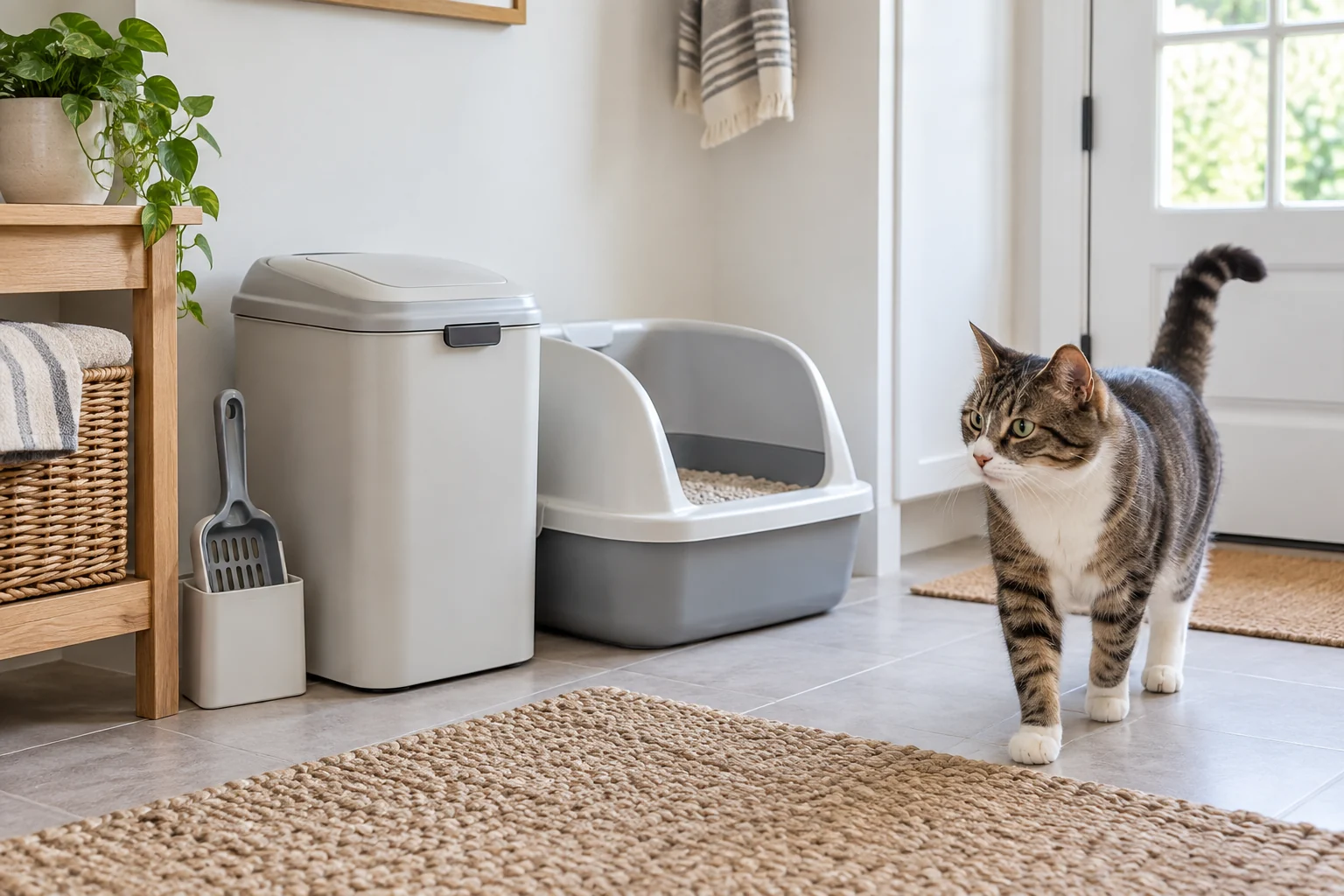
- Multiple litter boxes + feeding stations (reduce resource tension)
- Separate resting zones
- Daily play sessions to prevent boredom and jealousy
Are Russian Blues clingy? Affectionate—but usually on their terms
Russian Blues often choose a favorite person and follow them from room to room, but many prefer being “near you” rather than constantly on your lap. They may enjoy cuddles, then go off to nap alone. This “loyal but not needy” pattern is exactly what some owners love about the breed.
Playfulness & intelligence: clever, curious, and routine-oriented
Russian Blues are smart and can be “problem solvers” (opening cabinets, investigating containers). They often respond well to predictable schedules and may remind you when it’s mealtime.
Best enrichment ideas:
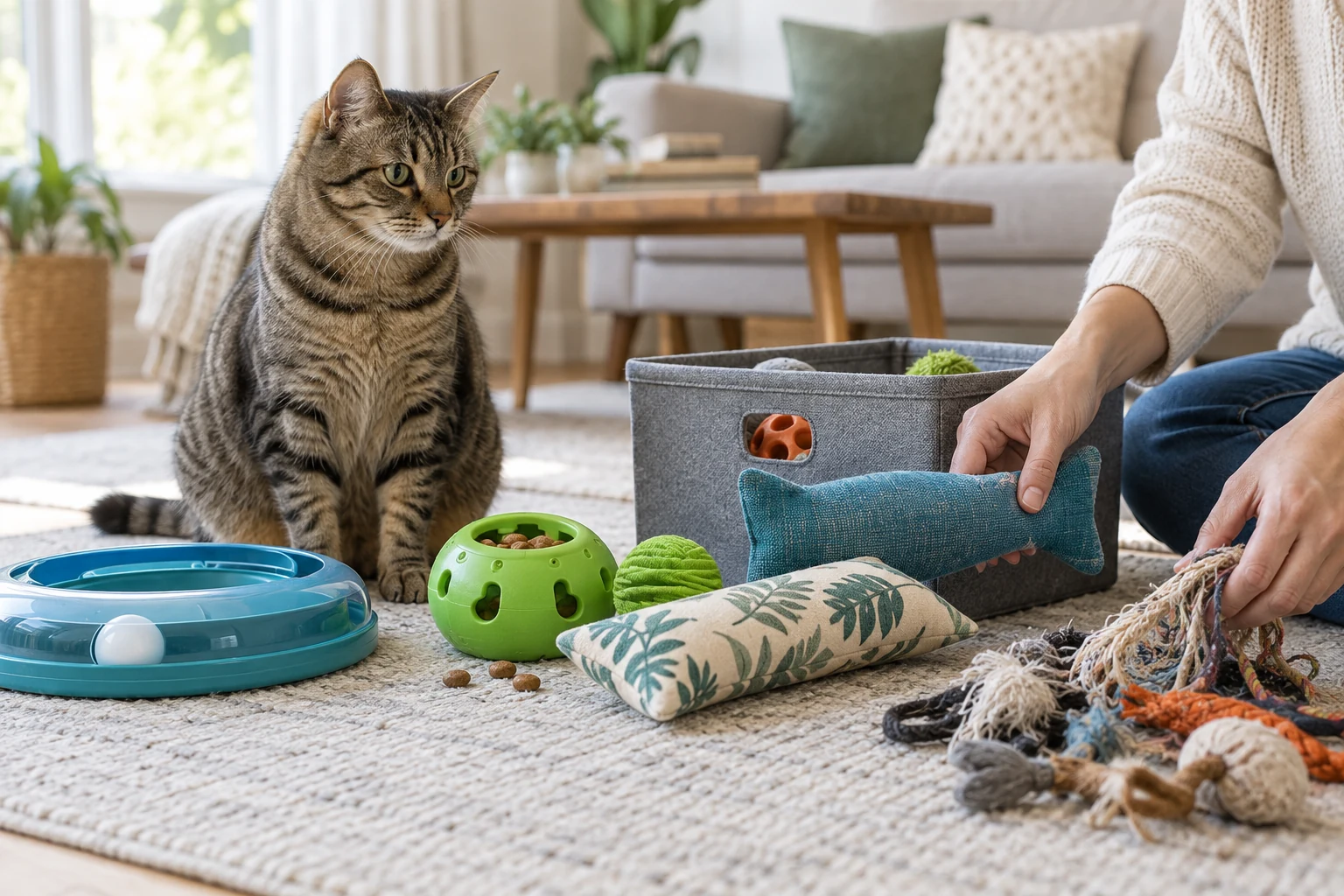
- Puzzle feeders (reduce boredom + overeating)
- Fetch games, teaser wand play, toy rotation
- Window perch + climbing options (they love vertical space)
Signs your Russian Blue is stressed (and how to fix it)
Because they’re sensitive to environment changes, watch for:
- Escondido more than usual
- Reduced appetite or sudden overeating
- Overgrooming
- Litter box changes
Quick fixes: restore routine, increase quiet zones, add vertical space, and do shorter, more frequent play sessions.
Guia de cuidados
Quick care checklist (for busy readers)
- Keep a healthy weight: aim for a “lean but not bony” body condition; you should feel ribs easily and see a waist from above.
- Measure food, don’t guess: portion control beats “free-feeding.”
- Make meals “huntable”: small meals + puzzle feeders/forage feeding reduce boredom-eating.
- Daily play: 2 sessions of 10–15 minutes is a practical baseline.
- Dental care matters: start early; use vet guidance + VOHC-accepted products when helpful.
Diet (weight, quality, and “how to feed”)
Russian Blues are often calm indoor cats, so weight management is one of the most important “care wins.” Obesity can reduce quality of life and can worsen issues like osteoarthritis e diabetes.
What to feed (simple, safe standard)
- Choose a diet that’s completo e equilibrado and labeled with an AAFCO statement of nutritional adequacy.
- Avoid fads that increase risk. The AAHA/AAFP life stage guidance does not endorse raw or non-sterilized dehydrated animal products (including treats).
How much (portion control that actually works)
- Measure portions (kitchen scale or measuring cup). Overfeeding is a major contributor to feline weight gain.
- Use um Body Condition Score (BCS) approach rather than “my cat looks fine.” Cornell describes a commonly used 9-point system with ~4.5–5 as ideal.
How to feed
Cats are natural hunters that prefer multiple small meals—and feeding style can affect stress and overeating. The feline feeding consensus emphasizes supporting normal behaviors like foraging/hunting e frequent small meals, even in multi-pet homes.
Practical ways to do that:
- Split the daily food into several small meals (or use an automatic feeder).
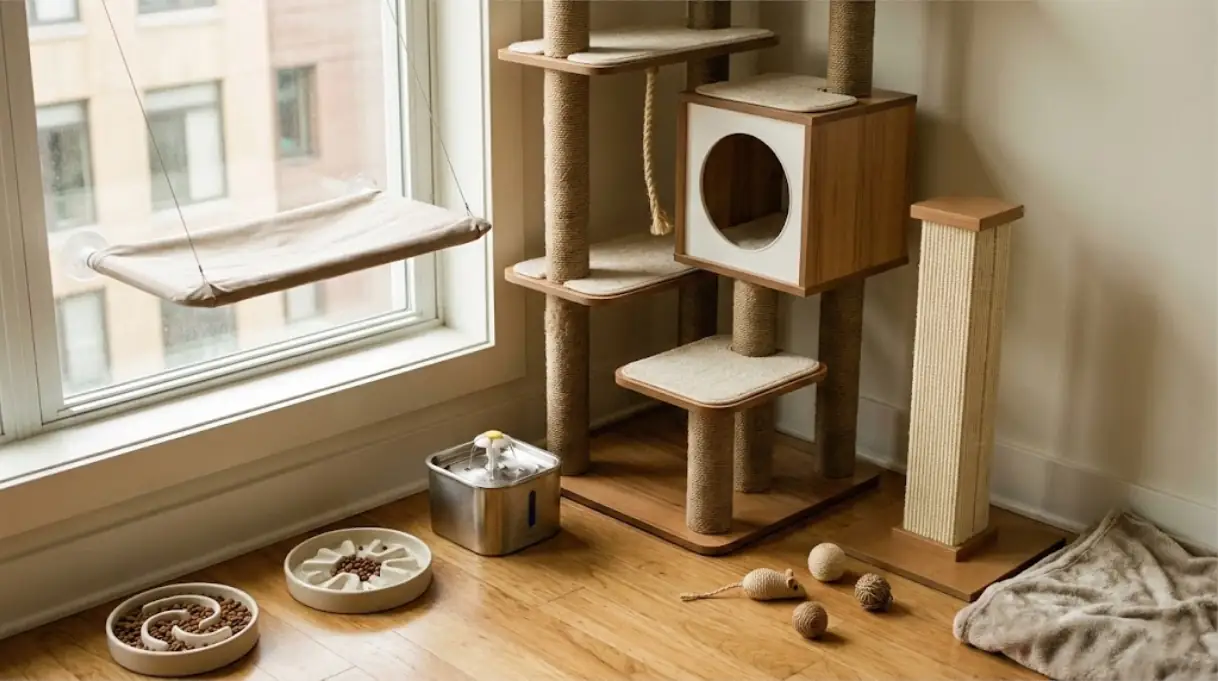
- Try alimentadores de quebra-cabeça and “forage feeding” (hide small portions in safe spots) to turn eating into enrichment.
- In multi-cat homes, provide multiple food/water stations so shy cats can comer calmly.
Food sensitivities & allergies (be accurate, not alarmist)
Food allergies happen, but they’re not the first assumption for shedding or itchiness. Cornell notes food allergies are a common allergy type in cats, usually showing as itchy skine ~10–15% of affected cats also have GI signs like vomiting/diarrhea.
If you suspect an allergy:
- Common feline food allergens include fish, beef, chicken, and leite produtos.
- Diagnosis typically requires a strict elimination diet trial and careful re-challenges; don’t “ingredient-hop” weekly.
- Never starve a cat to force diet acceptance—Merck warns prolonged poor appetite can lead to serious liver damage.
Exercise (healthy weight + happy brain)
Even relaxed cats need daily activity to maintain muscle, protect joints, and prevent weight creep.
A realistic routine
- Procure at least two 10–15 minute interactive play sessions daily (wand toys, chase games, atacar practice).
- Make your home “movement-friendly” with cat trees/shelves to encourage climbing and exploration.
Make exercise automatic
VCA suggests turning weight control into lifestyle:
- Use toys that mimic hunting (wand teasers, moving toys).
- Set up climbing options (cat tree; even placing a few kibbles on levels can encourage exploration).
- Consider safe outdoor options: cat-proof fencing, a “catio,” or harness training, depending on your environment.
Environment & Enrichment (routine + calm “safe zones”)
Russian Blues often thrive with predictability and quiet. If your cat is indoor-only, enrichment is not optional—CatVets notes indoor cats should have essential resources including safe resting places, simulated hunting/foraging, play, and vertical space.
Practical setup:
- Keep a consistent daily rhythm (feeding + play around the same times).
- Fornecer at least one quiet retreat (covered bed, closet shelf, spare room corner).
- Adicionar vertical territory (cat tree, shelves, window perch).
- Use enrichment that “spends energy” mentally: puzzle feeders, scent games, toy rotation.
Grooming (simple, low-stress)
Russian Blues have a dense plush coat that’s usually easy to maintain.
- Escovação semanal is enough for most households (increase during seasonal shed).
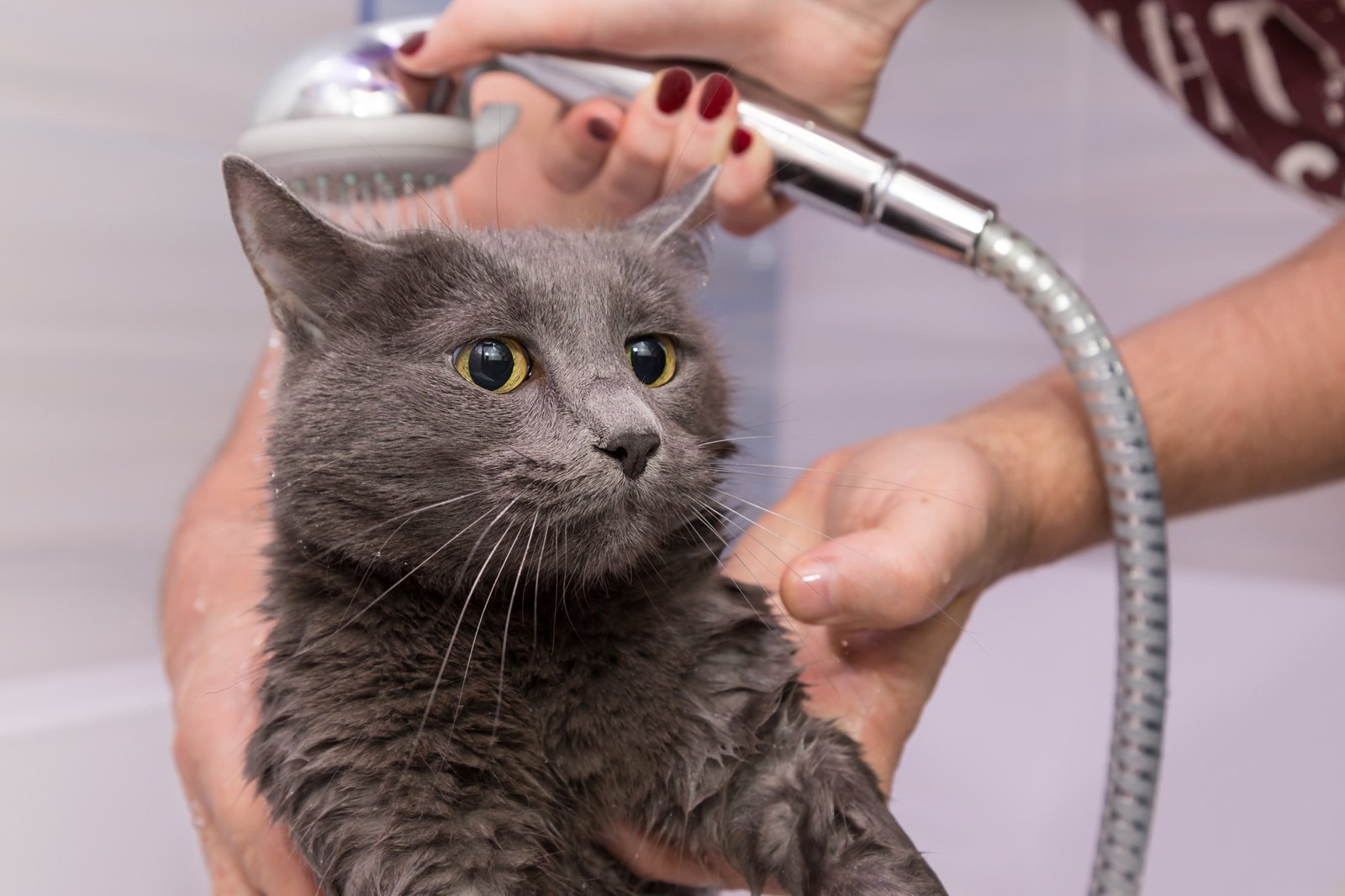
- Baths are rarely necessary unless recommended by your vet or there’s a mess.
- For shedding specifics, link internally to: Do Russian Blue Cats Shed? (your section above).
Dental care (don’t skip this)
AAHA notes proactive dental care improves health and well-being and should start early; teams can teach owners how to examine the mouth and brush teeth, and VOHC-accepted products may help.
Practical tip: if tooth brushing isn’t tolerated, ask your vet about dental diets or other options.
Mental Stimulation (prevent “smart-cat mischief”)
Russian Blues are bright and can get bored fast—boredom often looks like nocturnal zoomies, cabinet-opening, or “attention meowing.”
High-impact enrichment ideas:
- Puzzle feeders + forage feeding (meals become a job).
- Short training sessions (sit, high-five, target) with tiny rewards (still within the treat budget).
- Troque os brinquedos semanalmente para manter o interesse das crianças.
Russian Blue Lifespan & Health (Common Problems + Early Warning Signs)
Resposta rápida: Russian Blue cats often live into their mid-teens with good indoor care, and some individuals live longer with consistent prevention (healthy weight, dental care, early vet detection).
Average lifespan: what affects it
- Body weight & muscle maintenance (obesity drives many downstream problems)
- Dental health (pain/infection reduces appetite and quality of life)
- Hydration & urinary health
- Early detection through routine exams and lab work (catching issues before symptoms are obvious)
Early warning signs (when to book a vet visit)
Book a vet visit soon if you notice:
- Appetite change lasting >24–48 hours (eating much less or suddenly ravenous)
- Weight change without an obvious reason (up or down)
- Increased thirst or urination
- Vomiting/diarrhea repeatedly or lasting >24 hours
- Bad breath, drooling, chewing on one side, pawing at the mouth
- Coughing/wheezing, noisy breathing, open-mouth breathing after mild activity
- Lower energy, hiding more than usual, less interest in play
- Behavior change (irritability, restlessness, confusion)
- Coat changes (dull coat, sudden heavy shedding, dandruff, bald patches)
Urgent / same-day vet (don’t wait)
- Straining in the litter box, crying while urinating, blood in urine
- Trouble breathing, collapse, sudden hind-leg weakness
- Not eating at all for 24 hours (especially in overweight cats)
Note: This information helps you decide when to seek care—it’s not a diagnosis.
Prevention checklist (simple routines that reduce risk)
- Weight control: measured portions + daily play (10–15 minutes)
- Dental: brush teeth several times/week if tolerated; dental treats can help, but brushing matters most
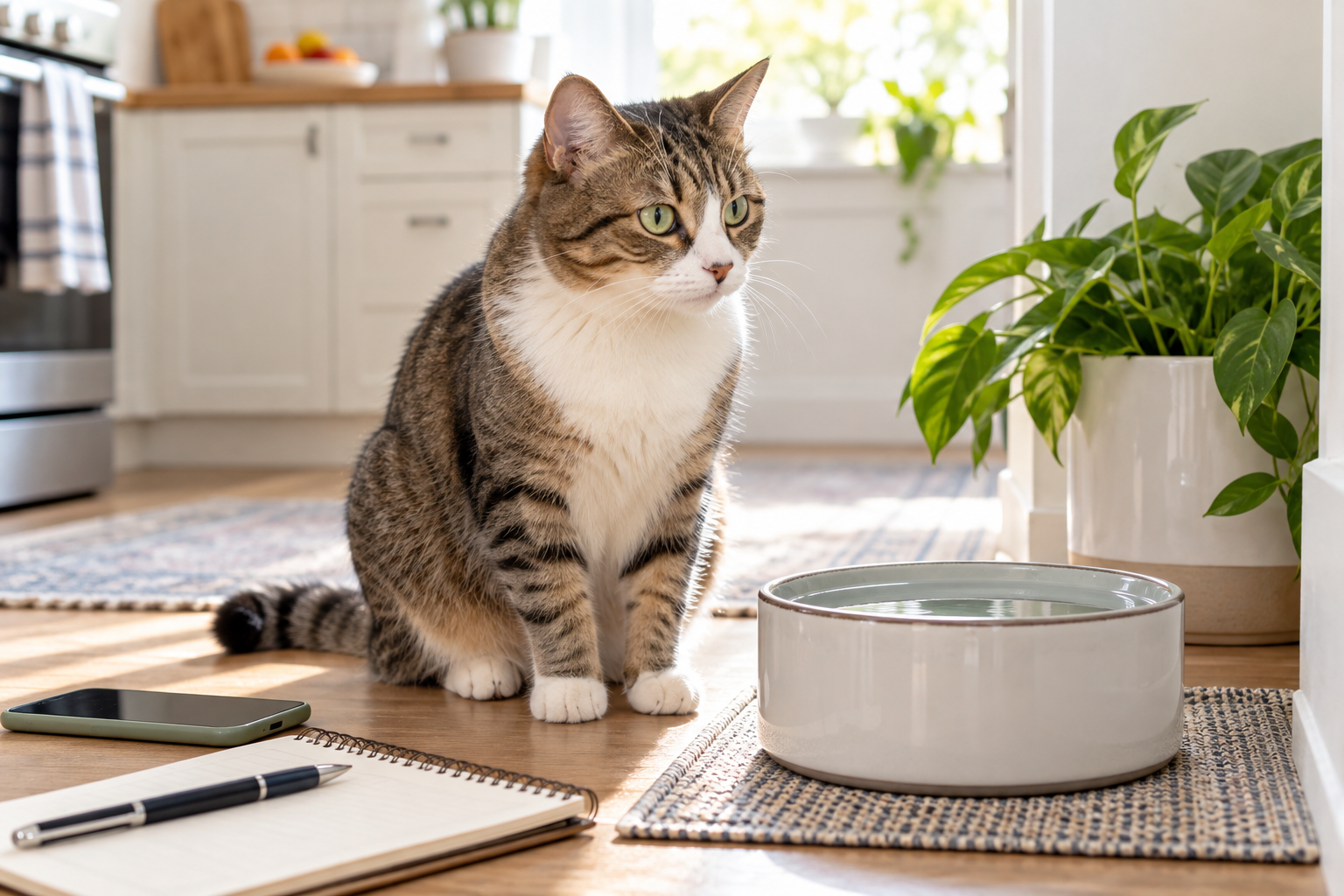
- Hidratação: multiple water stations; consider a fountain if your cat drinks more that way
- Litter box monitoring: you’ll catch urinary issues earlier if you notice changes fast
- Senior screening: as cats idade, periodic blood/urine checks help find kidney/thyroid issues earlier
Common health concerns in Russian Blue cats
| Condição | Descrição e sintomas | Gerenciamento e prevenção |
|---|---|---|
| Obesidade | Tendência a comer demais, o que leva ao ganho de peso e a riscos como diabetes, dores nas articulações e doenças cardíacas | Porções controladas, dieta balanceada e brincadeiras/exercícios diários |
| Diabetes | Perda de peso, apesar do aumento do apetite, da sede e da micção; frequentemente associada à obesidade | Gerenciamento de medicamentos e dieta; prevenção por meio da manutenção de um peso saudável |
| Doença renal (rins) | Perda gradual da função renal; risco maior do que a média em azuis russos | Dietas especiais, medicamentos e detecção precoce por meio de check-ups veterinários regulares |
| Pedras na bexiga / cistite (FLUTD) | Desconforto urinário, esforço, micção frequente ou sangue na urina; associado à dieta e ao estresse | Dietas de suporte urinário, acesso a água fresca, redução do estresse e controle da dor, conforme necessário |
| Hipertireoidismo | Comum em gatos idosos; causa perda de peso, hiperatividade, aumento do apetite/sede | Controlado com medicação; detecção precoce por meio de exames de saúde para gatos idosos |
| Doenças dentárias | A gengivite e a doença periodontal podem levar à perda de dentes ou a infecções | Escovação frequente dos dentes, tratamentos dentários e limpezas profissionais de rotina |
| Condições oculares | Inclui glaucoma, catarata, conjuntivite e PRA; observe se há vermelhidão, turvação ou secreção | Tratamentos oculares prescritos por veterinários; monitoramento da aparência; conscientização genética |
| Cardiomiopatia hipertrófica (CMH) | O espessamento do músculo cardíaco reduz a eficiência; pode ser hereditário | Triagem genética em gatos reprodutores; monitoramento cardíaco regular por meio de exames veterinários |
| Problemas respiratórios | Inclui asma felina e gripe felina; os sintomas podem envolver tosse, chiado no peito ou secreção nasal | Ambiente limpo, ventilação adequada, vacinas contra gripe e possíveis medicamentos de longo prazo |
| Alergias alimentares | Reações a leite, carne bovina ou milho; os sintomas incluem vômito, irritação da pele e queda de cabelo | Dietas de eliminação, prevenção de alergênicos e alimentação com alimentos de alta qualidade e ingredientes limitados |
| Tumores | Risco de tumores benignos e malignos; podem aparecer como caroços ou mudanças de comportamento | Detecção precoce por meio de exames físicos regulares e atenção veterinária imediata |
Nota médica: If you’re worried about symptoms, contact a veterinarian. Early care is often simpler and less stressful than waiting.
Essa raça é ideal para você?
Russian Blue cats tend to thrive when their environment is predictable, calm, and enriched—com safe hiding/retreat spaces, vertical territory, and daily play to reduce stress and support normal cat behavior.
Quick match summary (30 seconds)
A Russian Blue is likely a great fit if you want: a quiet, loyal companion that enjoys routine and gentle affection (often “near you,” not always “on you”).
You may struggle if you want: a highly social, constantly fofinho lap cat in a busy, noisy home with little downtime.
Best-fit vs. not-ideal (with practical workarounds)
| Adequado para | Não adequado para |
|---|---|
| Famílias calmas com rotinas consistentes | Lares ou ambientes barulhentos e caóticos com interrupções frequentes na rotina |
| Moradores de apartamentos ou casas que possam oferecer espaços de retiro tranquilos | Casas sem zonas de silêncio ou espaços onde o gato possa se retirar quando estiver superestimulado |
| Proprietários que estão sempre fora de casa, mas que podem oferecer enriquecimento e atenção ocasional de acordo com os termos do gato | Pessoas que procuram um gato de colo pegajoso ou constantemente interativo |
| Indivíduos que gostem de brincadeiras interativas e que possam oferecer estímulo mental (por exemplo, buscar, brinquedos de quebra-cabeça) | Os donos não querem envolver o gato em brincadeiras regulares ou atividades de enriquecimento |
| Donos de gatos de primeira viagem que preferem uma raça calma, independente e afetuosa | Donos de primeira viagem que esperam um gato altamente social ou constantemente fofo |
| Famílias com crianças mais velhas ou adultos calmos que entendem a interação gentil | Lares com bebês, crianças muito pequenas ou visitantes barulhentos frequentes - podem causar esconderijo ou estresse |
| Lares com vários animais de estimação, com animais de estimação calmos e que aceitam gatos, e tempo para apresentações cuidadosas | Lares com animais de estimação agressivos ou excessivamente enérgicos sem introduções graduais e supervisionadas |
| Pessoas com alergias leves a gatos - os russian blues podem ser mais fáceis de tolerar devido aos baixos níveis de Fel d 1 e à baixa quantidade de pelos | Indivíduos com severo alergias esperando um gato completamente hipoalergênico (não existe) |
Decision checklist
A Russian Blue is a strong match if most are “yes”:
- Do you prefer a quiet, calm cat over a constantly social one?
- Can you provide rotina (meals/play at consistent times)?
- Can you set up vertical space + hiding spots?
- Will you do daily play/enrichment (even short sessions)?
- Can you keep introductions to kids/pets gentle and gradual?
- If allergies are a concern: can you spend time with the specific cat first and keep realistic expectations?

PERGUNTAS FREQUENTES
Are Russian Blue cats hypoallergenic?
No cat is 100% hypoallergenic, including Russian Blues. That said, some people with mild allergies report they tolerate Russian Blues better than heavier-shedding breeds. If allergies are a concern, test your reaction by spending time around an adult Russian Blue before adopting.
Do Russian Blue cats shed a lot?
Russian Blues typically shed less than many breeds, but they still shed—especially during seasonal coat changes. Weekly brushing is usually enough to keep loose hair under control. If shedding suddenly increases a lot, look for diet changes, stress, or skin issues.
How often should you brush a Russian Blue?
For most homes, Uma vez por semana is a good baseline. During spring/fall shedding periods, bump it to 2 a 3 vezes por semana. Use a soft brush or grooming mitt—over-brushing can irritate skin and doesn’t improve results.
Are Russian Blue cats good apartment cats?
Yes—Russian Blues are often a strong fit for apartment living because they’re typically quieter and enjoy predictable routines. The key is providing enrichment: a tall cat tree, window perch, puzzle toys, and daily interactive play.
Are Russian Blue cats good with kids?
They can be, especially with crianças mais velhas who are calm and gentle. Russian Blues are often reserved with loud or chaotic activity and may hide if overwhelmed. Teach kids “hands-off when the cat walks away,” and provide a quiet retreat space.
Are Russian Blue cats good with dogs and other cats?
Often yes, if introductions are gradual. Russian Blues tend to do best with calm, cat-friendly pets rather than high-energy chasers. Use slow scent introductions, supervised meetings, and give the cat vertical escape routes (shelves/cat trees).
Do Russian Blue cats like to cuddle?
Many Russian Blues are affectionate and loyal, but they often prefer affection on their own schedule. They’re commonly described as “close-by” cats (following you, staying in the same room) rather than constant lap cats.
Can Russian Blue cats be left alone during the day?
Usually yes—Russian Blues are often independent enough for working households. The catch is boredom: leave puzzle feeders, rotate toys, and provide window views or climbing space. If you’re gone long hours daily, consider extra enrichment or a companion pet (if your cat enjoys it).
When do Russian Blue kitten eyes turn green?
Kittens may start with yellowish eyes and gradually develop greener eyes as they mature. The timing varies, but many owners notice changes across the first months. Adult Russian Blues are known for vivid green eyes.
How big do Russian Blue cats get?
Russian Blues are medium-sized. Many males fall around 7–15 lb (3.2–6.8 kg) and females 5.5–10 lb (2.5–4.5 kg), though individuals vary. Weight is strongly influenced by diet, activity, and whether the cat is truly purebred.
Russian Blue vs Chartreux vs British Shorthair: how can you tell?
They can look similar, especially in photos. Russian Blues are often associated with a sleeker build and vivid green eyes, while the other blue breeds may show different body shapes and eye colors. Visual cues help, but only pedigree/lineage confirms a purebred.
What health problems are Russian Blue cats prone to?
Russian Blues are generally considered sturdy, but like all cats they can face issues such as obesity, dental disease, urinary problems, and age-related conditions. The most useful “prevention stack” is portion control, daily play, hydration, and regular vet checkups—especially as they age.
Fatos bônus
These are popular stories and trivia; they’re not essential for choosing or caring for the breed.
Origens antigas e conexões reais
O Russian Blue é considerado uma das raças de gatos mais antigas, com sua história entrelaçada ao folclore russo. As lendas sugerem que eles eram animais de estimação queridos dos Czares russos e até possuíam influências curativas, às vezes colocados em berçários para afastar os maus espíritos e proteger os recém-nascidos.
Casaco "Glittery" (brilhante)
O brilho exclusivo de sua pelagem não se deve apenas à ponta prateada, mas também porque os pelos externos têm pontas prateadas causadas por uma versão diluída do gene do pelo preto, fazendo com que pareçam "cobertos de glitter".
Ícones da cultura pop
O popular meme da Internet "Nyan Cat" foi inspirado no gato Russian Blue do próprio ilustrador, Marty. Os fãs do clássico desenho animado "Tom e Jerry" também especulam que Tom, com sua tonalidade cinza-azulada e olhos verdes, pode ser um Russian Blue.
Quase extinção
A raça esteve quase extinta durante a Segunda Guerra Mundial devido à falta de recursos para os criadores, mas foi salva por meio de esforços dedicados de entusiastas de gatos na Europa e na América.
Parecem maiores do que são
Devido à sua ossatura fina e à densa pelagem de camada dupla, os Russian Blues geralmente parecem maiores e mais fofos do que sua estrutura realmente fina. Isso fica evidente quando seu pelo fica molhado durante o banho, revelando sua constituição mais delicada.
Distinto de outros blues
Apesar de às vezes serem confundidos com outras raças de gatos azuis, como o British Shorthair ou o Chartreux, os Russian Blues são distintos. Eles são conhecidos por seus olhos verde-esmeralda vibrantes (ao contrário dos olhos amarelo-ouro dos British Blues), pelo mais macio, sedoso e brilhante e corpos mais elegantes e majestosos.
Referências
"Russian Blue". Perfis de raças. The Cat Fanciers’ Association. Archived from the original on 15 October 2013. Retrieved 11 October 2013. Many believe the Russian Blue is a natural breed originating from the Archangel Isles in northern Russia, where the long winters developed a cat with a dense, plush coat. Rumors also abound that the Russian Blue breed descended from the cats kept by the Russian Czars, which was rumoured to hunt the brown bear. Assuming the Russian Blue did migrate from northern Russia, it was likely via ship to Great Britain and northern Europe in the mid 1860s.
Alderton, David (1992). Gatos (Manual da testemunha ocular). Dorling Kindersley. p. 182. ISBN 1-56458-070-9.
"Gato em um novo personagem". The Leeds Mercury. Leeds, Reino Unido. 7 de junho de 1862.
"The Cat Show". The Times of London. Londres, Reino Unido. 16 de maio de 1872.
Weir, Harrison (1895). Nossos gatos e tudo sobre eles. Houghton. p. 66.
"Meu gato é um azul russo?". Russianblue.info. Archived from the original on 19 March 2023. Retrieved 6 October 2011.
"Allevamento YesWeCat gatti Siamesi e Orientali". Allevamento YesWeCat gatti Siamesi e Orientali. Recuperado em 25 de fevereiro de 2016.
"Russian Black e o Russian White no Reino Unido". Russianblue.org.uk. Recuperado em 30 de maio de 2015.
Enciclopédia Eletrônica da Columbia (2011). "Cats" (Gatos): 1-2. {{citar periódico}}: Cite journal requires |journal= (ajuda)
"Russian Blue". www.petmd.com. Retrieved 16 November 2022.
Smith, Derek (10 de novembro de 2014). "Informações e fatos sobre o Russian Blue que você deve saber". Russian Blue Love - Os gatinhos Russian Blue mais fofos do planeta. Russianbluelove.com. Recuperado em 31 de janeiro de 2019.

 EN
EN DE
DE ES
ES PT
PT