
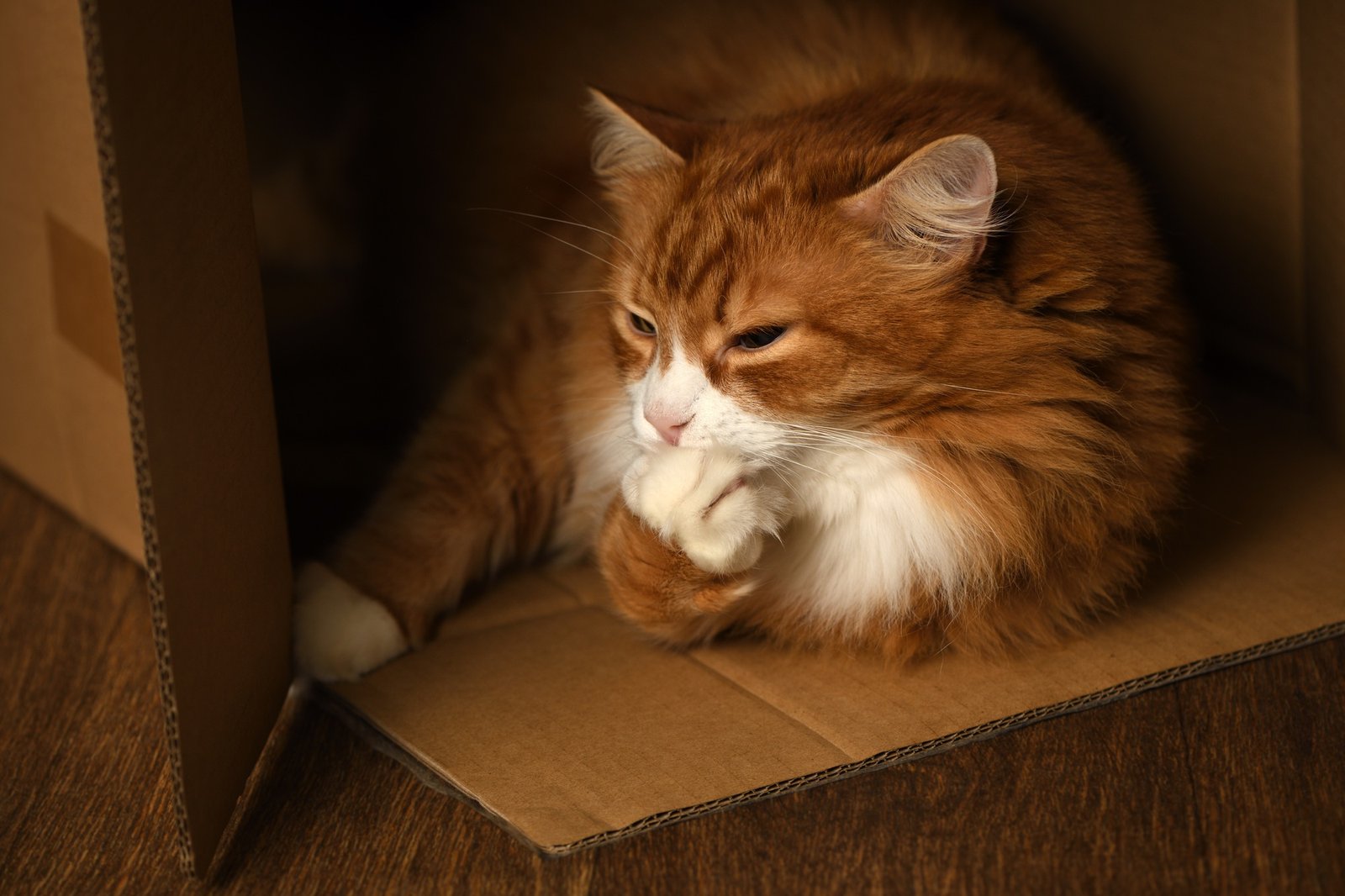
Normal grooming is frequent, so time spent licking by itself cannot diagnose a problem. The more useful clues are a change from your cat’s usual pattern, broken or thinning hair, irritated skin, new mats, or a coat your cat no longer maintains. New or persistent changes deserve a veterinary assessment because itch, pain, illness, and mobility problems can look alike.
Health note: This guide helps you observe coat and grooming changes; it cannot identify their cause. Do not assume a cat is stressed or use medication or skin products without veterinary advice.
How to tell when grooming has changed
A change in the coat or skin is usually more useful than counting grooming minutes. Cats groom often, and individual routines vary. Look for a new pattern, a change in the hair or skin, or grooming that interferes with eating, resting, or normal activity. For context on ordinary licking, see our guide to why cats groom themselves.
| Pattern | What you may notice | What it can tell you |
|---|---|---|
| Possible overgrooming | Repeated licking or chewing in one area; broken, shortened, or thinning hair; bald patches; red, scabbed, or sore skin | There may be itch, pain, skin disease, parasites, or another cause to assess. The pattern does not identify which one. |
| Possible undergrooming | A sudden greasy or unkempt coat, new mats, food or litter stuck in the fur, or difficulty turning to reach the coat | Pain, reduced mobility, illness, dental discomfort, body shape, or coat needs may make grooming harder. |
| Normal variation | Frequent licking without skin injury, hair loss, coat deterioration, or a change in daily behavior | Grooming frequency alone is not a reliable home test for a disorder. |
Signs that a cat may be overgrooming
Repeated licking, chewing, or pulling at one area can break hairs and leave thinning patches or bald skin. Check for new hair loss, redness, scabs, sores, or a change in how often your cat scratches or reacts when touched. Some cats hide the licking, so a new patch of short or broken hair may be the first clue. Cornell notes that visible hair loss or skin lesions can make an overgrooming problem easier to spot than routine licking alone.[1]
Location can help your veterinarian ask better questions, but it does not diagnose a cause. A cat may focus on an itchy area, a painful joint, or skin irritated by another condition. Hairballs by themselves also do not prove overgrooming; mention a meaningful change in hairballs together with coat, skin, appetite, or digestive changes.
Signs that a cat may be undergrooming
A coat that suddenly becomes greasy, tangled, or difficult to keep clean can signal that grooming has become uncomfortable or harder to reach. Look for mats, clumped fur, debris around the rear, or a cat that stops partway through a familiar grooming routine. Dandruff and odor can have skin or health causes of their own, so do not treat them as proof that the cat simply needs a bath.
Reduced flexibility, joint pain, dental discomfort, weakness, and other health changes can limit self-care. Older cats may need help with coat maintenance, but a sudden decline should still be discussed with a veterinarian rather than written off as age.[2] Our guide to arthritis signs in older cats explains mobility clues to record.
Why grooming changes need a cause-focused check
Overgrooming in cats can follow itch, parasites, allergies, infection, or pain; undergrooming can accompany pain, reduced mobility, dental problems, or illness. Stress may contribute in some cats, but it should not be used as the first explanation for hair loss or a sudden grooming change. Cornell advises ruling out medical problems before treating excessive licking as stress-related behavior.[1]
Pruritus (itch) has multiple possible causes and may require an examination and tests chosen for the individual cat.[3] A veterinarian may ask about flea prevention, skin changes, pain, diet, and recent household events. The work-up varies; there is no single test list that fits every cat.
When to contact a veterinarian
Arrange a veterinary appointment for a new or persistent grooming change, unexplained hair loss, repeated licking of one spot, new mats, or a coat your cat can no longer keep clean. Contact the clinic promptly if the skin is open, bleeding, swollen, painful, or has discharge, or if the grooming change appears with reduced appetite, hiding, low energy, or a change in movement. If your cat seems acutely unwell, call an urgent veterinary service for advice.
Before the visit, take clear photos of the affected area and note when it began, where it occurs, whether the cat licks or scratches, and any changes in food, flea control, home routine, appetite, or mobility. A short video of the behavior can help if it does not delay care. Avoid repeatedly handling a painful or raw area.
Safe coat support while you arrange care
Keep support gentle and let your cat’s response guide you. If brushing is comfortable, use a cat-appropriate comb or brush in short sessions. Stop if your cat flinches, tries to leave, growls, or guards a painful area. For technique and coat-specific routines, see our cat grooming guide and guide to brushing a longhaired cat.

- Do not cut a tight mat with scissors; a cat’s skin can be pulled into the mat and cut easily. Ask a veterinary professional or cat-experienced groomer for help.
- Do not apply human creams, essential oils, flea products intended for another species, or leftover medication unless your veterinarian directs you to do so.
- Do not punish licking or force a bath or brushing session. Reduce obvious stressors where practical and keep familiar resources and routines available, while continuing to investigate medical causes.
A brush for comfortable routine grooming
A brush can help remove loose coat only if your cat enjoys brushing; it will not treat pain, skin disease, or overgrooming. Stop if your cat resists or the skin looks sore, and ask a veterinarian about sudden grooming changes.
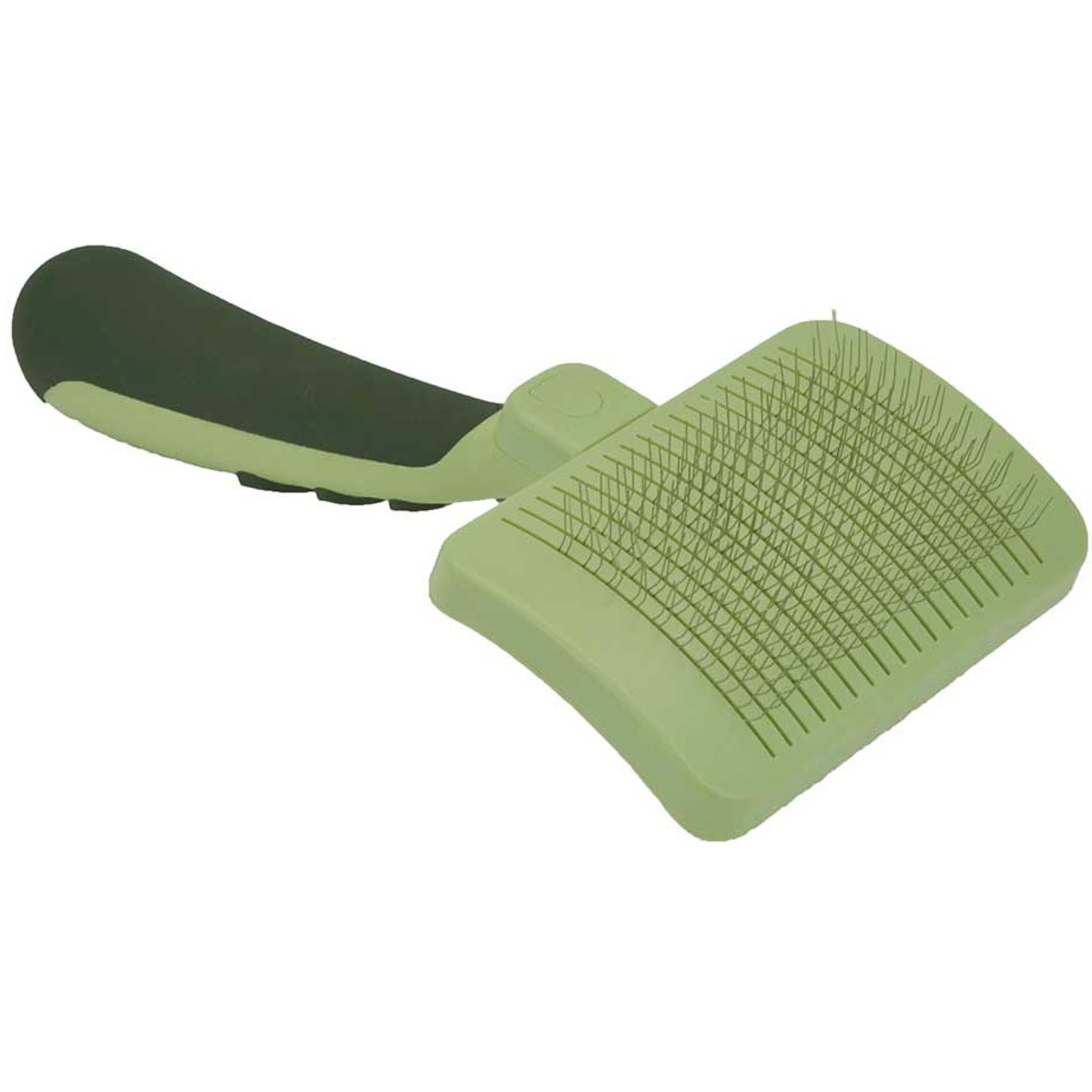
Safari
Safari Self-Cleaning Slicker Brush for Cats
Safari Self-Cleaning Slicker Brush for Cats; With the Safari Cat Self-Cleaning Slicker Brush, cleanup is as simple as pushing a button! This slicker brush…
$18.99
Shop ChewyWe may earn a commission if you buy through this Chewy link, at no extra cost to you. Product details and prices can change.
A useful next step
Compare your cat’s coat and grooming routine with its usual baseline, photograph any visible change, and contact a veterinarian if the change is new, persistent, painful, or causing hair loss or skin damage. The appearance can guide the conversation, but an exam is needed to distinguish itch, pain, mobility limits, illness, and stress-related behavior.
Frequently asked questions
How much grooming is too much for a cat?
There is no reliable minute cutoff for every cat. A change from your cat’s usual pattern, broken or missing hair, irritated skin, or grooming that interrupts normal activity is more useful to discuss with a veterinarian.
Does a bald belly mean my cat is stressed?
No. Hair loss can have medical or behavioral contributors, and the pattern alone cannot distinguish them. A veterinarian should assess new hair loss before stress is treated as the explanation.
Why has my older cat stopped grooming?
Pain, reduced flexibility, dental discomfort, illness, and other changes may make grooming difficult. A sudden change deserves a veterinary check; gentle coat support can help while the cause is assessed.
Can I shave a matted cat at home?
Avoid cutting tight mats with scissors or using clippers close to the skin. Ask a veterinary professional or an experienced cat groomer to assess the mat, especially if the skin is sore or the cat resists handling.
References
- 1. Cornell Feline Health Center. Cats That Lick Too Much.
- 2. Cornell Feline Health Center. Special Needs of the Senior Cat.
- 3. Merck Veterinary Manual. Itching (Pruritus) in Cats.