
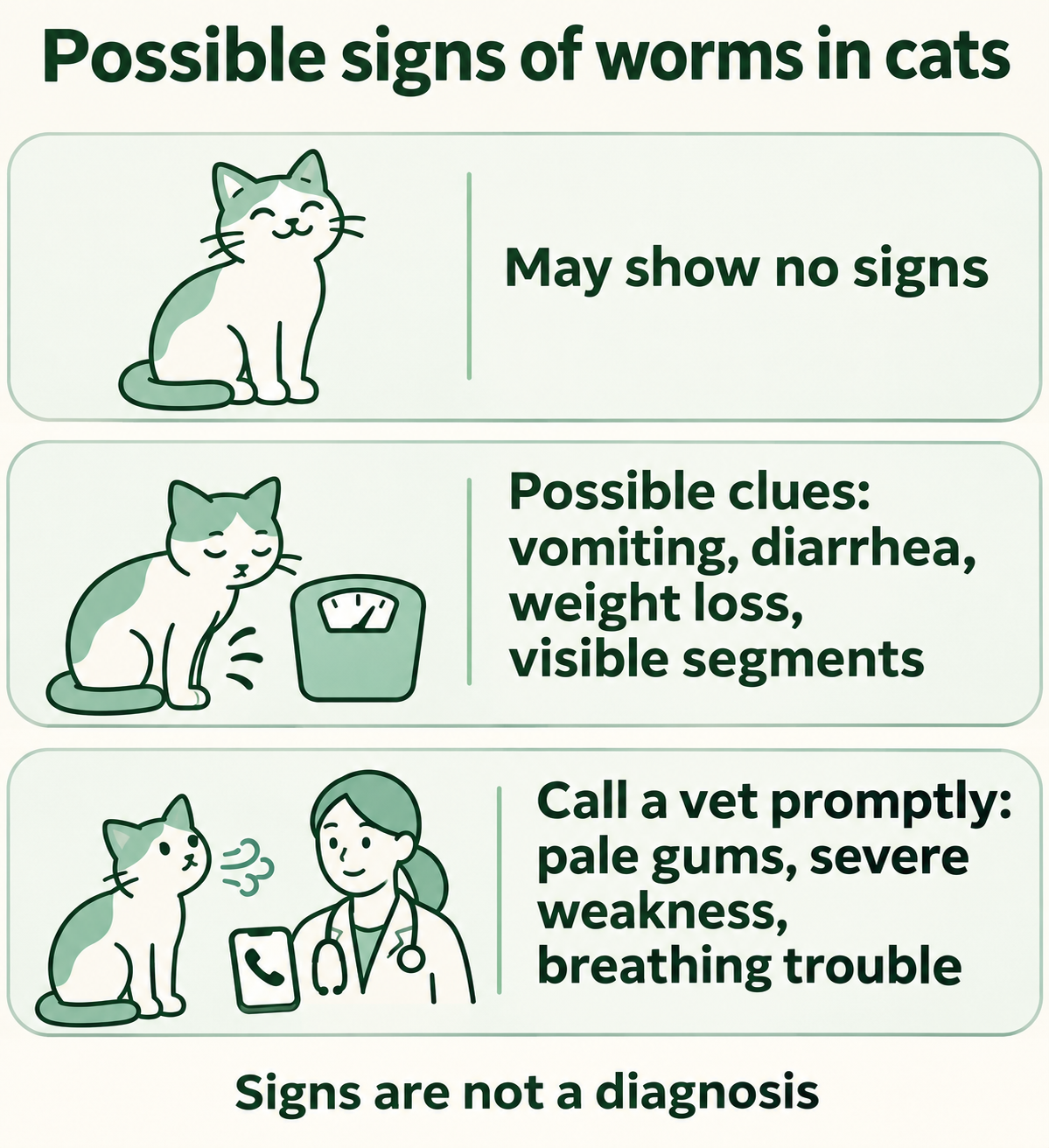
Cats with intestinal worms may show no obvious symptoms. Possible clues include visible worm segments, vomiting, diarrhea, a swollen belly (especially in kittens), poor growth or weight loss, a dull coat, or pale gums. These signs also occur with other illnesses, so they cannot confirm worms. A veterinarian can assess the cat and decide whether fecal or other parasite testing is appropriate.12
This educational guide helps you recognize possible signs and choose a safe next step. It does not diagnose a cat or prescribe treatment. For how exposure happens, see how cats are exposed to worms; treatment and prevention belong in our guide to what a veterinary deworming plan may involve.
Possible symptoms of worms in cats
Worm infections can be silent or cause nonspecific digestive, appetite, coat, or growth changes. The pattern depends on the parasite and the cat; none of the signs below proves that worms are present.12
| O que você percebe | How it may appear | O que fazer |
|---|---|---|
| No obvious change | Your cat eats, plays, and uses the litter box as usual | Do not use a normal appearance to rule out parasites; ask your vet about routine testing based on age, health, and lifestyle. |
| Rice-like or sesame-seed-like pieces | Tapeworm segments may be seen near the anus, in stool, or on bedding; dried segments can resemble sesame seeds.1 | Take a photo without handling the material and contact your veterinary clinic. |
| Long, pale worms | Roundworms may sometimes be visible in stool or vomit, but many parasite stages cannot be seen at home.12 | Photograph what you see and ask the clinic what to bring. Do not identify or treat by appearance alone. |
| Loose stool or diarrhea | Stool may be soft, watery, or occasionally contain mucus or blood; many non-worm conditions can look similar.1 | Call if it persists, recurs, or occurs with vomiting, poor appetite, weakness, or weight loss. See other causes of persistent diarrhea in cats. |
| Vômito | A cat may vomit for many reasons; an adult worm in vomit is a reason to contact a vet. | Repeated vomiting, inability to keep water down, or vomiting with weakness needs prompt veterinary advice. |
| Pot-bellied appearance or poor growth | A rounded belly and failure to thrive can occur in kittens with roundworms.23 | Arrange veterinary advice promptly, especially for a young kitten or a kitten with diarrhea or low energy. |
| Weight loss, dull coat, or appetite change | Some infections affect body condition, growth, or appetite; these changes also have many other causes.12 | Record when the change started and book an assessment if it continues or worsens. |
| Pale gums or marked weakness | Heavy parasite burdens can contribute to anemia, but pale gums and weakness have other serious causes.12 | Treat this as urgent and contact an emergency veterinary service. |
| Coughing or breathing changes | Some parasites can involve the lungs, but a cough alone does not identify worms and can have other causes.1 | Ask a vet about a new or recurring cough. Seek emergency care for labored or open-mouth breathing; see what to do about a coughing cat. |
Does scooting mean a cat has worms?
Scooting or licking around the rear is not specific to worms. It can have several causes, and a veterinarian should assess persistent irritation. Look for visible segments without touching them, take a photo if possible, and call the clinic rather than assuming the cause.
Which signs need urgent veterinary care?
Breathing difficulty, collapse, severe weakness, very pale gums, black tar-like stool, repeated vomiting, or significant blood in stool can signal a serious problem. These signs should not wait for a routine parasite test.12
| Situação | Próximo passo |
|---|---|
| Open-mouth or labored breathing, collapse, inability to stand, or severe weakness | Contact an emergency veterinary clinic now. |
| Very pale gums, black/tarry stool, repeated bloody diarrhea, repeated vomiting, or inability to keep water down | Call an emergency clinic promptly for instructions; go in if directed or if your cat is worsening. |
| A kitten with diarrhea or vomiting, poor appetite, unusual sleepiness, or a swollen abdomen | Contact a veterinarian the same day for age-specific advice. Kittens can deteriorate faster than healthy adult cats; see when diarrhea in a kitten needs veterinary attention. |
| Visible worms or segments, recurring digestive signs, or unexplained weight loss while your cat is otherwise stable | Contact your regular veterinary clinic promptly and ask whether an exam or sample is appropriate. |
| One mild change and your cat is otherwise acting normally | Note the time and any related changes. Call if it persists, returns, or worsens; do not wait if a red flag appears. |
What to do if you suspect worms
The most useful first step is to record what changed and contact your veterinary clinic. A short, factual history is safer than choosing a dewormer based on a symptom list.
- Note your cat’s age, appetite, stool changes, vomiting, energy, cough, and any visible material. Include when the signs began and whether they are getting worse.
- Take a clear photo of a suspected worm or segment without touching it. The image may help the clinic decide what to examine.
- Ask the clinic whether it wants a stool sample and how to collect and store it. Clinics may prefer different handling instructions.5
- Wash your hands after handling litter or waste. Follow the veterinary team’s hygiene advice, especially in a home with children or people at higher risk from infection.1
- Do not give a human medicine, a dog product, leftover medication, or an over-the-counter dewormer unless your veterinarian confirms it is appropriate for this cat.

The right medication and follow-up depend on the parasite and the cat’s age, weight, health, and exposure history. For that reason, this page does not give a dose or a home treatment schedule. The separate deworming strategies guide explains what to discuss with a veterinarian.
Track weight changes for the vet visit
A consistent scale can help you document weight changes for a veterinary visit; it cannot detect worms or replace a fecal test. Bring stool observations and any sample the clinic requests.
Defensor
Balança Doméstica Digital Advocate Universal
Balança Doméstica Digital Universal Advocate; Para medições precisas no dia a dia, experimente a Balança Doméstica Digital Universal Advocate. Essa balança portátil é ótima para pesar seus…
$32,95
Compre na ChewyPodemos receber uma comissão se você comprar por meio deste link da Chewy, sem nenhum custo adicional para você. Os detalhes e preços dos produtos estão sujeitos a alterações.
How veterinarians check for worms
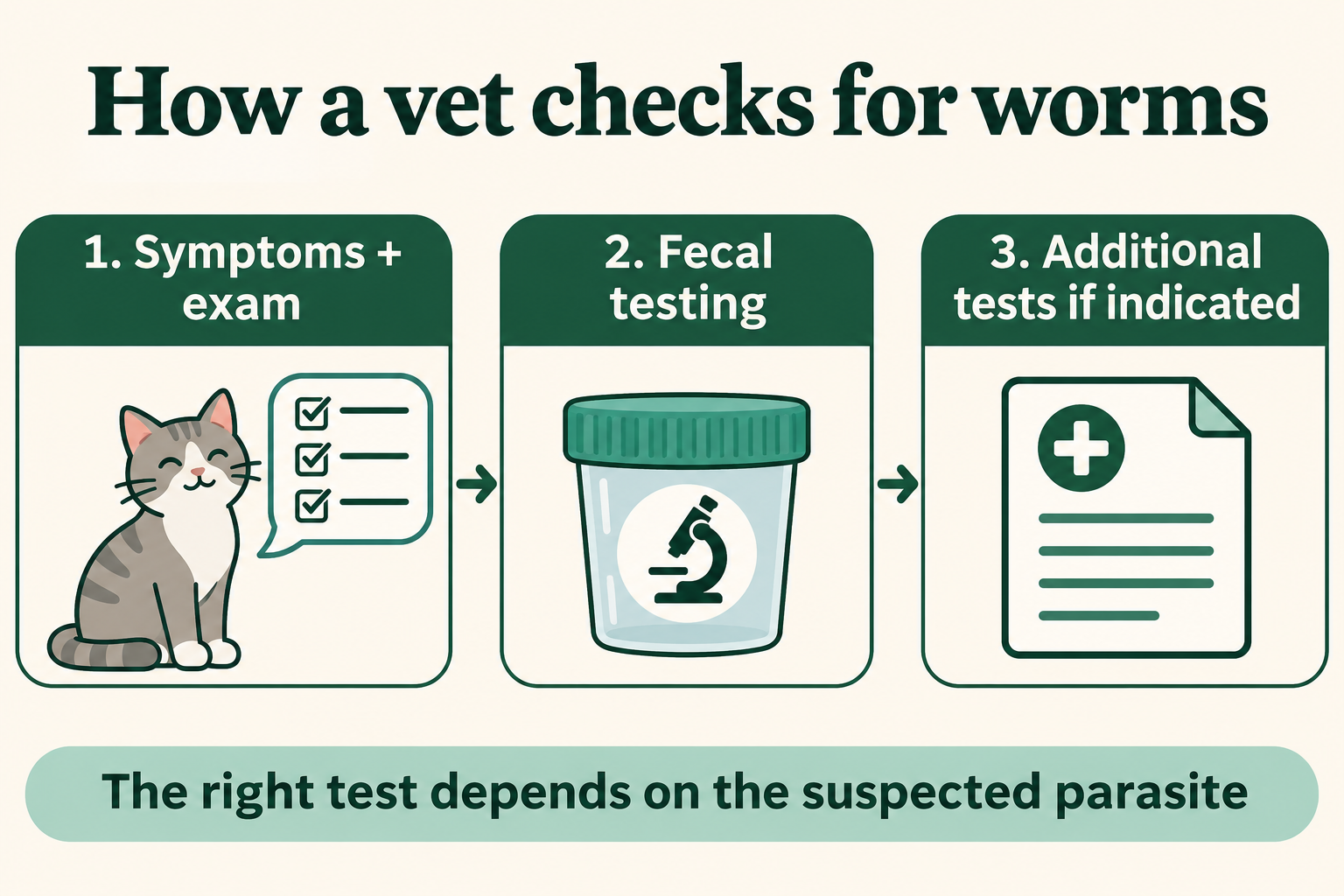
Veterinarians use the cat’s history and physical examination to decide which tests fit the suspected parasite. Fecal examination is common, but the exact method may vary; a veterinarian may add targeted antigen, PCR, or other tests when indicated.2345
A negative result from one routine sample does not necessarily exclude every parasite. Some parasites shed eggs or segments inconsistently, and different tests detect different things.134 If signs continue, tell the clinic; it can decide whether repeat sampling or another test is useful. Ask before bringing a sample so you follow the clinic’s collection and storage instructions.5
Worms, protozoa, and ringworm are different
“Intestinal parasites” is a broad term. Worms such as roundworms, hookworms, and tapeworms are different from protozoa, which are microscopic single-celled organisms and may also cause digestive illness.12 A veterinarian may consider several causes when a cat has diarrhea or vomiting.
Ringworm is not a worm at all; it is a fungal skin infection. Patchy hair loss or scaling does not point to intestinal worms. Read the separate guide to ringworm in cats if you are asking about skin changes.
Perguntas frequentes
Can a cat have worms without symptoms?
Yes. Some cats with intestinal parasites show no obvious signs. A normal appetite or normal-looking stool does not rule out infection; ask your veterinarian about testing based on your cat’s age, health, and lifestyle.23
What do worms or tapeworm segments look like?
Roundworms may look like pale strands, while tapeworm segments may resemble small grains of rice near the cat’s rear or in stool.12 Appearance is only a clue. Take a photo and ask a veterinarian how to confirm it.
A tosse significa que meu gato tem vermes?
No. Some parasites can affect the respiratory tract, but coughing has many possible causes and does not diagnose worms. Ask a veterinarian about a new or recurring cough, and seek urgent care for breathing difficulty.1
Can a stool test identify every worm?
No single test answers every parasite question. A vet may use fecal microscopy and, when appropriate, targeted tests or repeat samples. The choice depends on the suspected parasite and the cat’s history.234
Is ringworm caused by a worm?
No. Ringworm is a fungal infection of skin and hair, not an intestinal worm. A veterinarian can distinguish it from other skin conditions.1
Should I give my cat a dewormer if I see symptoms?
Do not select a product from symptoms alone. Similar signs can have unrelated causes, and different parasites need different plans. Contact your veterinarian before giving a dewormer or using a product prescribed for another animal.
Conclusão
Worms can be present without obvious signs, while vomiting, diarrhea, weight change, coughing, and a swollen abdomen can also come from other conditions. Use symptoms as a reason to gather information and contact a veterinarian—not as a home diagnosis. Seek urgent help for breathing difficulty, collapse, severe weakness, pale gums, black stool, or rapid decline.
Referências
[1] Cornell University College of Veterinary Medicine. Parasitas gastrointestinais de gatos.
[2] Manual Veterinário da Merck. Parasitas gastrointestinais de gatos. Last updated May 2026.
[3] Companion Animal Parasite Council. Ascarid Guidelines for Cats. Last updated February 28, 2025.
[4] Companion Animal Parasite Council. Microscopic Fecal Exam Procedures.
[5] Merck Veterinary Manual. Introdução às doenças digestivas em gatos. Last updated May 2026.
 EN
 DE
 ES
 PT