
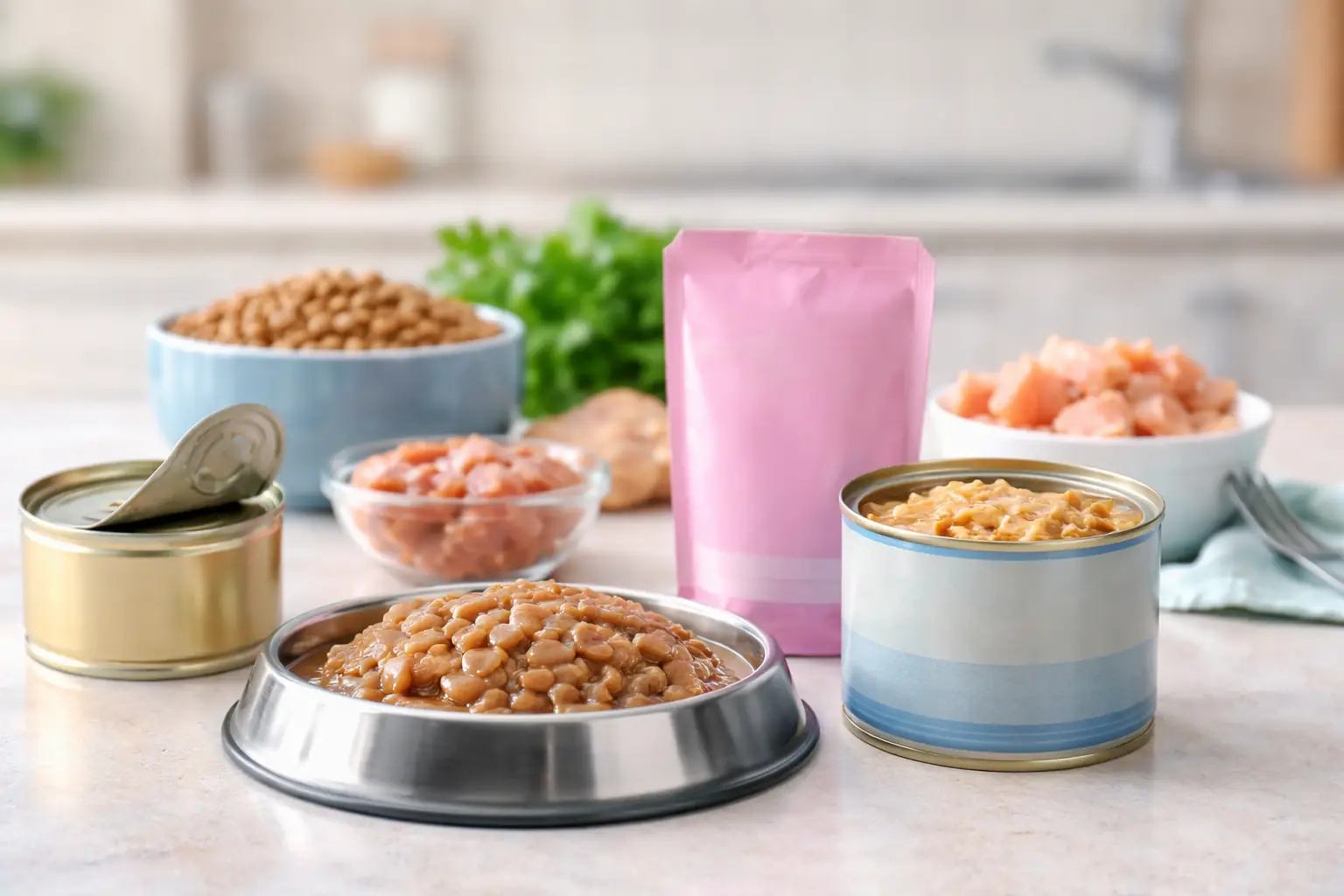
Bei der Auswahl des richtigen Nassfutters für Ihre Katze geht es weniger darum, die hübscheste Dose zu finden, sondern vielmehr darum, das richtige Futter auszuwählen, das Ernährung, Lebensphase, Konsistenz, Kaloriengehalt und medizinische Bedürfnisse. Ein gutes Nassfutter für Katzen sollte als „vollwertig und ausgewogen“ für das jeweilige Lebensstadium Ihrer Katze gekennzeichnet sein, ausreichend tierisches Eiweiß enthalten, einen Feuchtigkeitsgehalt aufweisen, den Ihre Katze auch tatsächlich zu sich nimmt, und sich in den Fütterungsrhythmus Ihres Haushalts einfügen. Katzen sind obligate Fleischfresser, was bedeutet, dass sie auf Nährstoffe aus tierischen Produkten angewiesen sind; daher ist die Zusammensetzung des Futters wichtiger als die Werbeaussagen auf der Vorderseite der Verpackung.
Wenn Sie im Tierfuttergang stehen und sich fragen, wie Sie Katzennassfutter auswählen sollen, ohne jede Zutat einzeln zu hinterfragen, halten Sie sich zunächst an diese einfache Regel: Prüfen Sie zunächst die Angaben zur ernährungsphysiologischen Eignung und vergleichen Sie anschließend den Feuchtigkeitsgehalt, den Proteingehalt, den Kaloriengehalt, die Konsistenz sowie die Gesundheitsgeschichte Ihrer Katze.. Die Zutatenliste kann zwar hilfreich sein, sollte aber nicht das einzige Entscheidungskriterium sein, da die Zutaten nach Gewicht aufgeführt sind und dies irreführend sein kann, wenn Zutaten mit hohem Feuchtigkeitsgehalt an erster Stelle stehen.
Inhaltsübersicht
Kurzantwort: Die 3-Minuten-Checkliste für Nassfutter für Katzen
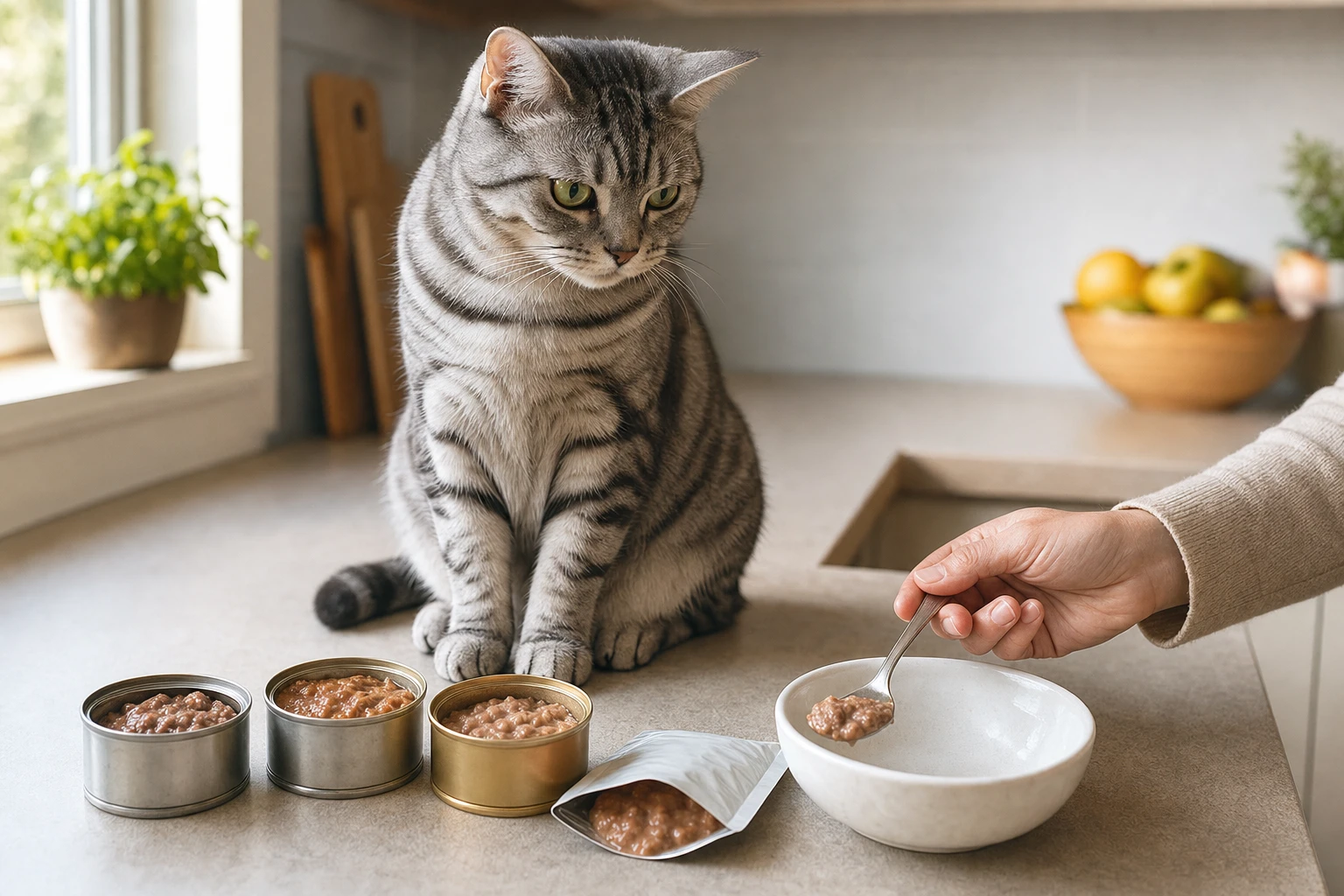
Der schnellste Weg, Nassfutter für Katzen auszuwählen, besteht darin, vor dem Vergleich der Geschmacksrichtungen auf fünf unverzichtbare Kriterien zu achten. Auf der Verpackung sollte angegeben sein, dass das Futter vollständig und ausgewogen, sollte auf die jeweilige Lebensphase Ihrer Katze abgestimmt sein, die Kalorienangaben sollten klar ersichtlich sein, die Konsistenz sollte Ihrer Katze zusagen, und vermeiden Sie Versprechungen, die zwar beeindruckend klingen, aber keine Aussage über die ernährungsphysiologische Vollwertigkeit treffen. Wenn Ihre Katze an einer Nierenerkrankung, Harnwegsproblemen, Diabetes, chronischem Erbrechen, Allergien, Übergewicht oder unerklärlichem Appetitverlust leidet, fragen Sie Ihren Tierarzt, bevor Sie die Ernährung umstellen.
| Was ist zu prüfen? | Was Sie sehen möchten | Warum es wichtig ist |
|---|---|---|
| Erklärung zur Angemessenheit der Ernährung | “Vollwertig und ausgewogen” für die Erhaltung und das Wachstum von Erwachsenen sowie für alle Lebensphasen | Hier erfahren Sie, ob das Futter als Hauptnahrung dienen kann und nicht nur als Ergänzung oder Leckerli. |
| Lebensphase | Kätzchen, erwachsene Katze, Senior oder alle Lebensphasen, je nach Ihrer Katze | Kätzchen brauchen Unterstützung beim Wachstum, während erwachsene Katzen oft Kalorien Steuerung. |
| Feuchtigkeit | Konserven enthalten in der Regel mindestens 75% Feuchtigkeit. | Nassfutter kann die tägliche Wasseraufnahme fördern, insbesondere bei Katzen, die wenig trinken. |
| Kalorien | kcal pro Dose, Beutel, Schale oder Unze | Eine angemessene Portionsgröße beugt einer schleichenden Gewichtszunahme vor. |
| Textur | Pastete, Hackfleisch, Streifen, Stücke, Brühe oder Soße | Viele Katzen entscheiden anhand der Mundgefühls, ob sie Futter annehmen oder ablehnen, noch bevor sie dessen Nährwert berücksichtigen. |
| Medizinische Eignung | Bei Bedarf eine Diätfuttermittel für Tiere | Bei Problemen mit den Harnwegen, den Nieren, Diabetes, dem Magen-Darm-Trakt und dem Gewicht sind unter Umständen maßgeschneiderte Rezepturen erforderlich. |
Dieser Artikel befasst sich mit der Auswahl eines Nassfutters für die regelmäßige Fütterung gesunder Katzen. Informationen zu den Fütterungsmengen finden Sie in diesem Leitfaden sowie im SnuggleSouls-Artikel zum Thema wie viel Nassfutter man einer Katze geben kann oder nutzen Sie die Katzenkalorienrechner sobald man den Kaloriengehalt der Lebensmittel kennt.
Fangen Sie mit dem Etikett an, nicht mit dem Namen der Geschmacksrichtung
Die Etiketten von Tierfutter sind darauf ausgelegt, den Verkauf zu fördern, doch der wichtigste Satz ist oft klein gedruckt und leicht zu übersehen. VCA Animal Hospitals erklärt, dass die Erklärung zur Angemessenheit der Nährstoffzufuhr ist das wichtigste Element auf dem Etikett, da es Auskunft darüber gibt, ob das Futter vollständig und ausgewogen ist und für die richtige Lebensphase bestimmt ist. Diese Angabe befindet sich in der Regel in der Nähe der garantierten Analyse oder der Fütterungsempfehlungen und kann auf AAFCO-Nährstoffprofile oder Fütterungsversuche verweisen.
Eine praktische Regel: Wenn ein Nassfutter nicht vollständig und ausgewogen ist, sollten Sie es eher als Ergänzung, Topping oder gelegentliche Belohnung betrachten und nicht als Hauptnahrung für Ihre Katze.
Ein Futter, das mit dem Hinweis “nur zur gelegentlichen oder ergänzenden Fütterung” gekennzeichnet ist, kann dennoch nützlich sein. Es kann dazu beitragen, eine kranke Katze zum Fressen zu verleiten, essen, Feuchtigkeit zuführen oder die Verabreichung von Medikamenten erleichtern. Es sollte jedoch keine vollwertige Ernährung ersetzen, es sei denn, Ihr Tierarzt empfiehlt dies ausdrücklich. Die langfristige Fütterung eines unvollständigen Futters als Hauptnahrung kann zu Nährstoffungleichgewichten führen.

Die garantierte Analyse ist hilfreich, gibt jedoch nicht das vollständige Bild wieder. Sie listet Mindest- und Höchstwerte für Nährstoffe wie Eiweiß, Fett, Ballaststoffe und Feuchtigkeit auf. Da Nassfutter deutlich mehr Wasser enthält als Trockenfutter, kann der auf der Dose angegebene Rohproteingehalt im Vergleich zu Trockenfutter niedrig erscheinen, selbst wenn der Proteingehalt in der Trockenmasse angemessen ist. Deshalb kann ein Vergleich von Nass- und Trockenfutter allein anhand des angegebenen Proteingehalts irreführend sein.
| Etikettenbereich | Wie man es liest | Häufiger Fehler |
|---|---|---|
| Erklärung zur Angemessenheit der Ernährung | Überprüfen Sie die Lebensphase und ob die Ernährung vollständig und ausgewogen ist | Einen Topper als Hauptgericht auswählen. |
| Garantierte Analyse | Überprüfen Sie den Gehalt an Eiweiß, Fett, Ballaststoffen, Feuchtigkeit und Kalorien gemeinsam | Vergleich von Nass- und Trockenfutter ohne Berücksichtigung des Feuchtigkeitsgehalts. |
| Zutatenliste | Nutzen Sie es, um Proteinquellen und mögliche Auslöser zu identifizieren | Die Annahme, dass bereits die erste Zutat allein die Qualität belegt. |
| Fütterungsempfehlungen | Betrachten Sie dies als Ausgangspunkt, nicht als Regel | Die volle Futtermenge aus der Dose füttern, auch wenn die Katze an Gewicht zunimmt. |
| Werbebehauptungen | Fragen Sie, was diese Angabe aus ernährungsphysiologischer Sicht bedeutet | Sich mit Begriffen wie “Premium”, “natürlich” oder “Gourmet” anstelle einer genauen Überprüfung der Etiketten zufrieden geben. |
Passen Sie das Futter an die Lebensphase Ihrer Katze an
Ein Kätzchen, eine erwachsene Hauskatze und eine ältere Katze können alle dasselbe genießen Lachs Pastete, doch diese muss nicht immer die gleiche Zusammensetzung haben. Kätzchen benötigen Futter, das ihr Wachstum fördert, während erwachsene Katzen oft eine ausgewogene Ernährung und eine sorgfältige Kalorienkontrolle benötigen. Bei älteren Katzen gibt es große Unterschiede: Einige benötigen leicht verdauliche Kalorien und eine weiche Konsistenz, während andere je nach Krankheitsbild eine Gewichtsregulierung oder eine tierärztlich verordnete Diät benötigen.
Das Feline Health Center der Cornell University weist darauf hin, dass Katzen auf tierische Nährstoffe angewiesen sind und ausgewogenes Fertigfutter benötigen, es sei denn, ein Tierarzt verschreibt eine selbst zubereitete medizinische Diät. Dies ist wichtig, da Begriffe wie “hausgemacht”, “frisch” oder “in Lebensmittelqualität” nicht automatisch eine vollständige Ernährung bedeuten. Auch ein ansprechend aussehendes Futter kann ungeeignet sein, wenn es nicht dem Lebensabschnitt Ihrer Katze entspricht.
| Katzenart | Die beste Zubereitungsanleitung für Nassfutter | Was man sich ansehen sollte |
|---|---|---|
| Kätzchen | Vollwertig und ausgewogen für das Wachstum oder alle Lebensphasen | Kleine, häufige Mahlzeiten und ausreichend Kalorien für das Wachstum. |
| Gesunder Erwachsener | Vollwertig und ausgewogen für die Erhaltung der Gesundheit ausgewachsener Tiere | Kalorien, Körperkondition und Texturvorlieben. |
| Kastrierter erwachsener Kater, der im Haus gehalten wird | Feuchtigkeitsreiche Lebensmittel mit kontrollierter Kalorienzufuhr | Gewichtszunahme durch übergroße Portionen oder eine gemischte Trocken- und Nassfutterernährung. |
| Ältere Katze | Angenehme Konsistenz und tierärztliche Beratung bei Appetitveränderungen | Zahnschmerzen, Nierenerkrankungen, Schilddrüsenüberfunktion, Arthritis oder Übelkeit. |
| Übergewichtige Katze | Kalorienkontrollierter Ernährungsplan mit abgemessenen Portionen | Eine schnelle Diät ist gefährlich; fragen Sie einen Tierarzt nach den Gewichtsabnahmezielen. |
| Katze mit Vorerkrankungen | Tierärztliche Beratung vor dem Wechsel | Nieren-, Harnwegs-, Diabetes-, Magen-Darm-, Allergie- oder Herzerkrankungen. |
Wenn Sie einen Lebensübergang planen, bietet der SnuggleSouls-Ratgeber zum Thema Wann sollte man von Kätzchenfutter auf Katzenfutter umsteigen? ist ein sinnvoller nächster Schritt. Das ist besonders hilfreich, wenn Ihre Katze zwar schon wie ein ausgewachsenes Tier aussieht, aber noch eine auf das Wachstum abgestimmte Ernährung benötigt.
Verstehen Sie, warum der Wassergehalt wichtig ist, aber vernachlässigen Sie dabei nicht die Kalorien
Nassfutter wird oft empfohlen, da es der Ernährung Wasser zuführt. Laut Cornell hat Katzenfutter aus der Dose einen Feuchtigkeitsgehalt von mindestens 75%, was es zu einer bedeutenden Wasserquelle in der Ernährung macht. Texas A&M erklärt in ähnlicher Weise, dass Nassfutter in der Regel zu etwa 75–80% aus Wasser besteht, während Trockenfutter weitaus weniger Wasser enthält und kalorienreicher ist. Dies ist ein Grund, warum Nassfutter oft für Katzen in Betracht gezogen wird, die von sich aus nicht viel trinken.
Feuchtigkeit kann die Flüssigkeitsaufnahme fördern, ist jedoch kein Allheilmittel. Eine Katze mit Harnwegsbeschwerden, Verstopfung, einer Nierenerkrankung oder Diabetes muss tierärztlich untersucht werden – es reicht nicht aus, einfach nur eine andere Dosenfuttersorte zu füttern. Nassfutter kann zwar Teil des Behandlungsplans sein, doch bestimmte Erkrankungen erfordern möglicherweise verschreibungspflichtige Diäten, diagnostische Untersuchungen, Medikamente oder eine regelmäßige Überwachung.
Für gesunde Katzen besteht der wichtigste praktische Vorteil darin, dass Nassfutter für ein größeres Sättigungsgefühl sorgt und gleichzeitig mehr Wasser liefert. Die Herausforderung besteht darin, dass Dosen und Beutel sehr unterschiedliche Kaloriengehalte aufweisen. Manche kleinen Dosen sind kalorienarm, andere hingegen überraschend energiereich. Wenn Sie sowohl Nass- als auch Trockenfutter füttern, müssen Sie beides mit einberechnen. Die Texas A&M University zitiert Dr. Deb Zoran, die darauf hinweist, dass viele erwachsene Katzen etwa 200 Kalorien pro Tag benötigen, wobei die richtige Menge von der jeweiligen Katze abhängt.
Wenn Sie sich näher mit dem Thema Flüssigkeitszufuhr und Harnwegsgesundheit befassen möchten, lesen Sie den Leitfaden von SnuggleSouls zum Thema Vorteile von Nassfutter für Katzen. Informationen zum Zeitplan finden Sie im Artikel unter Wie oft sollte man einer Katze Nassfutter geben? kann Ihnen dabei helfen, Kalorien in Mahlzeiten umzuwandeln.
Proteine, Kohlenhydrate und das Trockenmasseproblem
Katzen benötigen Nährstoffe tierischen Ursprungs, doch bei vereinfachten Proteinvergleichen ist Vorsicht geboten. Ein Nassfutter mit einem Rohproteingehalt von 10% mag auf den ersten Blick weniger nährstoffreich erscheinen als ein Trockenfutter mit 35% Rohprotein, doch das Nassfutter besteht größtenteils aus Wasser. Um Futtermittel fairer zu vergleichen, können Sie den Trockenmasseanteil schätzen, indem Sie von 100 den Feuchtigkeitsgehalt abziehen und anschließend den Nährstoffprozentsatz durch den Trockenmasseprozentsatz dividieren.
Wenn ein Nassfutter beispielsweise einen Feuchtigkeitsgehalt von 78% und einen Rohproteingehalt von 10% aufweist, beträgt der Trockenmasseanteil 22%. Zehn geteilt durch 22 ergibt etwa 45% Protein, bezogen auf die Trockenmasse. Sie müssen das nicht bei jedem Einkauf berechnen, aber wenn Sie das Konzept verstehen, vermeiden Sie, dass Sie ein gutes Nassfutter ablehnen, nur weil der Proteingehalt “im gefütterten Zustand” niedrig erscheint.
| Beispiel: Lebensmittel | Feuchtigkeit | Rohproteinangabe auf dem Etikett | Ungefährer Proteingehalt in der Trockenmasse | Was es vermittelt |
|---|---|---|---|---|
| Beispiel für Nassfutter | 78% | 10% | 45% | Der Proteingehalt von Nassfutter erscheint oft niedrig, da Wasser den angegebenen Prozentsatz verwässert. |
| Beispiel für Trockenfutter | 10% | 35% | 39% | Die Angaben auf den Etiketten von Trockenfutter erscheinen oft höher, doch nach der Feuchtigkeitsbereinigung sieht der Vergleich anders aus. |
Auch bei Kohlenhydraten muss man den Kontext berücksichtigen. Katzen sind an eine fleischbasierte Ernährung angepasst, und viele Nassfutterprodukte enthalten weniger Kohlenhydrate als Trockenfutter, doch “getreidefrei” bedeutet nicht automatisch, dass sie besser sind. Getreidefreie Futtermittel können dennoch Stärke enthalten, beispielsweise aus Kartoffeln, Erbsen, Linsen oder Tapioka. Wenn bei Ihrer Katze eine Allergie bestätigt wurde, schlägt Ihr Tierarzt möglicherweise eine Eliminationsdiät vor; Allergien jedoch allein aufgrund von Werbeaussagen zu vermuten, kann zu unnötigen Ernährungsumstellungen führen.
Wähle die Konsistenz so aus, als würdest du eine Gewohnheit ausprobieren, nicht nur einen Geschmack.
Meiner Erfahrung nach treffen viele Katzen ihre Entscheidung, noch bevor sie das Futter probieren. Sie schnüffeln daran, lecken die Oberfläche ab, prüfen die Konsistenz und gehen weg, wenn sich das Mundgefühl ungewohnt anfühlt. Die Texas A&M University weist darauf hin, dass Katzen erlernte Futtervorlieben entwickeln können und sich möglicherweise gegen einen Wechsel von Trocken- zu Nassfutter wehren, wenn sie nicht schon früh im Leben an unterschiedliche Konsistenzen herangeführt wurden.
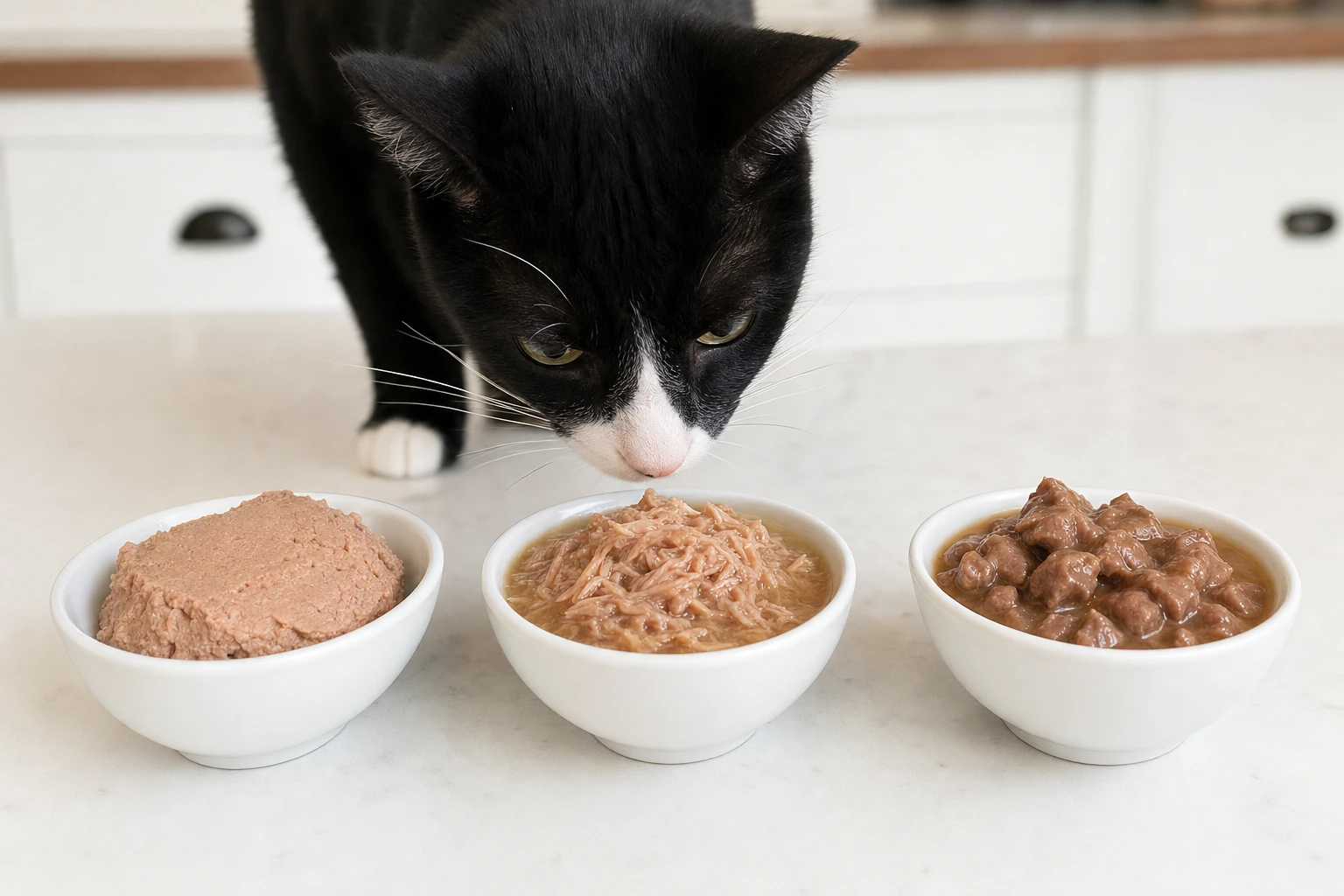
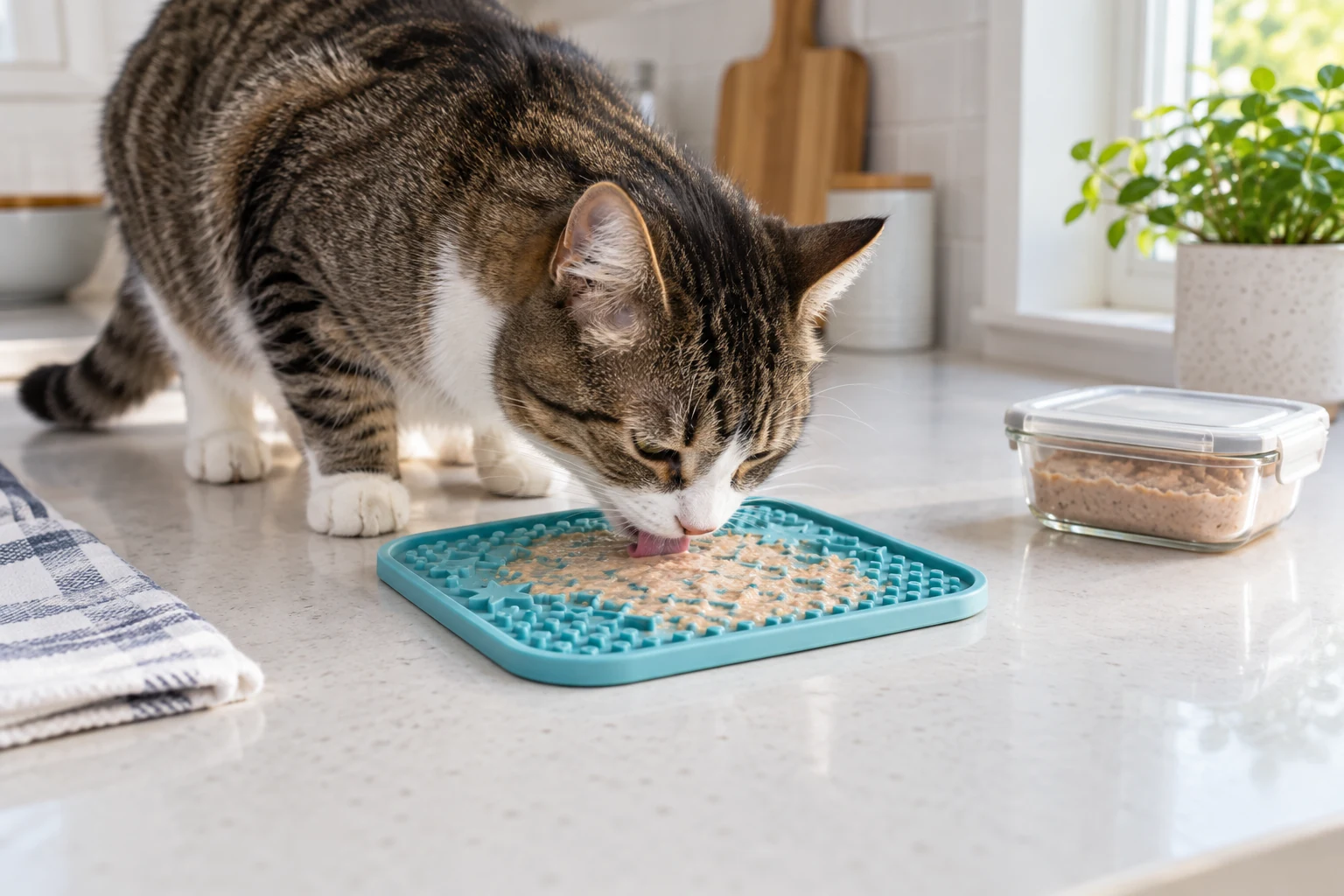
Eine praktische Testmethode besteht darin, zwei oder drei Sorten in kleinen Mengen zu kaufen, anstatt gleich eine ganze Packung zu kaufen. Bieten Sie zur normalen Fütterungszeit jeweils einen Teelöffel davon an, entfernen Sie Reste umgehend und beobachten Sie die Körpersprache Ihrer Katze. Manche Katzen bevorzugen glatte Pastete, weil sie sich leicht ablecken lässt. Andere bevorzugen Stückchen in Brühe, weil sich der Duft besser entfaltet. Katzen mit Zahnbeschwerden meiden möglicherweise stückige Nahrung, während Katzen, die gerne Soße ablecken, die festen Bestandteile zurücklassen.
| Textur | Am besten für | Mögliche Nachteile |
|---|---|---|
| Pastete | Katzen, die eine glatte, gleichmäßige Konsistenz bevorzugen; Katzen mit fehlenden Zähnen | Manche Katzen empfinden es als zu dickflüssig, wenn kein Wasser beigemischt wird. |
| Hackfleisch oder Stückchen | Katzen, die von Trockenfutter auf Nassfutter umgestellt werden | Kann schnell austrocknen, wenn man es offen stehen lässt. |
| Fetzen in Brühe | Katzen, die von Gerüchen angezogen werden und daran lecken | Einige Katzen lecken Brühe abgießen und die Fleischstücke darin lassen. |
| Stückchen in der Soße | Katzen, die gerne an weichen Stücken kauen | Gerichte mit viel Soße können sich hinsichtlich Kaloriengehalt und Stärkegehalt unterscheiden. |
| Brühen oder Toppings | Vorübergehende Appetitanregung oder Feuchtigkeitszufuhr | Als Hauptnahrung oft nicht vollständig und ausgewogen. |
Falls Ihre Katze während einer stressigen Eingewöhnungsphase das Futter verweigert, lesen Sie den Leitfaden von SnuggleSouls zum Thema Die ersten 30 Tage mit Ihrer neuen Katze. Bei einer gesunden Katze sind Geduld und eine schrittweise Gewöhnung in der Regel besser geeignet als eine abrupte Umstellung.
Mythen entlarven: Behauptungen, die besser klingen, als sie sind
Die Werbung für Nassfutter für Katzen kann bei Käufern den Eindruck erwecken, dass jede Wahl entweder perfekt oder gefährlich ist. Die Wahrheit sieht nüchterner aus. Gutes Futter kann langweilig wirken, und ausgefallenes Futter kann ernährungsphysiologisch unvollständig sein. Ihr Ziel sollte es nicht sein, jedem Trend hinterherzulaufen, sondern ein vollwertiges, geeignetes Futter auszuwählen, das Ihre Katze gerne und zuverlässig frisst.
| Behauptung oder Überzeugung | Was das wirklich bedeutet | Eine bessere Frage, die man stellen sollte |
|---|---|---|
| “Premium” | Ein Marketingbegriff ohne einheitlichen Ernährungsstandard | Ist es für die jeweilige Lebensphase meiner Katze vollständig und ausgewogen? |
| “in Lebensmittelqualität” | Kann sich auf den Umgang mit Zutaten beziehen, muss sich nicht unbedingt auf die Ausgewogenheit der Ernährung für Katzen beziehen | Deckt das Futter als Alleinfuttermittel den Nährstoffbedarf der Katze ab? |
| “Getreidefrei” | Keine Getreide, kann aber dennoch andere Stärkearten enthalten | Liegt bei meiner Katze eine diagnostizierte Getreideallergie oder eine medizinische Ursache vor? |
| “Fleisch zuerst” | Die Zutaten sind nach Gewicht aufgeführt, einschließlich Wasser | Wie sieht die vollständige Zusammensetzung und das Kalorienprofil aus? |
| “Ohne Nebenprodukte” | Vermeidet einen Begriff, den manche Besitzer nicht mögen | Sind die Proteinquellen gut verdaulich und ernährungsphysiologisch geeignet? |
| “Soßenliebhaber” | Oft schmackhaft und saftig | Fresst meine Katze das Trockenfutter oder leckt sie nur die Soße ab? |
Die Zutatenliste kann Ihnen dabei helfen, bekannte Auslöser zu vermeiden, stellt jedoch kein vollständiges Qualitätskriterium dar. VCA erklärt, dass „ganzes Fleisch“ aufgrund des Wassergehalts an erster Stelle stehen kann, weshalb die Reihenfolge der Zutaten unter Berücksichtigung des gesamten Etiketts interpretiert werden muss.
So stellen Sie auf ein neues Nassfutter um
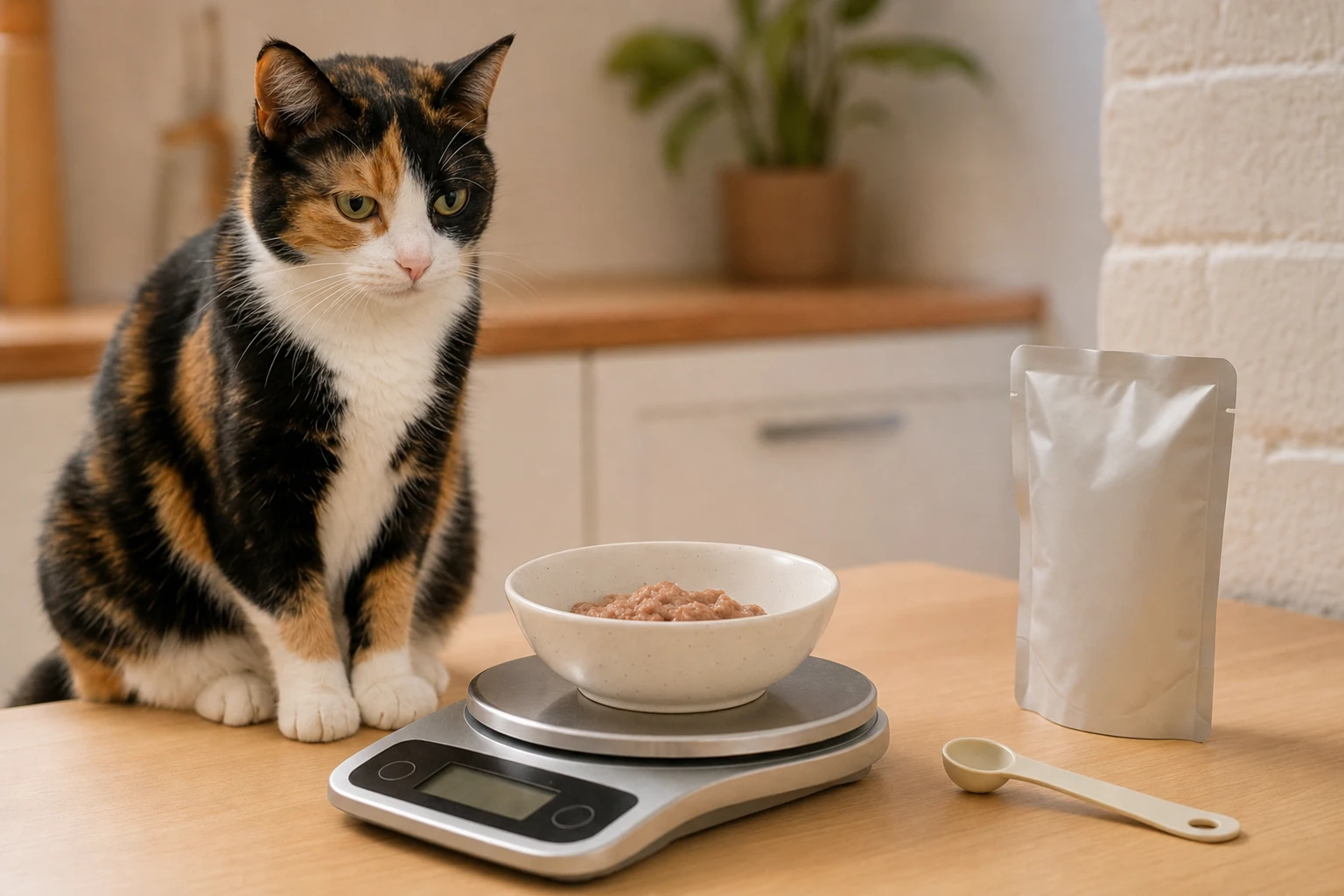
Die sicherste Umstellung erfolgt in der Regel schrittweise. Mischen Sie eine kleine Menge des neuen Nassfutters unter das gewohnte Futter und steigern Sie dann den Anteil des neuen Futters über einen Zeitraum von 7 bis 10 Tagen. Bei empfindlichen Katzen kann dies zwei bis drei Wochen dauern. Wenn Ihre Katze in der Vergangenheit unter Erbrechen, Durchfall, Pankreatitis, einer entzündlichen Darmerkrankung, einer Harnwegserkrankung, Diabetes oder einer Nierenerkrankung gelitten hat, fragen Sie Ihren Tierarzt um Rat, bevor Sie mit der Umstellung beginnen.
| Tag | Neue Lebensmittel | Vertrautes Essen | Was man sich ansehen sollte |
|---|---|---|---|
| 1-2 | 10–25% | 75–90% | Schnüffeln, Lecken, Veränderungen im Stuhlgang, Appetit. |
| 3–4 | 25–50% | 50–75% | Leichtes Zögern ist normal; wiederholtes Erbrechen hingegen nicht. |
| 5-7 | 50–75% | 25–50% | Passen Sie die Dosierung an, wenn der Stuhl weicher wird. |
| 8–10 | 100% | 0% | Beobachten Sie weiterhin das Gewicht und die Gewohnheiten bei der Benutzung der Katzentoilette. |
Lassen Sie Nassfutter nicht den ganzen Tag über stehen, um zu “sehen, ob die Tiere wieder davon fressen”. Nassfutter ist leicht verderblich, und der richtige Umgang damit ist wichtig. Verwenden Sie die SnuggleSouls Leitfaden zur Lagerung von Nassfutter für Katzen zur Zwei-Stunden-Regel bei Raumtemperatur, zu den Grundlagen der Kühlung und zur sicheren Aufbewahrung von Essensresten.
Die Ernährung an die körperliche Verfassung und das Gesundheitsrisiko anpassen
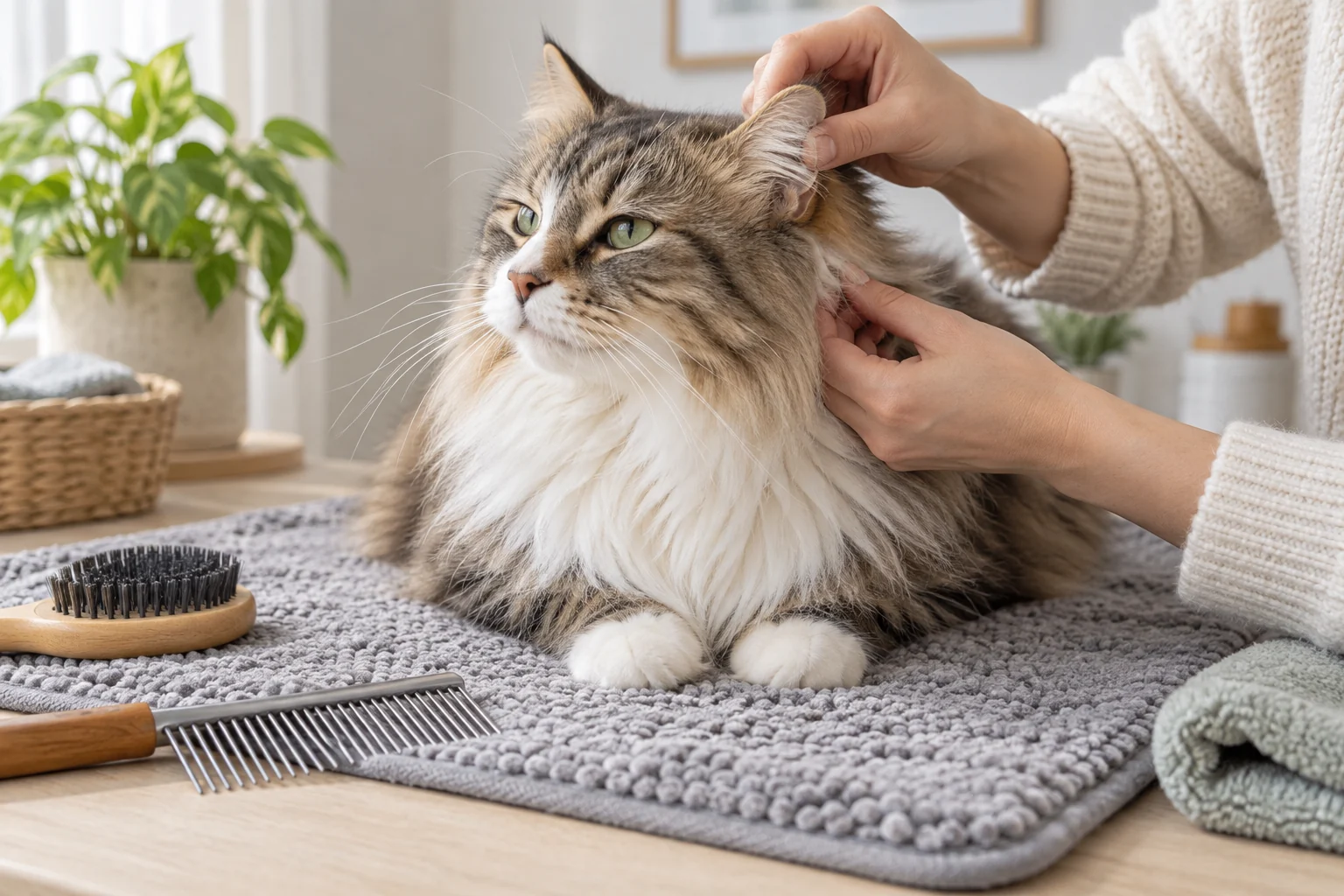
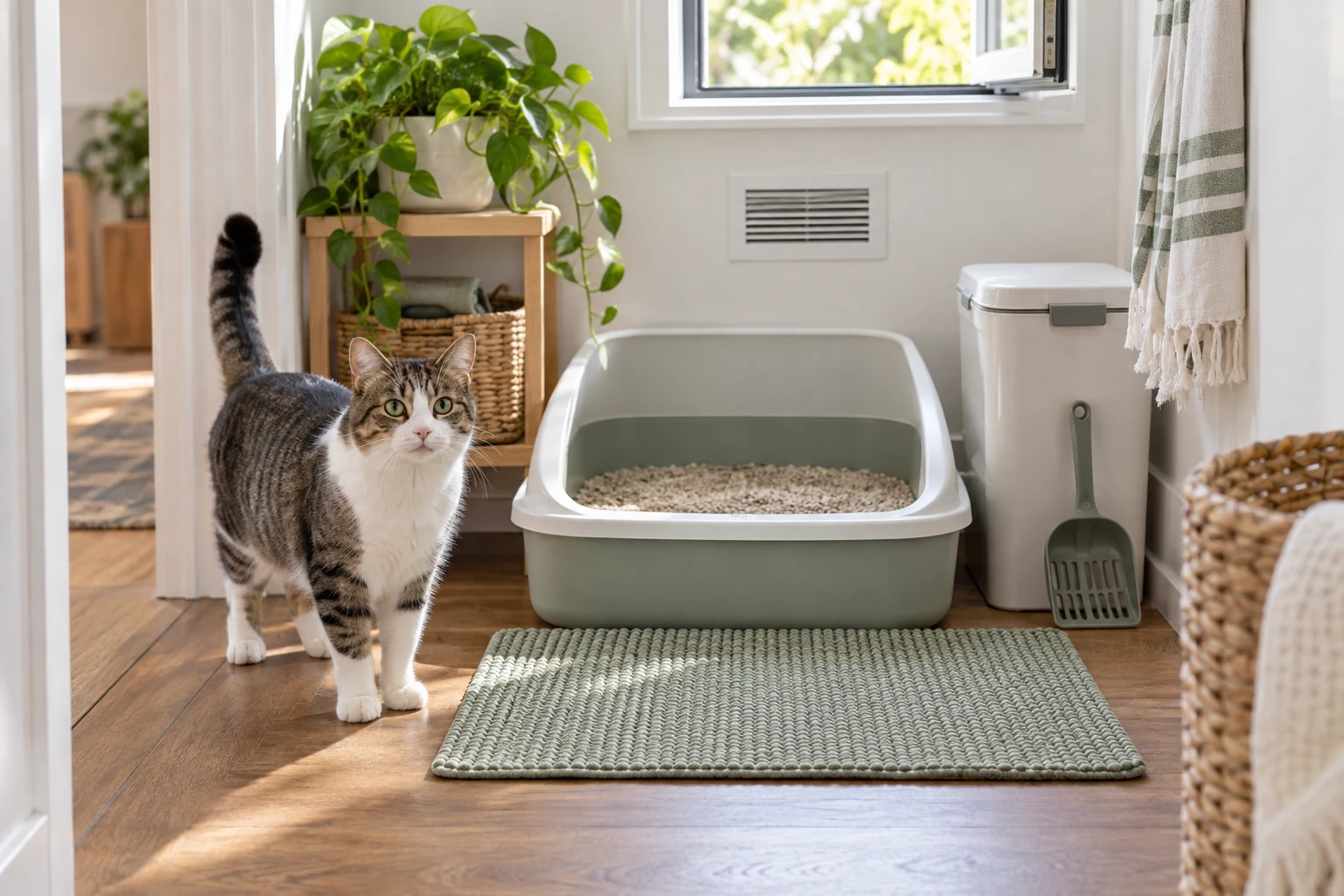
Nachdem Sie sich für ein Nassfutter entschieden haben, stellt sich als Nächstes die Frage, ob es wirkt. Das Fell, der Stuhlgang, der Appetit, die Energie, die körperliche Verfassung und das Verhalten am Katzenklo Ihrer Katze sind wichtiger als die Markengeschichte. Eine kastrierte Wohnungskatze kann unbemerkt an Gewicht zunehmen, wenn die Futterportionen nicht abgemessen werden. Eine ältere Katze kann trotz ausreichender Nahrungsaufnahme an Gewicht verlieren, beispielsweise aufgrund von Zahnschmerzen, Nierenerkrankungen, Schilddrüsenüberfunktion, Diabetes oder Übelkeit.
Nutzen Sie Ihren Körperzustand als Rückkopplungsmechanismus. Sie sollten in der Lage sein, Ihre Rippen bei leichtem Druck zu spüren, von oben eine Taille zu erkennen und von der Seite eine eingezogene Bauchdecke zu bemerken. Wenn Sie sich unsicher sind, die SnuggleSouls cat body condition score calculator und cat body condition and muscle condition guide can help you describe what you are seeing before discussing it with your veterinarian.
| If Your Cat Is… | Wet Food Direction | Vet Input Needed? |
|---|---|---|
| Healthy and stable | Complete adult maintenance food; measured meals | Routine wellness visits. |
| Übergewicht | Lower-calorie plan and measured portions | Yes, for safe weight-loss rate. |
| Untergewicht | Higher-calorie, palatable food; investigate cause | Yes, especially if weight loss is new. |
| Urinating more or straining | Do not self-treat with random wet food | Yes, promptly. |
| Vomiting often or having diarrhea | Simplify diet and track symptoms | Yes, if repeated or severe. |
| Diagnosed kidney, urinary, or diabetes issue | Therapeutic diet may be recommended | Yes, before switching. |
Wann Sie den Tierarzt konsultieren sollten, bevor Sie sich für ein Nassfutter entscheiden oder das Futter wechseln
Wet food is a daily care decision, but it can overlap with medical care. Call your veterinarian before switching if your cat has a diagnosed condition, is on prescription food, is losing weight, is drinking or urinating more, vomits repeatedly, has chronische Diarrhöe, strains in the litter box, refuses food, or suddenly changes appetite. Male cats that strain to urinate may have a blockage, which is an emergency.
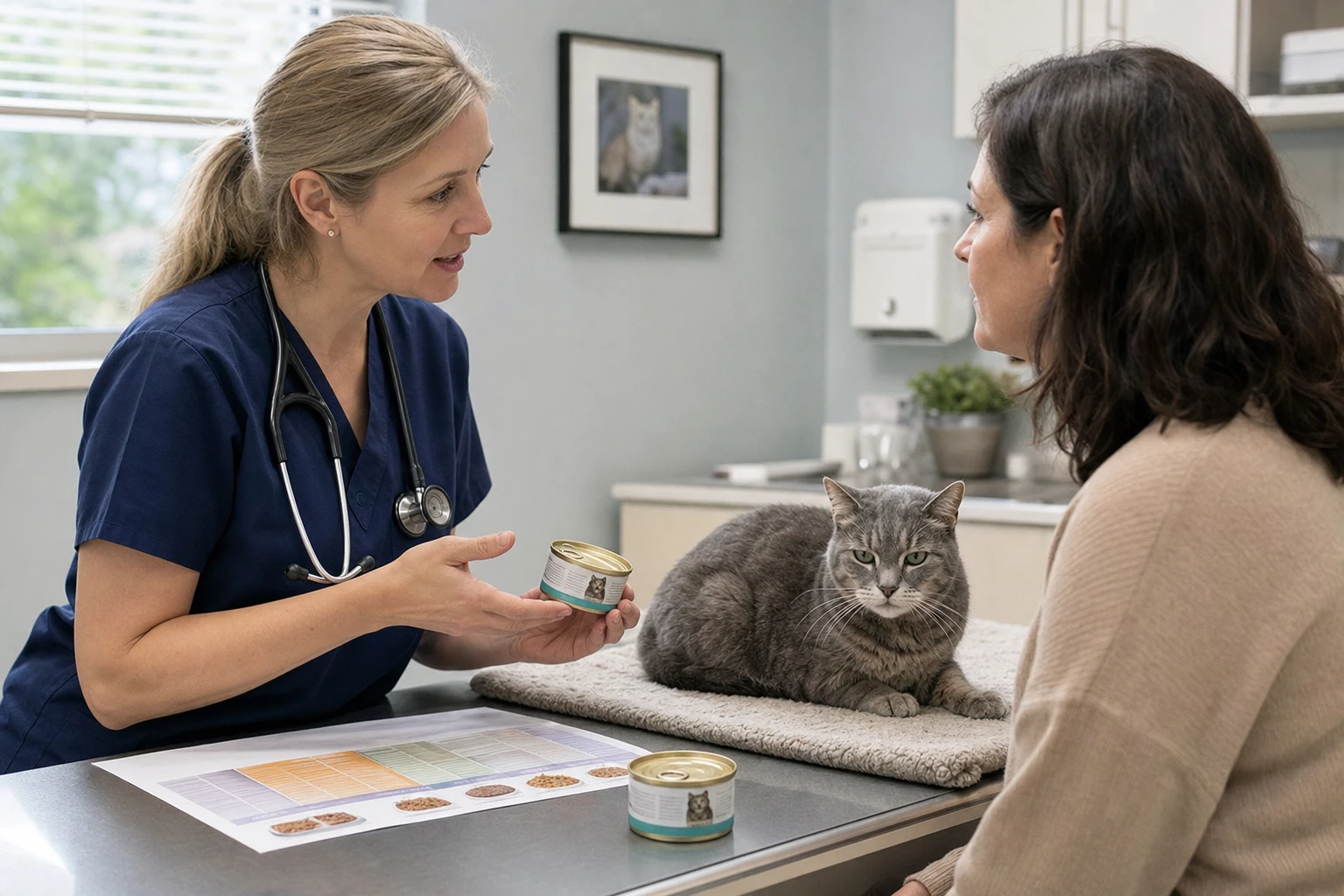
Cornell cautions that homemade diets are difficult to balance and that nutritionally balanced commercial foods are generally recommended unless a veterinarian provides a medical recipe. Cornell also warns against rohes Fleisch because it can carry infectious disease risk. These points are important because owners often turn to homemade or raw diets when they feel overwhelmed by labels. The safer path is usually to bring the label, calorie information, and your cat’s health history to a veterinary appointment.
Schlussfolgerung
Choosing the right wet food for your cat becomes much easier when you ignore the noise and follow a sequence. First, confirm that the food is complete and balanced for the right life stage. Next, compare moisture, calories, protein context, texture, and your cat’s health needs. Finally, transition gradually and monitor body condition, stool, appetite, and litter-box habits.
The best wet cat food is not always the most expensive one. It is the food your cat can safely eat every day, in the right amount, with nutrition that matches their Alter and health. For a broader feeding foundation, start with the SnuggleSouls complete cat feeding guide, then use the Katzenkalorienrechner to turn your chosen food into a practical meal plan.
FAQ
Wie wähle ich das beste Nassfutter für meine Katze aus?
Wählen Sie ein Nassfutter, das für das jeweilige Lebensstadium Ihrer Katze vollständig und ausgewogen ist, dessen Kaloriengehalt klar angegeben ist, dessen Konsistenz Ihre Katze mag und das etwaigen medizinischen Anforderungen entspricht. Wenn Ihre Katze gesund ist, können Sie in aller Ruhe verschiedene Sorten vergleichen. Sollte Ihre Katze jedoch Probleme mit den Harnwegen, den Nieren, Diabetes, dem Magen-Darm-Trakt, Allergien oder ihrem Gewicht haben, fragen Sie Ihren Tierarzt um Rat, bevor Sie das Futter wechseln.
Ist Nassfutter besser für Katzen als Trockenfutter?
Nassfutter ist nicht automatisch für jede Katze besser, liefert jedoch deutlich mehr Feuchtigkeit als Trockenfutter. Laut Cornell enthält Katzenfutter aus der Dose mindestens 75% Feuchtigkeit, während Trockenfutter weitaus weniger Wasser enthält. Viele Katzen kommen gut mit Nassfutter, Trockenfutter oder einer Mischfütterung zurecht, sofern Kalorien und Nährstoffgehalt kontrolliert werden.
Was bedeutet “vollwertig und ausgewogen” bei Katzenfutter?
“Vollständig und ausgewogen” bedeutet, dass das Futter so zusammengesetzt ist, dass es alle essenziellen Nährstoffe in angemessenen Anteilen für eine bestimmte Lebensphase liefert. VCA betrachtet die Angabe zur ernährungsphysiologischen Eignung als den wichtigsten Bestandteil eines Katzenfutter-Etiketts, da sie Aufschluss darüber gibt, ob das Futter vollständig, ausgewogen und für die jeweilige Lebensphase geeignet ist. Futtermittel ohne diese Angabe sind möglicherweise eher als Beigaben oder Leckerlis gedacht als als Hauptmahlzeiten.
Welche Konsistenz von Nassfutter eignet sich am besten für wählerische Katzen?
Es gibt keine allgemein beste Konsistenz. Manche Katzen bevorzugen glatte Pastete, andere Streifen in Brühe und wieder andere mögen gehacktes oder stückiges Futter. Probieren Sie kleine Portionen zu den üblichen Fütterungszeiten aus und kaufen Sie erst dann eine ganze Packung, wenn Ihre Katze das Futter mehrere Tage lang regelmäßig gefressen hat.
Ist getreidefreies Nassfutter für Katzen besser?
Getreidefrei ist nicht automatisch besser. Es kann für Katzen mit einer nachgewiesenen Getreideallergie sinnvoll sein, doch viele getreidefreie Futtermittel enthalten andere Stärkesorten. Achten Sie in erster Linie auf die Vollwertigkeit und Ausgewogenheit des Futters, die Lebensphase, den Kaloriengehalt und die gesundheitliche Eignung.
Wie sollte ich meine Katze auf ein neues Nassfutter umstellen?
Für die meisten Katzen ist eine schrittweise Umstellung über 7 bis 10 Tage am besten geeignet, wobei Sie zunächst eine kleine Menge des neuen Futters unter das gewohnte Futter mischen. Verlangsamen Sie die Umstellung, wenn der Stuhl weicher wird oder der Appetit nachlässt. Wenn Ihre Katze Vorerkrankungen hat oder das Futter verweigert, wenden Sie sich an Ihren Tierarzt.
Wann sollte ich den Tierarzt wegen Nassfutter oder Appetitveränderungen anrufen?
Rufen Sie den Tierarzt an, wenn Ihre Katze das Futter verweigert, an Gewicht verliert, wiederholt erbricht, unter chronischem Durchfall leidet, Schwierigkeiten beim Wasserlassen hat, mehr trinkt oder uriniert oder an einer bekannten Erkrankung leidet. Kater, die sich im Katzenklo beim Urinieren anstrengen müssen, sollten dringend behandelt werden, da ein Harnverhalt lebensbedrohlich sein kann.
Referenzen
[1] Cornell Feline Health Center — Die Fütterung Ihrer Katze
[2] VCA Animal Hospitals — Deciphering Cat Food Labels
[3] Texas A&M VMBS — Nutritional Needs: A Guide To Choosing Cat Food
[4] AAFCO — Etiketten lesen
[5] Chewy — 5 Things to Avoid When Choosing a Wet Cat Food

 EN
EN DE
DE ES
ES PT
PT