
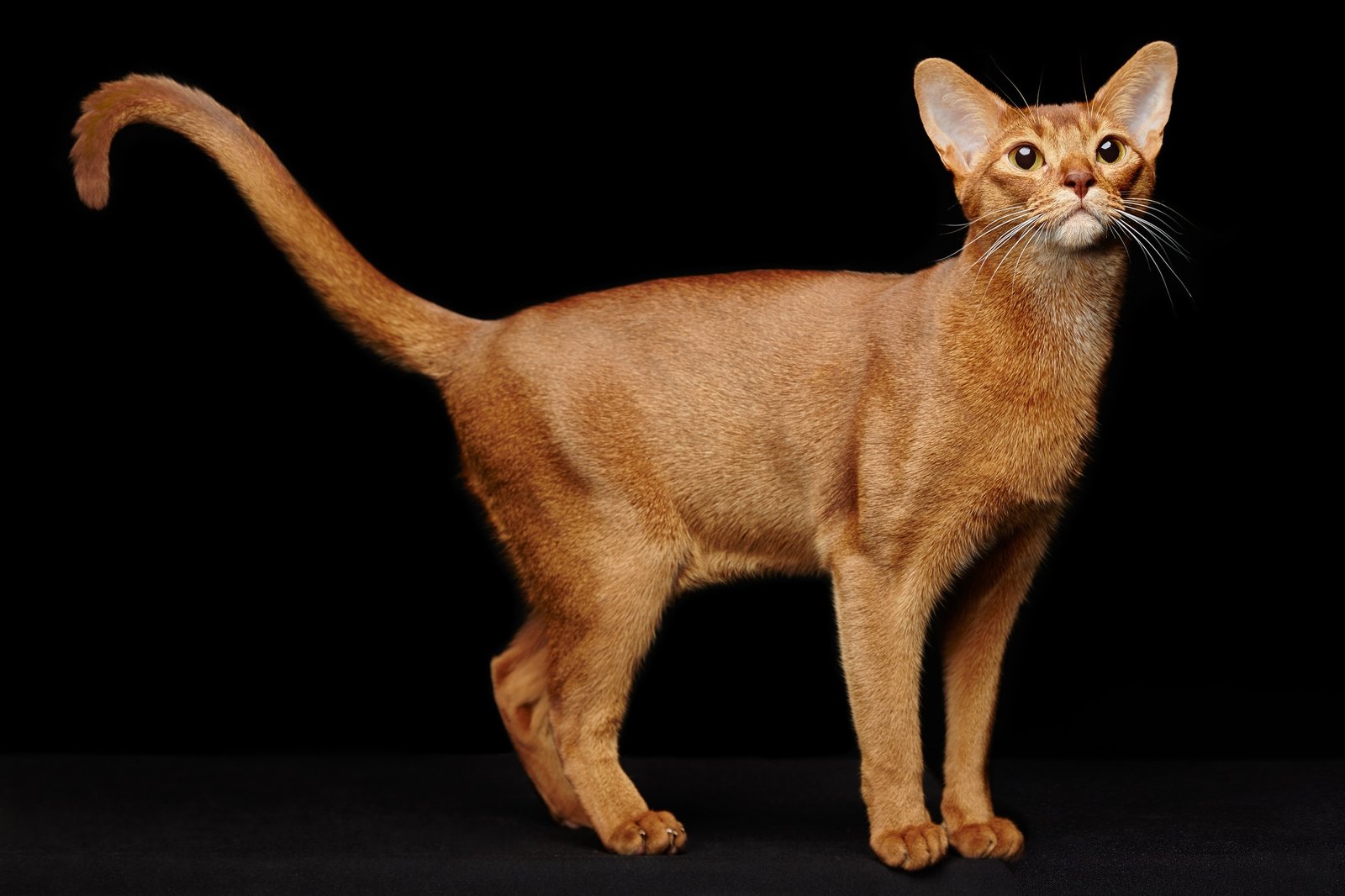
The Abyssinian is an active, intelligent, people-oriented cat known for its short ticked coat, athletic build, and playful “dog-like” personality. It is usually a great fit for households that want an interactive companion and can provide daily play, climbing space, and attention. It is less suitable for people seeking a quiet, low-energy lap cat or a pet that can be left alone for long hours.
Ideal para:
- Active households
- Owners who enjoy interactive pets
- Families with time for daily play
- Homes with climbing space and enrichment
Less ideal for:
- People who want a quiet, very low-energy cat
- Owners away from home most of the day
- Homes with little vertical space or stimulation
- People expecting a constantly peluche gato faldero
If you want a smart, athletic, highly social cat that likes to be involved in everything, the Abyssinian can be an excellent match. If you prefer a calm, independent, low-interaction pet, another breed may suit you better.
Índice
Abyssinian Cat Overview
| Atributo | Descripción |
|---|---|
| Temperamento | Vivaz, curioso, extrovertido, inteligente y cariñoso (apodado "el perro del mundo felino"). |
| Tipo de carrocería | De tamaño mediano, con extremidades largas y músculos bien desarrollados. |
| Peso | Aproximadamente 4-7,5 kg (los machos pesan más que las hembras). |
| Origen | Costa del océano Índico y sudeste asiático (legendariamente desde Etiopía). |
| Vida útil | Normalmente entre 12 y 15 años (algunos individuos superan los 20 años). |
| Abrigo | Pelaje corto, suave como la seda, con un "tic-tac" único (ondulado). |
| Colores del manto | Las tonalidades más comunes son el rubí, el canela, el azul, el marrón claro y el marrón rojizo; existen raras variantes plateadas. |
| Nivel de desprendimiento | ⭐☆☆☆☆ (extremadamente bajo: pelo corto, fácil de cepillar). |
| Nivel de afecto | ⭐⭐⭐⭐⭐ (muy afectuoso, le encanta la interacción humana). |
| Dificultad asistencial | ⭐⭐⭐☆☆ (requiere mucho ejercicio y compañía, pero es fácil de mantener sano). |
Introducción
Thinking about bringing an Abyssinian cat into your home? This athletic, short-haired “dog of the cat world” is endlessly curious, playful, and people-focused – but it also needs a lot of interaction and mental stimulation.
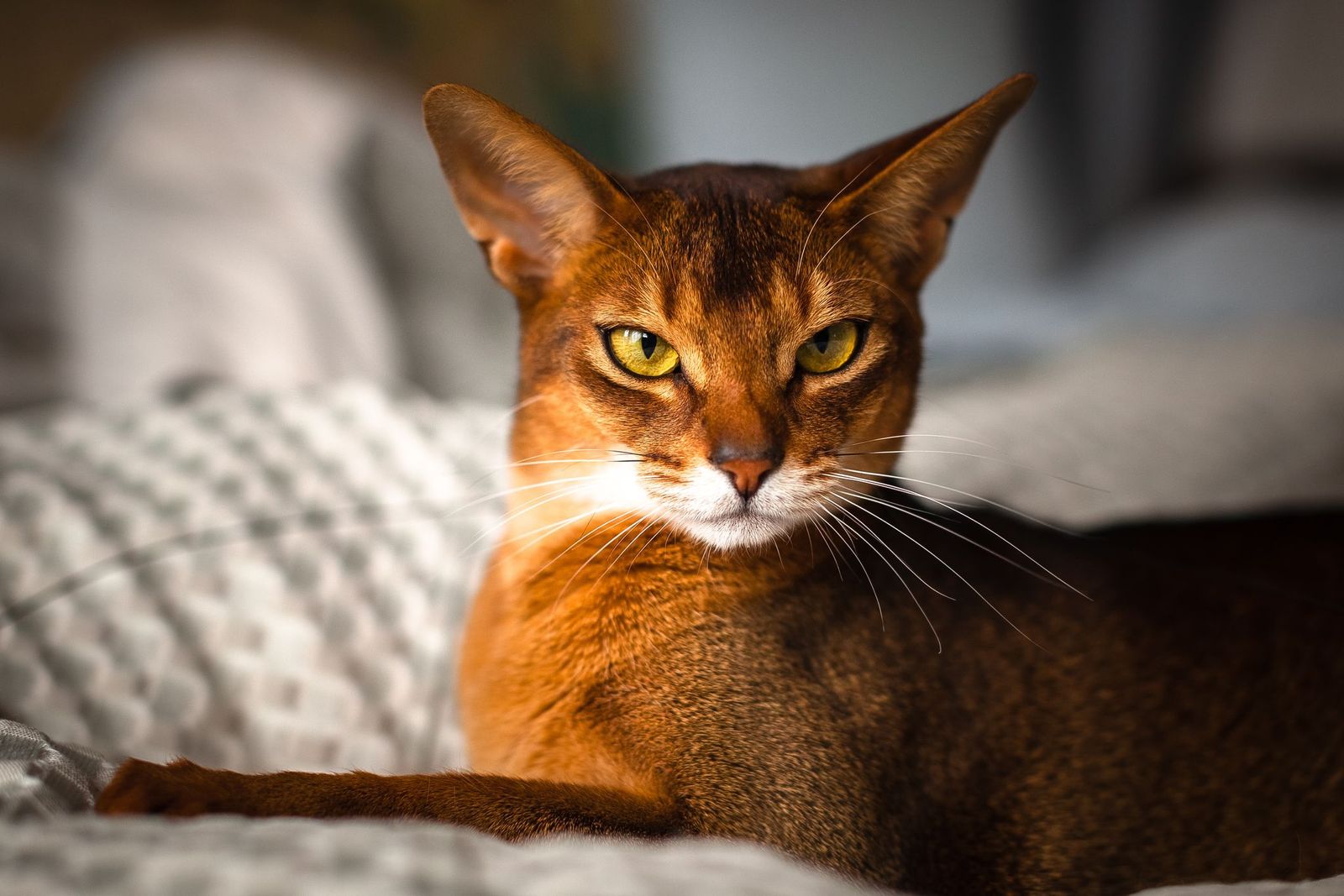
The Abyssinian is a medium-sized, muscular cat with a sleek, ticked coat that shimmers in the light. Large, alert ears, almond-shaped eyes in gold or green, and the classic “M” marking on the forehead give it a wild, expressive look.
In this guide, you’ll learn what Abyssinians are really like to live with – their personality, care needs, common health issues, and how to tell if this high-energy, dog-like cat is truly the right breed for you.
Abyssinian Cat History & Origin
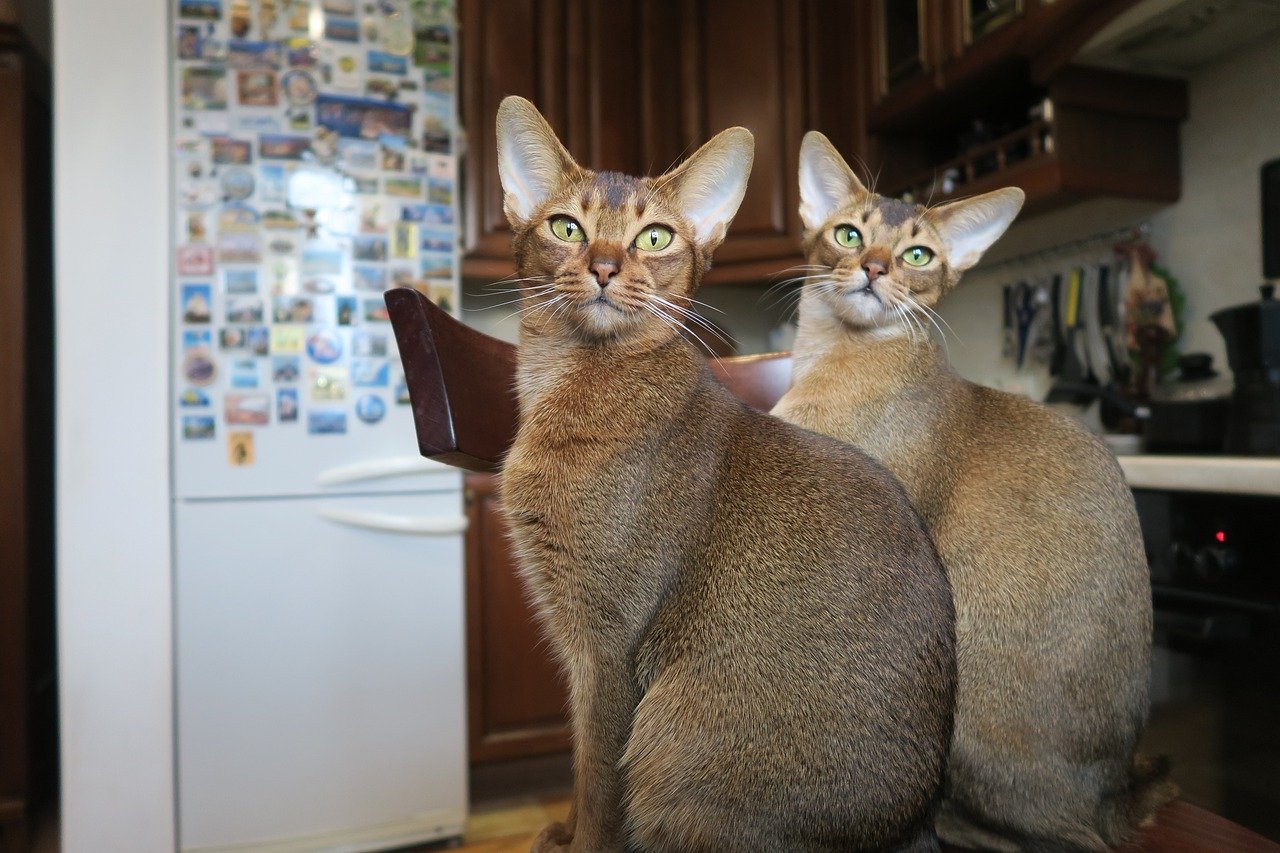
The Abyssinian’s exact origin is still debated. Although the breed takes its name from Abyssinia, the former name for Ethiopia, current breed-registry sources do not treat Ethiopia or ancient Egypt as the breed’s confirmed birthplace. Instead, they point to DNA-based evidence linking the breed’s deeper ancestry to the Indian Ocean coast and parts of Southeast Asia, while noting that the modern Abyssinian was developed in Britain.
The long-standing connection to ancient Egyptian cats is best understood as part of the breed’s historical lore rather than settled fact. Modern registry descriptions note the resemblance between Abyssinians and cats shown in Egyptian art, but they stop short of presenting that link as proven breed history.
One of the earliest well-documented cats associated with the breed is Zula, shown at London’s Crystal Palace cat show in 1871. A TICA historical source notes that Harper’s Weekly later described Zula as a cat brought from Abyssinia after the war, but it also states that there is no documentation proving Zula founded modern Abyssinian breeding lines.
As a recognized breed, the Abyssinian was shaped largely in the United Kingdom, with references reaching back to the 1890s and formal GCCF recognition in 1929. The breed reached the United States in the early 1900s, and CFA states that Abyssinians were among its original registered breeds in 1906. Later imports from England helped establish the modern American breeding population in the late 1930s.
Appearance: Size, Colors & Coat
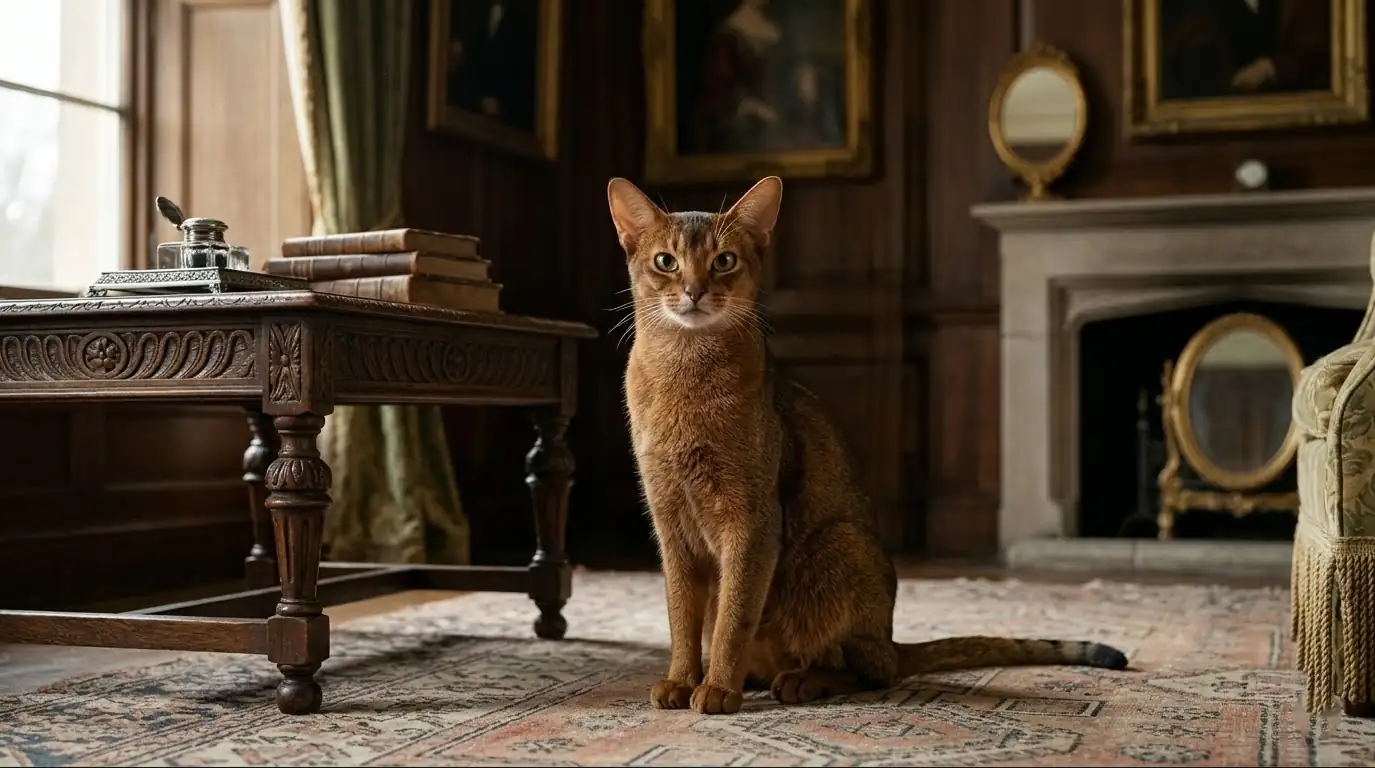
The Abyssinian is a medium-sized, shorthaired cat con un lithe, muscular body, long legs, and an overall athletic look. Breed standards consistently describe the Abyssinian as graceful rather than cobby, with a balanced body and a distinctive alert expression.
Head and facial features
The head is best described as a cuña modificada, ligeramente redondeada rather than a sharply pointed triangle. Abyssinians have large, open ears, ojos almendrados, and fine facial markings that help create the breed’s characteristic bright, attentive expression.
Coat and texture
The Abyssinian’s coat is short, close-lying, and distinctly ticked. “Ticking” means each hair shaft shows multiple bands of color, which gives the coat its warm, luminous appearance. This ticking is one of the breed’s defining features across major registry descriptions.
Recognized colors
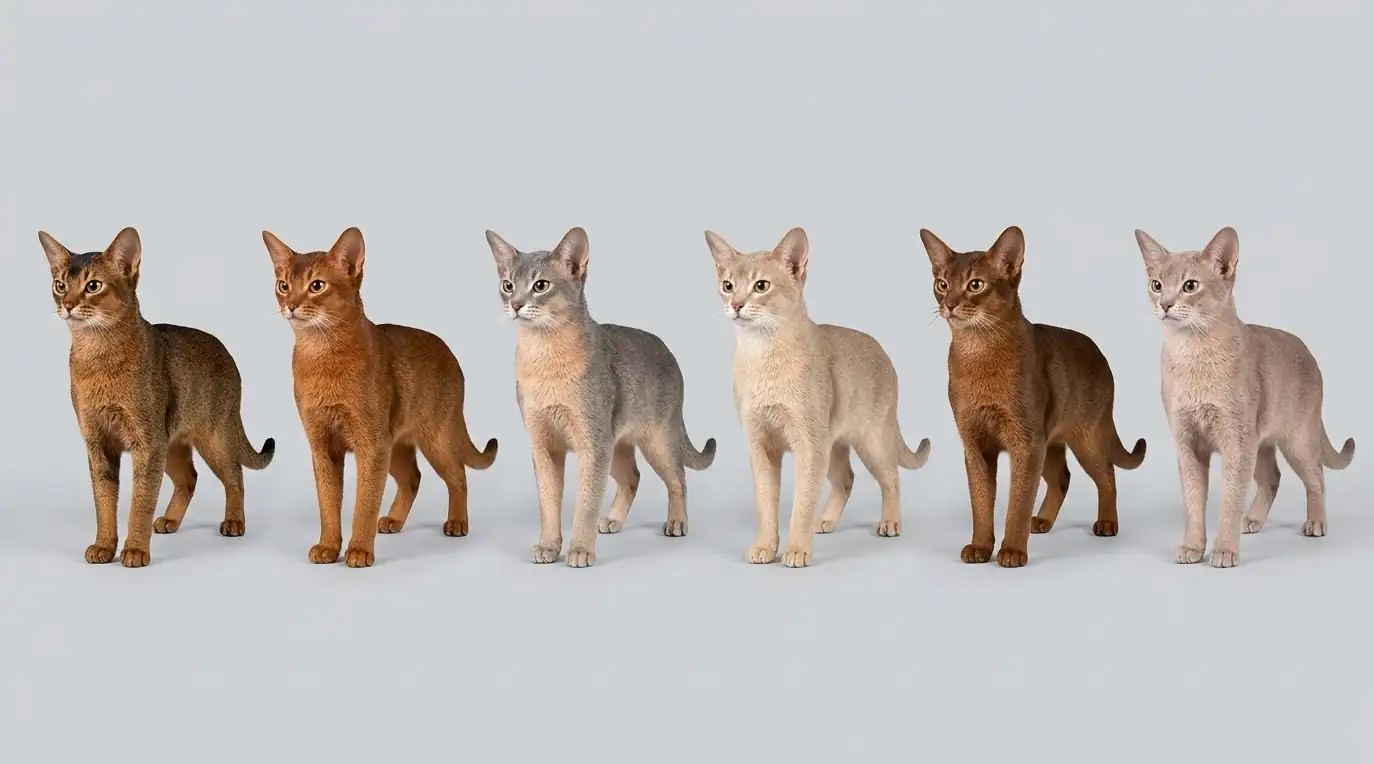
Color naming can vary slightly by registry. CFA commonly highlights ruddy, cinnamon, blue, and fawn as the best-known Abyssinian colors, while TICA also recognizes chocolate y lilac in addition to those shades.
Silver varieties
Some registries also recognize silver Abyssinians. In these cats, the coat has a paler or icy-white base near the skin, with darker ticking layered above it, while the classic Abyssinian pattern remains intact.
Personality & Temperament
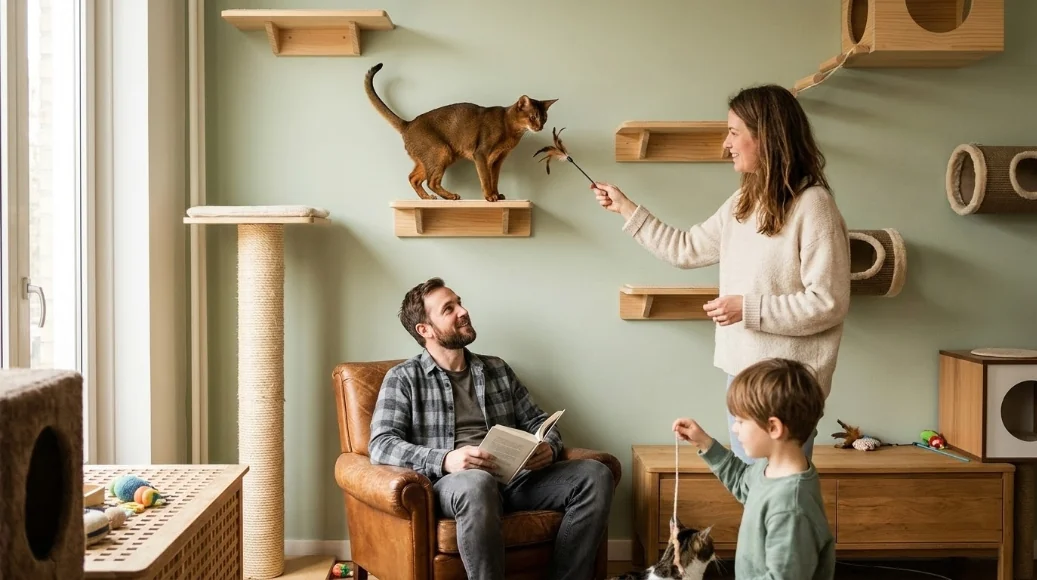
Abyssinian cats are best known for their high energy and curiosity. They love to climb, jump, and explore every corner of the home, often choosing the highest shelves and cat trees as their favorite spots. It’s common to find an Abyssinian supervising from above or joining in whatever activity their humans are doing.
Energy Level & Play Style
This breed is almost always “on the move”. Abyssinians enjoy interactive games such as fetch, chase, wand toys, and puzzle feeders. Short, intense play sessions throughout the day suit them better than a single long session. Without enough play and stimulation, they can become bored and may turn their intelligence toward mischief, such as opening cupboards or knocking items off tables.
Affection & Attachment to Humans
Abyssinians are very people-oriented and are often called the “dog of the cat world”. They like to follow their owners from room to room and want to be involved in daily life, whether you’re working at a desk, cooking, or relaxing on the sofa.
However, they are not always classic lap cats. Many Abyssinians enjoy brief cuddles and gentle petting, then prefer to sit beside you, on the back of the sofa, or nearby rather than sleeping on your lap for hours. They show affection through interaction, eye contact, and play rather than constant clinginess.
Compatibility With Families & Other Pets
With proper socialization, Abyssinians usually get along well with respectful children, other cats, and even cat-friendly dogs. Their playful nature makes them great companions for households that enjoy interactive pets. They do not typically like being ignored or left out of family activities and may become vocal or restless if they feel lonely.
Because they thrive on company, some owners find that keeping two compatible cats (or a friendly dog) helps prevent boredom and separation stress. Slow, supervised introductions are important when adding an Abyssinian to a multi-pet home.
Ideal Home Type
An Abyssinian is best suited to an active home where people are around regularly and willing to play every day. They do well in apartments as long as there are vertical spaces (cat trees, shelves) and enough toys, but a quiet home with little interaction or long daily absences is not ideal.
In short, choose an Abyssinian if you want a smart, athletic, highly interactive cat that behaves a bit like a playful, loyal dog — and you’re ready to invest time in training, play, and companionship.

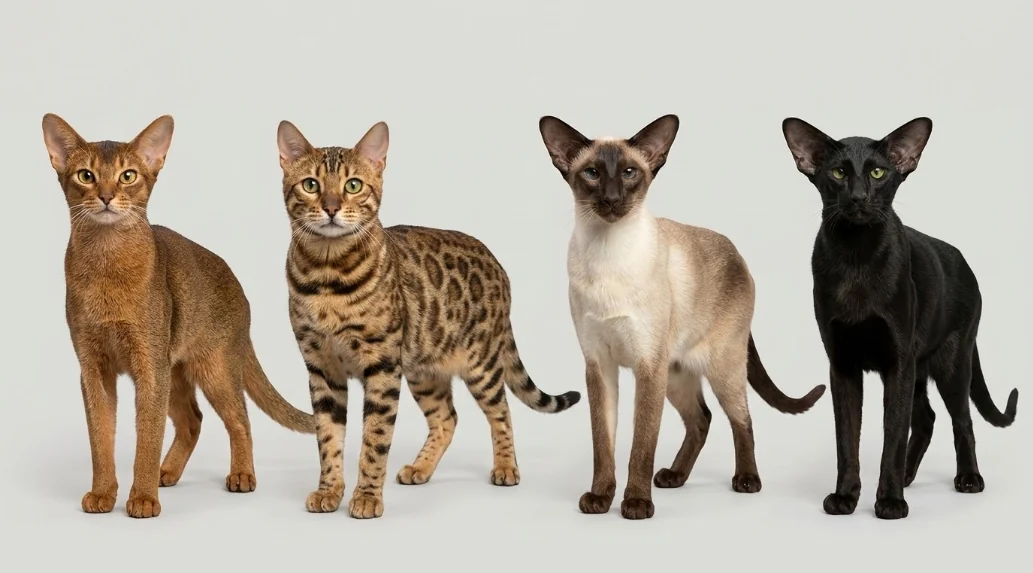
Abyssinian vs Bengal, Siamese, and Oriental Shorthair
If you’re deciding between an Abyssinian and other active, people-oriented breeds, the biggest differences are usually energy style, talkativeness, and how much close attention the cat expects every day.
The Abyssinian is usually the best fit for people who want a smart, athletic, highly interactive cat without choosing the most vocal or most visually extreme breed in this group. CFA describes the Abyssinian as active, affectionate, intensely curious, and not especially talkative, while also noting that many dislike being left alone for long periods.
| Raza | Lo mejor para | Main trade-off |
|---|---|---|
| Abisinio | Owners who want an athletic, affectionate, playful cat that is interactive but not usually the loudest breed in the room | Needs daily play and companionship; often not an all-day lap cat |
| Bengala | People who want the boldest look and highest-octane activity level | Can be more demanding, more intense, and needs serious enrichment |
| Siamés | People who love very social, very vocal, close-contact cats | Noise level and attention needs are higher |
| Oriental de pelo corto | People who want Siamese-like personality with more color/pattern variety | Also highly vocal, extroverted, and prone to boredom without engagement |
This comparison is simplified, and individual cats vary, but for most households the decision comes down to this: pick the Abyssinian when you want a busy, intelligent, affectionate climber with lower grooming needs and a generally less dramatic communication style than a Siamese or Oriental. Pick a Bengal when you want even more intensity and a more exotic “mini wildcat” feel.
Everyday Care for Abyssinian Cats
Abyssinians are energetic, intelligent and people-oriented, so their daily care is about more than just alimentos and a litter box. They need the right nutrition, plenty of playtime, a stimulating environment and regular health checks to stay happy.
Diet & Nutrition
As active carnivores, Abyssinian cats do best on a high-quality, high-protein diet.
- Nutrition basics: Choose complete and balanced cat food that meets AAFCO (or equivalent) nutritional standards. Look for animal protein as a main ingredient.
- Life stage formulas: Kittens, adults and seniors have different needs. Use age-appropriate formulas to support growth, maintenance or joint and organ health.
- Portion control: Abyssinians have fast metabolisms and love to move, but they can still gain weight if overfed. Follow feeding guidelines on the package, then adjust based on body condition and activity level.
- Treats in moderation: Use treats for training and bonding, but keep them to a small portion of daily calories to avoid obesity.
- Fresh water: Provide fresh, clean water at all times. Many Abyssinians enjoy running water, so a pet fountain can encourage better hydration.
If you’re considering raw or home-cooked diets, always consult a veterinarian or veterinary nutritionist to avoid nutritional deficiencies.
Ejercicio e interacción
Daily exercise is essential for this high-energy breed. Without enough play, an Abyssinian can become bored, vocal or destructive.
- Interactive play sessions: Schedule at least one or two dedicated play sessions every day (10–15 minutes each). Use wand toys, feather teasers, light “fetch” toys or tunnels to mimic hunting and chasing.
- Vertical spaces: Cat trees, wall-mounted shelves and window perches let Abyssinians climb, jump and survey their territory from above, which they love.
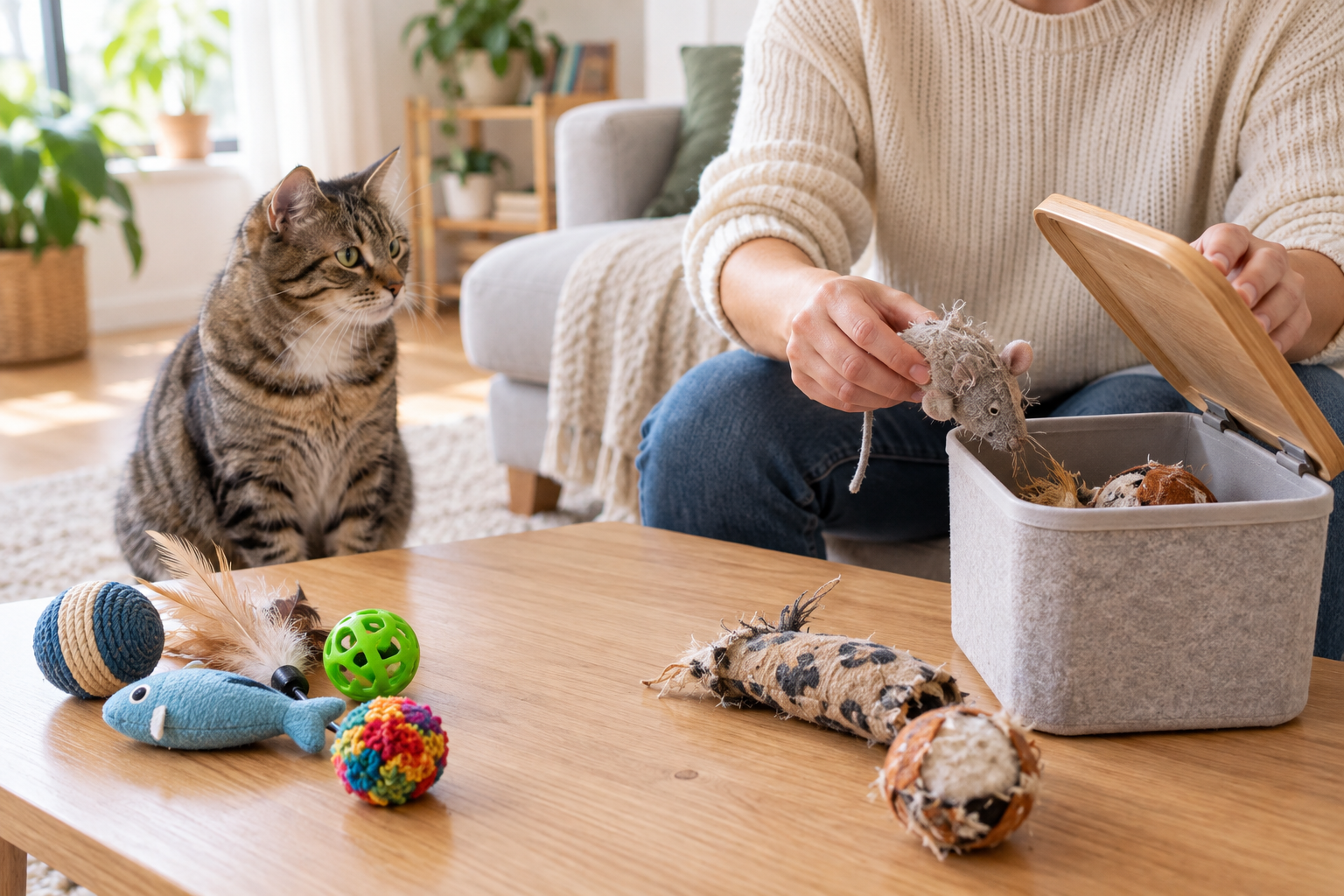
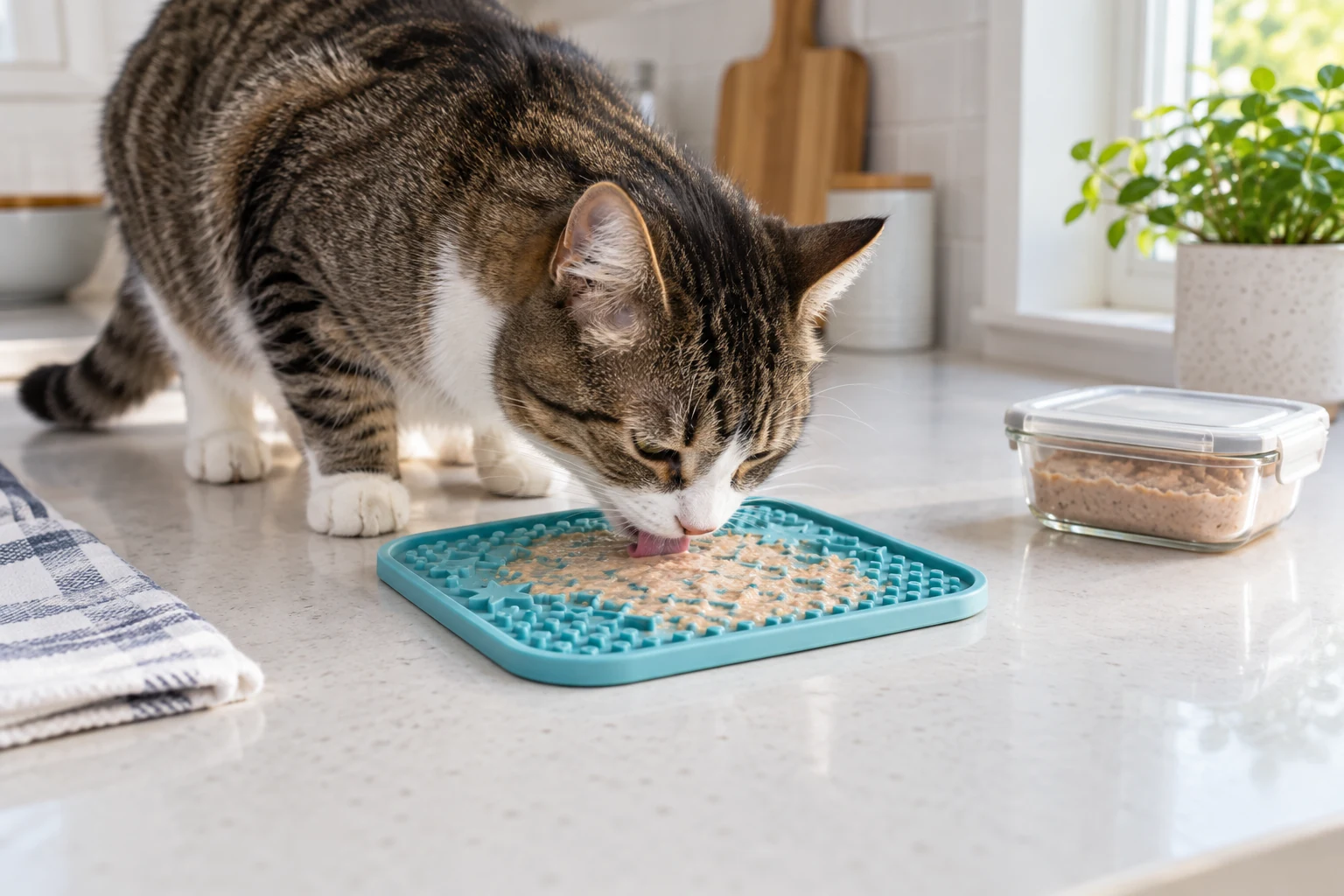
- Estimulación mental: Rotate toys regularly and offer puzzle feeders or food maze toys. These challenge their intelligence and channel energy into problem-solving instead of mischief.
- Human interaction: Abyssinians thrive on being part of family life. Let them “help” with daily tasks, talk to them and involve them in play with children (supervised and gentle).
Think of exercise and interaction as part of their basic needs, not just optional enrichment.
Medio ambiente y enriquecimiento
A stimulating environment keeps an Abyssinian’s body and brain busy, reducing stress and unwanted behaviors.
- Safe living space: Provide enough room to run, jump and explore. Avoid cluttered or cramped spaces where they can’t move freely.
- Varied toys: Offer a mix of toys—balls, crinkly toys, tunnels, wand toys, puzzle feeders—and rotate them weekly to keep things interesting.
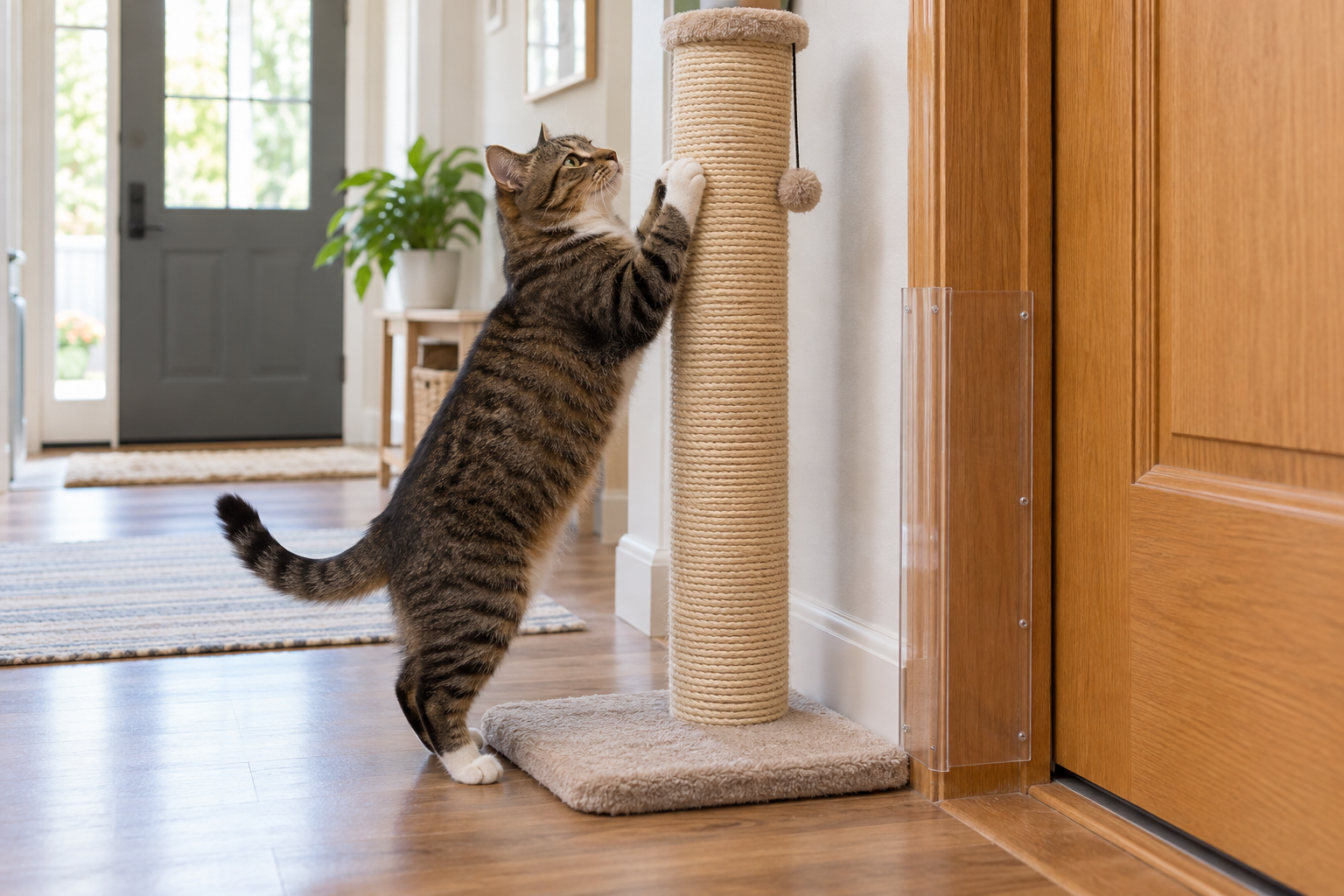
- Scratching options: Multiple scratching posts or boards (vertical and horizontal) help maintain claws and protect your furniture.
- Water interaction: Many Abyssinians are curious about water. A fountain, shallow water dish to paw at or supervised play near a sink can be fun enrichment.
- Outdoor access (safely): If possible, provide a secure “catio,” screened balcony or supervised harness walks. Never allow free roaming outdoors, as this increases risks from cars, predators and disease.
A rich environment is especially important if your Abyssinian spends time alone during the day.
Grooming & Basic Health Care
Compared to long-haired breeds, Abyssinians are low-maintenance, but regular grooming and preventive care are still important.
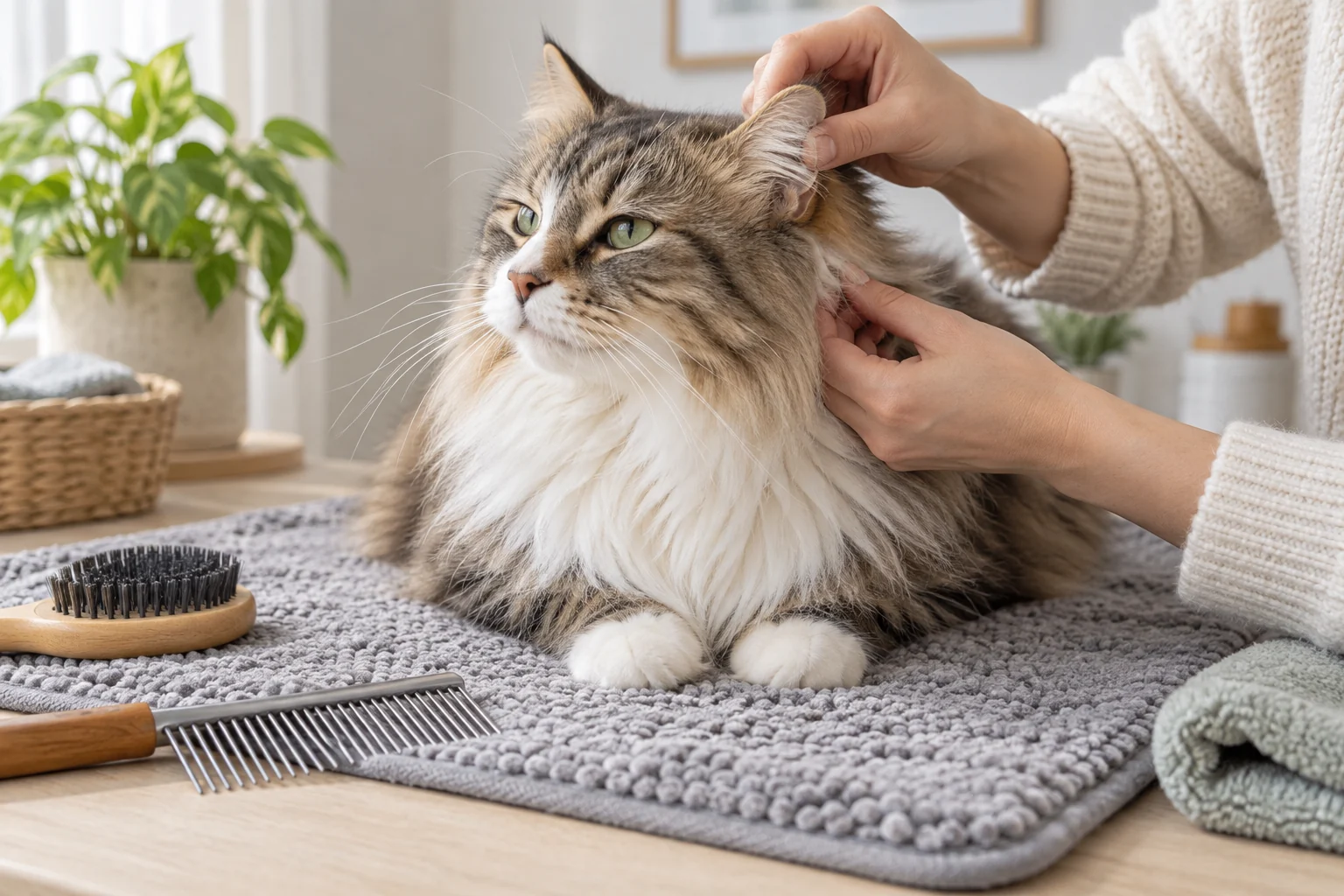
- Coat care: Their short, dense fur usually only needs brushing once a week with a soft brush or grooming glove to remove loose hair and distribute skin oils.
- Nail trimming: Check and trim nails every 2–4 weeks, depending on wear from scratching posts and activity.
- Ear and eye care: Gently wipe away any discharge from the corners of the eyes with a damp, soft cloth. Check ears for dirt, wax or redness; clean with a vet-approved ear cleaner if needed.
- Dental hygiene: Dental disease is common in cats. Offer dental treats, chews or tooth-brushing (if tolerated) and schedule professional cleanings as recommended by your vet.
- Regular vet visits: Annual checkups (or more frequent for seniors) help monitor weight, heart, kidneys, joints and teeth. Ask your vet about vaccination schedules and parasite prevention.
If the coat suddenly becomes dull, patchy or very rough, or if your cat shows any changes in appetite, behavior or energy, see a veterinarian promptly.
Mental Well-Being
Abyssinians are emotionally sensitive and highly social. Protecting their mental health is just as important as meeting their physical needs.
- Training & tricks: Use clicker training or simple commands (“sit”, “high five”, “come”) to engage their intelligence. Many Abyssinians enjoy learning tricks, running obstacle courses or using a cat wheel.
- Companionship needs: This breed dislikes long periods of isolation. If you’re away for many hours each day, consider hiring a sitter, arranging more intense evening play sessions or eventually adding another compatible pet.
- Socialization: Introduce new people, pets and environments gradually and positively. Reward calm, curious behavior with treats and praise.
- Stress reduction: Provide safe ocultar spots, elevated perches and consistent routines. Watch for signs of stress, such as over-grooming, hiding, aggression or changes in litter box habits, and consult a vet or behaviorist if needed.
With enough attention, play and mental challenges, Abyssinians remain confident, affectionate cats that flourish at the center of family life.
Common Health Issues in Abyssinian Cats
Abyssinian cats are generally healthy, but like all purebred cats they are prone to a few hereditary conditions. Responsible breeders will screen for these problems, and as an owner it helps to know the main risks so you can catch any warning signs early.
| Cuestión de salud | Características | Detección y prevención |
|---|---|---|
| Deficiencia PK | Anemia hereditaria frecuente que afecta a la vida útil de los glóbulos rojos. | Pruebas genéticas de ADN (detectan mutaciones relevantes). |
| Atrofia progresiva de retina (ARP) | Degeneración ocular hereditaria que conduce a la ceguera en fases avanzadas. | Pruebas genéticas de ADN. |
| Luxación rotuliana | Dislocación de la rótula, que provoca cojera de las extremidades posteriores. | No se dispone de pruebas genéticas; se requiere un examen físico veterinario profesional para su evaluación. |
| Amiloidosis renal | Depósito anormal de proteínas en los riñones, lo que deteriora la función renal. | No se dispone de pruebas de ADN; los análisis de sangre tempranos pueden ayudar a detectar signos de alerta. |
Notas:
In addition to these breed-specific issues, Abyssinians can also develop common feline problems such as dental disease and obesity. Keeping your cat at a healthy weight, feeding a balanced diet and scheduling regular vet checkups will go a long way toward prevention.
If you are buying from a breeder, always ask for health certificates and DNA test results for known hereditary diseases such as PK deficiency and PRA. For rescue cats or mixed heritage, discuss screening tests and an appropriate checkup schedule with your veterinarian.
Is the Abyssinian the Right Cat for You?
The Abyssinian is usually a strong match for people who want an active, intelligent, highly interactive cat rather than a quiet, low-demand pet. Breed sources consistently describe Abyssinians as curious, affectionate, athletic, and constantly engaged with their environment, which makes them rewarding companions in homes that can provide daily play, climbing space, and regular human interaction.
Best fit for these homes
| Good Match For | Why an Abyssinian Fits |
|---|---|
| Households that enjoy active, playful pets | Abyssinians are energetic, inquisitive cats that like games, exploration, and staying involved in what their people are doing. |
| People who want a highly interactive companion | This breed is known for being affectionate and people-oriented, often following owners from room to room and seeking attention in small but frequent ways. |
| Families able to provide daily enrichment | Abyssinians do best when they have climbing areas, toys, and regular interactive play to channel their energy and curiosity. |
| Homes with respectful children or compatible pets | Well-socialized Abyssinians are often a good fit for families and can do well with other friendly pets when introductions are handled properly. |
| Owners who like an athletic, trainable cat | The breed is widely described as highly intelligent, agile, and responsive, which suits homes that enjoy teaching tricks, using puzzle toys, or creating a stimulating routine. |
May not be the best fit for these homes
| Less Ideal For | Why the Fit May Be Poor |
|---|---|
| People who want a calm, low-energy cat | Abyssinians are usually busy, alert, and active rather than quiet or laid-back. |
| Owners who are away for long hours most days | Breed guidance notes that Abyssinians do not like being left alone for long and generally do best with more companionship and engagement. |
| Anyone expecting a classic all-day lap cat | Abyssinians are affectionate, but their high activity level means many prefer short cuddles and frequent interaction over staying still for long periods. |
| Homes without vertical space or enrichment | Because they enjoy height, movement, and exploration, a home without cat trees, shelves, perches, or interactive play can be a poor fit. |
| People who want a very undemanding pet | This breed tends to thrive when included in daily life, so it is usually better for owners who enjoy an involved, attention-seeking companion. |
Choose an Abyssinian if you want an affectionate, intelligent, high-energy cat that feels more like an active companion than a decorative pet. Pass if you want a quiet lap cat that is content with minimal daily interaction.
If you’re still comparing different personalities and energy levels, check out our complete cat breed list to see how the Abyssinian stacks up against other breeds.
FAQ About Abyssinian Cats
Do Abyssinian cats shed a lot?
No—Abyssinian cats are generally light shedders compared with many other breeds. Their short, close-lying coat is relatively easy to maintain, and most Abyssinians only need light brushing to keep loose hair under control.
Are Abyssinian cats cuddly or clingy?
Abyssinian cats are highly affectionate and people-oriented, but they are not usually all-day lap cats. Instead of staying curled up on you for hours, they prefer to follow you around, “help” with whatever you’re doing and play interactive games. They thrive on exploring, chasing toys and being involved in family life, so the best approach is to offer plenty of attention and playtime while still respecting their independence.
Are Abyssinian cats expensive?
Purebred Abyssinian cats are generally on the expensive side compared with many mixed-breed cats. Prices vary by bloodline, coat color, pedigree and where you live, and rare colors can increase the cost of kittens. Because this breed is relatively rare and in demand, it’s important to choose a reputable breeder or rescue, ask about health testing and avoid unusually cheap offers that may signal poor breeding practices.
Are Abyssinian cats good for allergy sufferers?
Not necessarily. Abyssinians are not hypoallergenic. Some people may find Abyssinians easier to live with because their coat is short and easier to keep tidy, but that is not the same as being allergy-safe. If you have cat allergies, the best approach is to spend time with the breed before adopting and use practical controls such as HEPA filtration, regular cleaning, and limiting bedroom exposure.
Can Abyssinian cats get along with other pets?
Abyssinian cats generally get along well with other friendly cats and cat-safe dogs thanks to their playful, social nature. Successful relationships depend on slow, controlled introductions, plenty of vertical space and giving each animal its own safe retreat. With patience and supervision—especially during the first few weeks—Abyssinians often become active, engaging companions for other pets in the household.
Quick Facts About Abyssinian Cats
For readers who just want the essentials, here are some quick facts that capture what makes the Abyssinian unique:
Active, elegant companion: Combining ancient heritage, athletic build and dog-like devotion, the Abyssinian is ideal for owners who want an interactive, playful and mentally engaging feline partner rather than a low-energy lap cat.
Show pioneer: One of the earliest breeds to appear in international cat shows; an Abyssinian named “Zula” was exhibited and awarded in the 19th century at the Crystal Palace Cat Show in the UK.
Dog-like loyalty: Abyssinians are famously people-oriented and often follow their owners from room to room. Without enough attention and play, they can become stressed or anxious.
Long lifespan: Many Abyssinians live 12–15 years, and some individuals reach 18–20+ years with good nutrition, regular vet care and an enriched home environment. To see how old your Abyssinian is in “human years”, try our Calculadora de la edad de los gatos.
Highly intelligent: They learn tricks quickly, enjoy puzzle feeders and food mazes, and often excel at agility-style games, obstacle courses or even using a cat wheel.
Referencias
"Sobre el abisinio". www.cfa.org. Archivado del original el 22 de abril de 2023. Recuperado el 11 de octubre de 2024.
"Descripción de la raza abisinia". catzinc.org. Recuperado el 31 de enero de 2018.
"Abisinio". VCA Animal Hospitals. Recuperado el 9 de septiembre de 2016.
"Sobre el abisinio". Archivado desde el original el 5 de enero de 2013. Recuperado el 31 de enero de 2018.
Joshua, Joan O. (2013). Aspectos clínicos de algunas enfermedades de los gatos. Elsevier. p. 1. ISBN 9781483226002.
"Abisinio". 23 de julio de 2013.
"Todo sobre los gatos abisinios - Historia del gato abisinio".
Barnes-Hookey, Jacquie. "Historia del gato abisinio". Asociación de Gatos Abisinios. Recuperado el 1 de enero de 2024.
"Abisinio". Consejo de Gobierno de Cat Fancy. Recuperado el 1 de enero de 2024.
Leeson, Janelle. "Abisinio". PetMD. Recuperado el 3 de enero de 2024.
"Estándar abisinio". Club del gato abisinio. Recuperado el 3 de enero de 2024.
"Abisinio : PUNTUACIÓN" (PDF). Cfainc.org. Archivado desde el original (PDF) el 1 de julio de 2014. Consultado el 15 de diciembre de 2017.
"Estándar del Grupo de Raza Abisinio" (PDF). tica.org. 1 de mayo de 2008. Consultado el 11 de octubre de 2024.
Highfield, Roger (31 de octubre de 2007). "La gata Canela podría ofrecer esperanza a los ciegos". The Daily Telegraph. Archivado del original el 3 de noviembre de 2007. Recuperado el 26 de junio de 2023.
Marchei, P.; Diverio, S.; Falloci, N.; Fatjó, J.; Ruiz-de-la-Torre, J. L.; Manteca, X. (23 de marzo de 2009). "Diferencias raciales en el desarrollo conductual de los gatitos". Fisiología y comportamiento. 96 (4-5): 522-531. doi:10.1016/j.physbeh.2008.11.015. S2CID 12358514. Recuperado el 6 de enero de 2024.
Niewold TA, van der Linde-Sipman JS, Murphy C, Tooten PC, Gruys E (septiembre de 1999). "Amiloidosis familiar en gatos: Siamese and Abyssinian AA proteins differ in primary sequence and pattern of deposition". Amiloide. 6 (3): 205-9. doi:10.3109/13506129909007328. PMID 10524286.
"Centro Theodosius Dobzhansky de Bioinformática del Genoma" (PDF). Dobzhanskycenter.bio.spbu.ru. Archivado desde el original (PDF) el 17 de diciembre de 2013. Consultado el 15 de diciembre de 2017.
Worthing, Kate A; Wigney, Denise I; Dhand, Navneet K; Fawcett, Anne; McDonagh, Phillip; Malik, Richard; Norris, Jacqueline M (7 de marzo de 2012). "Factores de riesgo de peritonitis infecciosa felina en gatos australianos". Revista de Medicina y Cirugía Felina. 14 (6): 405-412. doi:10.1177/1098612X12441875. hdl:2123/14691. PMID 22398460. Recuperado el 7 de enero de 2024.
Gough, Alex; Thomas, Alison; O'Neill, Dan G. (2018). Predisposición racial a las enfermedades en perros y gatos. Hoboken: Wiley Blackwell. pp. 227-228. ISBN 978-1-119-22558-4.
Albasan, H.; Osborne, C. A.; Lulich, J. P.; Lekcharoensuk, C. (2012). "Factores de riesgo de urolitos de urato en gatos". Revista de la Asociación Americana de Medicina Veterinaria. 240 (7): 842-847. doi:10.2460/javma.240.7.842. PMID 22443437.
Lipinski MJ, Froenicke L, Baysac KC, Billings NC, Leutenegger CM, Levy AM, Longeri M, Niini T, Ozpinar H, Slater MR, Pedersen NC, Lyons LA (enero de 2008). "El ascenso de las razas felinas: evaluaciones genéticas de razas y poblaciones mundiales de razas aleatorias". Genómica. 91 (1): 12-21. doi:10.1016/j.ygeno.2007.10.009. PMC 2267438. PMID 18060738.
Ravens, Philippa A.; Xu, Bei J.; Vogelnest, Linda J. (2014). "Dermatitis atópica felina: estudio retrospectivo de 45 casos (2001-2012)". Dermatología veterinaria. 25 (2): 95. doi:10.1111/vde.12109. ISSN 0959-4493.
Hnilica, Keith A.; Patterson, Adam P. (19 de septiembre de 2016). Dermatología de pequeños animales. St. Louis (Miss.): Saunders. ISBN 978-0-323-37651-8.
Oliver, James A.C.; Mellersh, Cathryn S. (2020). "Genetics". En Cooper, Barbara; Mullineaux, Elizabeth; Turner, Lynn (eds.). Libro de texto de enfermería veterinaria de la BSAVA (Sexta ed.). Asociación Veterinaria Británica de Pequeños Animales. p. 131. ISBN 978-1-910-44339-2.
 EN
EN DE
DE ES
ES PT
PT