
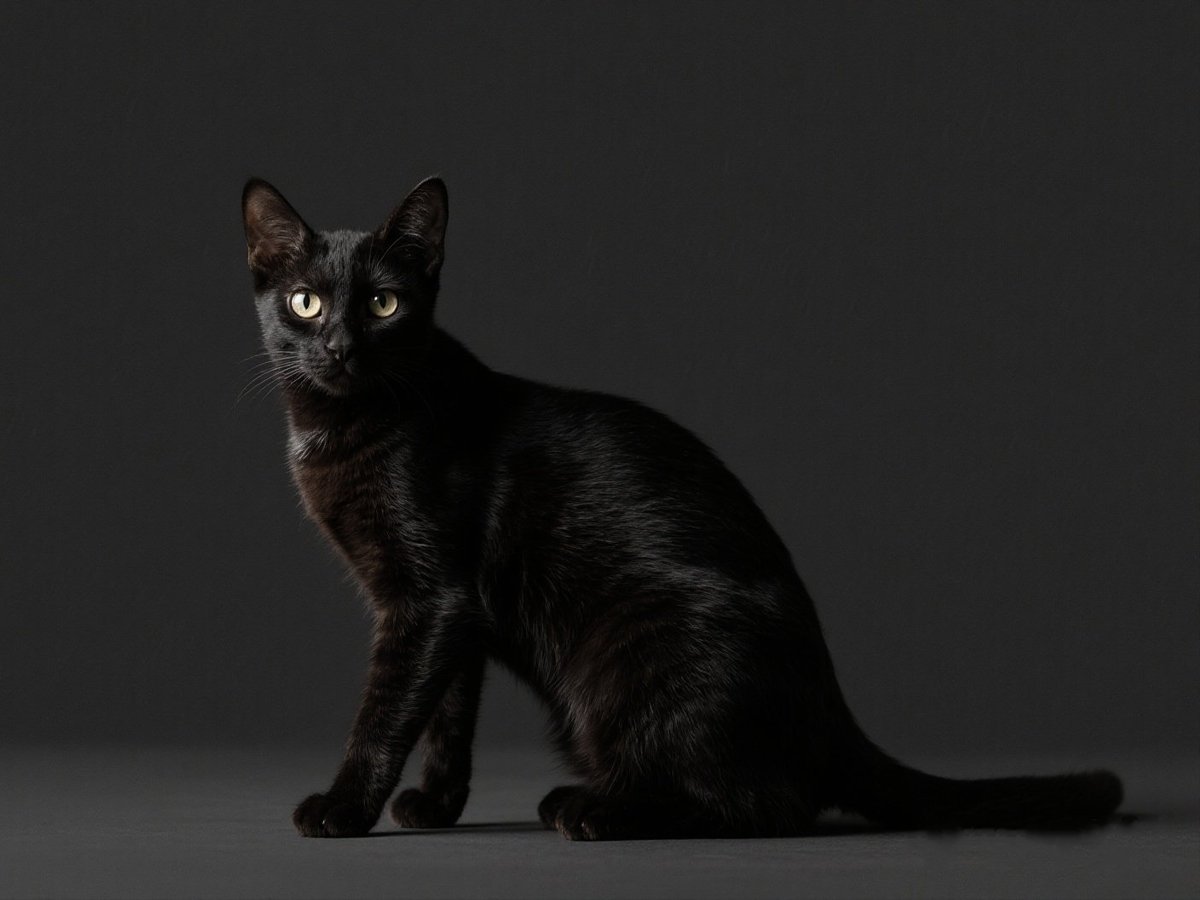
Bombay cats are affectionate, people-oriented indoor companions best for owners who want a social, low-grooming cat rather than an independent one. Their biggest strengths are loyalty, playfulness, and easy coat care; their biggest challenges are loneliness when left alone too long, peso gain if overfed, and the need for consistent enrichment and routine health care.
Índice
Visión general de la raza
| Característica | Descripción |
|---|---|
| Personalidad | Cariñoso, sociable, juguetón, "Velcro" |
| Tipo de carrocería | Musculoso, de tamaño medio |
| Peso | 3-7 kg (6-15 lbs) |
| Lugar de origen | Kentucky, EE.UU. |
| Vida útil | 12-16 años (algunos viven hasta ~20) |
| Tipo de abrigo | Corto, liso, satinado |
| Colores del manto | Negro sólido |
| Nivel de desprendimiento | ⭐☆☆☆☆ (Bajo) |
| Afecto hacia los humanos | ⭐⭐⭐⭐⭐ (Muy alto) |
| Dificultad asistencial | ⭐☆☆☆☆ (Fácil) |
Introducción
The Bombay cat is a medium-sized, muscular breed best known for its glossy black coat and round gold-to-copper eyes. Breed organizations describe the Bombay as a sleek, panther-like cat with a short, close-lying coat and a distinctive black-on-black appearance.
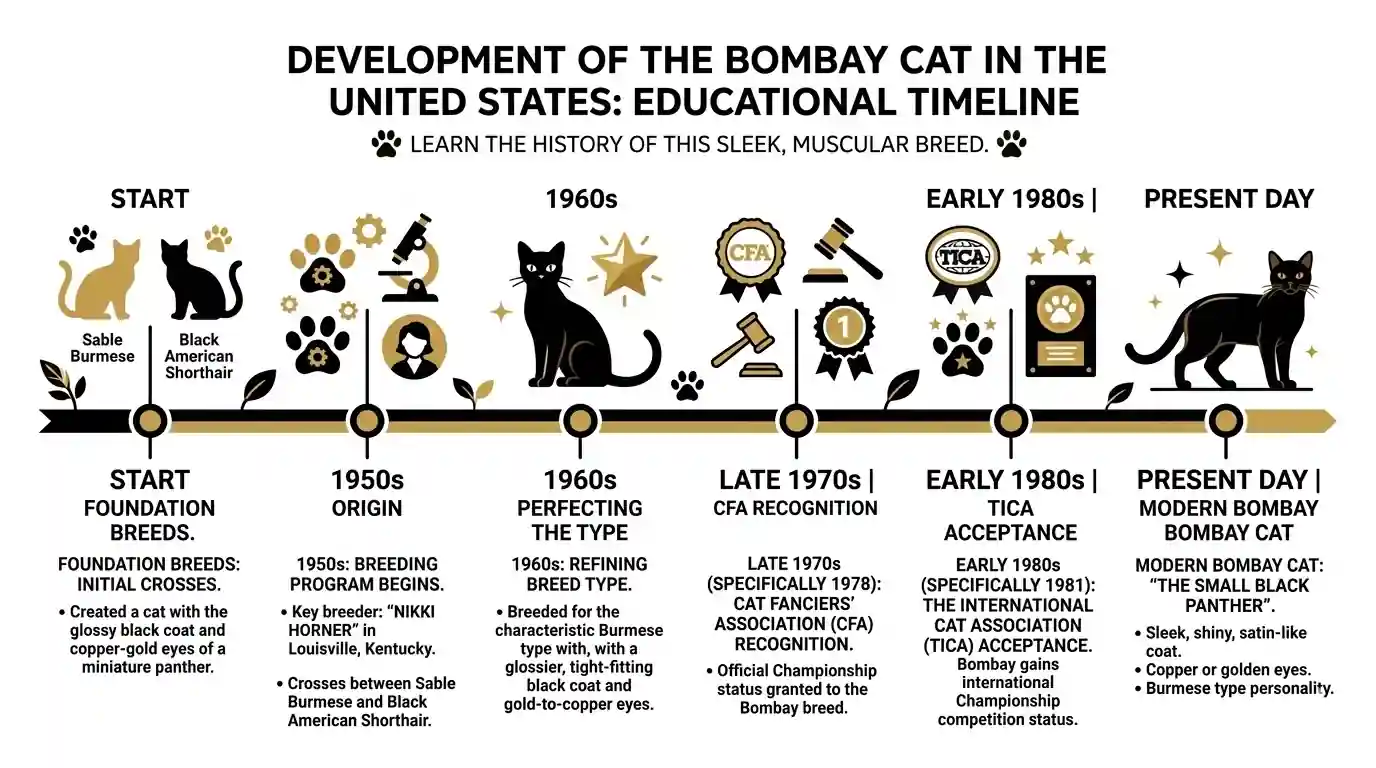
Originally developed in the United States from sable Burmese and black American Shorthair lines, the Bombay was bred to capture the look of a miniature black panther while keeping the affectionate temperament of a companion cat.
In daily life, Bombays are typically social, affectionate, and strongly people-oriented. They often prefer to stay close to their humans, enjoy interactive play, and suit homes that want an engaged companion rather than a distant or highly independent cat.

Historia de la raza
The Bombay is a modern American cat breed created by breeder Nikki Horner of Louisville, Kentucky, who set out to develop a short-haired cat that looked like a “miniature black panther.” Her breeding program began in the 1950s and combined a black American Shorthair con un sable Burmese to produce the glossy black coat, copper-to-gold eyes, and muscular build that define the breed today.
The breed’s early development focused on creating a cat with a distinct, consistent type rather than simply a black coat. Breed organizations still describe the Bombay as a hybrid developed from the Burmese and the American Shorthair, with later breeding programs using careful line breeding and selective outcrossing to preserve its signature look.
Recognition came in stages as the breed became more established. The Asociación de Criadores de Gatos (CFA) accepted the Bombay for registration in 1970 and advanced it to championship status in 1976. Asociación Internacional del Gato (TICA) later accepted the Bombay for championship competition in June 1979.
Today, the Bombay is valued for combining a striking panther-like appearance con el social, affectionate temperament associated with its foundation breeds. That combination remains central to how major cat registries describe the breed.
Características físicas
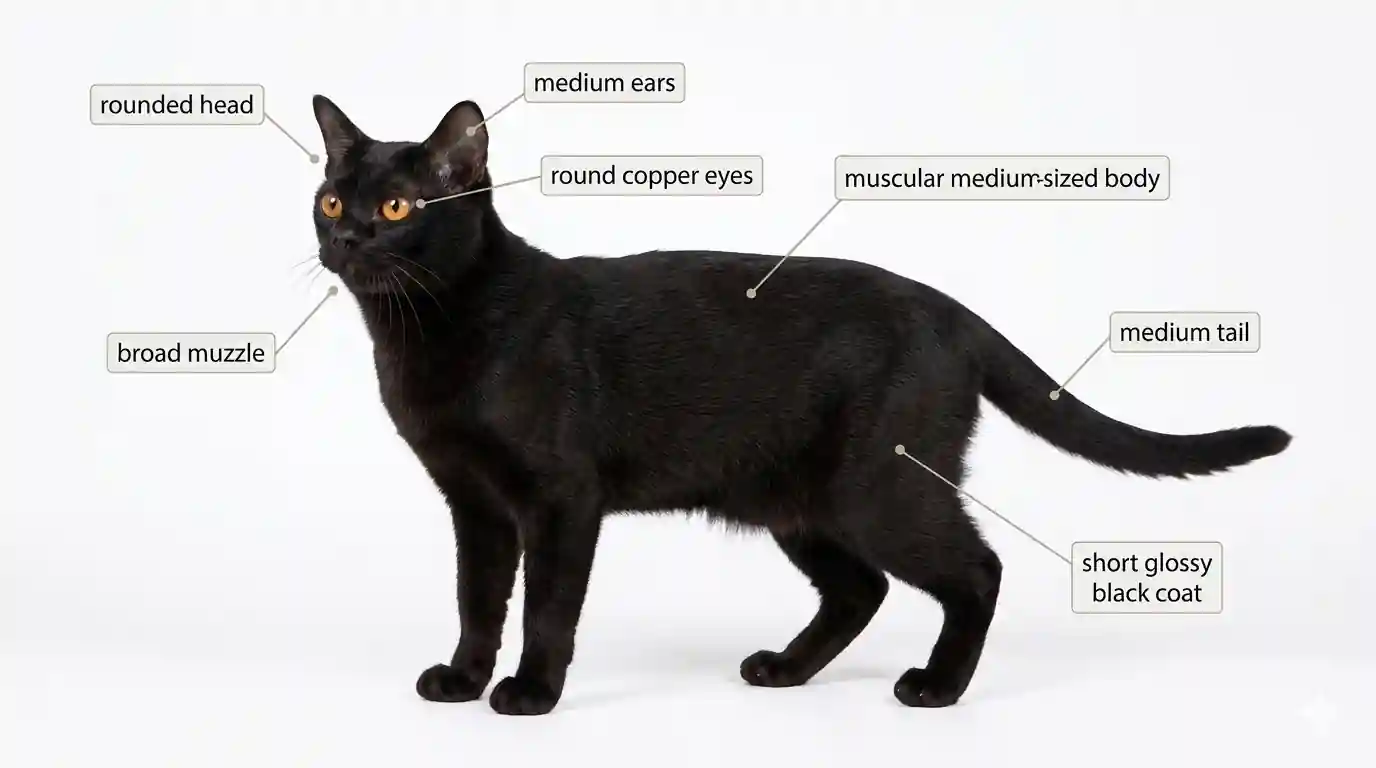
The Bombay is a medium-sized, muscular cat bred to create the impression of a miniature black panther. Official breed standards consistently describe the breed as solid, well-balanced, and heavier than it appears in the hand, with an athletic build rather than a delicate frame.
In profile, the Bombay has a rounded head, a broad muzzle, and medium-sized, wide-set ears that preserve the breed’s soft, rounded expression. The body and tail are both medium in length, which helps create the breed’s compact but graceful outline. Large, round eyes in gold to copper tones are a defining hallmark in both CFA and TICA descriptions of the breed.
The coat is the Bombay’s signature feature. It is short, close-lying, and glossy, with the black color extending through the coat to the roots. Breed authorities emphasize the ideal Bombay’s jet-black, gleaming coat and often describe the finish as a “patent leather” shine.
Taken together, these traits give the Bombay a sleek, polished, unmistakably panther-like appearance: rounded features, copper-toned eyes, and a tight black coat over a muscular frame. That combination is what makes the breed visually distinctive among shorthaired cats.
Comportamiento y personalidad
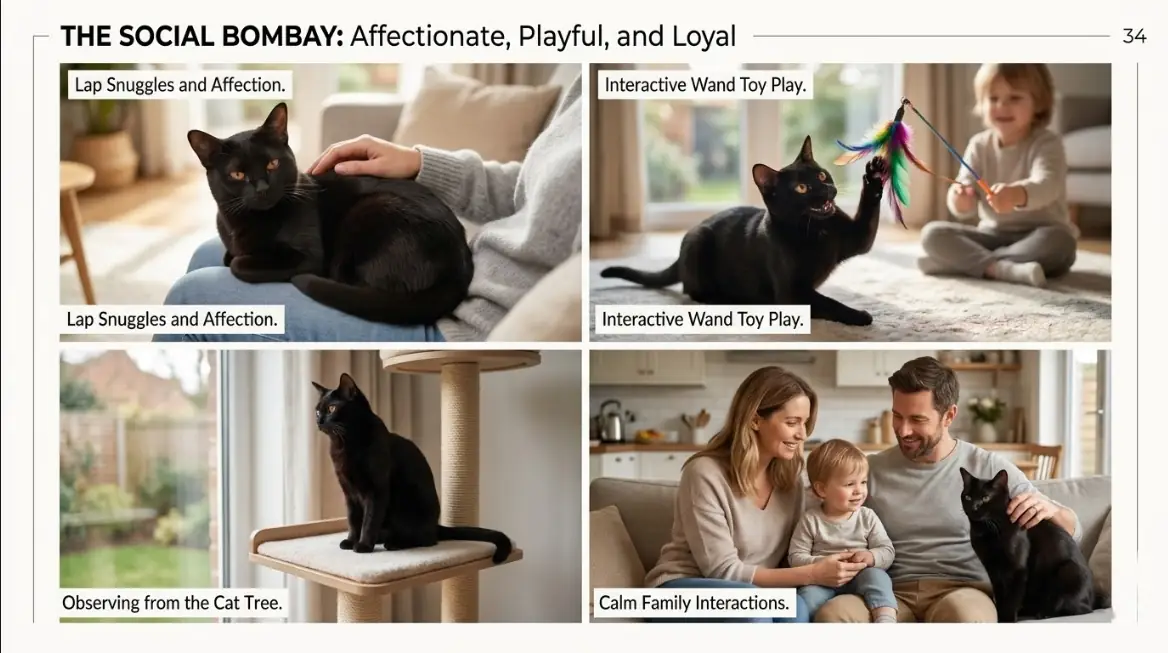
Bombay cats are highly people-oriented, affectionate companions that usually want to stay close to their family. Breed authorities describe them as loving, outgoing, and strongly engaged with household life, which makes them a better fit for owners who want an interactive cat rather than a distant or highly independent one.
They are typically social and adaptable in the home. Many Bombays do well with respectful children and with other pets when introductions are handled gradually, and their calm, family-focused temperament often helps them settle into apartment or household living.
Bombays are also intelligent and playful. They benefit from daily interactive play, climbing space, and puzzle-style enrichment, and many respond well to training games such as fetch or harness practice. Most are lively and curious when young, then become calmer and more relaxed as they mature.
Vocalization is usually moderate rather than extreme. Bombays often communicate with chirps, meows, and purrs, but they are generally described as less vocal than famously talkative breeds such as the Siamés.
Because they are so attached to their people, Bombays usually do best in homes that provide regular companionship and mental stimulation. They are not the ideal breed for households where the cat will be alone for long stretches every day, and some cats may show anxiety-related behaviors when left alone too often or without enough enrichment.
Guía de cuidados
Dieta
Feed your Bombay a complete and balanced cat food that matches its life stage, body condition, and health status. Cornell advises choosing foods with an AAFCO nutritional statement and adjusting portions to the individual cat rather than assuming package directions fit every cat.
Measure meals instead of relying on constant free-feeding. Cornell notes that free-feeding can lead to overeating and inappropriate weight gain in some cats, and obesity is one of the most common nutritional disorders in cats.
Always provide fresh water. Wet food can also help support hydration because canned diets contain far more moisture than dry food, and Cornell notes that cats eating wet food may meet more of their daily water needs through food.
If your Bombay is overweight or has a medical issue such as kidney disease, diabetes, or dental pain, ask your veterinarian before changing the diet. Cornell notes that these conditions can require different feeding strategies, and some cats with dental disease come more comfortably when food texture is adjusted.
Ejercicio
Bombays are playful, muscular cats, so daily interactive play should be part of routine care. TICA describes the breed as lively and people-oriented, and feline environmental guidance stresses the importance of allowing cats to express normal play and hunting behaviors.
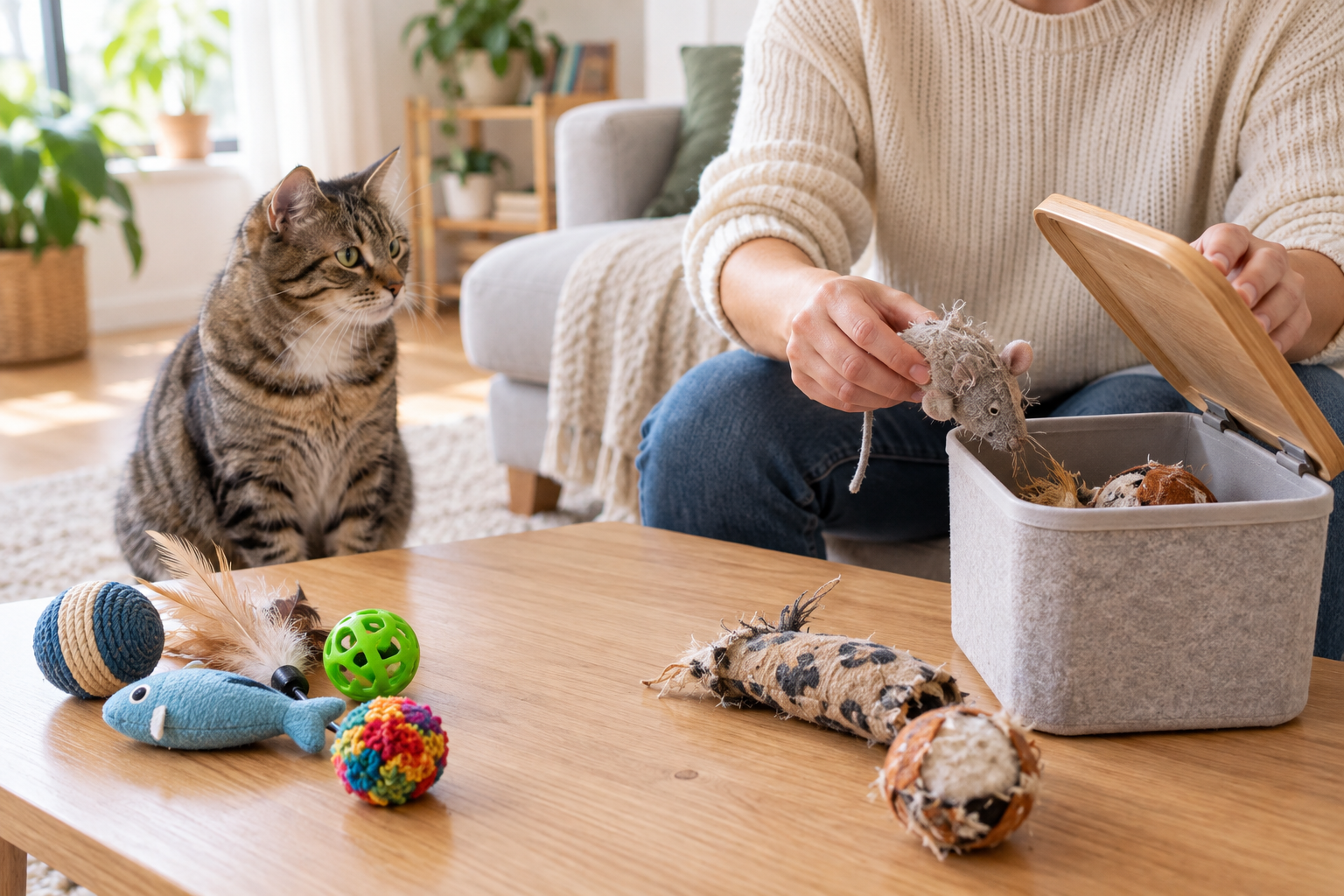
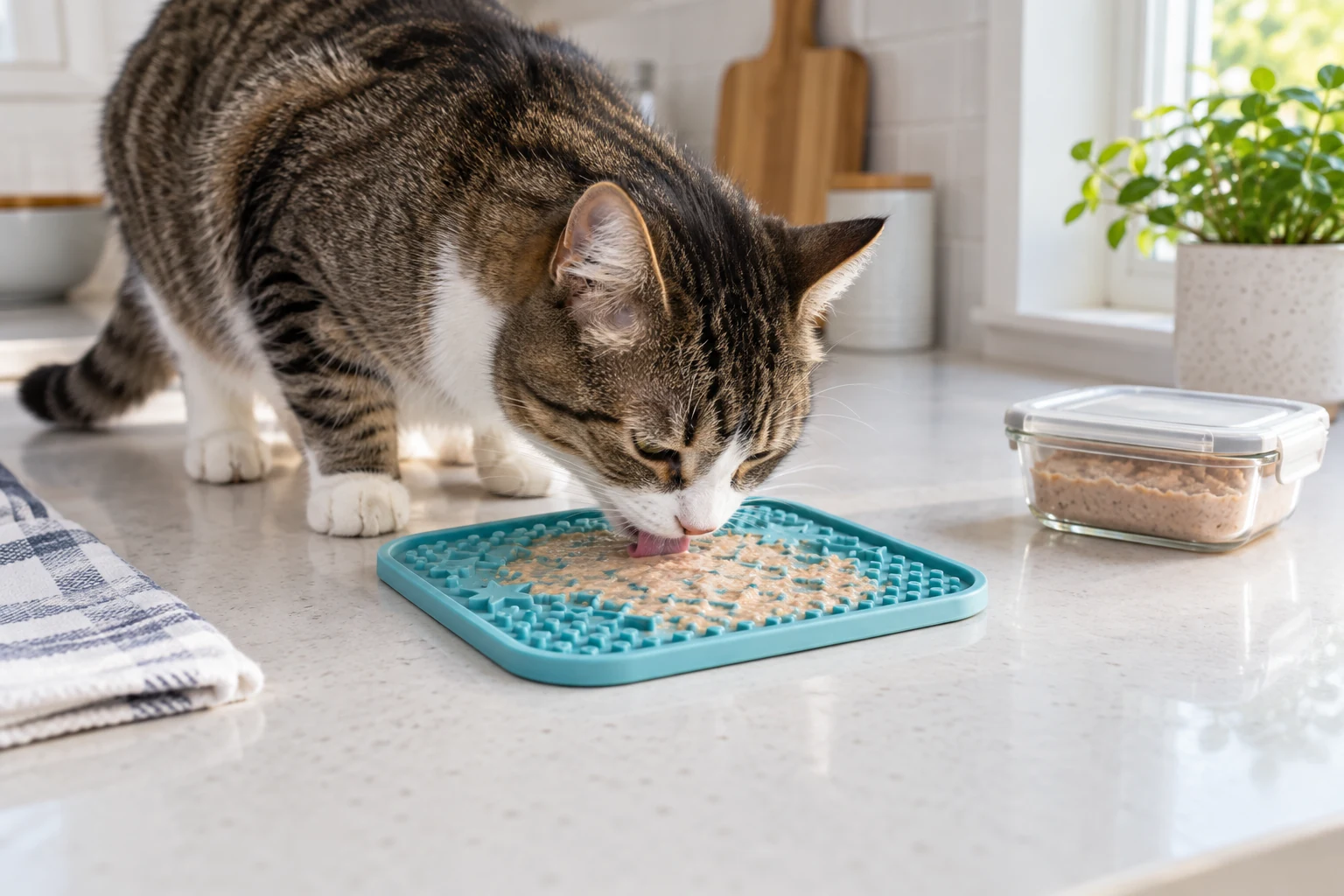
Use short, repeatable play sessions with wand toys, toss toys, climbing furniture, and food puzzles. This type of activity encourages stalking, chasing, jumping, and problem-solving while helping indoor cats stay physically active.
A tall cat tree or other vertical space is especially useful for this breed. Feline guidance specifically recommends vertical territory and window access because they support activity, observation, and emotional comfort in indoor cats.
Medio ambiente y enriquecimiento
Bombays usually do best in an enriched indoor home where they can climb, scratch, rest, ocultar, and observe safely. FelineVMA/AAFP-ISFM guidance links appropriate indoor environments with lower stress and better overall welfare.
Set up the home with vertical spaces, scratching options, resting areas, and a window perch. These are not extras; they are part of meeting a cat’s normal environmental needs.
Because Bombays are highly social, they usually need more daily interaction than a very independent cat. TICA notes that Bombays crave company and may be unhappy if left alone for long periods, so routine play, puzzle feeders, and in some homes a compatible companion animal can help.
Grooming
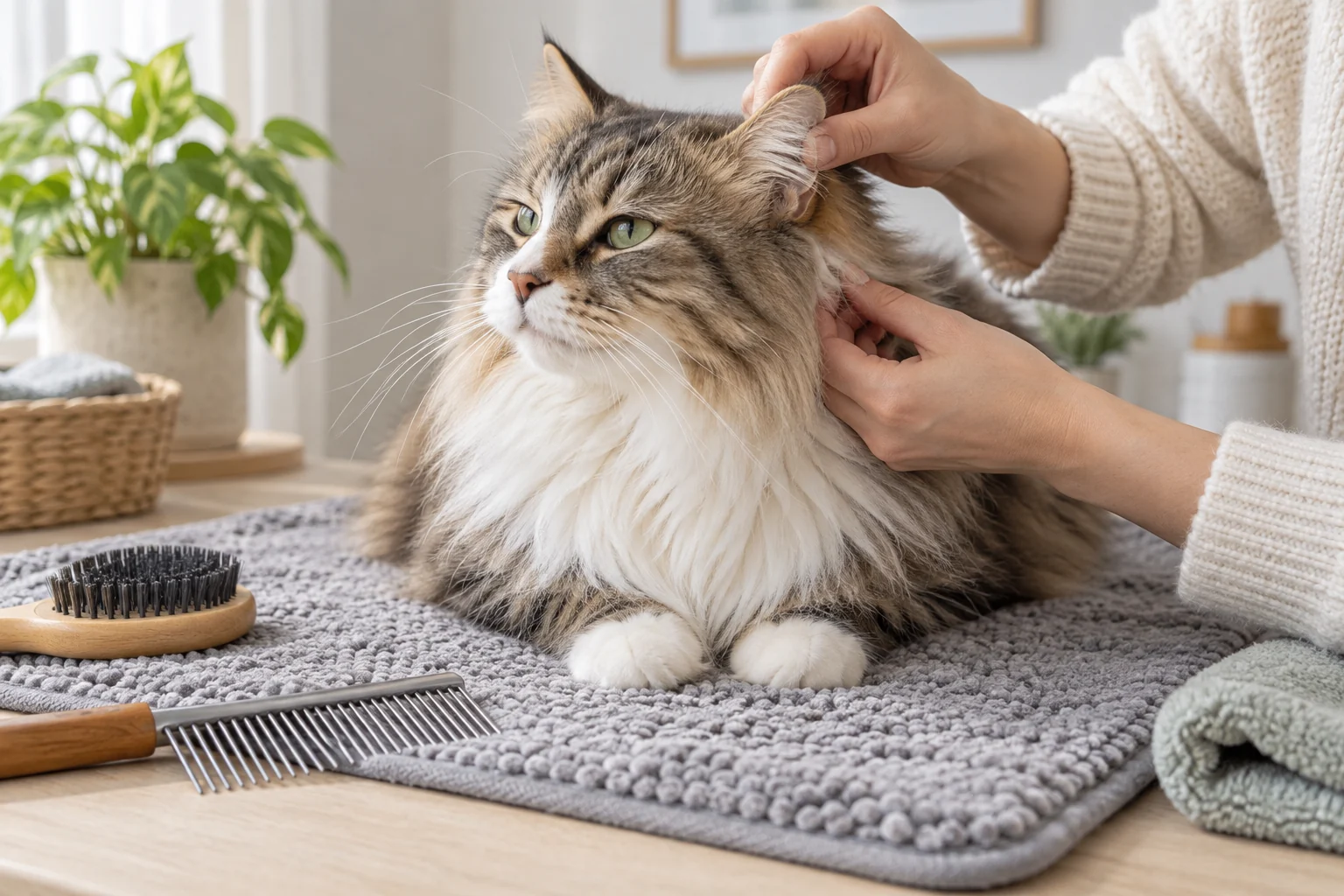
The Bombay’s short coat is low-maintenance. TICA states that the breed’s fine coat sheds little and is usually easy to care for with weekly brushing.
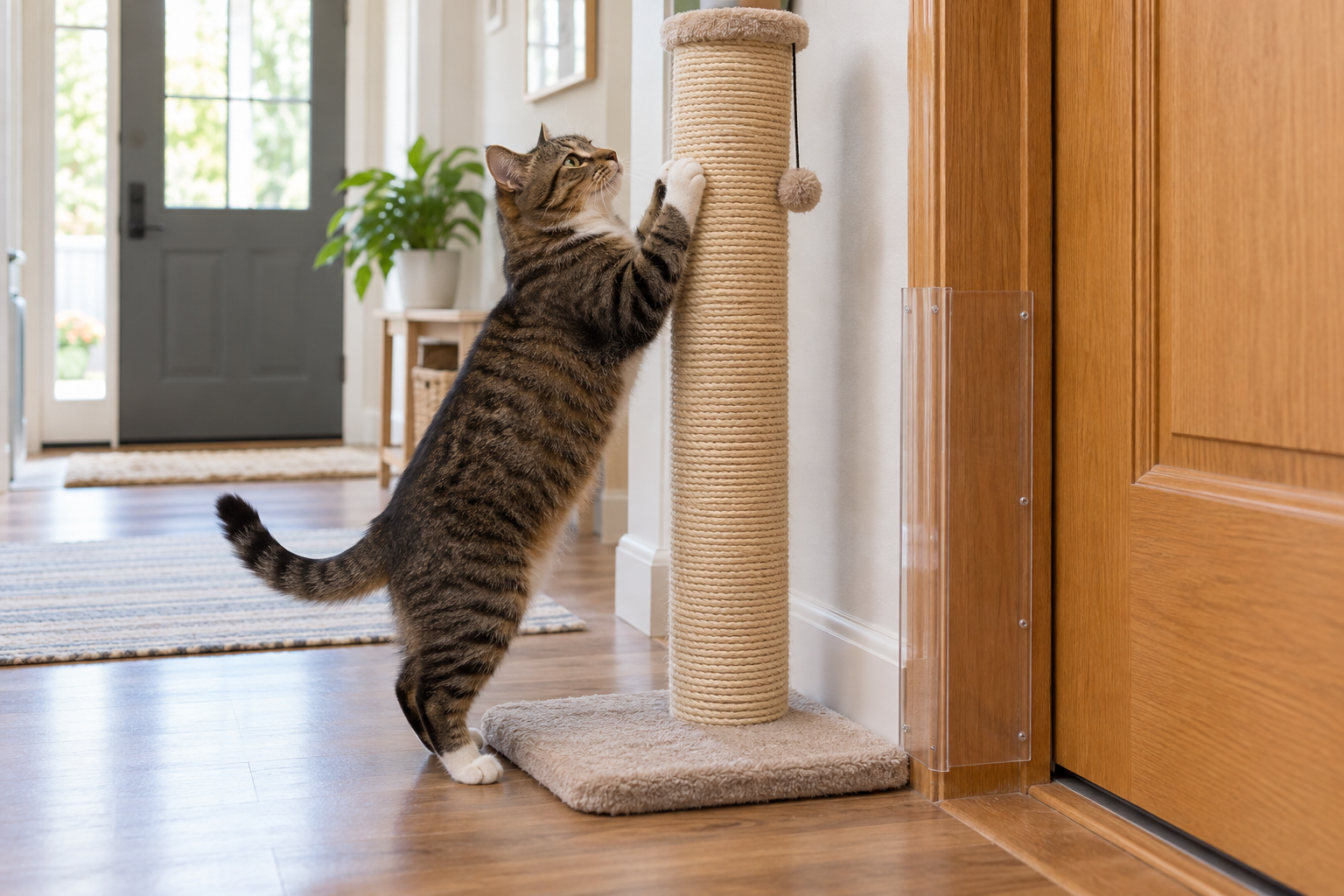
Routine upkeep should still include nail trimming, ear checks, and dental care. TICA recommends keeping the nails trimmed, ears cleaned, and teeth brushed regularly, and providing a sturdy scratching post to support normal scratching behavior.
Dental care should not be treated as optional. Cornell reports that dental disease is common in cats and affects an estimated 50 to 90 percent of cats older than four years, making home brushing and veterinary dental checks important preventive care.
Estimulación mental
Bombays are intelligent and curious, so enrichment should change over time instead of staying static. Feline environmental guidelines note that unmet behavioral needs increase stress and can contribute to unwanted behaviors.
Use puzzle feeders, rotate toys, vary climbing routes, and keep daily interaction predictable. A stimulating environment works best when it gives the cat regular chances to explore, play, and rest in ways that feel natural.
For this breed, human interaction is part of enrichment, not a bonus. TICA describes the Bombay as a cat that wants to stay close to its family, so affection, shared routine, and play are central to good care.

Problemas de salud
| Condición | Síntomas | Consejos preventivos |
|---|---|---|
| Miocardiopatía hipertrófica (MCH) | Engrosamiento del músculo cardíaco. Puede causar letargo, disminución del apetito, dificultad para respirar o mala circulación. | Realice revisiones veterinarias periódicas con auscultación cardíaca y, si se aconseja, ecografías cardíacas. Mantenga a su gato en un peso saludable y vigile la intolerancia al ejercicio. |
| Defecto craneofacial (birmano) | Deformidades faciales en gatitos. Los recién nacidos afectados suelen tener el hocico acortado y malformado, y a menudo no sobreviven. | Obtenga gatitos de criadores acreditados que hagan pruebas de detección del gen. Nunca críe a un portador de Bombay para evitar este defecto mortal. |
| Obesidad | Exceso de peso corporal, movilidad reducida, letargo. (Puede provocar diabetes, artritis y sobrecarga cardíaca). | Alimentar con porciones medidas de una dieta equilibrada. Haga ejercicio diario y controle su peso. Evite la alimentación libre y las golosinas ricas en calorías. |
| Enfermedades dentales | Encías rojas o sangrantes, mal aliento, acumulación de sarro, dificultad para comer. | Cepille con frecuencia los dientes de su gato con pasta dentífrica felina y programe limpiezas profesionales según las recomendaciones. Inspeccione las encías y los dientes durante los cuidados rutinarios. |
| Problemas respiratorios / oculares | Respiración ruidosa o dificultosa, estornudos frecuentes, lagrimeo excesivo o secreción ocular. | Mantener limpios los ojos y la cara. Mantenga una buena calidad del aire (sin humo ni polvo). Esté atento a signos de problemas respiratorios; si los nota, consulte a su veterinario para una posible evaluación de las vías respiratorias braquicefálicas o de los senos paranasales. |
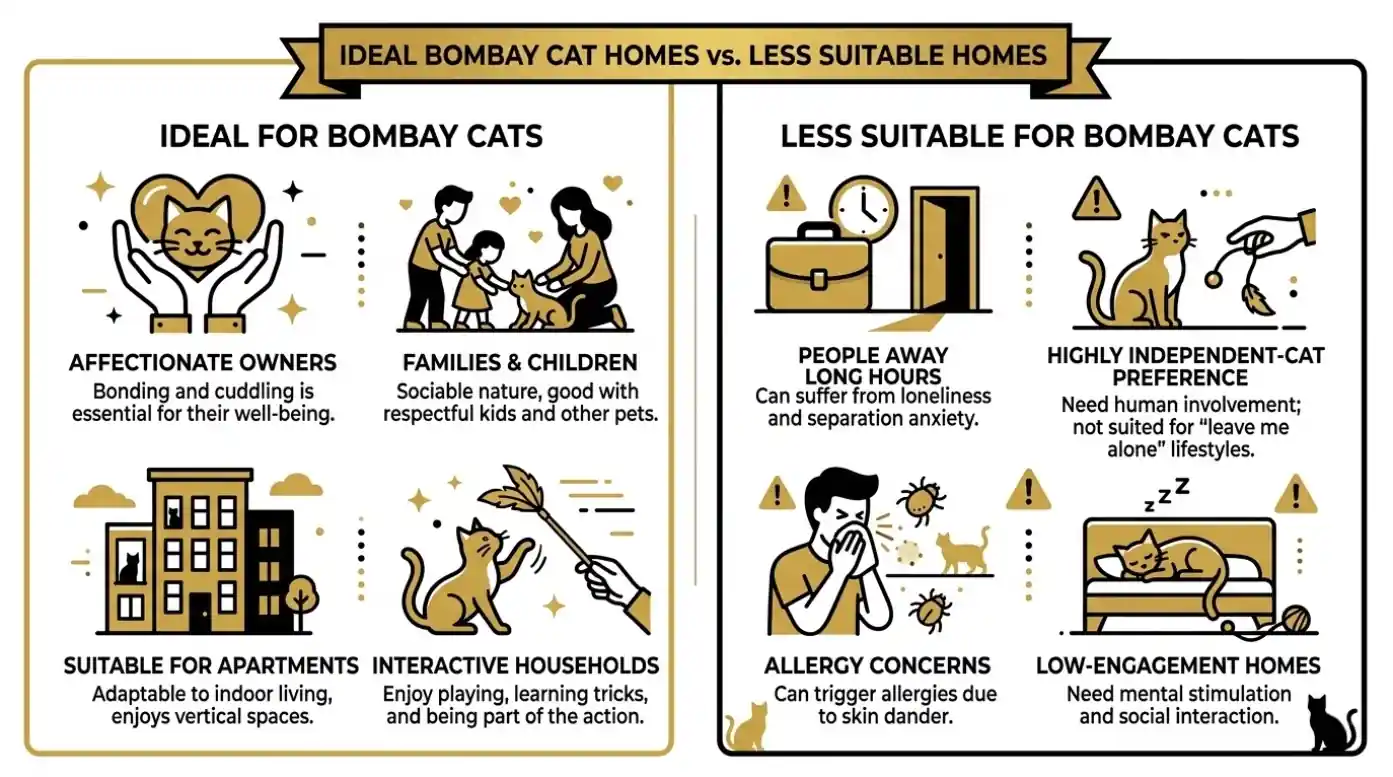
Is a Bombay Cat Right for You?
A Bombay cat is usually a good fit for people who want an affectionate, people-oriented indoor cat and can provide daily interaction, play, and companionship. This breed tends to do best in homes where someone is around often and enjoys an involved, social pet rather than a highly independent one.
A Bombay cat may be a good fit for:
- Families or individuals who can give daily attention and playtime
- Apartment dwellers or households of any size, as long as the cat gets regular enrichment
- Homes with respectful children or gentle, cat-friendly dogs
- First-time or experienced cat owners who want a friendly, interactive companion
- People who enjoy a cat that stays close to them and is often described as “Velcro-like”
A Bombay cat may not be the best fit for:
- People who are away from home for long hours most days
- Owners who want a very independent, low-interaction cat
- Allergy sufferers, since Bombay cats are not hypoallergenic
- Households that cannot commit to routine grooming, dental care, and regular vet visits
- People who cannot provide mental stimulation and companionship, which this breed typically needs
Conclusión
Choose a Bombay if you want a social, affectionate cat that thrives on human company.
Choose another breed if you need a cat that is more independent or better suited to being alone for long periods.
PREGUNTAS FRECUENTES
¿Los gatos Bombay son hipoalergénicos?
No. Bombay cats are not hypoallergenic. Cat allergy is mainly triggered by proteins found in saliva, skin secretions, dander, and urine, so a short coat does not make a Bombay allergy-safe. If you have allergies, spend time with an adult Bombay before adopting and be prepared for allergen control at home.
¿Los gatos de Bombay son habladores?
Bombay cats are social and communicative, but they are better known for staying close to their people than for constant noise. TICA and CFA both describe the breed as affectionate, people-focused, playful, and eager to be involved in family life. Individual cats vary, but most Bombays are best described as interactive rather than excessively vocal.
¿Se puede dejar solo a un Bombay?
Not for long periods on a regular basis. TICA describes the Bombay as a breed that wants to be close to its people and thrives on attention, which makes it a better fit for homes where someone is around for much of the day. If you work long hours, this breed usually needs extra enrichment, play, and companionship.
¿Se llevan bien los gatos Bombay con los niños y otras mascotas?
Usually yes, especially when introductions are handled properly. TICA says Bombays do well with children and other pets, and CFA notes that they can bond quickly with dogs and other animals after a proper introduction. As with any breed, the outcome still depends on the individual cat, respectful handling, and a gradual introduction process.
Quick Facts About Bombay Cats
Bombay cats are known for a jet-black coat and gold-to-copper eyes. Major breed organizations describe them as medium-sized, muscular, and surprisingly heavy for their size, with a glossy coat that creates the breed’s mini-panther look.
The coat is short, close-lying, and relatively easy to maintain. CFA describes Bombay shedding as moderate to minimal, while TICA says the coat sheds little and needs only light routine care.
Bombays are highly people-oriented cats. TICA says they want to be close to their families, while CFA describes them as affectionate lap cats that enjoy snuggling and attention.
Bombays are playful and intelligent without being overwhelming. CFA describes them as neither hyperactive nor placid, and TICA notes that they enjoy play, puzzle toys, and family interaction.
Bombays are generally a long-lived breed. TICA lists life expectancy at 12+ years, and good preventive care matters because the breed is also noted to have risk for hypertrophic cardiomyopathy, the most common heart disease in cats.
Referencias
Van Zyl, Miezan (2015). La enciclopedia del gato - la guía visual definitiva. Londres: Dorling Kindersley. ISBN 9780241234884. OCLC 1322361804.
"Estándar de raza Bombay TICA" (PDF). Archived from the original (PDF) on 29 September 2023. Retrieved 29 September 2023.
"Estándar de la raza Bombay CFA" (PDF). cfa.org. Asociación de Aficionados a los Gatos. 1997. Archivado (PDF) from the original on 6 November 2024. Retrieved 7 November 2024.
"Bombay". TICA.org. Asociación Internacional Felina (TICA). 13 de agosto de 2018. Archivado from the original on 30 September 2024. Retrieved 7 November 2024.
"Bombay". CFA.org. Asociación de Aficionados a los Gatos. Retrieved 29 September 2023.
Fogle, B.: Enciclopedia del gato. Dorling Kindersley Limited: 2008
"Club de la raza Bombay y gatos asiáticos". www.bombayandasiancatsbreedclub.org. Retrieved 29 September 2023.
"Cómo encontrar el gatito con pedigrí perfecto". CFA.org. Asociación de Aficionados a los Gatos. Recuperado el 25 de marzo de 2024.
"¿Qué son los papeles y los necesito para mi gatito con pedigrí?". Mascotas registradas. Recuperado el 25 de marzo de 2024.
"Historia". Rokstarr Bombay. Retrieved 24 February 2016.
"Análisis de las razas registradas". El Consejo de Gobierno de Cat Fancy. Recuperado el 2 de junio de 2024.
"Comparación de razas - Asia | Congreso Mundial Felino". worldcatcongress.org. Recuperado el 16 de mayo de 2025.
"LOOF - Carreras/annee". bis.loof.asso.fr. Recuperado el 2 de junio de 2024.
Asociación Internacional del Gato (TICA) (28 de agosto de 2013). "Reunión anual del Consejo de Administración de 2013" (PDF). Bellevue, Washington, EE.UU.. p. 156.
"La base de datos de Bombay". PawPeds.com. 2 de junio de 2024. Recuperado el 2 de junio de 2024.
"Perfil de la raza de gato Bombay". pet-adoption-guide.com. Archived from the original on 16 February 2013. Retrieved 12 January 2013.
"¿Cómo es Bombay?". bombaykittens.com. Recuperado el 16 de febrero de 2023.
"Razas de gatos - El gato Bombay - Gatos, caos y confusión". cats-chaos-and-confusion.com. Retrieved 4 January 2017.[enlace muerto permanente]
"Gatos y gatitos de Bombay". Petfinder. Archivado del original el 19 de septiembre de 2024. Recuperado el 7 de noviembre de 2024.
Adams, Charlene Tuttle (1995). La belleza de los gatos. World Publications, Incorporated. ISBN 978-1-57215-086-7. Retrieved 5 April 2023.
 EN
EN DE
DE ES
ES PT
PT