
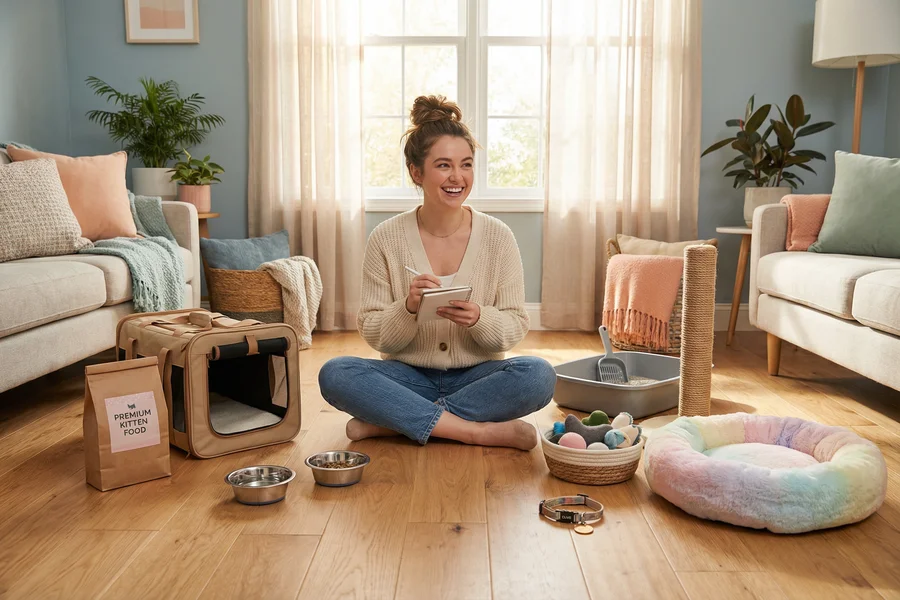
Traer un nuevo gato a casa es una de las experiencias más emocionantes que puedes vivir. Pero, en medio de la alegría de elegirle un nombre e imaginar todos los mimos, es muy fácil pasar por alto los detalles prácticos. Lo último que quieres es traer a tu nuevo amigo felino a casa y darte cuenta a las 9:00 de la noche de que te has olvidado de comprar una pala para la arena o el tipo adecuado de comedero.
Disponer de un completo Lista de cosas que hay que comprar para un gato nuevo es el secreto para una transición sin estrés. Si lo preparas todo con antelación, podrás centrarte por completo en hacer que tu gato se sienta seguro y querido durante esos primeros días tan importantes. Esta guía completa te explicará exactamente qué comprar antes de traer a tu gato a casa, diferenciando entre lo imprescindible para el primer día y los extras que pueden ser un buen complemento.
Índice
Antes de ir de compras: la mentalidad de la “habitación segura”
Antes de empezar a añadir artículos a tu carrito de la compra, es importante que comprendas cómo vivirá tu gato su nuevo entorno. Los gatos son animales muy territoriales, y mudarse a una nueva casa les resulta muy abrumador.
Los veterinarios y los especialistas en comportamiento animal recomiendan encarecidamente habilitar una “habitación segura” para los primeros días de tu nuevo gato. Debe ser un espacio tranquilo y cerrado —como una habitación libre o un cuarto de baño amplio— donde tu gato pueda relajarse sin sentirse abrumado por las imágenes, los sonidos y los olores de toda la casa. Cuando compres los productos necesarios en tu Lista de verificación para quienes tienen un gato por primera vez, básicamente estás comprando para amueblar primero esta habitación de seguridad.
Nota del veterinario: “Un error habitual que cometen los nuevos dueños es dejar que el gato campe a sus anchas por toda la casa desde el primer día. Un territorio más pequeño y seguro (la habitación segura) reduce considerablemente la ansiedad y evita que el gato...» ocultar ”en lugares de difícil acceso, como debajo del sofá o detrás de la nevera». — Dra. Sarah Mitchell, licenciada en Medicina Veterinaria
Si no sabes cómo preparar tu casa, nuestro Guía para propietarios noveles: cómo preparar tu hogar para que sea a prueba de gatos es un recurso excelente que conviene leer antes de que llegue tu gato. Abarca todo, desde cómo fijar los cables eléctricos sueltos hasta cómo retirar las plantas de interior tóxicas.
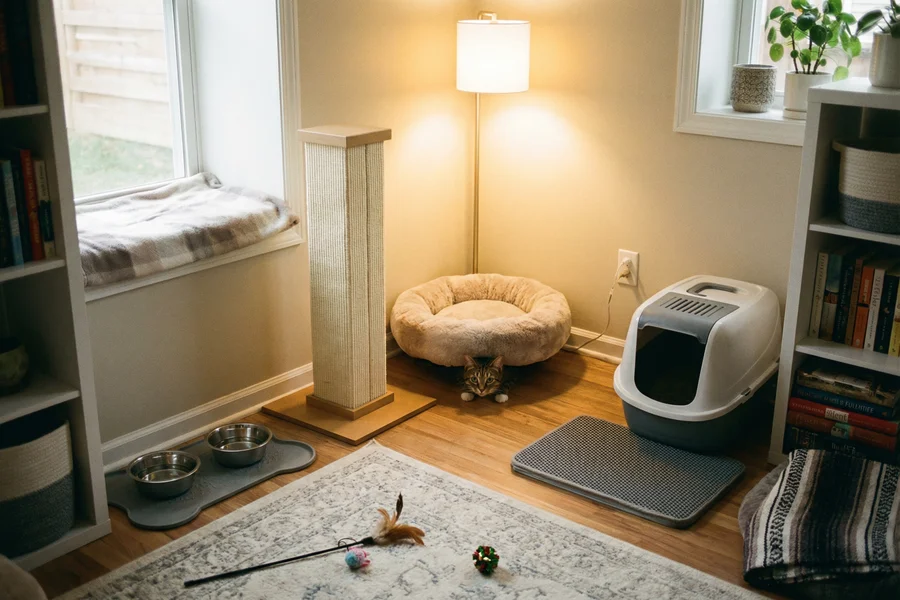
Gatito frente a gato adulto: ¿difieren los productos necesarios?
Si te estás preguntando “¿qué necesito para mi nuevo gato?”, la respuesta varía ligeramente en función de su edad. Los gatitos no son simplemente gatos adultos en miniatura; tienen necesidades específicas en cuanto a su desarrollo y seguridad. Antes de pasar a la lista de verificación principal, aquí tienes una breve comparación de cómo debes adaptar tu lista de la compra en función de la etapa de vida de tu nueva mascota.
| Categoría de suministro | Para un gato adulto | Para un gatito (menor de 6 meses) |
|---|---|---|
| Comida para gatos | Fórmula de mantenimiento para adultos (comida húmeda y seca). | Fórmula para gatitos con alto contenido calórico (fundamental para el crecimiento). |
| Tipo de lecho | Arena aglomerante o arena natural. | Solo arena que no forme grumos. Los gatitos pueden come arena para gatos; los tipos aglomerantes pueden provocar obstrucciones intestinales mortales. |
| Bandeja sanitaria | Caja grande y de paredes altas (1,5 veces la longitud del gato). | Bandeja poco profunda con bordes bajos, ideal para las piernas más pequeñas. |
| Frecuencia de alimentación | 2 comidas al día. | De 3 a 4 comidas ligeras al día (estómagos más pequeños). |
| Extras especiales | Rascador, juguetes básicos. | Almohadilla térmica apta para mascotas, barreras de seguridad para bebés para bloquear el acceso a las escaleras, leche de fórmula para gatitos (si son muy pequeños). |
Lo imprescindible: material imprescindible antes del primer día
En lo que respecta a Lo imprescindible para los nuevos dueños de gatos, estos son los elementos que debes tener preparados y listos para usar antes de que tu gato ponga las patas en tu casa.
1. Un transportín resistente para gatos
No es posible llevar a un gato a casa de forma segura sin un transportín. Aunque los refugios a veces proporcionan transportines de cartón, un transportín de plástico rígido y resistente o uno blando bien ventilado es una inversión mucho mejor. Proporciona un entorno seguro para el trayecto en coche hasta casa y será necesario para todas las futuras visitas al veterinario.
2. La comida adecuada para gatos
Los cambios bruscos en la dieta pueden provocar graves trastornos gastrointestinales en los gatos, lo que da lugar a diarrea y estrés. La regla más importante a la hora de alimentar a un gato nuevo es preguntar al refugio, a la protectora o al criador exactamente qué marca y sabor de comida está consumiendo el gato en ese momento. Debes comprar exactamente ese mismo pienso durante sus primeras semanas en casa. Si más adelante deseas cambiarlo a una dieta de mayor calidad, debes hacerlo de forma gradual a lo largo de 7 a 10 días. Para obtener orientación más detallada, consulta nuestra Guía para la alimentación de gatos.
3. Comederos y bebederos (¡cuidado con los bigotes!)
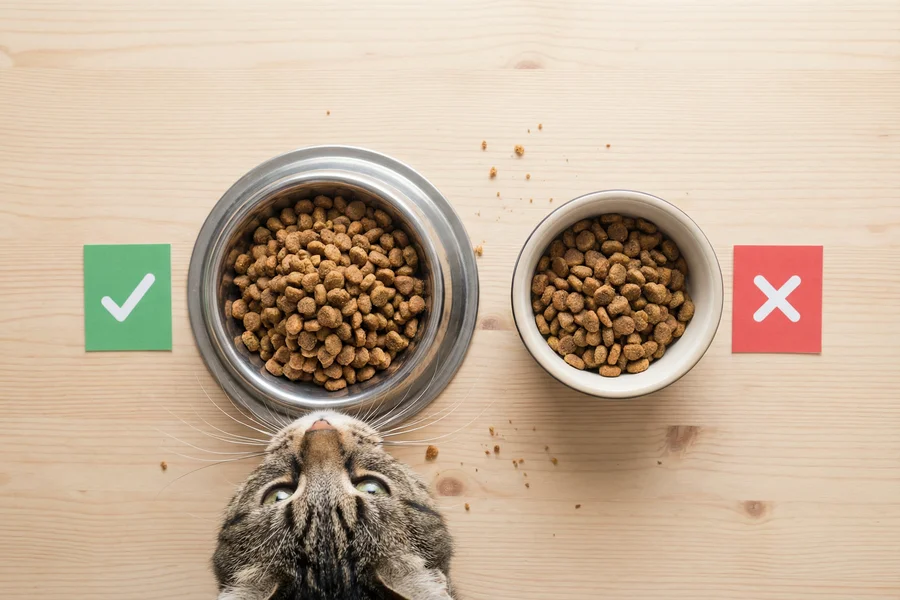
No todos los comederos para mascotas son iguales. El material y la forma del comedero son fundamentales para la salud y el bienestar de tu gato.
| Material del cuenco | Higiene y seguridad | Durabilidad | Riesgo de fatiga de las barbas | ¿Lo recomiendas? |
|---|---|---|---|---|
| Acero inoxidable | Excelente. No poroso, resistente a las bacterias. | Muy alta. Irrompible. | Bajo (si es ancho y poco profundo). | Sí (La mejor en general) |
| Cerámica | Bien. Deben estar libres de plomo y sin astillas. | Medio. Se puede astillar o romper. | Bajo (si es ancho y poco profundo). | Sí |
| Plástico | De mala calidad. Se raya con facilidad y alberga bacterias que provocan acné. | Alto. Irrompible. | Alto (a menudo profundo). | No |
Los gatos tienen bigotes muy sensibles repletos de terminaciones nerviosas. Cuando comen en cuencos profundos y estrechos, sus bigotes rozan constantemente contra las paredes, lo que les provoca una situación de estrés conocida como “fatiga de los bigotes”. Elige siempre cuencos anchos y poco profundos o platos llanos para darles de comer.
4. Bandeja sanitaria y arena aglomerante sin perfume
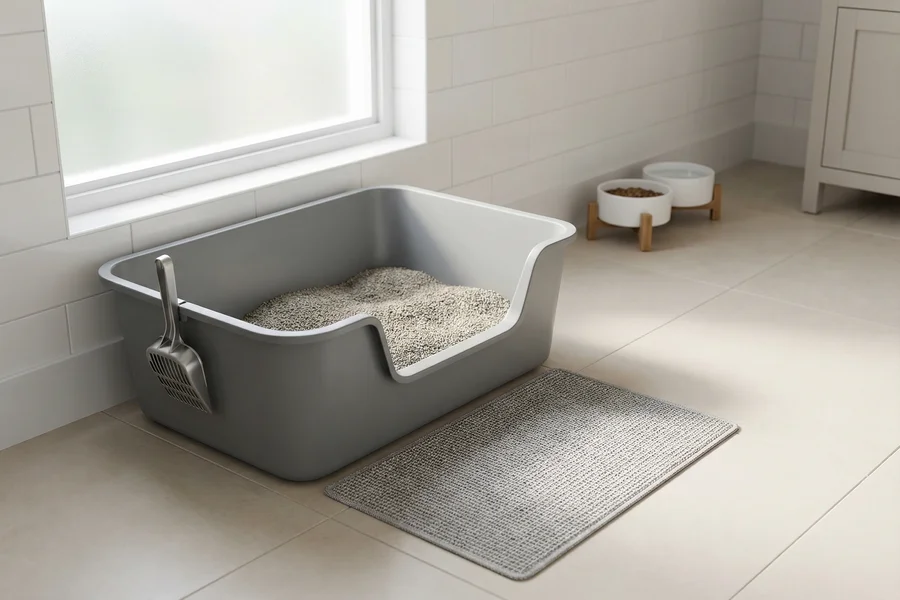
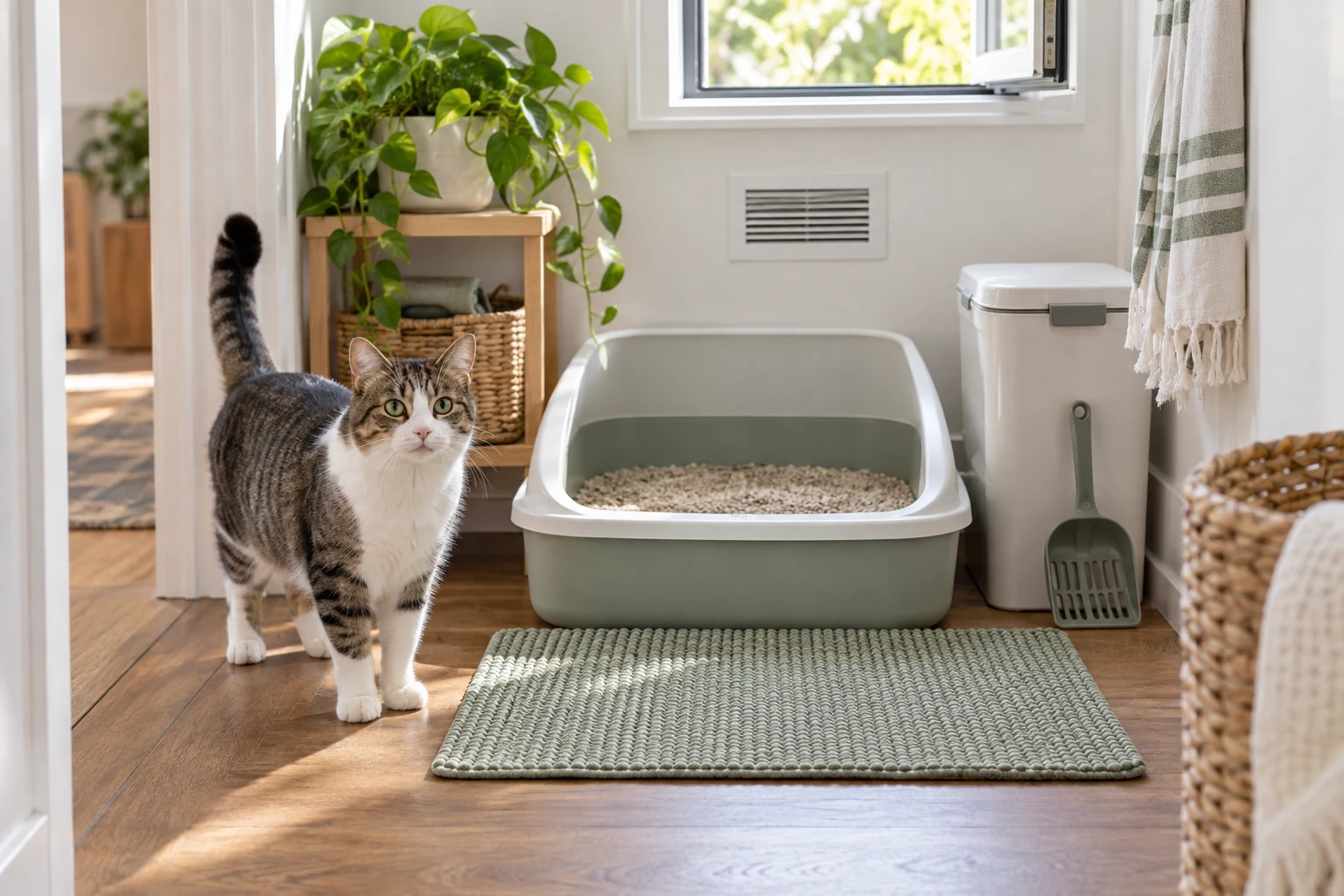
Una correcta disposición de la bandeja sanitaria es fundamental para evitar accidentes al hacer sus necesidades. La regla de oro para calcular el tamaño de la bandeja es que esta debe medir, como mínimo, 1,5 veces la longitud del gato, desde la punta de la nariz hasta la base de la cola. Esto le proporciona espacio suficiente para darse la vuelta y escarbar con comodidad.
Empieza con una arena aglomerante de arcilla sin perfume y que genere poco polvo (para gatos adultos), ya que es lo que la mayoría de los gatos prefieren y a lo que están acostumbrados.
| Tipo de lecho | Ideal para | Pros | Contras | ¿Es seguro para los gatitos? |
|---|---|---|---|---|
| Arcilla aglomerante | Gatos adultos, fácil de recoger. | Excelente control de olores, fácil de limpiar. | Polvoriento, pesado, poco ecológico. | No (Riesgo de obstrucción) |
| Arcilla que no forma grumos | Gatitos, compradores con un presupuesto ajustado. | Muy barato y seguro en caso de ingestión. | Es más difícil de limpiar y hay que cambiarlo por completo con frecuencia. | Sí |
| Gel de sílice (cristales) | Requiere poco mantenimiento, alergias al polvo. | Absorbe de maravilla y genera muy poco polvo. | Es caro, y a algunos gatos no les gusta la textura. | Sí |
| Biodegradable (pino/papel) | Propietarios con conciencia ecológica. | Se puede tirar por el inodoro (en algunos casos), sostenible. | Menor capacidad de aglomeración, olor natural característico. | Sí |
No olvides comprar una pala de metal resistente para la arena y una alfombrilla que se coloque fuera de la caja para recoger los gránulos que se salgan.
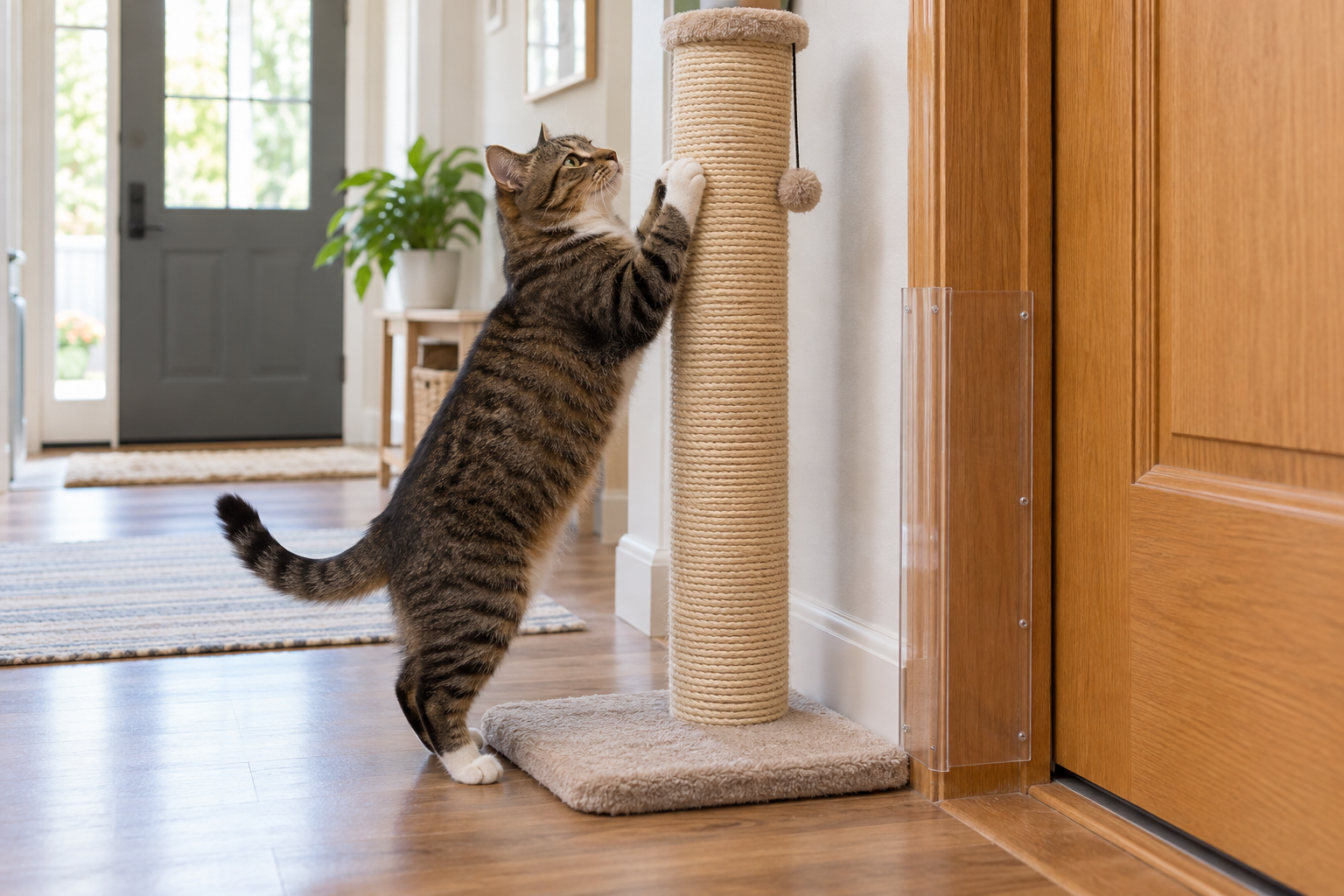
5. Un rascador alto y resistente
Rascarse es un comportamiento natural y necesario para los gatos. Les ayuda a desprenderse de las capas externas muertas de sus garras, a estirar los músculos y a marcar su territorio. Si no les proporcionas un lugar adecuado para rascarse, tu sofá se convertirá en la opción predeterminada. Busca un rascador forrado con tela de sisal o cuerda. Debe ser lo suficientemente alto como para que tu gato pueda estirarse completamente en vertical y tener una base pesada y estable para que no se tambalee ni se caiga cuando lo utilice.
6. Una cama acogedora para gatos o un rincón donde esconderse
Tu nuevo gato necesitará un lugar seguro donde refugiarse y dormir. Aunque muchos gatos acaban durmiendo en tu cama o en el sofá, es fundamental que le proporciones una cama propia en su espacio seguro. Las camas tipo cueva o los iglús con techo son especialmente reconfortantes para los gatos nuevos que se muestran ansiosos, ya que les proporcionan una sensación de seguridad y de intimidad.
7. Collar de seguridad y placa identificativa
Aunque tengas pensado que tu gato se quede siempre en casa, los accidentes ocurren y las puertas pueden quedarse abiertas. Un collar con una placa identificativa clara en la que figure tu número de teléfono es una medida de seguridad fundamental. Debes asegurarte de comprar un collar “de seguridad” o “de liberación rápida”. Estos están diseñados para abrirse de golpe si el collar se engancha en una rama o en un mueble, evitando así que el gato se ahogue.
8. Productos básicos para el aseo y la limpieza
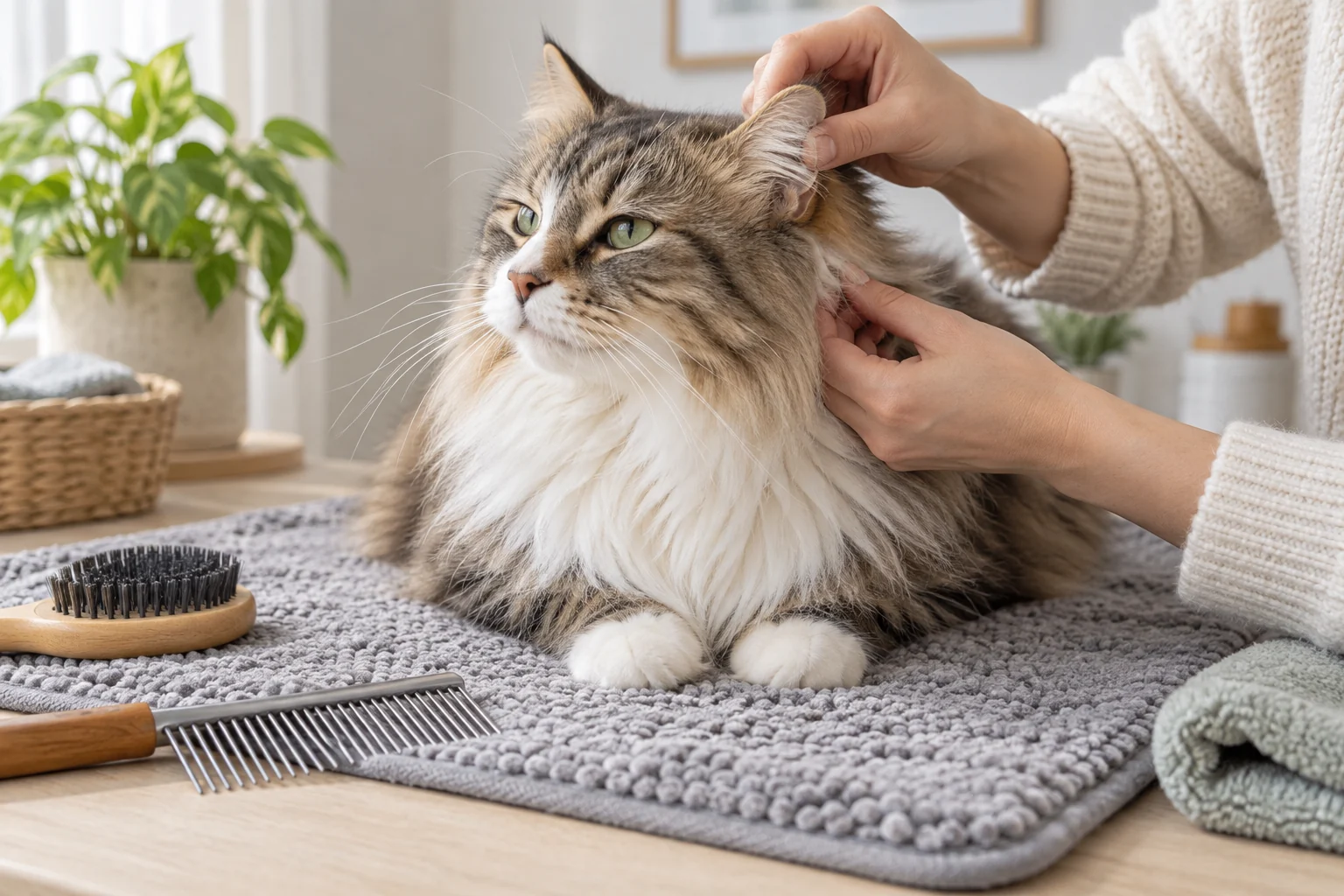
Los accidentes ocurren, sobre todo durante los primeros días, que suelen ser estresantes. Debes tener un limpiador enzimático a mano. Los productos de limpieza domésticos habituales no descomponen el ácido úrico de la orina de gato; solo los limpiadores enzimáticos eliminan el olor de forma permanente, para que el gato no vuelva al mismo lugar. Además, compra un cepillo básico para el aseo (un cepillo alisador para gatos de pelo corto o un peine de púas anchas para razas de pelo largo) y un cortauñas para gatos.
Qué NO comprar (errores habituales de los nuevos propietarios)
Al crear tu Lista de cosas que hay que comprar para un gato nuevo, es igual de importante saber qué productos dejar en las estanterías de la tienda. Evita estos errores habituales:
| Elemento que se debe evitar | Por qué es un error | Qué comprar en su lugar |
|---|---|---|
| Arena perfumada para gatos | Los gatos tienen un olfato muy sensible; los perfumes florales pueden hacer que dejen de usar la caja de arena. | Arena aglomerante sin perfume o arena natural. |
| Bandesas con cubierta o con capota | Retiene los olores en su interior (como un baño portátil) y hace que los gatos se sientan acorralados. | Cajas de arena grandes y abiertas por arriba. |
| Cuencos de plástico para alimentos | Se raya con facilidad, acumula bacterias y provoca acné felino. | Cuencos poco profundos de acero inoxidable o cerámica. |
| Punteros láser (como único juguete) | Esto provoca frustración porque el gato nunca consigue “atrapar” a la presa. | Juguetes tipo varita con plumas o juguetes para dar patadas. |
| Collares antipulgas | A menudo son ineficaces y pueden contener sustancias químicas agresivas que irritan la piel. | Productos preventivos contra las pulgas, de uso tópico u oral, recetados por el veterinario. |
Mejoras recomendables (para más adelante)
Una vez que tu gato se haya adaptado y conozcas mejor su personalidad y sus preferencias, puedes empezar a invertir en estas fantásticas mejoras. No son estrictamente necesarias desde el primer día, pero mejoran enormemente la calidad de vida de tu gato.
| Mejorar objeto | Por qué vale la pena a la larga |
|---|---|
| Fuente de agua para mascotas | Los gatos tienen por naturaleza poca sed. El agua corriente les anima a beber, lo que ayuda a prevenir problemas del tracto urinario. |
| Árbol para gatos alto | Los gatos se sienten más seguros cuando están en las alturas. Un árbol de varios niveles cerca de una ventana supone un excelente enriquecimiento ambiental. |
| Alimentador automático | Garantiza que las comidas se sirvan exactamente a la hora prevista, lo que reduce la ansiedad y los comportamientos de mendicidad a primera hora de la mañana. |
| Bandeja sanitaria autolimpiante | Reduce drásticamente la tarea diaria de limpiar la arena y garantiza que el lecho esté siempre perfectamente limpio. |
| Seguro de animales de compañía | Si te inscribes durante la primera semana, podrás ahorrarte miles de euros en facturas veterinarias imprevistas a lo largo de la vida de tu gato. |
¿Cuánto costará esto?
La planificación del presupuesto es una parte fundamental de la preparación para la llegada de una nueva mascota. Aunque los costes varían enormemente dependiendo de si se opta por marcas económicas o artículos de lujo, a continuación te ofrecemos una estimación realista de lo que te costará inicialmente artículos nuevos para gatos cuánto costará.
| Artículo de suministro | Rango de costes estimado (USD) |
|---|---|
| Transportín para gatos | $30 – $60 |
| Bandeja sanitaria, pala y alfombrilla | $25 – $50 |
| Arena aglomerante para gatos (primer mes) | $15 – $25 |
| Comederos y bebederos | $15 – $30 |
| Comida para gatos (primer mes) | $30 – $60 |
| Rascador | $25 – $50 |
| Cama para gatos | $20 – $40 |
| Juguetes básicos, cepillos y cortauñas | $20 – $35 |
| Collar de seguridad, placa identificativa y limpiador enzimático | $25 – $40 |
| Coste inicial estimado total | $205 – $390 |
Para obtener una visión más completa del compromiso económico que supone tener un gato, incluyendo los gastos veterinarios y las tasas de adopción, lee nuestro desglose completo en ¿Cuánto cuesta adoptar un gato?.
Preguntas frecuentes
¿Es realmente necesario que los gatos de interior lleven collar y placa de identificación?
Sí. Incluso los dueños más cuidadosos pueden dejar abierta una puerta o una ventana sin darse cuenta, o un gato puede escaparse durante una emergencia, como un incendio. La ASPCA y la Humane Society recomiendan encarecidamente que todos los gatos de interior lleven un collar de seguridad con una placa de identificación y un microchip.
¿Cuántas bandejas sanitarias necesito para un gato?
La norma veterinaria es la “regla n+1”, lo que significa que debes tener una bandeja sanitaria por gato, más una adicional. Si tienes un solo gato, lo ideal es que coloques dos bandejas sanitarias en diferentes lugares tranquilos de tu casa.
¿Debería comprar comida húmeda o seca?
Lo ideal es que les des una combinación de ambos, o principalmente comida húmeda. La comida húmeda aporta la hidratación esencial de la que a menudo carecen los gatos. Puedes obtener más información sobre cómo racionar la comida en nuestra guía sobre ¿Con qué frecuencia se debe dar comida húmeda al gato?.
¿Qué es lo más importante que hay que comprar primero?
Además de lo imprescindible, como la comida y la bandeja sanitaria, un transportín resistente y un rascador alto de buena calidad son los dos artículos que no puedes dejar de comprar.
Reflexiones finales
Preparar tu hogar para la llegada de un nuevo gato no tiene por qué ser estresante. Si sigues estos Lista de cosas que hay que comprar para un gato nuevo, tendrás todo lo necesario para crear un ambiente acogedor y seguro desde el momento en que lleguen.
Recuerda que lo más importante que puedes ofrecer a tu nuevo gato es paciencia y cariño. Es probable que esté asustado y se esconda durante los primeros días, y eso es totalmente normal. Dale tiempo para que se adapte a su propio ritmo. Si quieres saber con detalle qué te espera a continuación, no te pierdas nuestra guía sobre Los primeros 30 días con tu nuevo gato.
Referencias
Asociación Americana de Veterinarios Especializados en Felinos. “Traer un nuevo gato a casa.”.”
Editorial de PetMD. “Lista de cosas que hay que tener en cuenta al adoptar un gatito: material necesario, preparación del hogar y visitas al veterinario.”.”
ASPCA. “Consejos sobre la arena para gatos.”.”
Best Friends Animal Society. “Lista de verificación para un nuevo gato: cómo darle la bienvenida a tu nuevo amigo felino.”.”
Centro de Salud Felina de Cornell. “Acné felino.”.”
Clínica Veterinaria de Boston. “Fatiga de los bigotes en los gatos.”.”
La Sociedad Protectora de Animales de Estados Unidos. “Gatos: arañazos destructivos.”.”
American Humane. “¿Mi gato de interior necesita una placa de identificación?“
Litter-Robot. “Lista de verificación para nuevos propietarios de gatos: artículos básicos para gatos y lista de verificación para nuevos gatitos.”.”
Sociedad Protectora de Animales de Atlanta. “Artículos imprescindibles para los nuevos dueños de gatos.”.”
 EN
EN DE
DE ES
ES PT
PT