
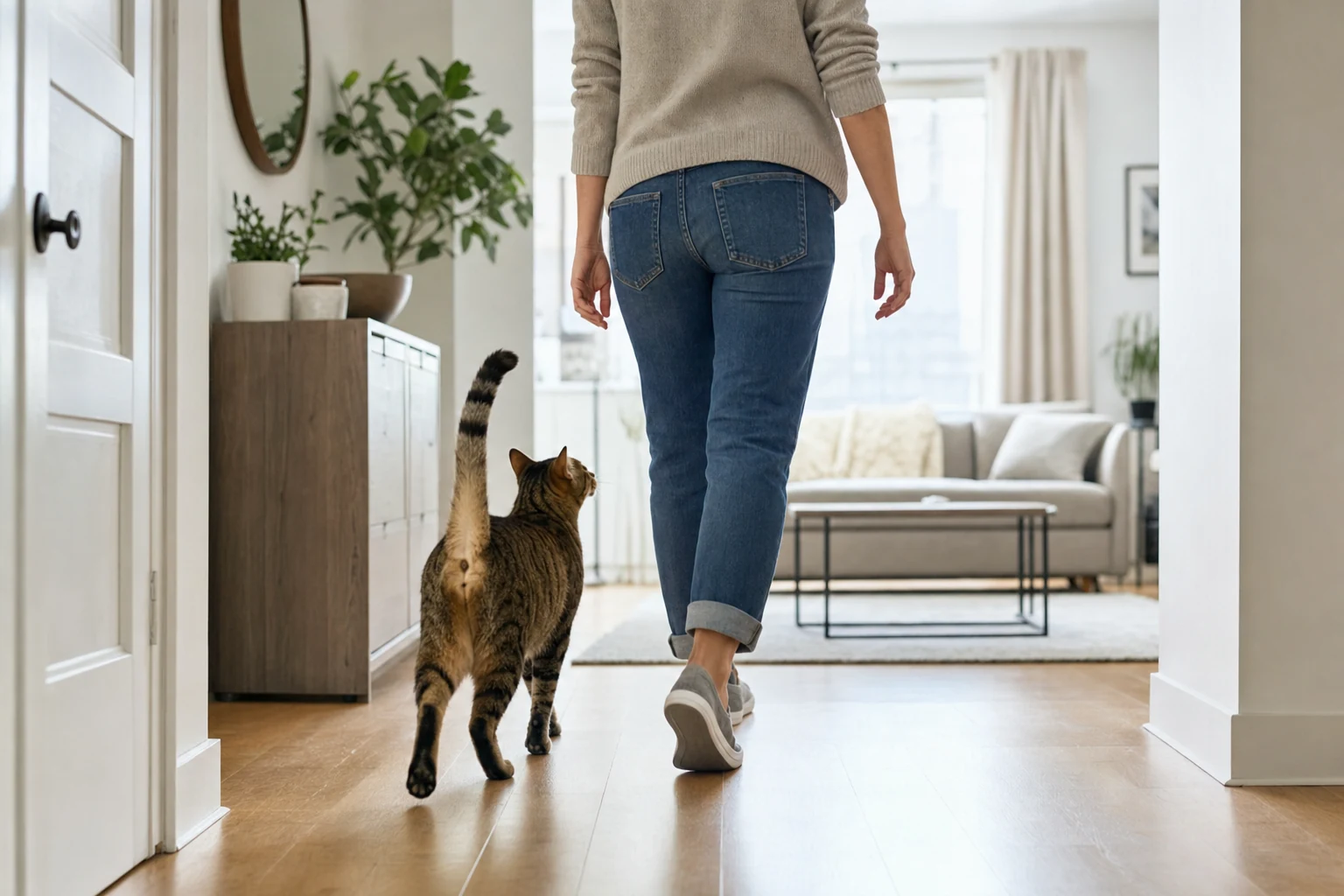
Your cat may follow you everywhere because you are a trusted source of safety, attention, alimentos, play, and interesting activity. In most cases, a relaxed cat trailing you from room to room is showing normal social attachment or curiosity, not anxiety.
The useful question is not simply, “Does my cat follow me?” It is, “What does my cat look and sound like while following me, and what happens when I leave?” A loose body, upright tail, normal appetite, and ability to settle independently point toward healthy connection. Sudden clinginess, distress during absence, or other behavior changes deserve closer attention.
Índice
- Why does my cat follow me from room to room?
- Does following mean my cat loves me?
- Is my cat following me because it wants something?
- Could following be a sign of separation-related stress?
- When should sudden clinginess concern me?
- How can I help my cat feel secure without constant following?
- Conclusion: Is following normal or a concern?
- Preguntas frecuentes
- Referencias
Why does my cat follow me from room to room?
Cats follow people for several ordinary reasons: social connection, curiosity, learned routines, access to valued resources, and the simple fact that humans make things happen. You open doors, refresh water, prepare meals, move toys, and create warm places to sit.
Domestic cats can form attachment bonds with human caregivers, and research using a secure-base test found attachment patterns in cats that resemble patterns studied in children and dogs.1 That does not mean every shadowing cat is needy. It means many cats use a familiar person as a dependable point of reference while they explore their environment.
Your cat may also be conducting a quiet inspection. A bathroom door closing, a cupboard opening, or a change in your work routine can be worth investigating. For more context on signals such as tail position, posture, and vocalization, browse our Guías sobre el comportamiento de los gatos.
Common, low-concern reasons include:
- Your cat expects a meal, treat, play session, or door to open.
- You are moving toward a favorite room or resting place.
- Your cat enjoys company but does not necessarily want to be touched.
- Following has been rewarded with attention in the past.
- A kitten or newly adopted cat is learning the household routine.
- Your cat is bored and your movement is the most interesting activity available.
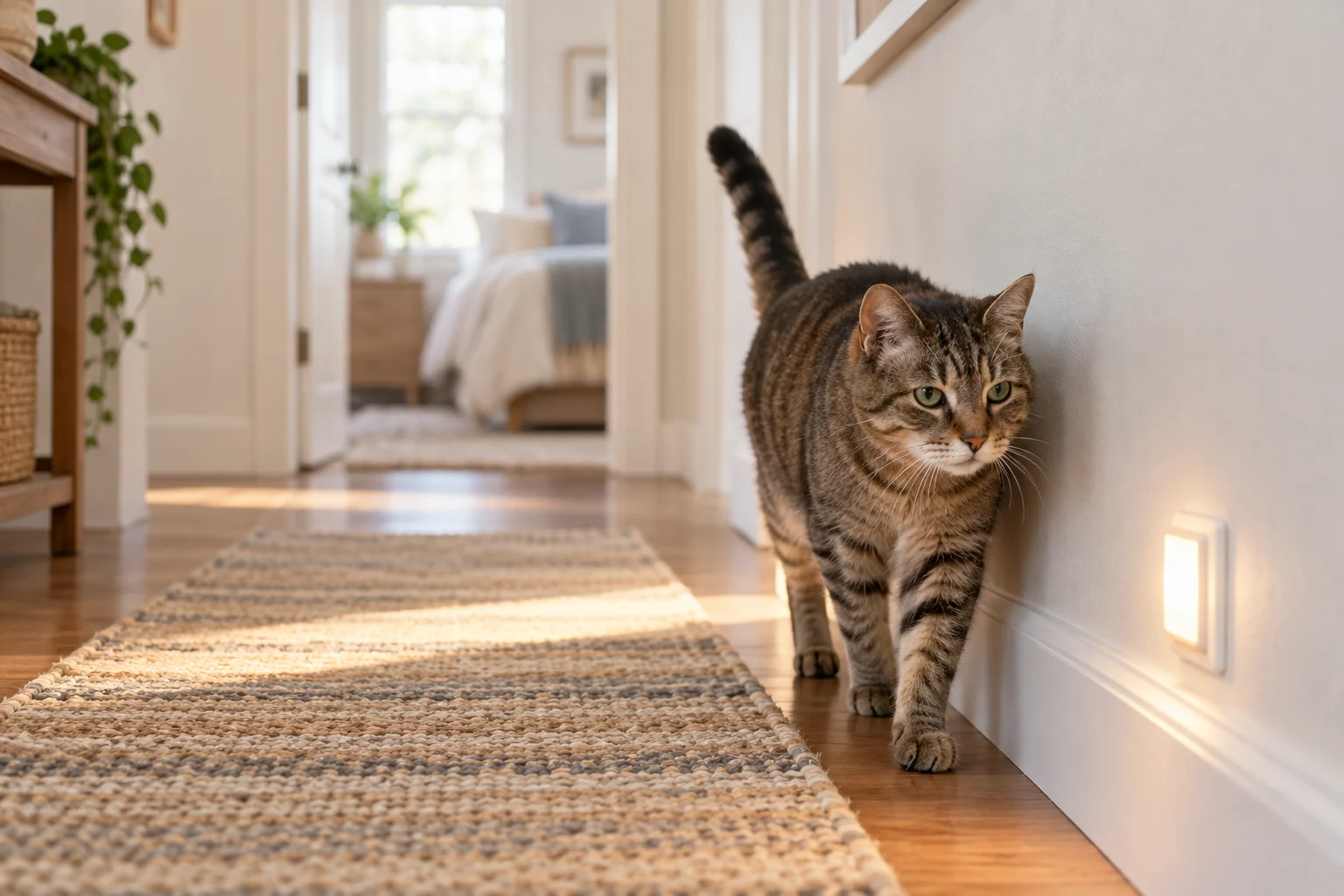
Watch the whole cat. A friendly follower often has a softly curved or upright tail, neutral ears, relaxed muscles, and normal behavior after you stop moving.
Does following mean my cat loves me?
Following can be one expression of affection and trust, especially when it appears alongside relaxed social behaviors. Your cat may greet you with a raised tail, slow blink, rub against you, rest nearby, or choose your room even when food is not involved.
Cats differ in how they show closeness. One cat sleeps on a lap; another stays three feet away and supervises. Some follow but dislike being picked up. Others become more social at certain times of day. Our guide to why some cats become especially cuddly explains how temperament, routine, edad, and context shape affection.
Comfort behaviors may overlap. A cat that follows you and then settles nearby to knead a blanket is likely seeking a comfortable social resting spot. Respect the cat’s choice: connection is healthier when the cat can approach, pause, or leave without being restrained.
Is my cat following me because it wants something?
Possibly. Cats are excellent at learning which human actions predict useful outcomes. If following leads to food, play, petting, or access to a closed room, the behavior is likely to continue.
Use context to identify the likely request:
| When your cat follows | Qué puede significar | Respuesta útil |
|---|---|---|
| Near the usual mealtime | Anticipation or hunger | Keep a consistent feeding schedule; do not add unplanned calories |
| Toward a toy or play area | Invitation to play | Offer a short interactive play session |
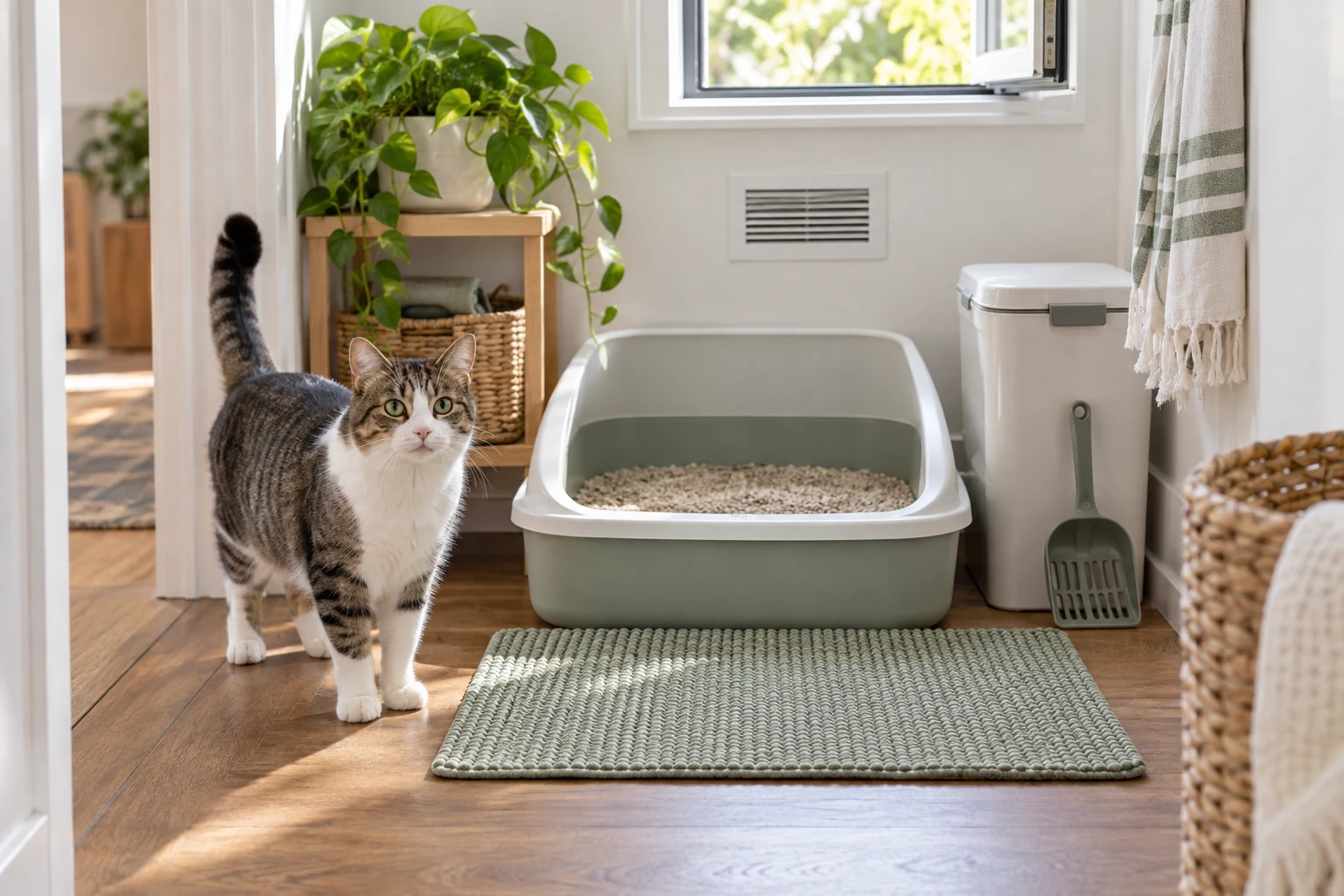
| To the water bowl or litter box | A resource needs attention | Check cleanliness, access, and normal use |
| While vocalizing at a closed door | Curiosity or learned access request | Check safety, then respond consistently |
| During every quiet moment | Boredom or a strong attention habit | Add independent enrichment and reward calm settling |
Avoid assuming that every follow means hunger. Repeated snacks can unintentionally train more demanding following and contribute to peso gain. Instead, provide predictable meals, planned play, and attention at times you can sustain.
Could following be a sign of separation-related stress?
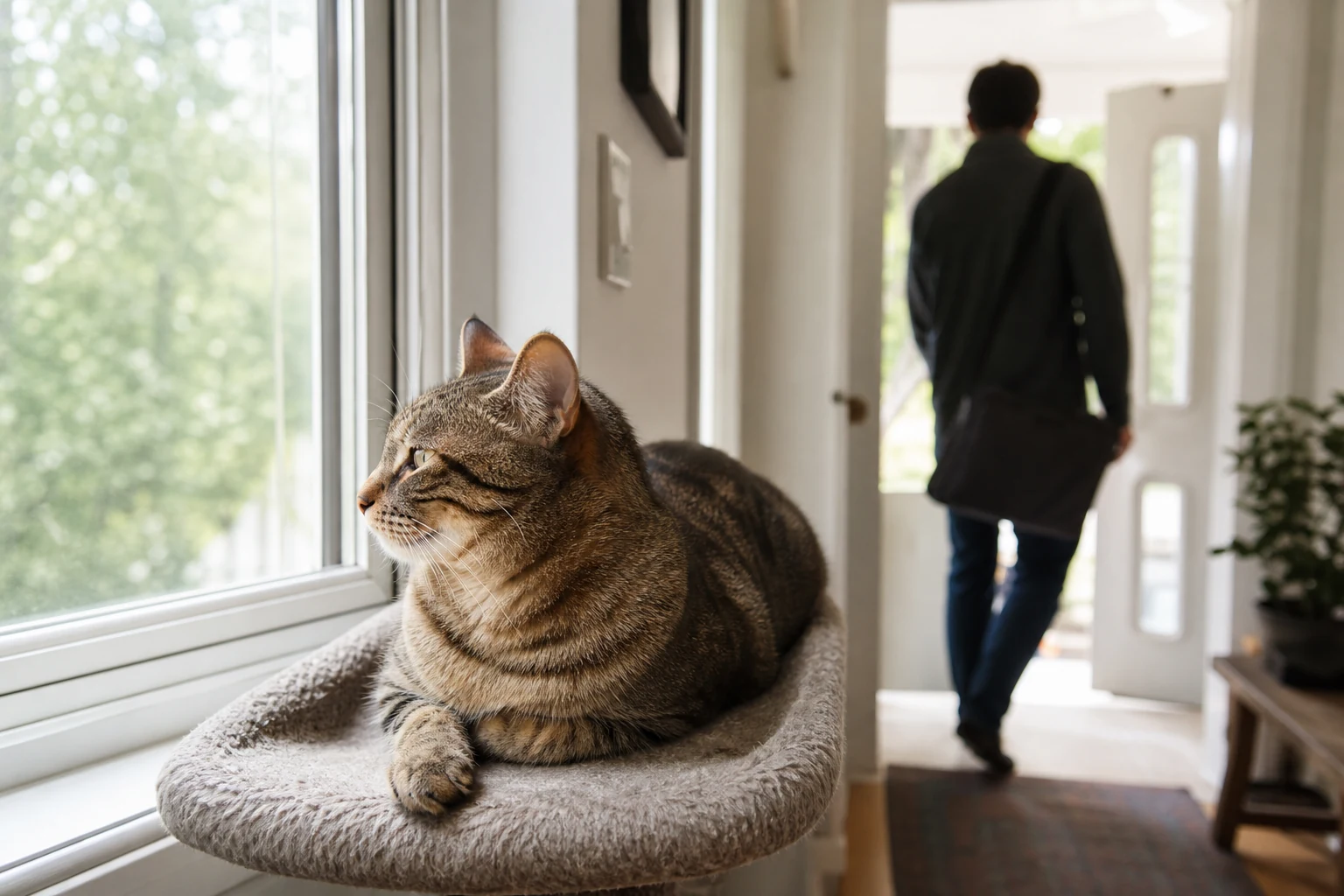
Following alone is not enough to identify separation-related stress. Concern rises when a cat appears unable to settle without one particular person or shows distress specifically during departures and absences.
Possible signs include:
- Persistent vocalizing soon after you leave
- Urinating or defecating outside the litter box mainly during absences
- Destructive scratching focused around exits
- Refusing food when alone but eating after you return
- Excessive grooming, pacing, or agitation linked to departure cues
- Frantic greeting behavior combined with distress before departure
These signs can also have medical or environmental causes. Litter box changes, appetite loss, overgrooming, and vocalization should not be labeled “anxiety” until a veterinarian has considered pain, urinary disease, gastrointestinal problems, cognitive changes, and other health issues. Merck’s overview of feline behavior problems likewise emphasizes evaluating medical contributors and the cat’s environment.4
If you are unsure what happens while you are away, use a home camera for several ordinary departures. Record when behavior begins, how long it lasts, and whether your cat eats, plays, rests, or uses the litter box normally. This gives your veterinarian or a qualified feline behavior professional more useful information than a guess.
When should sudden clinginess concern me?
A sudden change matters more than a cat’s long-standing personality. If an independent cat abruptly starts following you constantly, consider what changed in the cat, home, and daily routine.
Contact a veterinarian promptly if clinginess occurs with:
- Reduced appetite or not eating
- Repeated vomiting or diarrhea
- Straining to urinate, frequent litter box trips, or little to no urine
- Breathing difficulty, collapse, weakness, or sudden disorientation
- New ocultar, aggression, restlessness, or pain-related reactions
- Major changes in thirst, urination, mobility, sleep, or vocalization
Straining without producing urine is an emergency, particularly in male cats. Breathing trouble, collapse, seizures, poisoning exposure, trauma, and rapid decline also require urgent veterinary care.
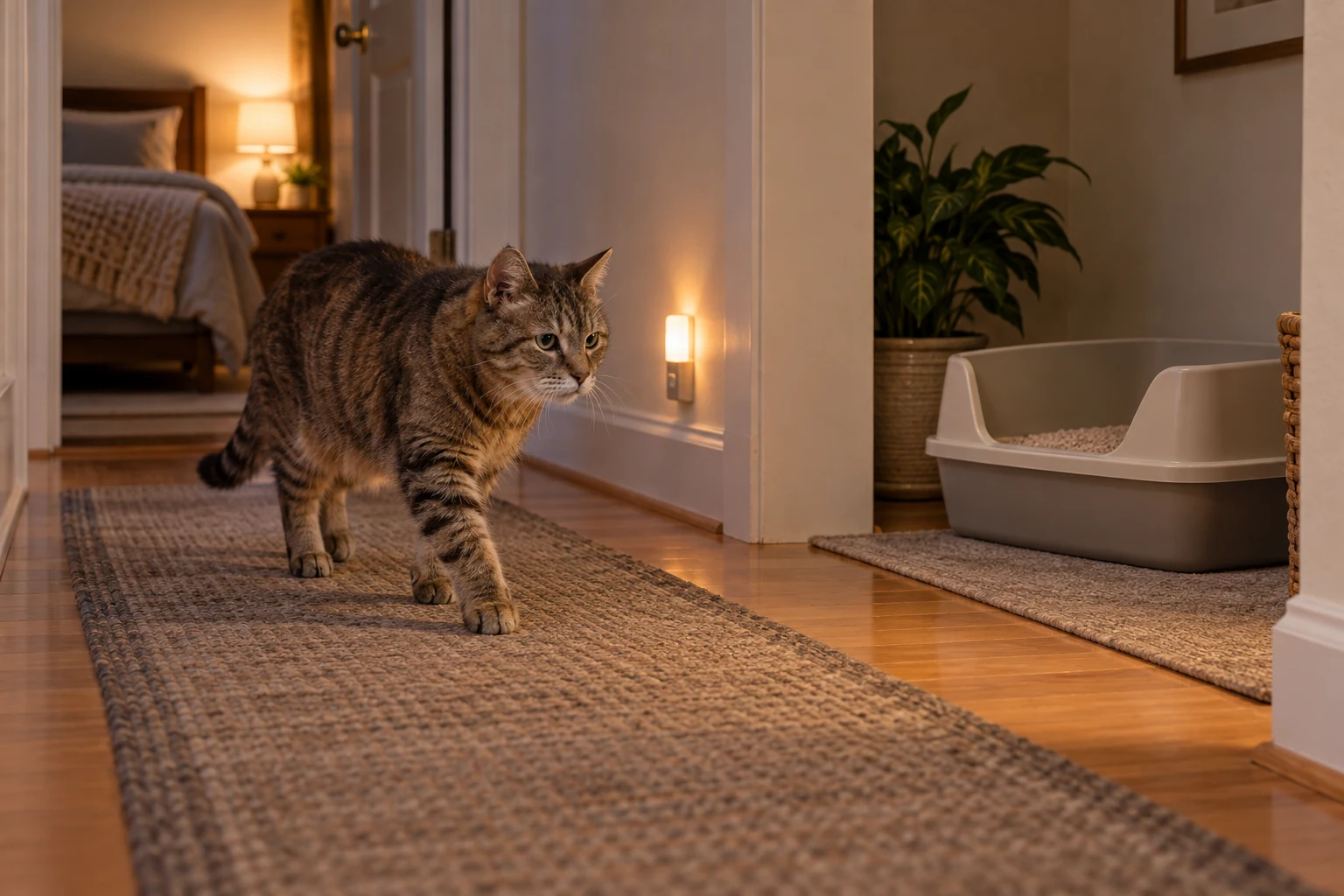
Older cats may seek more reassurance when vision, hearing, mobility, pain, or cognitive function changes. Use the Calculadora de la edad de los gatos for age context, but treat new behavior as information worth discussing with your veterinarian. At the opposite extreme, a stressed cat may withdraw instead; learn por qué se esconden los gatos so you can notice both kinds of change.
How can I help my cat feel secure without constant following?
Build security by giving your cat choice, predictable care, and rewarding things to do independently. Environmental guidelines for cats emphasize safe resting places, separated key resources, opportunities for play and predatory behavior, positive human interaction, and respect for a cat’s sense of smell.2
Start with a practical home audit:
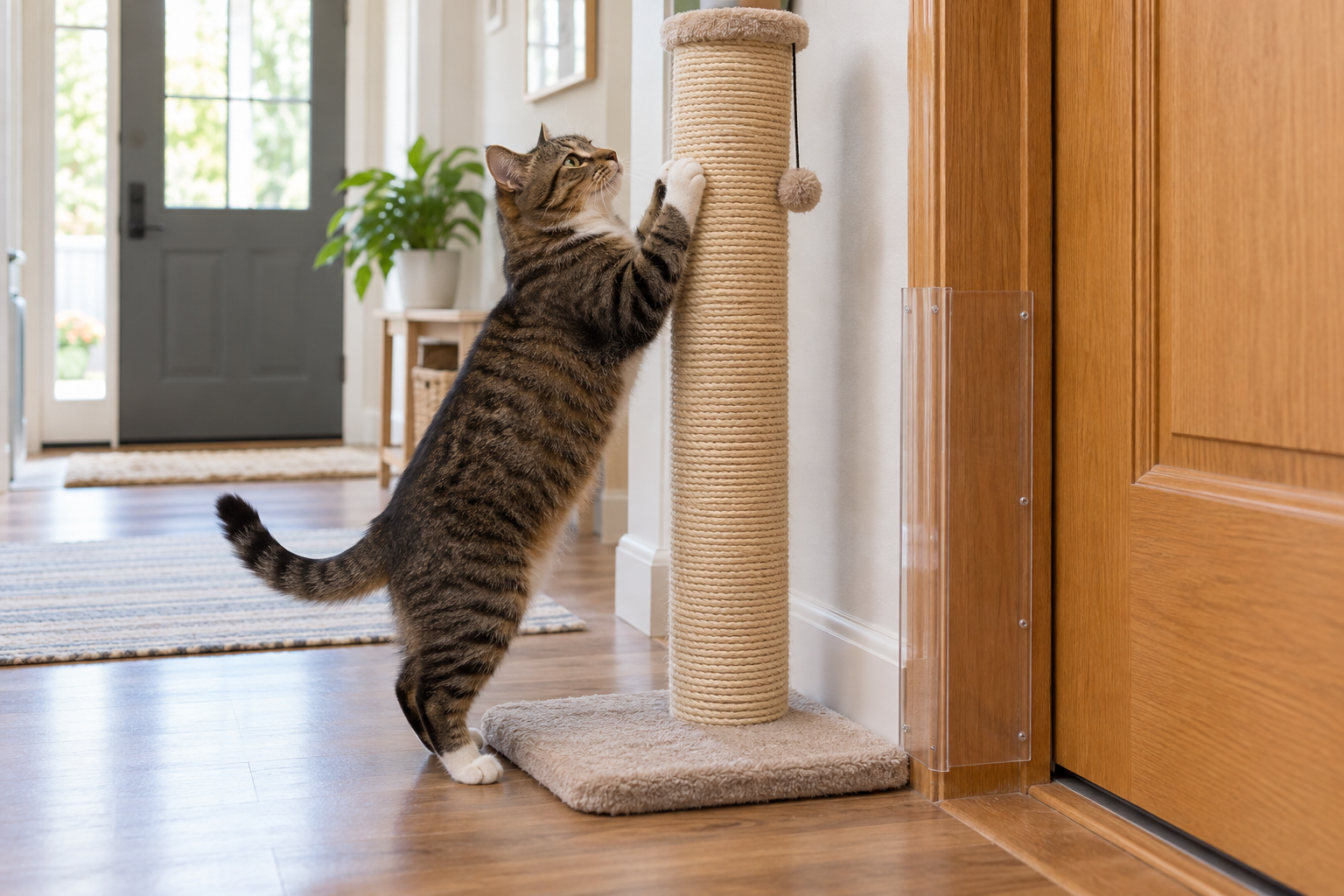
- Create safe resting options. Offer at least one elevated perch and one quiet hiding place where nobody disturbs the cat.
- Separate important resources. Place food, water, litter boxes, scratching surfaces, and resting areas so the cat can use them comfortably.
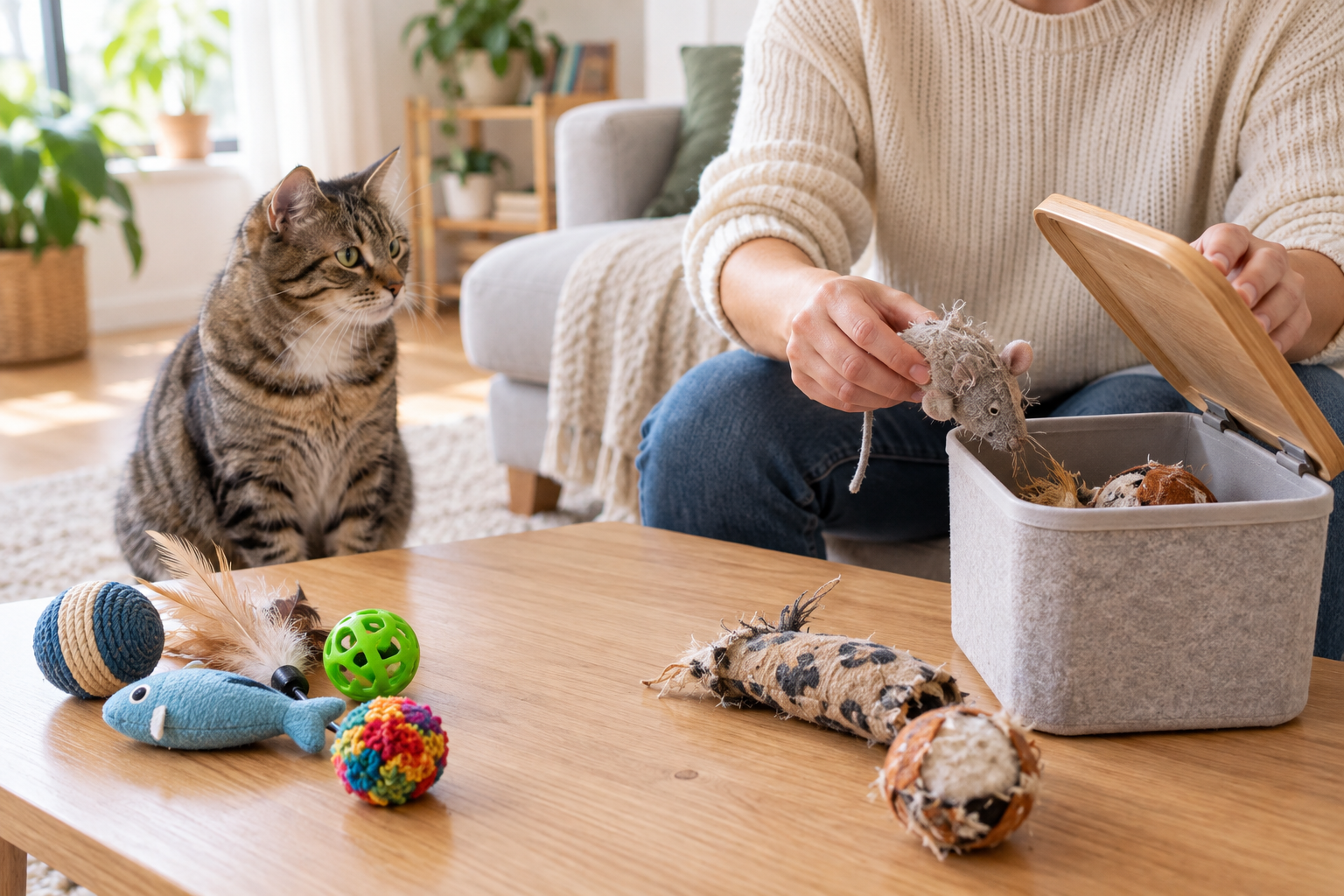
- Schedule interactive play. Use wand-toy sessions that allow stalking, chasing, and catching, then put string-style toys away safely.
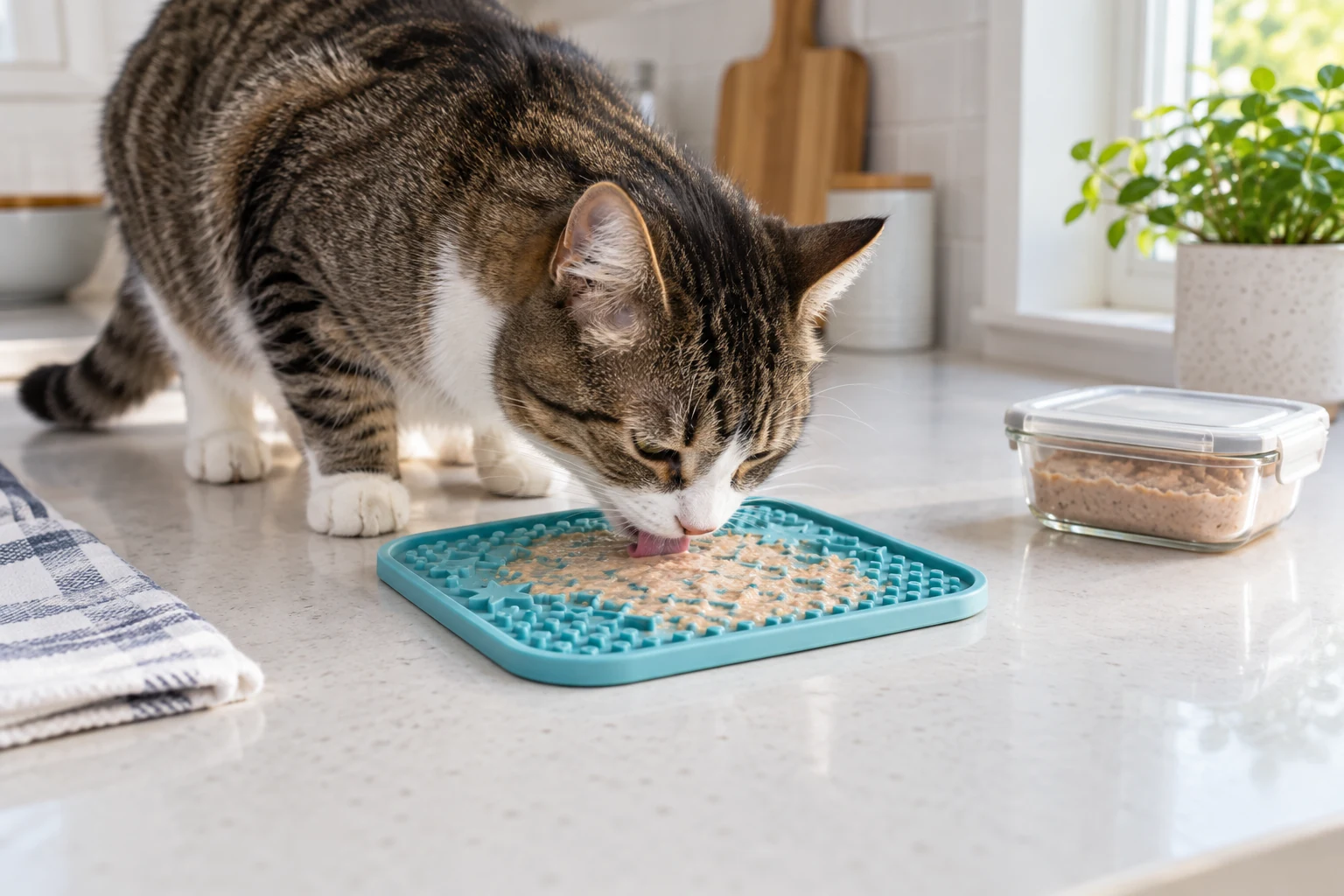
- Add independent activities. Rotate puzzle feeders, cardboard boxes, window views, and safe solo toys instead of leaving everything out forever.
- Reward calm settling. Quietly offer praise or a small portion of the cat’s normal food when the cat relaxes on its own bed or perch.
- Keep departures boring and predictable. Avoid emotional goodbyes. Provide an activity shortly before leaving and return calmly.
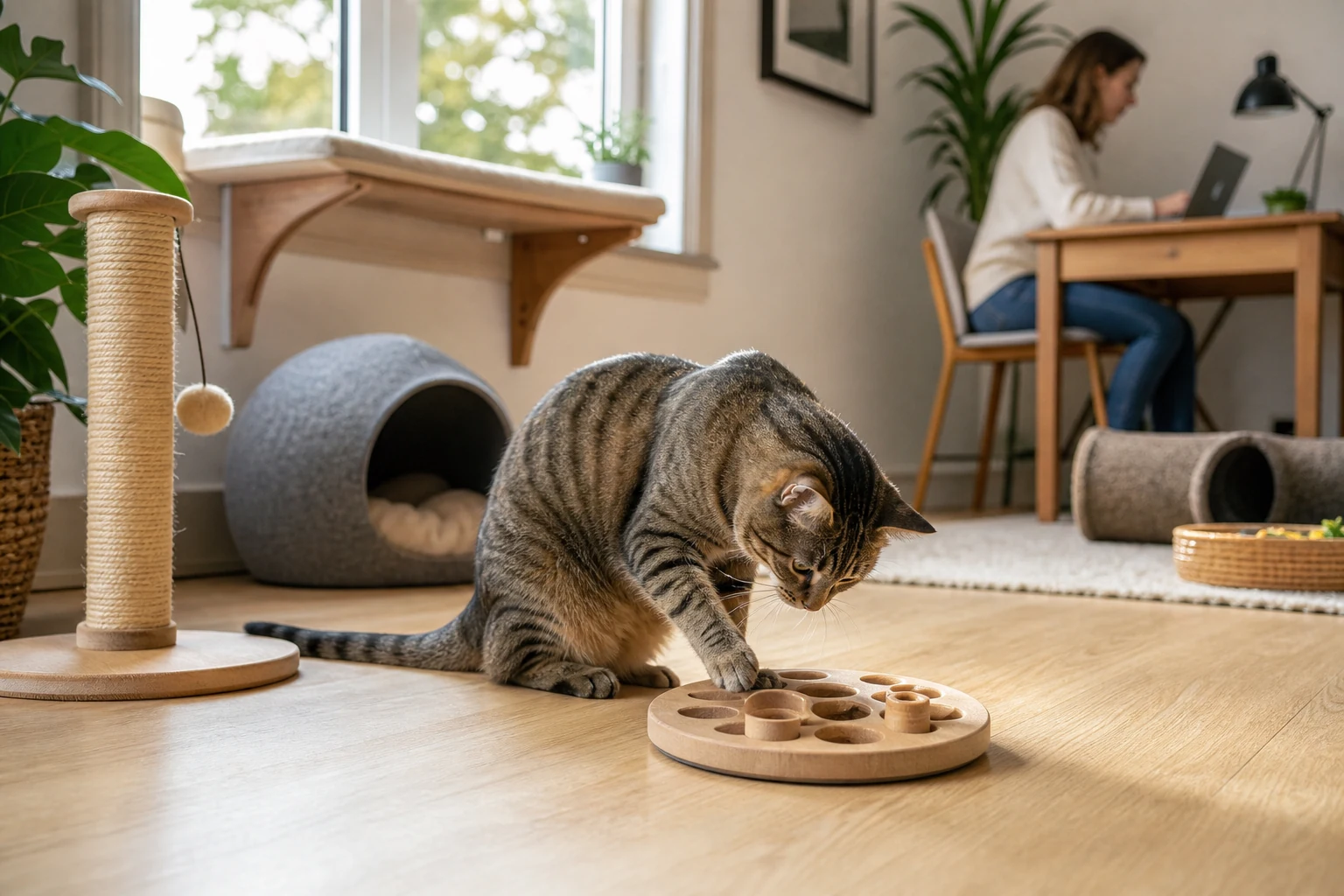
Ohio State University’s Indoor Pet Initiative recommends providing cats with resources and opportunities that let them perform natural behaviors and feel control over their surroundings.3 Nuestro rutinas diarias para el cuidado de los gatos can help you turn those ideas into a sustainable schedule.
Do not punish following, vocalizing, or distress behavior. Punishment can increase fear and does not teach the cat what to do instead. If the behavior is intense, worsening, or linked to absence, ask your veterinarian about referral to a credentialed veterinary behaviorist or qualified feline behavior professional.
Conclusion: Is following normal or a concern?
A cat following you everywhere is usually communicating, “You are safe, interesting, or connected to something I value.” Relaxed body language, normal health, and the ability to settle independently make attachment or curiosity more likely than anxiety.
Pay attention when following begins suddenly, comes with physical or behavioral changes, or turns into obvious distress when you leave. A predictable routine, a choice-rich environment, and veterinary guidance when red flags appear will support both closeness and healthy independence.
Preguntas frecuentes
Why does my cat follow me to the bathroom?
The bathroom combines several attractions: your undivided attention, a predictable routine, running water, interesting smells, and a door that may normally be closed. If your cat is relaxed, bathroom supervision is usually harmless curiosity or a learned social habit.
Why does my cat follow me but not want to be petted?
Some cats prefer proximity without touch. Following lets your cat share space and monitor activity while controlling the distance. Respecting that boundary helps maintain trust.
Is it normal for a kitten to follow me everywhere?
Yes, kittens often follow caregivers while learning the home, seeking play, and looking for security. Make the environment safe, provide age-appropriate enrichment, and teach short periods of calm independent activity.
Why has my older cat suddenly become clingy?
Sudden clinginess in an older cat can reflect pain, sensory changes, illness, stress, or cognitive changes. Arrange a veterinary check, especially if you also notice appetite, litter box, sleep, mobility, or vocalization changes.
Should I ignore my cat when it follows me?
You do not need to ignore normal friendly following. Give attention on a predictable schedule, reward independent settling, and avoid responding to every follow with food. Seek help if the behavior appears distressed or compulsive.
Referencias
[1] Vitale, K. R., et al. (2019). Attachment bonds between domestic cats and humans. Current Biology31086-3)
[2] Ellis, S. L. H., et al. (2013). Directrices de la AAFP y la ISFM sobre las necesidades ambientales de los gatos. Revista de Medicina y Cirugía Felina
[3] Ohio State University Indoor Pet Initiative. (2024). Basic Indoor Cat Needs. Ohio State University
[4] Merck Veterinary Manual. (2025). Behavior Problems in Cats. Manual veterinario Merck
 EN
EN DE
DE ES
ES PT
PT