
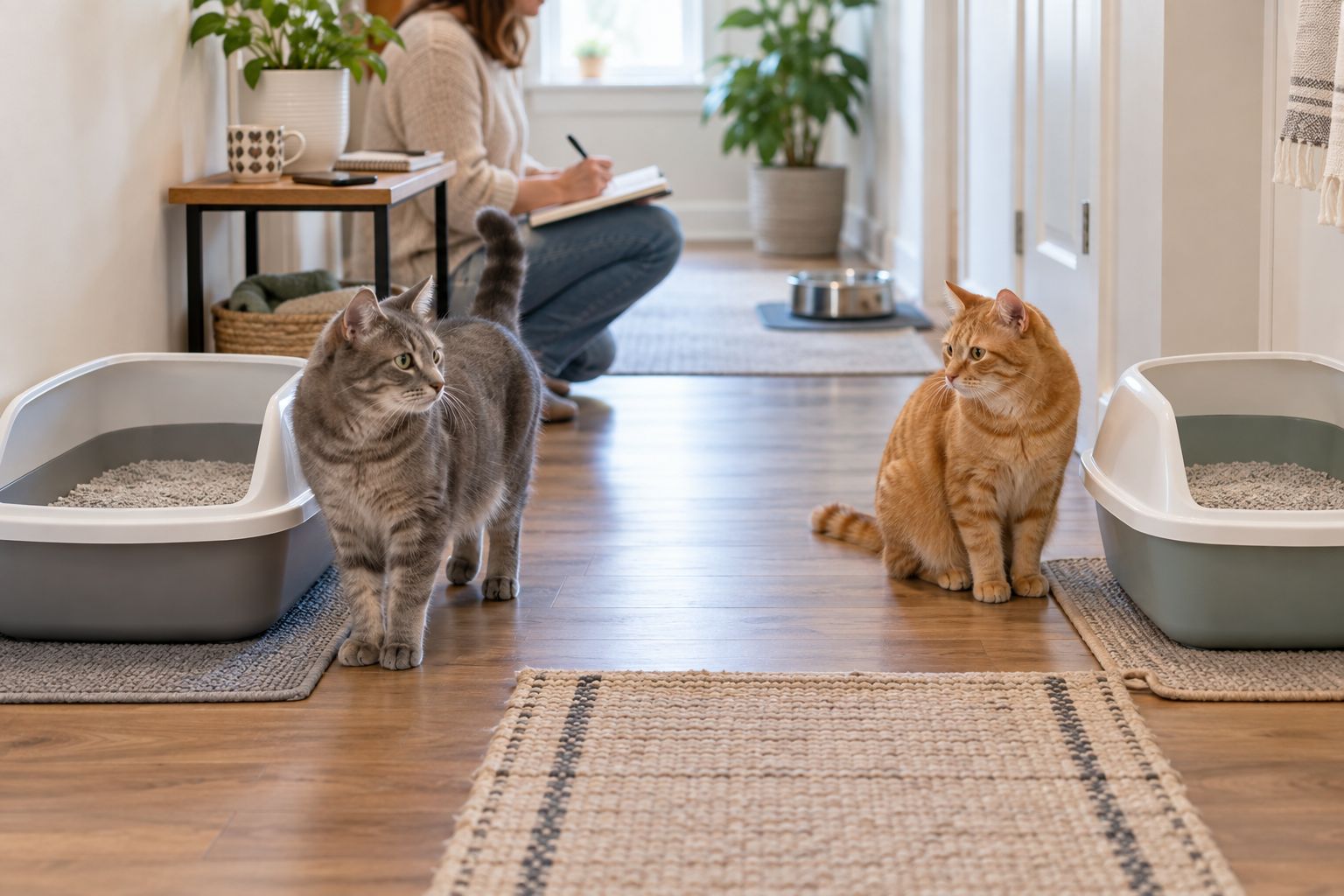
To track cat urination in a multi-cat home, focus on two questions: which cat used the box, and did that cat pass a normal amount of urine? After one cat has had urinary problems, a shared litter box can hide important changes, so use separate boxes, short observation windows, and a simple log your veterinarian can actually use.
This is not about spying on every bathroom trip forever. It is a short-term safety routine for households where several cats may use the same boxes and one cat needs closer urinary monitoring. The goal is to catch patterns early without blaming the wrong cat or delaying care.
Lower urinary tract signs can include frequent attempts, painful urination, blood, urinating outside the box, licking, and producing little or no urine 1, 2. Because different urinary conditions can look similar at home, your notes should support veterinary care, not replace it.
Índice
- When is urinary tracking an emergency?
- Why is multi-cat urine tracking so tricky?
- How do you set up tracking without stressing every cat?
- How can you tell which cat used the box?
- What exactly should you track?
- What changes mean you should call the vet?
- What notes should you bring to the vet?
- What mistakes make multi-cat tracking less useful?
- Conclusion: Urine tracking should clarify, not delay care
- Preguntas frecuentes
- Referencias
When is urinary tracking an emergency?
If any cat repeatedly strains and produces little or no urine, stop tracking and seek emergency veterinary care. Cornell describes urethral obstruction as an absolute emergency, and the 2025 iCatCare guidelines note that obstruction can cause life-threatening complications 1, 2.
Go to an emergency veterinarian now if one cat:
- Enters the box again and again but produces no normal urine clump
- Cries, pants, hides intensely, vomits, collapses, or seems rapidly weaker
- Produces only tiny drops after repeated attempts
- Has a tense or painful belly
- Is a male cat with renewed straining after urinary treatment
- Recently had a blockage and is not clearly passing urine
Do not wait for the camera footage, the next clump, or the morning scoop. In a multi-cat home, the safest assumption is that the recovering or symptomatic cat may be the one in trouble until a veterinarian says otherwise. SnuggleSouls' cat urinary blockage aftercare guide can help you review post-treatment warning signs, but it should not delay emergency care.
Why is multi-cat urine tracking so tricky?
Multi-cat urine tracking is difficult because shared boxes mix the evidence. One large clump could belong to a healthy cat, while the cat you are worried about made several tiny attempts somewhere else. One accident outside the box may come from the urinary patient, a bullied cat avoiding a guarded hallway, or a different cat with a new medical problem.
Urinary signs are also not diagnosis-specific. The iCatCare consensus guidelines explain that lower urinary tract signs can result from several underlying conditions and may look similar despite different causes 2. Merck also frames feline lower urinary tract disease as a group of disorders rather than one single diagnosis 5.
That means your home notes should answer practical questions:
| Question | Por qué es importante | Useful note |
|---|---|---|
| Which cat used the box? | Prevents blaming the wrong cat | "Gray cat used laundry box at 8:10 p.m." |
| Was urine produced? | Separates box visits from actual output | "Entered twice; one small clump" |
| Was the cat comfortable? | Pain signs can matter as much as clump size | "No crying, but licked after leaving" |
| Which box was used? | Location can reveal guarding, preference, or access problems | "Only used upstairs box today" |
| What else changed? | Food, water, stress, medication, and routine all add context | "Visitors arrived; ate less dinner" |
The cleanest log is honest about uncertainty. "Not sure which cat" is better than a confident guess.
How do you set up tracking without stressing every cat?
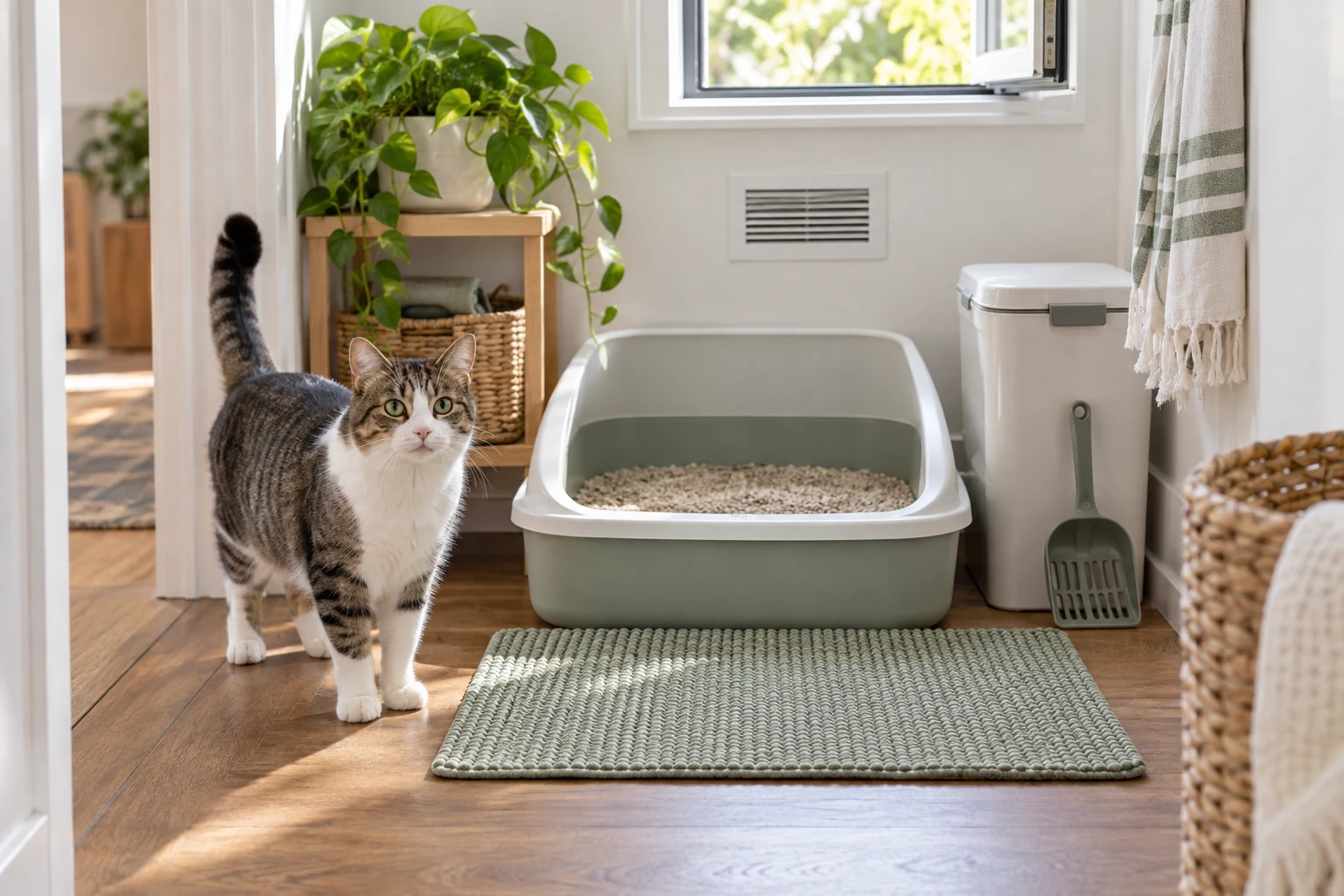
Set up tracking by making the litter box system easier to read, not by disrupting the whole household. Use separate boxes in separate locations, keep the usual litter unless your veterinarian advised a change, and observe calmly during the times your cats normally use the boxes.
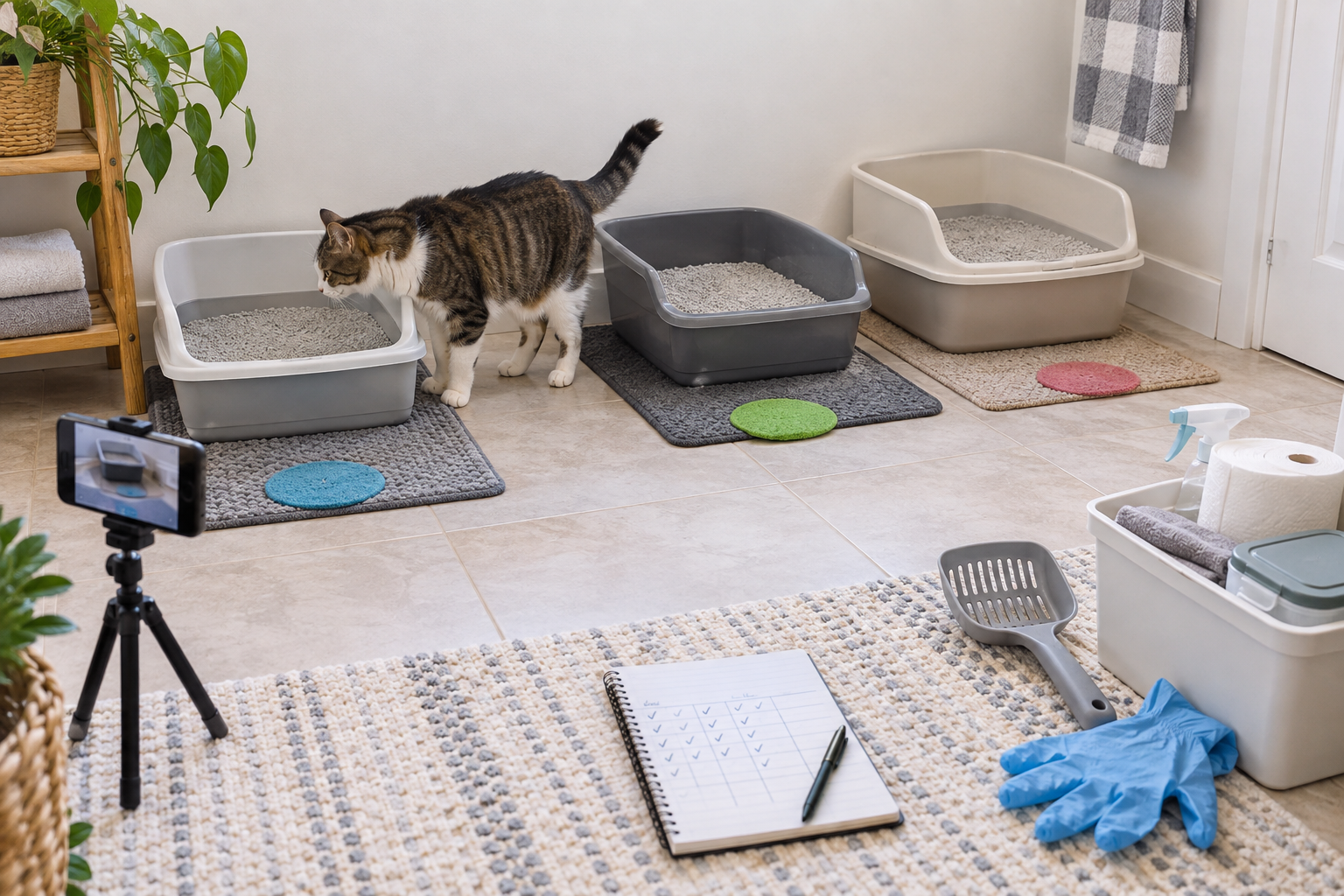
Cat Friendly Homes recommends one litter box per cat plus one extra, placed in multiple locations, and warns that a more dominant cat can block a less confident cat from a box 3, 4. That matters during urinary monitoring because access problems can make a medical log look confusing.
Start with this low-stress setup:
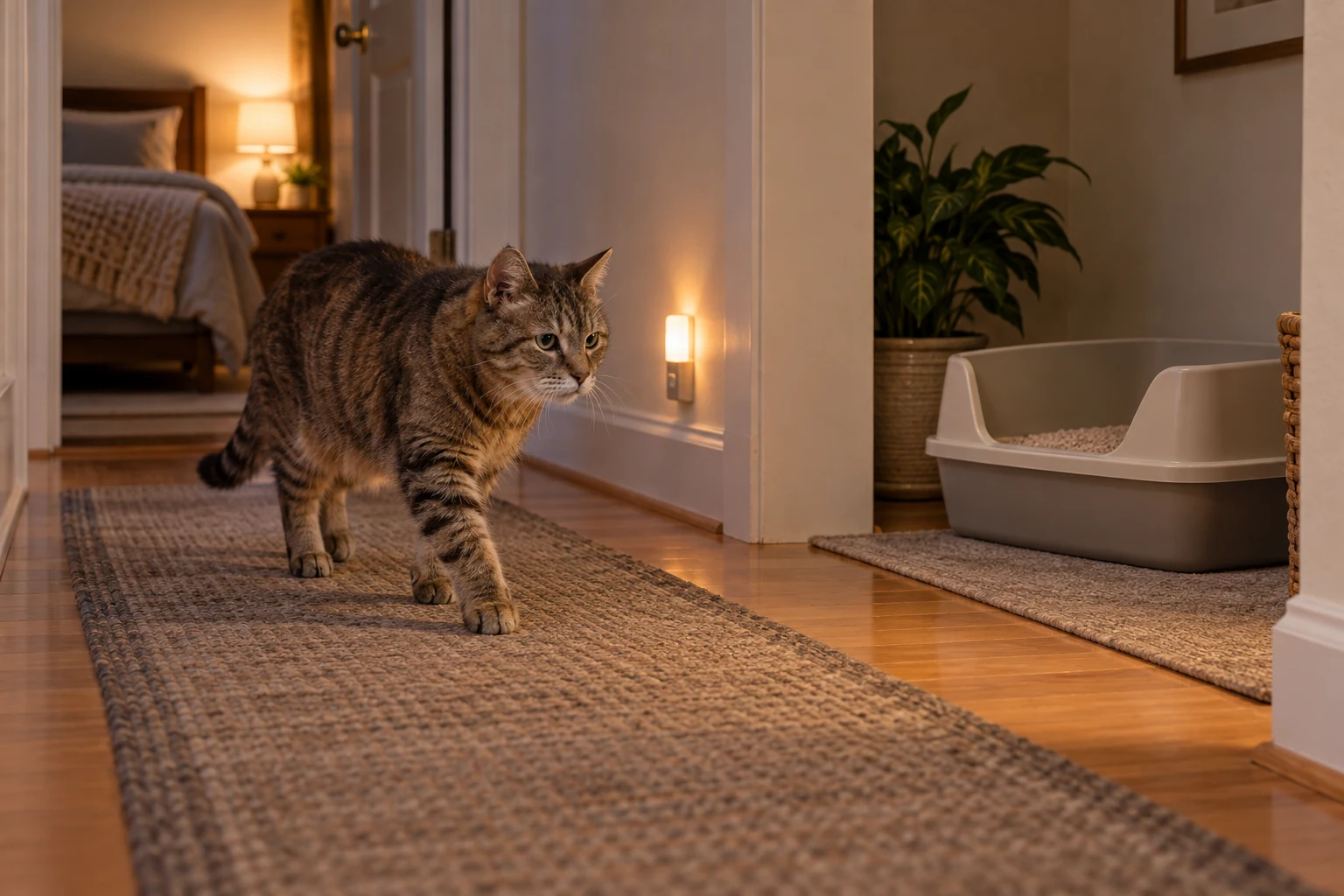
- Place boxes where each cat can enter and leave without being cornered.
- Spread boxes apart instead of lining them all in one row.
- Use colored mats, room names, or simple labels in your notes so you know which box is which.
- Scoop at consistent times so fresh clumps are easier to interpret.
- Keep a notebook or phone note near the main scoop station.
- If you use a camera, aim it at the box area, not at a cat's face, and use it only as a short-term identification tool.
For box comfort basics, pair this article with SnuggleSouls' La mejor configuración para la bandeja sanitaria del gato guide. If your household includes older cats or cats with mobility issues, the guide to set up multiple litter boxes can also help with floors, distances, and backup spots.
How can you tell which cat used the box?
The most reliable way is direct, calm observation. Watch quietly from a distance during high-use times, such as after meals, after waking, or in the evening. Write down the cat, box location, time, and whether urine was actually produced.
If direct observation is not enough, try these options:
- Use temporary supervised separation for the cat who needs monitoring, with water, bedding, and a clean box, if the cat is stable and not distressed.
- Put a clean box in the cat's preferred room for a short window and check whether that cat uses it.
- Use a pet camera for a few days to identify box visits, then stop once you have the pattern.
- Ask your veterinarian whether special litter, a urine collection plan, or a clinic sample is needed instead of home guessing.
Temporary separation should feel like a calm recovery room, not punishment. Do not isolate a cat who is actively straining or producing no urine. That cat needs care, not observation.
Be careful with tech. A camera can help identify which cat used which box, but it cannot tell you whether the cat has cystitis, crystals, infection, kidney disease, or a partial obstruction. It also cannot tell whether a different cat is guarding the hallway unless you review the wider pattern.
What exactly should you track?
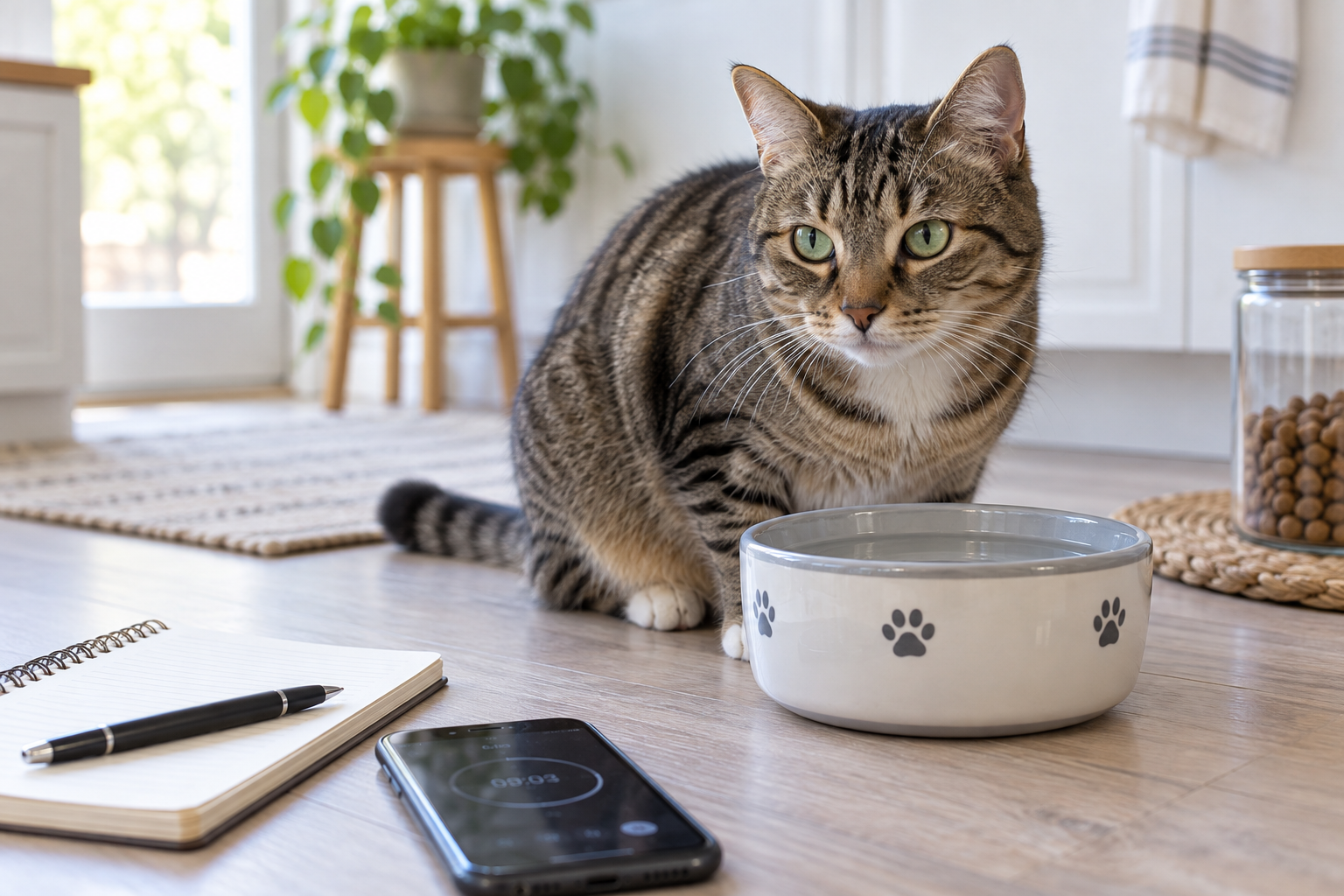
Track the small set of details that helps your veterinarian see a pattern: cat, box, time, urine output, pain signs, appetite, water intake, medications, and household changes. If you are also watching clump size, use SnuggleSouls' cat urine clump size after urinary problems guide for a deeper setup.
A useful daily log can be simple:
| Log item | Example |
|---|---|
| Gato | "Milo, orange tabby" |
| Box | "Hallway low-entry box" |
| Time | "7:20 a.m." |
| Output | "One usual clump" or "two tiny clumps" |
| Comfort | "No crying" or "strained and licked afterward" |
| Food and water | "Ate half breakfast; drank from fountain" |
| Medication or diet | "Prescription food started Friday" |
| Household context | "Other cat sat near doorway" |
Use plain words instead of trying to measure every clump. "No urine," "drops only," "tiny clumps," "usual clump," and "larger than usual" are often enough for a first phone call. Photos can help when there is blood, unusual clump size, or a pattern that is hard to describe, but do not turn tracking into a stressful event for the cat.
What changes mean you should call the vet?
Call your veterinarian promptly when the pattern changes, especially after a recent urinary episode. Cornell lists frequent attempts, painful urination, blood, and urinating outside the box among common lower urinary tract signs 1. Cat Friendly Homes also notes that house-soiling can have medical causes and may require examination, urinalysis, culture, imaging, or bloodwork depending on the case 3.
Call the vet if you see:
- A cat producing smaller clumps than usual for more than one box visit
- Repeated box trips with discomfort, licking, or crying
- Blood-tinged urine or pink litter
- A sudden accident outside the box
- A cat who drinks much more or urinates much larger amounts
- Reduced appetite, vomiting, hiding, or low energy with urinary changes
- Any return of symptoms after blockage treatment
Hydration context matters too. If your veterinarian has recommended moisture support, the SnuggleSouls guide to encourage a cat to drink more after urinary problems can help you make water more available. Still, do not change a prescription urinary diet, medication, supplement, or water strategy without veterinary guidance.
If you are not sure whether the issue is UTI-like symptoms, bladder pain, stones, or behavior, review SnuggleSouls' cat UTI symptoms guide and contact your clinic. Symptoms alone cannot confirm infection.
What notes should you bring to the vet?
Bring a short, clear summary rather than pages of scattered observations. The best version tells your veterinarian what changed, which cat changed, how urine output looked, and whether the household setup could be affecting access.
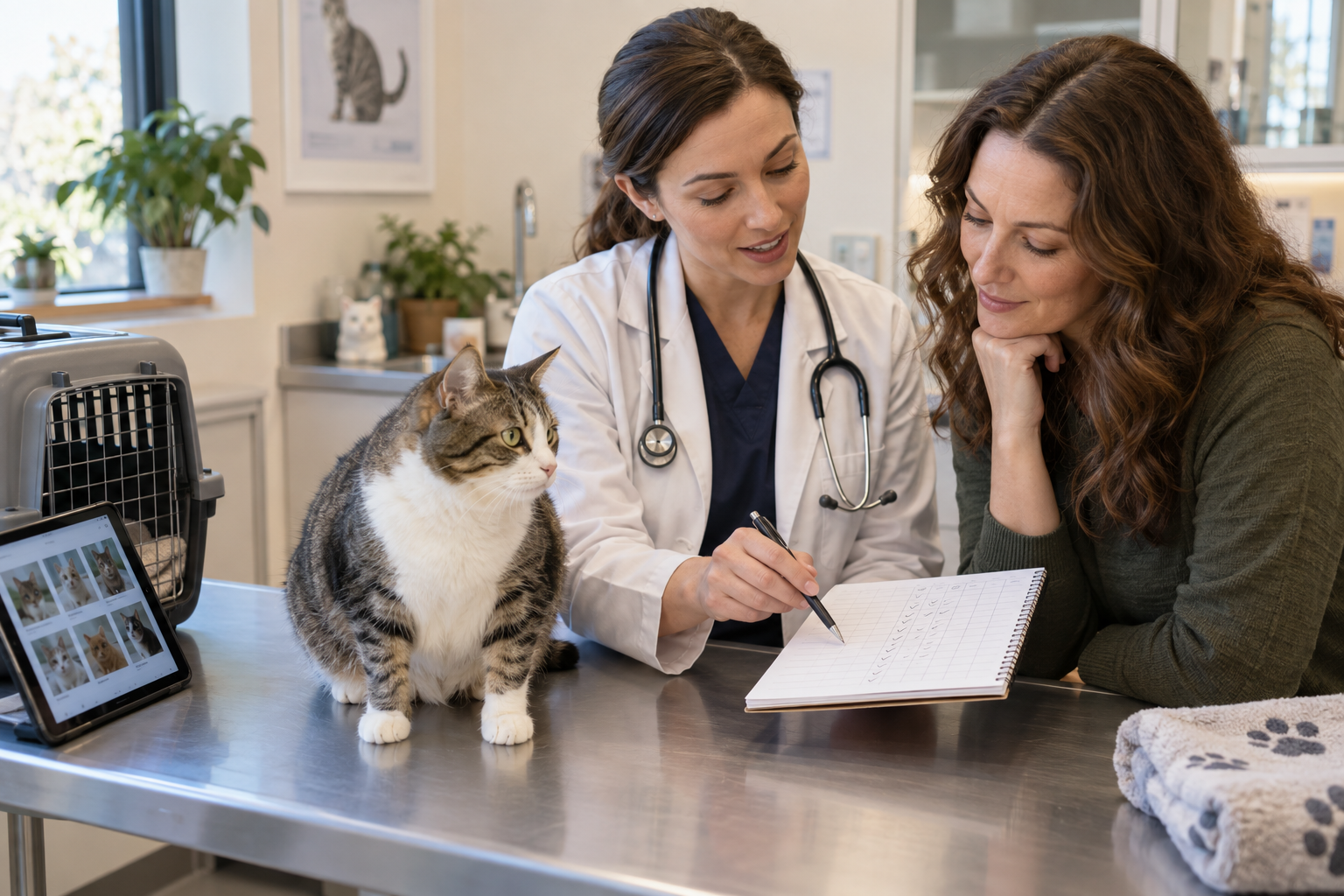
Useful handoff notes include:
- "Milo was treated for urinary crystals on September 12."
- "From September 13 to 15, he used the hallway box once or twice daily."
- "On September 16, he entered three times in one hour and produced two tiny clumps."
- "No vomiting, but he licked after leaving the box."
- "The younger cat sat near the hallway doorway twice."
- "Food, litter, and medication schedule did not change."
- "I have one short video and two photos."
The iCatCare guidelines emphasize that history-taking, including environmental and behavioral details, can be relevant for lower urinary tract cases 2. Your notes do not need to be perfect. They need to be specific, dated, and honest about what you saw versus what you guessed.
What mistakes make multi-cat tracking less useful?
The biggest mistake is assuming every clump belongs to the cat you are worried about. In a shared-box home, that can create false reassurance or false alarm.
Avoid these common problems:
- Tracking clump size but not which cat made it
- Changing litter, box depth, box location, and food all at once
- Letting one cat block a hallway or closet box without noting it
- Waiting during possible obstruction because another cat made a normal clump
- Punishing accidents outside the box
- Treating urinary signs as behavioral before medical causes are checked
- Saving every detail but never calling the vet when the pattern worsens
Punishment is especially counterproductive. Cat Friendly Homes explains that inappropriate elimination can reflect physical, social, or medical needs not being met, not spite 3. If a cat urinates outside the box after a urinary history, clean the area, reduce access conflict, and call your veterinarian for next steps.
Conclusion: Urine tracking should clarify, not delay care
In a multi-cat home, urinary tracking works best when it stays simple: identify the cat, identify the box, confirm whether urine was produced, and record comfort signs. Separate boxes, calm observation, short camera use when needed, and honest notes can help your veterinarian see the pattern faster.
The emergency rule matters most: repeated straining with little or no urine needs veterinary care now. For stable cats, keep the log short, protect litter-box access, and use trusted Guías sobre la salud de los gatos as background while your veterinarian guides the medical plan.
Preguntas frecuentes
How long should I track urination after one cat has urinary problems?
Follow your veterinarian's monitoring window first. Many households only need a few days to two weeks of close notes after treatment, diet change, or a flare, but cats with recurring urinary signs may need a different plan. Long-term tracking should stay simple enough that you can keep it accurate.
Should I separate my cat to see if they are peeing?
Temporary supervised separation can help if the cat is stable, comfortable, and has water, bedding, and a clean box. Do not separate and watch a cat who is repeatedly straining, crying, vomiting, or producing no urine. That is an emergency situation.
Can a camera tell me which cat has a urinary problem?
A camera can help identify which cat visited which box, but it cannot diagnose the cause of urinary signs. Use footage as a short-term identification aid and share relevant clips with your veterinarian if they show straining, repeated trips, guarding, or unusual output.
What if I cannot tell which cat peed outside the litter box?
Write down the location, time found, size of the spot, and any cats seen nearby without guessing. Then watch for matching patterns: box visits, licking, hiding, drinking, appetite, guarding, or repeated accidents. If one cat has a urinary history, call your veterinarian for advice.
Does one normal clump mean my urinary cat is safe?
Not always in a multi-cat home, because the clump may belong to another cat. Even if you know the correct cat made it, watch the whole pattern: comfort, frequency, appetite, water intake, blood, and whether the next trips are productive.
Referencias
[1] Centro de Salud Felina de Cornell. (2026). Feline Lower Urinary Tract Disease. Feline Lower Urinary Tract Disease
[2] International Cat Care Veterinary Society. (2025). 2025 iCatCare Consensus Guidelines on the Diagnosis and Management of Lower Urinary Tract Diseases in Cats. 2025 iCatCare Consensus Guidelines
[3] Cat Friendly Homes. (2026). Not Using the Litter Box. Not Using the Litter Box
[4] Cat Friendly Homes. (2026). Everything You Should Know About Litter Boxes. Everything You Should Know About Litter Boxes
[5] Manual Veterinario de Merck. (2025). Lower Urinary Tract Disease in Cats. Lower Urinary Tract Disease in Cats
 EN
EN DE
DE ES
ES PT
PT