
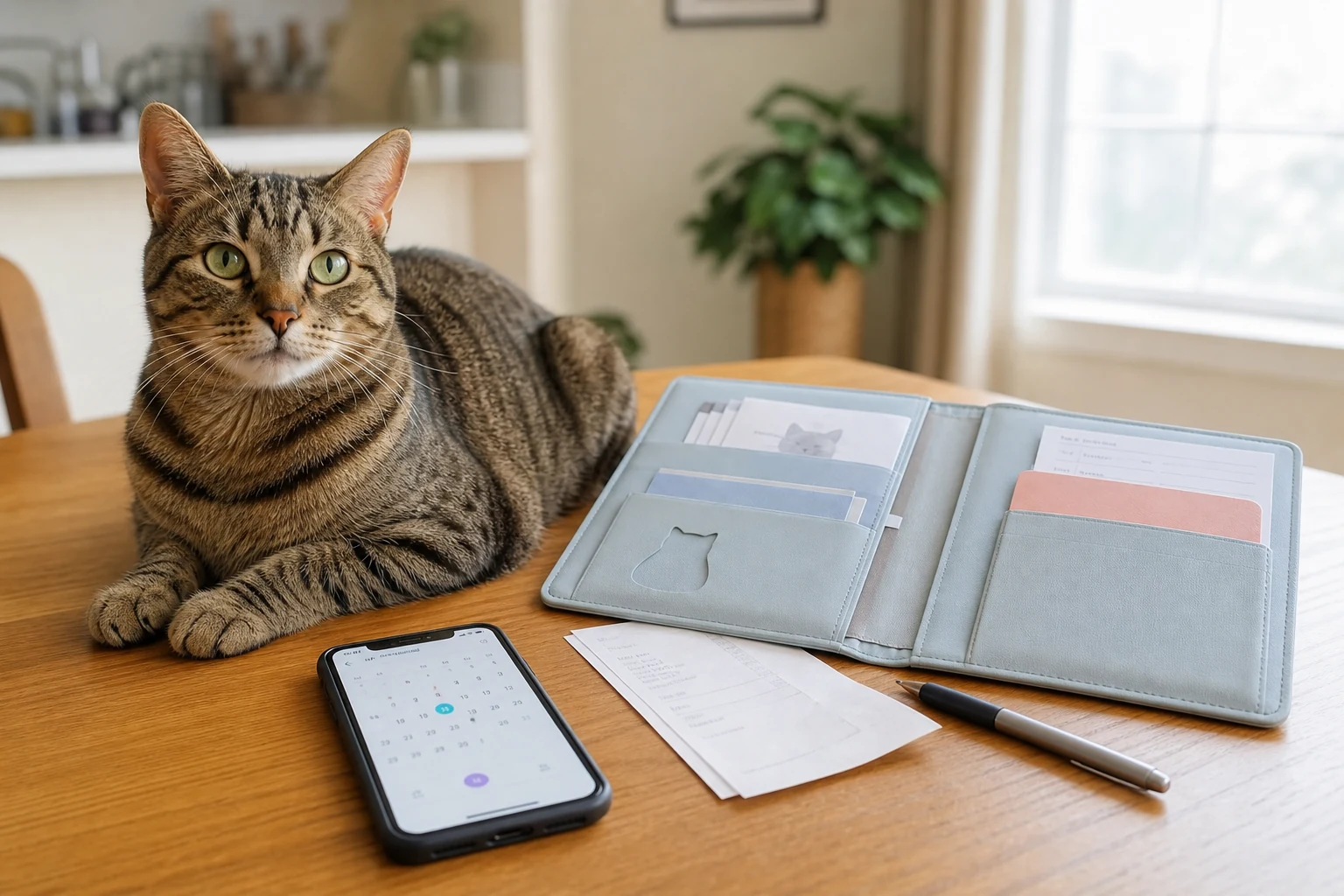
Keep cat vaccine records by saving each certificate, recording due dates and reactions, and storing paper and digital copies your veterinarian can trust.
Vaccine records are not just paperwork for a drawer. They help your veterinarian understand what protection your cat may already have, what is due next, and whether any previous reaction should change the plan. If you are still deciding what shots your cat may need, start with our cat vaccine schedule guide and use this article to keep the details organized.
Table of Contents
- Why do cat vaccine records matter?
- What information should a cat vaccine record include?
- How should you organize paper and digital records?
- When will you need proof of your cat's vaccines?
- How do you track booster due dates without over-vaccinating?
- What reaction notes should you save after vaccines?
- How should you handle missing or confusing vaccine records?
- Conclusion: Make vaccine records easy to find before you need them
- Frequently Asked Questions
- References
Why do cat vaccine records matter?
Cat vaccine records matter because vaccination is supposed to be individualized, not copied from another cat's calendar. AAHA/AAFP feline vaccination guidance emphasizes core and non-core decisions, individualized risk assessment, lifestyle, exposure, and appropriate intervals 1. A clear record lets your veterinarian apply that guidance to your cat instead of reconstructing history from memory.
Records also protect your cat from avoidable gaps and avoidable duplication. If your cat was vaccinated at a shelter, rescue, previous clinic, low-cost clinic, mobile vaccine event, or emergency hospital, those details may not automatically follow your cat to the next veterinarian.
The practical rule is simple: keep the proof, not just the reminder. A phone alert that says "rabies due" is helpful, but the certificate or clinic record is what shows what was actually given, when, by whom, and when the next dose may be due.
What information should a cat vaccine record include?
A useful cat vaccine record should include the vaccine name, date given, next due date, clinic or veterinarian, manufacturer or product when available, lot number, expiration date, injection site or route, and any reaction notes. UC Davis veterinary vaccination guidance specifically notes that records should document the product, expiration date, lot number, route, and injection location for vaccines given 2.
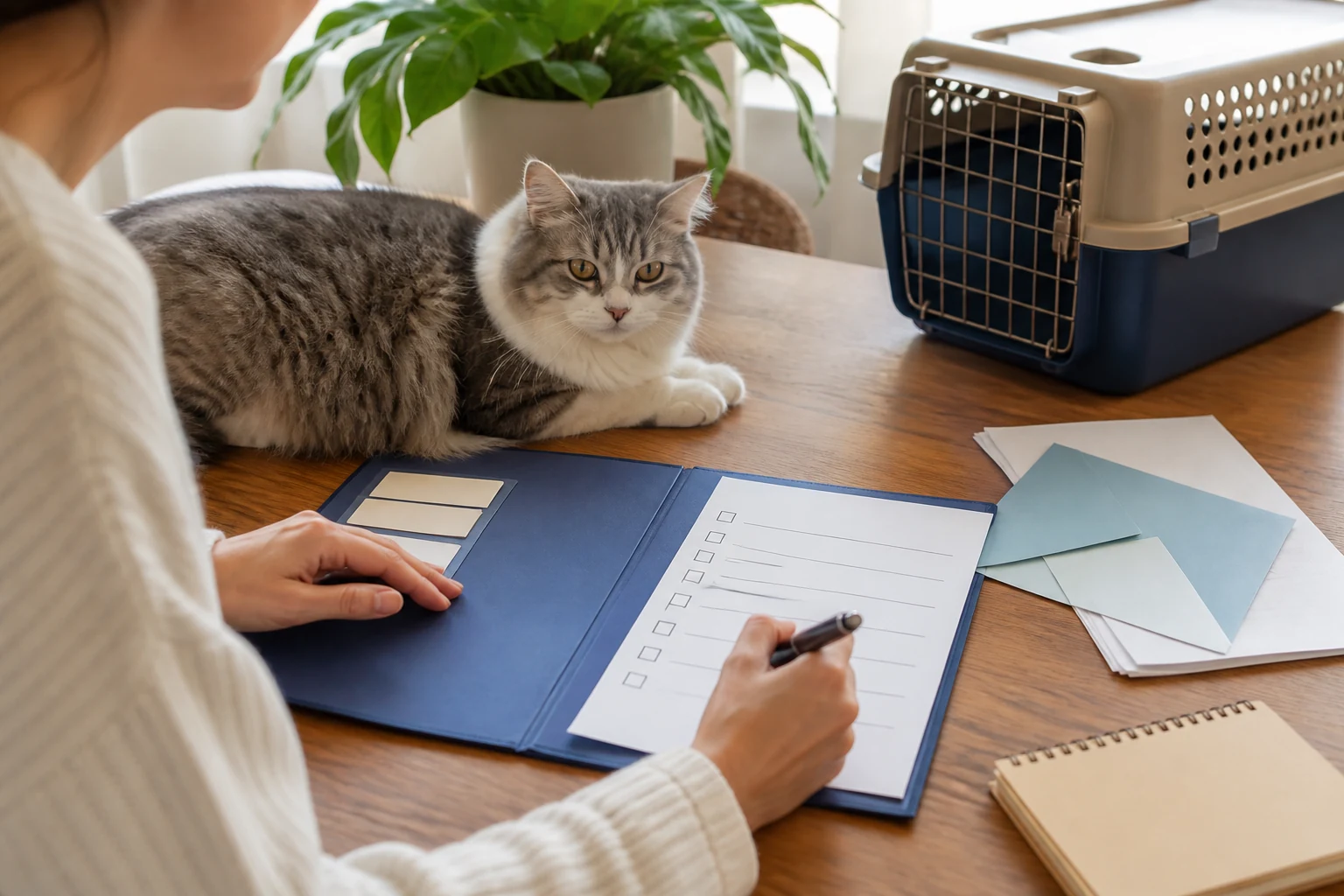
Use this table as a home checklist:
| Record field | Why it helps | Where to find it |
|---|---|---|
| Vaccine name | Distinguishes FVRCP, rabies, FeLV, and other vaccines | Certificate, invoice, medical record |
| Date given | Shows what actually happened | Receipt or visit summary |
| Next due date | Helps with reminders and boarding forms | Vaccine certificate or clinic portal |
| Clinic and veterinarian | Lets a new clinic verify details | Receipt, portal, email |
| Lot number and expiration date | Useful for official records and adverse-event follow-up | Full vaccine record from the clinic |
| Injection site or route | Helps future monitoring and reaction documentation | Medical record or veterinarian notes |
| Reaction notes | Helps your vet adjust future vaccine plans | Your home notes plus clinic record |
If your receipt only says "vaccines" or "annual shots," ask the clinic for the full vaccine record. You are not being difficult; you are asking for the details that make future medical decisions safer and clearer.
How should you organize paper and digital records?
Organize records in two places: one physical folder and one digital folder. The physical folder is useful for quick handoff at a clinic, boarding facility, or adoption appointment. The digital folder is useful when paper is lost, you are traveling, or someone else is caring for your cat.
For paper records, keep:
- Rabies certificate, if issued
- FVRCP, FeLV, and other vaccine records
- Shelter, rescue, breeder, or adoption paperwork
- FeLV/FIV test results if relevant
- Previous vaccine-reaction notes
- Current clinic contact information
- A one-page summary with the most recent vaccine dates and due dates
For digital records, scan or photograph each page in good light. Name files in a way you can search quickly, such as Milo-rabies-certificate-2026-04-10.pdf or Luna-FVRCP-FeLV-record-2025-09-03.jpg. Store them in a cloud folder, email them to yourself, or keep them in your clinic's pet portal if that is reliable for you.
Before each appointment, review the file and bring the newest copy. Our guide on how to prepare a cat for vaccines can help you combine records, carrier setup, and health notes before the visit.
When will you need proof of your cat's vaccines?
You may need proof of vaccines for a new veterinarian, boarding, grooming, cat sitting, air travel, international travel, shows, foster programs, shelter paperwork, rental housing, bite or rabies-exposure questions, and some emergency plans. Even indoor cats can need records quickly if they escape, move, or need care away from their usual clinic.
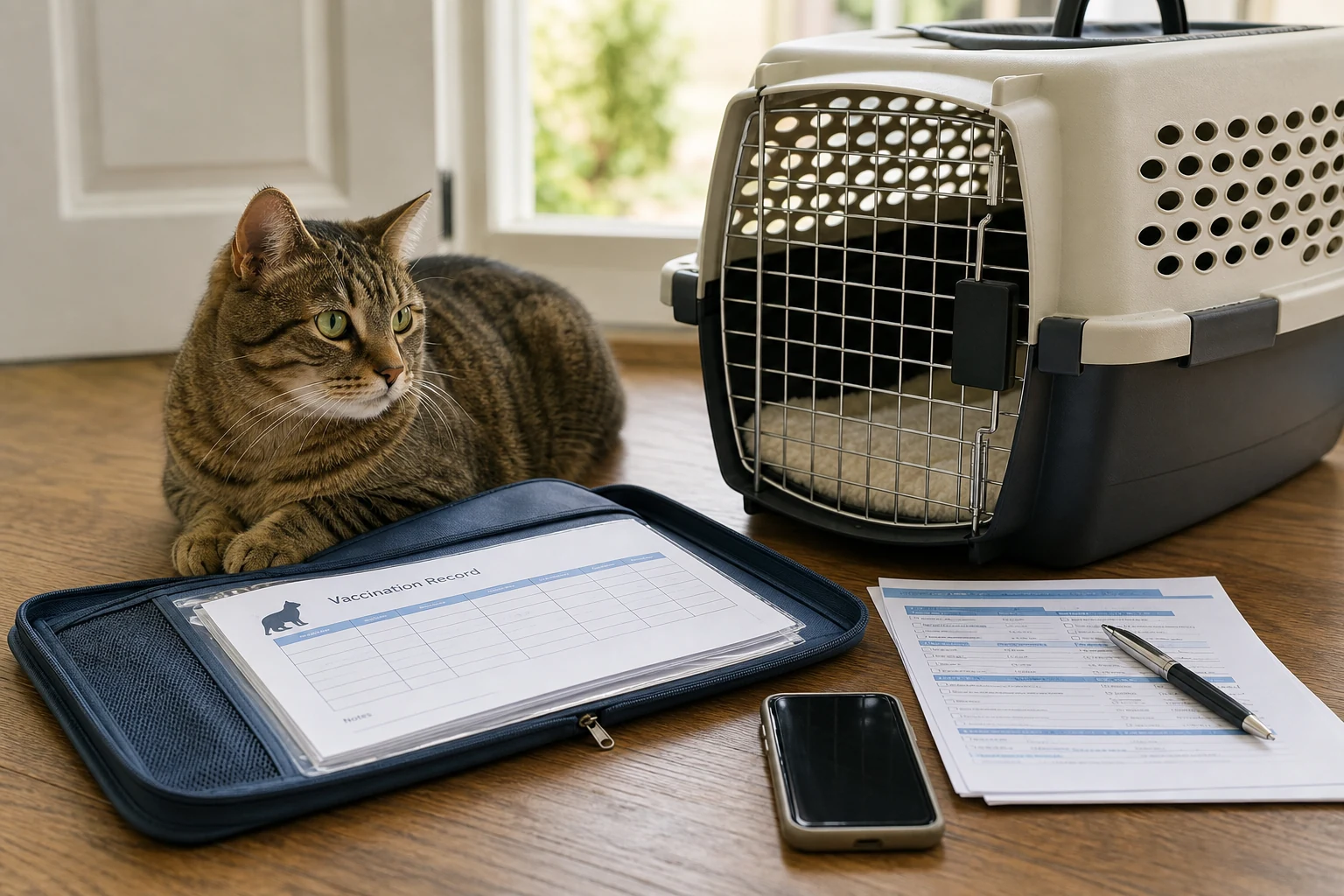
For travel, requirements can vary by destination, airline, and timing. CDC says cats entering the United States must appear healthy and are not federally required to show proof of rabies vaccination for importation, but CDC still recommends rabies vaccination and warns that destinations may have additional requirements 4. USDA APHIS also advises pet owners traveling from the United States to another country to work with a USDA-accredited veterinarian and check destination requirements, including any required vaccines, tests, treatments, and health certificates 5.
If you plan to board, fly, cross borders, attend a show, or use a new groomer, ask early exactly what documents they require. "Up to date" can mean different things depending on the business, country, state, vaccine label, and local rabies law. For packing and travel documents, keep our guide to traveling with a cat with your planning notes.
How do you track booster due dates without over-vaccinating?
Track booster due dates by recording the date given and the veterinarian's next due date, then setting reminders 60 days, 30 days, and 7 days before the deadline. Do not create your own booster schedule from memory, because vaccine timing depends on the vaccine type, product label, prior series, age, health, exposure risk, and local law.
AAHA/AAFP guidance treats lifestyle and exposure as part of vaccine planning, including travel, boarding, household cats, and activities outside the home 1. UC Davis similarly notes that vaccination frequency can vary with lifestyle, travel plans, boarding plans, and underlying disease conditions 2. That is why an adult indoor cat with complete records may not have the same plan as a kitten, a foster cat, or a cat who boards regularly.
Use a reminder system that separates:
- Due soon: Call the clinic and confirm what is needed.
- Appointment booked: Add carrier prep and aftercare reminders.
- Completed: Save the new certificate and update your file.
- Reaction noted: Record symptoms and tell the clinic before the next vaccine visit.
If you adopt a cat and feel overwhelmed by the first month of appointments, papers, and behavior changes, our first 30 days with your new cat guide can help you turn scattered tasks into a manageable plan.
What reaction notes should you save after vaccines?
Save reaction notes that describe what happened, when it started, how long it lasted, and whether veterinary care was needed. AAHA/AAFP guidance notes that postvaccination adverse events in cats are considered rare, but the history of a reaction still matters for future risk assessment 3.
Record practical details:
- Vaccine date and clinic
- Which vaccines were given, if listed
- Time symptoms started
- Appetite, energy, breathing, vomiting, diarrhea, swelling, hives, pain, or hiding
- Injection-site lump location and approximate size
- Photos of swelling or a lump, if your cat tolerates it calmly
- What the veterinarian advised
- How long it took your cat to return to normal
This is not about diagnosing your cat at home. It is about giving your veterinarian a clean timeline. A note that says "sleepy for one evening, ate breakfast next morning" is very different from "facial swelling and vomiting two hours after rabies vaccine." For warning signs and aftercare, use our cat vaccine side effects guide and call your vet promptly if your cat is worsening, breathing abnormally, repeatedly vomiting, collapsing, or showing facial swelling.
How should you handle missing or confusing vaccine records?
If records are missing, call the shelter, rescue, breeder, previous clinic, mobile clinic, or emergency hospital and ask for the full vaccine history. Give your cat's name at the time, your name, approximate visit dates, microchip number if available, and any adoption or account number.
If you still cannot confirm the record, do not guess. Tell your veterinarian what you know and what is missing. Depending on the situation, your vet may recommend restarting part of a series, delaying a vaccine, using a titer discussion where appropriate, checking legal rabies requirements, or building a plan around your cat's current risk.
Be especially careful with handwritten or partial records. A date with no vaccine name, a vaccine sticker with no due date, or a reminder card without proof of administration may not be enough for boarding, travel, or legal rabies questions. Keep the imperfect record, but label it clearly as incomplete so it does not get mistaken for proof later.
Conclusion: Make vaccine records easy to find before you need them
The best cat vaccine record system is boring, searchable, and complete. Keep the certificate, write down the next due date, save reaction notes, store paper and digital copies, and update the file after every visit.
Your veterinarian should always make the medical decision about what is due next, but your records make that conversation clearer. For more preventive-care context, keep browsing SnuggleSouls cat health guides and bring specific record questions to your veterinary team.
Frequently Asked Questions
Is a vaccine receipt the same as a vaccine certificate?
Not always. A receipt may show that you paid for a vaccine, while a certificate or full medical record usually includes more useful details such as vaccine name, date, next due date, clinic, and sometimes product or lot information. Ask your clinic for the complete vaccine record when you need official proof.
Should I keep my cat's old vaccine records?
Yes. Keep older records because they show vaccine history, previous clinics, due-date patterns, and any reaction notes. If you want to simplify the folder, keep a one-page summary on top and store older pages behind it or in a digital archive.
What if my cat's vaccine records were lost?
Call previous clinics, shelters, rescues, breeders, or mobile vaccine providers and ask for copies. If records cannot be verified, tell your veterinarian exactly what is missing so they can decide the safest next step.
Do indoor cats need vaccine records?
Yes. Indoor cats may still need records for rabies law, veterinary care, boarding, grooming, travel, emergencies, or proof requested by a housing or adoption situation. Indoor status can reduce some exposure risks, but it does not make records unnecessary.
How long should I keep cat rabies certificates?
Keep every rabies certificate for your cat's lifetime if you can. At minimum, keep the current certificate, the previous certificate, and any record tied to a reaction, bite, travel, move, or legal question.
Can I use a phone photo as proof of vaccines?
A clear phone photo or PDF is often useful for quick sharing, but some clinics, boarding facilities, airlines, or authorities may require an official certificate or direct clinic confirmation. Ask the organization what format they accept before the deadline.
References
[1] AAHA/AAFP. (2020). 2020 AAHA/AAFP Feline Vaccination Guidelines. Read the AAHA/AAFP feline vaccination guidelines
[2] UC Davis School of Veterinary Medicine. (2025). Vaccination Guidelines for Dogs and Cats. Read the UC Davis vaccination guidance
[3] AAHA/AAFP. (2020). Adverse Postvaccination Reactions. Read the AAHA/AAFP adverse reaction guidance
[4] CDC. (2025). Bringing an Animal into the United States. Read the CDC cat import guidance
[5] USDA APHIS. (2026). Take a Pet From the United States to Another Country. Read the USDA APHIS pet travel guidance
 EN
EN DE
DE ES
ES PT
PT